Dreadful Stairs, Dreadful Hill, Dreamy Lagoon

Monday, September 21 was departure day from Barefoot Manta, the start of two travel days that would take us from Fiji through Tahiti to Moorea. So far, every step of the trip had gone smoothly, but little did I know that some anxiety-provoking challenges were waiting for us. Checkout from our private bures was at 10 AM. Bernadette and Tasia went snorkeling after breakfast but I opted out as I was a bit weary and still had a lingering cough from a bug that bloomed inside me on the second day of the trip. Nor did I want a bag of sopping wet swimming gear adding pounds to my luggage. We packed up our gear and left it for the staff to carry to the main bure (though up until now I have been calling it the gathering room). I paid my running “bar tab” – i.e. a tab for lots of diet cokes. Then, with our bags taken care of we developed a plan on how to spend the day without our bure to retreat to. The returning ferry would not arrive until about 3:30 PM so we had a 5 and a half hour wait.

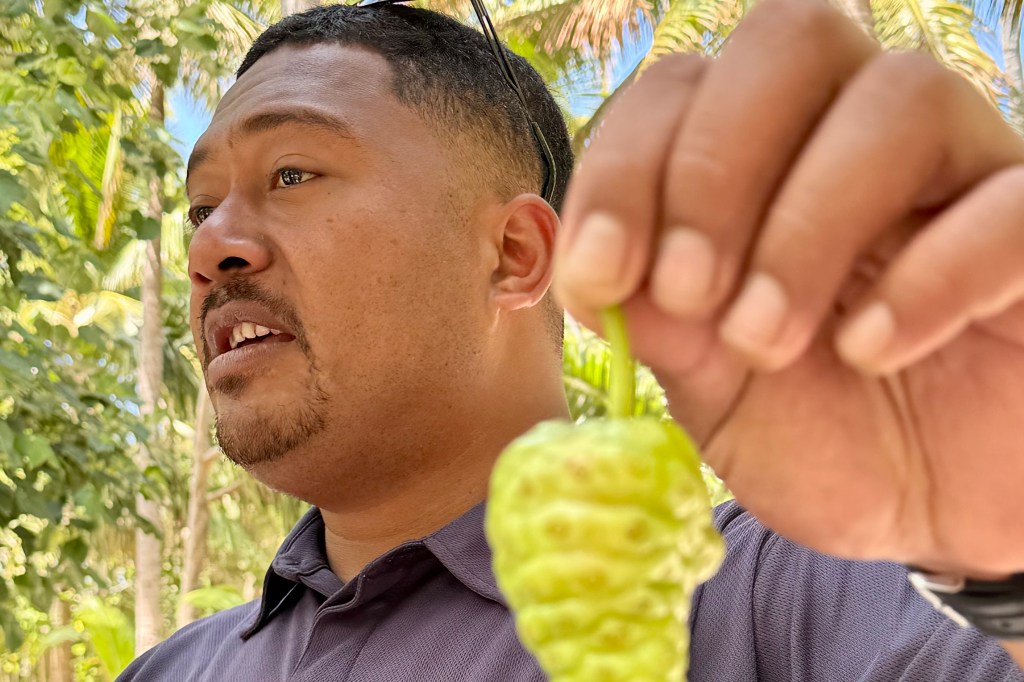
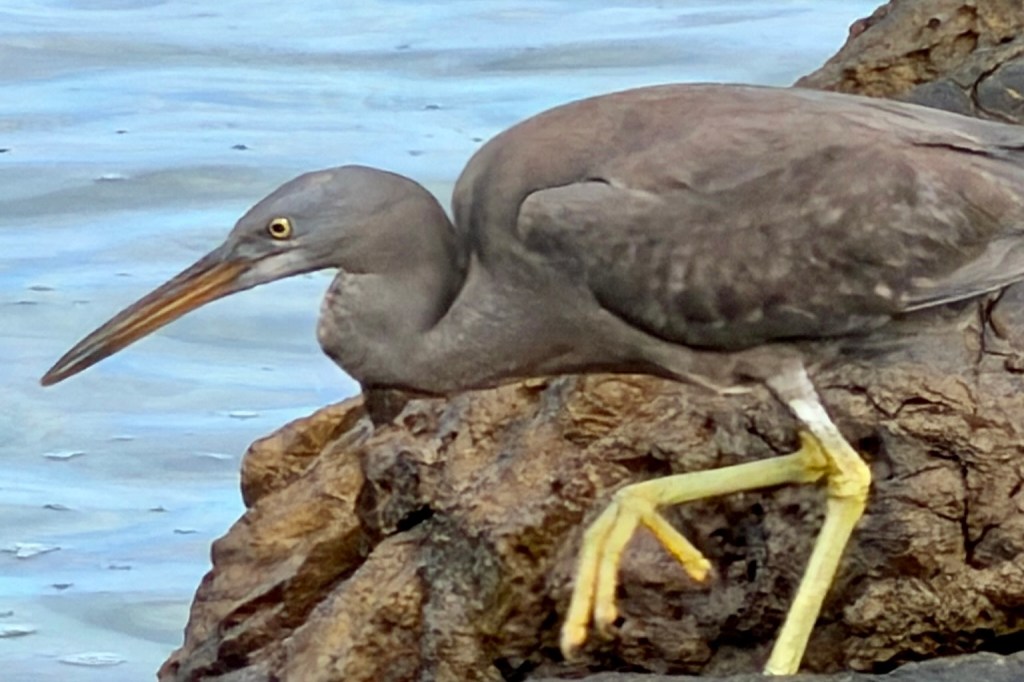
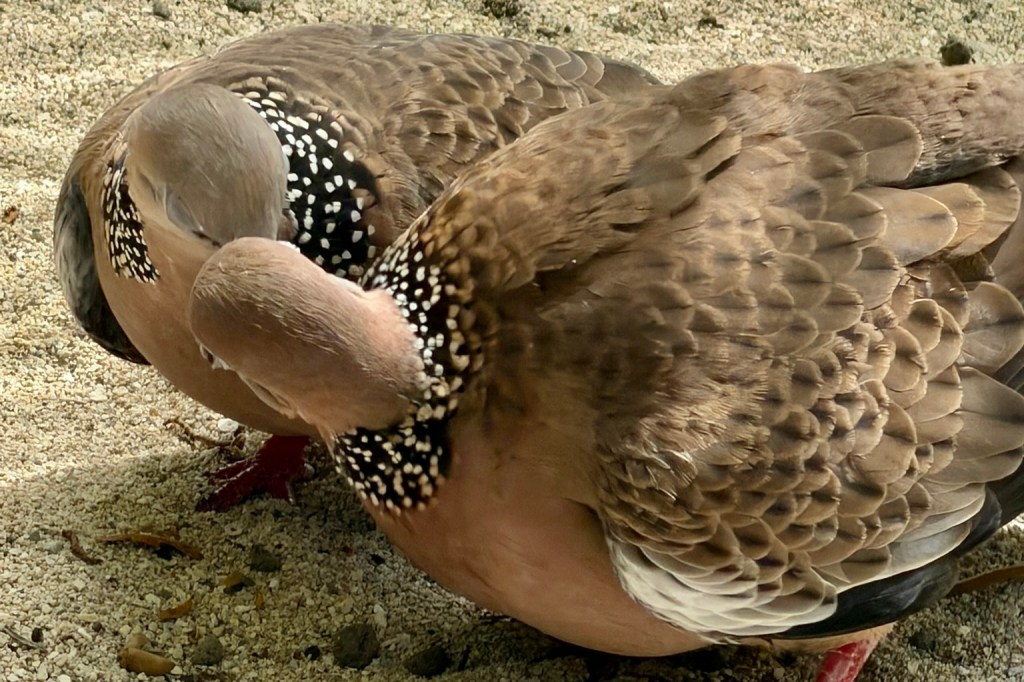
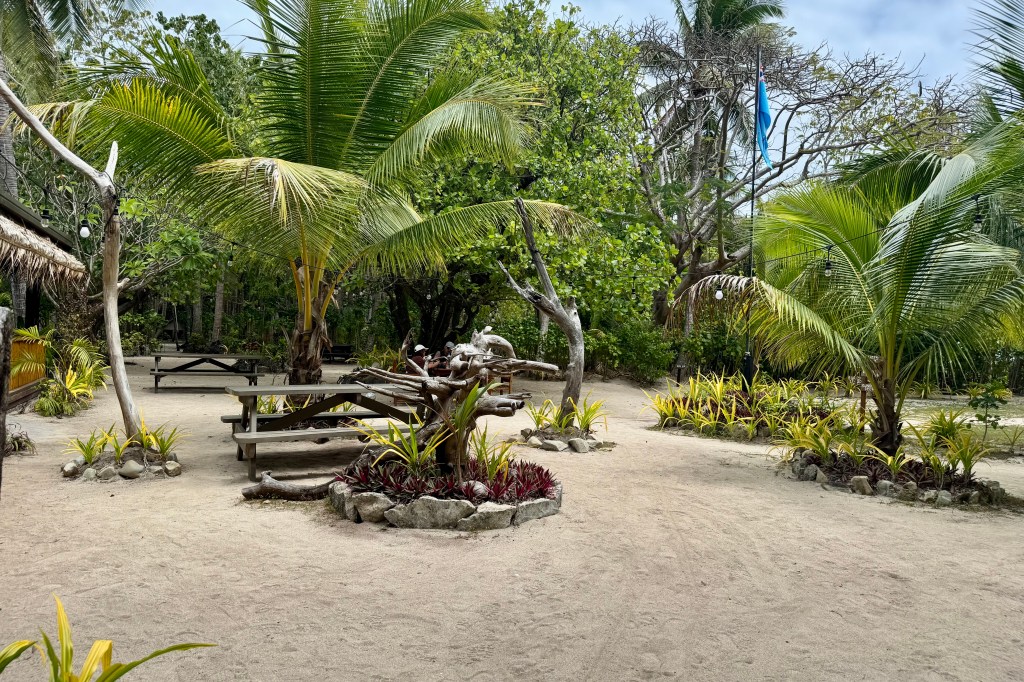
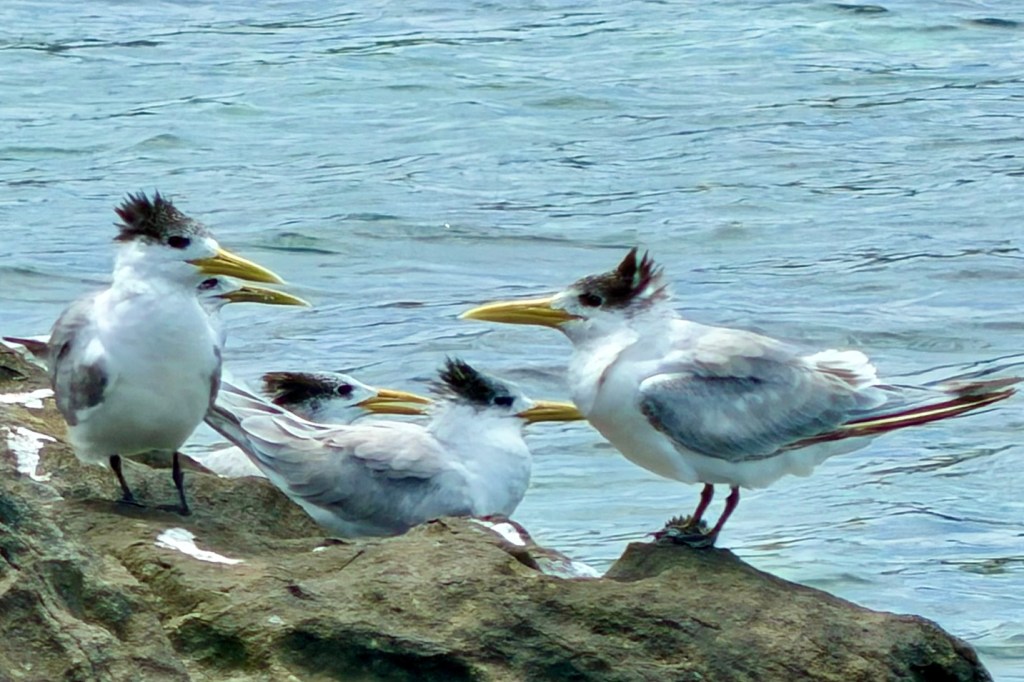
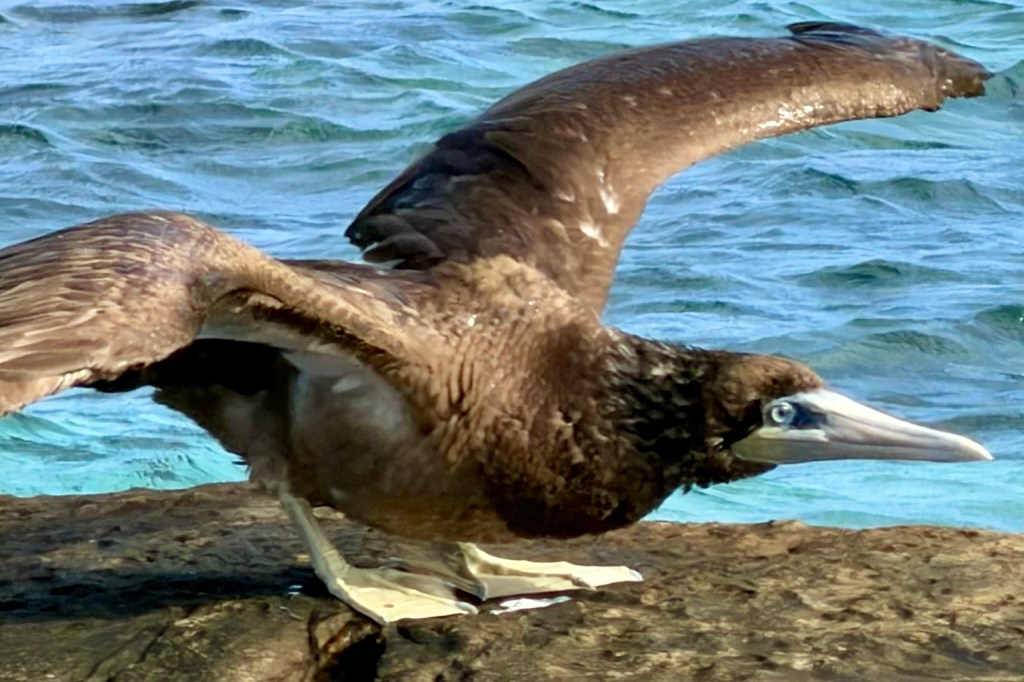
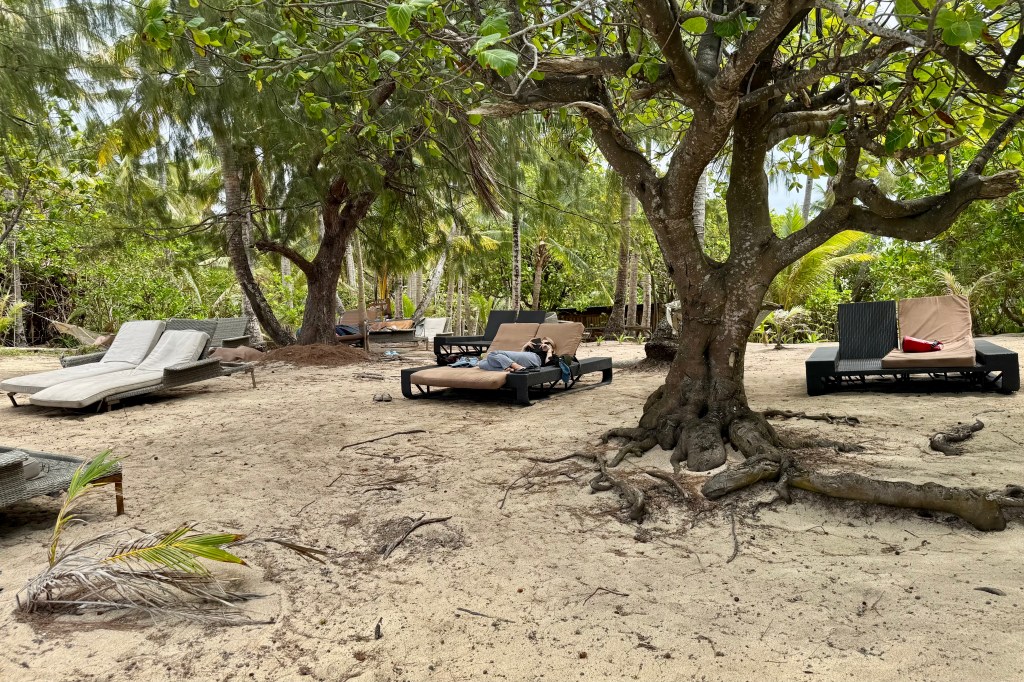
We opted for one last cultural activity to learn about the medicinal plants. Afterwards we spend the next few hours soaking up the meticulously groomed grounds. Every bit of visible sand in the guest area seemed to be raked daily. We watched the birds and life along the rocks on the sea shore and spent time in the main bure which had internet access, and which we purposefully had limited our use of. Lunch wasn’t included on the departure day so we made sandwiches from the breakfast bar which had plenty of breads, meat and cheese to choose from.
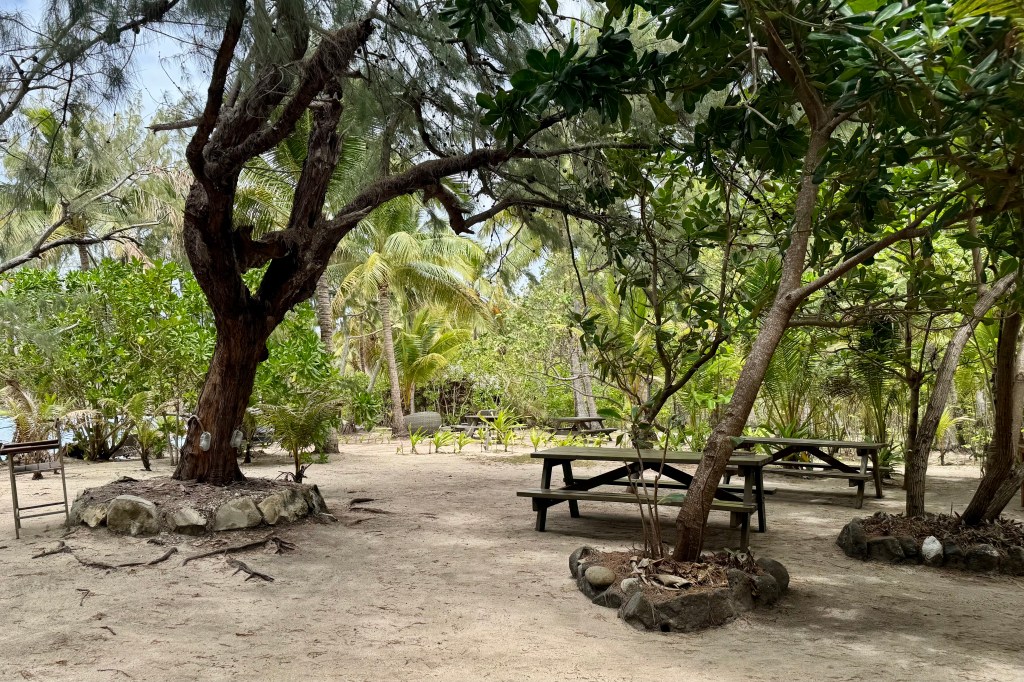
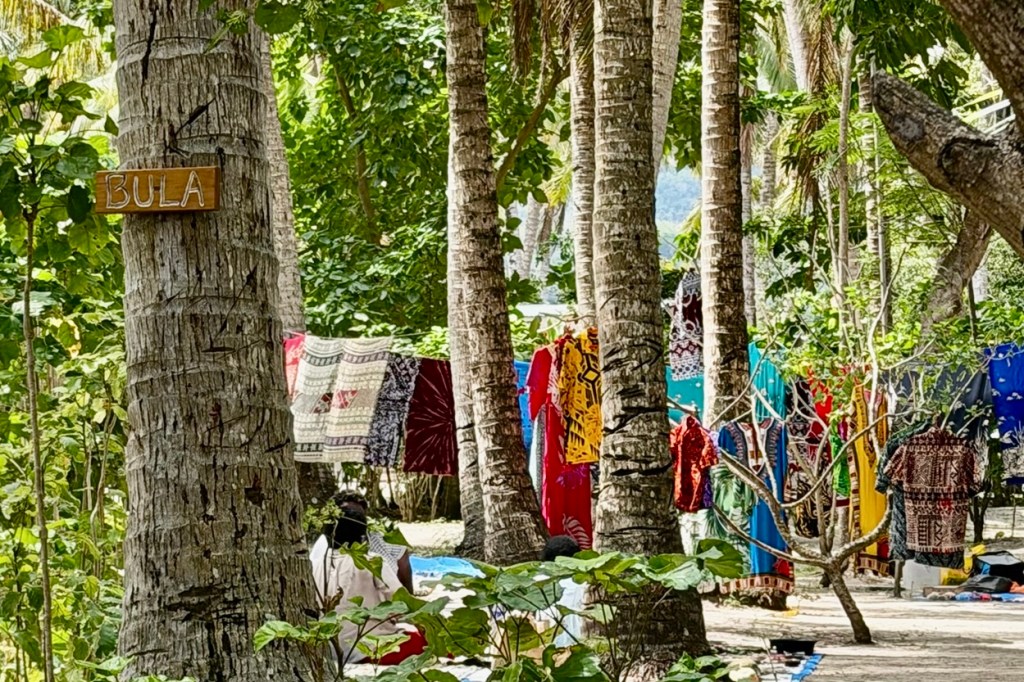
On an isolated island like this, there’s almost no shopping for food or sundries, so you bring what you need. One nice exception: on several afternoons, local Fijian women set up under the palms to sell handmade crafts including jewelry and colorful sarongs in bold patterns inspired by traditionally Fijian designs. I couldn’t leave without a souvenir so I bought a map cloth of “the Fiji Islands” printed on mulberry bark and a cream, navy and maroon cloth in the style of the Fiji masi. Both will remind me of the days at Barefoot Manta Island Resort. Before long it was time to say vinaka and move on.
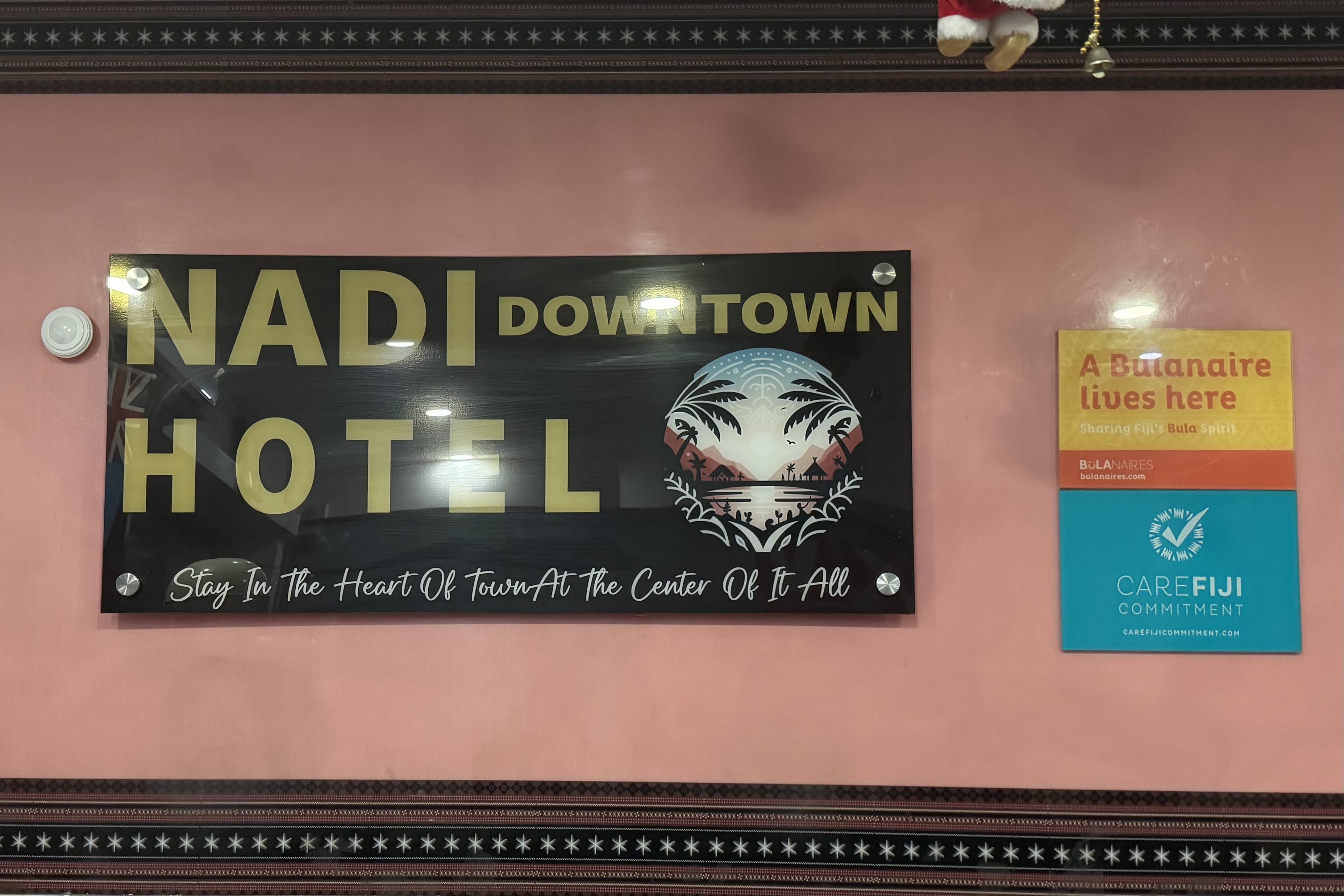
We retraced our journey from Barefoot Manta in reverse. We took the launch out to meet up with ferry and I worried that the transfer would be tricky with the chop on the water but I managed it without a hitch. The ferry ride was smooth and before we knew it we were back in Nadi. I had booked us a room at the Nadi Downtown Hotel (yes that is really its name) and this was one of those moments when I wondered what I had been thinking. None of the shuttle buses listed the hotel as a stop. I suspected that was my doing since we had been picked up at the airport on the way out the ferry company assumed we would be returning to the airport. With no bus available we hailed a taxi and arrived at the hotel at 6:30 PM. It was getting dark out.
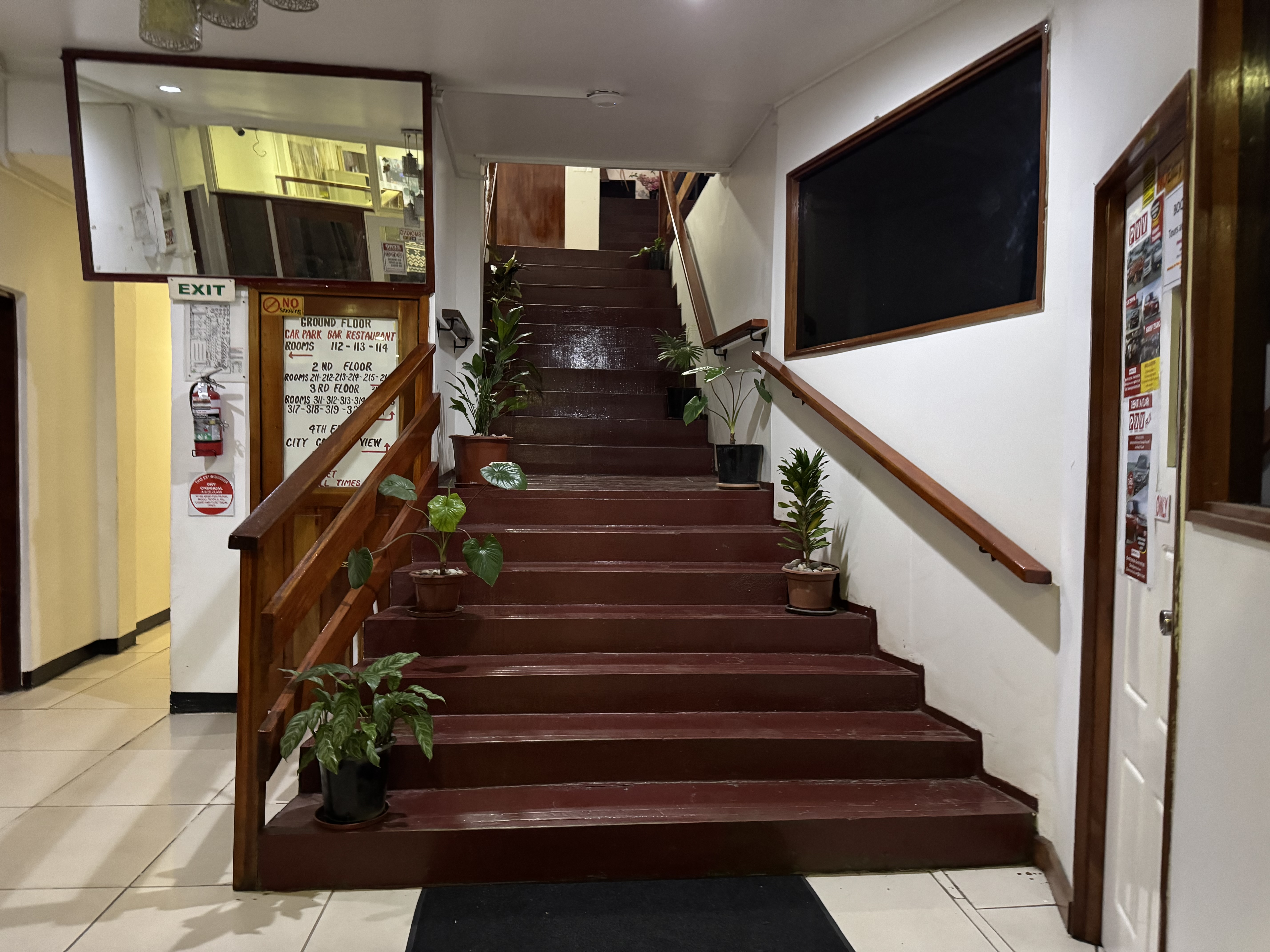
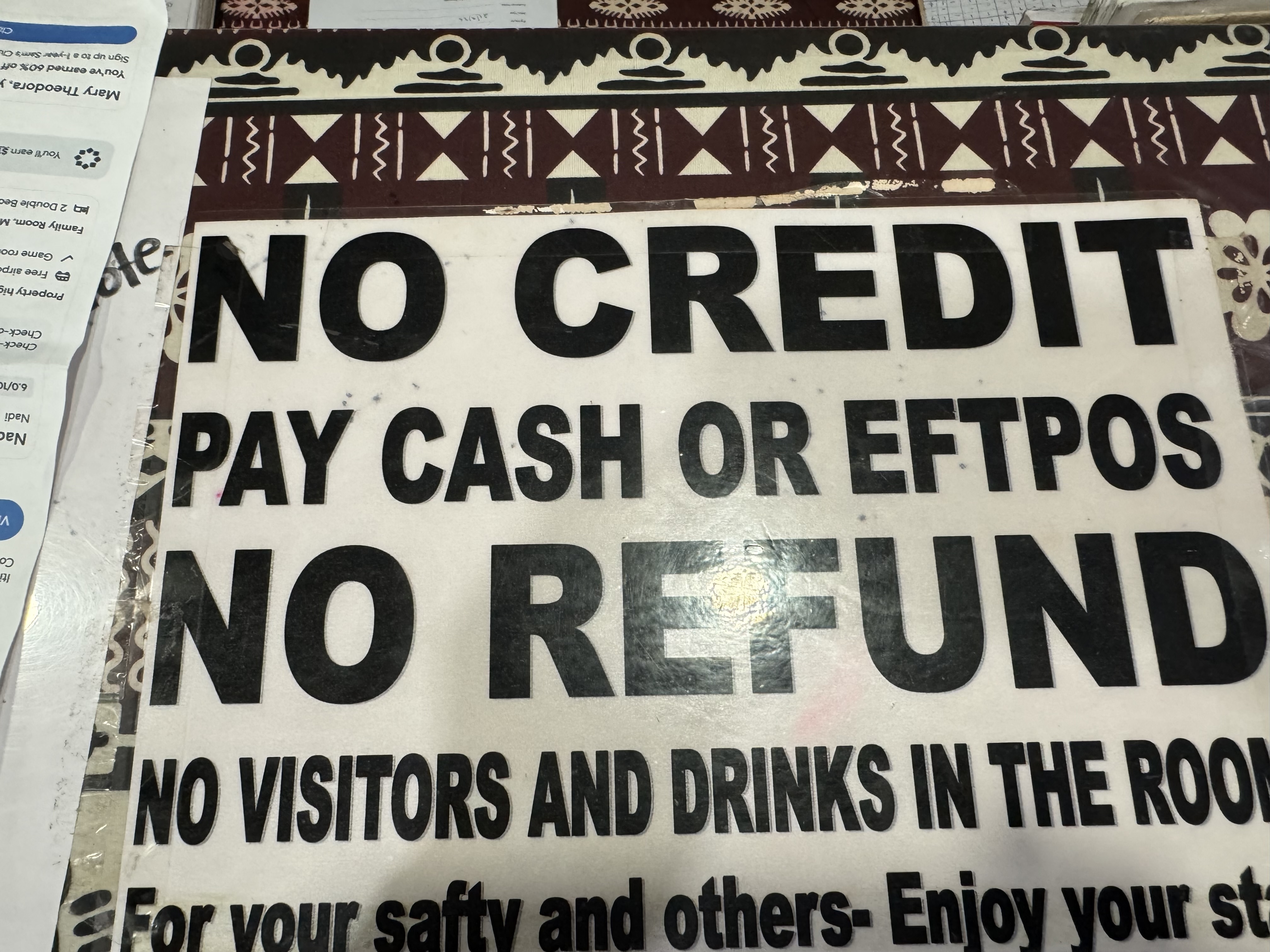
No Credit, No Refund, No Elevator

Walking into the hotel was an experience. The desk attendant looked at us with confusion then disappeared to fetch one of the owners or manager I assumed. I did not take this as a reassuring sign. Our reservation was in order and fully paid but they wanted a cash deposit for the room key and they wanted it is Fijian currency which we didn’t have. We only had, at that point, US dollars, which set off a hubbub whether they could, and would accept our $30.00 US for the key. After what felt like a top level government negotiation they agreed.

The lobby, meanwhile, was sending mixed messages. One sign proudly announced “A Bulanaire lives here,” celebrating Fiji’s famous Bula Spirit of warmth and welcome. Another, in enormous capitals, read No credit. No refund. Bula Spirit versus the demanded cash deposit for a key?

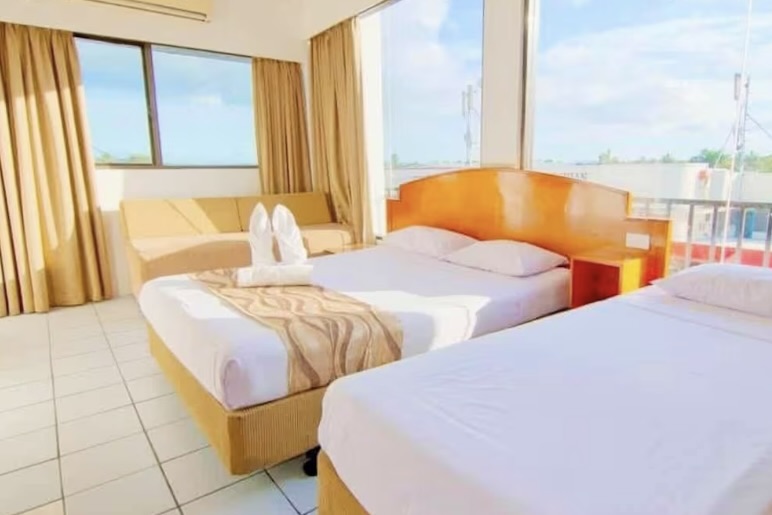
Finally, key in hand and towels presented like a ceremonial gift, we headed for our room. It was on the third floor. There was no elevator. This was one of those old hotels that had the potential to be charming but you will need to enjoy cardio workouts during your stay if you want to stay here. Then came the climb. The staircase was a gleaming, polished-maroon monument to my poor choice, flanked by a cheerful guard of potted plants that would hopefully cheer us up on the way. Up we went. Tasia had my bag in tow along with hers with the grim determination of a sherpa. Now for the view. The website had shown a bright, sunny room with floor-to-ceiling windows, a golden headboard, and a towel swan presiding over the bed. Our room, arriving after dark, was a slightly different story: two beds, a wall-mounted AC unit, a very tiny TV screen high up in a corner, a well-worn utilitarian bathroom, and a sliding door onto a balcony that overlooked the city I assume. There was no towel swan though we had a few squares of that white tile.
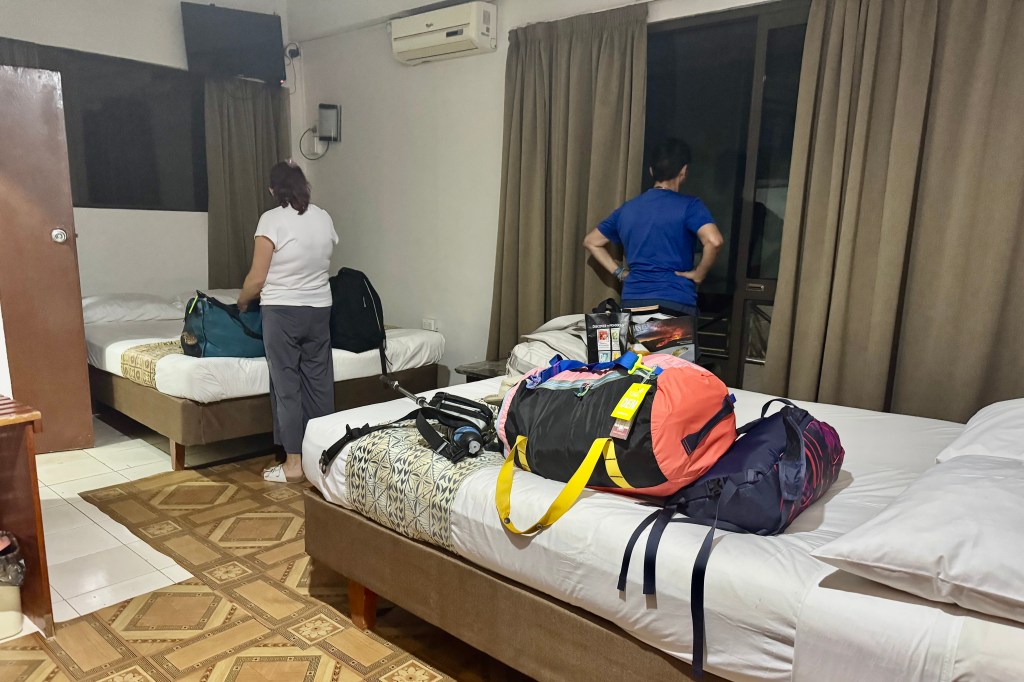
Then there was the floor. Just inside the door, a vintage sheet of linoleum unrolled before us in a bold geometric pattern of diamonds and squares, a design that seemed to have last been fashionable around the time my parents were having children. I am currently 82. It had clearly been cut to fit with optimism rather than precision or had been cut to fit a different room, because it simply stopped, mid-room. Beyond that point, the big white tiles took over, perhaps a different era of renovation. Then there was a third flooring type in the wardrobe area. Walking across the room became a tour through the different eras of flooring.

We settled in with minimal unpacking since we were getting our shuttle to the airport at 5: 30 AM. Once settled in, we made the executive decision to stay put. One of the reasons I’d chosen a downtown hotel was to get a real feel for the city of Nadi, but it was late, we were tired, and the city would have to wait. In fairness, the room was clean, the beds were okay, and it was a serviceable place to land after a long day of travel. It would be a decent location if we had had the time and inclination to explore the city.

Instead, I picked up the phone and called the front desk for the Wi-Fi password, a simple request, I thought. I was told I’d have to come downstairs and collect it in person. That is right! In person! As if it were a parcel, or a dowry. I stood there, phone in hand, mentally tallying the three flights of stairs I had just negotiated and quickly concluded that I didn’t need the internet that badly. The password could keep. So I did what travelers did before the invention of the router: I picked up a book and read it, like a person from the past, in a room that was frozen there with me in it. Would I book again? NO!
Paperwork, Panic and a Very Long Driveway.

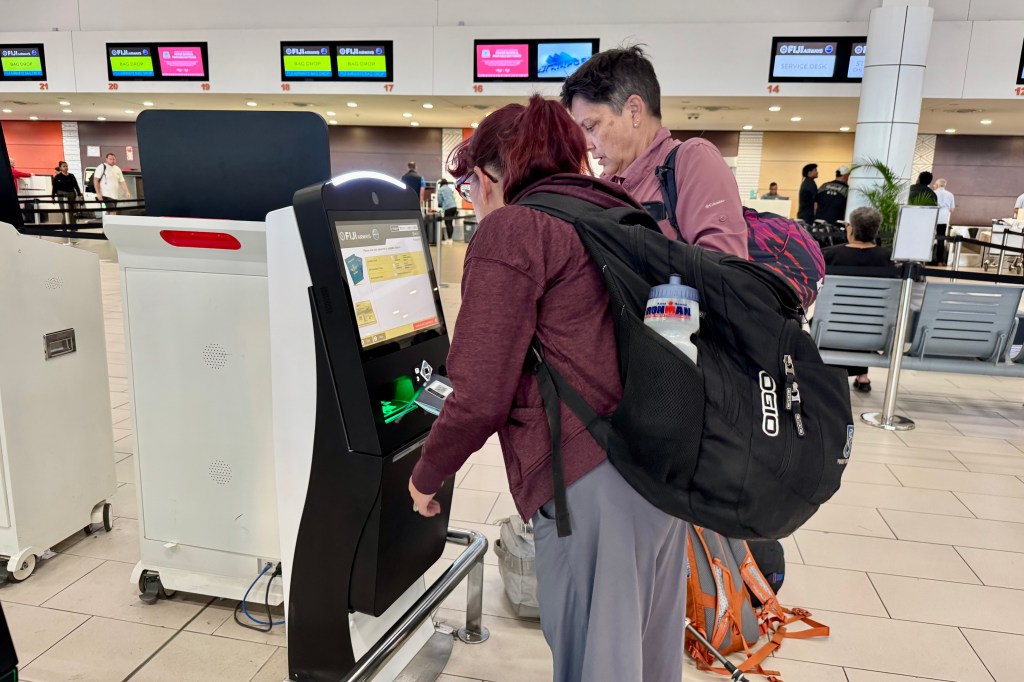
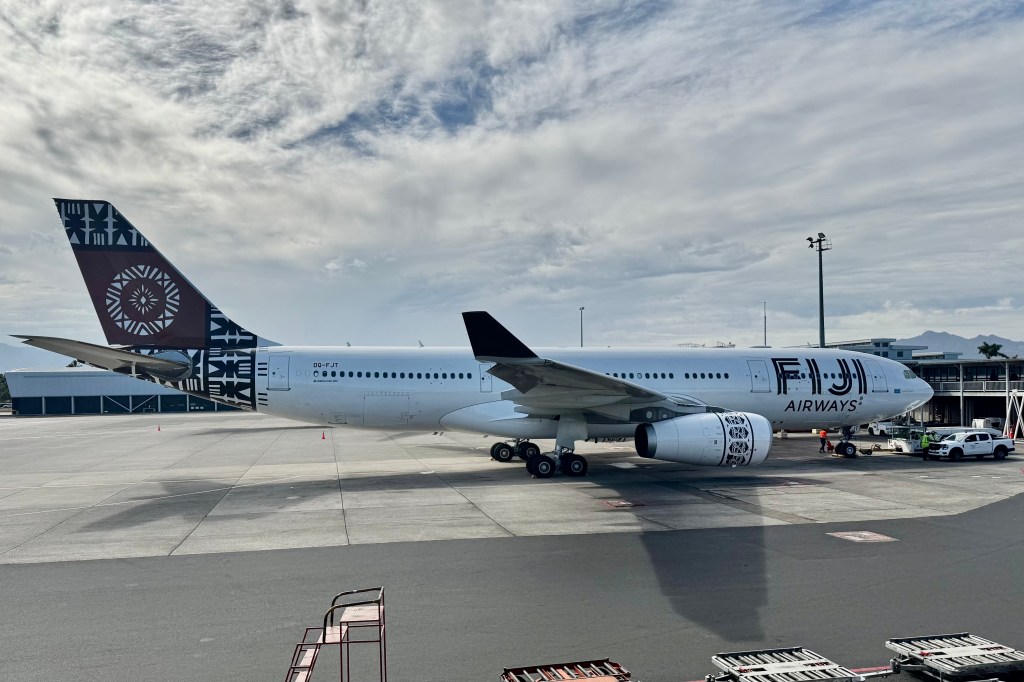
We arrived at the Nadi airport with plenty of time to spare, and thank goodness we did. Bernadette and Tasia breezed through the self-service kiosk with their passports. My passport refused to cooperate. Once we finally flagged down an agent, it took a long while to discover the problem. To reach Papeete we had to change planes in Auckland, and even though we’d never leave the airport, New Zealand requires a pass-through visa. Somewhere in the machinery, New Zealand visa services had mistakenly filed mine as an NZeTA, an electronic travel authority, which meant I was missing paperwork I never knew I needed and thus assumed I had intended a bit more of a stay than a 3 hour layover. Stress level: level 5 and climbing. After what felt like several ice ages, they admitted the mistake was theirs, fixed it, and sent us off to our Fiji Airways gate. The short 3 hour flight was uneventful, unless you count breakfast, a cold egg panini that gave “atrocious” a new meaning.
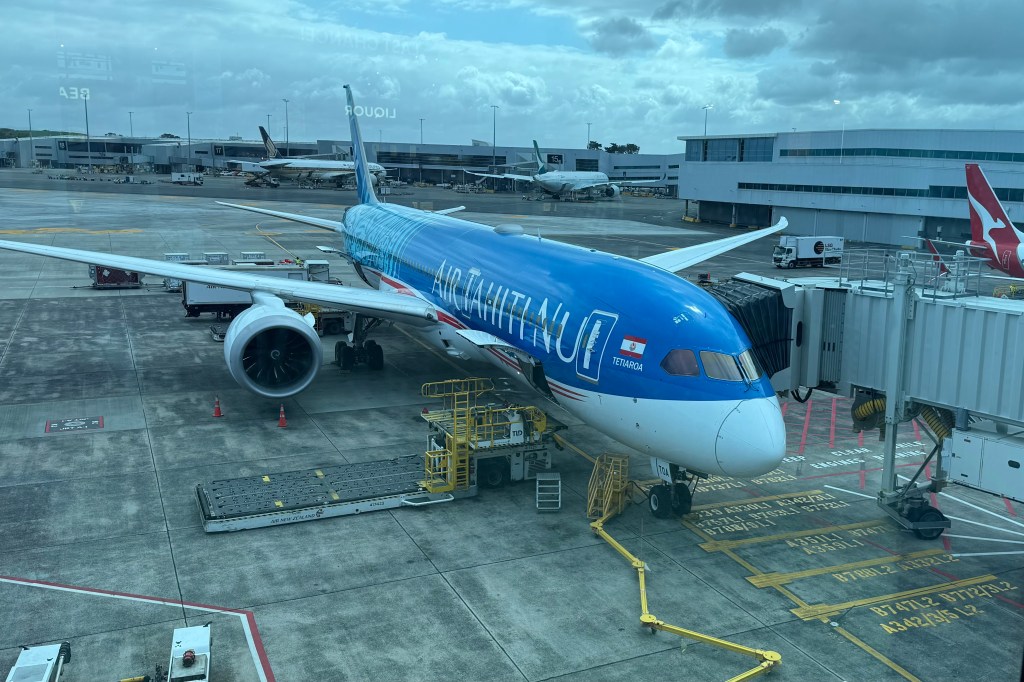
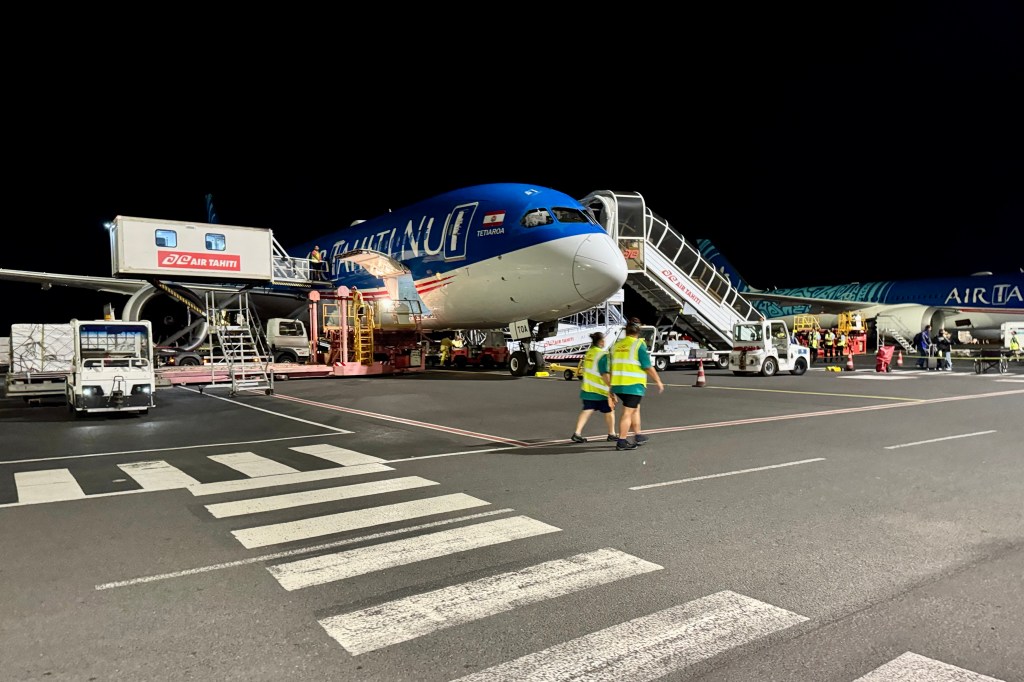
In Auckland we had a three-hour layover, with no chance of leaving the airport, so we found the international departures area and waited for our gate to be posted. When an agent finally appeared, Tasia and I got our boarding passes with no trouble. Bernadette could not. The name on her ticket didn’t match her passport, and this one was entirely my fault. This flight, on Air Tahiti Nui, was a separate reservation from the Fiji one, and I had booked her under her maiden name instead of her married one. Bernadette has been married for sixteen years. Sixteen. I had, in a single keystroke, erased a decade and a half of marriage, and the airline took the news about as well as her husband might have. Initially, nobody at the gate knew how to fix it. The answer finally was that reservations would have to change it, and they couldn’t do it from there. Tasia took the phone and was put on hold for an interminable stretch, while Bernadette called her husband and had him dig up her birth certificate and marriage certificate and send photocopies she could show the agents. At one point the call dropped after all that waiting, and Bernadette, understandably despondent, started to believe she’d be left behind in Auckland. I assured her that if she couldn’t board, none of us would. Fortunately the phone reconnection went smoothly. Then, just as our group was called to board, the name change came through. This was a ten on the stress scale. I barely remember the flight itself, which I’ll take as proof that it was uneventful, though at about five and a half hours it ran longer than I’d expected.
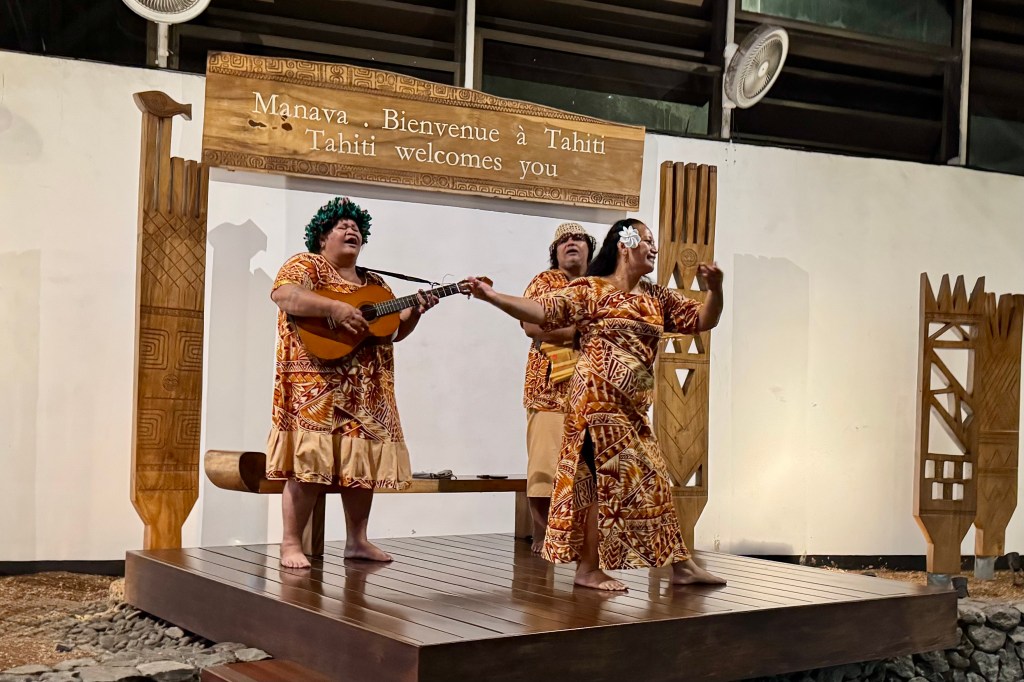
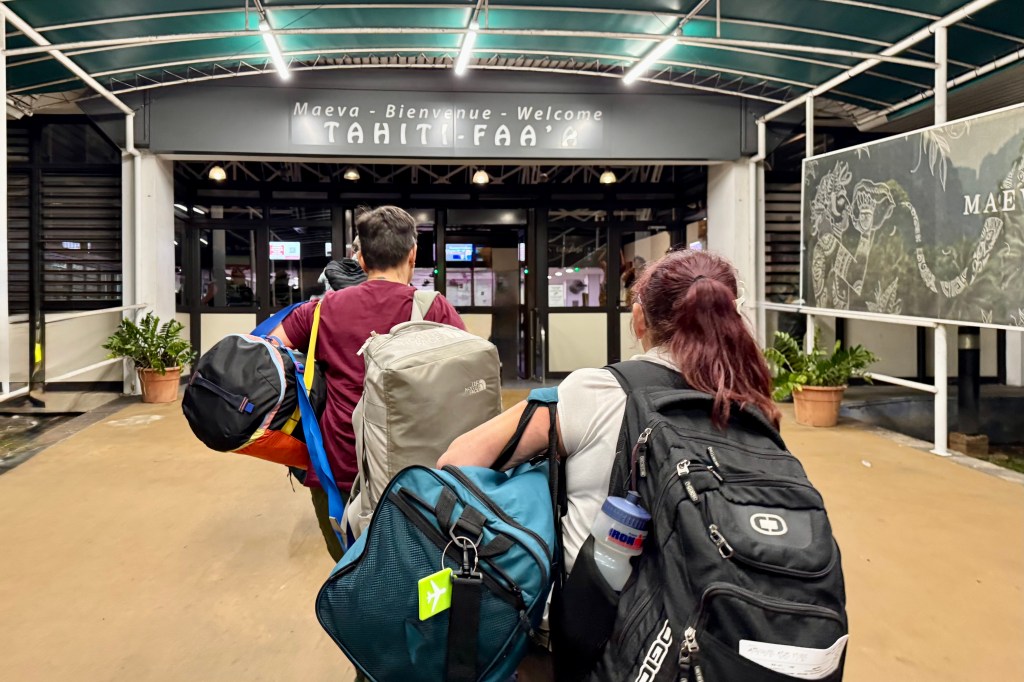
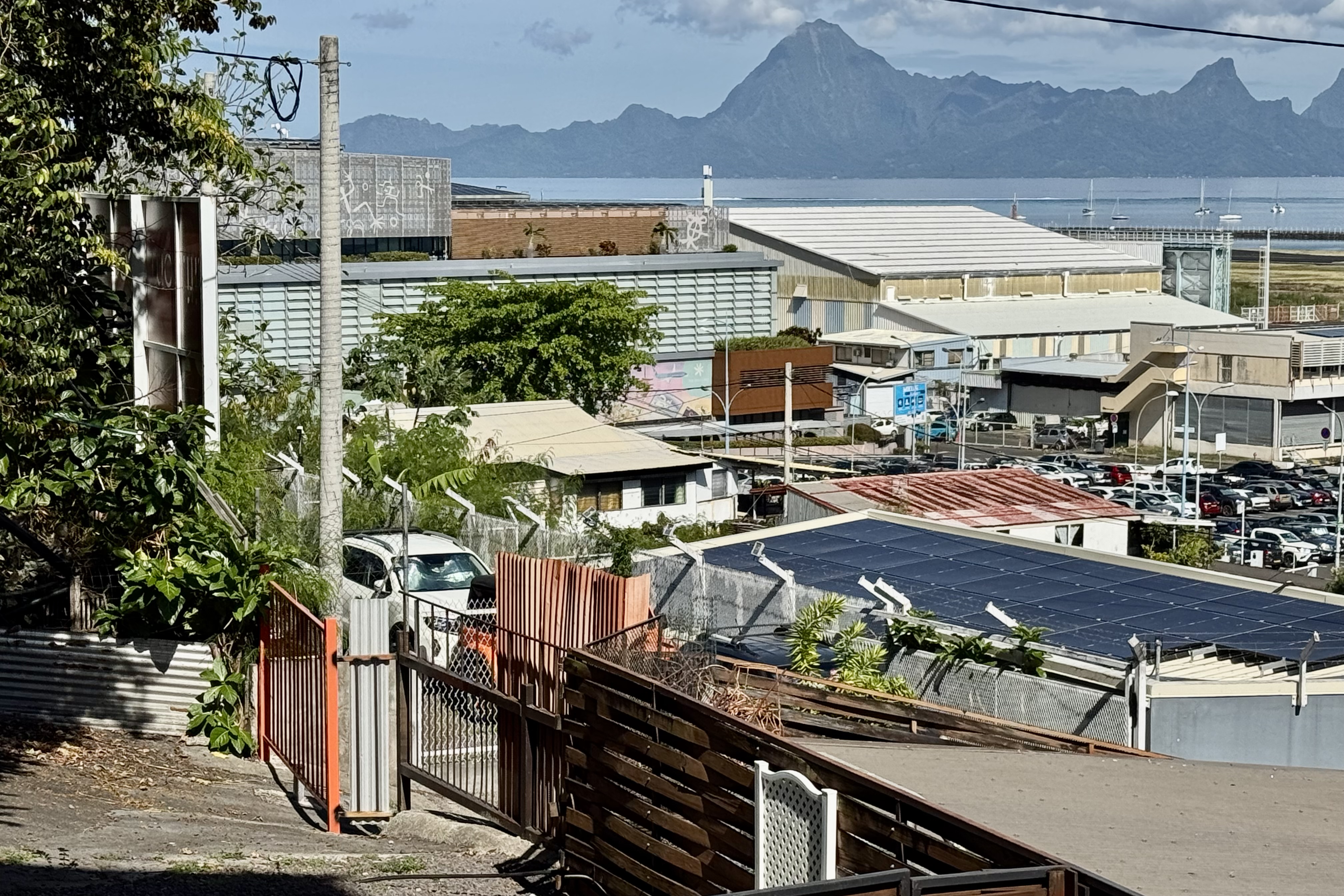
We landed in Papeete around 8:30 p.m hauling our bags which we had carried on the plane. We usually check bags but here we would have had to leave security to collect any checked bags during the plane and airline change. Then re-enter. Grateful yo have our bags in tow already, Tasia had officially had enough of traveling and just wanted to reach the hotel. Our hotel, the Tahiti Airport Hotel, was right across the street, and I suggested a cab. Tasia’s economy mindset kicked in and she chose to walk with the bags. “Right across the street” turned out to be a generous description. It meant across the street, up a hill, and then up a long driveway that seemed to lengthen with every step, like a treadmill designed by someone with anger problems. It was also pitch dark, and we had no real way of telling what kind of neighborhood we were trudging through. For all we knew it was a charming residential street or the opening scene of a true-crime podcast, and the darkness wasn’t offering any hints. Tasia again gallantly hauled my luggage, so I fared fine, and I’ll admit I strolled with the breezy confidence of a woman who has checked her baggage. Well, sort of. Bernadette, with her significant back problems and a heavy bag, was in real distress by the time we arrived, and I suspect she was composing a strongly worded review of “within walking distance” notation somewhere in her head for the website. The saving grace of that “economy mindset” is that it was free. The hotel, though, was lovely, the rooms were beautiful, and we settled in without any further drama. After the day we’d had, a room with no key deposit and a bed with no paperwork attached felt like a miracle.
Morning in Tahiti: Sunshine, Aquariums, and a Fresh Start

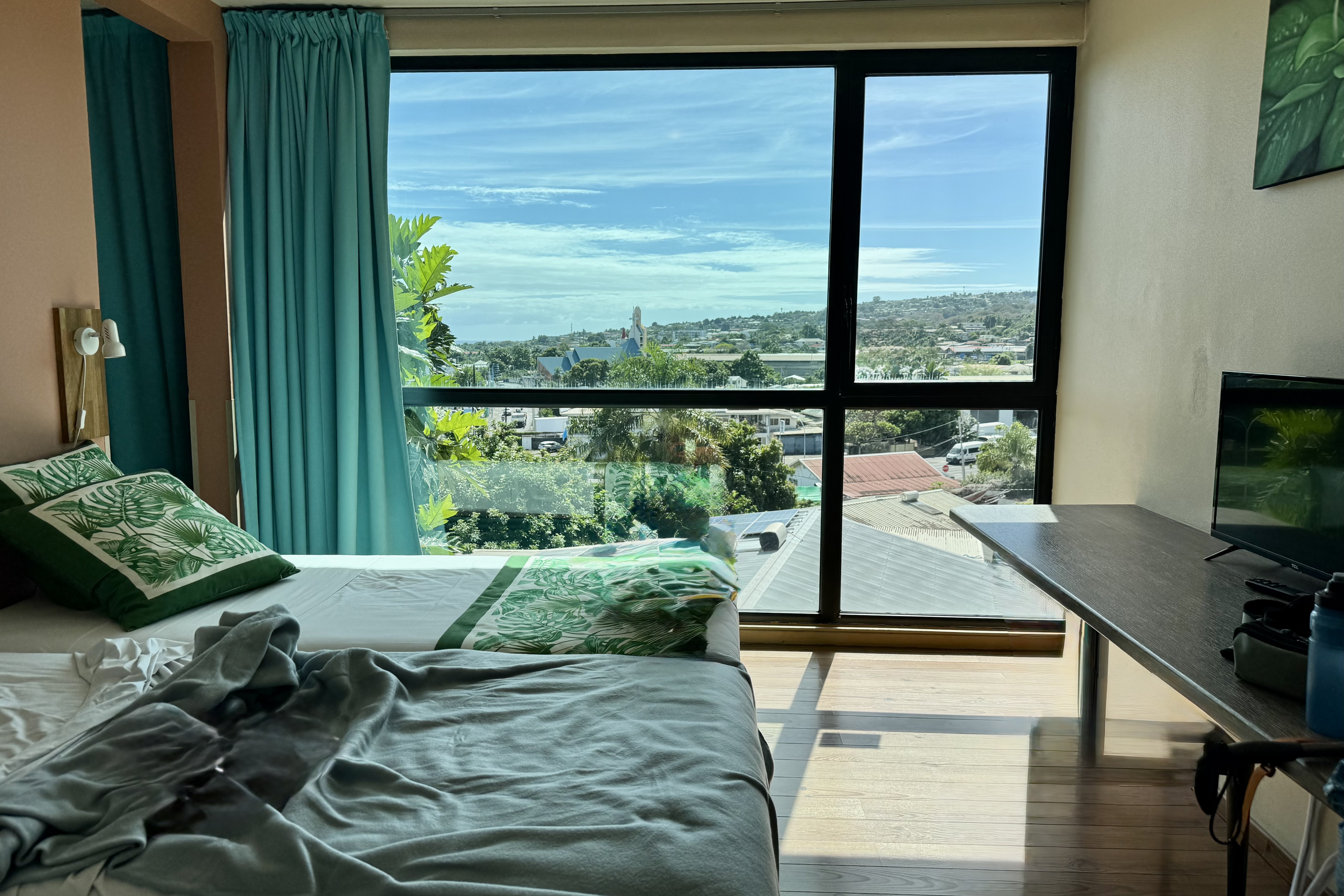
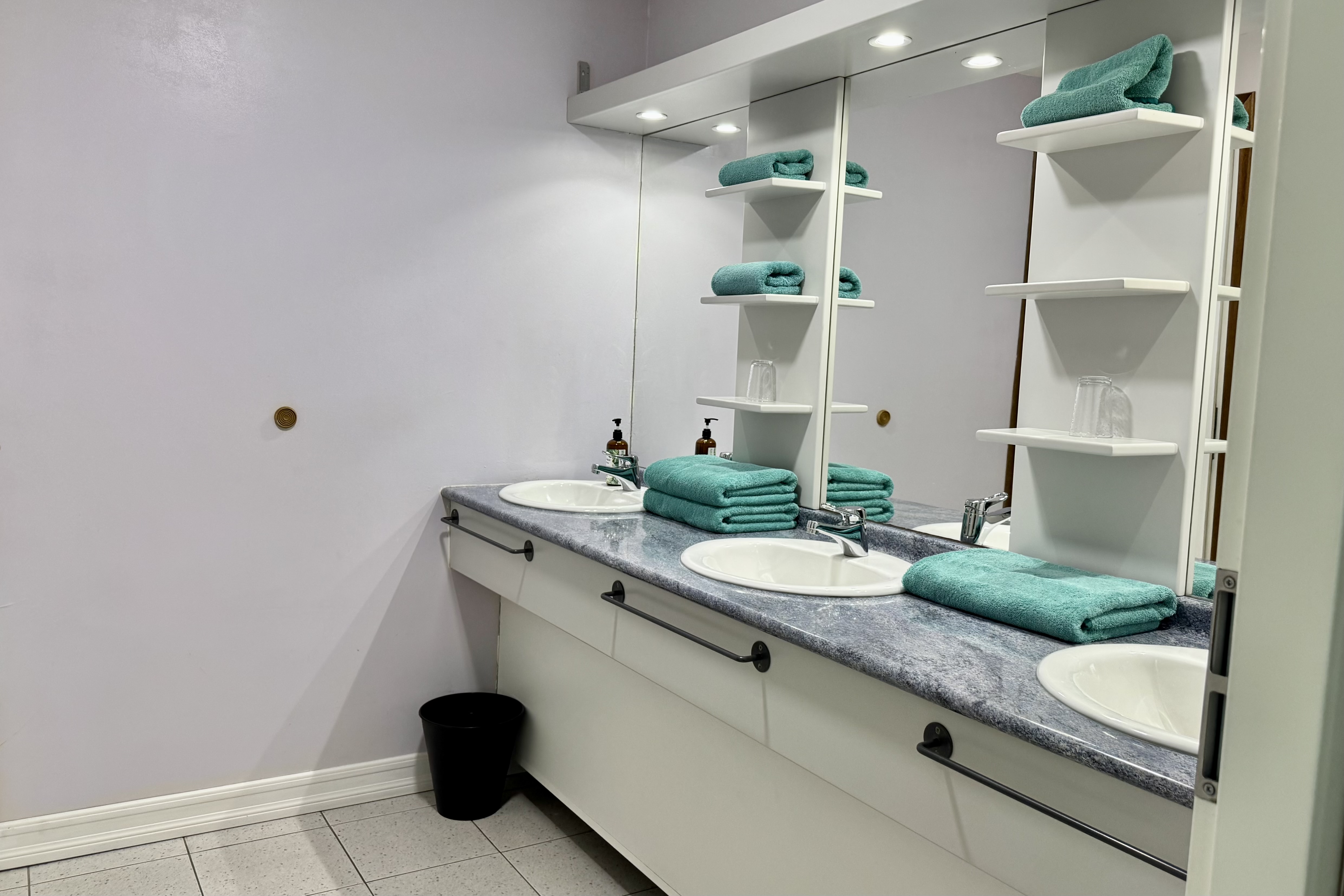
We woke to a bright blue sky and sunshine pouring through the floor-to-ceiling glass walls, which was a dramatic improvement over the previous night, when the only thing pouring down on us was our own sweat as we hauled ourselves and bags up a hill in the dark. Today was the final leg of our transition journey: the ferry to Moorea. But first, we took some time to enjoy the hotel, which, it turns out, looked completely different in daylight. In stark contrast to our dark, dank Nadi room and its grand maroon staircase, this was a sunny, shiny hotel that seemed like an apology for Nadi’s dark, dank room and its grand mahogany staircase. Last night’s mystery neighborhood had been replaced by postcard views.

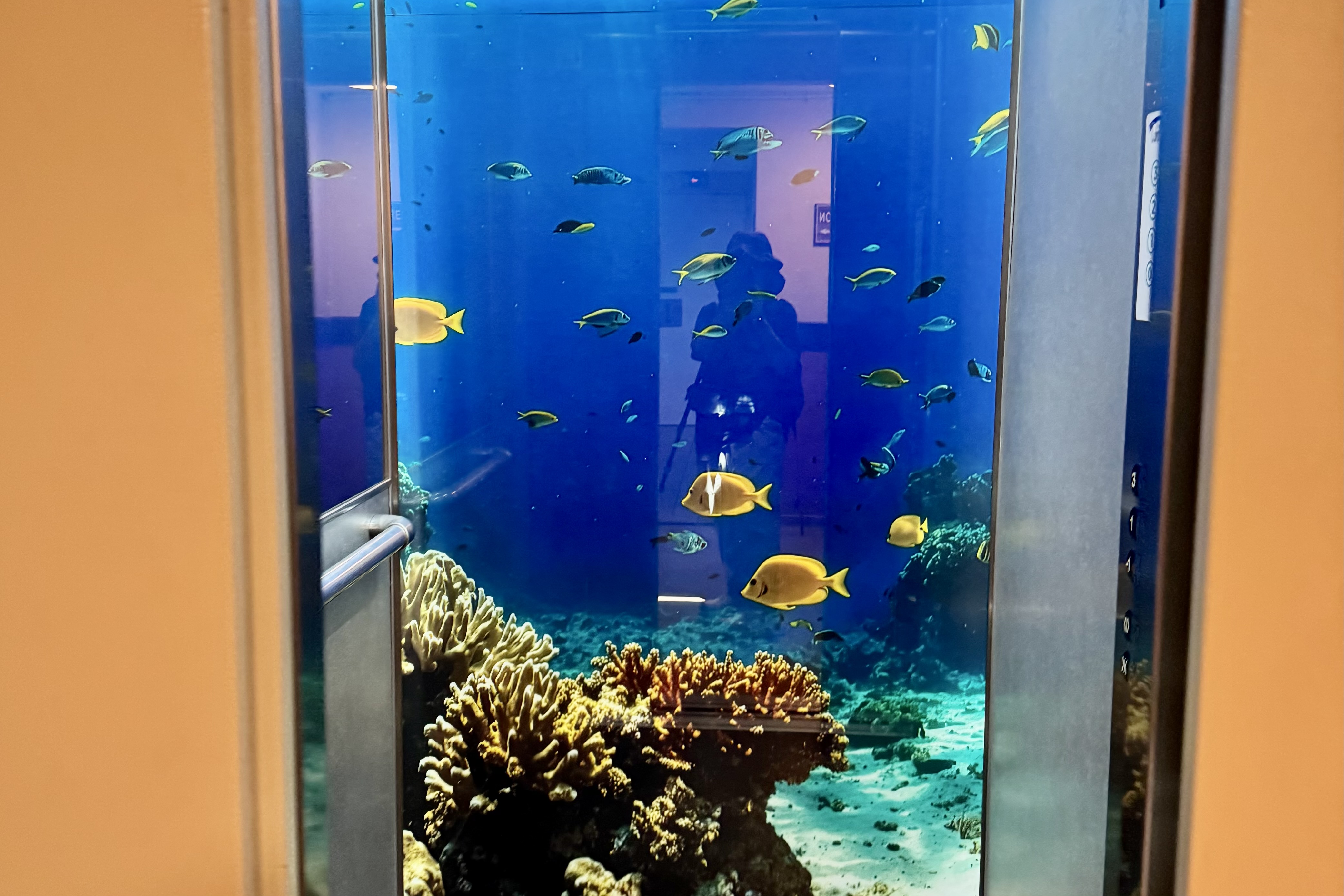
Then there was the elevator. An actual elevator, with an actual button, in an actual hotel. Its walls were covered in a coral reef, complete with schools of yellow tropical fish, so riding it felt like being gently lowered into an aquarium. After the Nadi staircase, I was ready to give it a standing ovation.

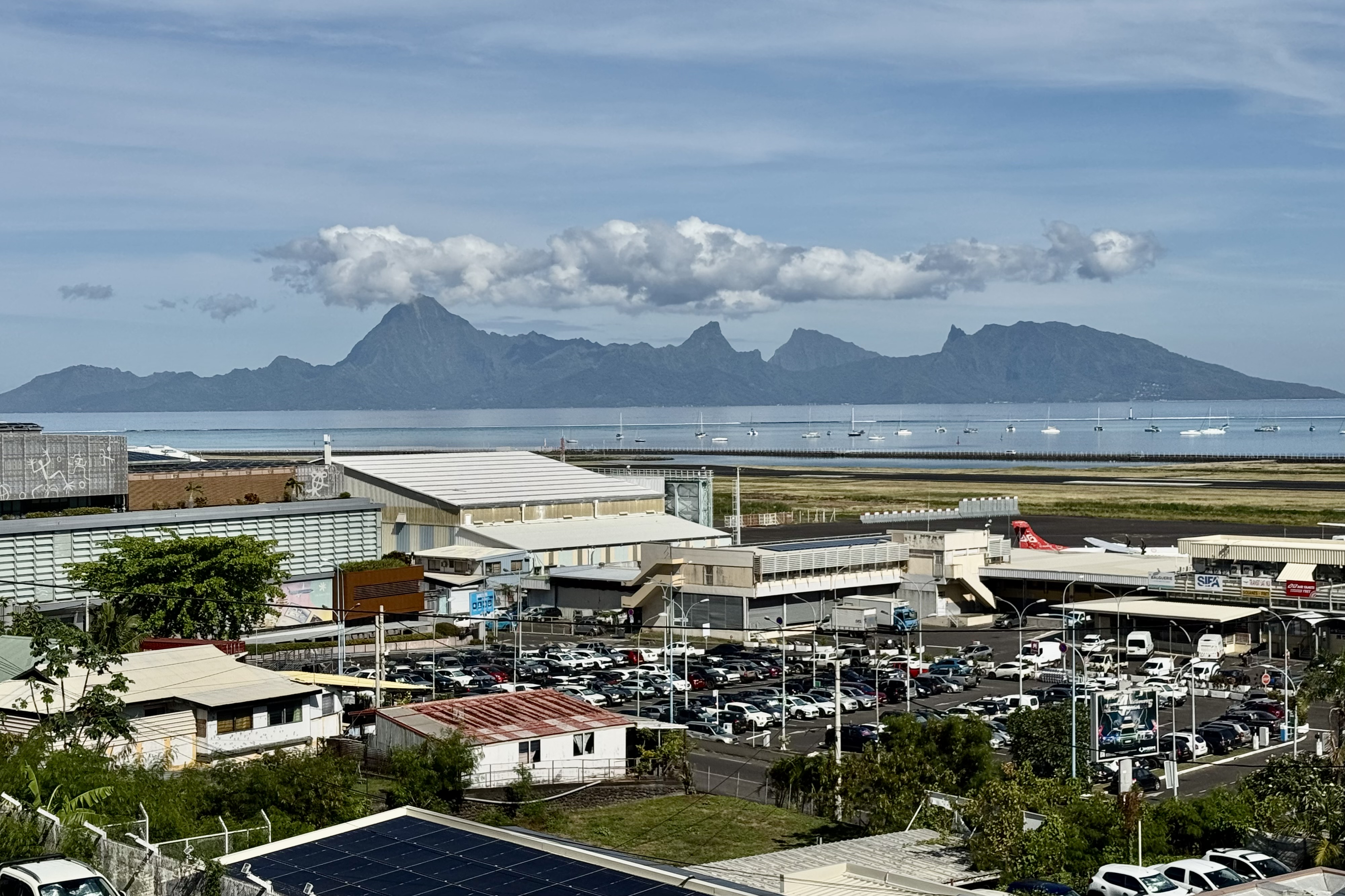
Breakfast was served in a glass-walled dining area where the windows provided views of the bay beyond, and nobody had asked us for cash up front for a room key or a password in person. From there we wandered out to the balconies where the views stretched over the airport runway, the parked planes, and the sparkling water. And there, across the bay, rising dramatically out of the ocean was the mountain range on the island of Moorea. After all the stairs and snafus, it was good to see our destination was within reach. As I stood on the balcony I was almost ready to declare that the string of errors was officially broken and from here on out, everything would run like clockwork.
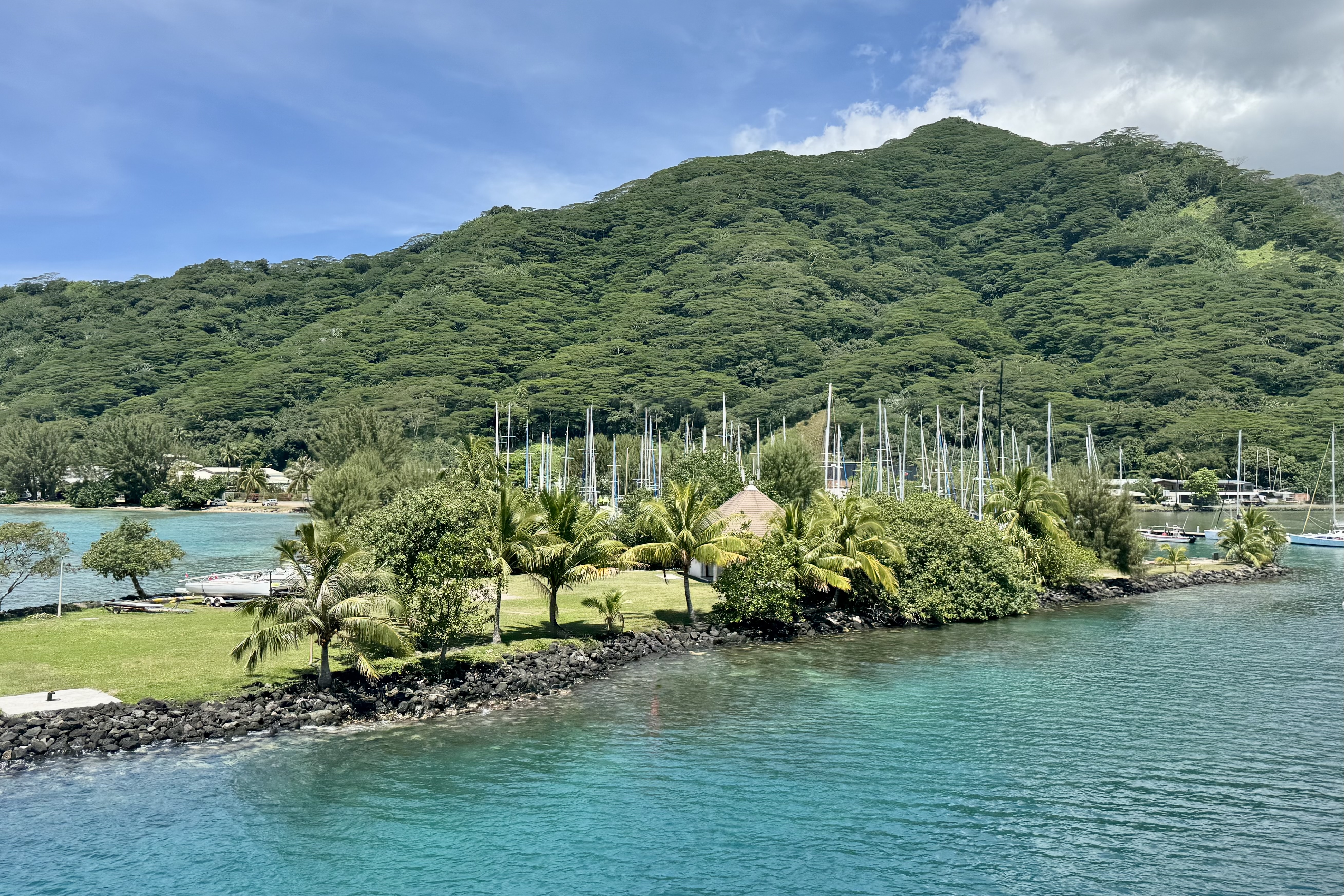
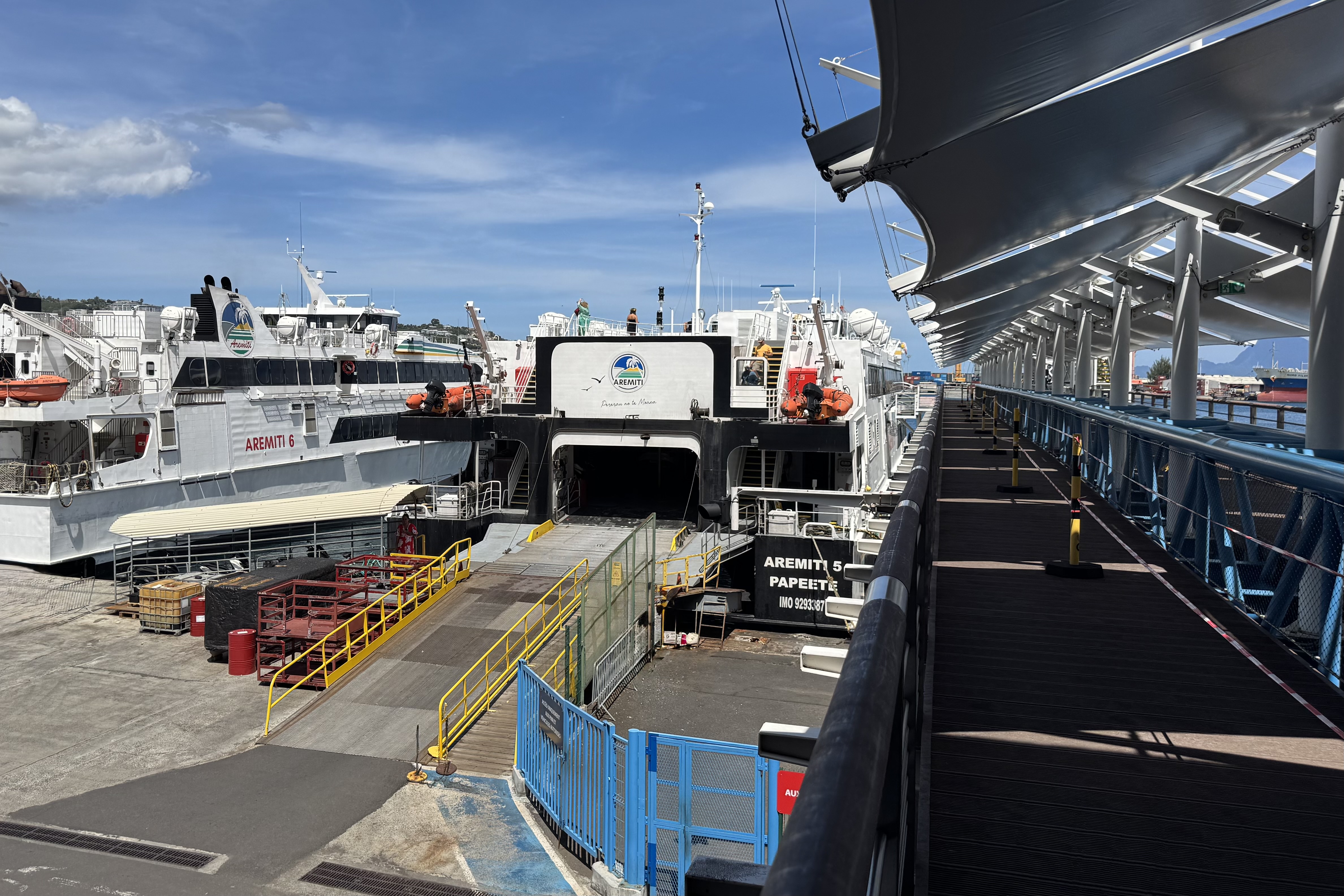
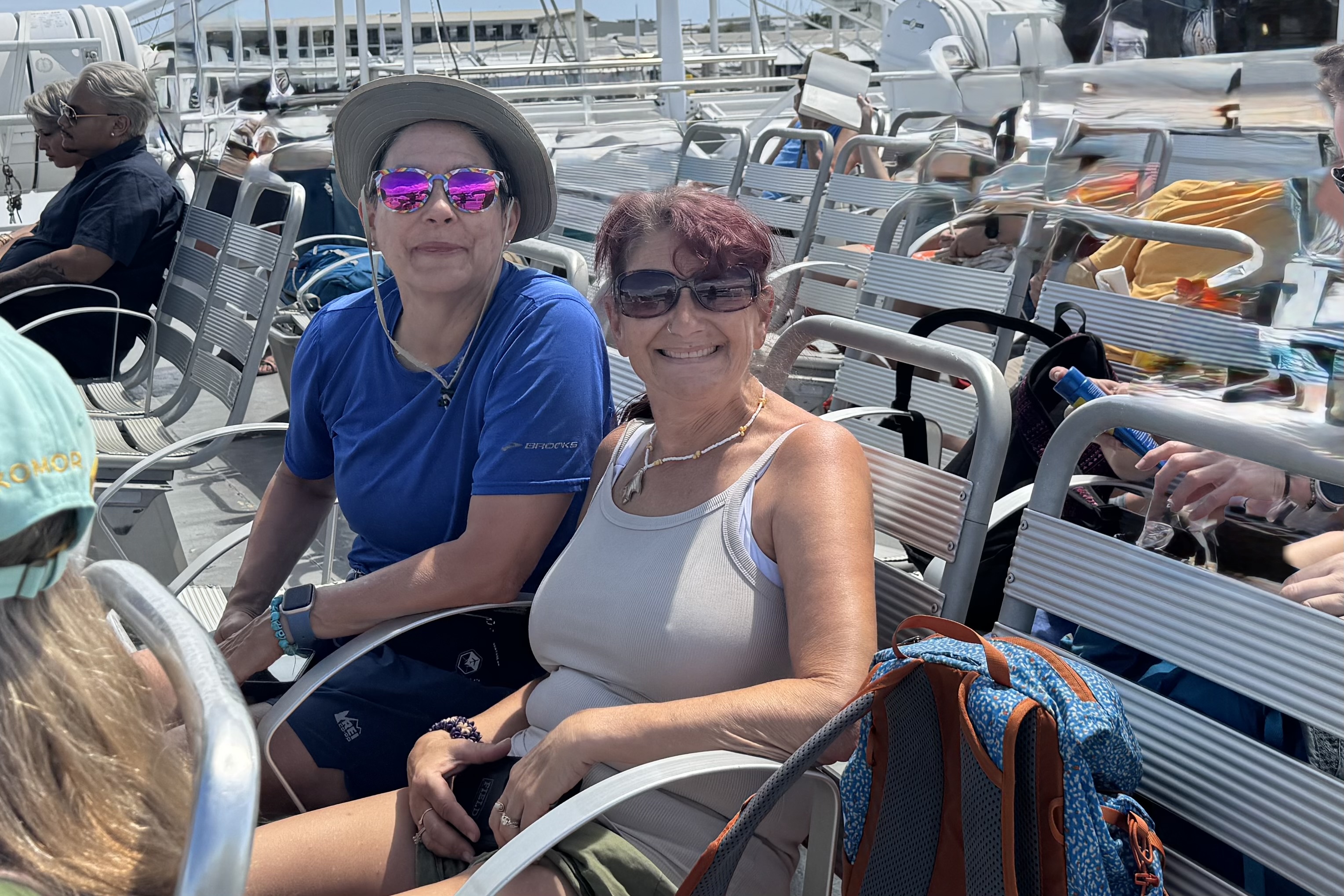
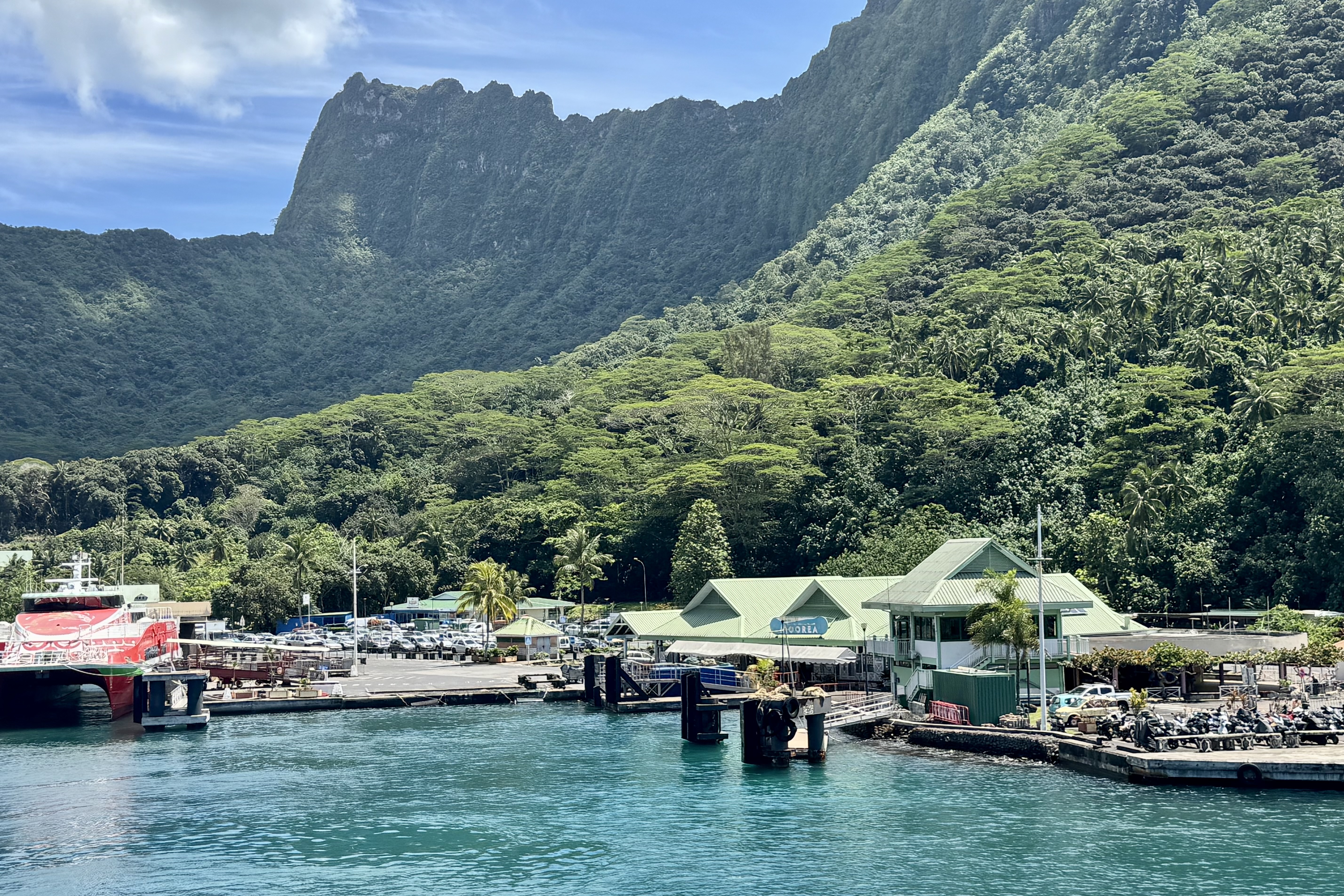
The hotel called us a taxi, and we were soon on our way to the ferry terminal in Papeete. Buying tickets and boarding went so smoothly that I kept waiting for the other shoe to drop. We claimed a spot on the top deck of the Aremiti 5, 10:30am ferry and soaked up the breezy tropical air as Tahiti shrank behind us and Moorea grew ahead. The crossing took barely half an hour, and stepping off the boat onto the island felt magical.

Then came the question of how to reach the Hilton Moorea Lagoon Resort, which I understood to be about halfway around the island. Tasia headed to the rental car office to see if they had a car available, but no luck. That left a taxi, which turned out to be the right call. “Halfway around the island” took only about 20 minutes, because Moorea’s entire perimeter is just 37 miles. That’s one road, one loop, and no chance of getting seriously lost, though given my track record, I wouldn’t rule it out.

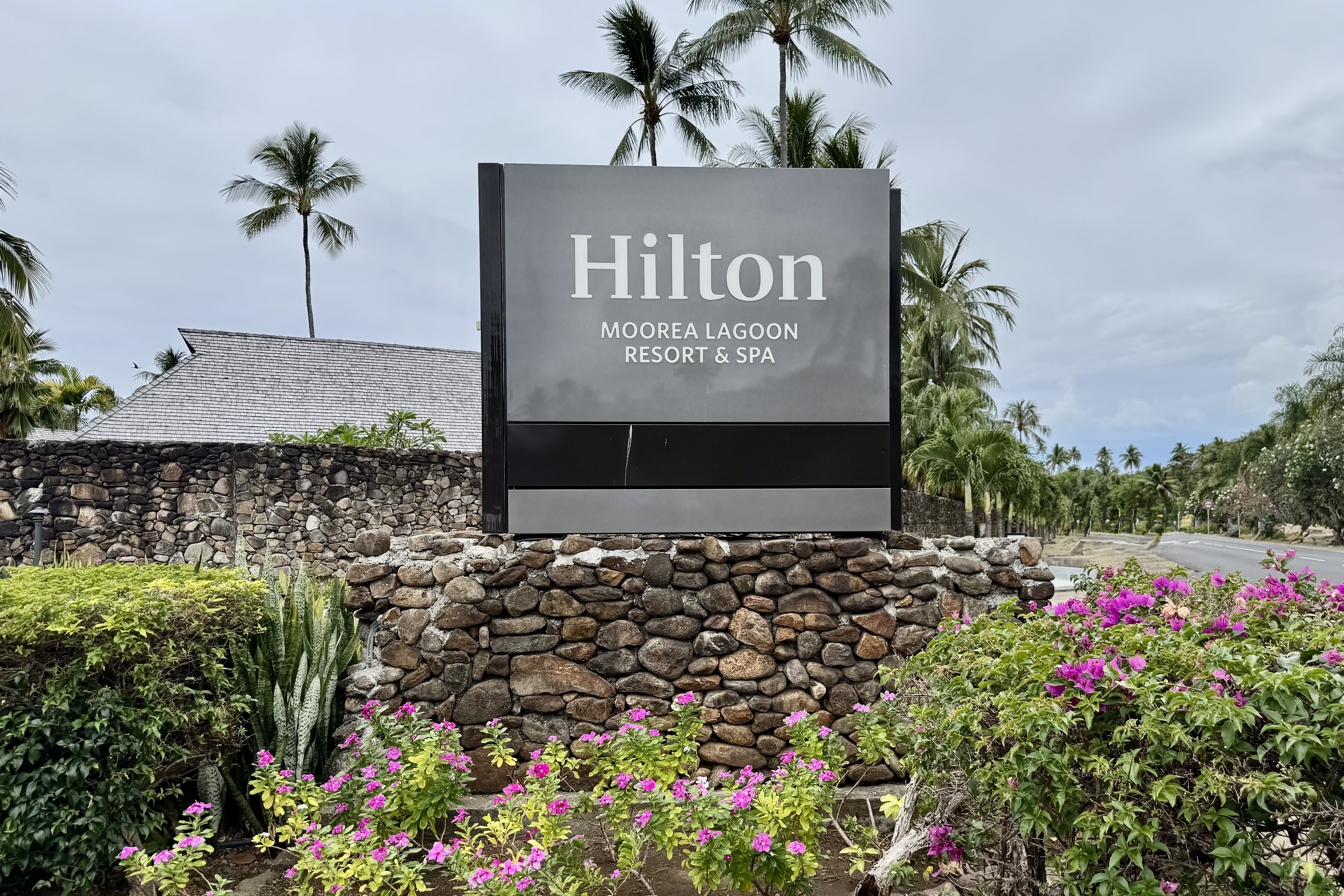
Words nearly failed me as we pulled up to the Hilton Moorea Lagoon Resort. I could feel myself shedding the last of my travel stress. The lagoon was so clear and impossibly turquoise and lush greenery spilled down all over the resort property. This was a place that I am sure never once asked a guest for a cash deposit for their key. That stress scale? It was a 10 in the other direction.
An IslandGoat, Earthy Kava, and a Mango-Sized Bruise

We settled into the rhythm of island living for the next two days. I awoke the morning of Saturday the 19th to news from my daughters that a powerful rainstorm had swept through during the night. I must have been dead to the world because I never heard a thing. There was, however, evidence that the storm had paid a visit to our bure. The semi-outdoor vanity was wet, and everything sitting on it had received a thorough shower. Fortunately, the casualties were minimal, and nothing seemed worse for wear.

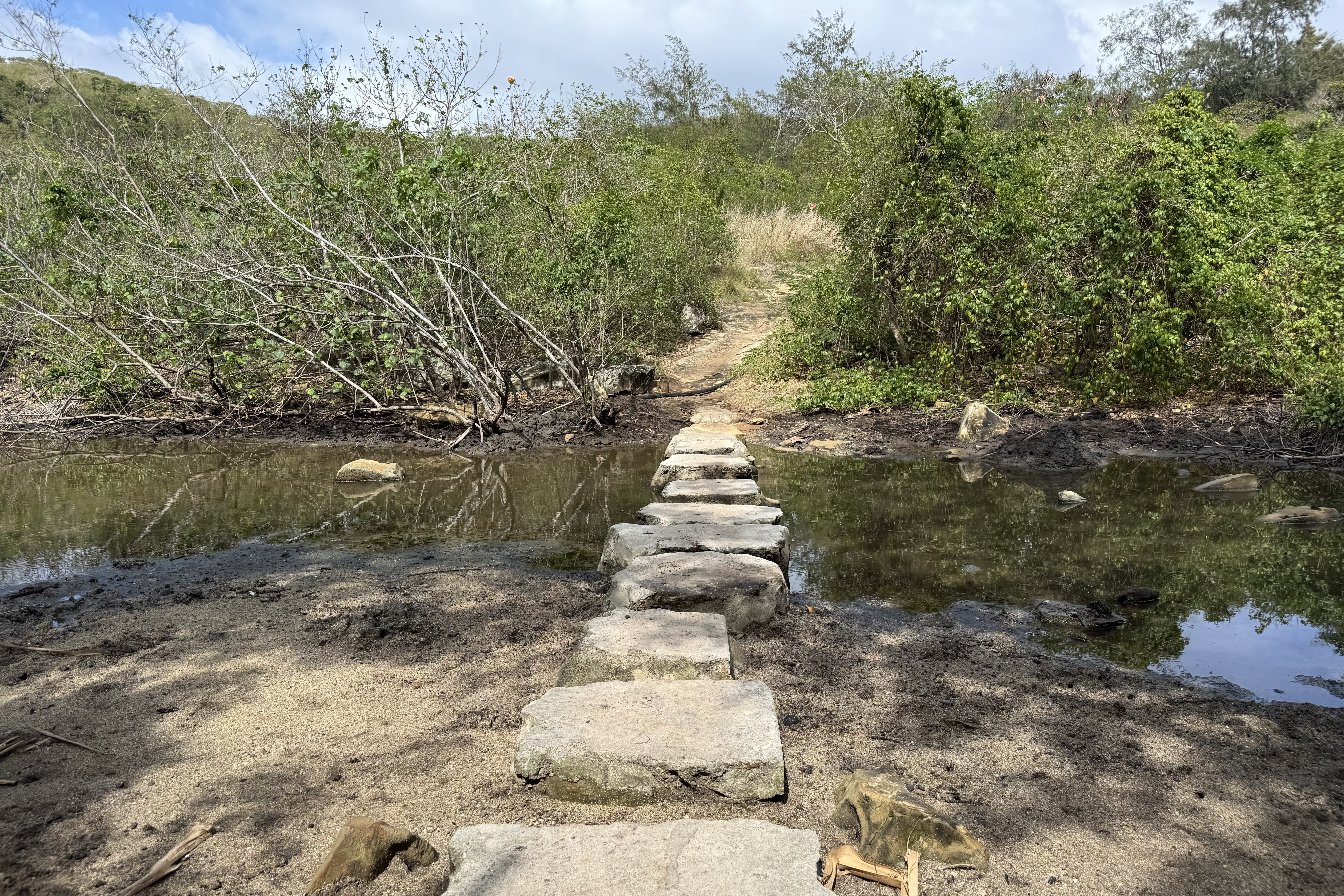
After breakfast, Bernadette and I decided to tackle the island’s one major hiking trail, aside from the coastal walks. We headed toward the far end of the island, passing the desalination operation and making our way through the more “industrial” side of the resort. After crossing a small stream, we picked up a well-formed trail that was easy enough to follow and climbed gradually uphill.

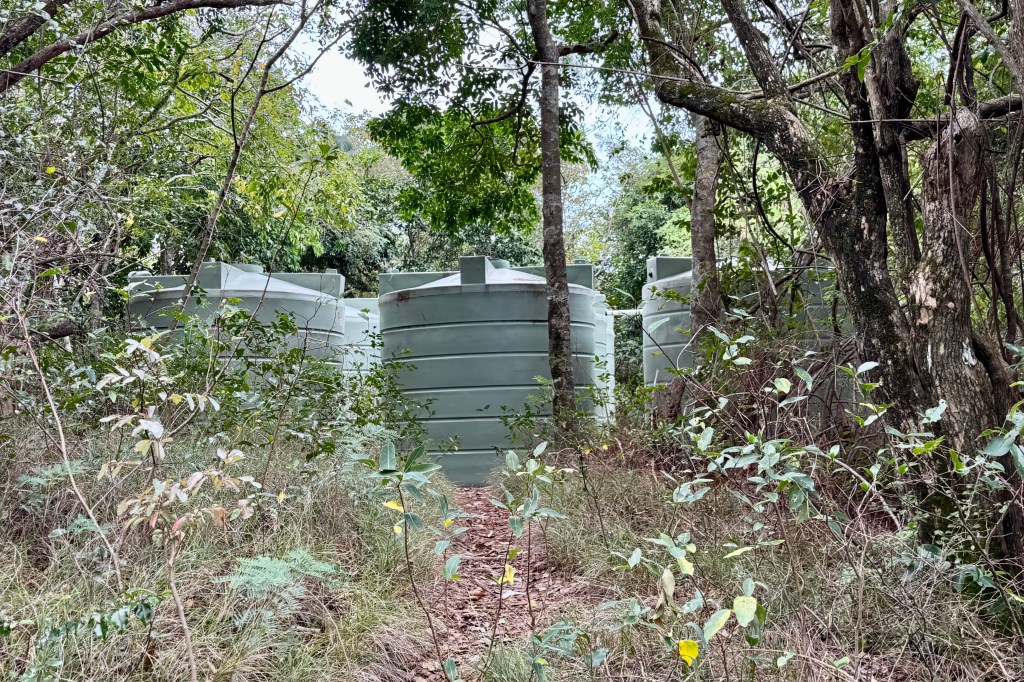
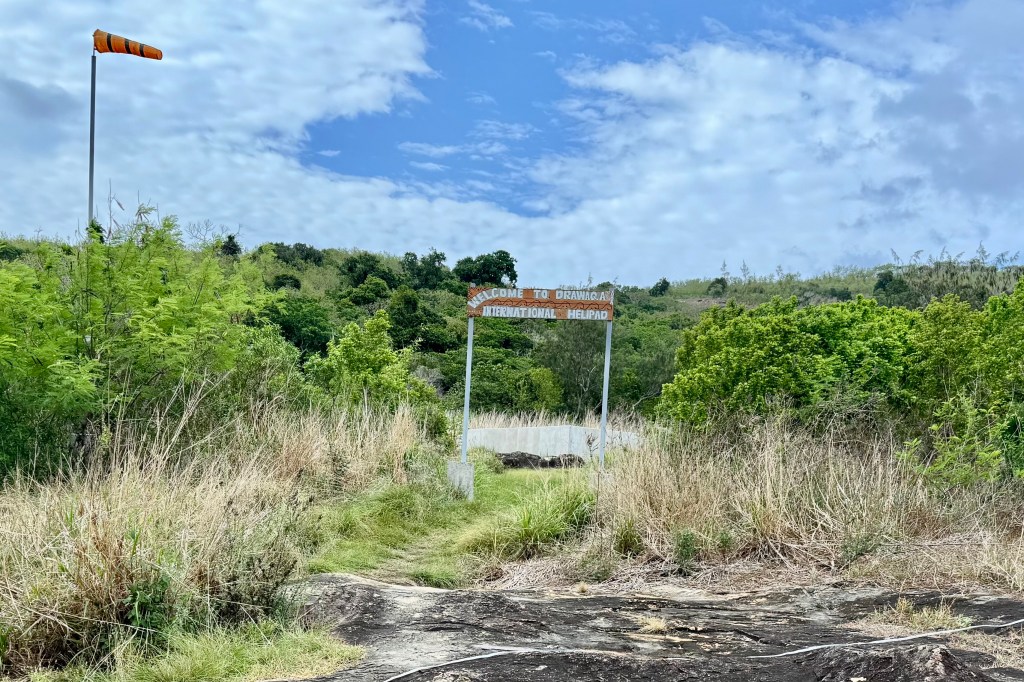
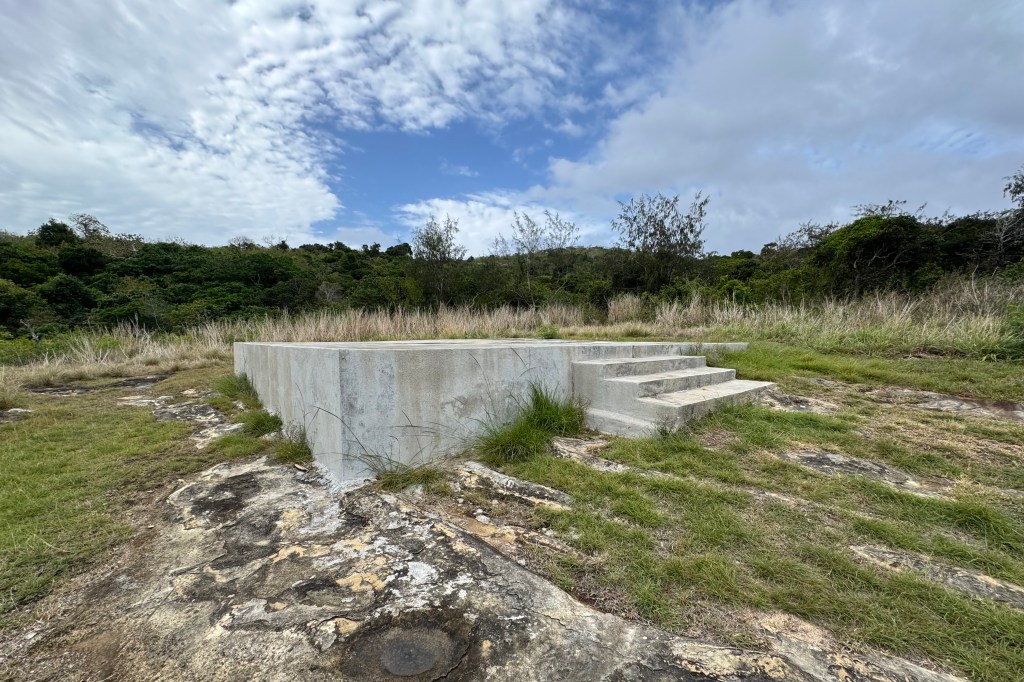
The hike began on a rocky, uneven path winding through scrubby brush. The footing was a mixture of bare rock and loose gravel, requiring quite a bit of my attention with every step. Along the way, we discovered some of the island’s behind-the-scenes operations, including a field of water-storage tanks for rainwater and the helicopter landing pad. Not exactly the tropical scenery one comes to Fiji for, but interesting nonetheless! There was a flicker of relief seeing the pad. Anyone who knows my talent for tripping and falling would understand. If I did take a tumble on this island , the idea of being evacuated by helicopter was far more comforting than a long bumpy boat ride over choppy waters. Thankfully I stayed upright.

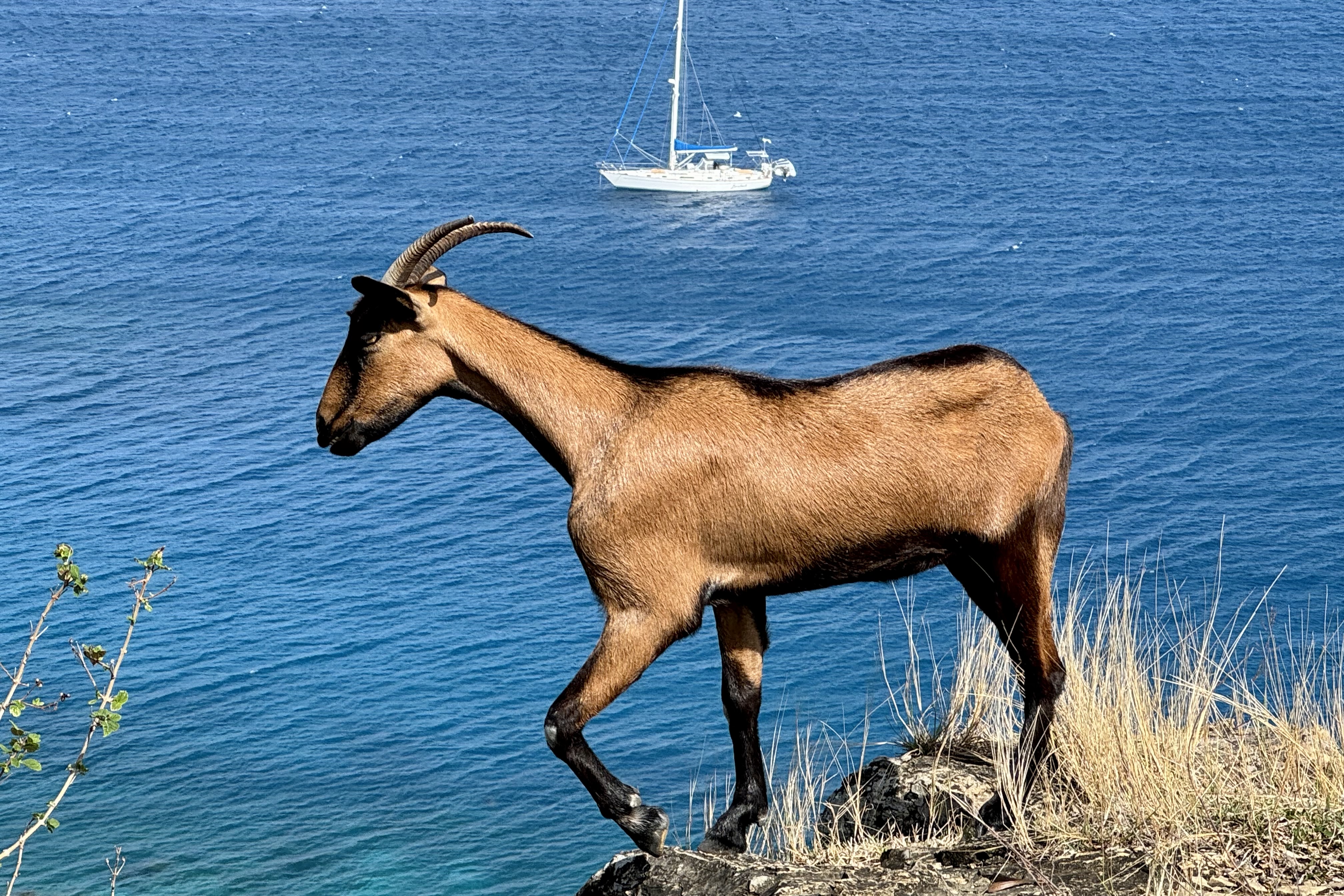
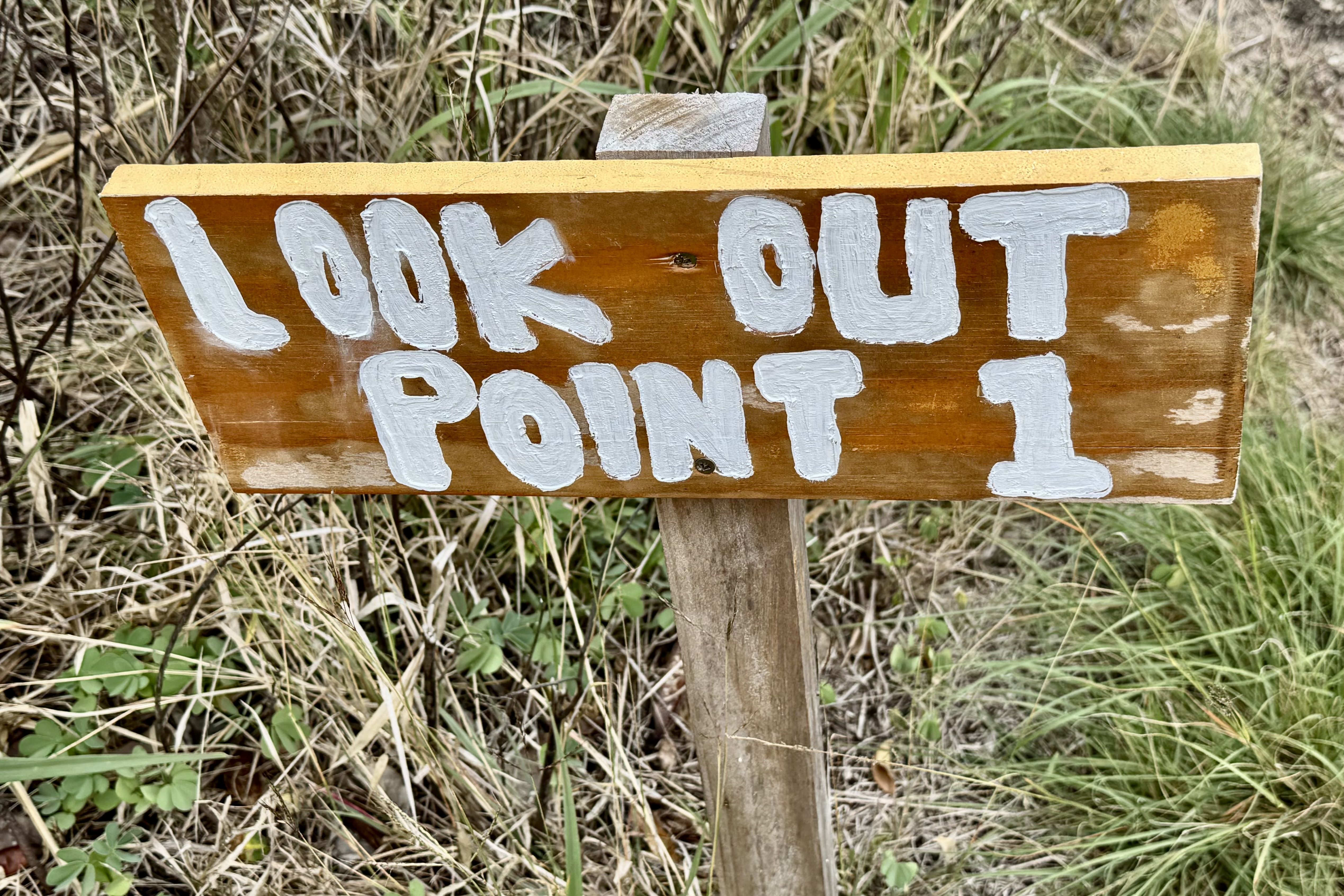
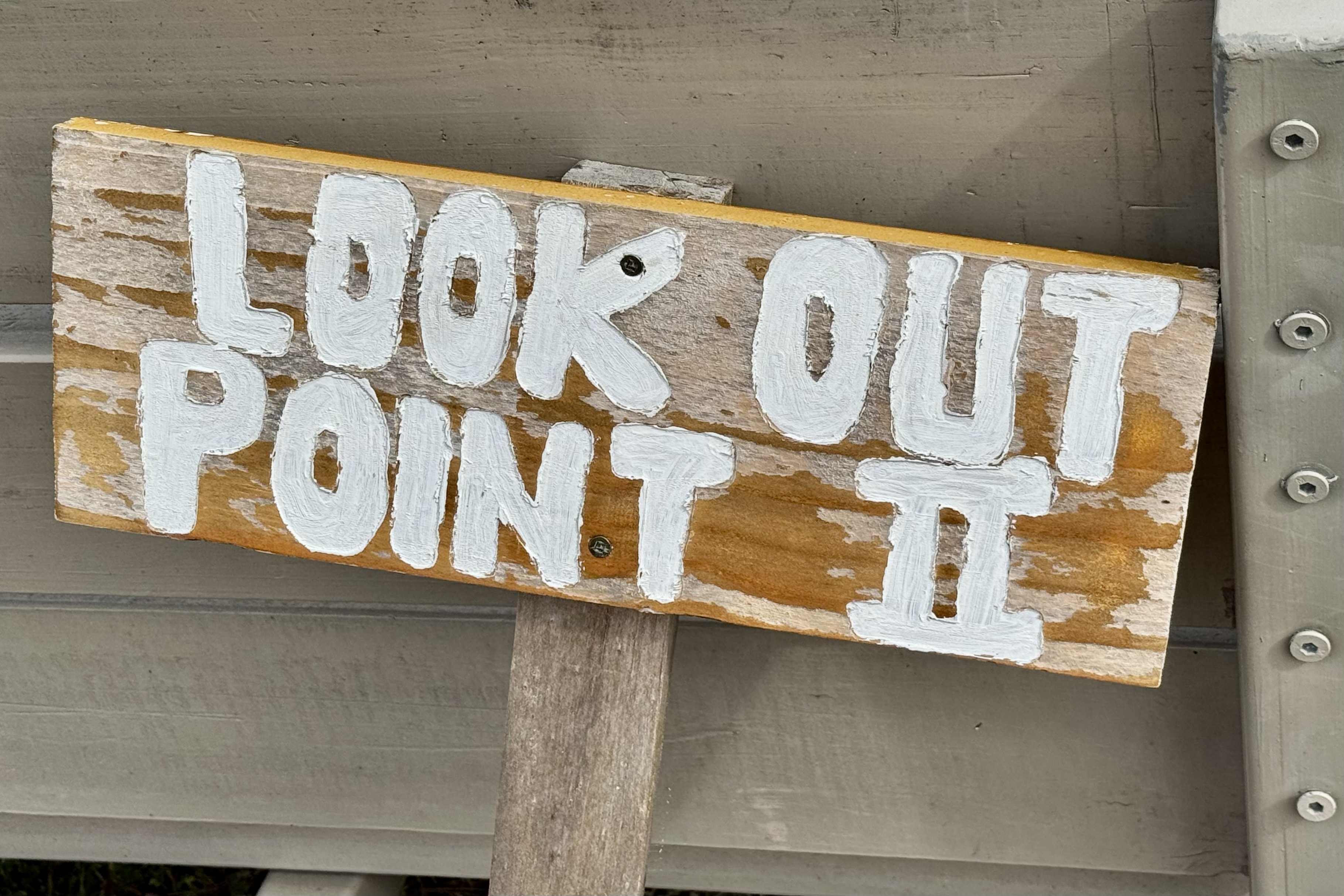
The first couple of lookout points rewarded us with glimpses of the sea, and we soon discovered we weren’t the only ones enjoying the trail. A sure-footed caramel-colored island goat, sporting a rather impressive pair of long, curved horns, posed obligingly on the cliffside. At first I thought it was a statue standing perfectly still at the edge of the cliff. Then it moved and picked its way along the edge as if the drop-off were nothing. I was a tad envious at how sure-footed it was as it placed one hoof in front of the other given my own record of tripping.

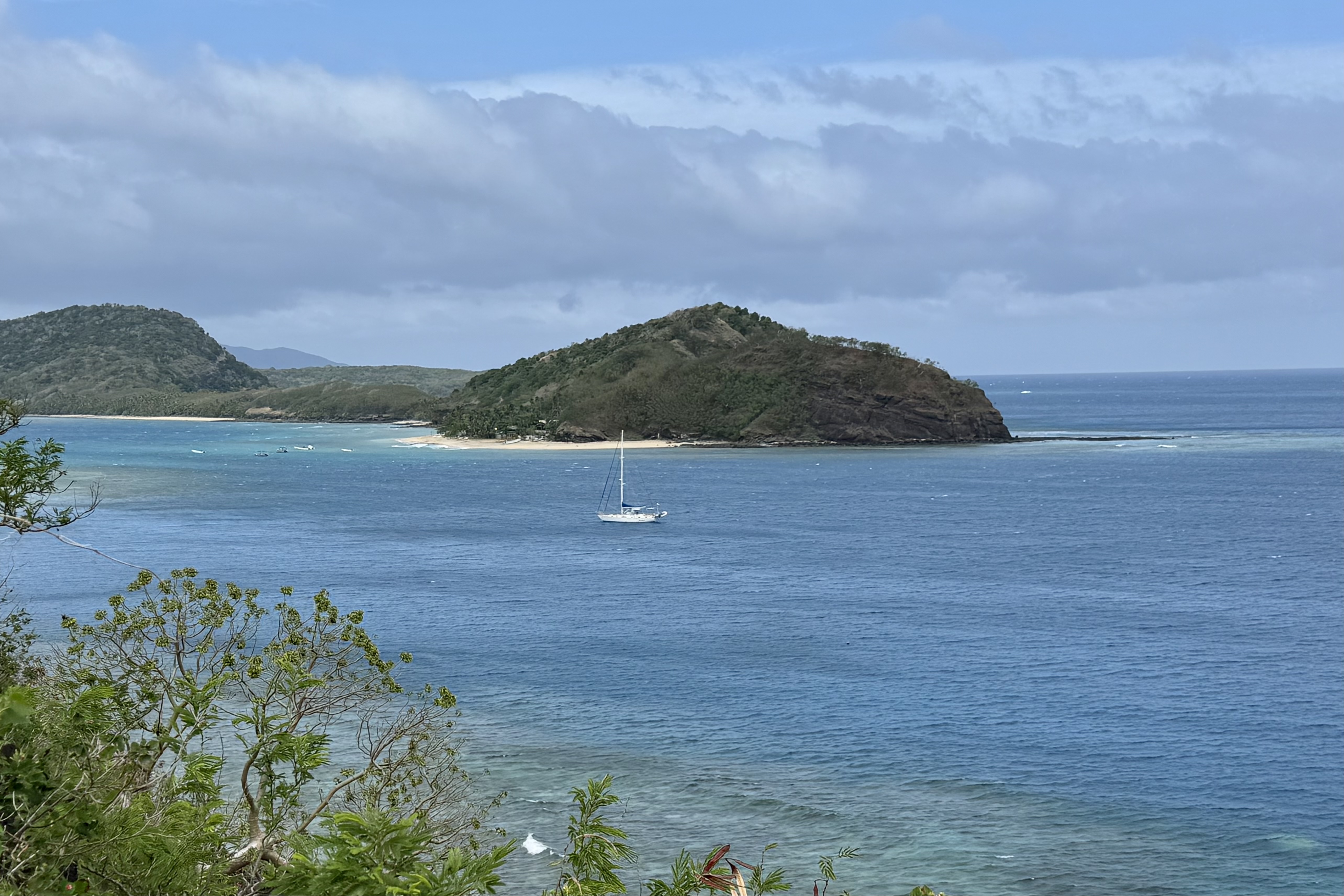
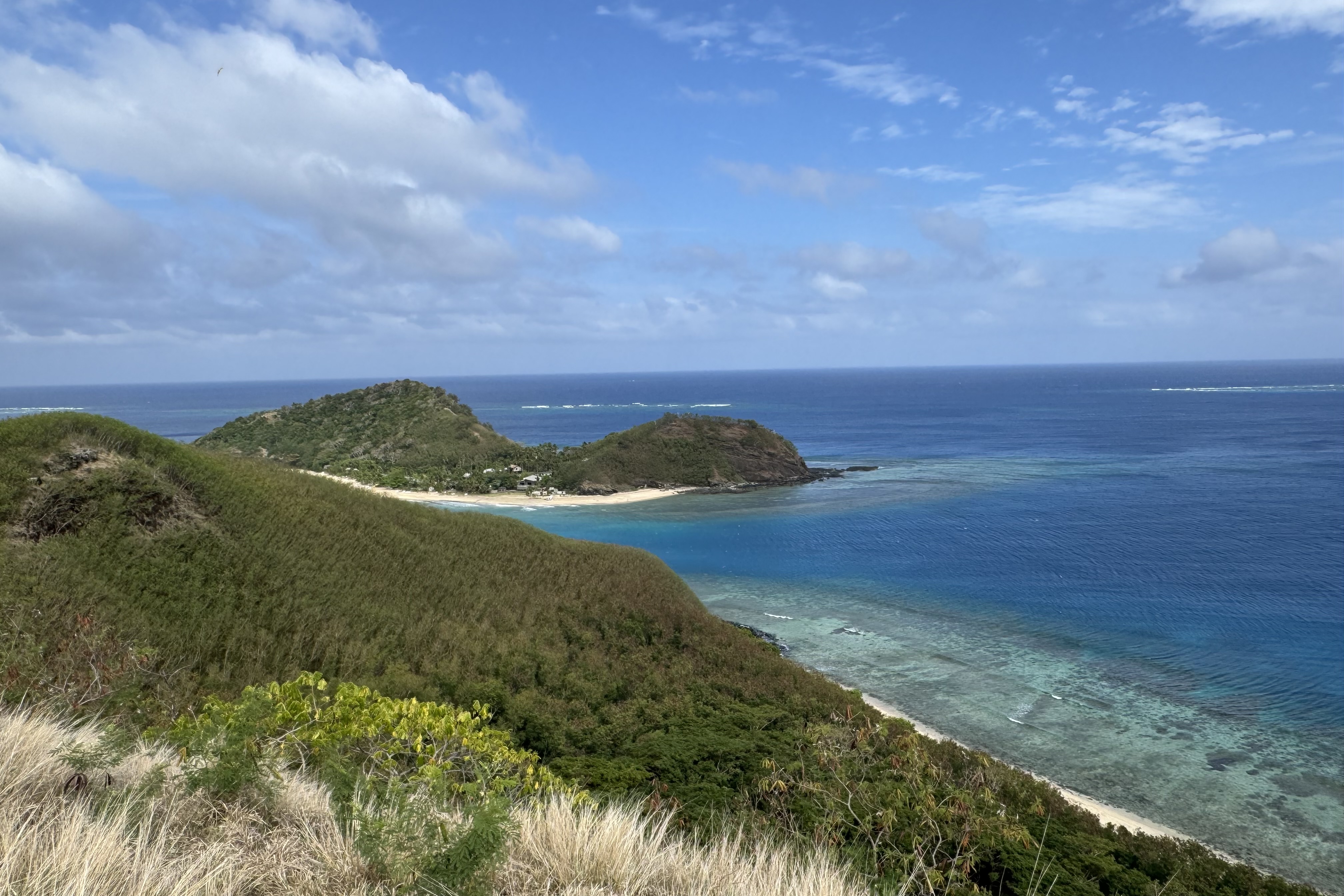
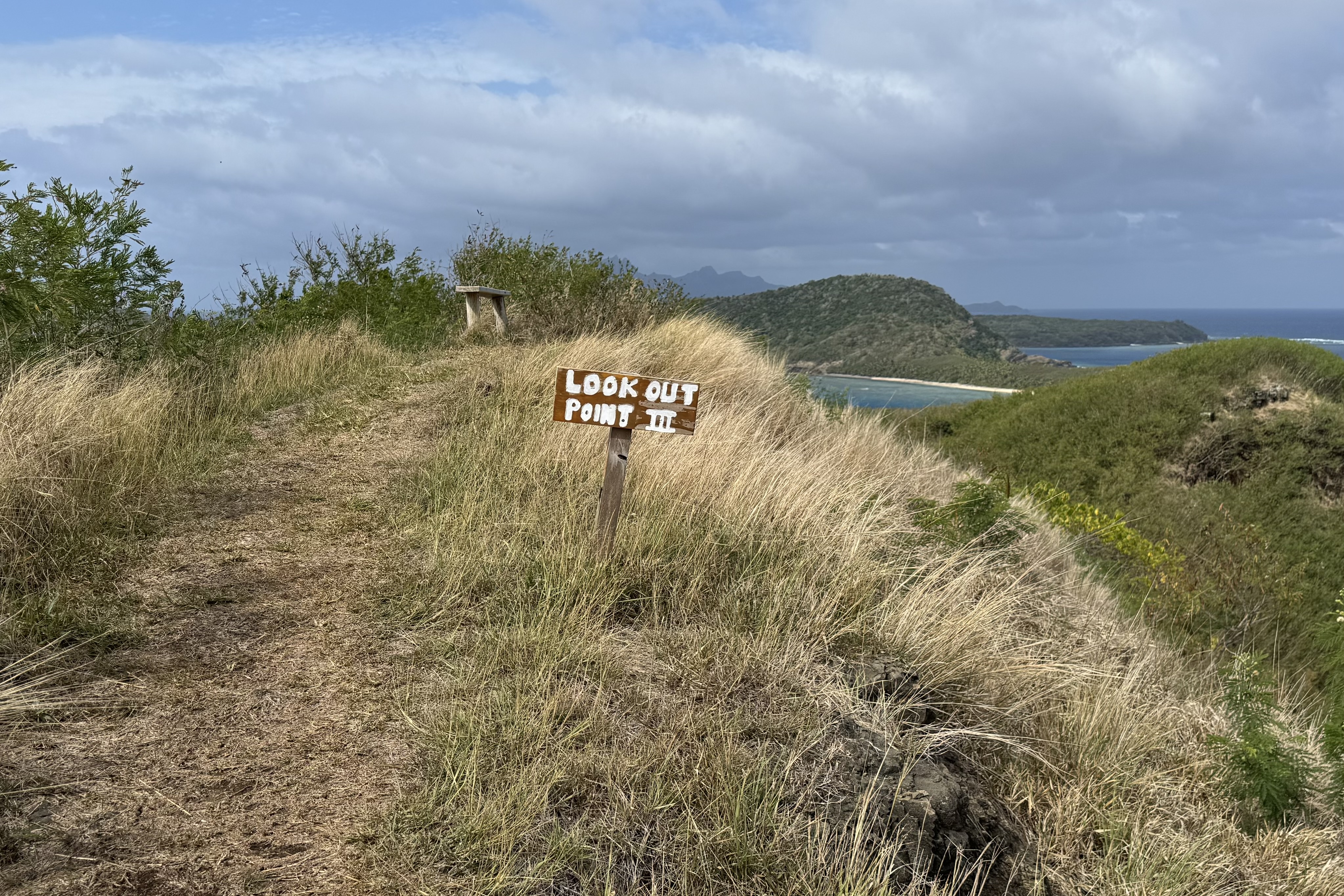
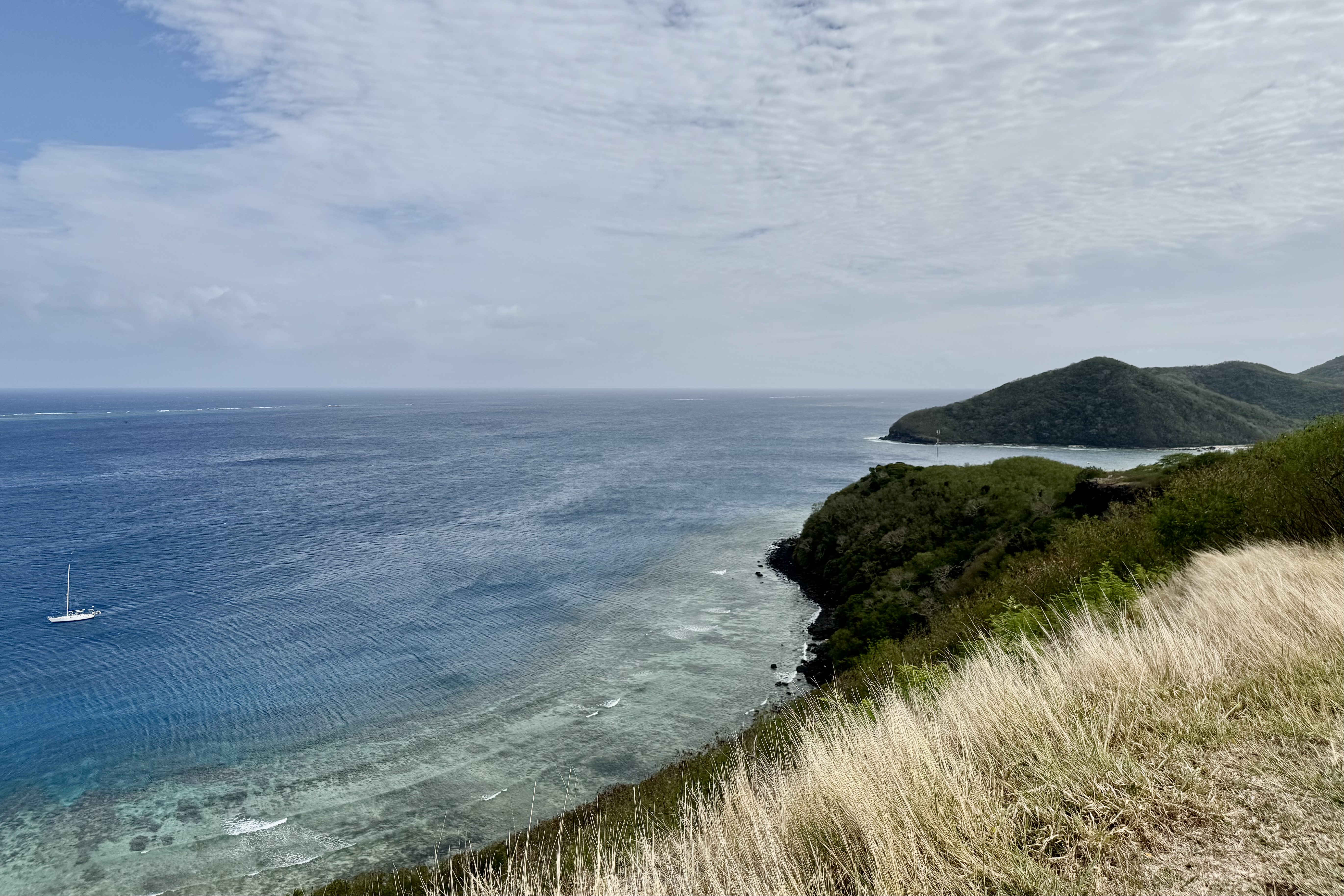
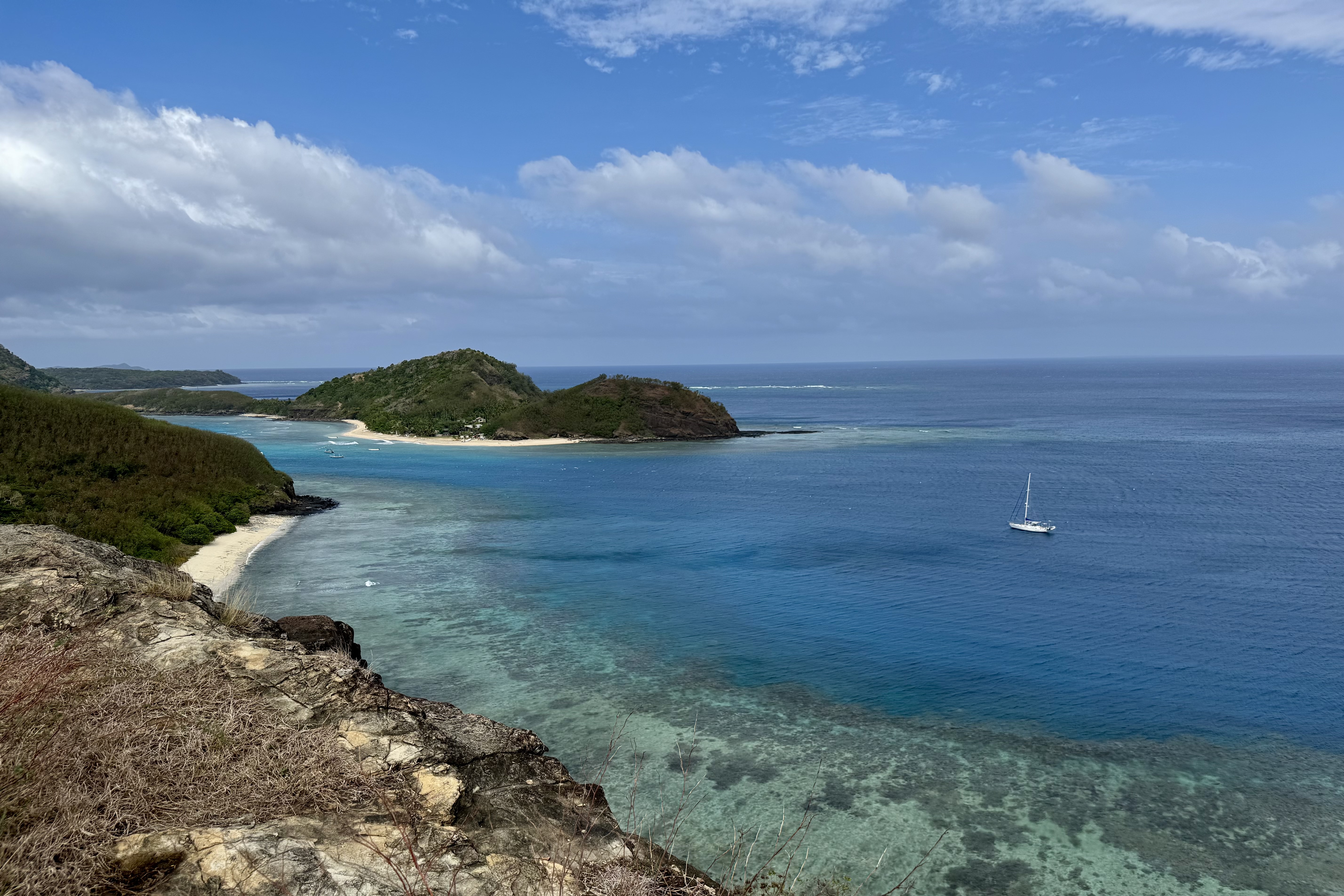
Continuing upward toward Lookout Point III, we entered a shady tunnel of tall, slender trees. and before long, the forest opened up again onto a windswept, grassy summit, and the views made every step worthwhile. Spread out below us were the beaches of Drawaqa, lush green headlands, the surrounding islands, and an expanse of deep blue sea.

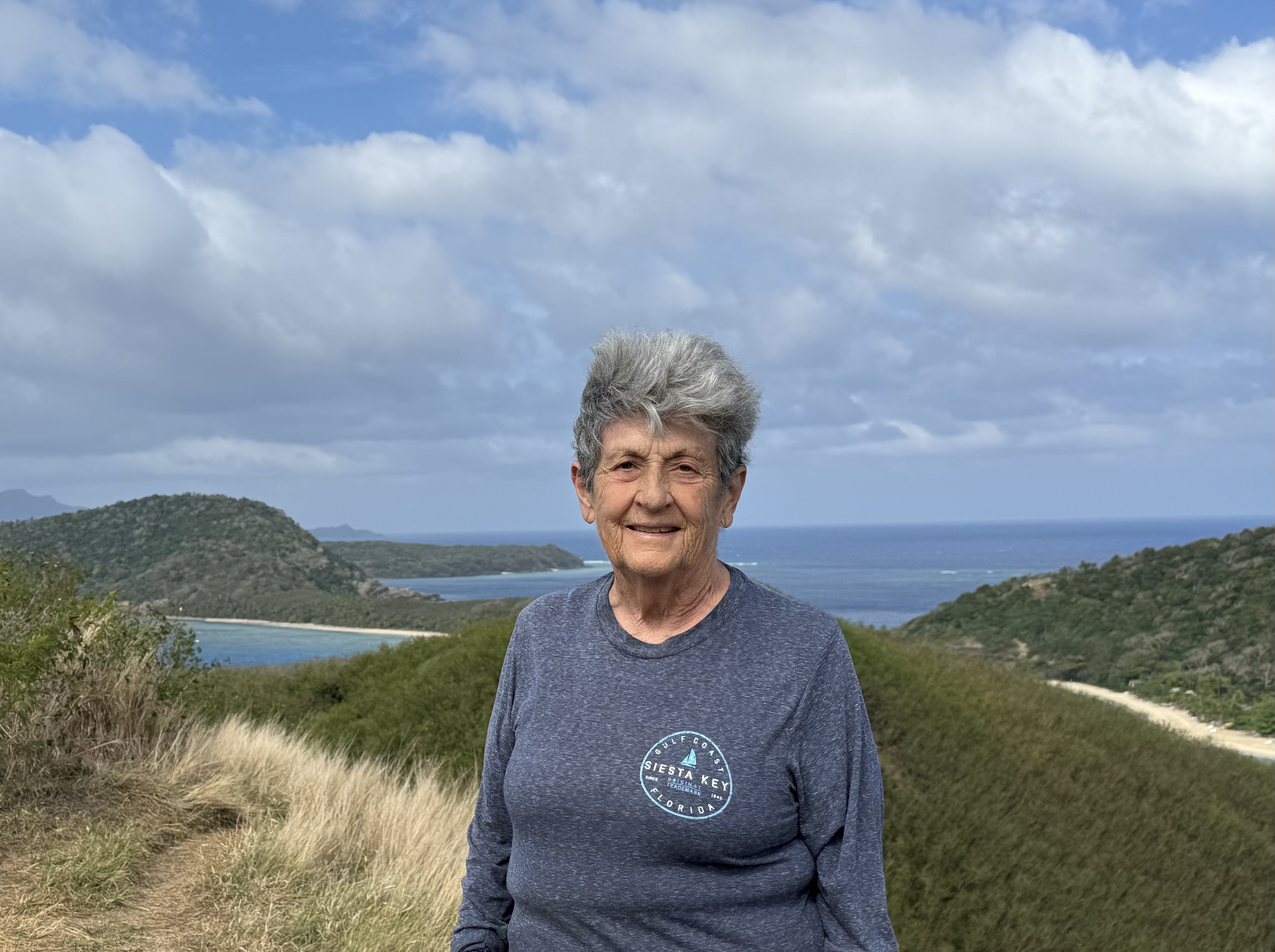
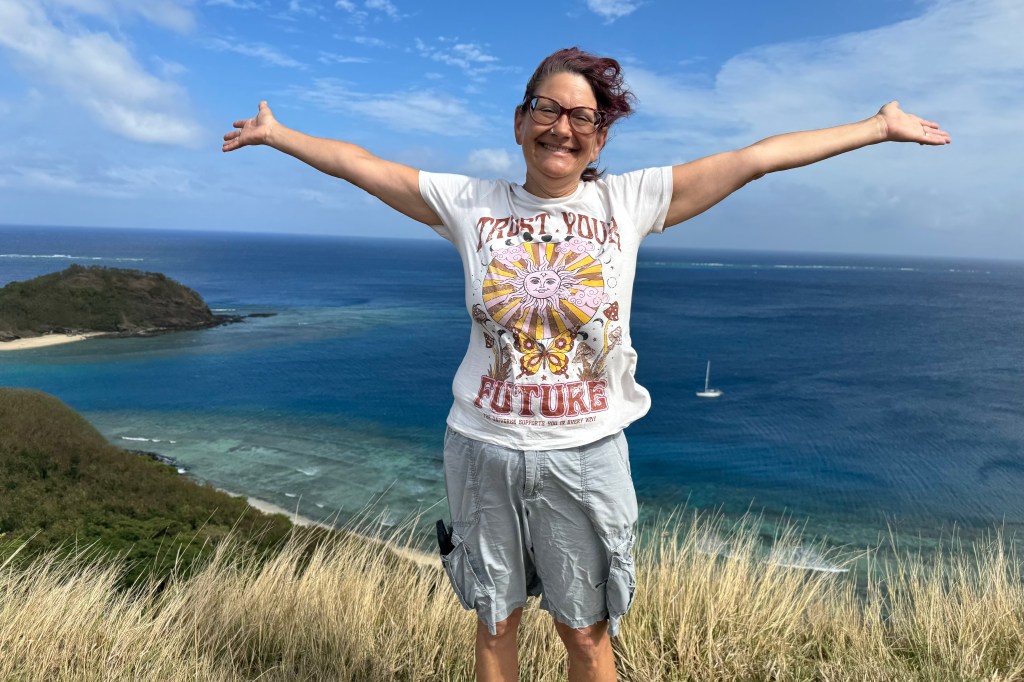
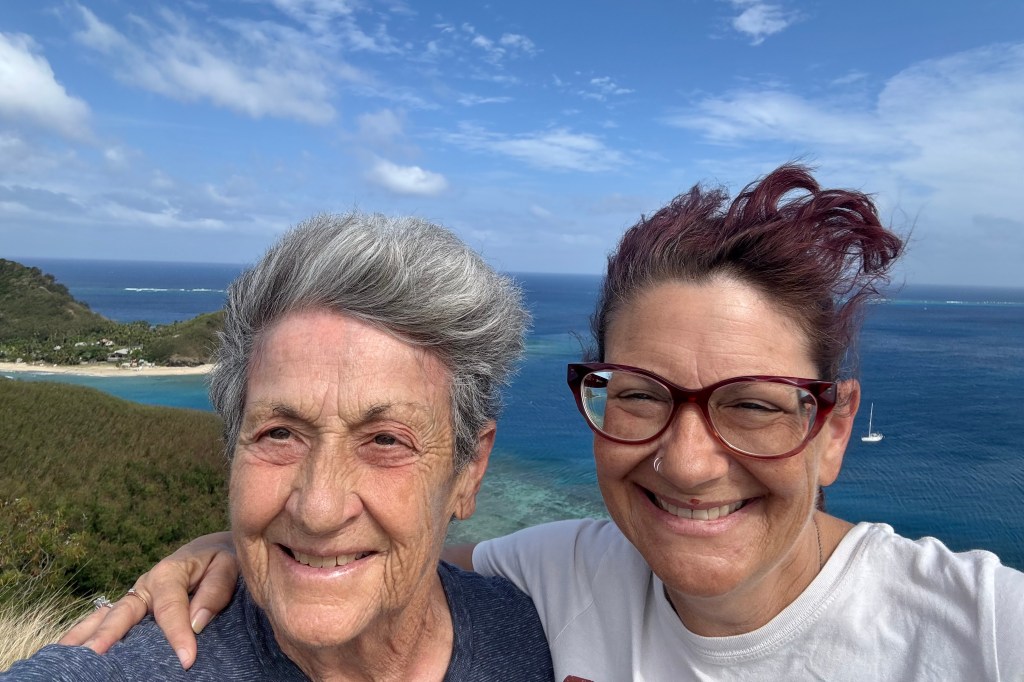
Up on the summit, however, the wind was something else entirely. It whipped across the ridge in steady, boisterous gusts, flattening the dry grass into rippling waves and transforming our hair into wild, untamable sculptures. Every step became a small battle against the elements. Bernadette’s wide-open-arms pose was only partly an expression of joy; it was also a rather practical way of trying to stay upright.

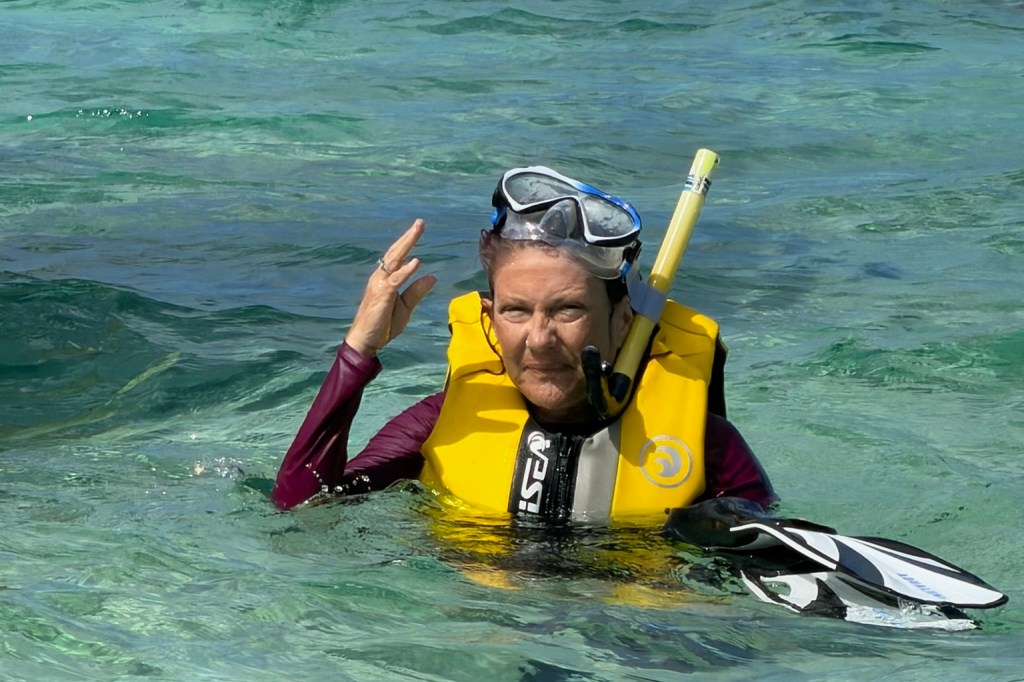
Once back down, it was snorkeling time. The next couple of days at the resort soon settled into a rather pleasant routine: a snorkeling outing, lunch, and then another snorkeling adventure in the afternoon. By now, I was no longer feeling anxious about getting into the water. The equipment was finally working well for me, although I wasn’t sure whether I was actually getting the hang of snorkeling again, whether the equipment was the real answer, or perhaps a combination of the two. Whatever the reason, I was thoroughly enjoying it.

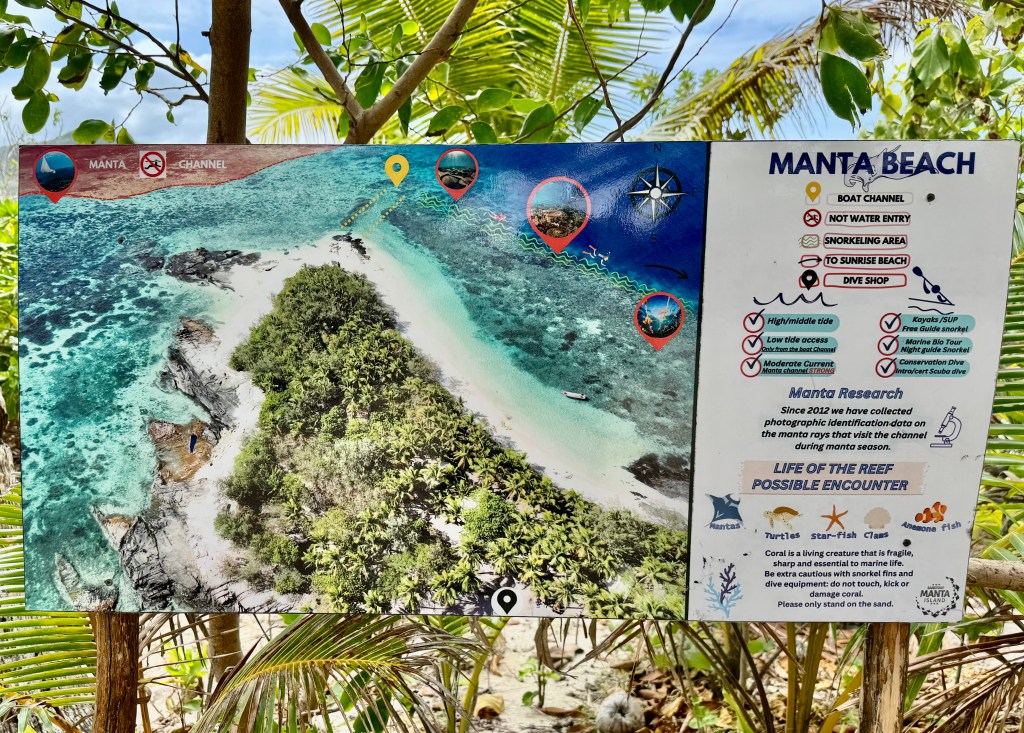
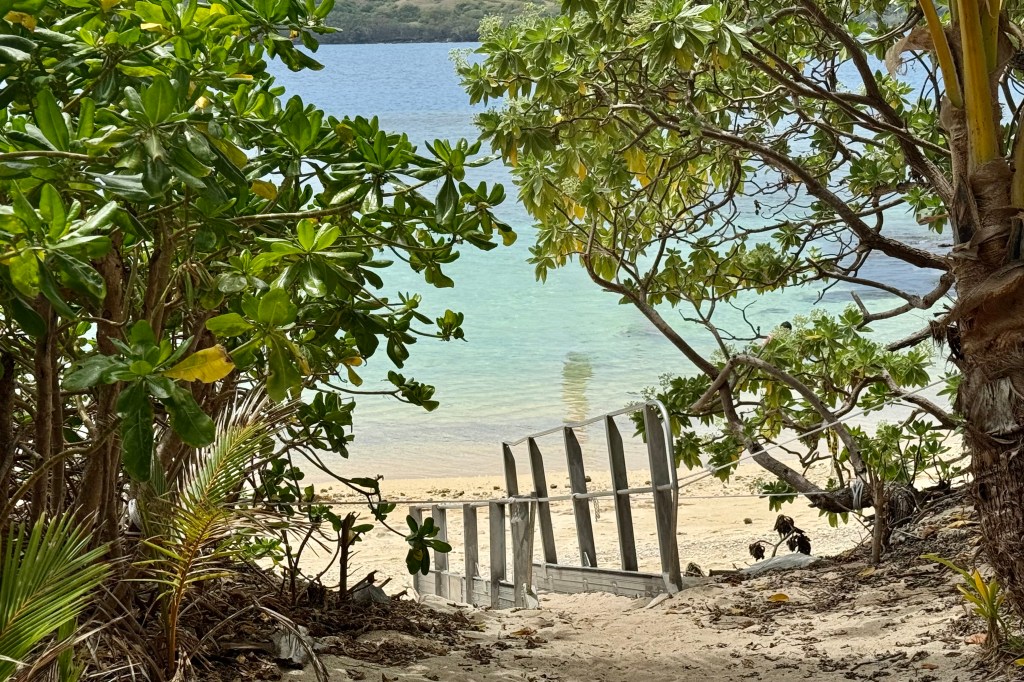
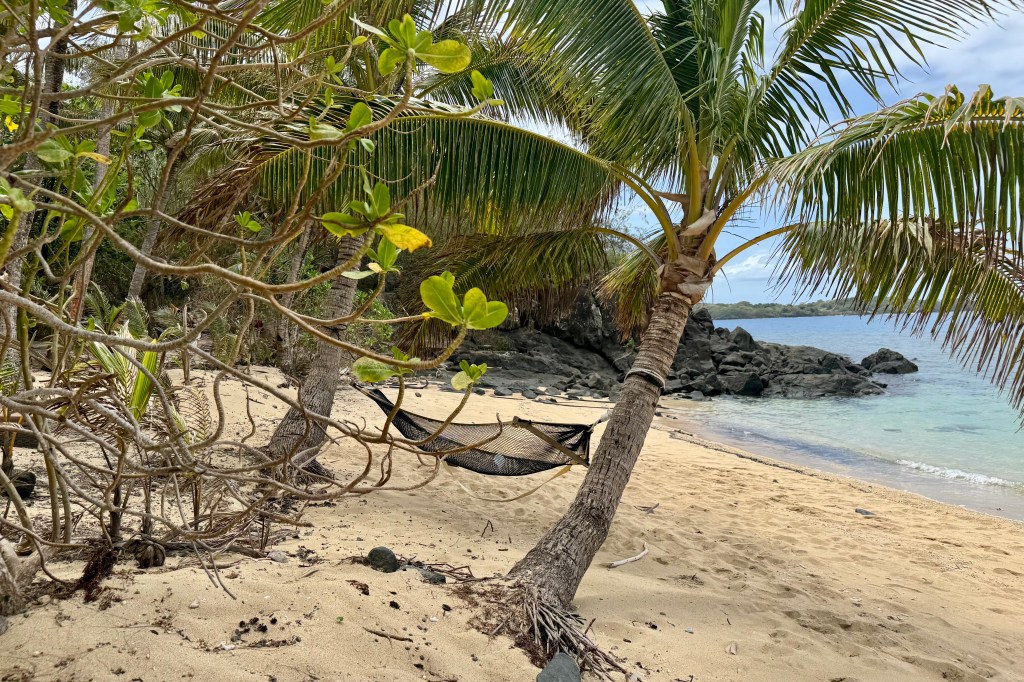
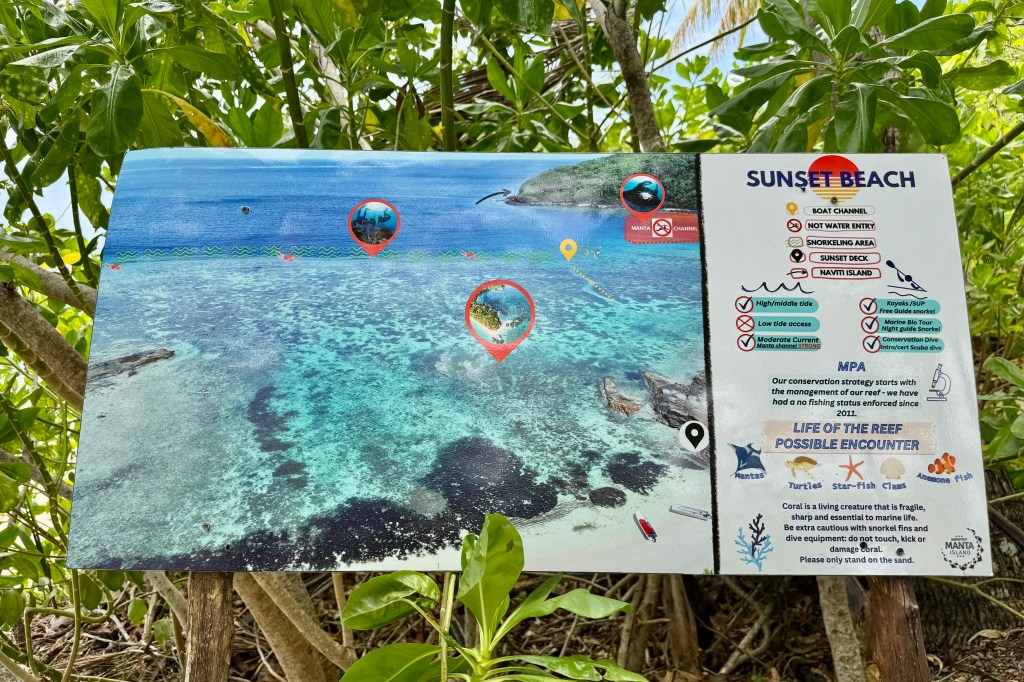
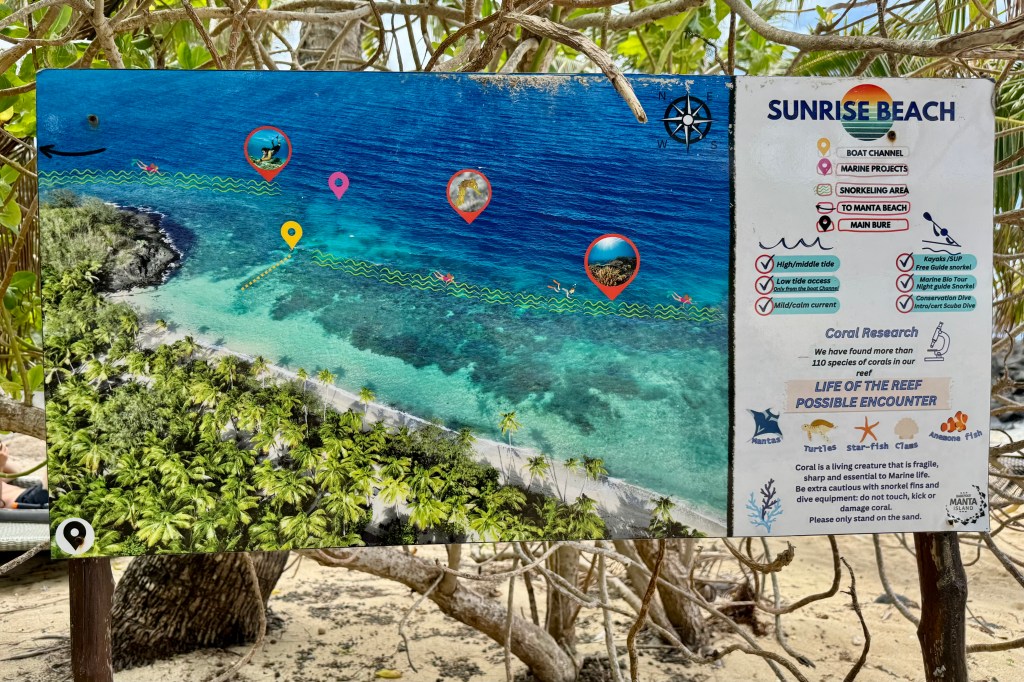
The resort has three beaches to snorkel from, each with clear signs at the entrance showing where the reefs are and where to enter the water, one more sign of how seriously they take protecting them. Snorkeling is also timed to high tide to keep swimmers off the coral, so after breakfast each morning we checked the tides and planned the day around them. My favorite was Manta Beach, with a gorgeous reef dropping off into deep indigo water.

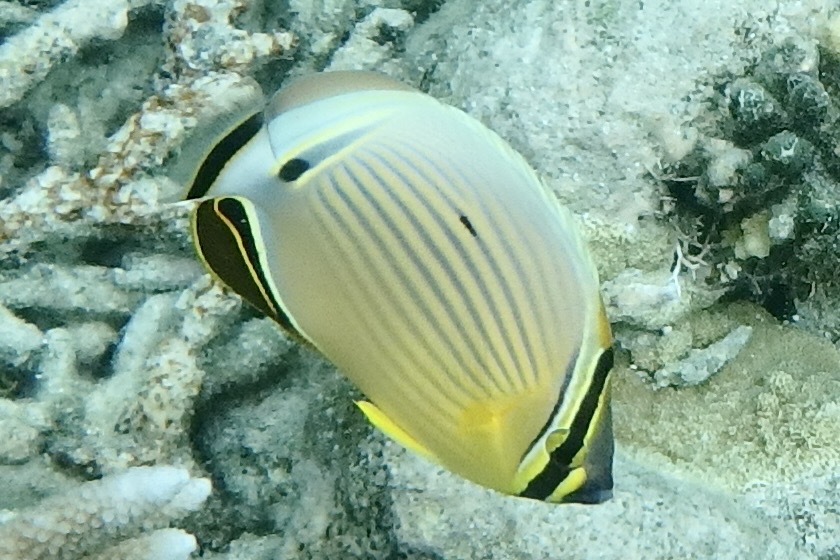
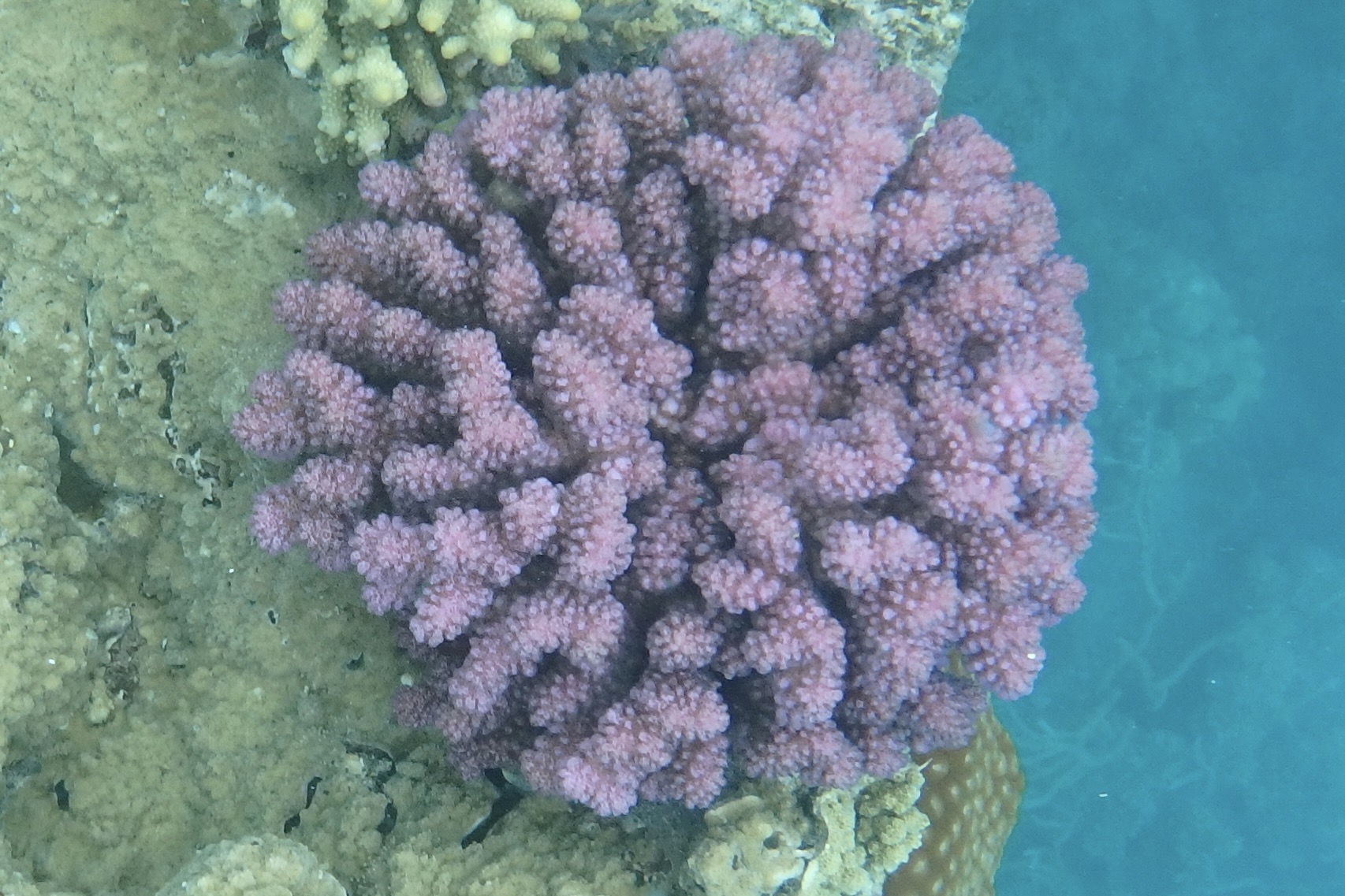
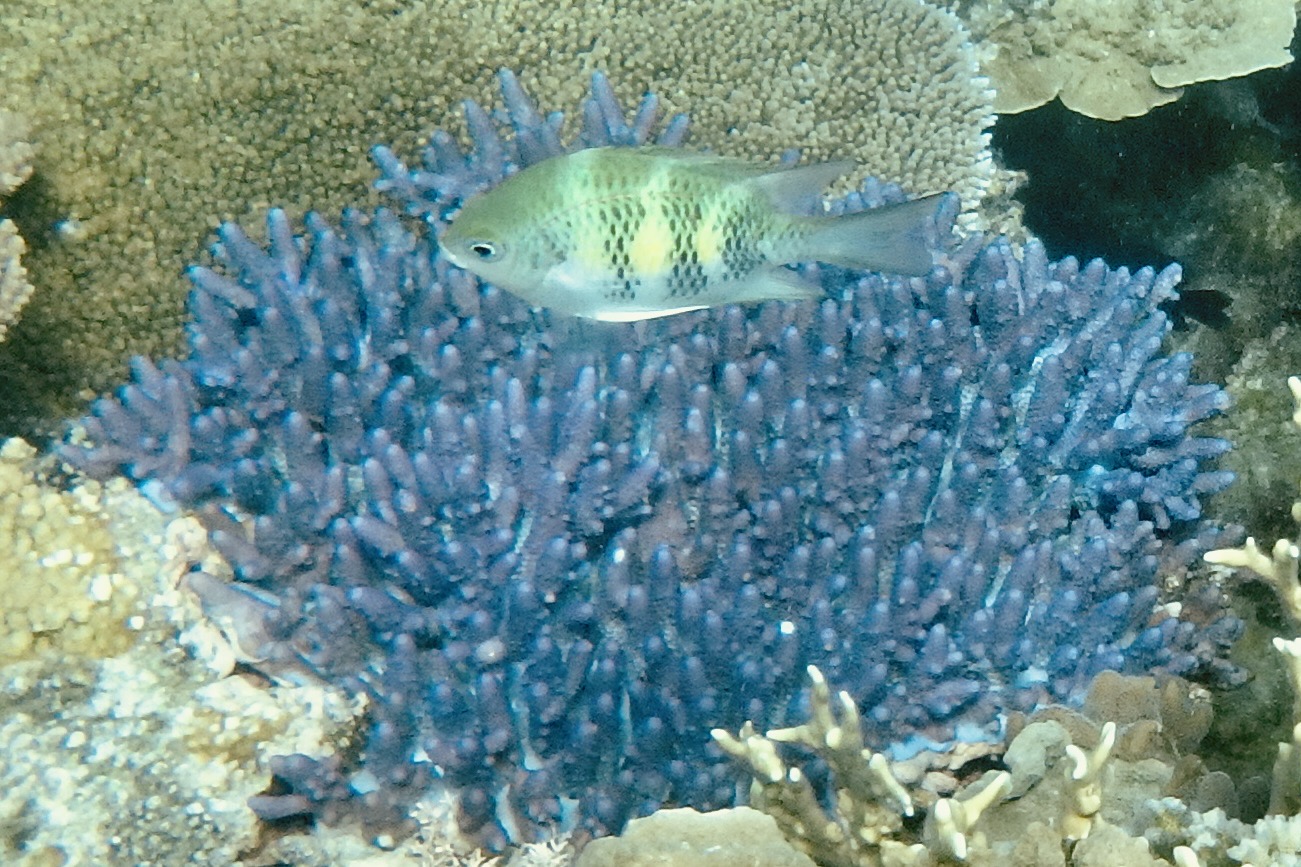
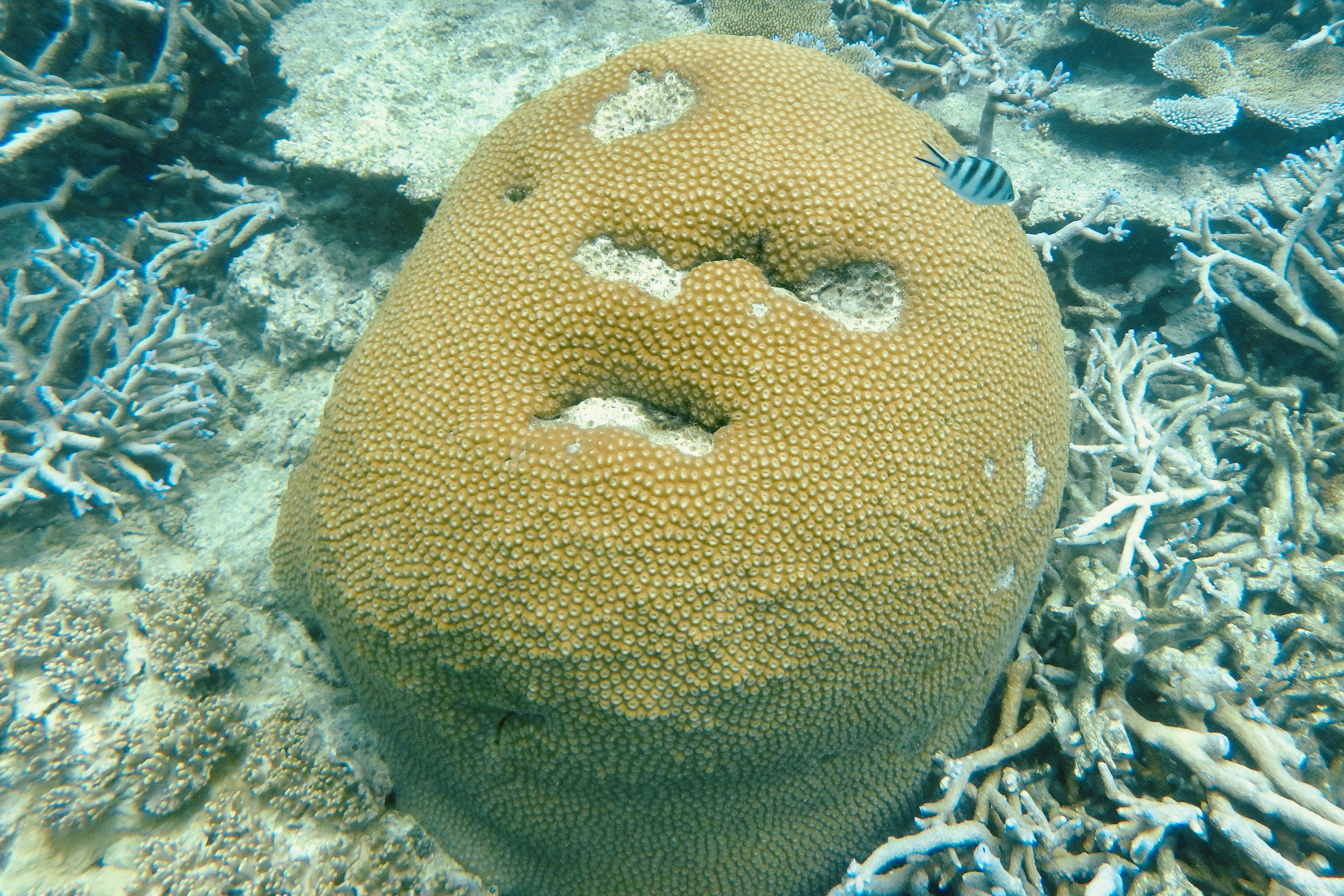
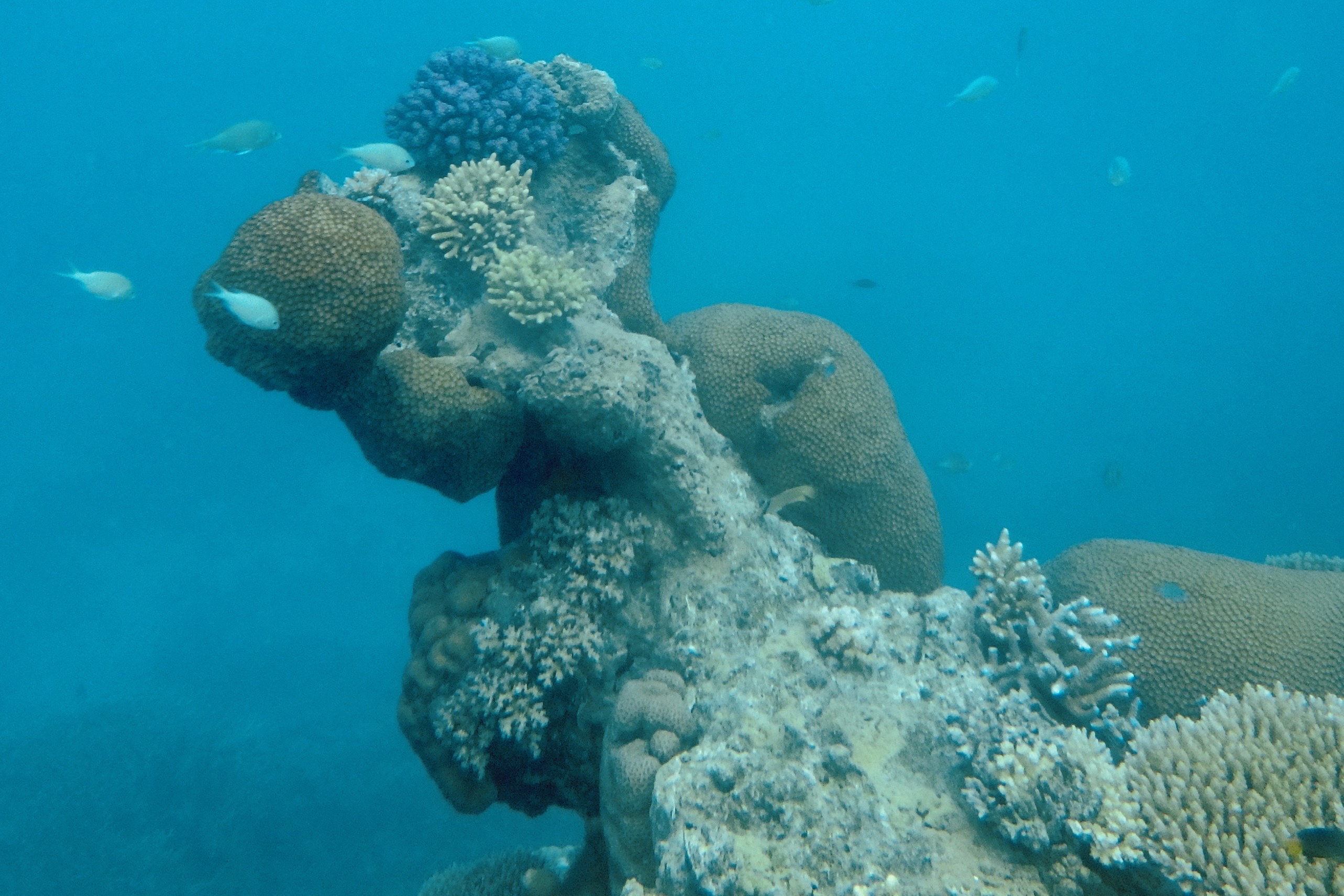
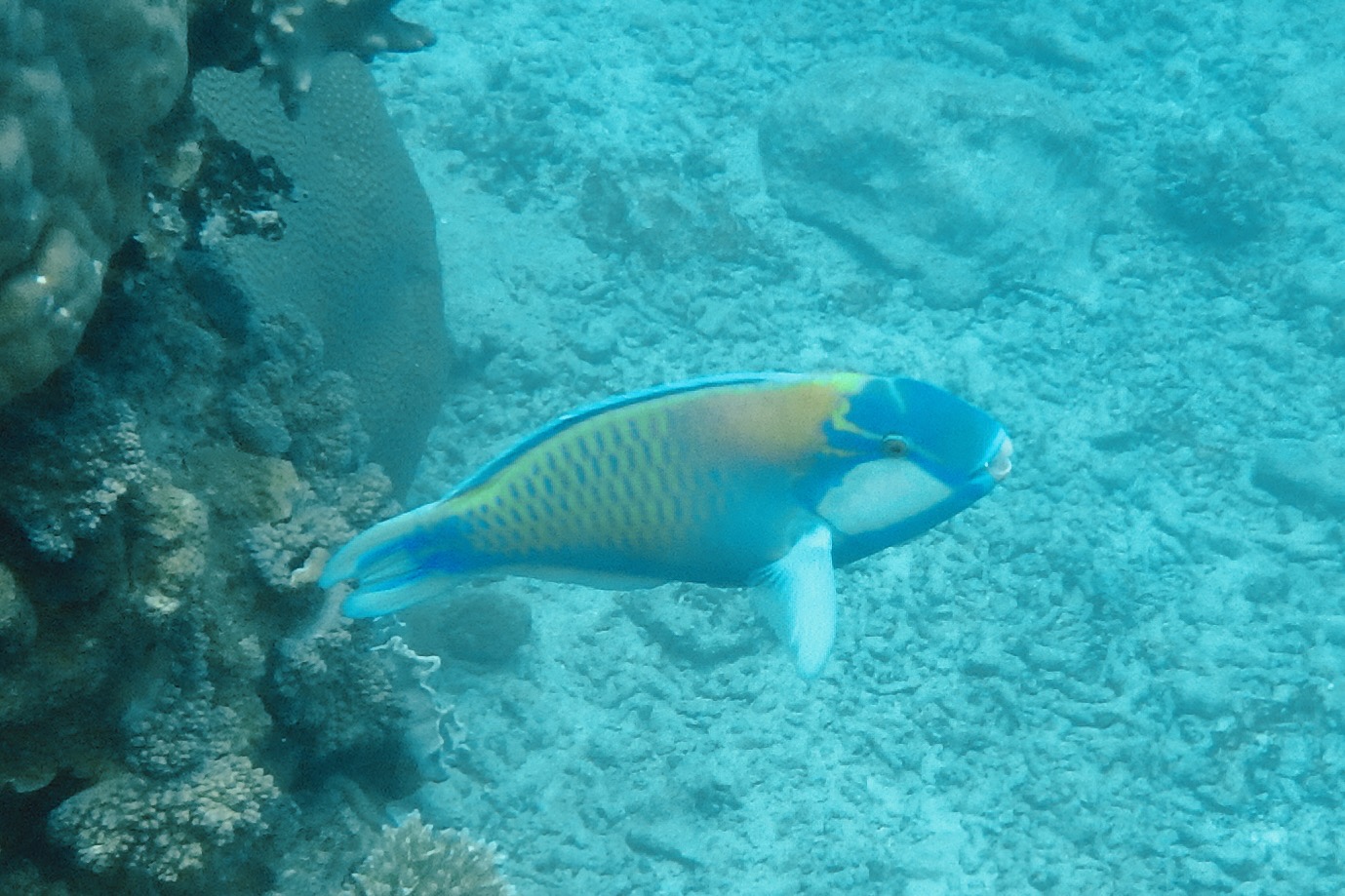
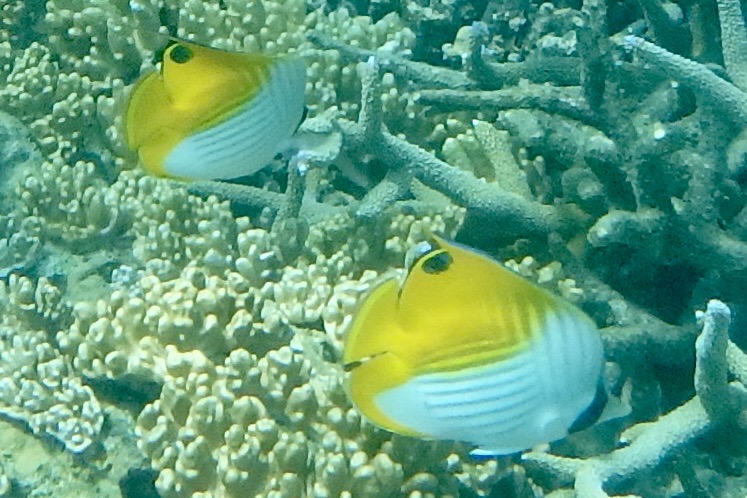
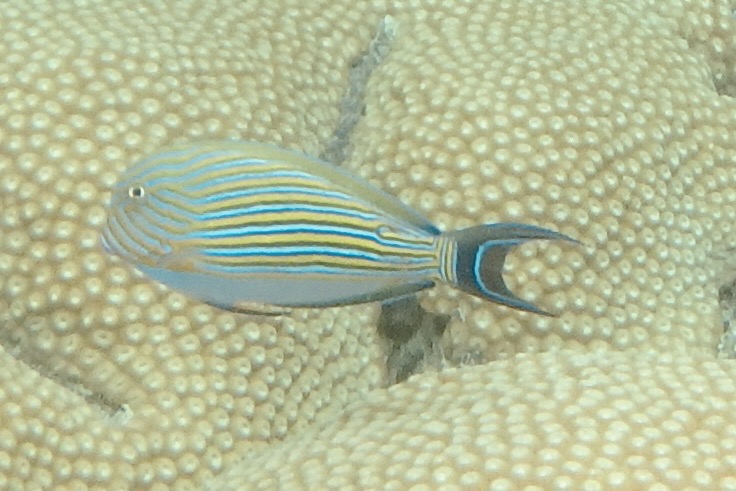
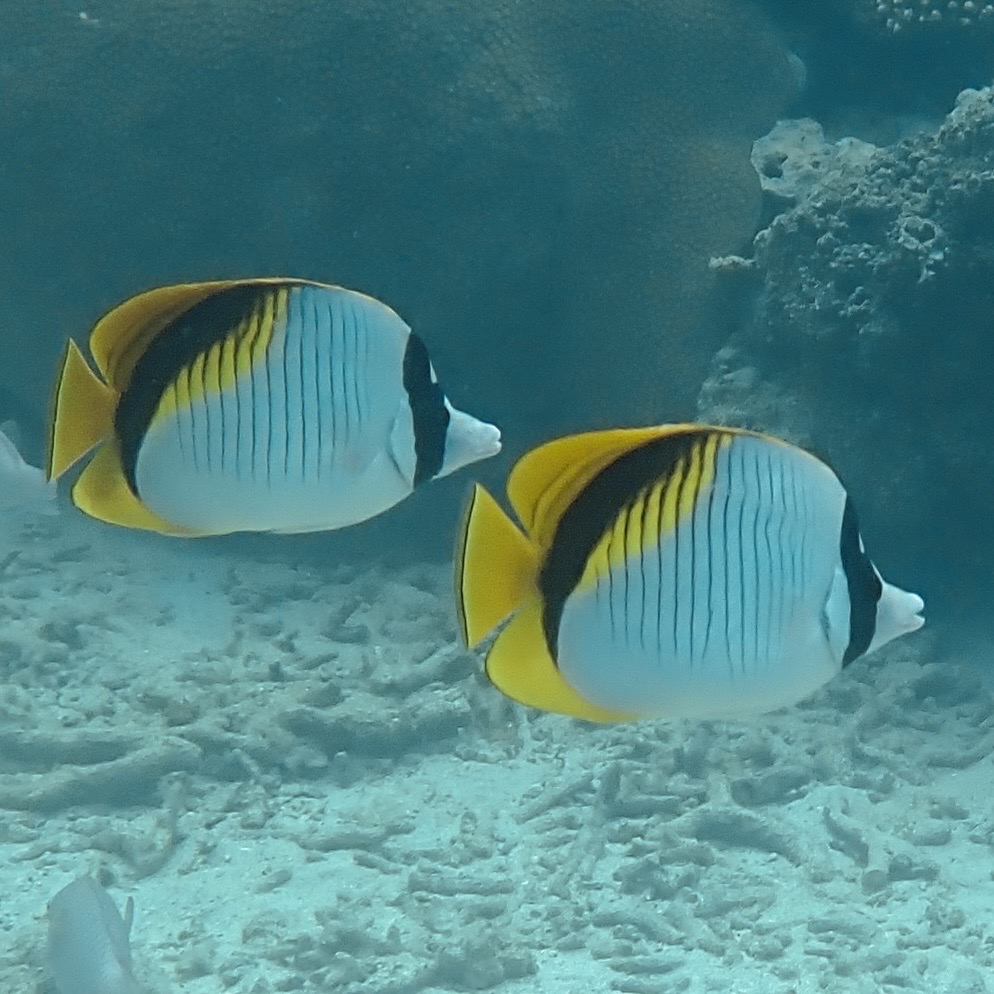
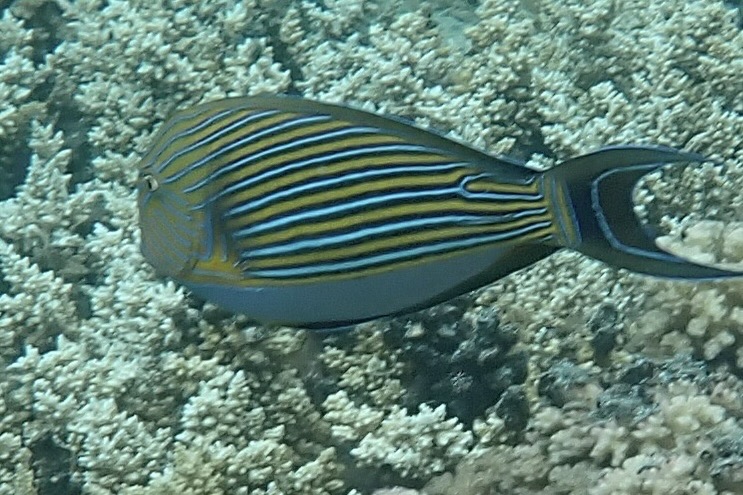
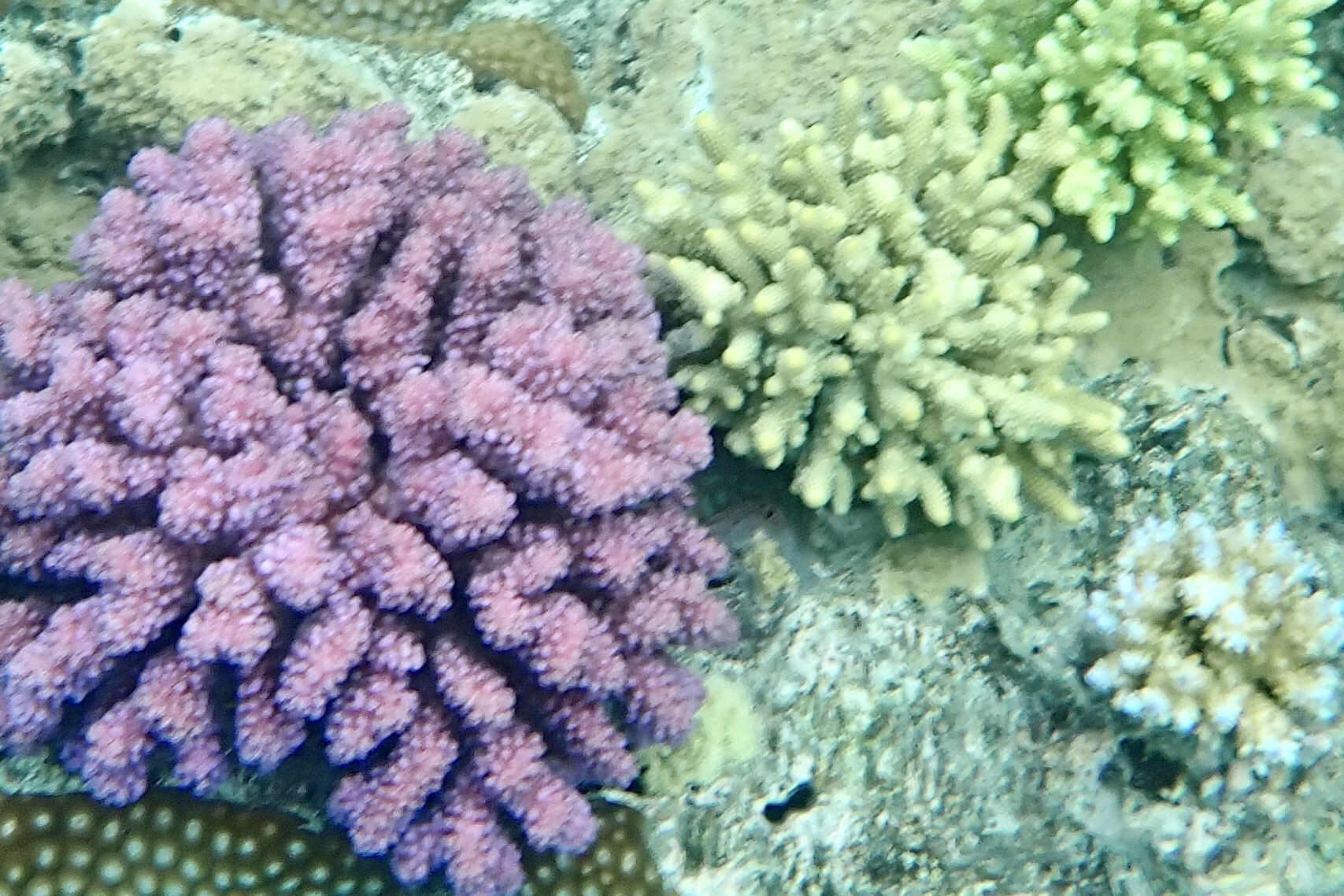
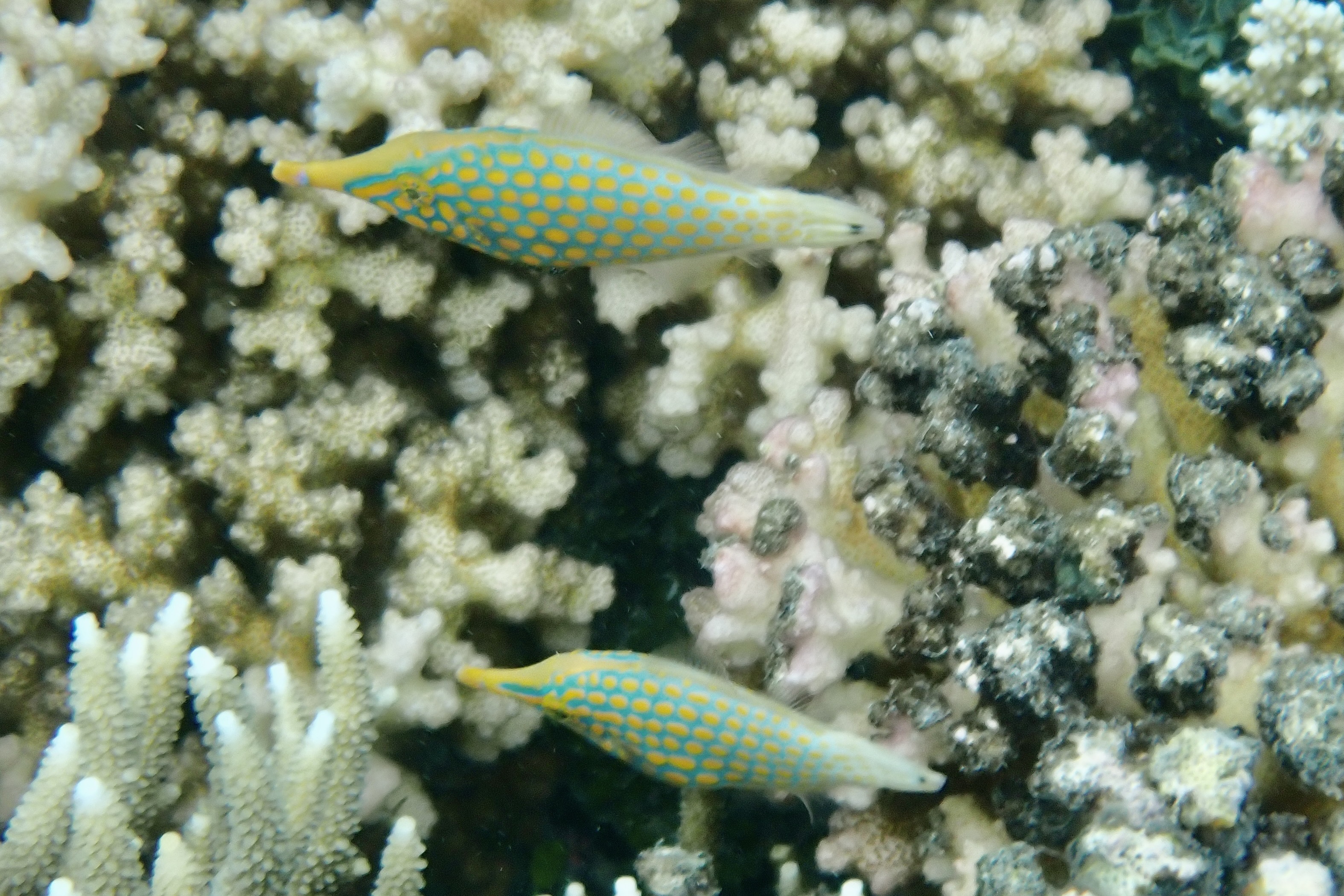
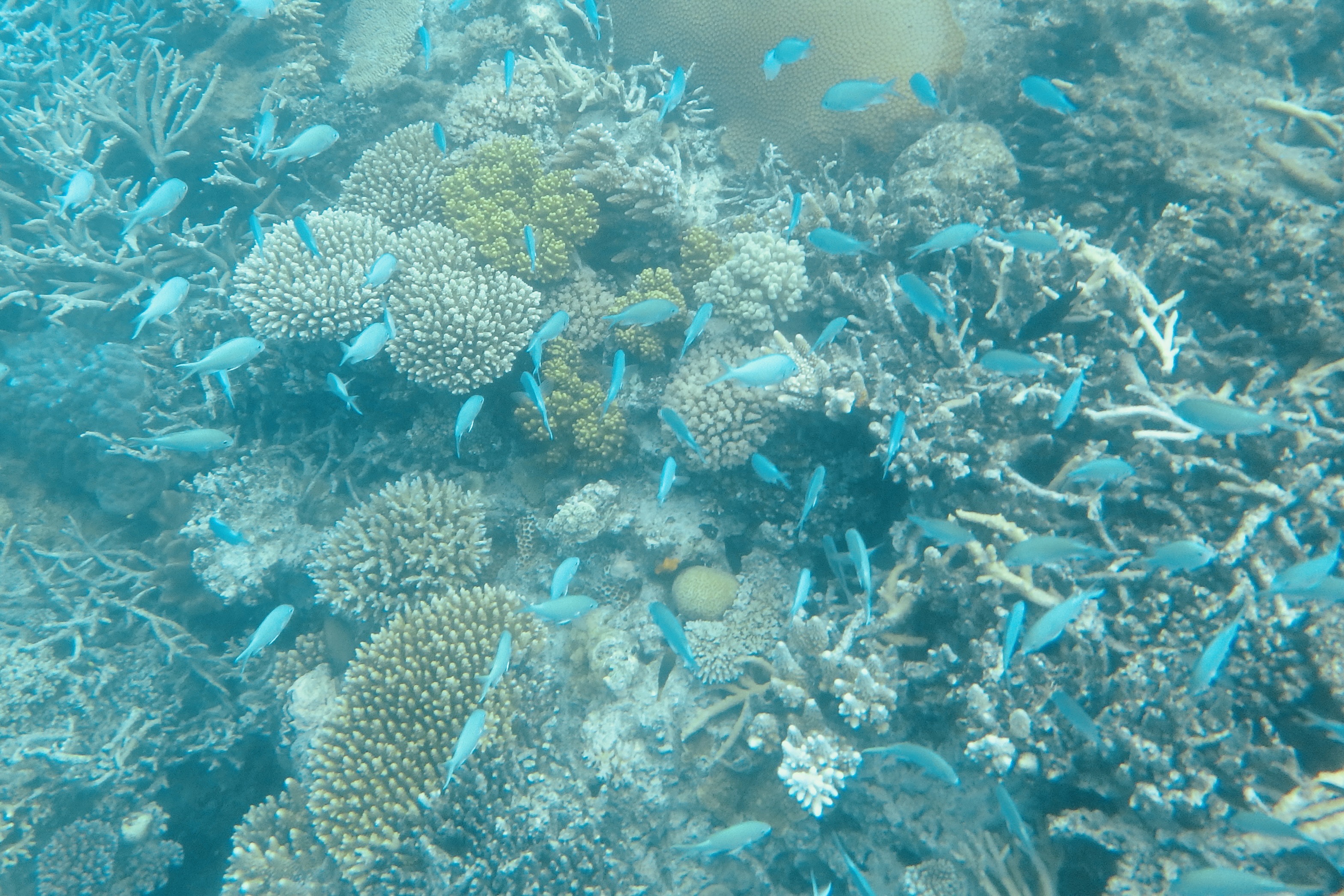
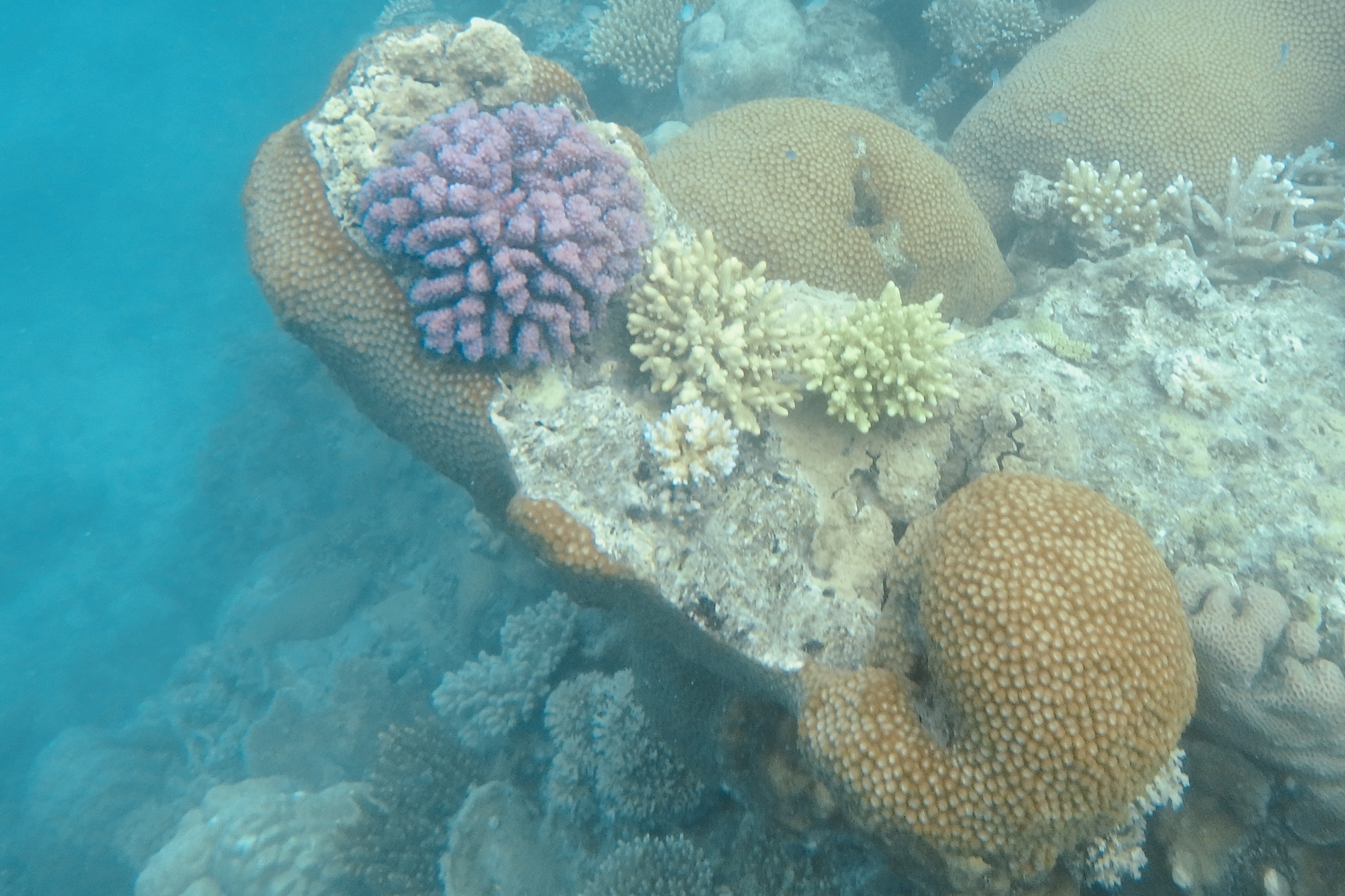
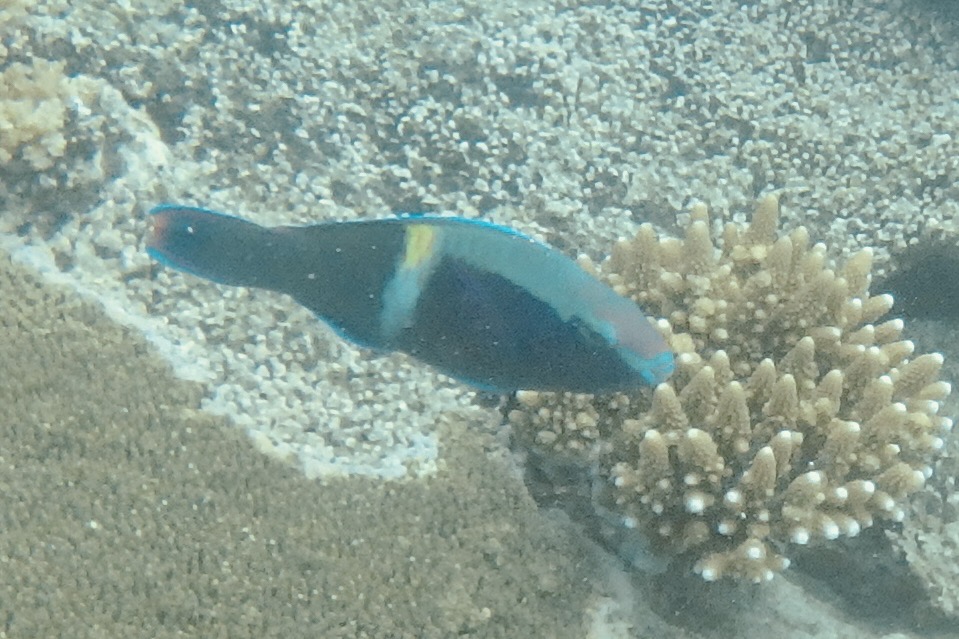
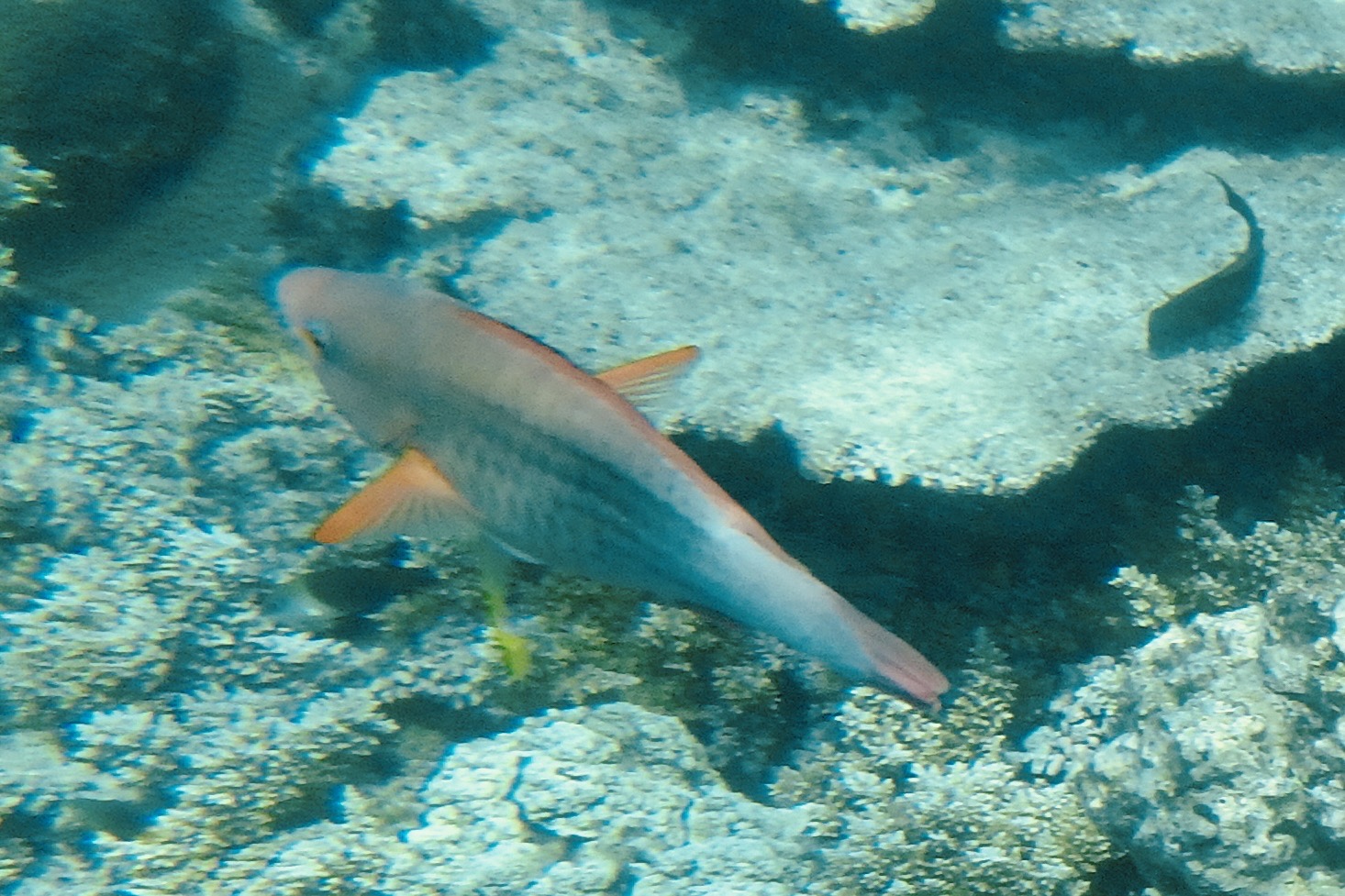
We were treated to an incredible variety of fish and coral, and the beauty of this underwater world was almost too much to take in. There was so much color, movement, and life that it was difficult to know where to look next. I found myself thinking, somewhat sadly, about how many people will never have the opportunity to experience this firsthand. They may see photographs or documentaries, but they will never know what it is like to slip beneath the surface and discover this extraordinary world for themselves. There is something quite remarkable about realizing that an entire universe of beauty and life exists just below the waterline, largely hidden from those of us who spend our lives above it.

The outing we were most excited about, on Sunday the 20th, was the boat trip to the manta ray feeding site in the channel between Drawaqa and Naviti islands. We were warned there are no guarantees, but the season runs from May to October (according to their brochure) and the rays usually show up daily. Because the current in the channel is swift, we were split into groups of six, each with a guide. We jumped off the boat, lined up behind the guide, and drifted down the channel, then climbed back aboard, motored up the channel, and repeated it three times. Since I’m not the fastest swimmer in a guided group, I hung onto the guide’s life ring and got towed along like a very happy piece of luggage. As my flat description may have tipped you off, we didn’t see a single manta. Still the outing was worthwhile if your in the market for a workout: all the contorting to hoist myself over the side of the boat and tumble back into the water, again and again, feeling like I was in a wrestling match with a boat. By the time I got back to Manta Island I was thoroughly chilled. I am glad I went, but the only photos of mantas I have are on the signs at Barefoot Manta. The reef was lovely but I still much preferred being back on the reef off Manta Beach, floating over that gorgeous reef — my happy place.

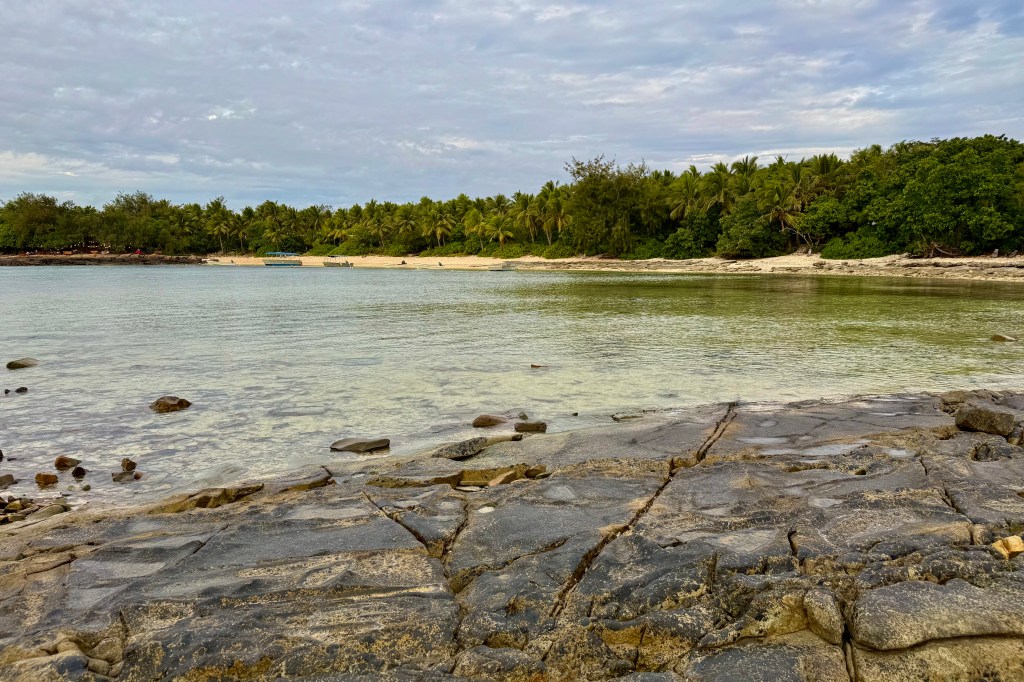
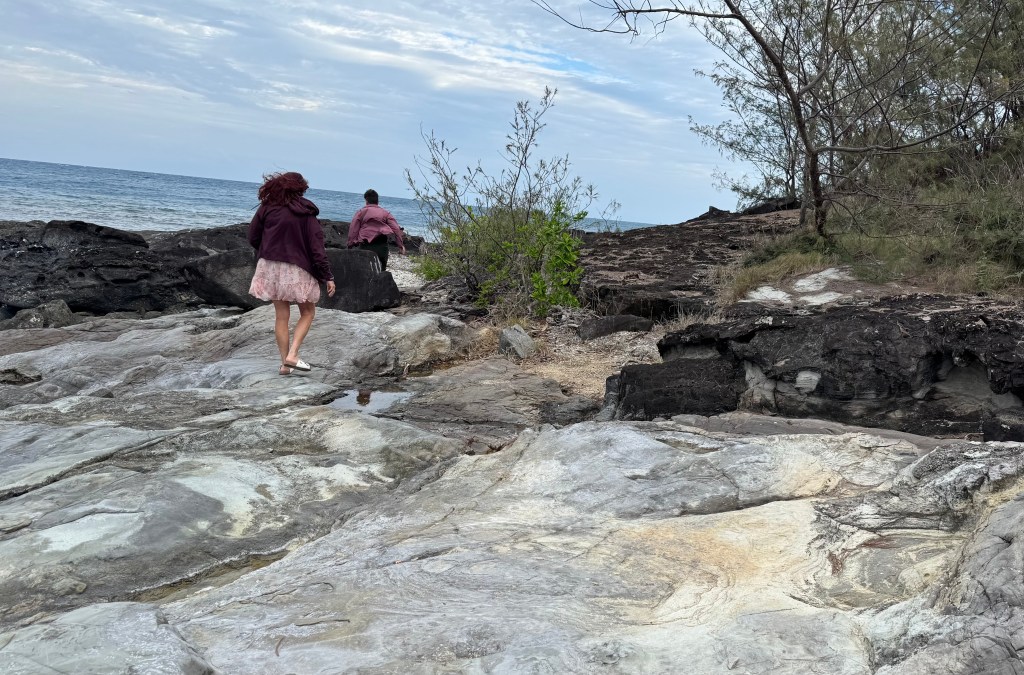
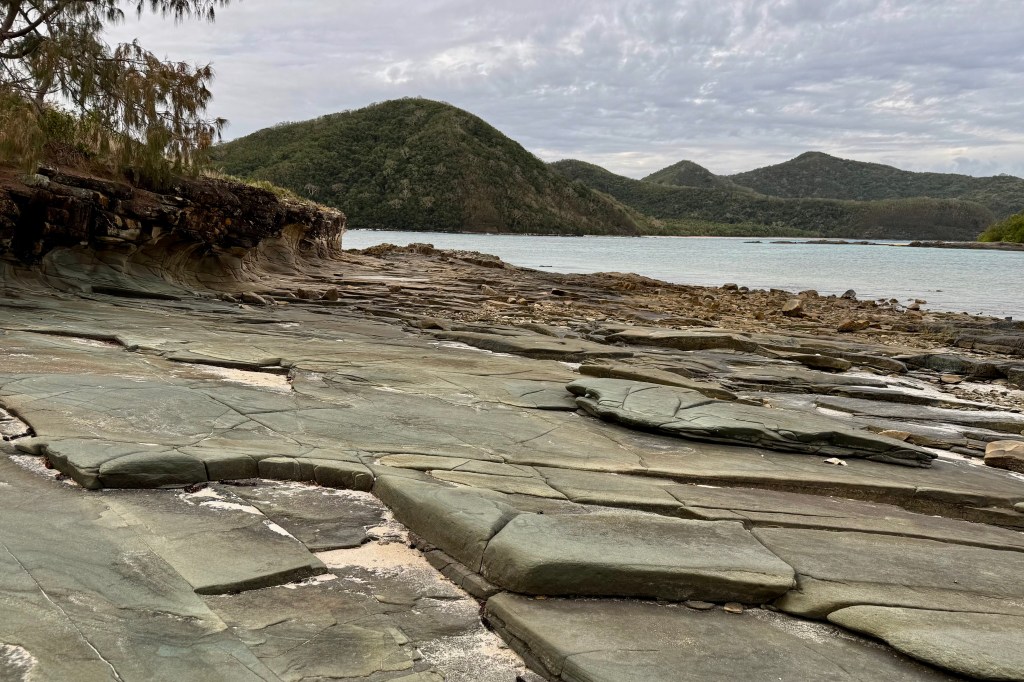
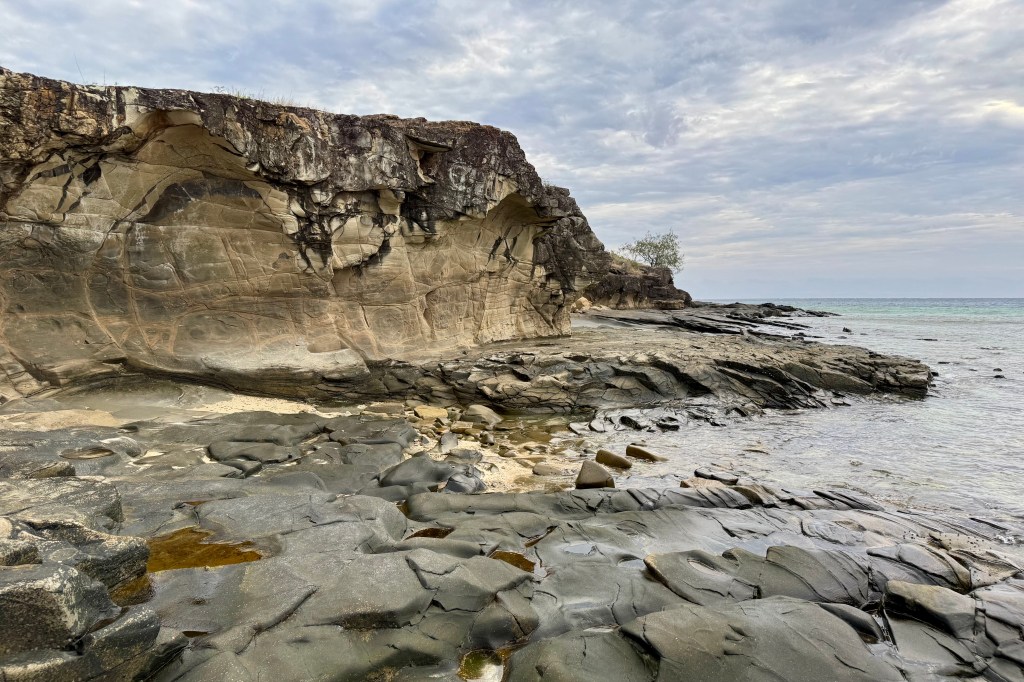
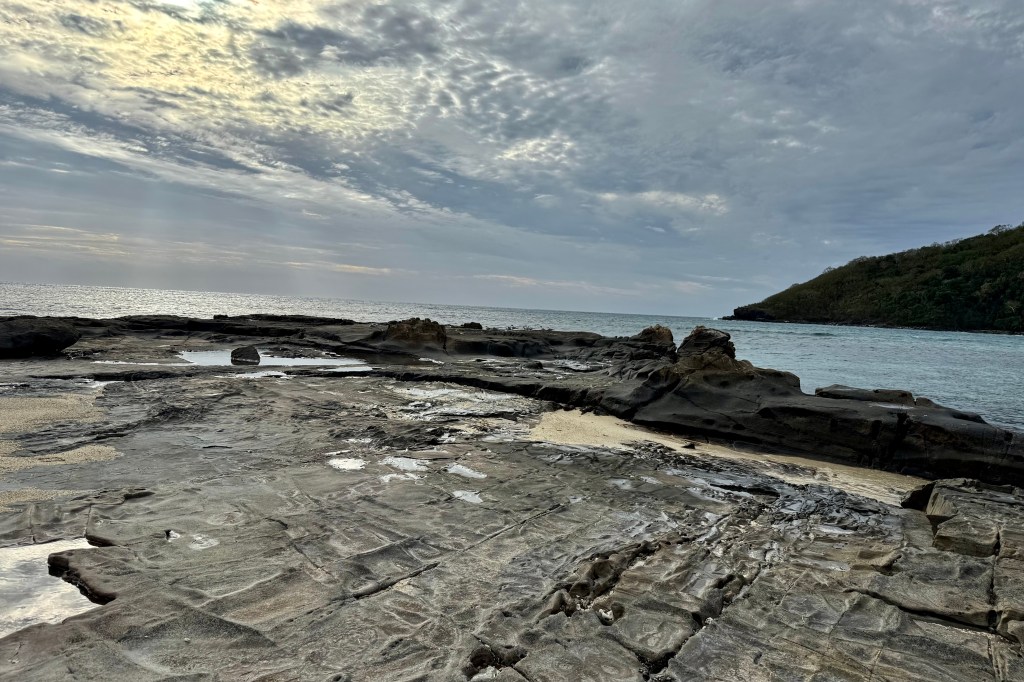
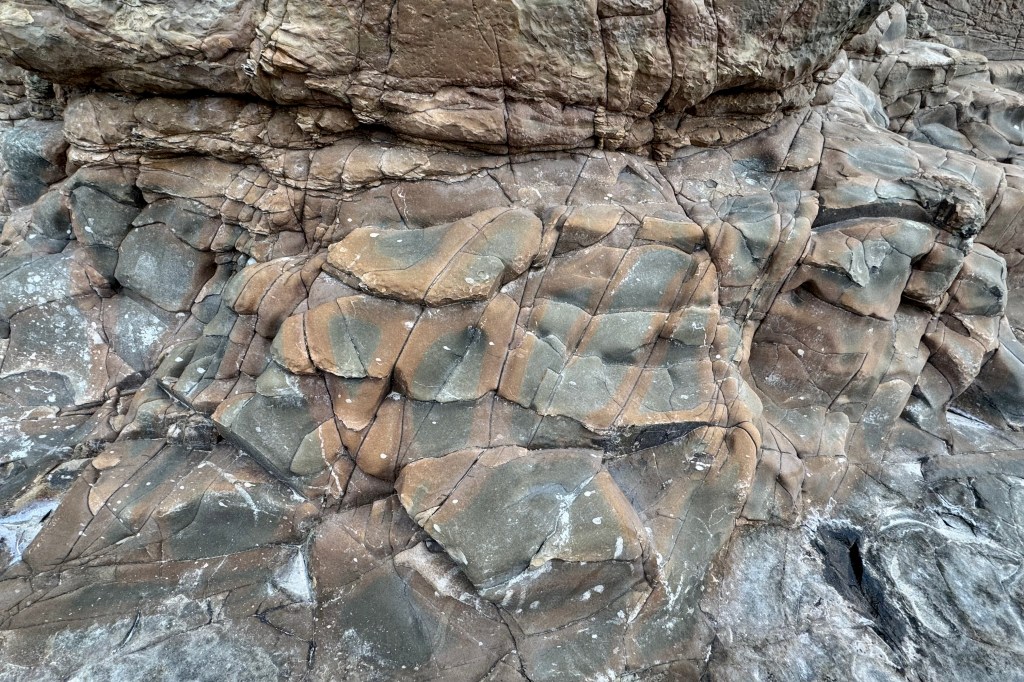
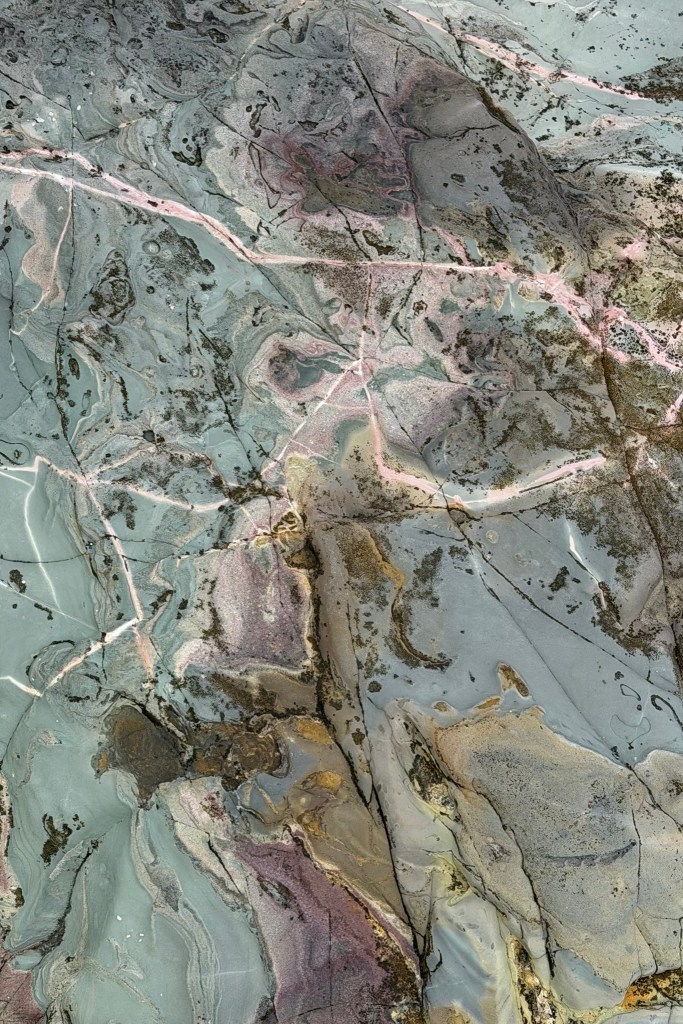
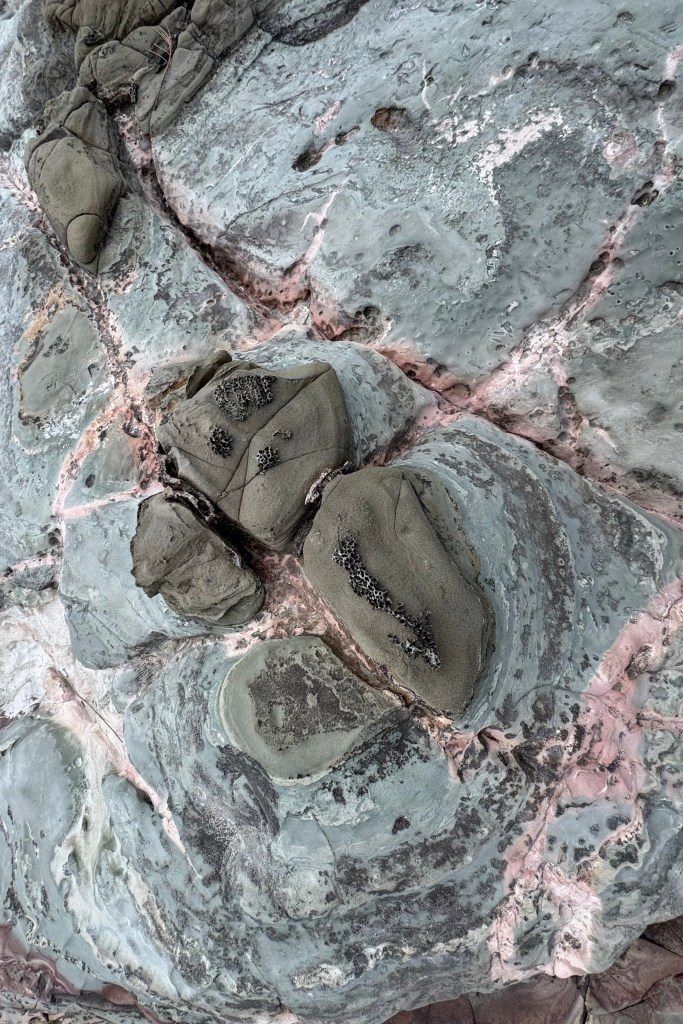
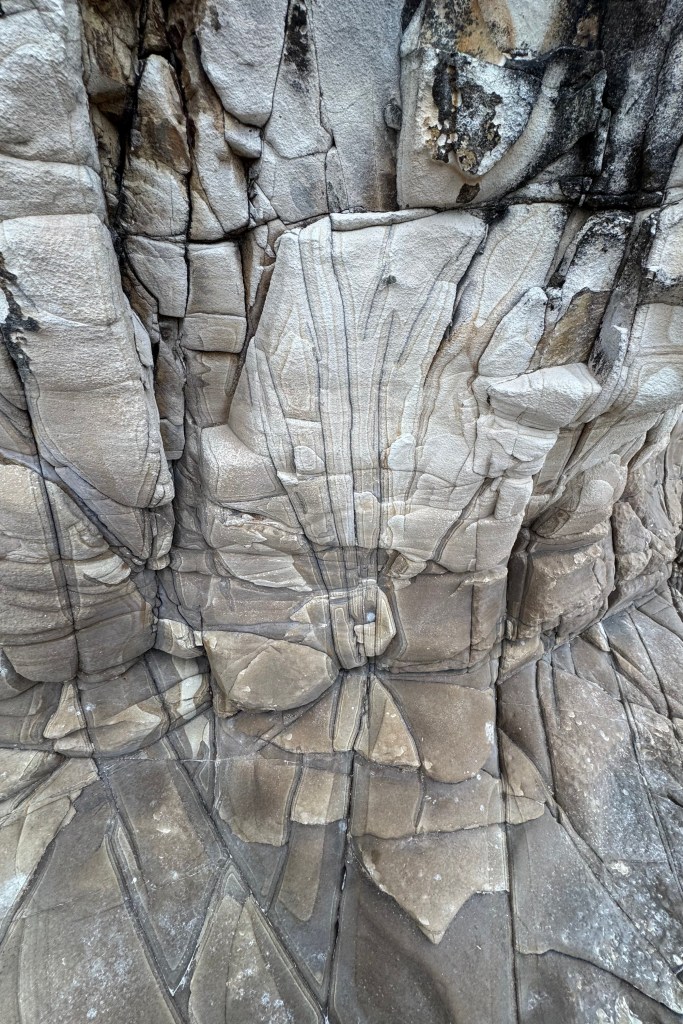
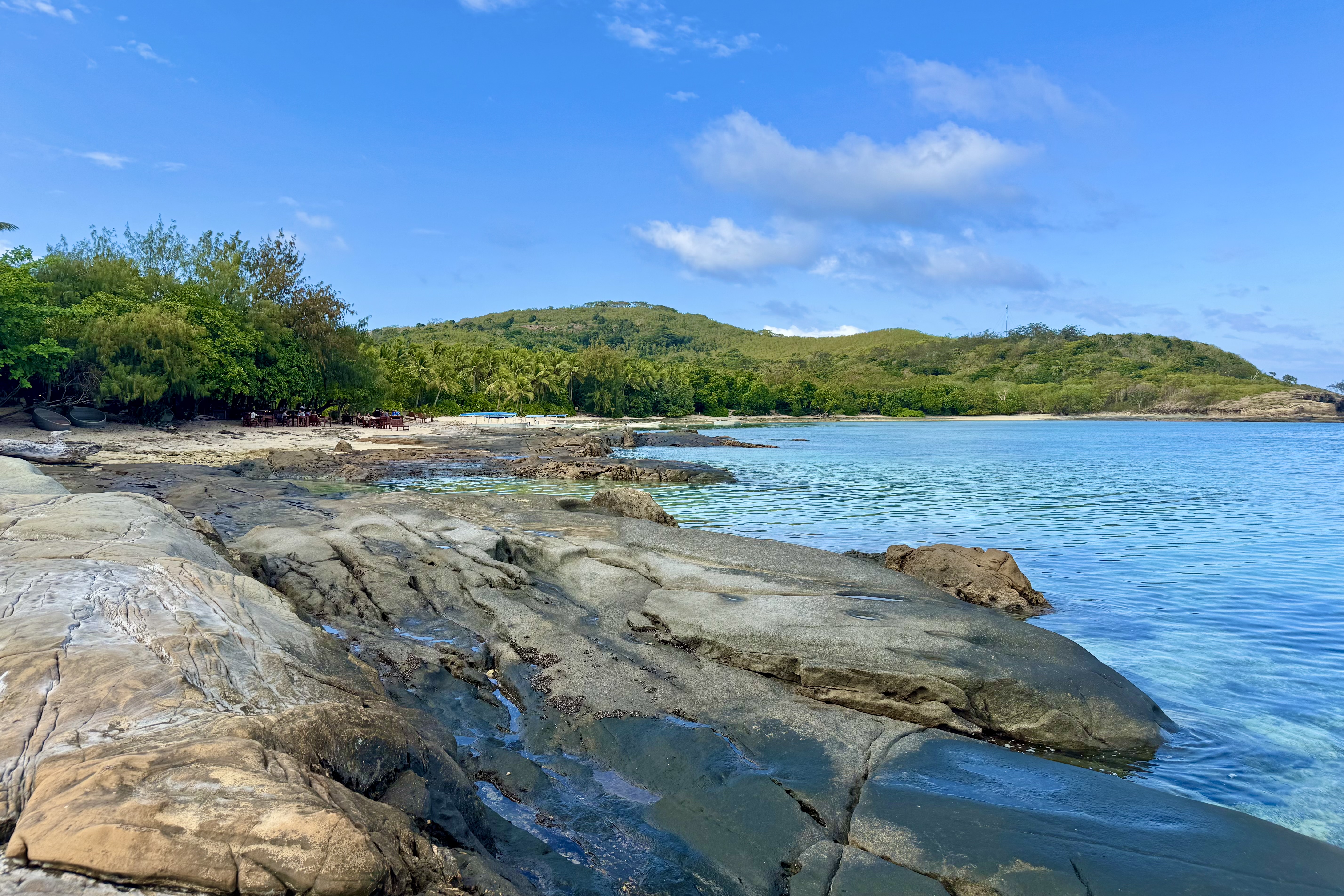
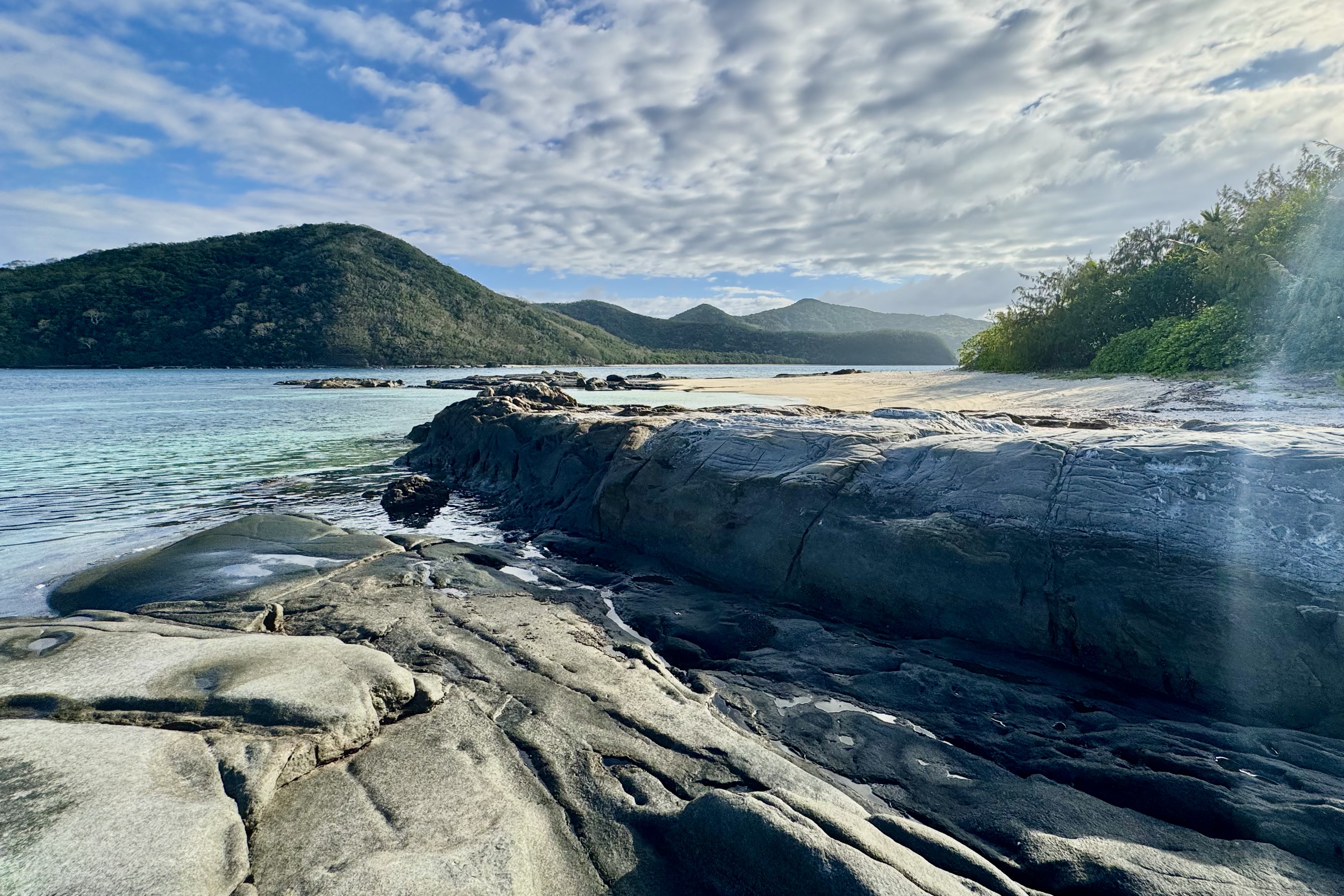
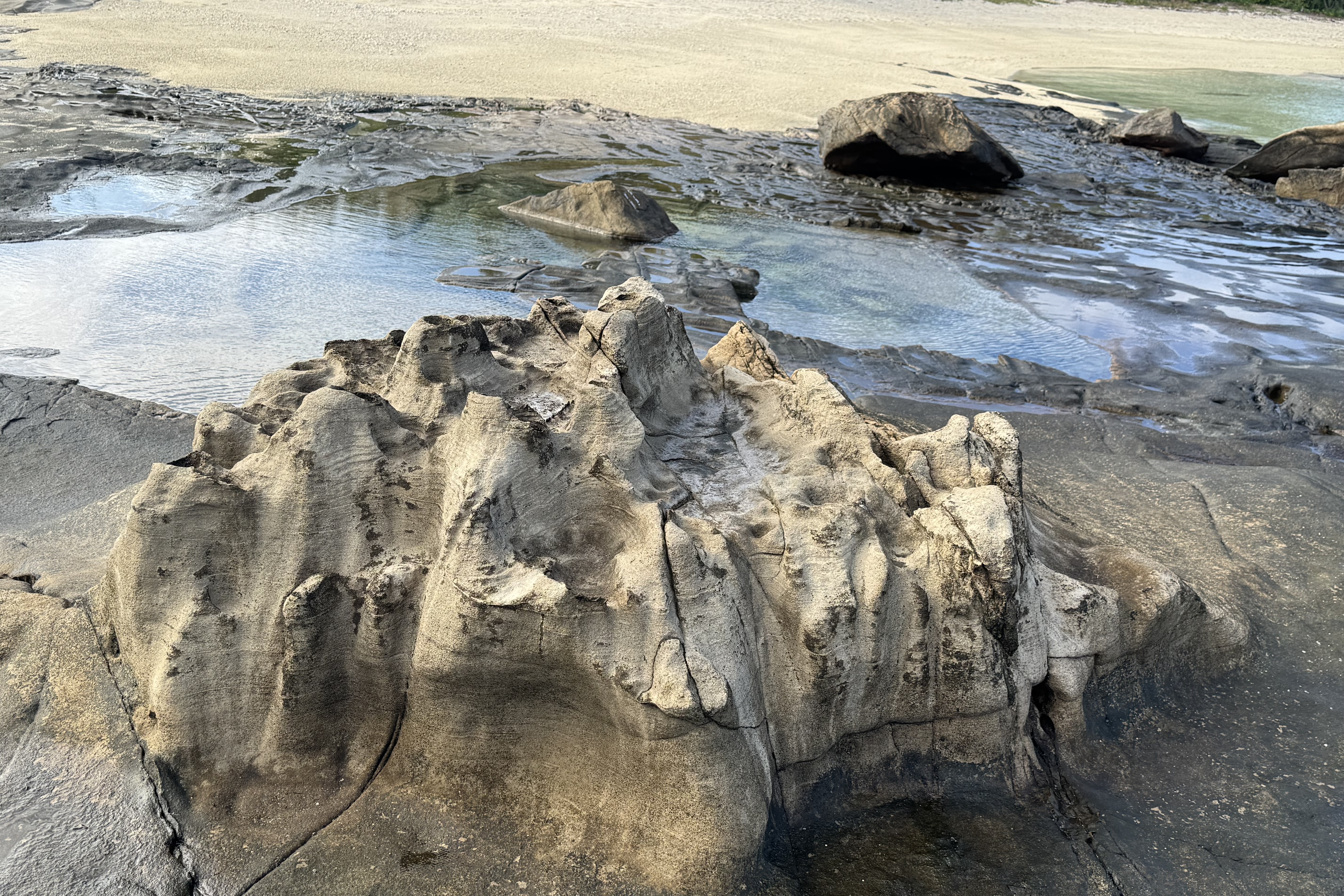
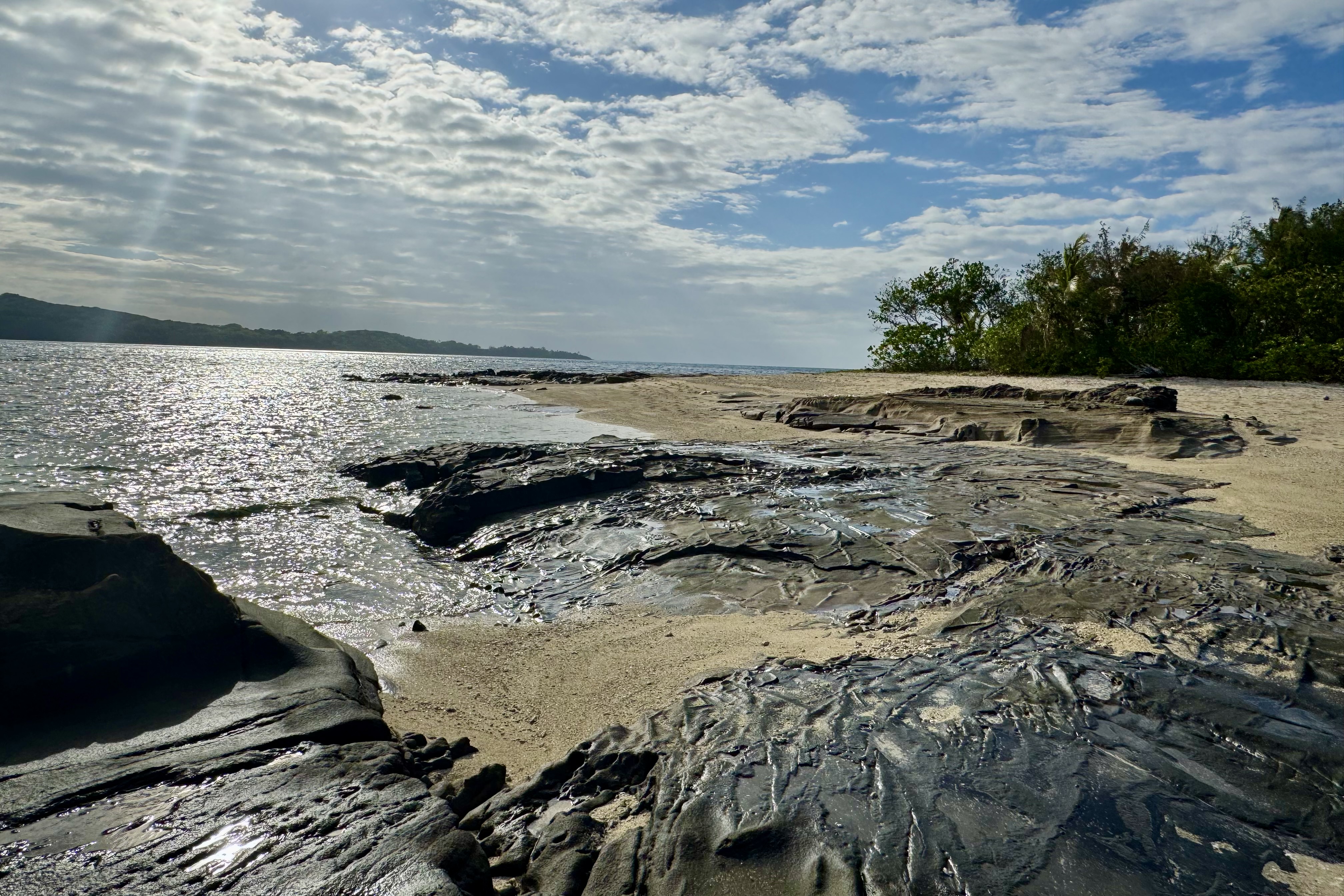
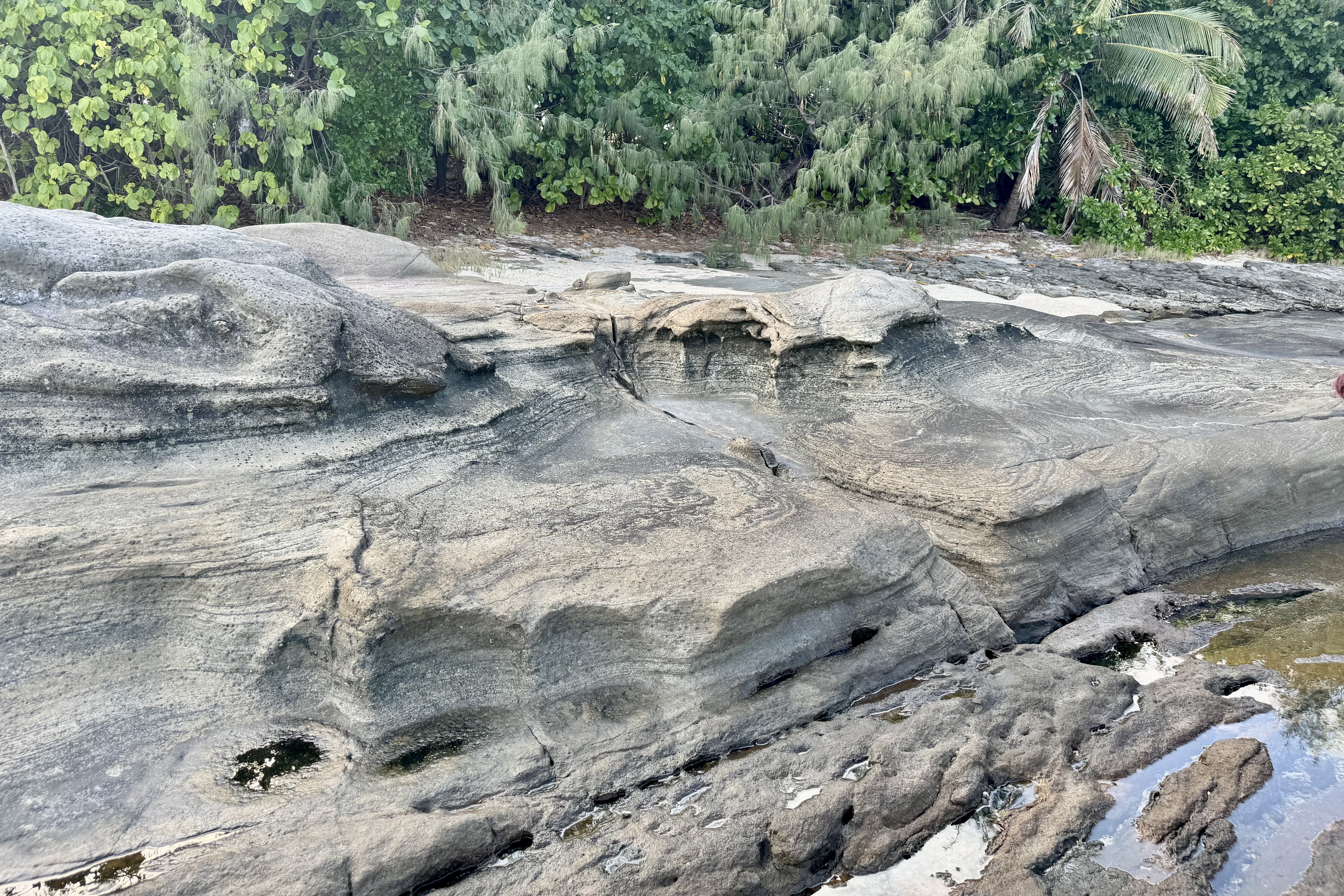
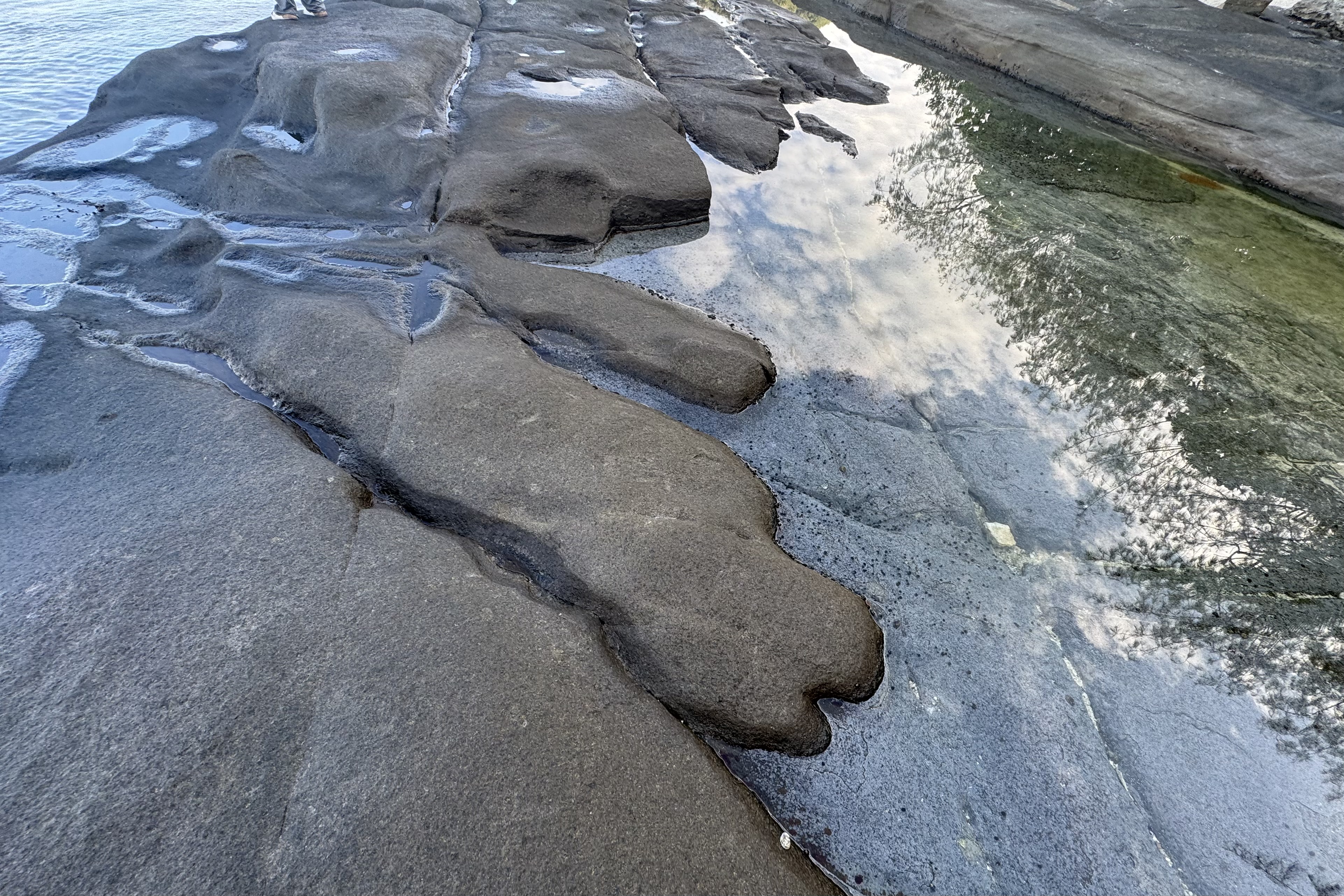
Fiji night with a sumptuous buffet and music and dancing was to begin around 6:30 on Saturday so to while away the time before the event we decided to do explore more of the volcanic rock ledges book-ending the three beaches along the islands shoreline. The rocks were a wonder in themselves. It seemed that every ledge we scrambled over was a landscape of swirls and bands with ribbons of cream, gray, pink, and rust spreading across the surface. Some were smoothed and polished by the waves and in others they were cracked into starbursts and tiles like a mosaic laid out by an artist or perhaps someone had created a jigsaw puzzle that was partially finished. Dark rough rock sat next to pale banded stone. I definitely wished that I had had a course in geology to better recognize all that I was seeing.

And thankfully I returned to the beach for sunset and was unscathed with all my limbs intact but my daughter Tasia wasn’t so lucky. She took a spectacular tumble on the rocks, proving she inherited my talent for falling and stumbling. She had a bruise on her behind the size of a mango that she could be showing off for weeks.

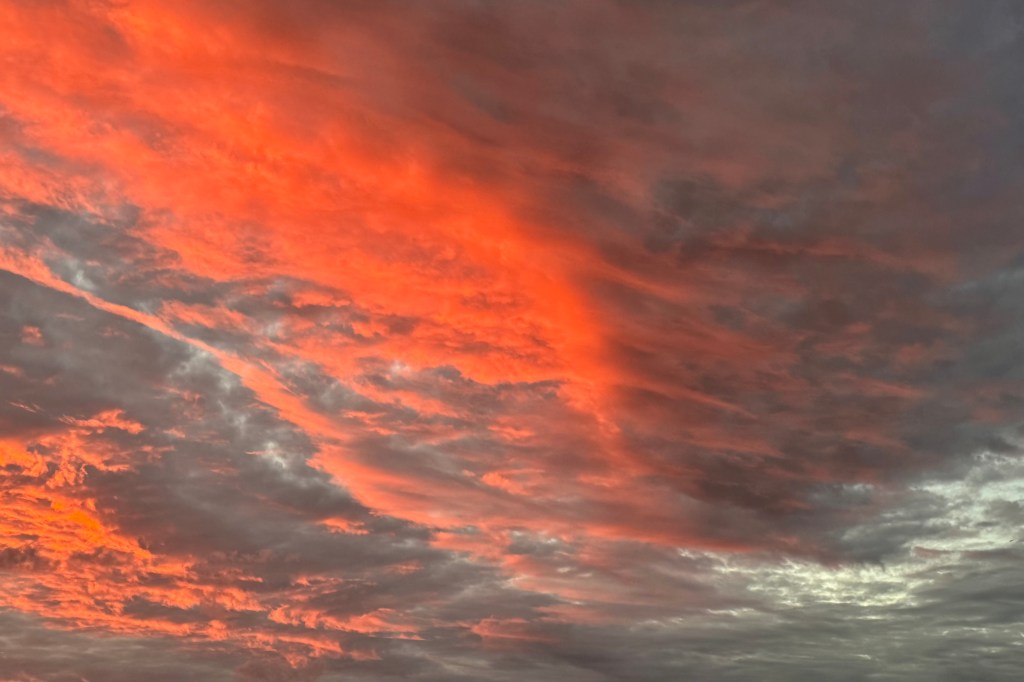
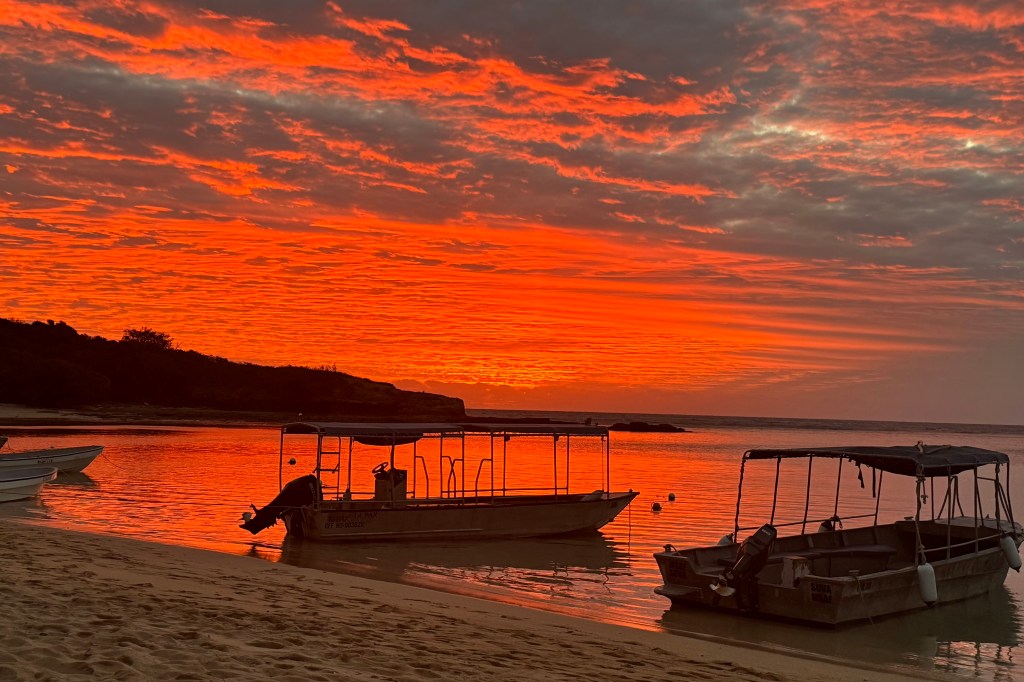
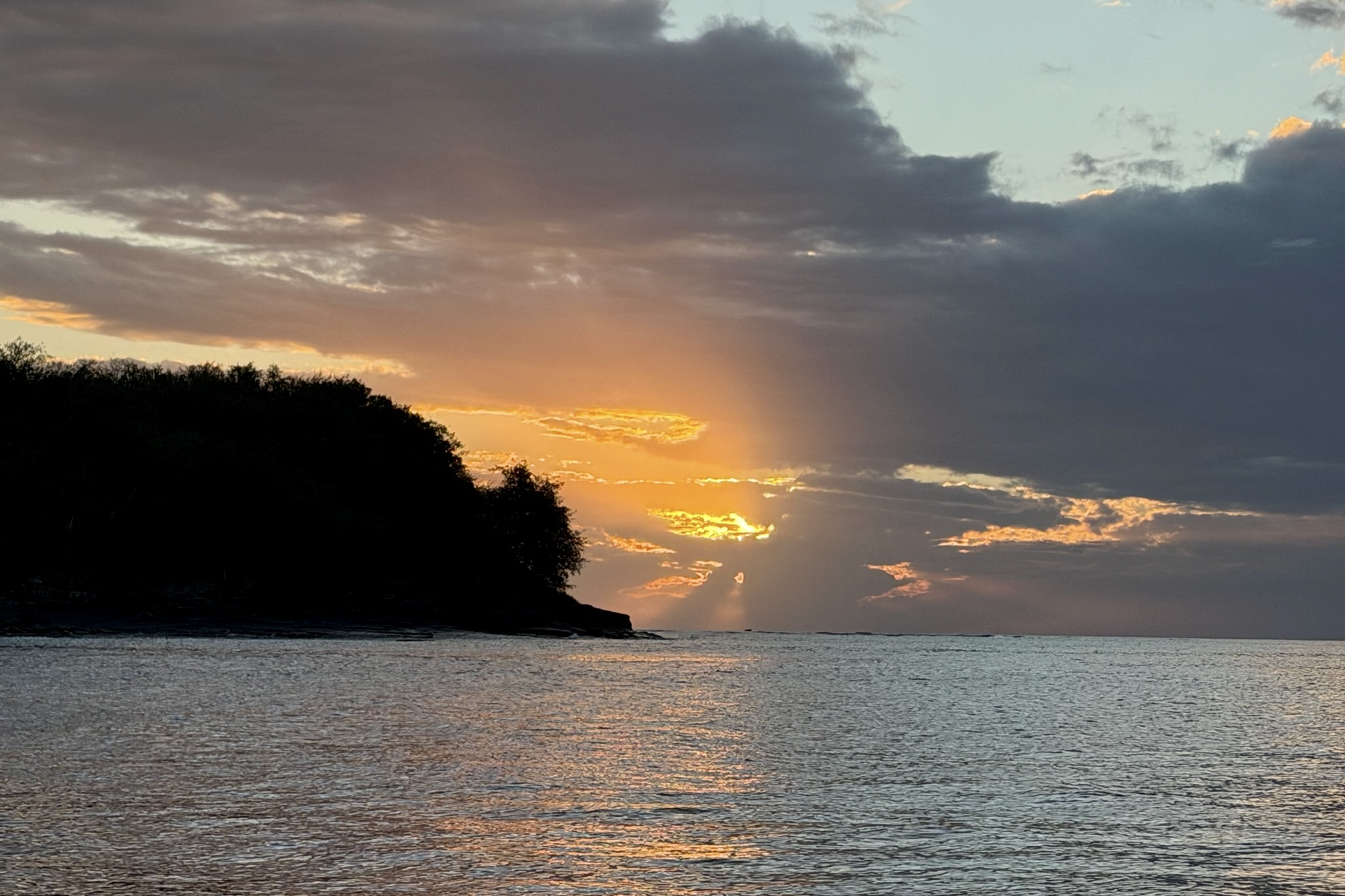
Yet again, sunset was spectacular … and then it was time to head to restaurant for the Fiji Night celebration. Meats cooked lovo-style, chicken curry, local fish cooked in a creamy coconut sauce, root vegetables, rice, salads, tropical fruit, breads, and a table laden with desserts. This meal presented for the first time an opportunity for desert buffs and sugar addicts to help themselves to as many servings as one could want of dessert.
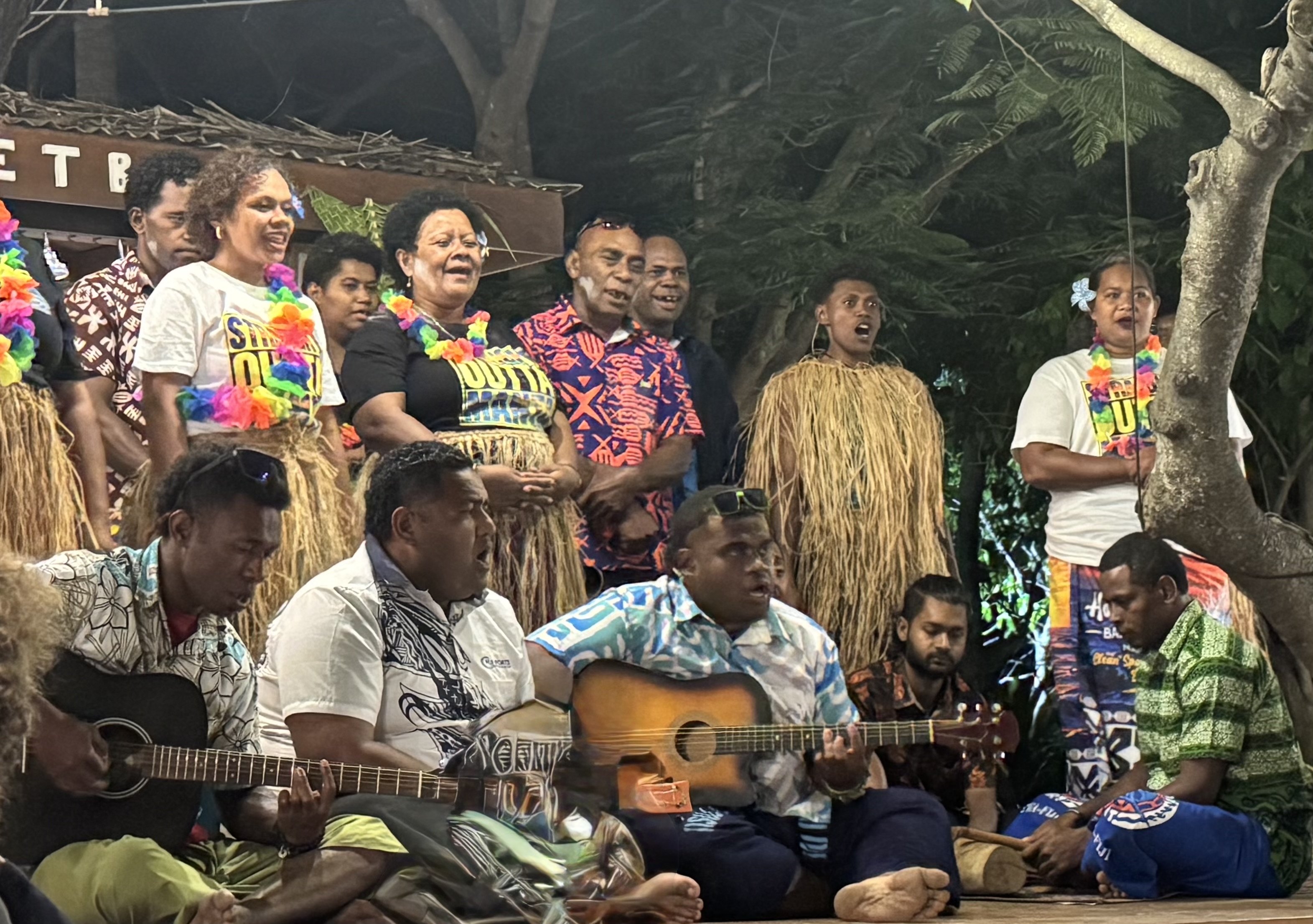
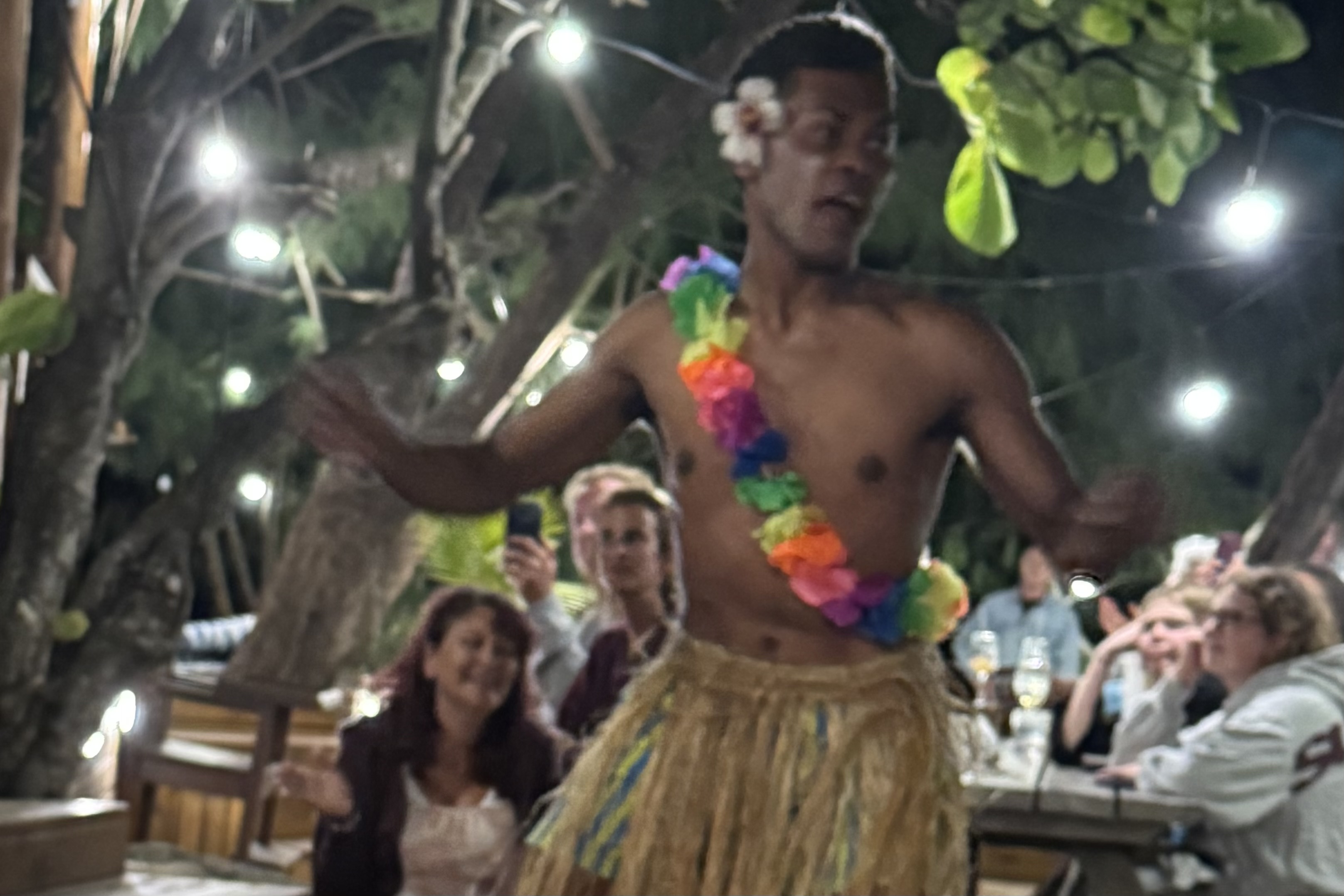
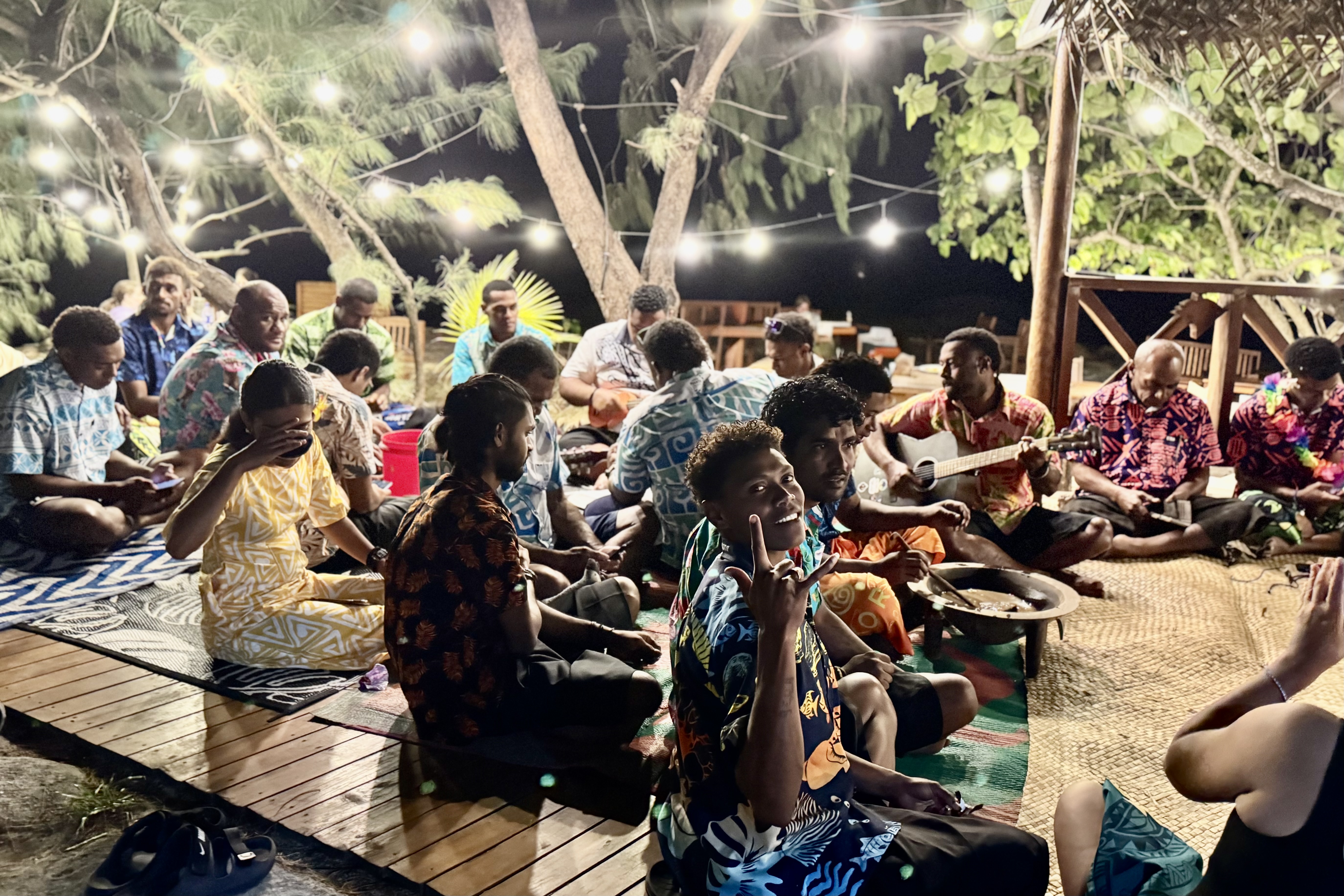
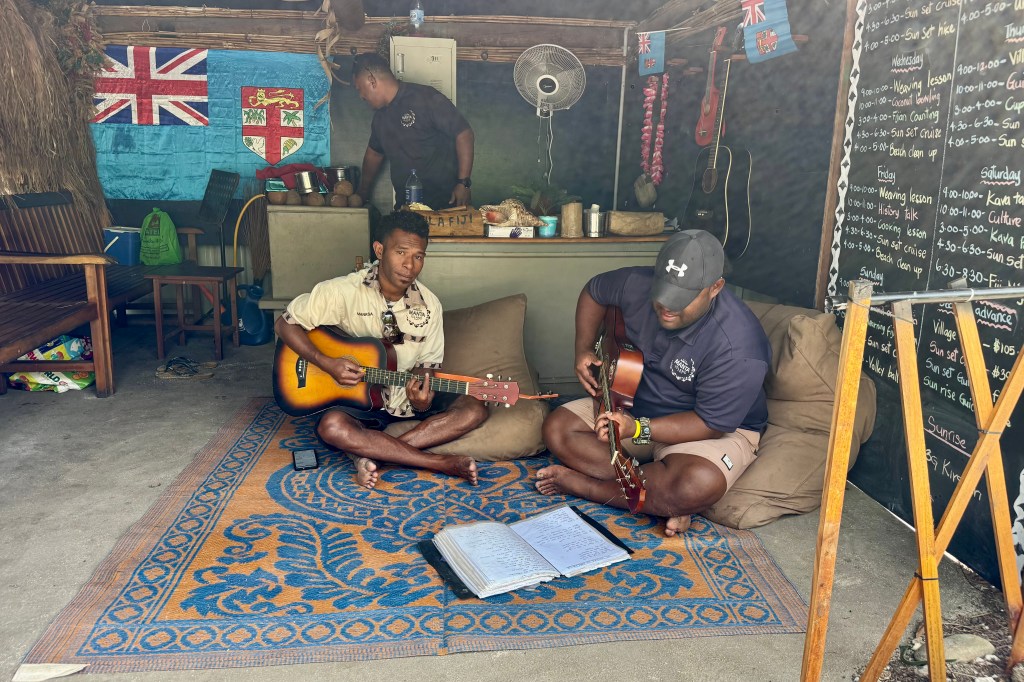
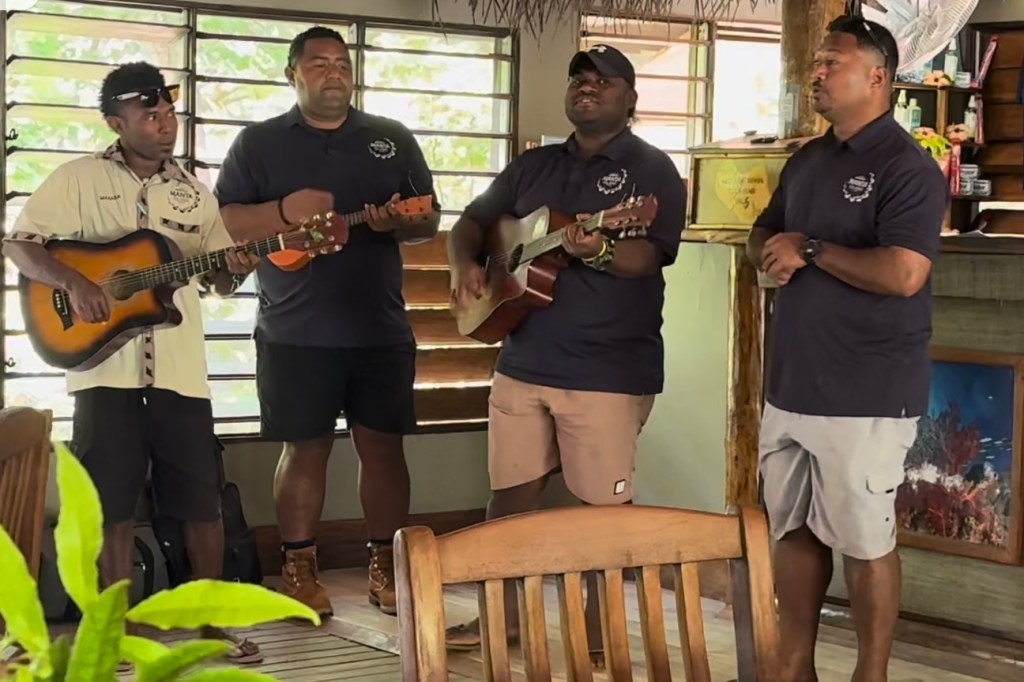
After the buffet, the evening turned into a full-on celebration. Many of the resort’s staff gathered under the trees to sing and dance for us, with guitars and a ukulele. Several wore grass skirts and bright flower leis, and they sang with great joy. One of the dancers, with white paint on his cheeks and a rainbow lei across his chest, led the way and soon a conga line was snaking through the trees and across the sand, guests and staff alike with hand’s on each other’s shoulders. I clapped from the sidelines, enjoying the show, but Bernadette and Tasia delightedly joined in. Given my track record, keeping my feet planted on the sand felt like a smart move.
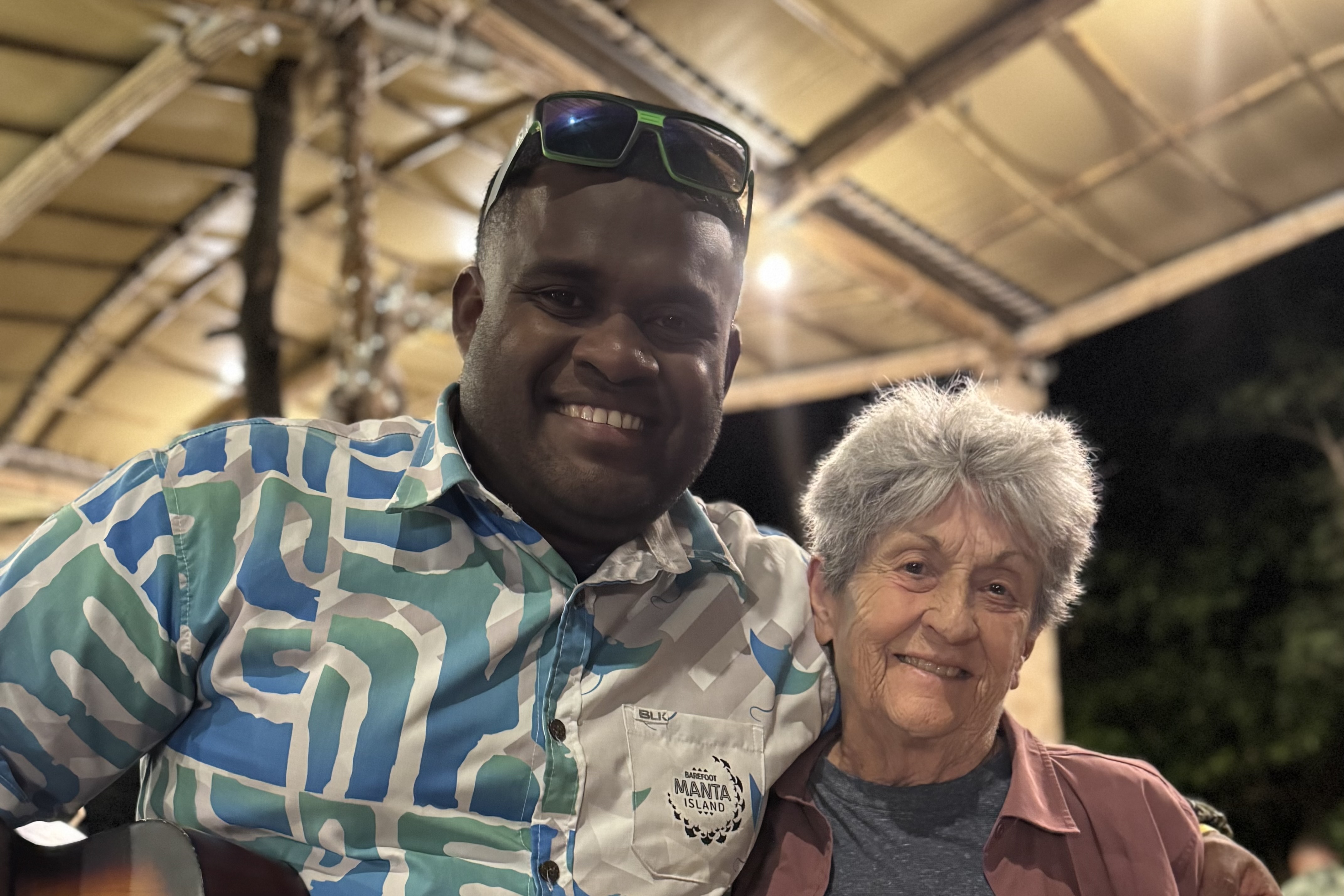
Our Manta Musicians

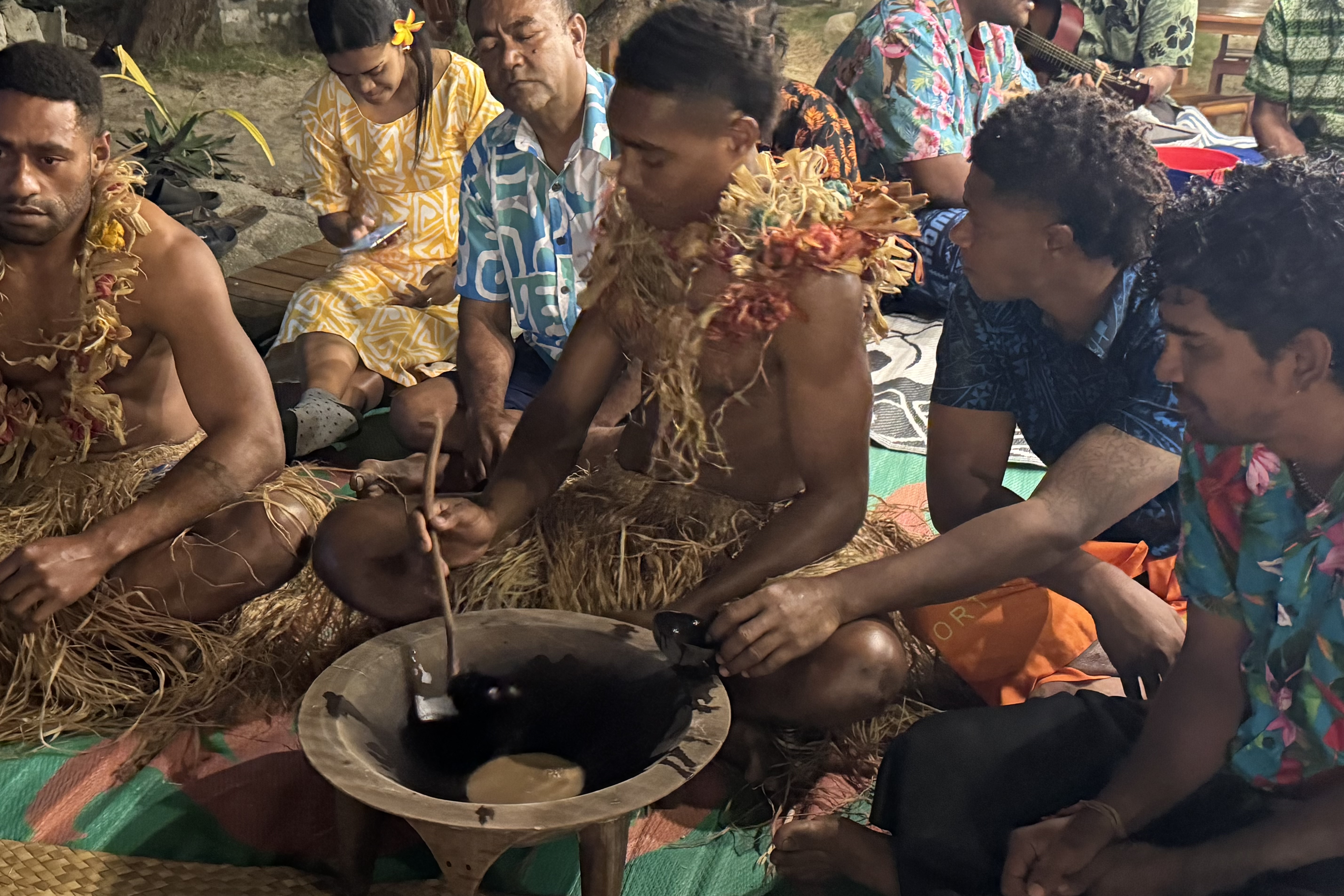
As the evening progressed we were invited to join in a kava ceremony. Sharing kava is how guests are welcomed in Fijian culture. We sat on woven mats around a big wooden bowl called the tanoa. A couple of men in grass skirts sat behind it , stirring it while another stood by with a dark coconut shell cup. Each person had an opportunity to receive a small amount from this cup and we were instructed on the ritual we would perform when it was our turn to partake. When it was my turn I said the hearty “bula, ” gave an enthusiastic cupped clap, drank up and followed it by three more cupped claps. If you are wondering, yes we all drank from the same cup.

The kava was a muddy, grayish-brown and is made from the pulverized kava root (which is a relative of black paper) and cool water and then stirred. It tasted earthy and a little peppery, like dirt that had been introduced to black pepper. It has the potential to be mildly psychoactive sedative-relaxant. But with just a small sip, I did not feel much except a very mild tingling of lips and tongue. One sip was plenty and I have now checked that off of my Fiji bucket list and won’t be putting it back on.
When we headed off for the night, the kava bowl was still the center of things. Guests and Fijians still sat shoulder to shoulder passing the coconut cup. I imagine the evening went on for quite a while with more songs and plenty of “bulas.”

Sucking Sea Water, Toasting Coconut, and a Basic Economy Snorkel

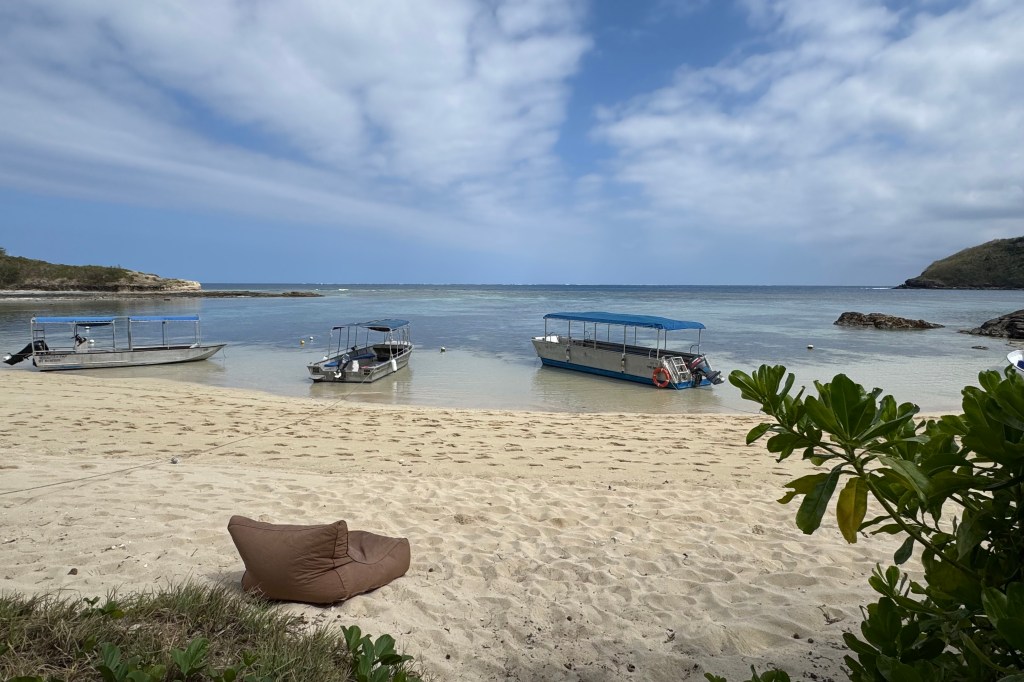
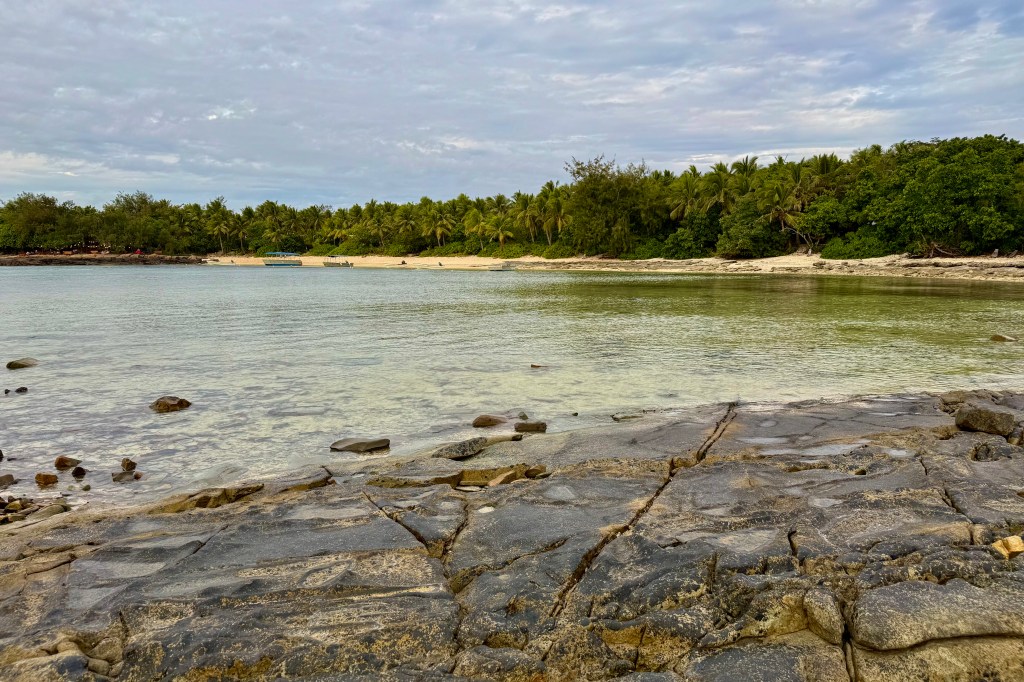
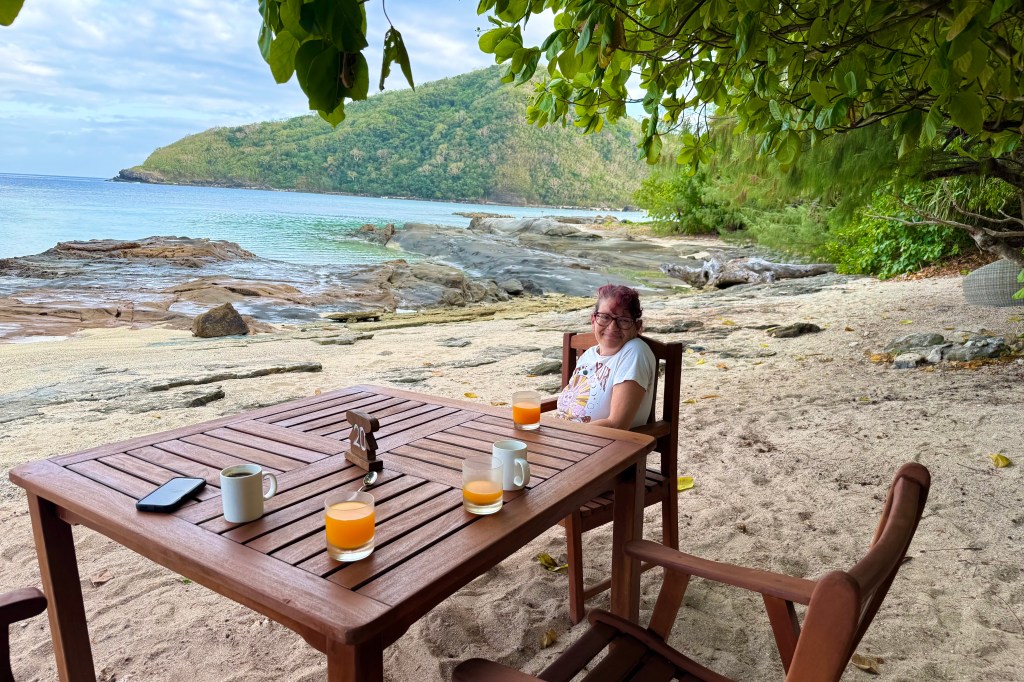
What an exquisite way to begin the day—with a beachside breakfast overlooking the bay. As I sipped the last of my Via laced coffee, I took in the tranquil, deep-turquoise waters of this sheltered cove, the sandy beach, and the coconut palms. It was hard to imagine a more idyllic setting.

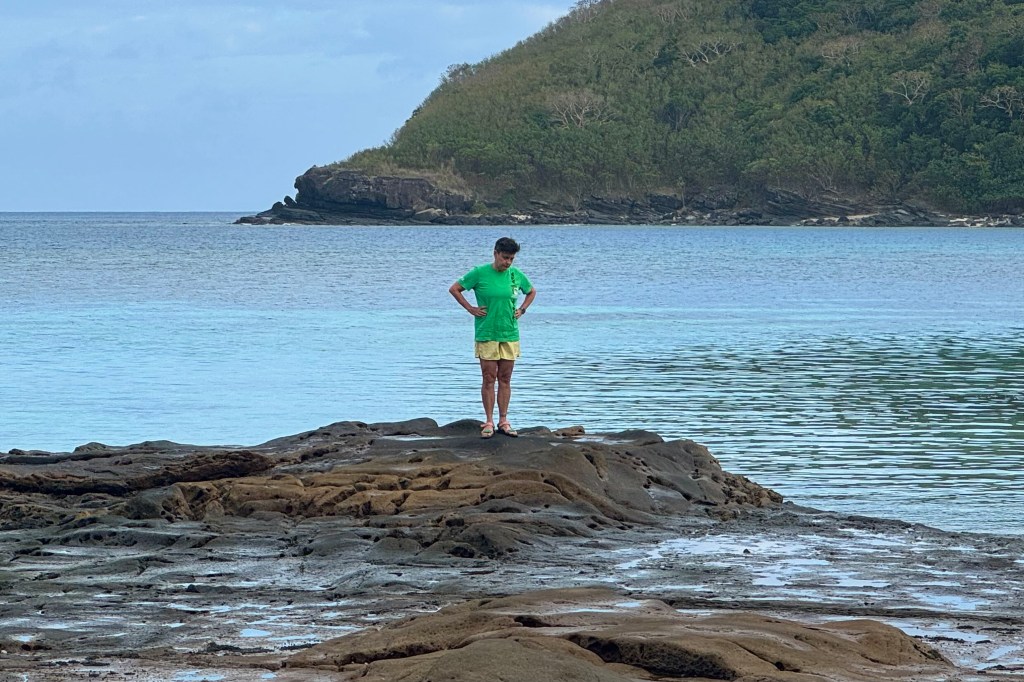
Tasia had already headed over to the rocky shoreline, where she was exploring the various splash pools and rock pools scattered across a platform of volcanic rock. Not wanting to miss out on anything, Bernadette and I weren’t far behind.

From a distance, I could never have imagined the richness of the sea life inhabiting these rocky outcrops. Up close, the pools were fascinating little worlds, each seemingly offering something new to discover. Exploring them, however, required a certain amount of care—and perhaps a little more caution than my curiosity naturally encouraged.

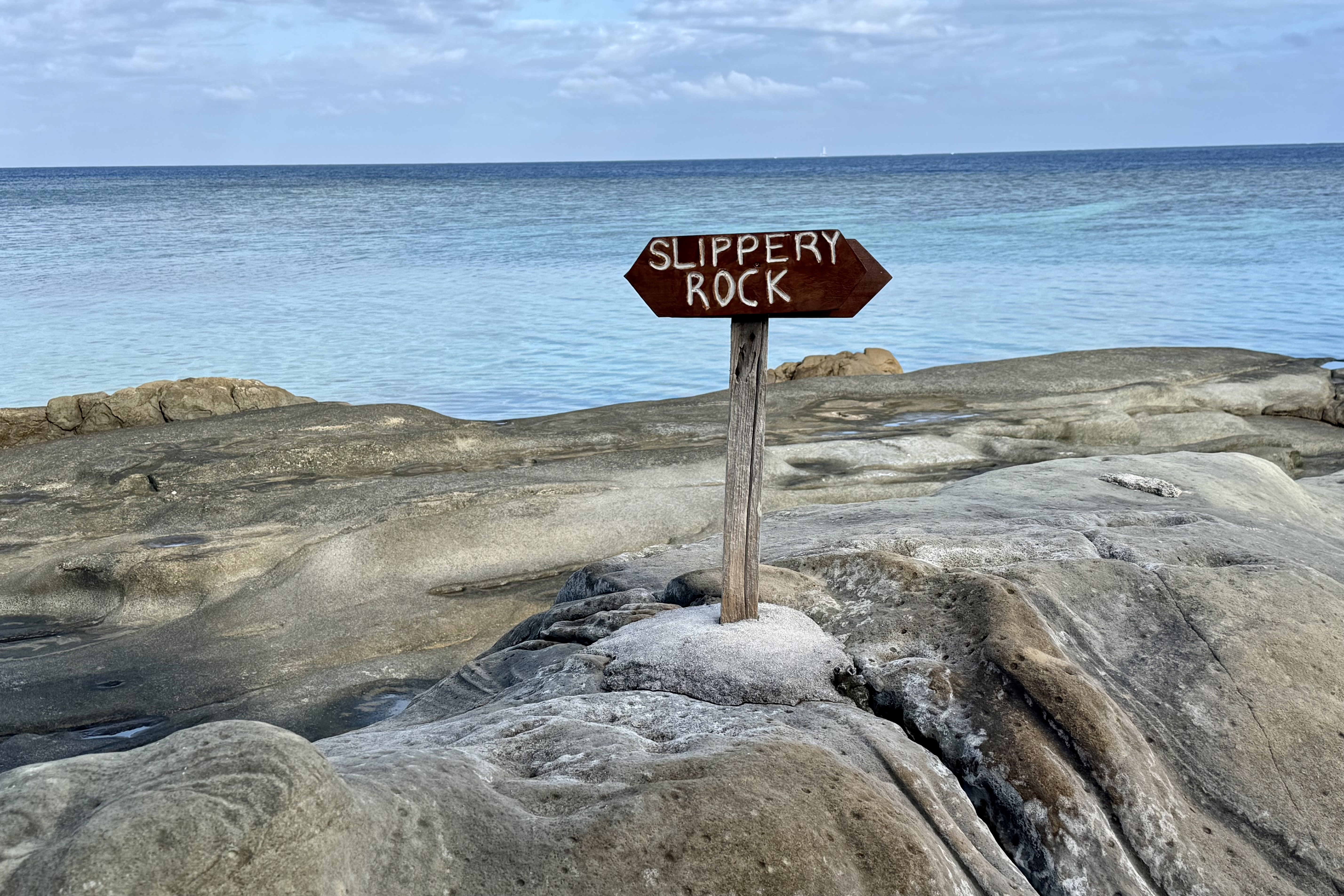
Walking across wet volcanic rock meant negotiating every single step. The surfaces looked smooth and inviting, but parts were slick with algae and a thin film of seawater. Rounded edges, ridges, and crevices made for uneven footing, while the tiny snails and barnacles offered their own assortment of rough patches. Marveling at the wonders of nature came with a healthy dose of nervousness. Far from a doctor or ER and a very long way from home, this was definitely not the place for a slip or a tumble.

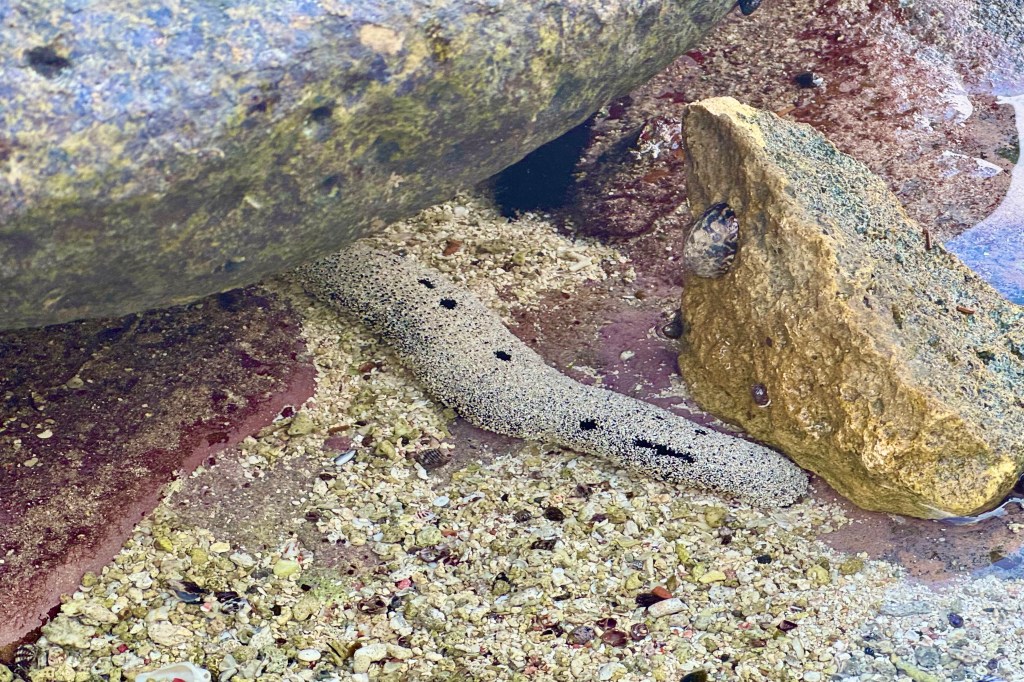
So I moved slowly, tested each step, and kept my eyes firmly on the ground. Which, as it turned out, was exactly the right strategy for spotting a sea cucumber tucked beneath a ledge. New concept! There are times when being cautious and being curious work remarkably well together.

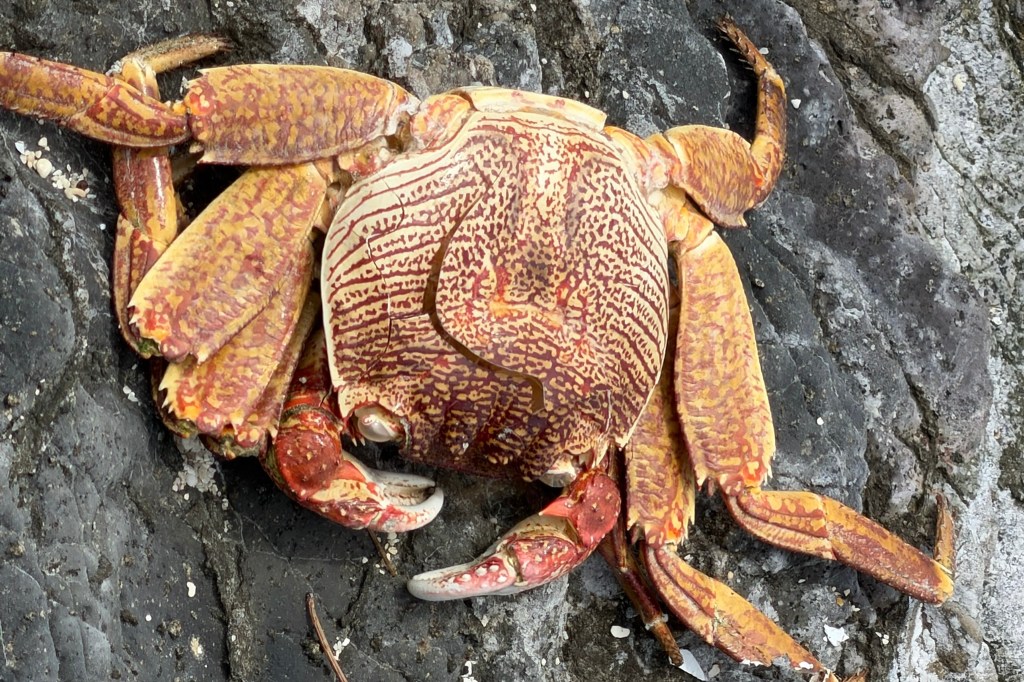
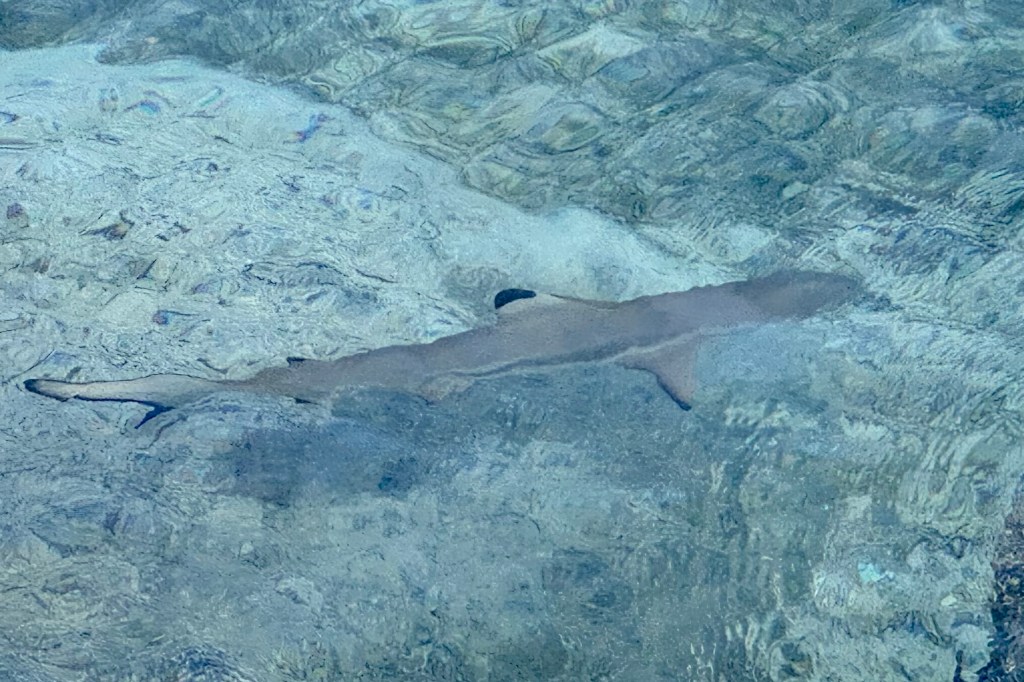
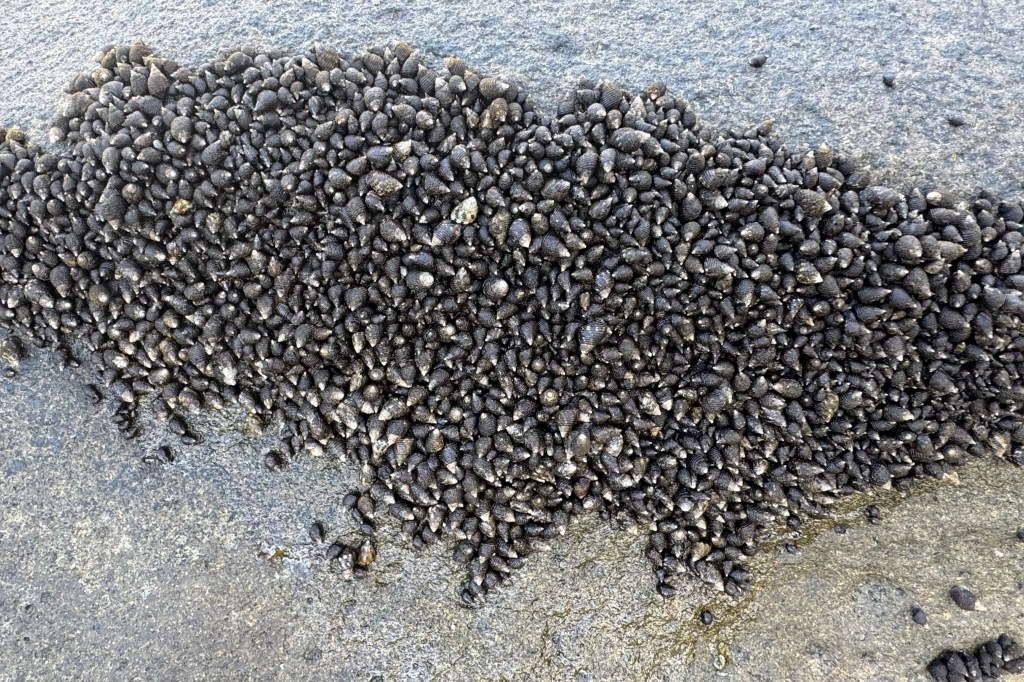
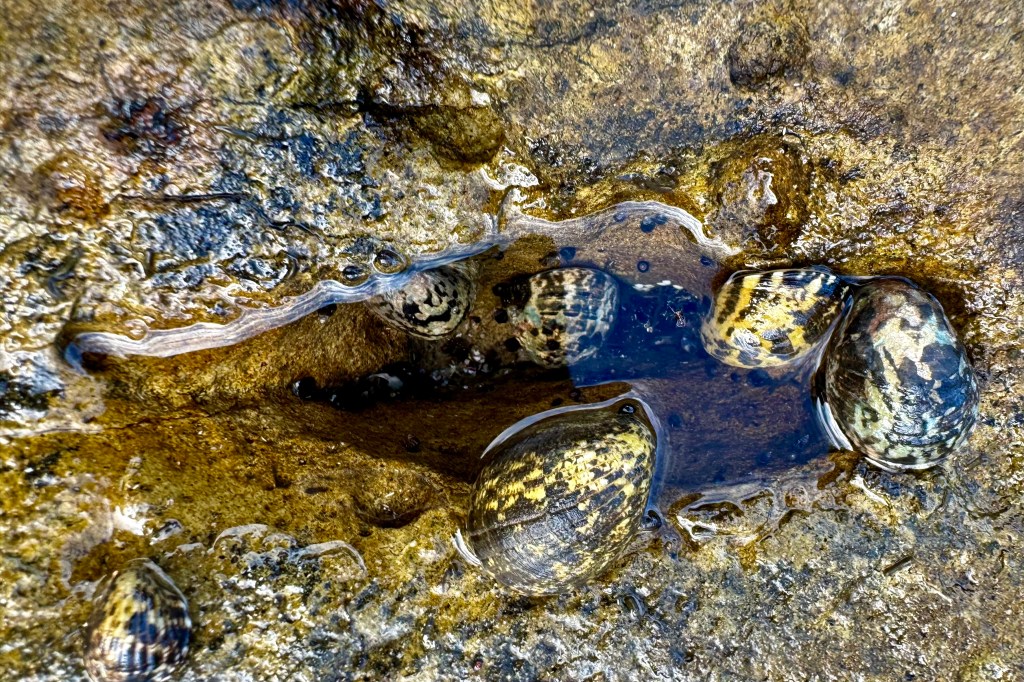
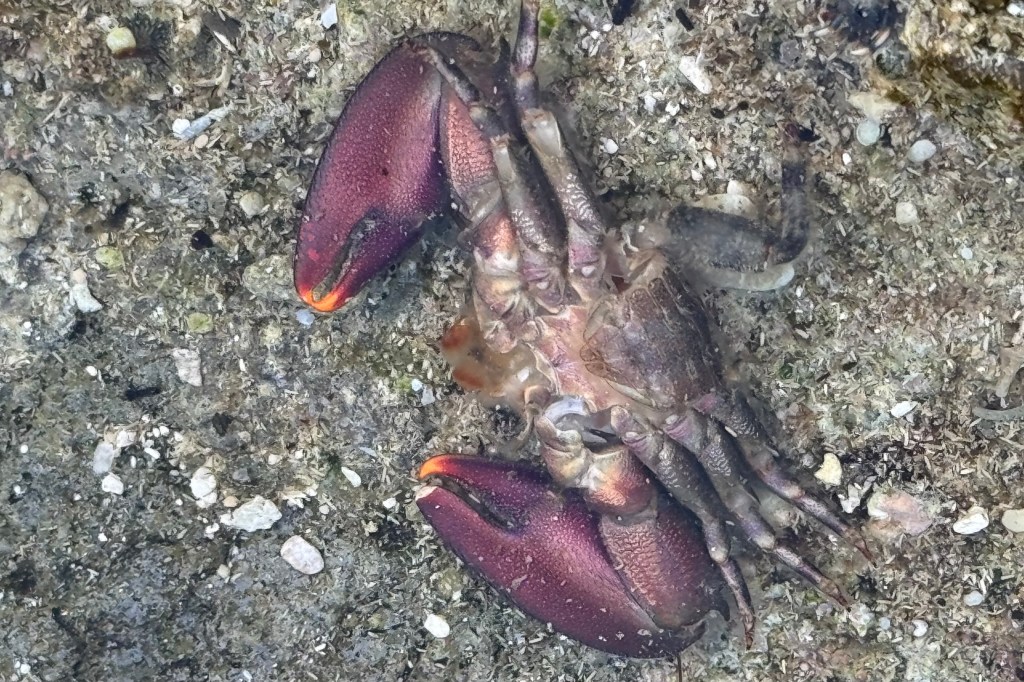
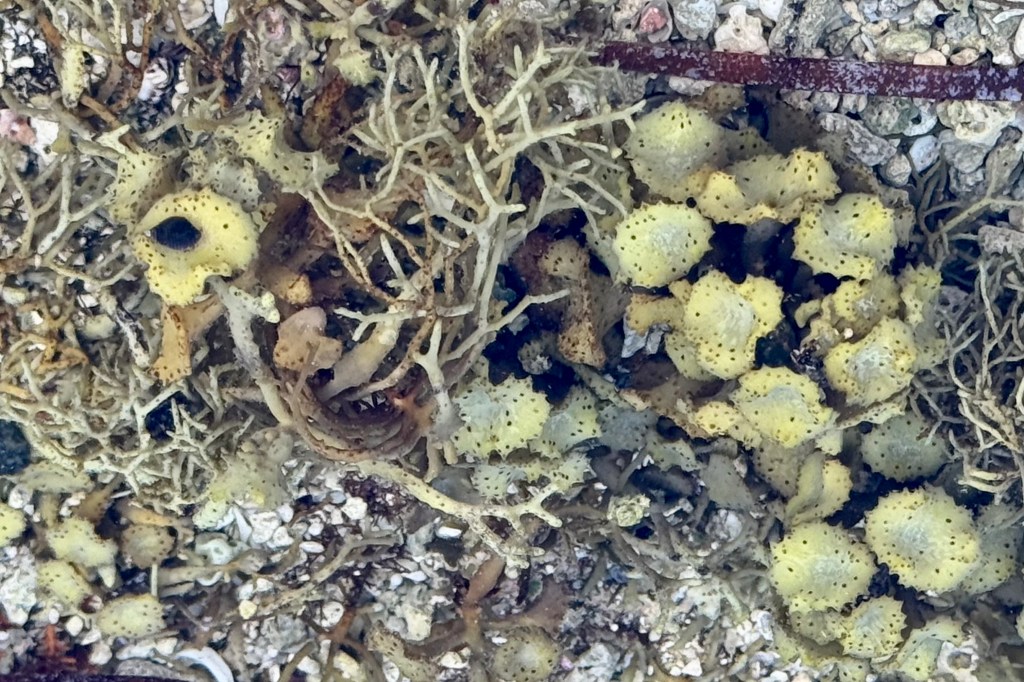
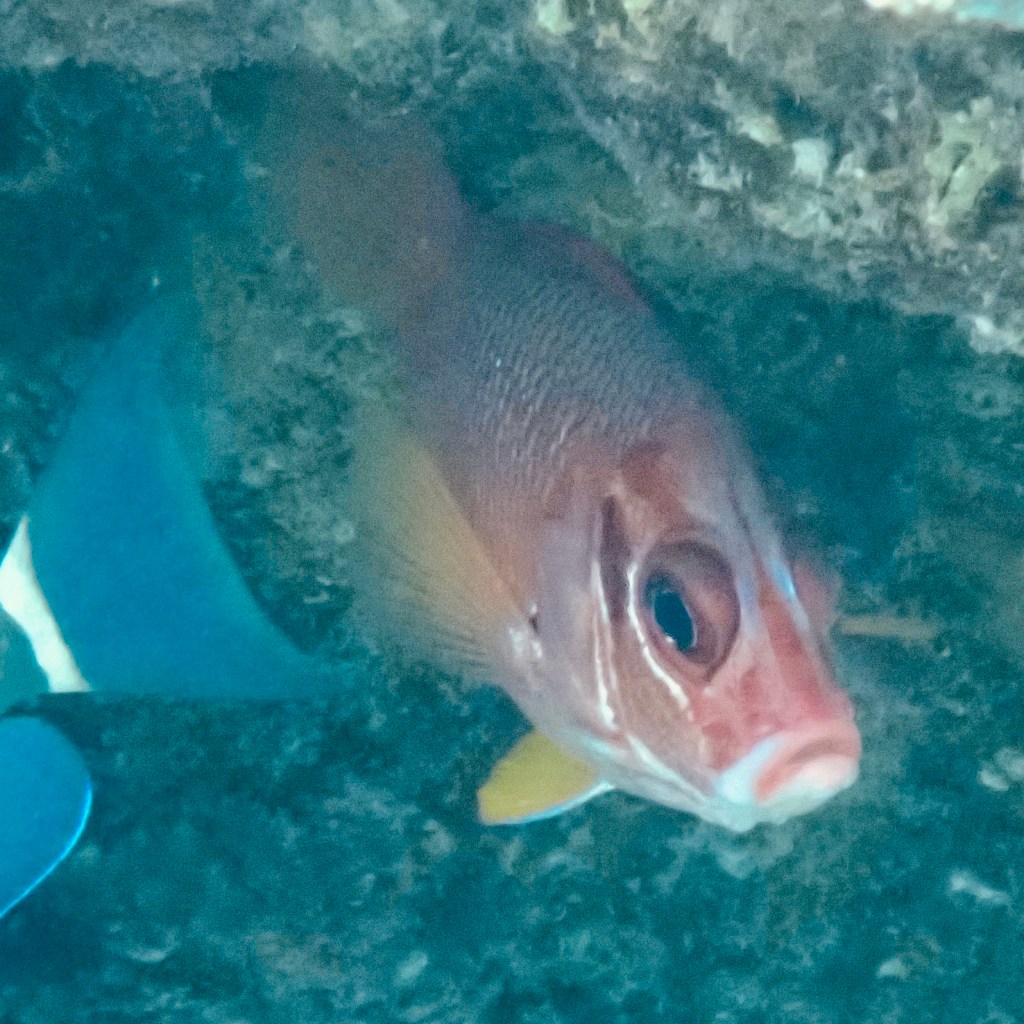
Among the delights of our exploration was the sheer variety of life in these little pools. We spotted a brown reef fish, sea cucumbers, and an assortment of crabs and snails. Every crevice seemed to hold the possibility of another discovery, and I found myself peering into the pools with increasing fascination—while remaining very mindful of where I put my feet. Highlights, see below, were a reef shark, clusters of zig-zag periwinkle, waved nitrate shells (blue checkered), sea cucumber, rock crab, yellow lobed sponges.

It was a wonderful reminder that sometimes the most interesting parts of a tropical paradise aren’t the grand views in the distance, but the miniature worlds hiding right at your feet. Provided, of course, that you can manage to keep your feet underneath you.

Now it was time to head to the dive shop to hopefully square away our equipment. Clearly, yesterday, with my own snorkel, I was completely incapable of taking advantage of that snorkel’s “protective splashguard top engineered to fend off unwanted surface water ” and it’s “ingenious one-way purge valve which would easily clear any sucked up water– just in case the first feature did not work as expected.” According to the advertisements all of this was going to be a breeze. Well, it was not a breeze as I kept sucking in the Pacific and my lung capacity was in no way capable of blasting the water out of the purge valve no matter how hard I huffed.

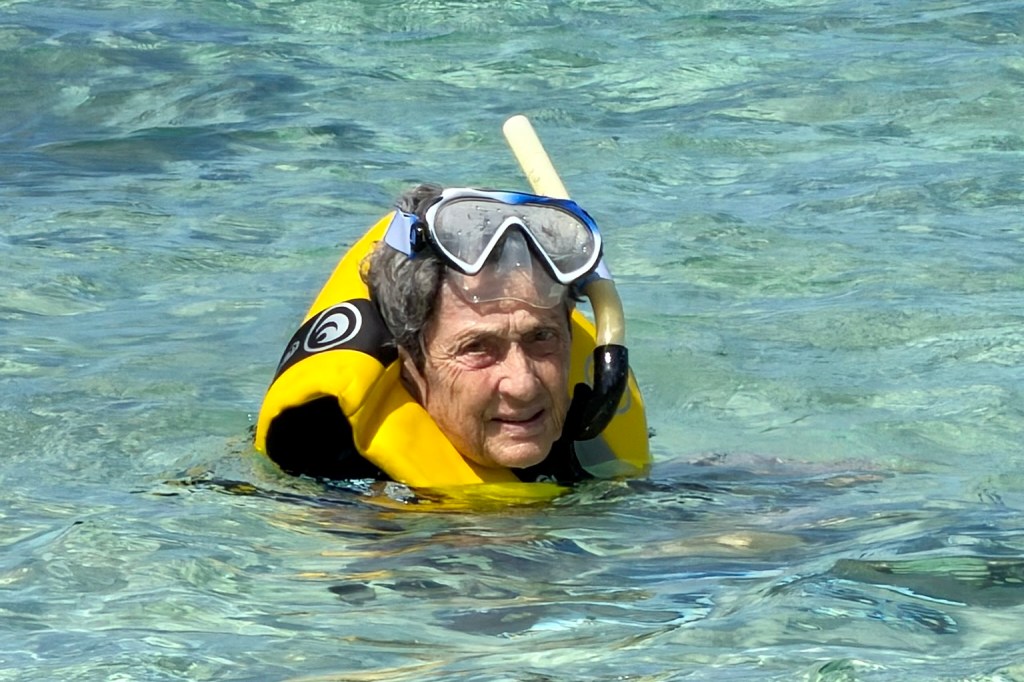
Before long the dive shop outfitted Bernadette and me with the budget airline version of a snorkel: no frills, no perks, and no fancy features of any kind. It worked great. They also outfitted us with a life preserver. Once in the water all of this was a great improvement over yesterday’s performance when I flailed and floundered in a desperate effort to keep myself off the reef as I was constantly readjusting my mask and emptying the sea water cocktail out of my snorkel. Today snorkeling was no long the side-show but the main event and I was actually enjoying the reef.

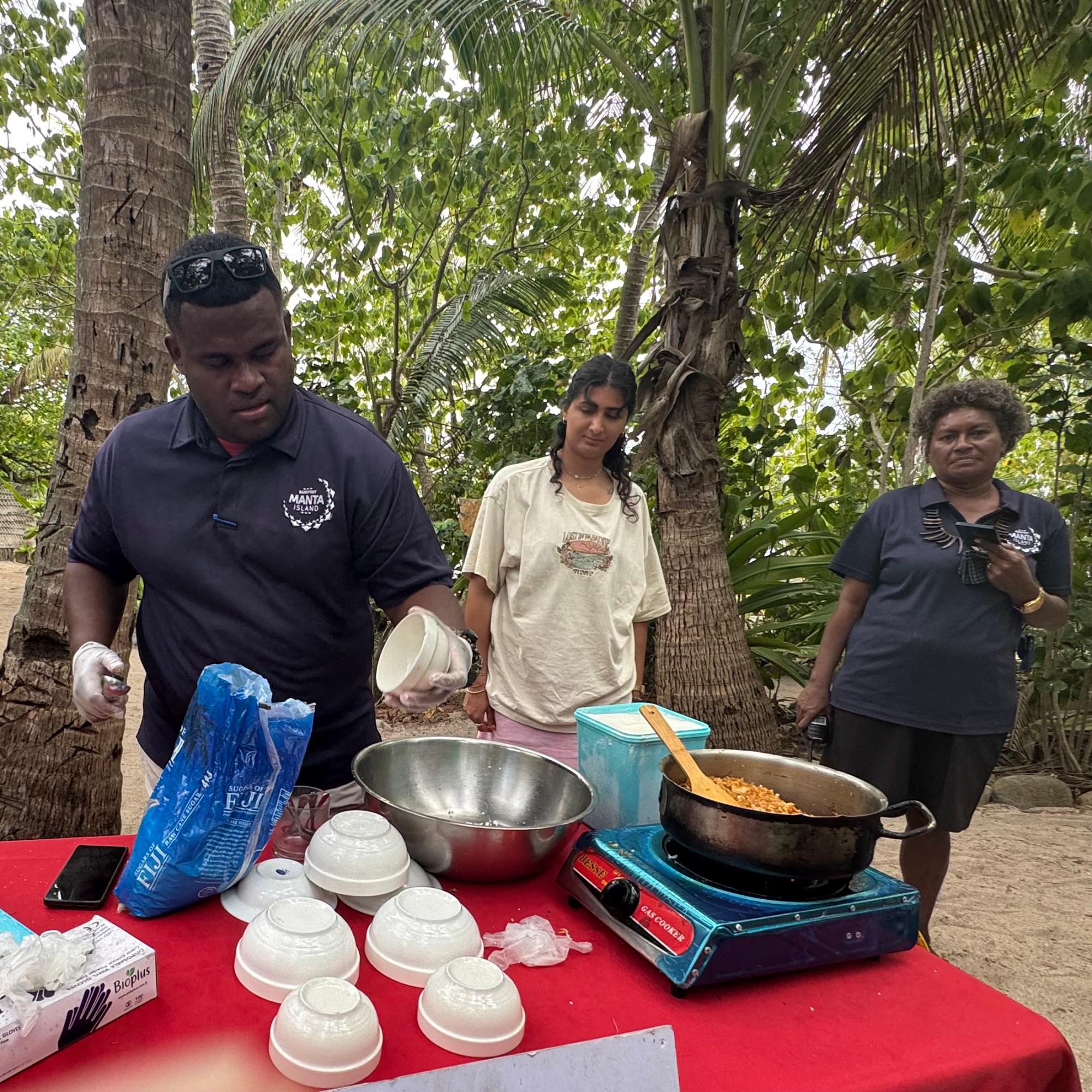
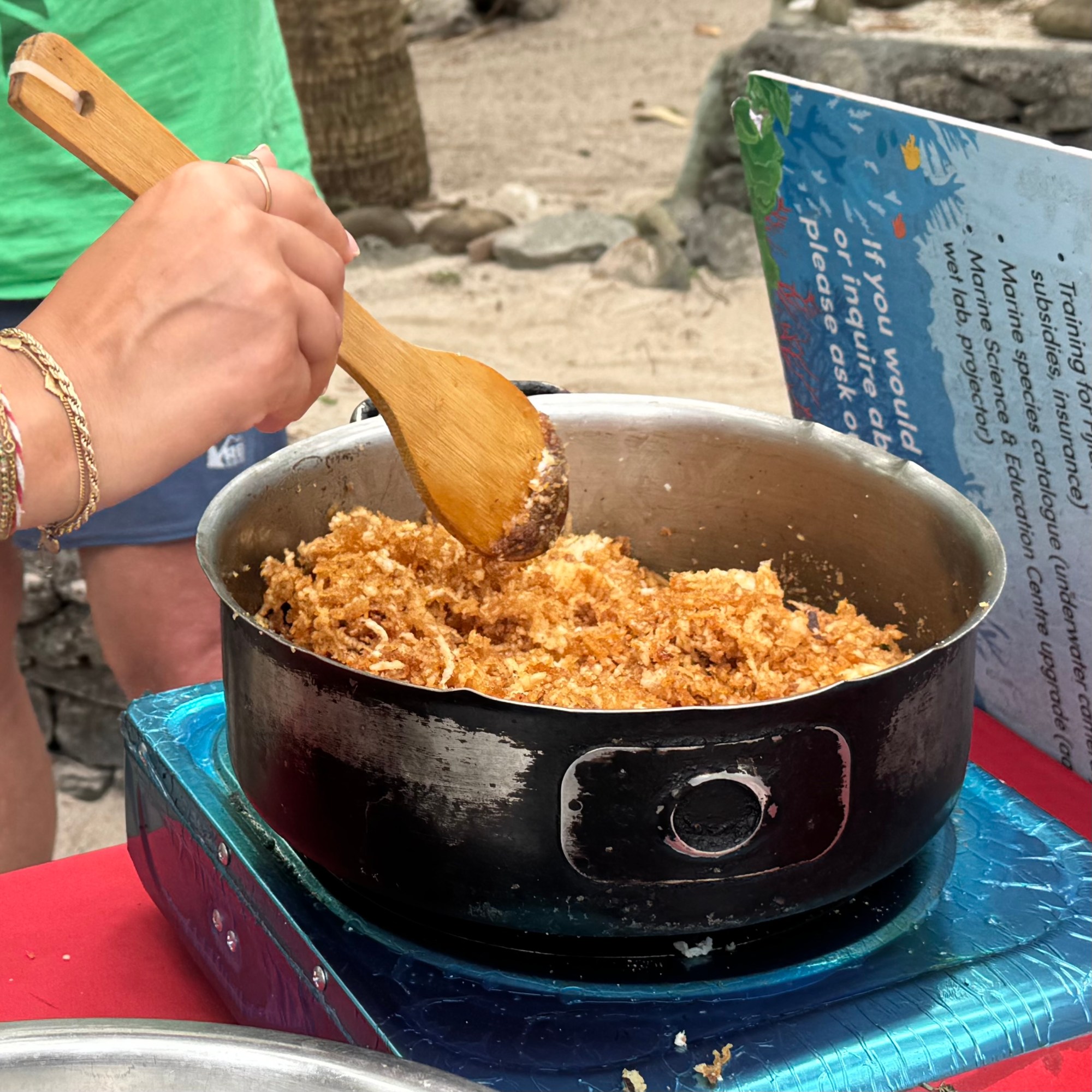
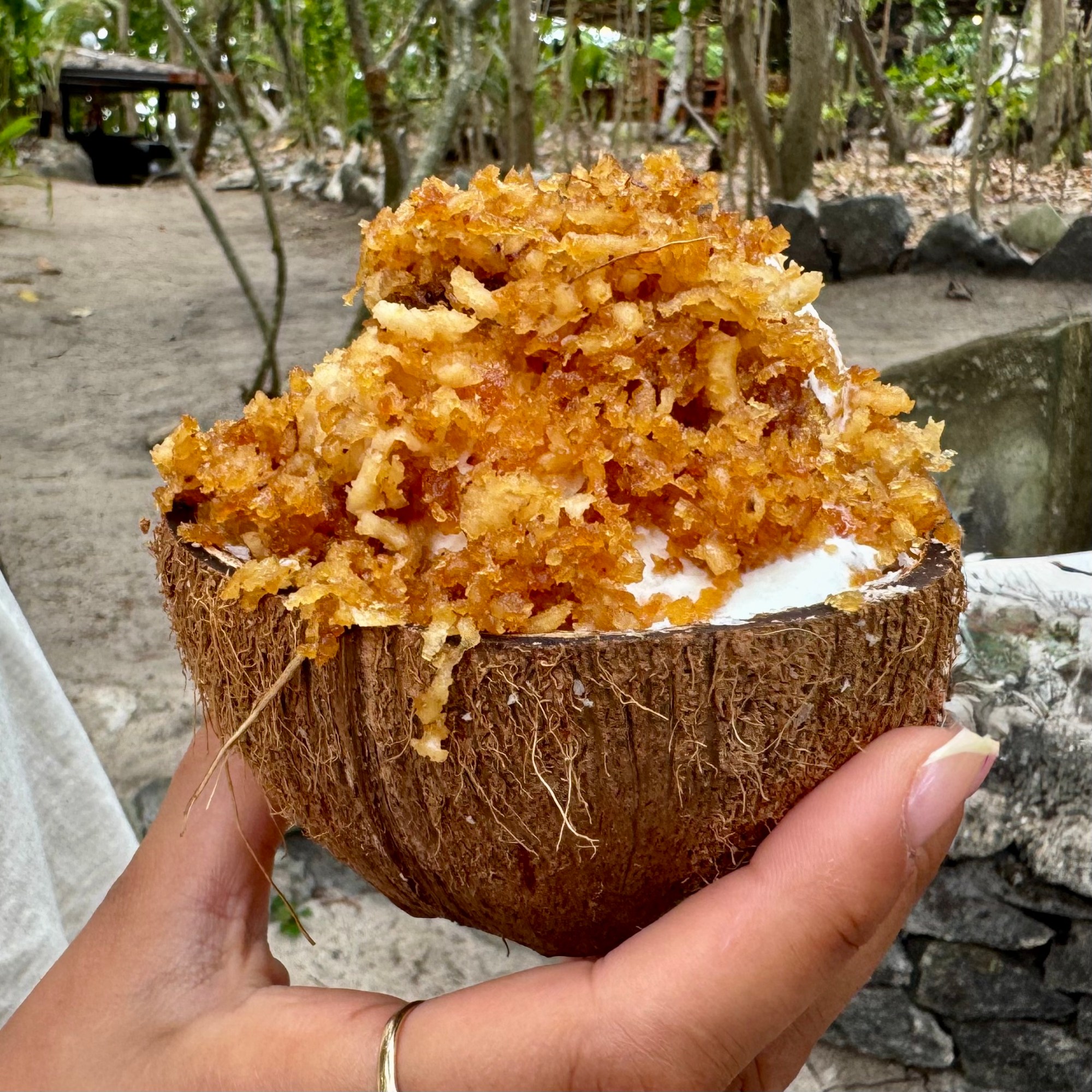
What else is there to do on an isolated Fijian island where the main event is snorkeling or scuba? Between snorkeling session (about 2 of an hour long duration each day, but usually ending by how chilled of “pruned” I got), there was plenty of options. This day we joined a cooking class where front and center were coconut and ice cream. The coconuts were cracked open and shredded ahead of time. Then it was slowly cooked down in a pot and browned with sugar until caramelized and then piled high on ice cream in a coconut shell bowl. A pretty delicious way to rejuvenate after an afternoon of snorkeling.

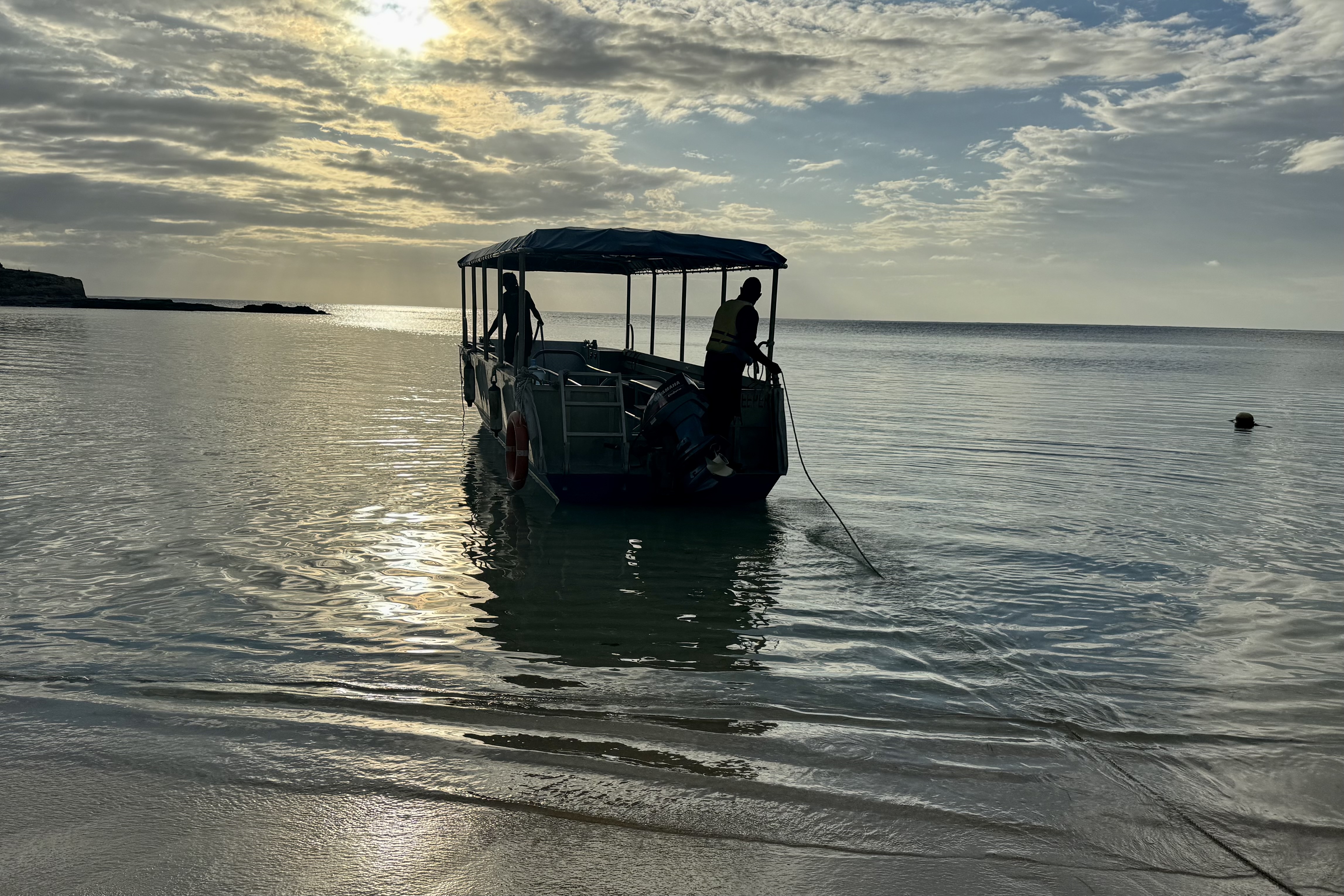
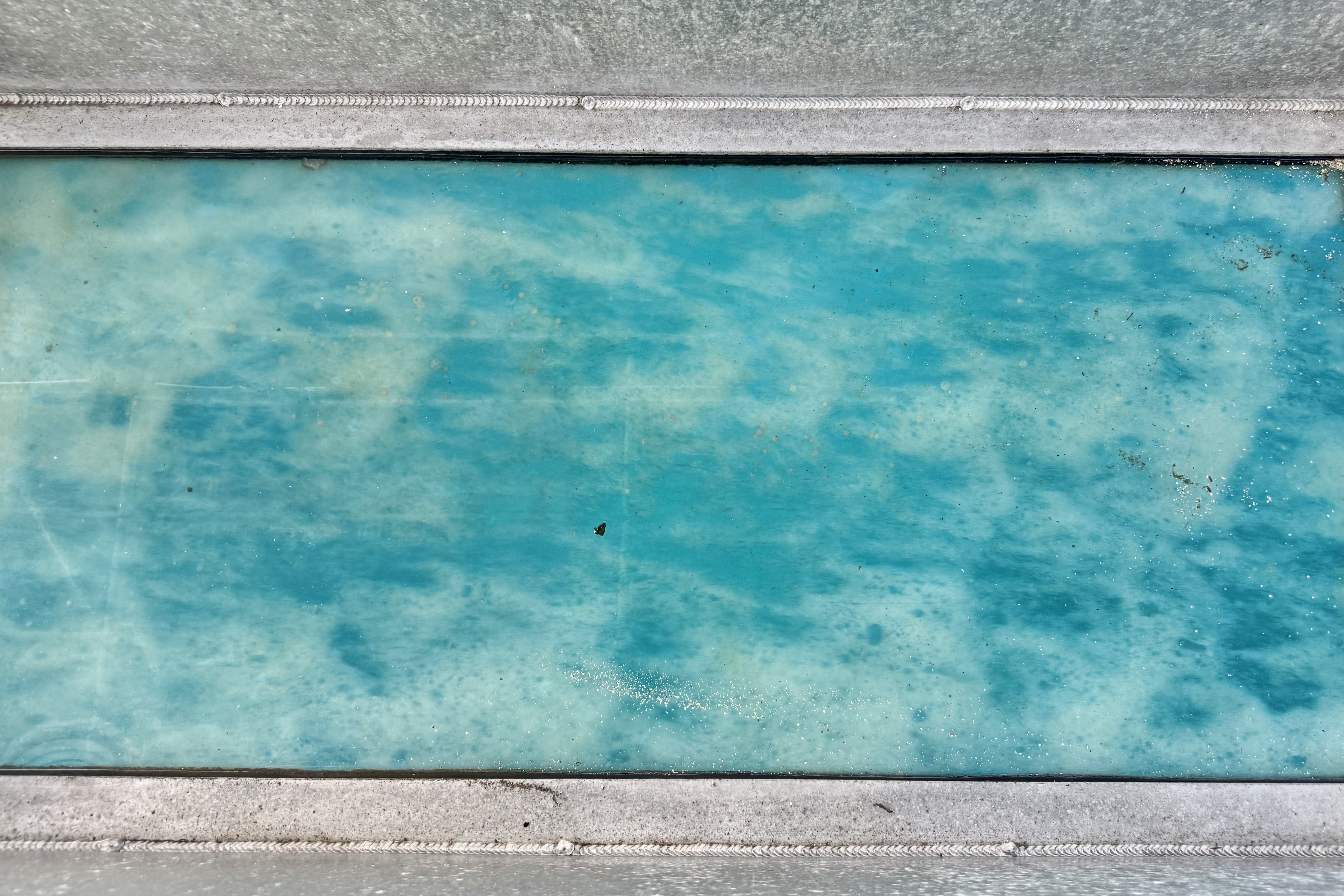
We had signed up for a sunset cruise, so at about 5:15 we loaded onto the “glass” bottom boat with two others–in this case young women. This was unlike any glass bottom boat I’ve been on. Whatever the bottom was made of, it was nearly impossible to see through, and we saw nothing underwater. The view over the side of the boat was far better, so I’m not sure the glass was doing much besides sitting there looking hopeful. It would have been a deal breaker had I not been able to snorkel but it really was secondary to just being out on the water at sunset.
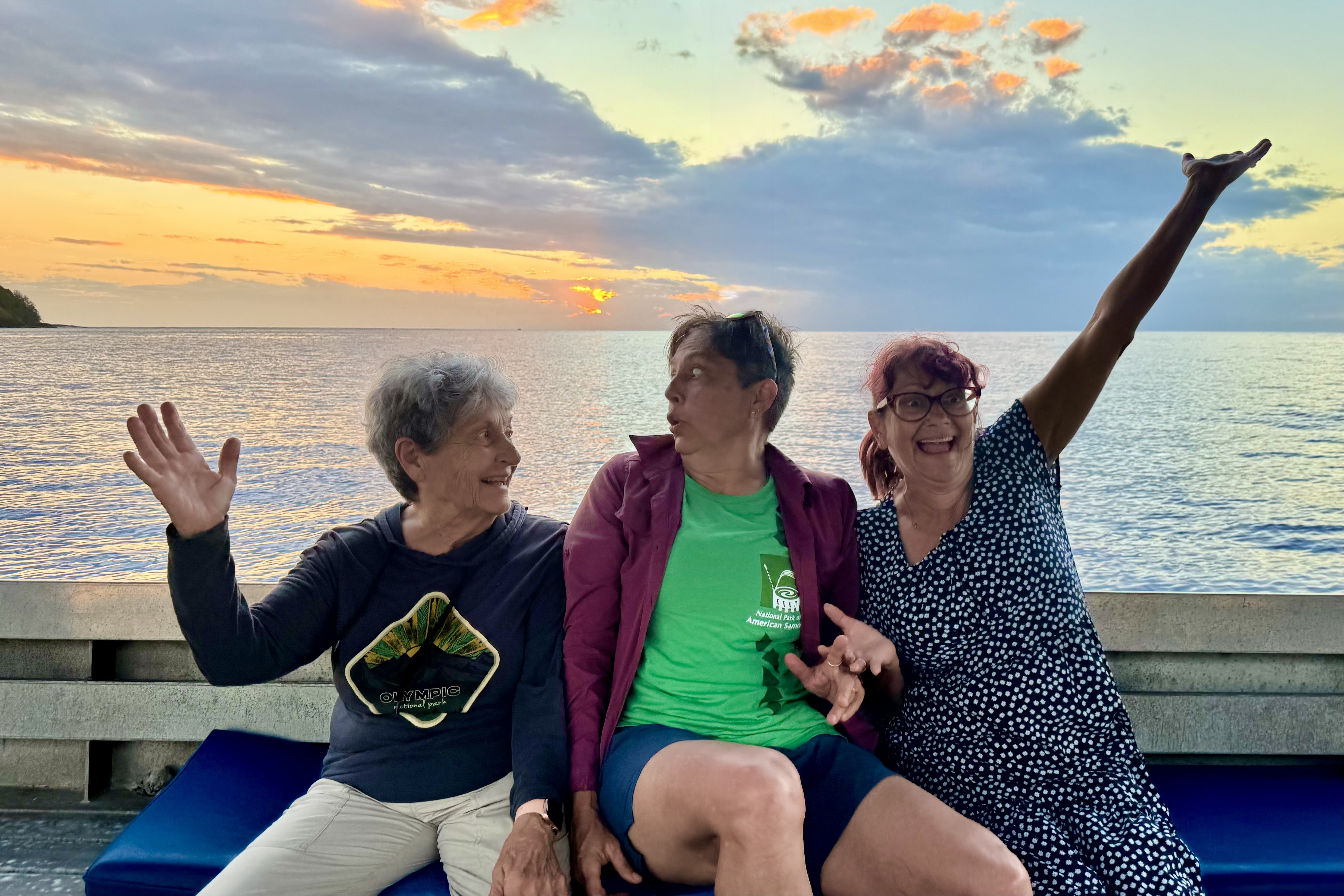
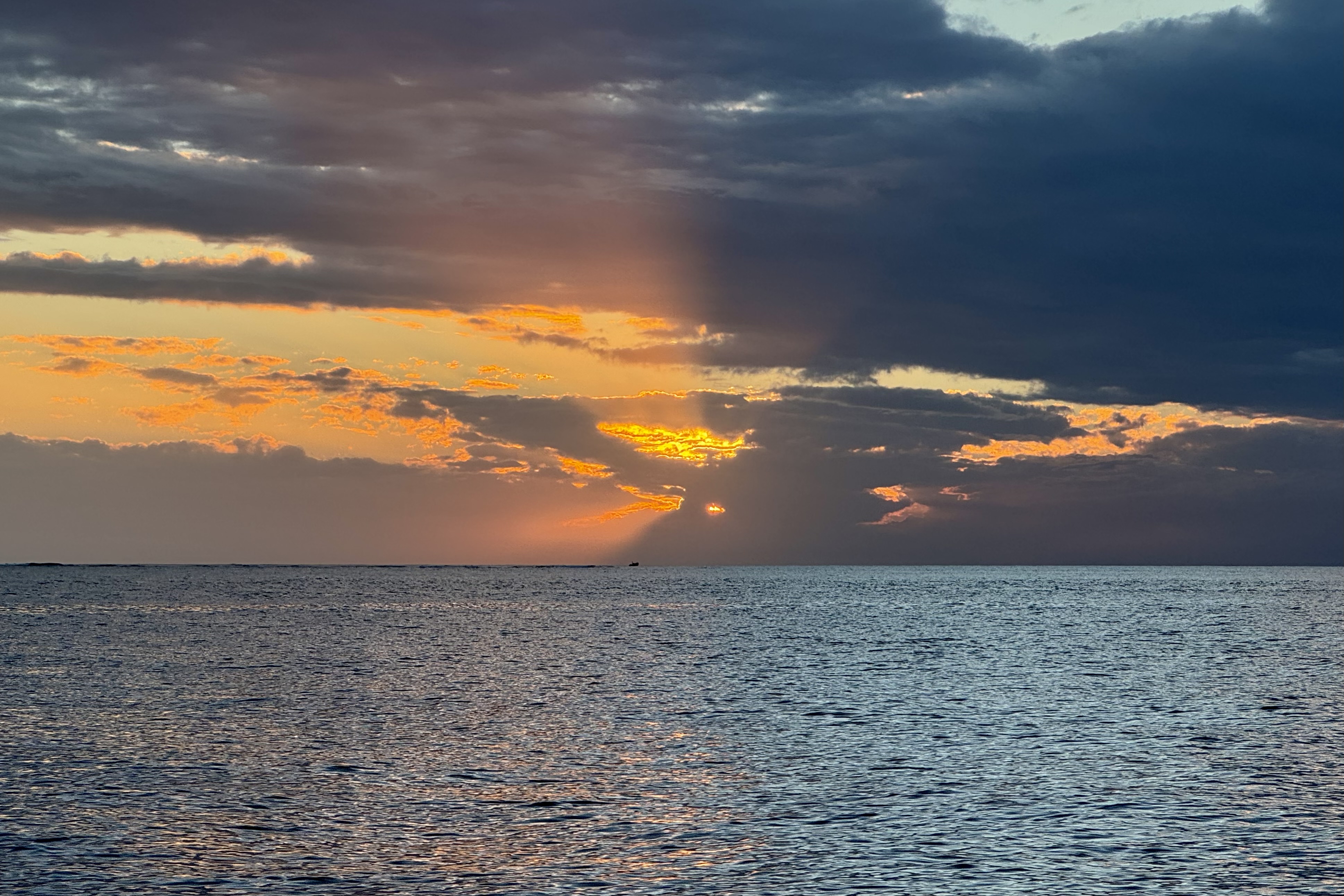
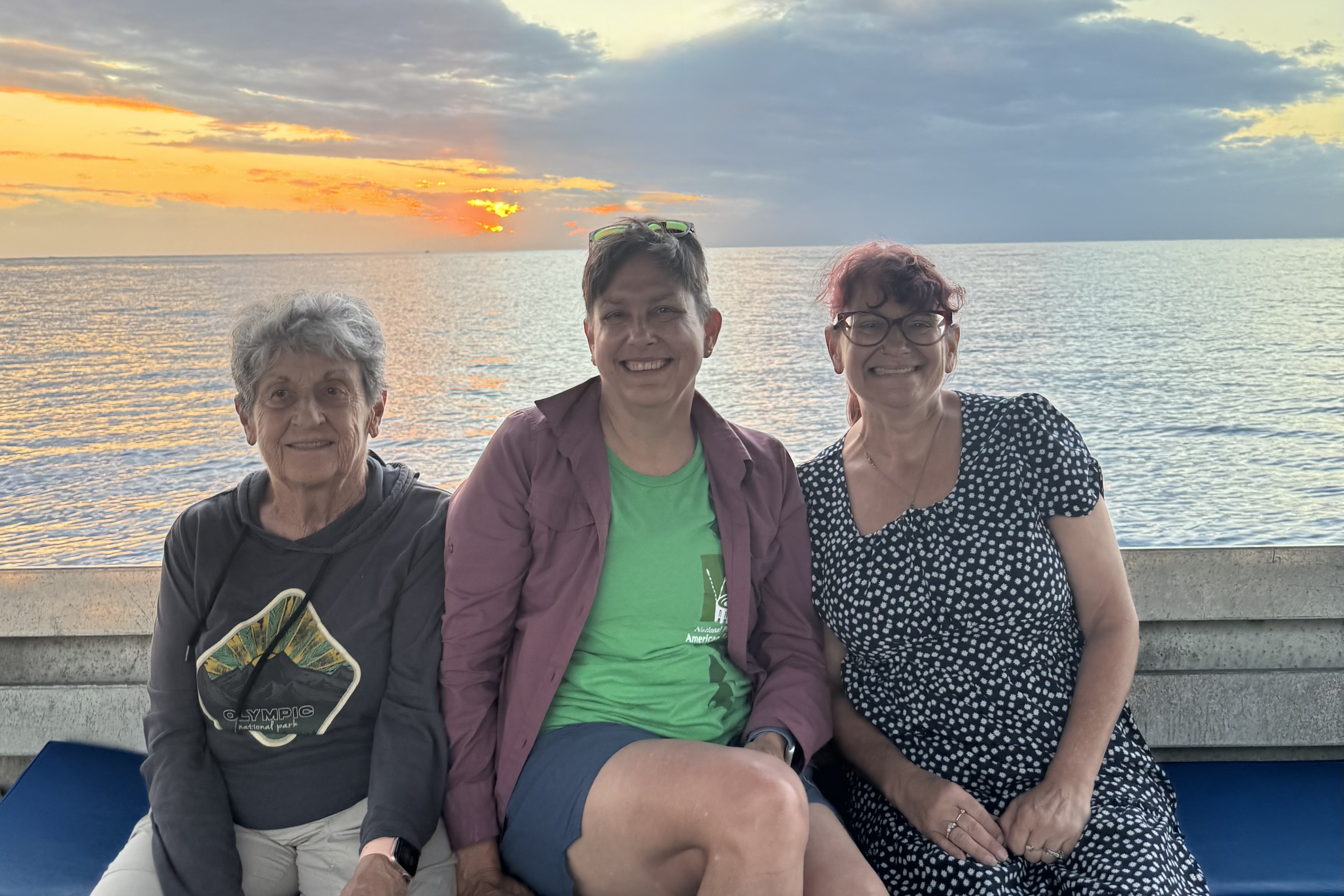
The sunset, at least, did not disappoint. The cruise was nearly as entertaining for what the two young women were doing, which, as on one of the ferries earlier in the trip, were photographing each other in every imaginable pose with the sunset behind them. That went on for most of the cruise, until they offered to take our picture. They fired off about twenty shots in a flash, and we struck a few poses, mostly as a gentle mockery of what we’d been watching. It was great fun.

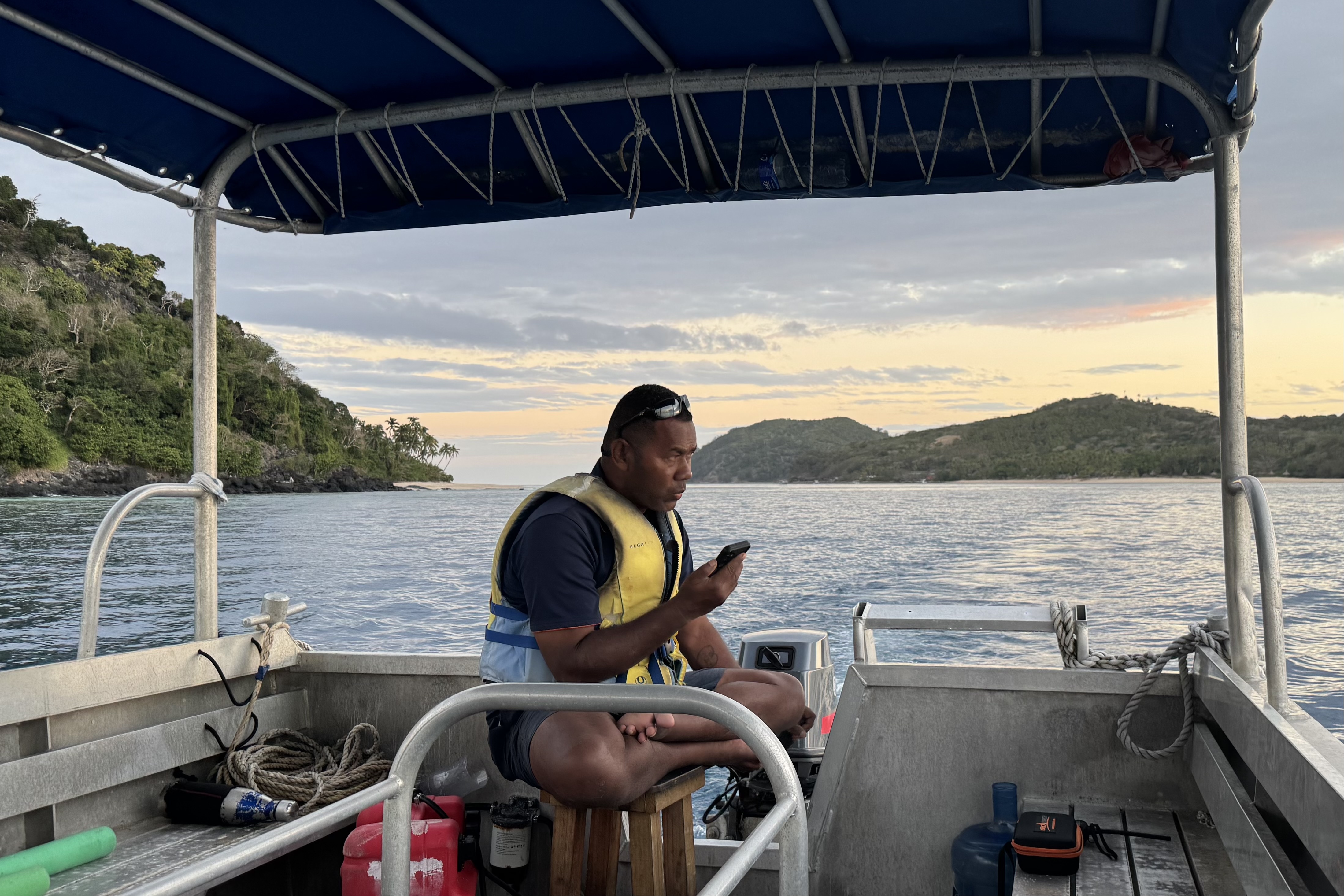
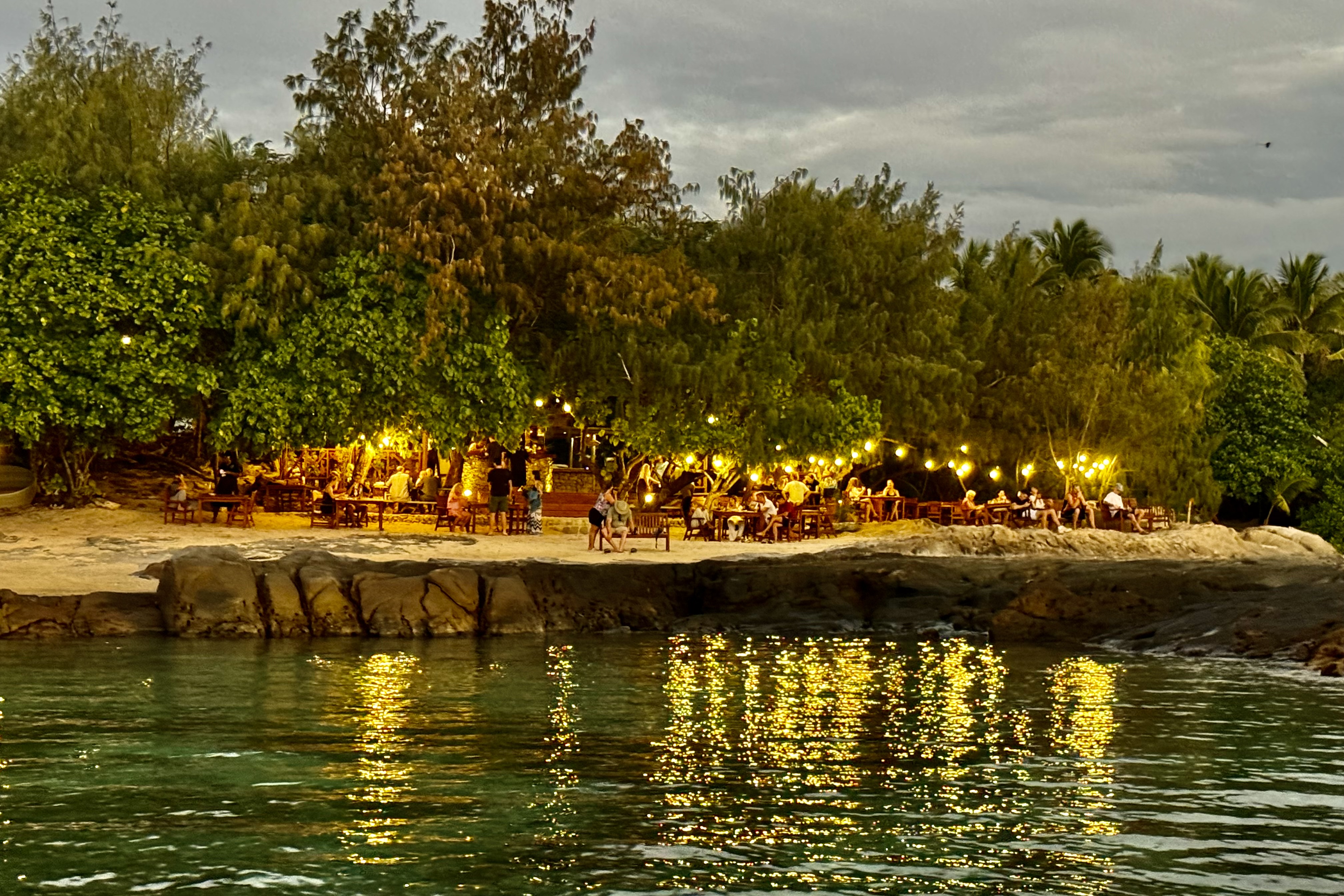
The other thing that caught my eye was the man driving the boat, who spent most of the trip staring at his phone. With an ocean that wide and empty, I doubt there was any real safety risk, but it struck me as funny that even out here, at the edge of the sea, one can’t unplug. After a delightful hour on the water, we headed back to shore for a Fijian buffet dinner.

Sand Everywhere, Dogs Everywhere, Chickens Everywhere

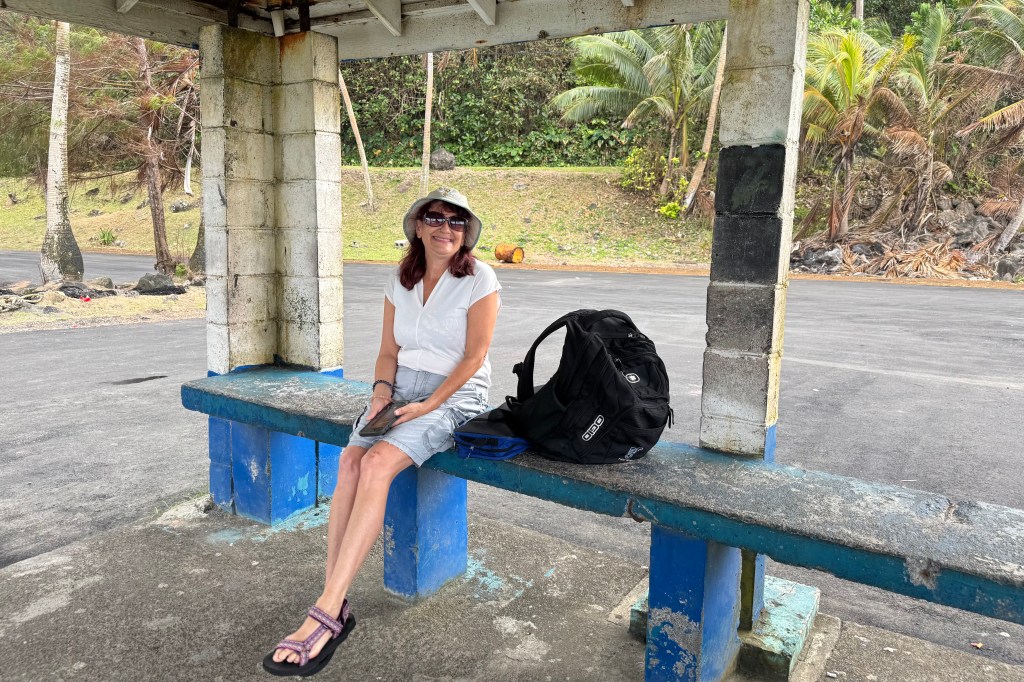
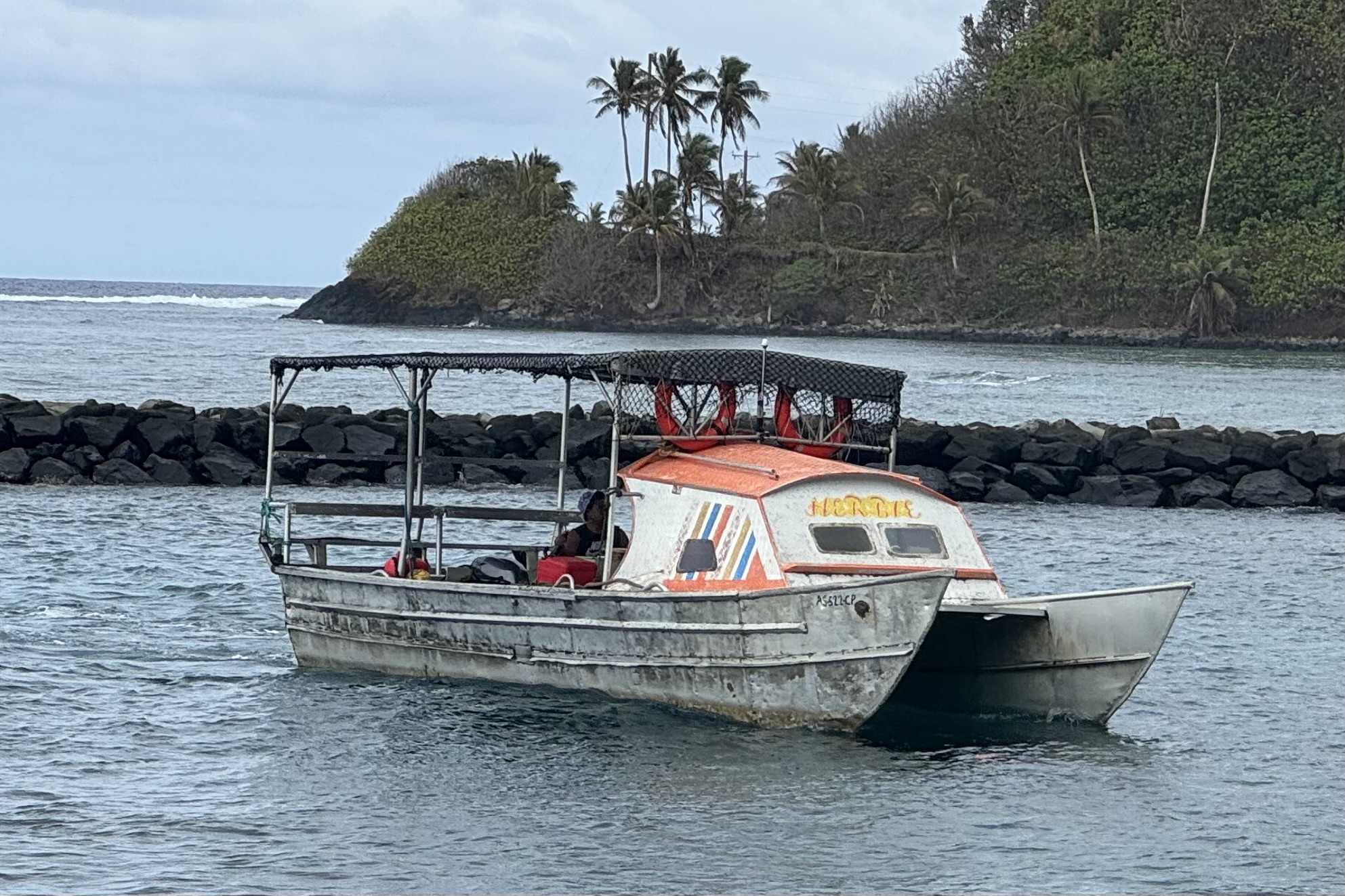
Saturday, September 12th (Day 3) dawned dark and cloudy, but that was not going to stop us as we had decided we would take the ferry to Aunu’u Island. We drove to Au’asi on the east end of Tutuila in search of the ferry dock. Our understanding was that the ferry ran back and forth throughout the day and would come more or less on demand. The “ferry terminal” was certainly not very imposing — in fact rundown would probably be the more accurate description. No airport could match this kind of “pre-boarding” lounge with its blue painted bench. But we waited patiently until a rather rickety-looking little boat finally appeared. She was a dented aluminum veteran well worn by the salt and sun and sporting yellow blue and orange racing stripes. We paid our fare, climbed precariously aboard, and soon were bouncing across the choppy waters.
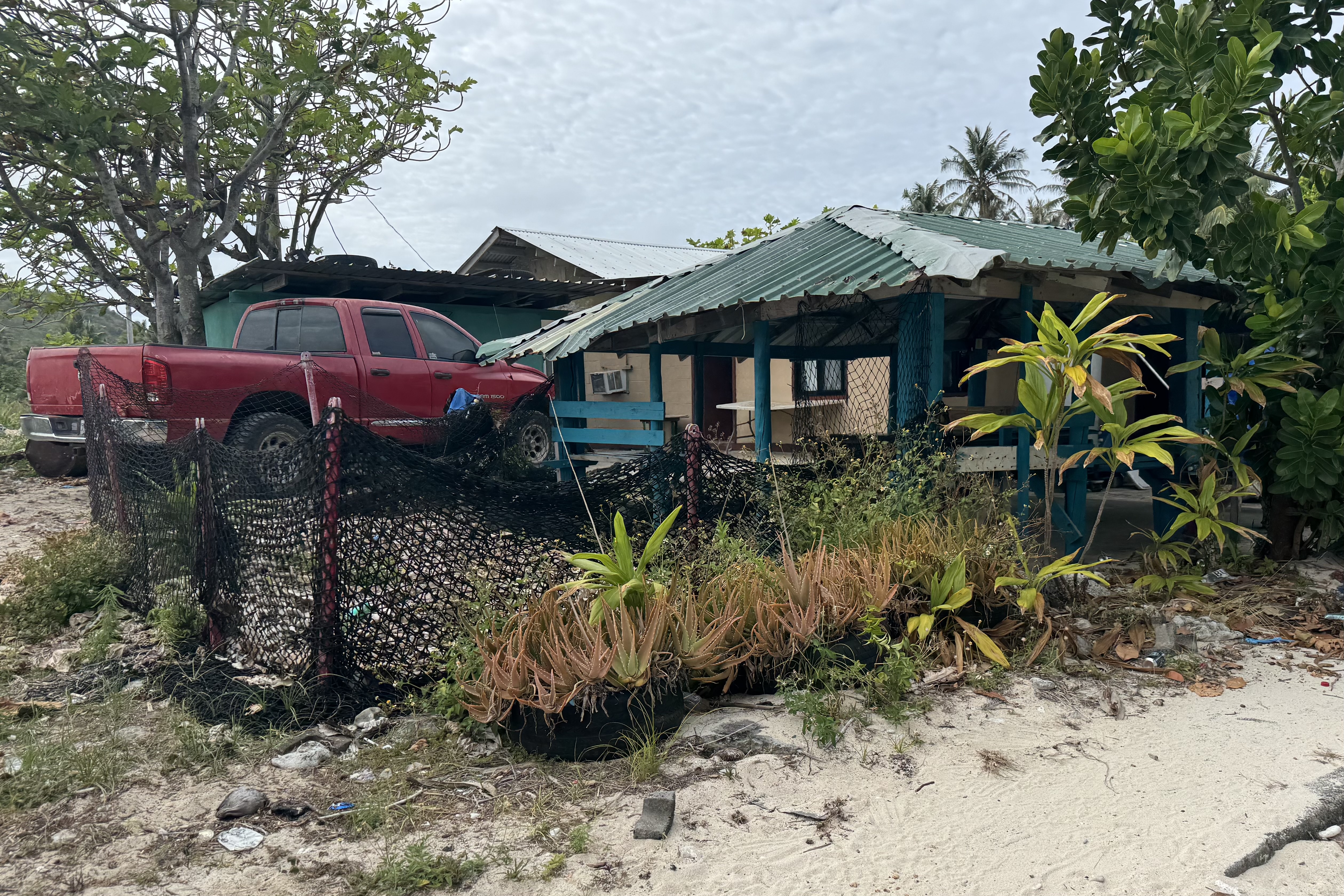
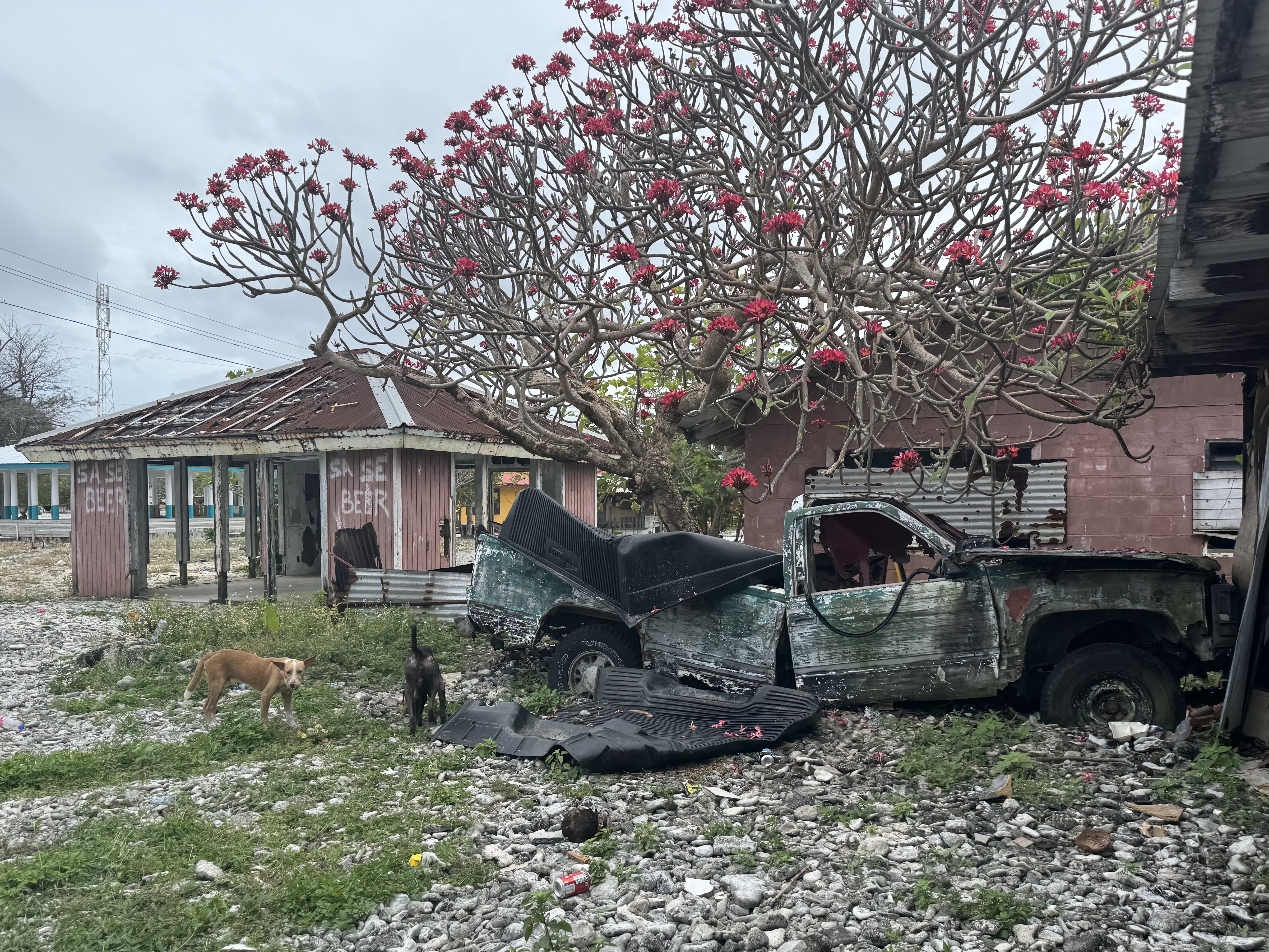
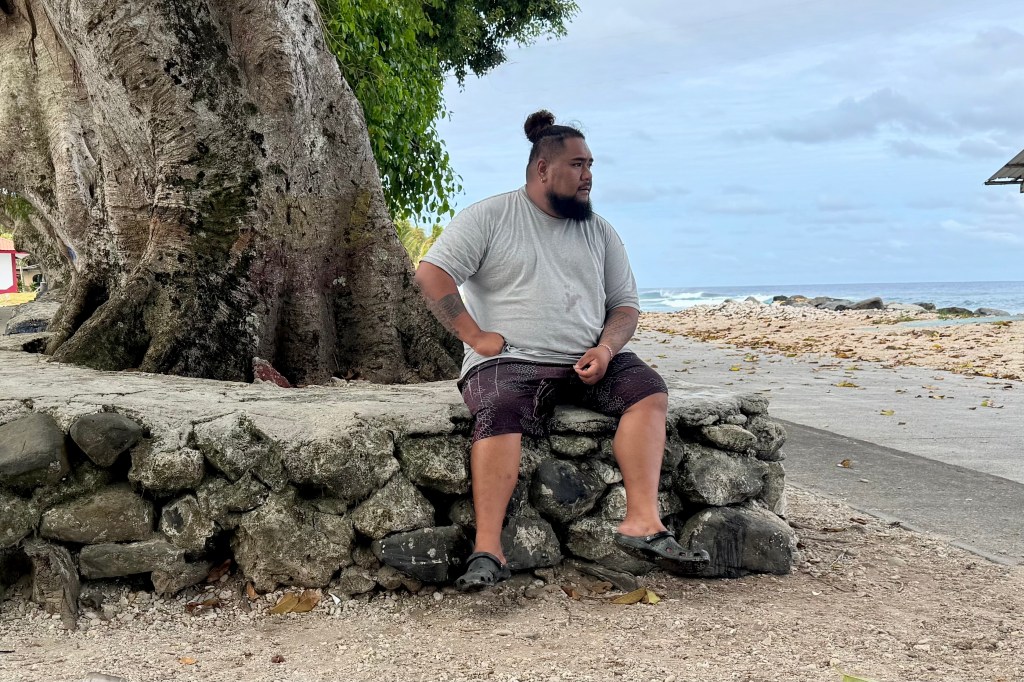
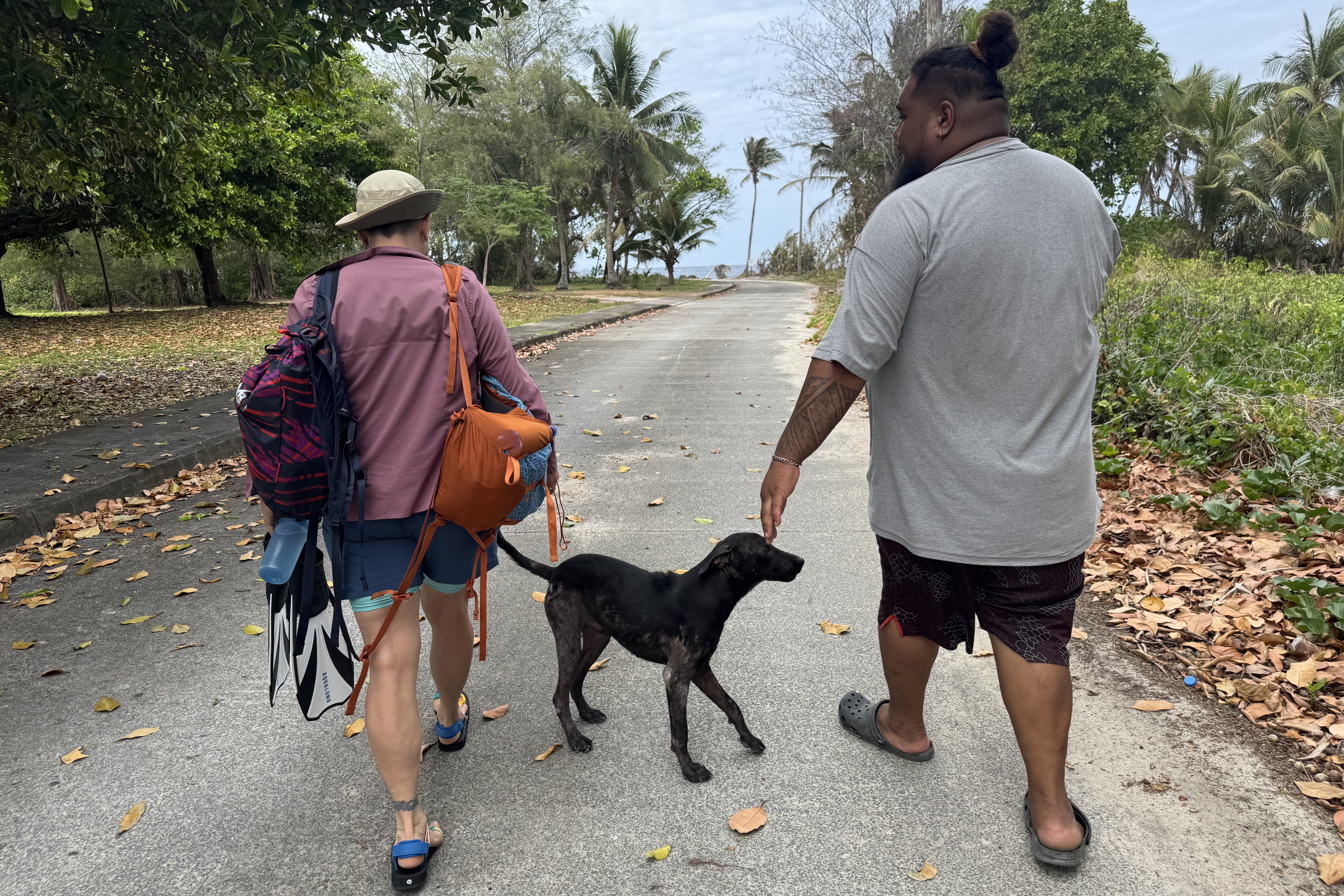
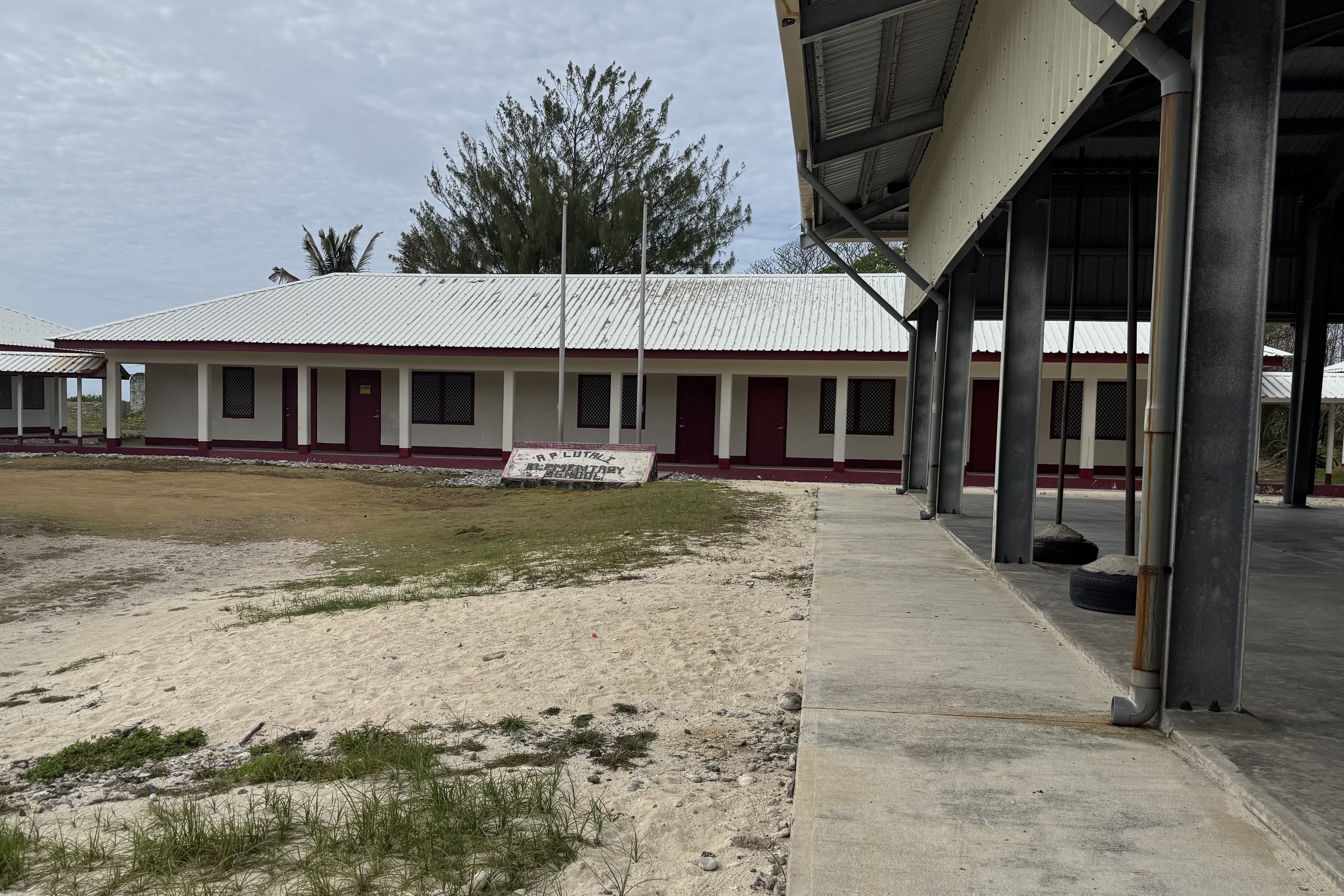
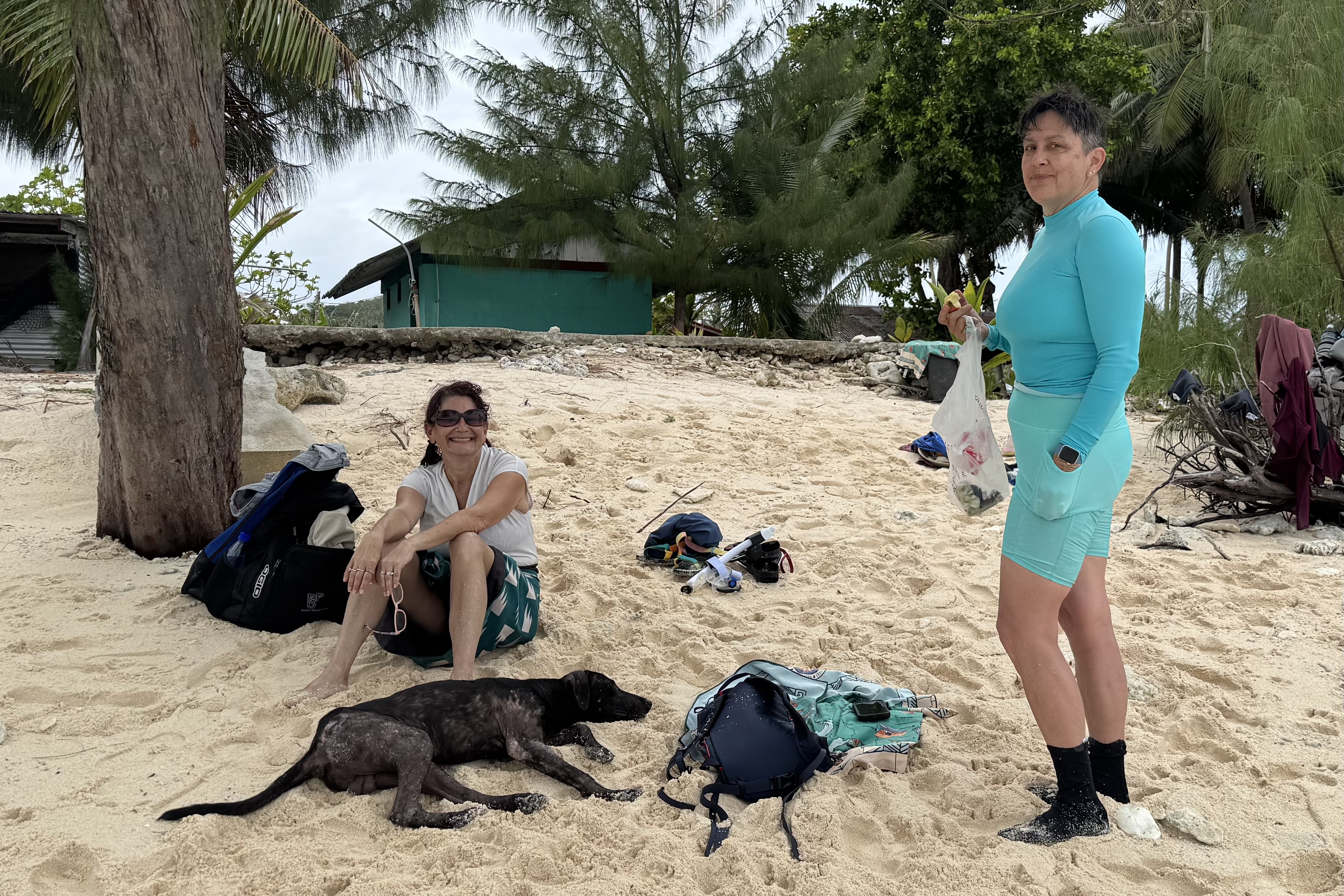
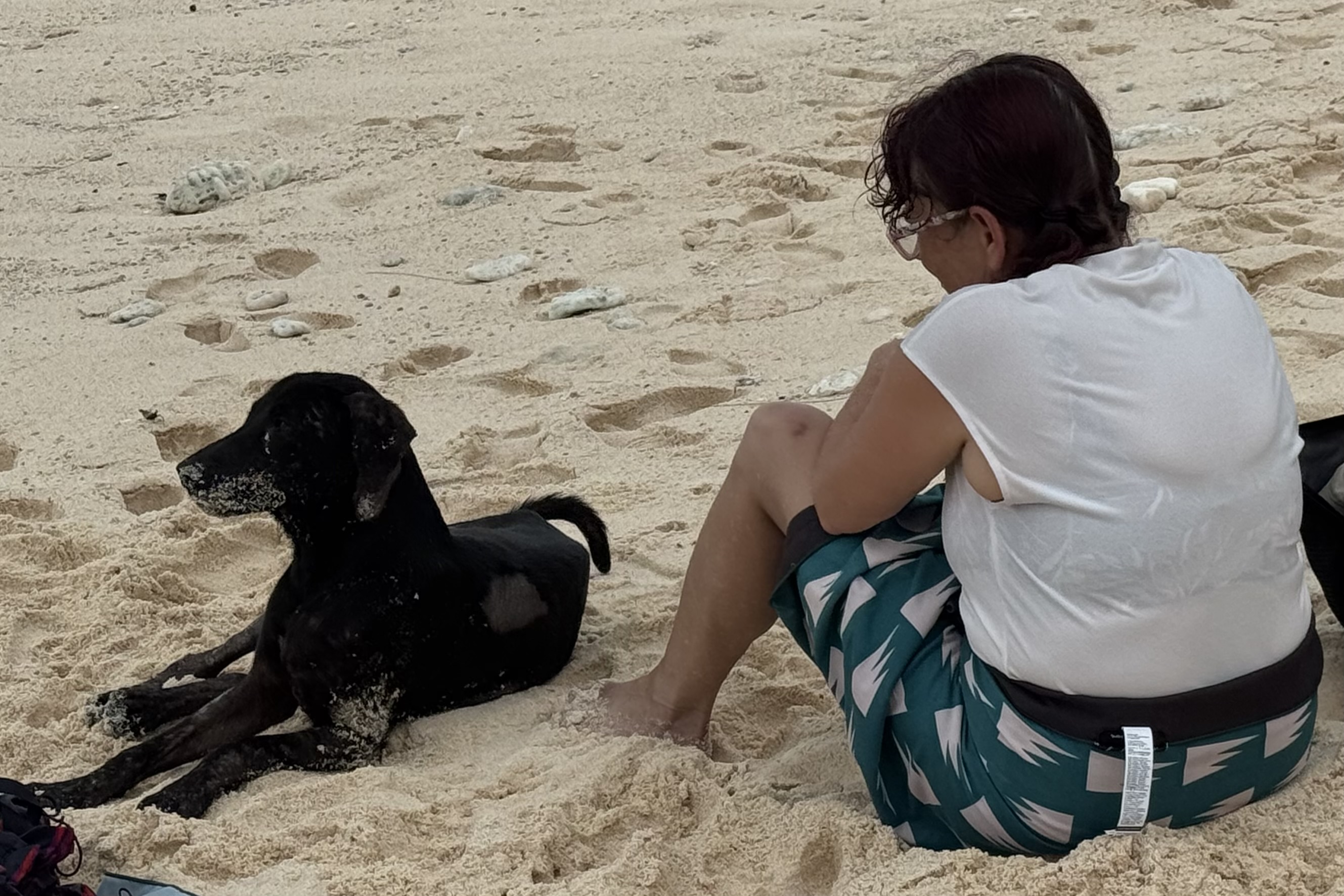
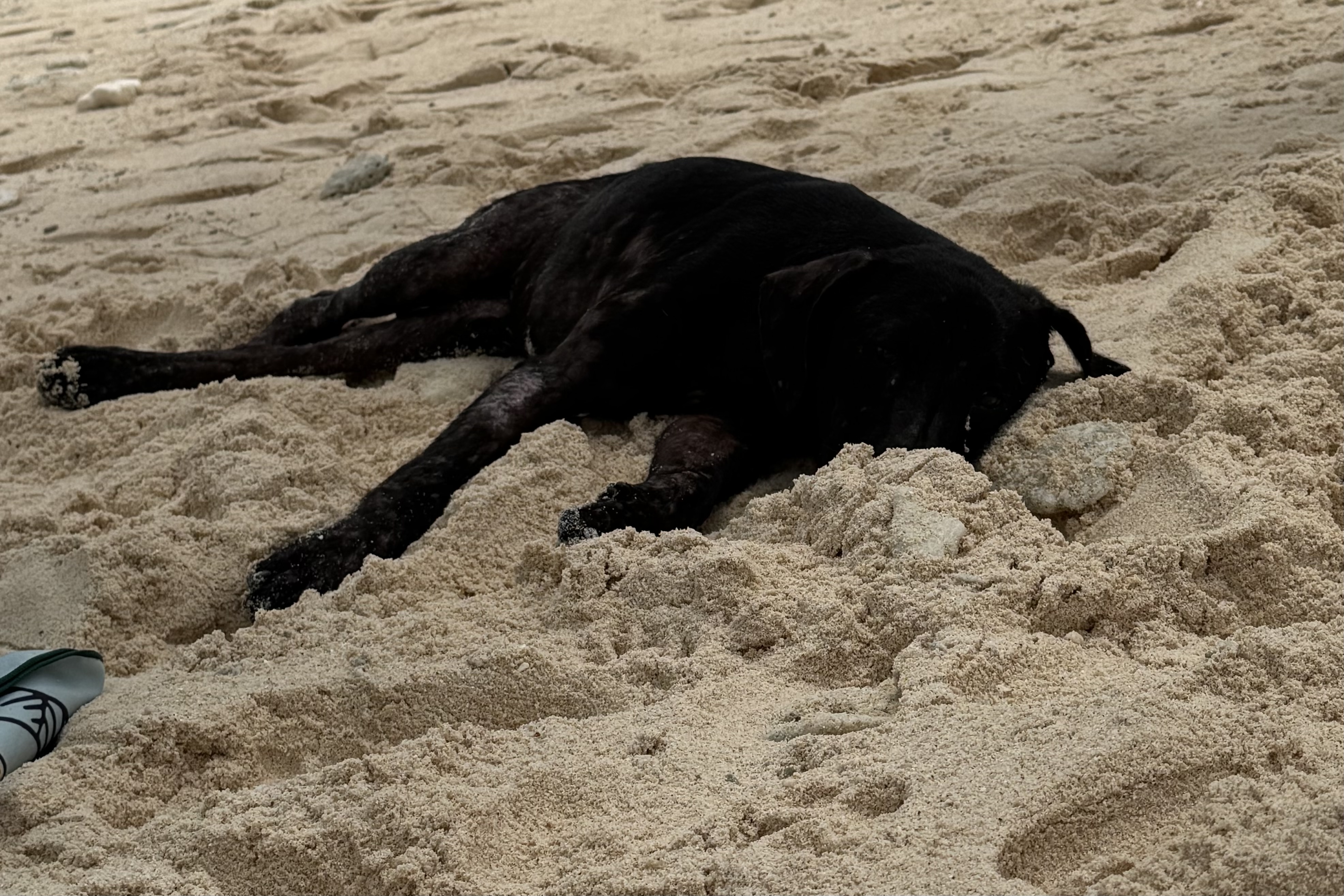
As we stepped off our jalopy of a ferry, we were greeted by Joe, who immediately inquired of our plans and began subtly suggesting that perhaps we would like to see the island school. I’m always a believer in supporting the locals, and besides having somebody who actually knew where he was going seemed like a pretty good idea. So Joe and a stray dog became our guides. It already was quite apparent that one of the things the people of Aunu’u were particularly proud of was their school as he asked again if we wanted to see the school. Then he asked again! After, our dog-for-the-day joined us on the tour, he followed us around the island, and stayed with us throughout our beach explorations. He definitely was content with his temporary assignment as our official Aunu’u escort.

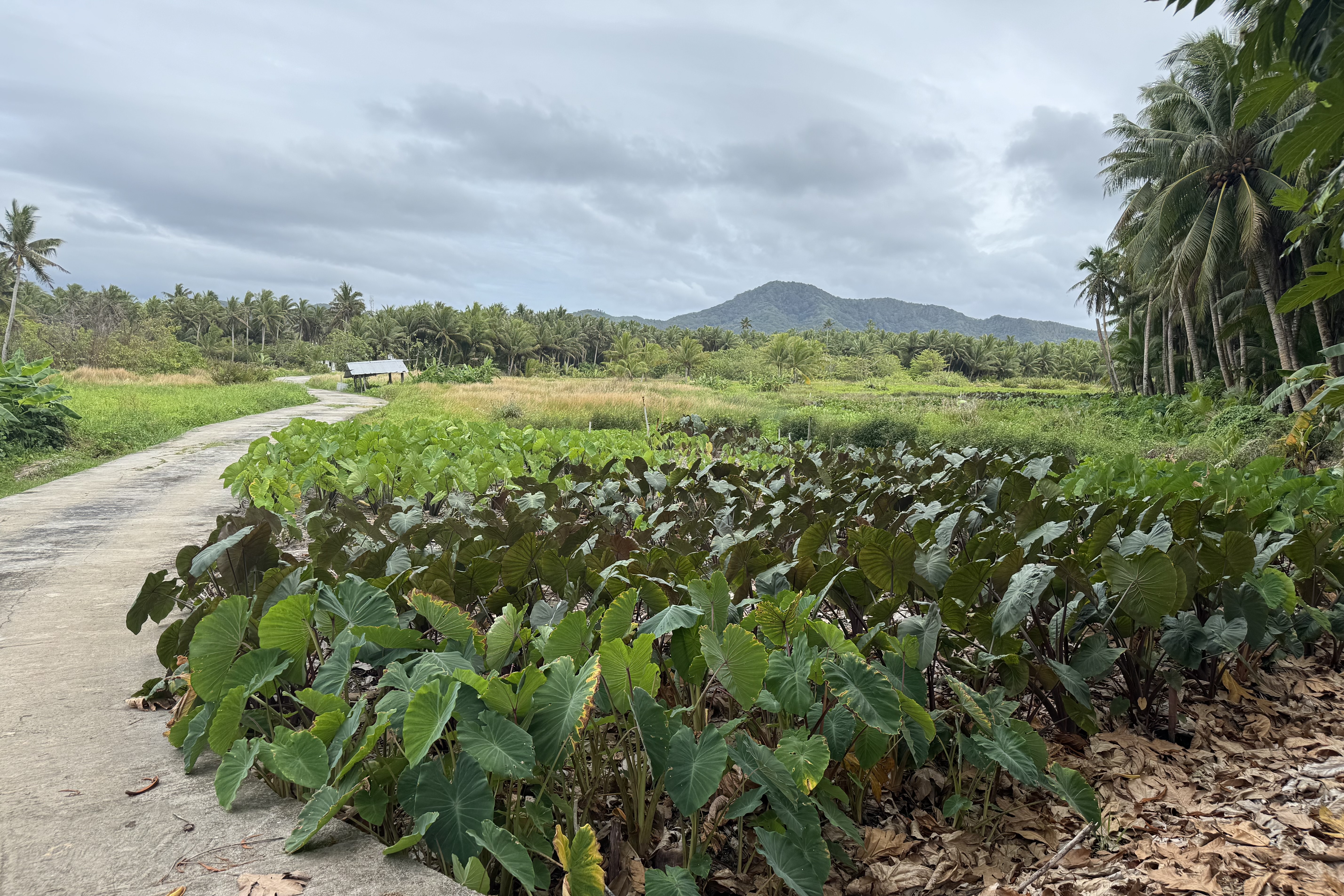
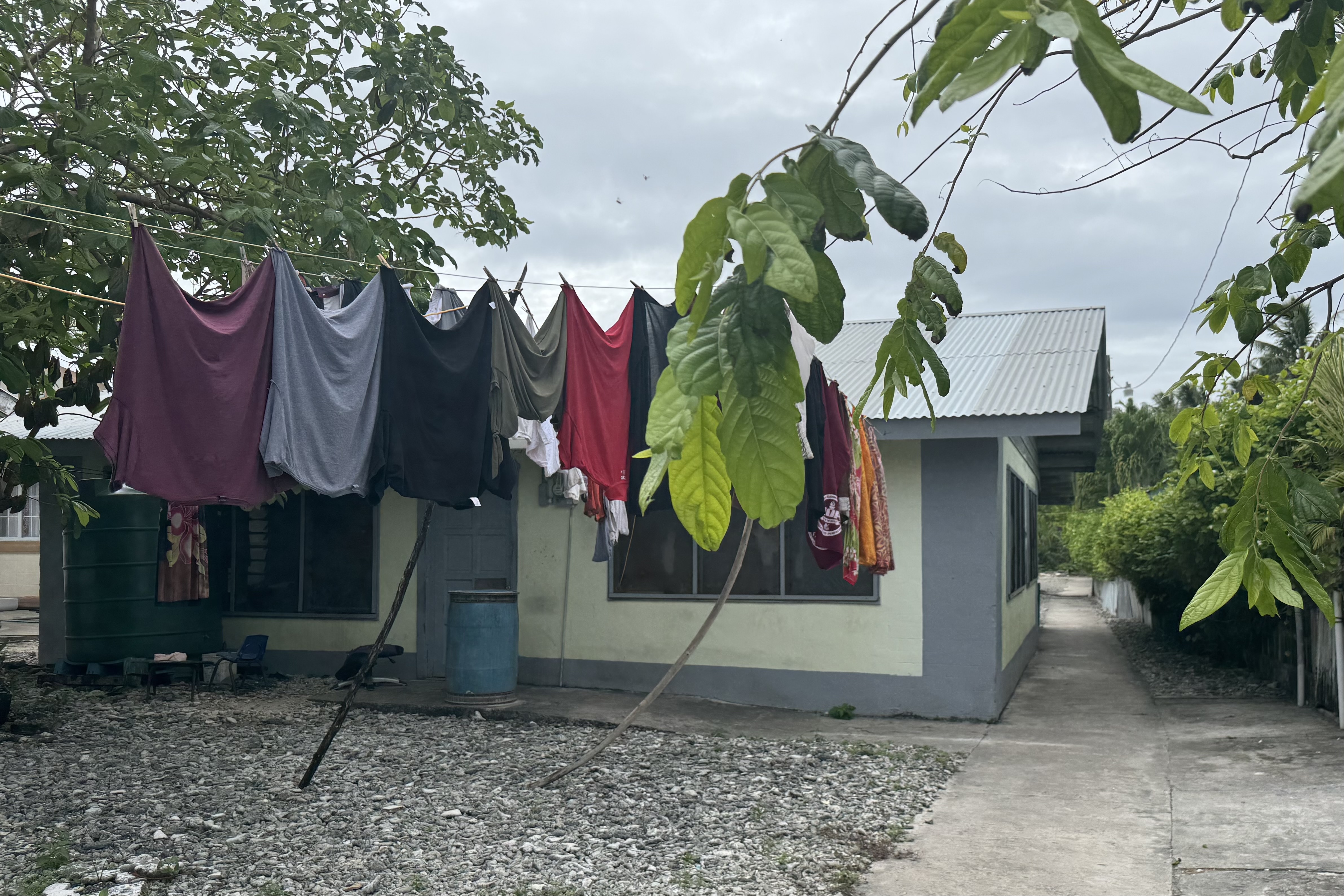
Aunu’u is a car free (though work vehicles exist), slow-paced island small island with about 400 people. in a close-knit Samoan community where traditional life remains important. It is an island of quicksand, swamps, taro plantations, and quiet village paths and wandering about here on this island was a very different experience from the developed parts of Tutuila we have been exploring.

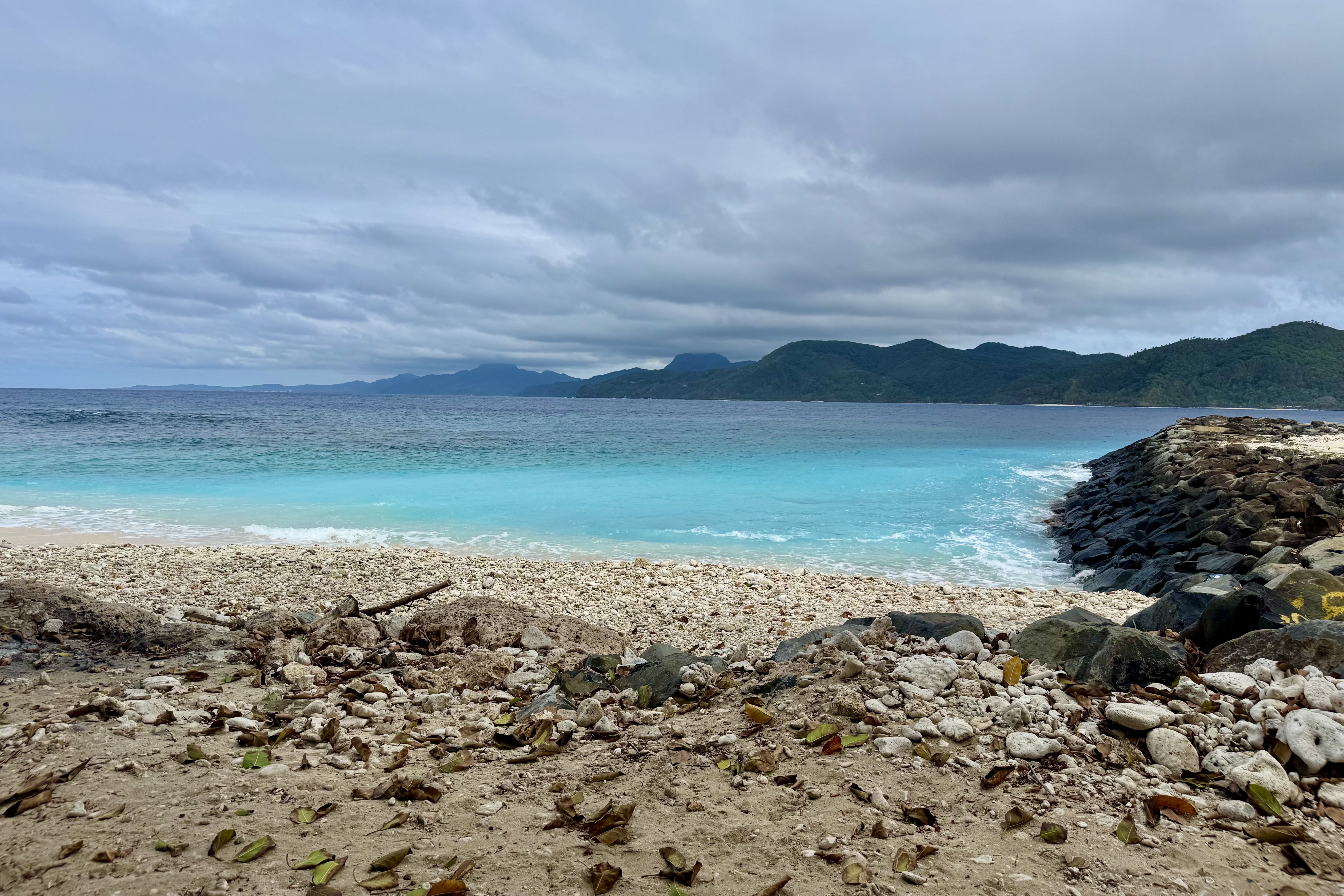
We had come with snorkeling in mind, having read there were good reefs around the island. We walked farther along the beach guided by our dog-for-the-day, found a spot that looked promising, and began donning our gear. As usual, Tasia is the first “out of the gate” and thus first one in the water. She was also the first one back out. The current seemed just too strong to make snorkeling enjoyable or particularly sensible. She headed off in another direction to see if she could find calmer water. Bernadette and I decided we might at least try swimming, but the moment we got in the water it became clear that the current had other plans for us. we were battered by the waves and inundated with sand. So, swimming was not a good option either.

So plan B: beachcombing

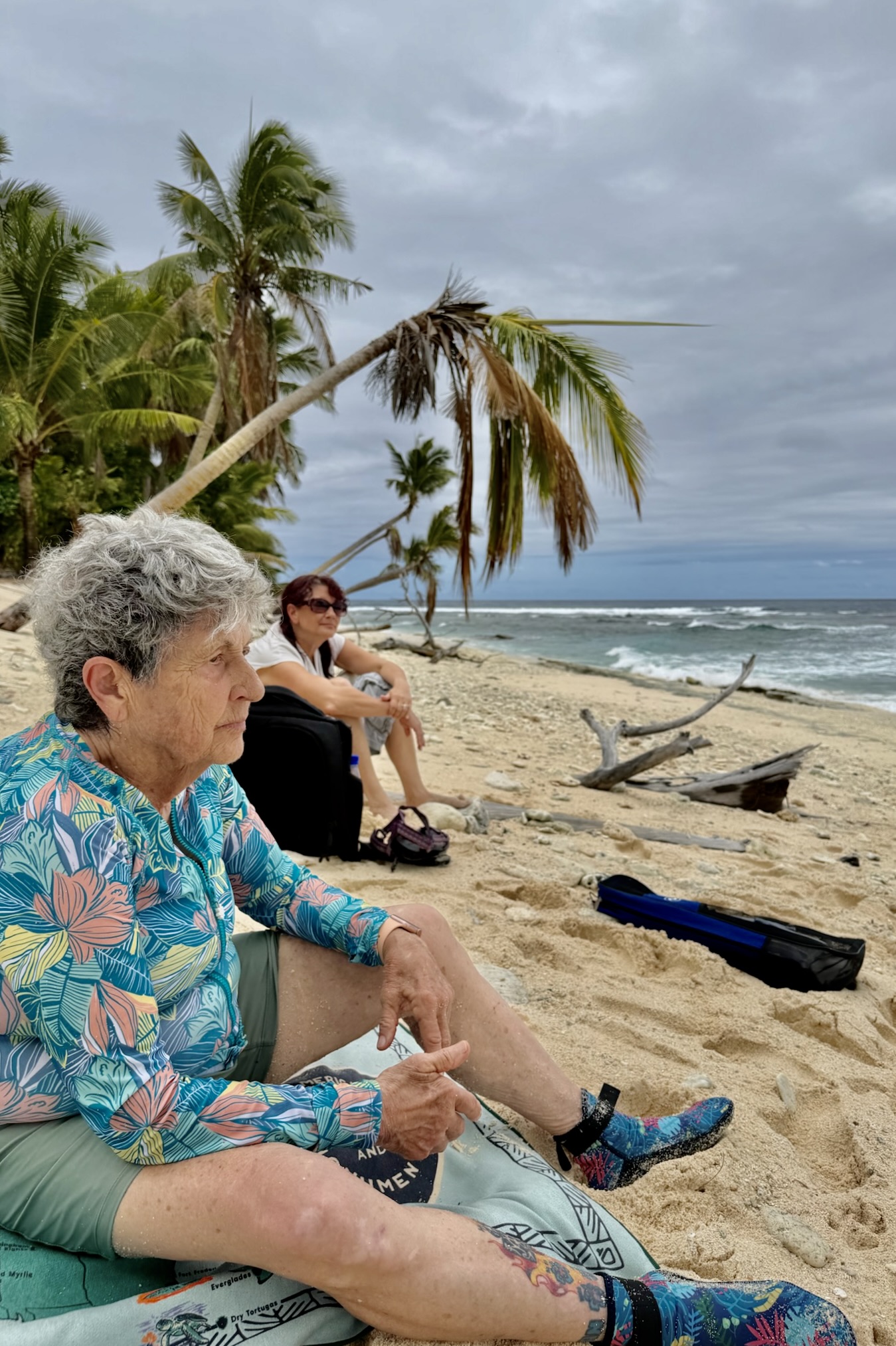
We spent a good amount of time wandering the beach and searching for interesting pieces of coral and shells. Tasia was fascinated and spent considerable time filming little hermit crabs carting their houses around. Eventually we stopped for lunch and were joined by our-dog-for-the day companion who was quite eager to share our picnic. Around 1:00PM we decided to head back.

More about our dog-for-the-day. One thing we noticed everywhere in American Samoa was the abundance of dogs. Estimates have put the number of free-roaming dogs on Tutuila as more than 10,000. However I also heard that many aren’t truly stray but have owners but simply allowed to roam. Limited spraying and neutering, lax and inconsistent licensing, and limited veterinary care have all contributed to the problem. Dogs seem to be part of the landscape, wandering the roads, beaches, and villages often joining visitors as if they had no where else to be. Our Aunu’u companion certainly seemed to have perfected that last part and seemed quite content .

Another thing we couldn’t help noticing here and everywhere in American Samoa was the chickens that are everywhere. Baby chickens everywhere. Roosters strutting around as if they owned the place. At times it seems like we were moving through one enormous free-range farmyard.

One strong impression from this day and this part of the island was that there was sand everywhere. And I mean everywhere. It found its way into our feet, into our shoes, onto our clothes, and into places I’m fairly certain sand was never intended to go.

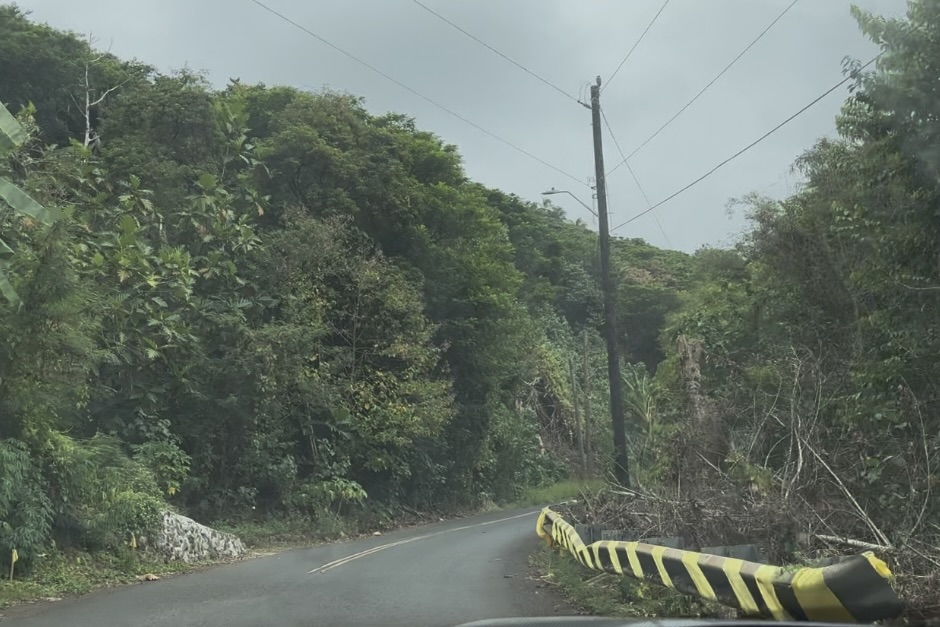
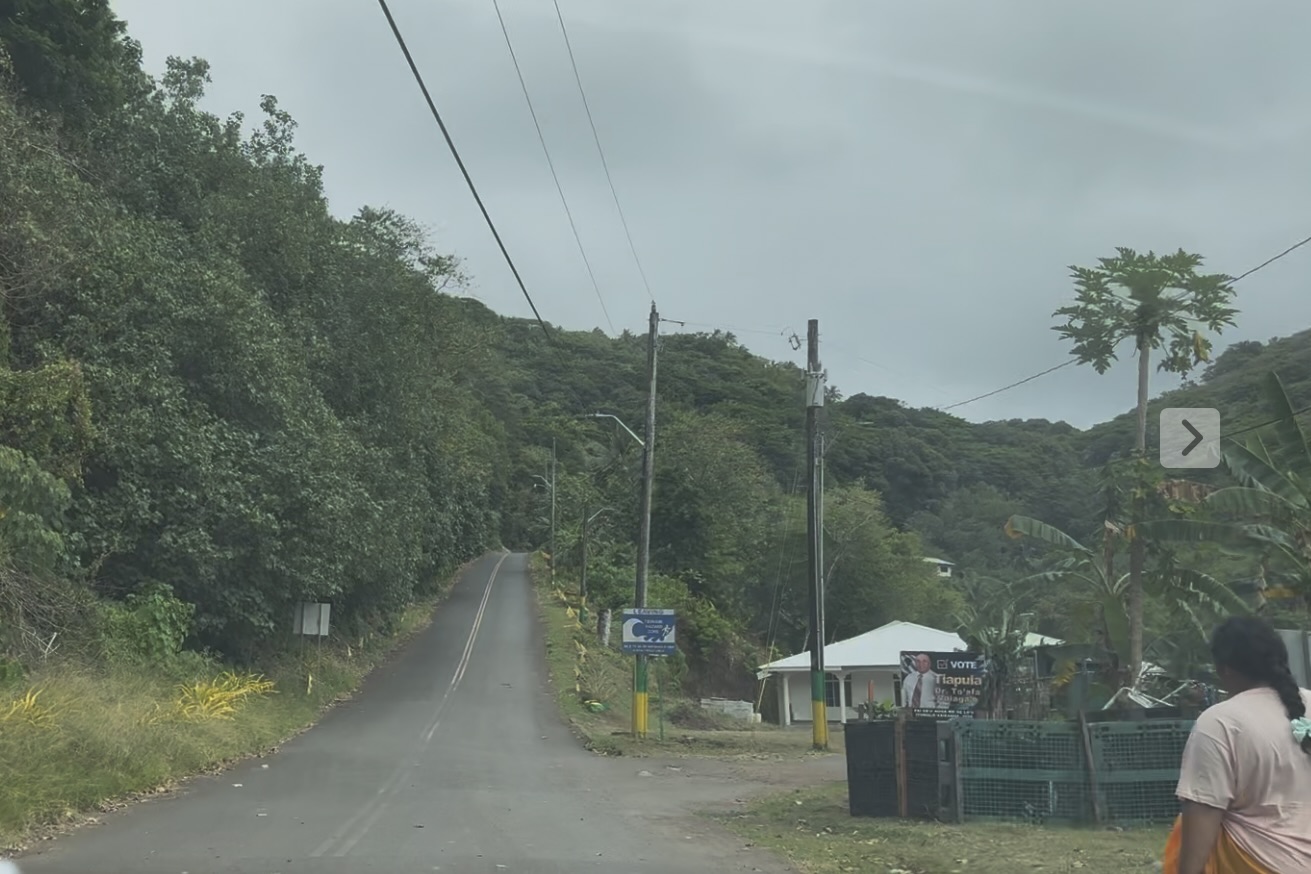
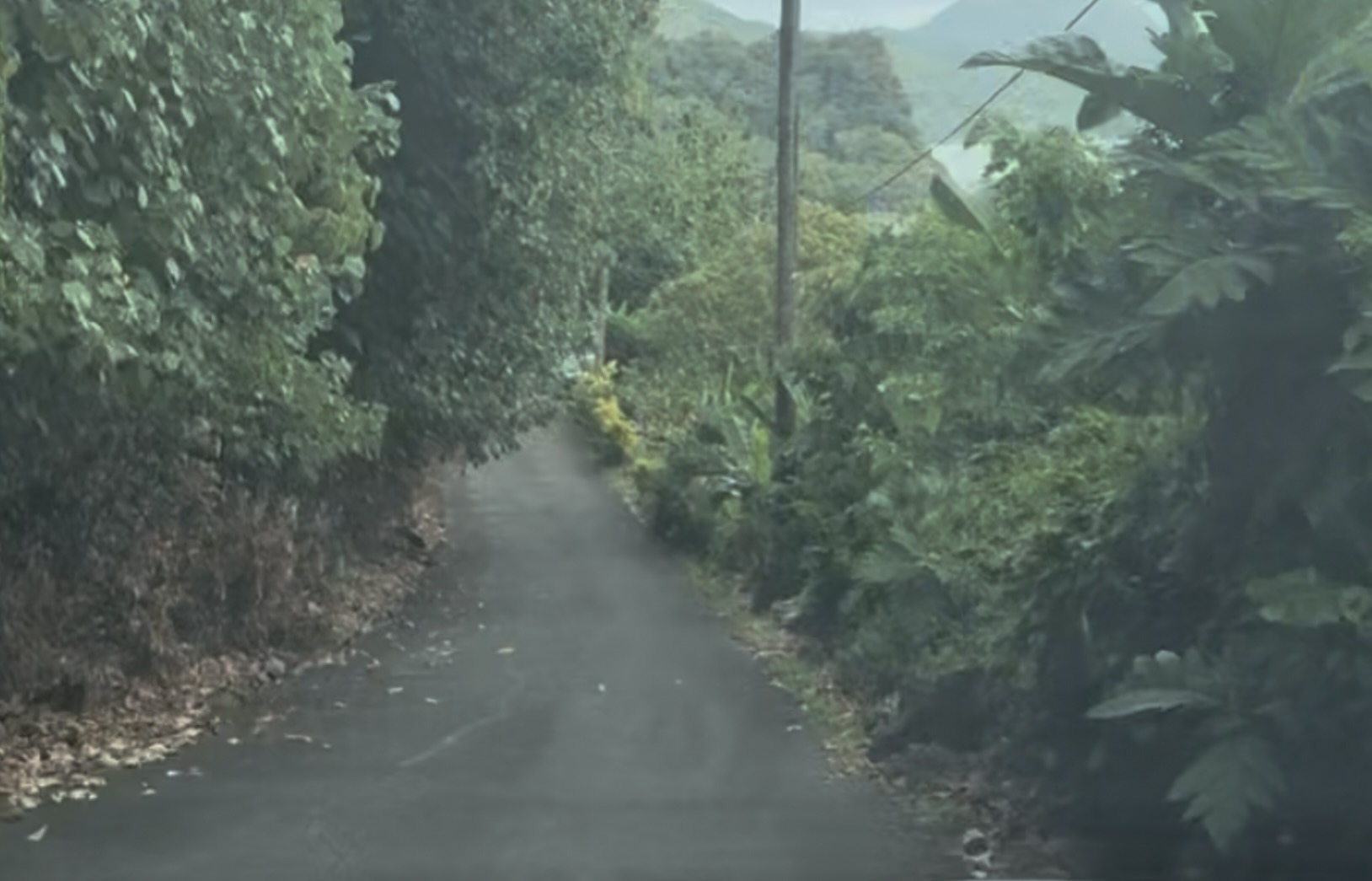
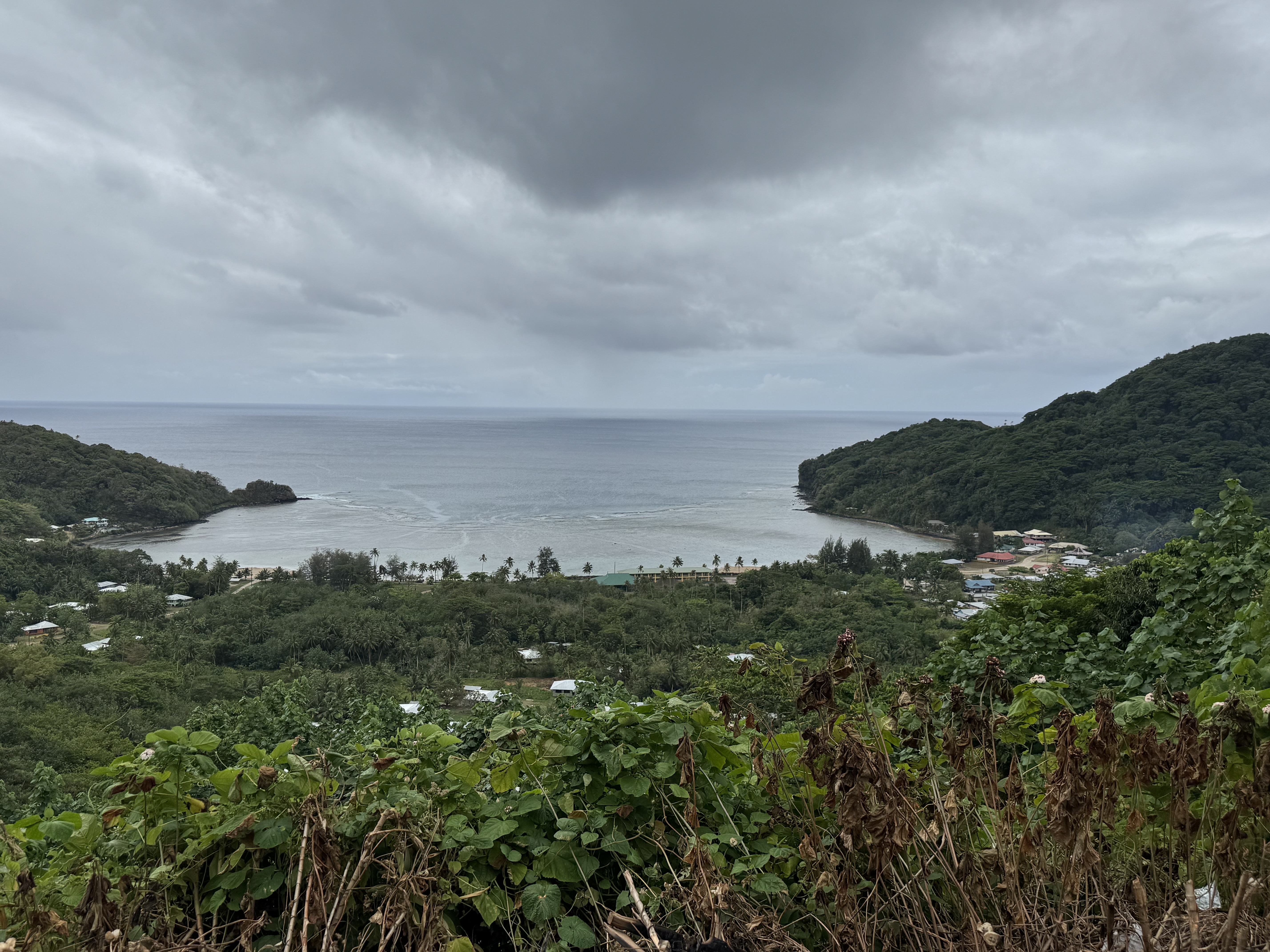
Back on Tutuila, since we were at the eastern end of the island we decided to explore a little more. First we drove through the post-card pretty villages of Tula, at the easternmost cape and then on to Onenoa, the northeastern most village. The road is paved but narrow, winding and unstriped. and it climbed steeply over a mountain ridge before ending at Onenoa, the last stop on Tutuila. After retracing our path we traveled north to Sailele on another steep curvy road.It was a real test of Tasia’s driving skills. What was a great relief it was for her that the speed limit on the island was 25 miles per hour everywhere.

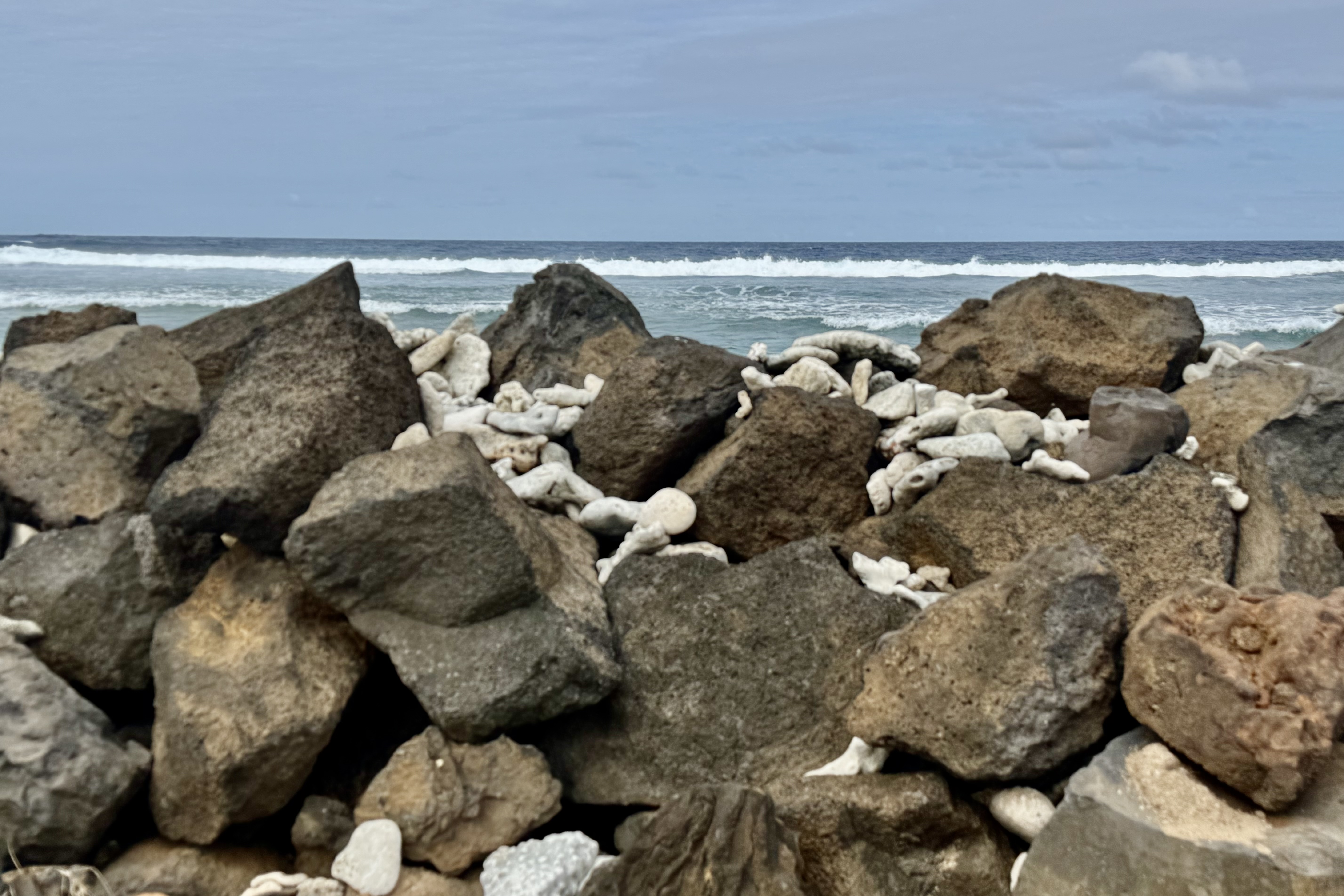
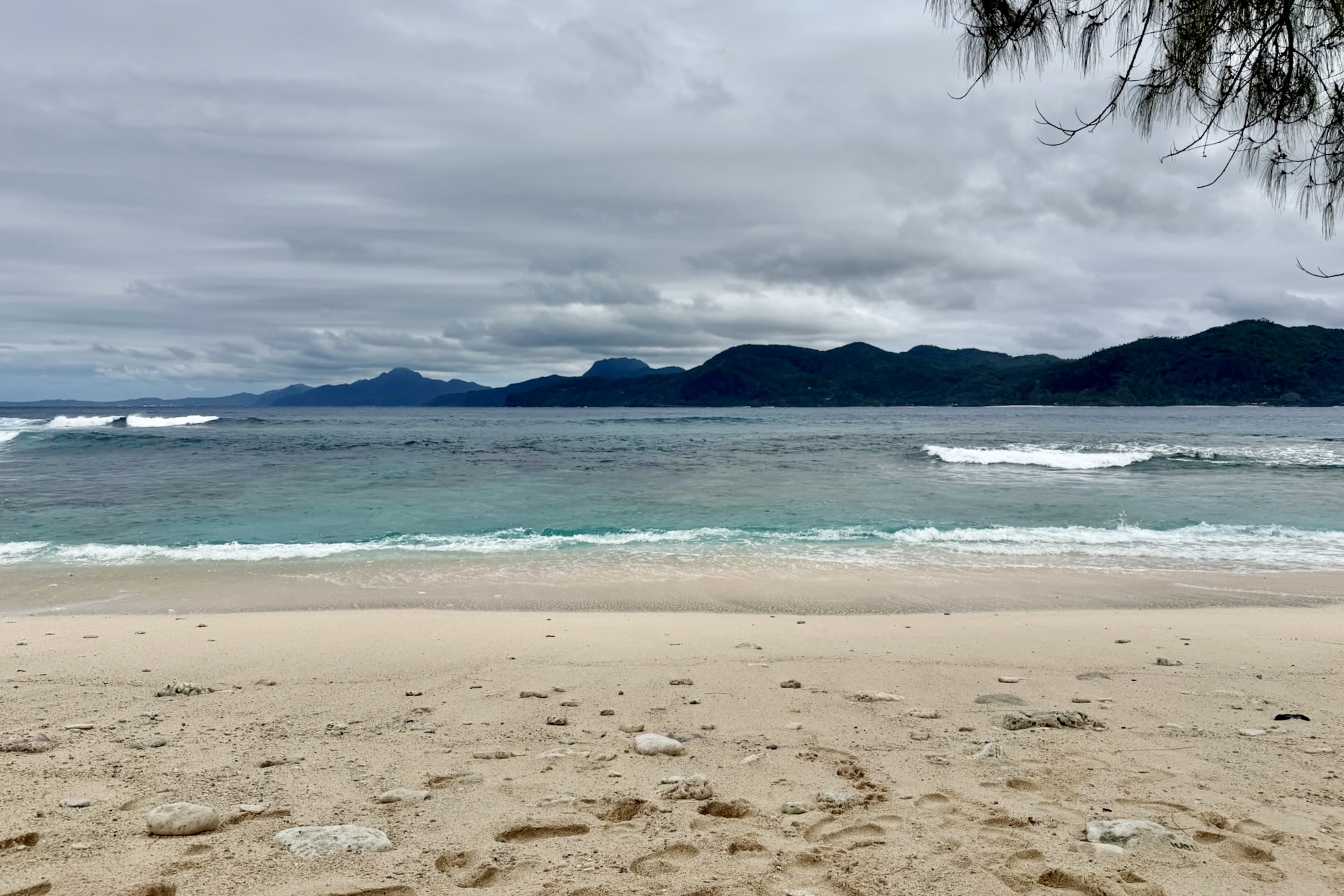
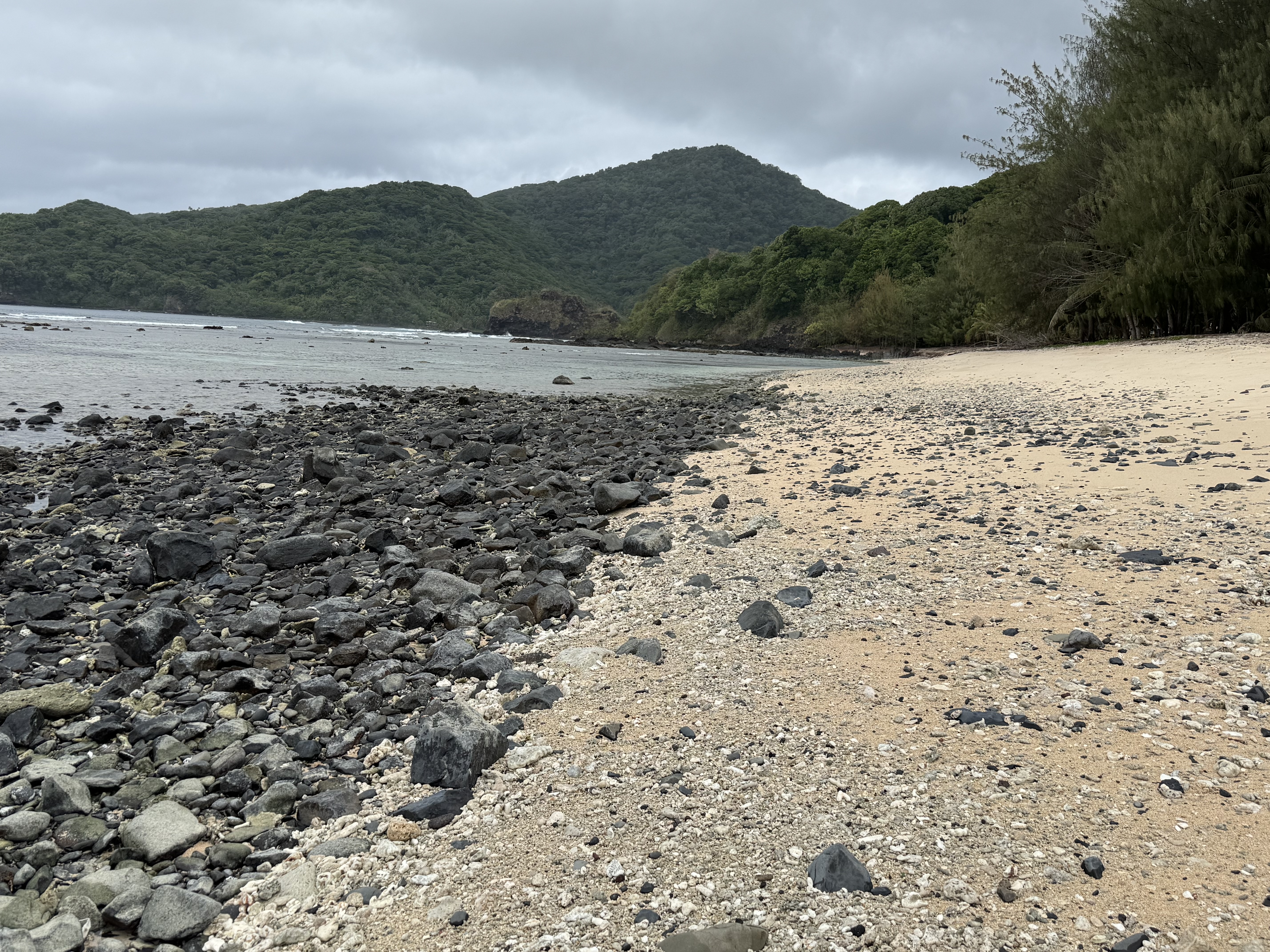
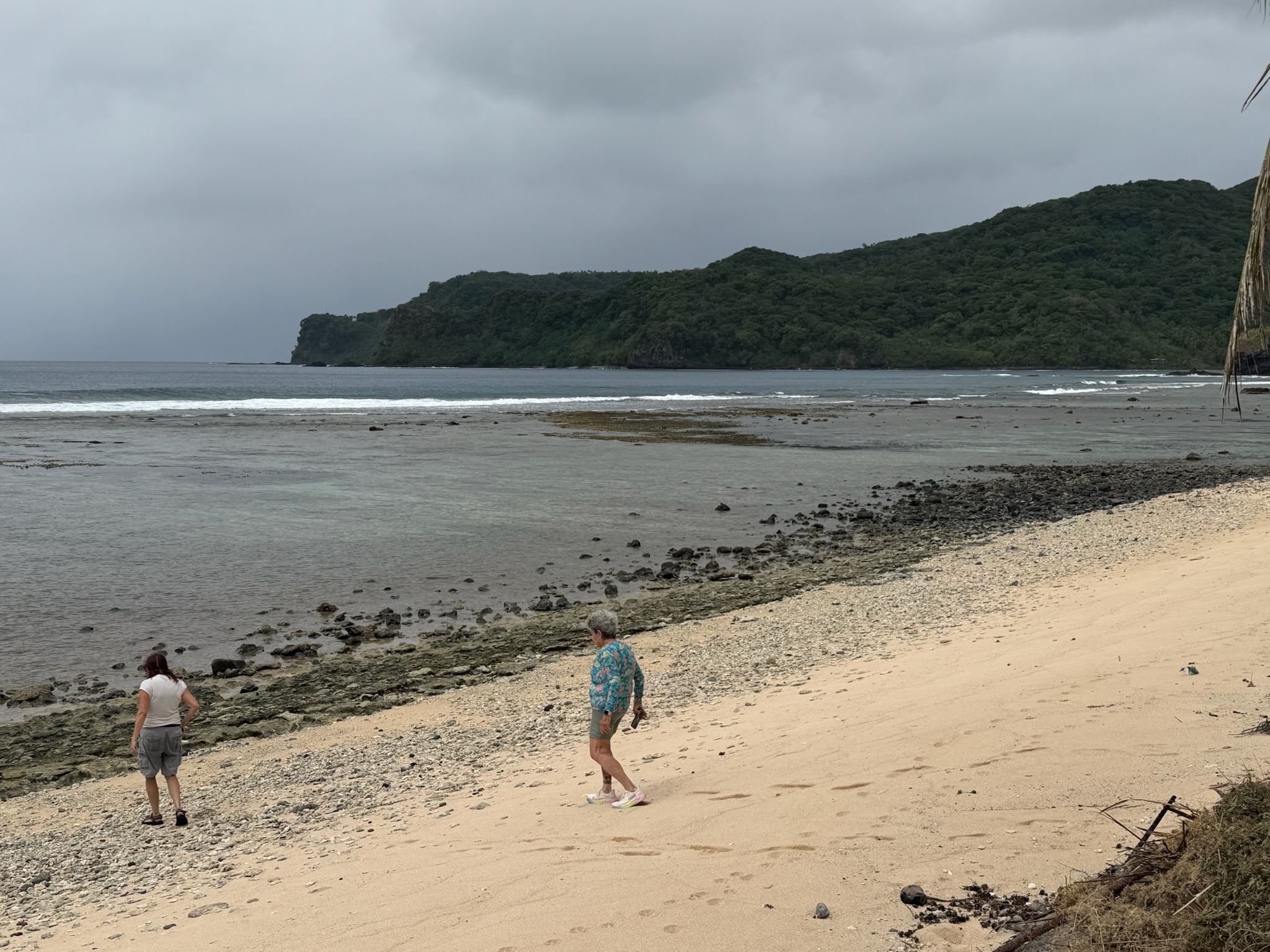
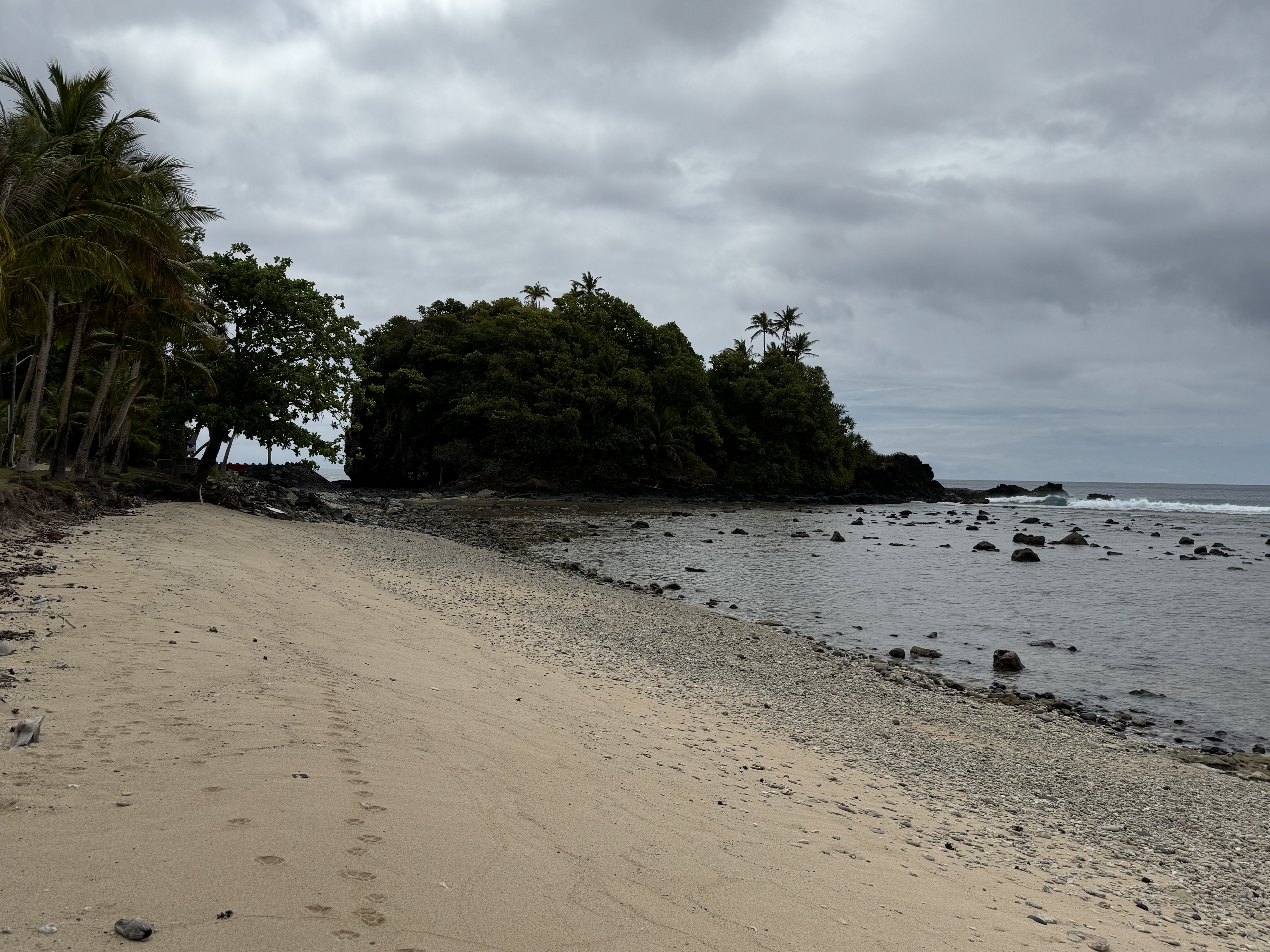
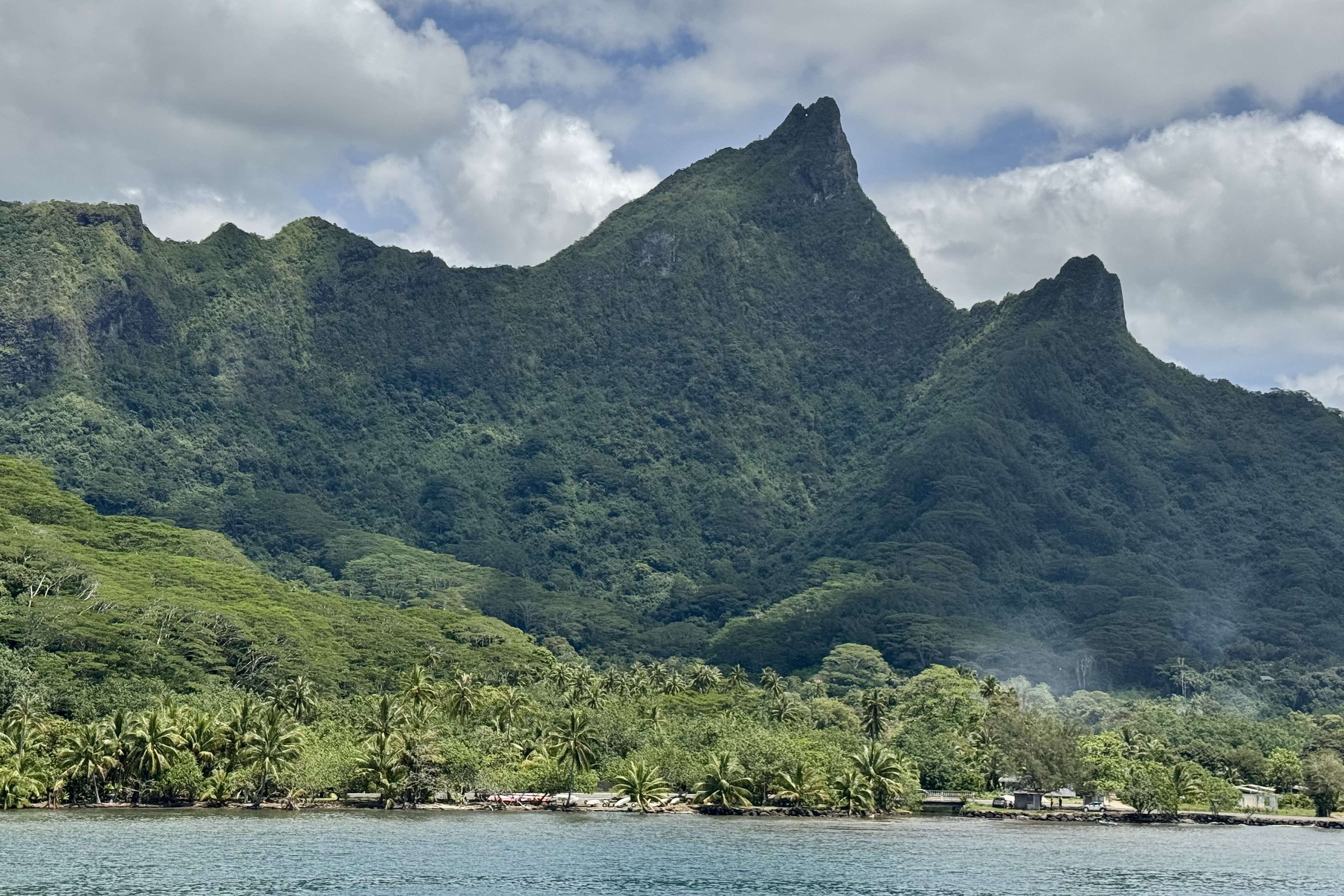
Some of the things that stood out on this adventure were the prominent, lushly vegetated islets rising directly from the water– small offshore island called sea stacks. The beaches seemed to be a mix of volcanic rock, coarse coral sand, and pebbles.

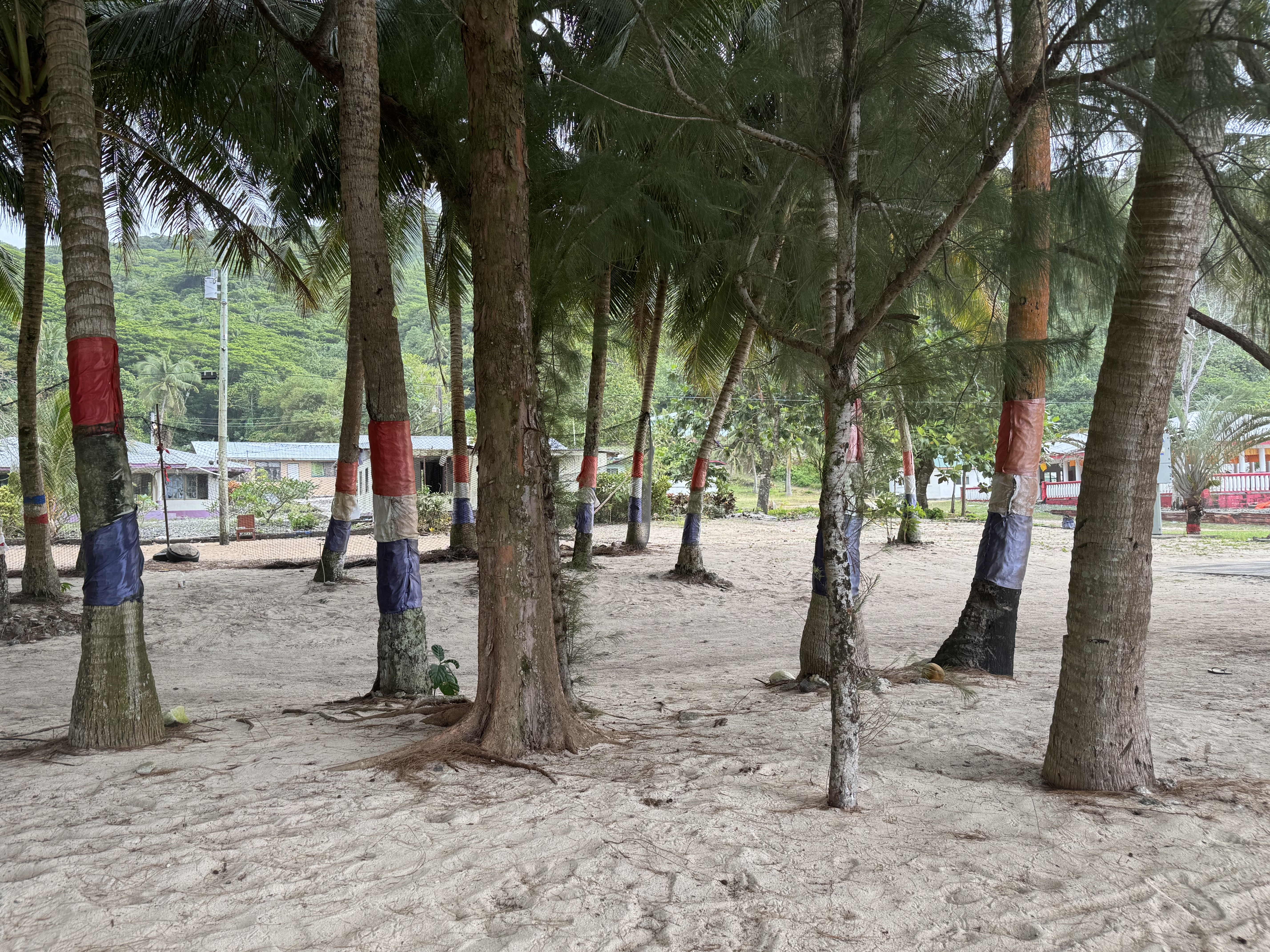
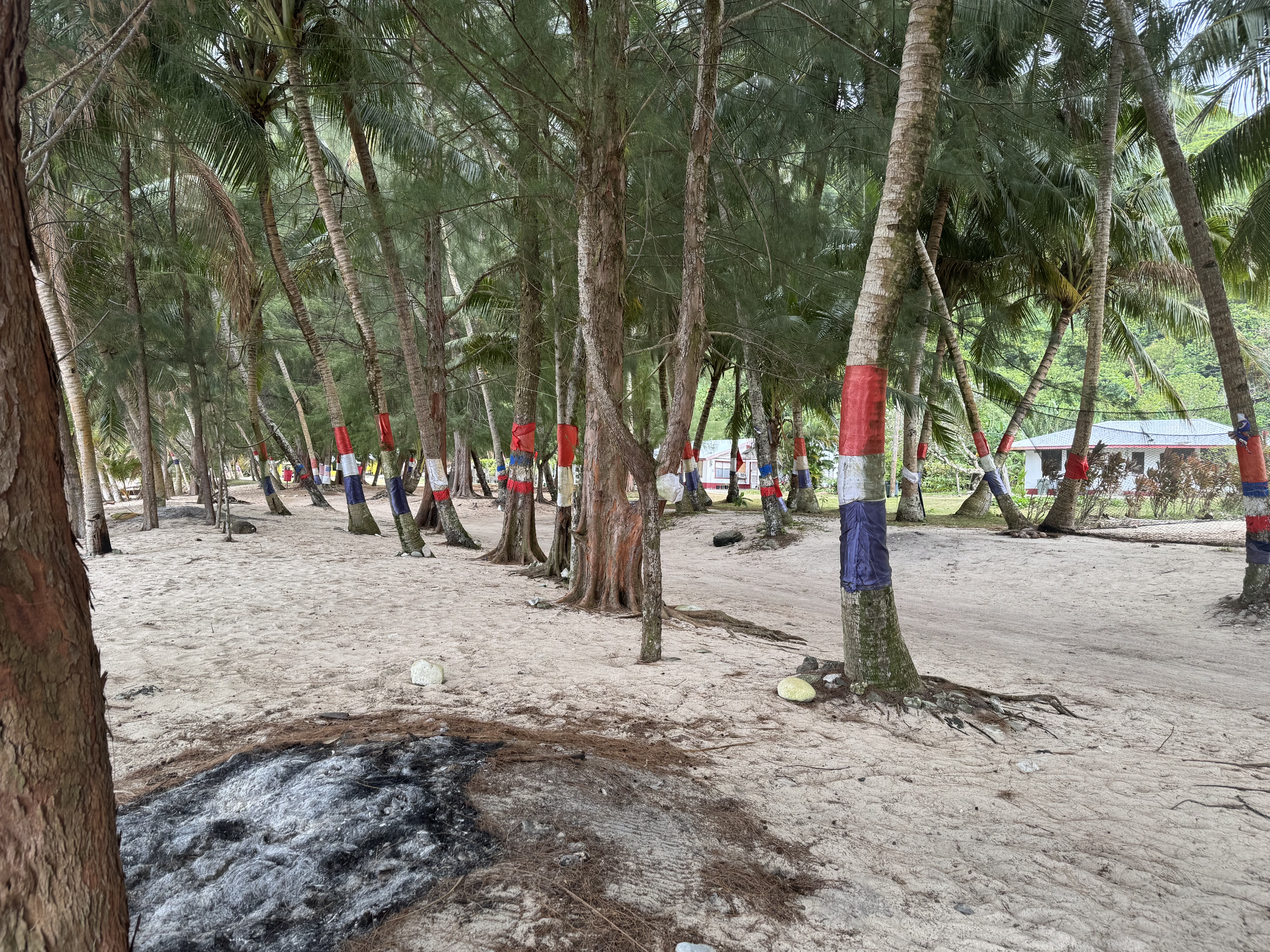
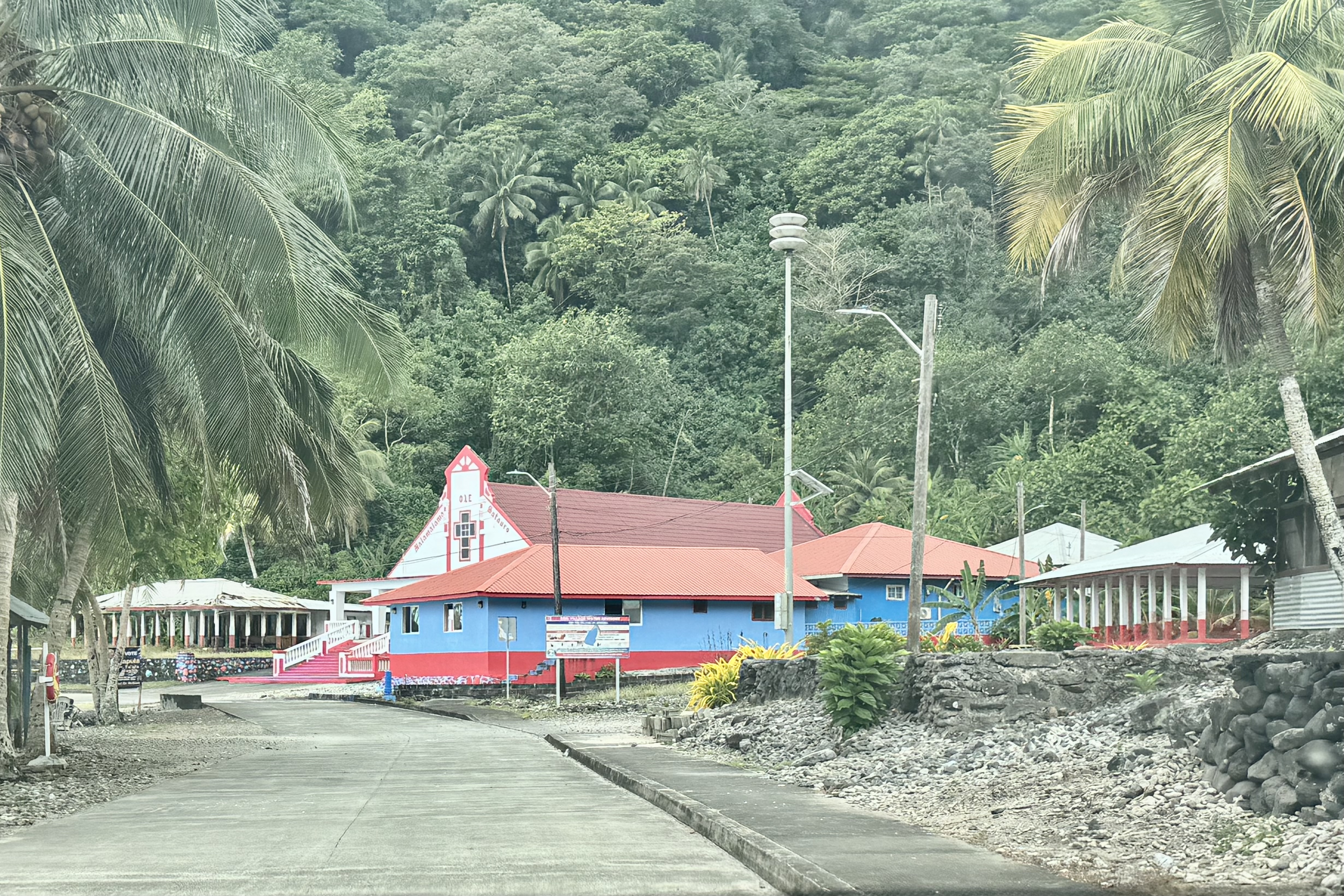
In most towns the tree trunks are painted — and in many there are bands of red, white, and blue (occasionally another combination of colors). This decoration I learned serves multiple cultural, celebratory, and practical functions including patriotic display, a showcase of civic pride and honor of local heritage; demarcation of village boundaries; beautification; a welcoming visual indicator of community care; and, environmental protection as painting of the lower trunks of trees reflects intense tropical sunlight to prevent bark splitting and acts as a minor deterrent against crawling insects like ants.

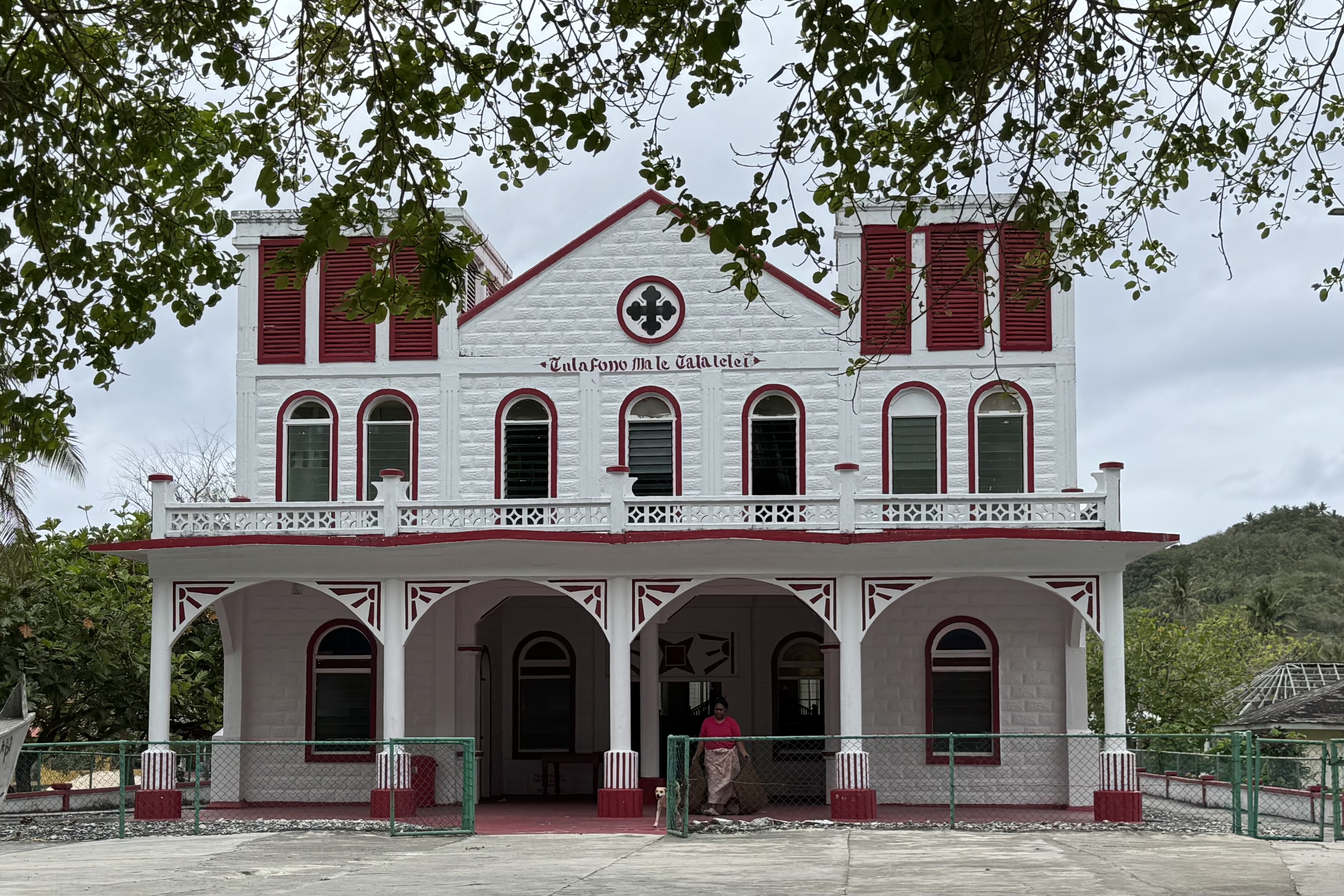
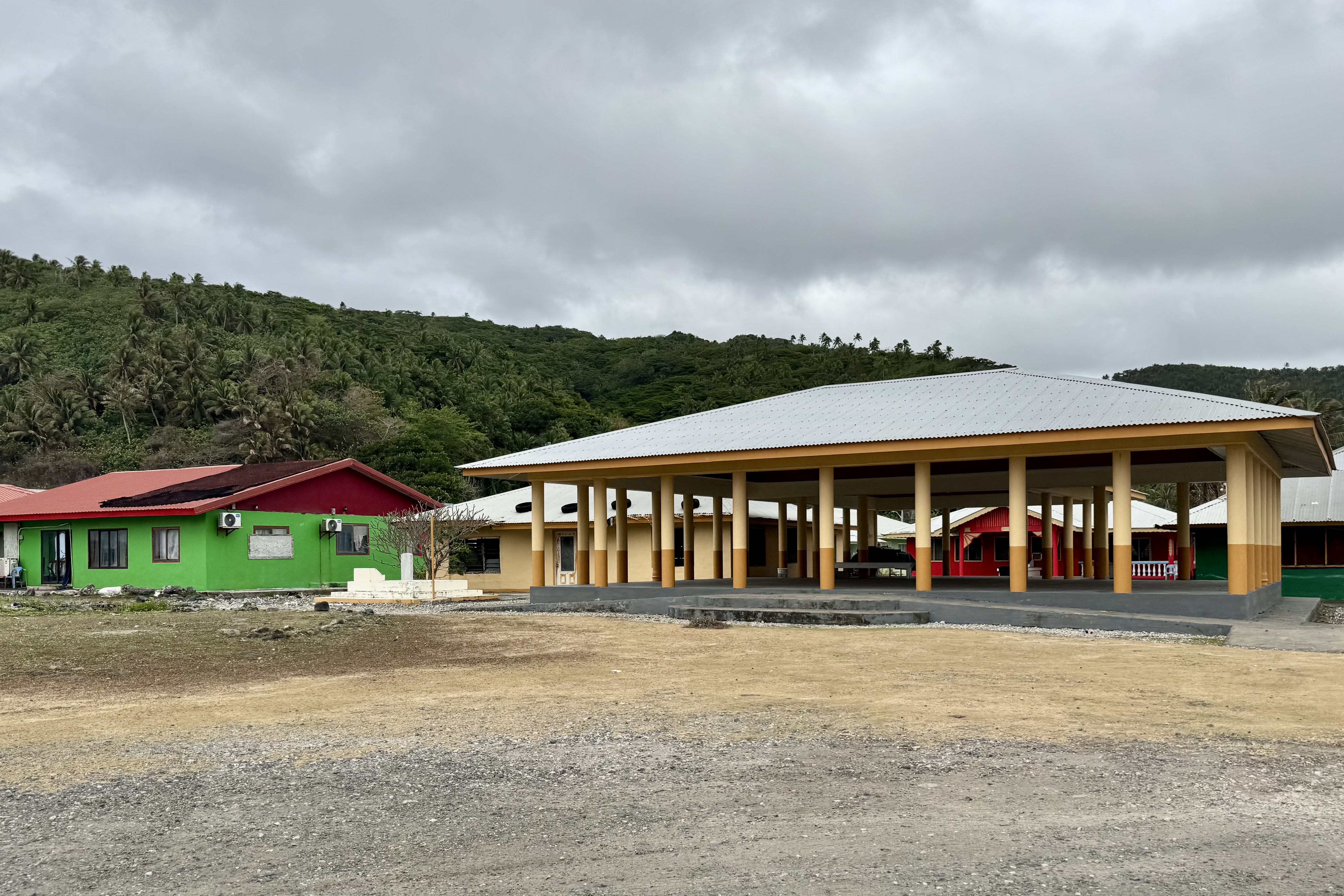
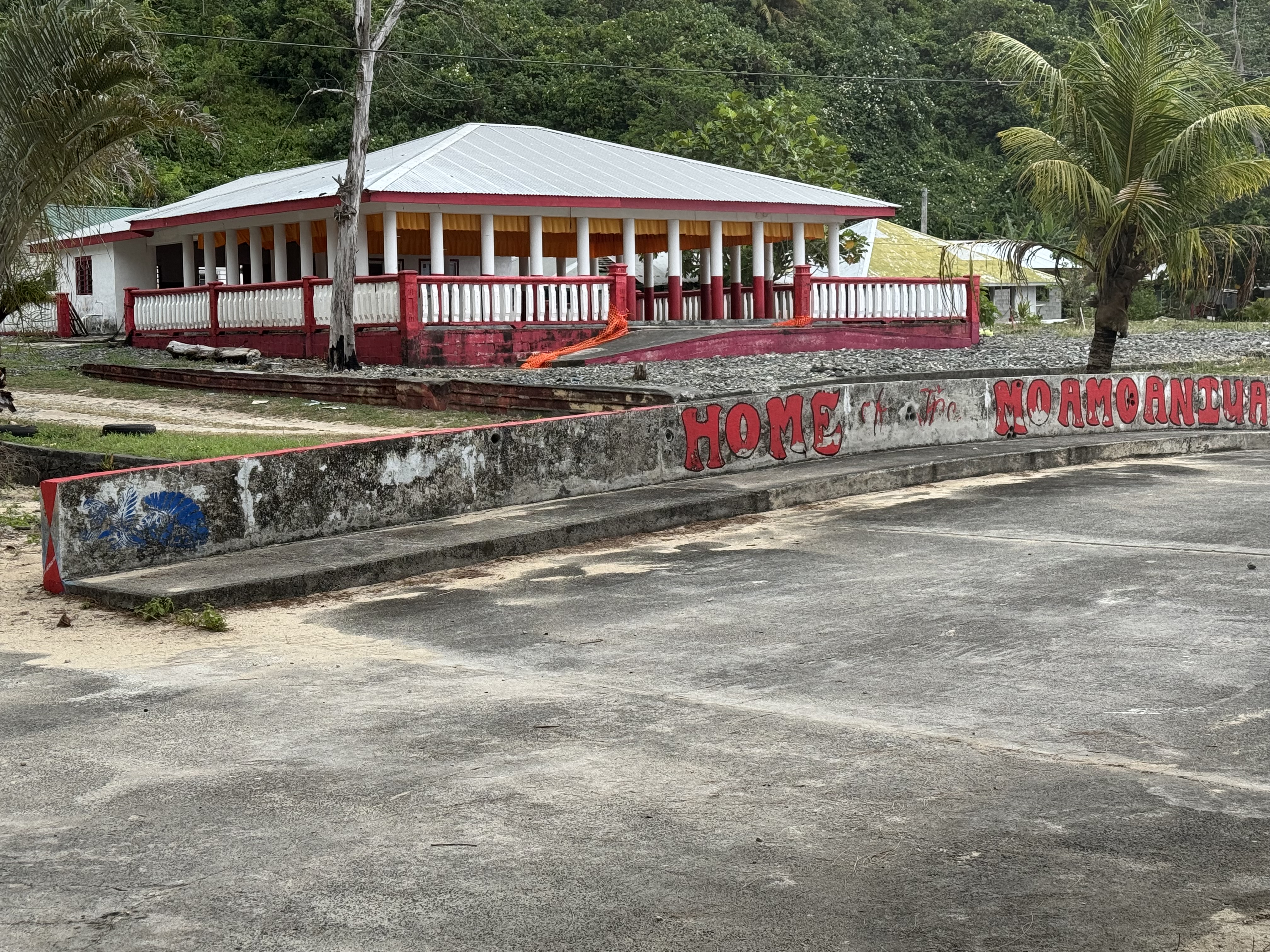
One of the most distinctive features of every village we drove through was the abundance of the traditional open-sided Samoan fales used for family gatherings and important occasions. The buildings themselves are built elevated on a platform with a pillared perimeter designed to allow cool ocean breezes to pass through while serving as a central hub for gatherings and cultural events. We saw them in village after village — sometimes several in one place — reminders that the traditional Samoan way of life values family, community, community responsibility, service to others, and respect for elders.

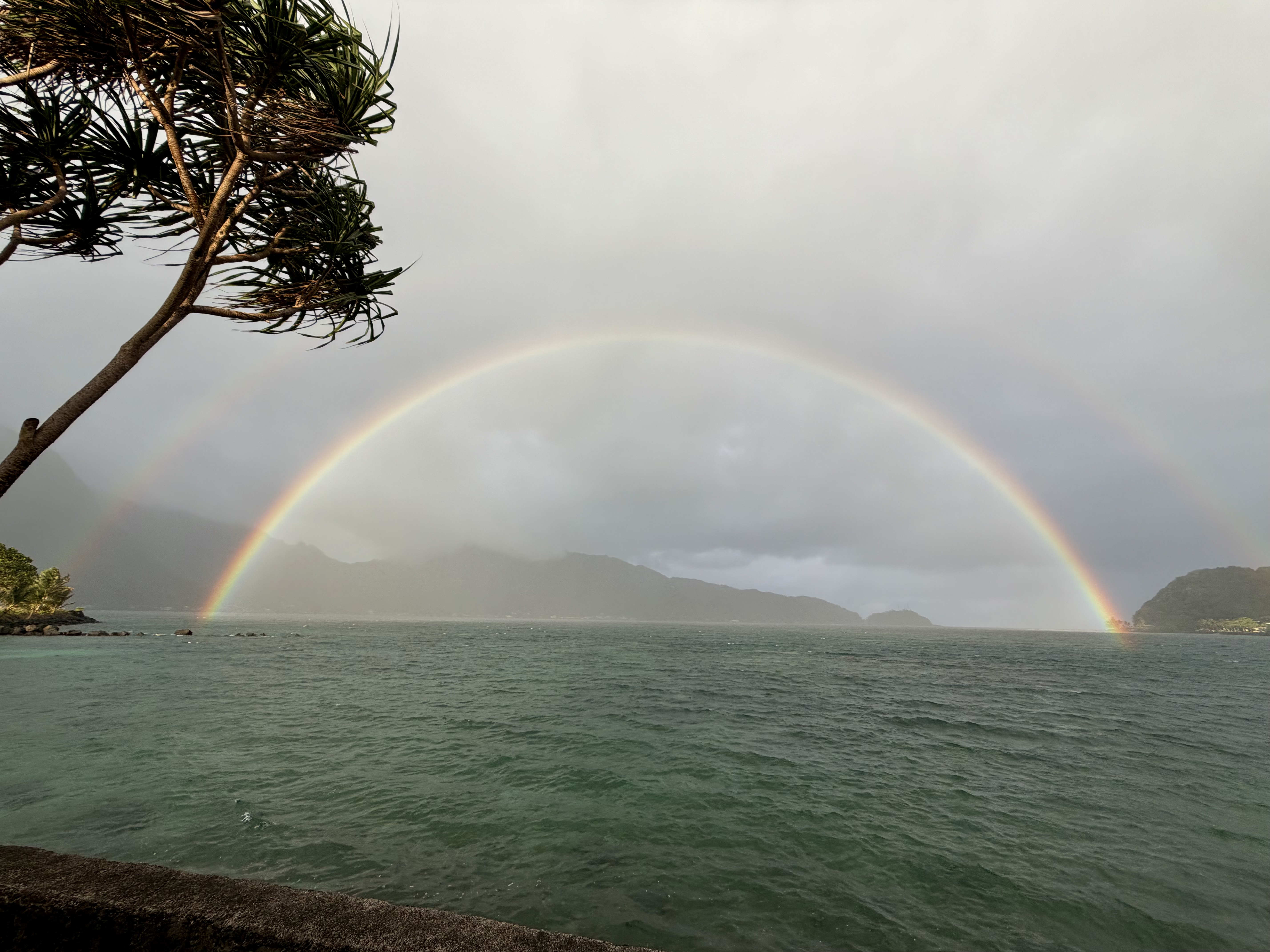
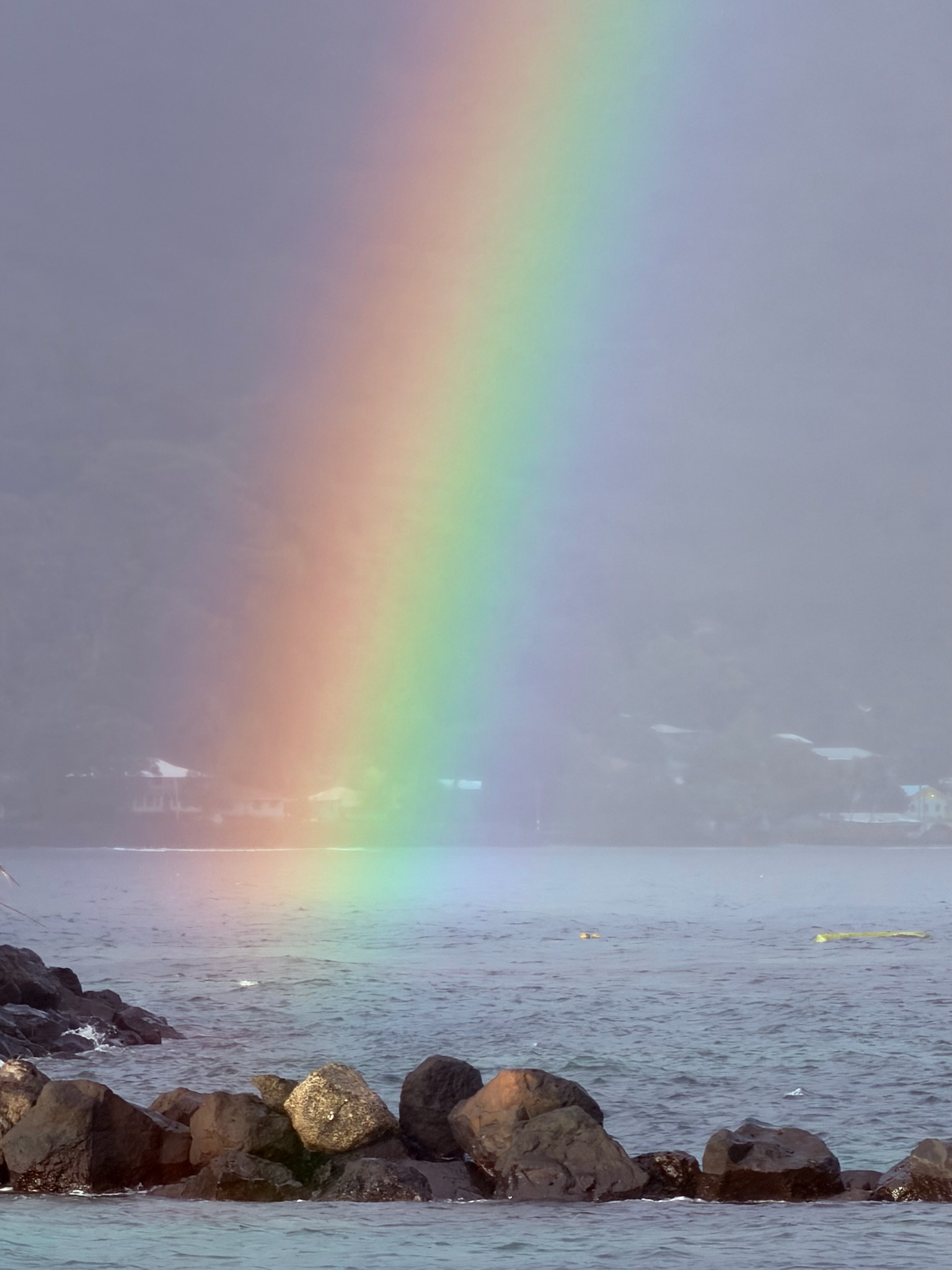
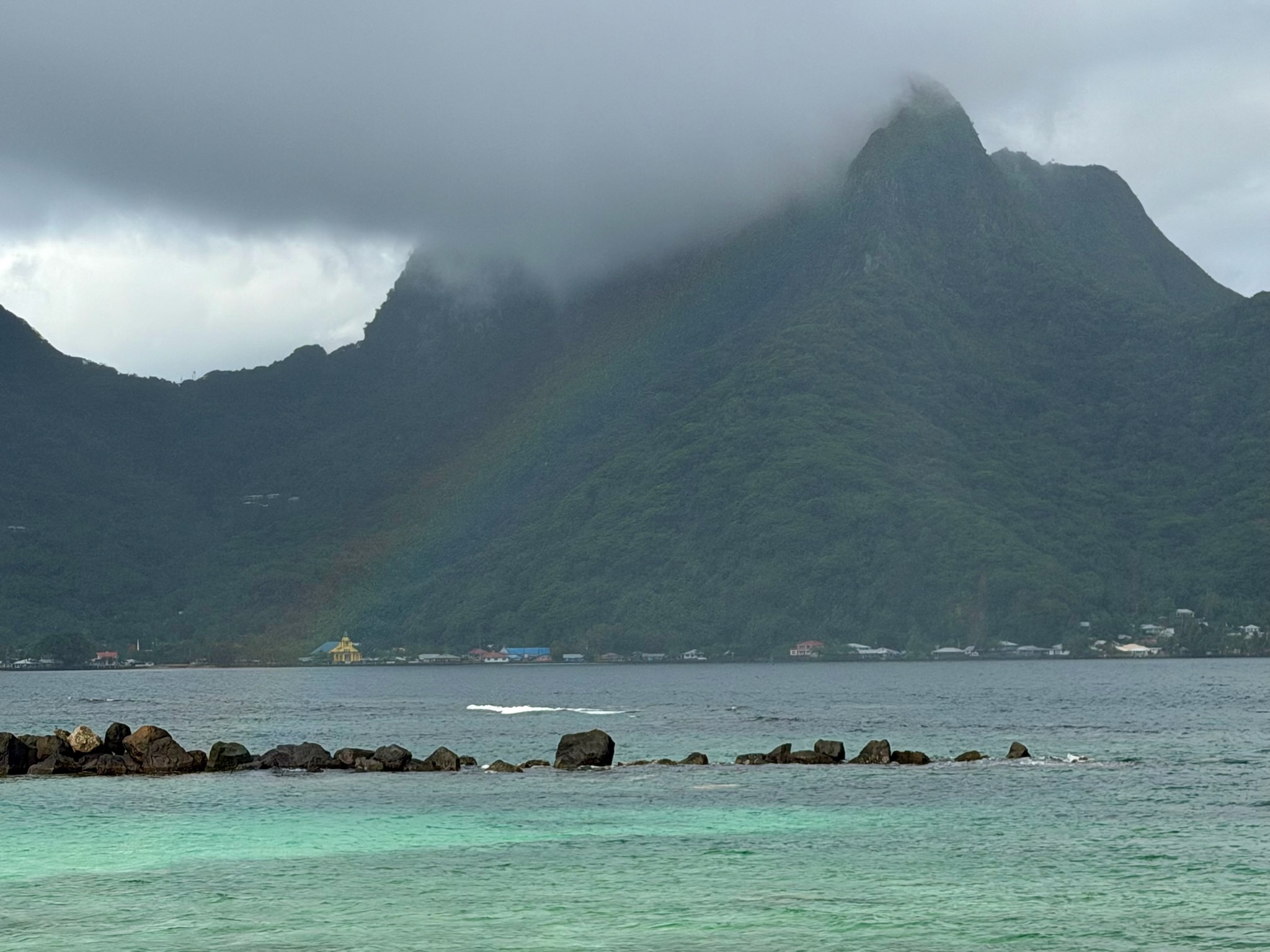
By the time we finally returned to Sadie’s a refreshing dip in the pool seemed absolutely necessary — not just for cooling and relaxation but as a serious attempt to remove the sand from every part of our bodies. Once dressed and not wanting to get back into the car, we decided to eat dinner again at the Goat Island Cafe. As we ate , storms were moving through the area, and the sky rewarded us with the most beautiful rainbow – a full brilliant arc stretching across the sky. After a day that included a questionable ferry ride, a failed snorkeling expedition, enough sand to fill a sand box, and stray dogs and chickens, sitting there with a good meal of a wahoo burger gazing at a full rainbow seemed like a perfect ending to this day.