Dreadful Stairs, Dreadful Hill, Dreamy Lagoon

Monday, September 21 was departure day from Barefoot Manta, the start of two travel days that would take us from Fiji through Tahiti to Moorea. So far, every step of the trip had gone smoothly, but little did I know that some anxiety-provoking challenges were waiting for us. Checkout from our private bures was at 10 AM. Bernadette and Tasia went snorkeling after breakfast but I opted out as I was a bit weary and still had a lingering cough from a bug that bloomed inside me on the second day of the trip. Nor did I want a bag of sopping wet swimming gear adding pounds to my luggage. We packed up our gear and left it for the staff to carry to the main bure (though up until now I have been calling it the gathering room). I paid my running “bar tab” – i.e. a tab for lots of diet cokes. Then, with our bags taken care of we developed a plan on how to spend the day without our bure to retreat to. The returning ferry would not arrive until about 3:30 PM so we had a 5 and a half hour wait.

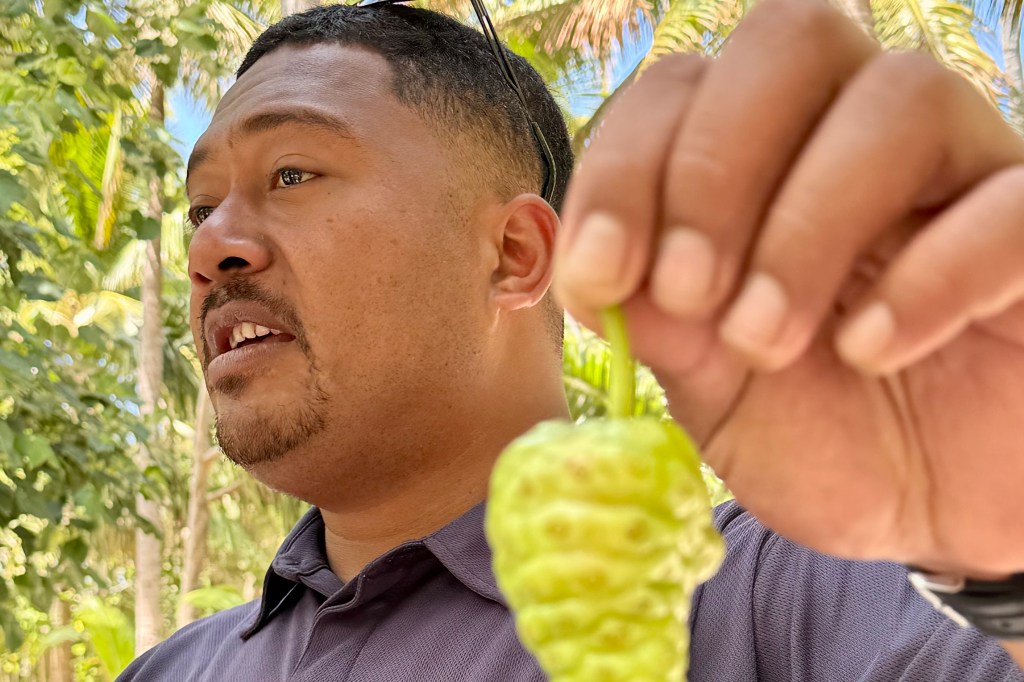
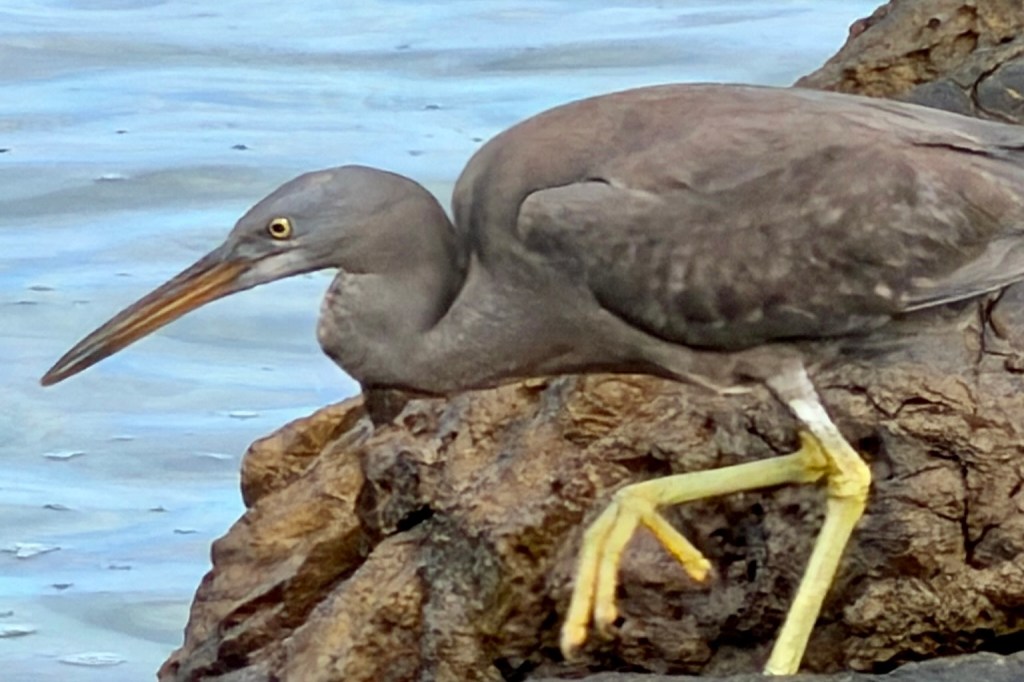
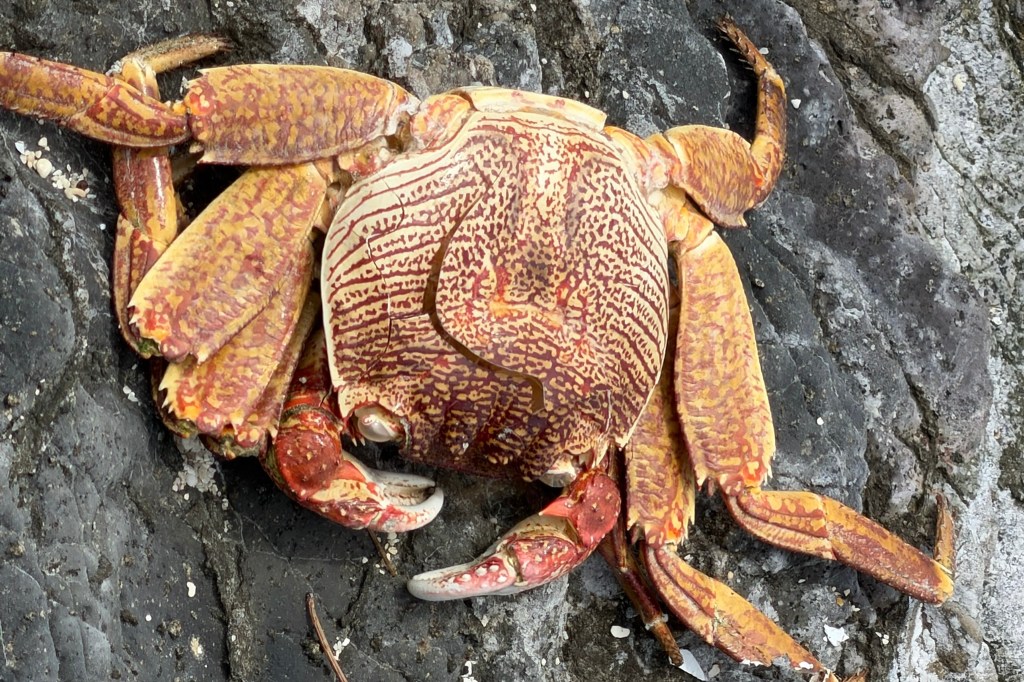
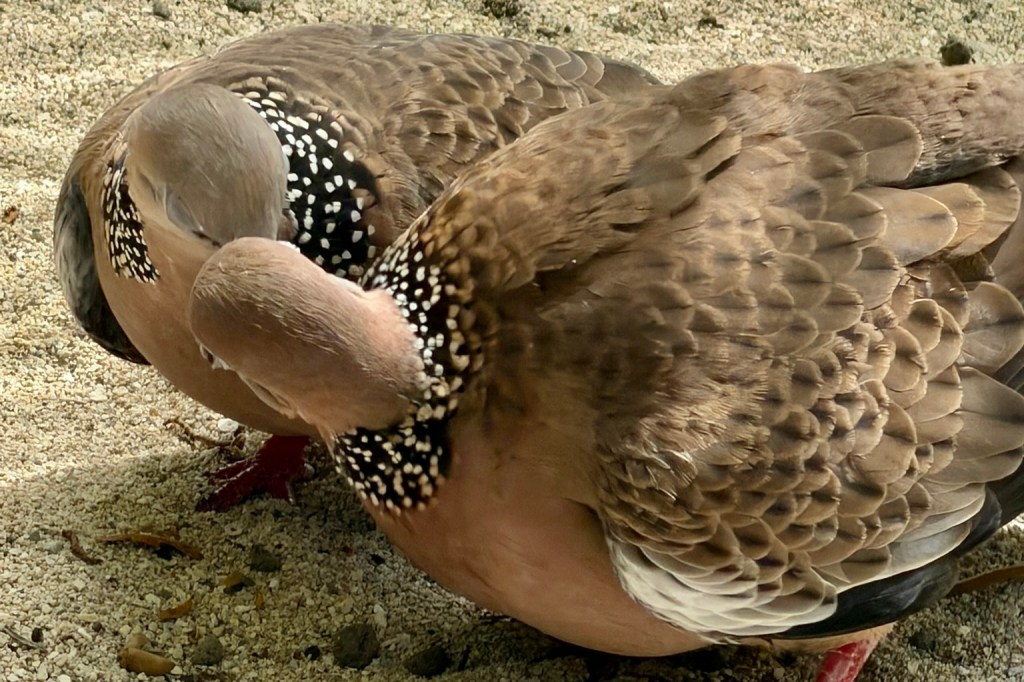
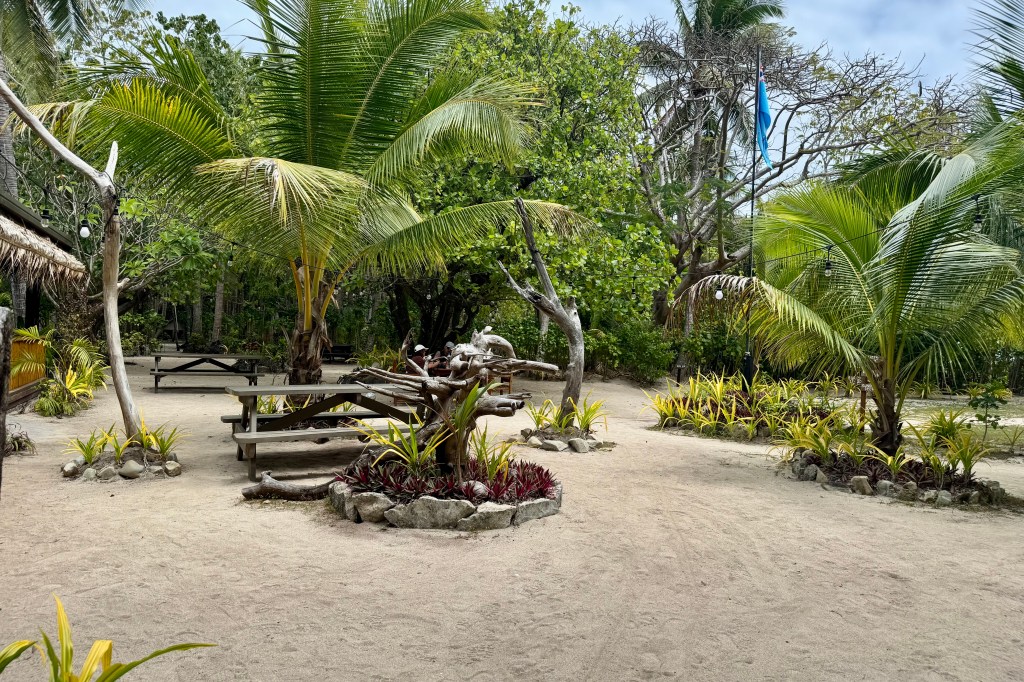
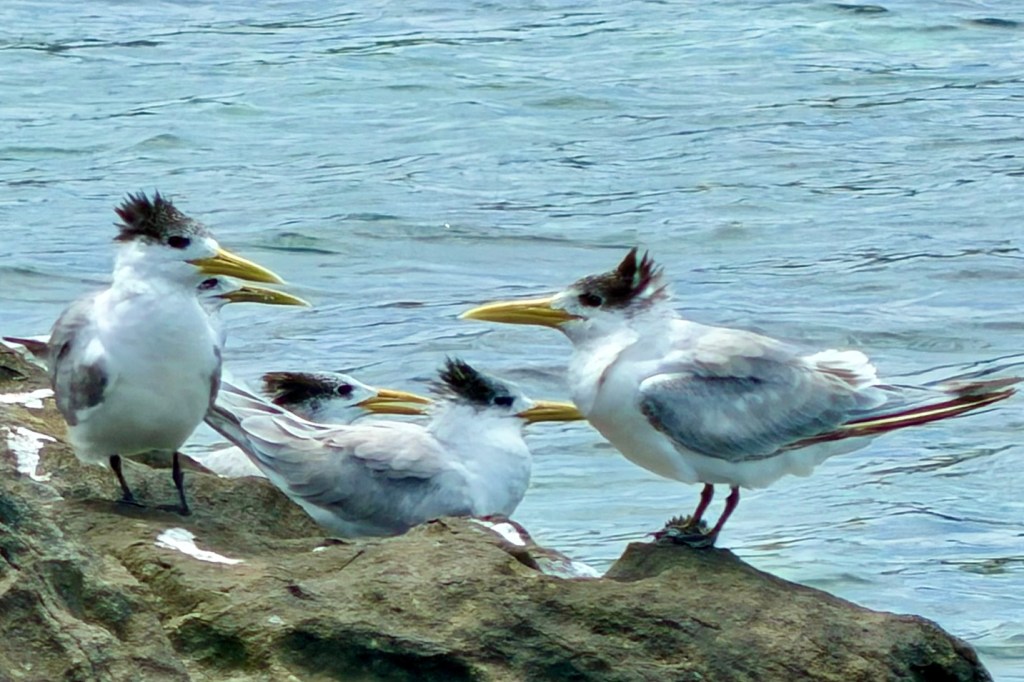
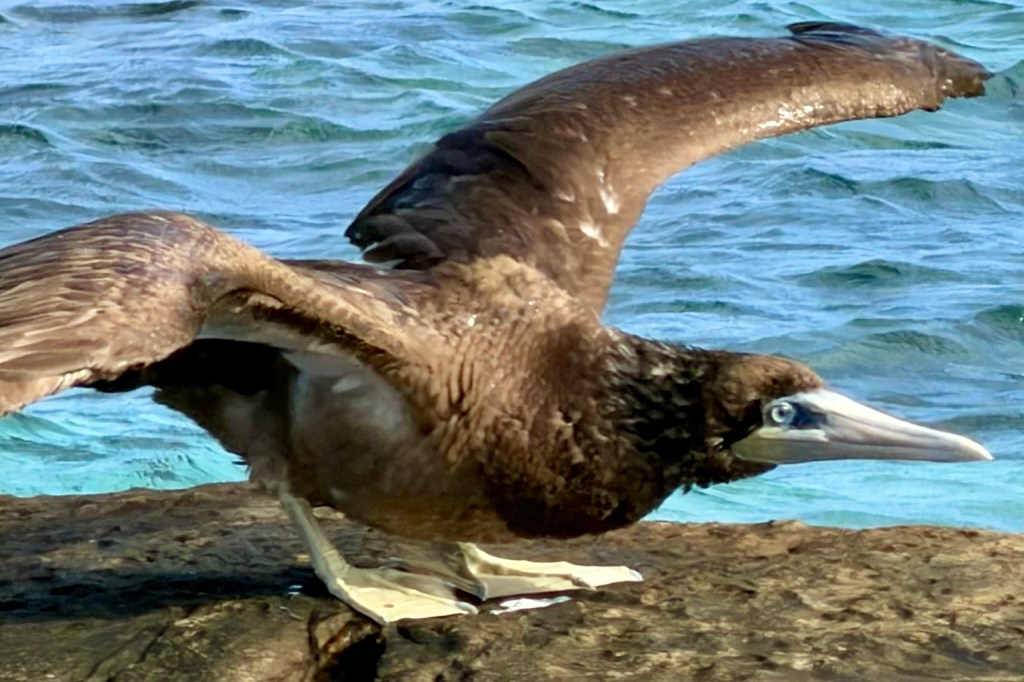
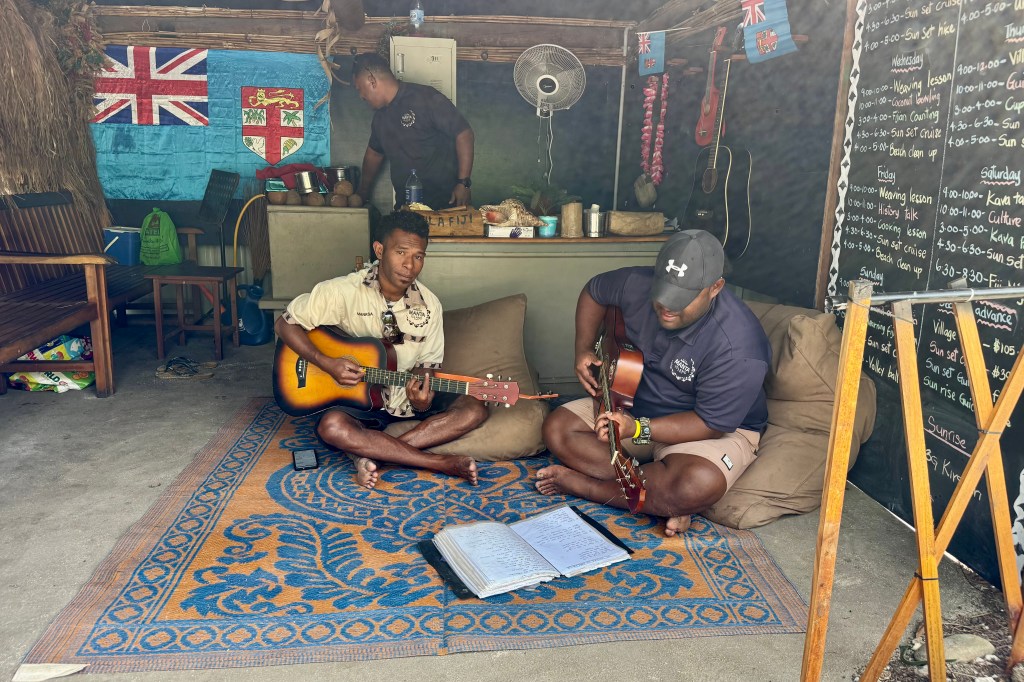
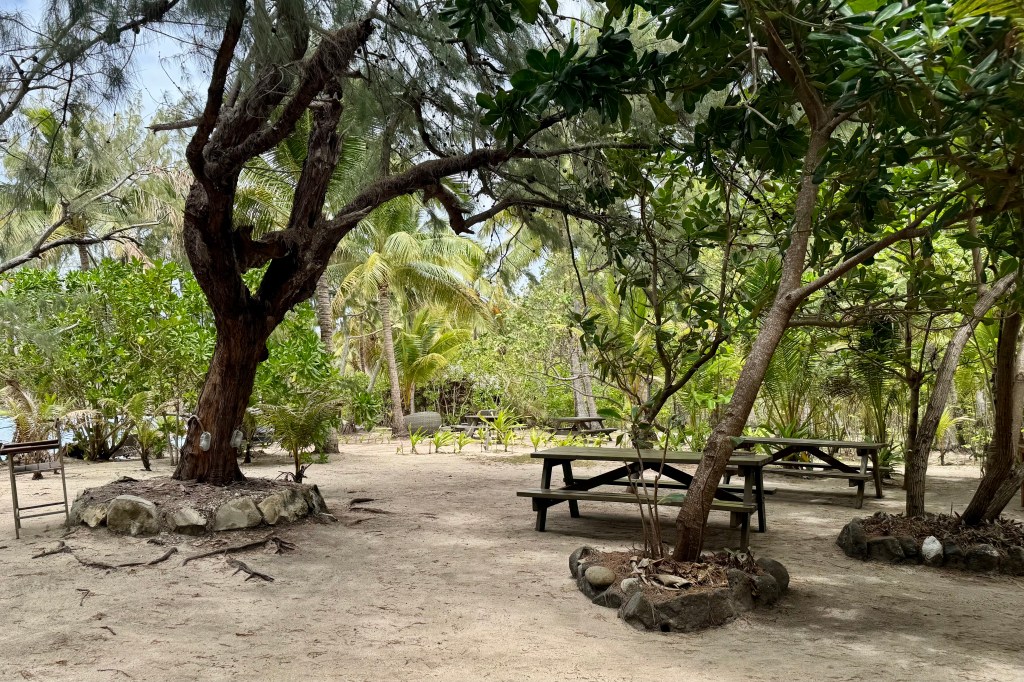
We opted for one last cultural activity to learn about the medicinal plants. Afterwards we spend the next few hours soaking up the meticulously groomed grounds. Every bit of visible sand in the guest area seemed to be raked daily. We watched the birds and life along the rocks on the sea shore and spent time in the main bure which had internet access, and which we purposefully had limited our use of. Lunch wasn’t included on the departure day so we made sandwiches from the breakfast bar which had plenty of breads, meat and cheese to choose from.
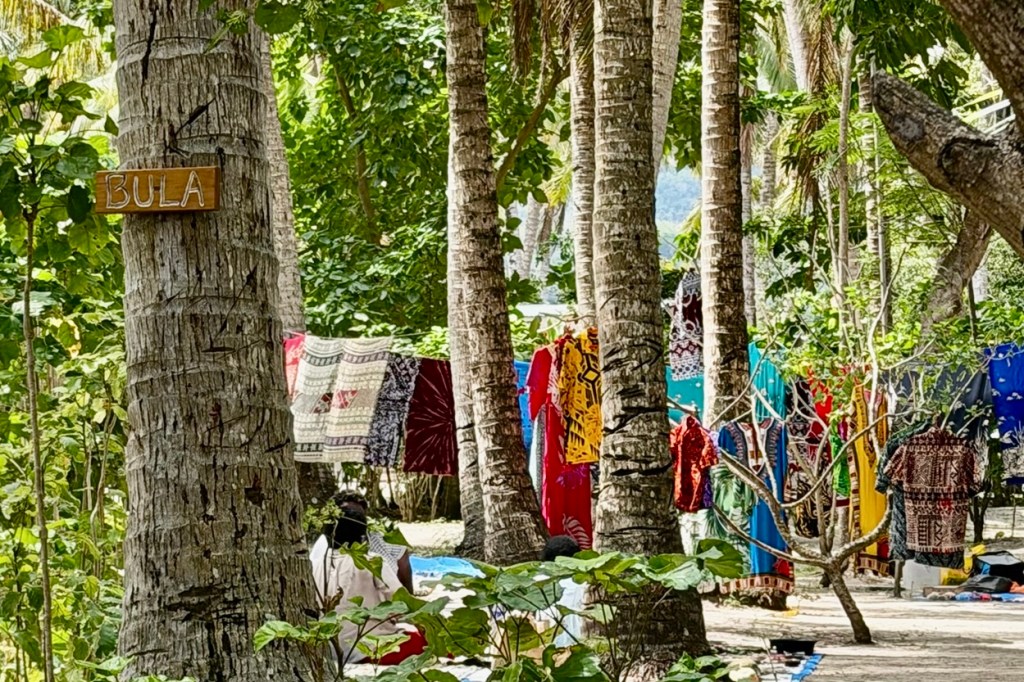
On an isolated island like this, there’s almost no shopping for food or sundries, so you bring what you need. One nice exception: on several afternoons, local Fijian women set up under the palms to sell handmade crafts including jewelry and colorful sarongs in bold patterns inspired by traditionally Fijian designs. I couldn’t leave without a souvenir so I bought a map cloth of “the Fiji Islands” printed on mulberry bark and a cream, navy and maroon cloth in the style of the Fiji masi. Both will remind me of the days at Barefoot Manta Island Resort. Before long it was time to say vinaka and move on.
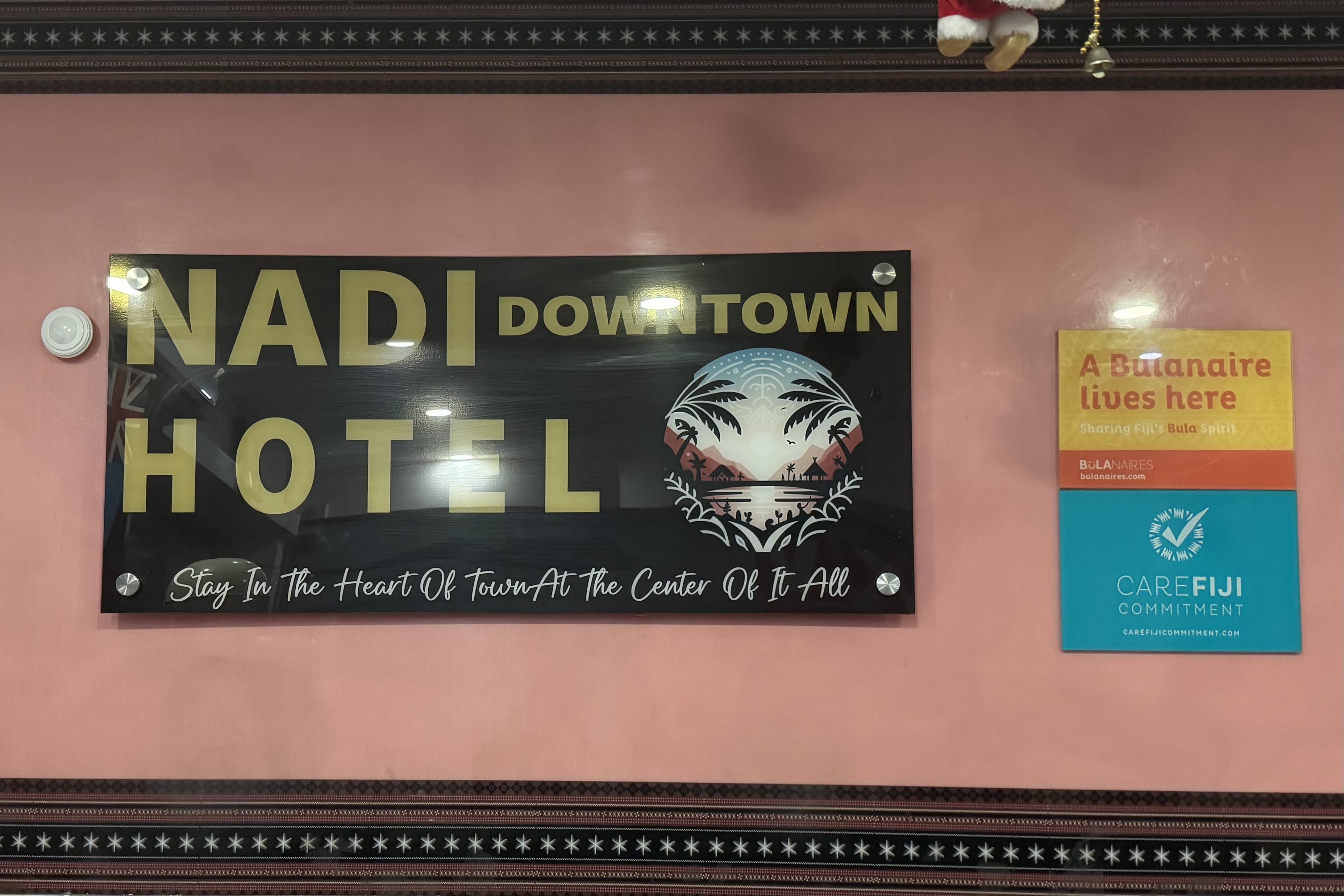
We retraced our journey from Barefoot Manta in reverse. We took the launch out to meet up with ferry and I worried that the transfer would be tricky with the chop on the water but I managed it without a hitch. The ferry ride was smooth and before we knew it we were back in Nadi. I had booked us a room at the Nadi Downtown Hotel (yes that is really its name) and this was one of those moments when I wondered what I had been thinking. None of the shuttle buses listed the hotel as a stop. I suspected that was my doing since we had been picked up at the airport on the way out the ferry company assumed we would be returning to the airport. With no bus available we hailed a taxi and arrived at the hotel at 6:30 PM. It was getting dark out.
No Credit, No Refund, No Elevator

Walking into the hotel was an experience. The desk attendant looked at us with confusion then disappeared to fetch one of the owners or manager I assumed. I did not take this as a reassuring sign. Our reservation was in order and fully paid but they wanted a cash deposit for the room key and they wanted it is Fijian currency which we didn’t have. We only had, at that point, US dollars, which set off a hubbub whether they could, and would accept our $30.00 US for the key. After what felt like a top level government negotiation they agreed.

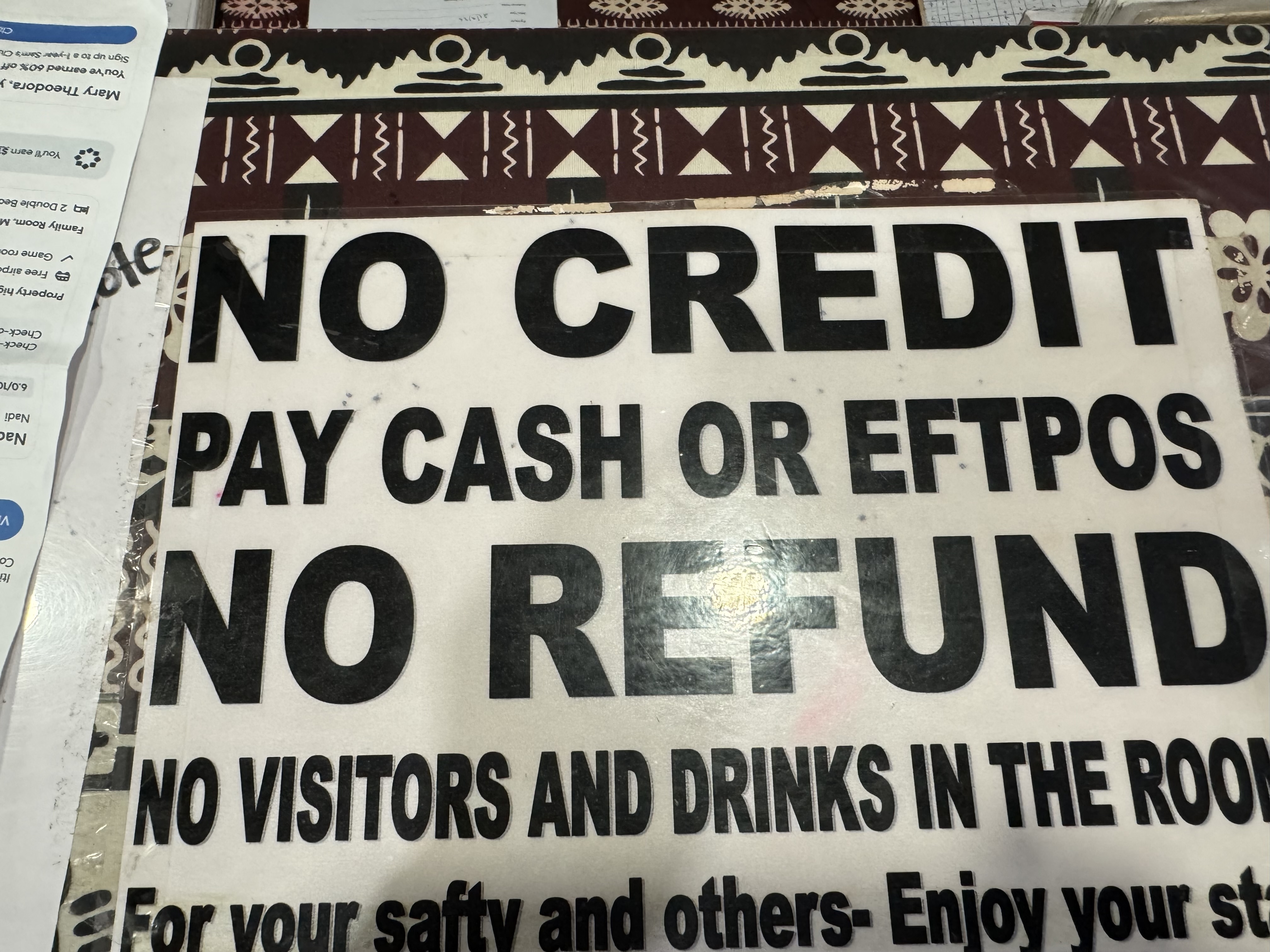
The lobby, meanwhile, was sending mixed messages. One sign proudly announced “A Bulanaire lives here,” celebrating Fiji’s famous Bula Spirit of warmth and welcome. Another, in enormous capitals, read No credit. No refund. Bula Spirit versus the demanded cash deposit for a key?

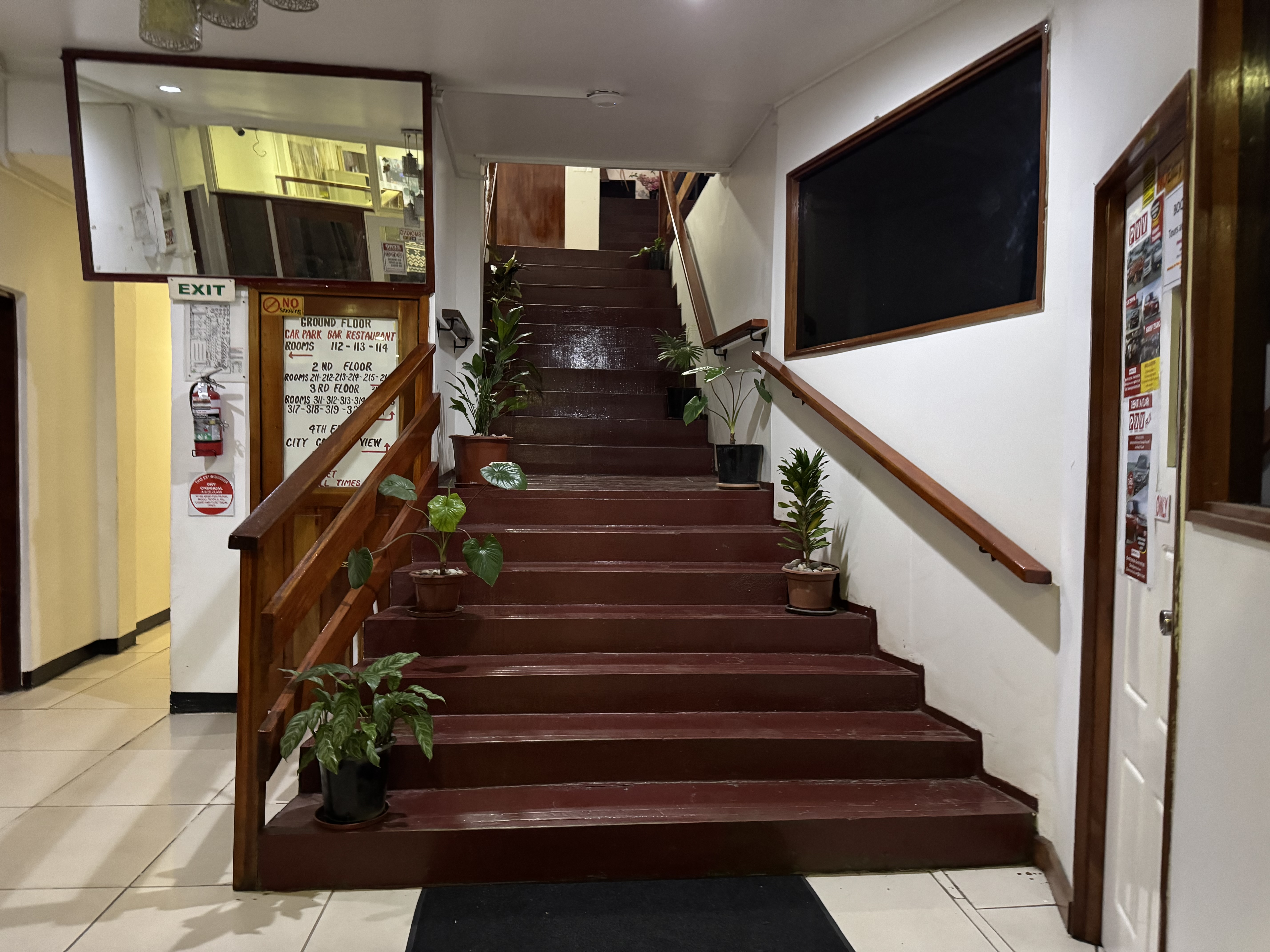
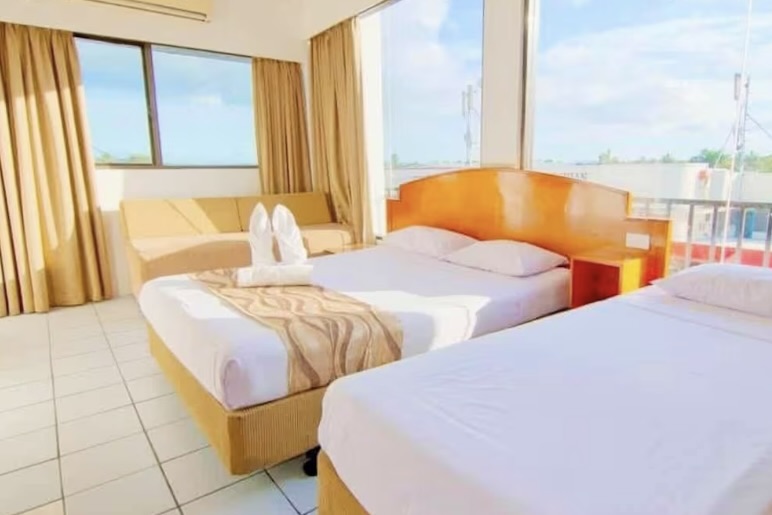
Finally, key in hand and towels presented like a ceremonial gift, we headed for our room. It was on the third floor. There was no elevator. This was one of those old hotels that had the potential to be charming but you will need to enjoy cardio workouts during your stay if you want to stay here. Then came the climb. The staircase was a gleaming, polished-maroon monument to my poor choice, flanked by a cheerful guard of potted plants that would hopefully cheer us up on the way. Up we went. Tasia had my bag in tow along with hers with the grim determination of a sherpa. Now for the view. The website had shown a bright, sunny room with floor-to-ceiling windows, a golden headboard, and a towel swan presiding over the bed. Our room, arriving after dark, was a slightly different story: two beds, a wall-mounted AC unit, a very tiny TV screen high up in a corner, a well-worn utilitarian bathroom, and a sliding door onto a balcony that overlooked the city I assume. There was no towel swan though we had a few squares of that white tile.
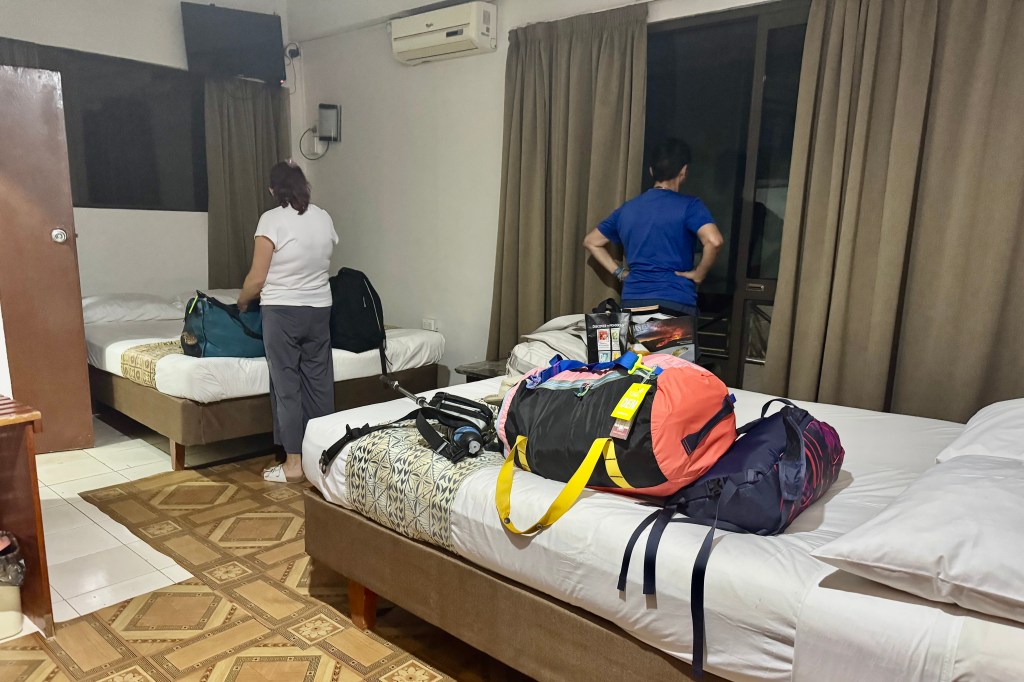
Then there was the floor. Just inside the door, a vintage sheet of linoleum unrolled before us in a bold geometric pattern of diamonds and squares, a design that seemed to have last been fashionable around the time my parents were having children. I am currently 82. It had clearly been cut to fit with optimism rather than precision or had been cut to fit a different room, because it simply stopped, mid-room. Beyond that point, the big white tiles took over, perhaps a different era of renovation. Then there was a third flooring type in the wardrobe area. Walking across the room became a tour through the different eras of flooring.

We settled in with minimal unpacking since we were getting our shuttle to the airport at 5: 30 AM. Once settled in, we made the executive decision to stay put. One of the reasons I’d chosen a downtown hotel was to get a real feel for the city of Nadi, but it was late, we were tired, and the city would have to wait. In fairness, the room was clean, the beds were okay, and it was a serviceable place to land after a long day of travel. It would be a decent location if we had had the time and inclination to explore the city.

Instead, I picked up the phone and called the front desk for the Wi-Fi password, a simple request, I thought. I was told I’d have to come downstairs and collect it in person. That is right! In person! As if it were a parcel, or a dowry. I stood there, phone in hand, mentally tallying the three flights of stairs I had just negotiated and quickly concluded that I didn’t need the internet that badly. The password could keep. So I did what travelers did before the invention of the router: I picked up a book and read it, like a person from the past, in a room that was frozen there with me in it. Would I book again? NO!
Paperwork, Panic and a Very Long Driveway.

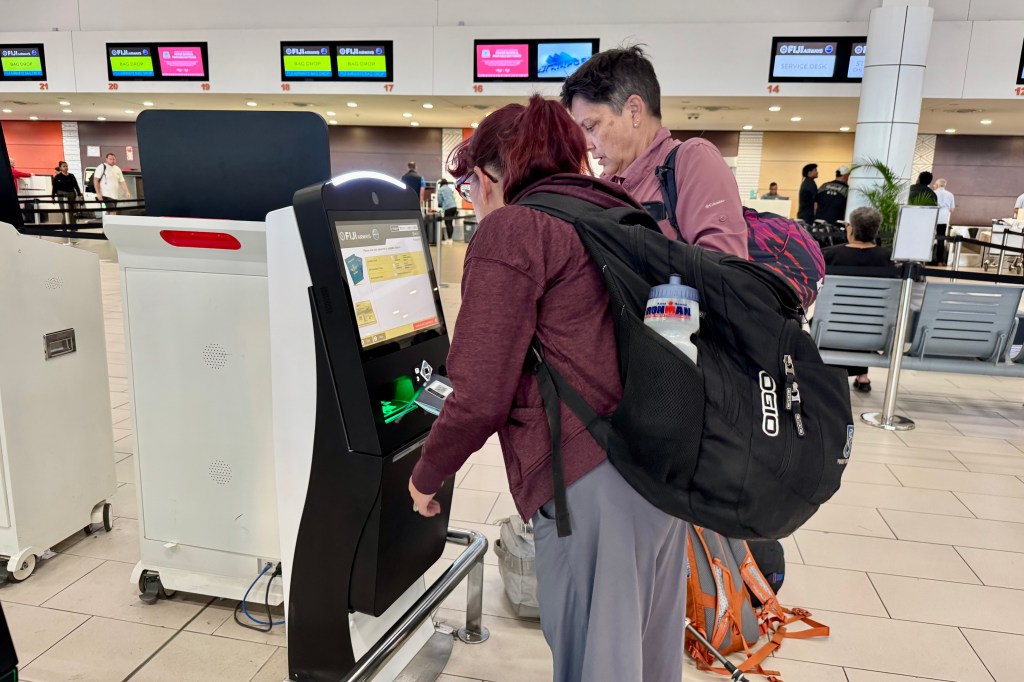
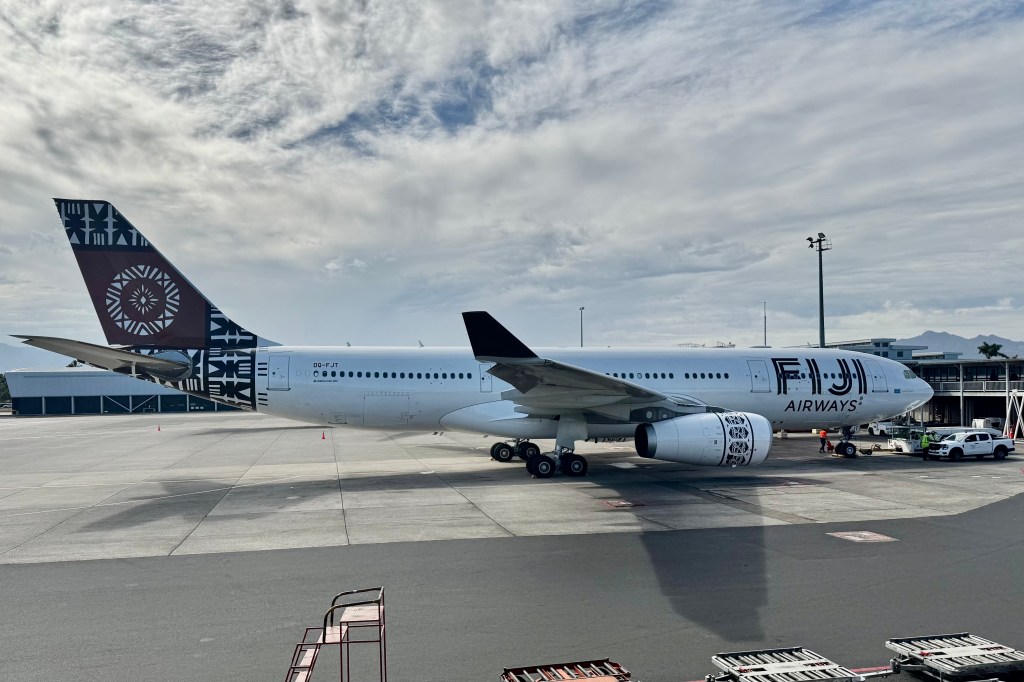
We arrived at the Nadi airport with plenty of time to spare, and thank goodness we did. Bernadette and Tasia breezed through the self-service kiosk with their passports. My passport refused to cooperate. Once we finally flagged down an agent, it took a long while to discover the problem. To reach Papeete we had to change planes in Auckland, and even though we’d never leave the airport, New Zealand requires a pass-through visa. Somewhere in the machinery, New Zealand visa services had mistakenly filed mine as an NZeTA, an electronic travel authority, which meant I was missing paperwork I never knew I needed and thus assumed I had intended a bit more of a stay than a 3 hour layover. Stress level: level 5 and climbing. After what felt like several ice ages, they admitted the mistake was theirs, fixed it, and sent us off to our Fiji Airways gate. The short 3 hour flight was uneventful, unless you count breakfast, a cold egg panini that gave “atrocious” a new meaning.
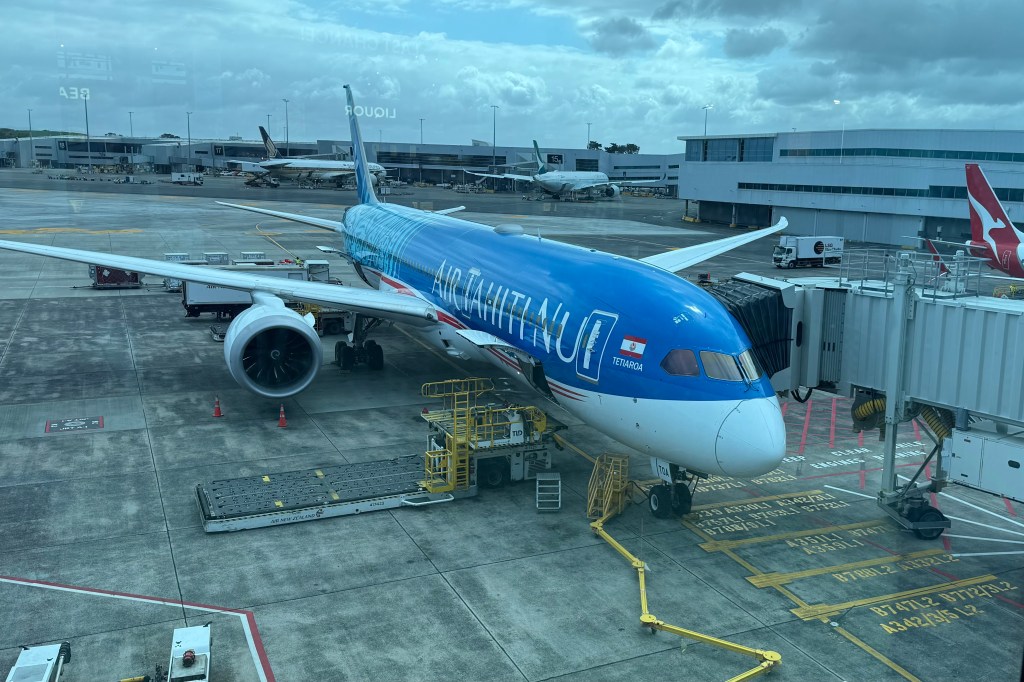
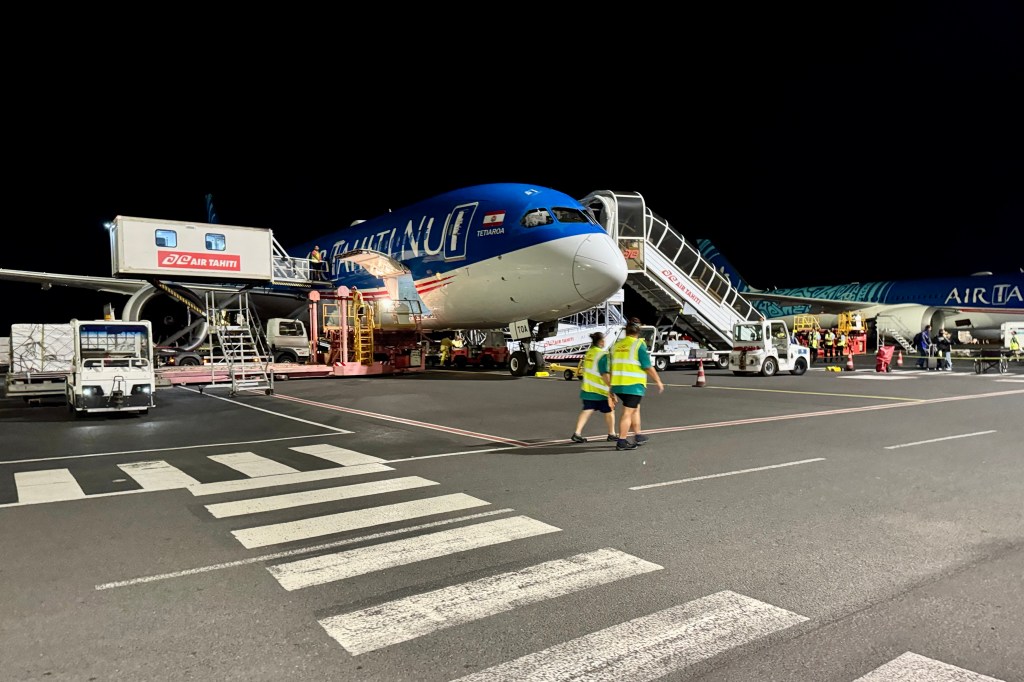
In Auckland we had a three-hour layover, with no chance of leaving the airport, so we found the international departures area and waited for our gate to be posted. When an agent finally appeared, Tasia and I got our boarding passes with no trouble. Bernadette could not. The name on her ticket didn’t match her passport, and this one was entirely my fault. This flight, on Air Tahiti Nui, was a separate reservation from the Fiji one, and I had booked her under her maiden name instead of her married one. Bernadette has been married for sixteen years. Sixteen. I had, in a single keystroke, erased a decade and a half of marriage, and the airline took the news about as well as her husband might have. Initially, nobody at the gate knew how to fix it. The answer finally was that reservations would have to change it, and they couldn’t do it from there. Tasia took the phone and was put on hold for an interminable stretch, while Bernadette called her husband and had him dig up her birth certificate and marriage certificate and send photocopies she could show the agents. At one point the call dropped after all that waiting, and Bernadette, understandably despondent, started to believe she’d be left behind in Auckland. I assured her that if she couldn’t board, none of us would. Fortunately the phone reconnection went smoothly. Then, just as our group was called to board, the name change came through. This was a ten on the stress scale. I barely remember the flight itself, which I’ll take as proof that it was uneventful, though at about five and a half hours it ran longer than I’d expected.
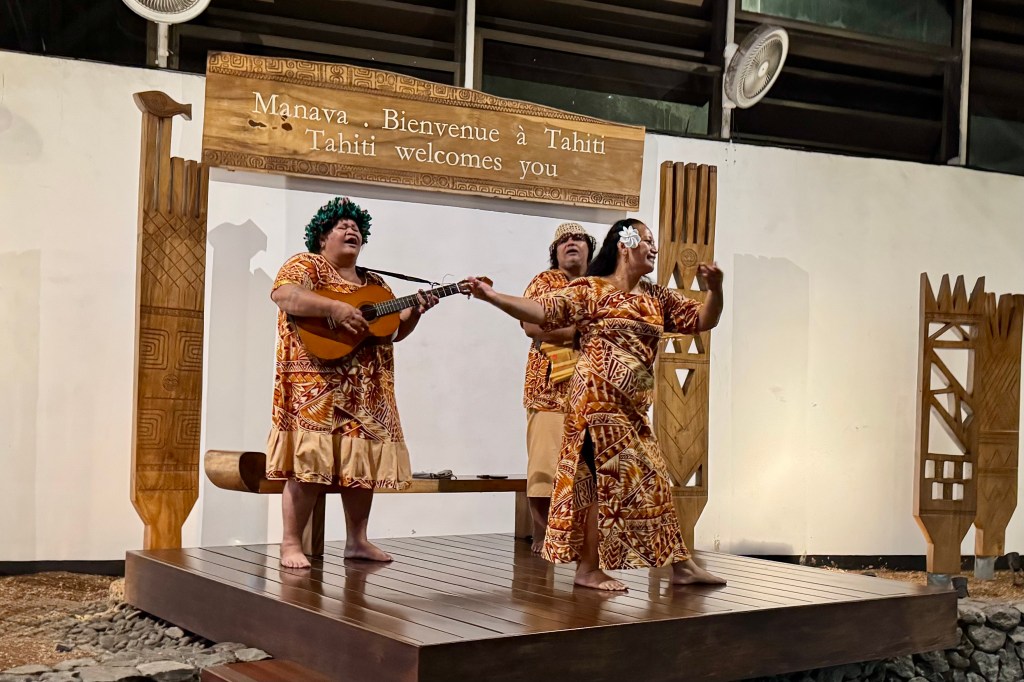
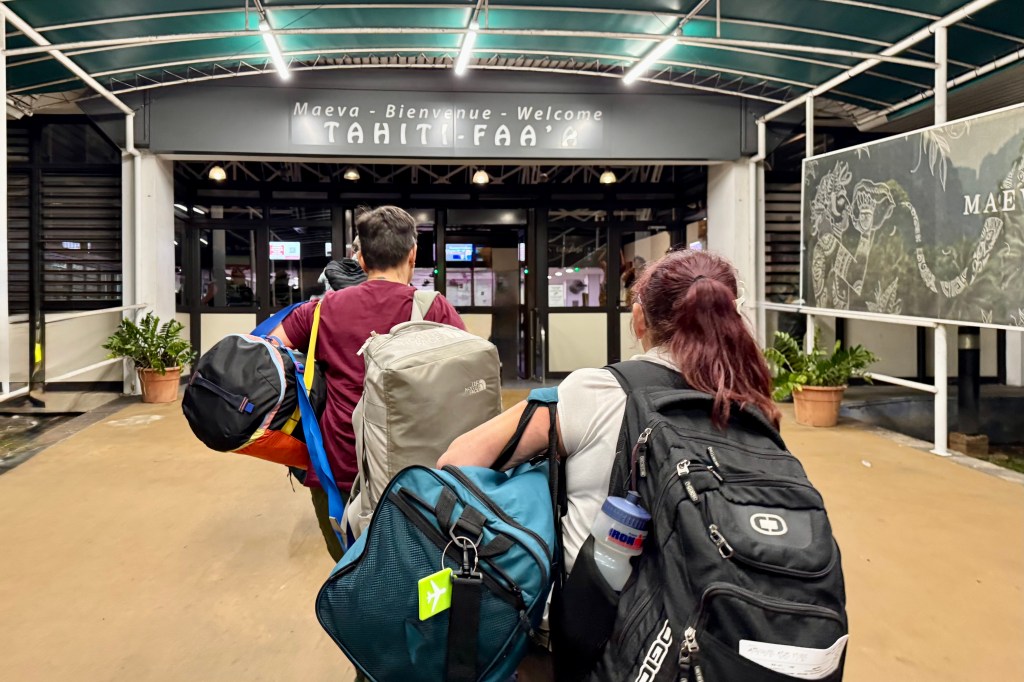
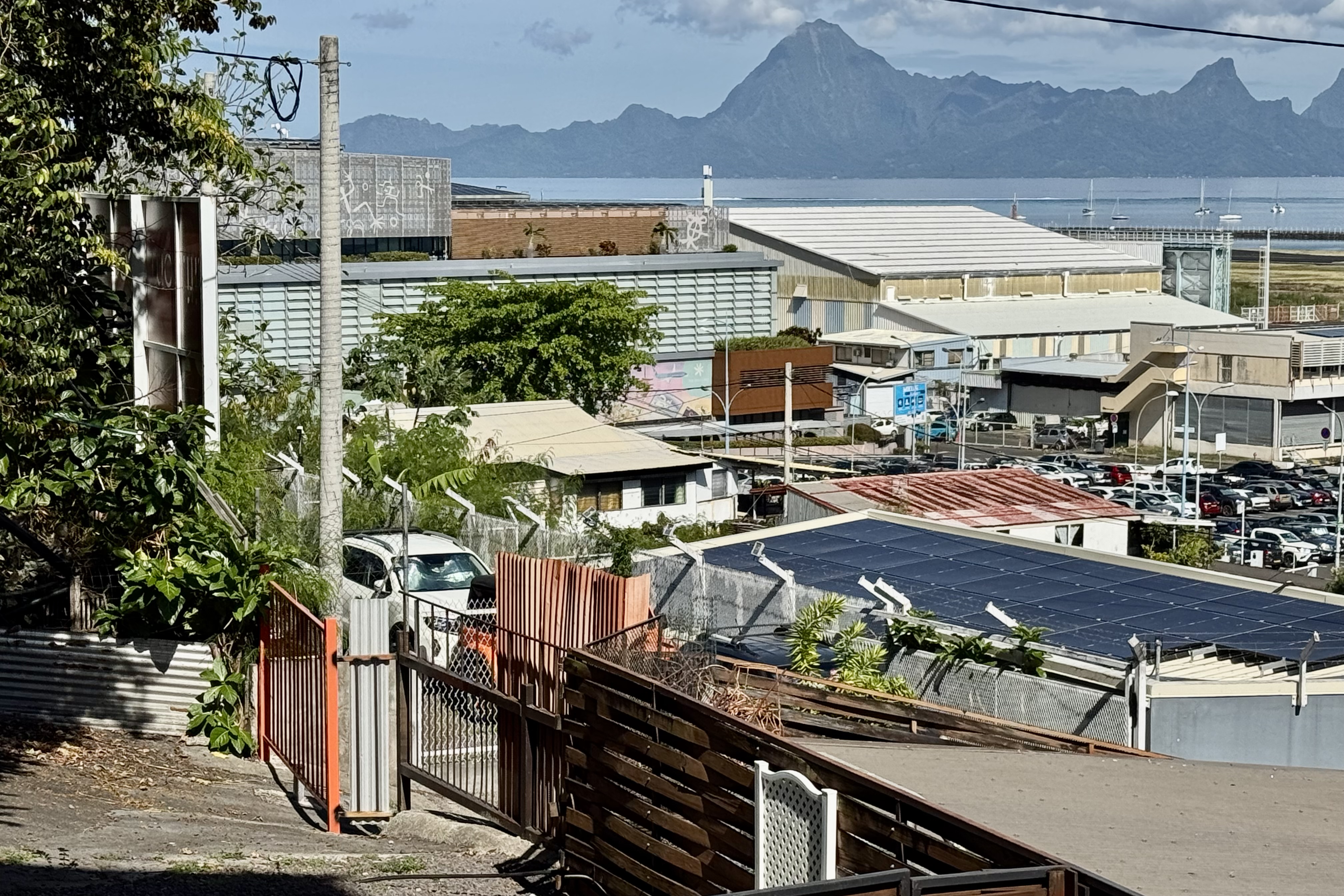
We landed in Papeete around 8:30 p.m hauling our bags which we had carried on the plane. We usually check bags but here we would have had to leave security to collect any checked bags during the plane and airline change. Then re-enter. Grateful yo have our bags in tow already, Tasia had officially had enough of traveling and just wanted to reach the hotel. Our hotel, the Tahiti Airport Hotel, was right across the street, and I suggested a cab. Tasia’s economy mindset kicked in and she chose to walk with the bags. “Right across the street” turned out to be a generous description. It meant across the street, up a hill, and then up a long driveway that seemed to lengthen with every step, like a treadmill designed by someone with anger problems. It was also pitch dark, and we had no real way of telling what kind of neighborhood we were trudging through. For all we knew it was a charming residential street or the opening scene of a true-crime podcast, and the darkness wasn’t offering any hints. Tasia again gallantly hauled my luggage, so I fared fine, and I’ll admit I strolled with the breezy confidence of a woman who has checked her baggage. Well, sort of. Bernadette, with her significant back problems and a heavy bag, was in real distress by the time we arrived, and I suspect she was composing a strongly worded review of “within walking distance” notation somewhere in her head for the website. The saving grace of that “economy mindset” is that it was free. The hotel, though, was lovely, the rooms were beautiful, and we settled in without any further drama. After the day we’d had, a room with no key deposit and a bed with no paperwork attached felt like a miracle.
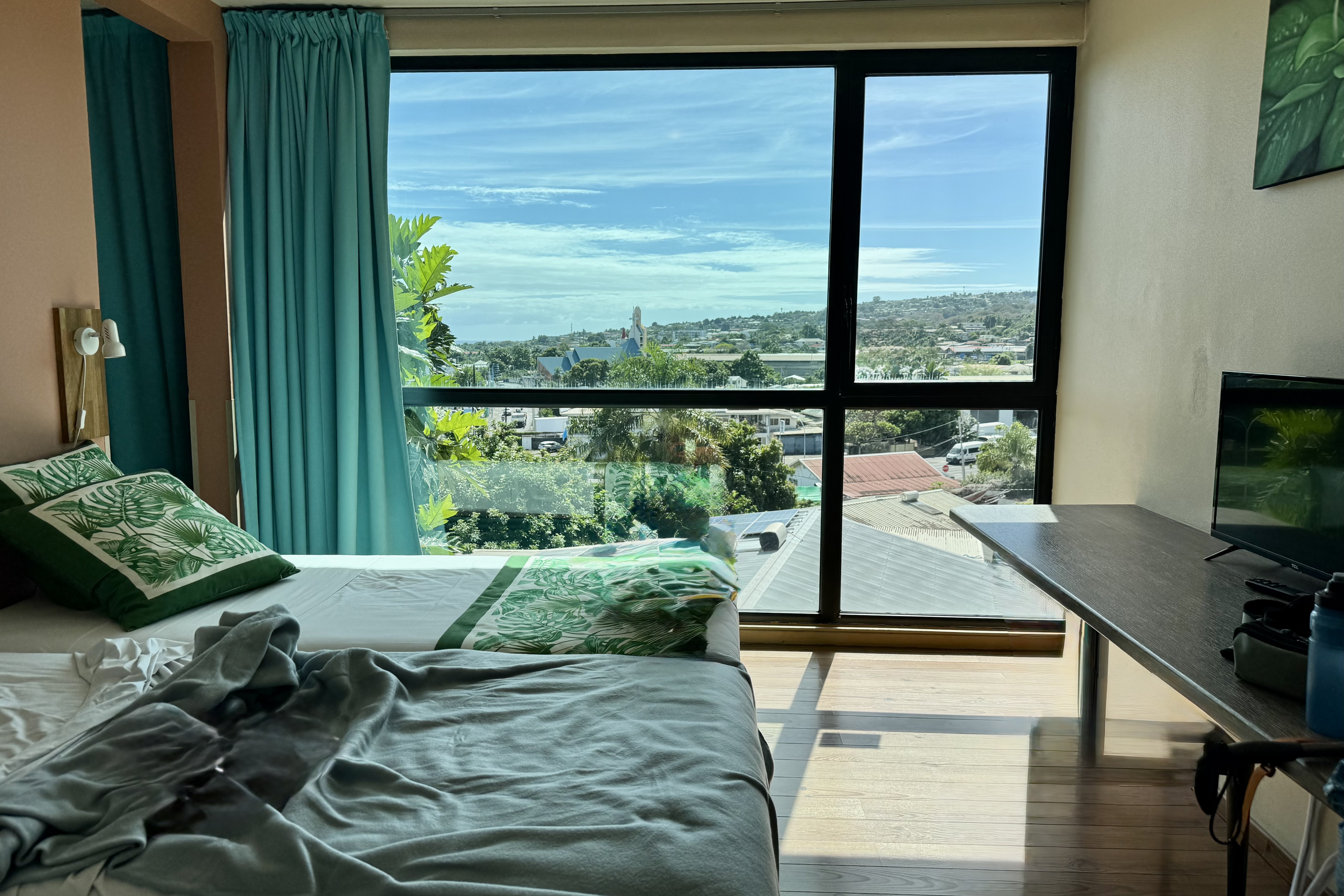
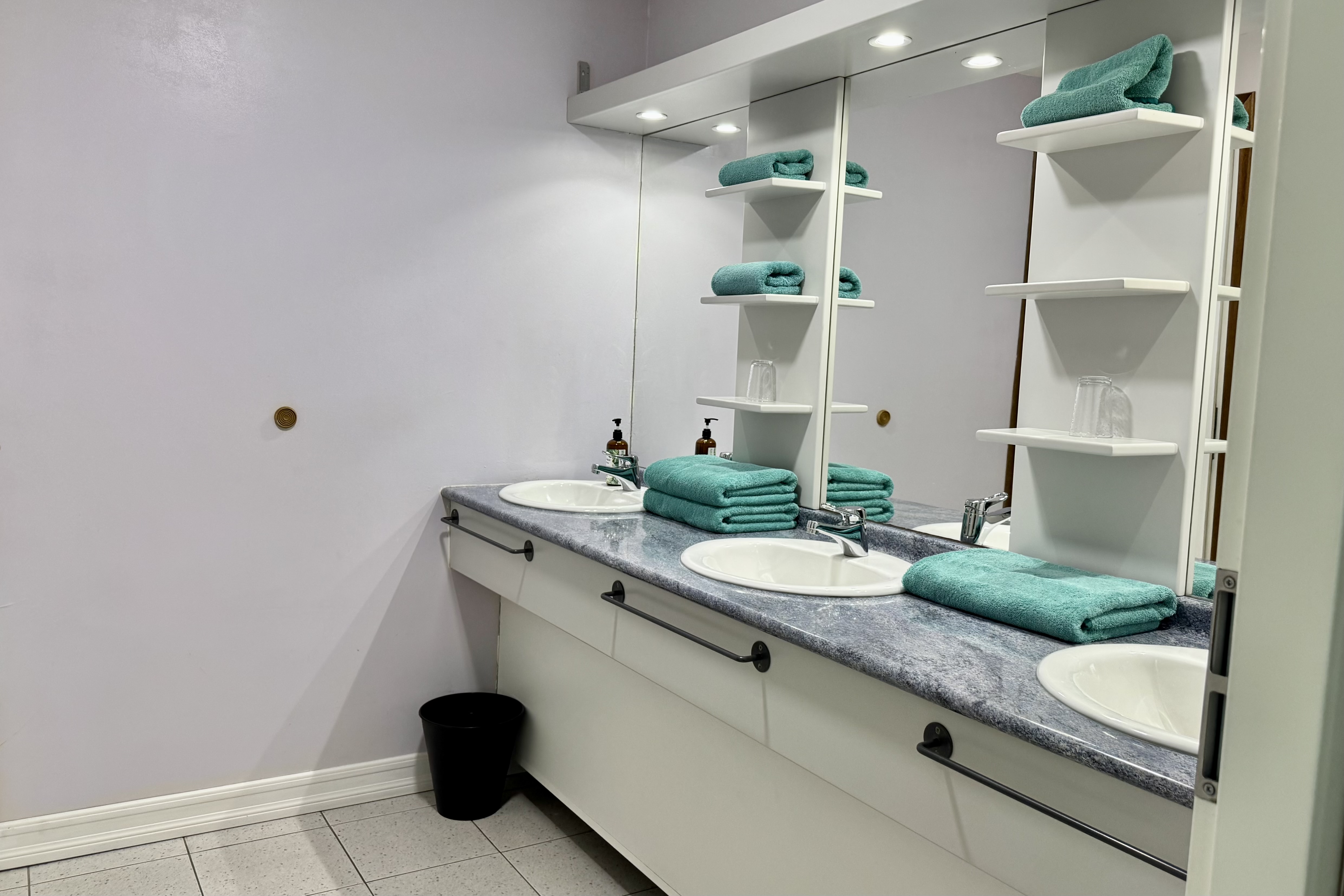
Morning in Tahiti: Sunshine, Aquariums, and a Fresh Start

We woke to a bright blue sky and sunshine pouring through the floor-to-ceiling glass walls, which was a dramatic improvement over the previous night, when the only thing pouring down on us was our own sweat as we hauled ourselves and bags up a hill in the dark. Today was the final leg of our transition journey: the ferry to Moorea. But first, we took some time to enjoy the hotel, which, it turns out, looked completely different in daylight. In stark contrast to our dark, dank Nadi room and its grand maroon staircase, this was a sunny, shiny hotel that seemed like an apology for Nadi’s dark, dank room and its grand mahogany staircase. Last night’s mystery neighborhood had been replaced by postcard views.

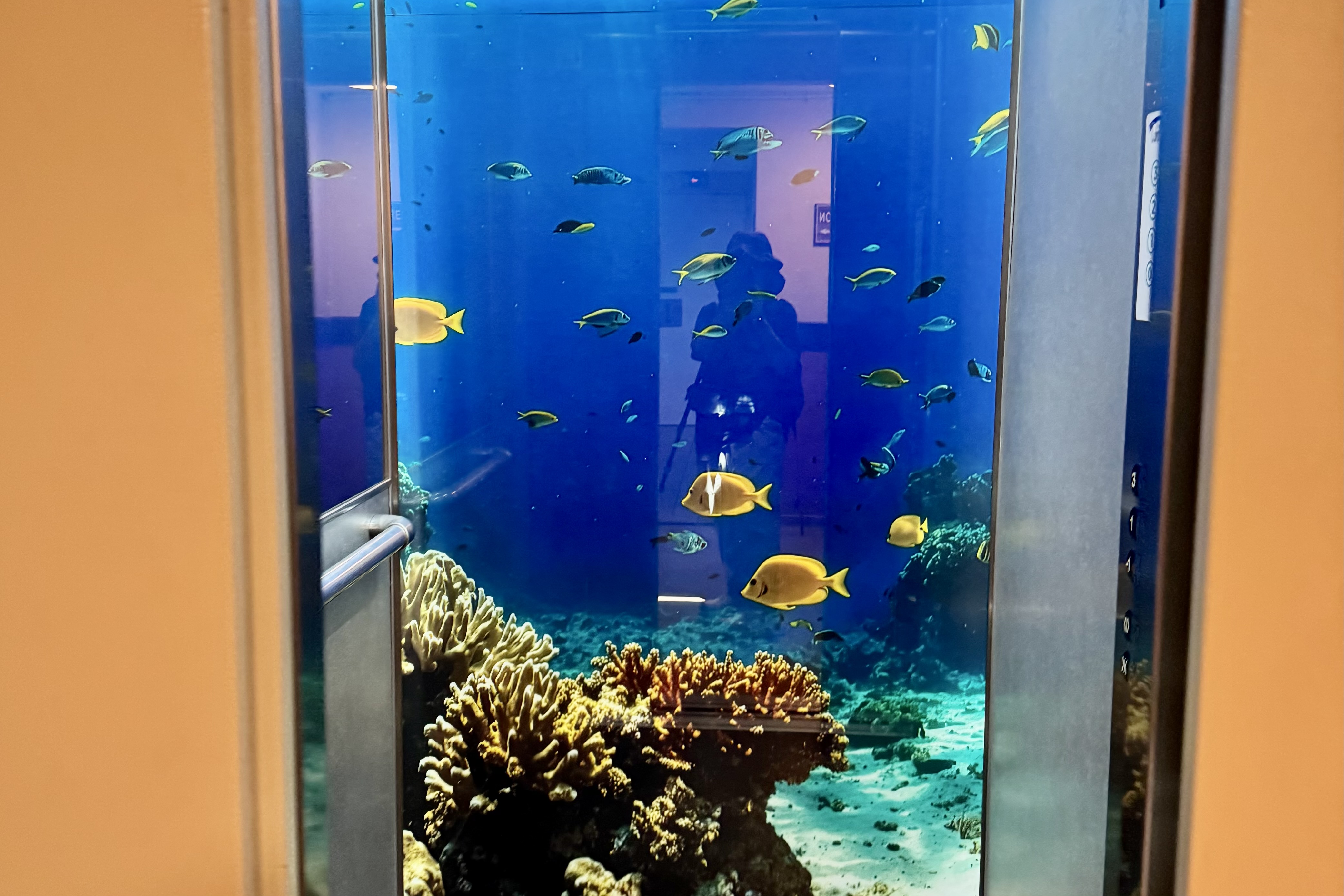
Then there was the elevator. An actual elevator, with an actual button, in an actual hotel. Its walls were covered in a coral reef, complete with schools of yellow tropical fish, so riding it felt like being gently lowered into an aquarium. After the Nadi staircase, I was ready to give it a standing ovation.

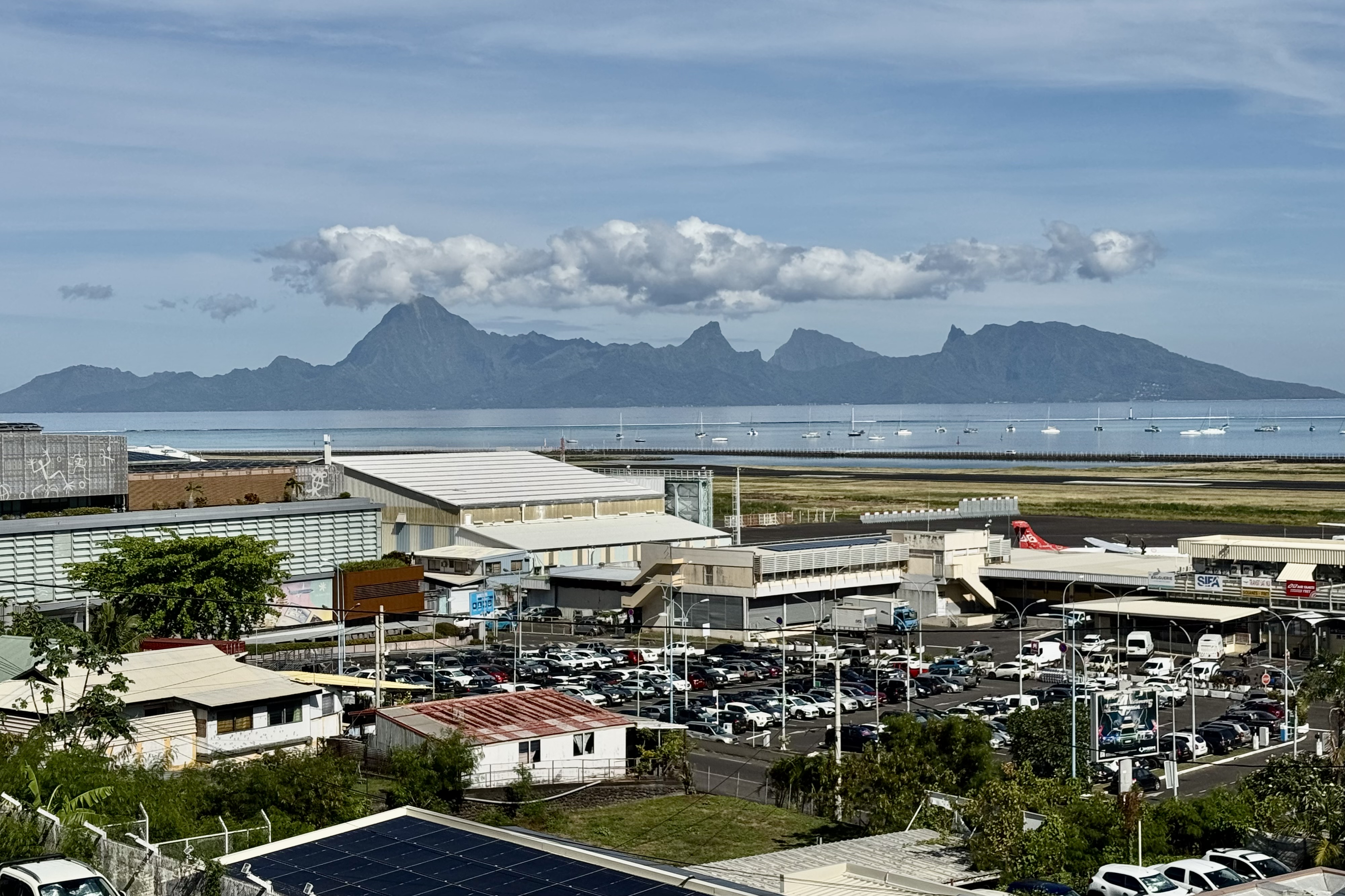
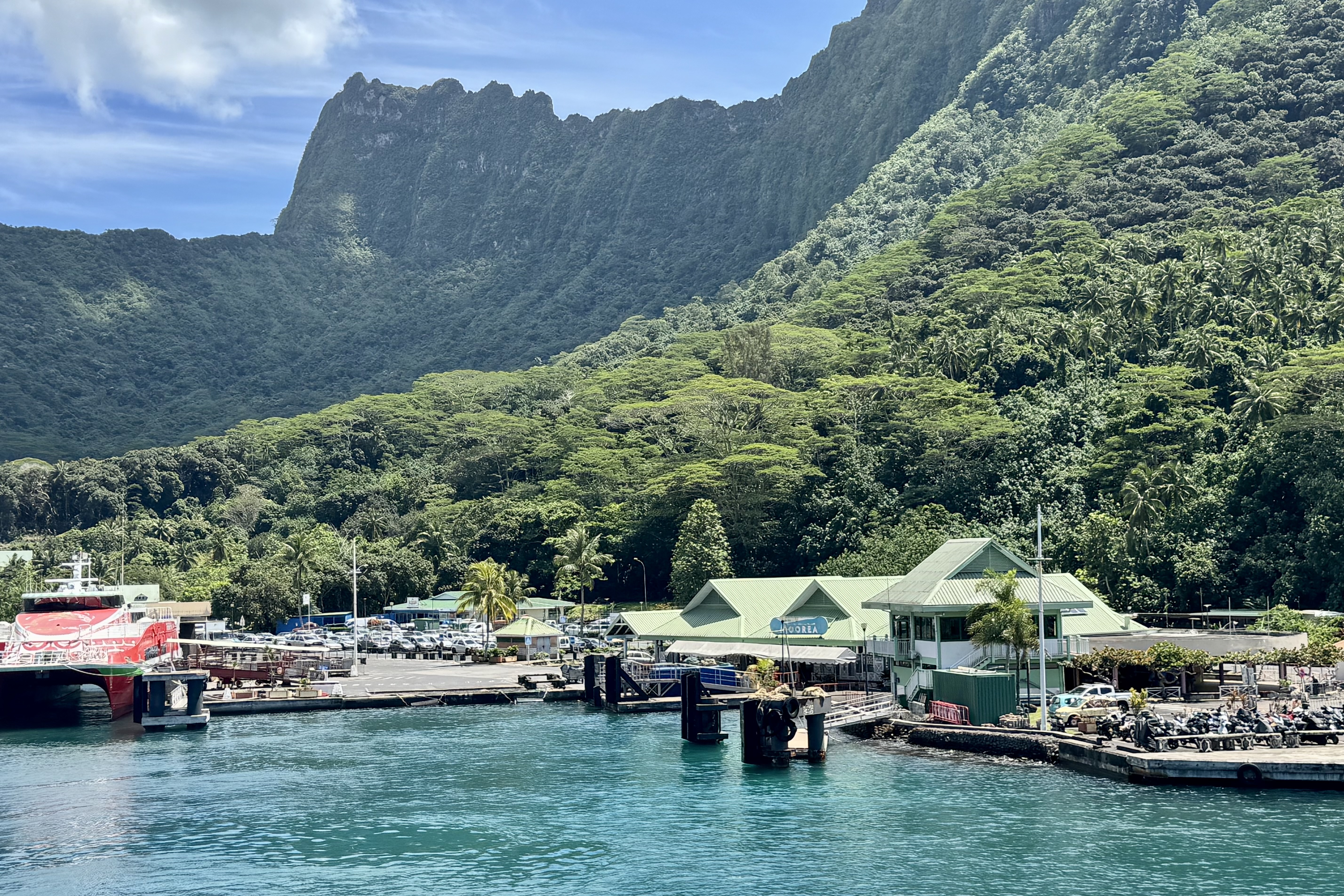
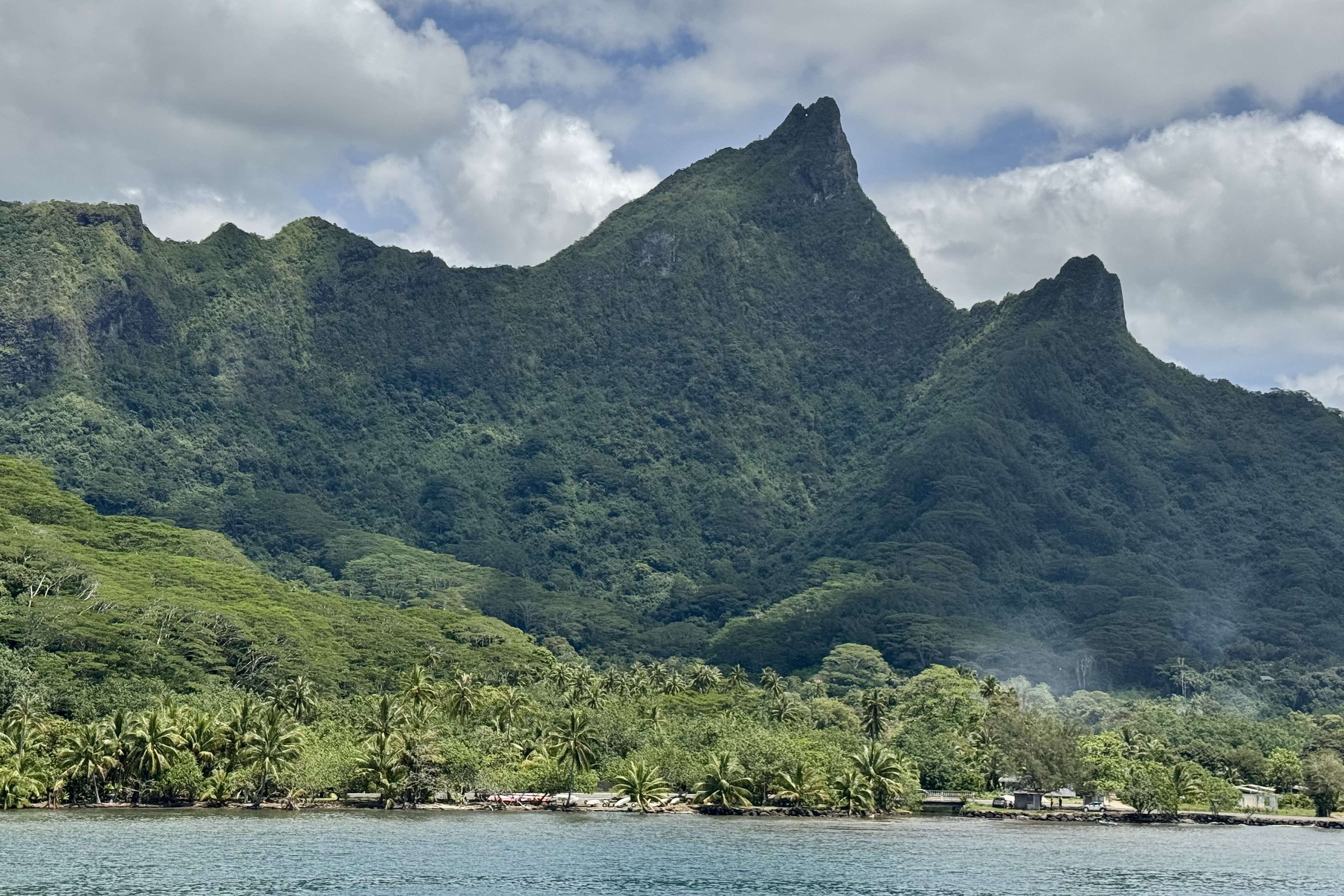
Breakfast was served in a glass-walled dining area where the windows provided views of the bay beyond, and nobody had asked us for cash up front for a room key or a password in person. From there we wandered out to the balconies where the views stretched over the airport runway, the parked planes, and the sparkling water. And there, across the bay, rising dramatically out of the ocean was the mountain range on the island of Moorea. After all the stairs and snafus, it was good to see our destination was within reach. As I stood on the balcony I was almost ready to declare that the string of errors was officially broken and from here on out, everything would run like clockwork.
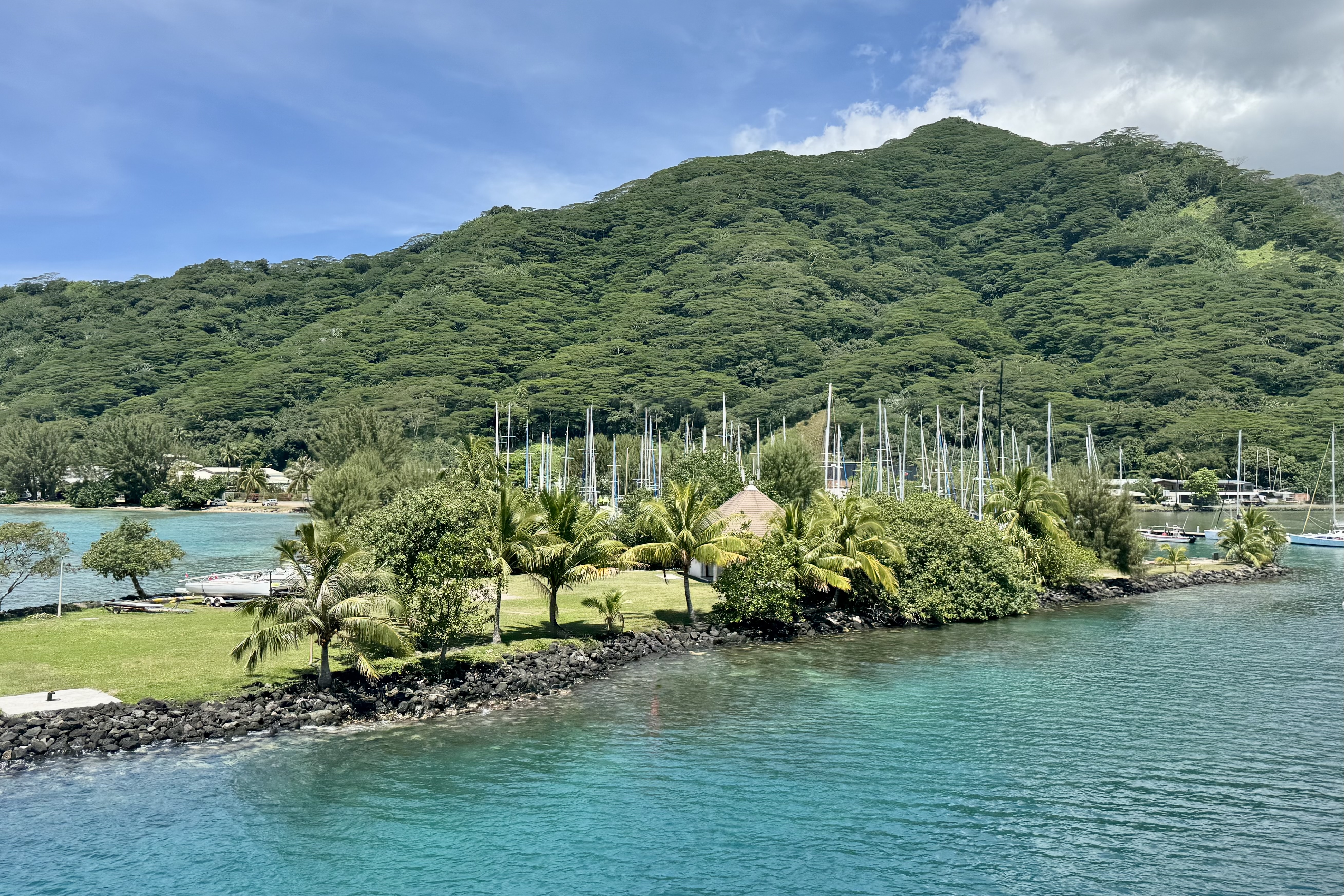
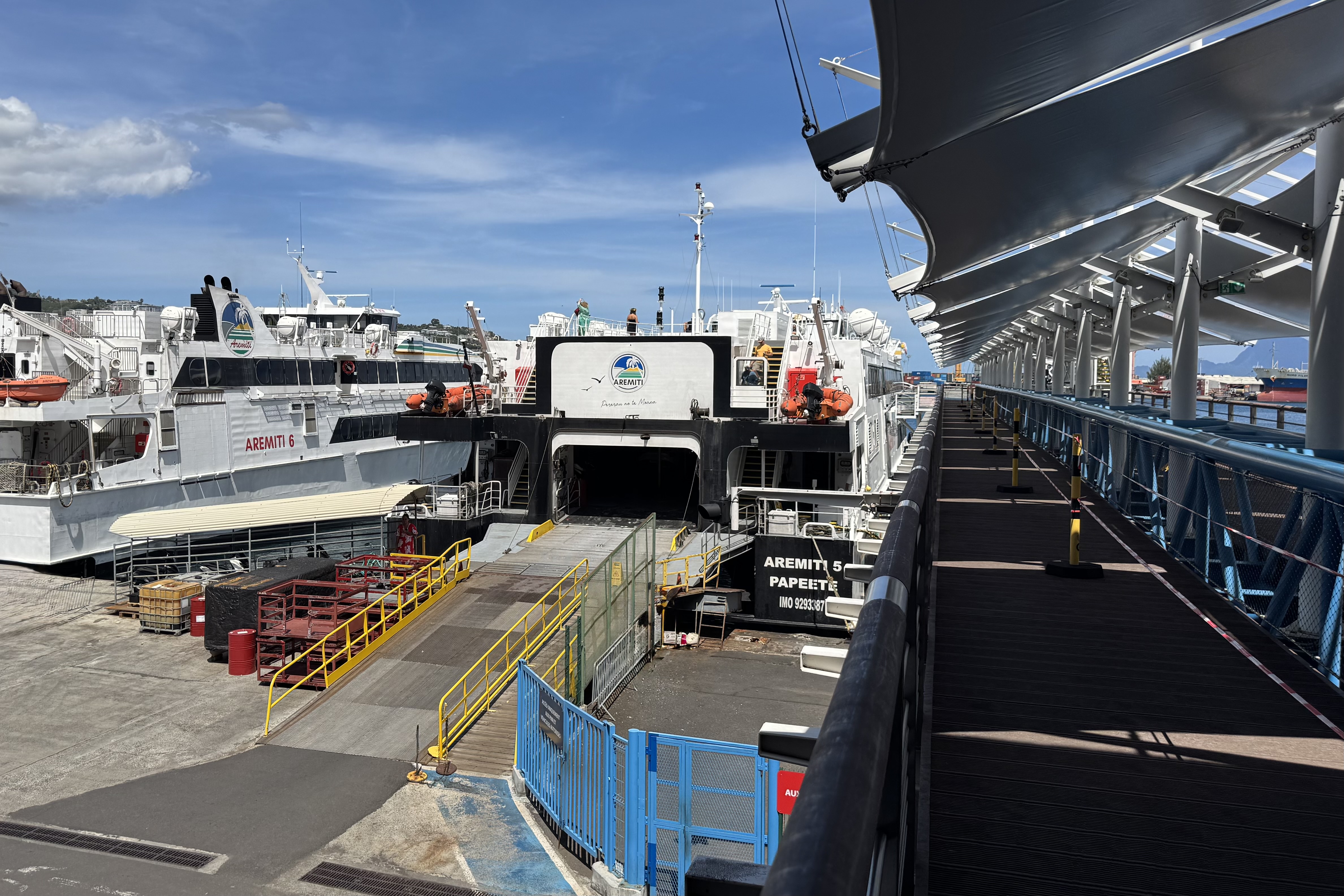
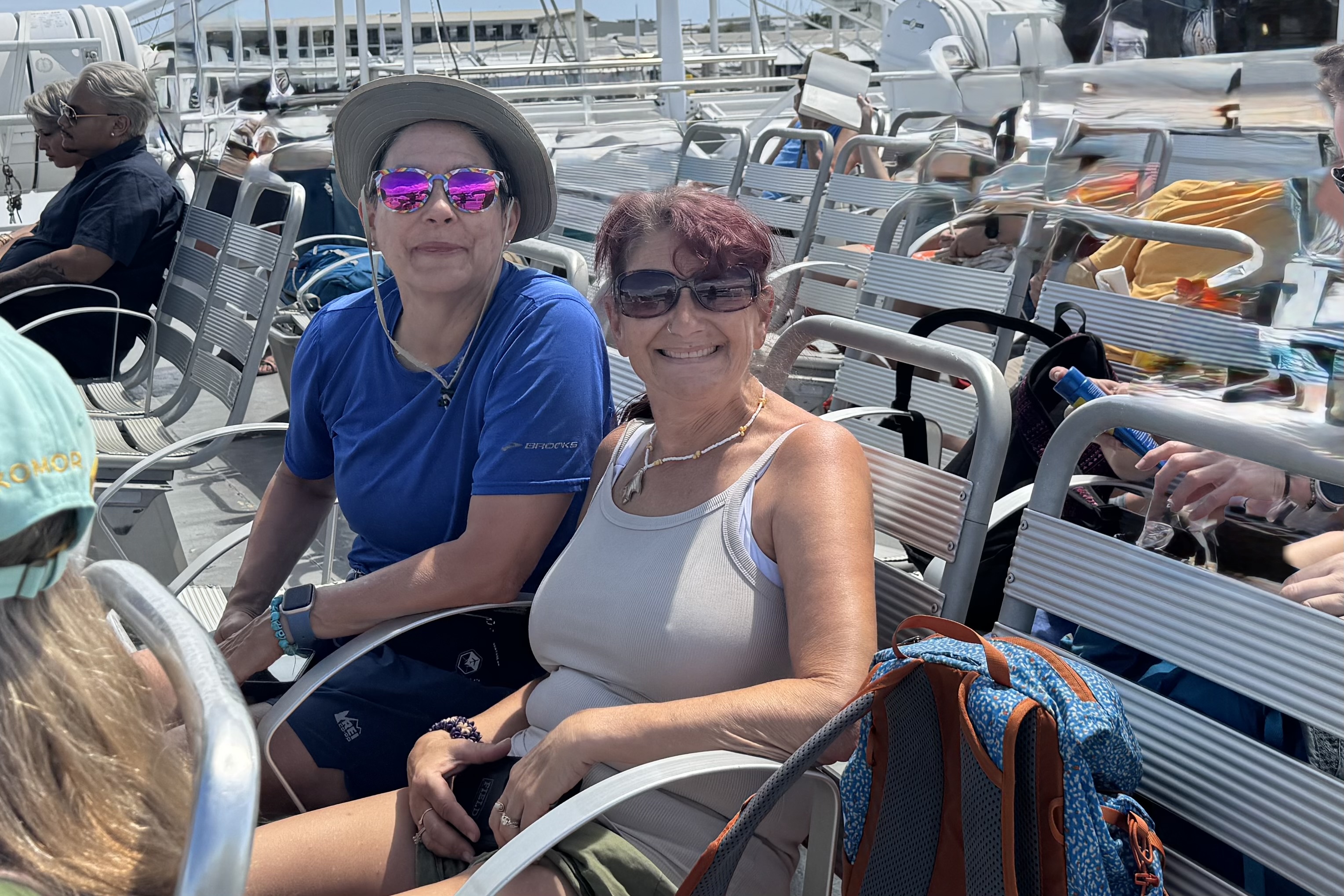
The hotel called us a taxi, and we were soon on our way to the ferry terminal in Papeete. Buying tickets and boarding went so smoothly that I kept waiting for the other shoe to drop. We claimed a spot on the top deck of the Aremiti 5, 10:30am ferry and soaked up the breezy tropical air as Tahiti shrank behind us and Moorea grew ahead. The crossing took barely half an hour, and stepping off the boat onto the island felt magical.

Then came the question of how to reach the Hilton Moorea Lagoon Resort, which I understood to be about halfway around the island. Tasia headed to the rental car office to see if they had a car available, but no luck. That left a taxi, which turned out to be the right call. “Halfway around the island” took only about 20 minutes, because Moorea’s entire perimeter is just 37 miles. That’s one road, one loop, and no chance of getting seriously lost, though given my track record, I wouldn’t rule it out.

Words nearly failed me as we pulled up to the Hilton Moorea Lagoon Resort. I could feel myself shedding the last of my travel stress. The lagoon was so clear and impossibly turquoise and lush greenery spilled down all over the resort property. This was a place that I am sure never once asked a guest for a cash deposit for their key. That stress scale? It was a 10 in the other direction.
Bures, Bulas, and a Mouthful of Sea Water

I absolutely loved this place! Barefoot Manta Island Resort is located on Drawaqa Island, part of the Yasawa archipelago group of islands on Fiji. Barefoot Manta is not a 5-star resort but more a 5-star glamping experience. It is not for you if you are looking for fancy or the typical resort or have no inclination to “glamp!”. I was sure however it would be perfect for me since I still have the heart and soul of that Girl Scout I was many years ago. I liked it for its smallness as well, with about 25 accommodations of various configurations. Most importantly, I found that the people that worked there and the location made this place amazing. Beware! Again, this is not a resort for you if you are tied to your phone or internet. There is no internet in the bures, only in the gathering room and it was a tad fussy! It can be a great opportunity to “unplug.” Read on for plenty of other decision points to decide whether this resort is for you!

Exiting the launch, we were given a brief tour of the grounds to locate the dive shop and activities shed and then taken to main lounge and gathering area (the only wi-fi hot spot), got the wi-fi code, were given instructions for our stay, and paid for our meals for the duration of the stay. We were instructed to get lunch so we went to the dining area and had the buffet lunch, and then finally were assigned to bure # 14.

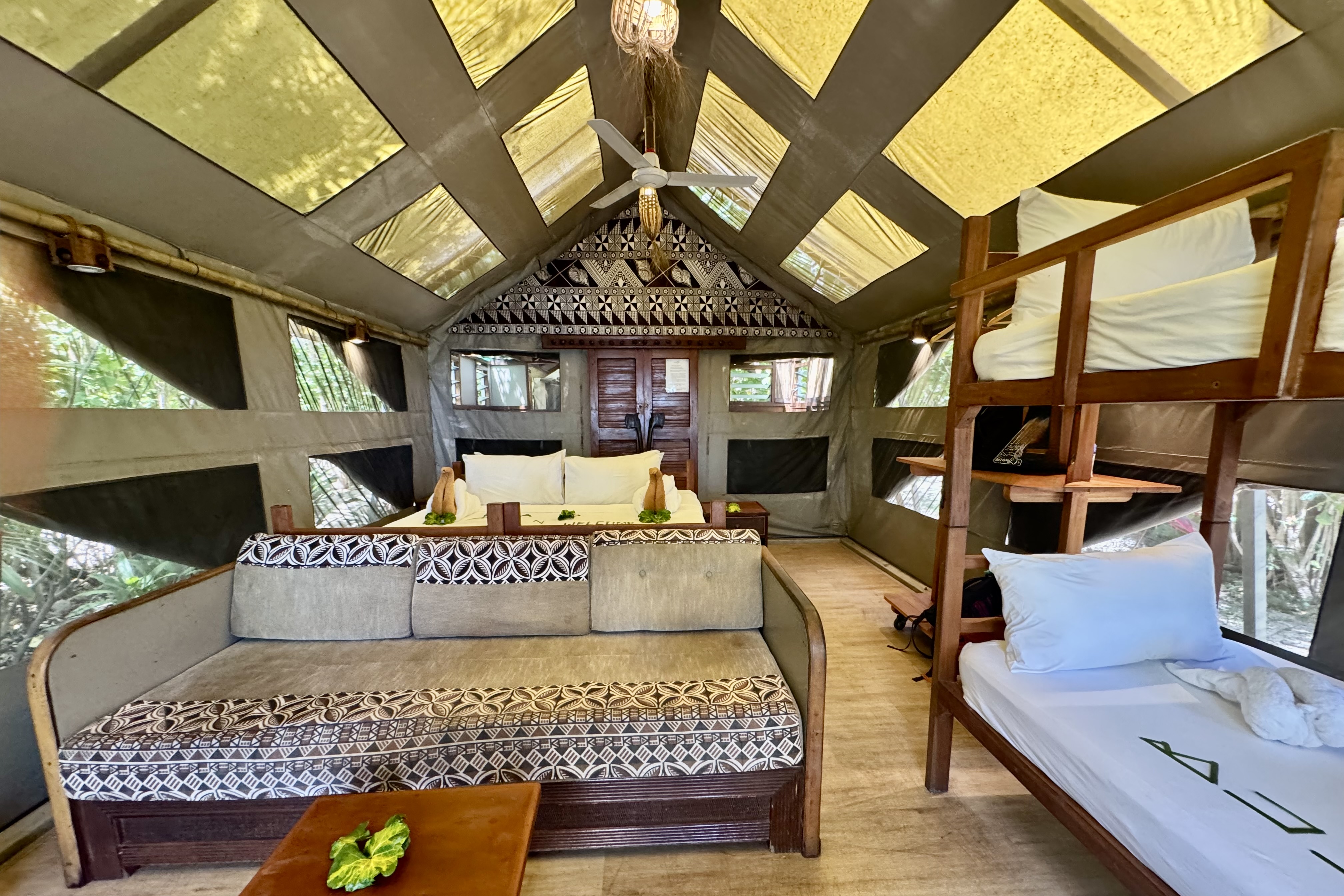
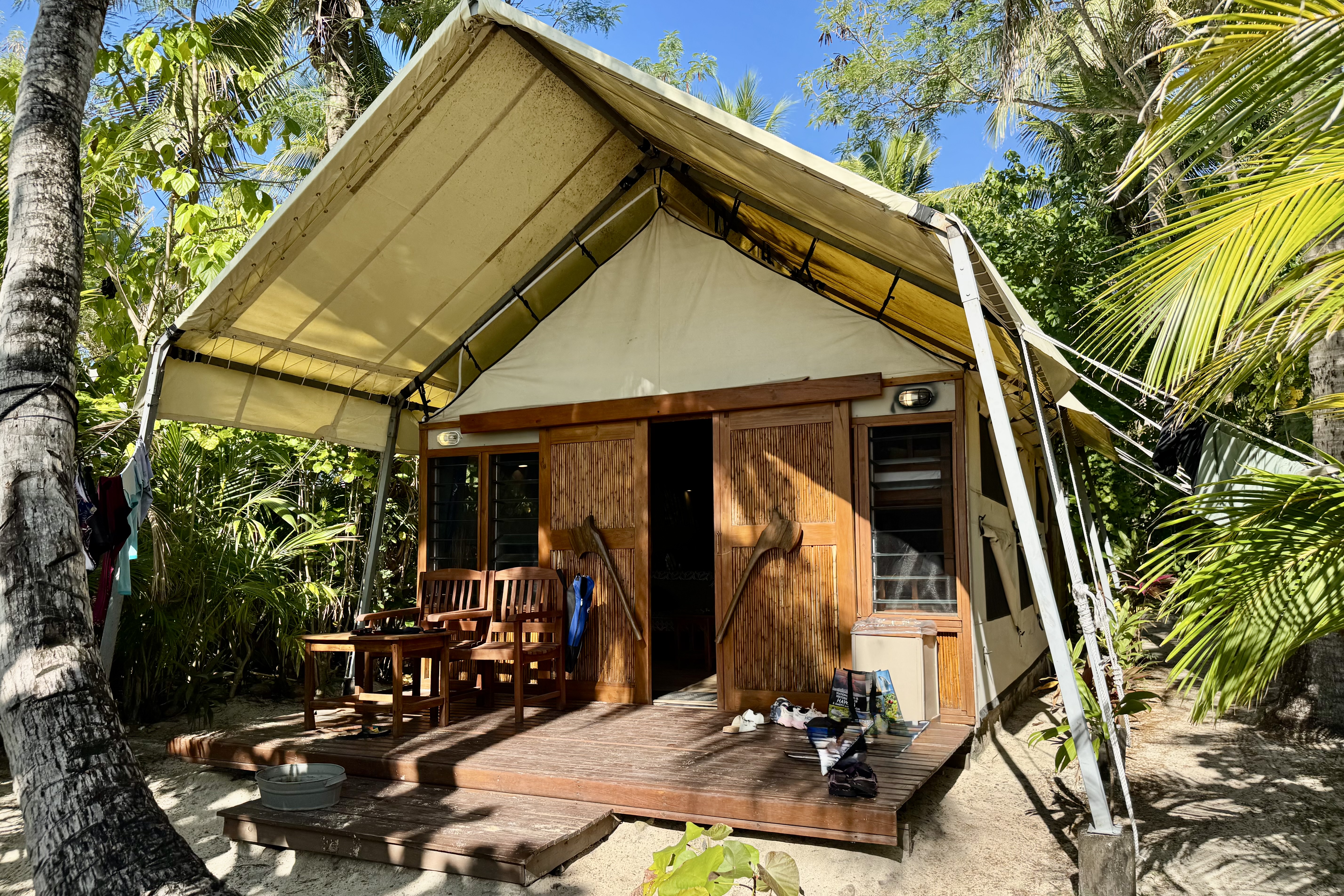
I had traded my tent and a camping cot for a traditional Fijian bure. Tucked in among the palms on a shady beach, some might think this was roughing it but it was clearly moving up in the world for this aging camper. Our “bure” was something of a cross between a tent and a cabin, with canvas walls and a tent-like high peaked roof, and enough furniture to make it clear that I had left the roughing-it stage of my camping behind. There were regular beds, a sofa, and even a ceiling fan. I could get used to this kind of camping while my trusty cot sits like a relic from my less “civilized” days. I still felt totally connected to the out-doors with the surrounding palms providing the tropical atmosphere we wanted. Roughing it, Barefoot Manta style.

Stepping into the bure for the first time I was struck with the feeling that our room was blending in with the greenery outside with its clear panels in the roof and the windows framing the vegetation outside. I was captivated by the black, cream and brown masi style geometric patterns in the decor, which is so much a part of the Fijian culture.

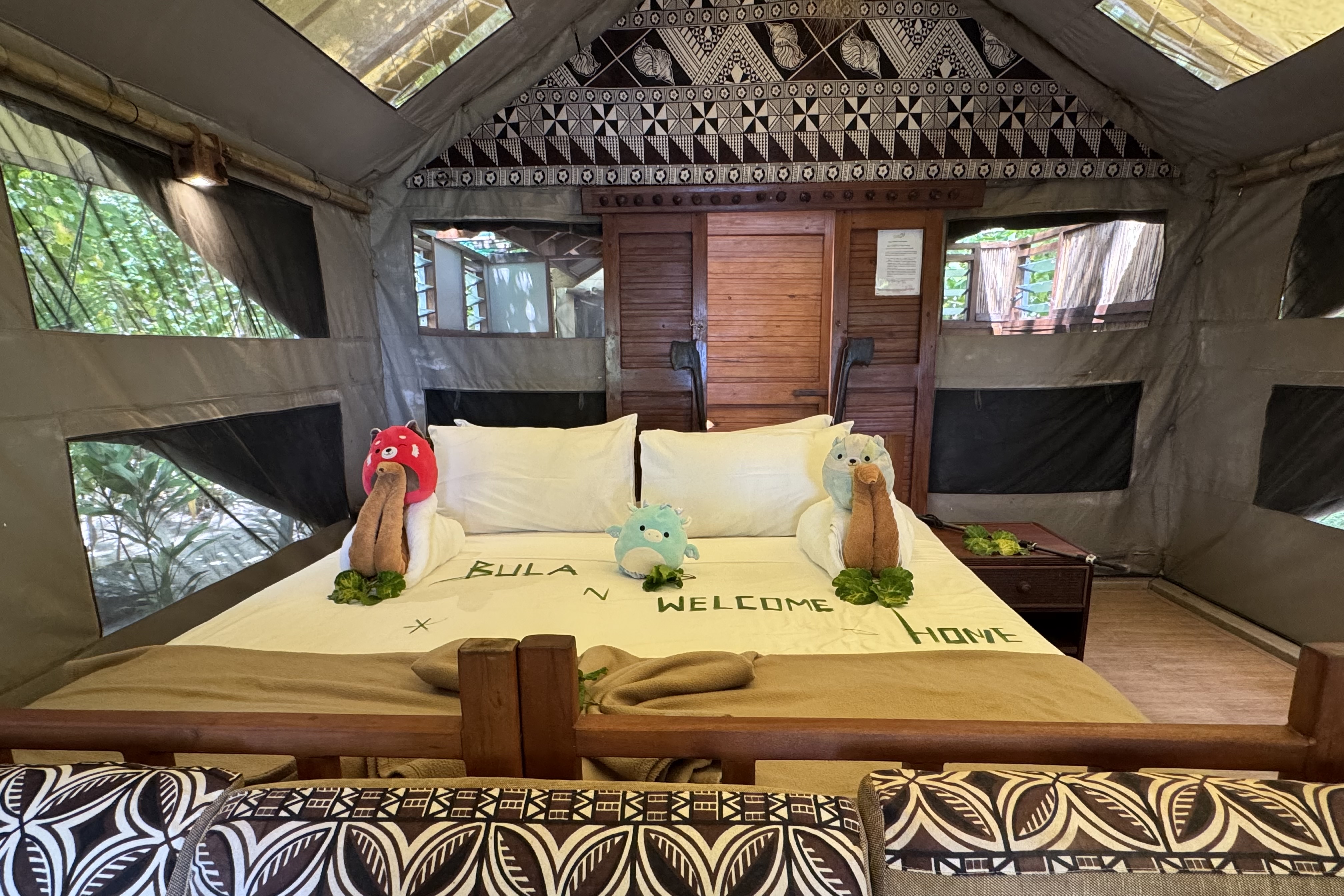
Then there was the bed. Housekeeping had spelled out “Bula, Welcome Home” across the white linen in leaves while towel creatures sat on either side in nests of greenery. What a delight! Soon our travel plushies adorned the towel creatures. It definitely gave the place the feel of a very special welcome. “Bula” was the first Fijian word we heard on the island and we heard it from everyone we passed, with staff or fellow guests for the duration of the stay. It literally means “life” and is a wish for health and happiness along with a simple hello. An aside: I loved “bula-ing” everyone I passed. I wish I had learned more Fijian words but the other decidedly necessary one I tackled was “vinaka.” meaning thank you. With much gratitude, I always was “vin aka-ing” everyone. I am ashamed to say I never graduated to say “vinaka vaka levu” meaning “thank you very much.”

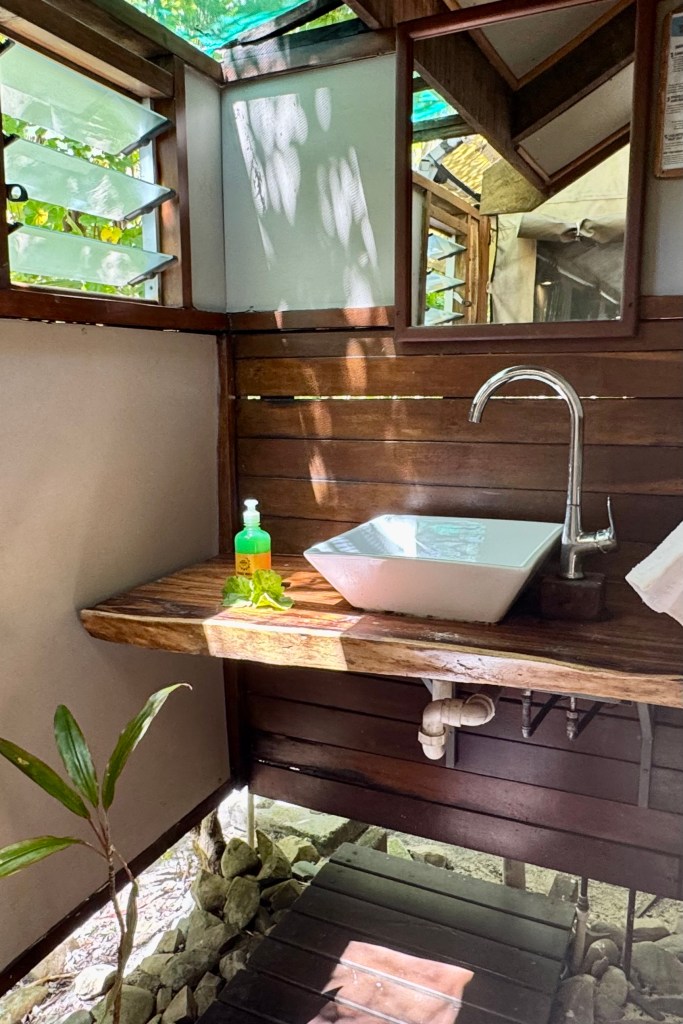
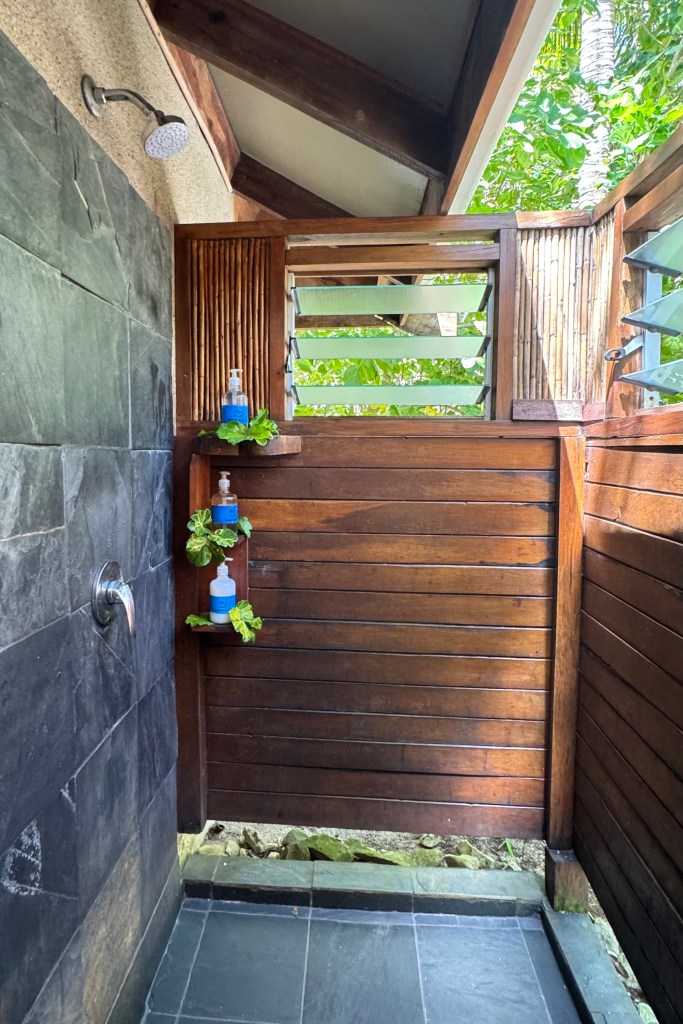
Even the en-suite keeps one connected to the outdoors. Both the shower and the vanity cubicles have a little open-air world of their own. With the timber walls and bamboo panels and louvred windows letting in the breeze. Showering felt like less like I was using a bathroom and more like showering in a garden, but with hot water (much of the time). The vanity was equally rustic and open air.

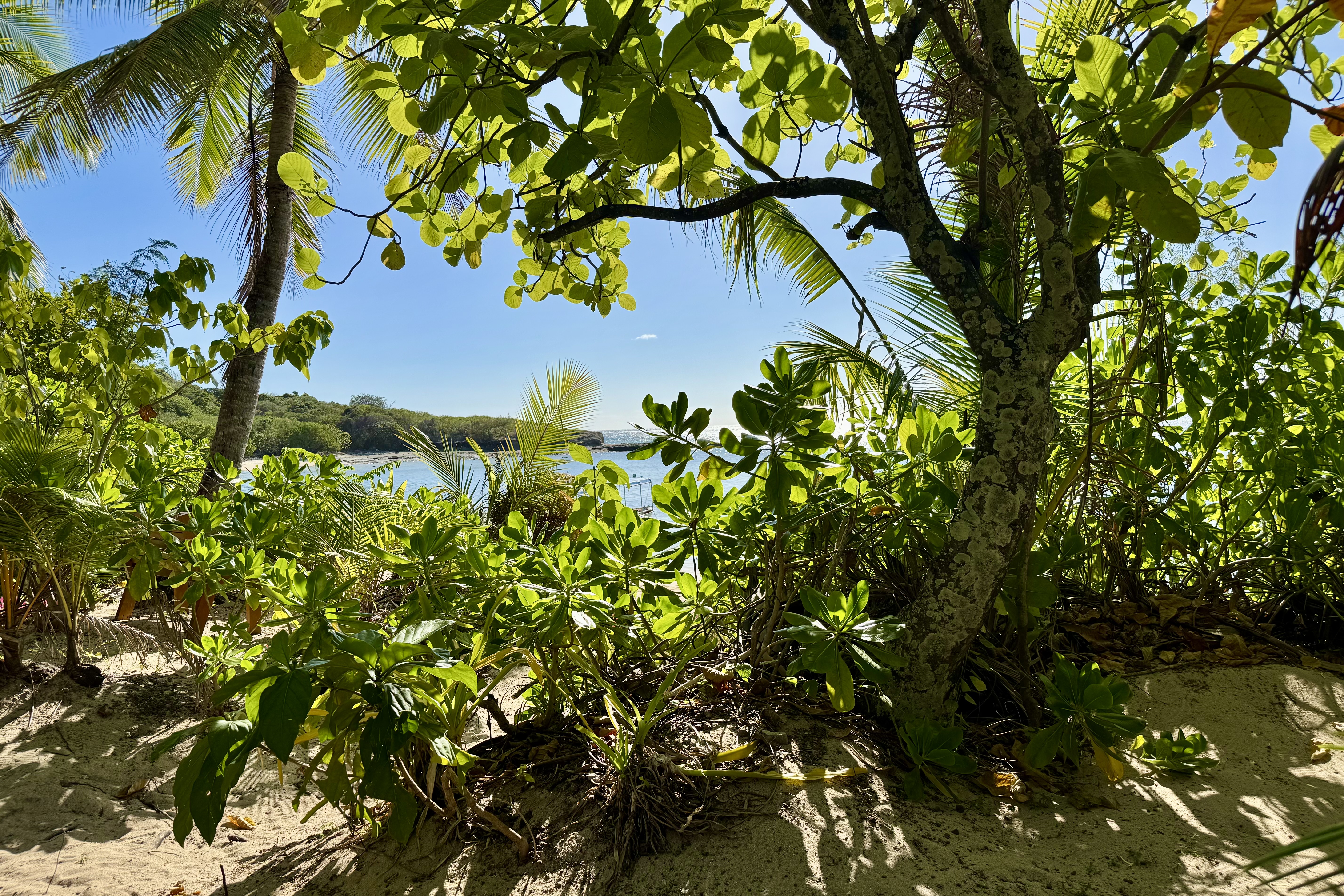
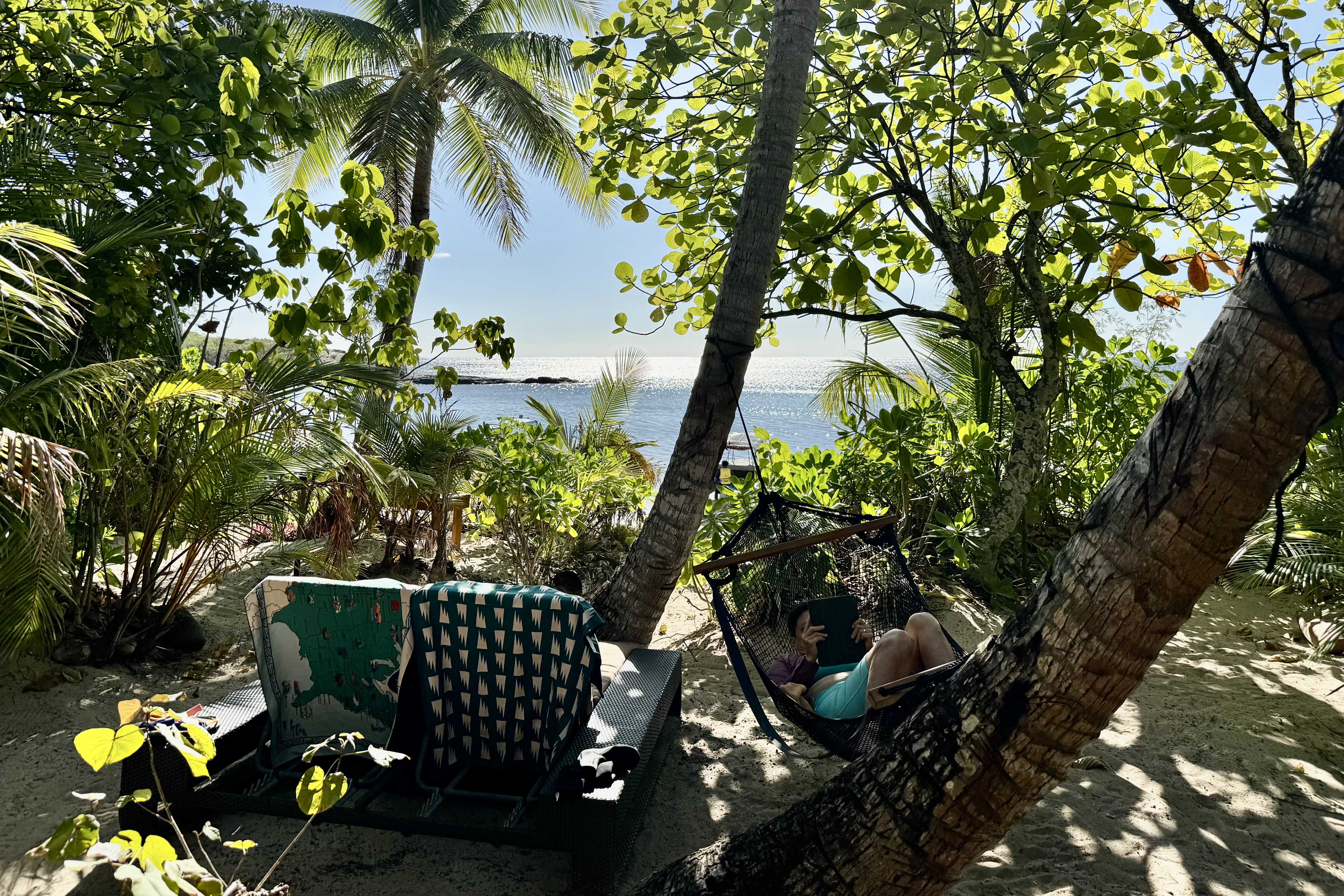
We stepped out onto the our private deck to an idyllic scene which opened before us. A few paces through the warm sand dappled with shade, lead down to the water and one of the three swimming and snorkeling beaches with crystal clear waters lapping at the shore. Just the island as it is… with no lawn or pool decks but lots of sand and scattered shells. YES!!! There were many leaning coconut palms providing shade for our hammock swing which oftentimes Tasia settled in with a book and the double lounger (which would also served as a drying rack for our beach towels). There was even a basin on the deck for rinsing sandy feet. I was wondering at this point if I would ever be able to convince myself to return home.

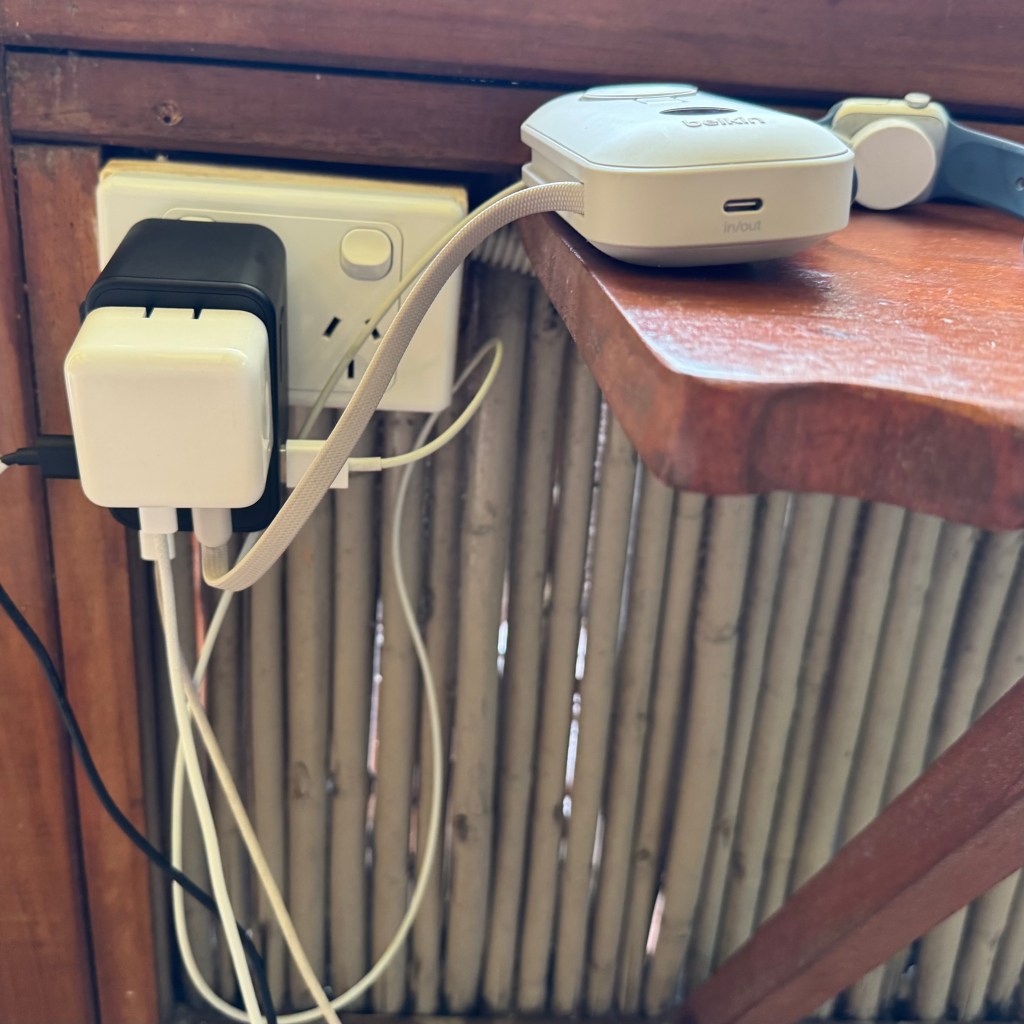
I’m not wanting to be nitpicking, but I am a person who needs that morning coffee. The one thing missing from this slice of paradise was a coffee pot. How would I be able to combine the deck, hammock and glittering sea with a hot cup of coffee without a walk to the main dining area? Well, I relied on room service, compliments of my daughters. There was no fridge or microwave either (no problem) and the bure had only a single electric outlet. This made for some careful charging choreography between iPhone, cameras, iPads, and Apple watches and anything else that needed power. That is one of the points of a place like this. Unplug, slow down and do things differently.

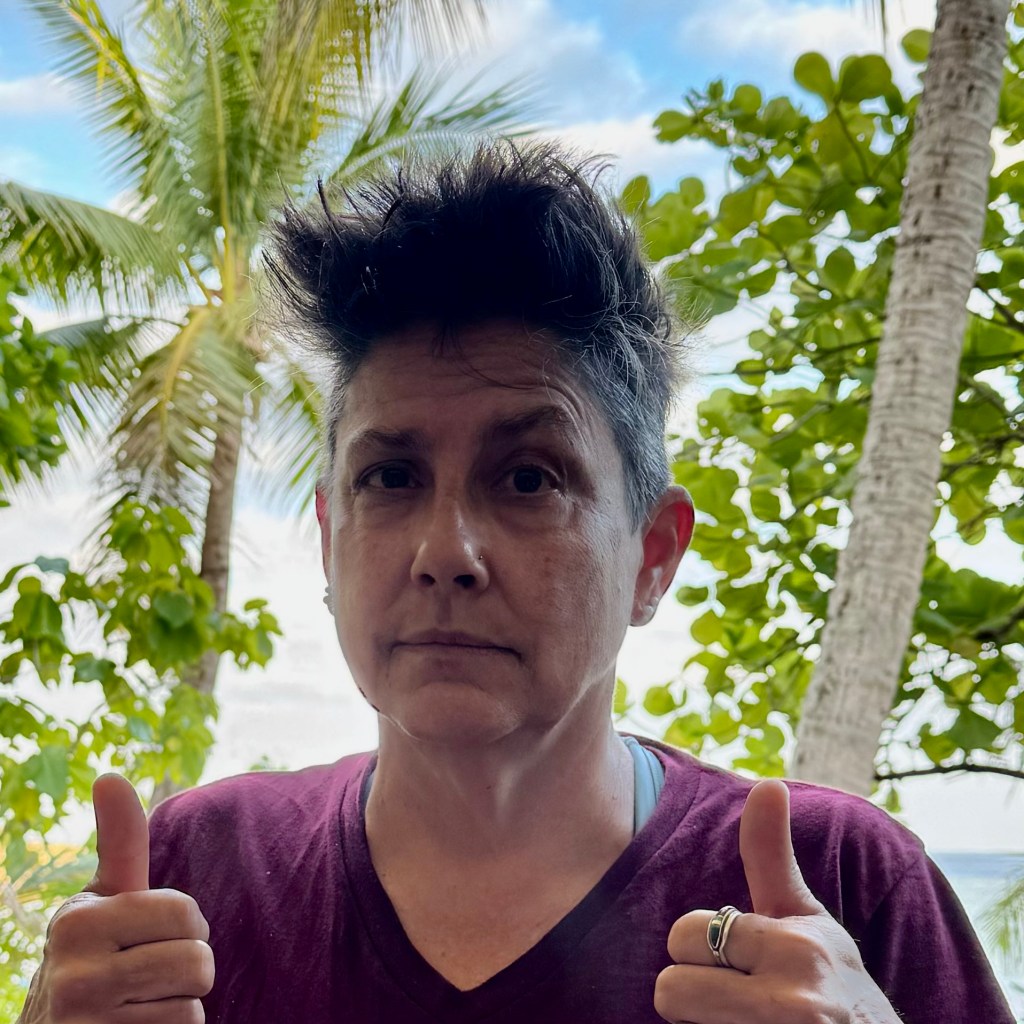
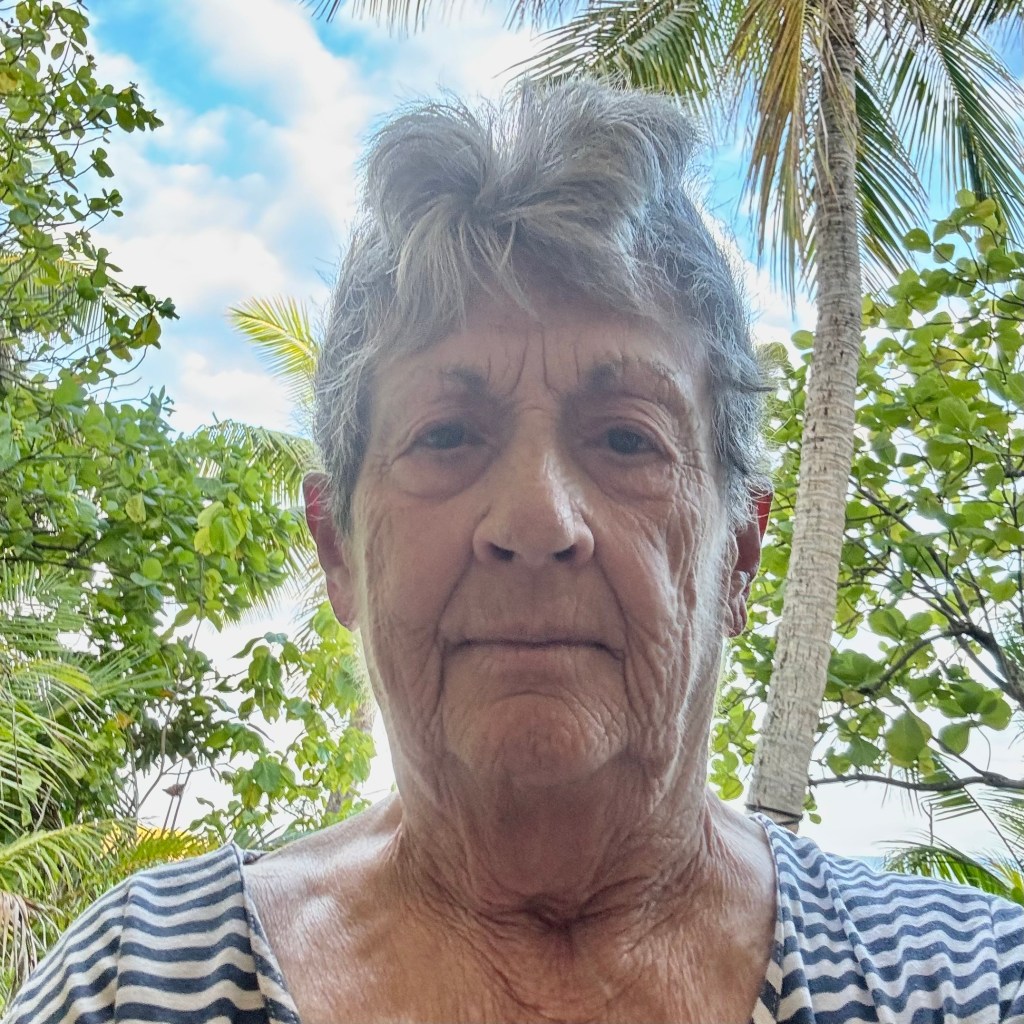
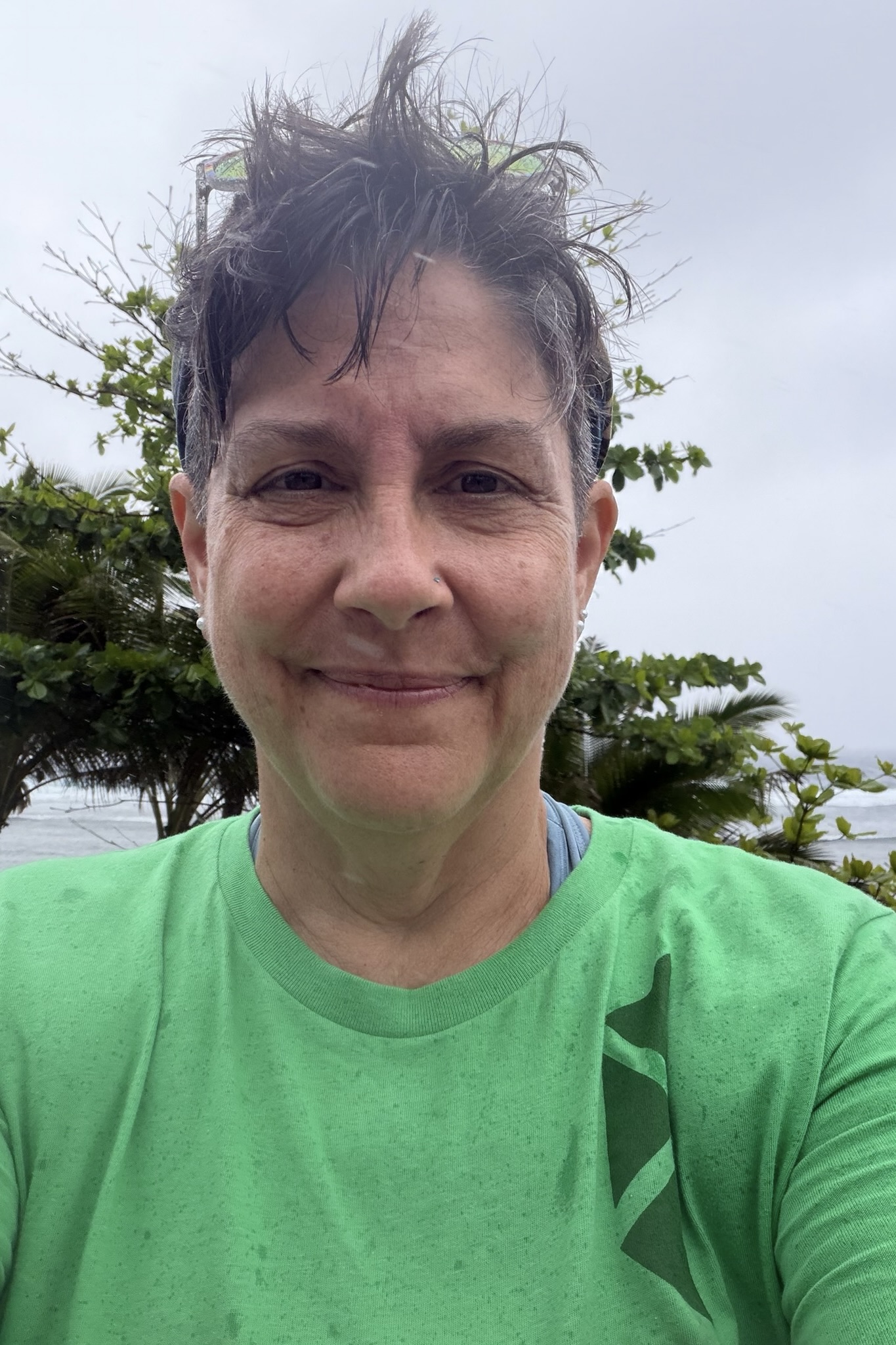
One of the reasons we chose Barefoot Manta was that it is considered an eco-resort. The island is owned by the inhabitants of Mua-ira-Village and the resort is run in partnership with them. It has a dedicated research Marine Conservation Center and a fishing ban around the island helps the snorkeling as well as it employs many locals and this eliminates much of the subsistence fishing that depletes the reef population. The reefs are incredible! There is no fresh water on the island and thus they rely on rainwater and desalinization on site and ask that all guest conserve water. I did not find this much of an issues as we were in the ocean much of the time so a quick cool rinse did it for me! There is a focus on plastic reduction and discourage guest from bringing bottled water and of course no straws. They have to generate their own electricity, thus hair dryers and kettles are not allow in the accommodations and of course the only air conditioning is the island breezes. Note the island breeze hair do’s below

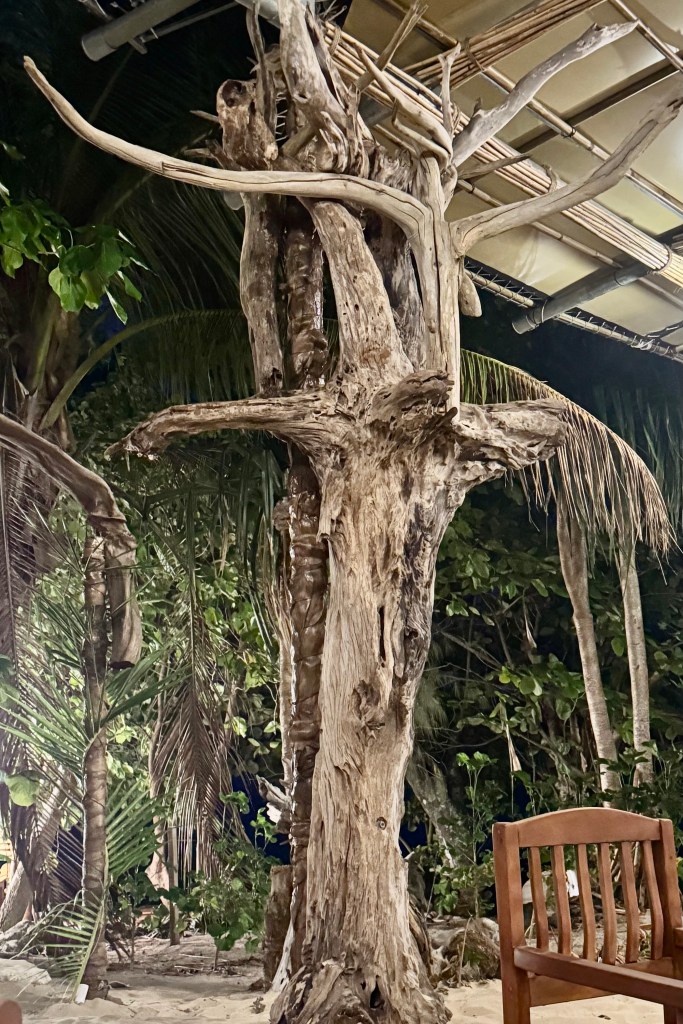
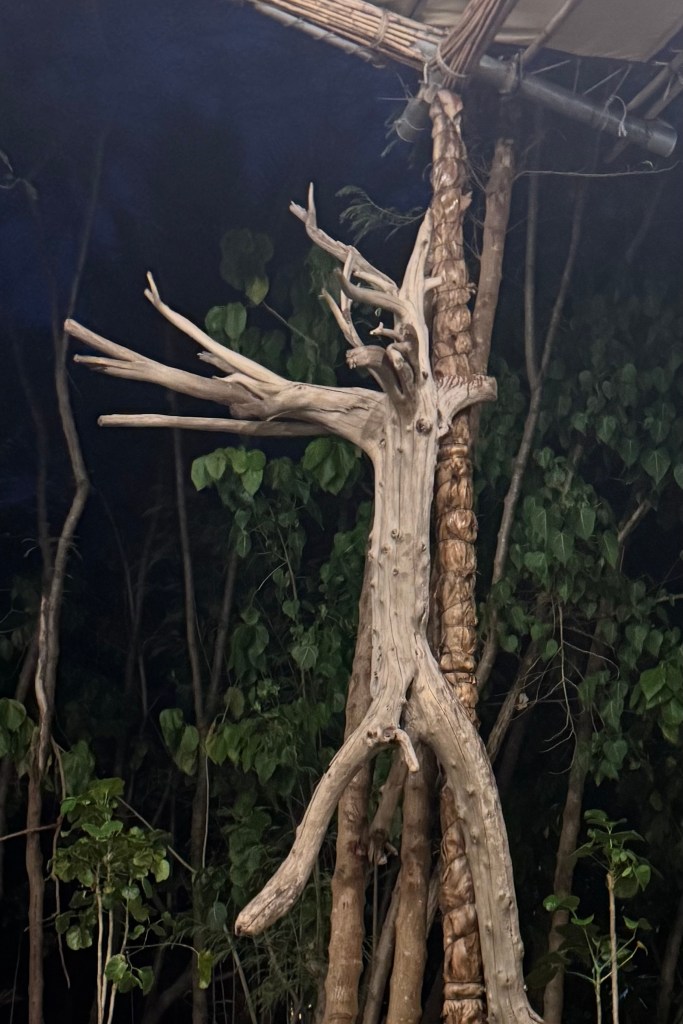
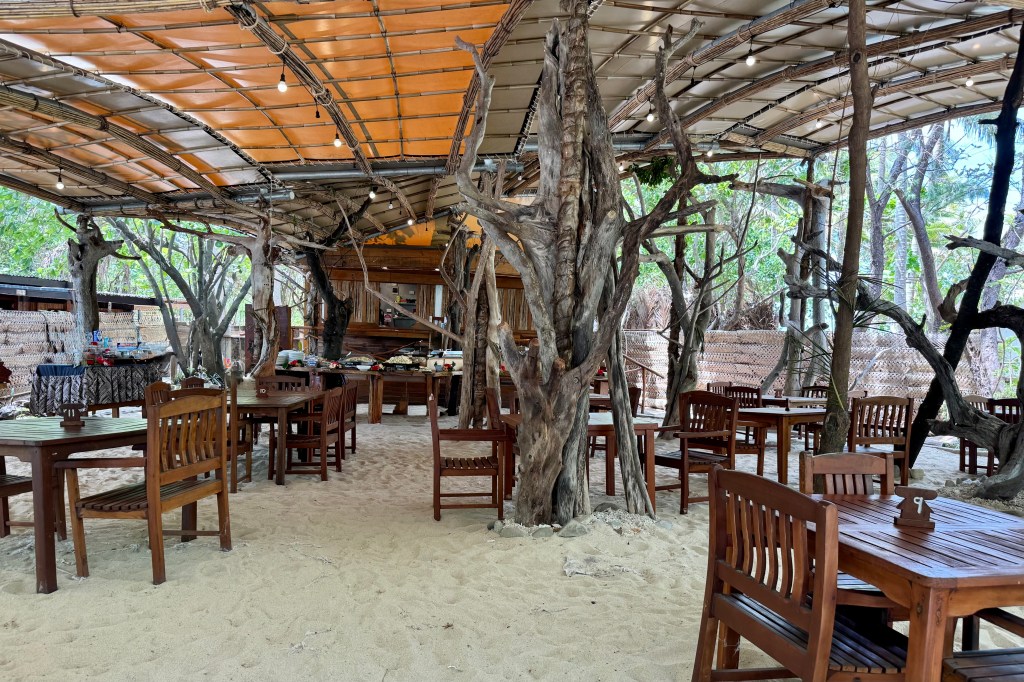
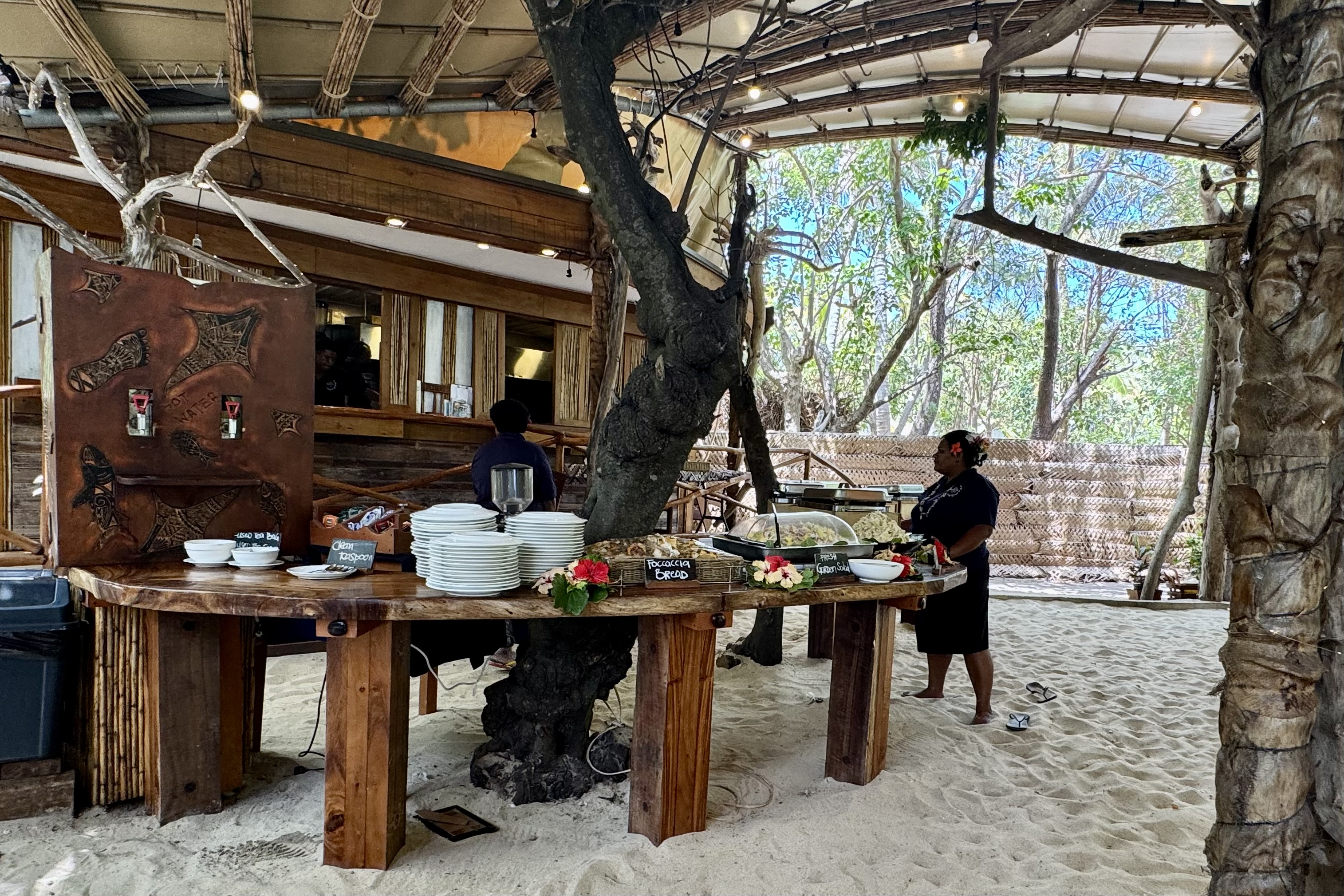
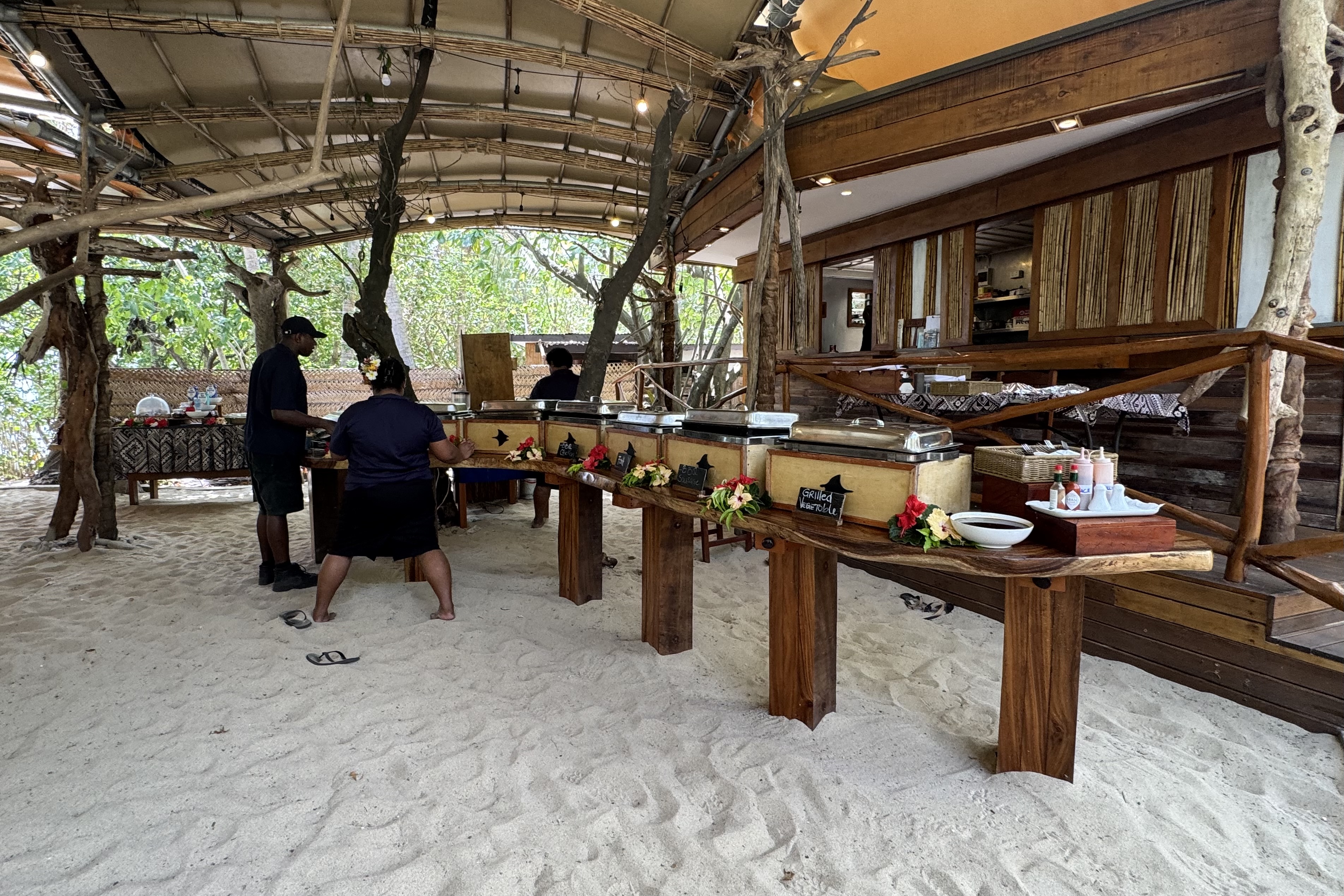
The dining area is a masterpiece in using what the island has to offer and it seemed to me they used whatever was already on hand on the island whenever possible. Forget concrete pillars: the roof is held up by gnarled silvery trunks and branches. Guess the forest cheerfully asked to help and the builders took upon it. A frame of bamboo, lashes together with rope, support canvas panels of the roof. The floor is sand which means “shoes optional” so here, finally was a restaurant where they didn’t require you to wear shoes.

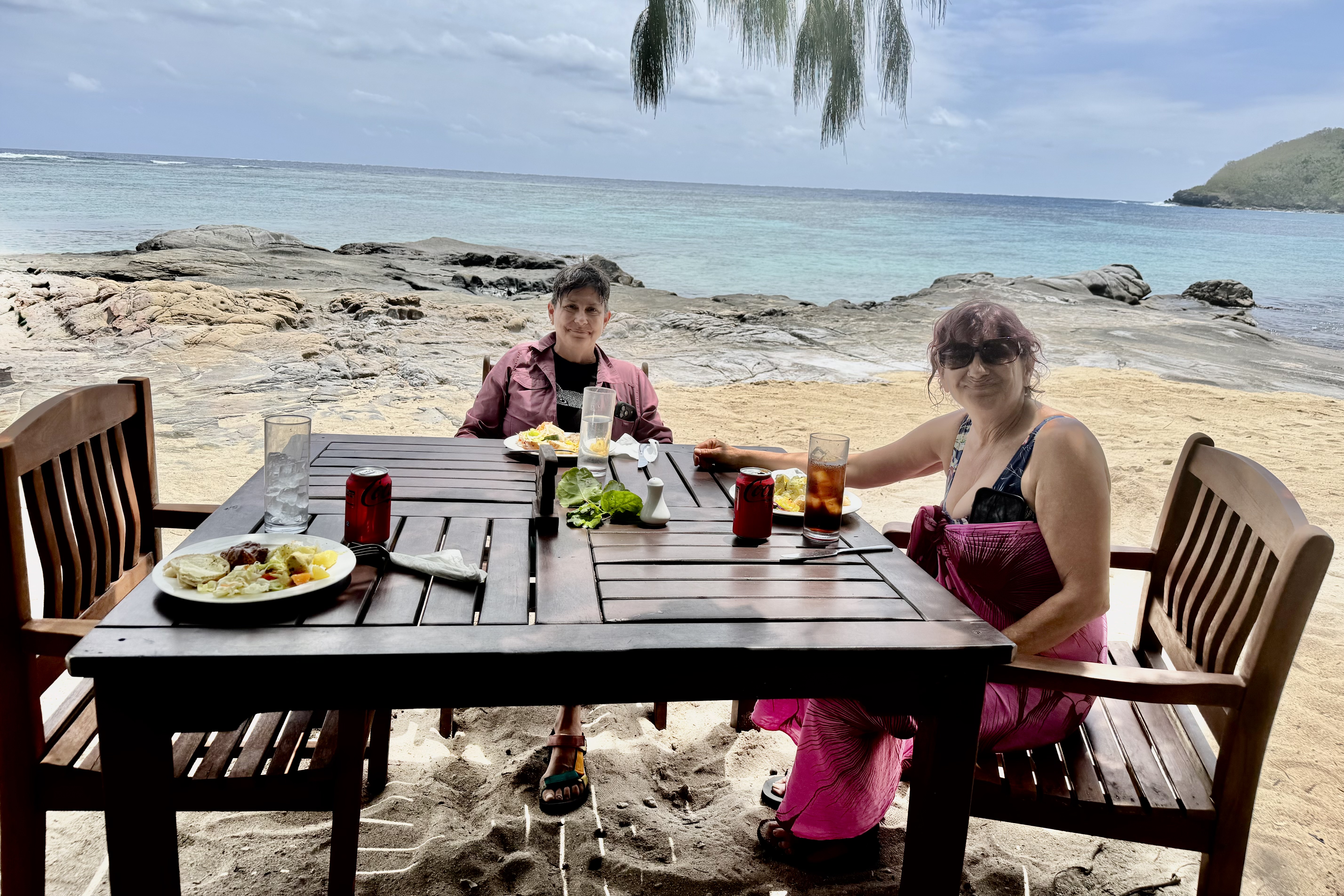
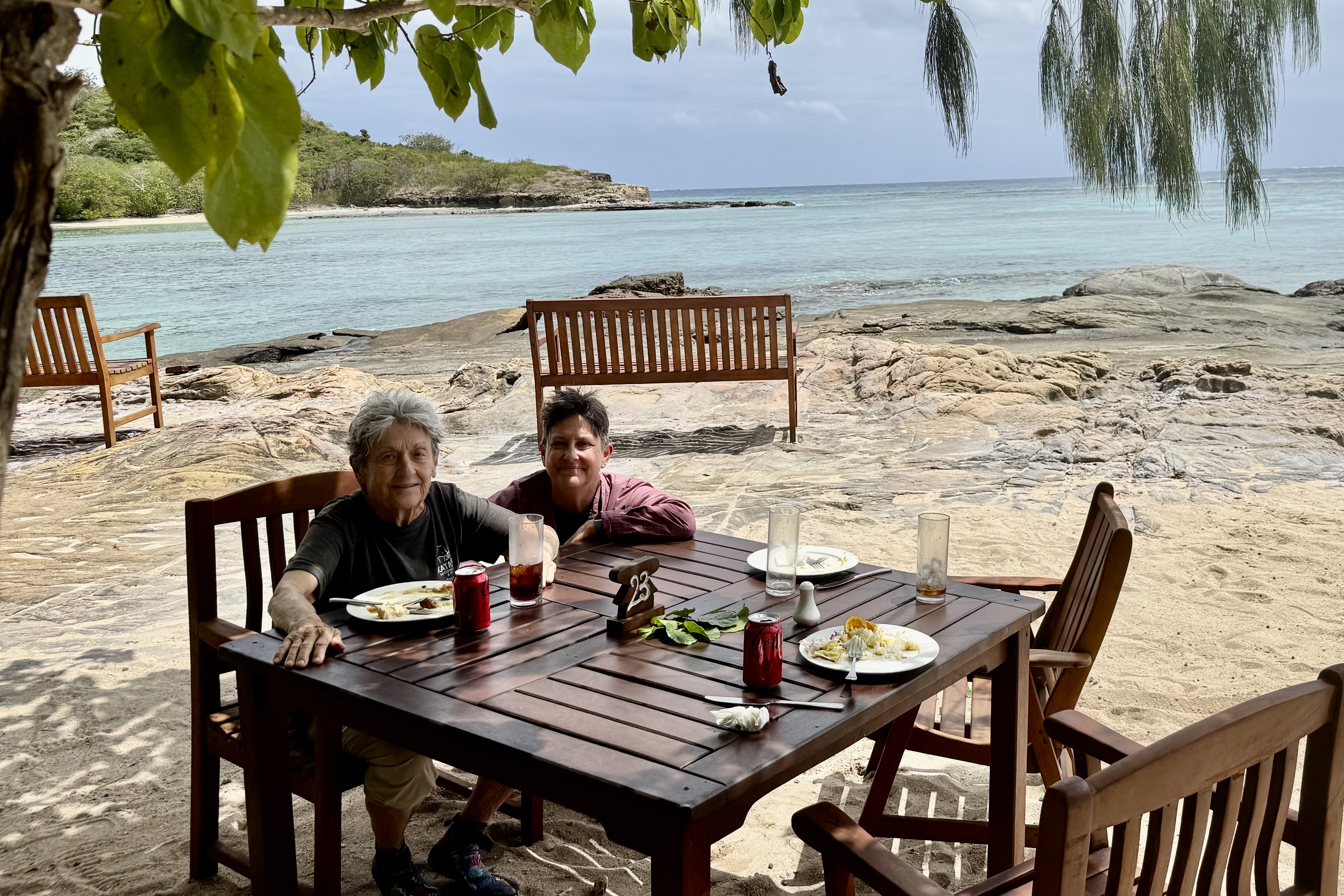
The food was another of Barefoot Manta’ s pleasures. All meals were served buffet-style and they were plentiful, varied and delicious. It was good hearty fare rather than gourmet dining. No steaks or extravagant seafood here and while fish was regularly on the menu, it wasn’t the expensive variety such as tuna or swordfish steaks, nor were there platters of shellfish. Chicken and pork however did make it onto the menu.

For breakfast I could have eggs cooked to order, along with an assortment of fresh fruit, parties, bread and hot dishes such as hash brown and sausage. The only disappointment for this coffee lover was the lack of strong coffee. Fortunately I had come prepared with packets of Starbucks Via, which I added to house coffee to give it a much needed boost in both strength and character. If you are a lover of blond coffee you were in luck!

Lunch and dinner were equally satisfying generally featuring breads, salads, rice and/or potatoes, and two or three entrees choices. Desert was served at the table by the staff. Whether this was intended as touch of personal service or a strategy to discourage the stockpiling of deserts by a few enthusiastic diners or sugar addicts before everyone else has a chance. I lean toward the latter explanation. Either way it worked.

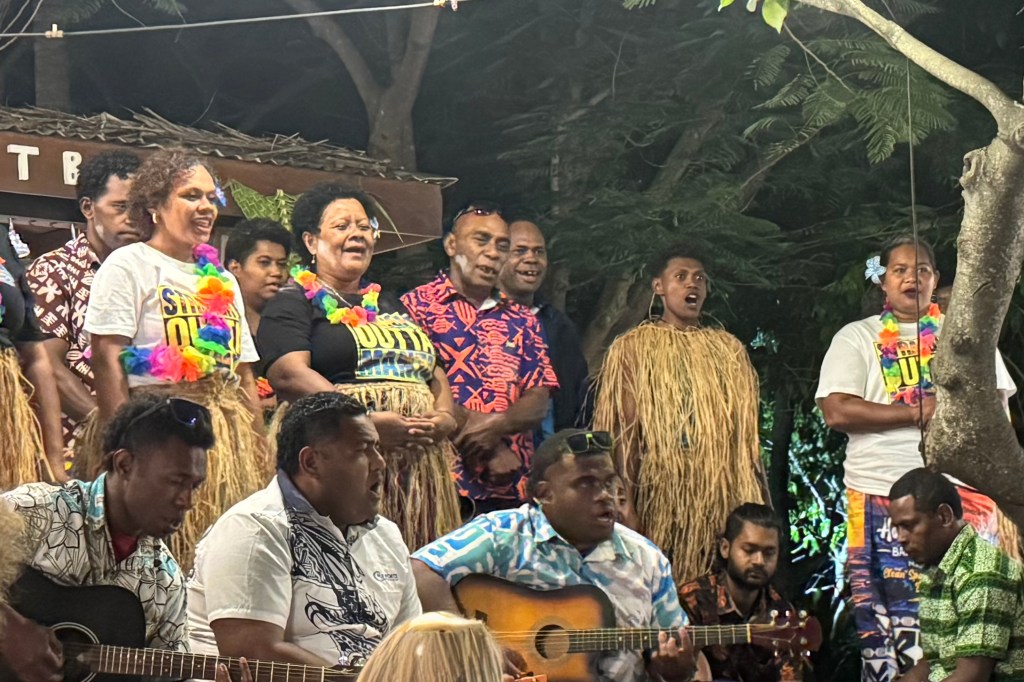
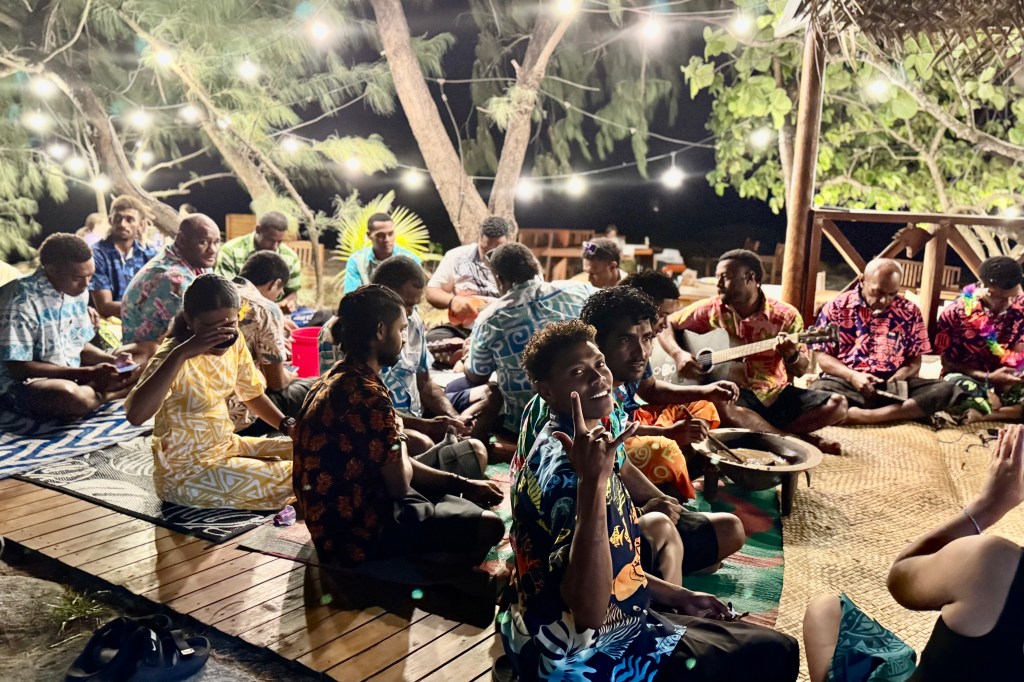
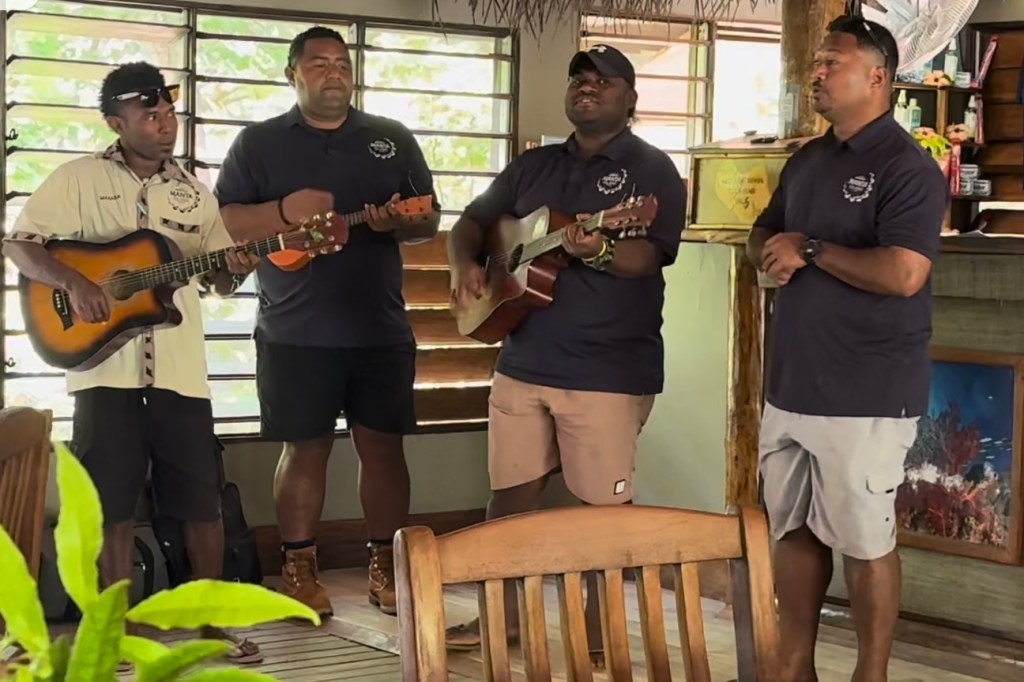
As good as the food was, it wasn’t the only memorable part of dining here and was evident all over Barefoot Manta. It was the people. Everyone seemed genuinely happy to be there and so genuinely pleased that we had come to their island. That’s hard to put on a menu but was one thing that made the stay so very enjoyable.

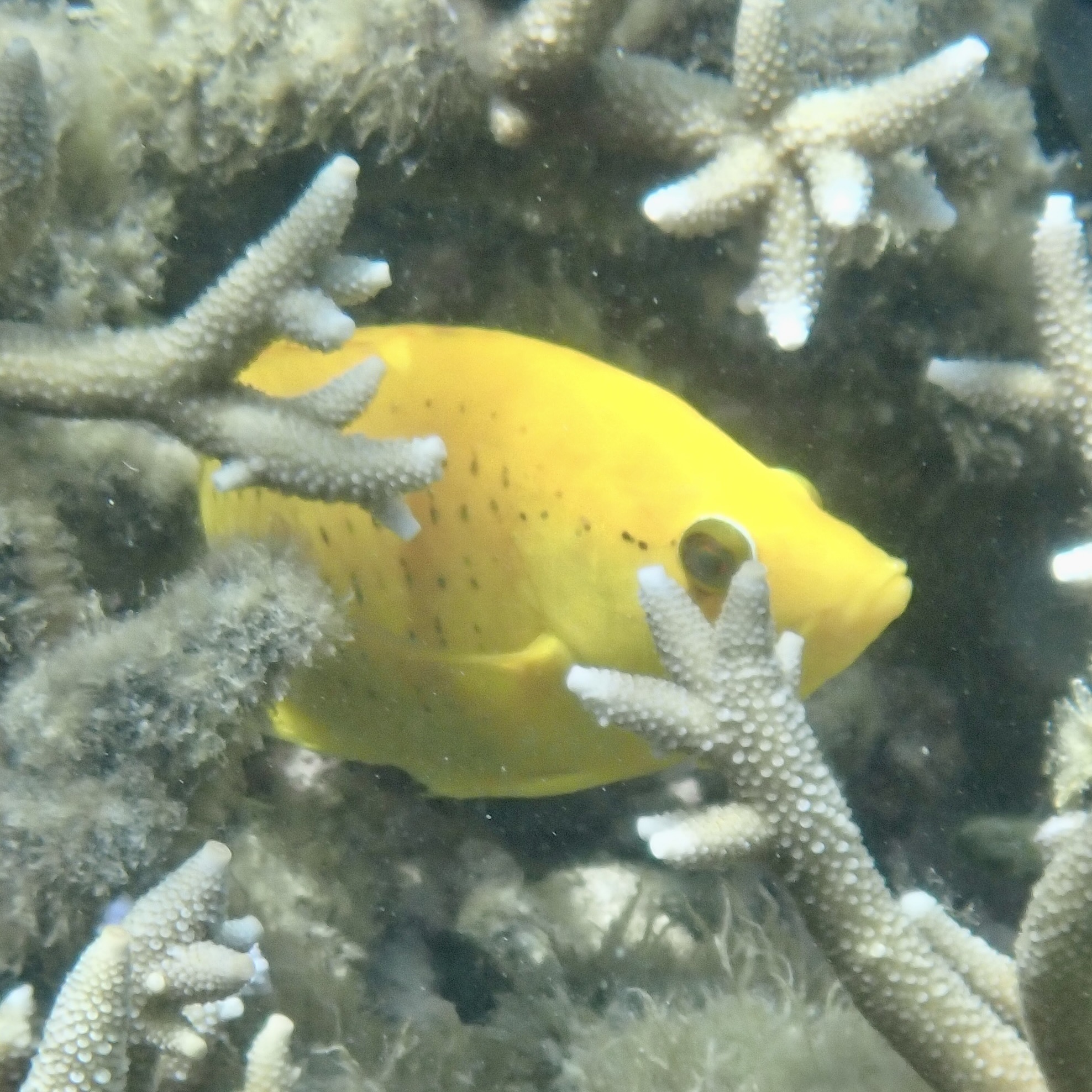
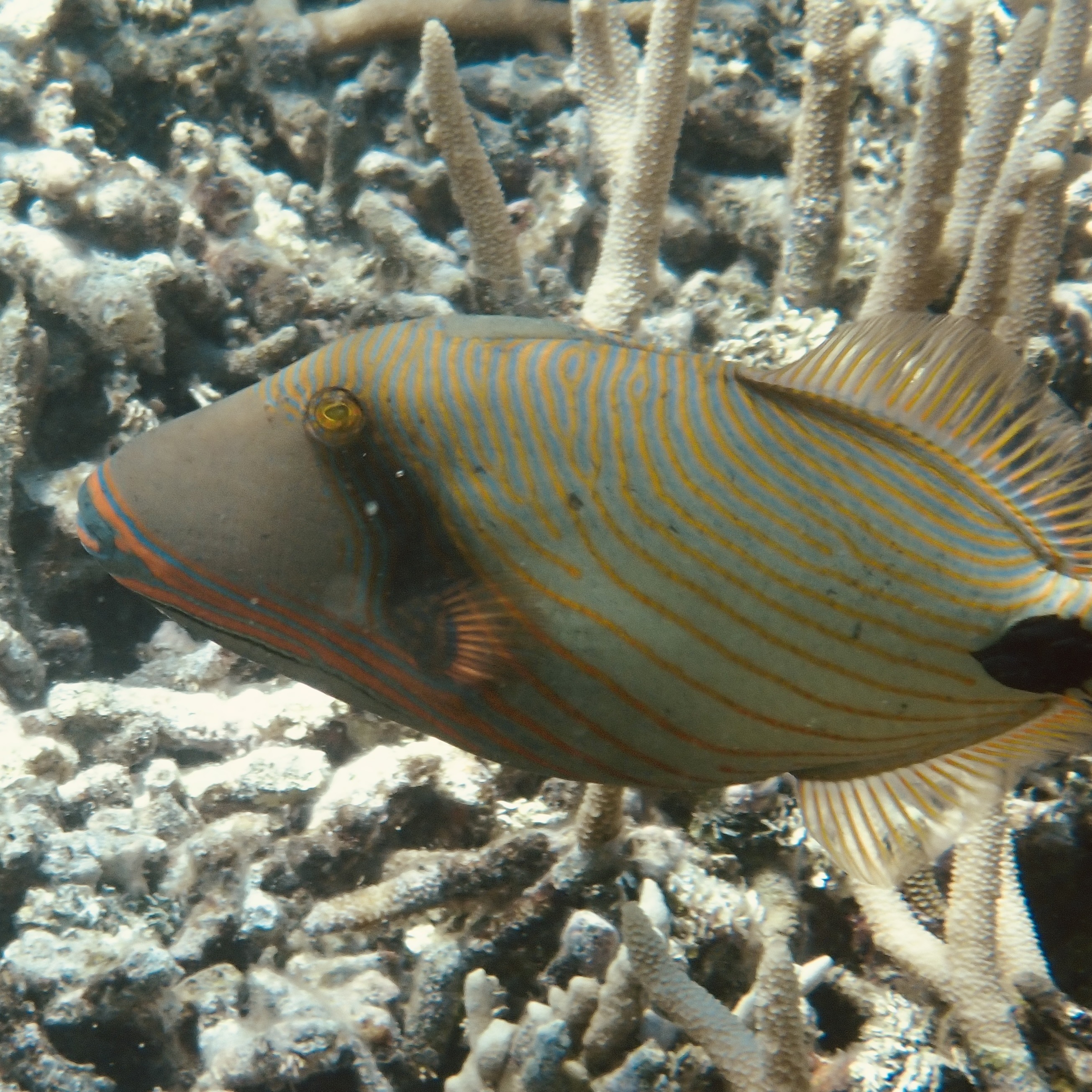
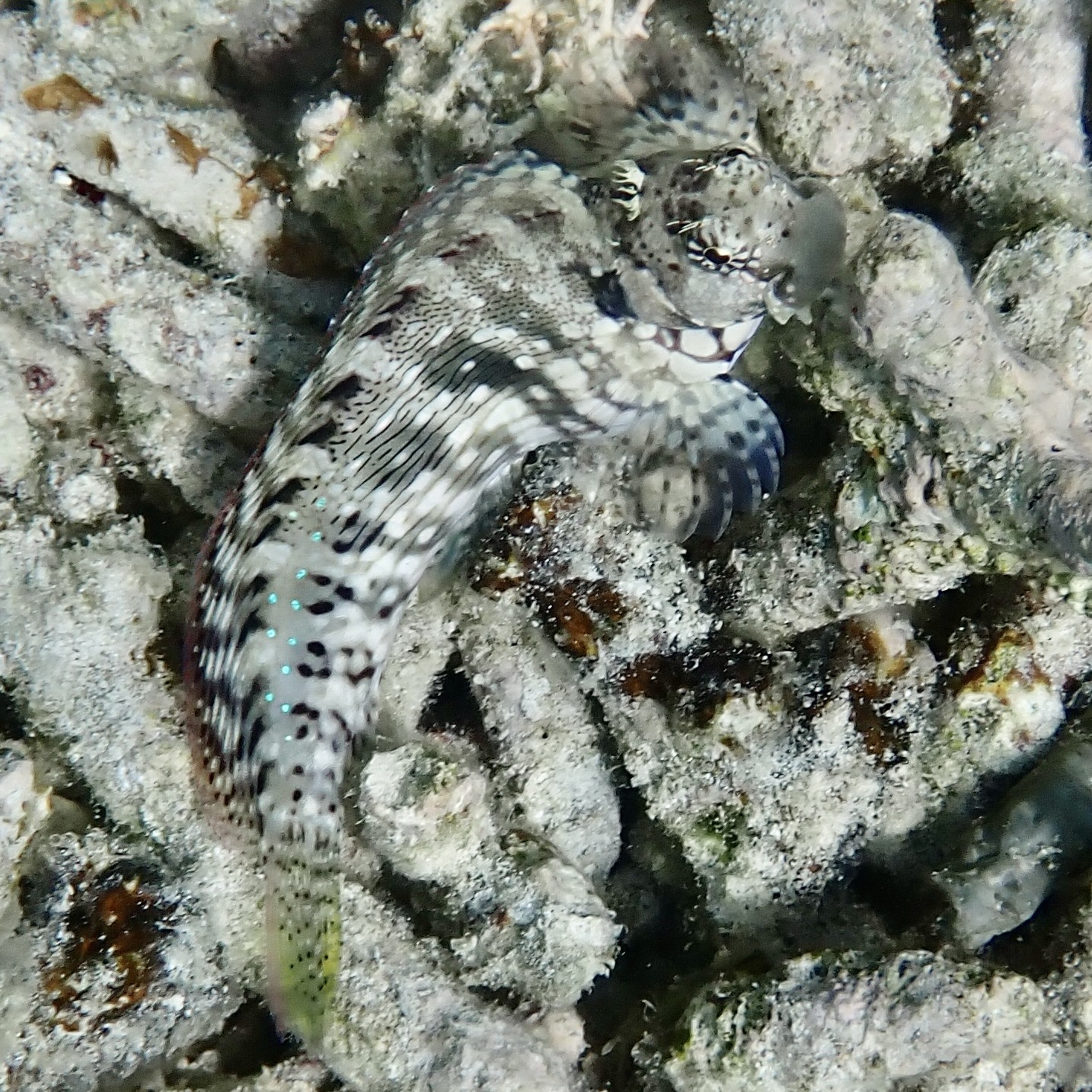
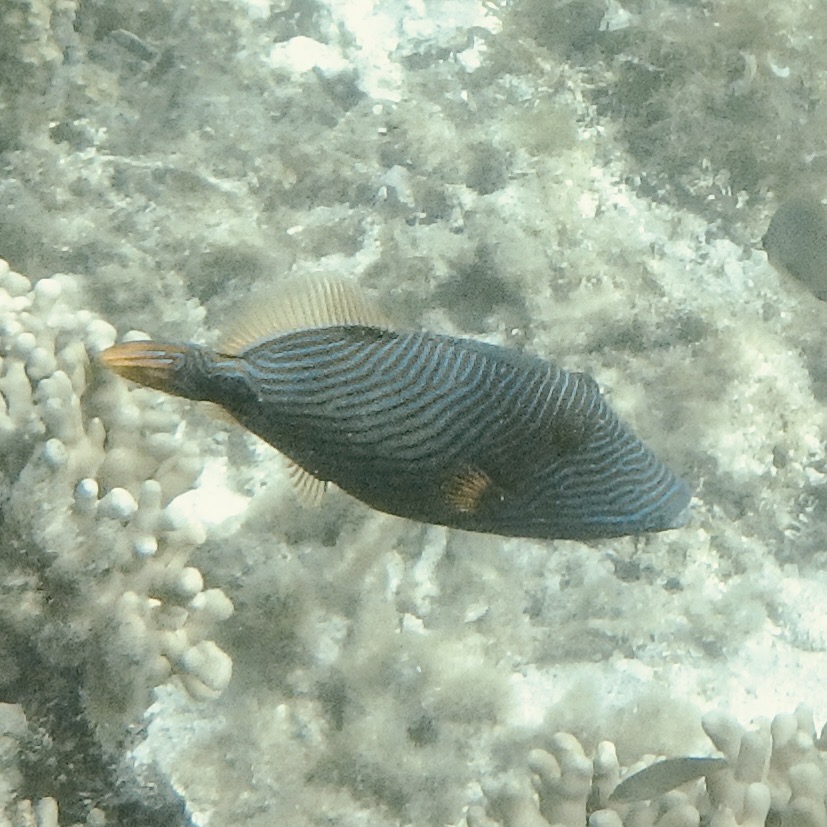
Now that you have “met” the resort (with probably more detail than you would have cared to be provides with), I will turn to the remainder of the first day. Once settled in I headed out for my first snorkeling excursion. It was not exactly a triumph. The sun was shining, a breeze was stirring up a light chop, the tide was going out and I was sure the underwater world was just waiting to inspire amazement and elicit a chorus of oohs and aah from me. Tasia had some oohs and aahs as evidence by the photos below. All I needed to do was put on my mask and snorkel and enjoy the show. Simple enough! However….

It soon became clear that all that I had perfected when snorkeling in the Virgin Island just a bit over a a year ago never made it to my long term memory. My mask refused to seal properly, the waves kept nudging me towards the corrals and I was desperately trying not to turn my snorkeling adventure into an exercise in reef destruction. My snorkel seemed determined to deliver more salt water than air. I spent much of the time fiddling with my mask, trying to clear the snorkel, and starting all over again. There could have been a spectacular underwater performance but I was missing most of it. It almost felt like a slapstick comedy. I finally conceded defeat and decided tomorrow I would head to the dive shop and discuss possible solutions about the mask fit, a simpler snorkel, and perhaps a life jacket. I am a strong swimmer but clearly strong swimming isn’t a pre-requisite to snorkel these reefs and hopefully I can make this activity feel less like a series about sucking sea water and crushing coral.

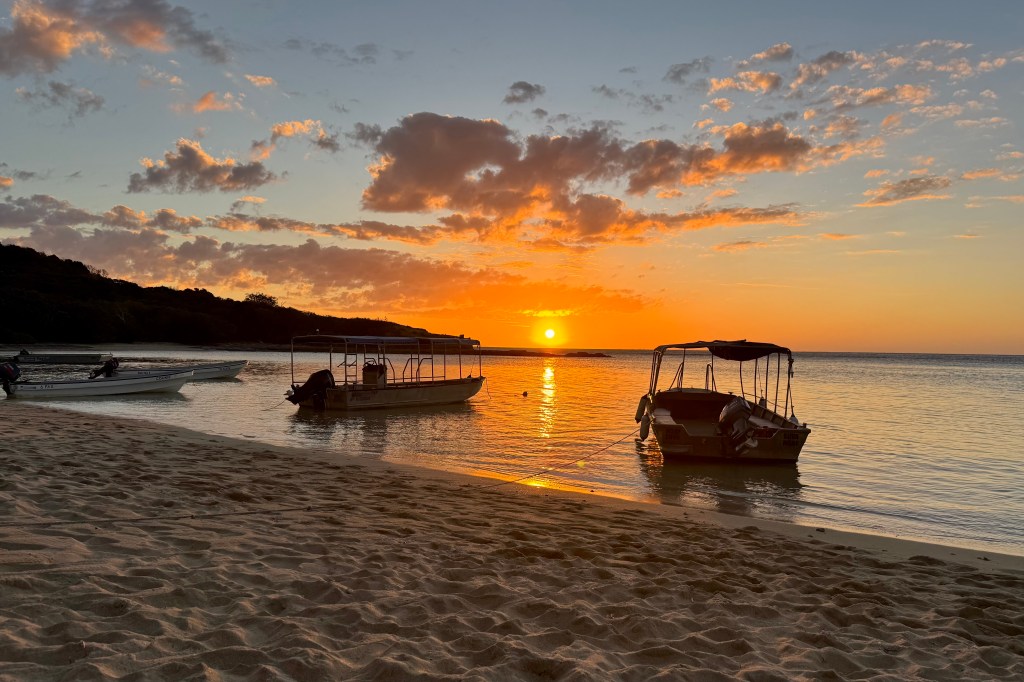
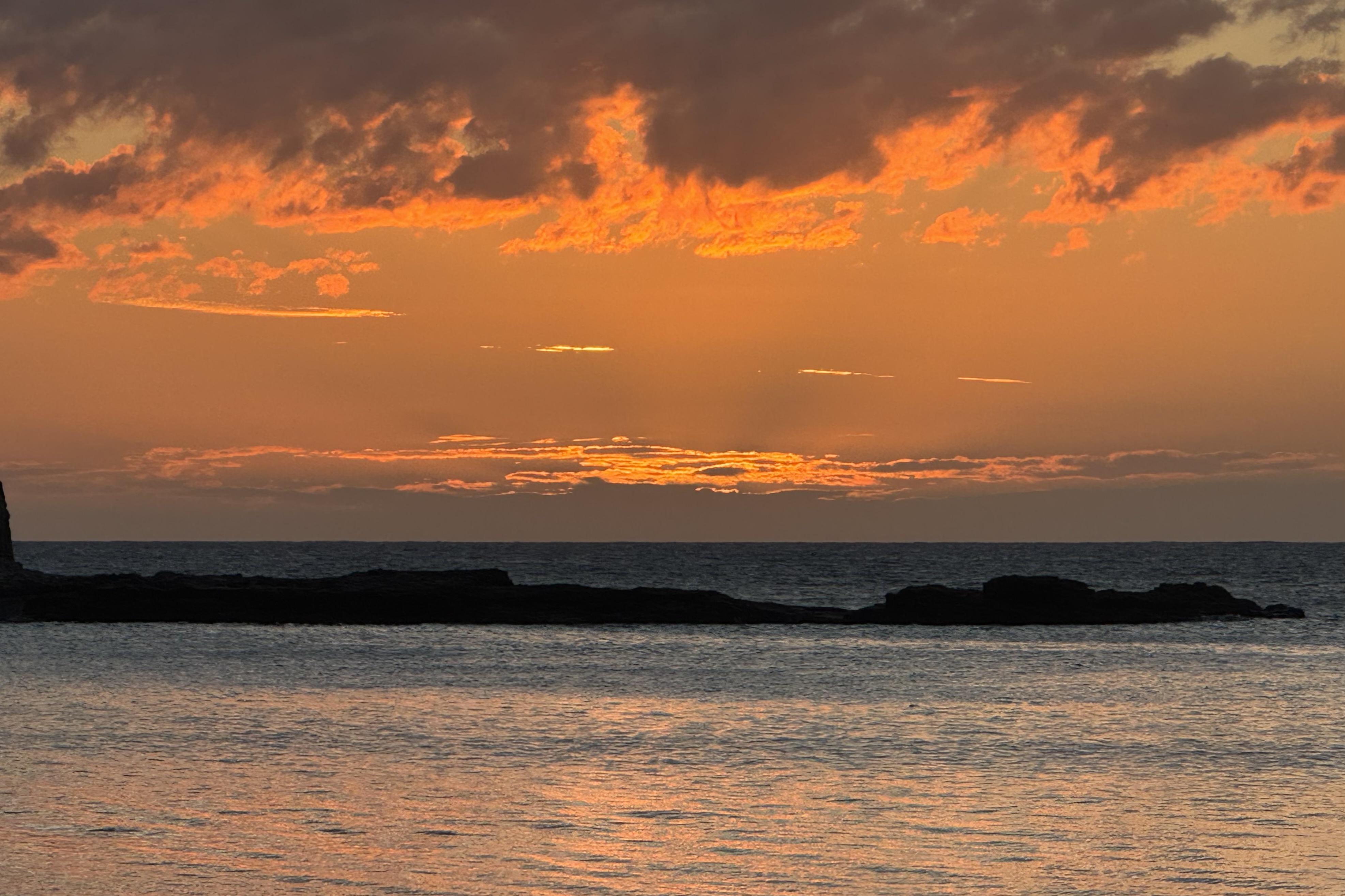
Our first day ended the way any westward facing beachside accommodation intended. We watched from the beach right in front of our bure as the sky went from the orange molten lava to a deep inky blue with the clouds lit from underneath like embers. The boats rested on the glassy water and at this moment everything felt right in my world. What a glowing “bula” to wind down the first day.

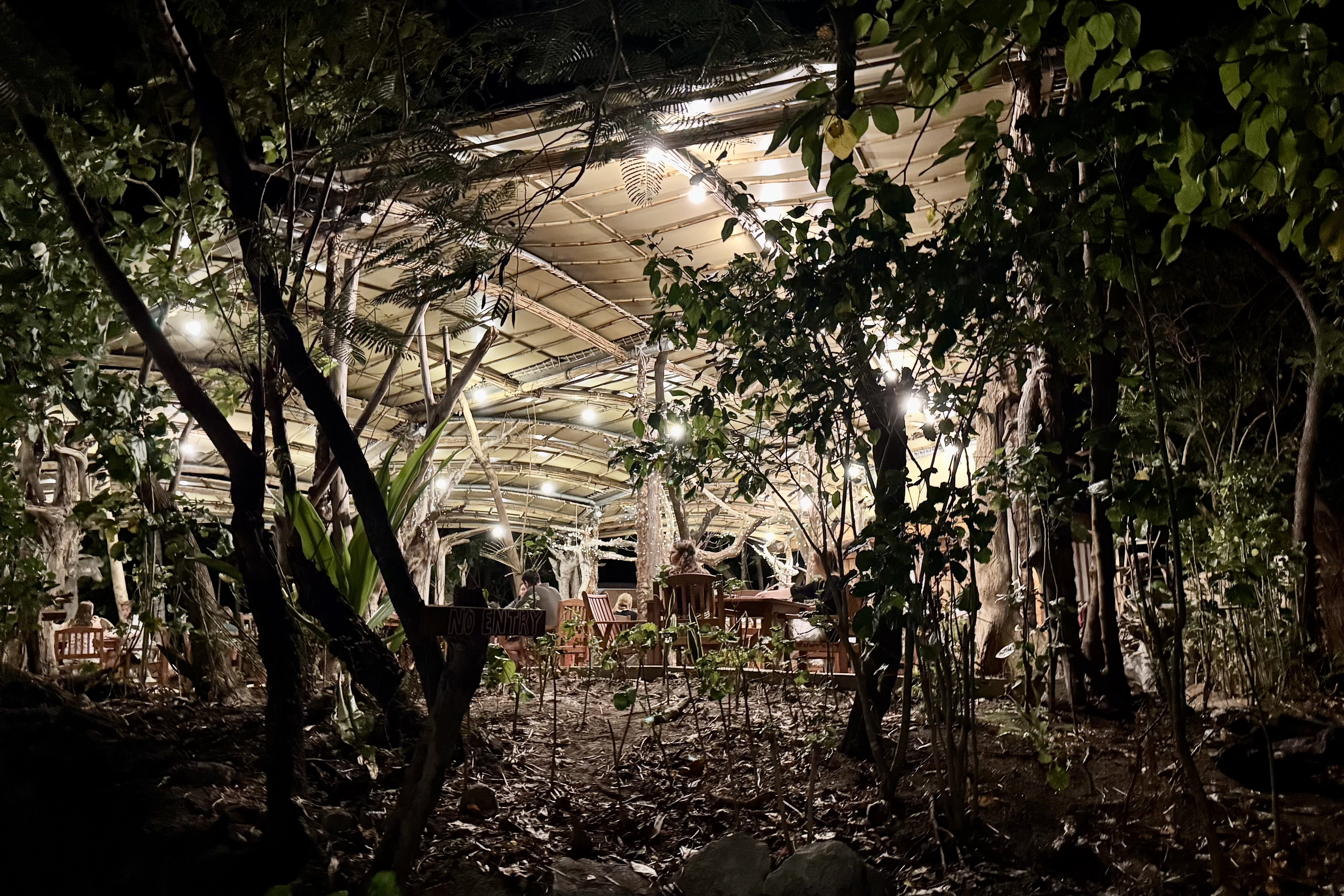
With the last of the color fading, we wander over to the dining area for our dinner. By the time we finished and were headed back to our bure the place had transformed. From the dark path outside, the canopy glowed from the strings of lights shining through the trees. It appeared less like exiting a restaurant but more like stepping out from a treehouse. The whole place twinkled like an enchanted forest. We walked back to our bure with full stomachs bringing to a close a pretty incredible day. Back in our bure we made ourselves at home and let the sounds of the island ease us toward sleep. What a wonderful place to call home for the next few days.

Bats, Foggy Heights, and a Soaking Wet Finale

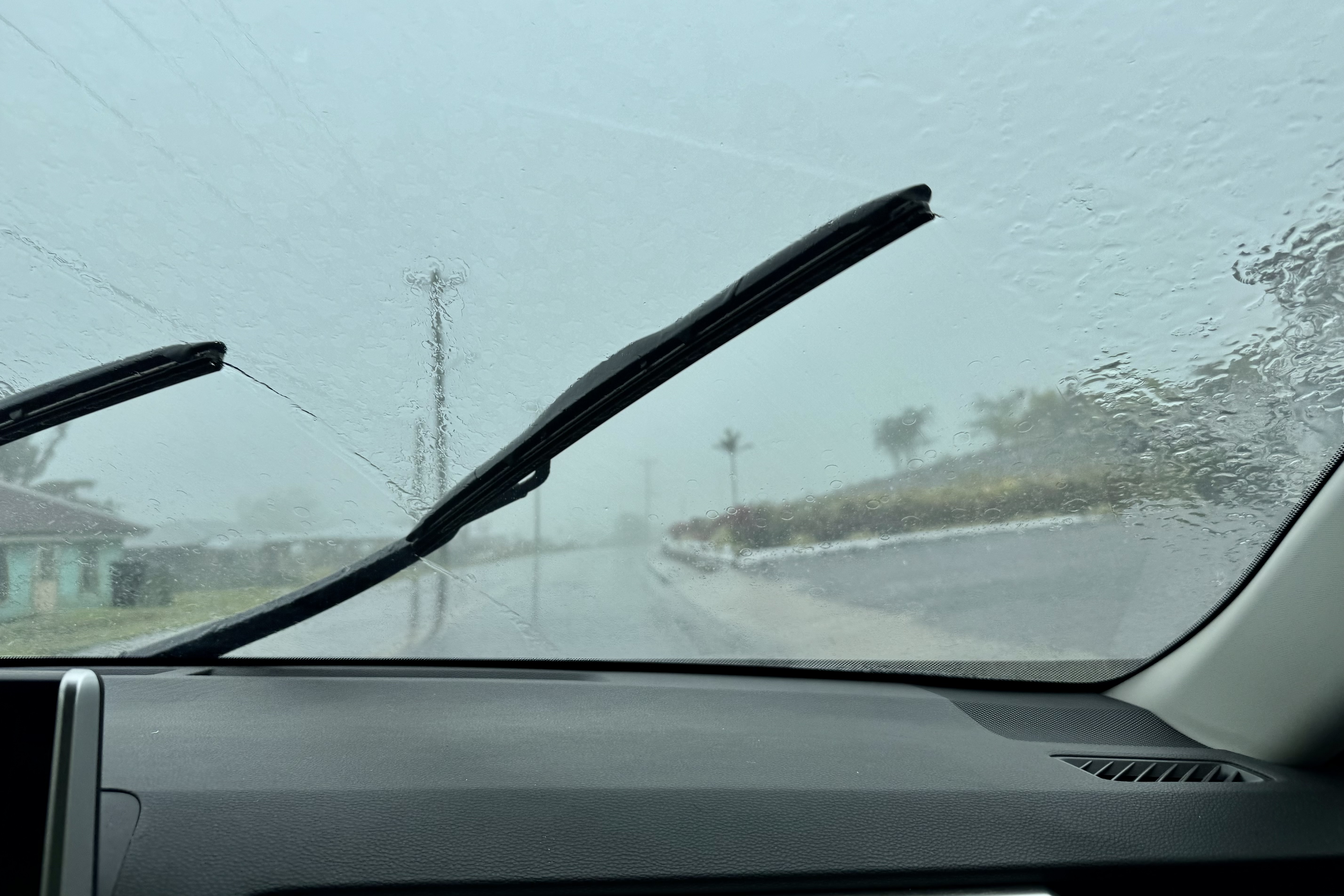
Monday, September 14, greeted us with, yet again, drenching rain and it never let up for most of the day. So much for snorkeling, beach combing, or any other activity that we might have an expectation of staying dry. What to do? We decided to make the best of it and drive around the southern and western parts of Tutuila, venturing out of the car when the weather – and our enthusiasm – permitted.

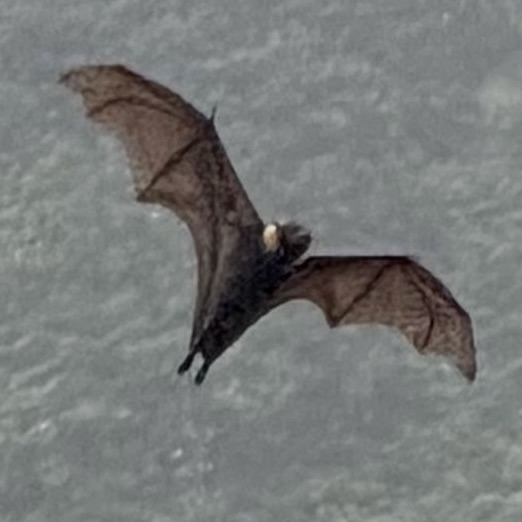
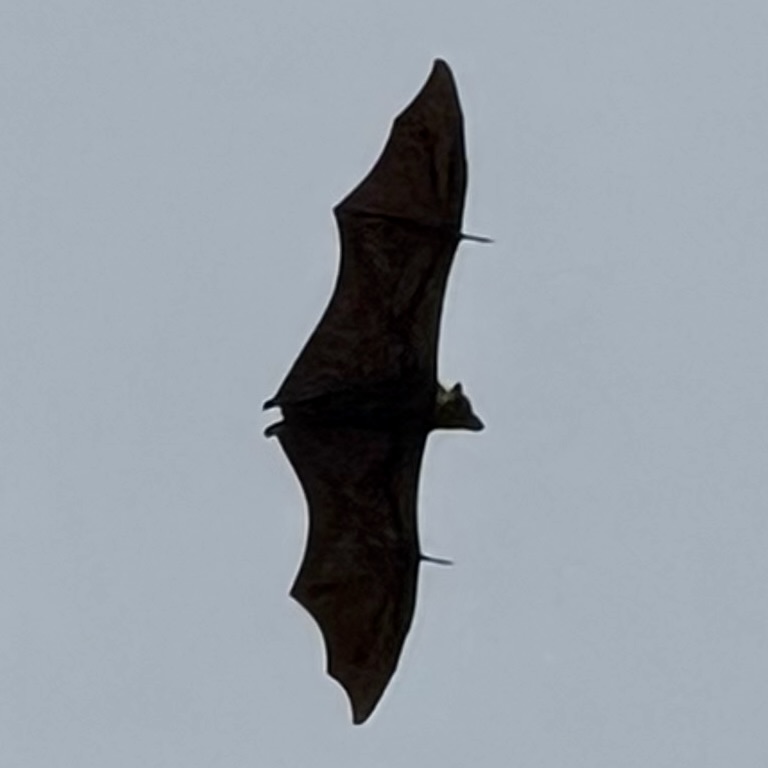
What better way to start this journey than visiting BATS! So we stopped in Nu’uuli at a roosting site for the white-nape fruit bat, sometimes called the flying fox. They are among the largest bats in the world and seeing them gathered at their daytime roost was a different way to begin our soggy excursion. The bats seemed perfectly content with the weather. I on the other hand was a bit skeptical.

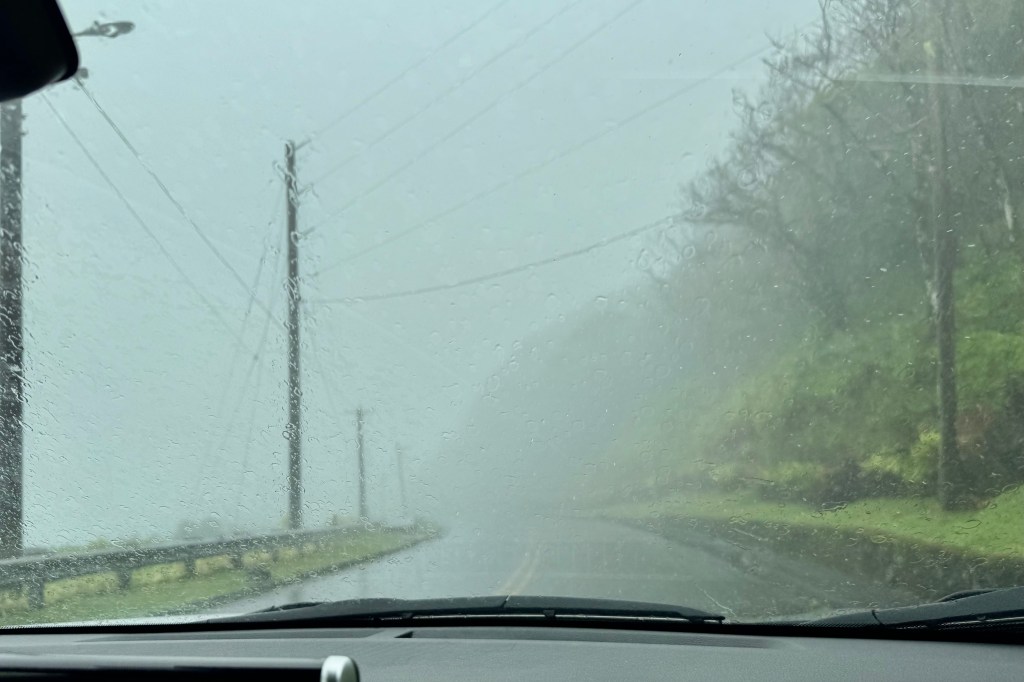
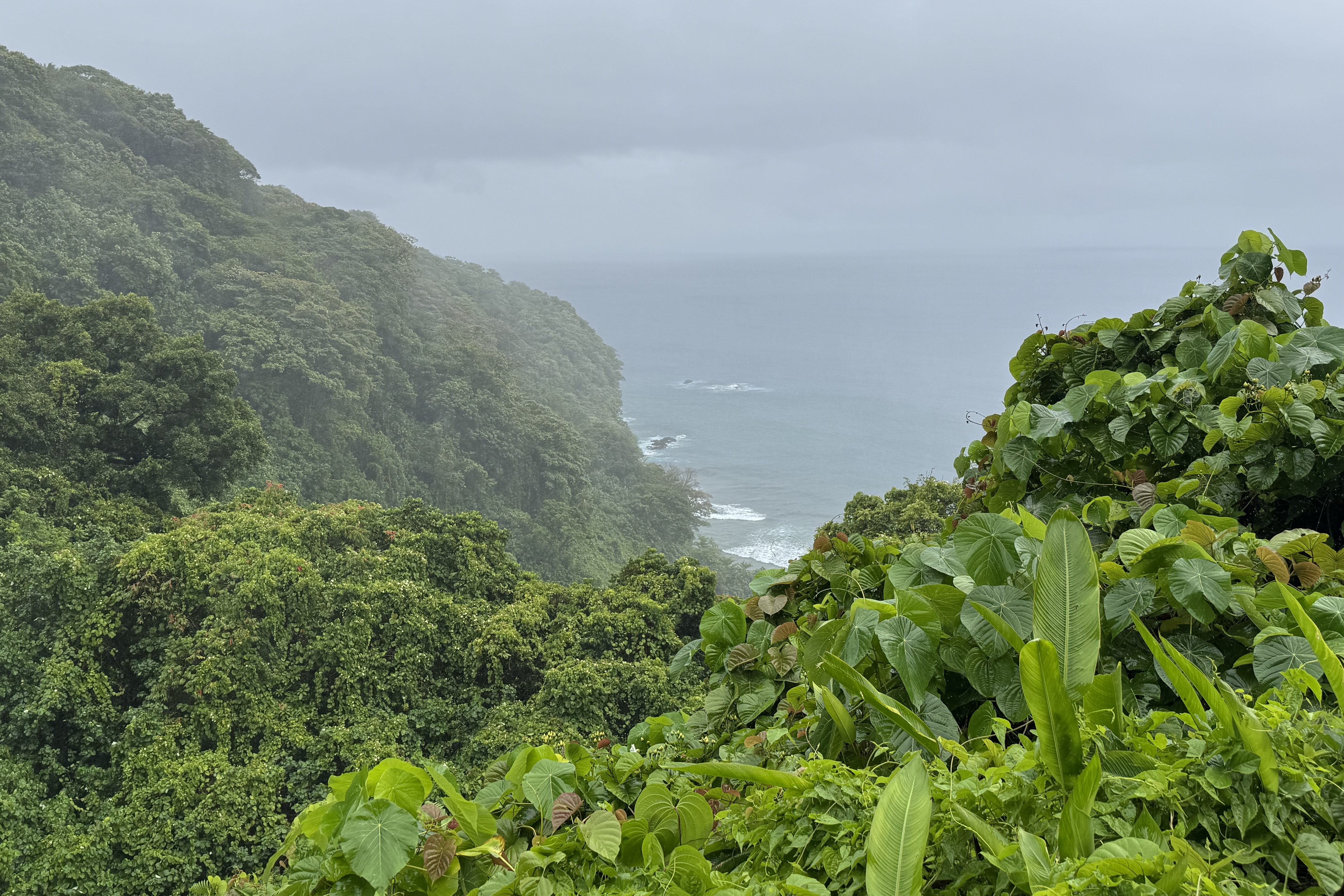
I was not sure what possessed us to continue uphill to the villages of Pava’ia’i and Aoloua. but upward we went. Aoloau, nicknamed “Fog Village” is the highest village on Tutuila and on a clear day, its elevation offers sweeping views across the island. It definitely, on this day earned, its nickname and we decidedly had front row seats to the islands shroud of fog. There we were practically on top of Tutuila, with nary a view and hence no photo to show for it.

Driving the island this day left me focusing on impressions of this US territory which are quite different from the mainland United States.

Churches, Chickens and Other American Samoan Observations

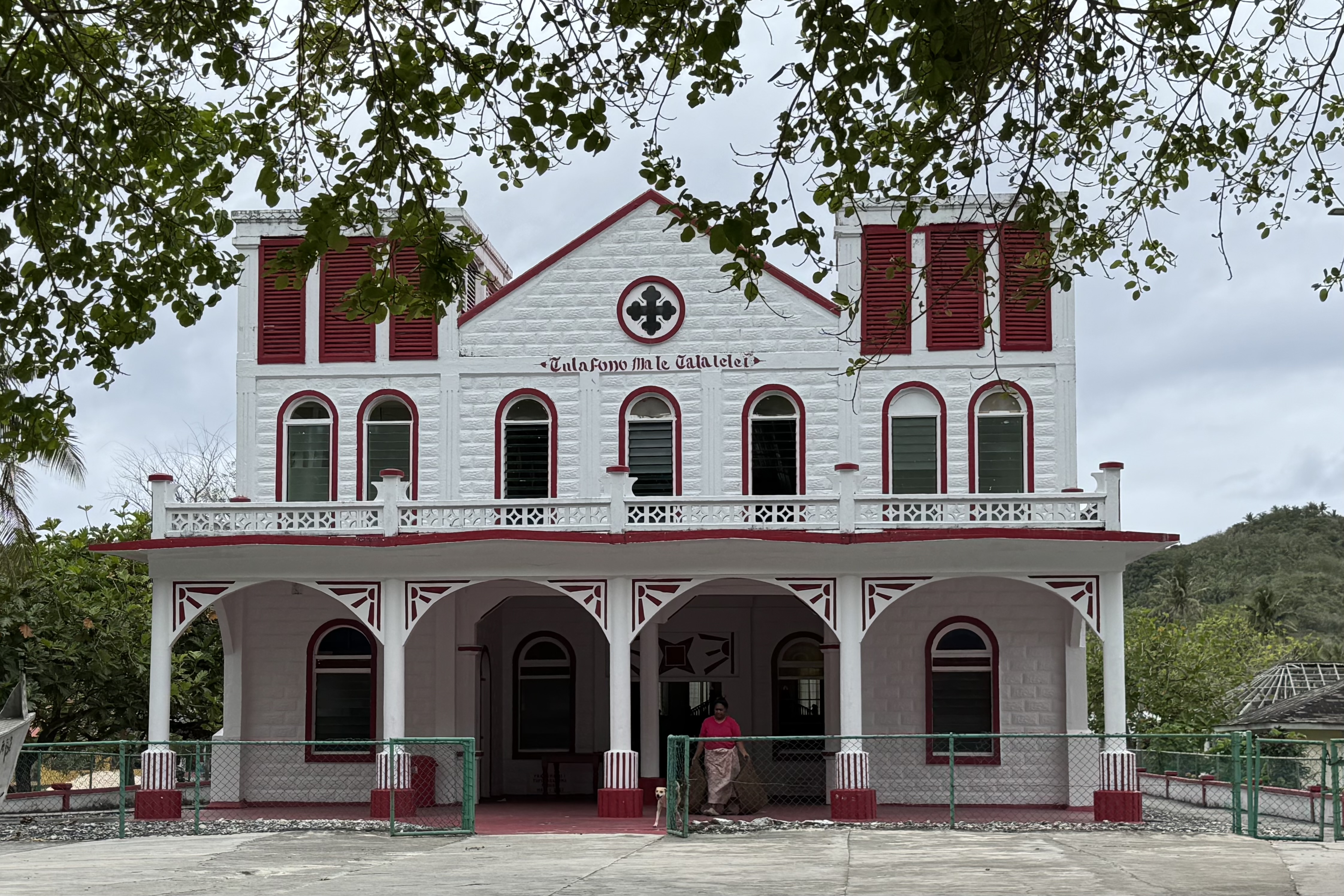
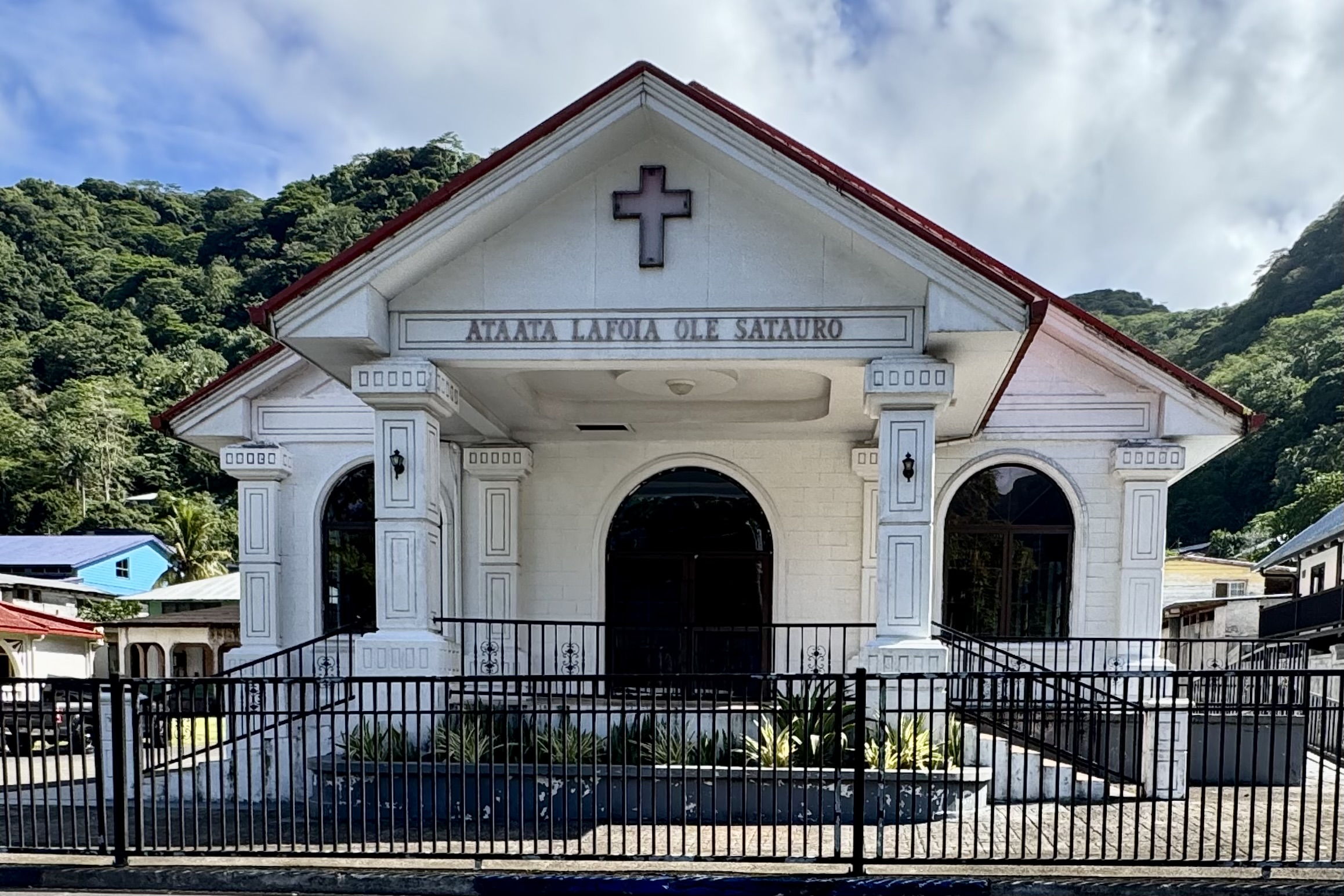
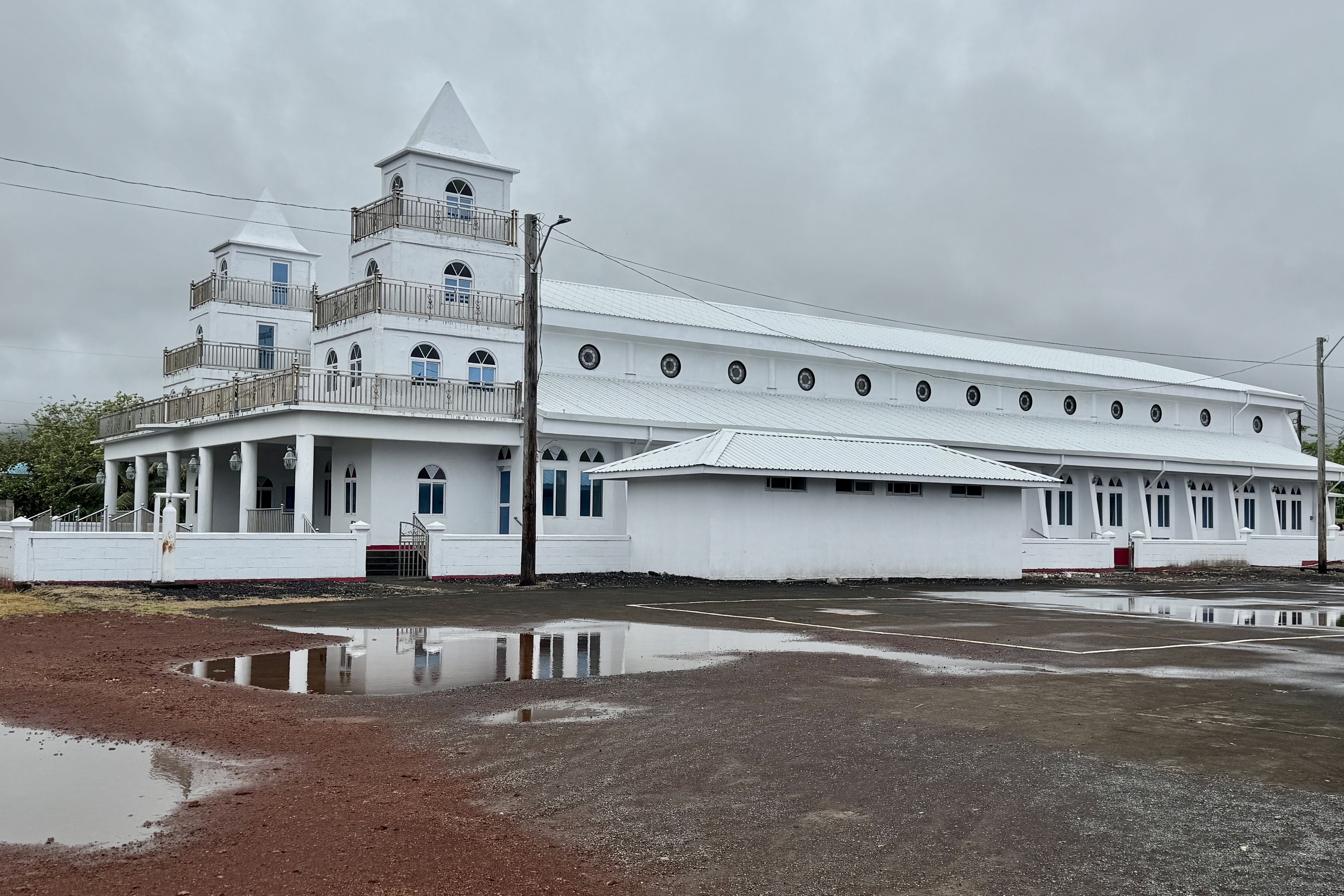
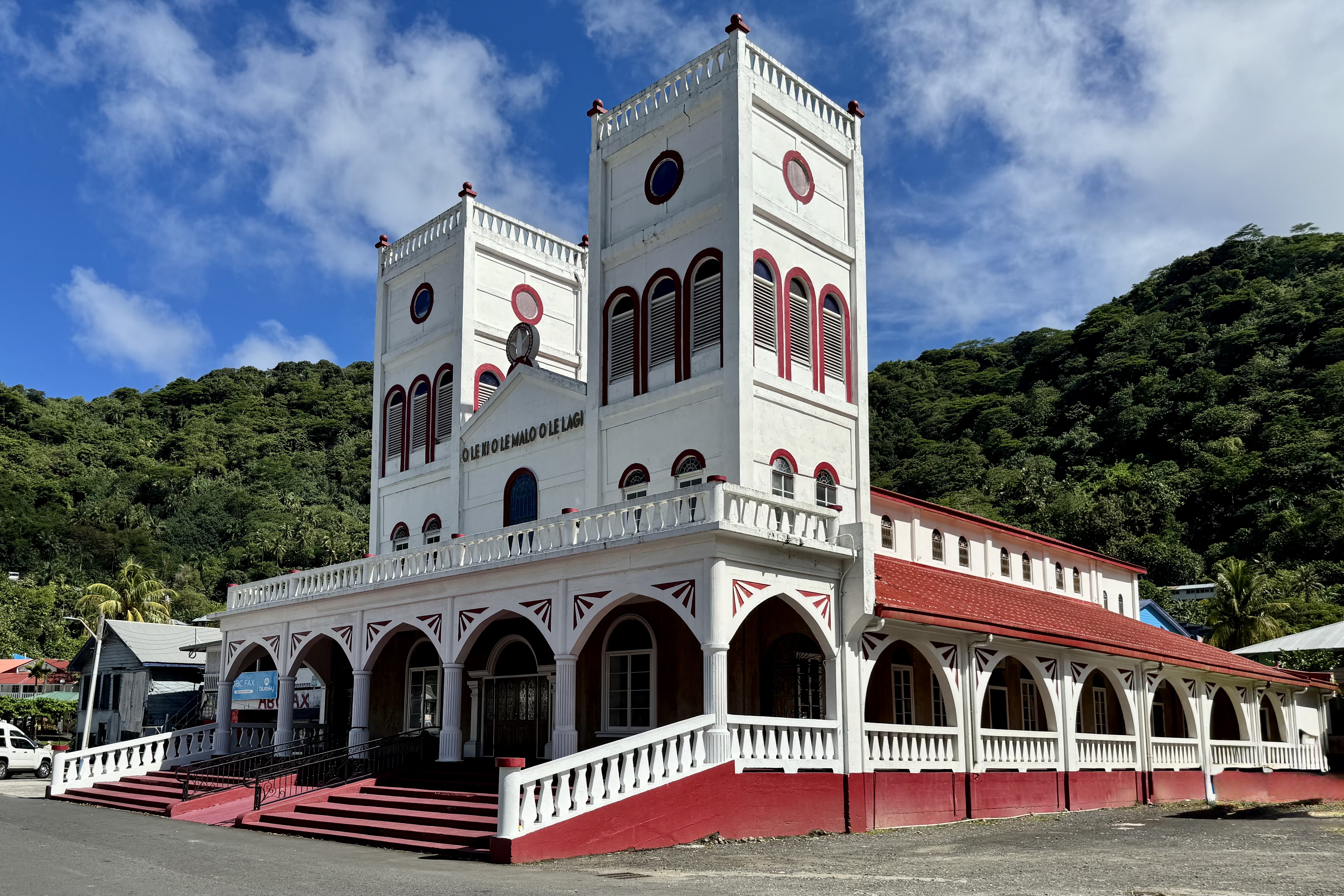
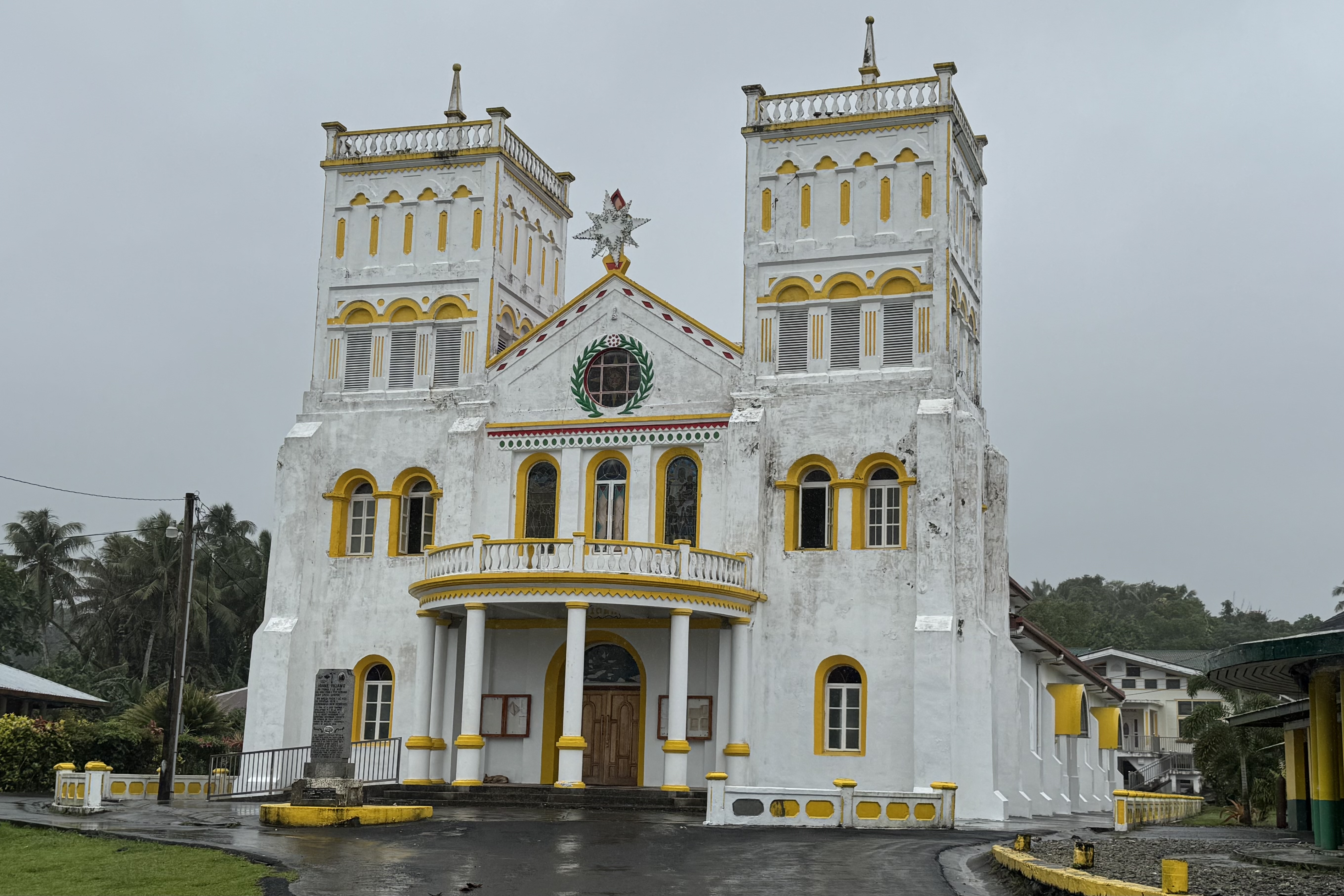
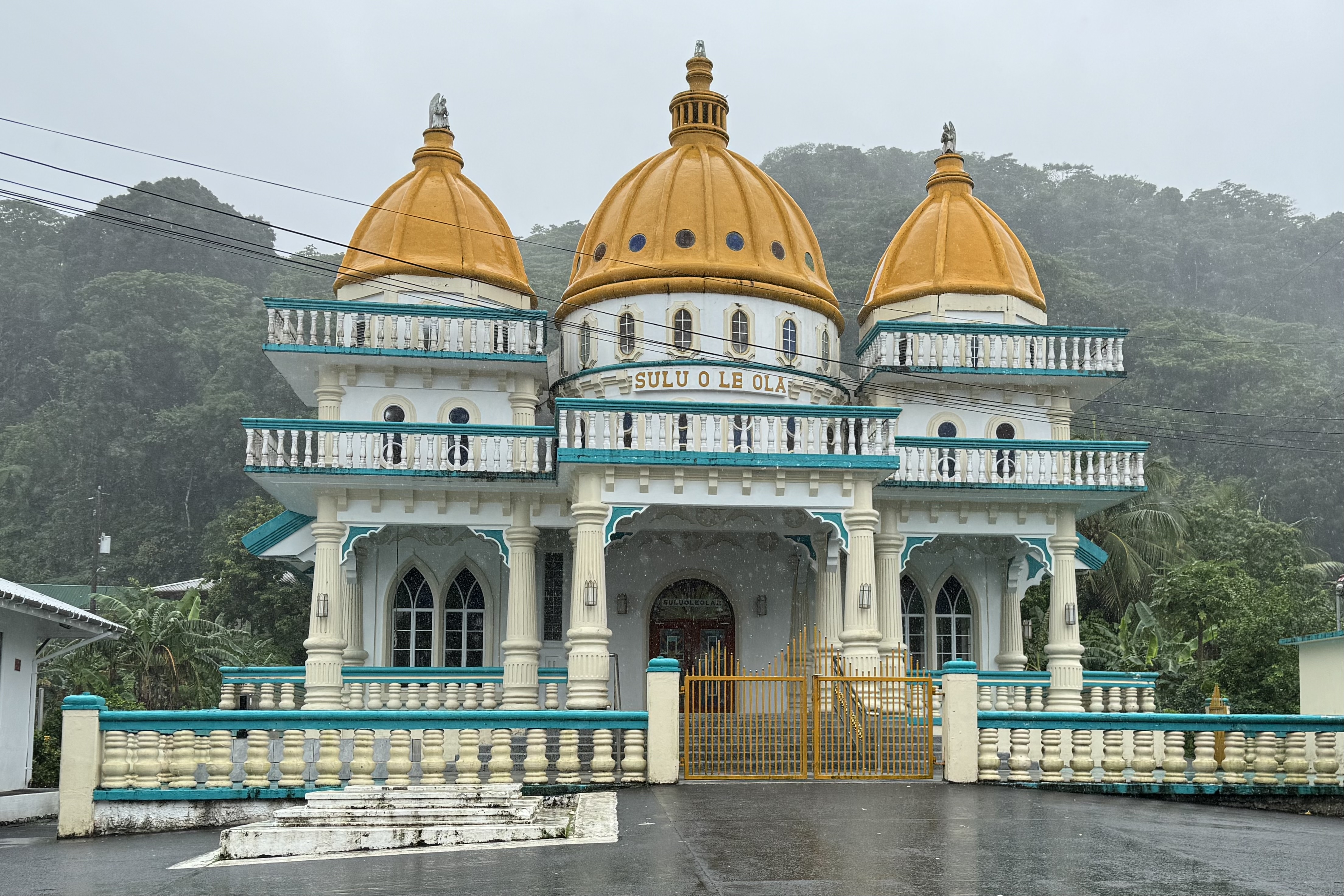
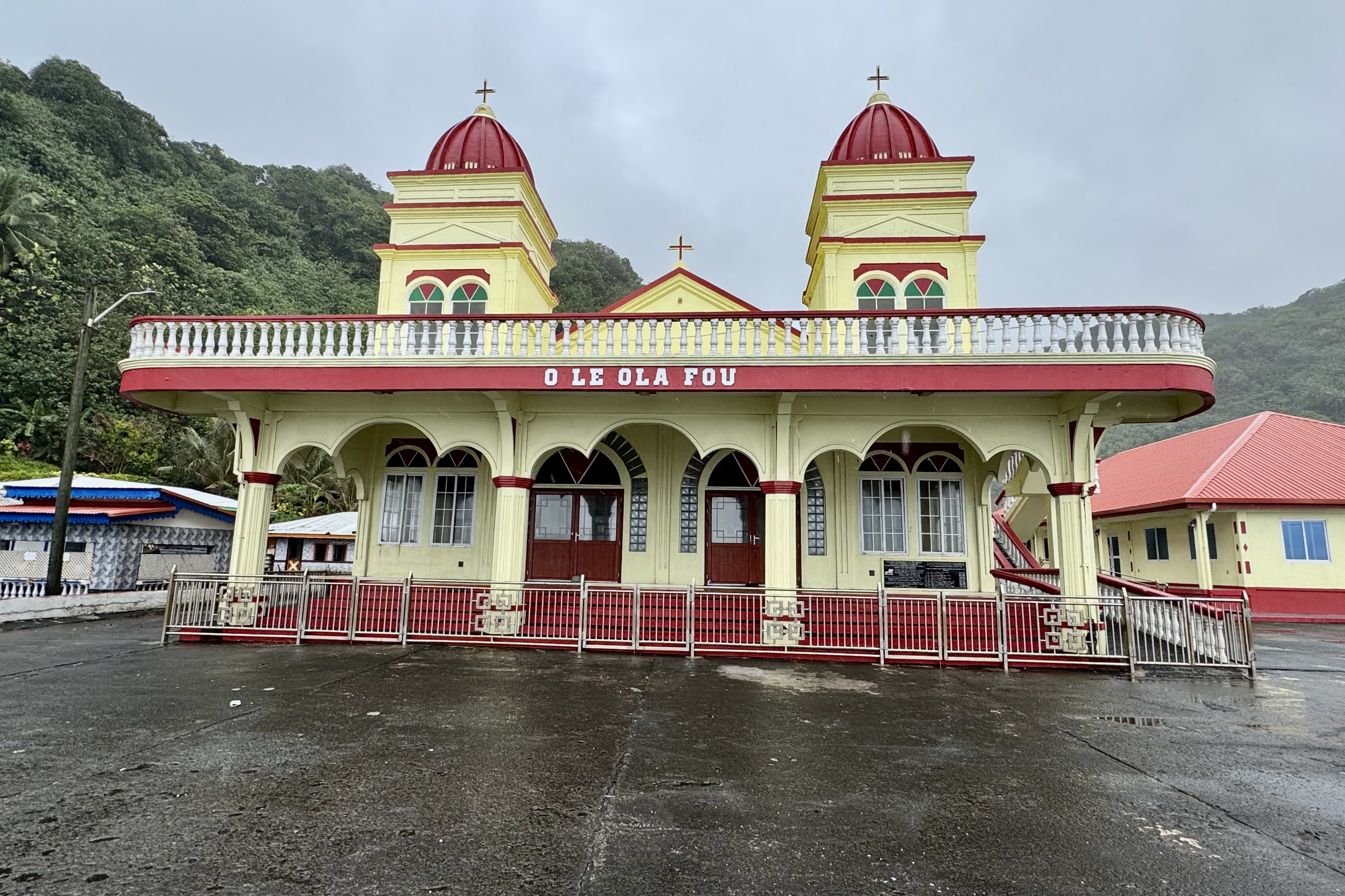
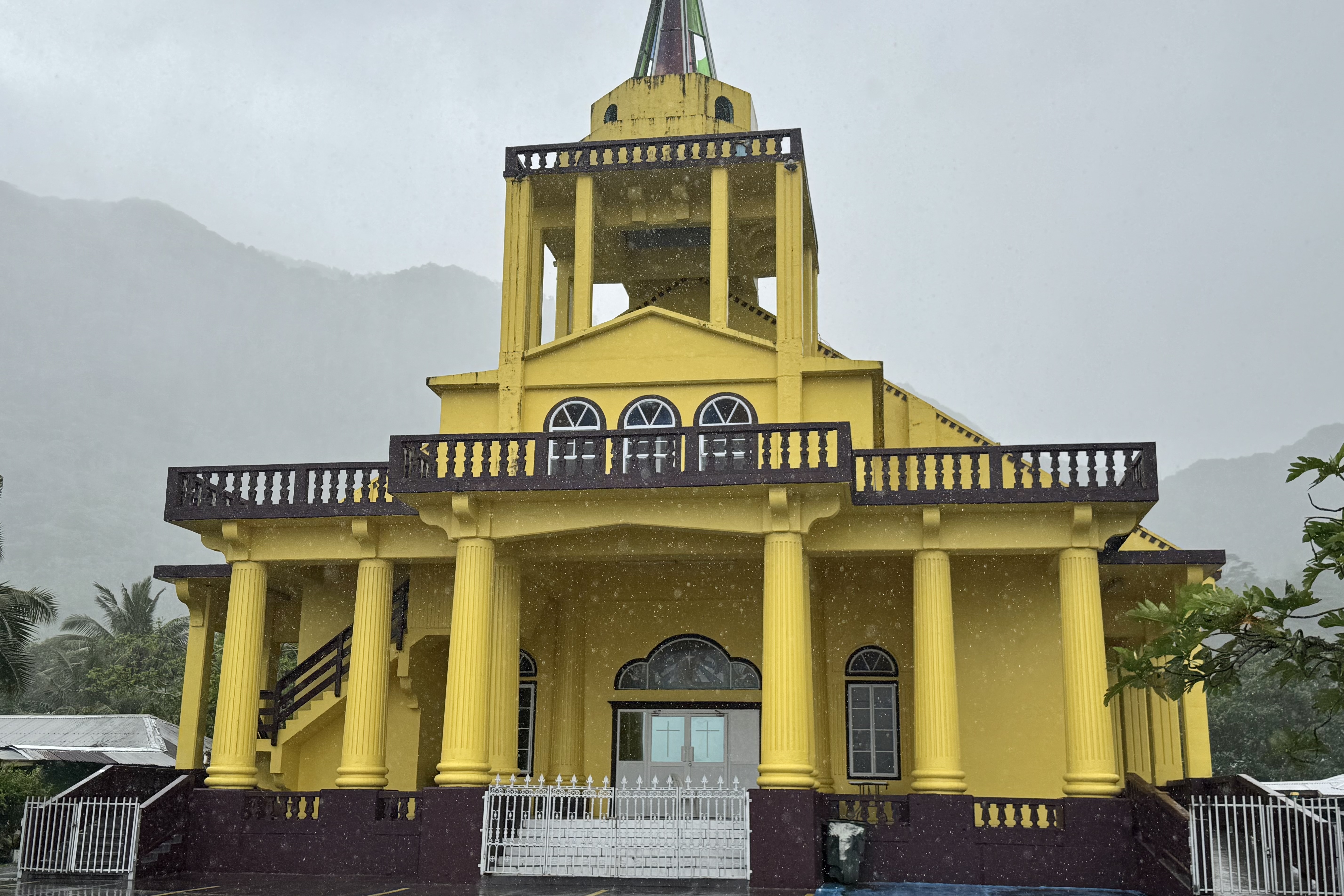
One thing that is impossible to miss while driving through American Samoa is the prominence of churches. Nearly every village has at least one , and many have several large whitewashed and pastel or bright colored buildings, often topped with tall steeples. They definitely stand out amongst the modest home and often seemed outsized in comparison to their surroundings, including one we irreverently joked about looking like a cruise ship.

Their prominence reflects the central role of Christianity in fa’a Samoa, the Samoan way of life. Churches are more than a place to worship on Sunday mornings, but important centers for community life, identity and gathering. They are every bit as much of the landscape as the mountains and the sea. On the Sunday morning we traversed the island , there was a striking observation: men and women dressed all in white making their way to church. Wearing one’s Sunday best is taken seriously and this tradition definitely added a sense of occasion and dignity on a day devoted to faith, family, and community.

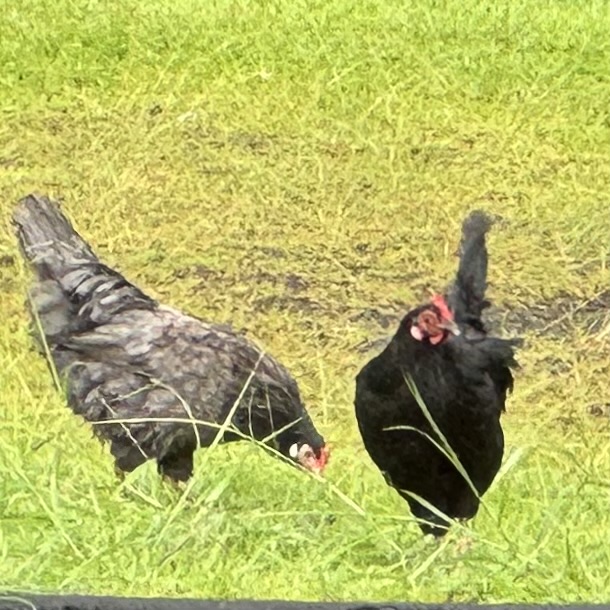
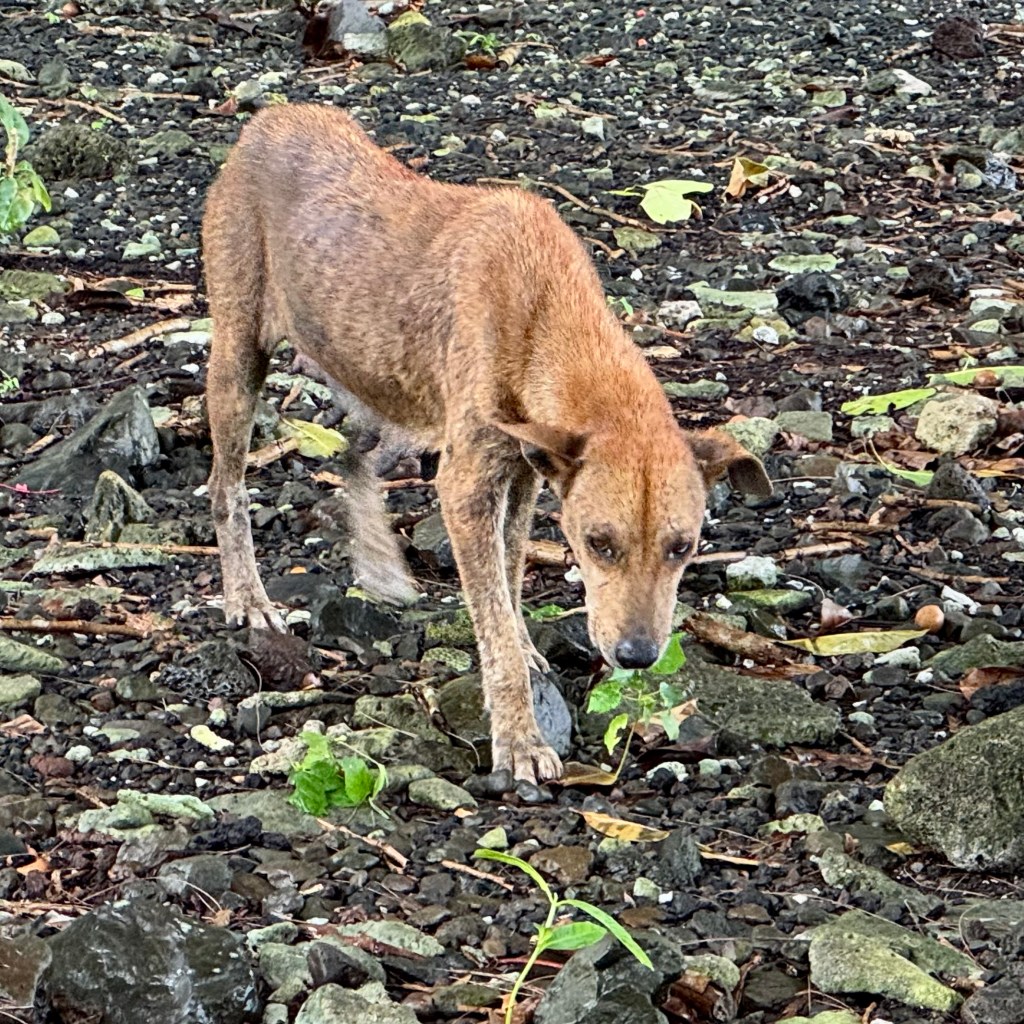
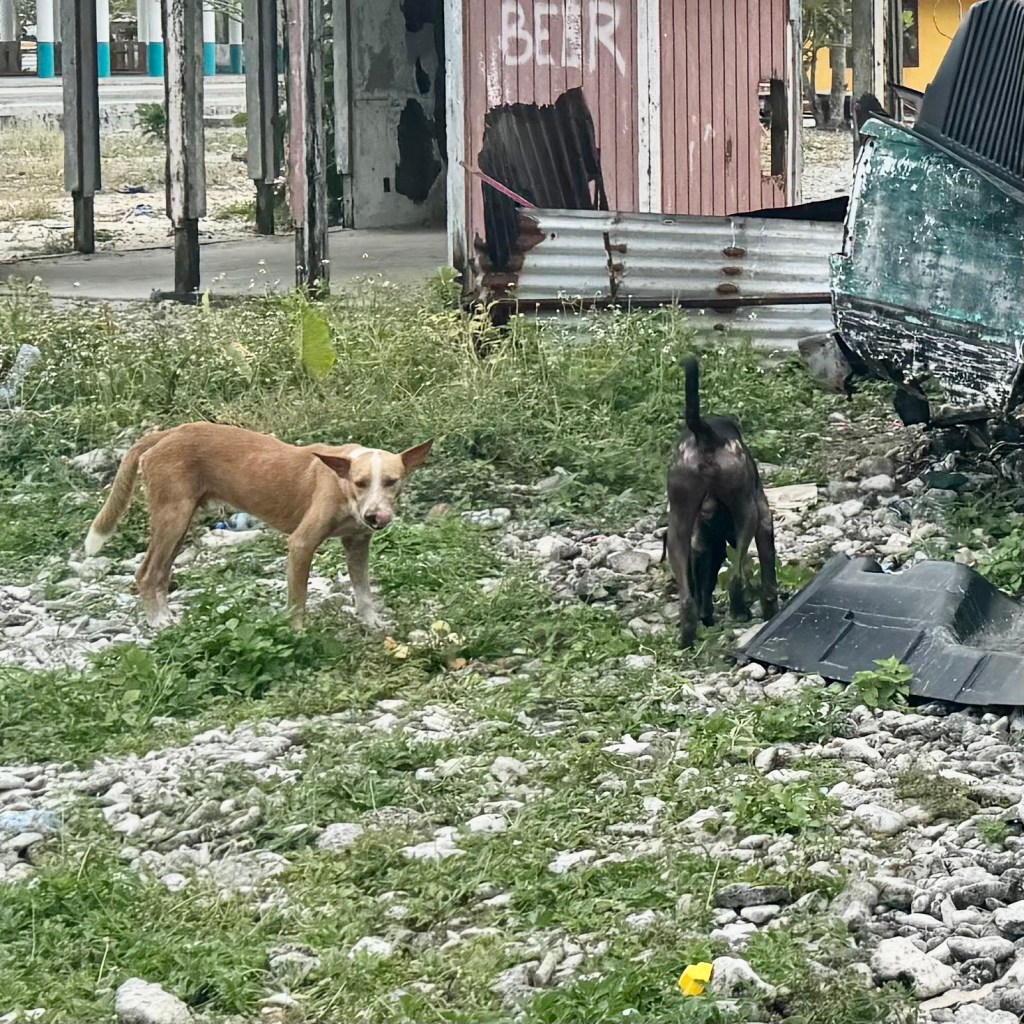
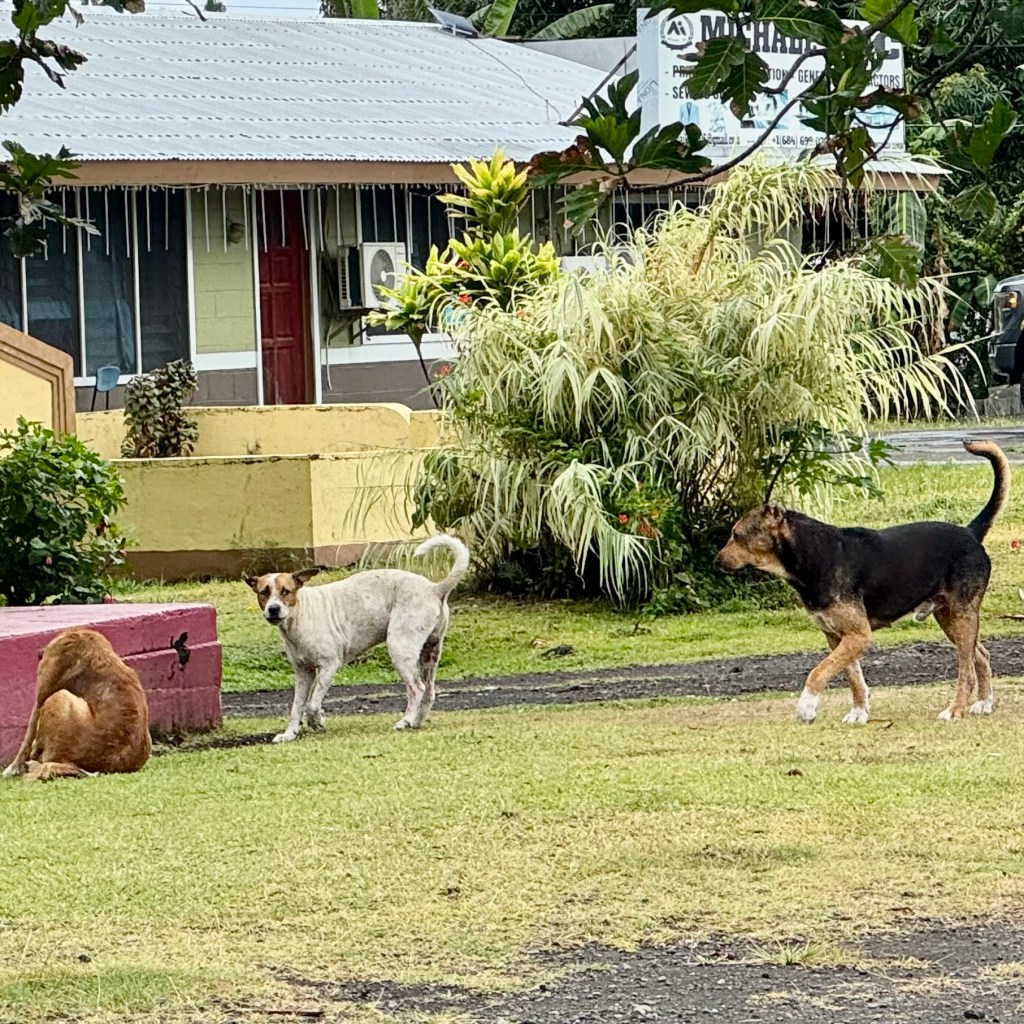
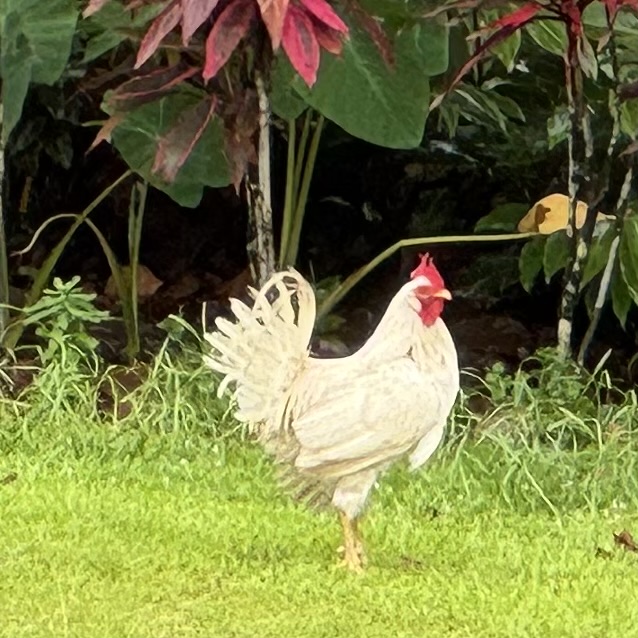
Another feature of village life, which I had mentioned in an earlier entry, was the astonishing number of chickens. Hens, roosters, and fluffy little chicks wander freely along roadsides, through yards and wherever their chicken instincts lead them (as do the dogs). They pay no mind to traffic laws. We would call them free-ranging chickens and in American Samoa they are a familiar part of life. Families keep them for eggs and meat, while the fowl forage for much of their own food. Why build elaborate chick coops when the birds are quite capable of finding their own dinner. I would imagine our back-yard cooped up chickens would be quite envious.

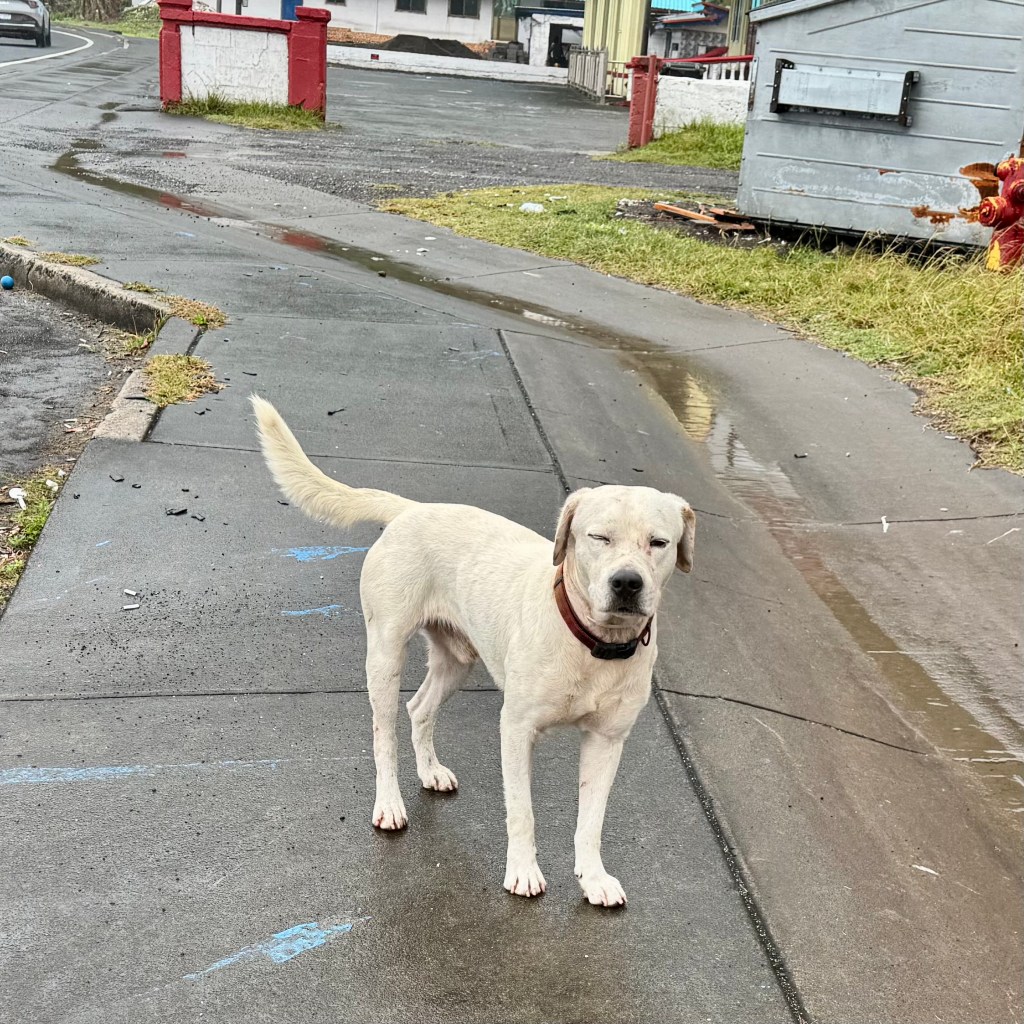
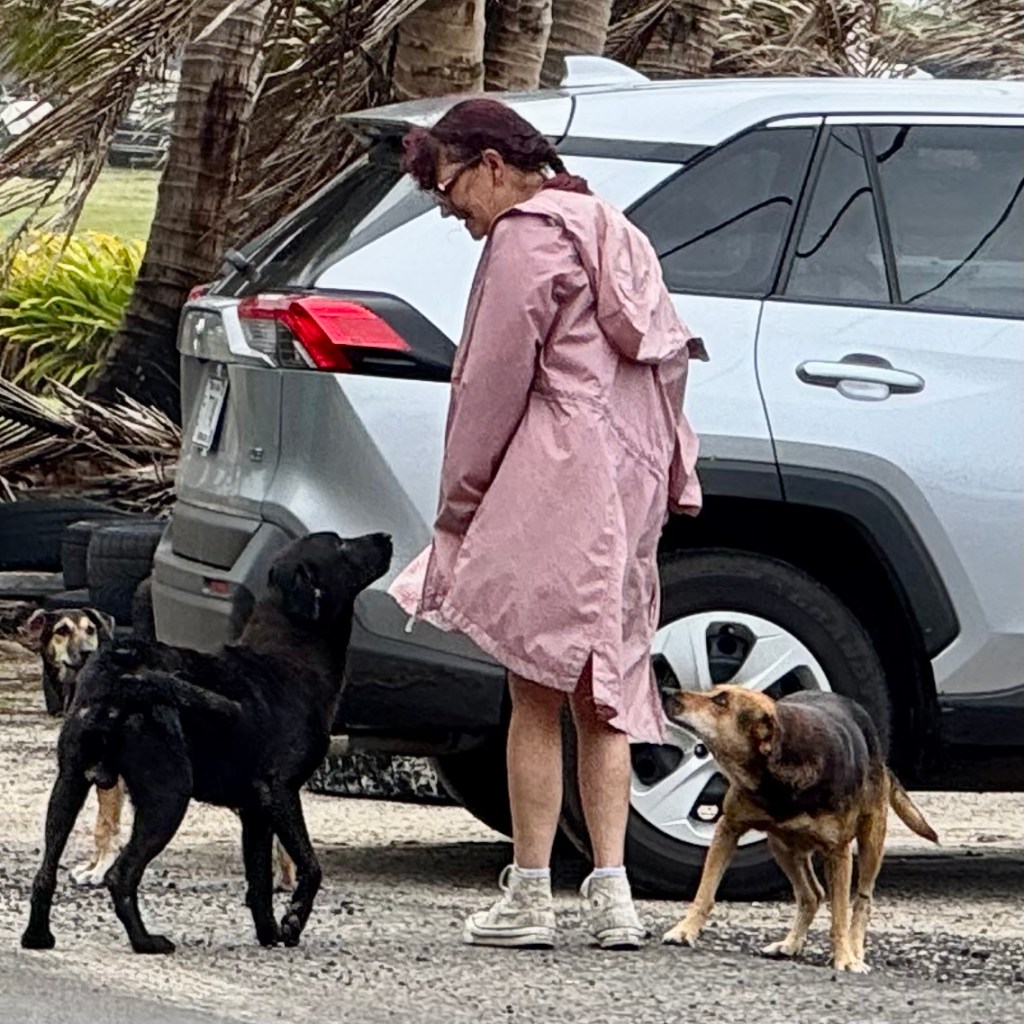
As I mentioned previously dogs enjoy this same freedom — either belonging to a household or available for adoption by a passing tourist. My Bernadette is so soft of heart and was prone to providing a few with their next meal.

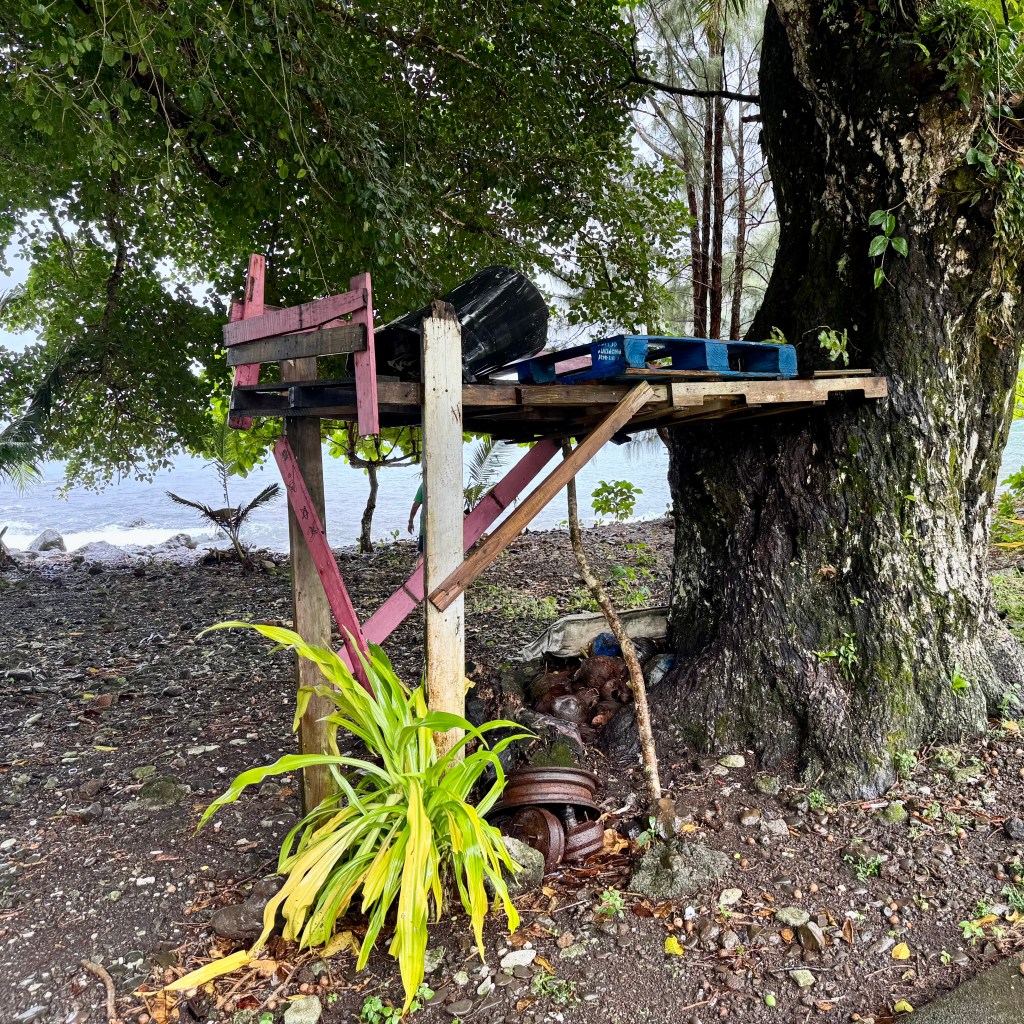
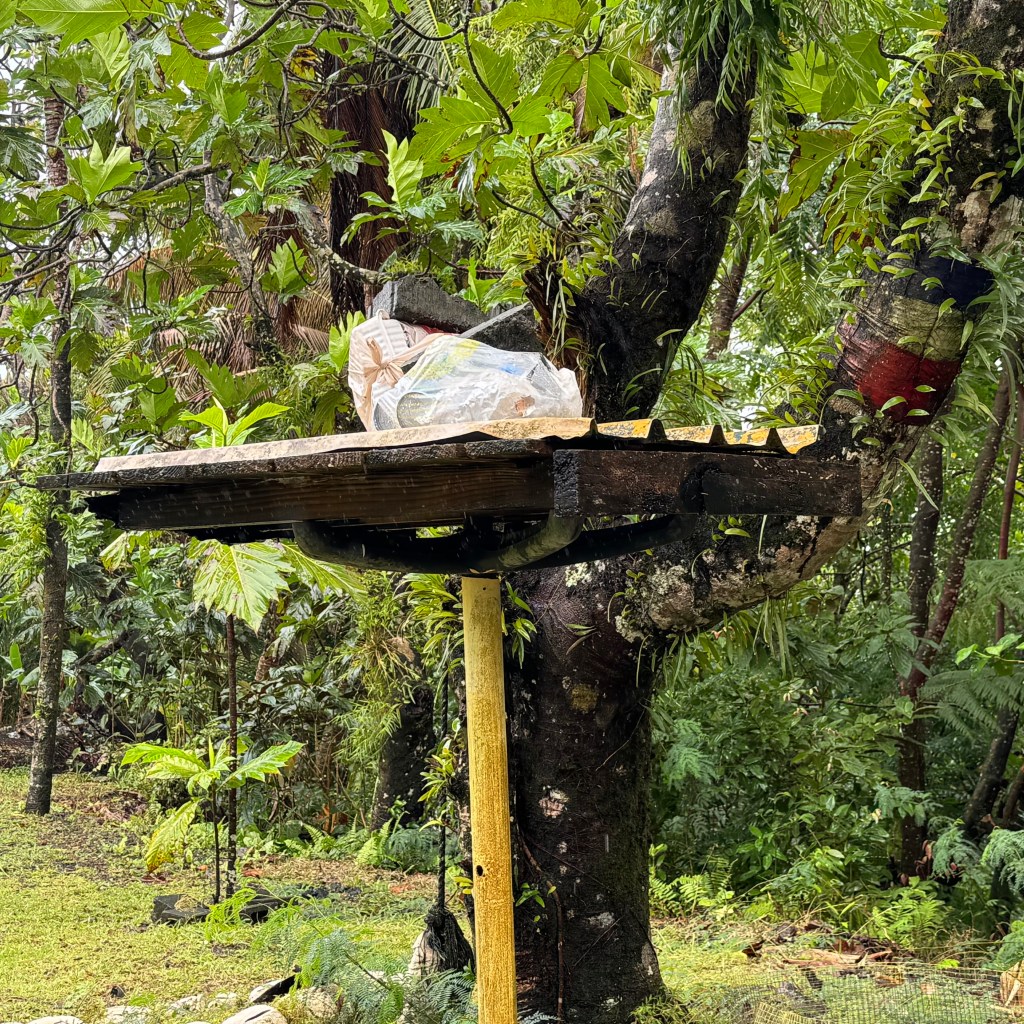
So with dogs and chickens wandering about I began to notice another adaptation. Large platforms, often five feet off the ground , where household garbage was stored until collection. Elevated garbage made sense when the local four legged and feather scavengers are free to investigate whatever they pleased. It also struck me that this arrangement would probably not pass muster in most of the deed restricted neighborhoods whereI have lived. My homeowners association would have required a committee meeting before approving the backyard chicken coupe, never mind the garbage platform.
Then there were the tombs.

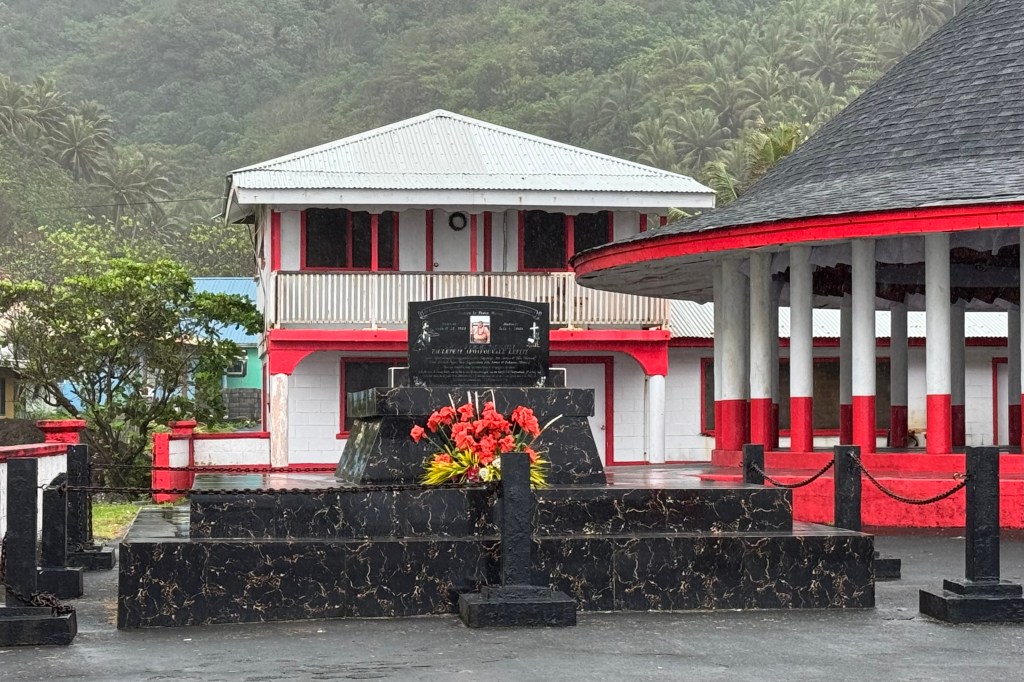
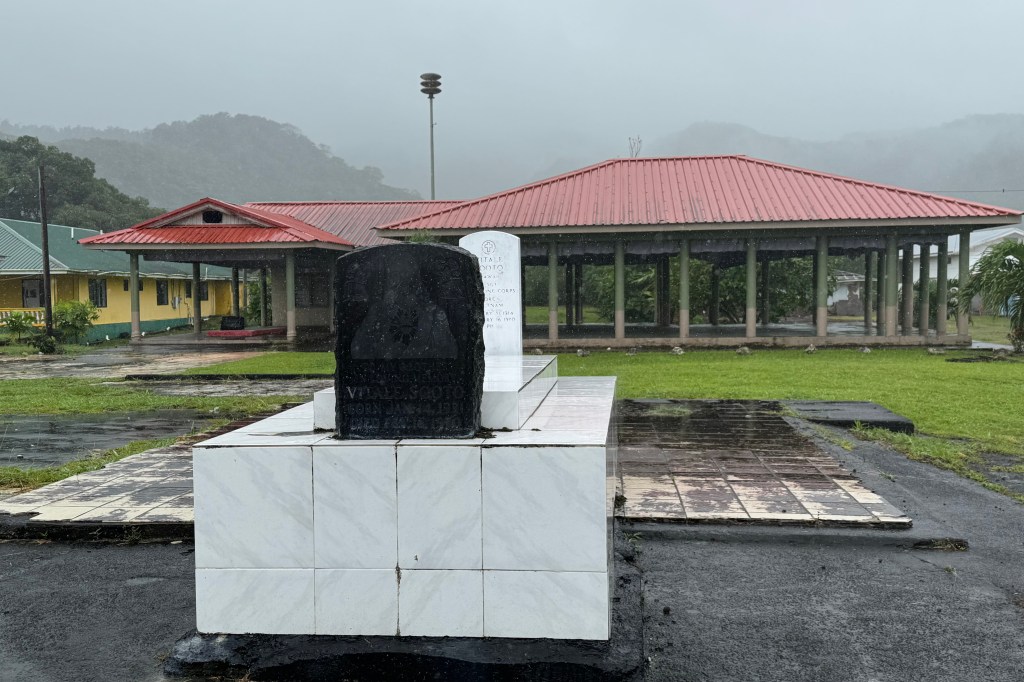
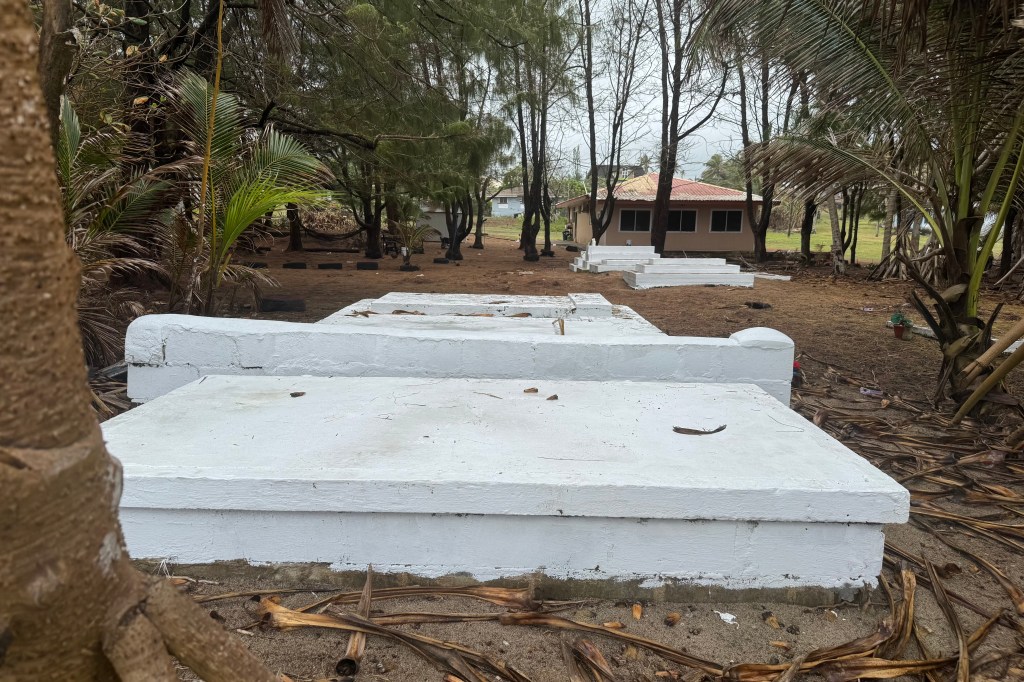
At first I was puzzled by the concrete burial structures sitting right in front yards, sometimes just steps from the front porch. Some were simple slabs , others were tiled, perhaps topped with little roofs, or decorated with crosses. Some were so elaborate they rivaled the grandeur of the churches. I learned that family burials on ancestral land are a long standing Samoan tradition with land closely tied to extended family. Burying loved ones at home keeps them close to the generations that follow. These tombs are not treated as places to hide away and avoid.

It is such a striking difference from the way Americans in the USA approach to death, separating cemeteries from places we live. I found the custom both touching and fascinating. I also decided for the time being, I wasn’t ready to campaign for a similar arrangement. But perhaps since Tasia was with me to witness this practice she might be open to placing my tomb in the front yard since I live with her (or at least a big memorial with my ashes.)

Following the Coast to the End of the Road.

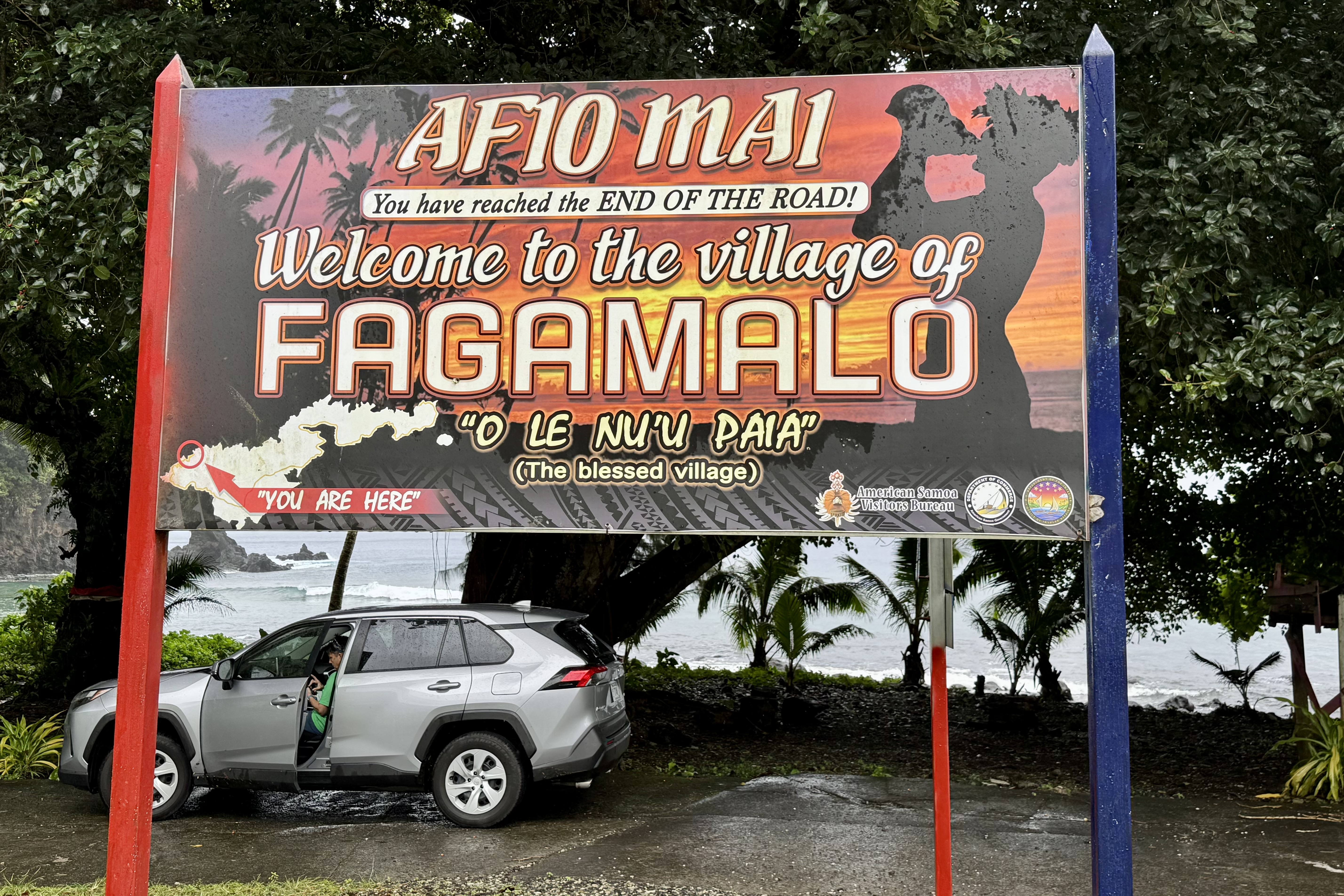
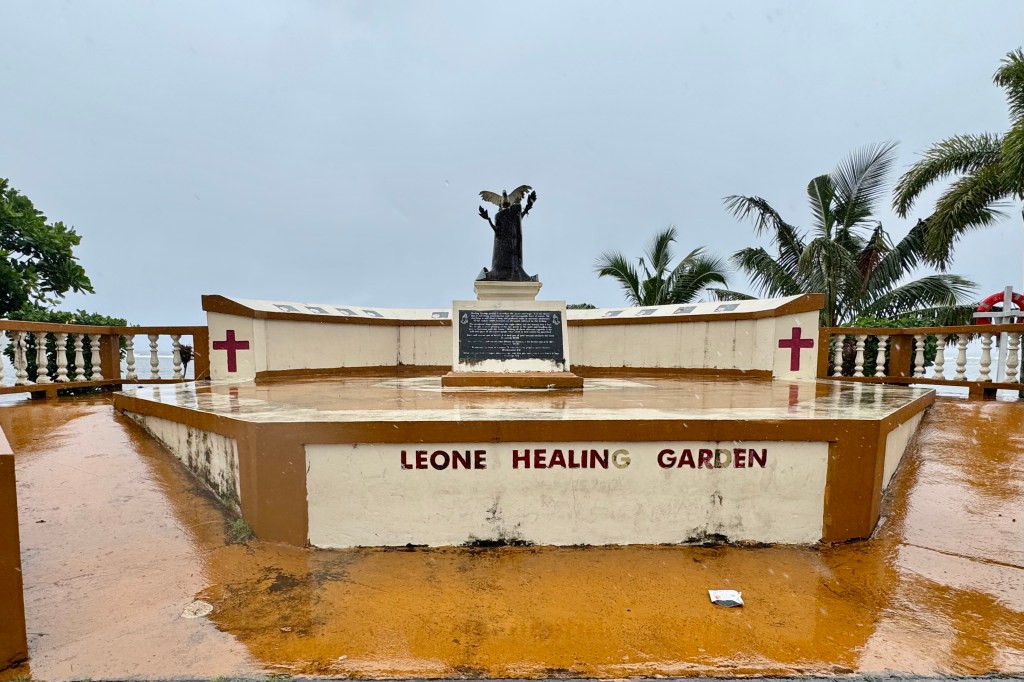
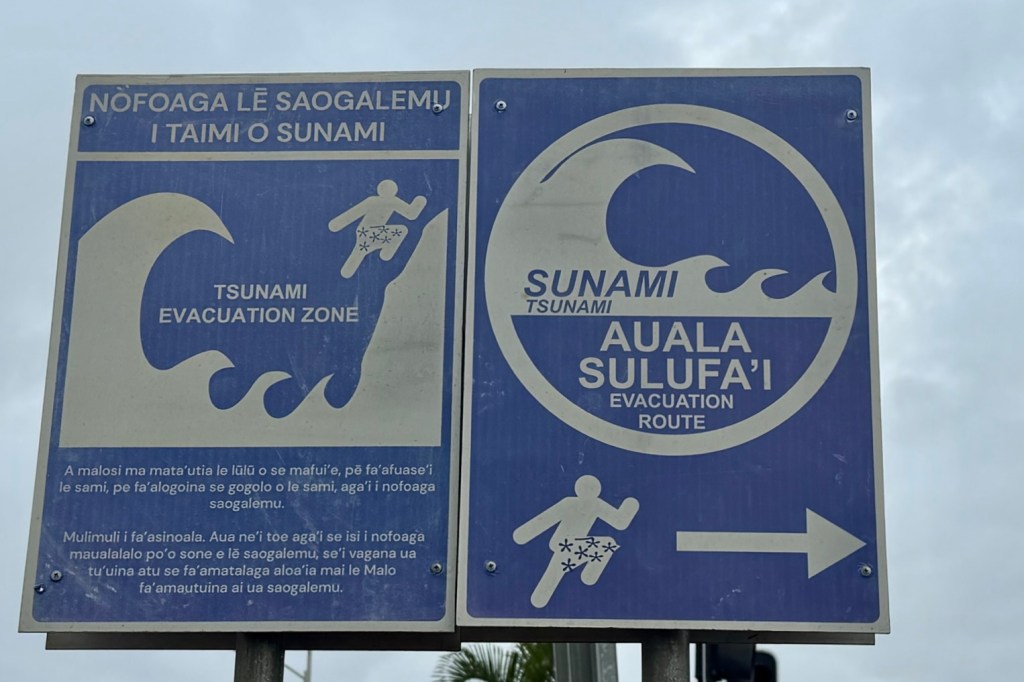
Eventually we returned to the coastal highway and continued northward to Fagamalo, at the end of the road. Along the way we drove through Leone, one of Tutuila’s larger communities and visited the Leone Healing Garden memorial which was built to honor the victims of the devastating September 29, 2009 Samoa earthquake and tsunami. Signs along most roads marking tsunami hazard zone were a recurring reminder that this beautiful coastline is also extremely vulnerable to the power of the Pacific ocean.

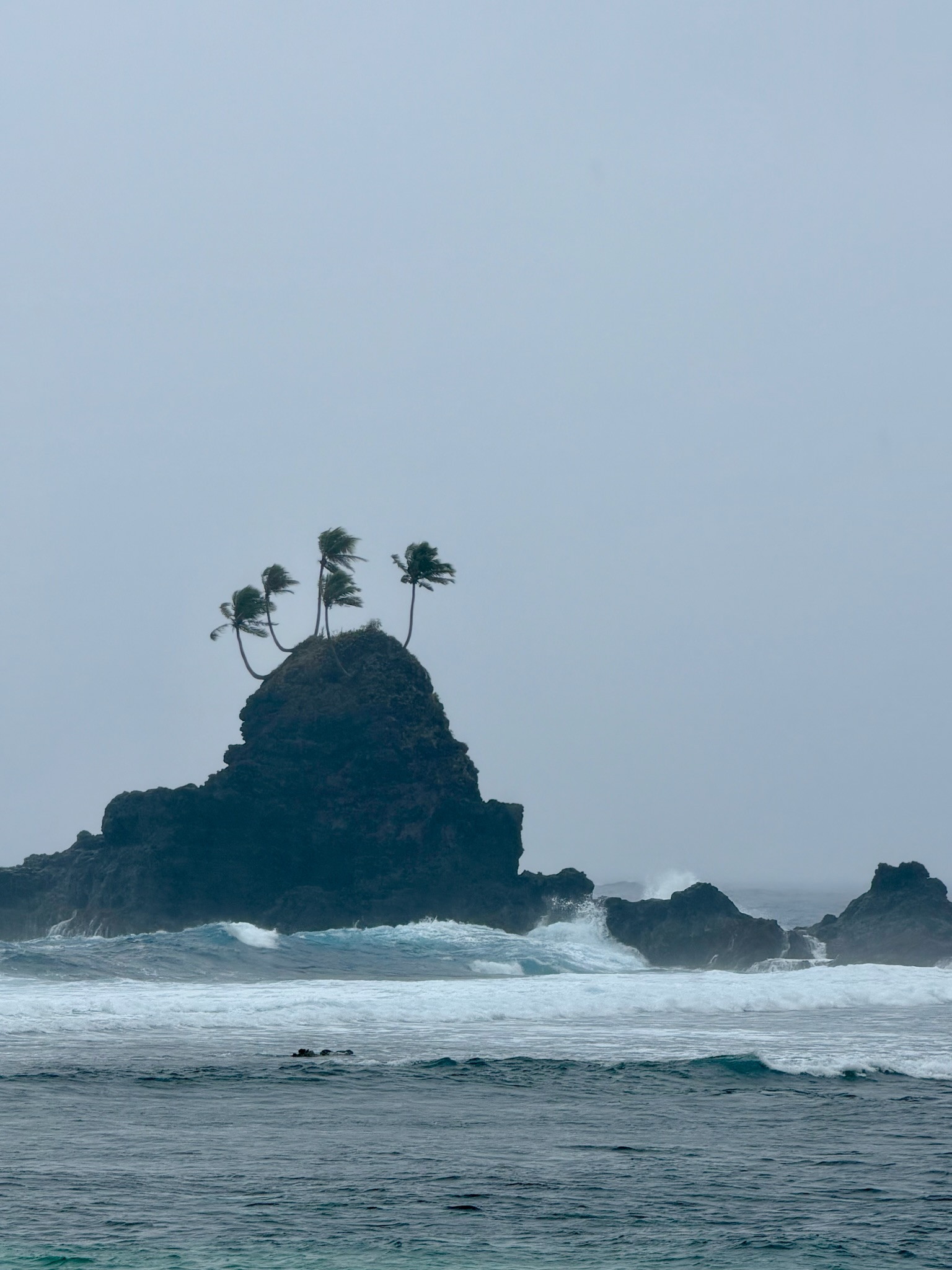
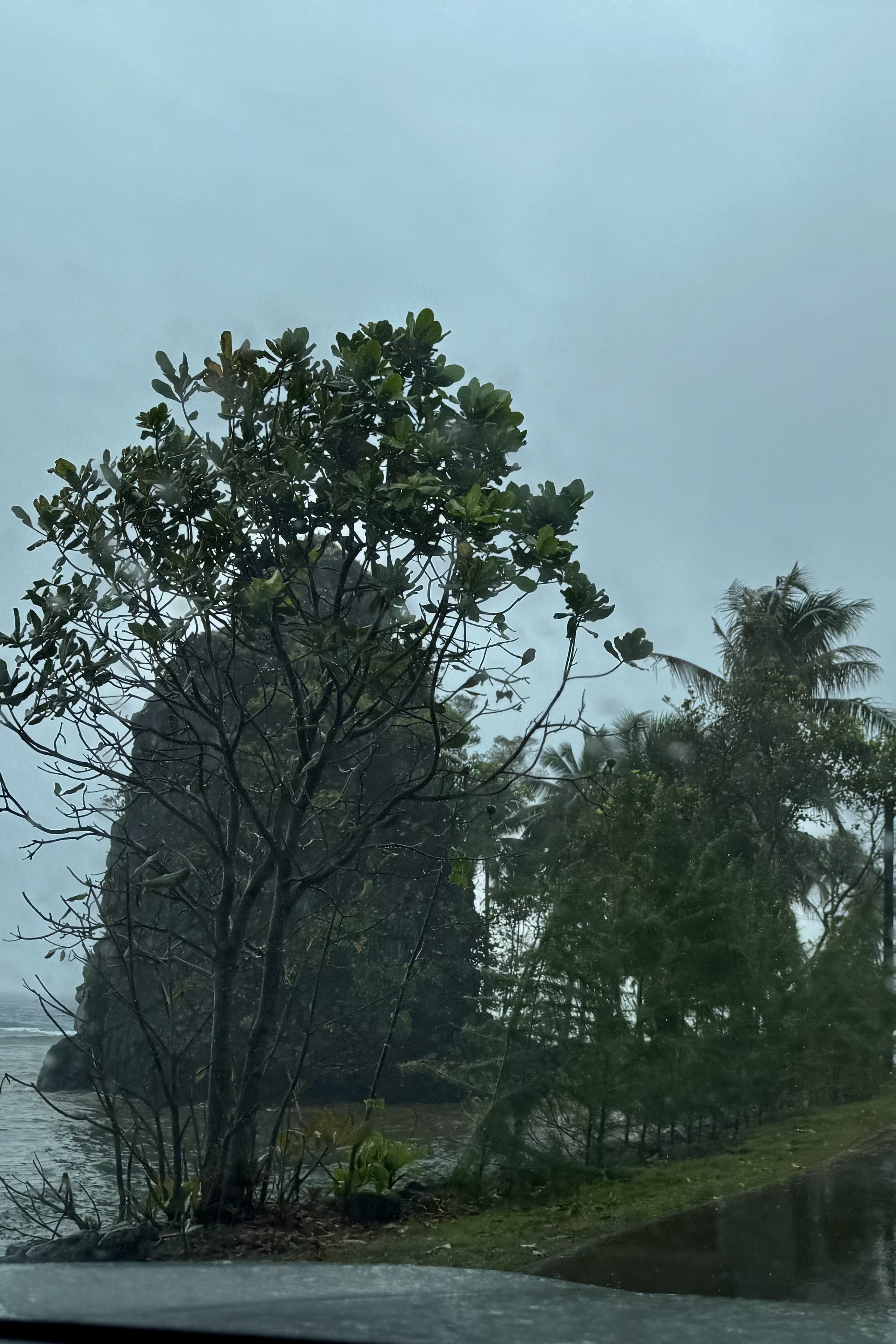
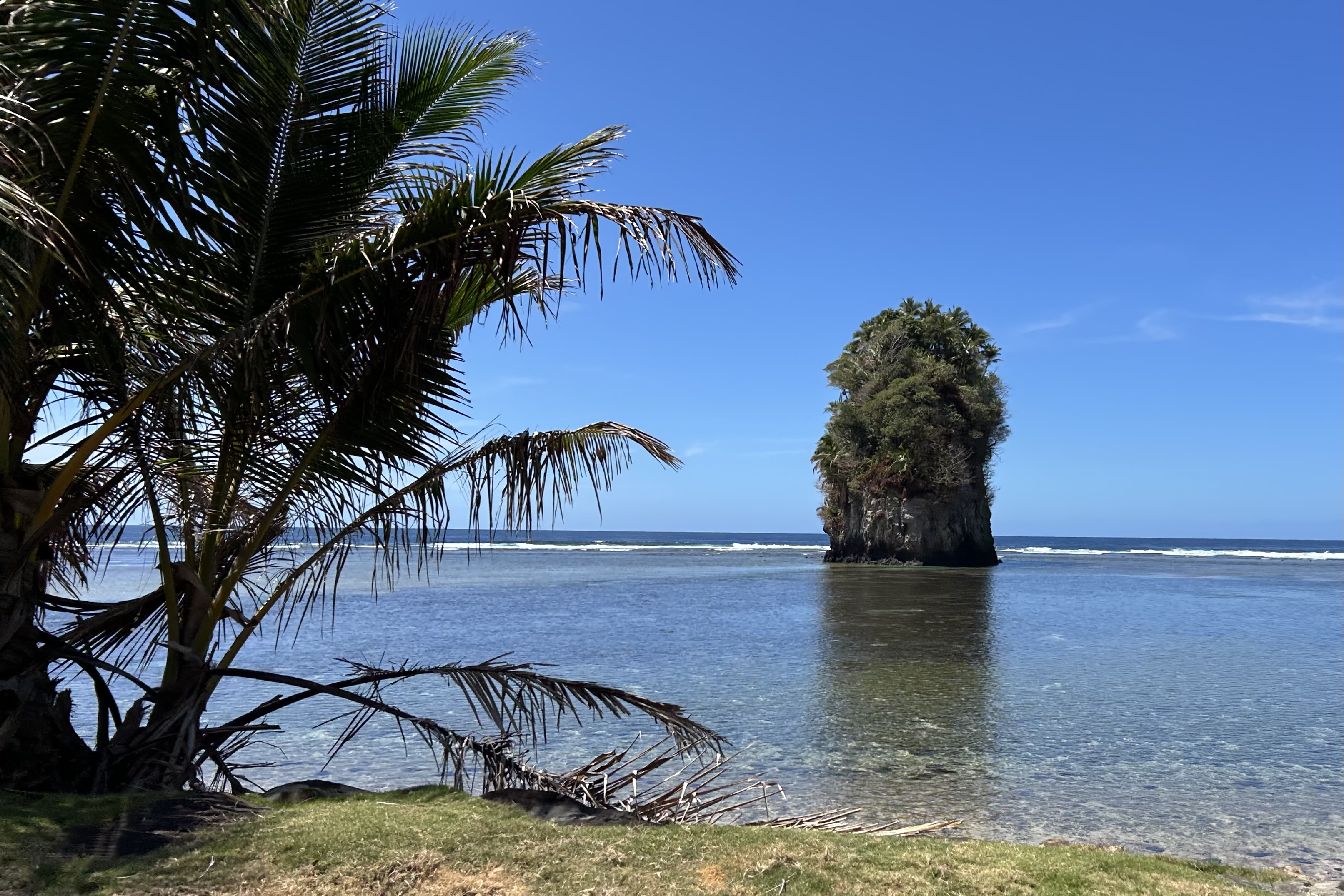
We had a classic photo opportunity when passing Cape Taputapu, where a small, palm-topped sea stack caught my eye and is a signature land-mark of the area. I think Tasia was hooked by the look.

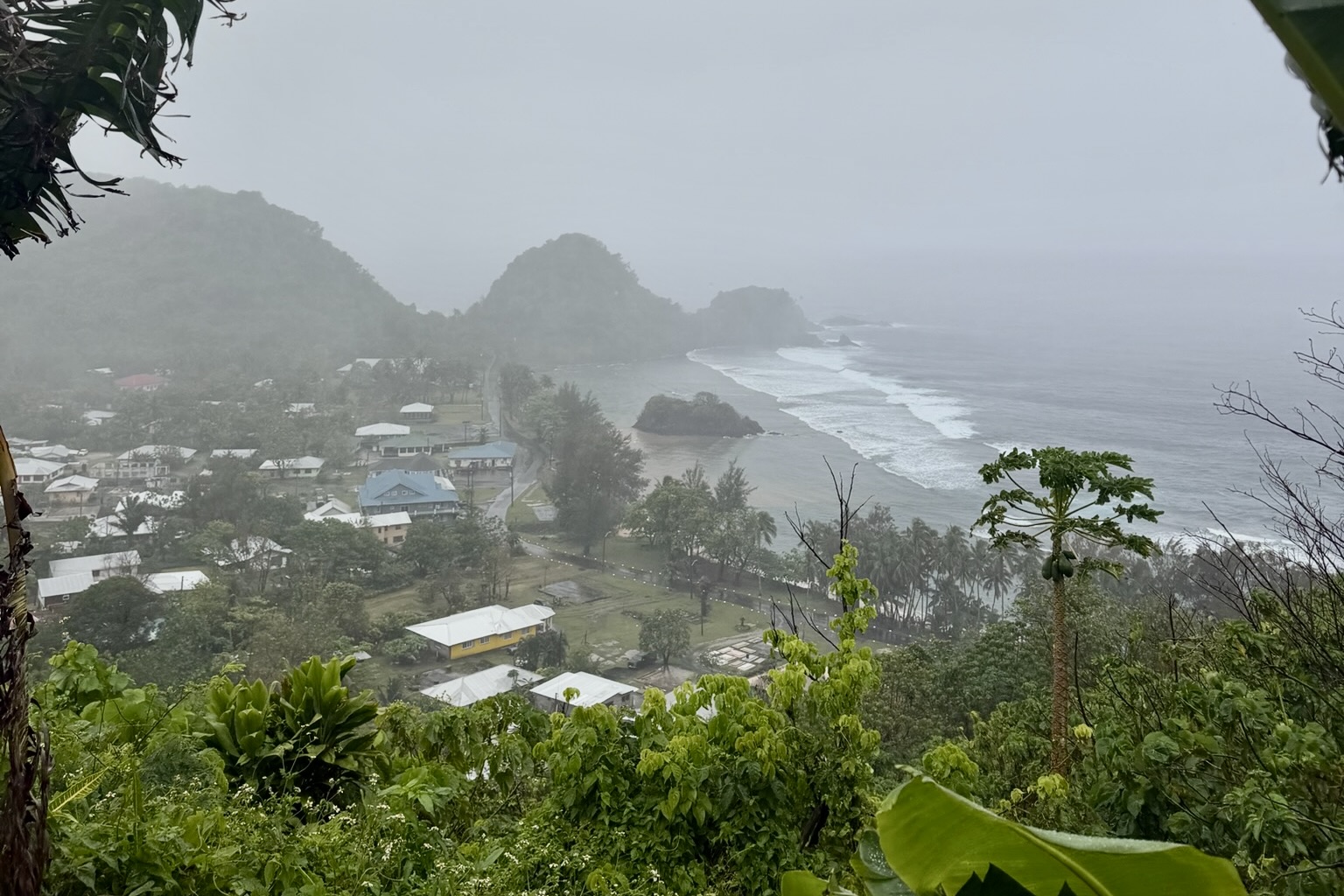
We stopped to admire Amanave, a village nestled along the coast. Even with fog trying its best to conceal the scenery, it was enchanting to see. The road wound along the shoreline, dipping into small bays, climbed across a ridge to Poloa and from there it rose steeply and twisted sharply to the roads end. The scenery was spectacular even in the rain and yet again Tasia’s driving skills were tested to the max.

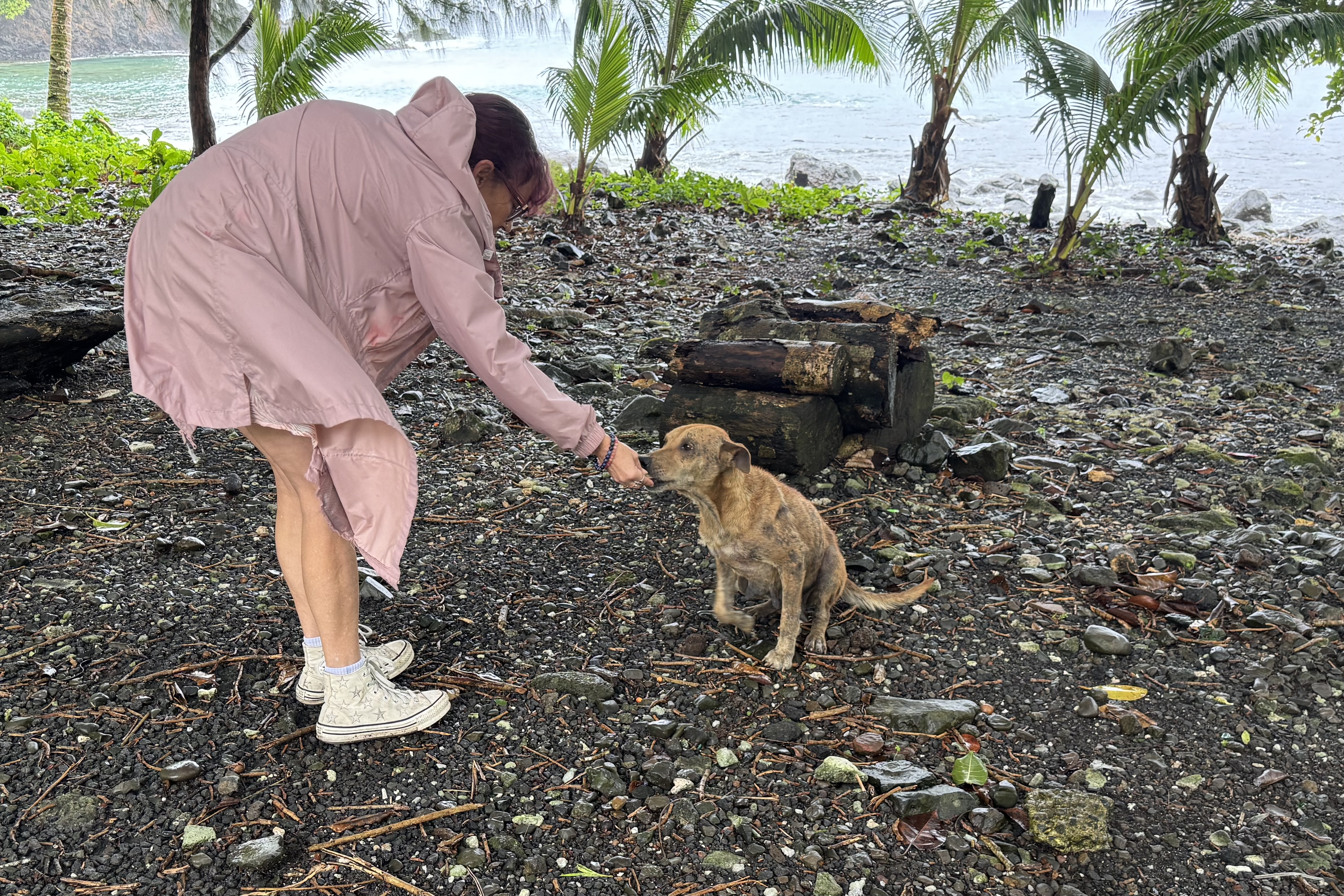
At Fagamalo we explored the beach and as has happened on other outings, we were soon adopted by a local dog. Our adopt-a-dog-by-the-hour definitely was hoping that his companionship, supervision and guidance would be rewarded with some scraps from our lunch. Bernadette tipped him well.

A Legend, a Wild Sea, and a Wave Delivered Shower

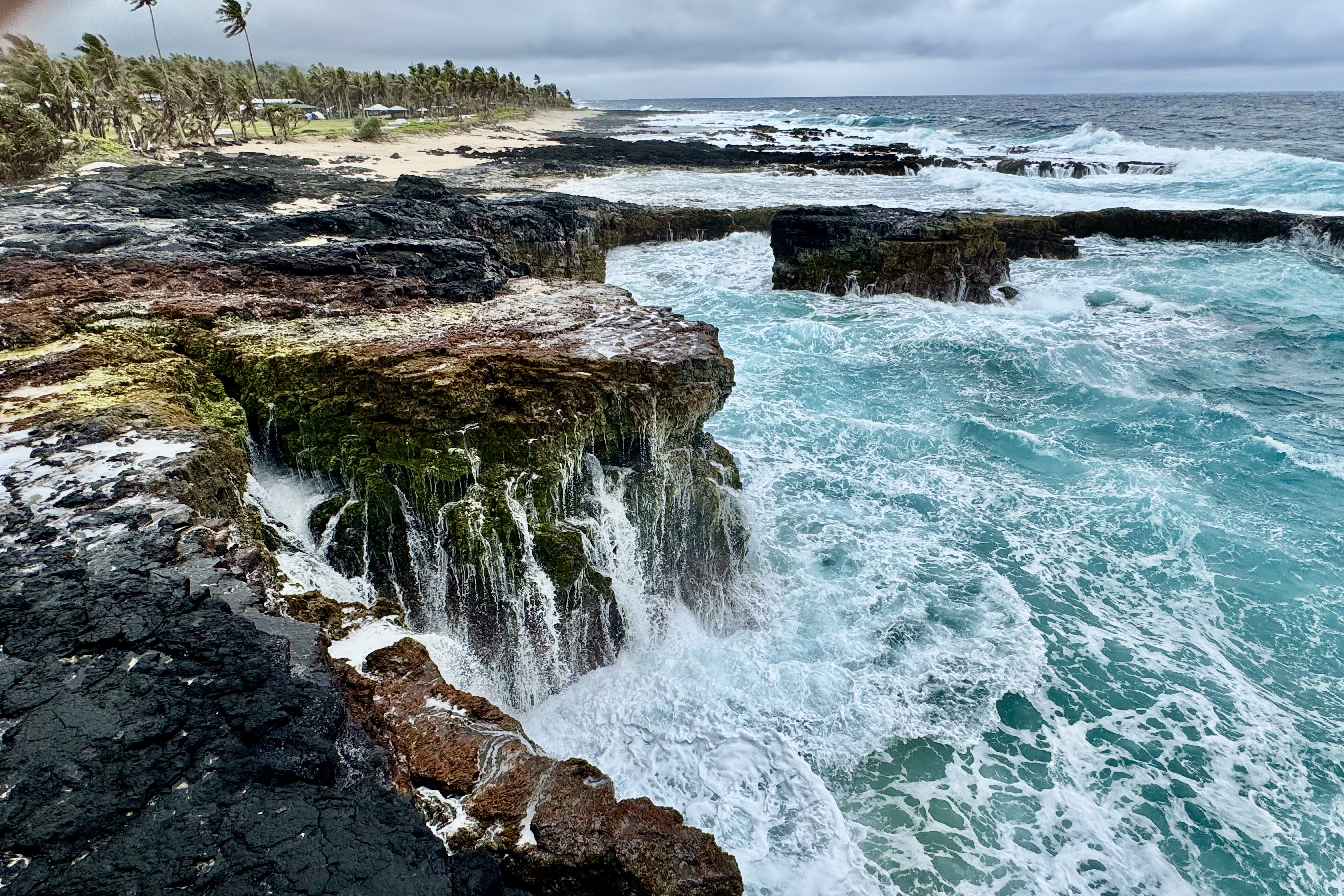
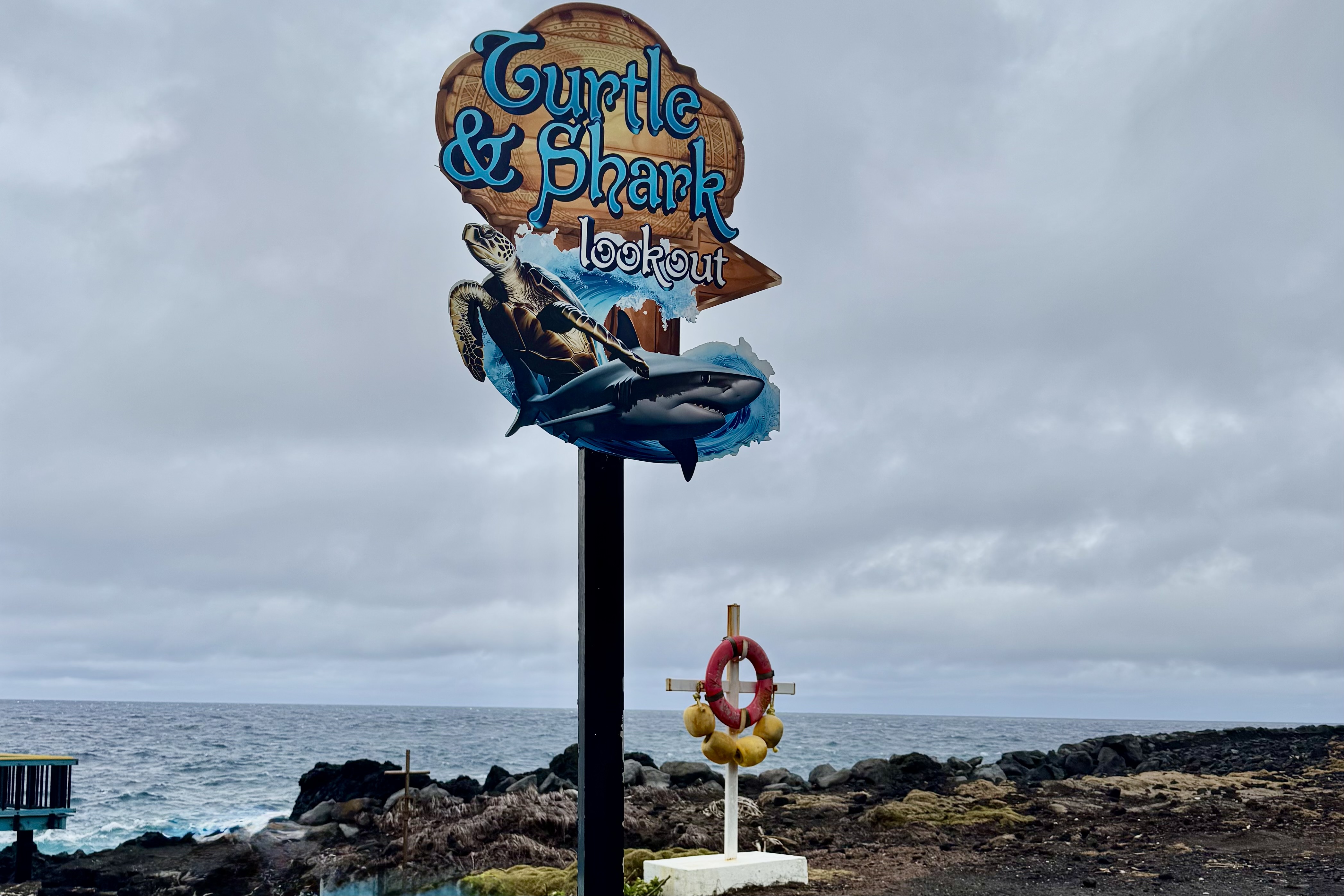
After retracing our route towards Pago Pago, we stopped at Vaitogi to visit the site associated with the Samoan Legend of the turtle and the shark. The story tells of a mother and daughter fleeing famine, that leapt into the sea and were transformed into a turtle and a shark. According to local tradition. villages sing to call the pair, and this site preserves the story.
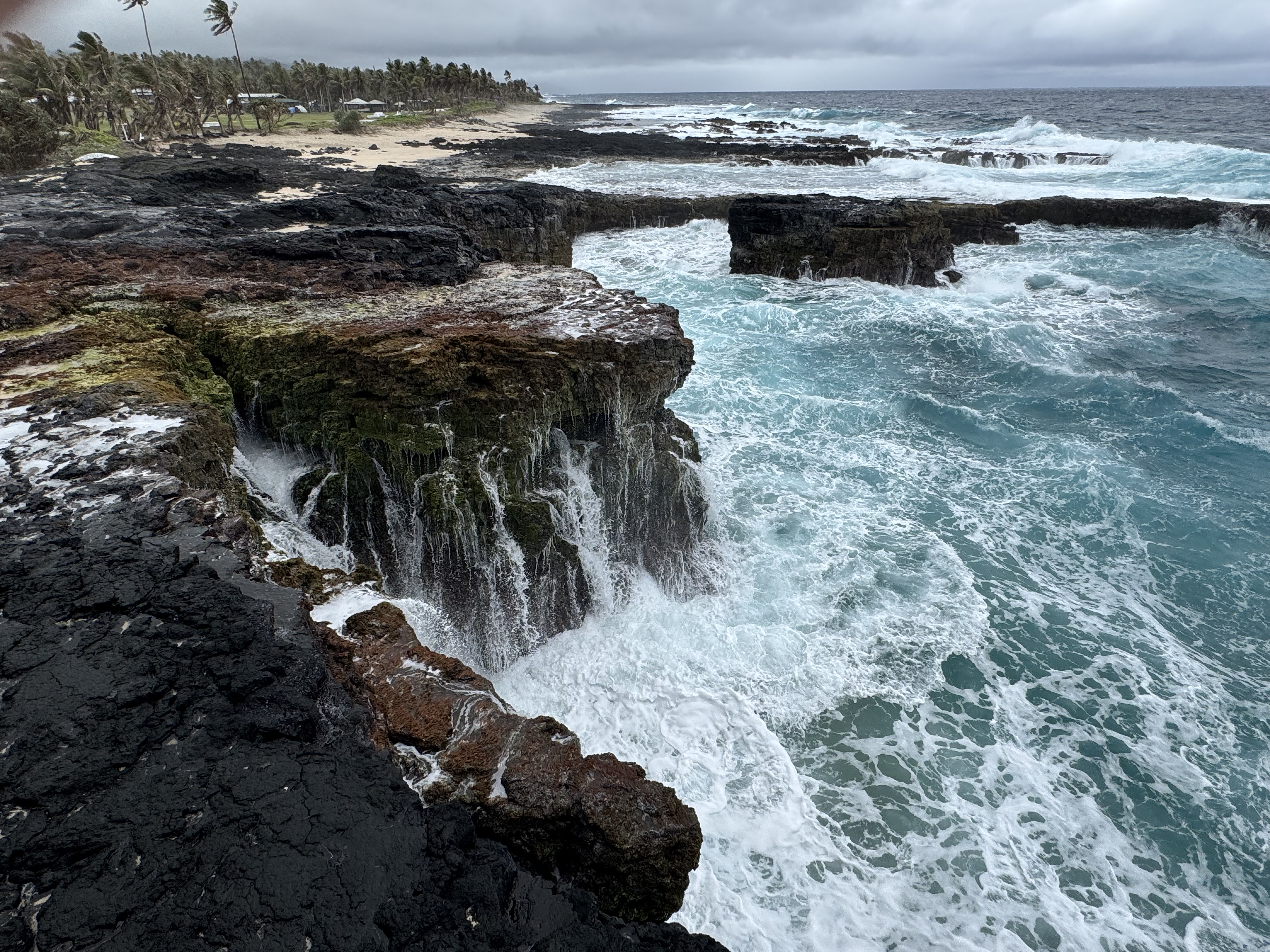
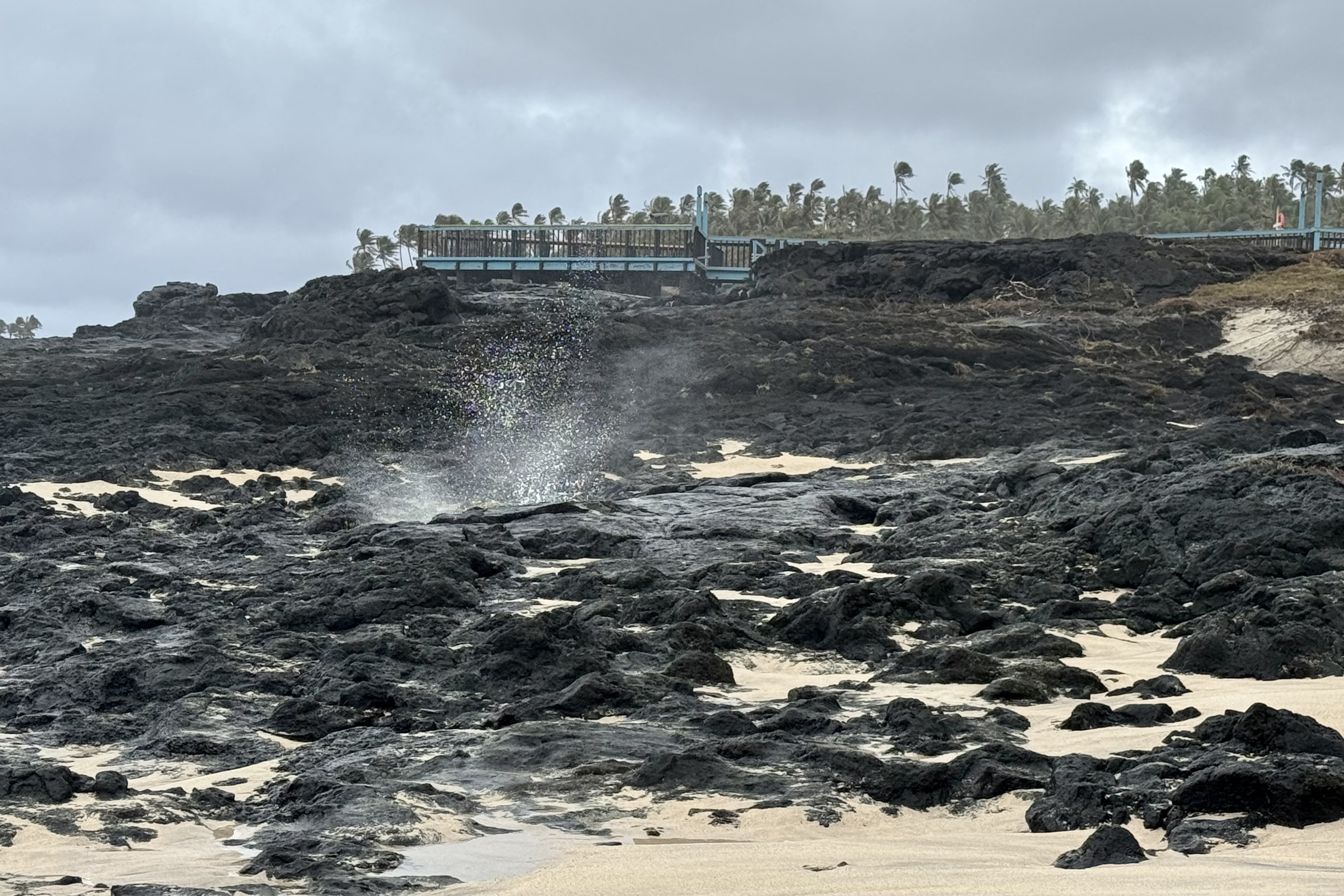
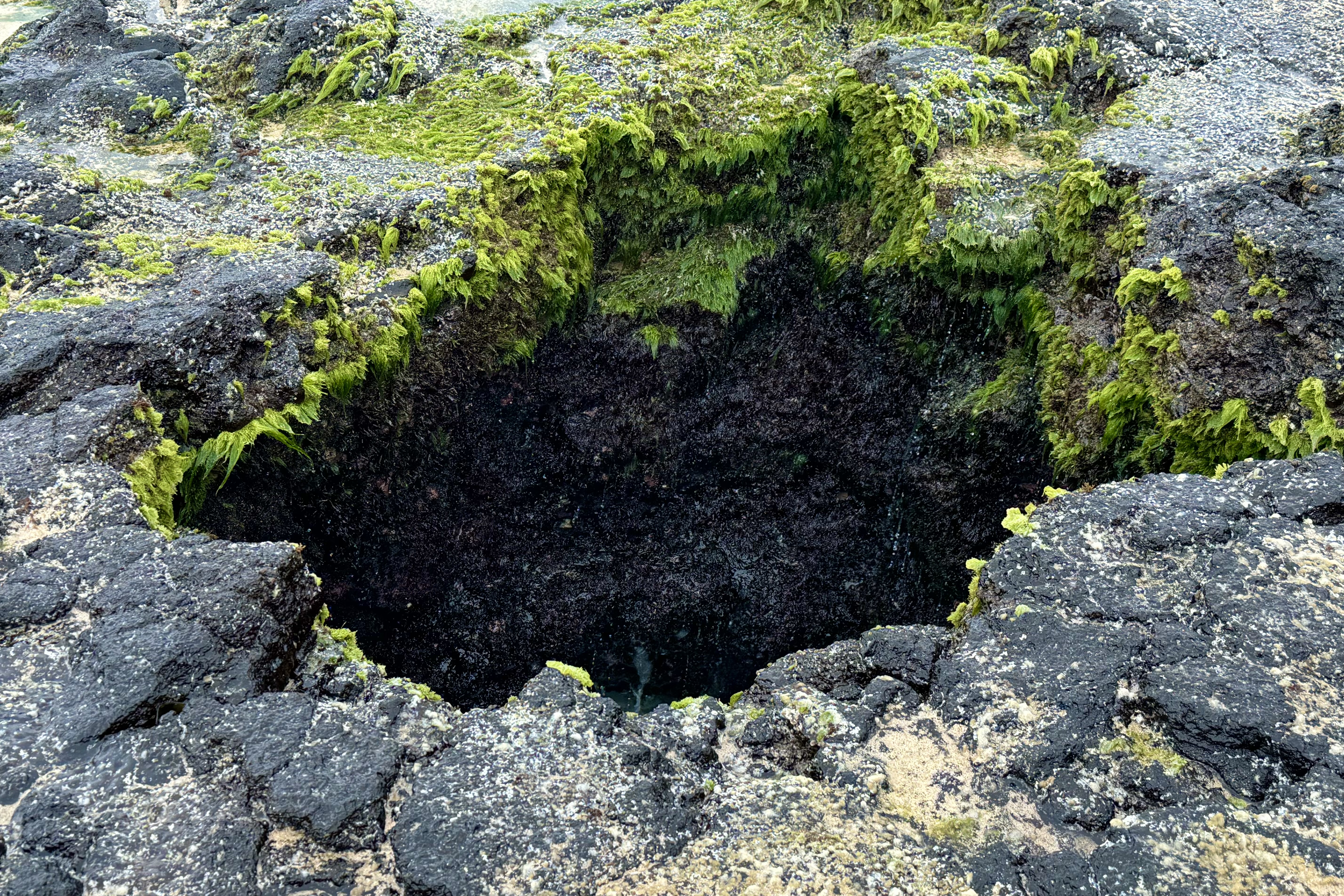
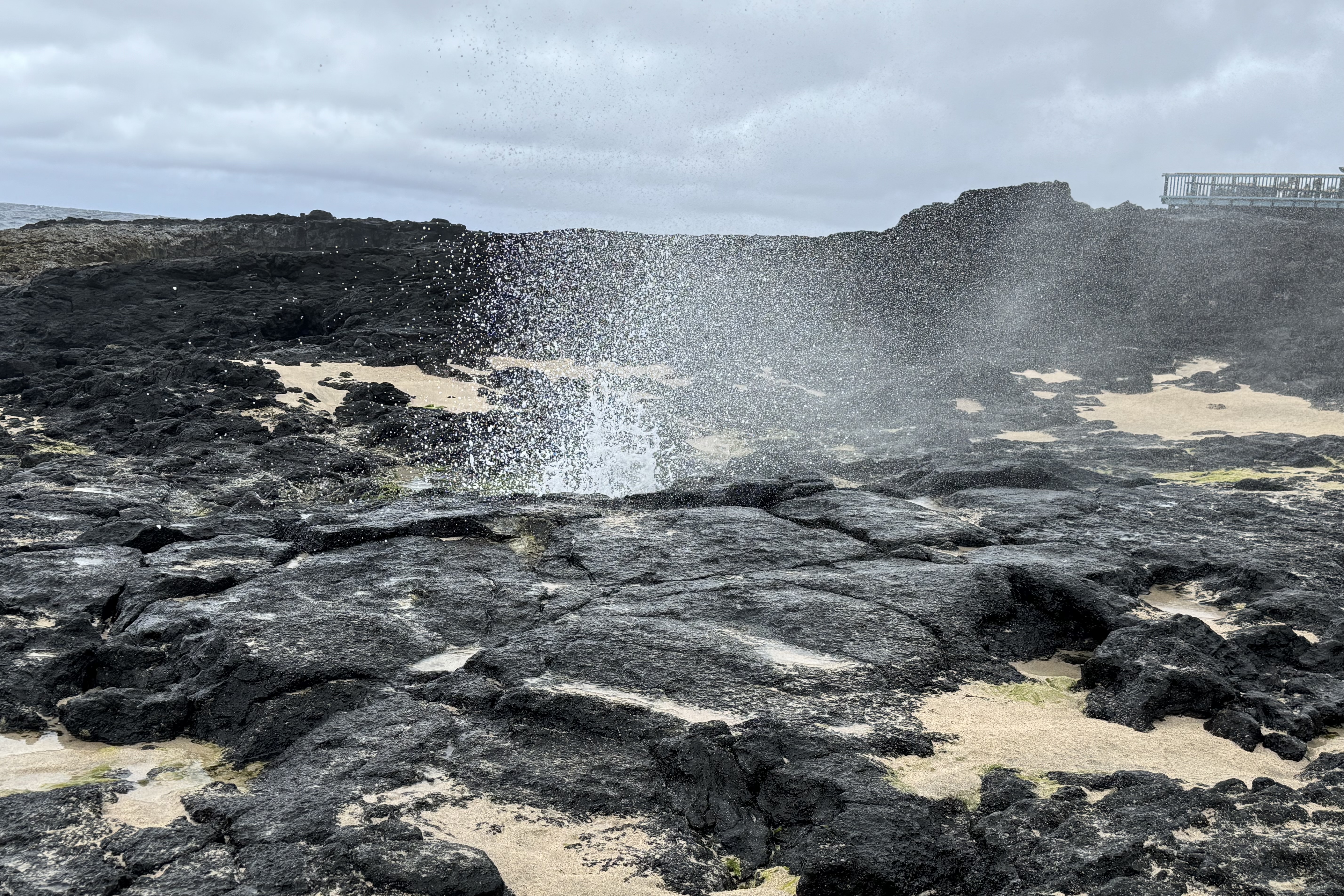
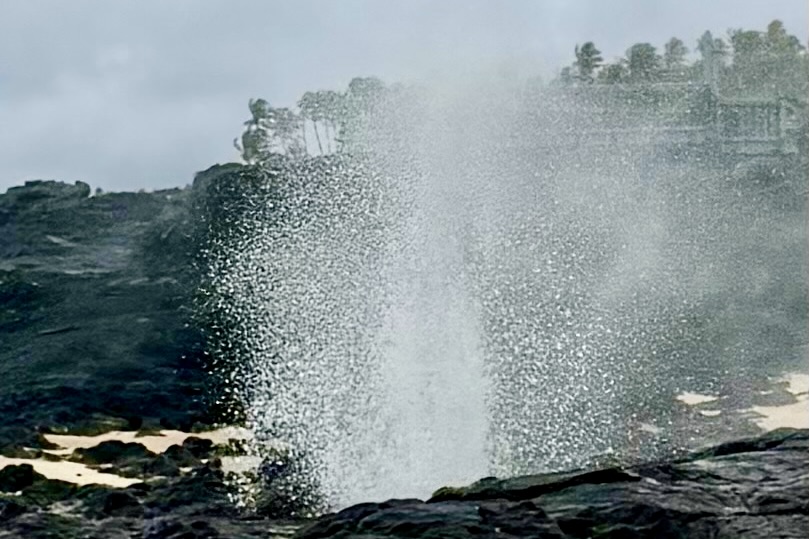
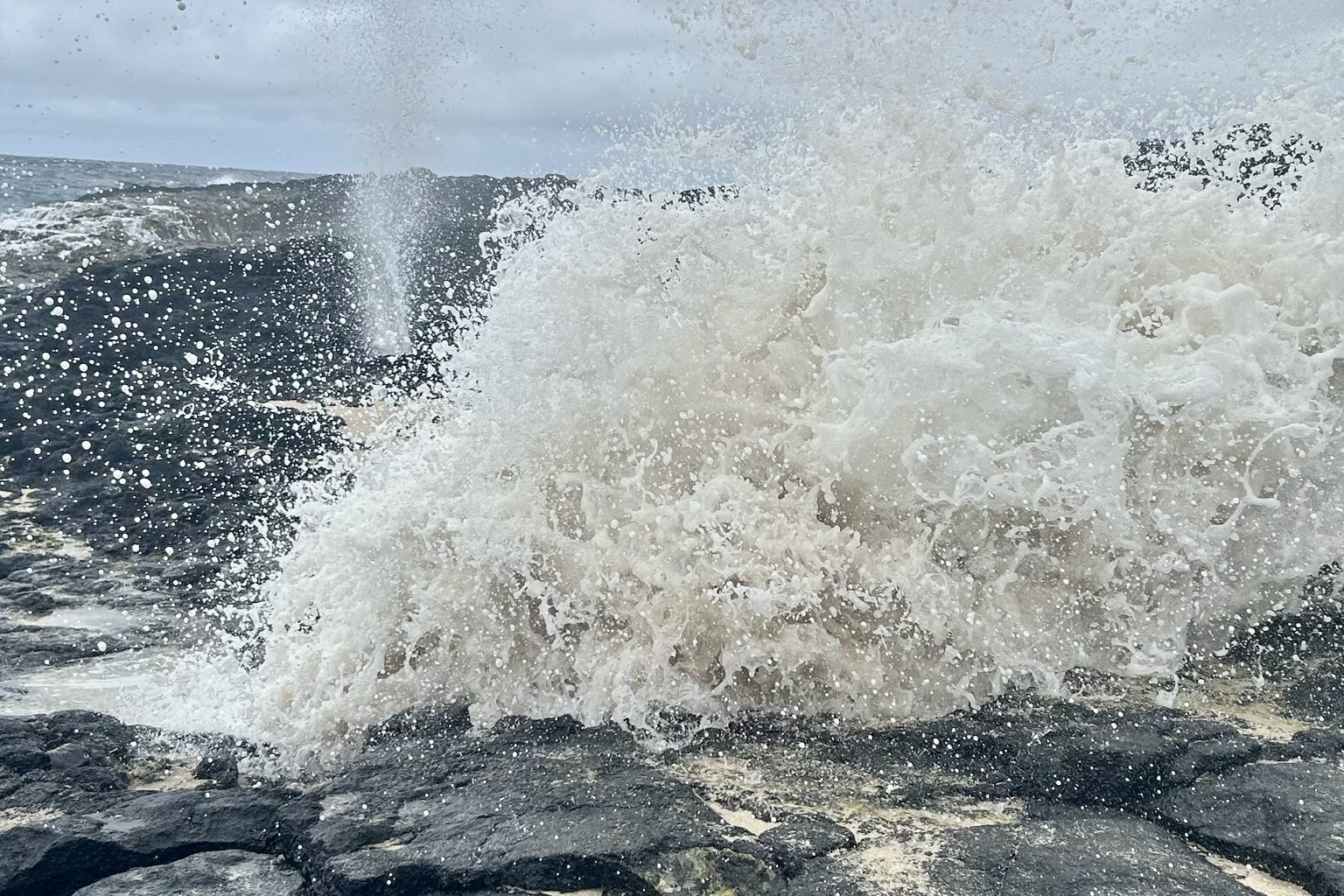
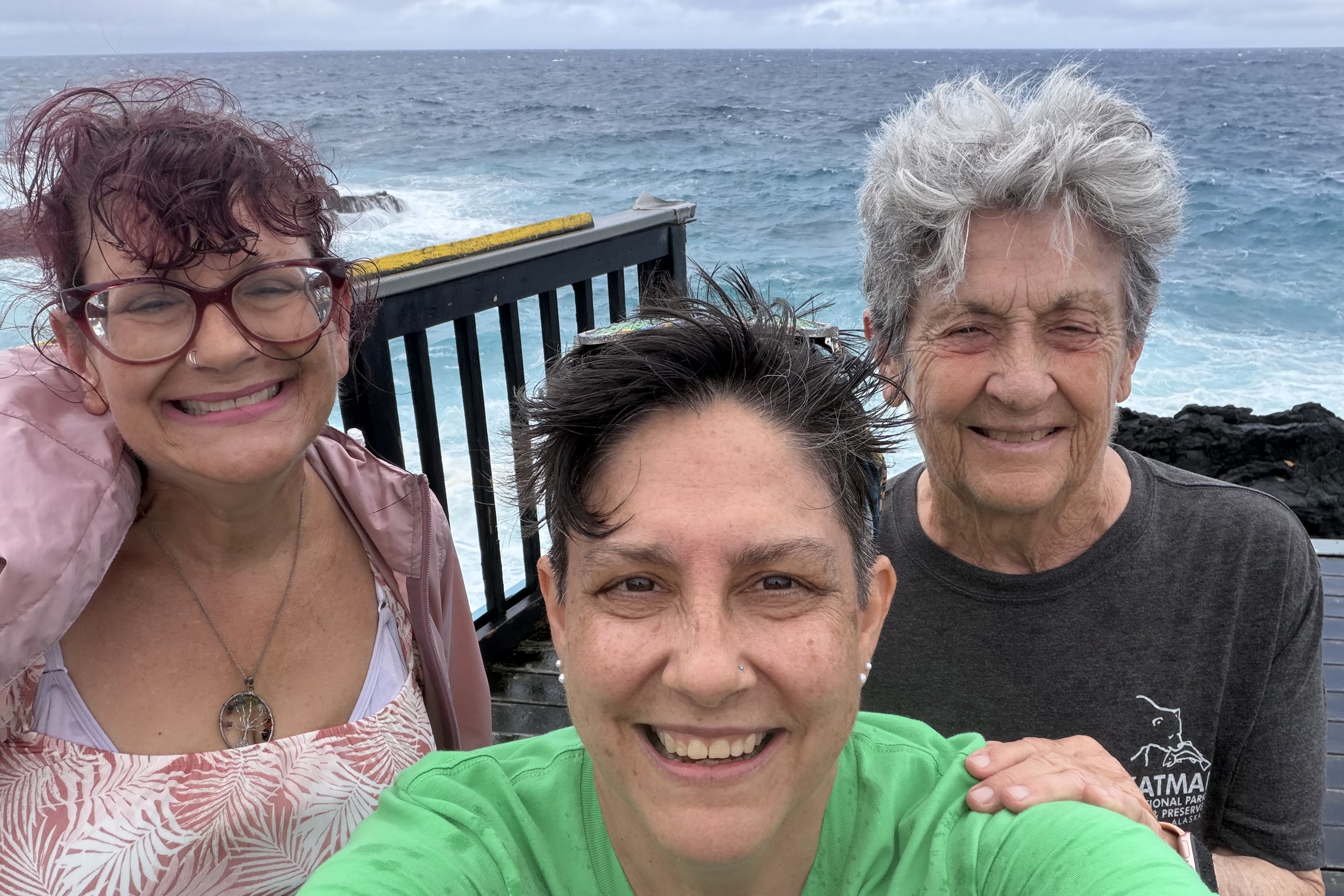
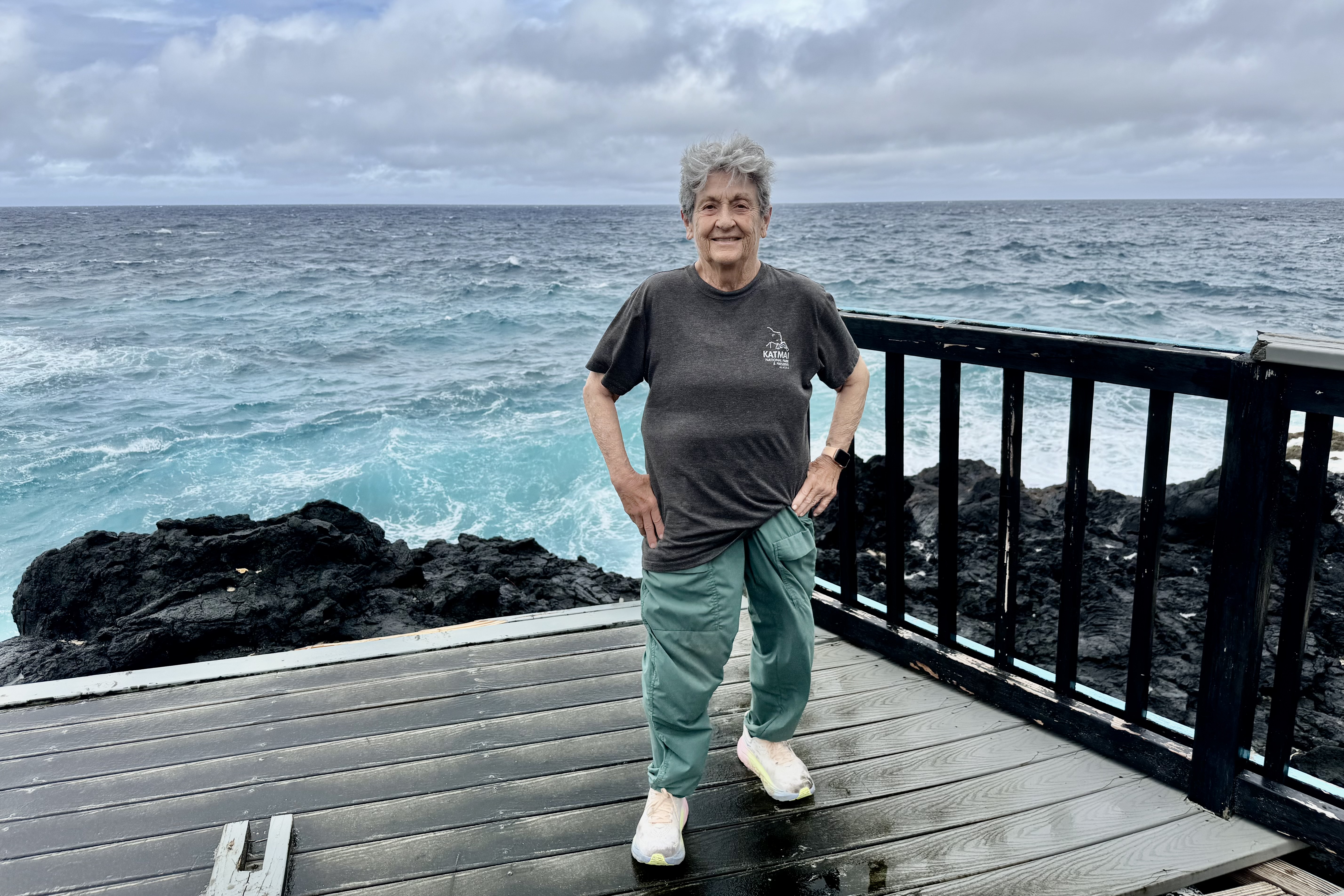
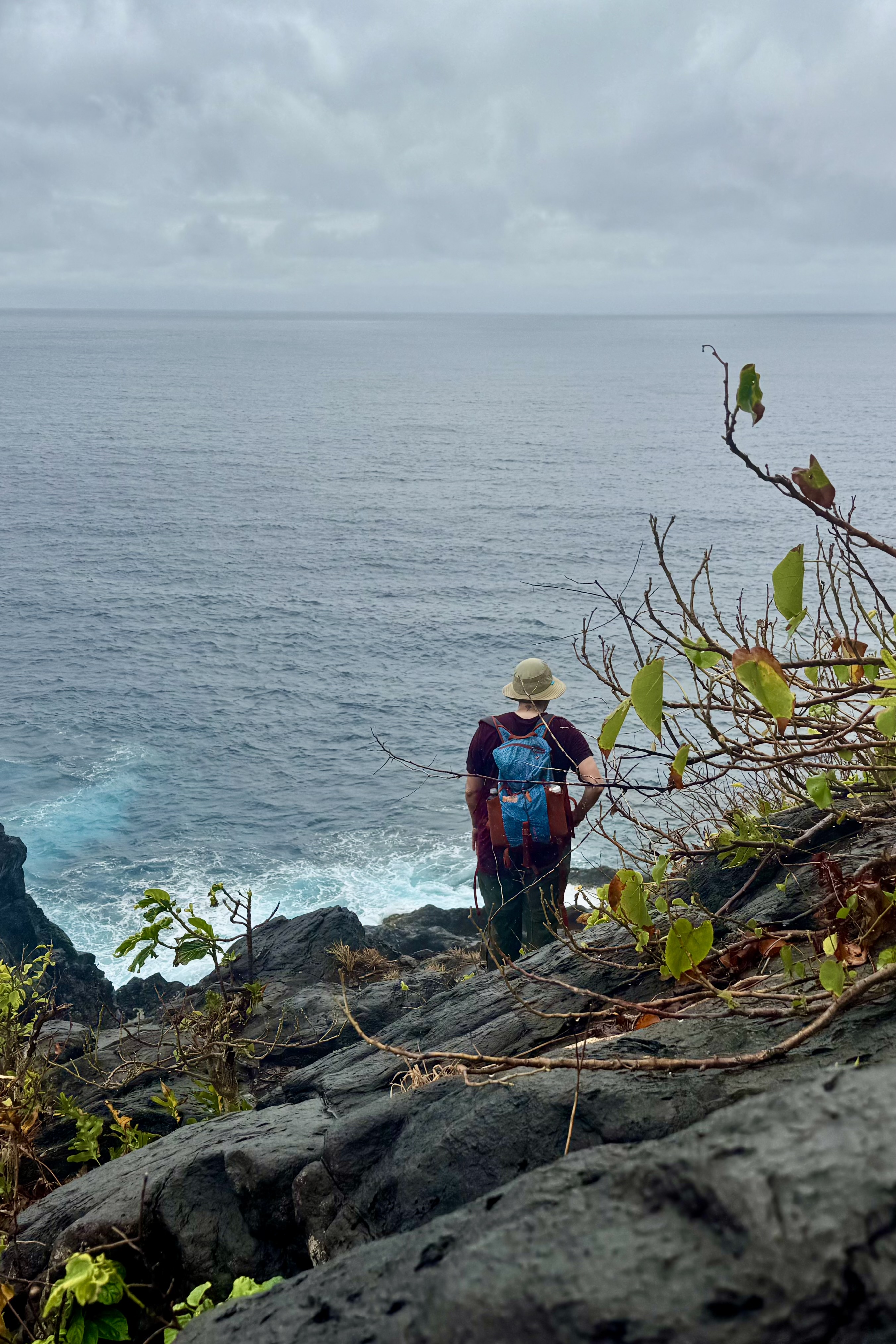
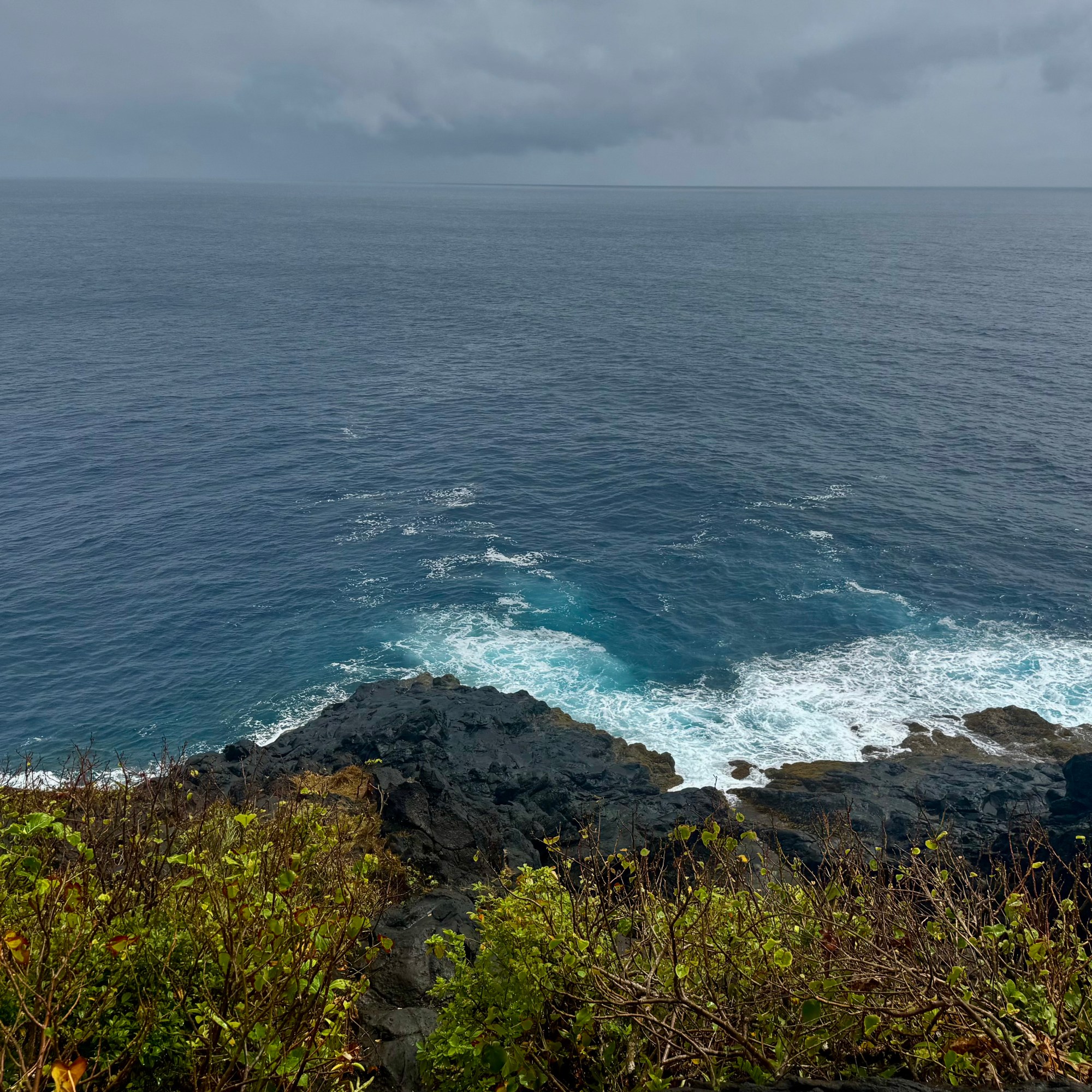
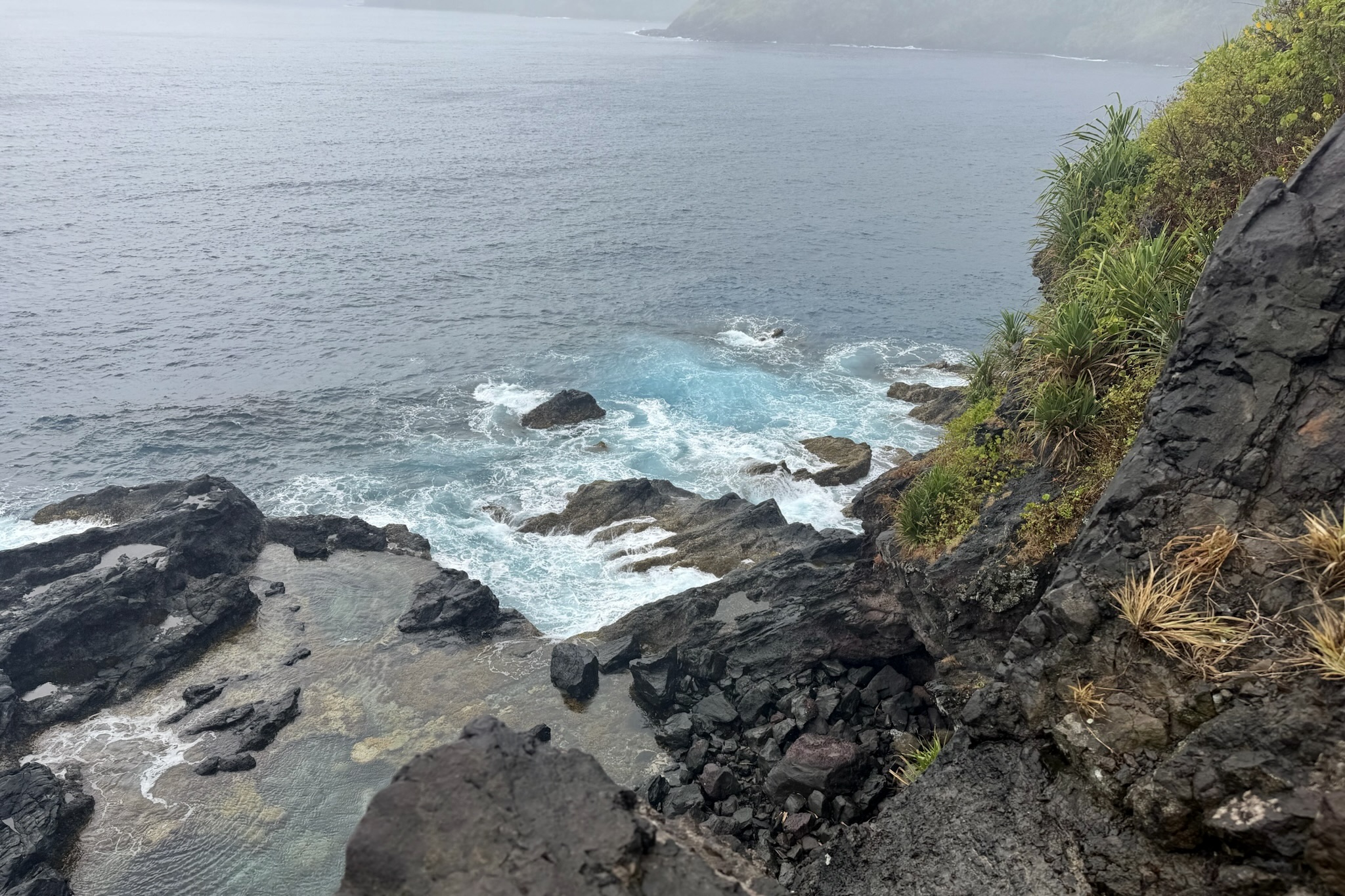
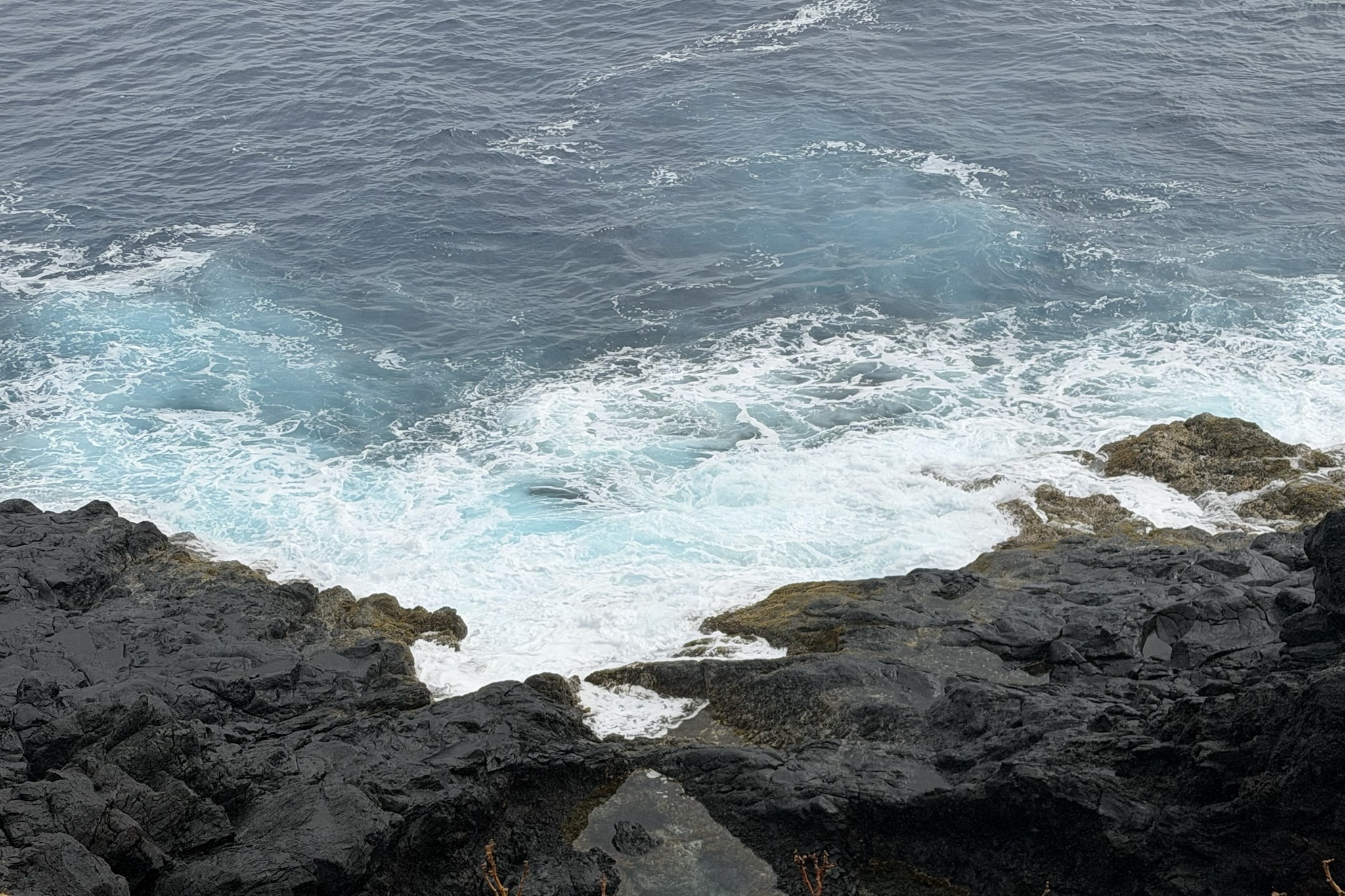
Whatever one makes of the story, the setting certainly seemed suited to one. The sea was wild and dramatic. Waves rushes in from the open ocean and slammed against the black volcanic shelf, exploding into white spray, before cascading back over the rocks. Jagged lava formations with slick green algae, framed the churning turquoise waters beautifully. The contrast between the dark volcanic rock, the vivid sea, and the white foam was mesmerizing.

We stood at the viewing deck built over the rocky shoreline, watching the waves gather strength and crash against the coast . The force of the water was impressive and it’s occasional well-times splash reminded me that the ocean was not solely a spectator sport. Then one wave sent a wall of spray over the rocks and straight onto me. Yet again, I got a complimentary wave-delivered shower.

After a couple of stops for gas and snacks, we landed back at Sadie’s. It was mid-afternoon and Tasia and Bernadette headed out to the beach and pool for a swim. I went down and to take on the role of bystander. That was however a short lived adventure and you can probably guess what derailed the plans. After a day of seemingly endless rain, swimming in the rain had no appeal. They abandoned the pool in search of something dry which , as it turned was becoming quite an elusive commodity.

The Final Drip

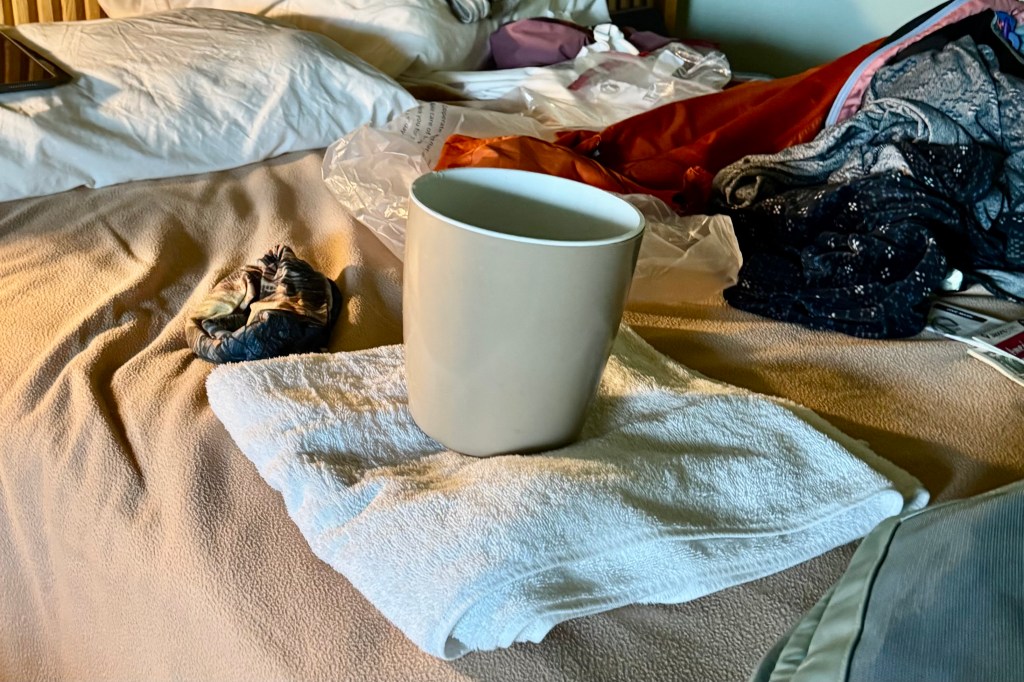
By the time we returned to our room, we were ready to call it a day. Unfortunately our accommodations had developed an additional water feature. We discovered that the rain was now dripping through the ceiling onto one of the beds. Fortunately the ice-bucket was available for a new and currently a more practical purpose: catching the drips. It was our final night at Sadie’s and we had little inclination to pack everything up and move rooms. Tasia simply relocated to the other bed while the ice bucket stood sentry, content with its new job. After a day of relentless rain, foggy mountaintops, and ocean spray, we had apparently not yet met our daily water quota. The hotel was definitely helping us meet it.

There was gear to organize, laundry to be done, bags to repack. Feeling weary, we decided to skip dinner at the Goat Island Cafe and use up the remaining lunch supplies instead . This meal in a room with a leaky ceiling was not a remarkable culinary experience but I had food, a dry half- of-a-bed, and an ice bucket that I trusted would continue to earn its keep. The next day we would be leaving American Samoa and head to the independent nation of Samoa. Our time on Tutuila was drawing to a close. We were ready for a change of islands, and perhaps a ceiling that kept the rain where it belonged.

Rainforest, Rusty Ladder, and a Tuna Named Charlie

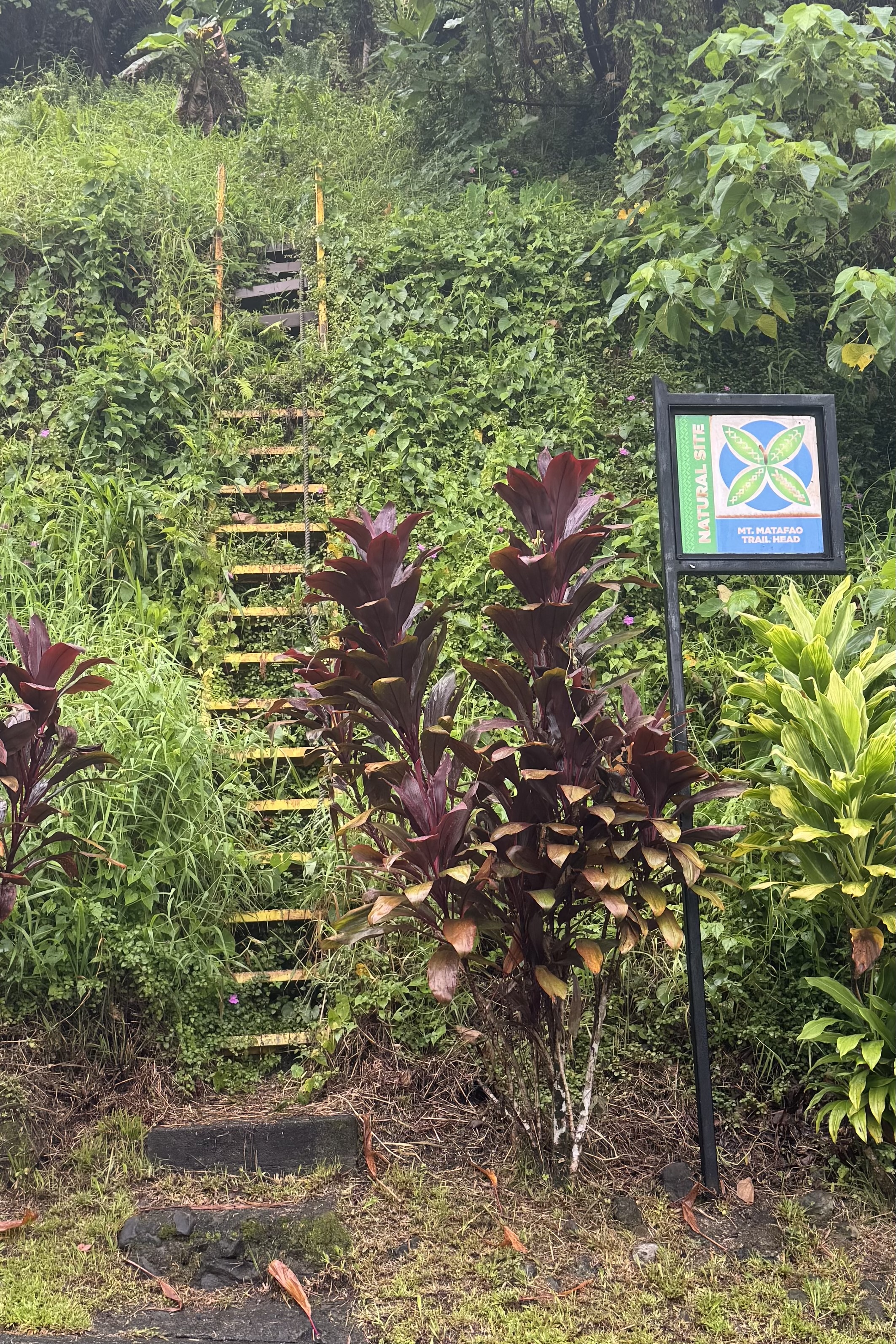
On Sunday, September 13, we set out to explore the National Park of American Samoa and headed south on Route 5 out of Pago Pago toward Fagasa Bay. Along the way, we passed the trailhead for Mount Montafeo. One look was all it took and I knew this was not to be our hike for the day. An old rusty ladder served as the trailhead starting point. On this rainy foggy day, that trail was definitely not calling my name. All I could think was that you (and anybody else) are not supposed go up here! I am adventurous to be sure but ignoring the obvious sign of a decaying and rusting ladder is quite another.

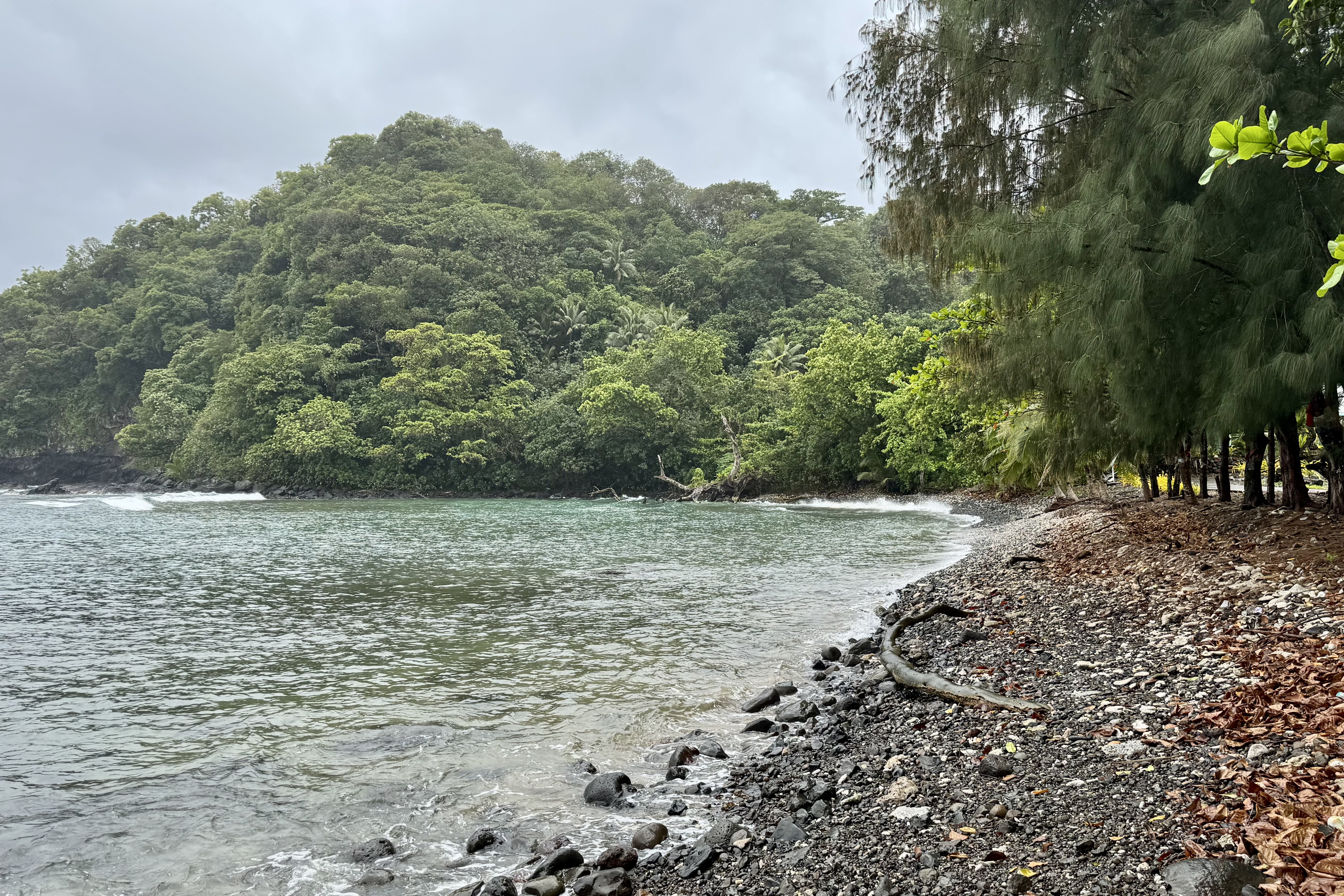
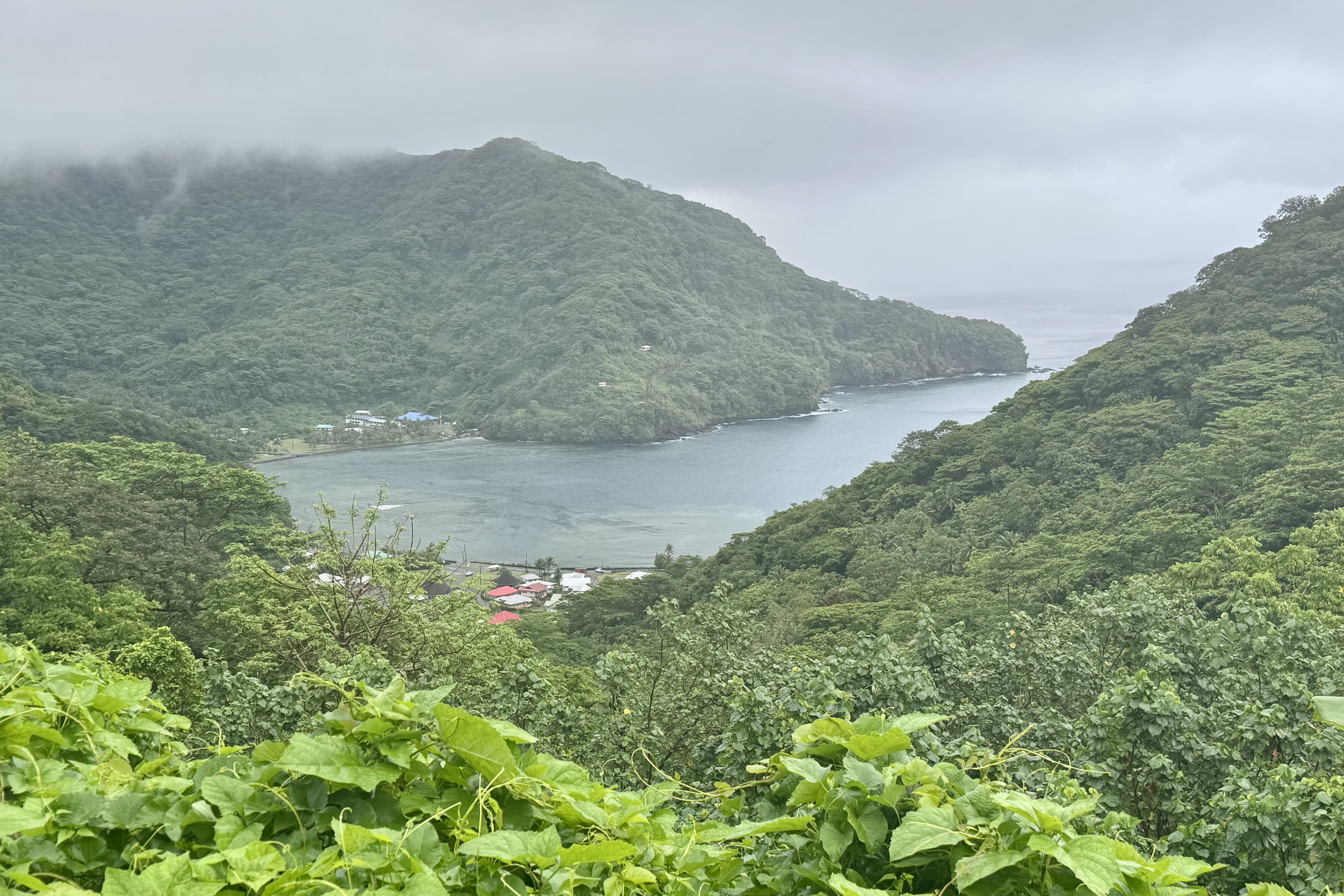
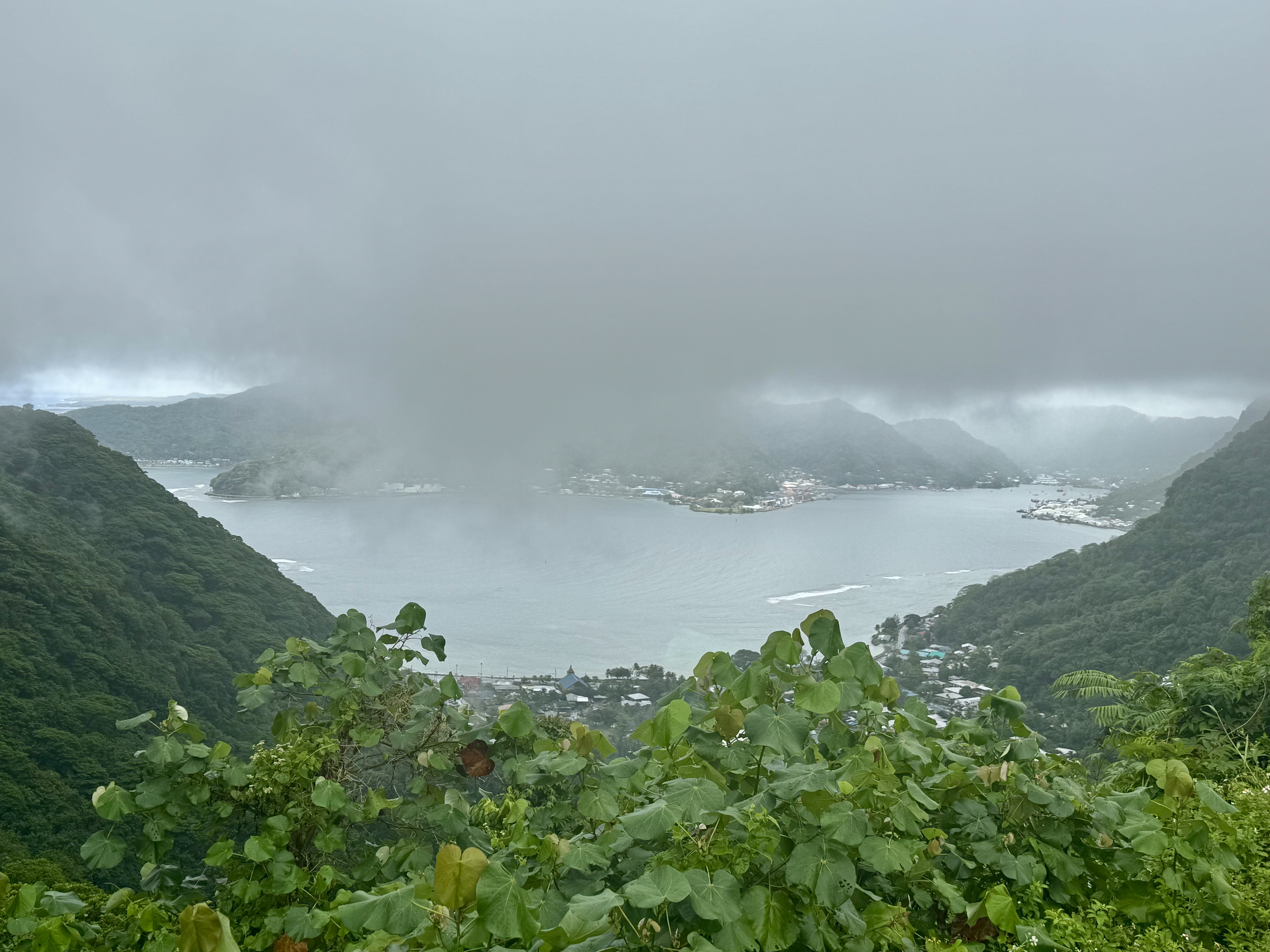
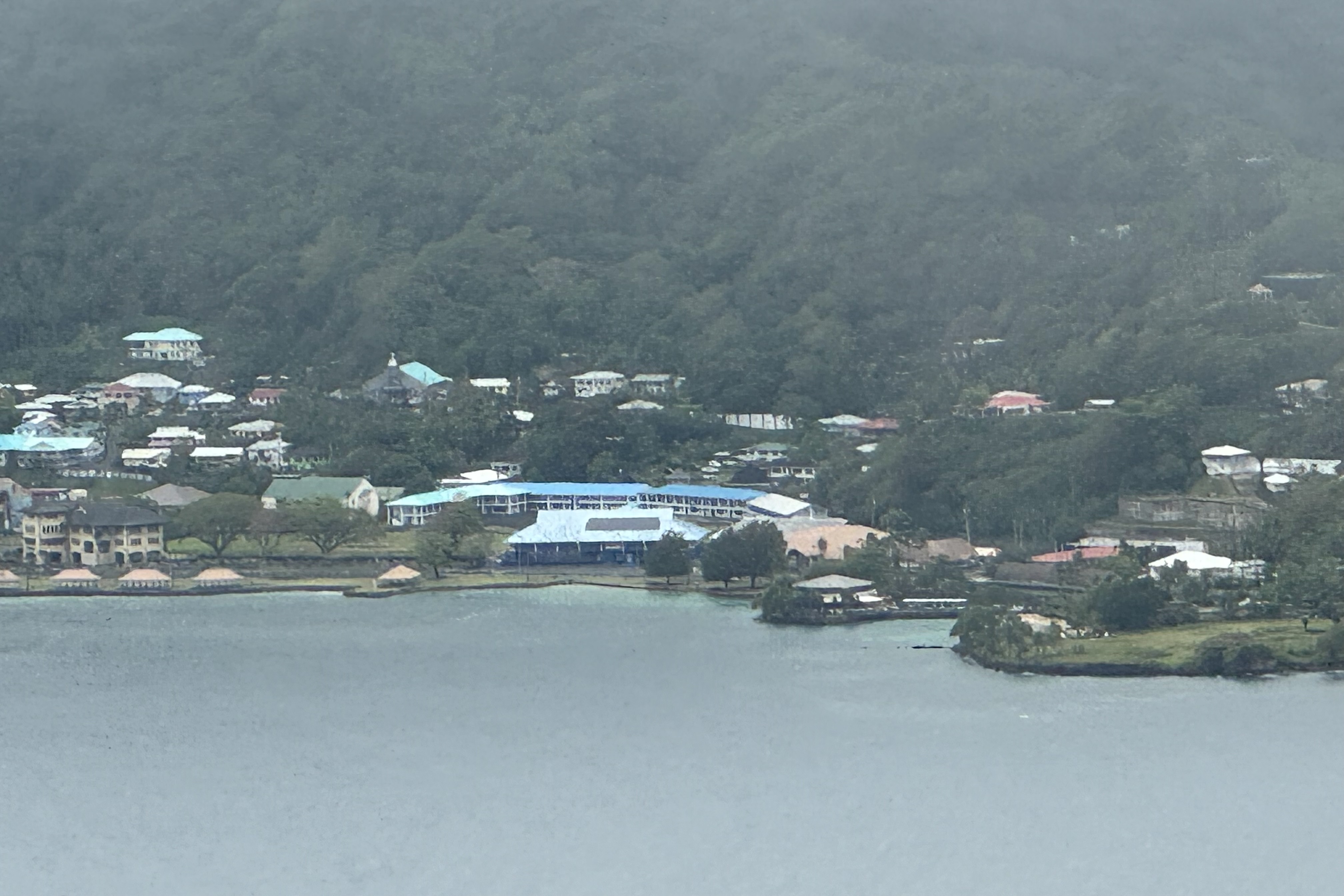
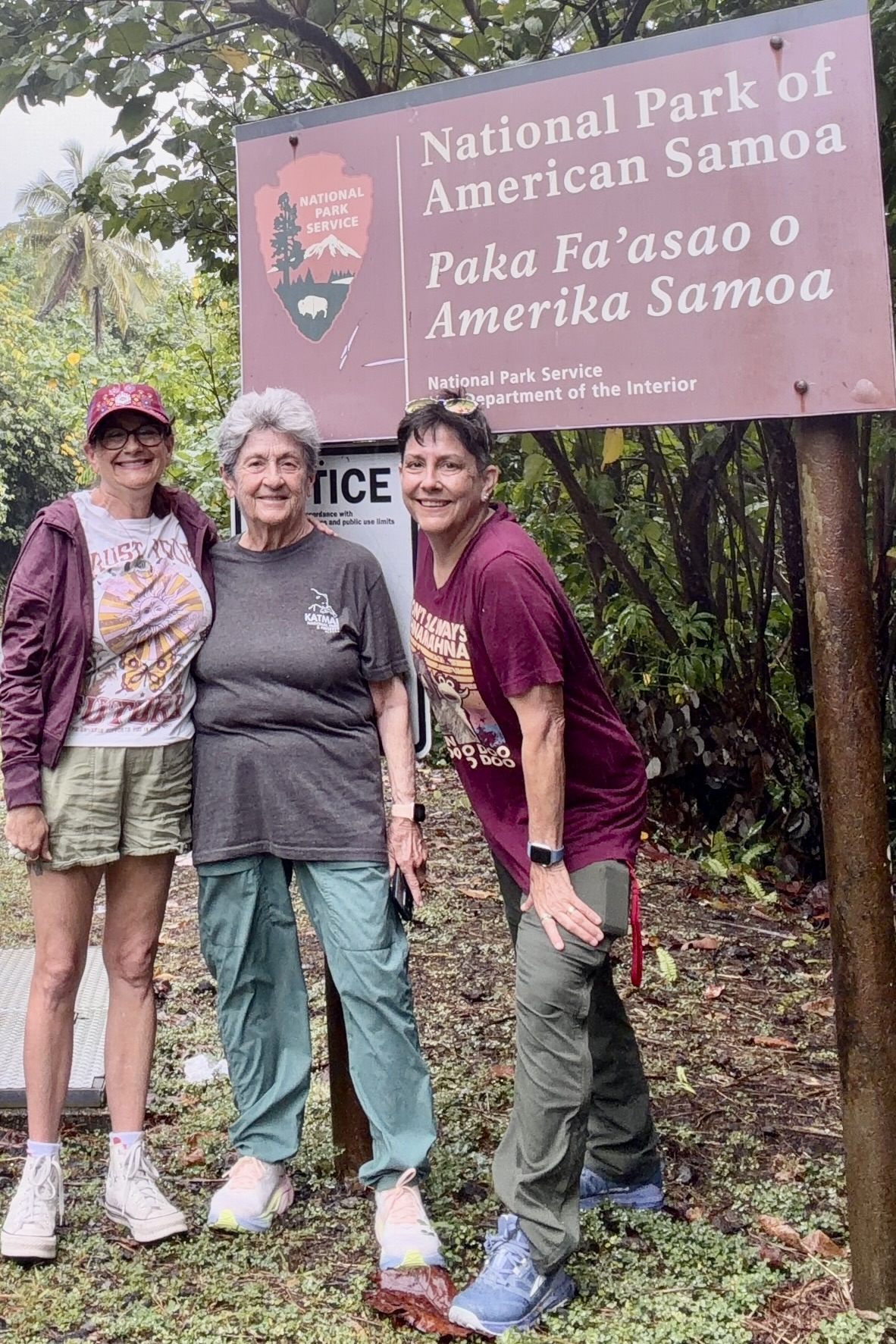
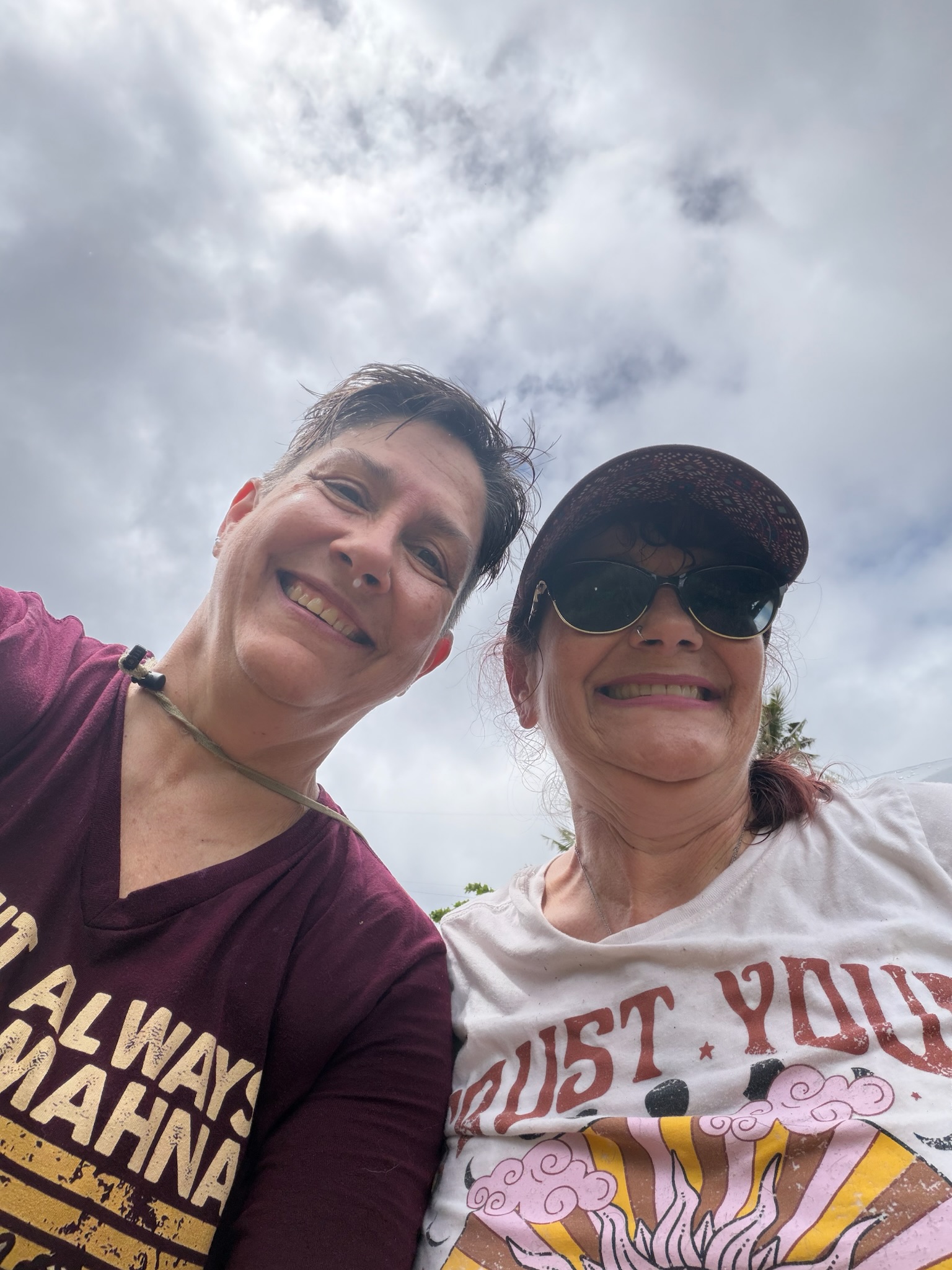
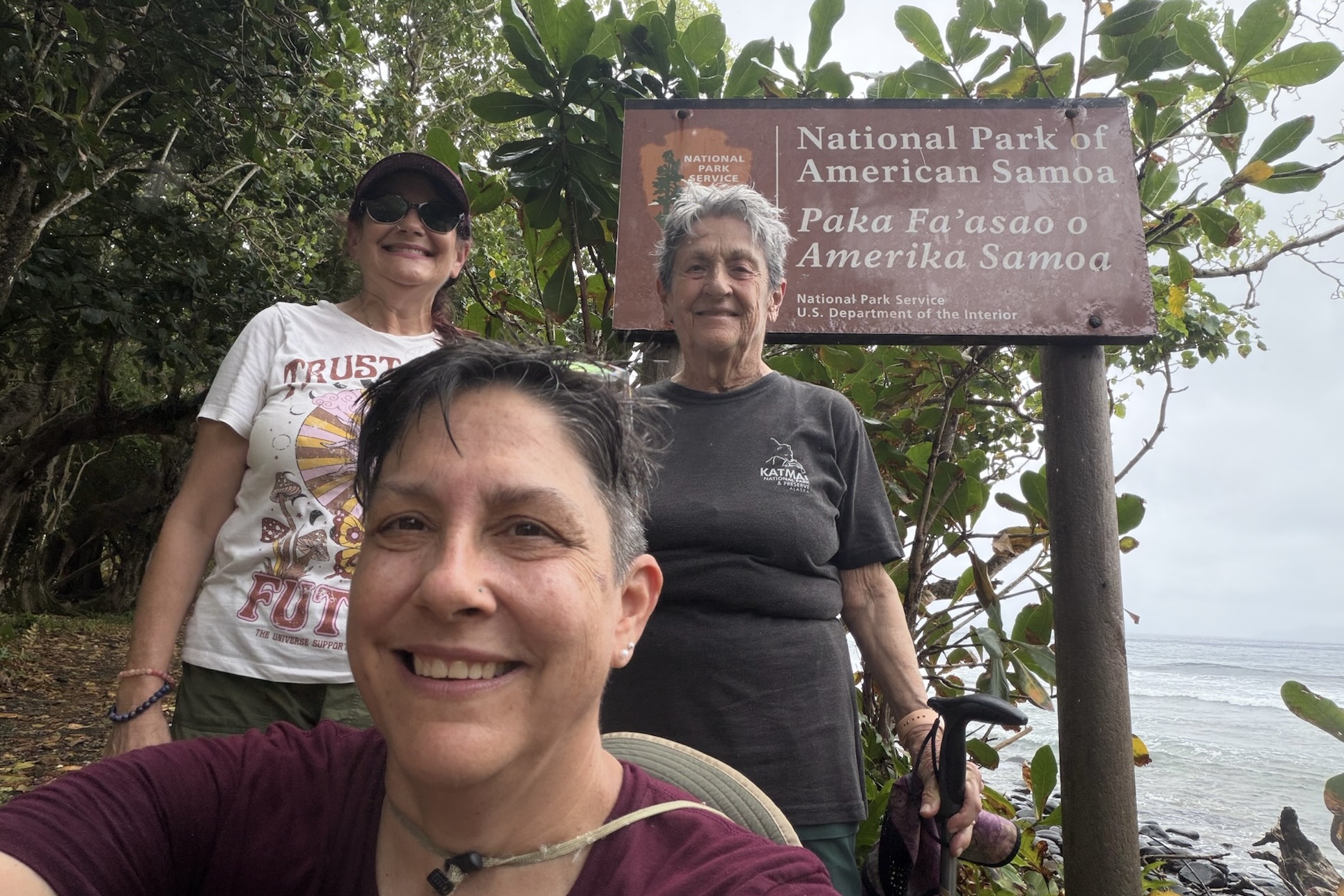
We continued toward Fagasa Bay, known as “the Forbidden Bay.” Although fog partly obscured the view, I was struck by the bays half-moon shape, framed by steep forested cliffs that plunge dramatically towards the water. Heading back toward Pago Pago, we stopped to admire the harbor surrounded by volcanic peaks, draped in fog and dense foliage. We even spotted the bay that Sadie’s by the Sea is on. There was also the obligatory stop at an official entrance sign for the National Park of Samoa. No park visit is complete without the photographic proof that we were actually there.
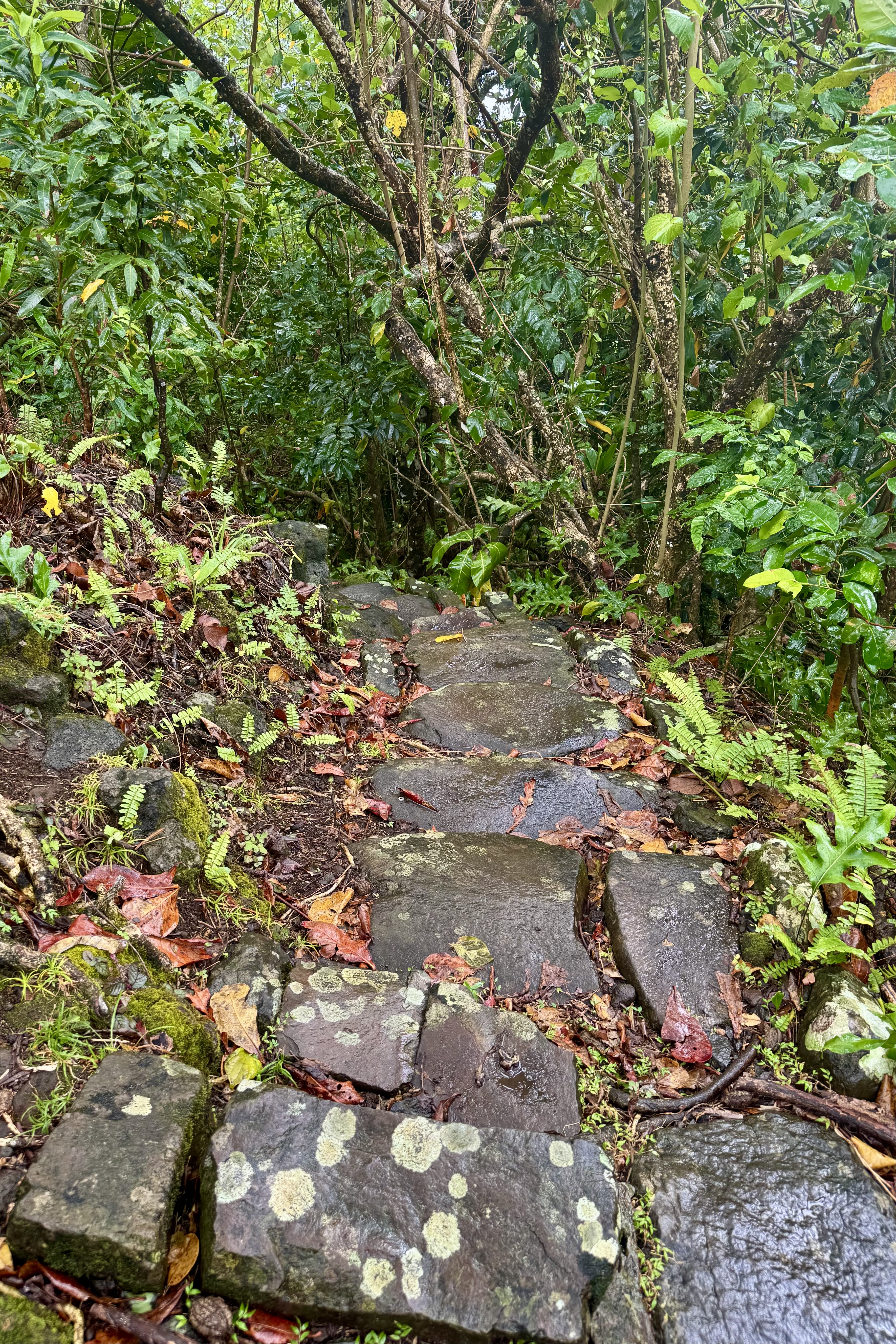
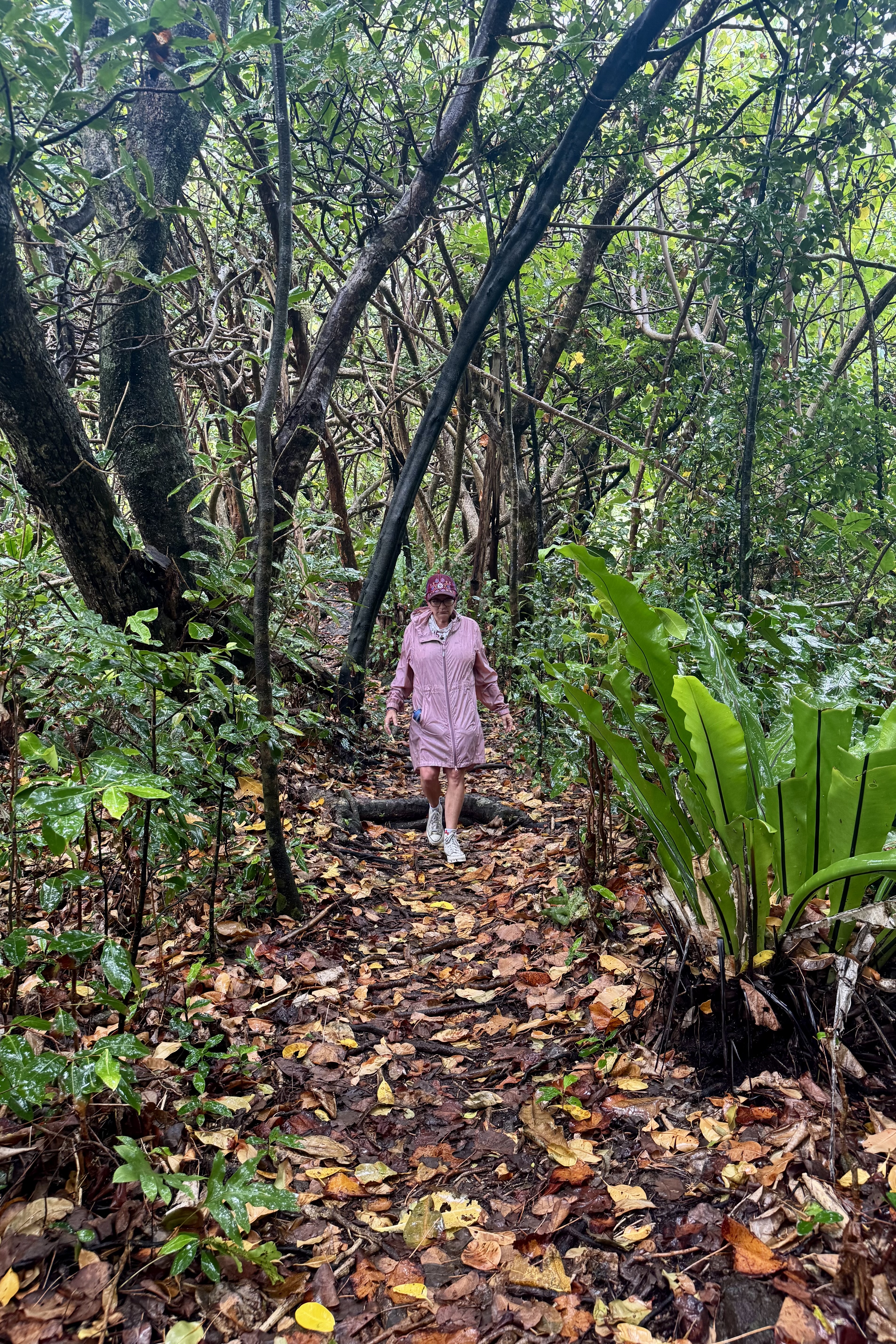
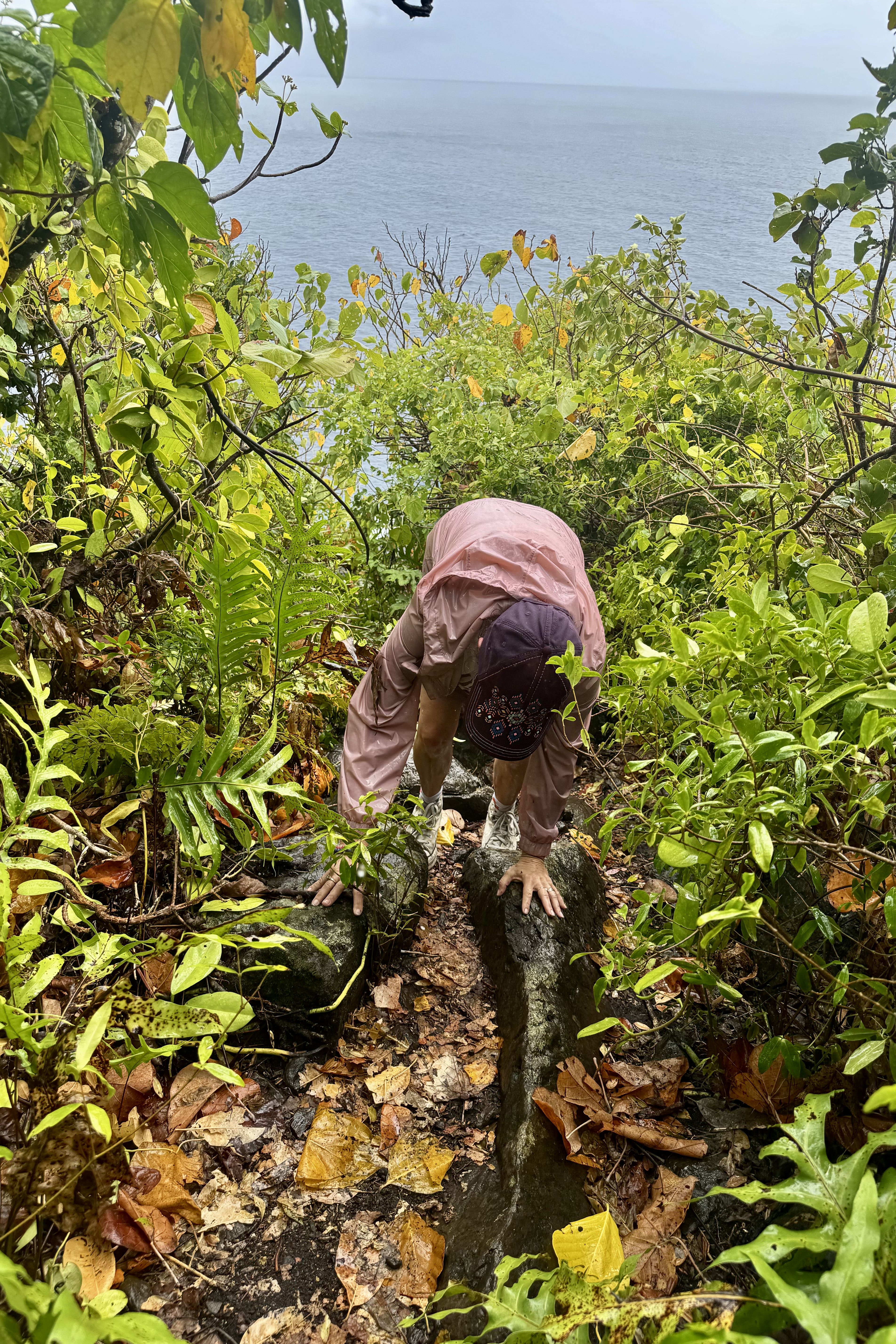
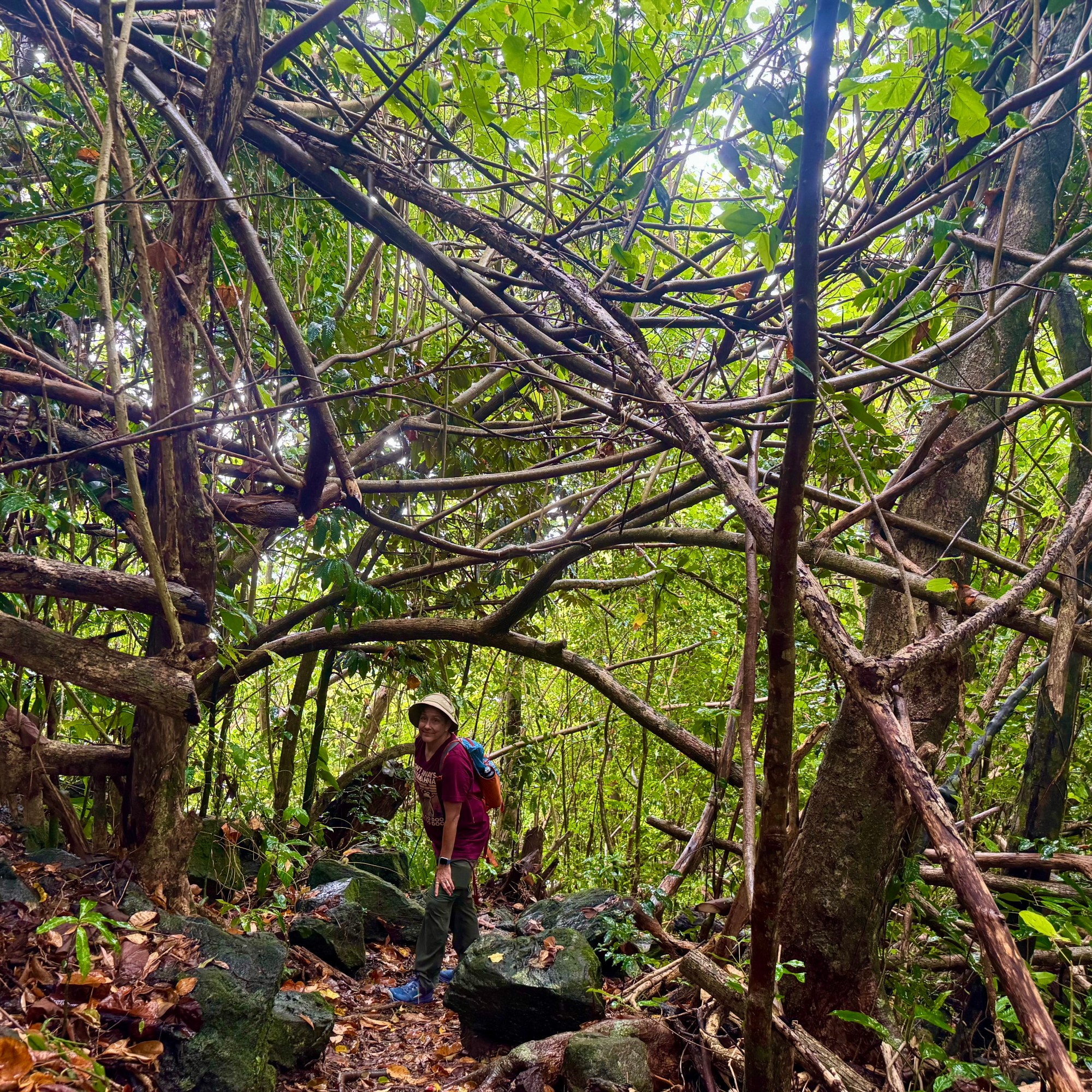
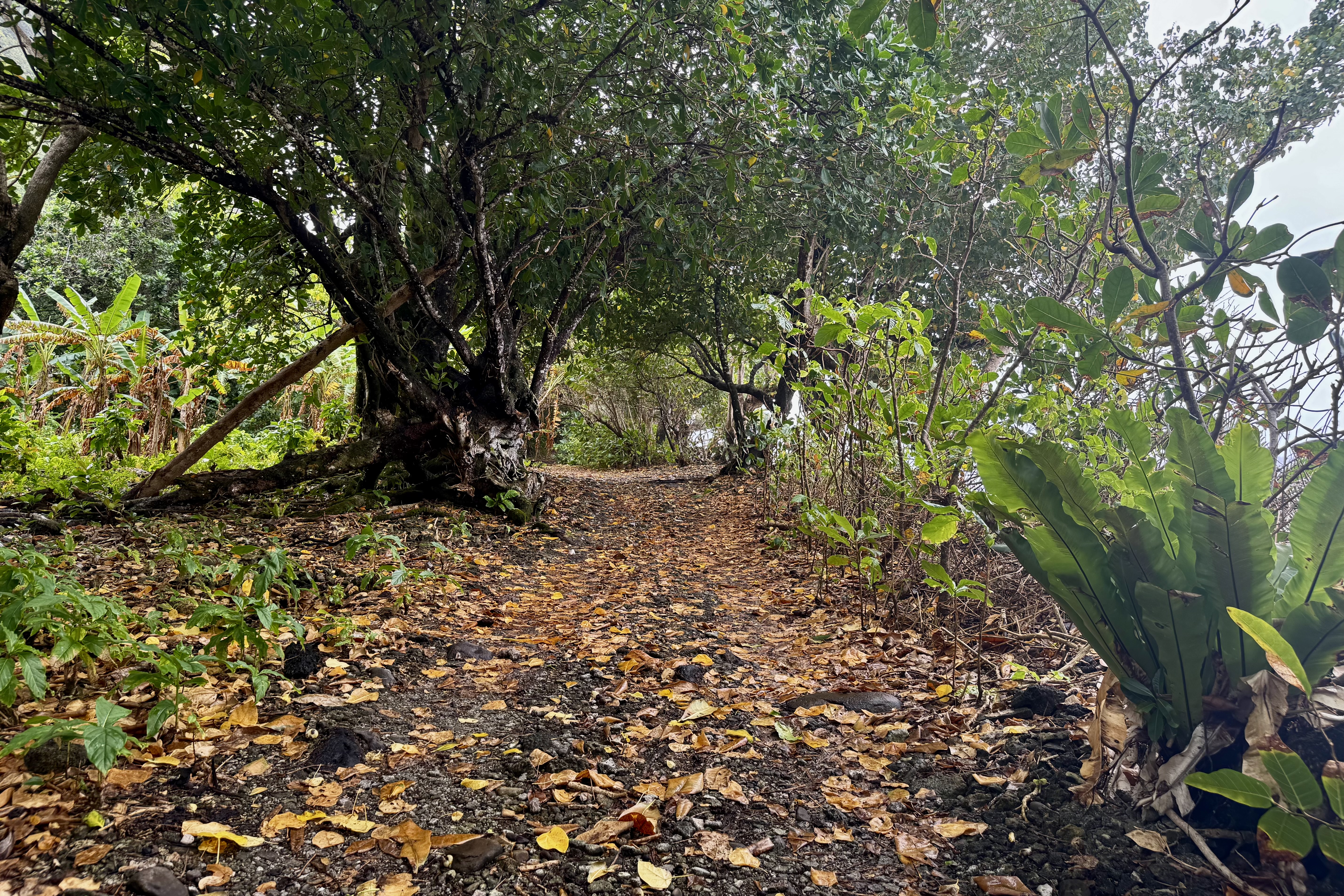
Next up was the Lower Sauma Trail which “plunged” us into dense rain forest. The trail was wet, muddy, and slippery beneath a carpet of rain soaked leaves. Mother Nature, with what I suspect was some assistance from the trail builders, had provided an obstacle course of flat slick stones, some decorated with patches of moss to make them even more treacherous. Hidden between the stone steps were plenty of exposed roots, just waiting to catch my wary foot. Tasia was sure-footed, with Bernadette and I not so confident that we’d arrived unscathed. Every step presented an opportunity for a face plant or a butt plant. She and I proceeded cautiously doing our best to remain upright. The return climb was steep and by the time we were finished we were thoroughly drenched. Still, perhaps, would it have been a disappointment to visit a tropical rainforest and not get rained on? In that department we were getting our money’s worth.

The question was whether the lovely views were worth the risk of navigating such a slippery trail. In the end I decided they were, sort of that is. It was a worthwhile adventure but on this foggy rainy day, they were not post card perfect. The real reward of this hike wasn’t the scenery as the challenge itself. The scenery was nice but finishing the hike without landing on my face or with a bruised backside was the achievement I celebrated the most. I think Bernadette would agree heartily with me.

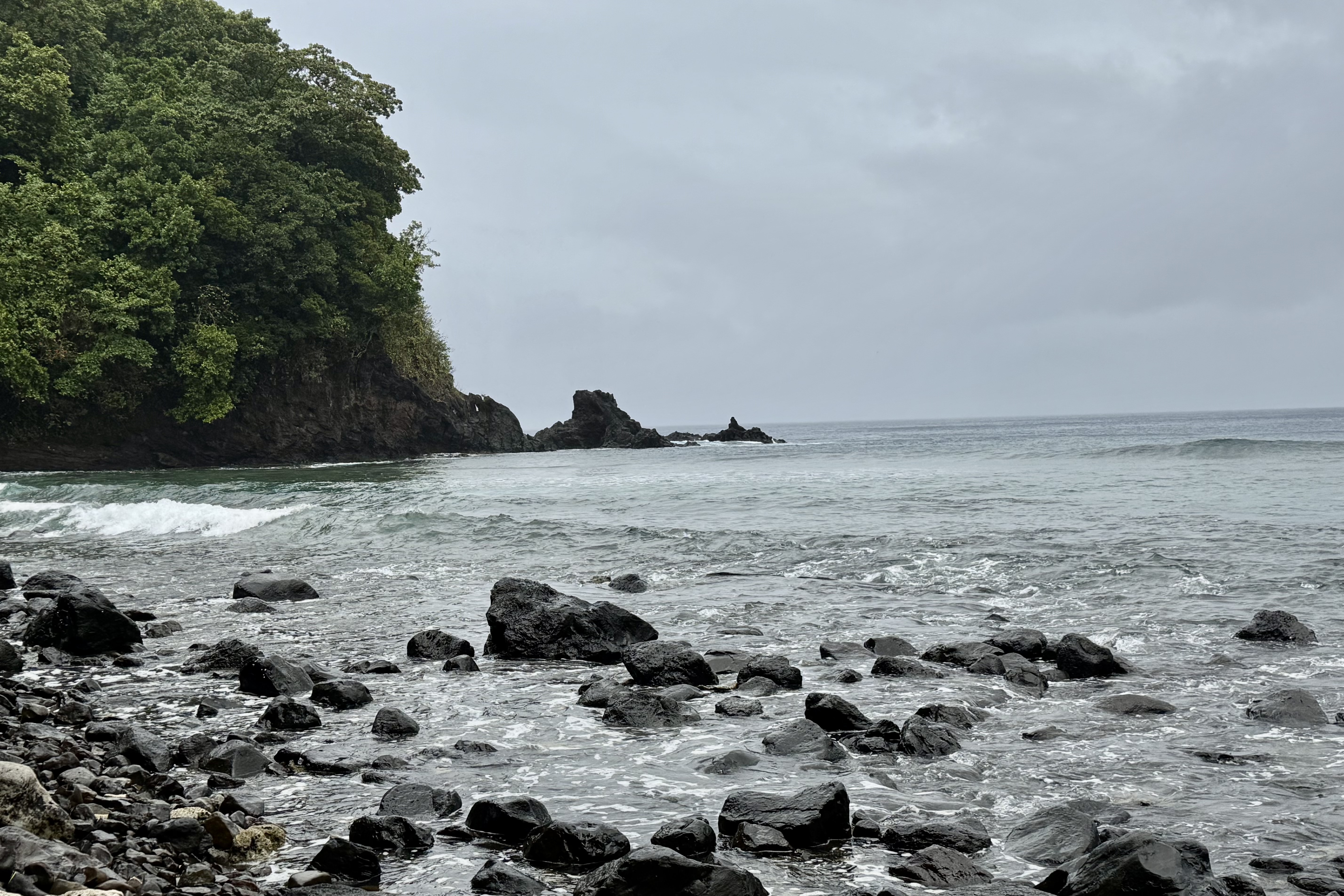
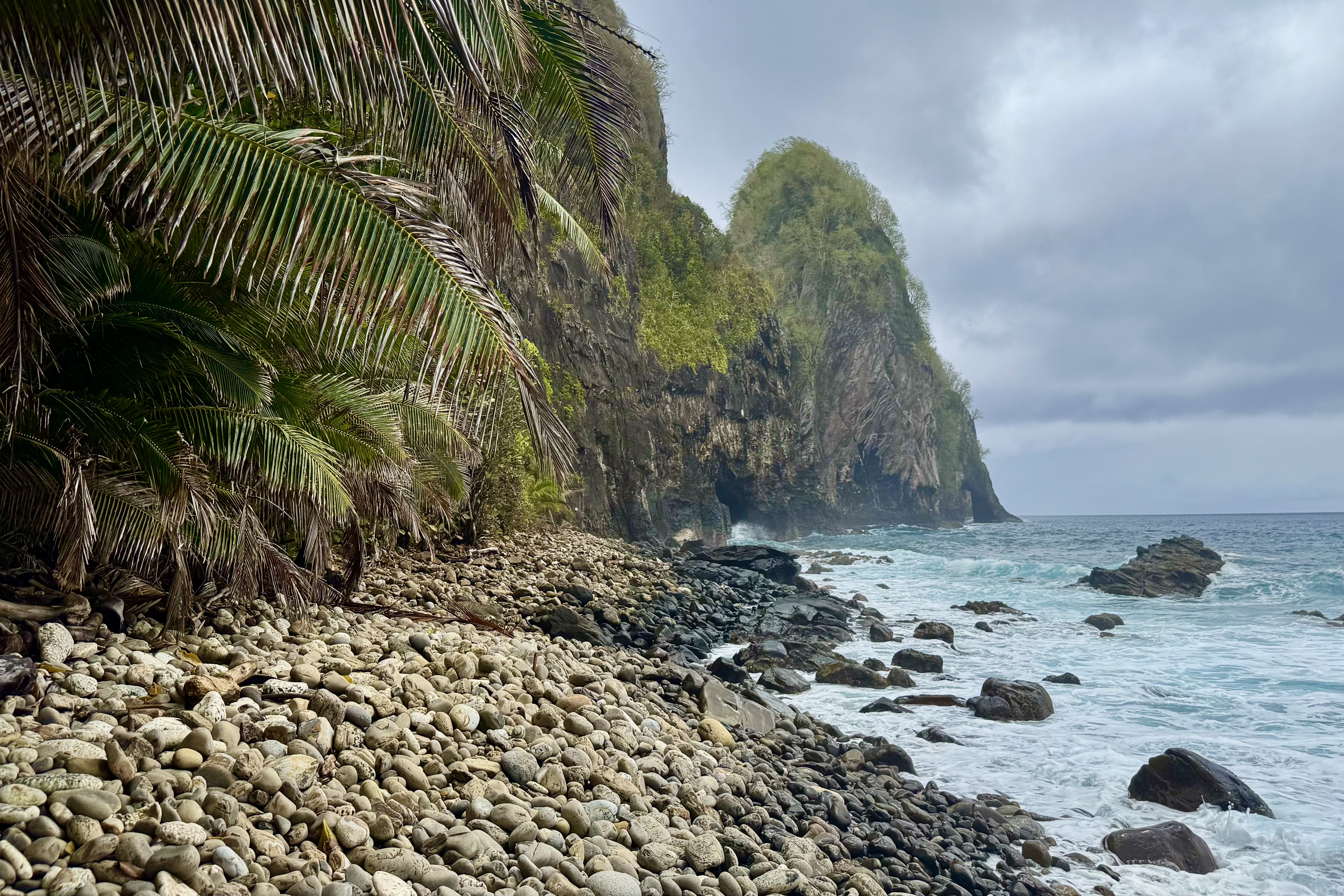
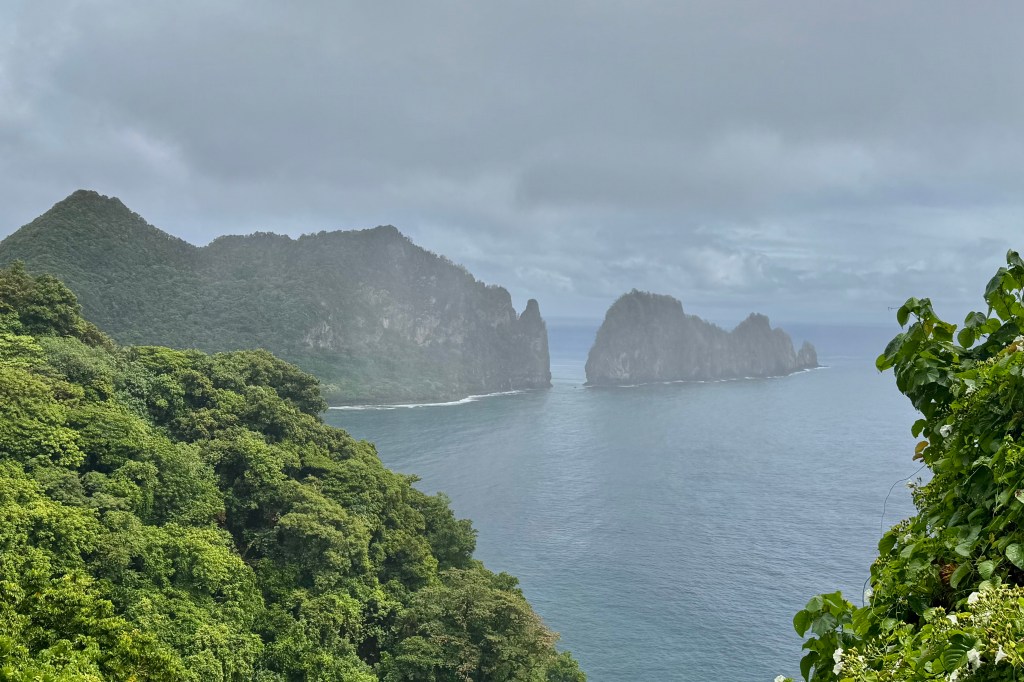
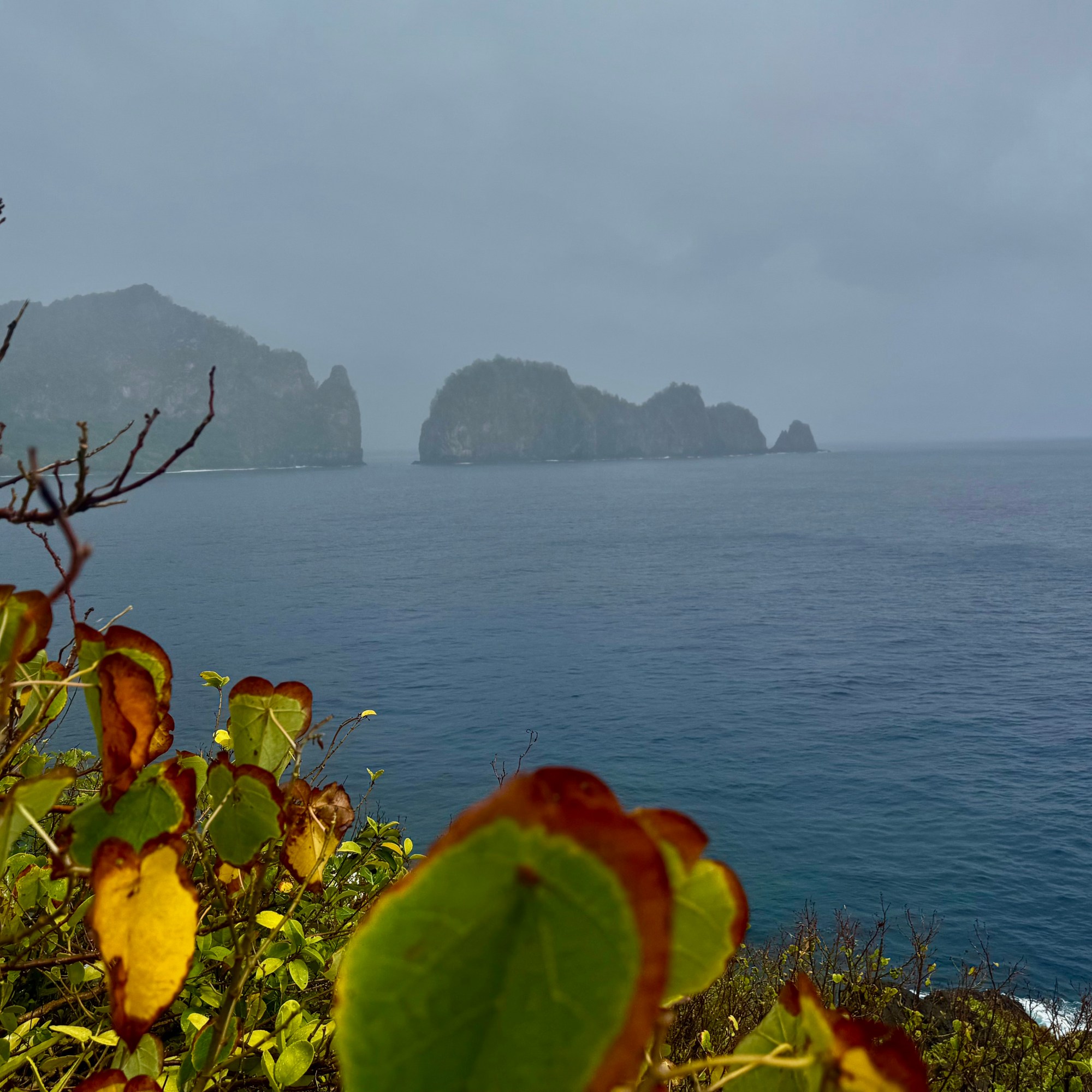
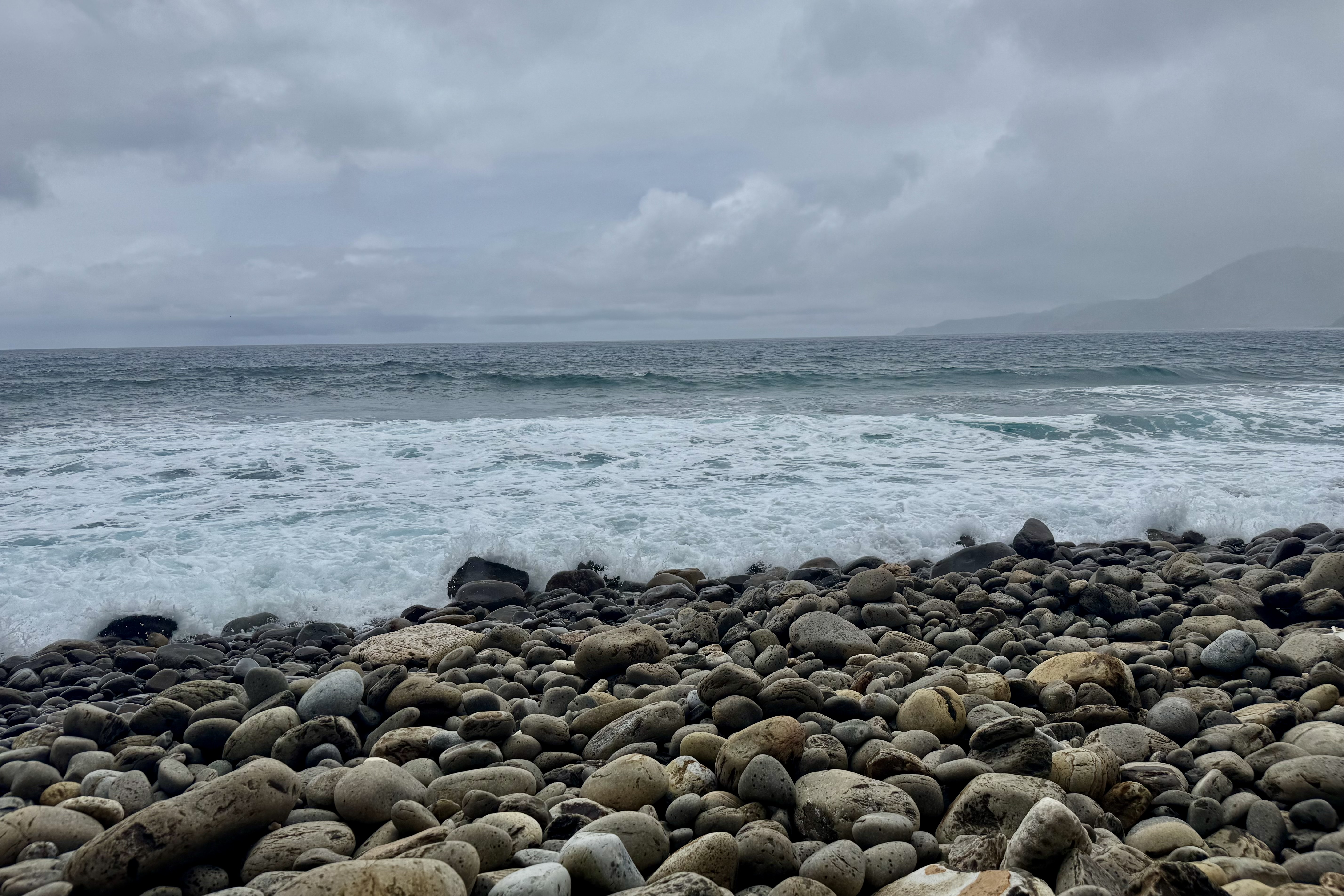
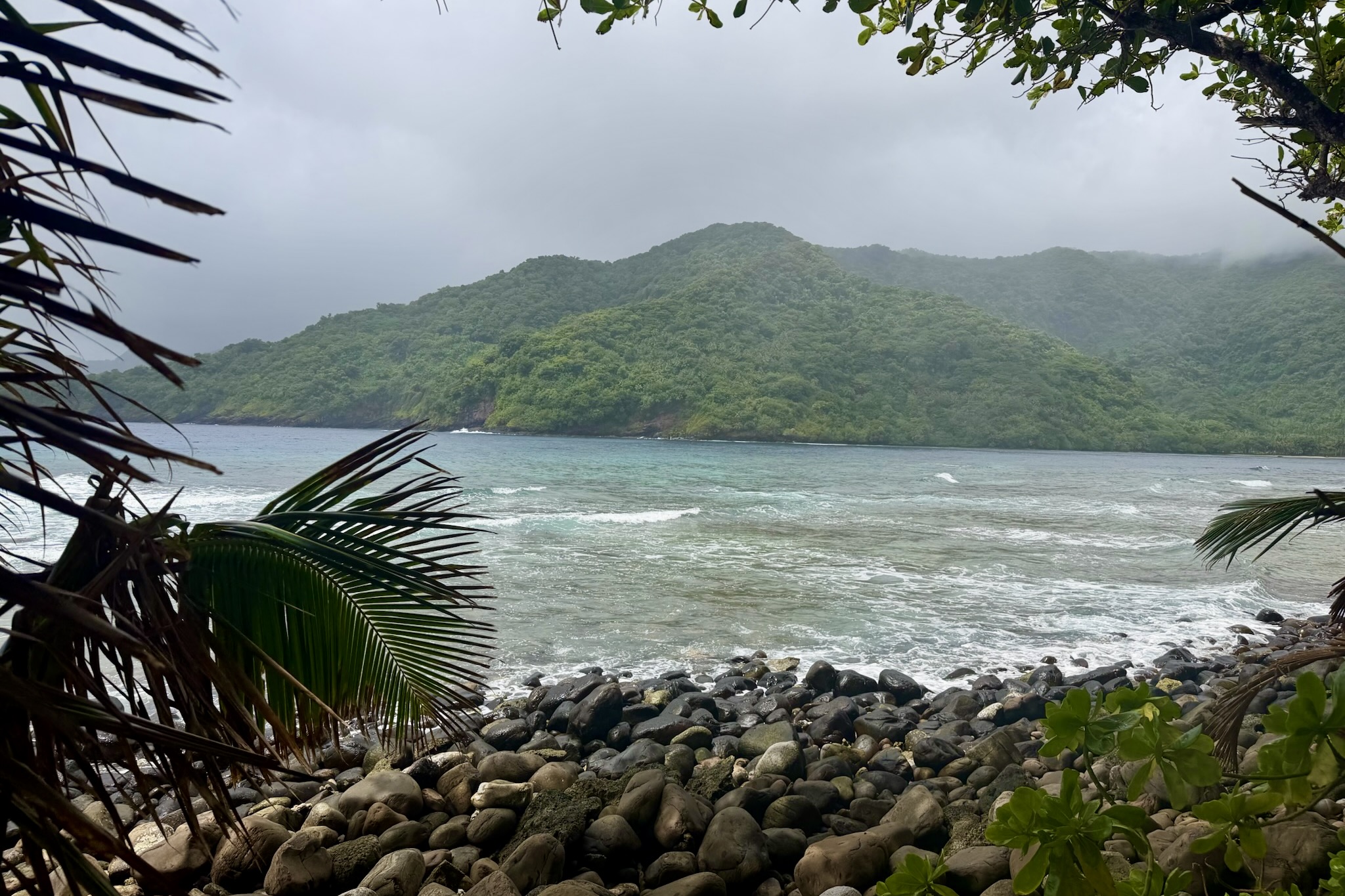
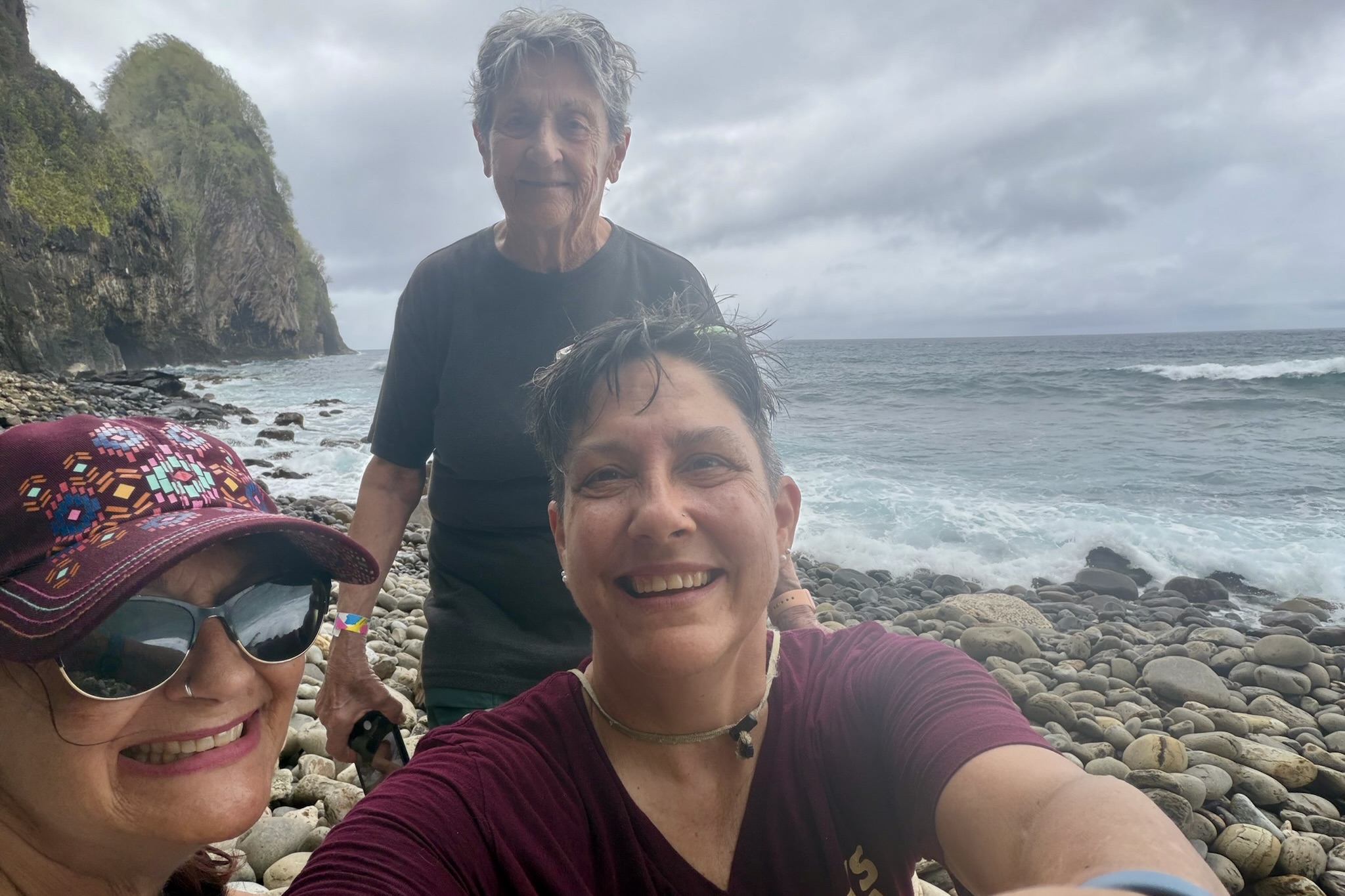
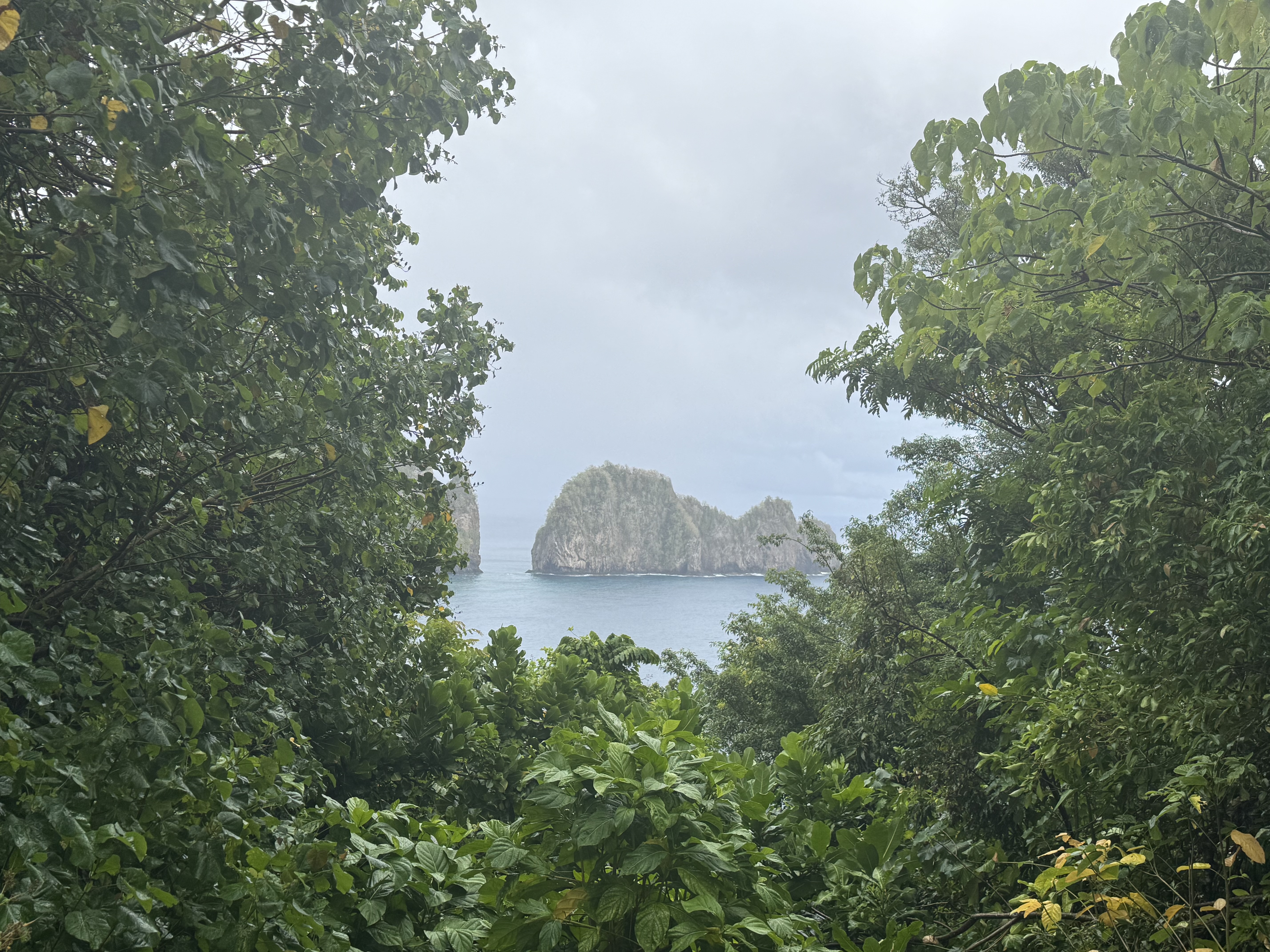
We then continued east to the Pola Island Trail at the end of the road in Vatia Village. Happily this trail was wide, flat, and mercifully easy, leading us to a rugged, rocky beach. What a payoff this time for so little effort. Rising dramatically from the surf was a massive jungle topped sea stack, a striking feature of the island’s volcanic coastline. The beach was covered with rounded cobblestones, backed by large palm fronds. The whole scene felt gloriously wild and untamed. There was no soft sand beach made for a leisurely stroll or casual beach combing. Collecting shells, or even walking comfortably, was not in the cards.

I settle for a lumpy unforgiving seat on the rocky shore and took in the view. The best way to appreciate this wild place was to stop moving before it gave me another opportunity to fall down.
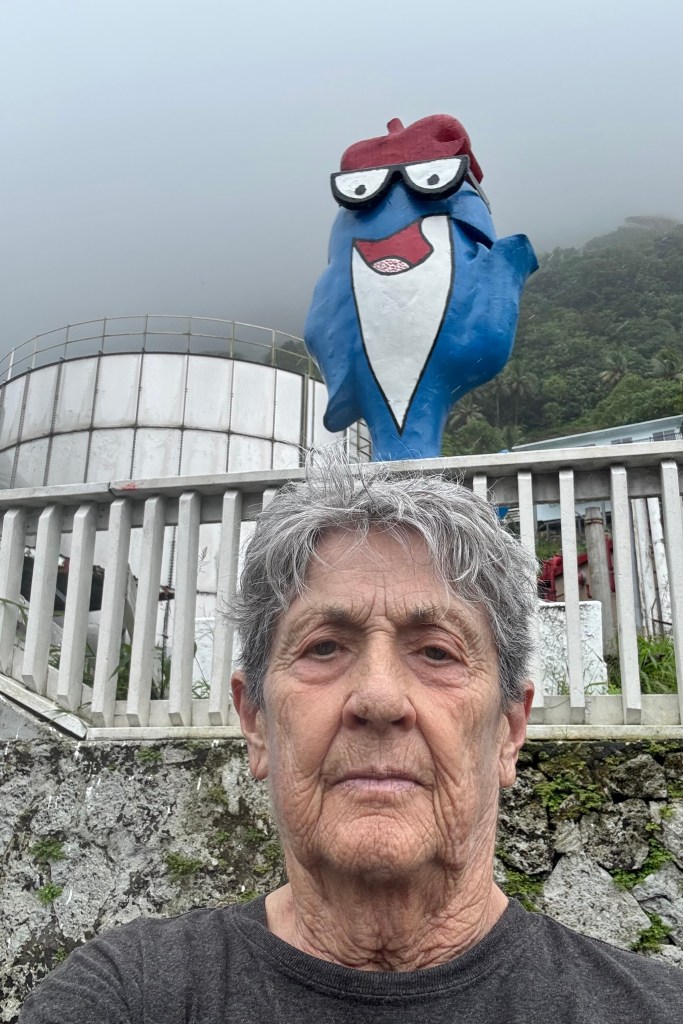
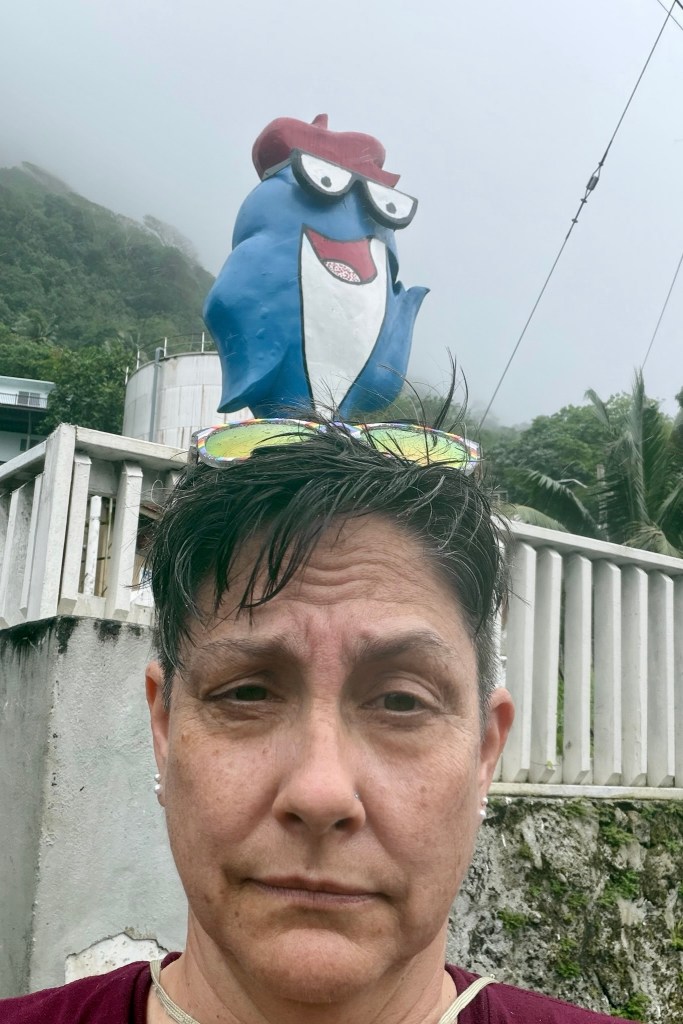
Feeling quite satisfied with our exploration of the park, we headed back to Pago Pago. But first we had to make one final tourist stop to pose with Charlie the Tuna, the familiar mascot who statue stands outside the StarKist Tuna Cannery in the village of Atu’u on the north shore of Pago Pago Harbor. The tuna industry makes a significant contribution to American Samoa’s economy so Charlie represents more than a convenient photo opportunity. Finally we returned to Sadie’s for a quiet afternoon.
The relentless rain showed no signs of letting up and the prospect of venturing out yet again to get soaked held little appeal. Even trying my first adventure snorkeling held no interest for me. It was a laid back afternoon and we opted for another meal at the Goat Island Cafe. Fish tacos! After all we had spent the day dodging slippery stones, lurking roots, and the many hazards of the rainforest and beaches in the rain. We had earned a little rest and a dry seat.