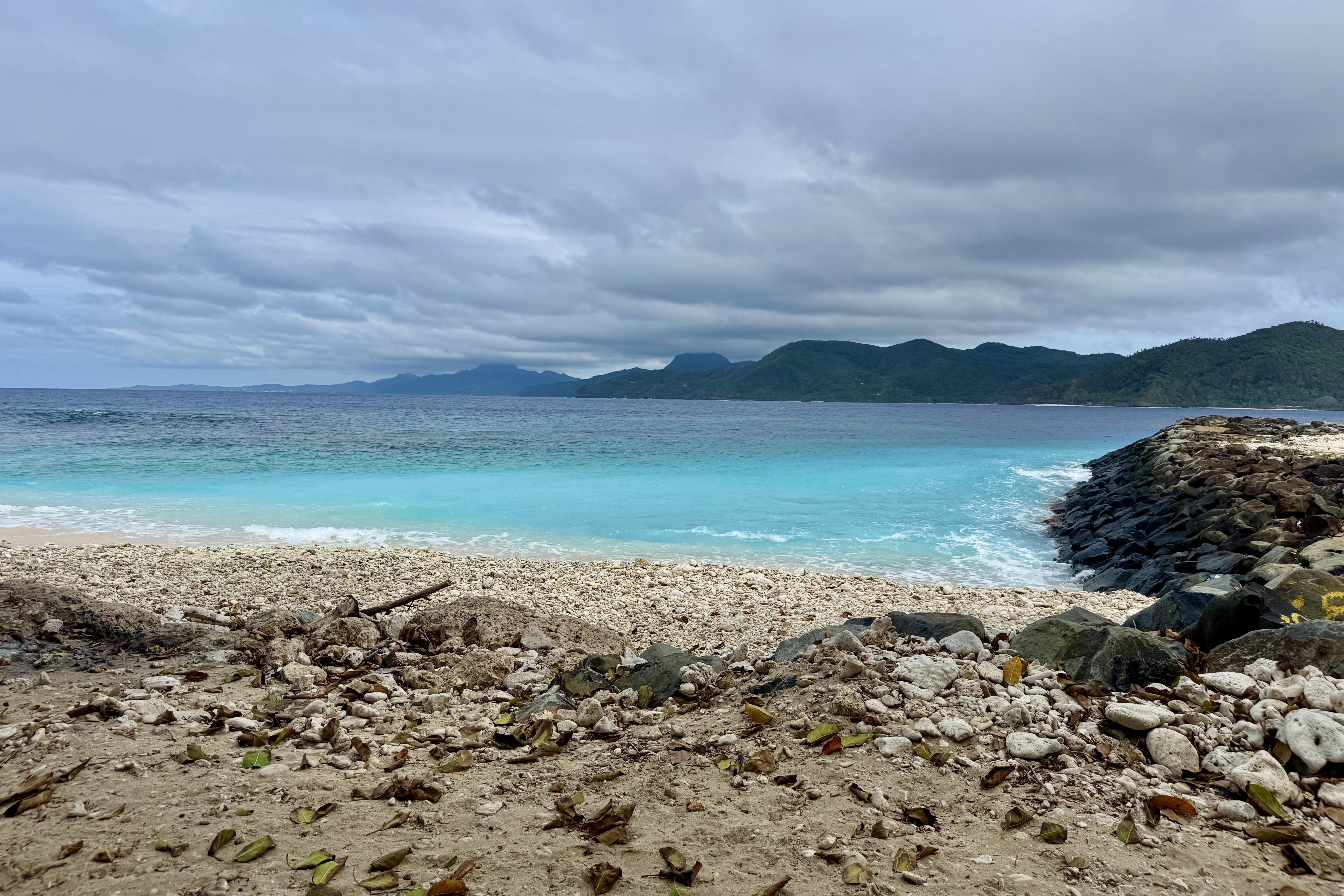
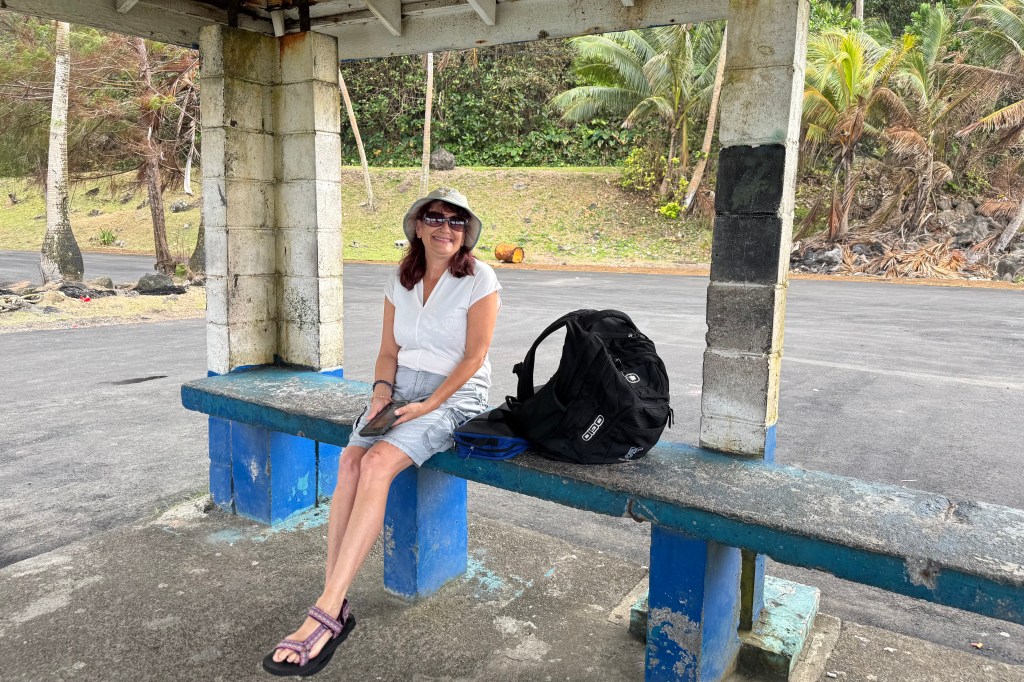
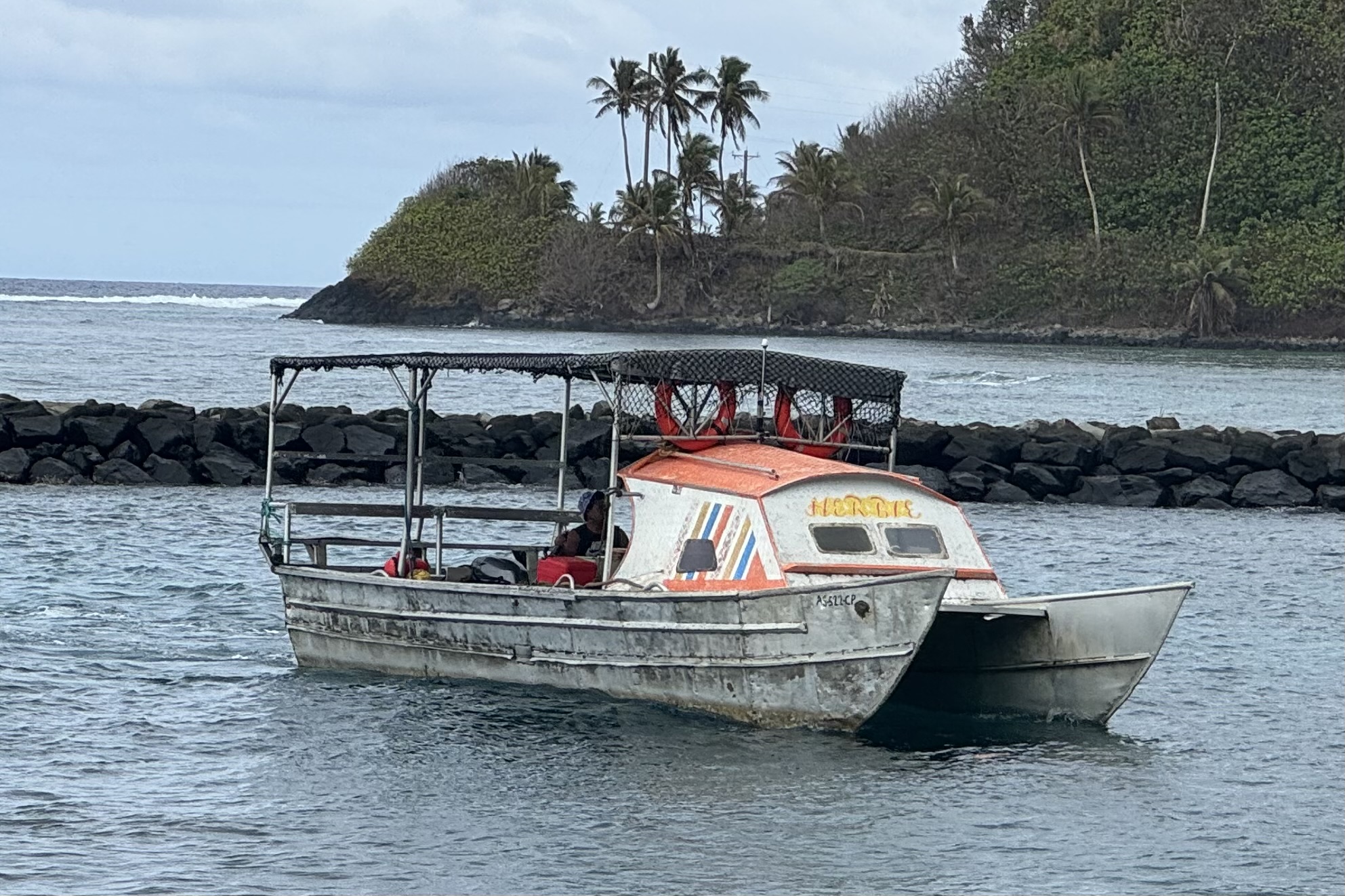
Saturday, September 12th (Day 3) dawned dark and cloudy, but that was not going to stop us as we had decided we would take the ferry to Aunu’u Island. We drove to Au’asi on the east end of Tutuila in search of the ferry dock. Our understanding was that the ferry ran back and forth throughout the day and would come more or less on demand. The “ferry terminal” was certainly not very imposing — in fact rundown would probably be the more accurate description. No airport could match this kind of “pre-boarding” lounge with its blue painted bench. But we waited patiently until a rather rickety-looking little boat finally appeared. She was a dented aluminum veteran well worn by the salt and sun and sporting yellow blue and orange racing stripes. We paid our fare, climbed precariously aboard, and soon were bouncing across the choppy waters.
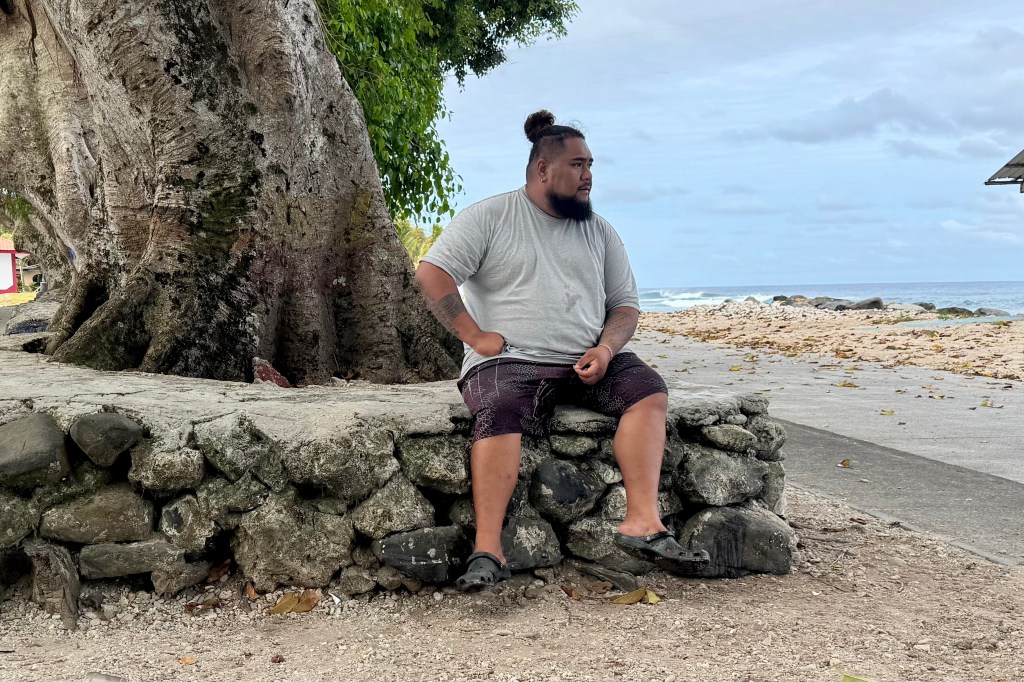
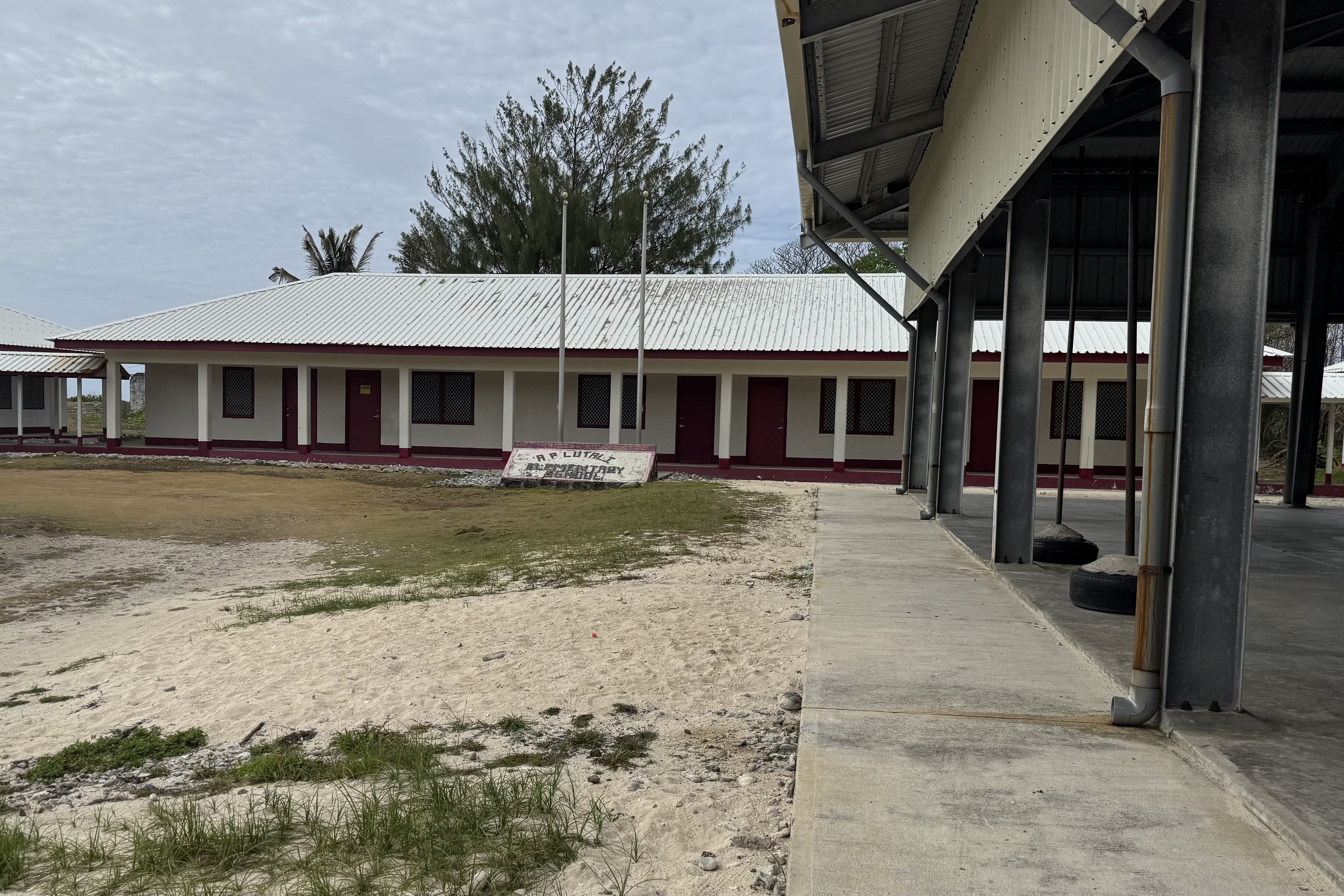
As we stepped off our jalopy of a ferry, we were greeted by Joe, who immediately inquired of our plans and began subtly suggesting that perhaps we would like to see the island school. I’m always a believer in supporting the locals, and besides having somebody who actually knew where he was going seemed like a pretty good idea. So Joe and a stray dog became our guides. It already was quite apparent that one of the things the people of Aunu’u were particularly proud of was their school as he asked again if we wanted to see the school. Then he asked again! After, our dog-for-the-day joined us on the tour, he followed us around the island, and stayed with us throughout our beach explorations. He definitely was content with his temporary assignment as our official Aunu’u escort.
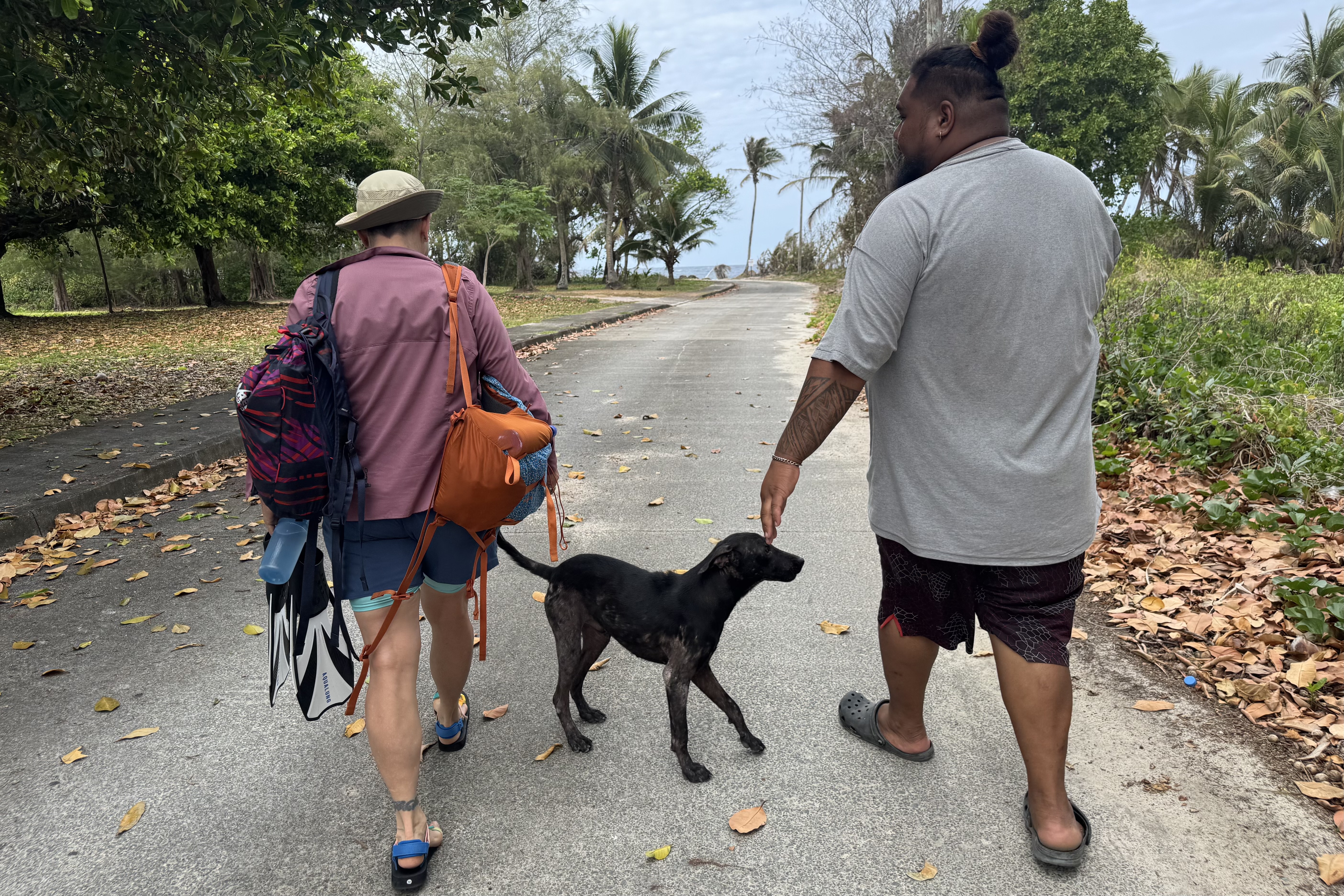
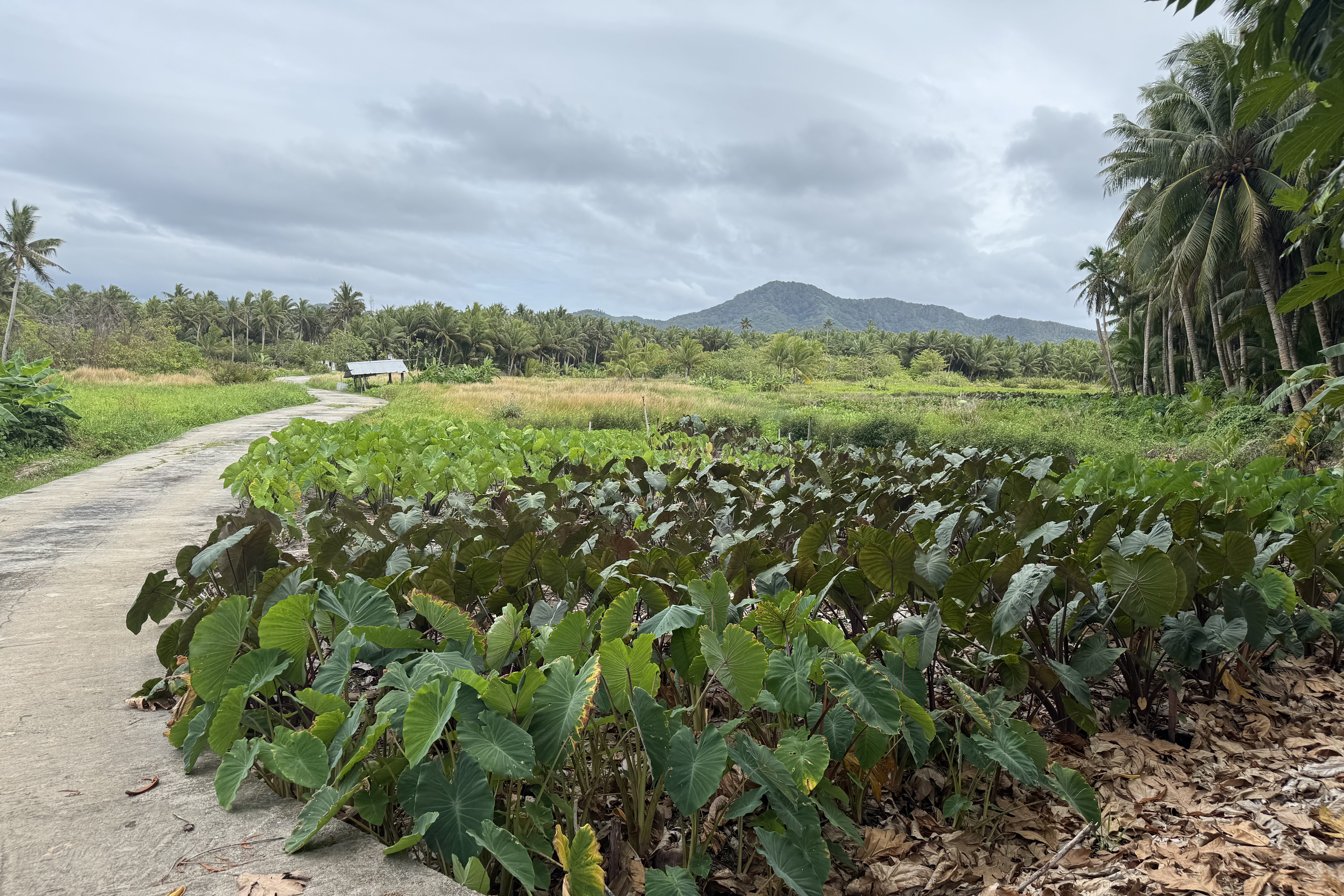
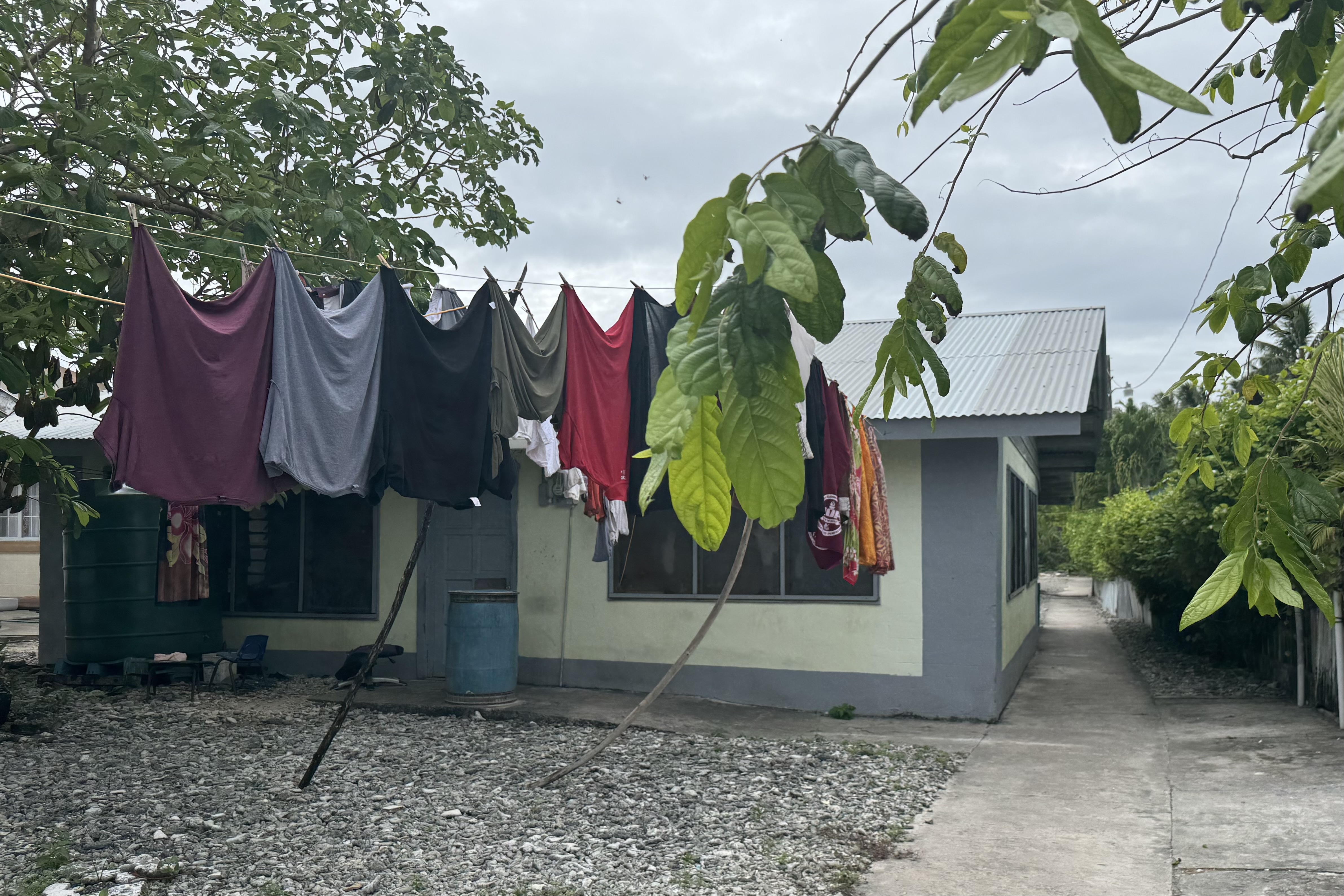
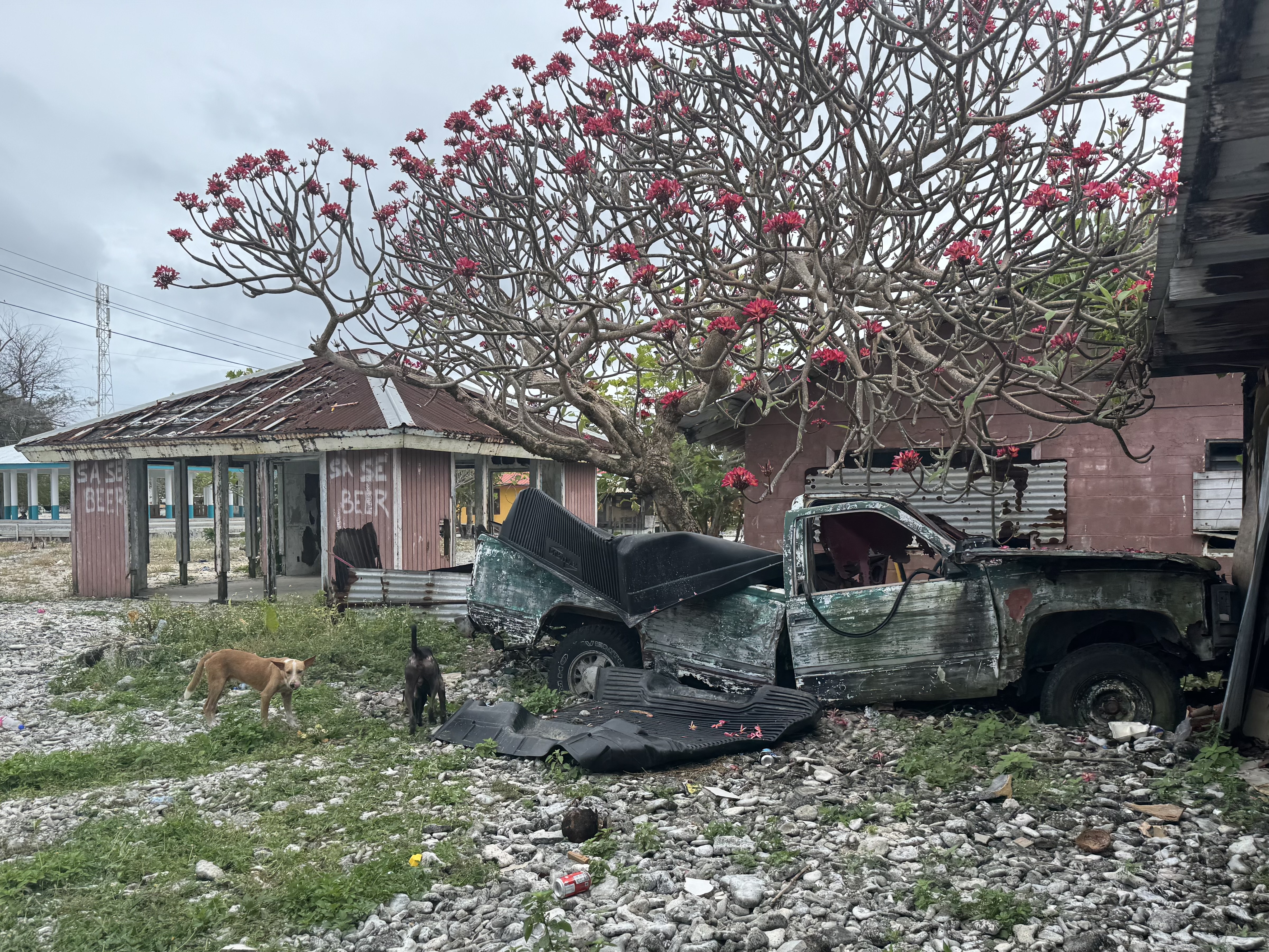
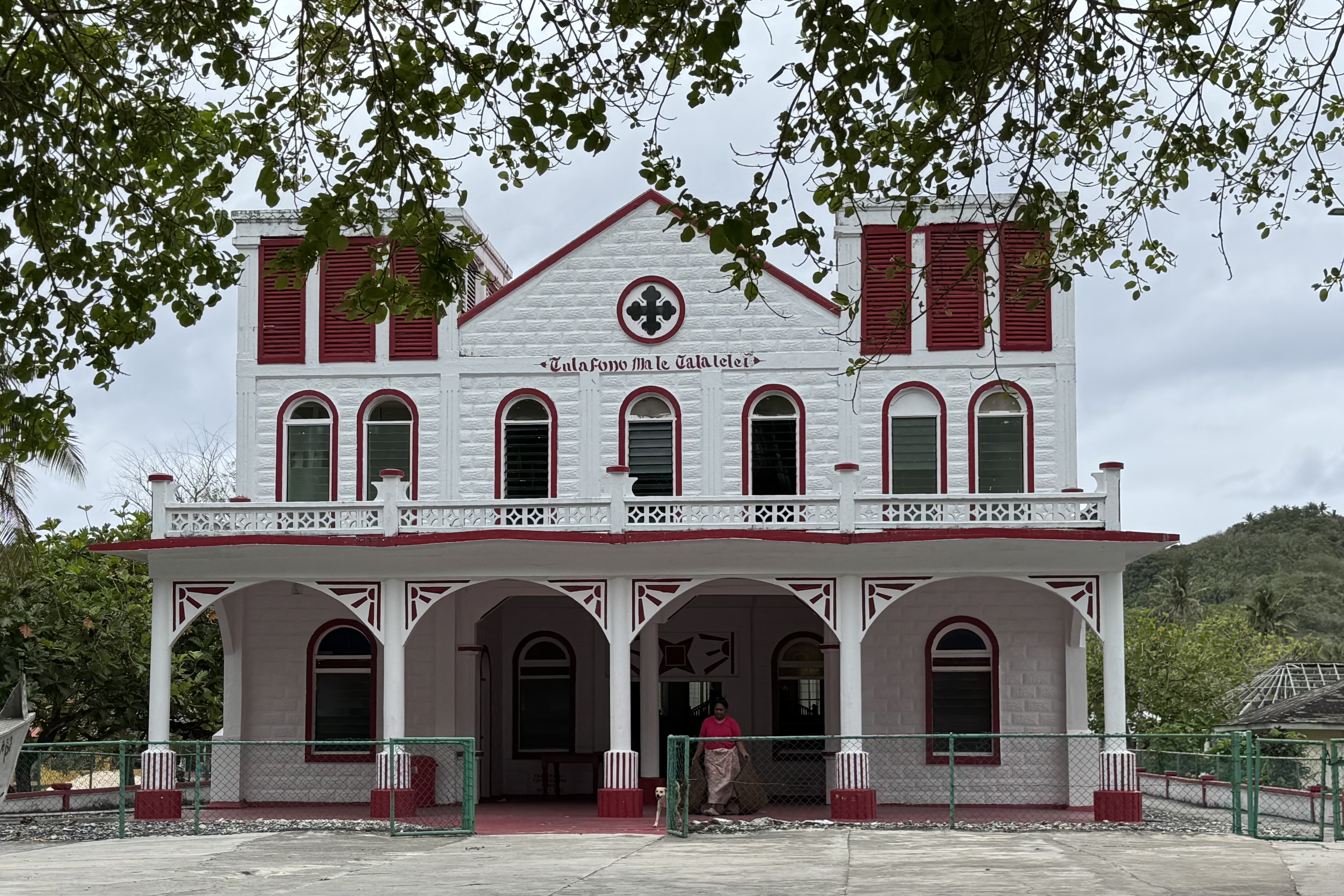
Aunu’u is a car free (though work vehicles exist), slow-paced island small island with about 400 people. in a close-knit Samoan community where traditional life remains important. It is an island of quicksand, swamps, taro plantations, and quiet village paths and wandering about here on this island was a very different experience from the developed parts of Tutuila we have been exploring.
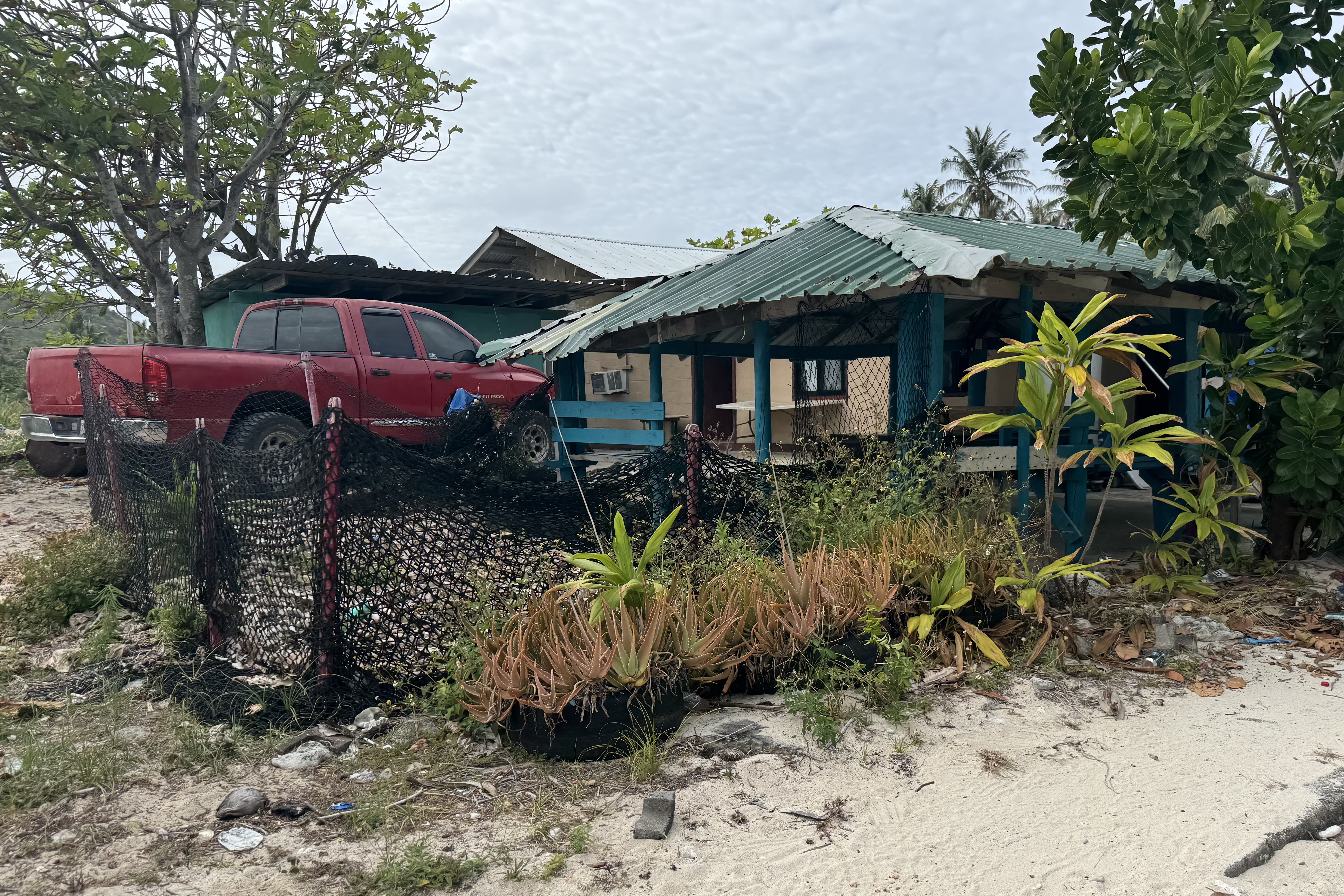
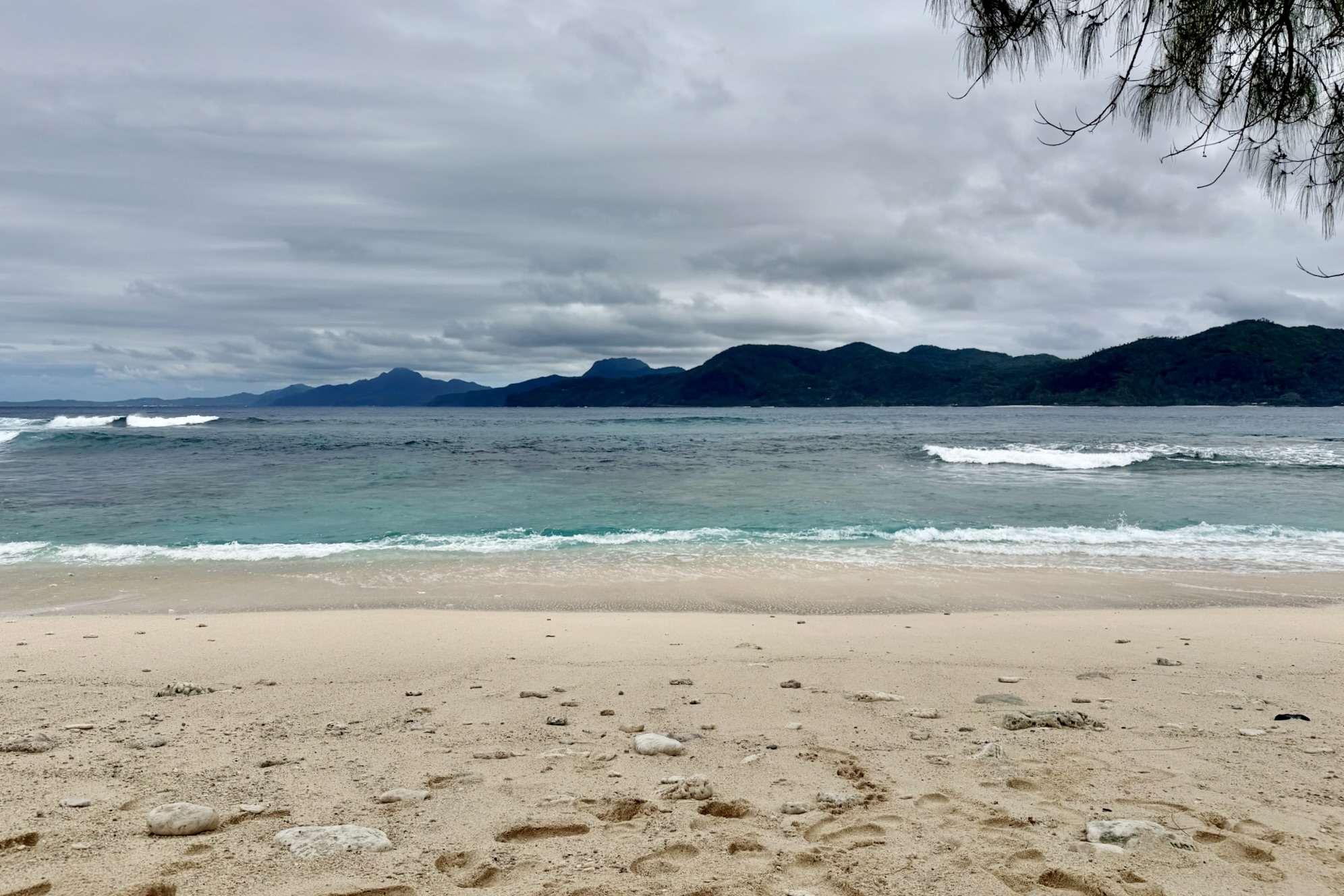
We had come with snorkeling in mind, having read there were good reefs around the island. We walked farther along the beach guided by our dog-for-the-day, found a spot that looked promising, and began donning our gear. As usual, Tasia is the first “out of the gate” and thus first one in the water. She was also the first one back out. The current seemed just too strong to make snorkeling enjoyable or particularly sensible. She headed off in another direction to see if she could find calmer water. Bernadette and I decided we might at least try swimming, but the moment we got in the water it became clear that the current had other plans for us. we were battered by the waves and inundated with sand. So, swimming was not a good option either.
So plan B: beachcombing
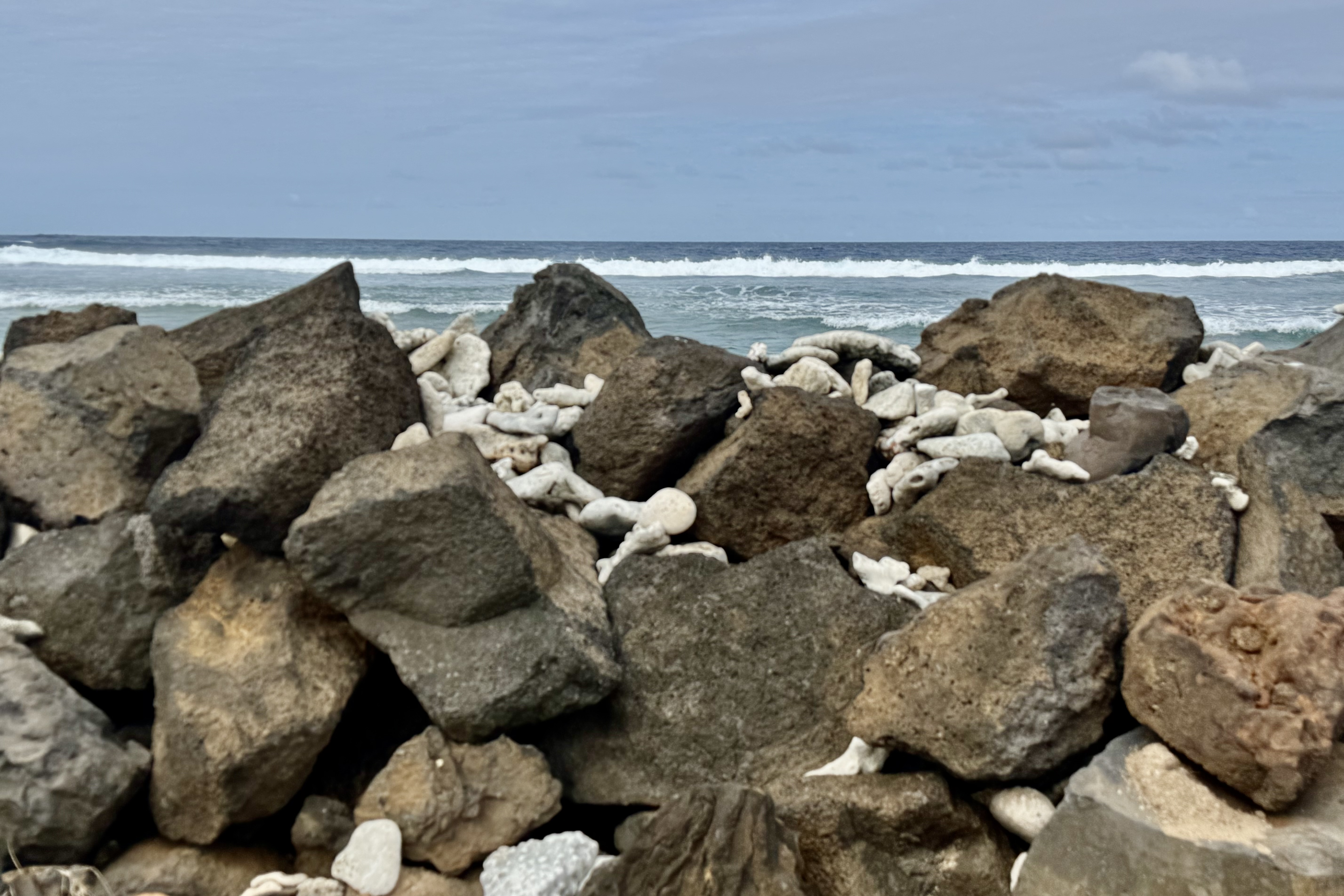
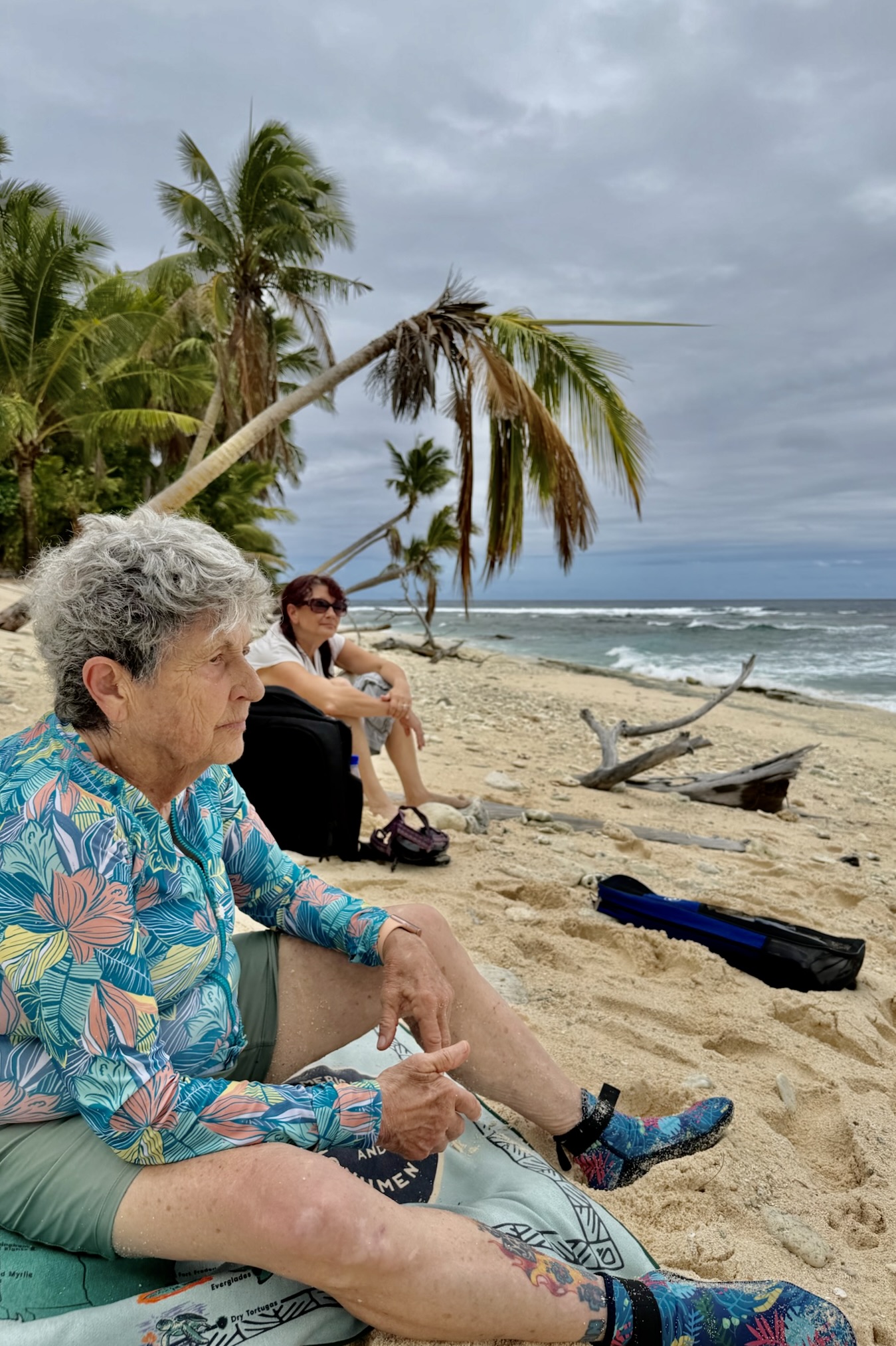
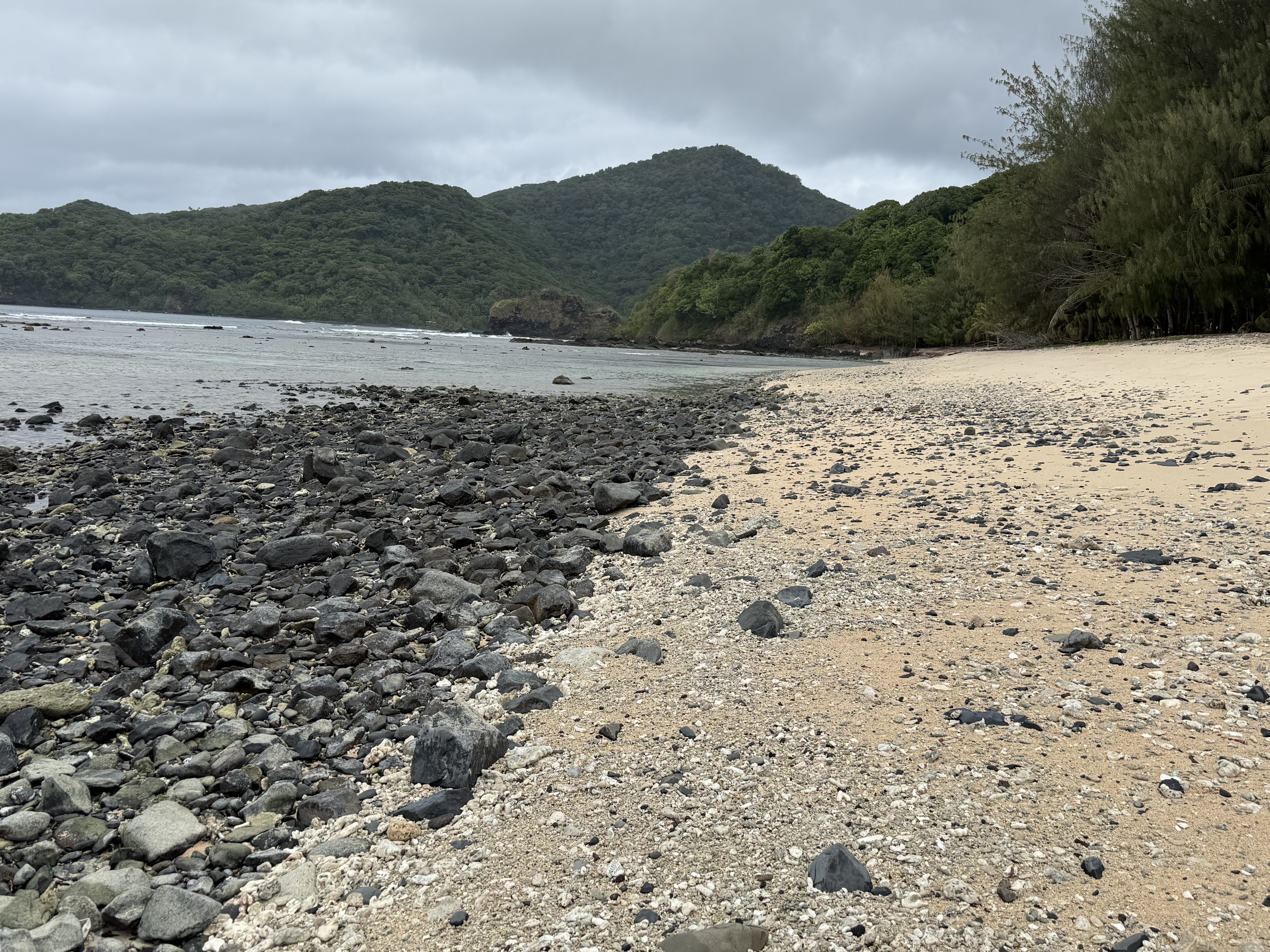
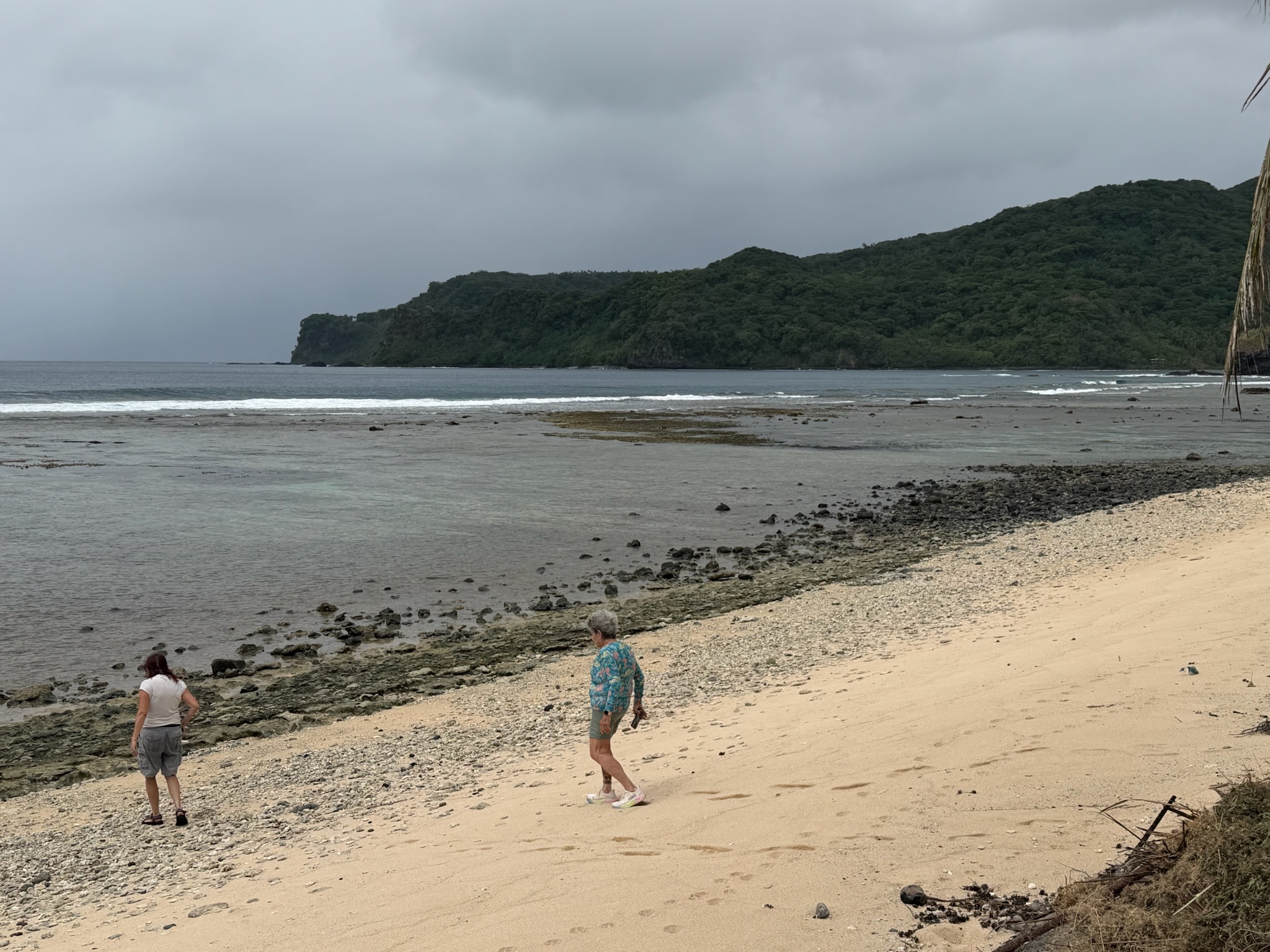
We spent a good amount of time wandering the beach and searching for interesting pieces of coral and shells. Tasia was fascinated and spent considerable time filming little hermit crabs carting their houses around. Eventually we stopped for lunch and were joined by our-dog-for-the day companion who was quite eager to share our picnic. Around 1:00PM we decided to head back.
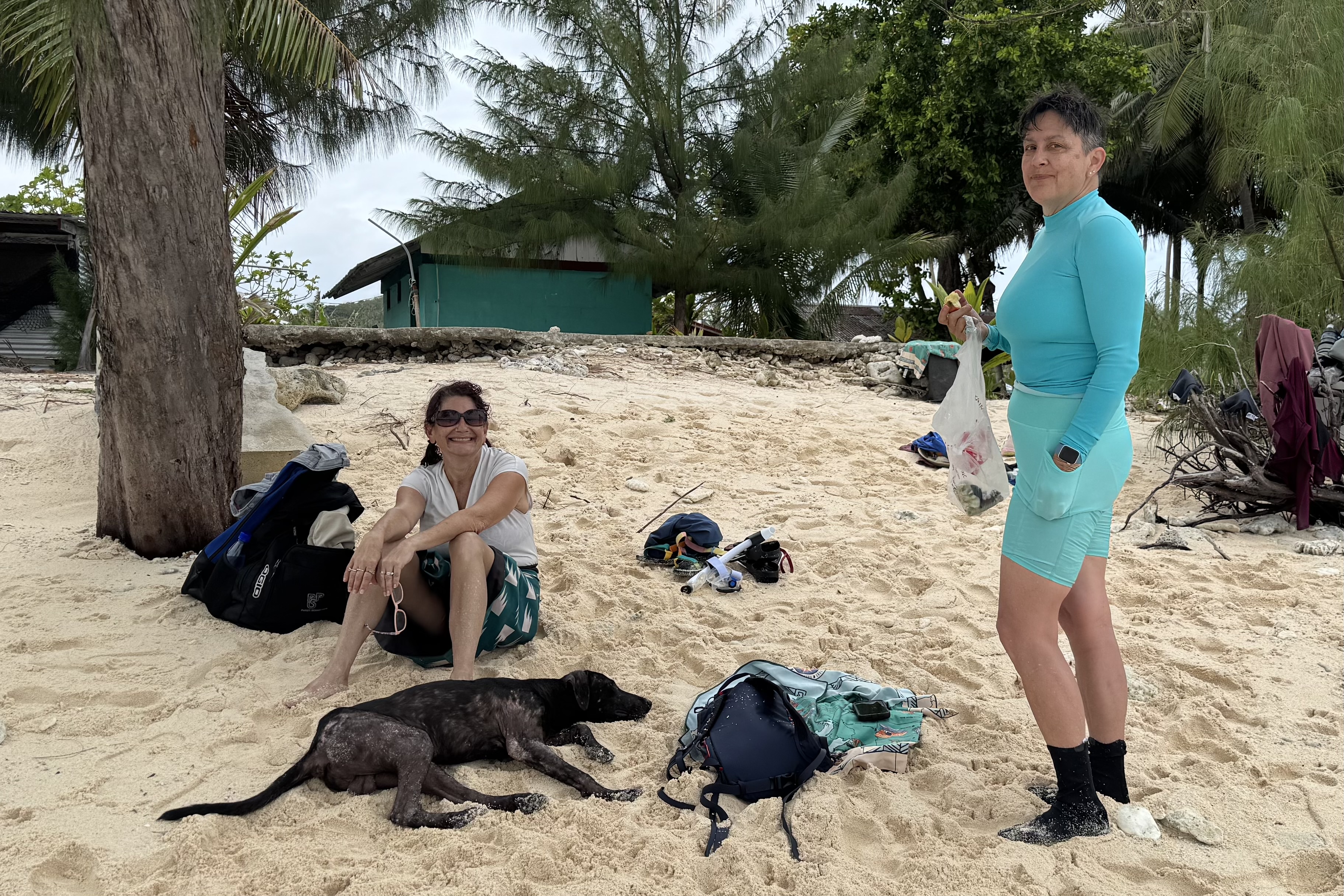
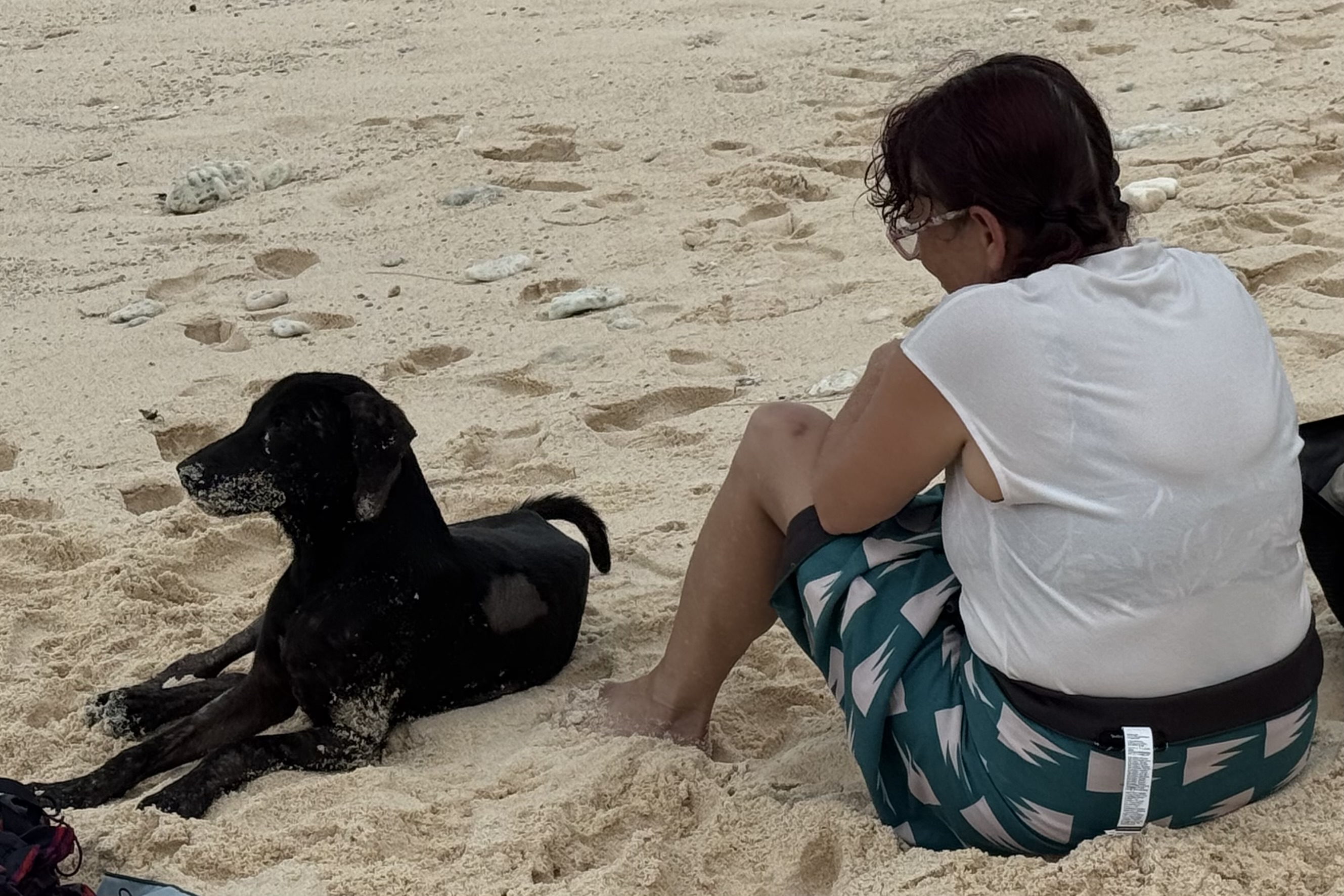
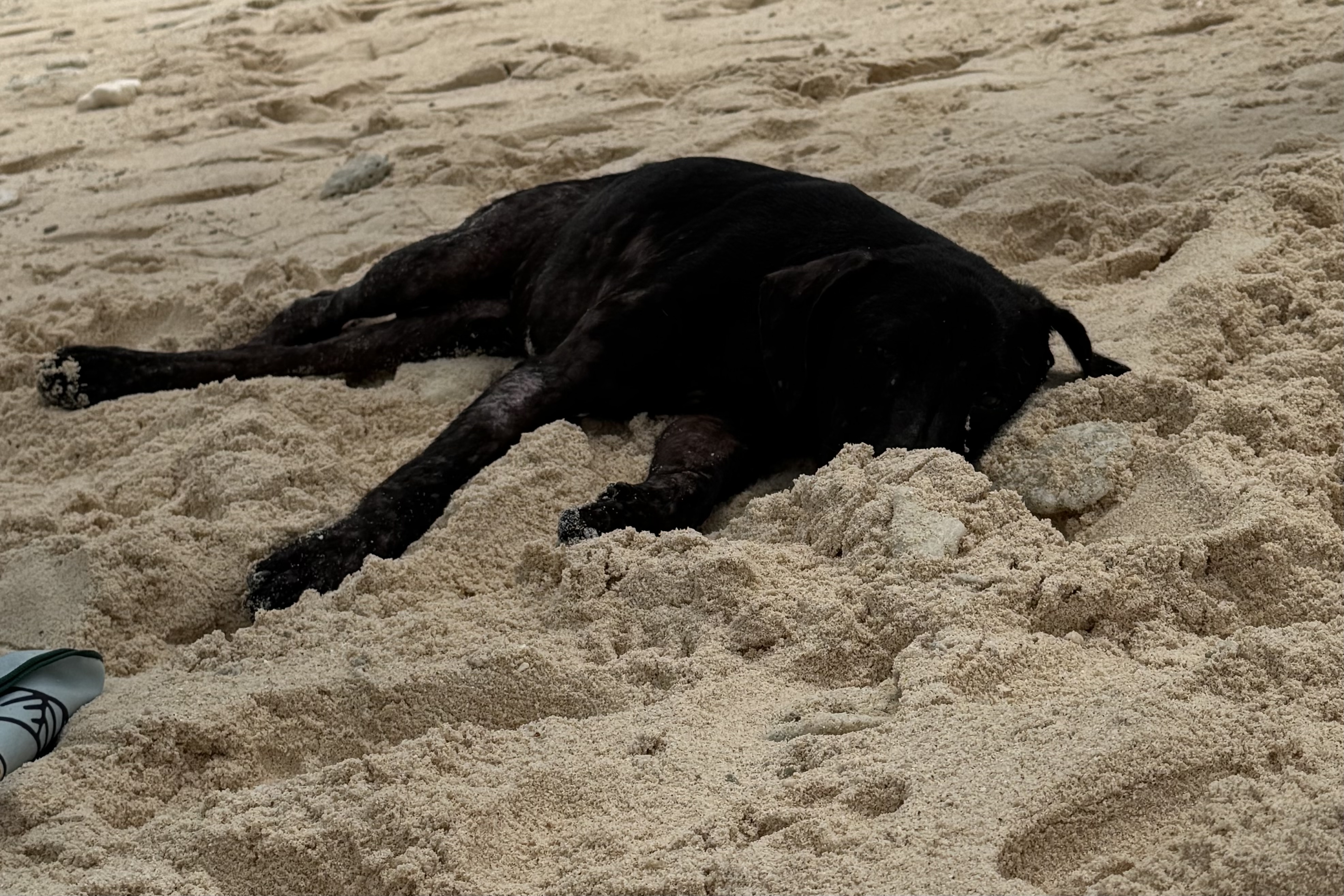
More about our dog-for-the-day. One thing we noticed everywhere in American Samoa was the abundance of dogs. Estimates have put the number of free-roaming dogs on Tutuila as more than 10,000. However I also heard that many aren’t truly stray but have owners but simply allowed to roam. Limited spraying and neutering, lax and inconsistent licensing, and limited veterinary care have all contributed to the problem. Dogs seem to be part of the landscape, wandering the roads, beaches, and villages often joining visitors as if they had no where else to be. Our Aunu’u companion certainly seemed to have perfected that last part and seemed quite content .
Another thing we couldn’t help noticing here and everywhere in American Samoa was the chickens that are everywhere. Baby chickens everywhere. Roosters strutting around as if they owned the place. At times it seems like we were moving through one enormous free-range farmyard.
One strong impression from this day and this part of the island was that there was sand everywhere. And I mean everywhere. It found its way into our feet, into our shoes, onto our clothes, and into places I’m fairly certain sand was never intended to go.
Back on Tutuila, since we were at the eastern end of the island we decided to explore a little more. First we drove through the post-card pretty villages of Tula, at the easternmost cape and then on to Onenoa, the northeastern most village. The road is paved but narrow, winding and unstriped. and it climbed steeply over a mountain ridge before ending at Onenoa, the last stop on Tutuila. After retracing our path we traveled north to Sailele on another steep curvy road.It was a real test of Tasia’s driving skills. What was a great relief it was for her that the speed limit on the island was 25 miles per hour everywhere.
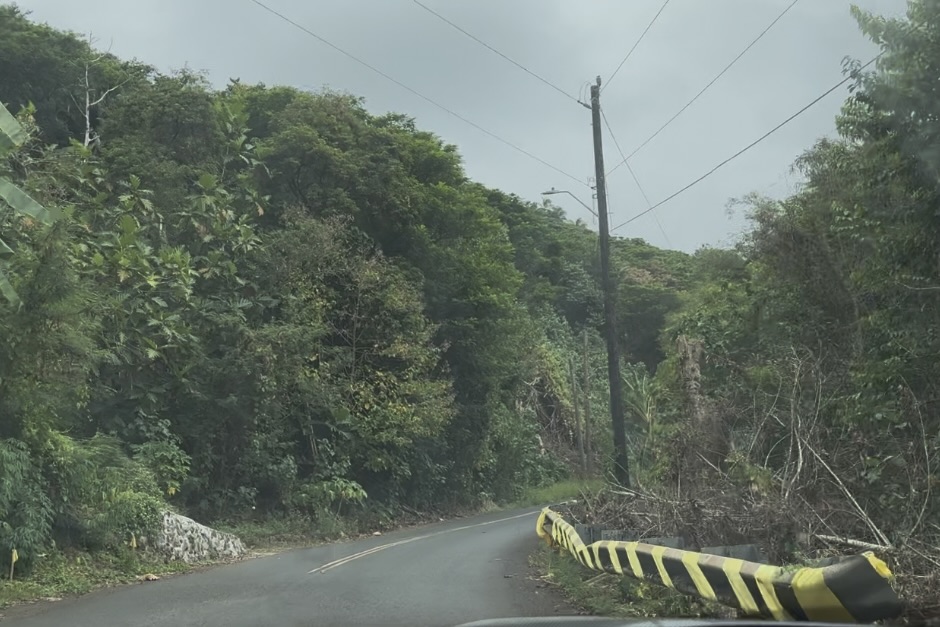
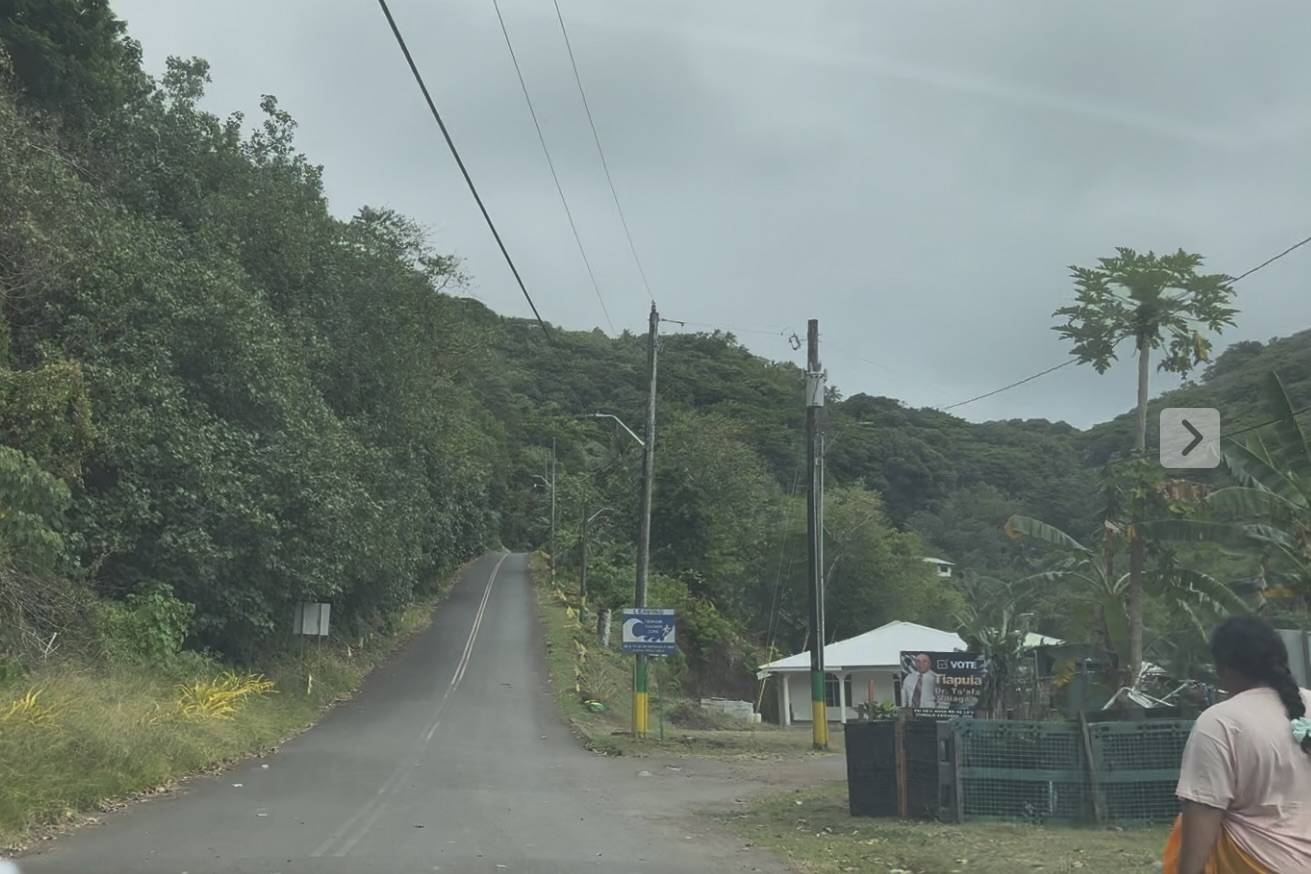
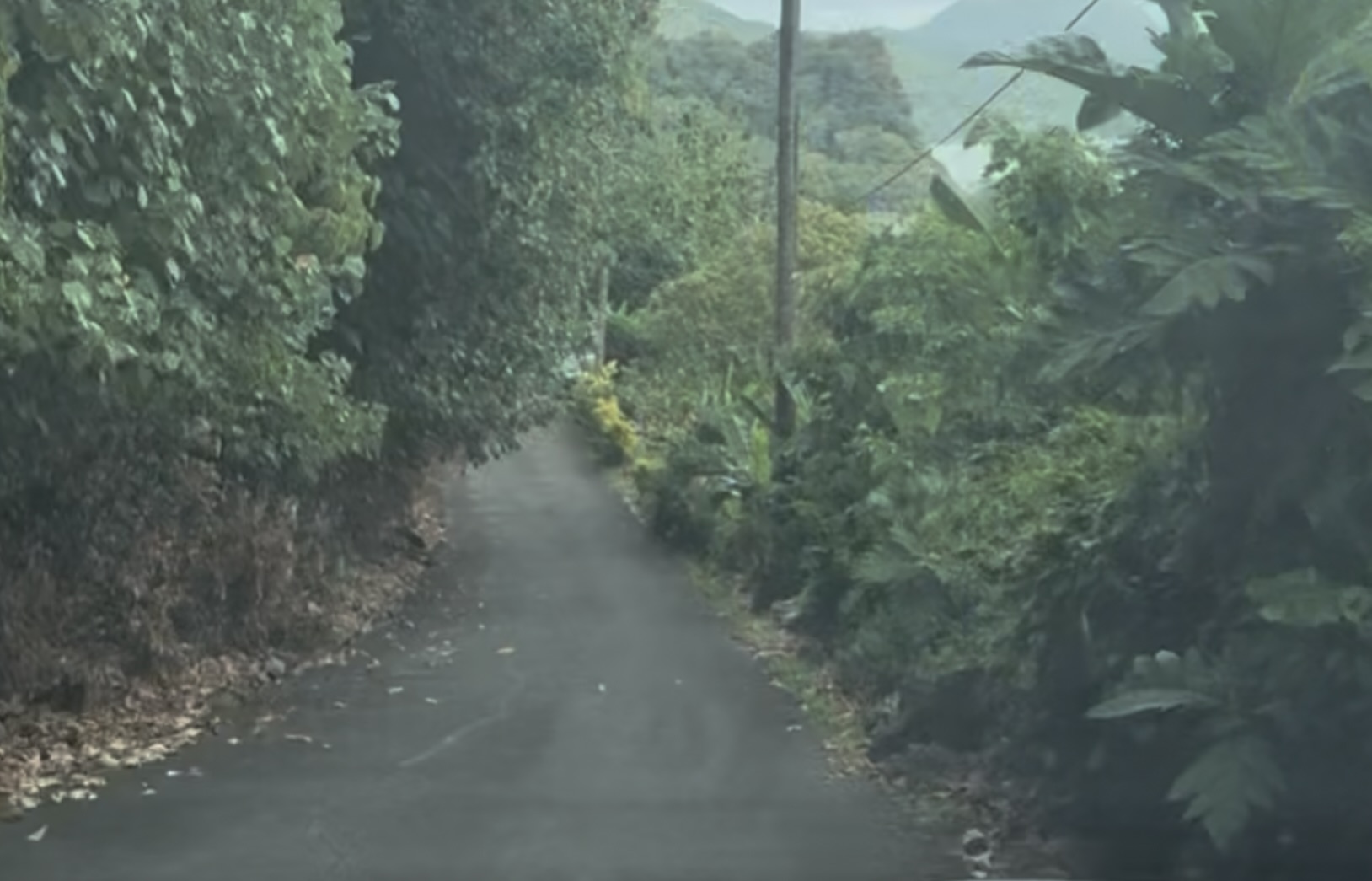
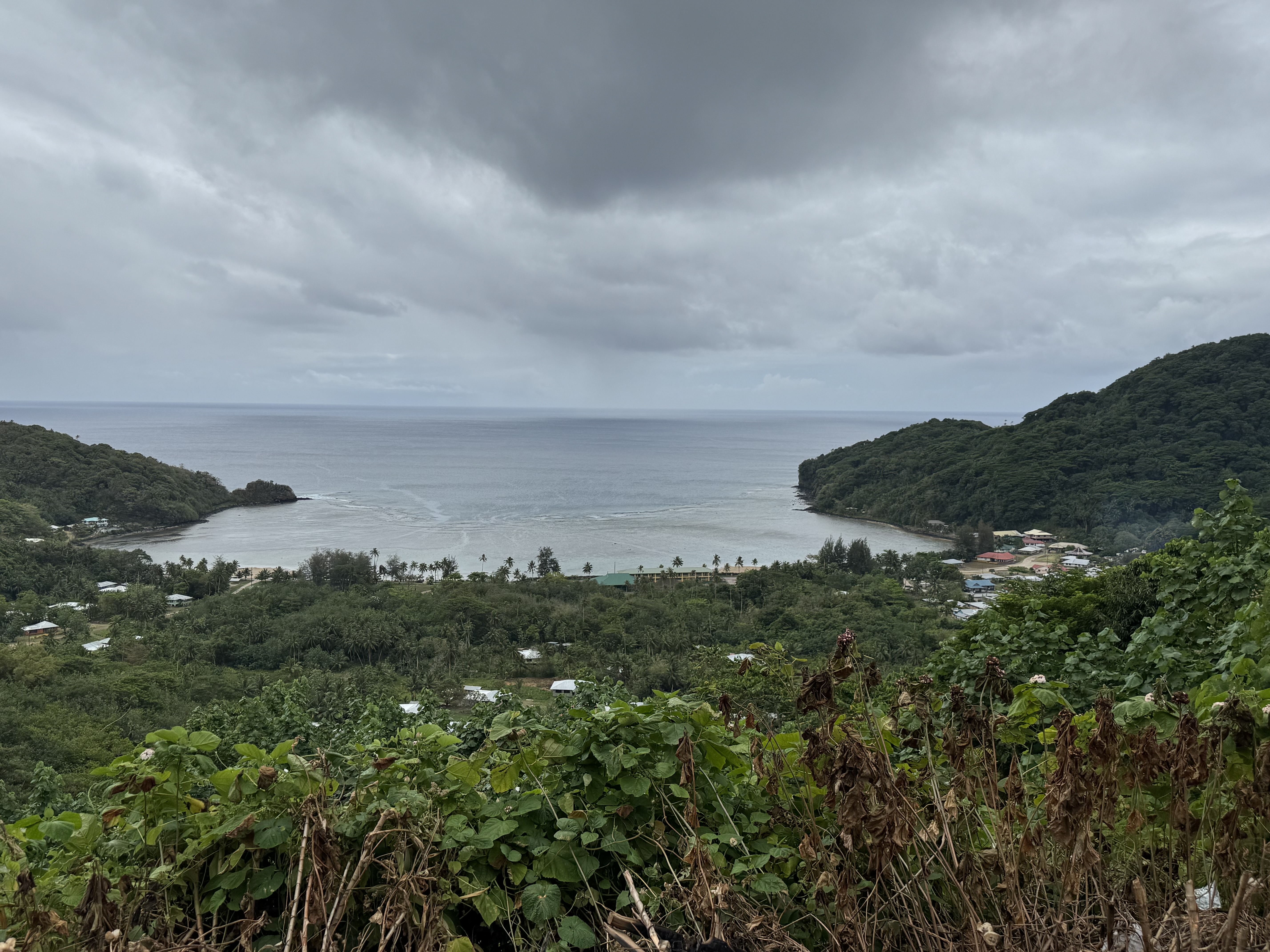
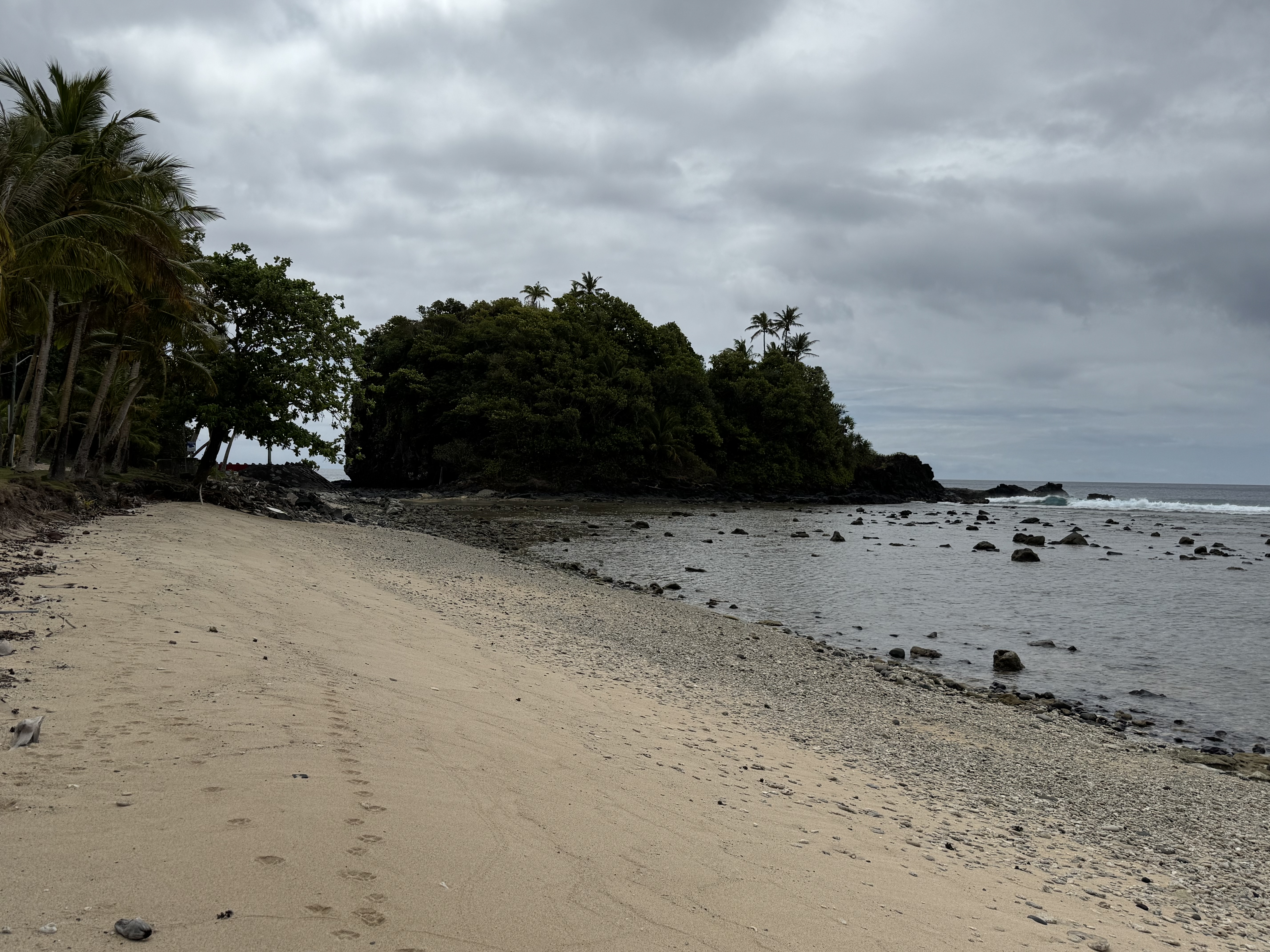
Some of the things that stood out on this adventure were the prominent, lushly vegetated islets rising directly from the water– small offshore island called sea stacks. The beaches seemed to be a mix of volcanic rock, coarse coral sand, and pebbles.
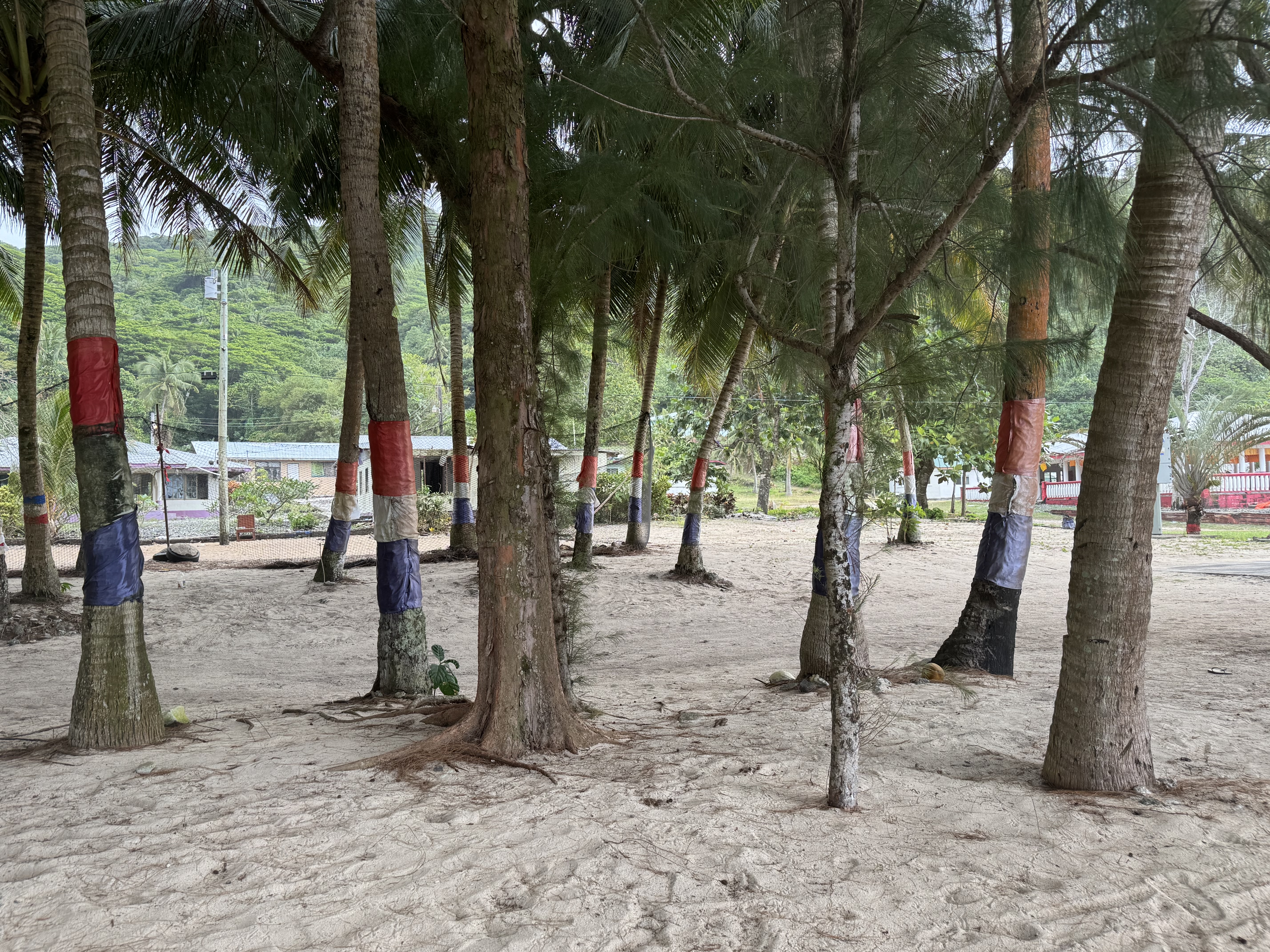
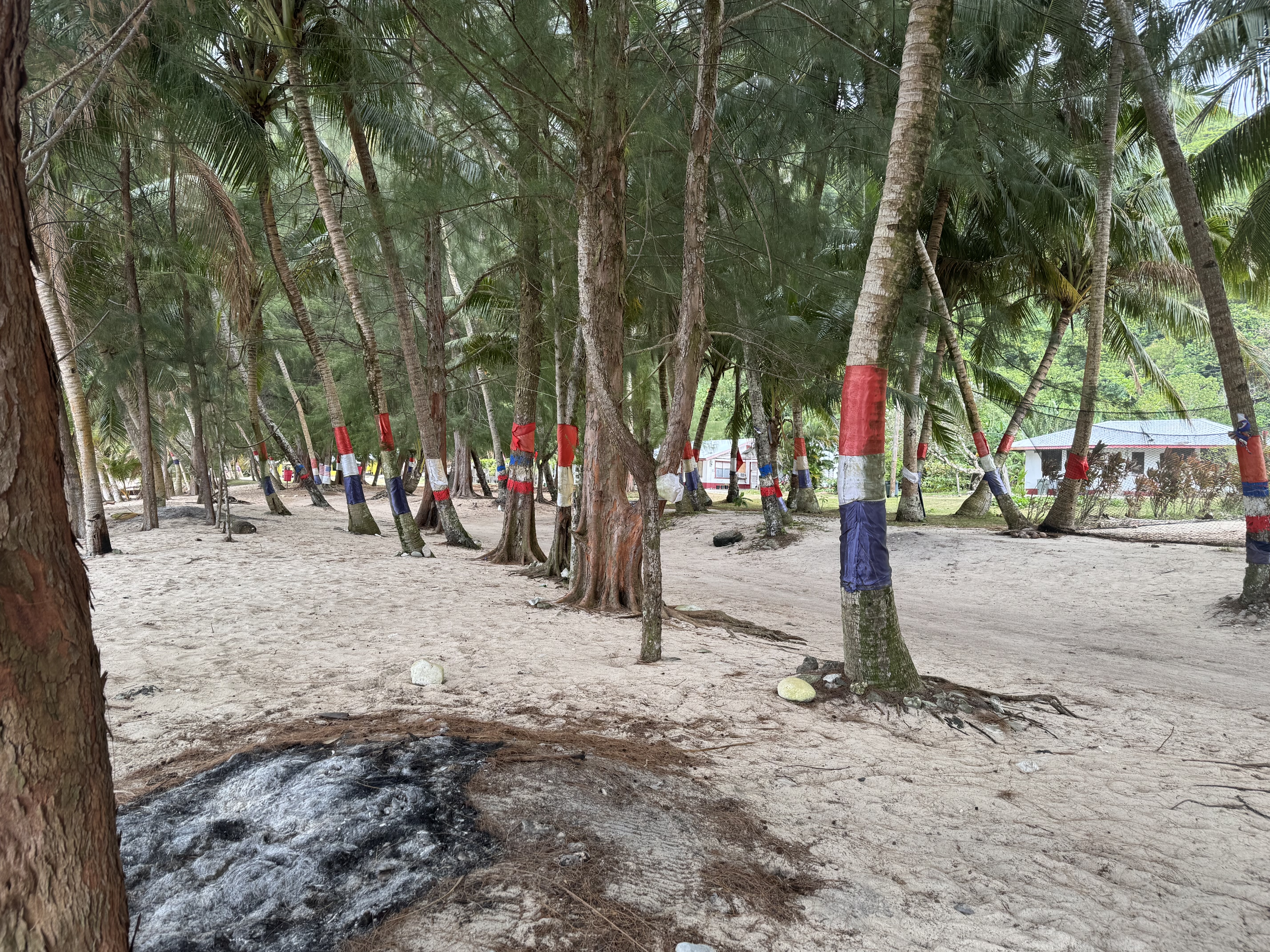
In most towns the tree trunks are painted — and in many there are bands of red, white, and blue (occasionally another combination of colors). This decoration I learned serves multiple cultural, celebratory, and practical functions including patriotic display, a showcase of civic pride and honor of local heritage; demarcation of village boundaries; beautification; a welcoming visual indicator of community care; and, environmental protection as painting of the lower trunks of trees reflects intense tropical sunlight to prevent bark splitting and acts as a minor deterrent against crawling insects like ants.
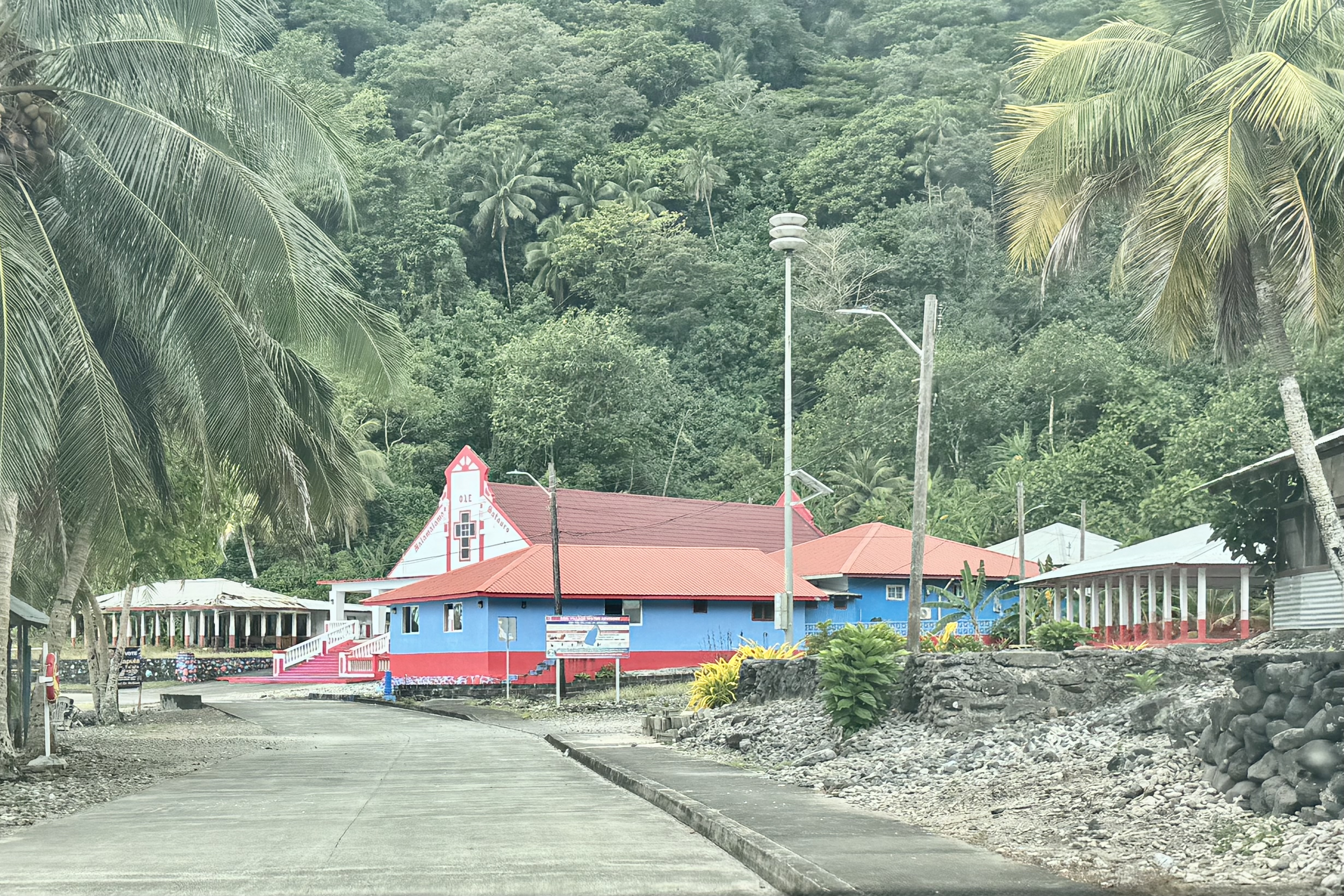
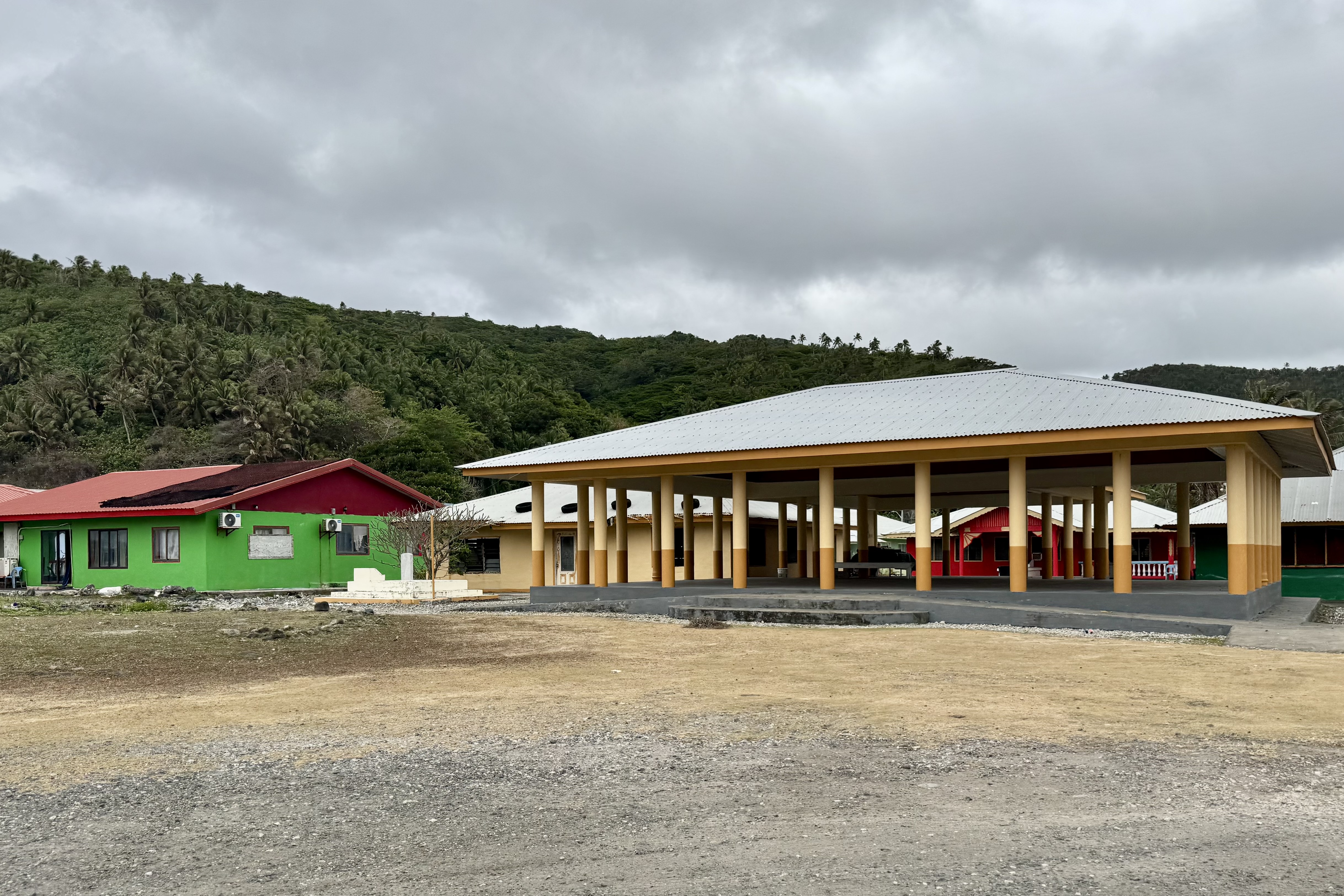
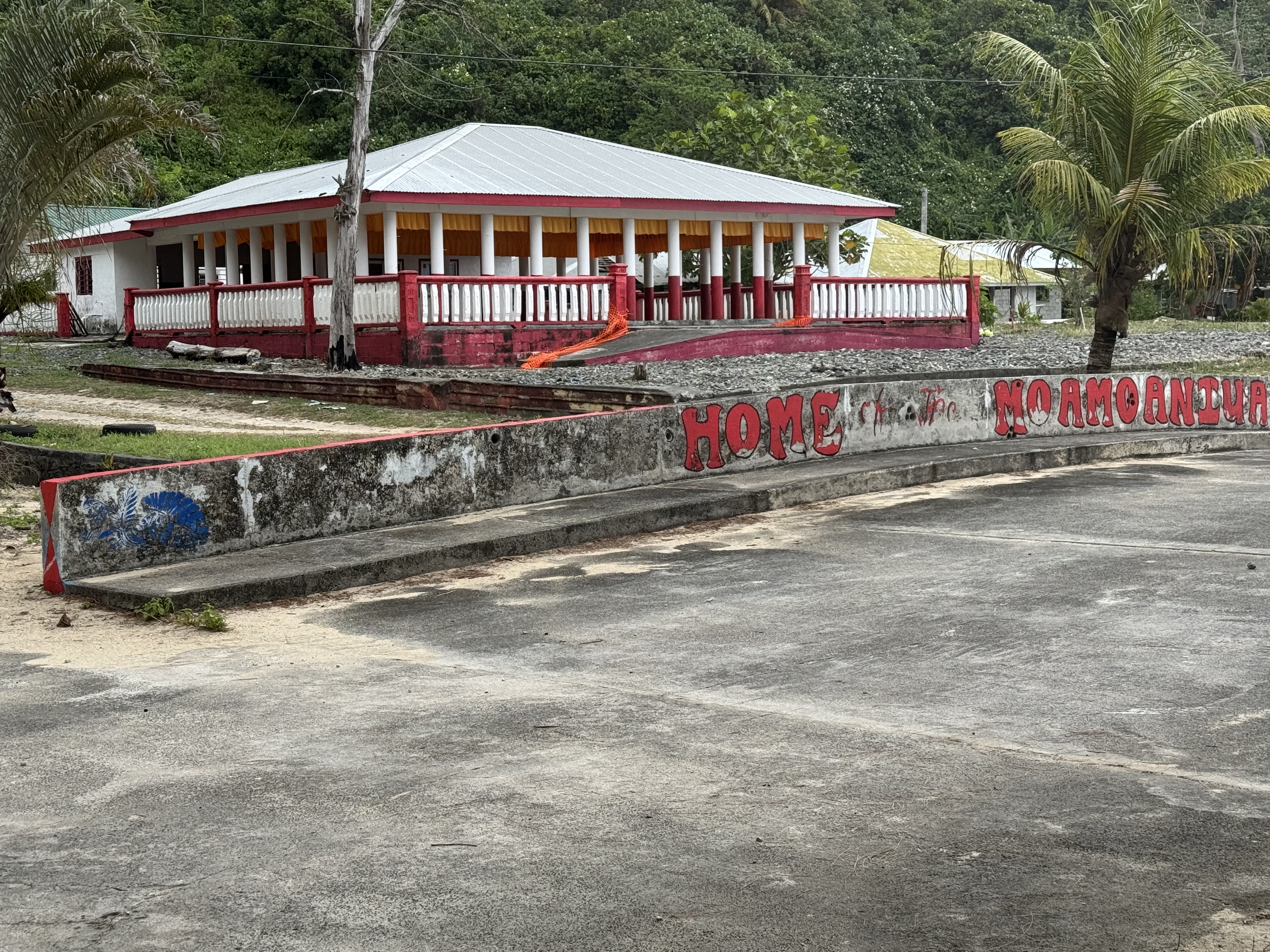
One of the most distinctive features of every village we drove through was the abundance of the traditional open-sided Samoan fales used for family gatherings and important occasions. The buildings themselves are built elevated on a platform with a pillared perimeter designed to allow cool ocean breezes to pass through while serving as a central hub for gatherings and cultural events. We saw them in village after village — sometimes several in one place — reminders that the traditional Samoan way of life values family, community, community responsibility, service to others, and respect for elders.
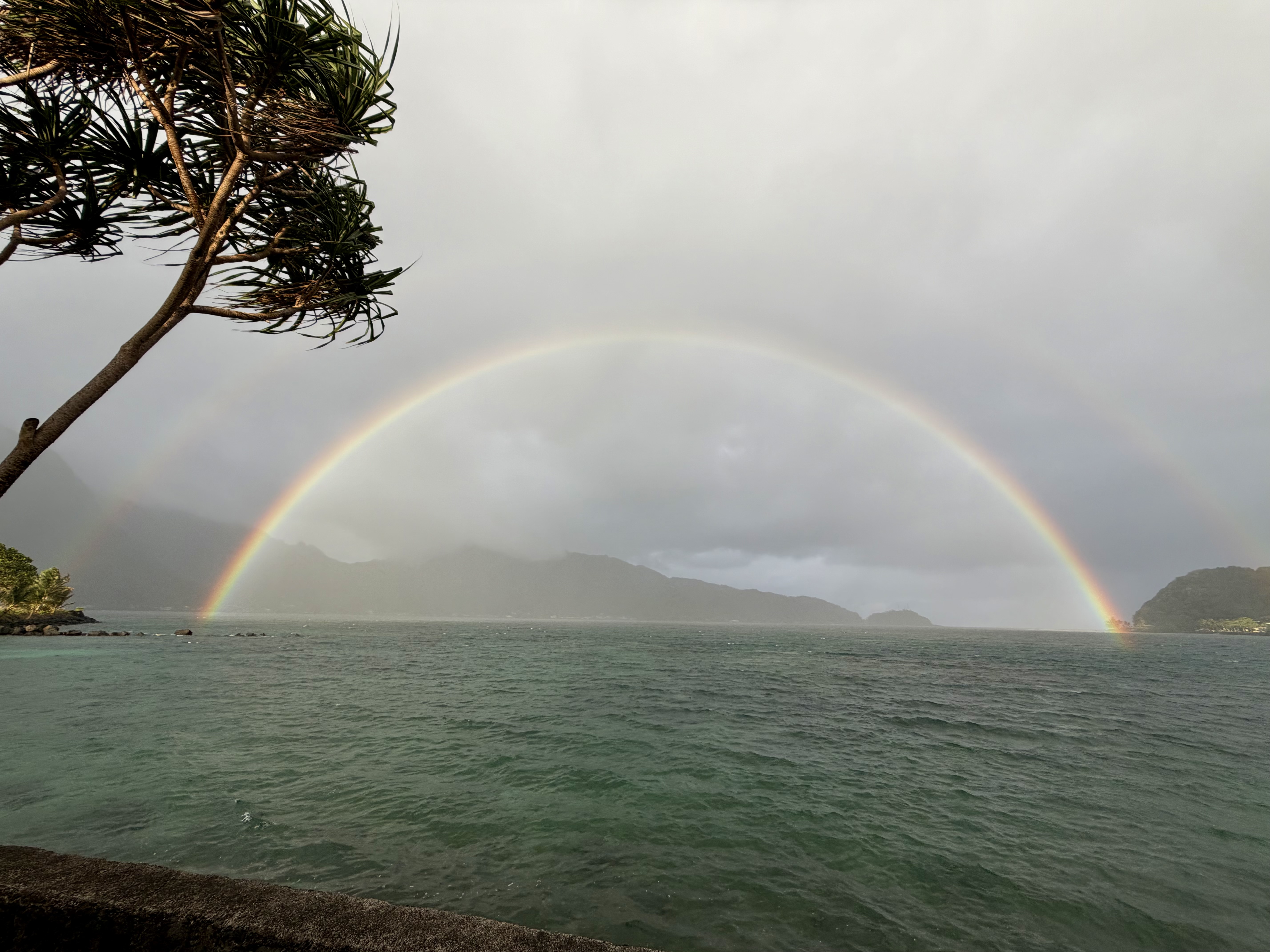
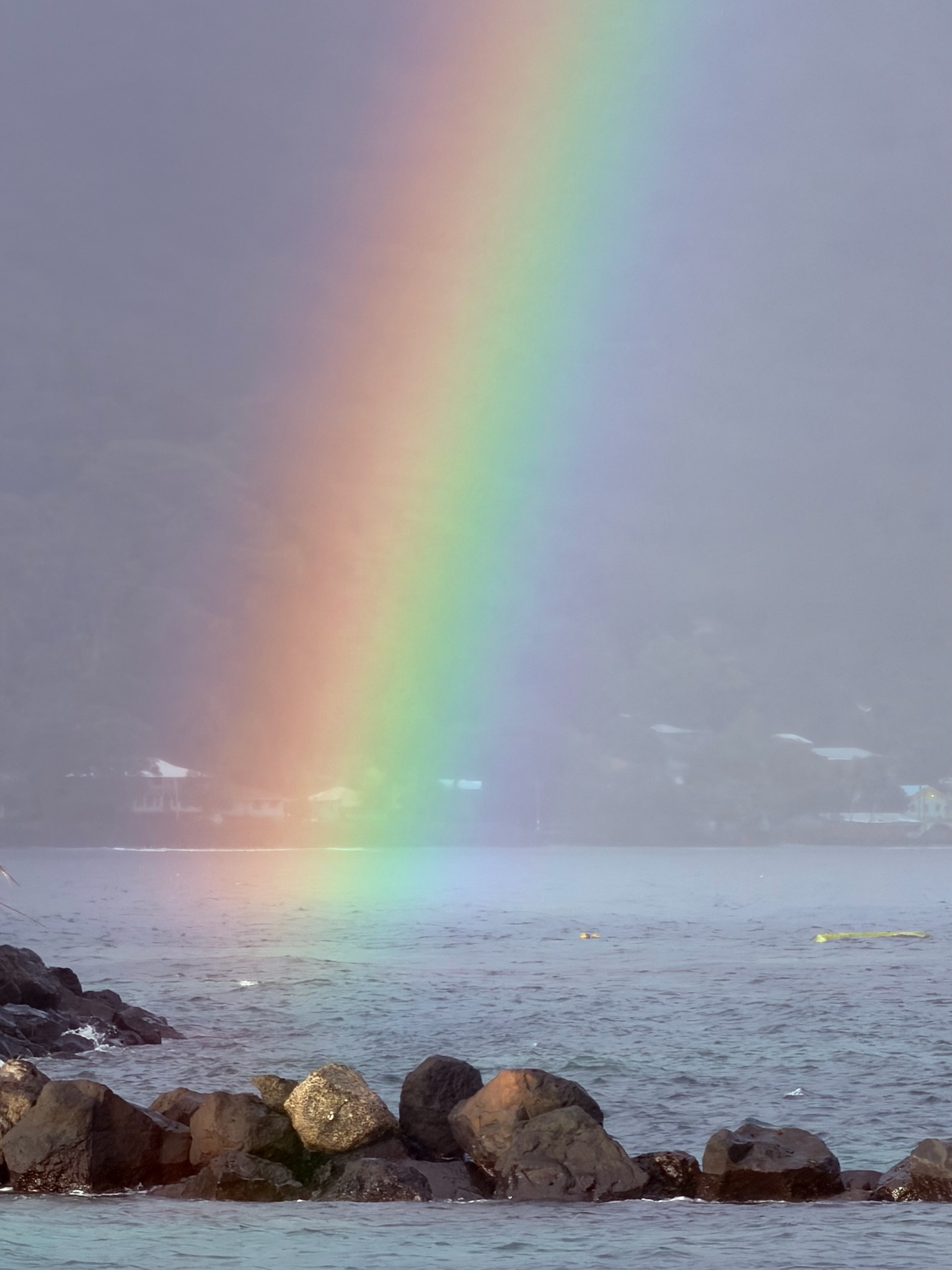
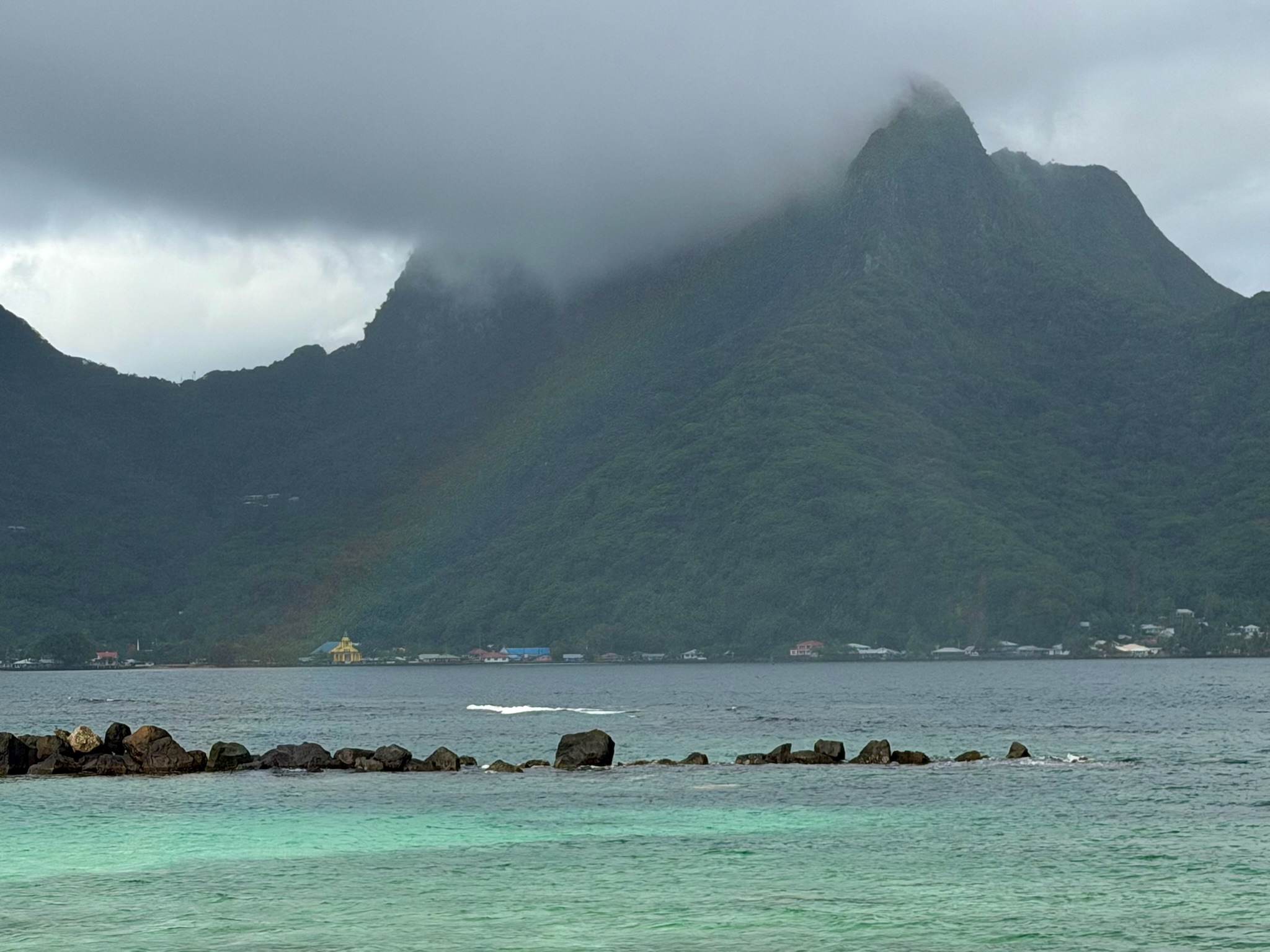
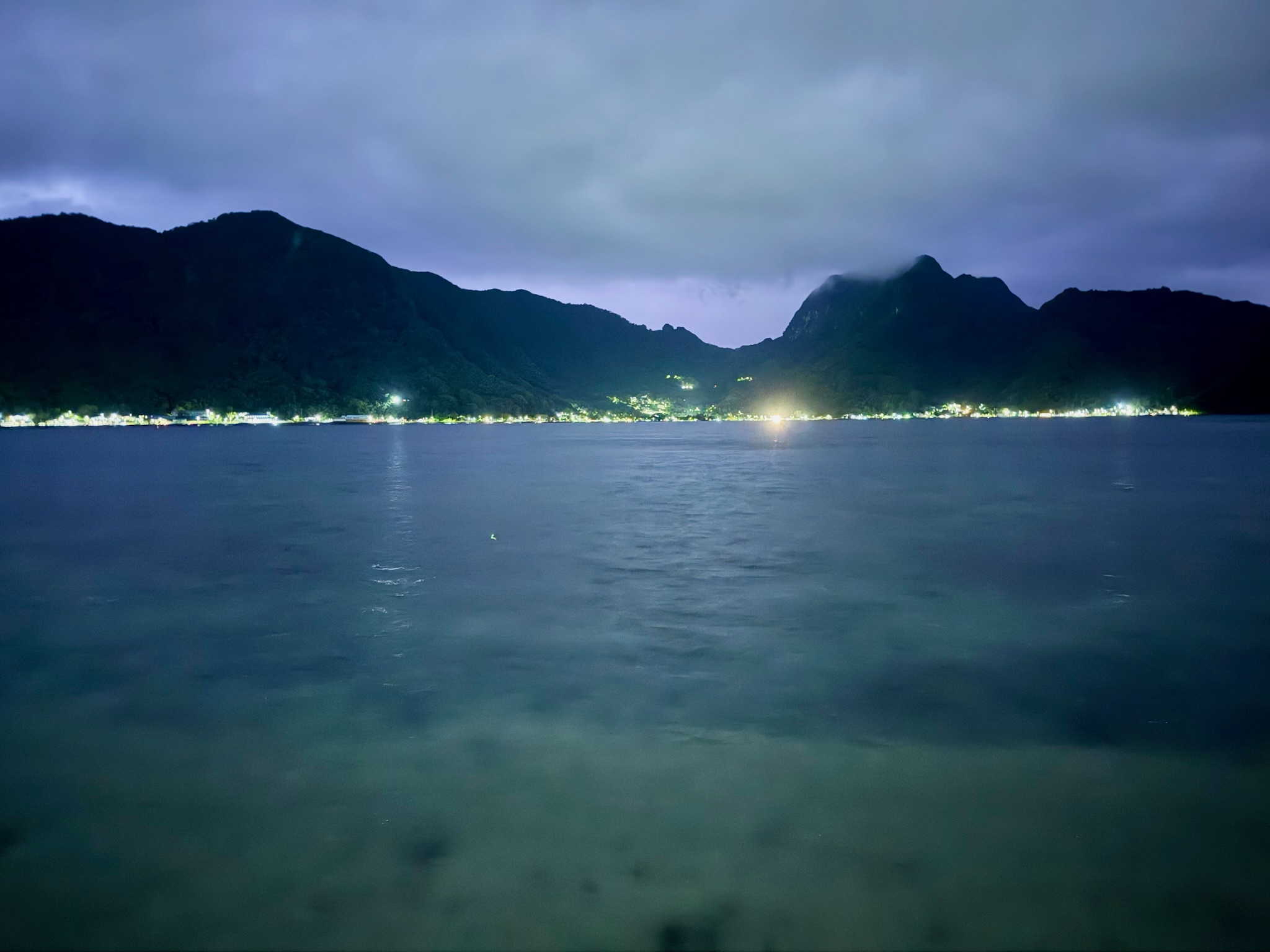
By the time we finally returned to Sadie’s a refreshing dip in the pool seemed absolutely necessary — not just for cooling and relaxation but as a serious attempt to remove the sand from every part of our bodies. Once dressed and not wanting to get back into the car, we decided to eat dinner again at the Goat Island Cafe. As we ate , storms were moving through the area, and the sky rewarded us with the most beautiful rainbow – a full brilliant arc stretching across the sky. After a day that included a questionable ferry ride, a failed snorkeling expedition, enough sand to fill a sand box, and stray dogs and chickens, sitting there with a good meal of a wahoo burger gazing at a full rainbow seemed like a perfect ending to this day.