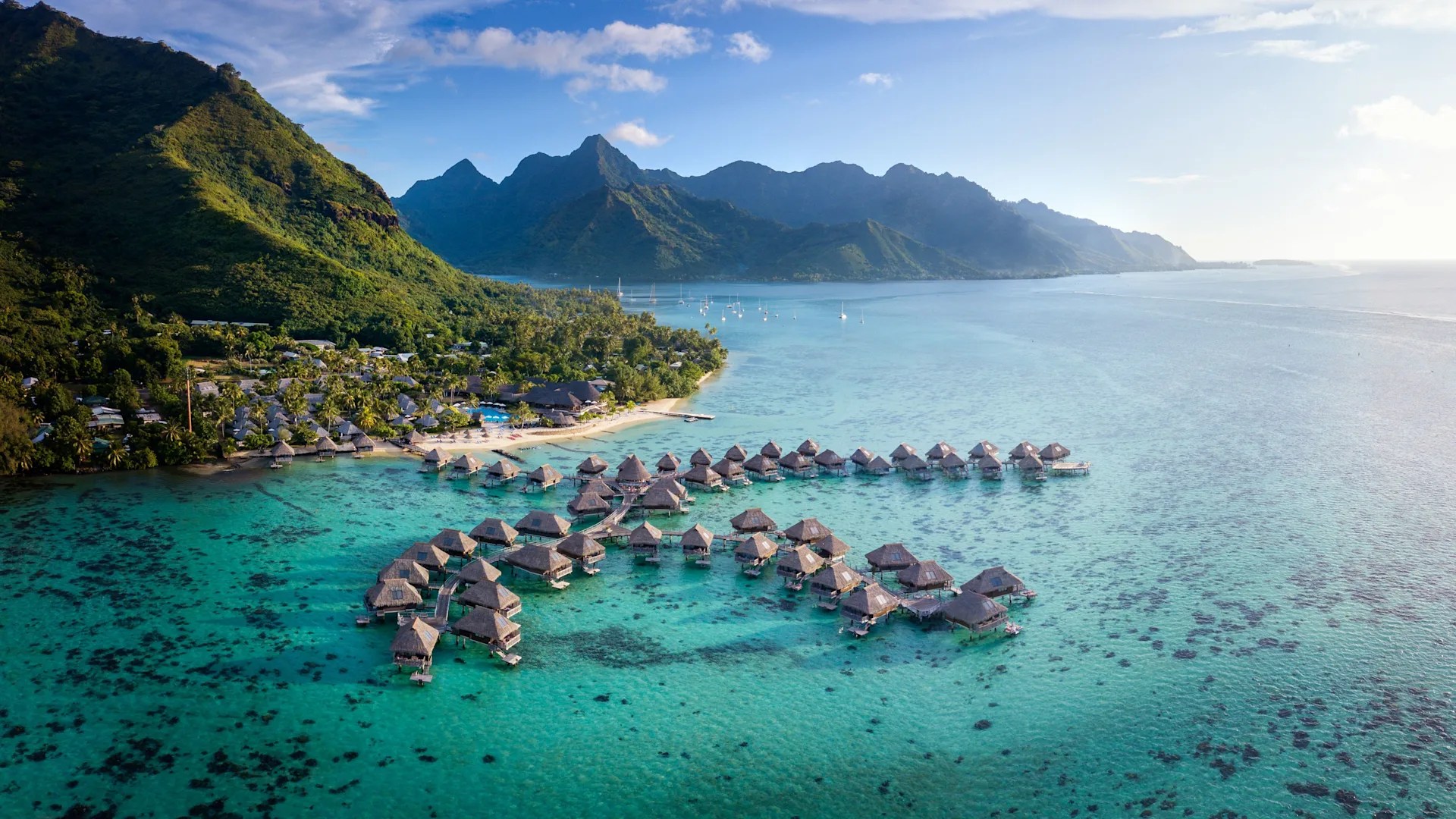
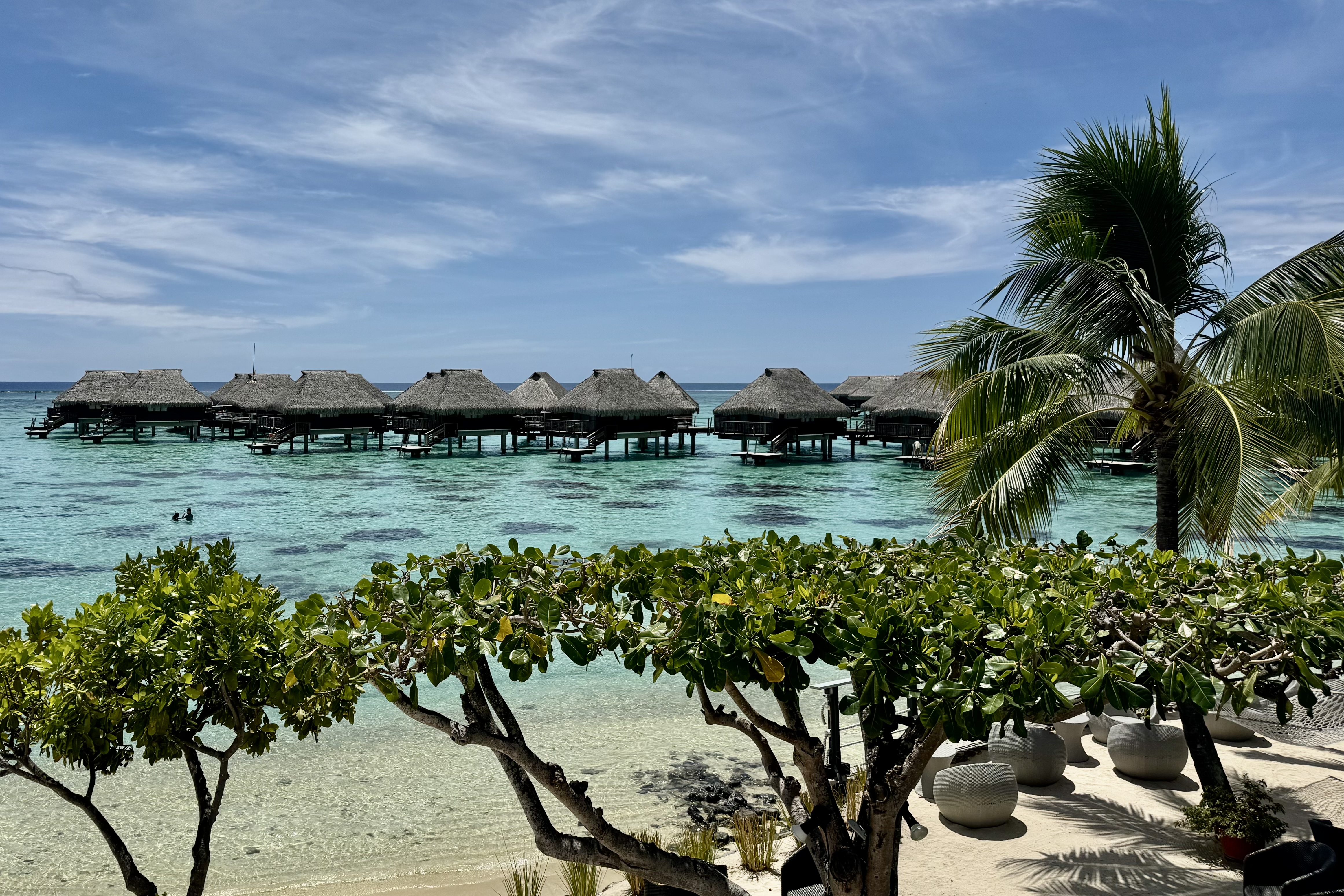
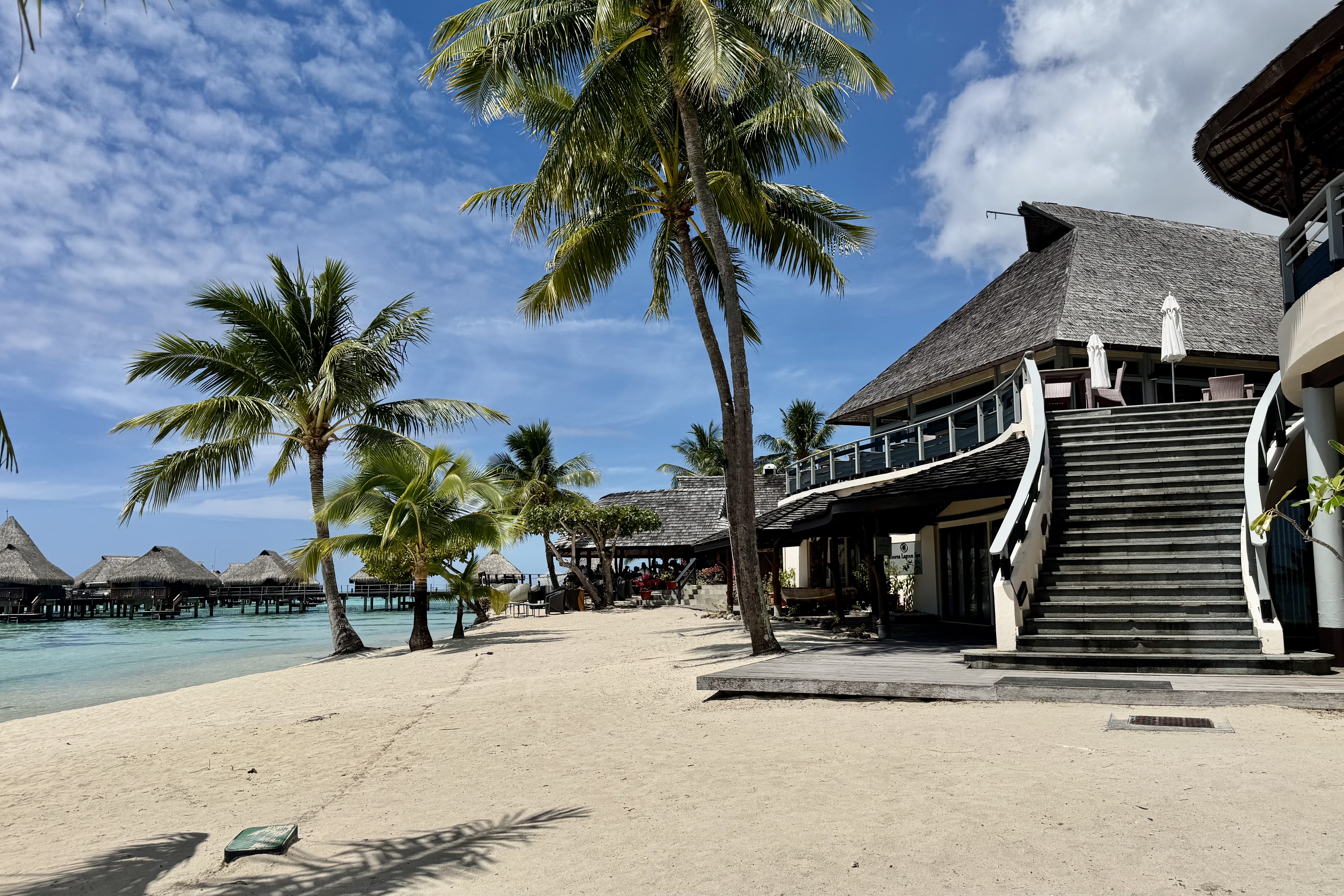
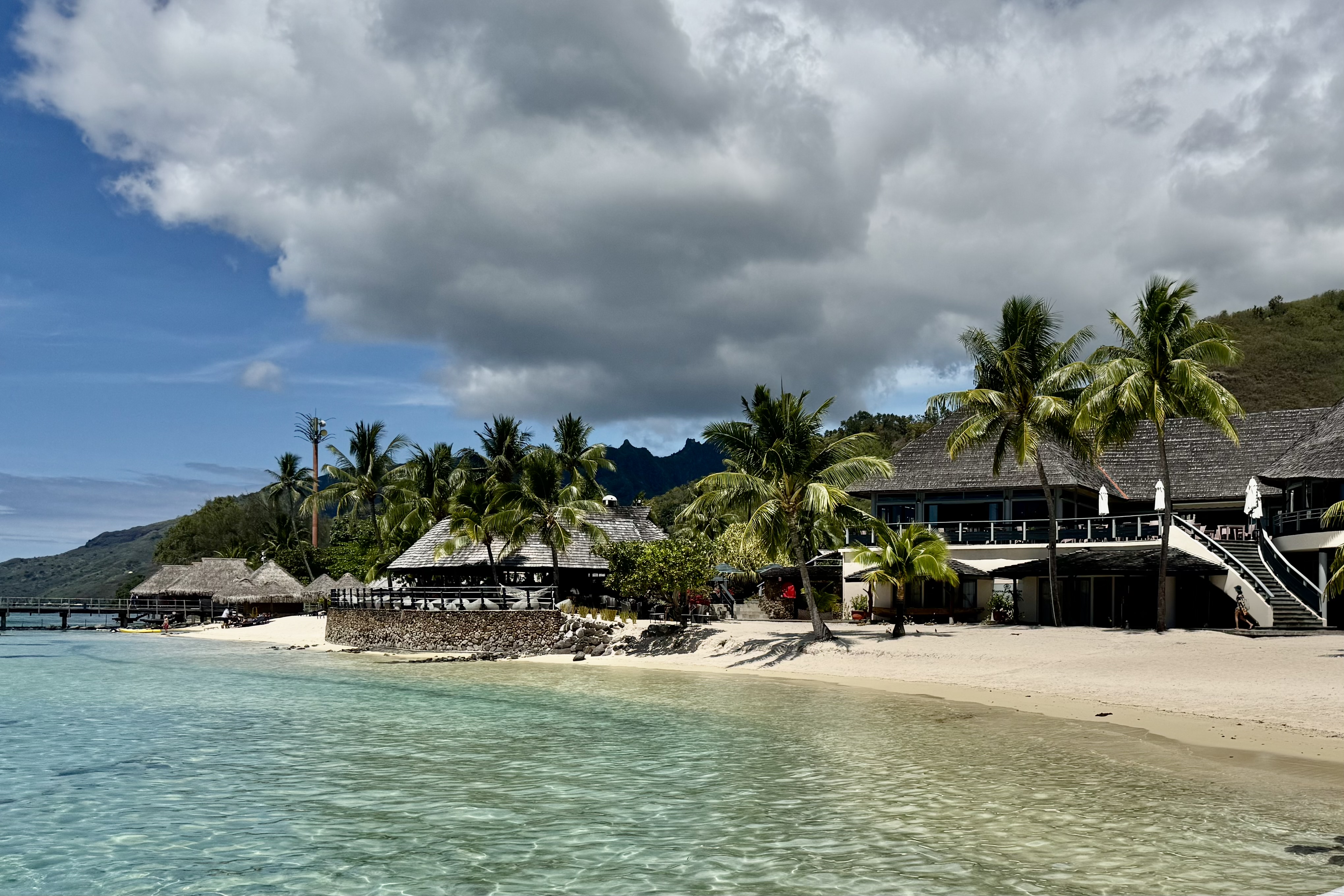
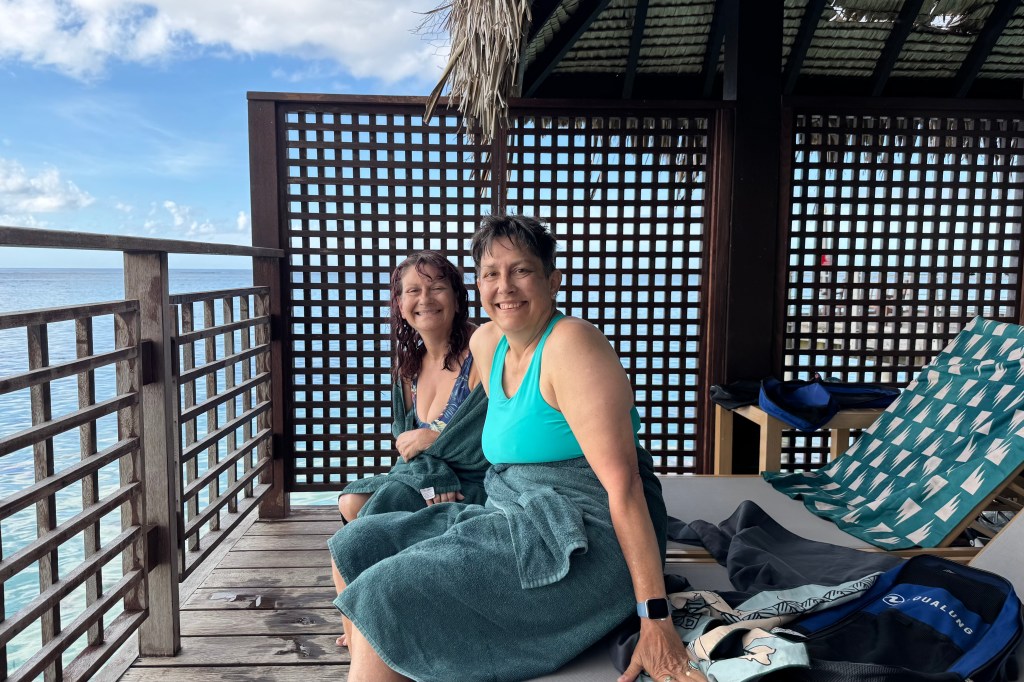
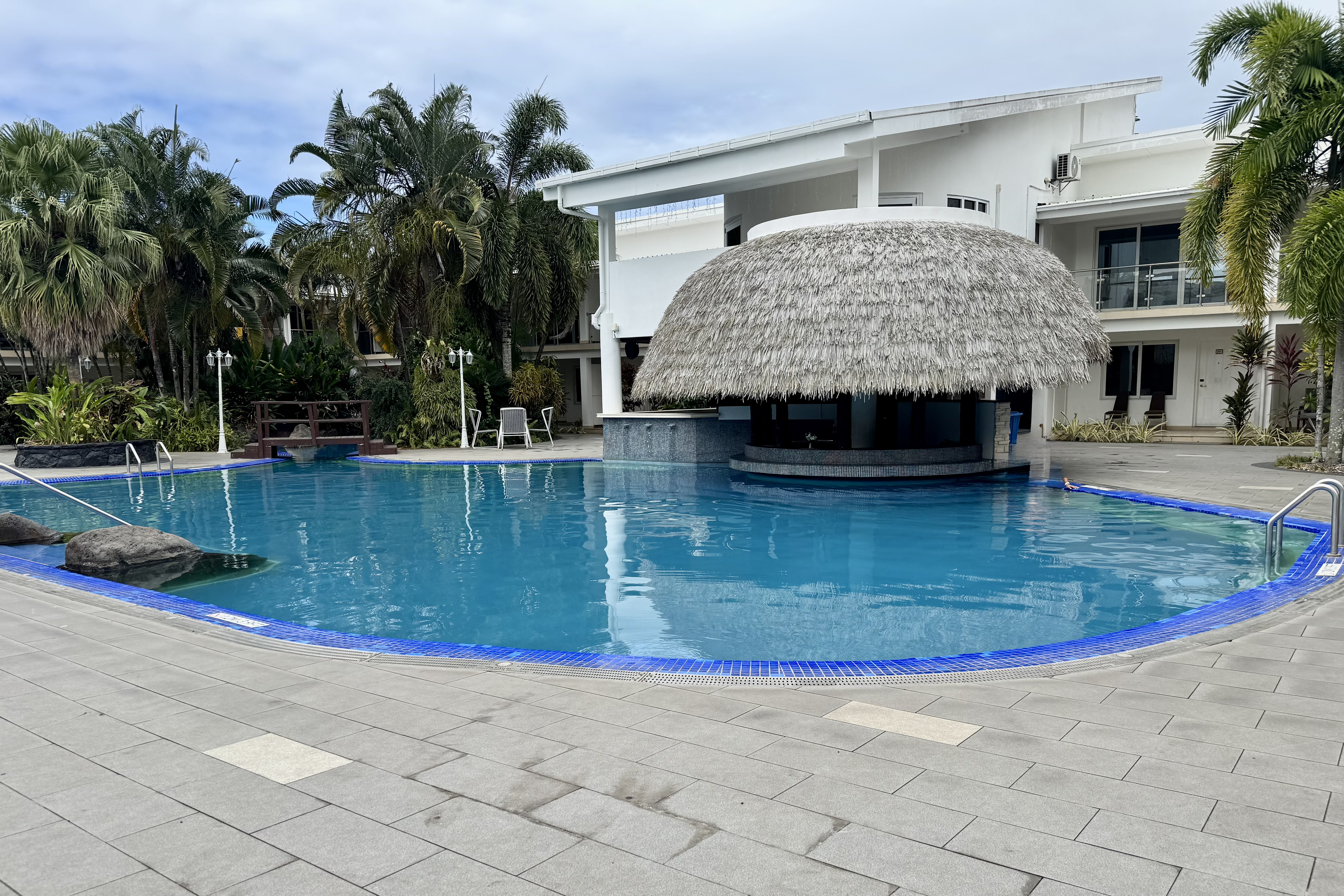
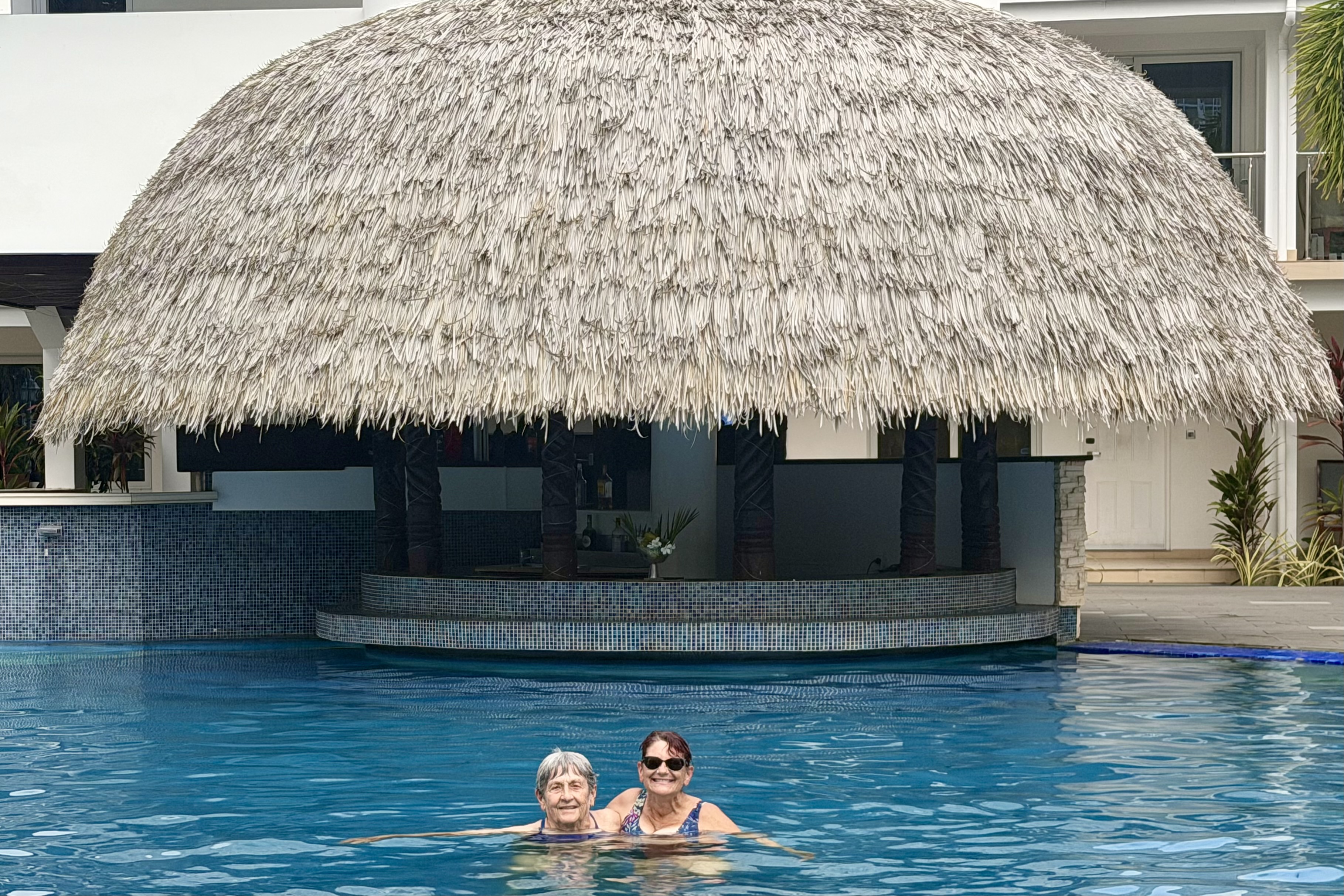
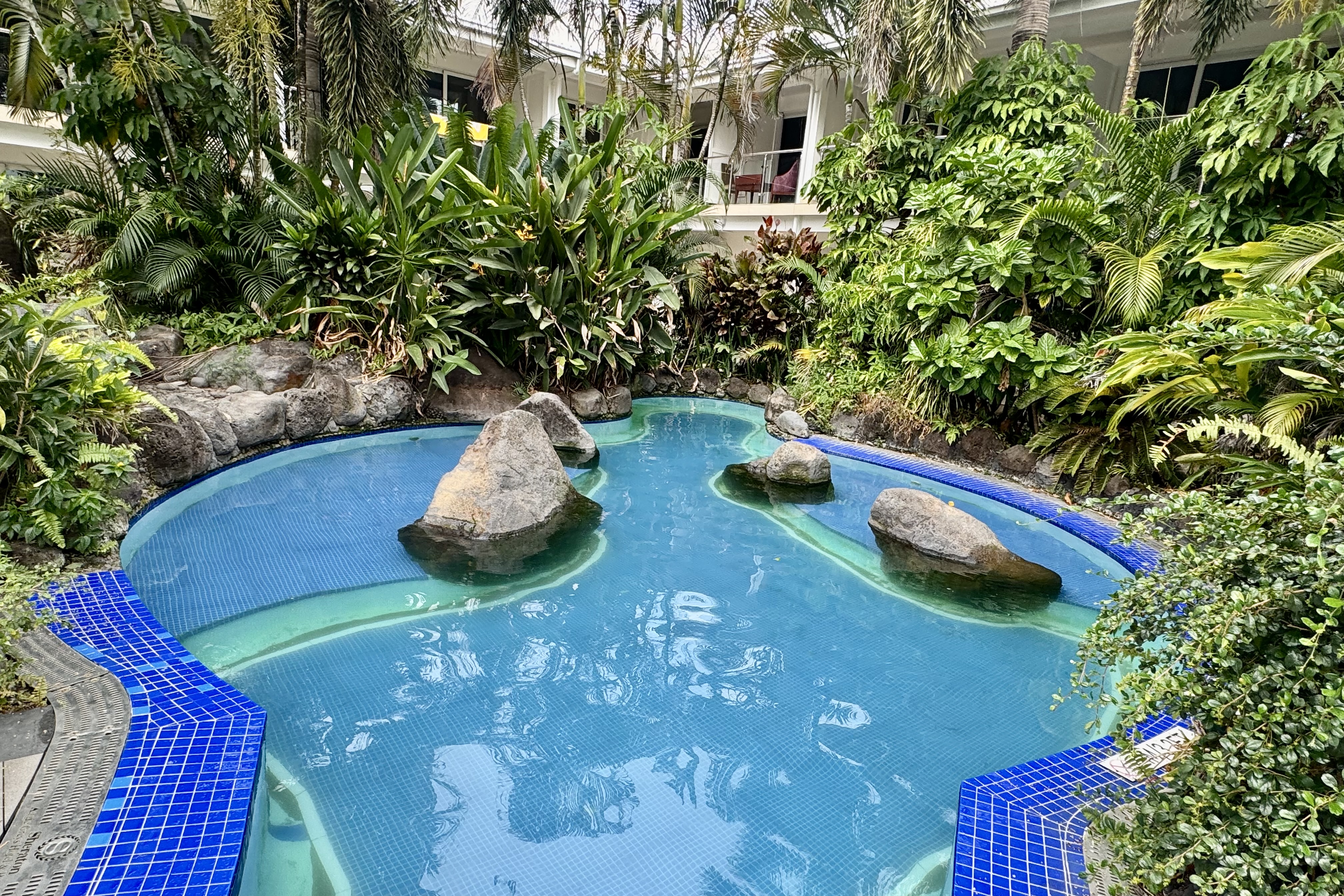
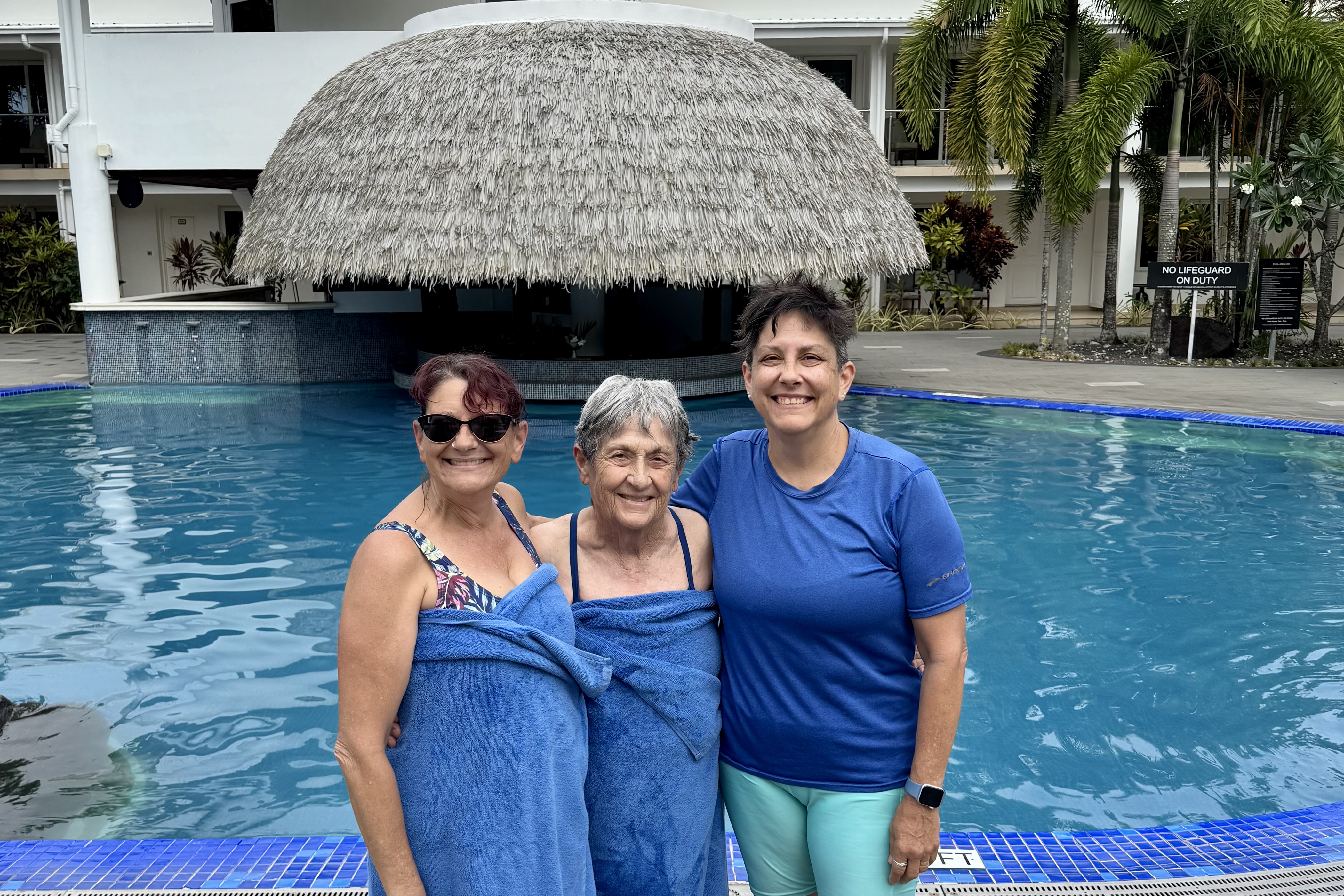
Staying in an overwater bungalow had been on my bucket list for years and the Hilton Moorea Lagoon resort didn’t just meet that dream but surpassed it. Simply put, it was extraordinary.
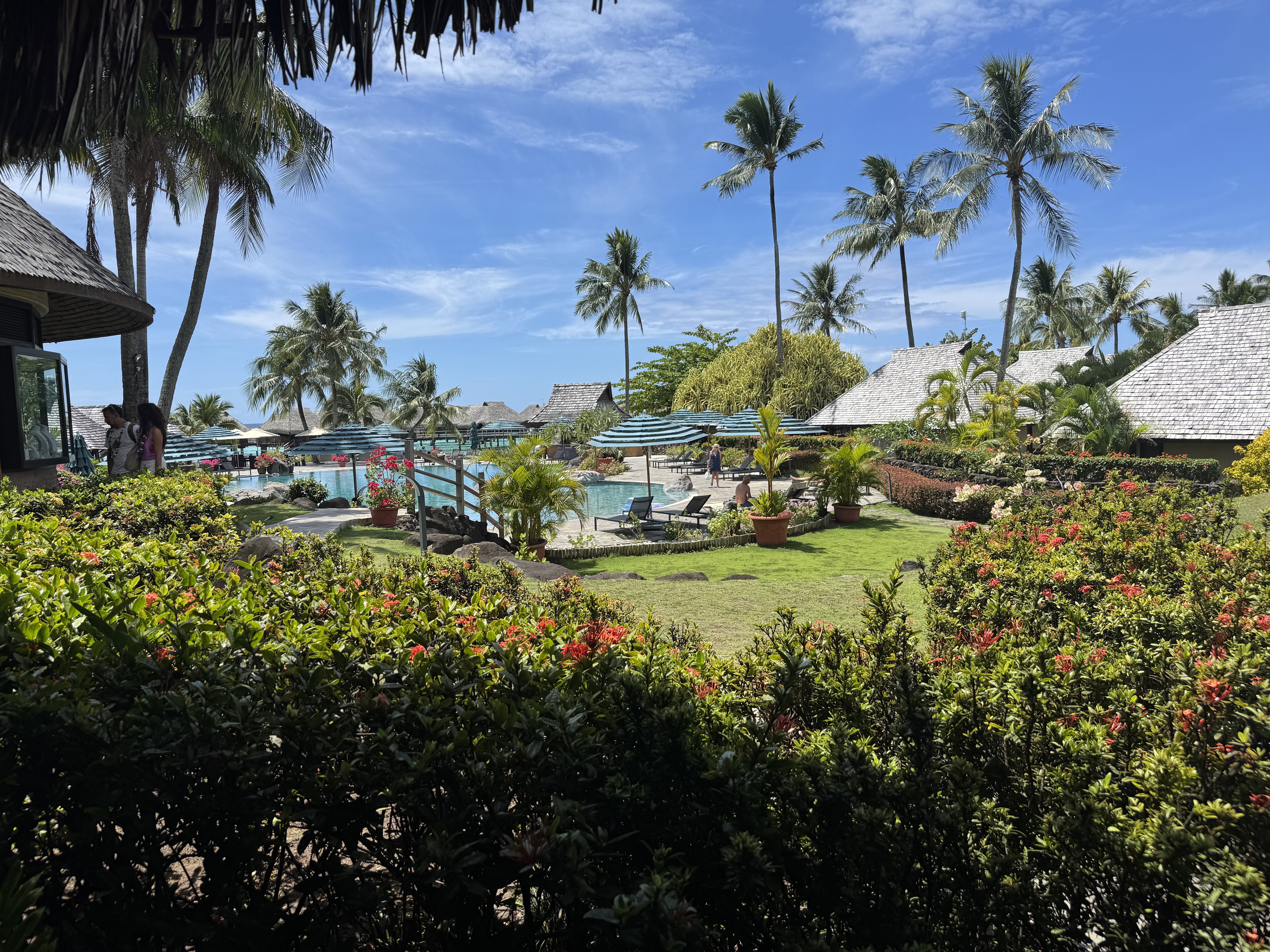
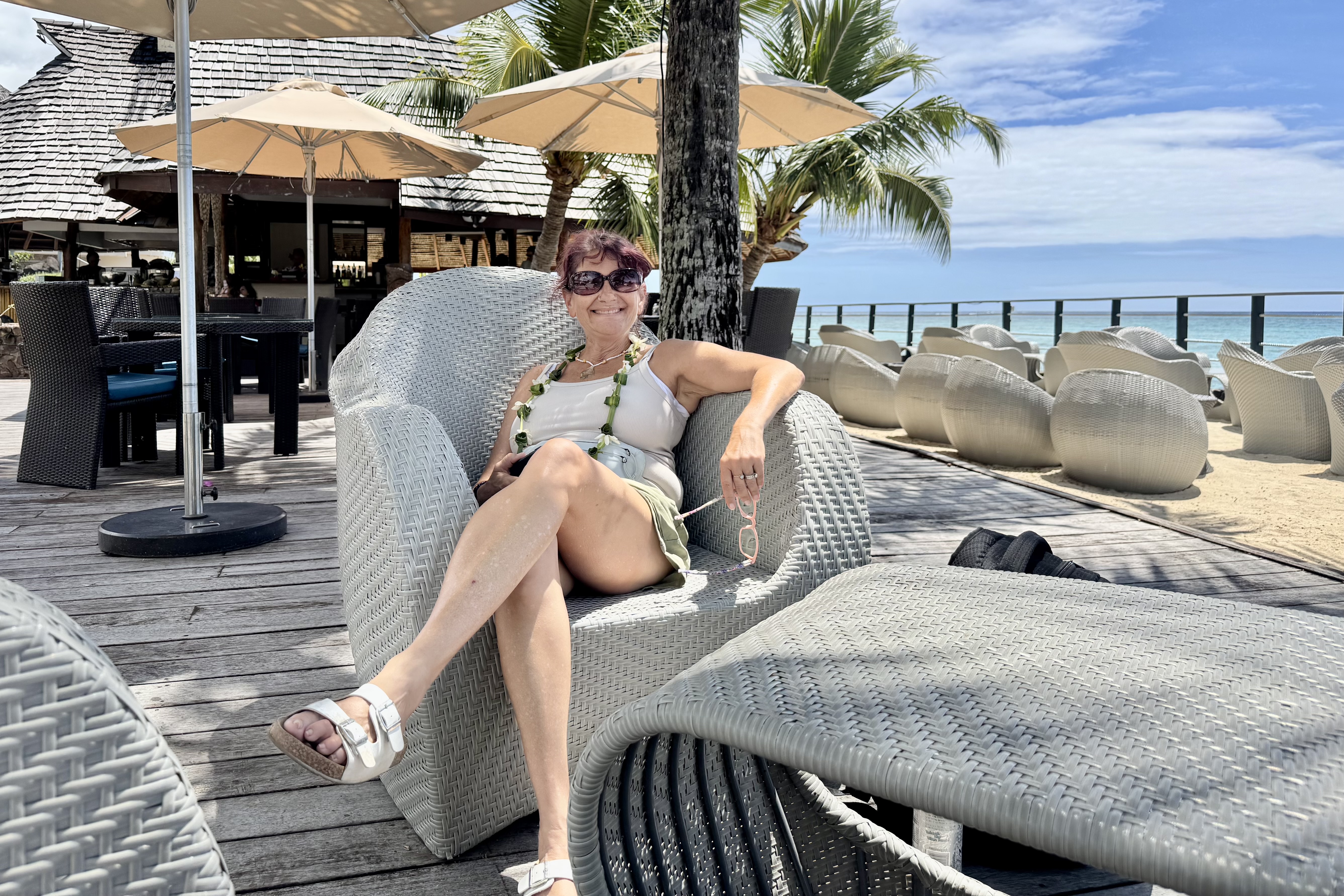
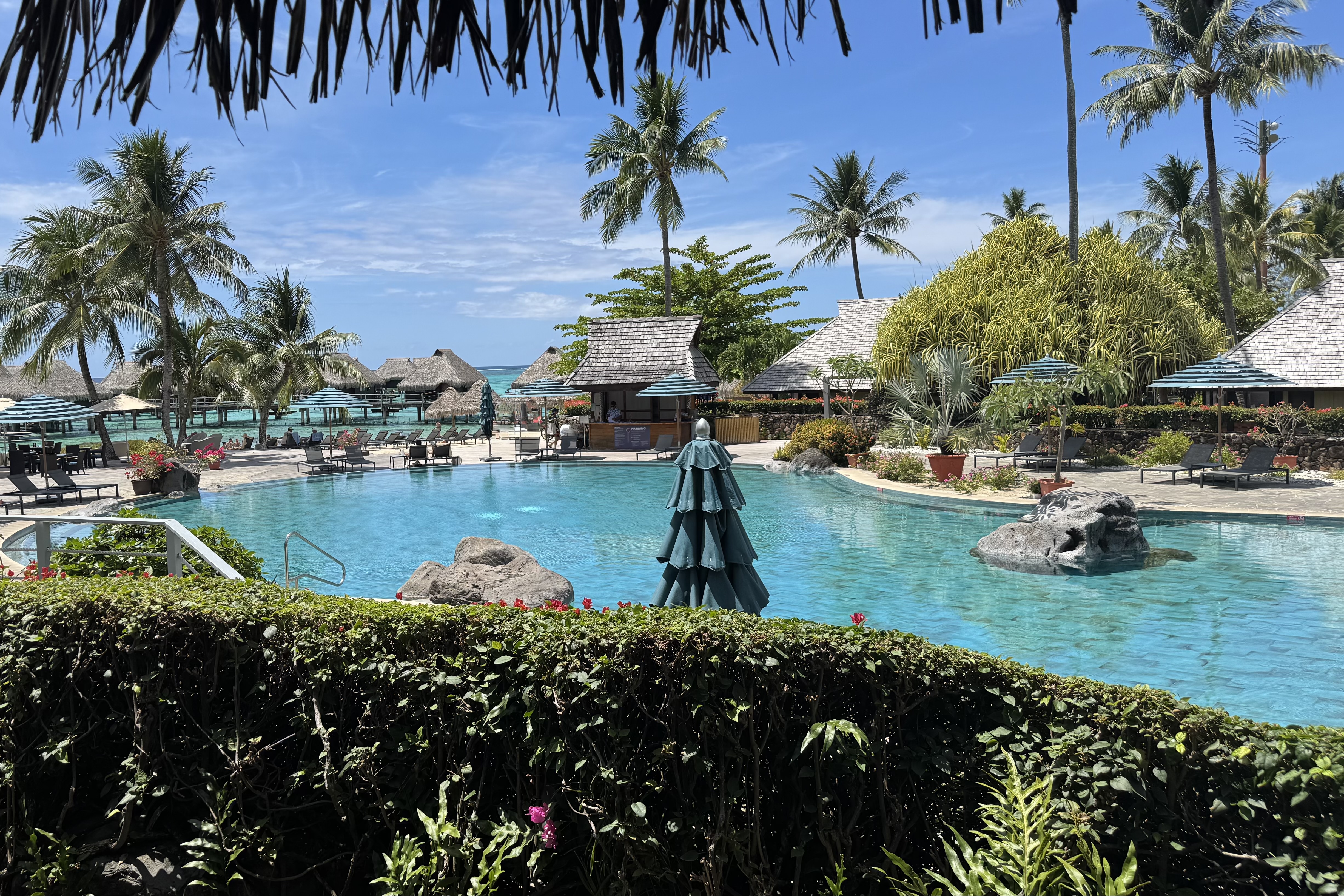
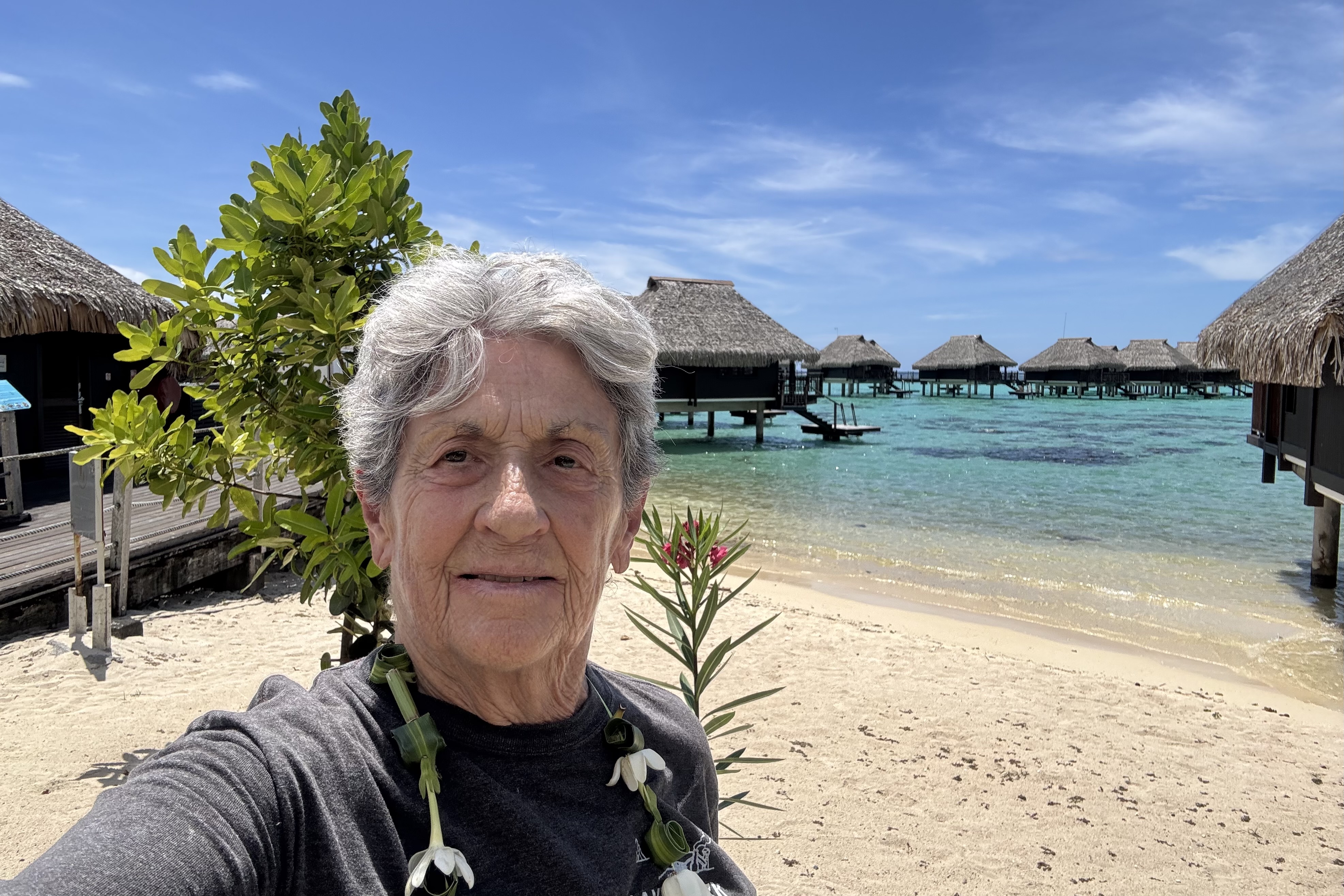
It was Tuesday, September 22, and we arrived around noon. Our bags were quickly tagged and taken care of and we were welcomed with beautiful flowered and leaf leis. Check-in was at 3:00 pm so our rooms wouldn’t be ready for another couple of hours but everyone at reception was extremely friendly, helpful and accommodating and gave us plenty of options for spending our time. We were welcome to use the whole property: the pool, restaurant, the lush grounds. Waiting was hardly an imposition. That’s in direct contrast to what usually happens at some hotels when it is check in time and the room isn’t ready. They take it as a given, offer a light apology, send you off and tell you to check back later.
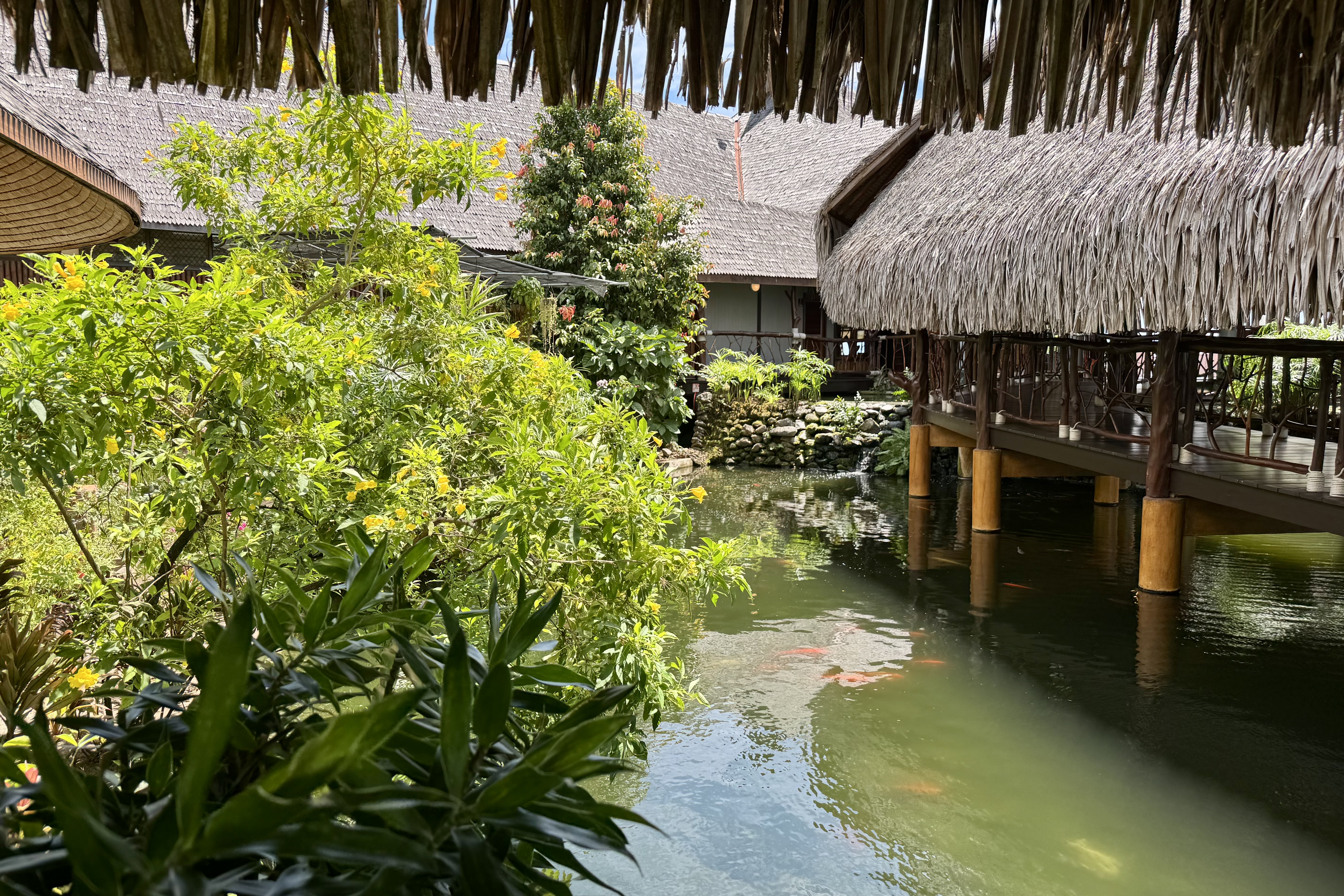
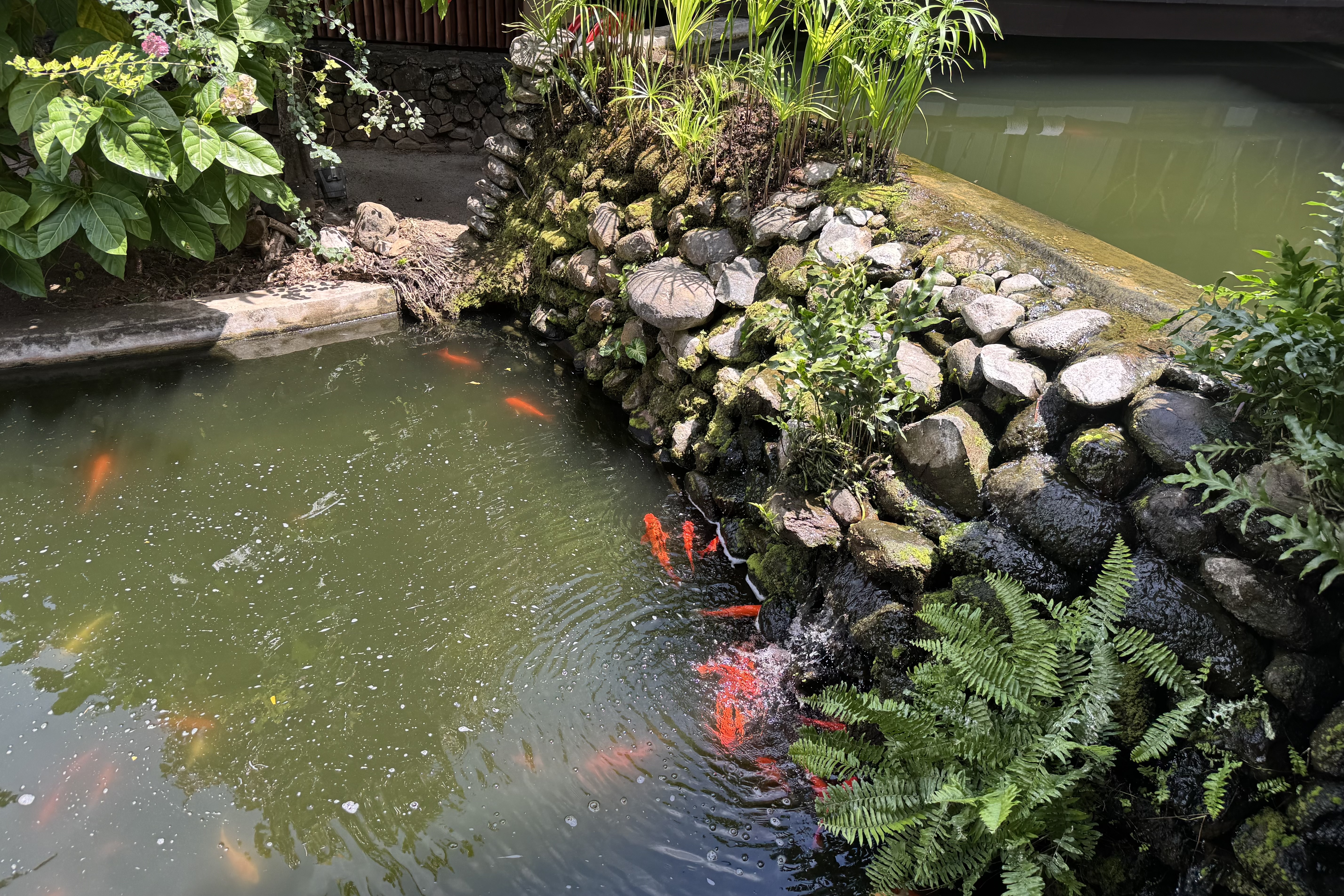
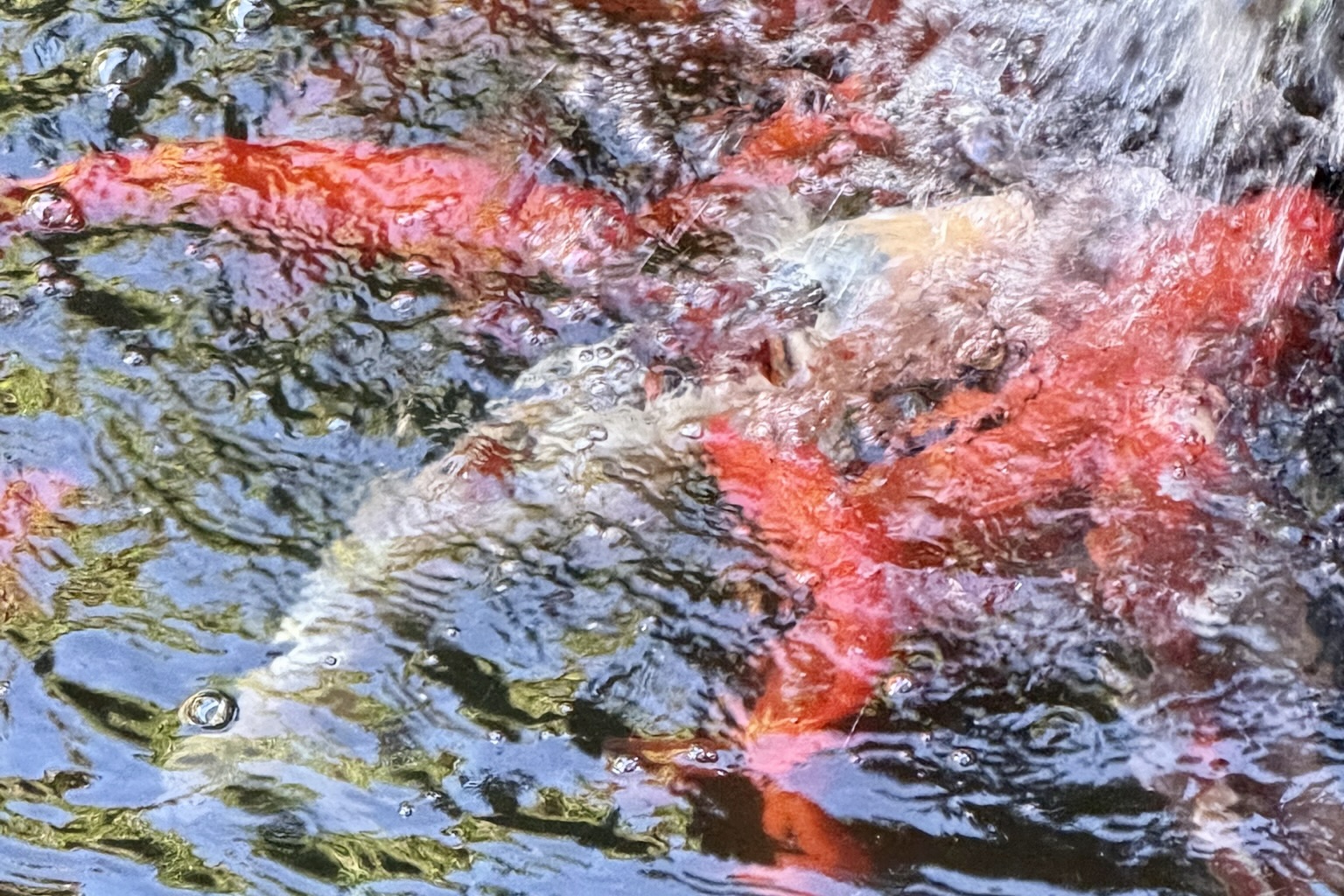
We headed toward the beach, crossing a small bridge over a pond filled with unbelievably beautiful, large koi. We found a lovely lounge area with chairs and a table by the lagoon, overlooking the beach. We settled in by the lagoon and made it our home base, intermittently heading out to explore the grounds until our room was ready.
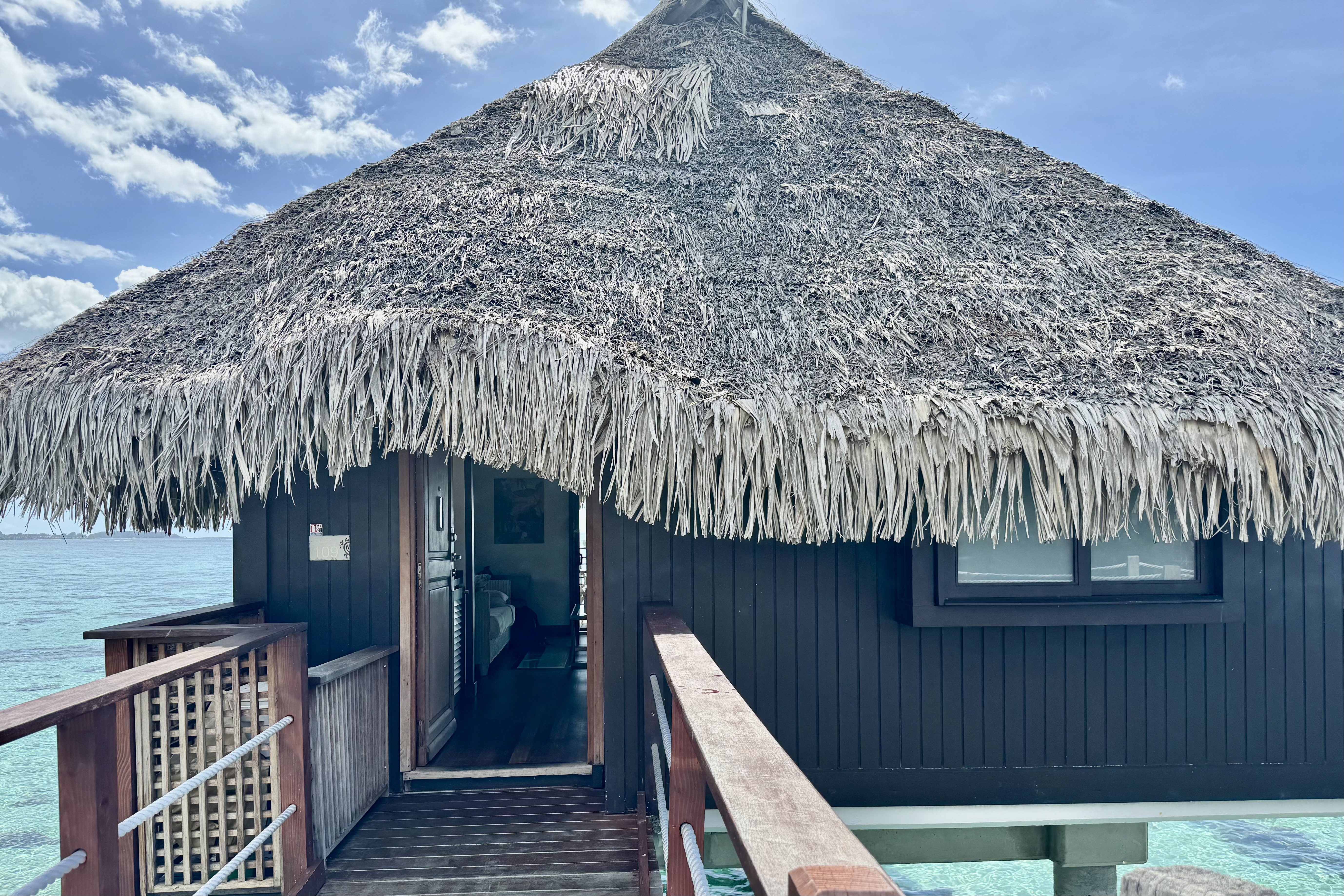
We were able to get into our room by 2:00 pm and in no way, shape or form was I prepared for this bungalow that would be our home for the next three days. It sat at the very end of the dock which gave us wonderful privacy .
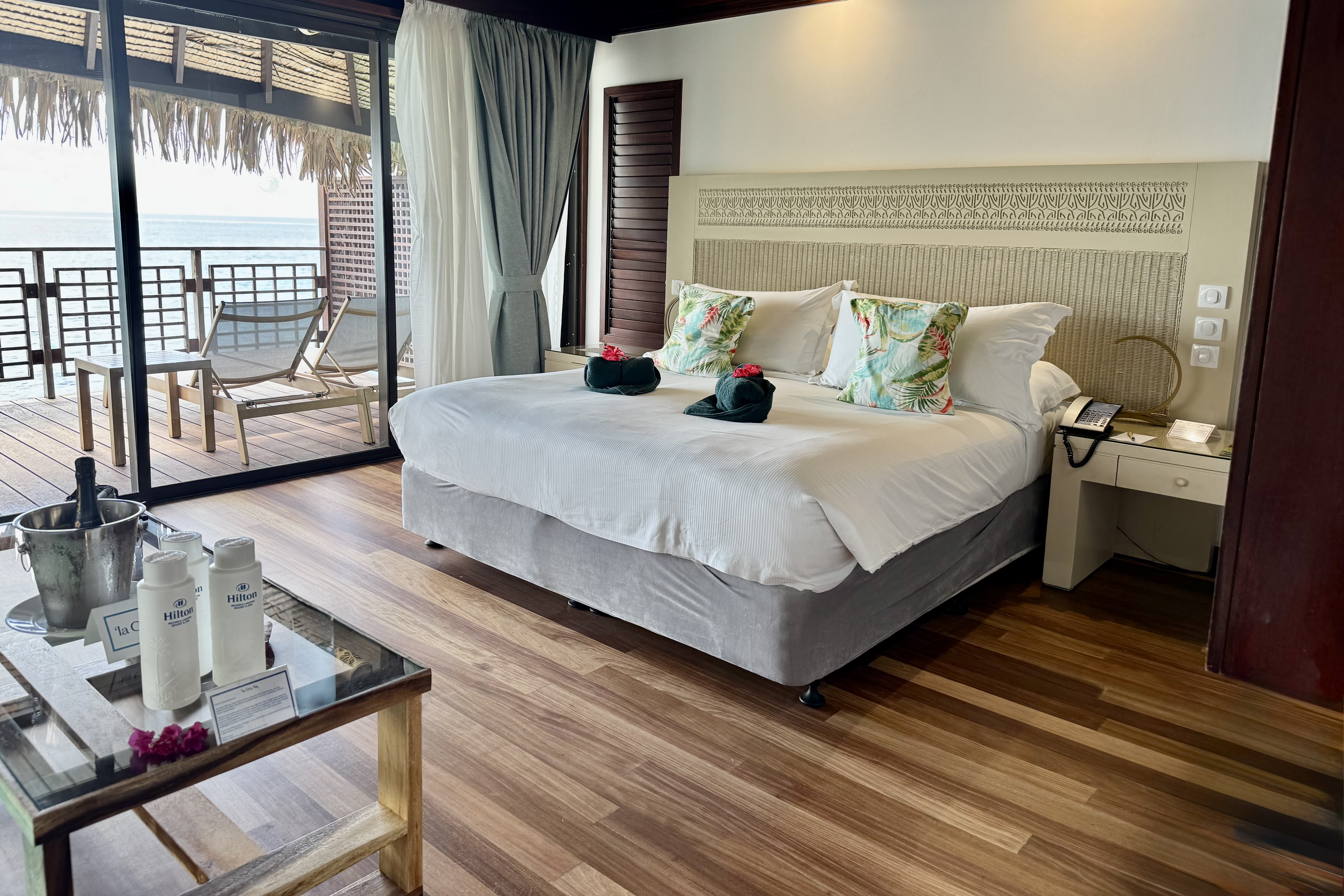
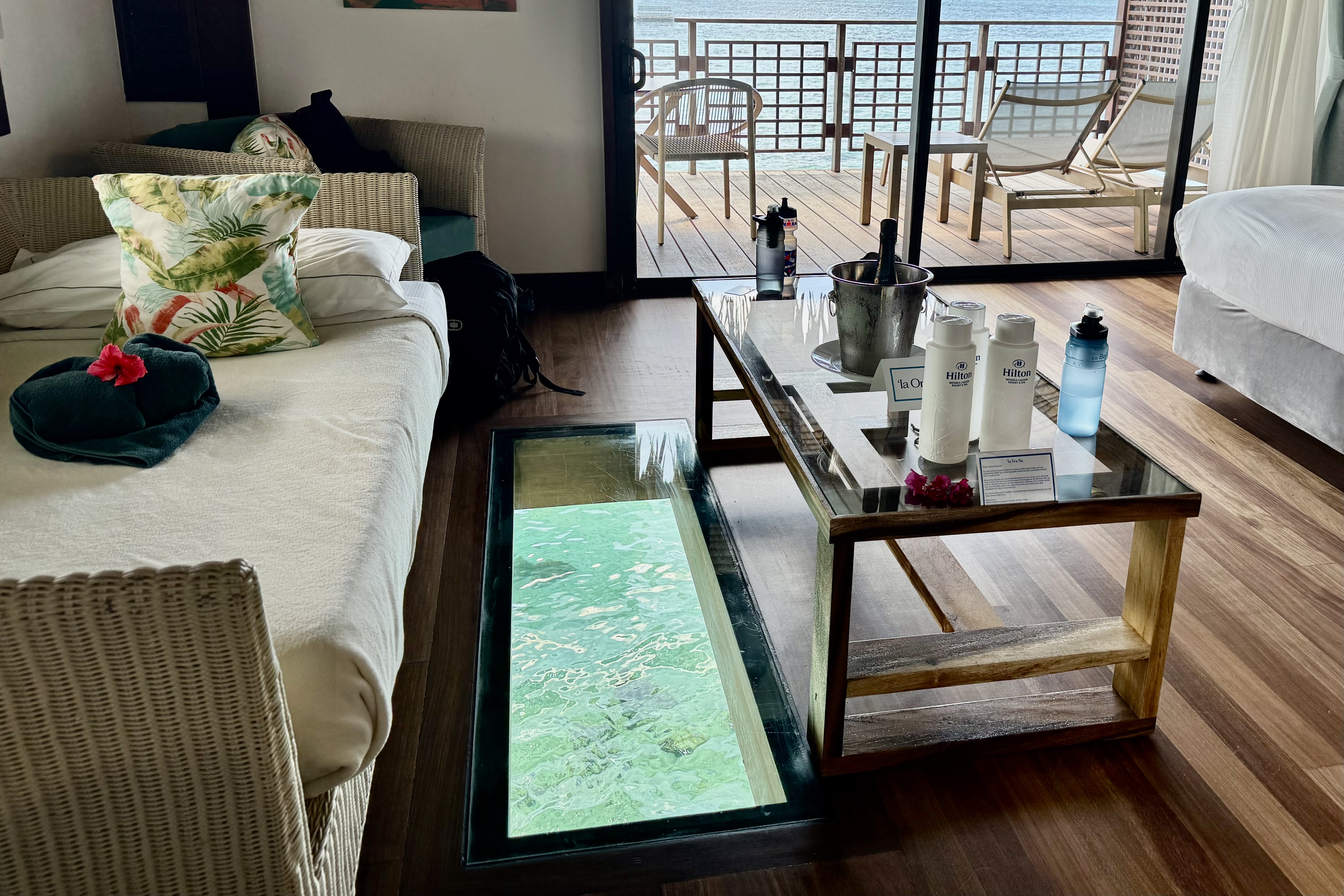
The first thing that caught my eye was the glass panel in the floor looking straight down into the turquoise lagoon below. Over the next days it became our very own “Fish TV Channel” and we caught ourselves glancing down at it every time we walked by. A king bed was dressed in crisp white linens and tropical print pillows with towel sculptures topped with red hibiscus blossoms. There was even a bottle of champagne on ice, though as a non-drinker, I was far more excited about the fact that I soon would be jumping into the lagoon.
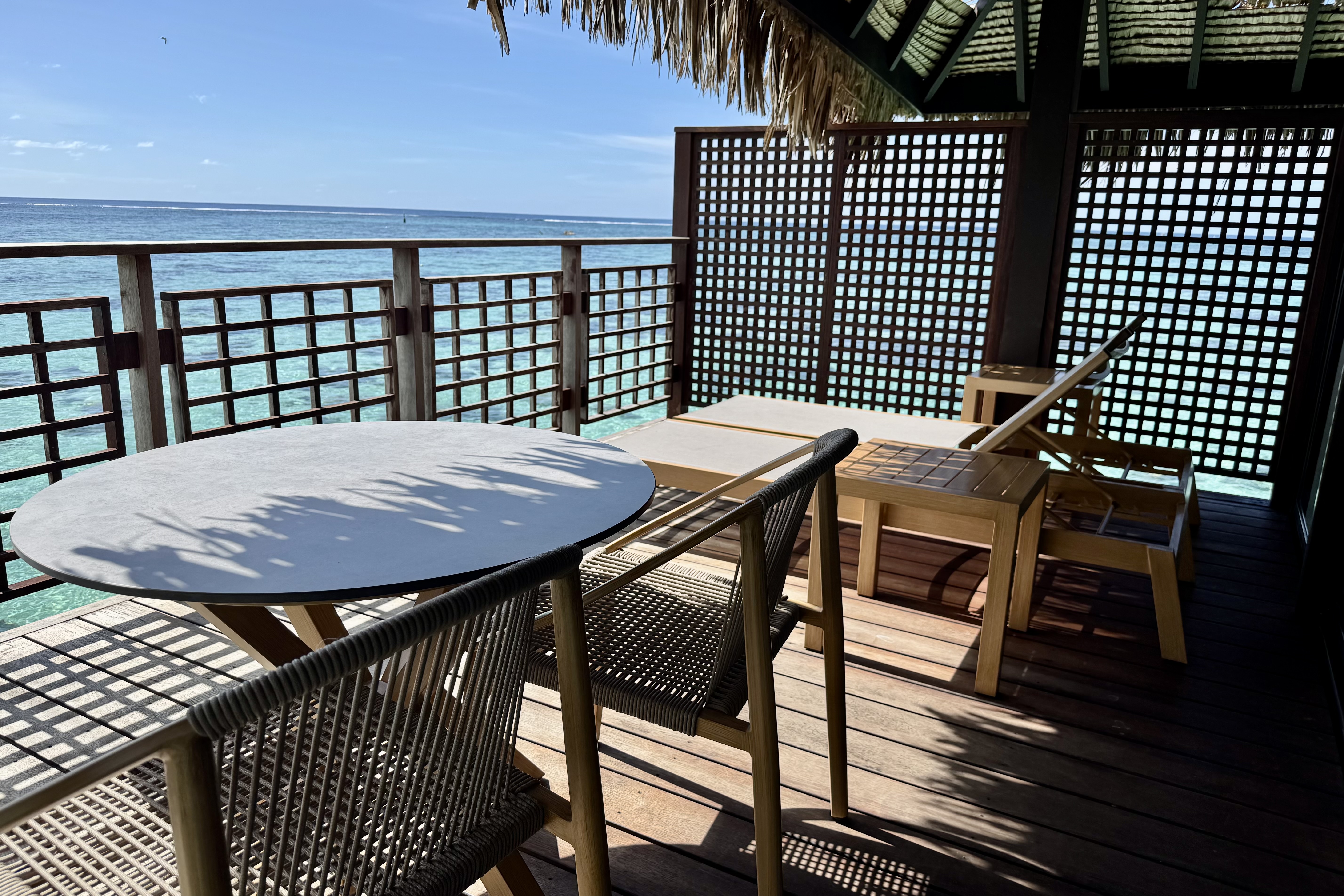
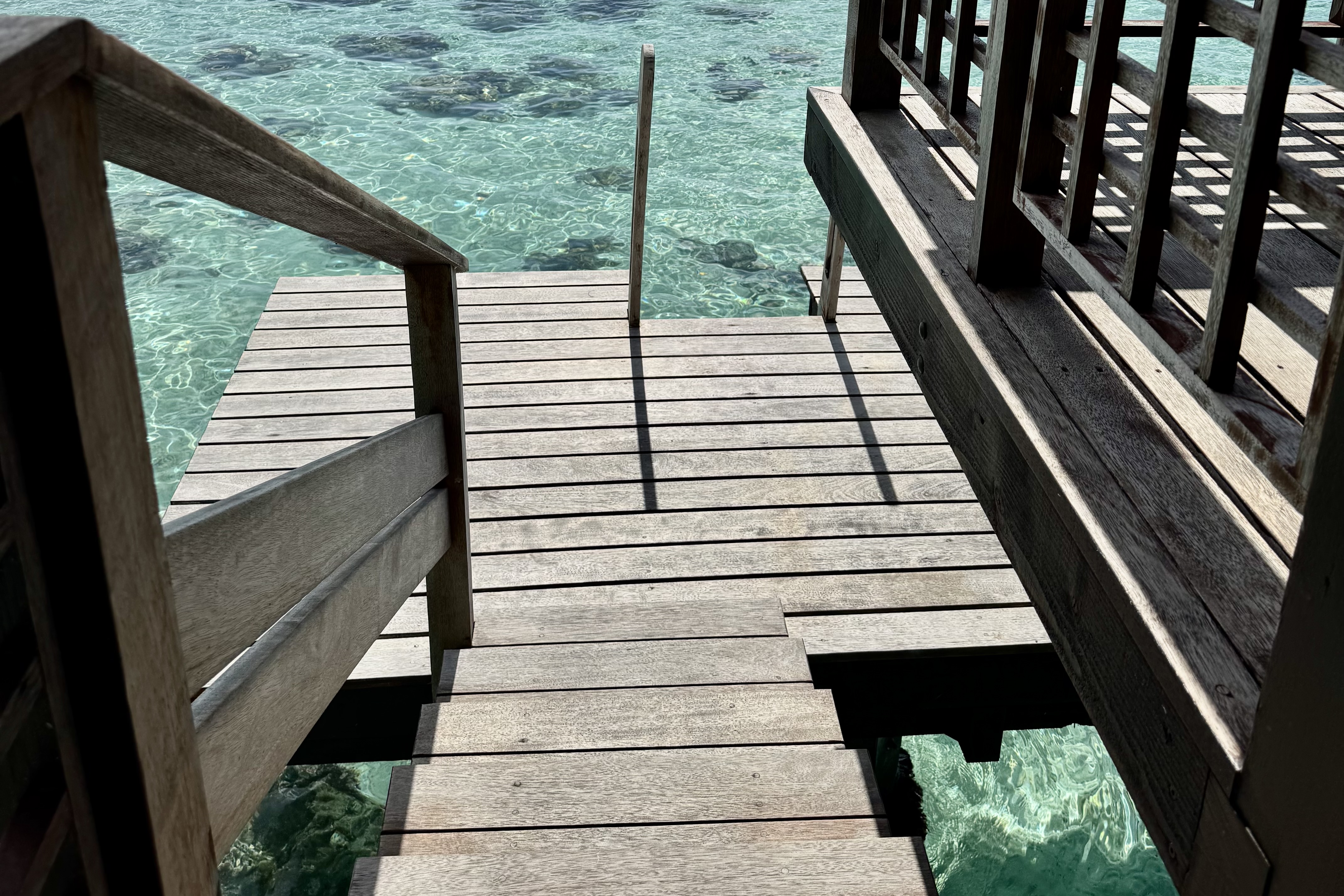
But the real show stopper was the view! A wall of sliding glass doors opened onto our private deck, shaded by a thatched roof and furnished with lounge chairs and a table and chair, set facing nothing but open water. A short set of steps led down to a lower platform with a ladder from there straight into the lagoon. We could slip into the water whenever we wanted to right from our room.
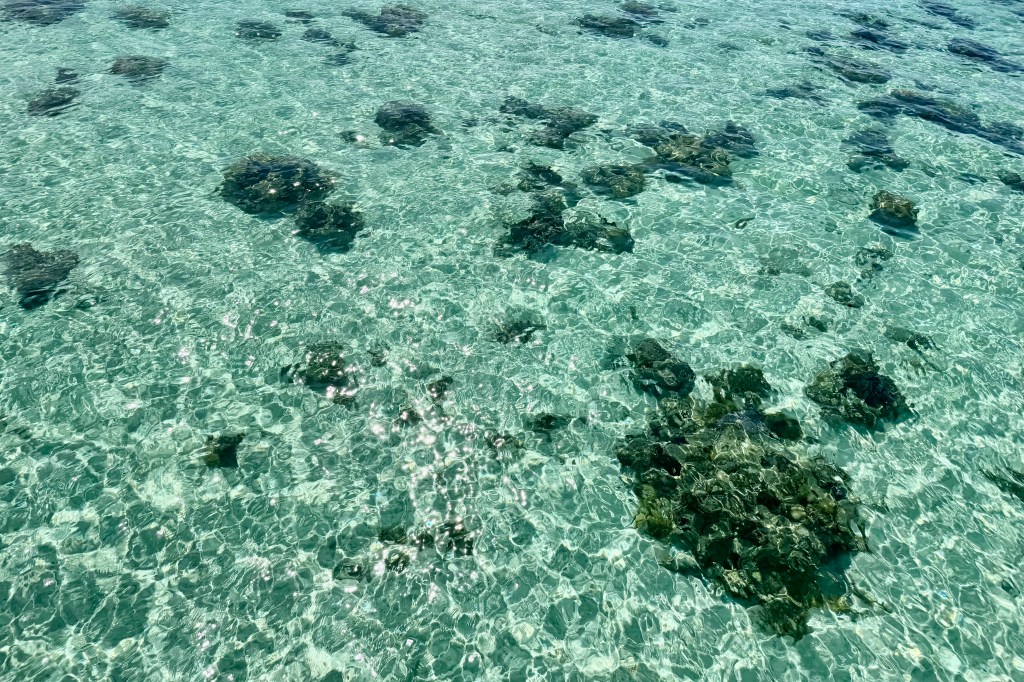
After a quick bit of organizing we grabbed our snorkel gear and were in the water by 3:00. The reef here was different from what we experienced in Fiji. Instead of a long continuous stretches of coral, the lagoon was dotted with clusters of coral heads scattered across the sandy bottom, almost like little islands under the water. Snorkeling felt like hopping from one to the next, each clump its own small neighborhood of fish darting in and out of the crevices. With the sand so white and the water so clear between them, we could easily spot the next coral head and swim over to explore who lived there.
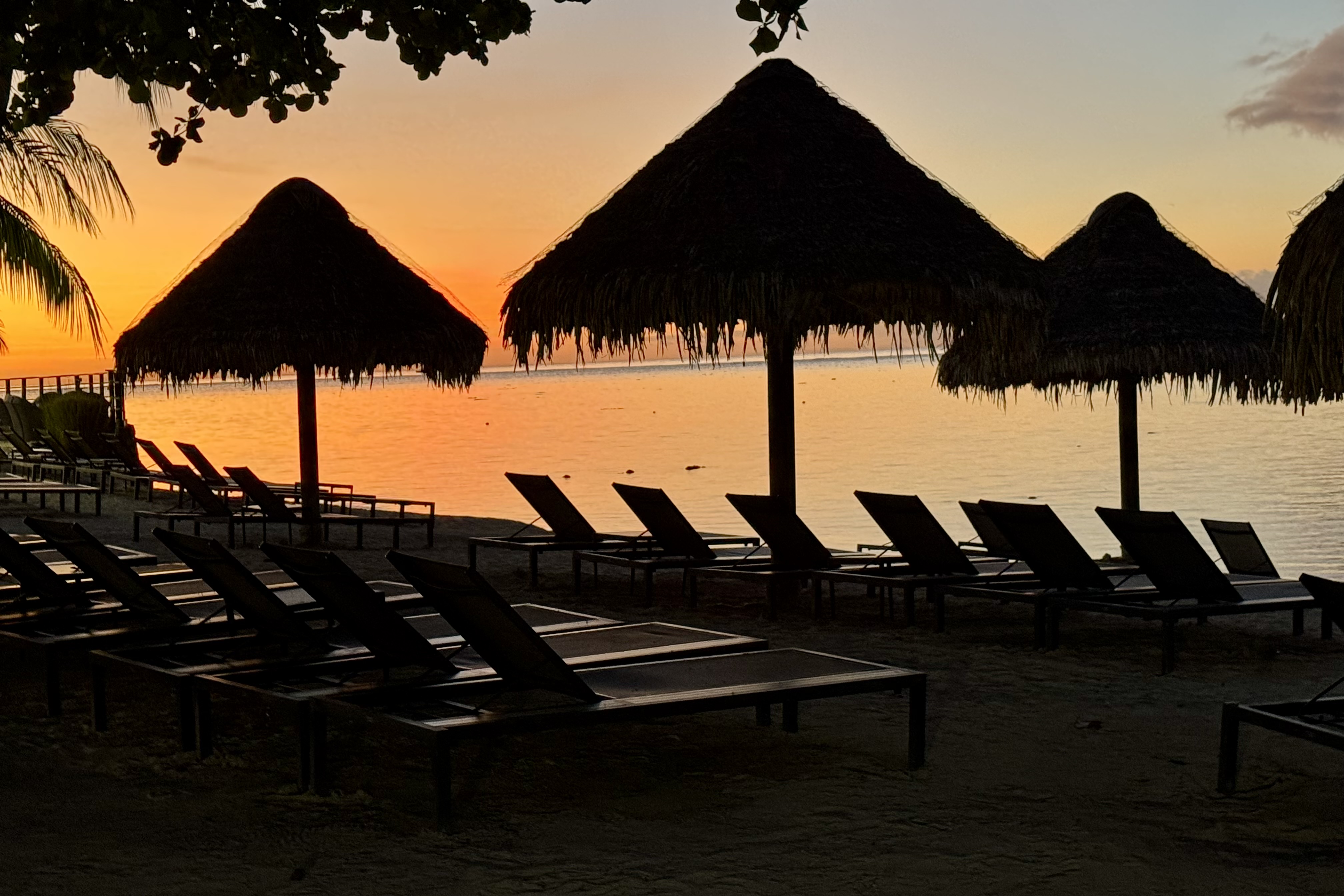
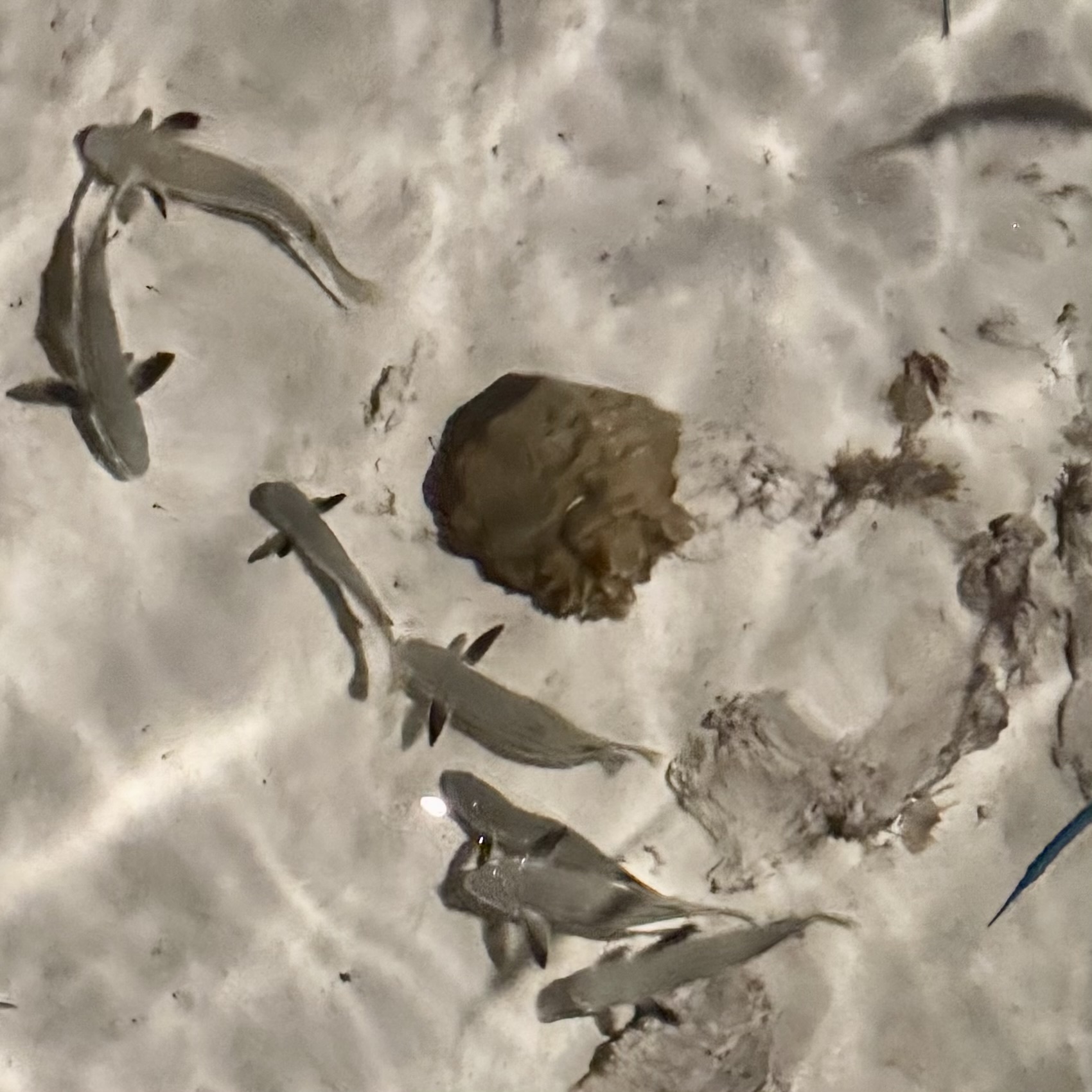
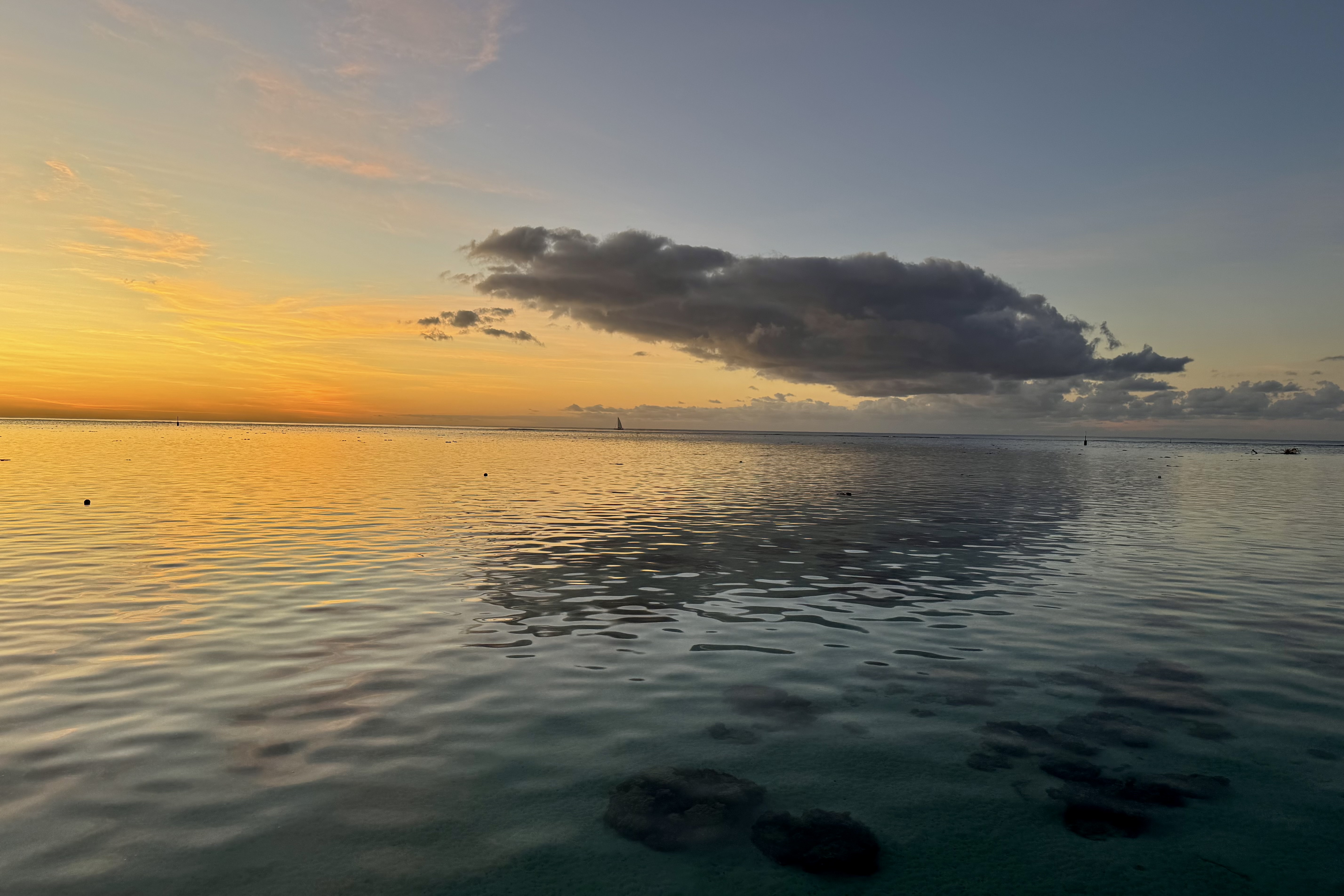
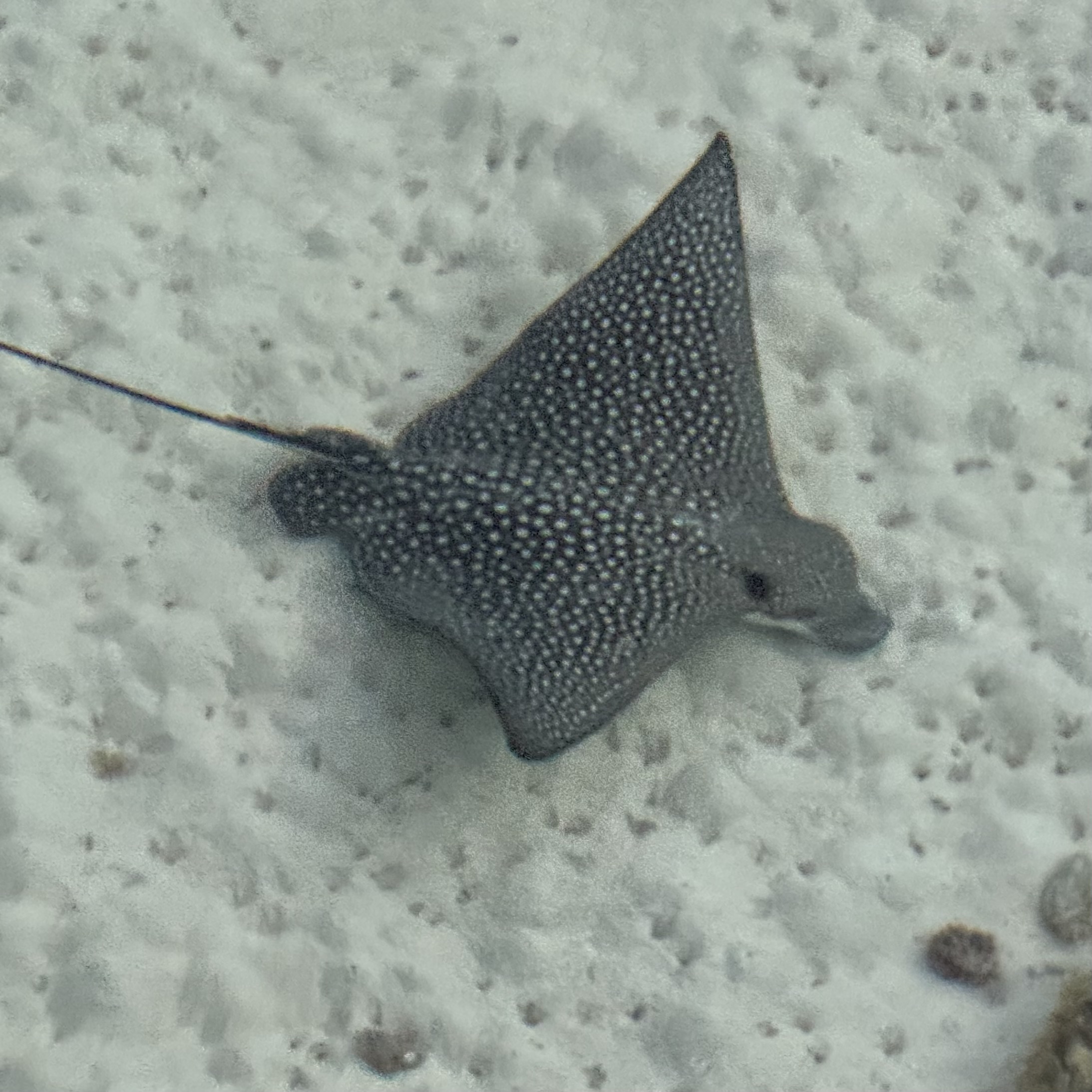
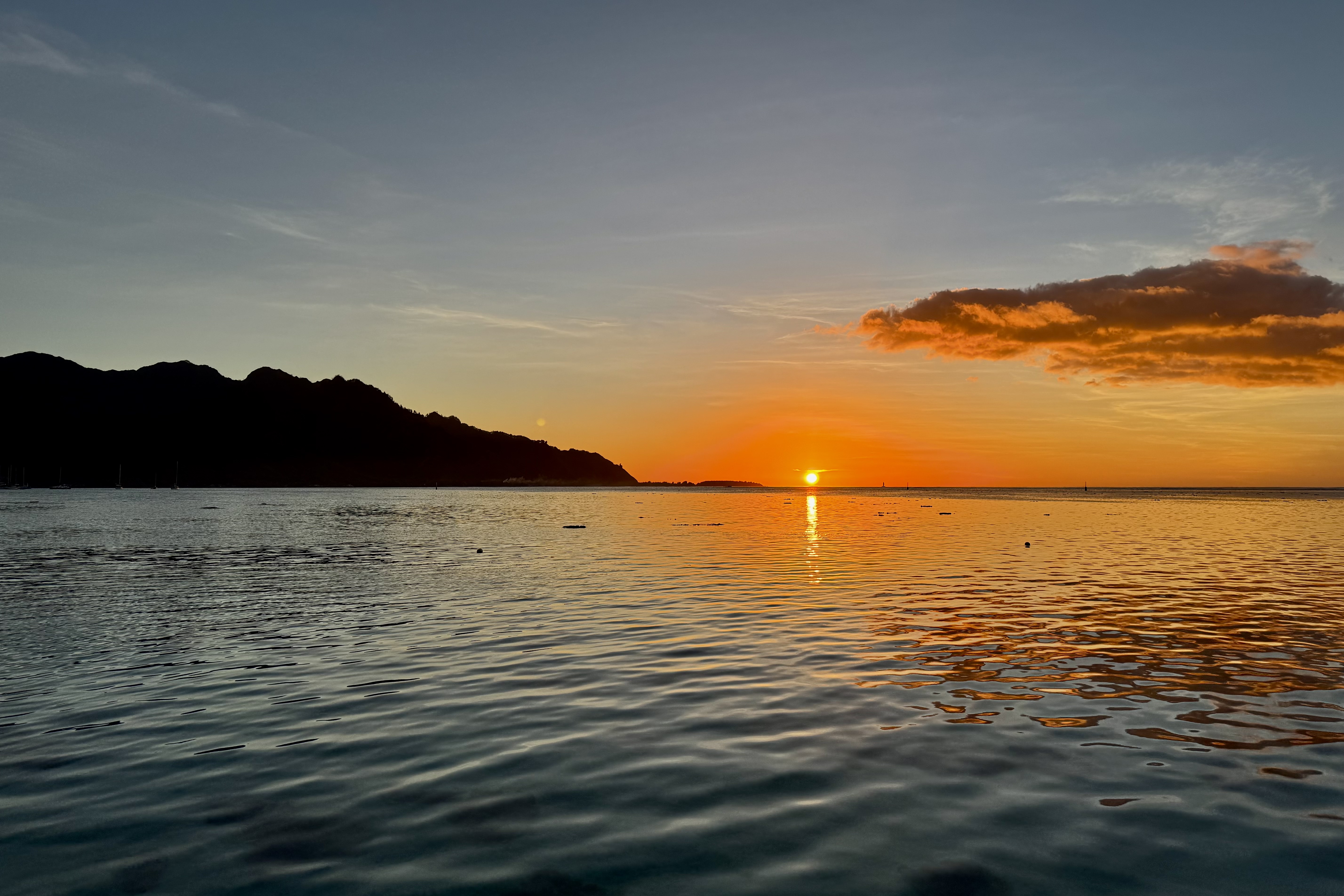
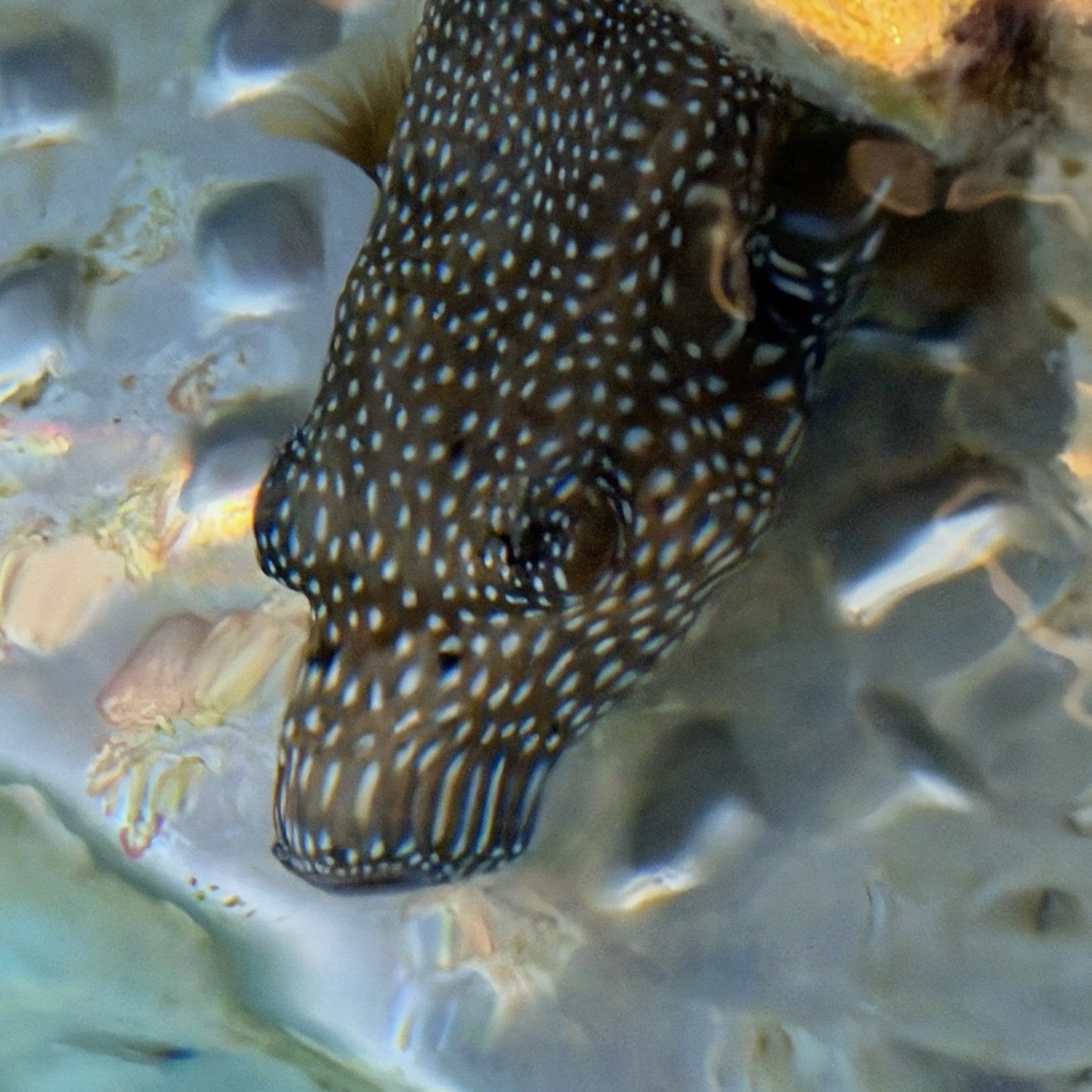
The day only kept getting better. After a wonderful afternoon of snorkeling, we watched an incredible sunset from our deck. I spent time observing a and white-spotted puffer hanging out on our ladder. Once it got dark, we discovered our bungalow had lights underneath that we could switch on to illuminate the water below. Suddenly the lagoon beneath us came alive. The most exciting show on Fish TV was the spotted eagle ray and the juvenile blacktip reef sharks. The baby blacktips seemed to be on a never-ending loop swirling around each other than vanishing into the dark, then reappearing as if they couldn’t resist checking back in on their adoring fans. We finished the evening with a very good dinner at the resorts Rotui Grill and Bar. We headed back down the dock to our bungalow and even when back indoors the show went on with our fish TV channel playing beneath our feet. I knew a blissful nights sleep was waiting for me.
It was time to transition from American Samoa, travel through the independent nation of Samoa, and continue onward to Fiji, where four nights at Barefoot Manta Island awaited us. What lay ahead was a little air travel, a little city exploration, a decidedly inconvenient wake-up call, and, eventually, a tropical island welcome.
A Short Flight and a Leap into Tomorrow
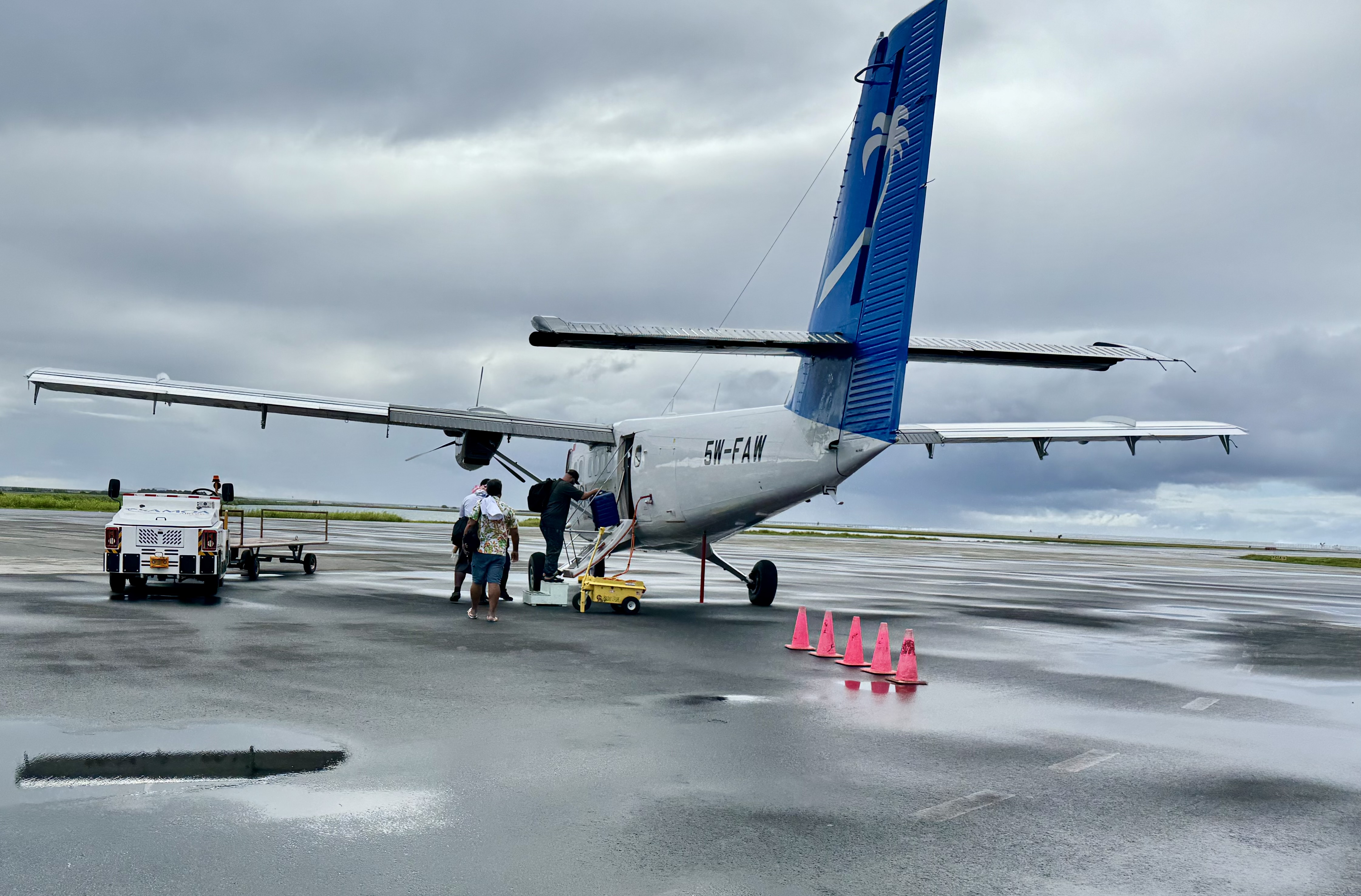
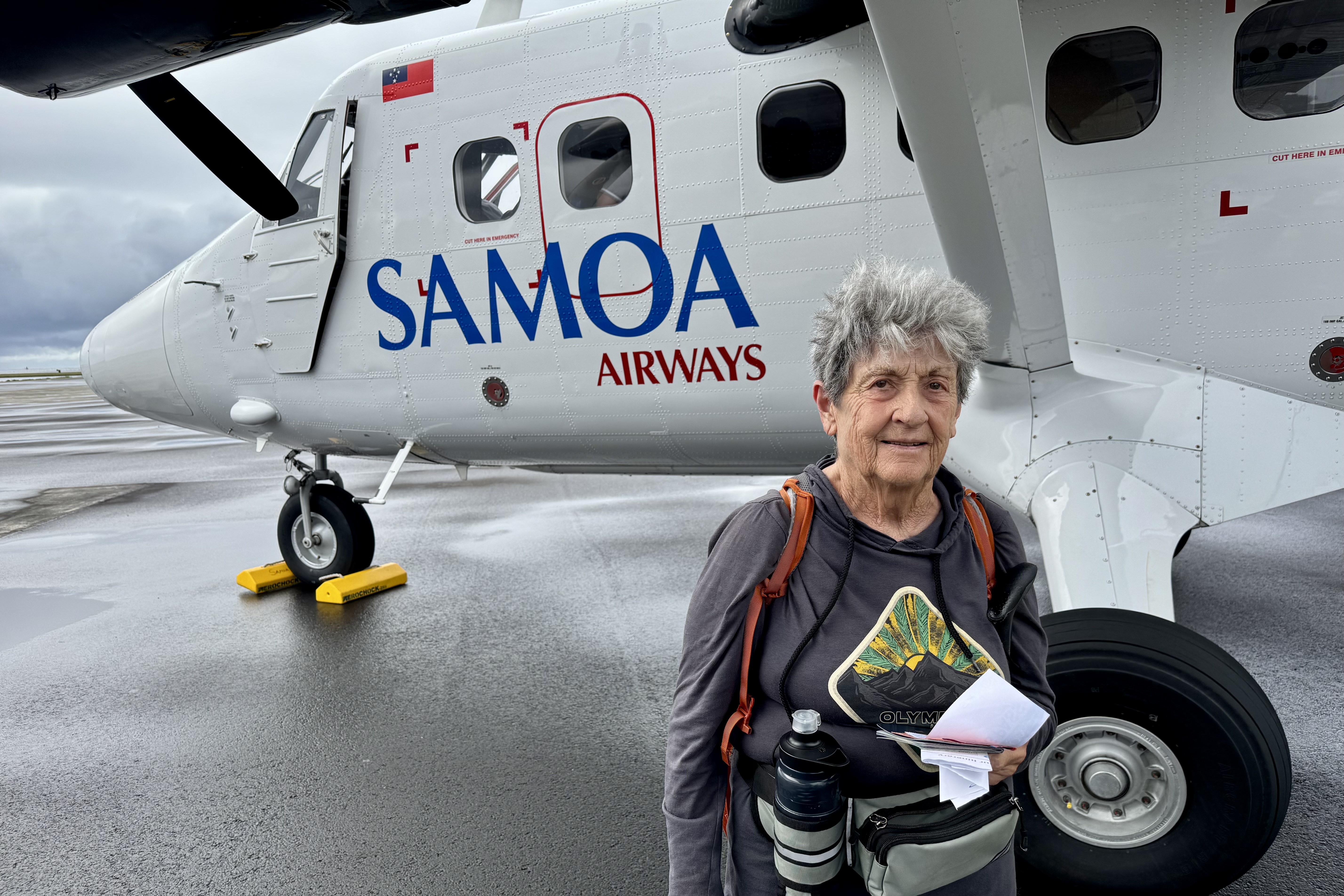
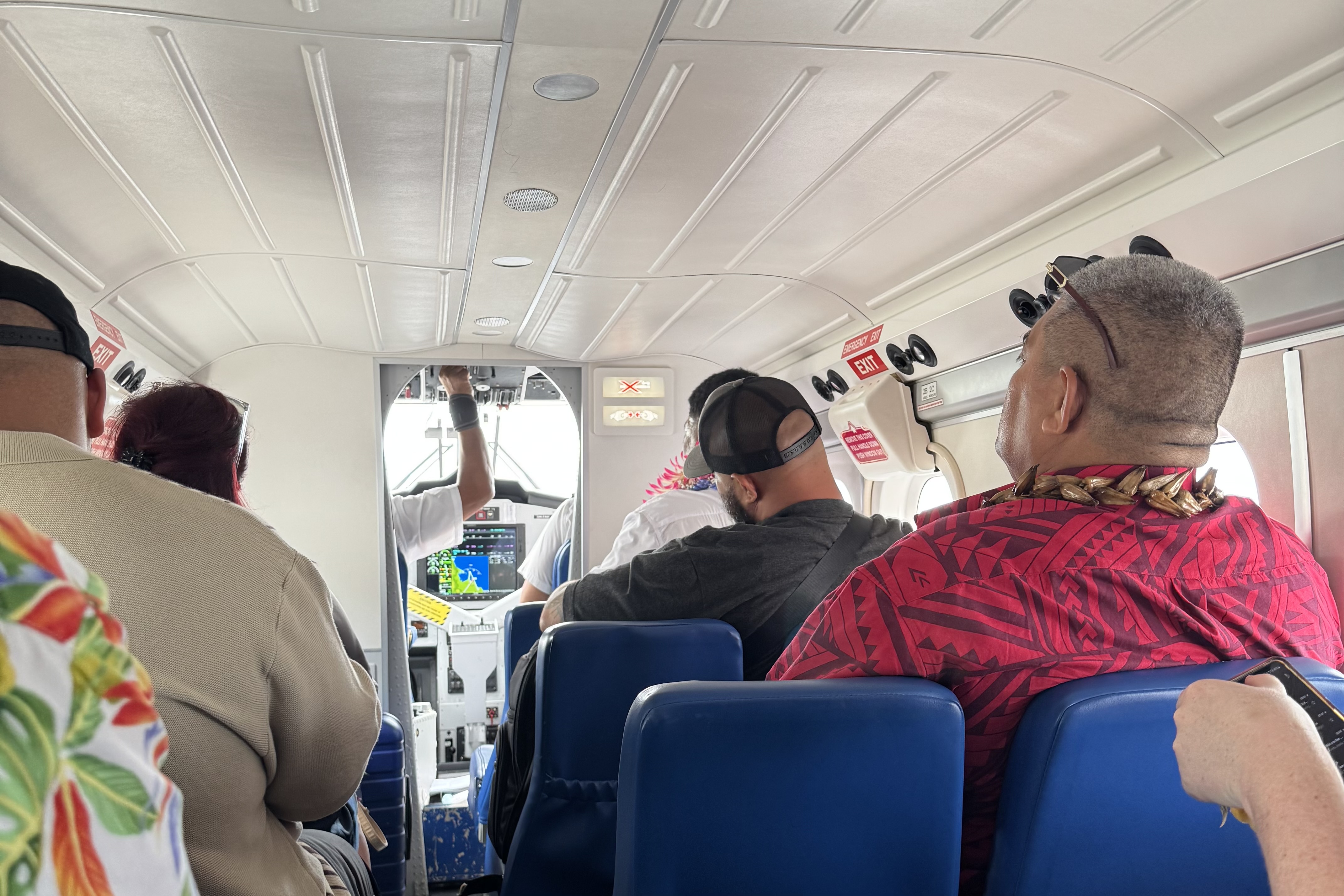
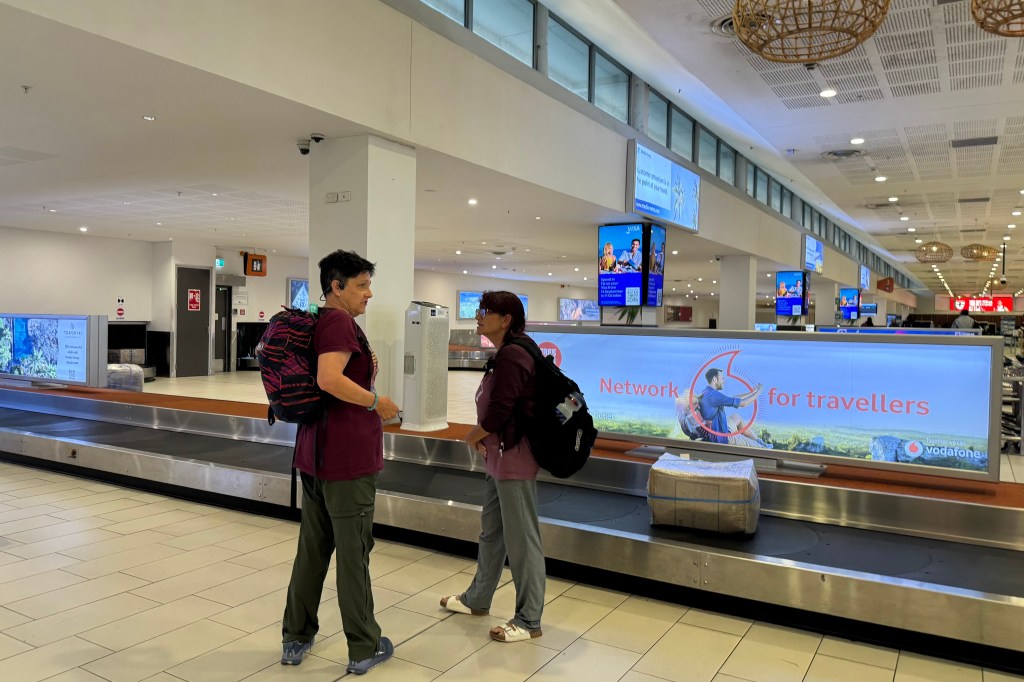
We were flying out of Pago Pago International Airport, and I admit I approached the experience with a little trepidation after the incredible chaos we’d encountered at baggage claim on our arrival several days earlier. Fortunately, this departure was an altogether smoother operation. Having dutifully arrived the recommended two hours before boarding, we found ourselves with time to spare but the time passed quickly, and soon we were boarding a Samoa Airways de Havilland Canada Twin Otter, a small aircraft well suited to island hopping and short runways.
I’m always psyched about flying in a small plane. You’re rarely soaring high above the clouds, and the relatively close-up views of the landscape below can be spectacular. The rain had just passed as we crossed the wet tarmac, a friendly ground crew member waving us toward the stairs.
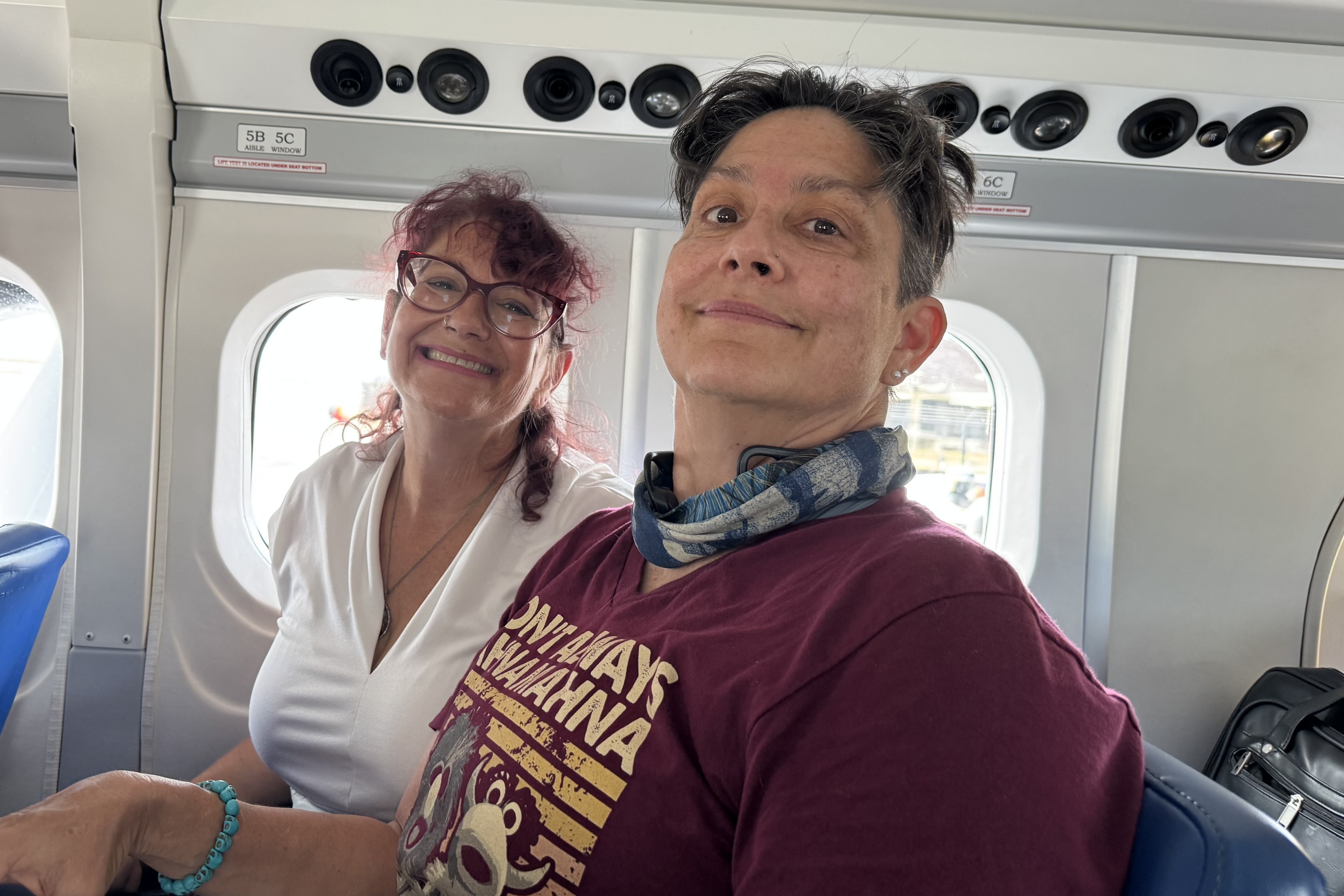
When booking the flight, I’d been asked to provide my weight, a routine precaution on small island aircraft, where passengers and baggage must be carefully balanced. With every row occupied, the crew arranged us with that balance in mind. Many of the Samoan passengers were of larger build, something I’d noticed throughout our time in American Samoa, and a few occupied two seats to travel comfortably. Polynesian communities have diverse body types, and larger physiques have sometimes been associated with chiefly status and traditional ideals of strength and stature and are quite common. This airline was mindful of that as was I on this flight but know also there is no single Samoan body type nor judgement. I buckled in, watched the clouds breaking over the water, and felt lucky to be there.
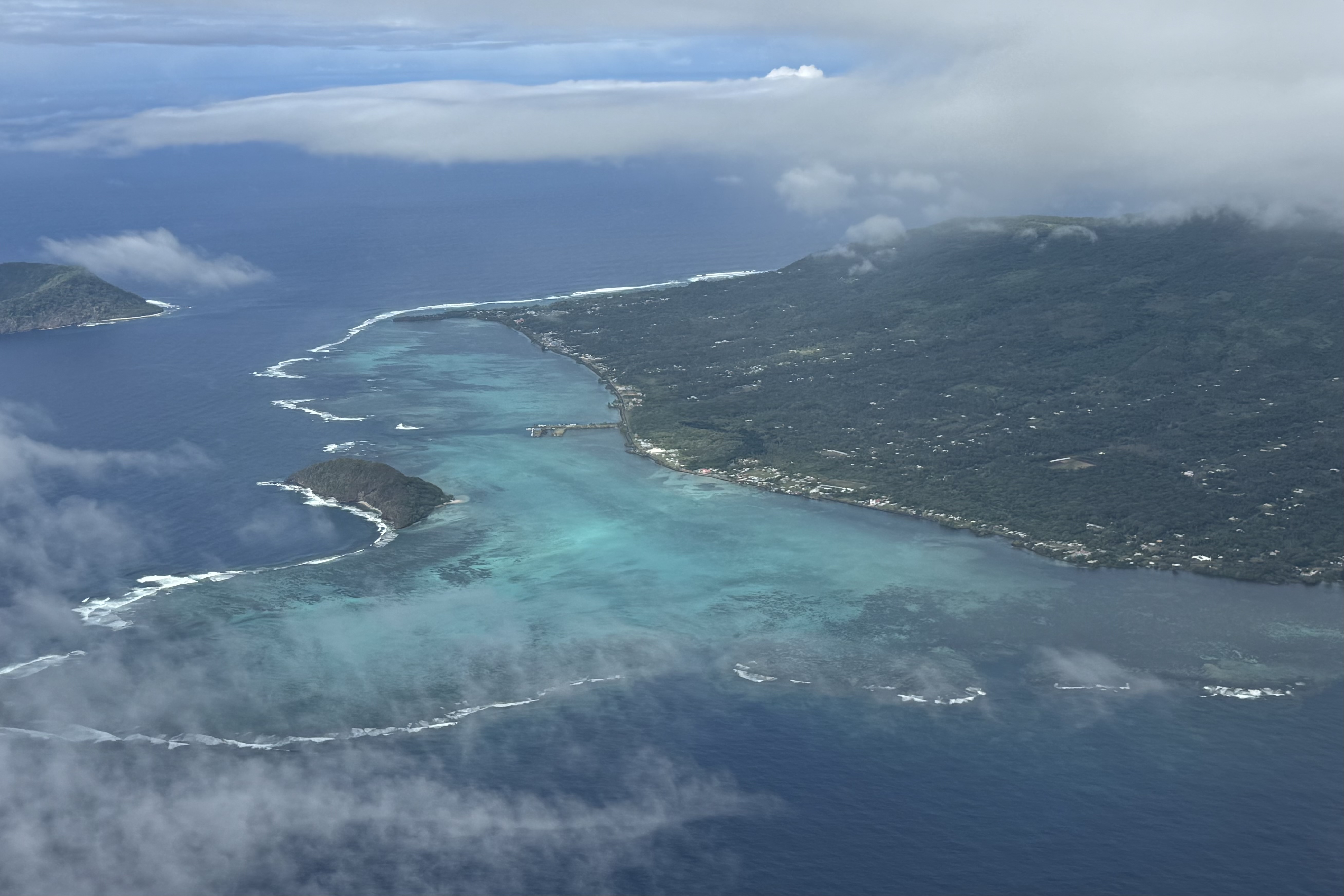
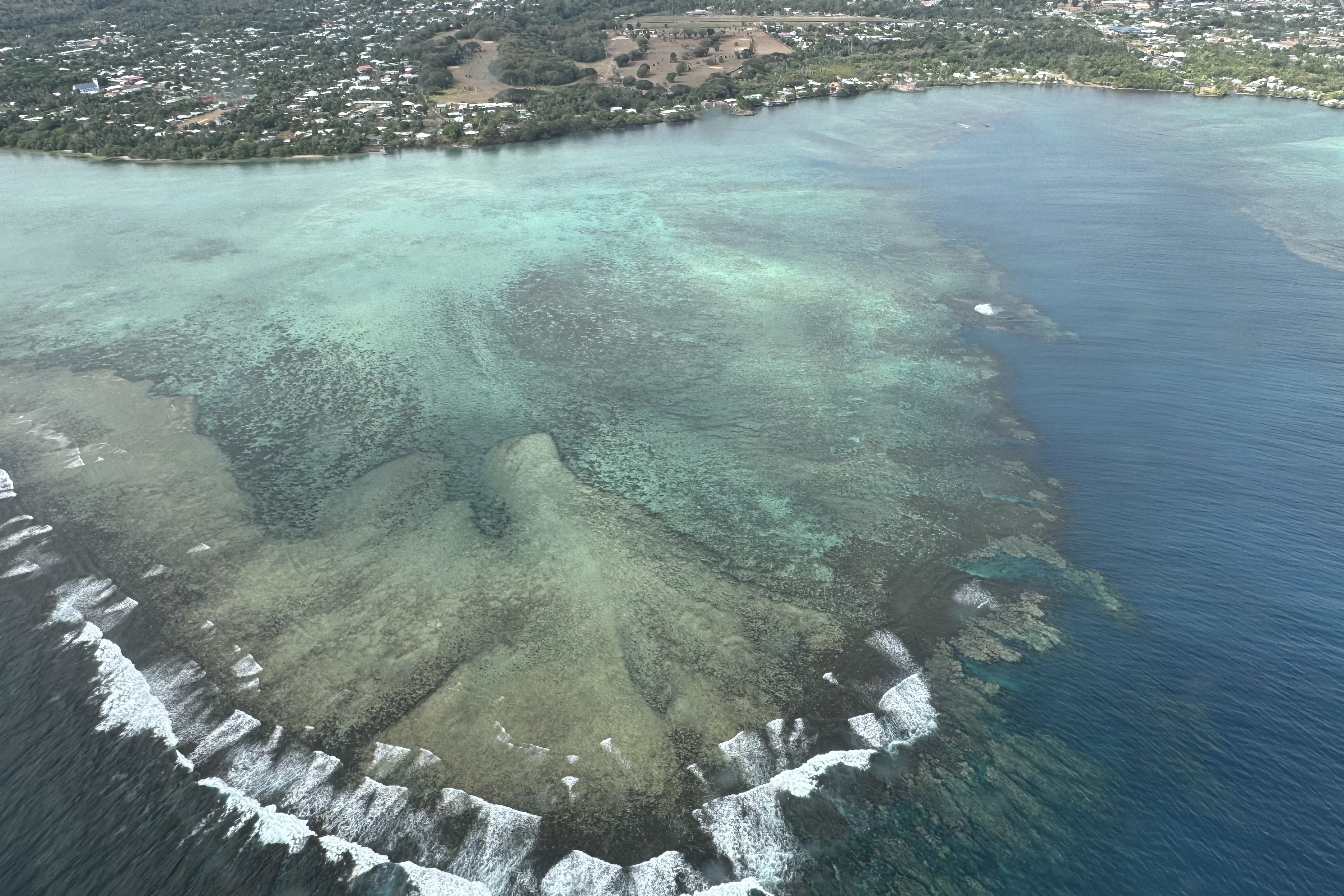
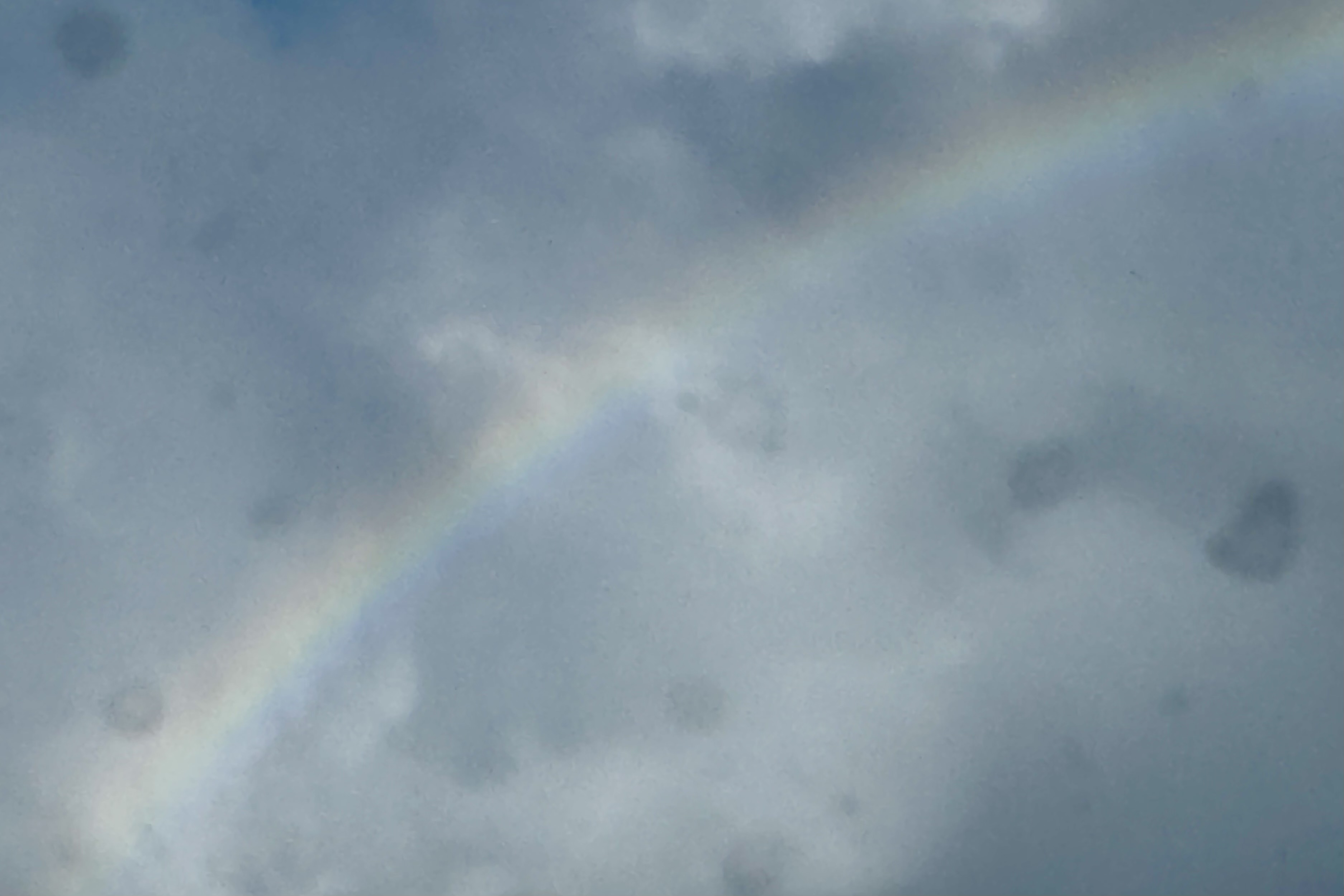
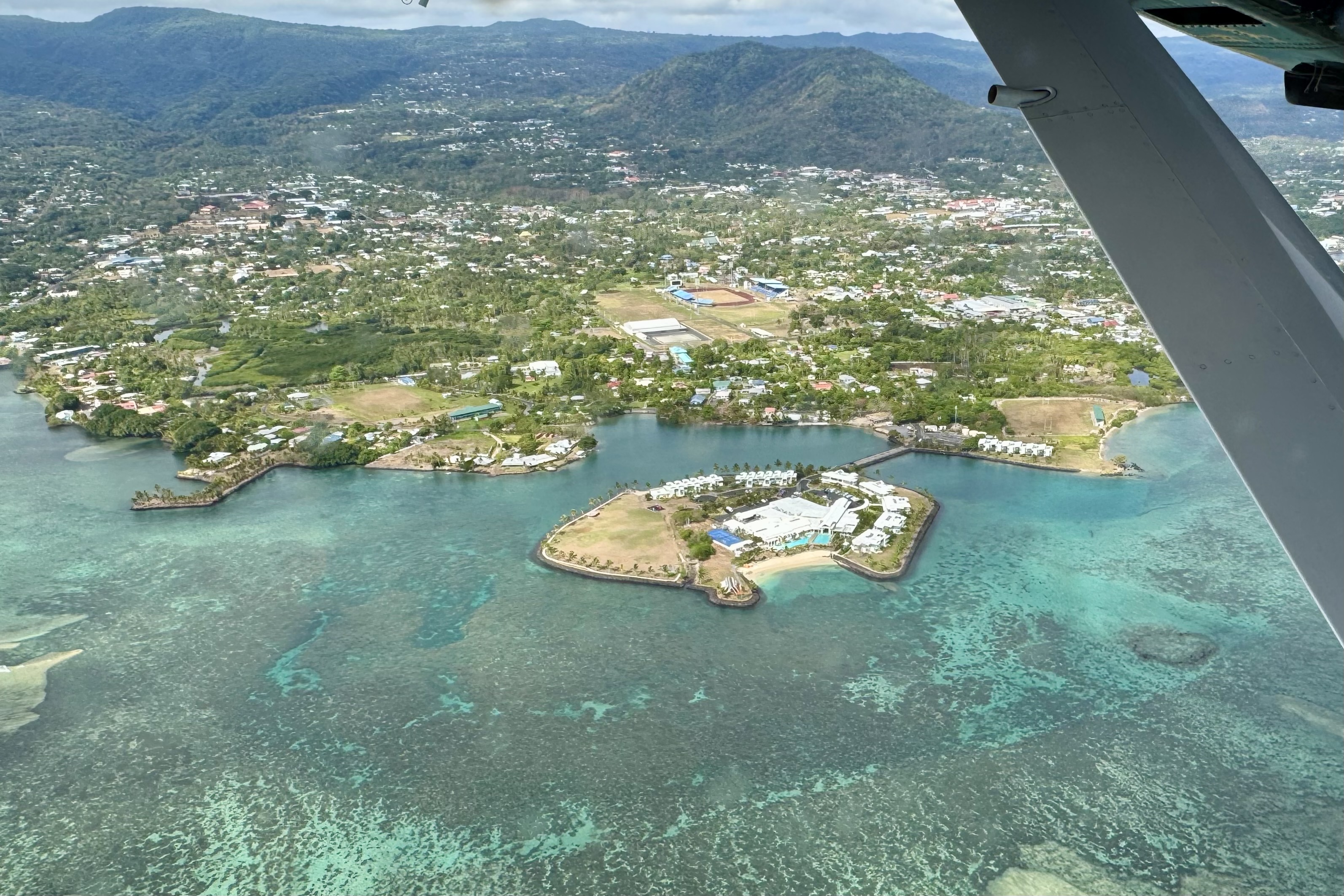
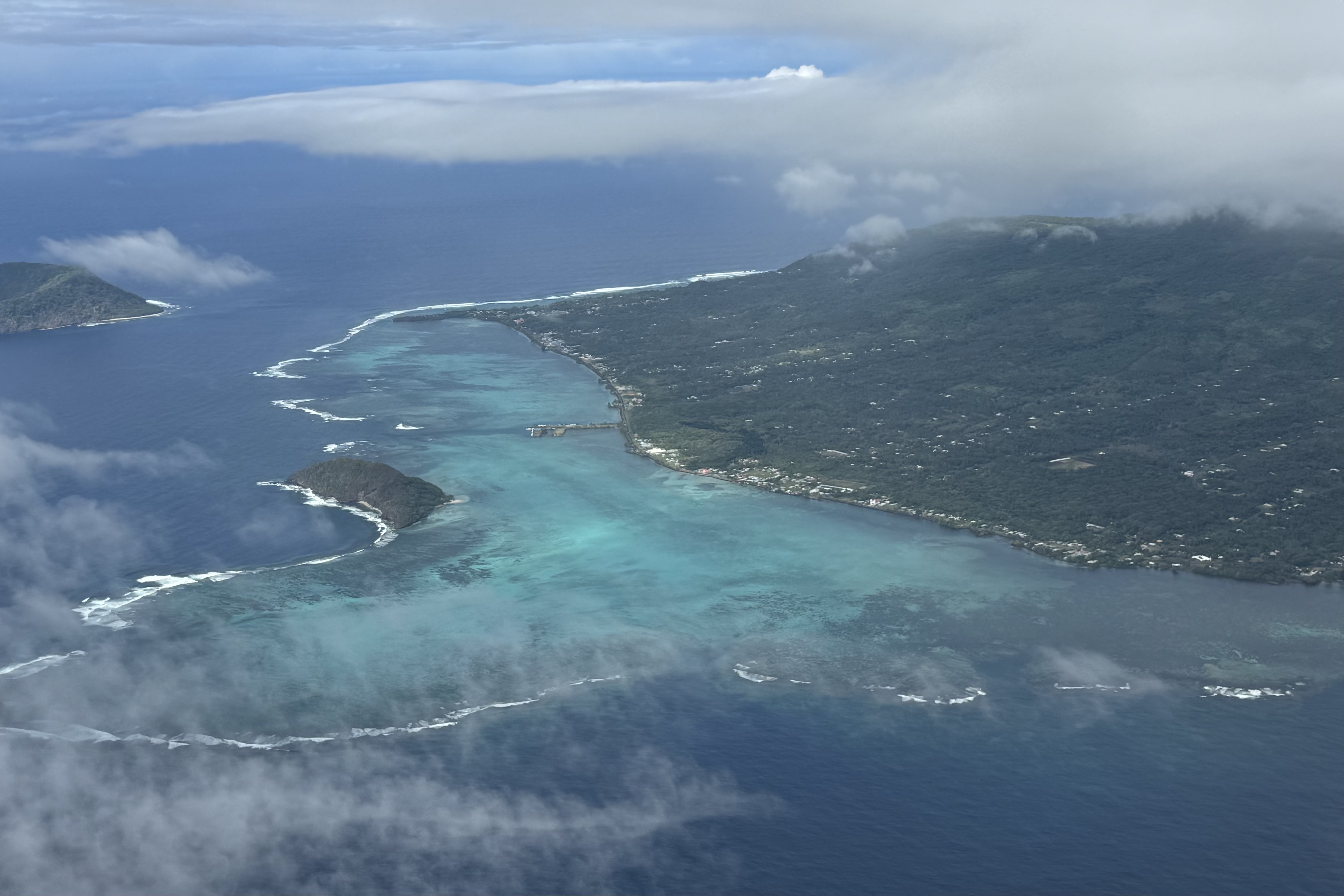
The flight lasted barely 50 minutes, although the weather provided plenty of drama. Clouds, rain, and a rainbow accompanied us, with occasional breaks offering clear views of the coastline and bays below. Several views stopped me in my tracks: a forested coastline bordering a sheltered lagoon, its waters glowing in layers of turquoise and aqua before plunging into deep ocean blue and a fringe reef that announced itself with a crescent of crashing white waves tracing its outer edge. Even with the unsettled weather, it was a spectacular introduction to the islands ahead.
And then there was the International Date Line to deal with. We’d left American Samoa on Tuesday at 9:15 a.m. and arrived in Samoa on Wednesday at 9:50 a.m. In barely 50 minutes of flying, we’d apparently managed to lose an entire day. We landed at Fagaliʻi Airport, a small regional airport serving flights between the islands. Customs was remarkably effortless, and soon we were on our way to our hotel in Apia.
Our taxi driver, Loui, also gave us one important piece of information: we’d need to leave for the airport at 2 a.m. the following morning. Ouch! Our flight from Faleolo International Airport, about 25 miles away and an hours drive away, was scheduled for 5 a.m., and we needed to check in by 3:00 am. We arranged for Loui to collect us at the appointed hour. I thanked him and tried not to think too much about whether he’d actually appear in the middle of the night. I could not imagine why he would volunteer to do that but I have heard that taxi driver’s are in a competitive business and are grateful for a confirmed pick-up and especially when they can secure a more-lucrative run to the airport ahead of time.
A Touch of Luxury in Apia
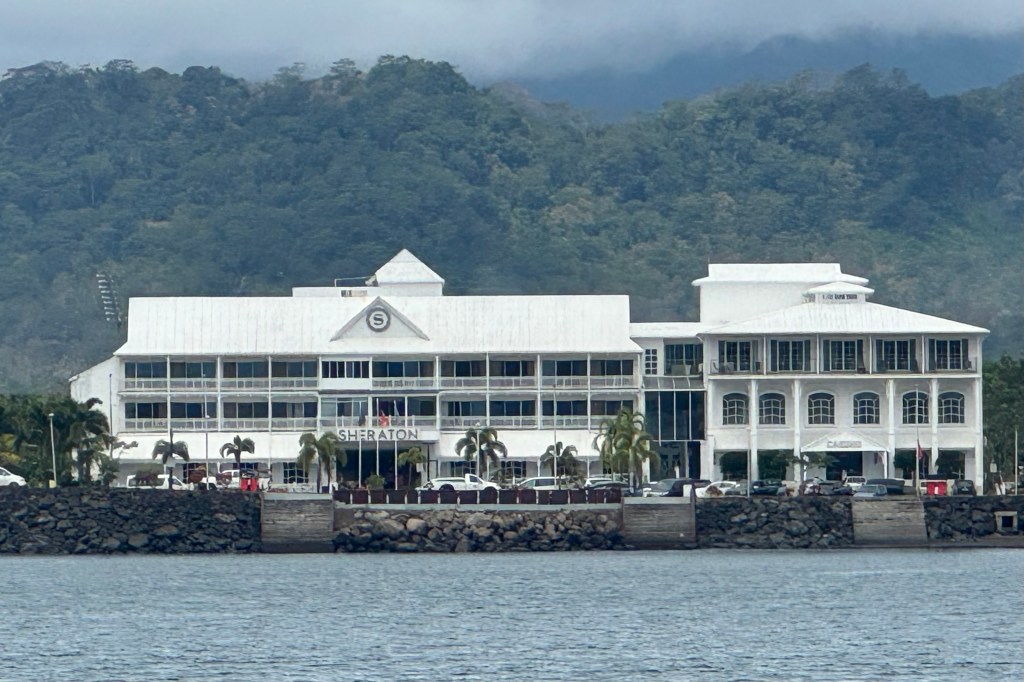
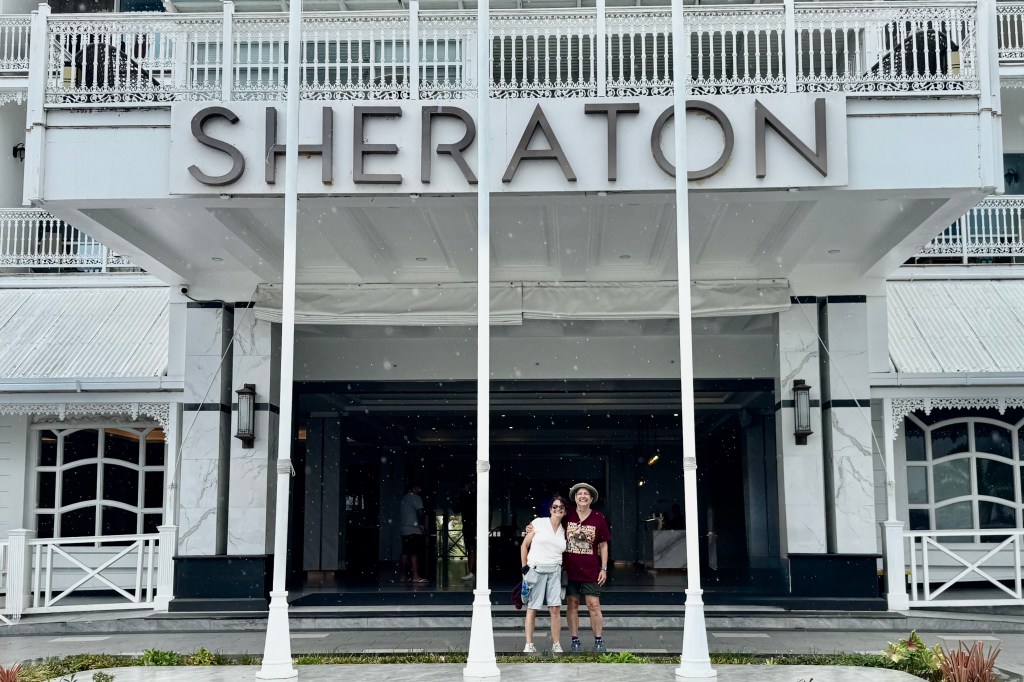
Our accommodations for the night were at the Sheraton Samoa Aggie Grey’s Hotel, a short distance from Fagaliʻi Airport. We arrived around 10 a.m. and, since we had only one night in Samoa, were eager to leave our luggage somewhere and explore Apia.
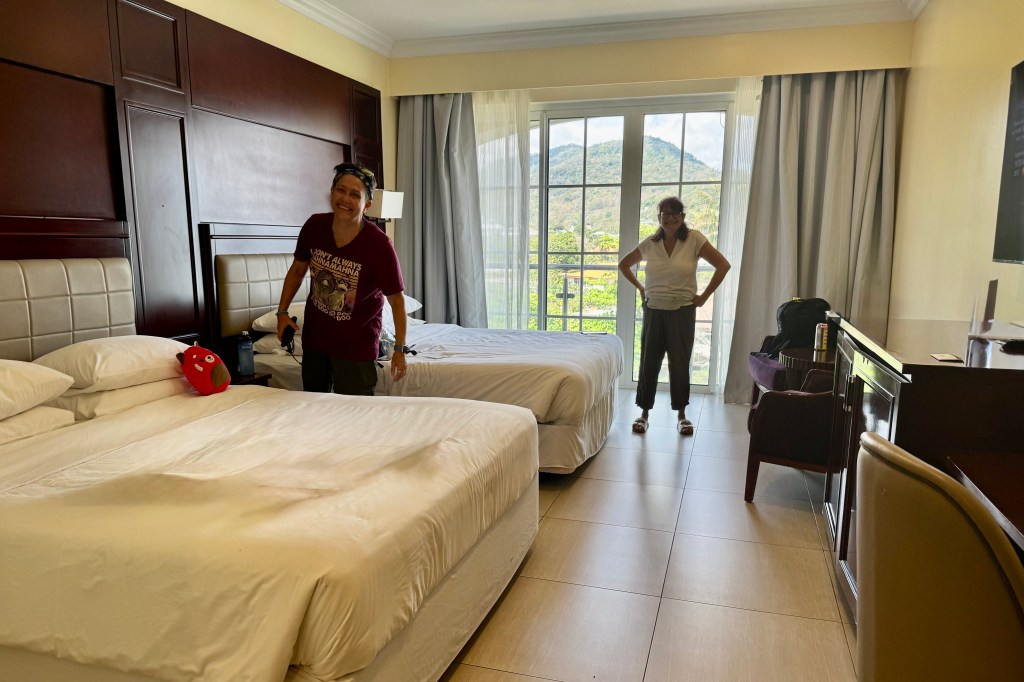
We had hoped simply to store our bags until check-in, but discovered that for about $78 we could have a room within the hour. Since I had already pre-paid for the room months ago, I conned myself into thinking it was a total bargain for a room at this grand hotel. Even better, the price gave us access to the hotel’s extensive buffet breakfast in its beautiful open-air restaurant while we waited. It seemed a bargain for a few hours of comfort, a good meal, and the chance to regroup before heading out. By 10:30, we were in our room.
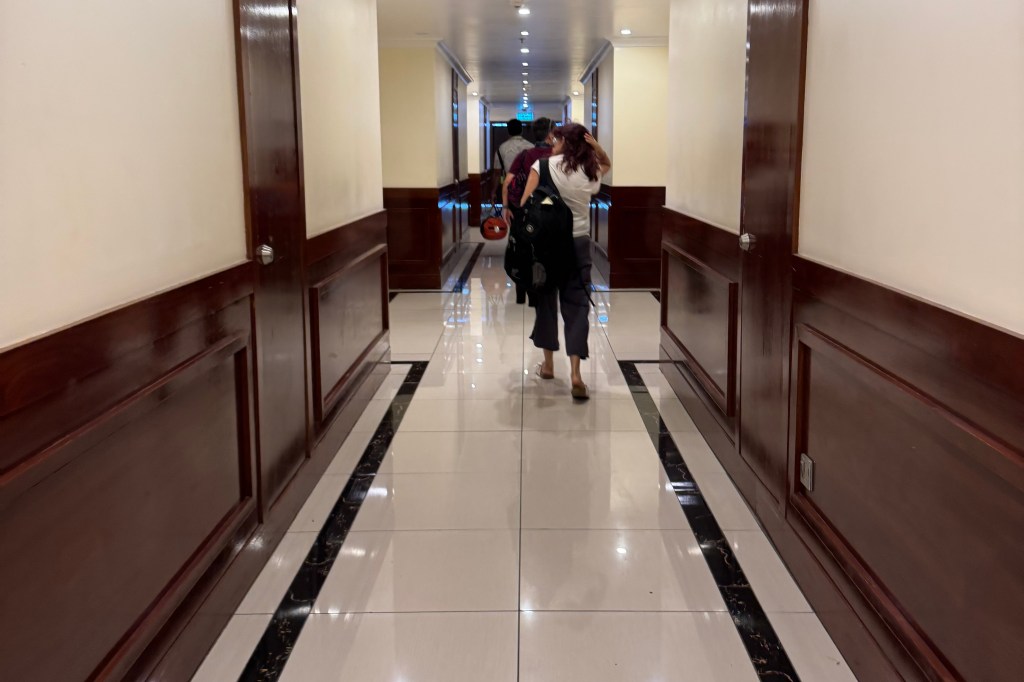
What a contrast to Sadie’s Hotel in American Samoa! The Sheraton’s polished marble hallways and elegant surroundings were a world away from Sadie’s old-world charm and long history. Yet I loved them both. One had a comfortable, very lived-in character; the other offered marble hallways and more polished kind of luxury. Fortunately, I didn’t have to choose a favorite.
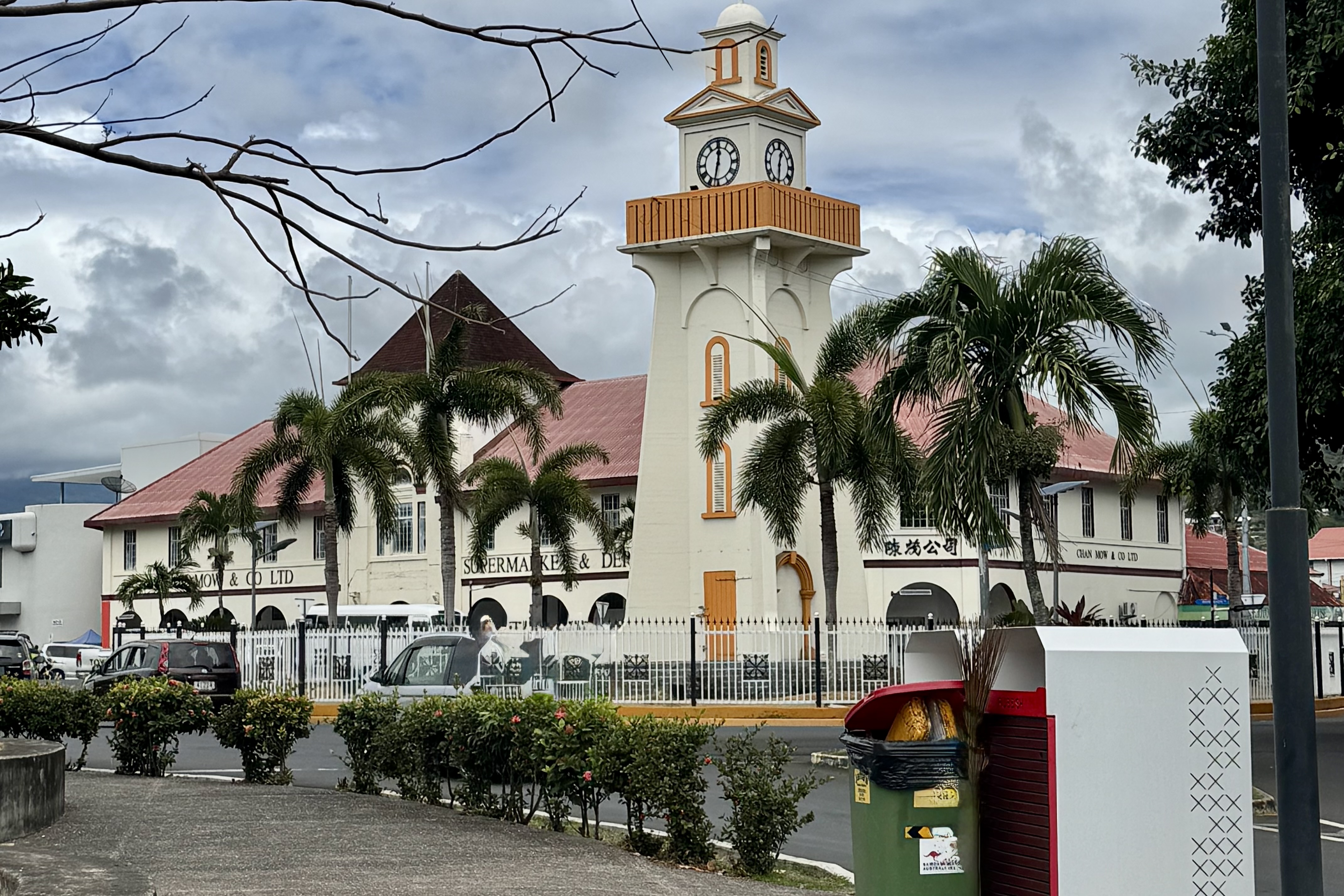
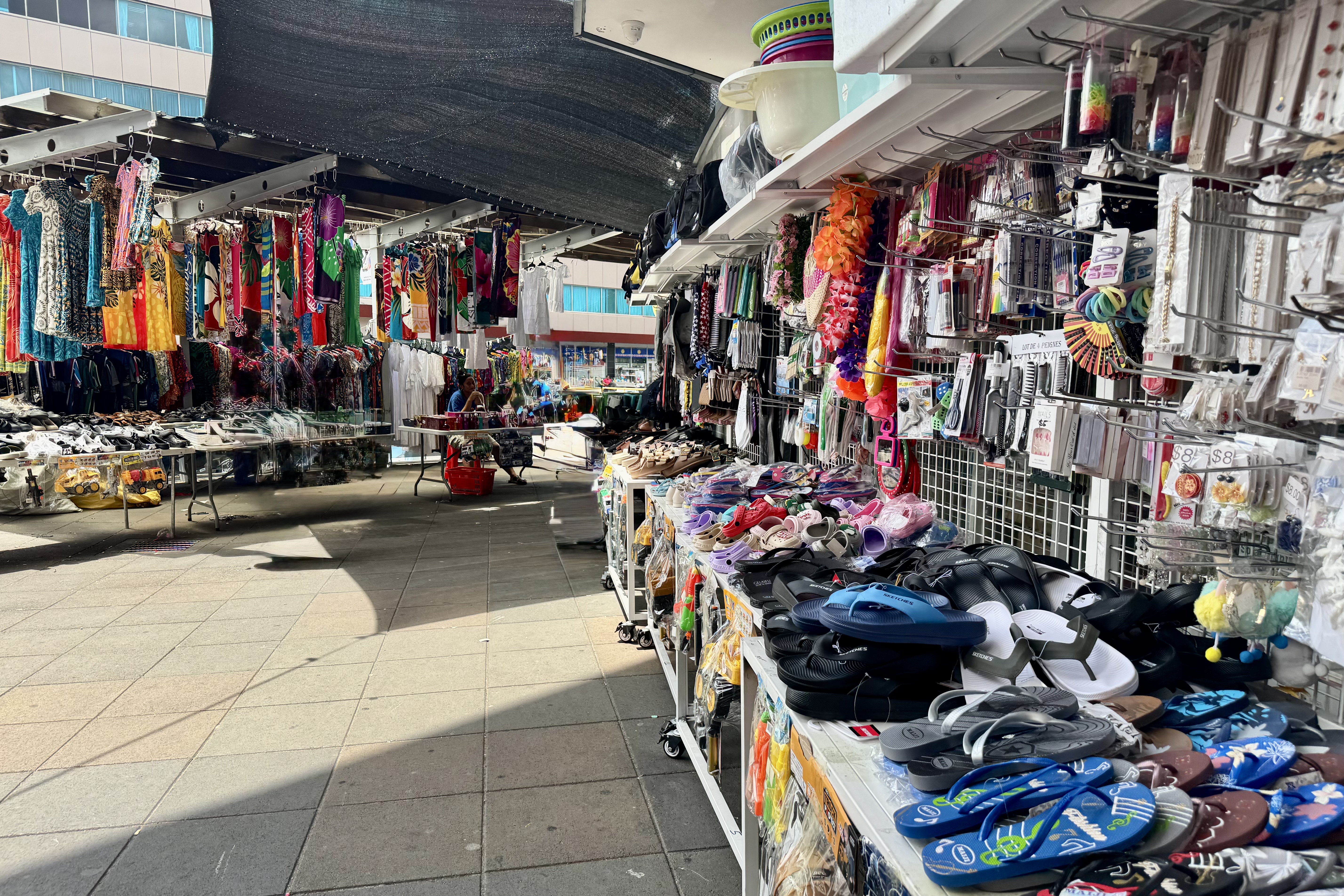
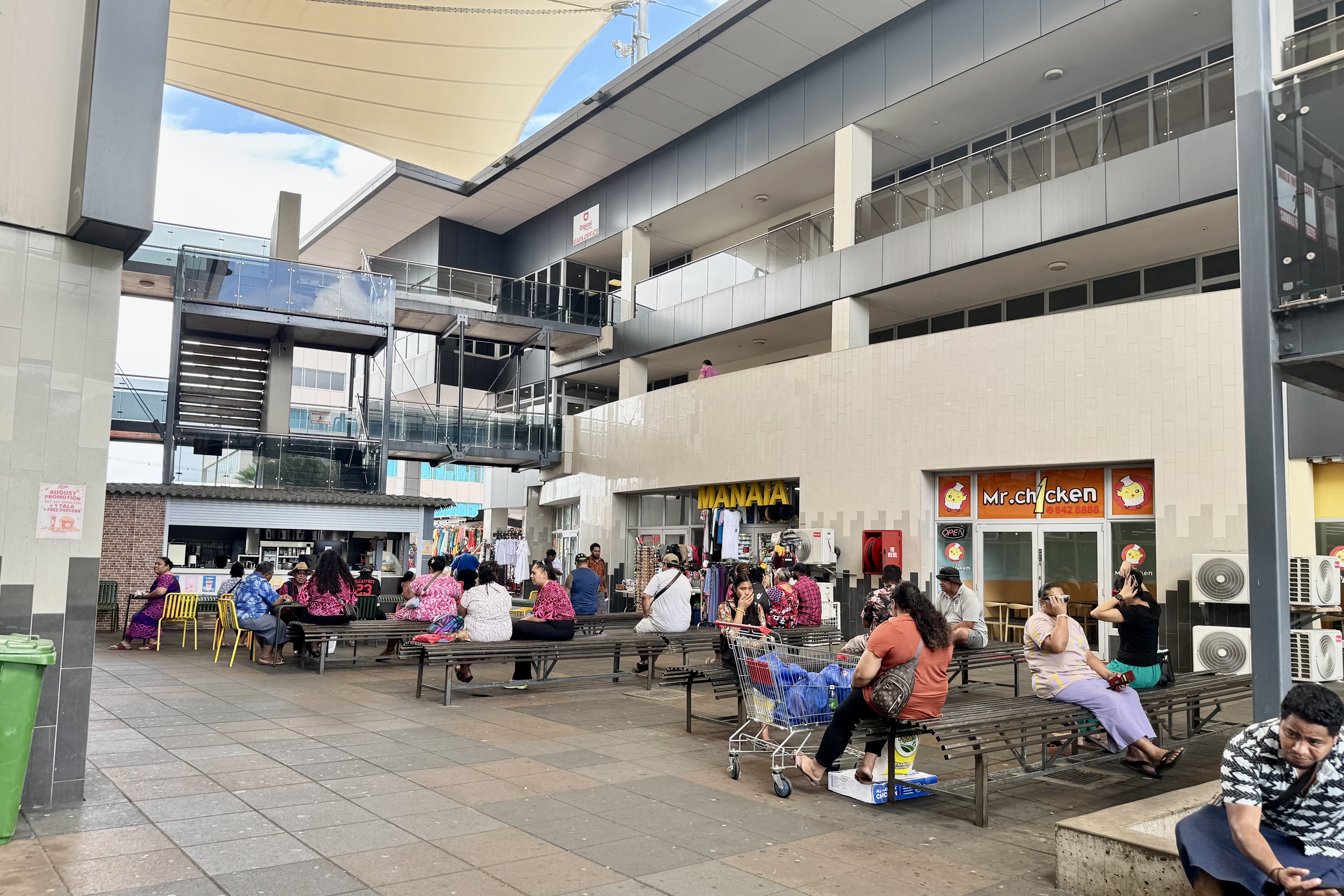
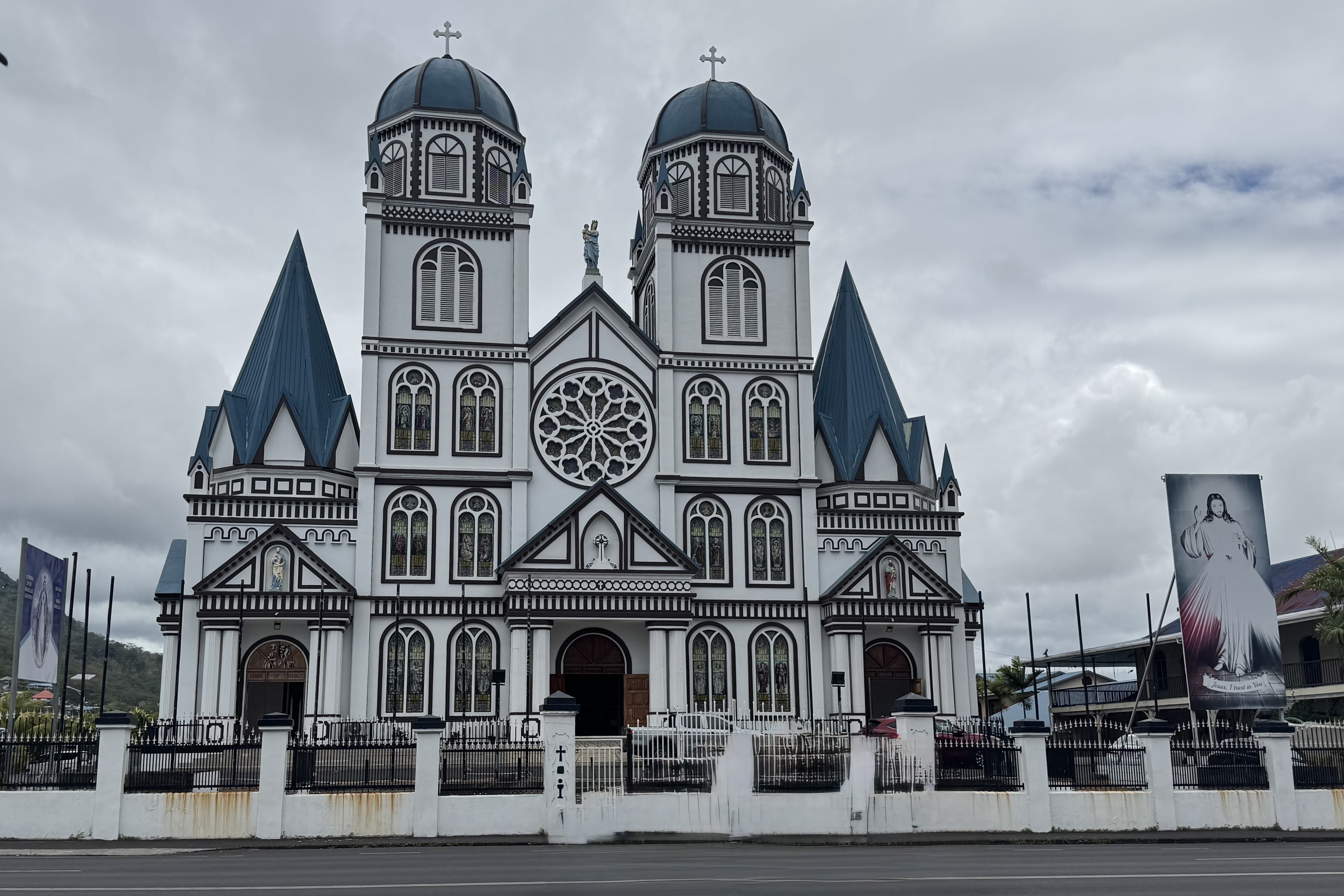
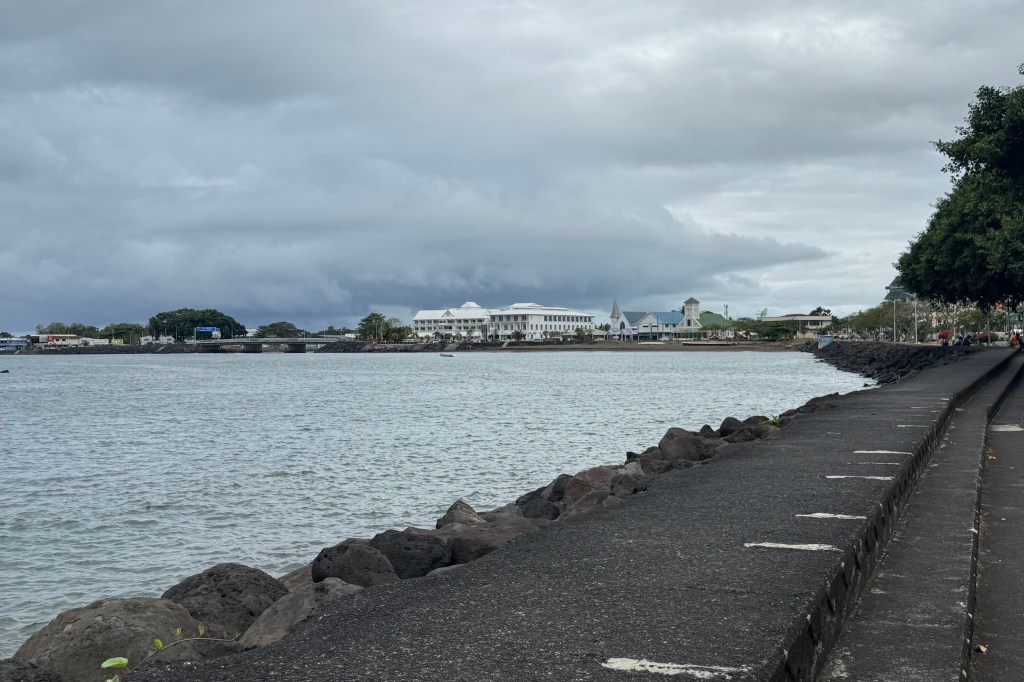
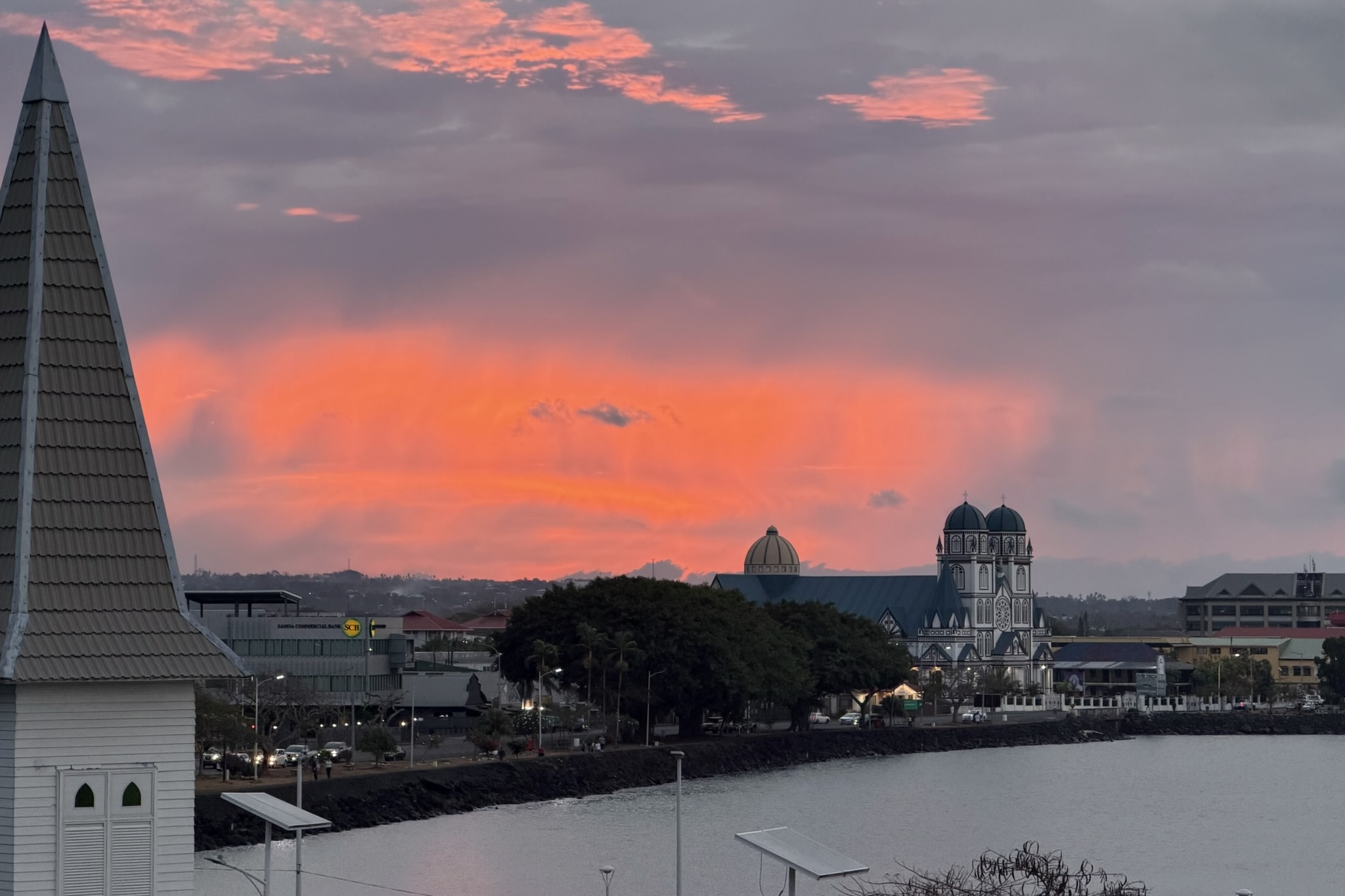
Shortly afterward, we set out to explore Apia. Compared with the easygoing village feel of Pago Pago, Apia was busier and more urban, definitely much more commercial, with fewer dogs, and not as many churches. I’ll admit the city itself didn’t particularly win me over. We wandered the streets, looked for a pharmacy, poked into a few shops, and passed the cream-colored clock tower in the town center, but the harbor was the real draw.
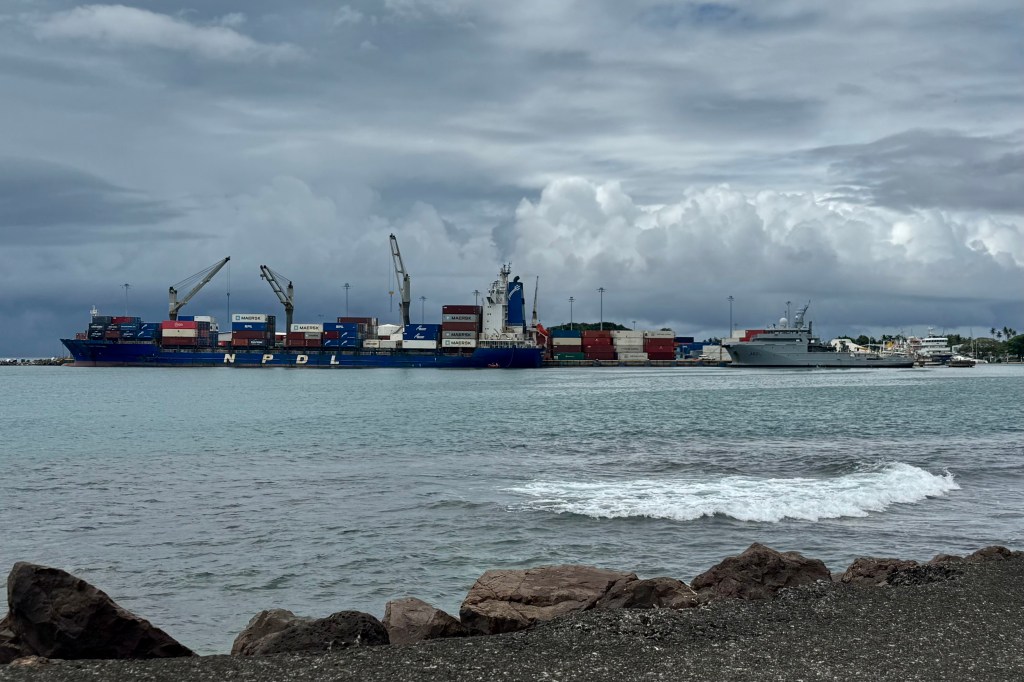
Beneath heavy gray skies, container ships and cranes worked along the docks, while a breakwater of rough volcanic rock held back the choppy water. It was more industrial than idyllic, but the walk along the waterfront was considerably more pleasant than the city’s noise and bustle.
I was glad we’d explored it, but even happier to return to the hotel and enjoy a couple of hours in its glorious swimming pool and gardens. After our very substantial brunch, dinner was a nonstarter. We had more important business to attend to: organizing everything so that when our alarms sounded at 1:30 a.m., we could simply dress, grab our bags, and be out the door in a flash!
After enjoying a spectacular sunset and beginning to settle in to bed, there was just one small obstacle to a peaceful night’s sleep. Remember those beautiful marble hallways? It turned out they were also excellent amplifiers. A family in a nearby room allowed their children to tear around and holler along the slippery, echoing corridors. The children were clearly having a wonderful time. We were less enthusiastic about their entertainment.
Eventually, Bernadette went out and suggested to the father that he might consider corralling his offspring, as some of us were trying to sleep. It was a reasonable request, especially given that our day was about to begin at an hour when most sensible people are still several hours away from waking and perhaps this father was just going to bed.
Fiji, Here We Come!
To my great relief, dependable Loui appeared right on time at 2 a.m. He drove us through the darkness to Faleolo International Airport for our flight to Nadi, Fiji. The drive was slow, and the 25-mile journey reinforced the wisdom of allowing plenty of time. We needed to be at the airport by 3 a.m. for our 5 a.m. departure.
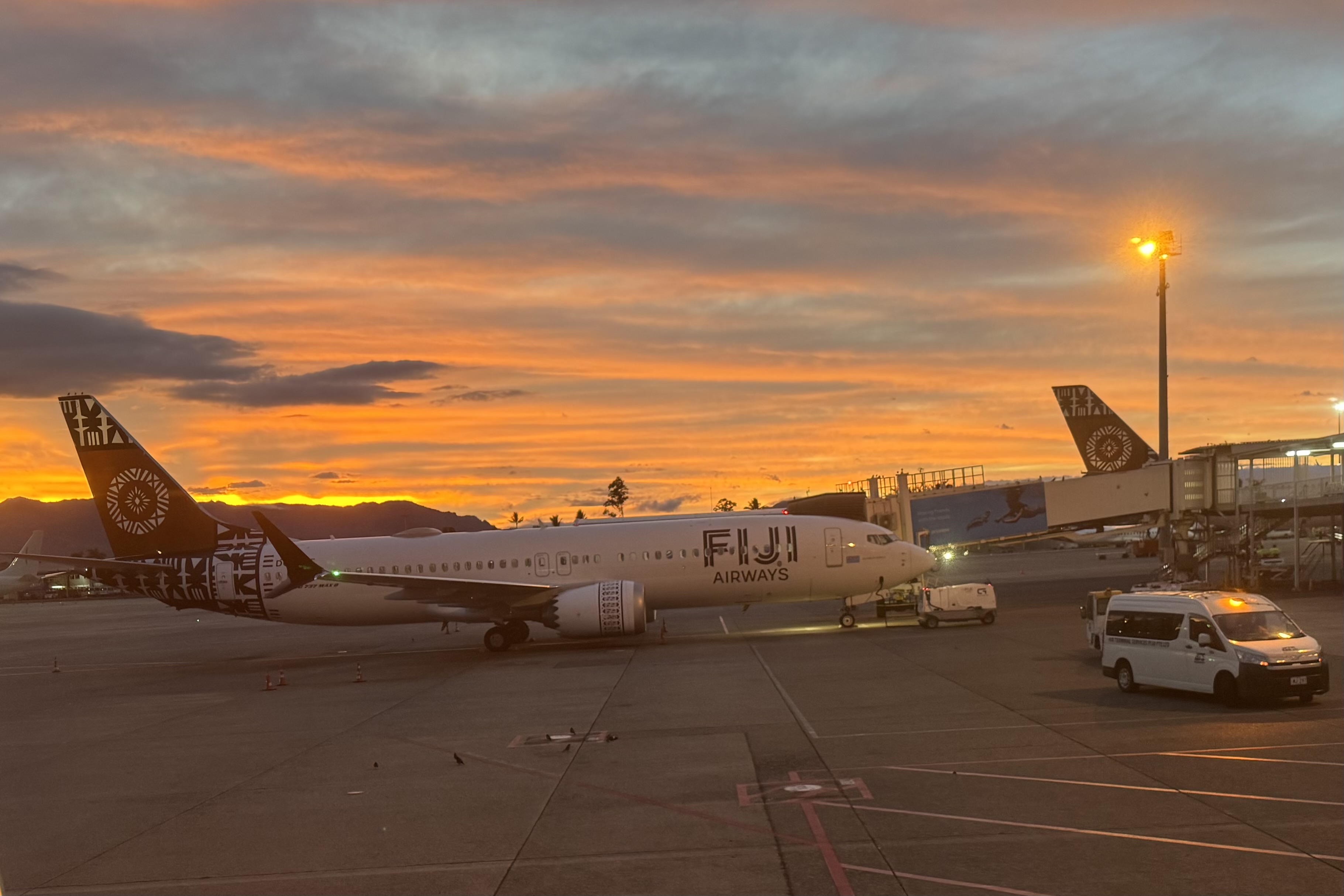
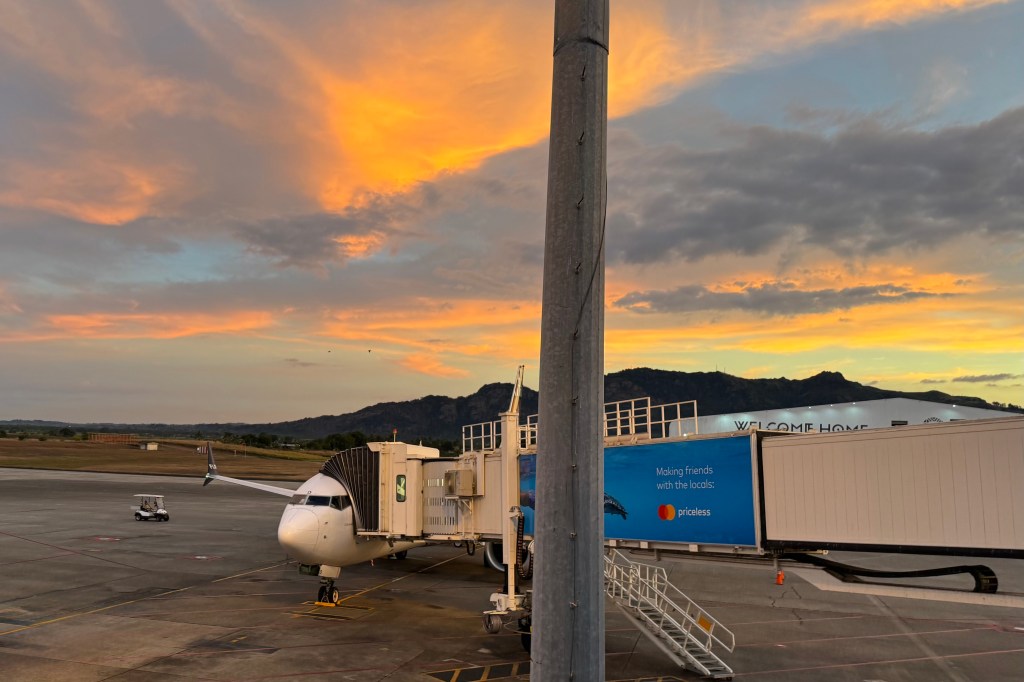
We took off under a golden sunrise and everything went smoothly. This was an economy flight, but Samoa Airways earned points in my book by serving us breakfast, complete with yogurt and a muffin, at no extra charge. Can’t remember when a USA airline on any non-international flight has given me a free meal in economy. Luxury is relative when you’ve been awake since the middle of the night. We also landed under a golden sunrise. Traveling through these time zones gave us this unanticipated but bonus sunrise. Customs in Fiji was a breeze, the airport uncrowded and gleaming.
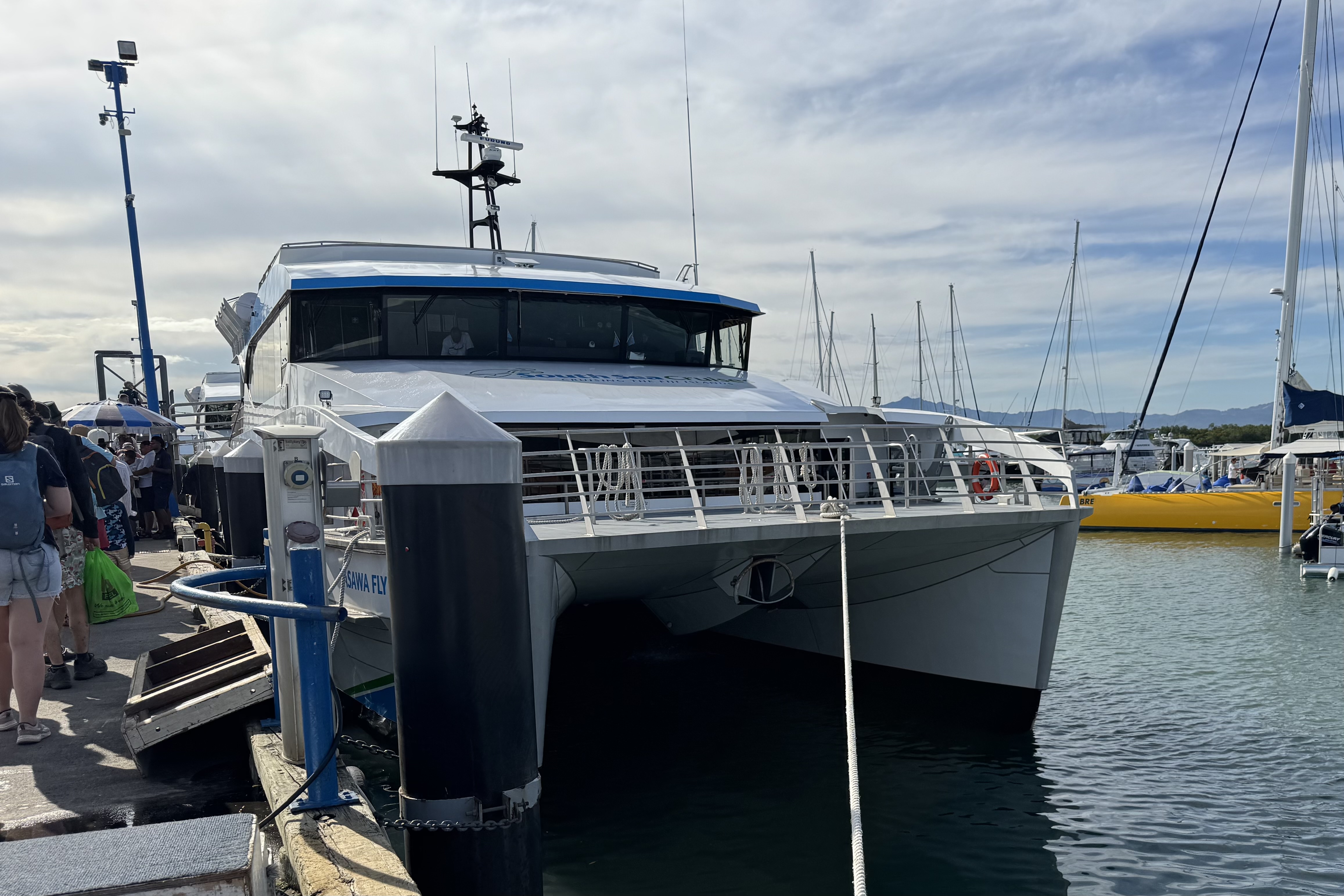
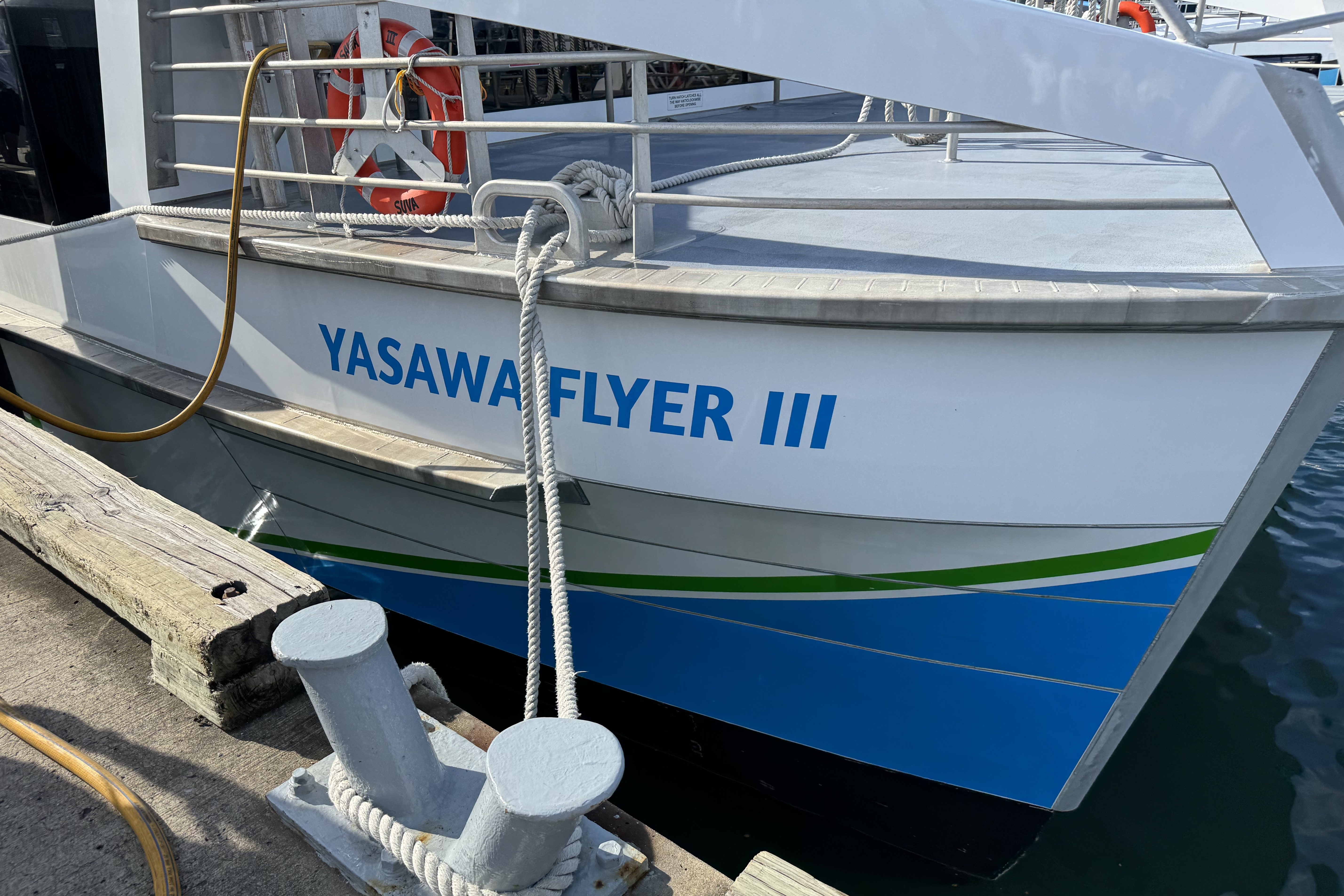
Soon we were outside waiting for the South Sea Cruises coach that would take us to Port Denarau. From there, we’d board the Yasawa Flyer for the journey to Barefoot Manta Island, our home for the next four nights. I think the coach stopped at every resort in the area to load up passengers so it was well over an hours ride for the 12 mile distance that would be 20 minutes by taxi.
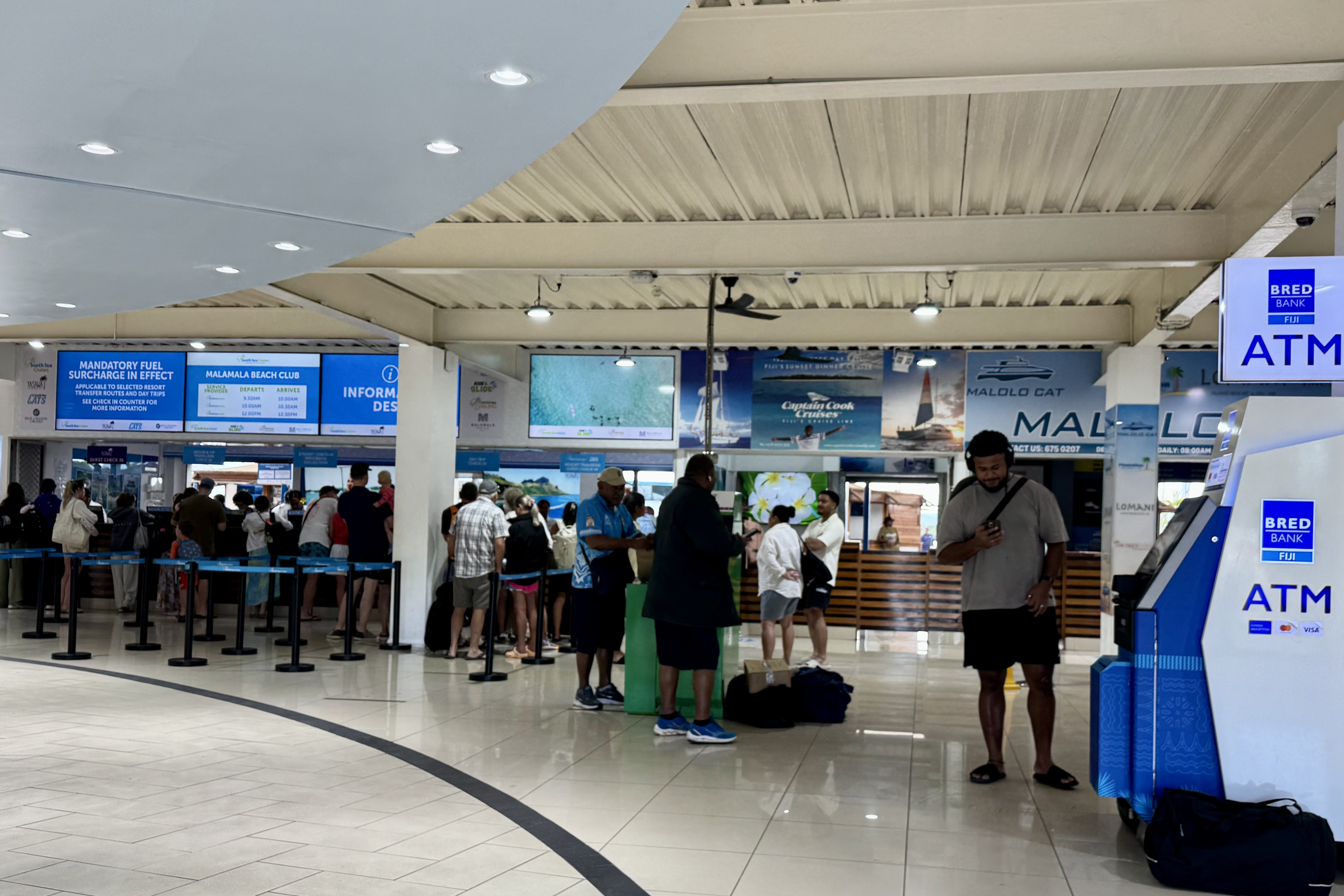
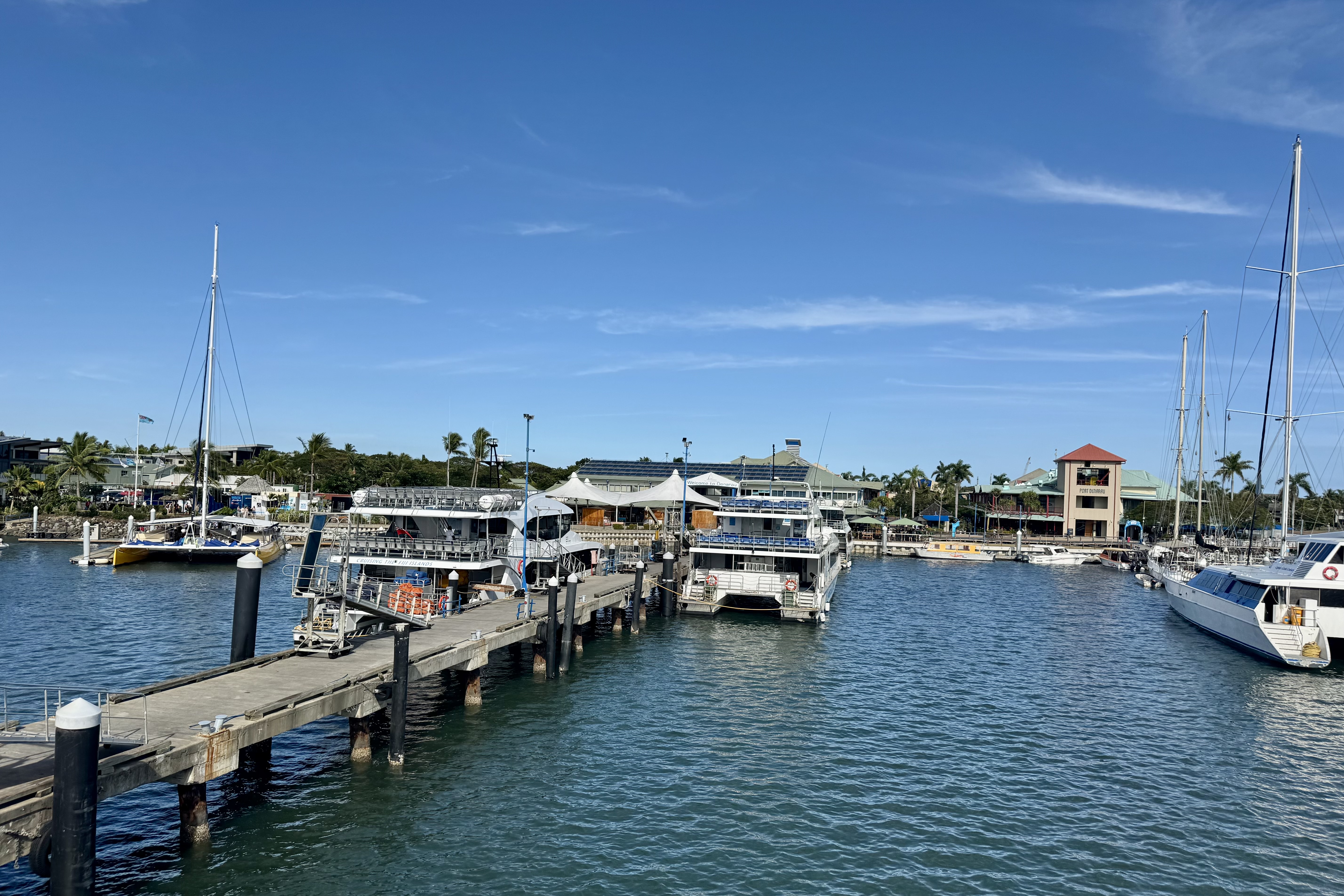
Port Denarau was bustling with travelers heading off to various islands on various vessels, some for day trips and others for longer stays at the outer-island resorts. After checking our bags, getting our boarding passes, paying a fuel surcharge, and purchasing some snacks, we people watched on the deck area by the dock until we boarded this speedy, air-conditioned catamaran. We opted for seating on the open upper deck. The promise of sea breezes and island views was irresistible.
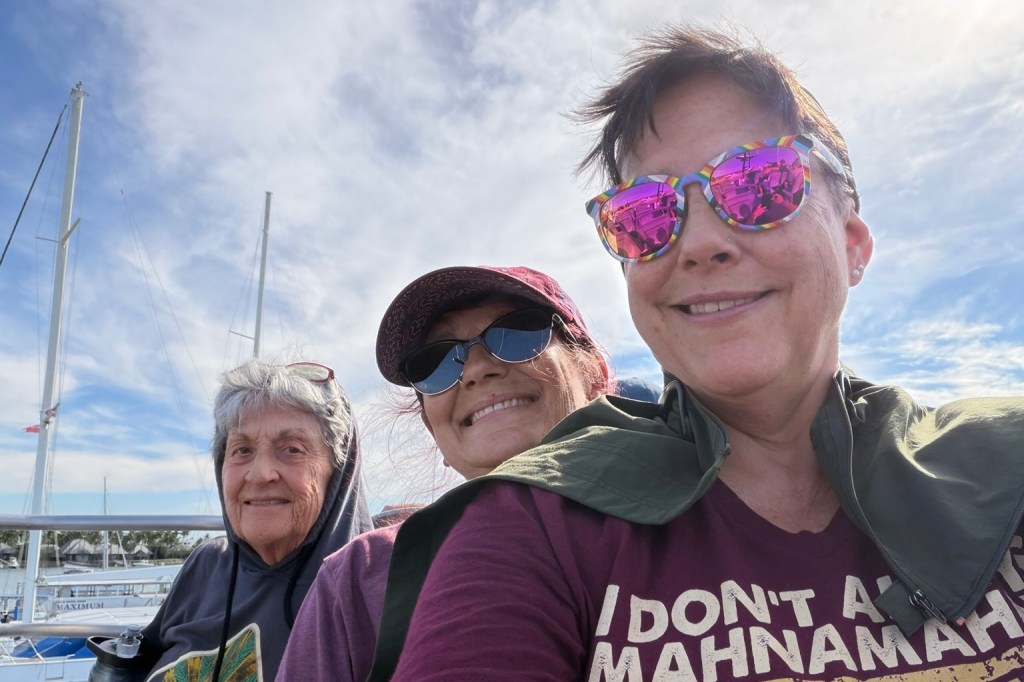
Unfortunately, I’d neglected two fairly important accessories: a hat and sunscreen. The sun and wind were soon making their presence known, and I eventually retreated below to the more comfortable indoor air-conditioned seating area, with its snack bar and large windows. Down there , there was also a door leading to the exterior lower front deck, where one could experience the breeze of great intensity. My girls eventually joined me down there having had their fill of the gusty breezes up top .
Out on the front deck, the wind whipped up the sea spray as the islands slid past, and it was quite invigorating. After enjoying it for a while I was back in my seat. I became fascinated by two young women conducting with their iPhones what appeared to be an elaborate photo shoot out on the deck. They cycled through pose after pose, apparently determined to capture every possible angle and facial expression of themselves against the island scenery. For a while, I found their performance almost as entertaining as the view.
It struck me as a perfect illustration of our selfie-obsessed age, when sometimes the experience seems less important than the photograph proving that we had it. Of course, I couldn’t be too judgmental. In this digital age, when thousands of photographs can be snapped at no cost, I have occasionally been guilty of collecting pictures rather than simply enjoying the moment myself.
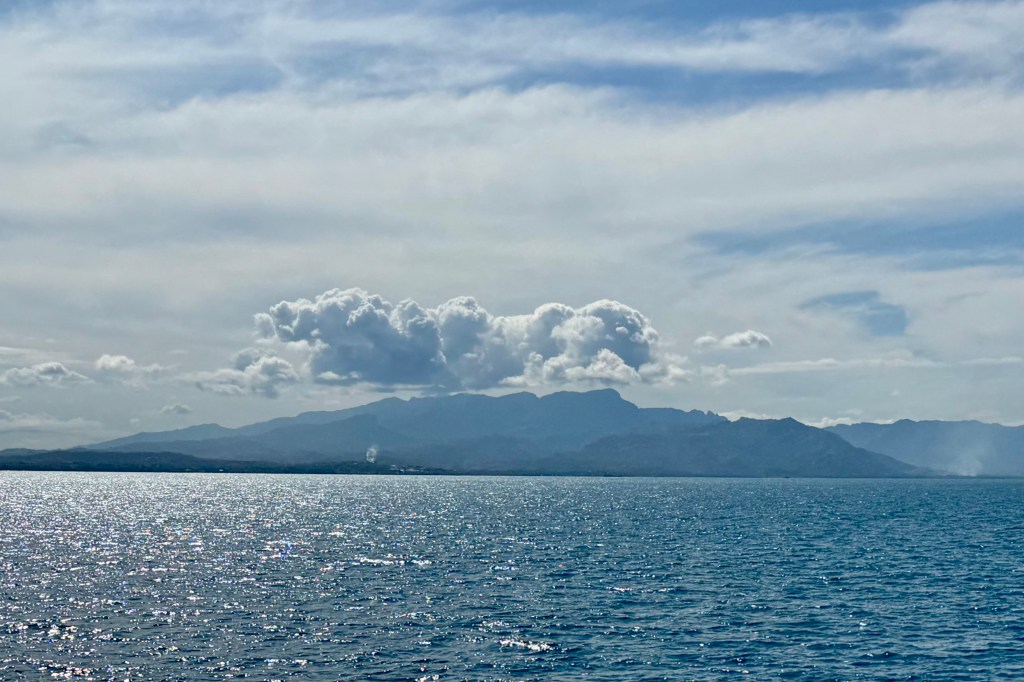
Eventually, I turned my attention back to the real attraction: the islands of the Mamanuca region slipping past in the distance.
The Ferry That Didn’t Quite Dock
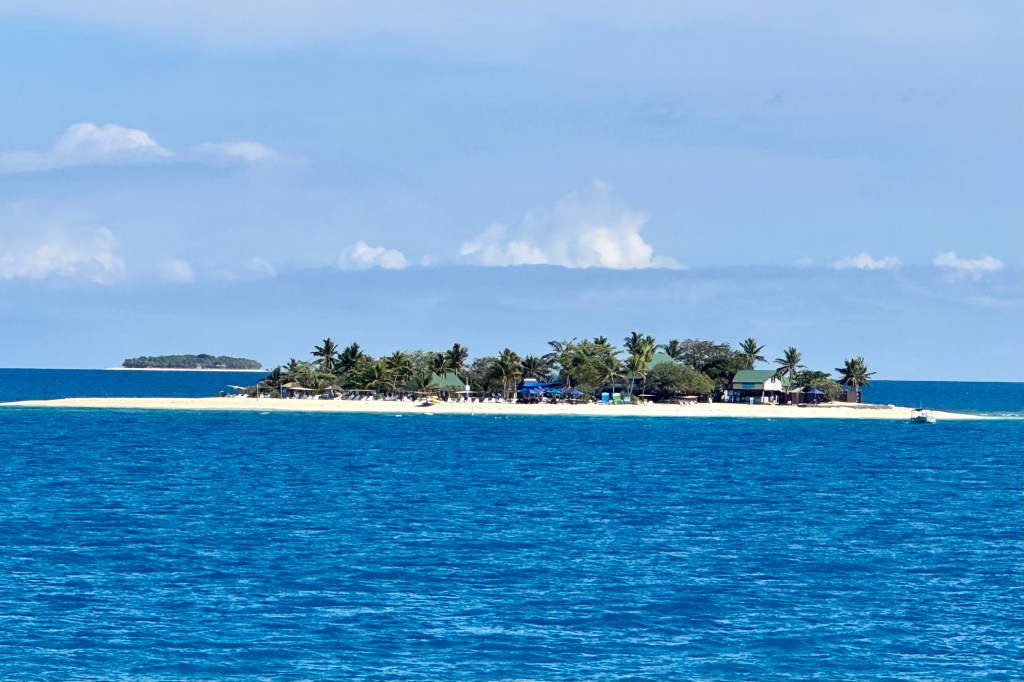
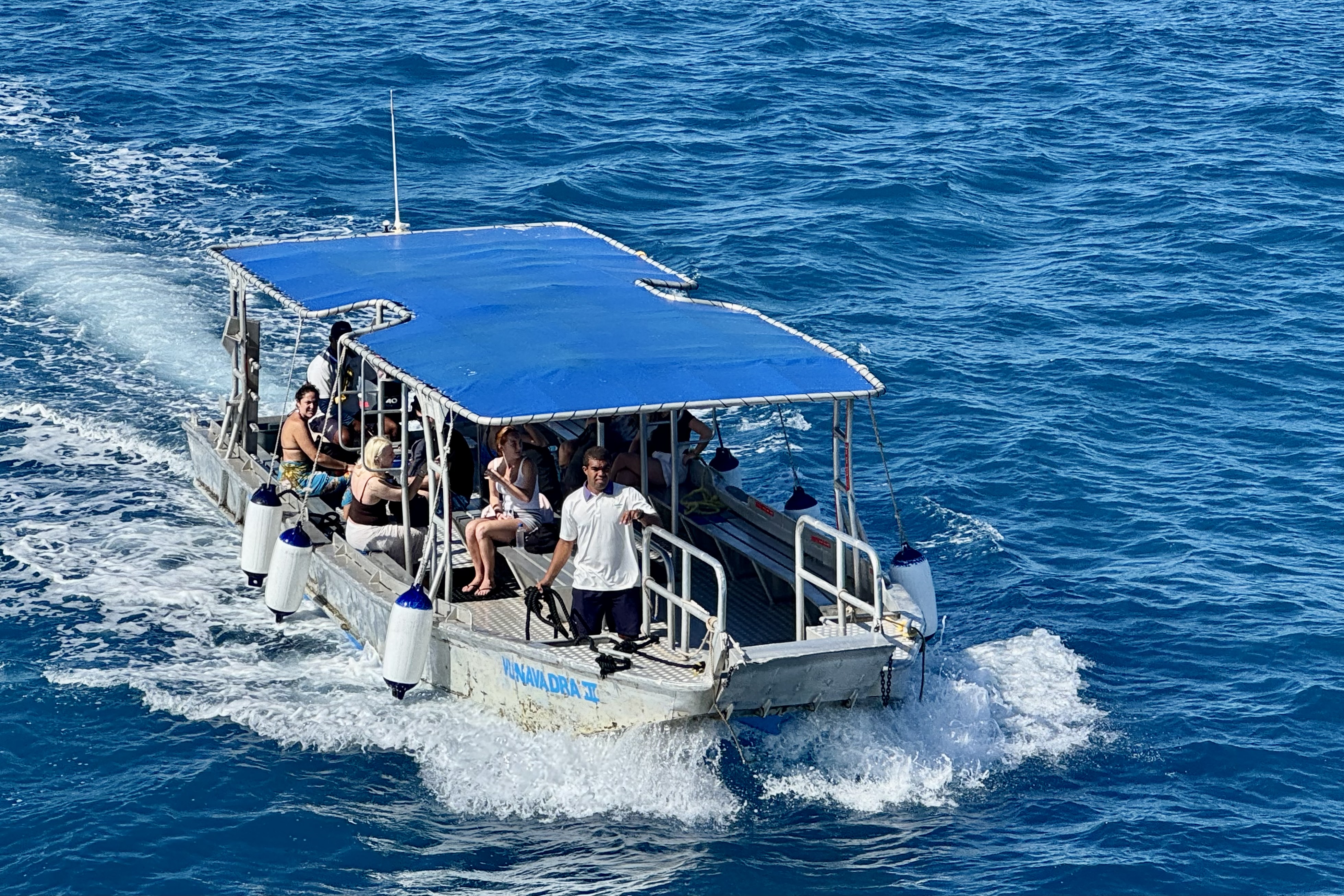
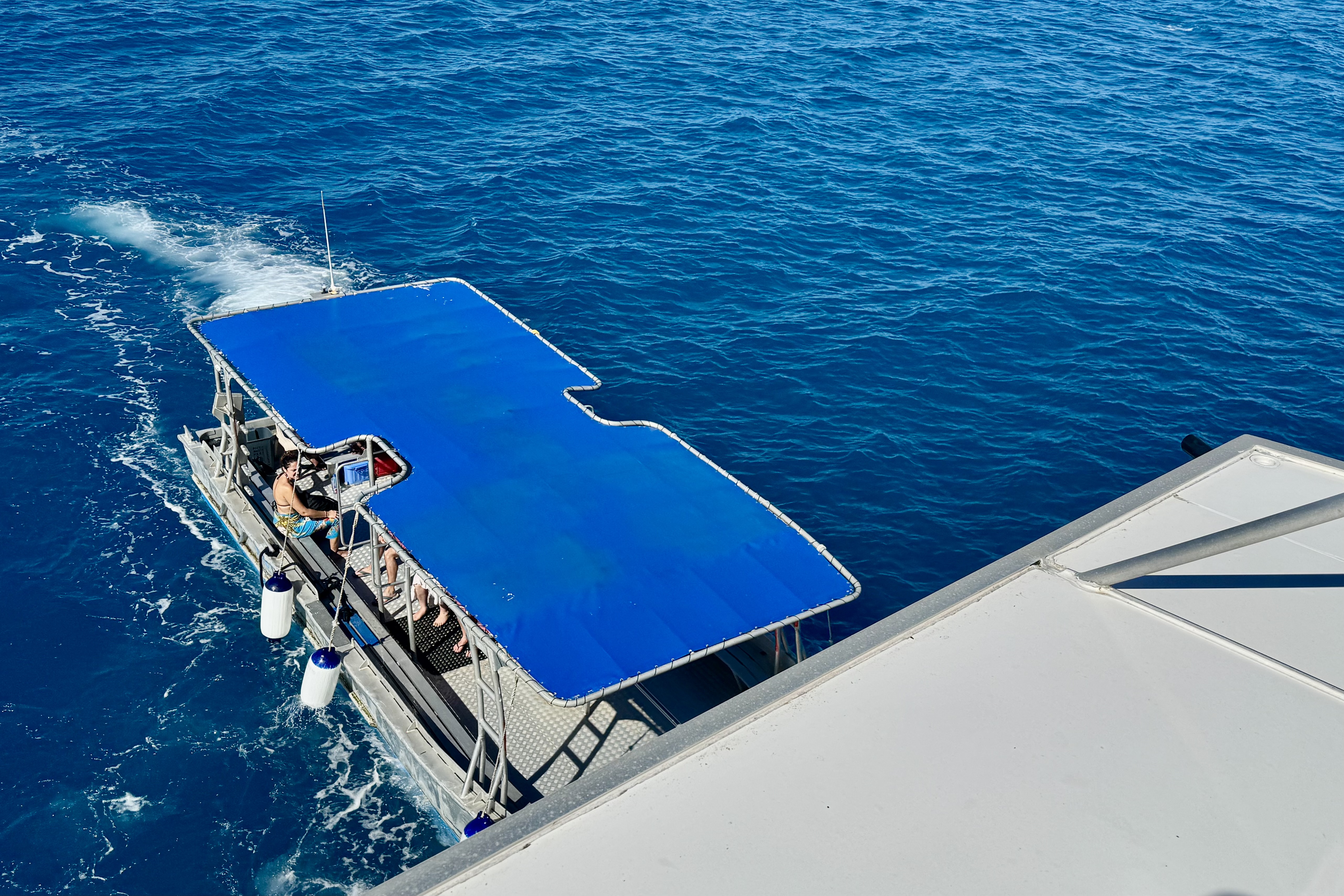
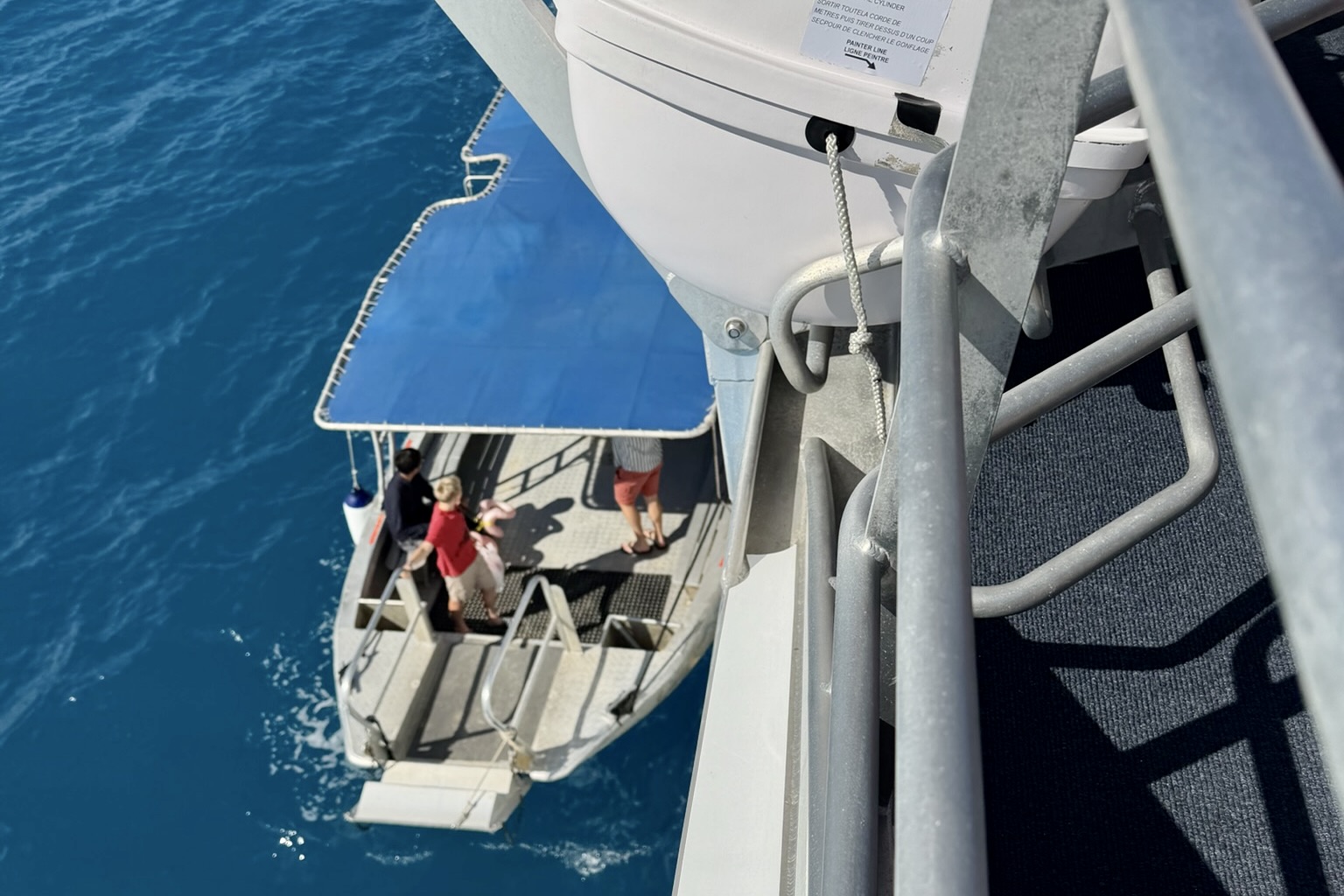
The Yasawa Flyer made stops at numerous island resorts along the way. I’d imagined it pulling into a succession of little island ports, but my understanding of the process was about to receive a useful correction. Many of the islands have shallow reefs and no deep-water docks. Rather than bringing the large ferry ashore, the crew anchored well offshore and waited for the smaller motor launches from the resorts. These approached the catamaran, transferred passengers and their luggage, and carried them to the beaches or resort landing points. The process worked in reverse for those leaving the islands, with new passengers and their bags being brought aboard for the onward journey.
It was an ingenious arrangement, although watching the transfers made me appreciate just how different island transportation can be from simply pulling into a dock or ferry terminal.
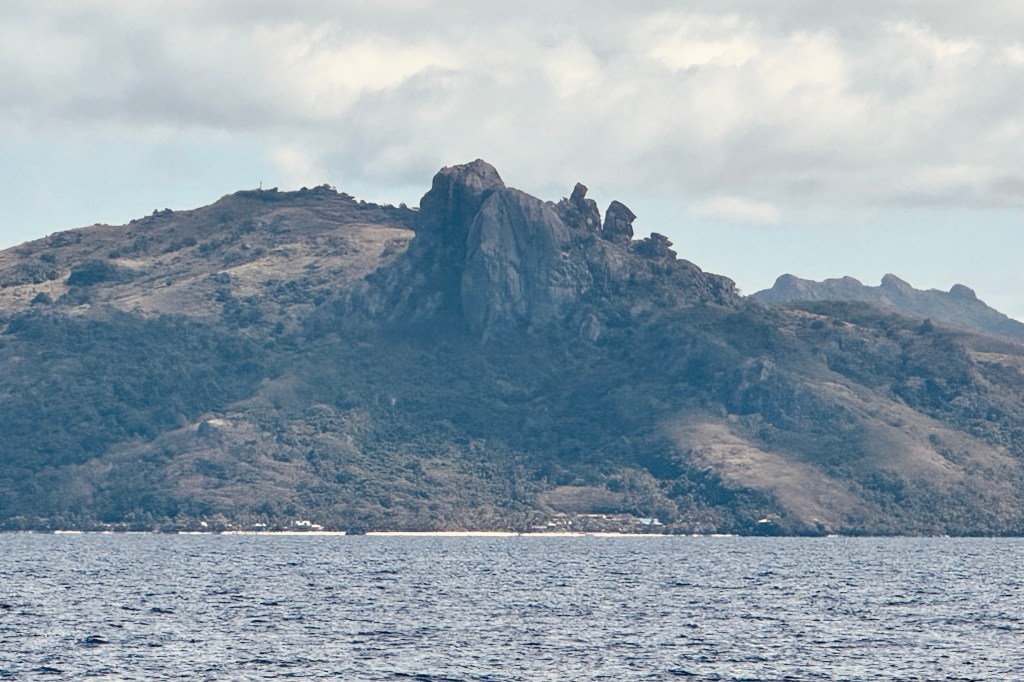
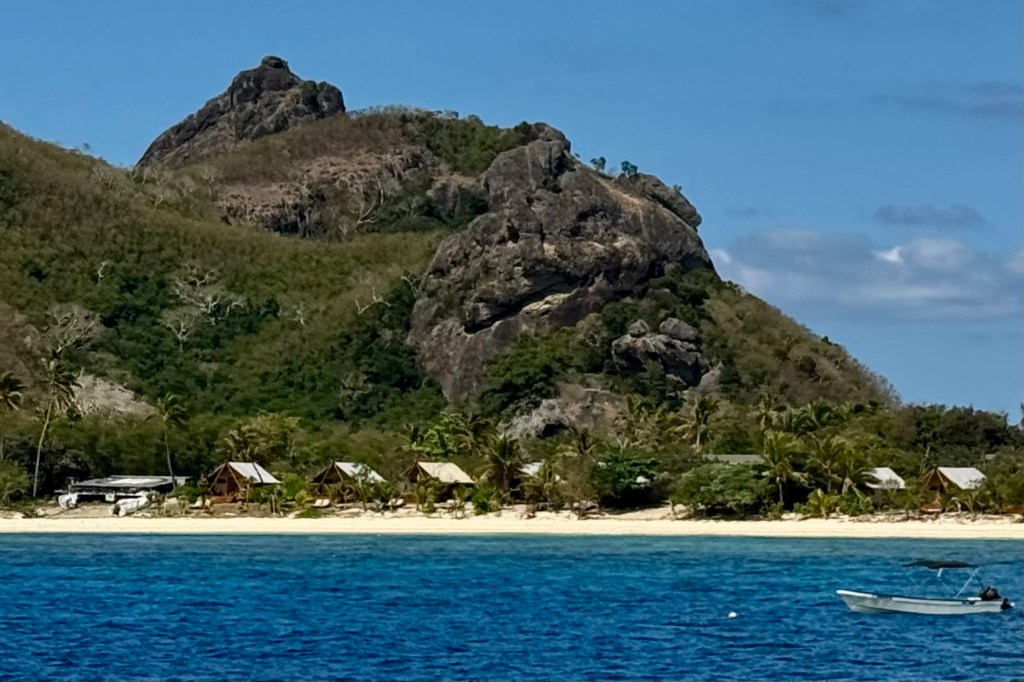
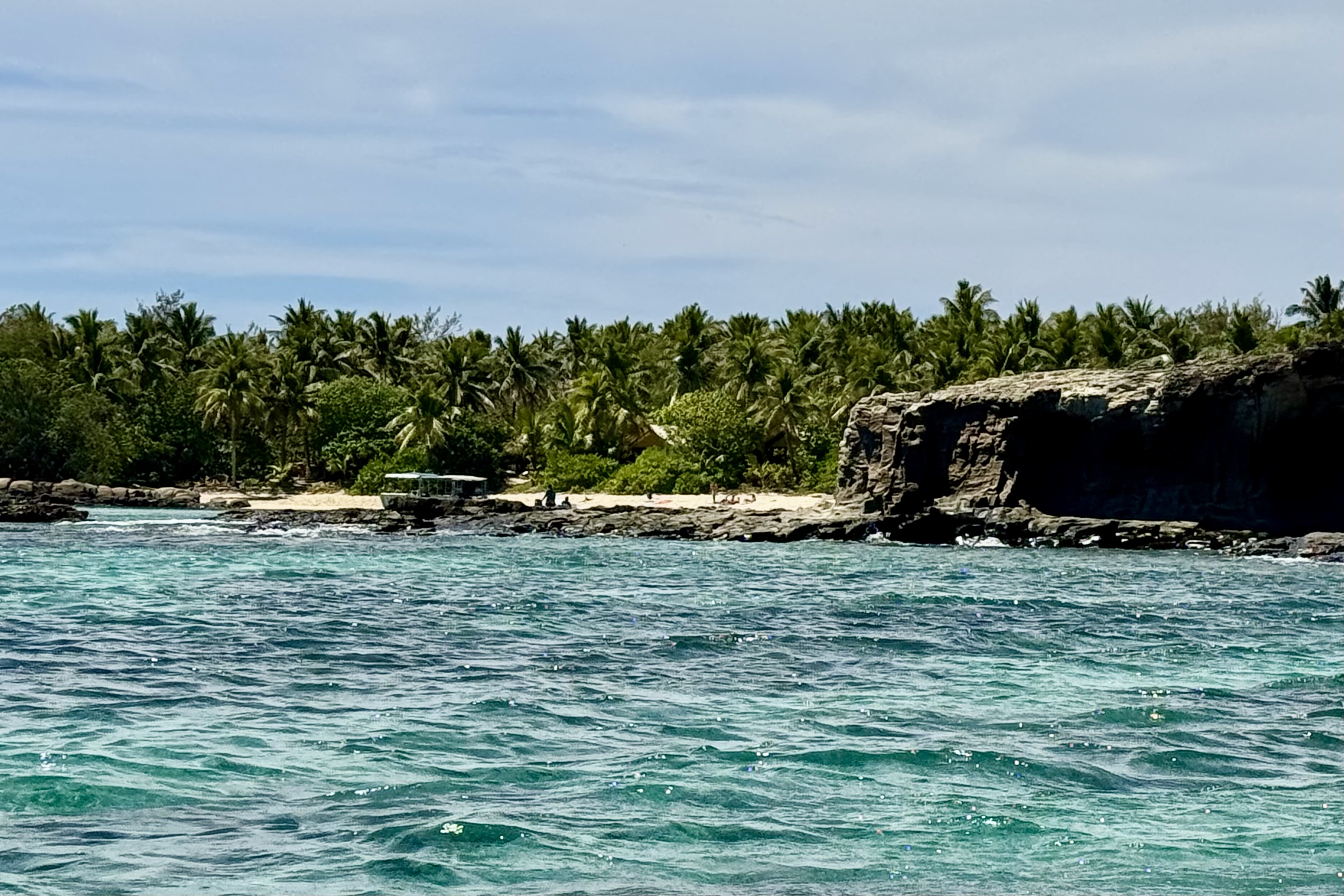
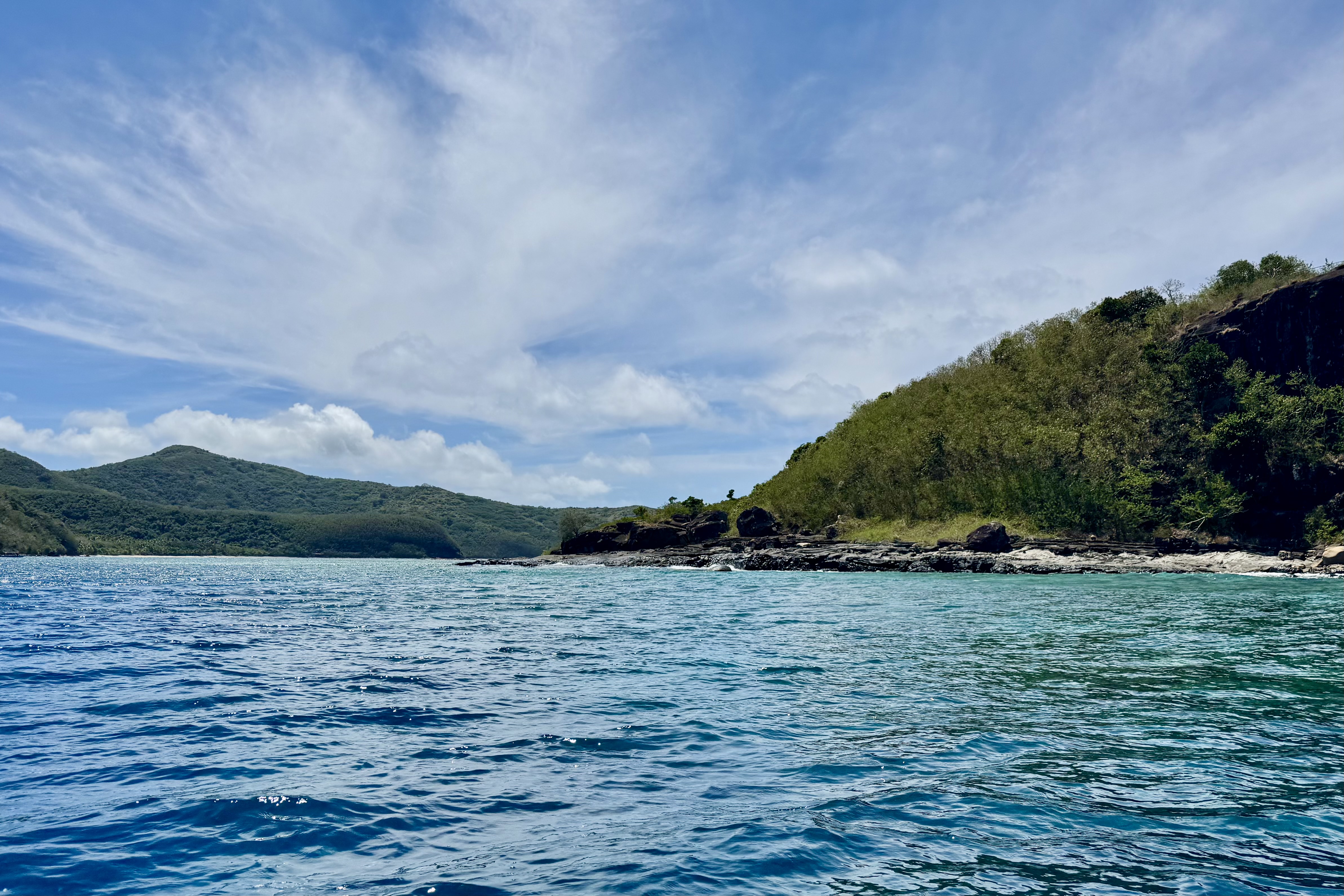
The resorts we passed were generally smaller and more intimate than the grand developments found on Fiji’s larger, more populated islands. Here, the attraction was the combination of sandy beaches, reefs, tropical vegetation, mountains, and a sense of remoteness. After about three hours on the water, our final approach and transfer to our resort, Barefoot Manta, proved memorable. We were finally heading for a sandy shore on one of those launches, and Barefoot Manta Island was no longer just a name on our itinerary.
A Fijian Welcome
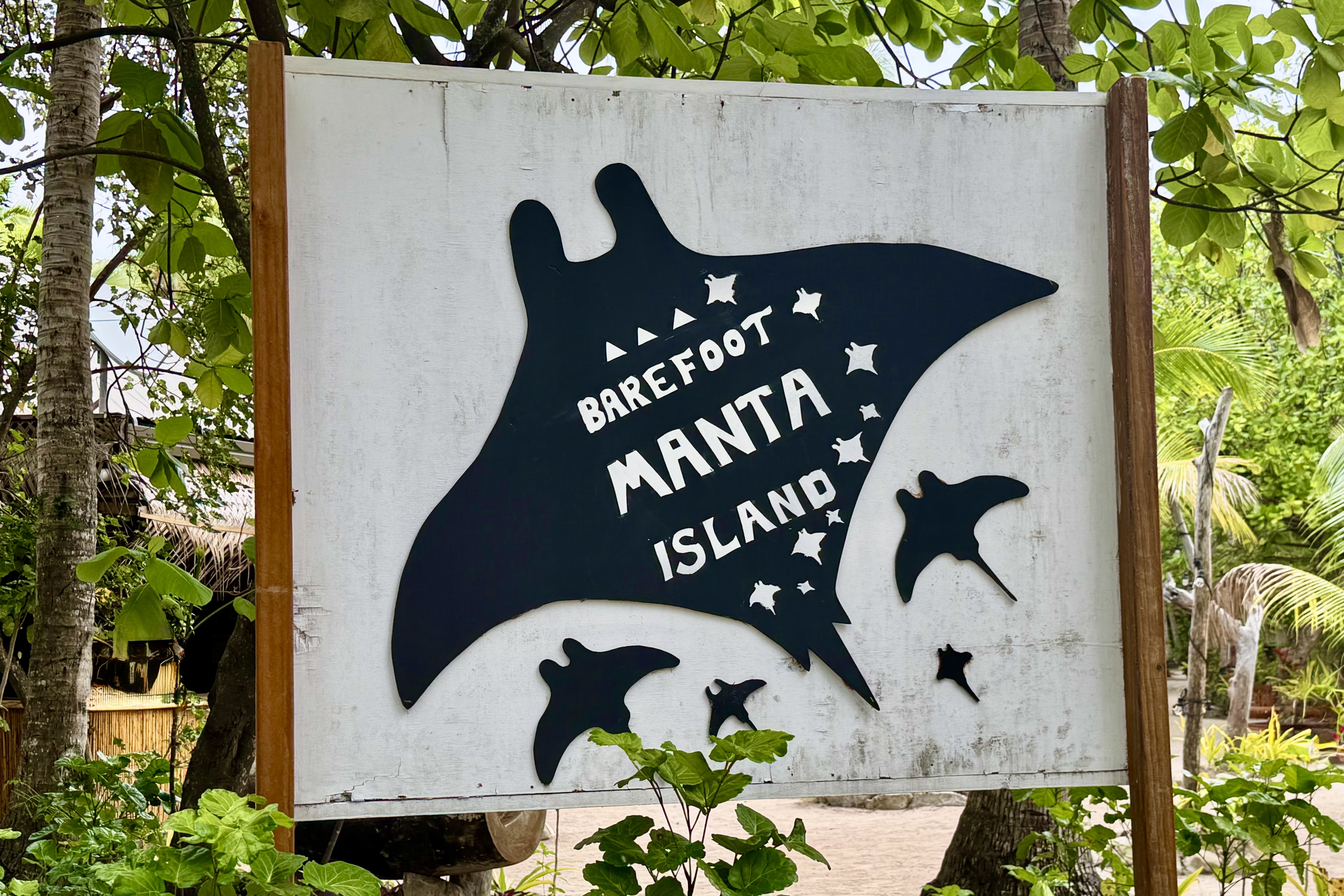
Stepping onto the sand at Barefoot Manta Island, we were greeted by several members of the staff, who had gathered with guitars to sing us a warm Fijian welcome. Someone handed us a cold, delicious mango drink, and we sipped happily while receiving our check-in instructions. After airplanes, airport transfers, a brief urban excursion, a middle-of-the-night departure, and three hours aboard a ferry, it was a lovely way to arrive. The music, the smiles, and the refreshing drink immediately made the journey memorable. Now, at last, we could unpack, settle in, and look forward to the next four days. The adventure was just beginning.
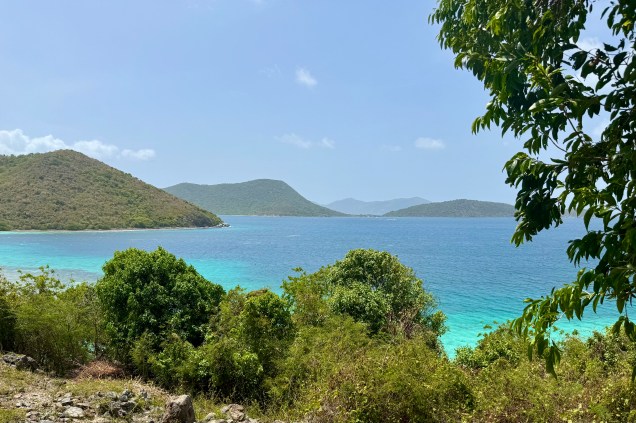
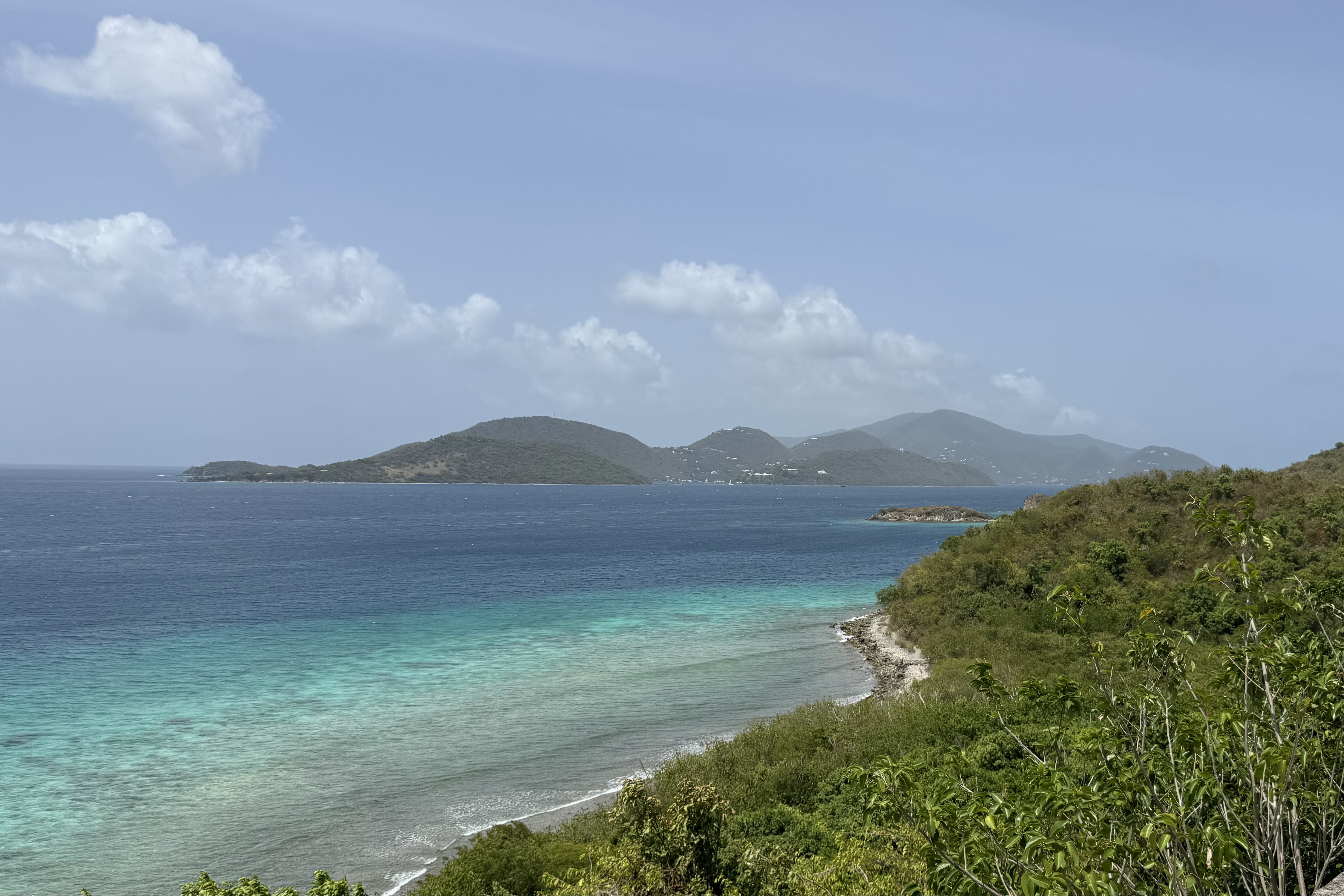
We awoke on the tenth to another beautiful Virgin day and after easing into the day via coffee poolside our adventure was to Watermelon Cay. Parking was by the Annaberg Plantation and to reach the Cay Beach there was an an .8 mile coastal walk on the Leinster Bay Trail- a more leisurely walk compared to the our more strenuous hikes. It was bordered with sea grape trees and mangroves instead of cacti and scrub vegetation.
Watermelon Cay is a rocky islet offshore and it is ringed by rock ledges and coral reef. From the beach it looked like a small green dome. I decided I was still a strong enough swimmer to access it and trotted off to the end of the beach trail in order to enter the water at the closet point for the swim to the Cay. It was rocky and wasn’t exactly the easiest entry but setting out felt almost surreal as I was” coasting “ across open slightly choppy turquoise waters. My goal was to swim around the cay and headed counter-clockwise negotiating the seaward side first.
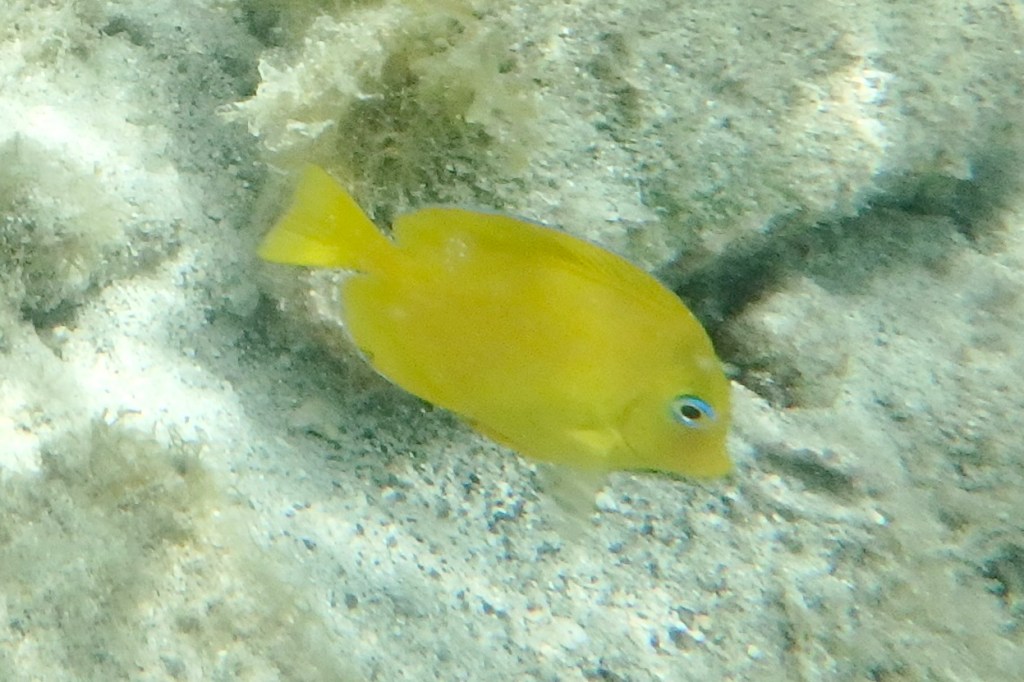
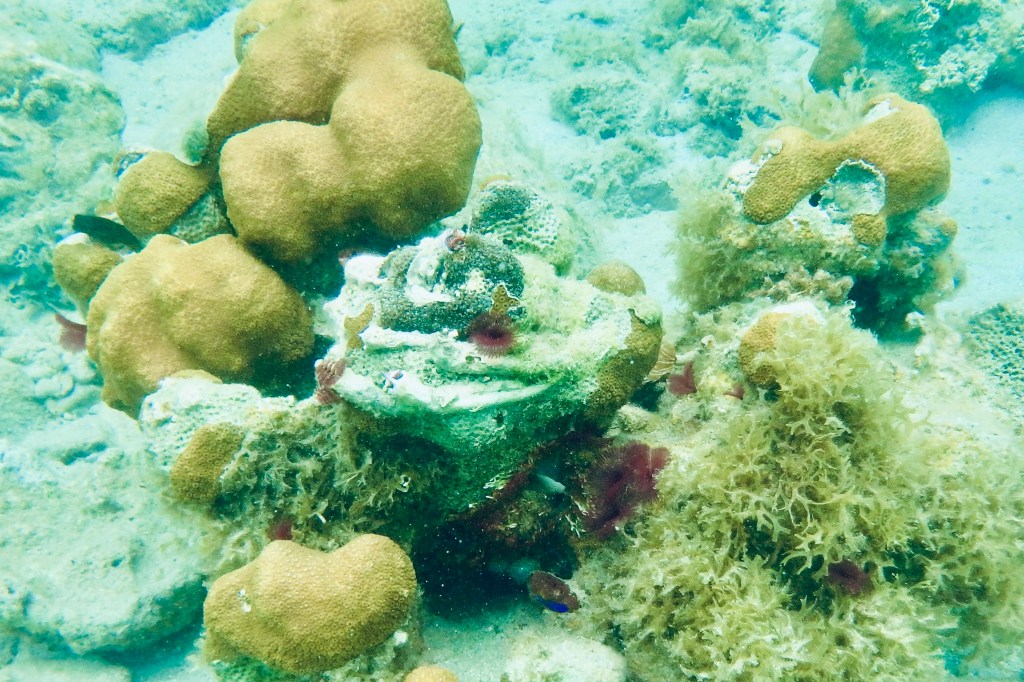
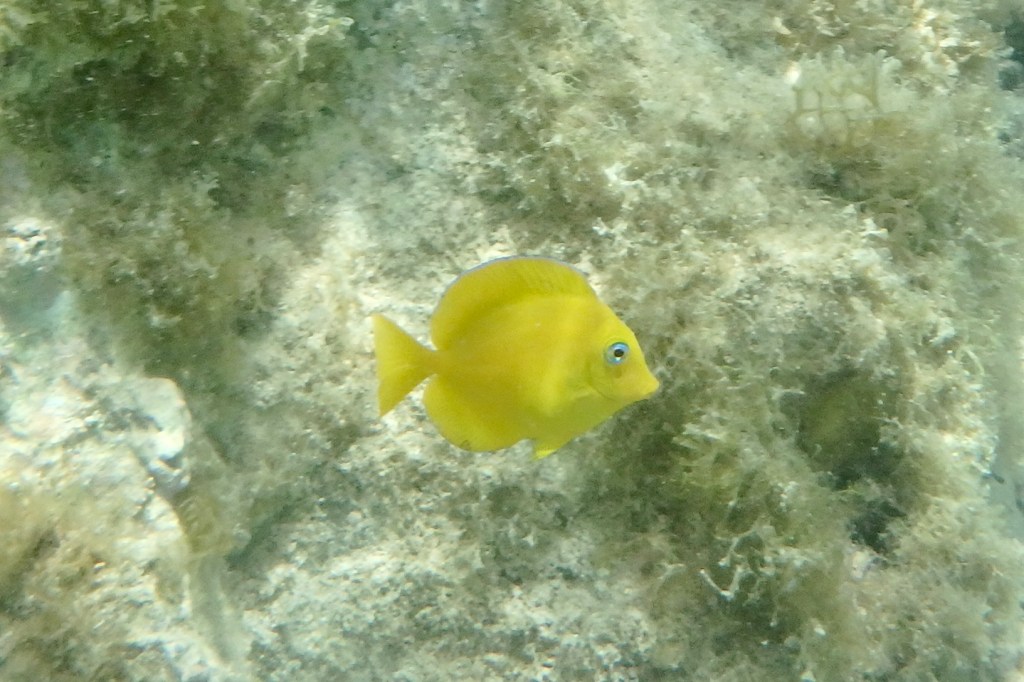
This is the colder deeper and choppier side. The reward was exponential, feeling otherworldly, with layers of fish darting about (including yellow snapper and blue tangs), massive coral heads, and translucent moon jellies pulsing about. Fortunately when I cruised through the swarms of moon jellies, I didn’t get stung. Moon jellies I guess mean no harm and are the “goldfish” of the jellyfish world. This was by far the best snorkeling yet and I was quite disappointed that I had seemed to forget my underwater camera though upon rounding the other side, I discovered I had tucked it inside my swim bra under my sun shirt. Well, I thought, I probably would have taken another batch of bad photographs. Circling back around the reef to the front side felt less dynamic and colorful than the outer reef side though there was still quite an array of corals and tropical fish.
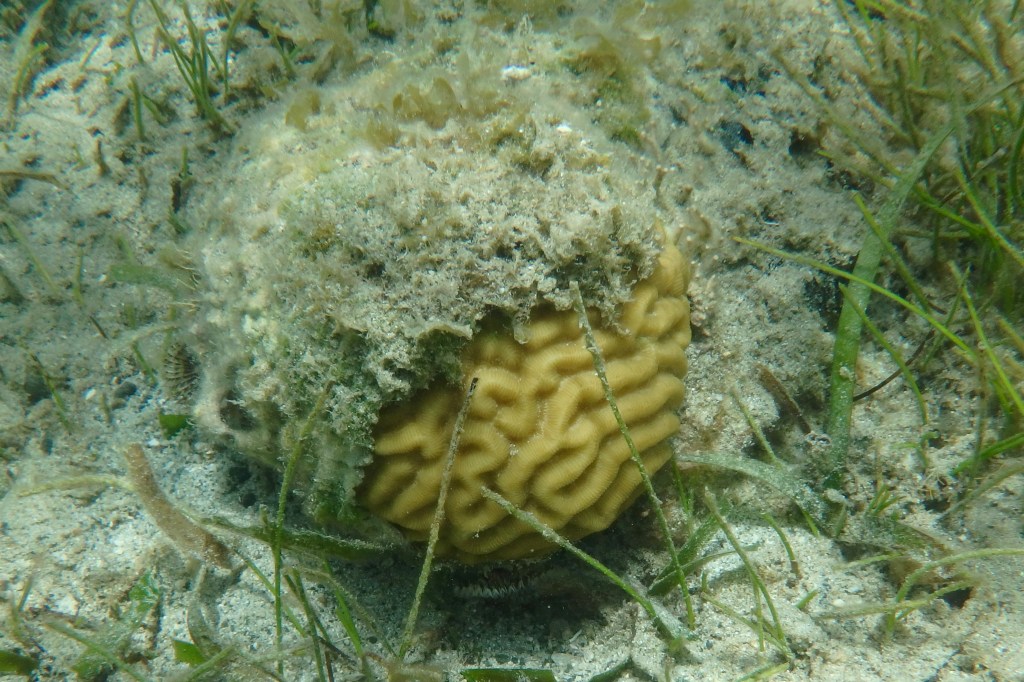
Sea SpongeChristmas Tree WormSea FanMutton SnapperJuvenile Blue TangJackfishBrain CoralLuke “FISH”StarfishBoulder Star Coral and Reef BuildingJuvenile Jackfish
I decided to drift back toward the beach of Leister Bay over the sea grass beds looking for stingrays and turtles. While scanning for movement in the sandy sea gras beds, I spotted a Hawksbill Sea Turtle. It didn’t seem to mind my presence there and went about chomping on sea grass. I swam about with it, all the while bobbing around clumsily trying not to startle it. Shortly, I was able to flag Tasia down as she had the camera. Pretty good photo-ops for a couple of minutes but then with a few strong strokes it slipped away into the gras beds and I swam toward the beach .
Hawksbill Sea TurtleBrown Pelican
Movie of Hawksbill Sea Turtle Swimming and Chomping
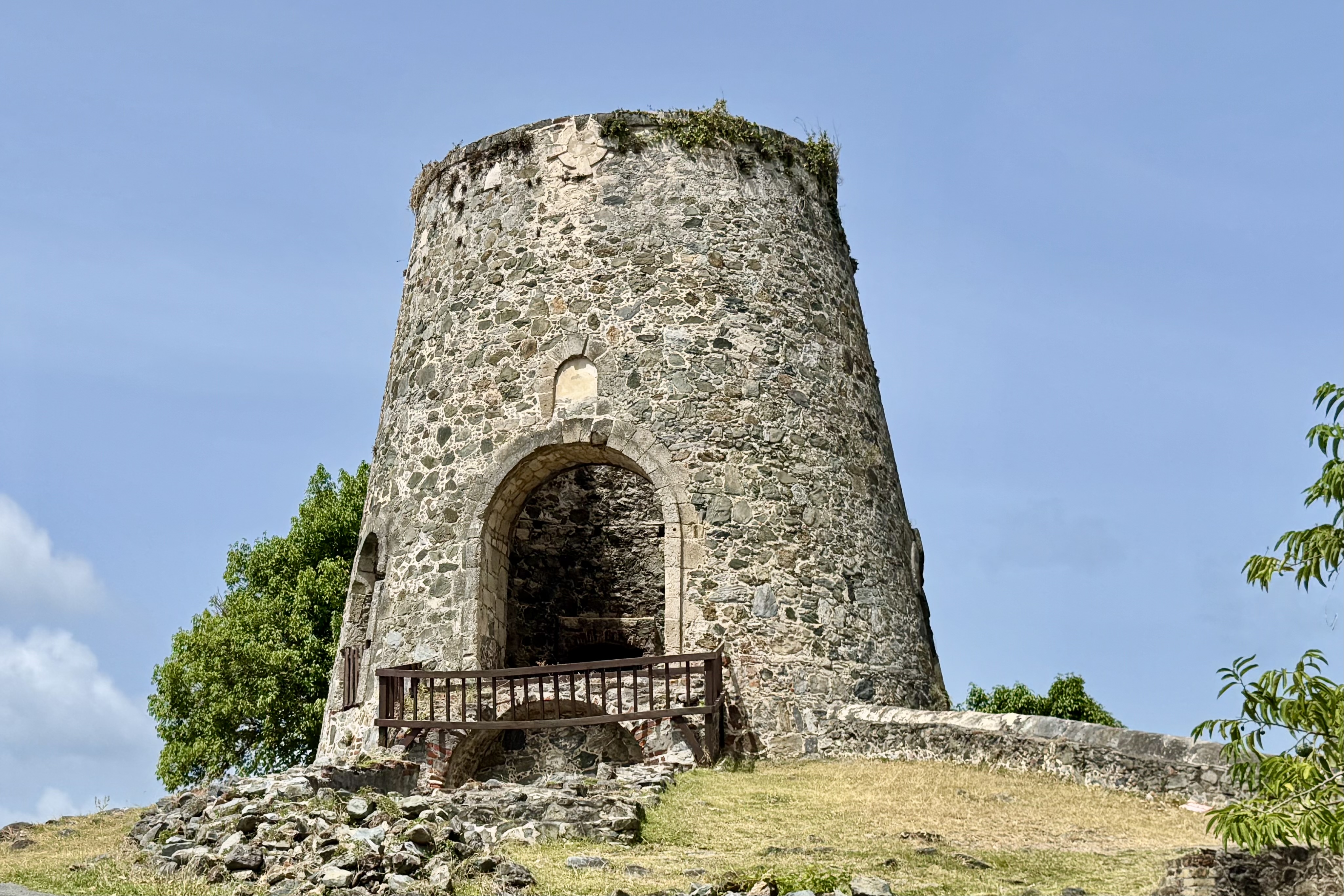
Having had an extremely satisfying snorkel, it was time to retrace our step back to the car and tour the Annaberg Sugar Plantation (Anna’s Hill in Danish). This decayed ruin of a once thriving producer of sugar, molasses, and RUM relied on slave labor to grow cane, crush the stalks, boil and export sugar. With the leftover molasses, fermentation, (probably know since Adam and Eve ate that fermented apple) magically turned the molasses into rum and thus these plantation became large Caribbean cocktail factories and the planters got rich, the slaves got exhausted and many a sailor got drunk. Annaberg thrived until the mid-1800’s until hurricanes, droughts, depleted soil, emancipation of slaves and competition resulted. By the end of the 19th century Annaberg was just ruins, the ruins we see today over looking Leinster Bay.
The centerpiece of the ruins is a cylindrical windmill tower (these towers can be seen dotting the island) and I kept trying to imagine what it would be like with the wind turning gears going full blast. I imagine a mini torture chamber that is cramped hot dizzying, sweaty, noisy. Moving onward to the boiling house ruins, which housed rivers of concentrated sugar and molasses running through it channels. My former drinking self would have been delighted to know that this would have been the area where the rum was distilled. Of equal fascination was the decaying walls made mostly of coral stone with stones varying significantly in size. Now vines and creepers crawl over the walls and grass, flowering plants and ferns sprout in the cracks and crevices., moss and lichen fuzzy up some portions.
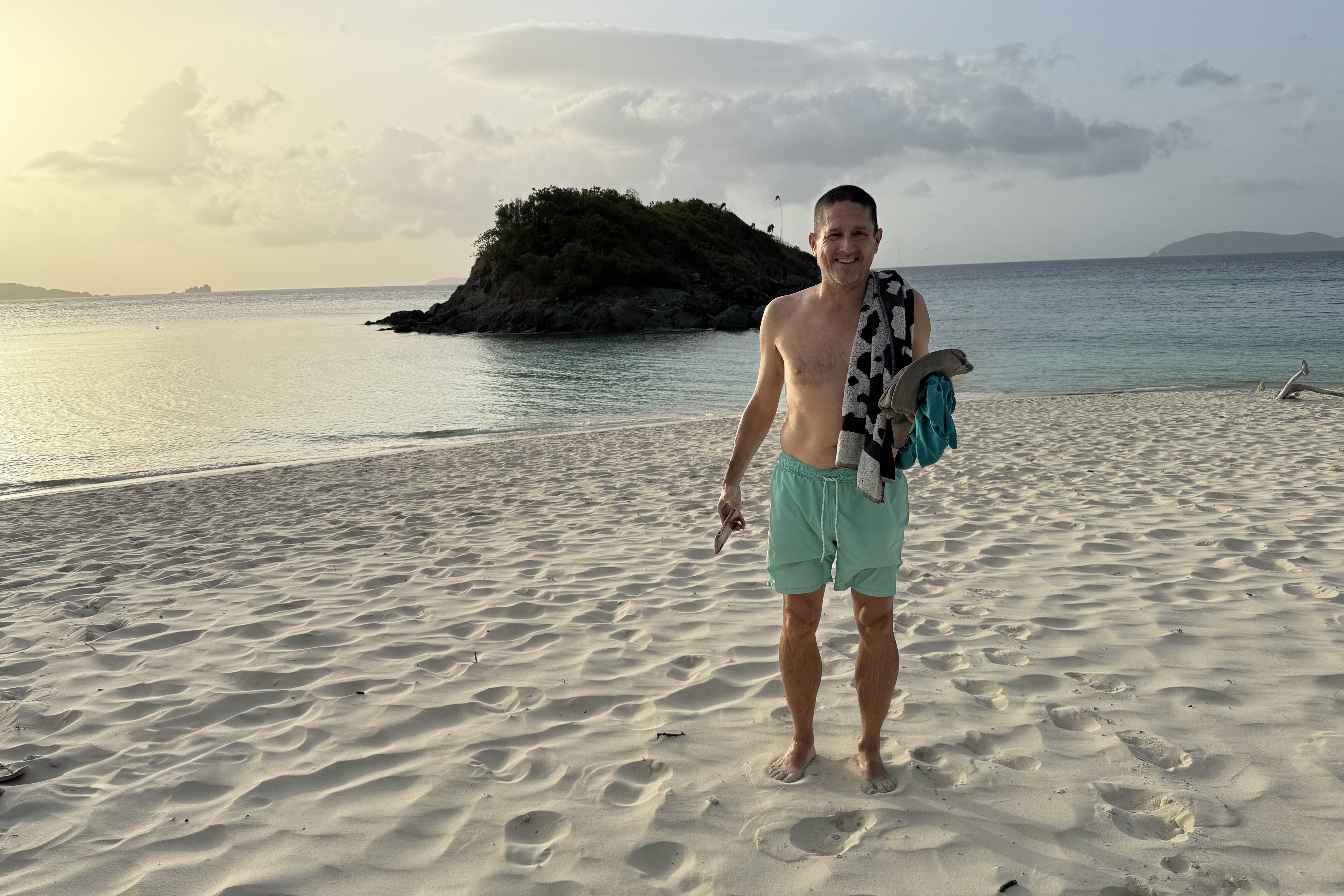
After one of our express meals Nick and I opted to discover Trunk Bay, one of the closer reefs to Cruz Bay, popular with tourists, and and well developed beaches with food stalls, restrooms, showers, and an entrance fee. It is often ranked among the world’s most beautiful beaches etc. This evening, without a swarm of sunbathers, cruise ship crowds, snorkelers and any other variety of tourists, it was indeed beautiful. I had not intended to snorkel and just went along for the ride to keep Nick company but I did transport my gear down to the beach. And even though it was not on my agenda, it took only minutes to respond to the alluring vibrations of the turquoise water and decide to don the gear and the enter the calm bluish-green shallows and follow the underwater snorkeling trail. After a few minutes I determine this trail was designed for brand-newbies and most likely a more gimmick than a “real” snorkeling experience. It was underwhelming and in no way comparable to the one on St. Croix. So I ditched the trail and headed over towards the rocky outcropping just east of the trail, Trunk Cay. The upside of being here was the sun was beginning to set illuminating the sky to a pale yellow, the bay was calm, we were on a gorgeous beach and there were very few people. We enjoyed a leisurely snorkel admiring the giant boulders of brain coral along with the regular population of blue tangs, parrot fish, damselfish, angelfish, sea fans and corals.
Enroute back to our villa, Nick and I stopped at the National Park Sign at the entrance and snapped my obligatory sign photo, the tradition since my first park visit when I was in 6th graded at the Great Smokey Mountain National Park. This is the 62nd installment of many awkward photos next to the National Park’s brown wooden signs. Yes, everyone takes them but if I didn’t how else could I prove I actually went. Soon we were back at the villa and we enjoyed the pool, the starry night and twinkling lights of Chocolate Hole in the distance.