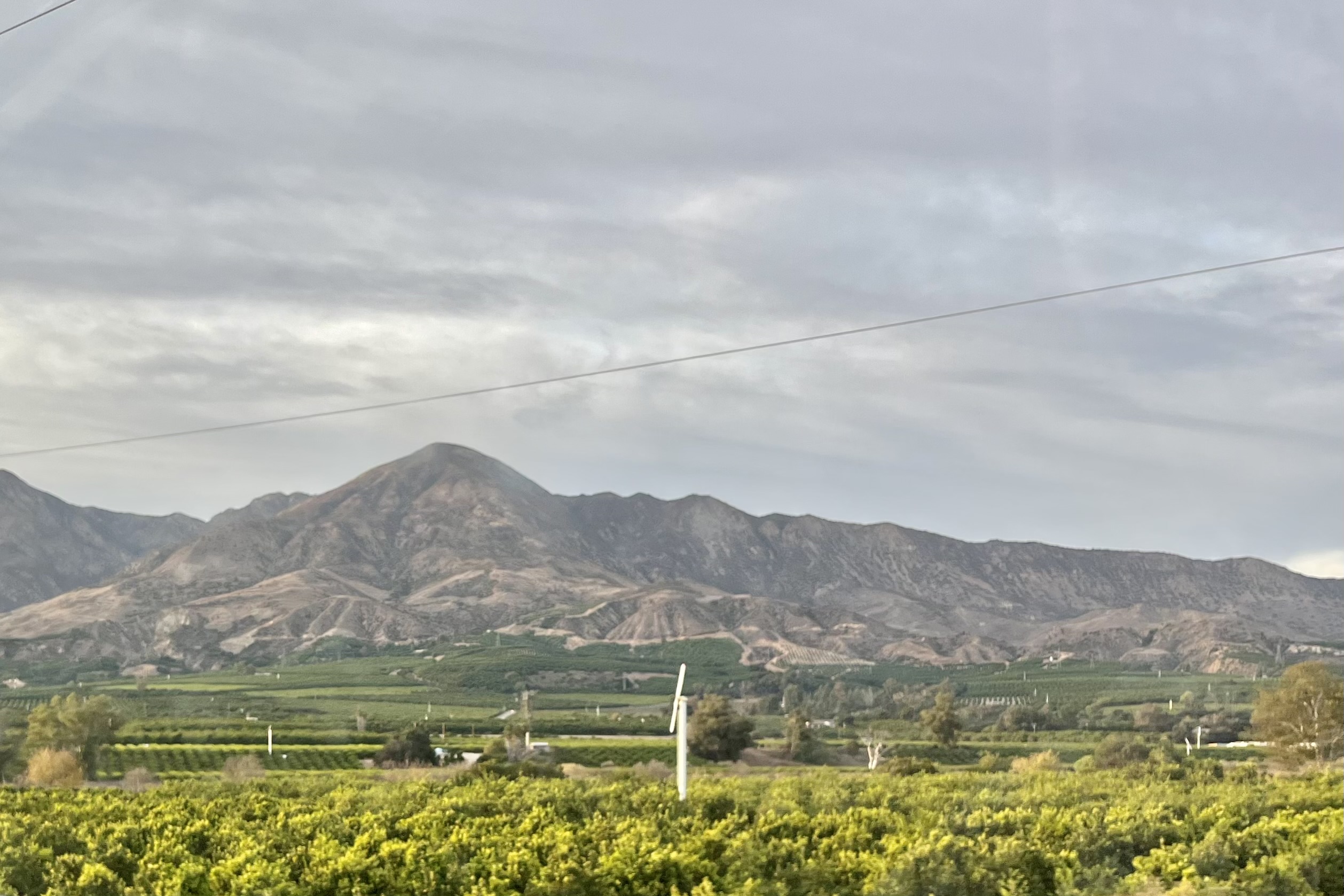
No Fish on This Reef, Escalante Needs an Escalator, and Hoodoos Shooting Skyward

I got on the road late morning from Gunnison CO and selected a longer but designated scenic highway to Arches National Park. With minimal traffic, I at times felt like I was the sole individual who preferred to drive scenic highways. There can be such joy in the journey and this day was joyful.

The route put me on Interstate 70 for about 40 miles and per usual I was grateful to get on a beautiful secondary road, one of those roads on my AAA maps marked with ………… designating it as awesome scenery. It would take me through Capitol Reef National Park and Grand Staircase Escalante National Monument. I had visited Capitol Reef in 2016 so opted for a cruise through its magnificence on the way to Bryce via Utah scenic byway 12, aka “Wild Roads.” Escalante was new territory.

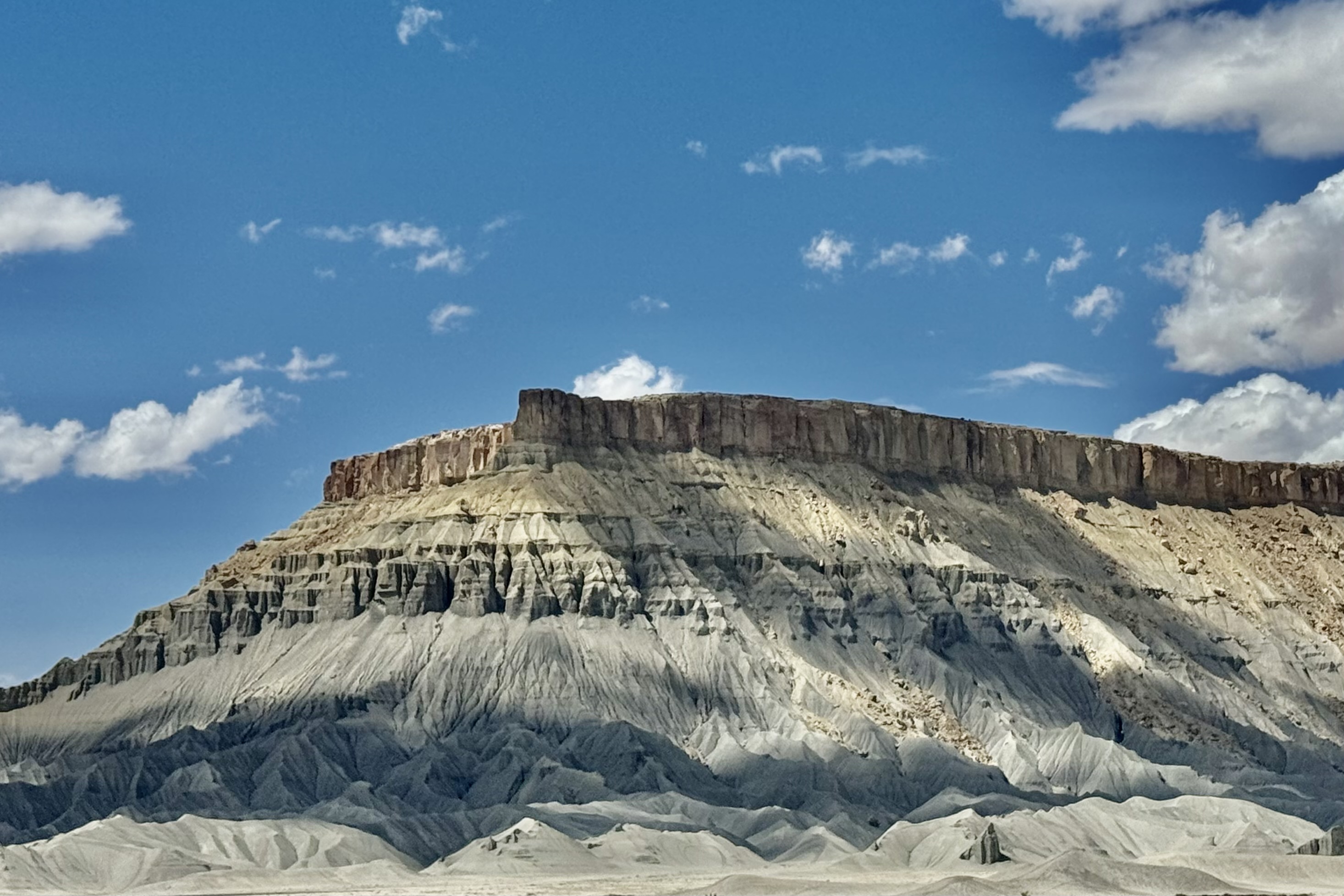
Scenic Byway UT-24 (also named Capitol Reef Country Scenic Byway) is more than just a sneak preview to the equally scenic and incredible UT-12. From Hanksville to Torrey on the far side of Capitol Reef National Park, the panoramas and the artists’ palette that painted this area was splendorous. It seemed we had gone mostly from the red “hot” spectrum of colors to a “cold” array of the grey and chocolate hues of our nature world.

The scenery really been to pop around Hanksville, along the Route UT-24 . Factory Butte was grand and was a kaleidoscope of what might be termed as cold colors . Here there is a little something for everybody. Swing Arm City, near Caineville is an OVH recreational area which is intended for off-road vehicles (such 4×4, dune buggies, motocross bikes) but is open to all vehicles. I only drove in a few hundred feet ( there is no road marked) but it felt surreal and a bit like a lunar landscape, with the Factory Butte and the North Caineville Mesa on the horizon.

Heading into Capitol Reef, via the eastern entrance , the light blue, greenish-gray, and off-white tones of the sedimentary rocks was quite remarkable but I also found the solution cavities in these roc k surfaces ( known as honeycomb weathering) notable. These surface holes are caused by the weathering effects of wind, water, and ice but they are only surface.

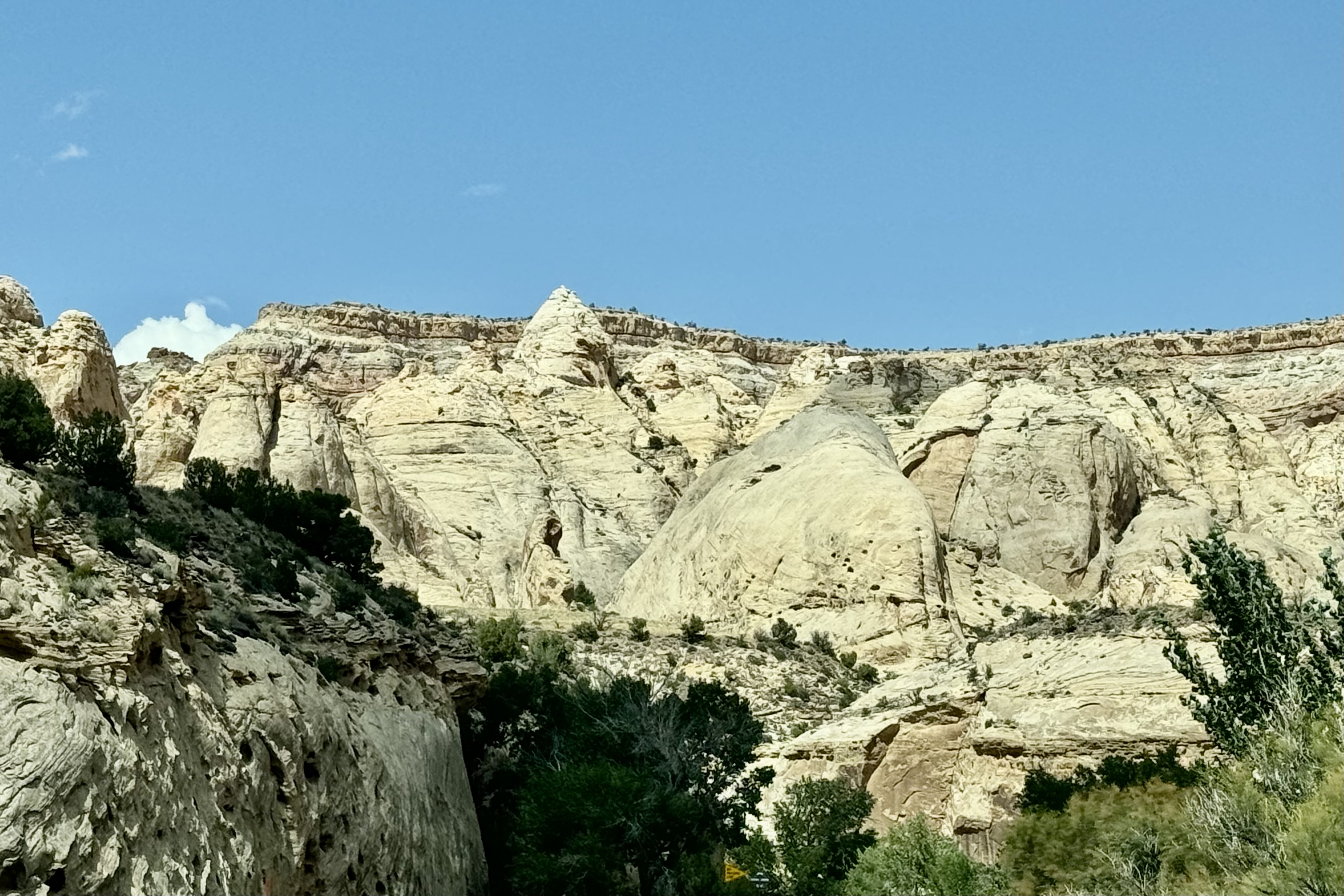
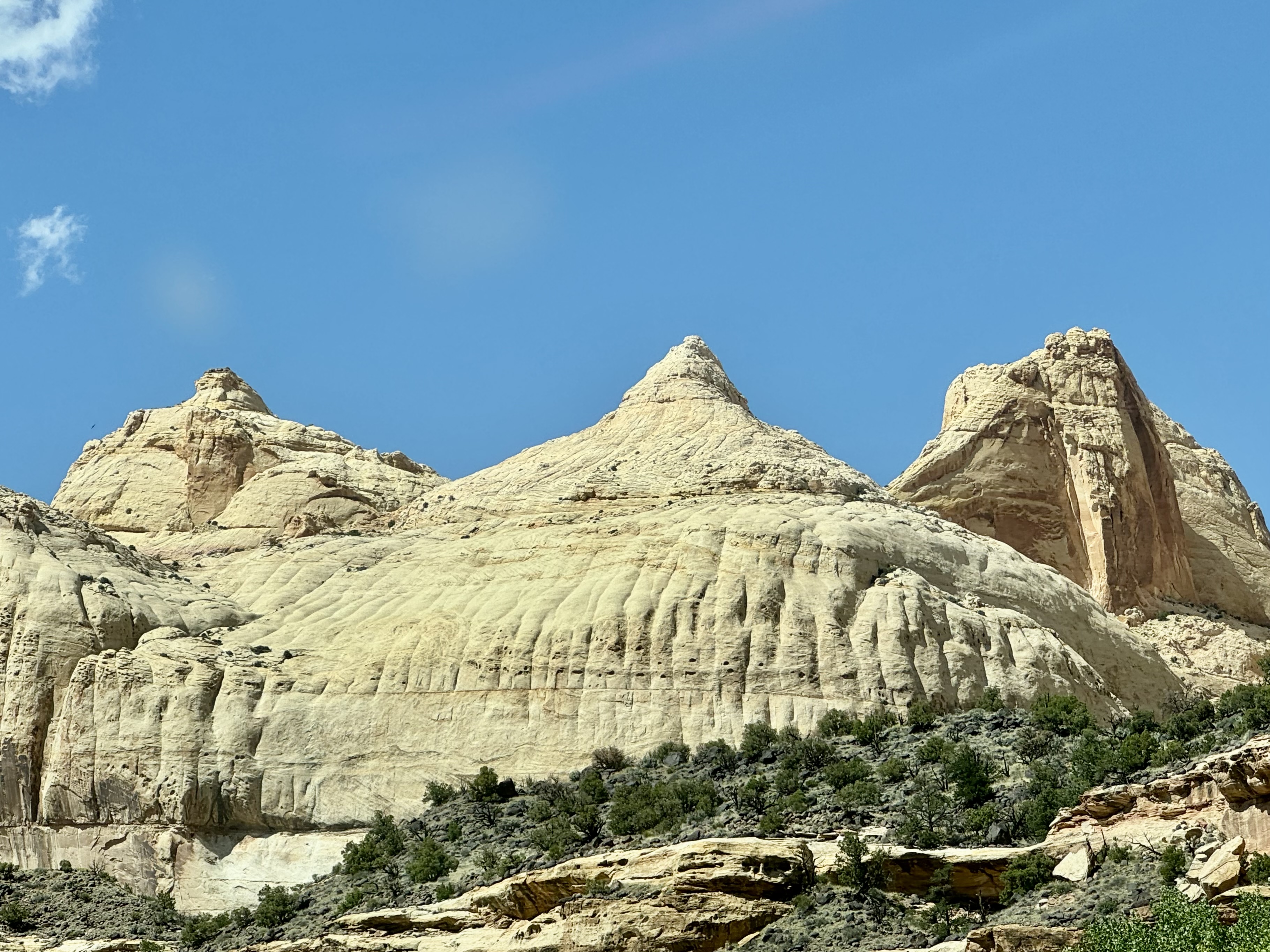
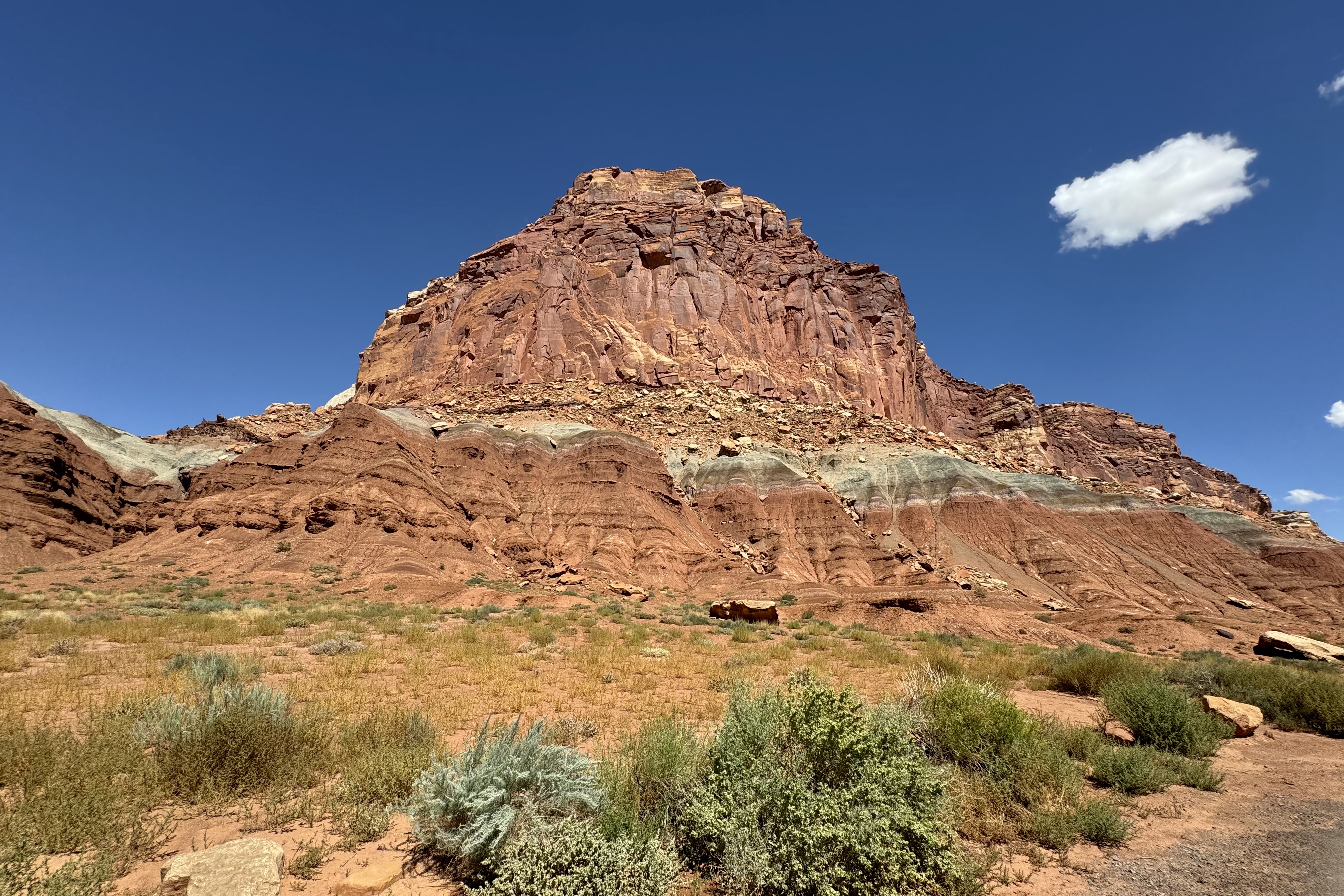
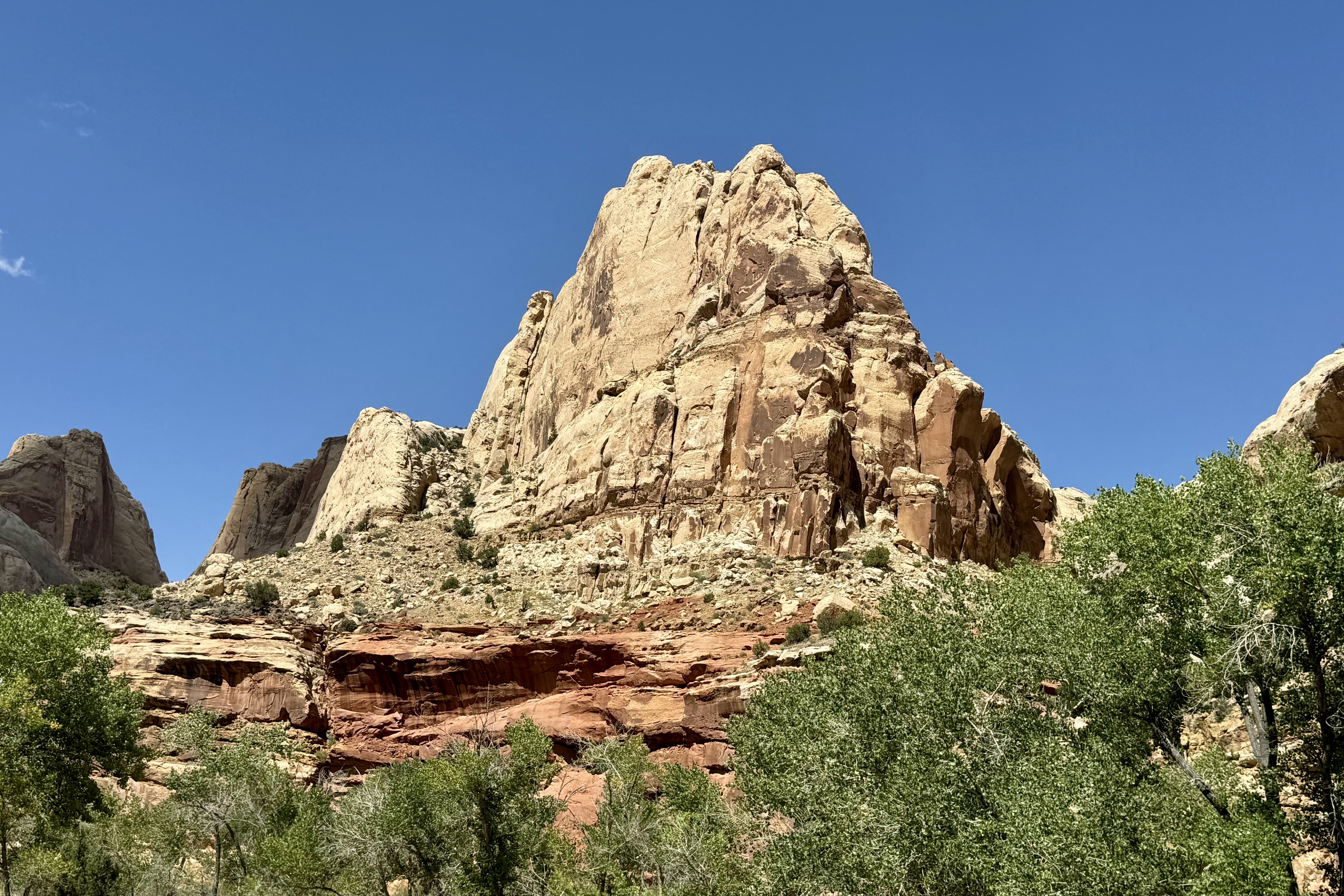
But it wasn’t long before the vermillion, white, red and pink sandstone formations that are so prominent in most of the southwestern parks began appearing in grand style – one after another, like models on the runway strutting their stuff. Disappointedly , the scenic drive within the park was closed for road work but clearly there was still plenty of scenery..

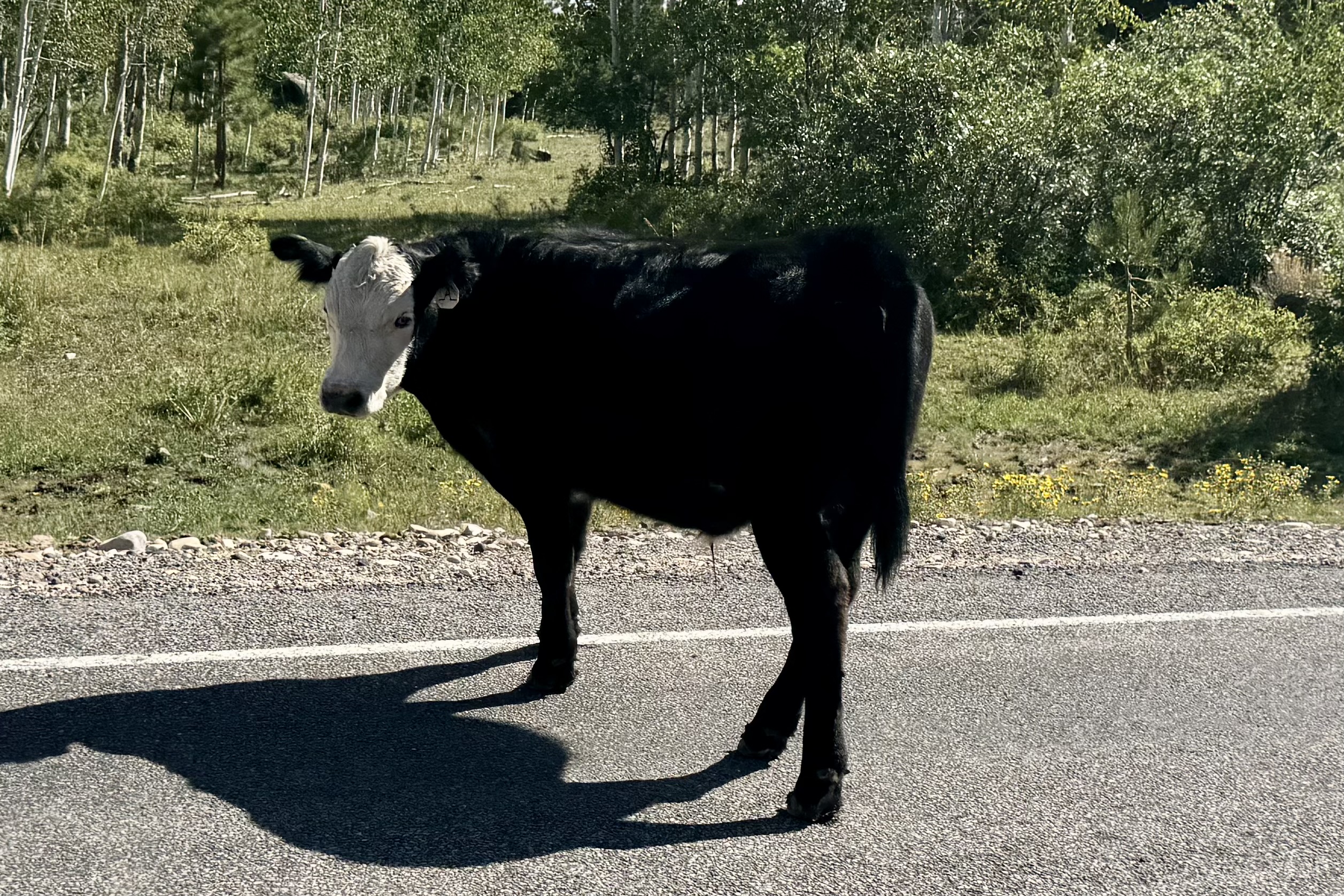
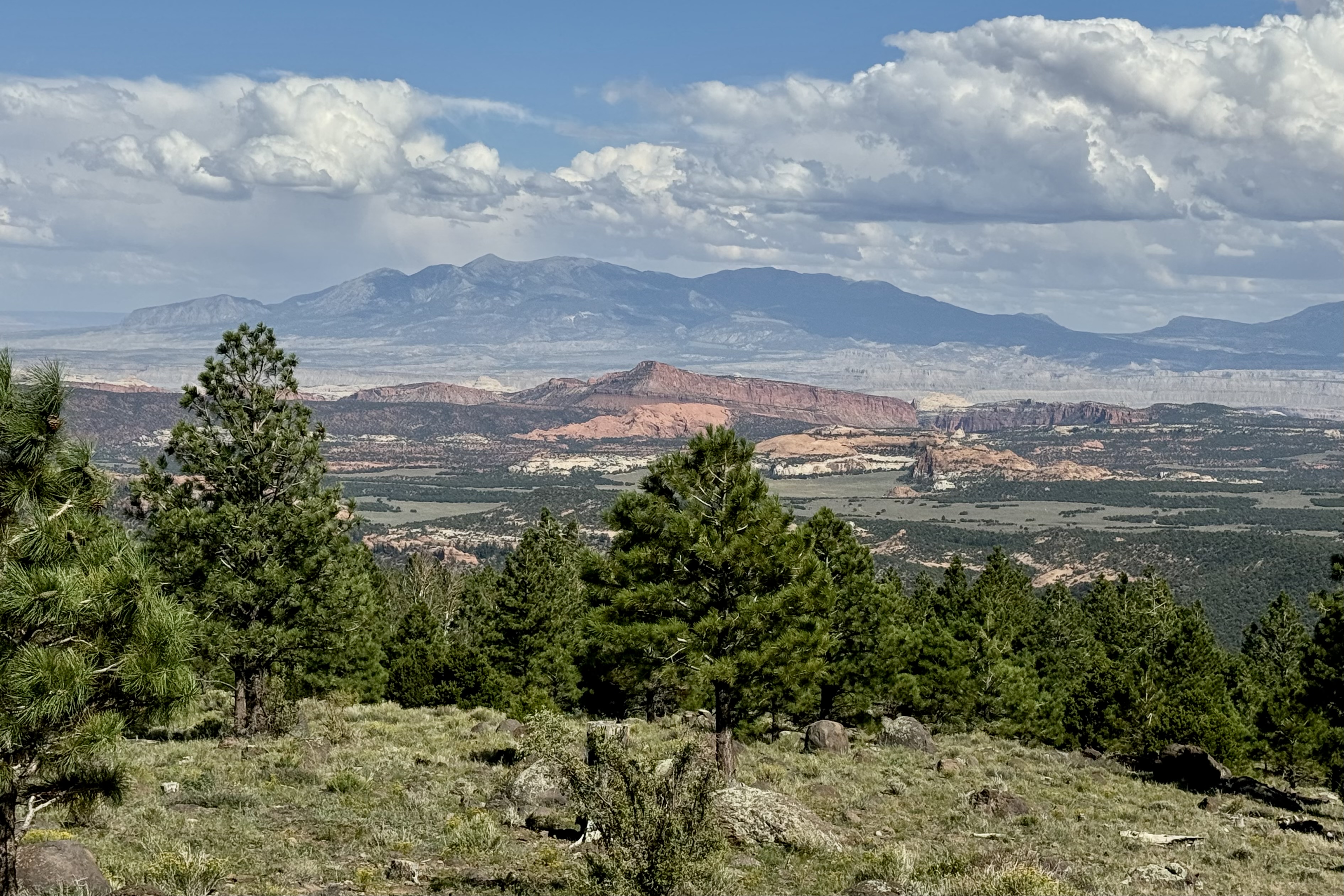
Heading south from Torrey to Boulder Utah , it was a delight traveling on UT12, as the road ascended through the Dixie National Forest with numerous vista points along the route and to add a bit of fun, it was open range in which cattle are permitted to roamed. .. and that they did. It was 124 miles of scenic exhilaration. .

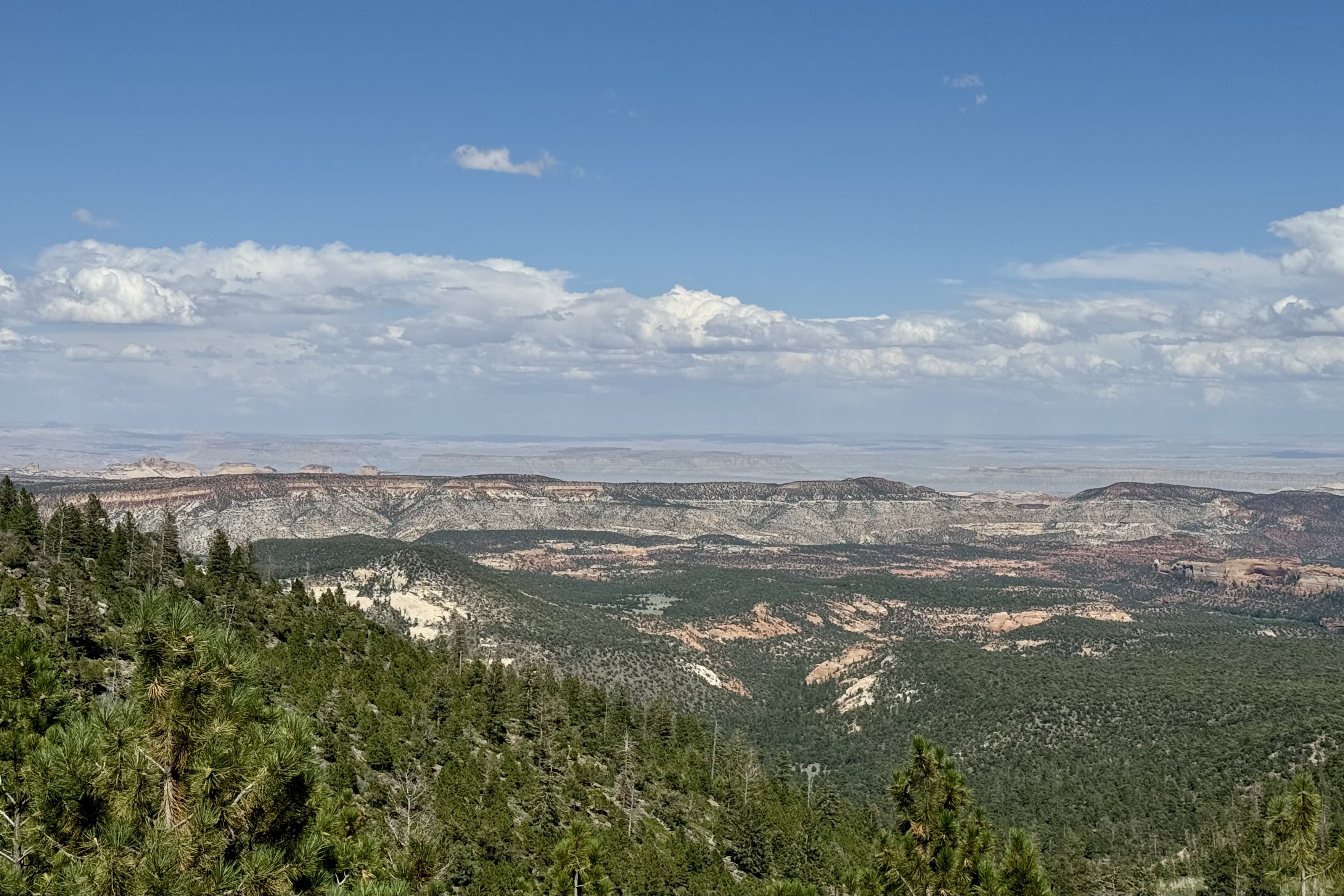
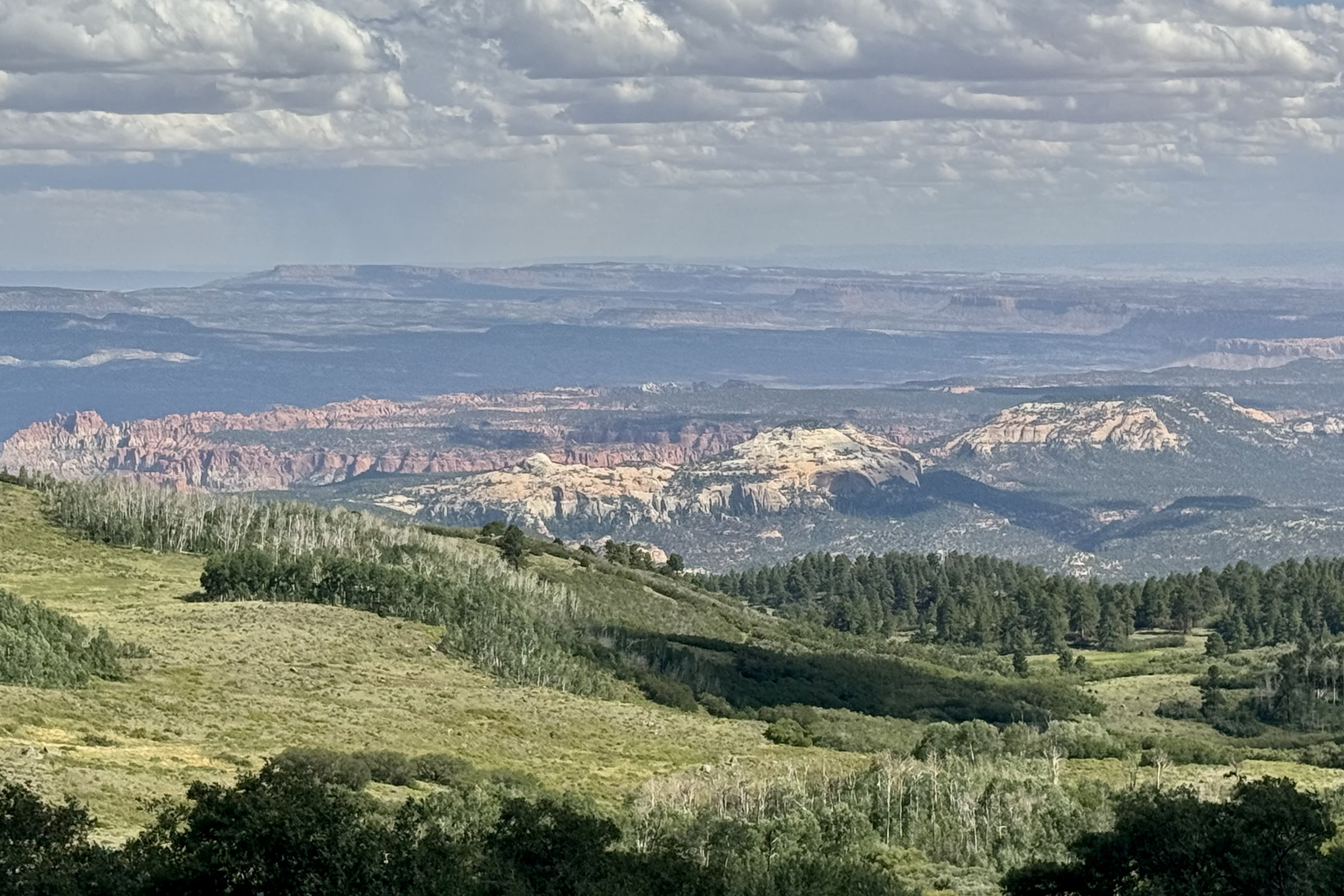
Once south of Boulder , the diversity of landscape again was evident as I began driving through Grand Staircase Escalante National Monument. This remote section of Utah is a vast and austere landscape with extensive expanses of grey-green photo-hungry rock-forms. I gladly obliged its photo thirst.
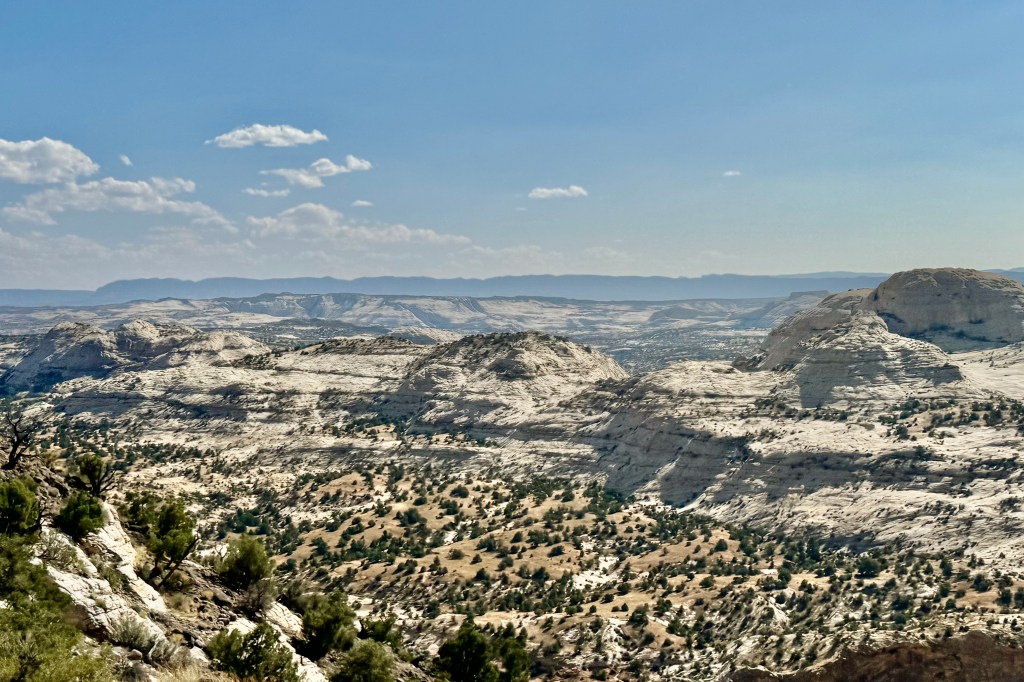
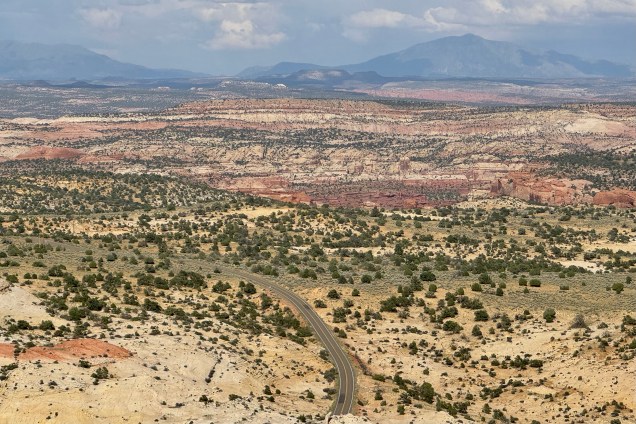
If you have followed my travels, you will certainly comprehend why this was “the magic kingdom” experience to satisfy my driving bliss which occurs when traveling twisting , curving roads with switchbacks and hairpin turns. The breathtaking overlooks, sweeping views, and steep inclines pushed my adrenaline into overdrive.

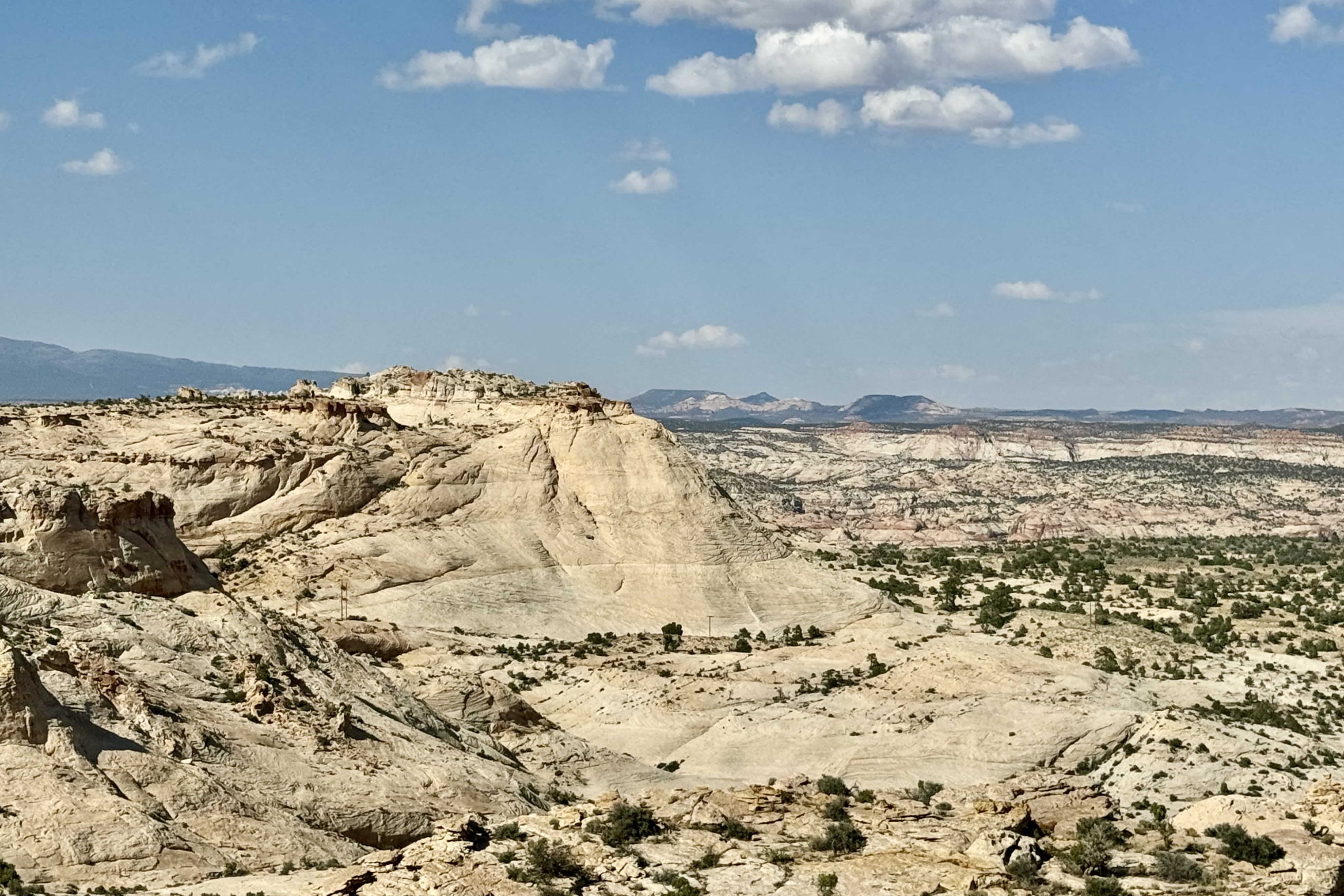
A stop at the Head of the Rocks Overlook was a must. The big sky views over the Grand Staircase Escalante National Monuments showcased this slick rock terrain in its fashionable shades of white, pink, vermillion, tan, chocolate , and grey.
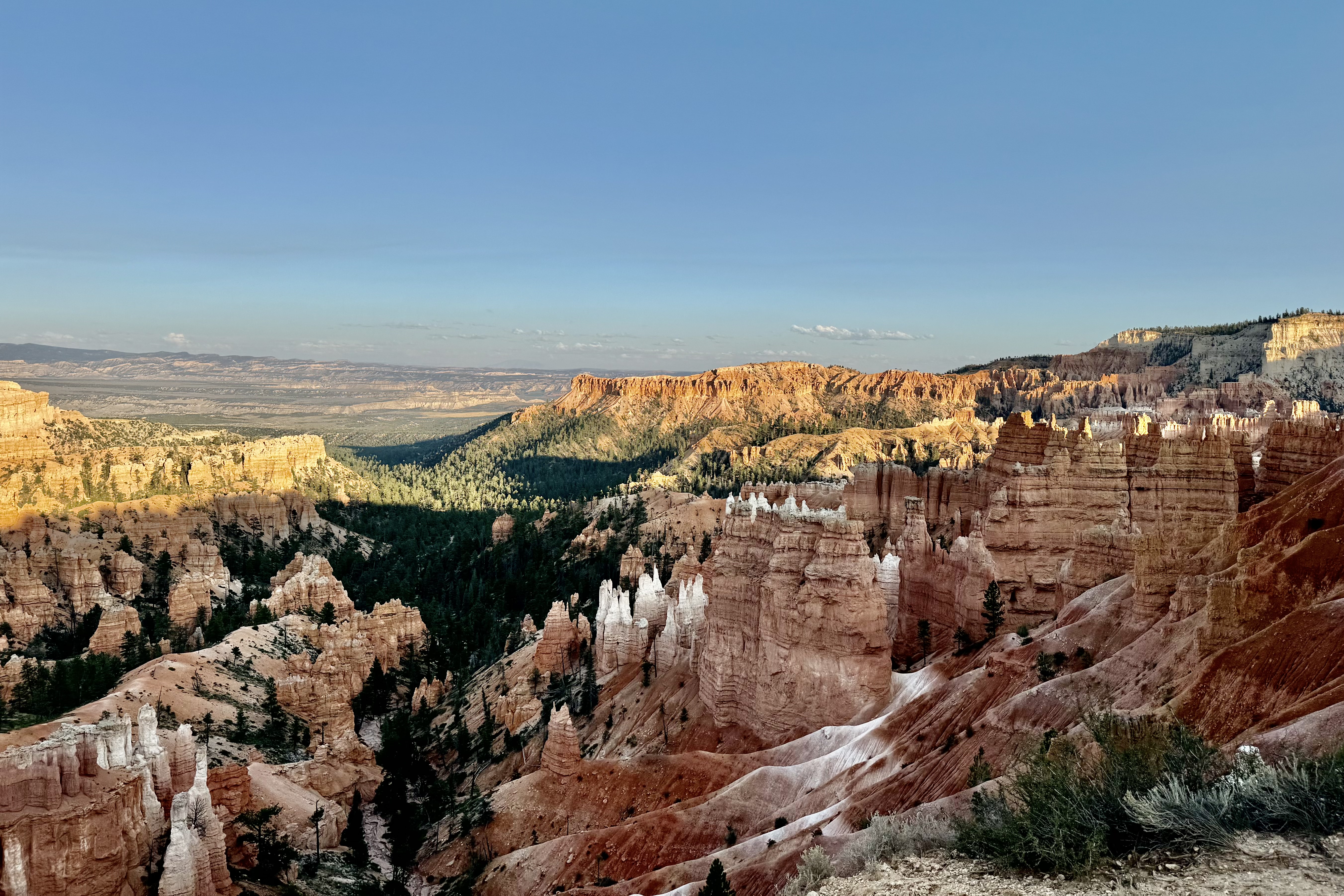
I was in no rush to get to Bryce as I was staying in The Lodge at Bryce Canyon, on a mesa near the canyon rim, and hence no camp set-up or meal prep. I was DONE camping for this trip. Finally I pulled in around 6:30 feeling totally sated by the Capitol Reef and Grand Staircase smorgasbord. After the desk clerk arranged for a ground floor room (since I had been assigned 2nd floor with no elevator), I received all the necessary instructions including the time to go to Sunset Point for sunrise and Sunrise point for sunset. Figure that one out? After checking into my room, I decided on a brief walk along the canyon rim as the sun was beginning its downward slide.

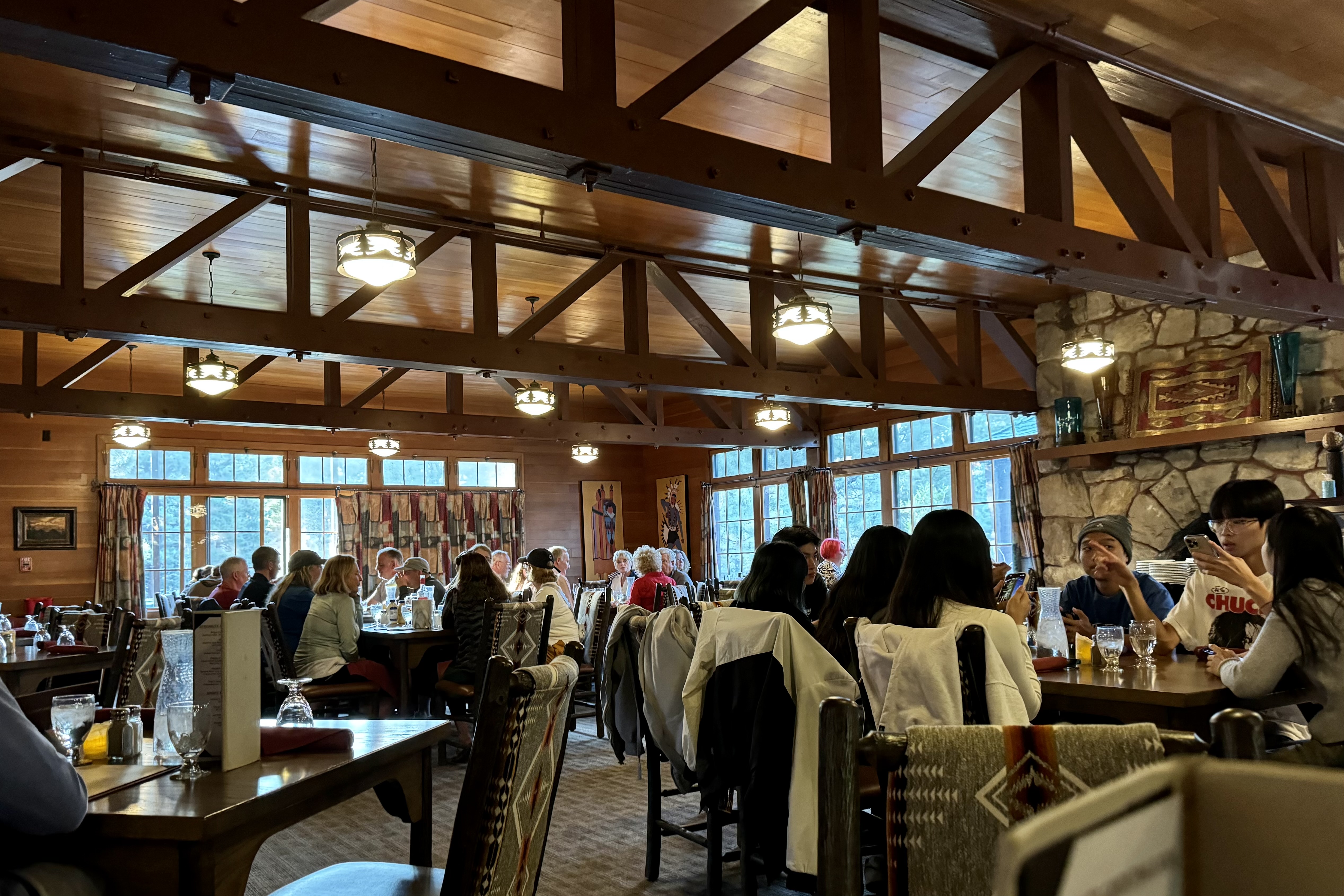
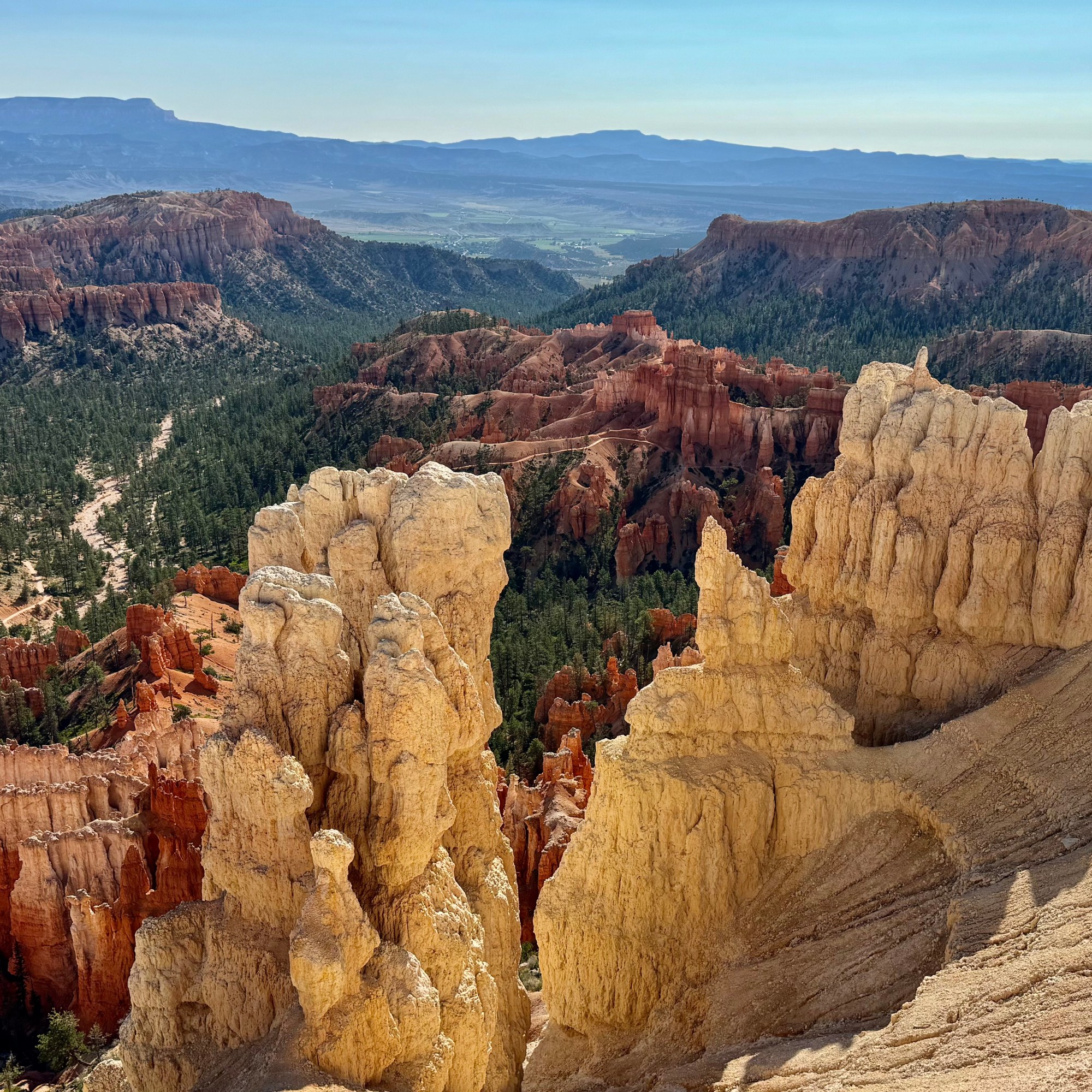
Though I have visited and hiked in Bryce before, my first look was of enchantment and awe. I proceeded to dinner in the Lodge dining room (mediocre) and then a rest up for a fairyland adventure on the ‘morrow.
This rustic lodge like many of the other historic park lodges is constructed of milled timbers, steeply pitched roofs, and extensive stonework. There is the large lobby for socializing, stone fireplaces, and a large dining room. Unlike many NP Hotels, there was internet service but true to form no televisions in the room or cable service…all intended to promote socializing and experiencing the natural world..

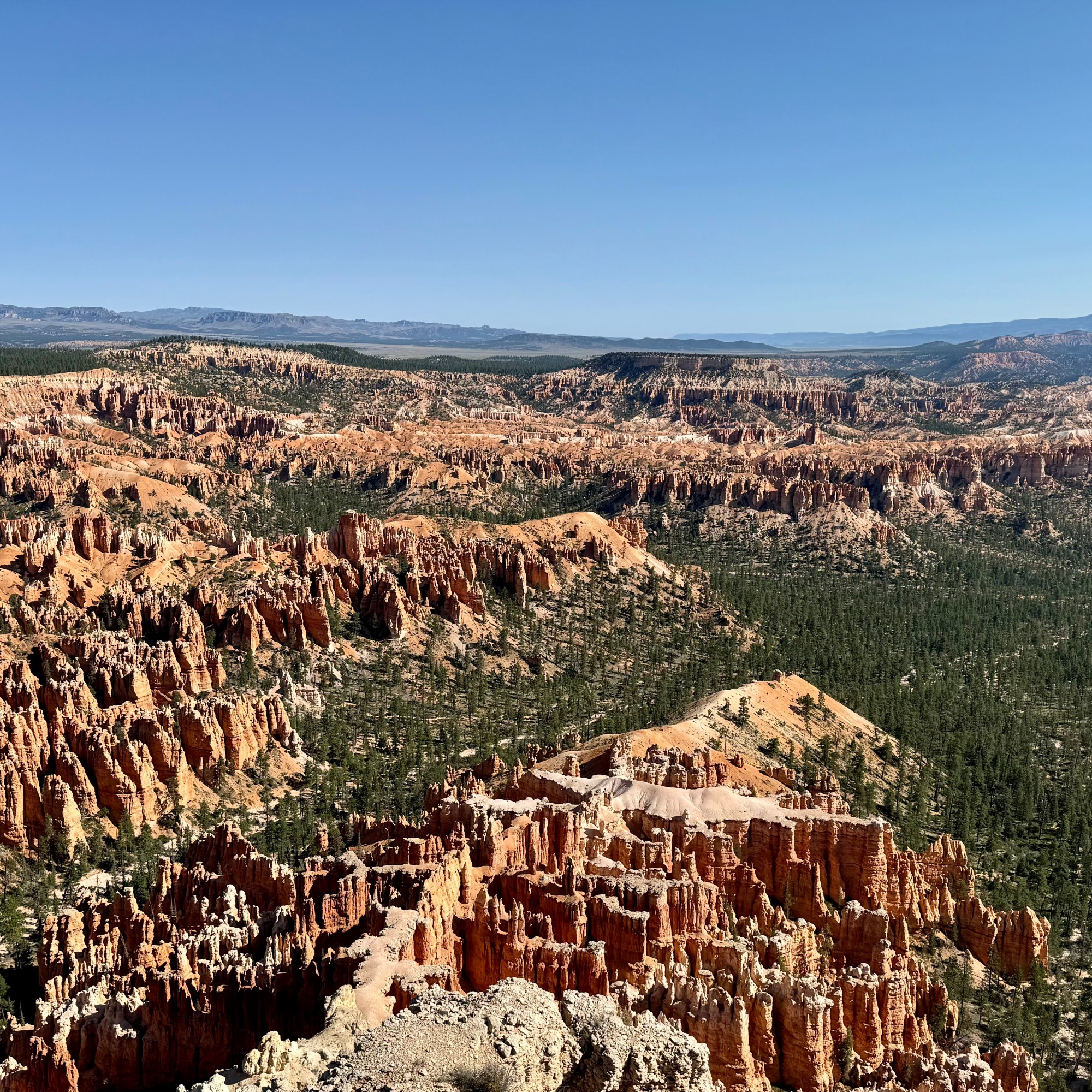
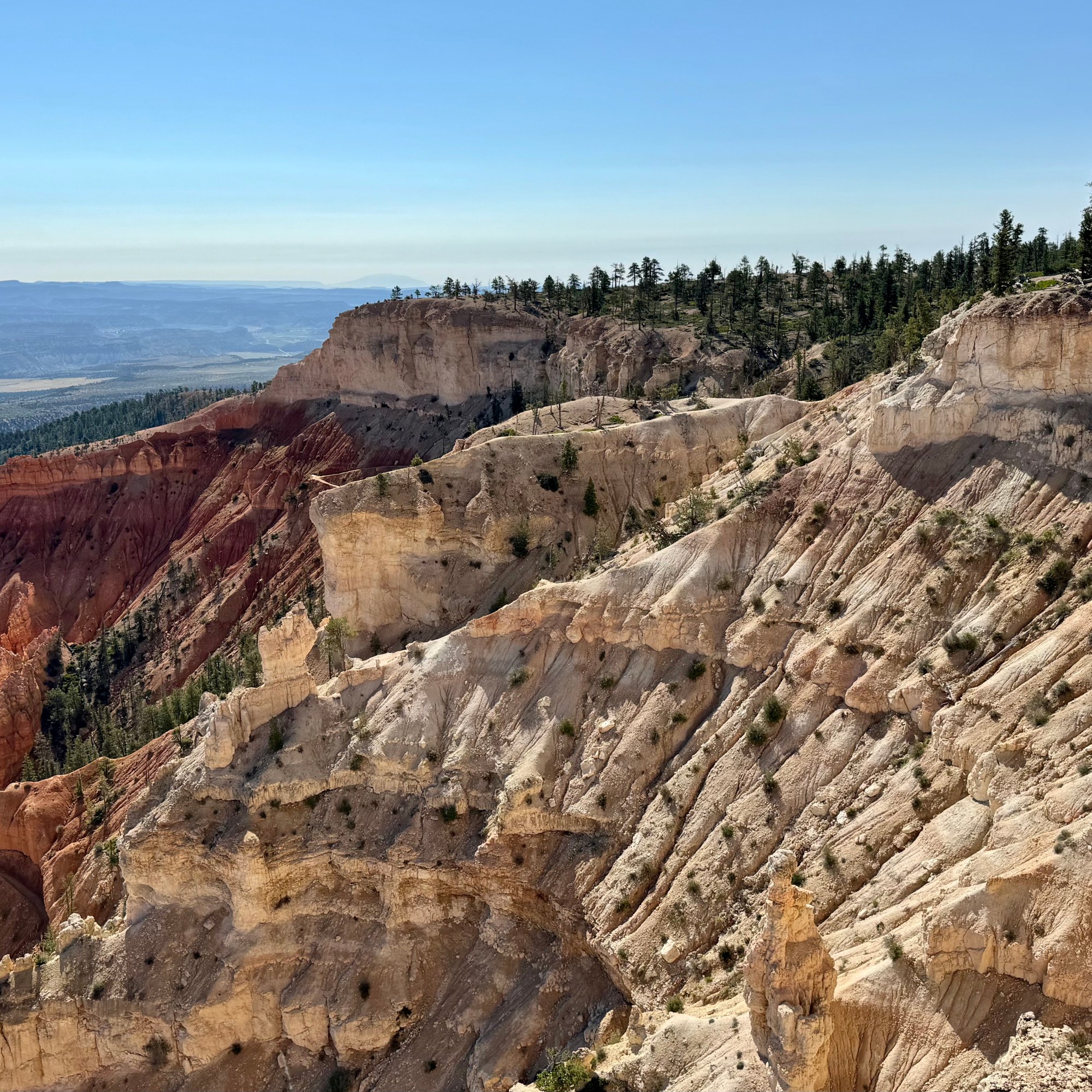
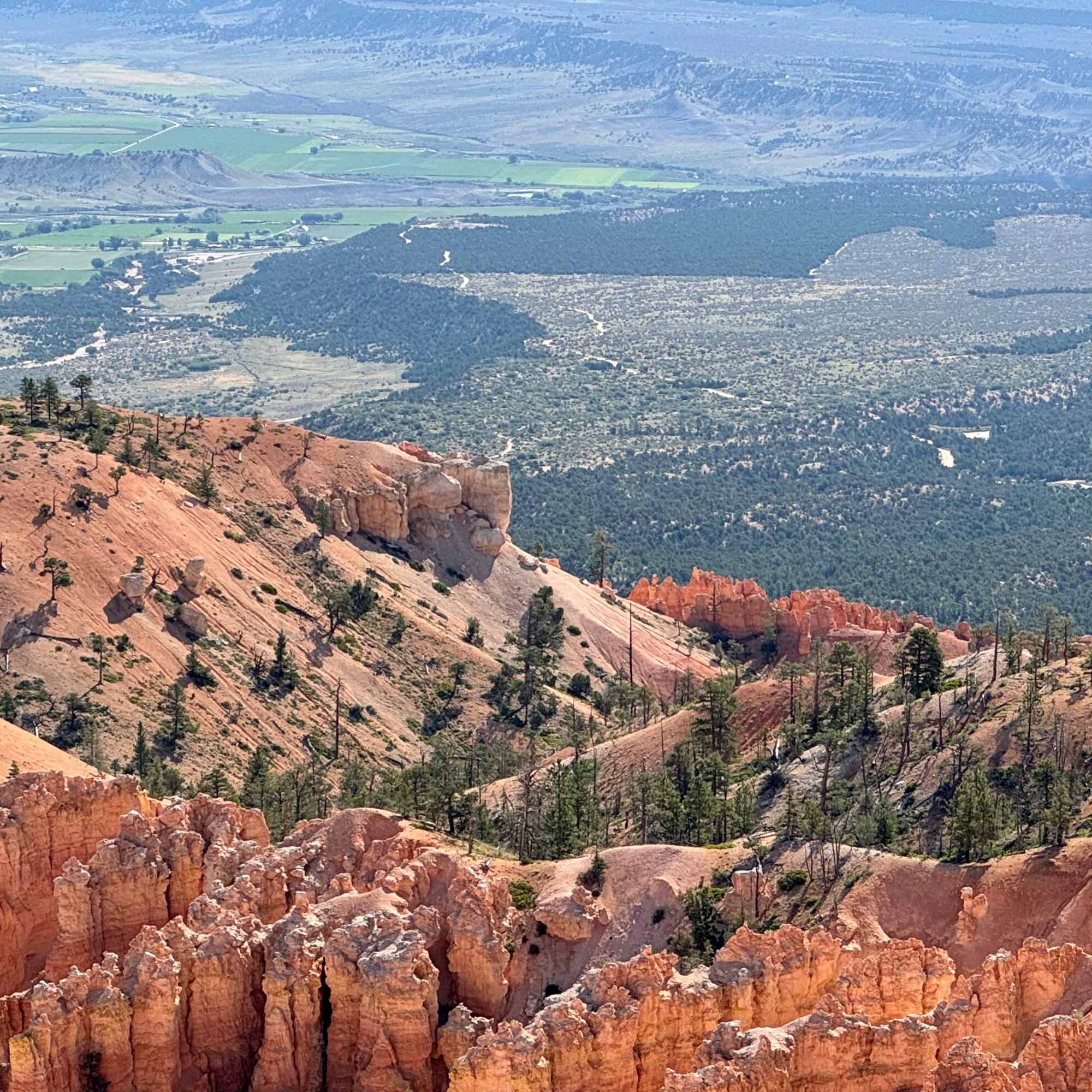
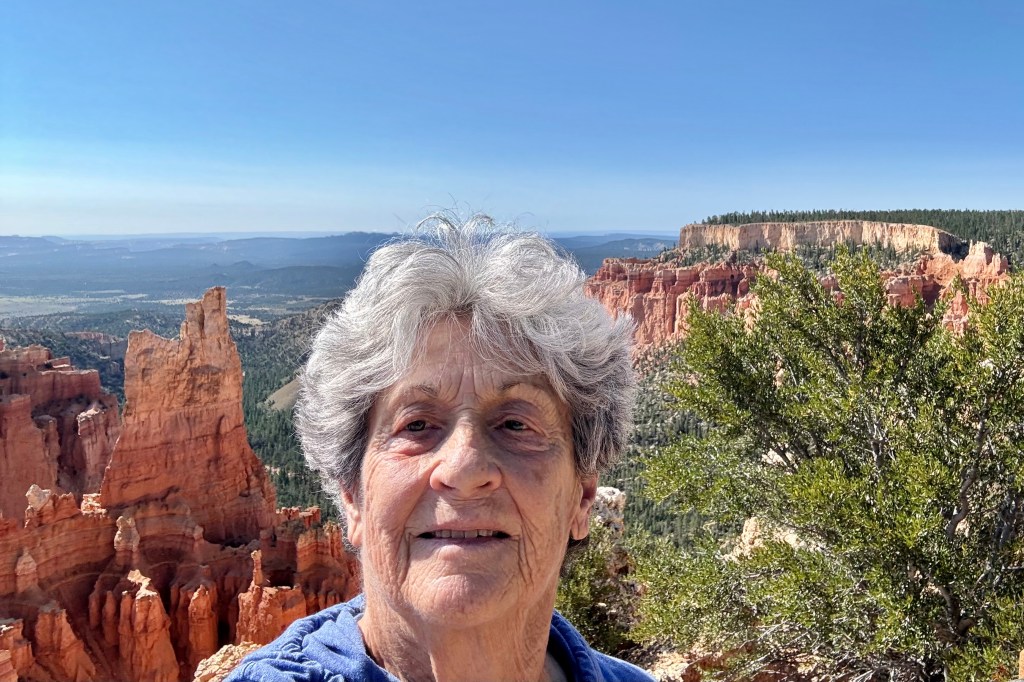
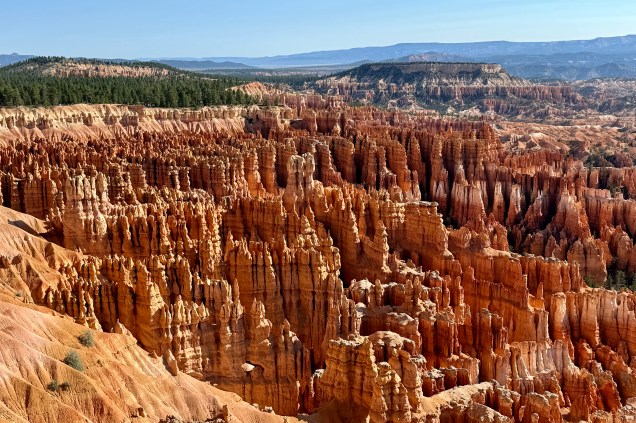
If you can imagine rocks as a lyrical poem or dance between weathering and erosion, you might be imagining the process that creates these unique shafts of rock that grow skyward from the bottom of the basin in Bryce to the tip of the hoodoos. Hoodoo means to bewitch! These shafts are so enchanting that they evoked in me a steady stream of wonder and amazement at the deep reds, soft pinks, oranges and creams of these sentinels.

I had already decided I was not going to do a hike down into Bryce Canyon as at the altitude of 8000 feet the thin air was leaving me quite short of breath upon exertion. Brochures kept reiterating you will usually get down in 1/3 the time it takes you to climb up and out. I had hiked down many years ago and it was as magical then as it was today. At some point I would take an easy hike on the rim and focus on the views of “the amphitheater” later but first complete the scenic drive from the hotel out to Rainbow Point before it got too crowded. In retrospect, that was not a worry because there were relatively few cars on this day at any of the view points.

Sunset Point Elevation 8100 feet

Inspiration Point 8100

Bryce Point Elevation 8300 feet

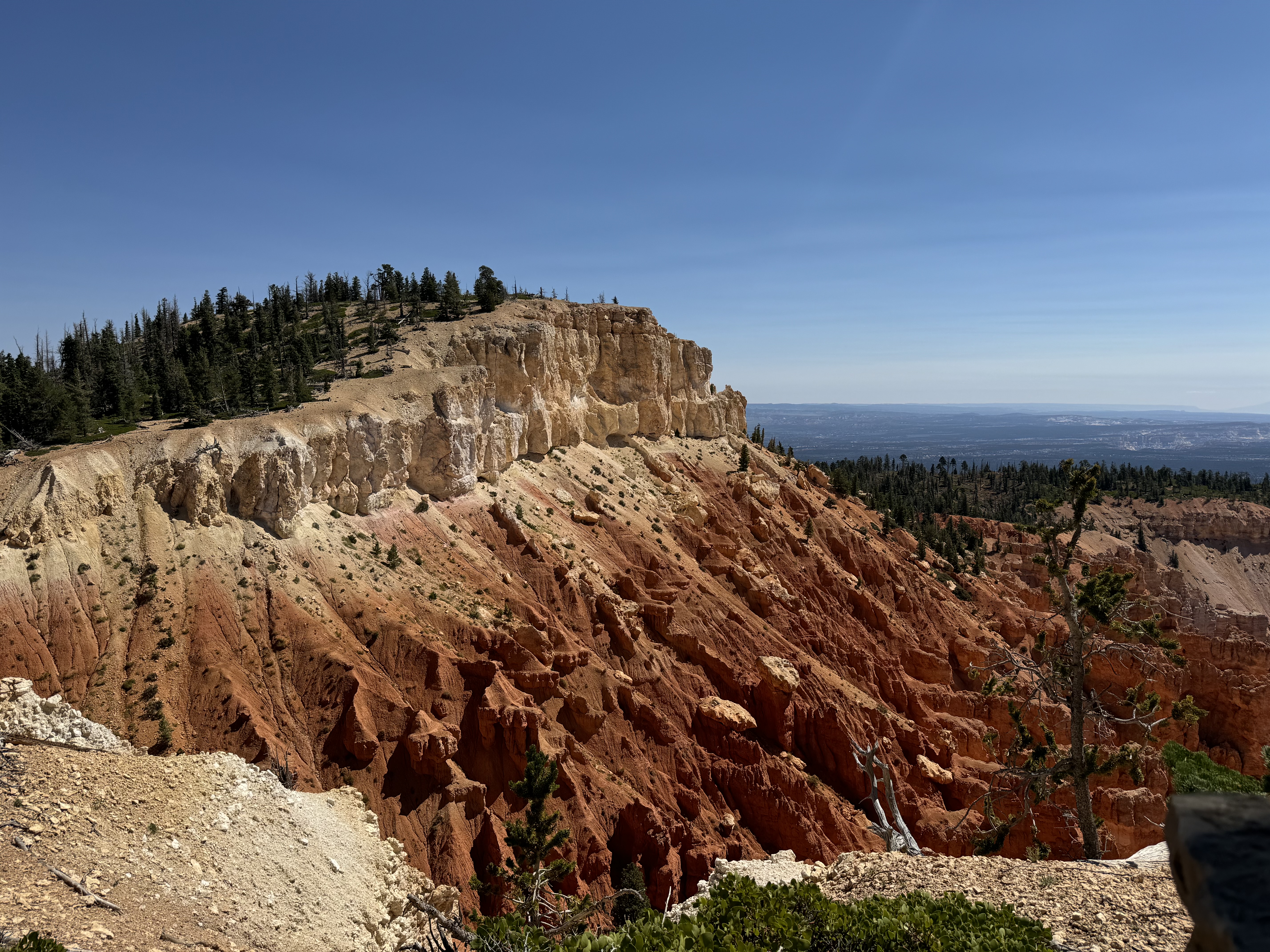
Paria View Elevation 8175 feet

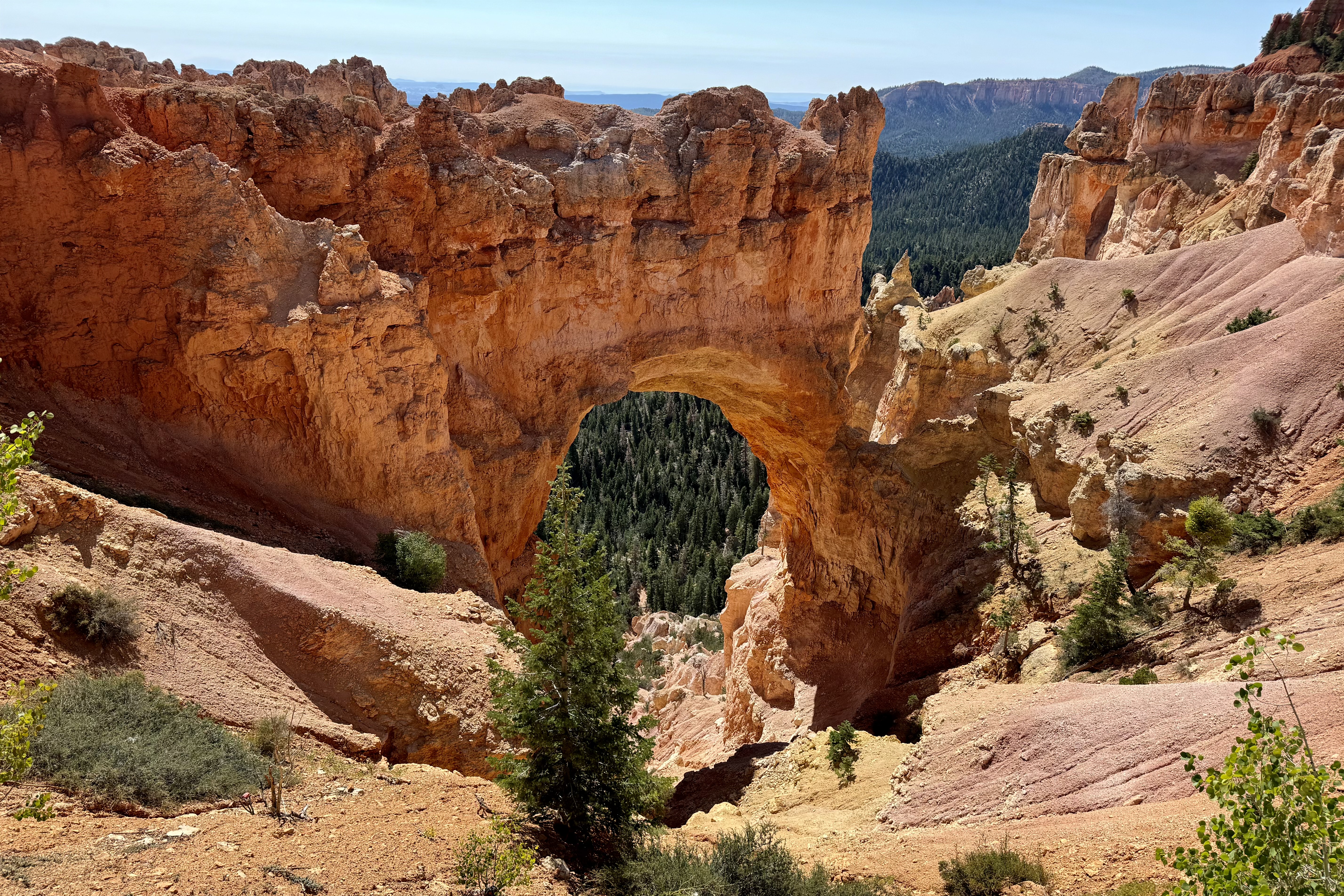
Fairview Point Elevation 8819 Natural Bridge 8627 Elevation
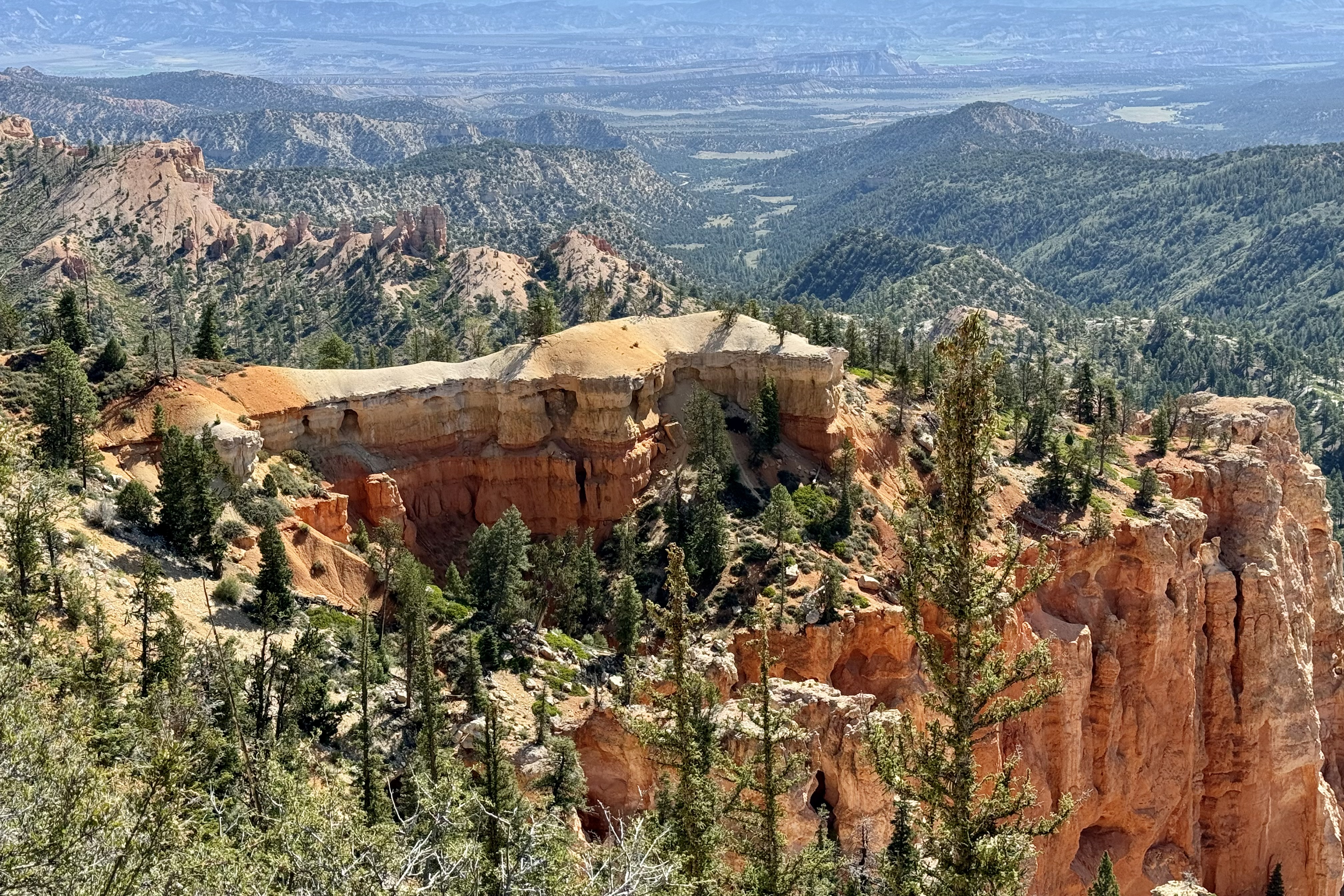
I was nearing the end of this scenic trek via motor car and feeling grateful for this halcyon day and the grandeur of this small but very unique section of our country. The final “push” was views from Ponderosa Point( elevation 8904); Rainbow Point (elevation 9115) ; Yovimpa Point; and a short 1.3 mile hike of the Bristlecone Loop at Rainbow Point.

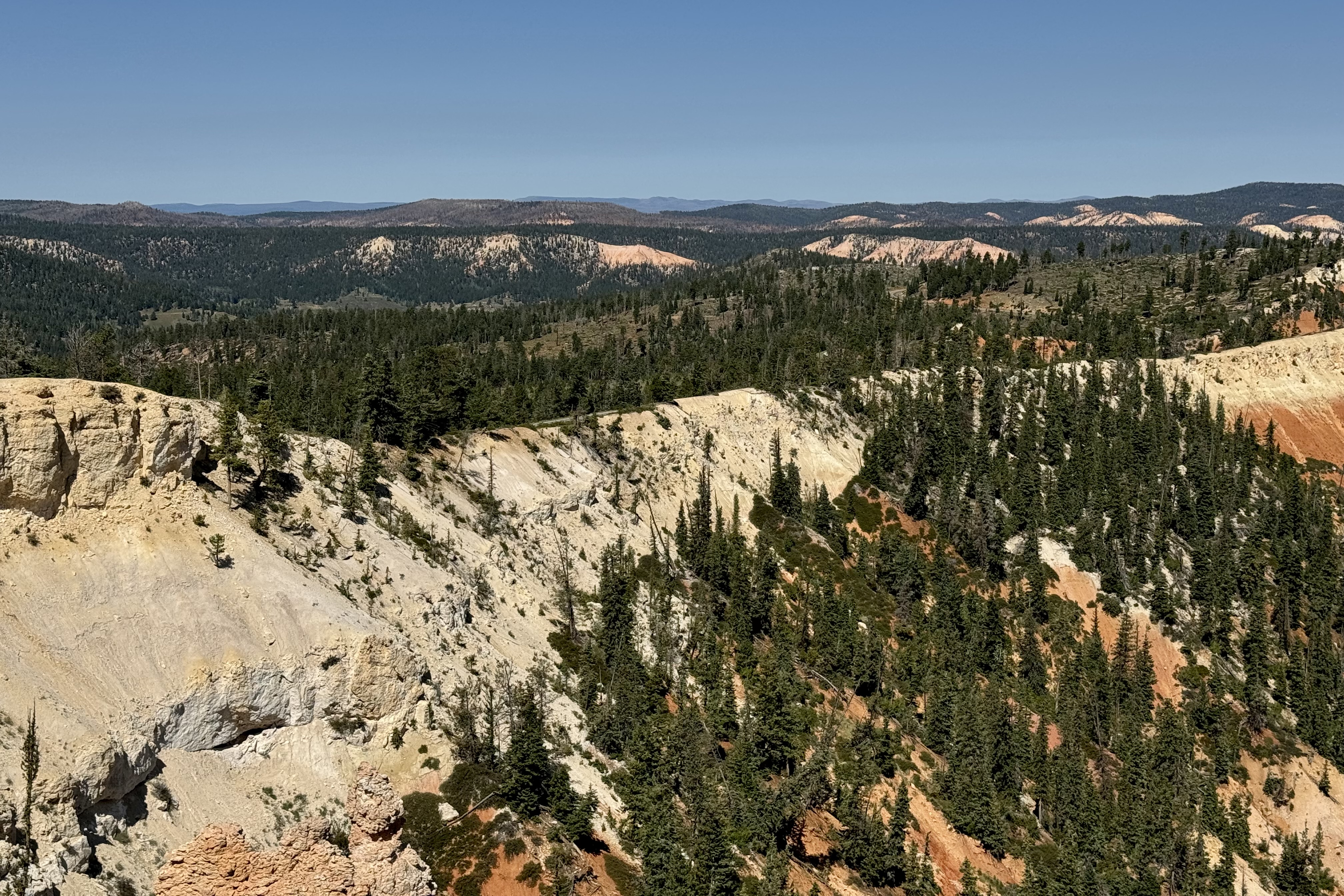
On the drive back to the Lodge, I was also extremely thankful that so many presidents and congress have had the foresight to make conserving land a priority and thus bringing so much joy to like minded Americans who revel in immersing themselves into so much unspoiled wilderness. I hope I can pass on some of this awe and love to my grandchildren (my adult children already embrace the natural world. )

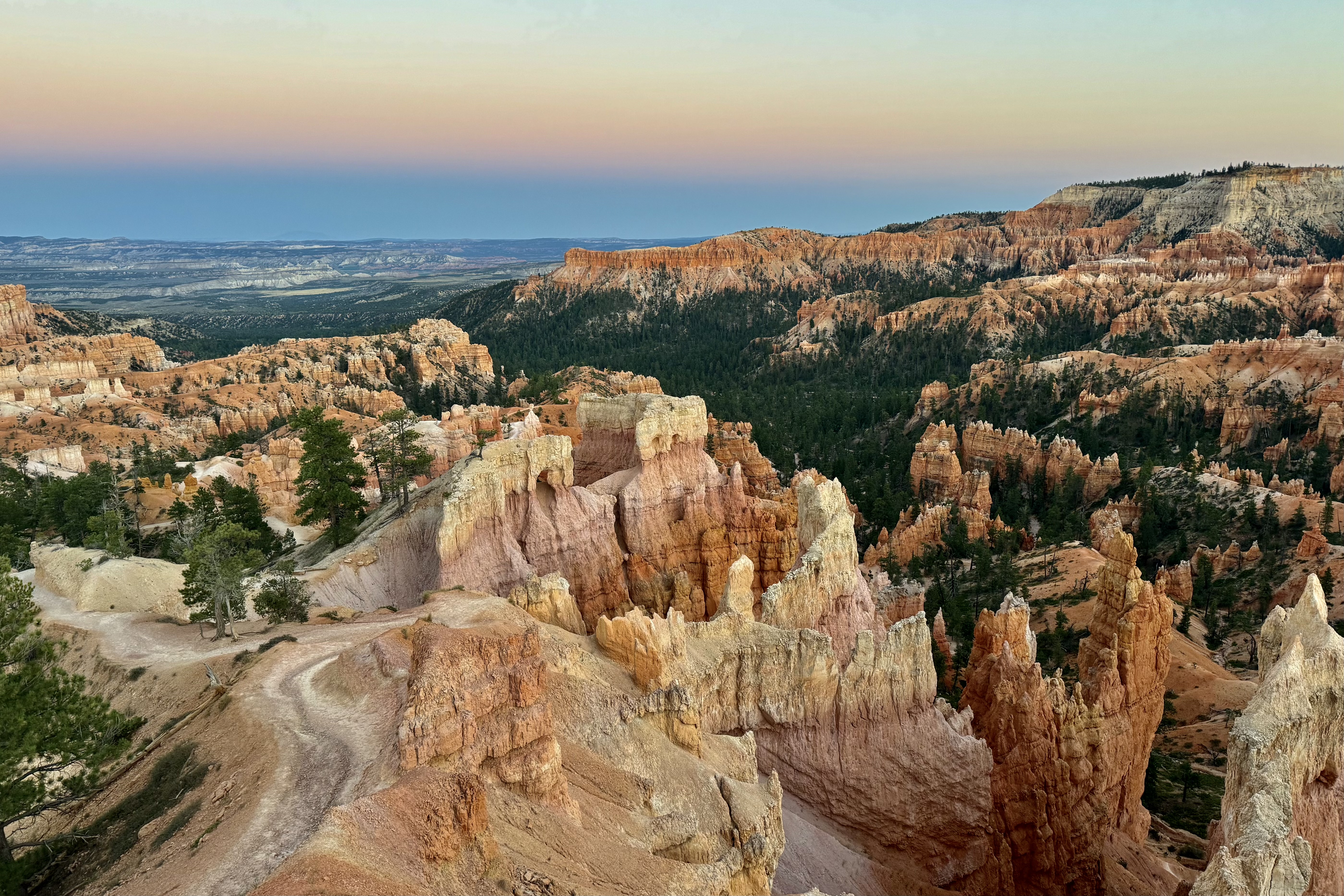
By far the most iconic section of the park, the Bryce Amphitheater ( so called as it is a bowl shaped area formed by the drainage of seasonal rains and melting snow) is home to the greatest concentration of the irregular rock spires called “hoodoos” and I had explored almost all of the viewpoints along the first 3 miles of the main road except for Sunrise Point. I headed towards the mercantile and visitors center before retreating to the Lodge until sunset and then I walked to the last viewpoint I would be visiting : Sunrise Point. This was another spiritual experience as the sun sank below the horizon behind us but lit up the sky before me.

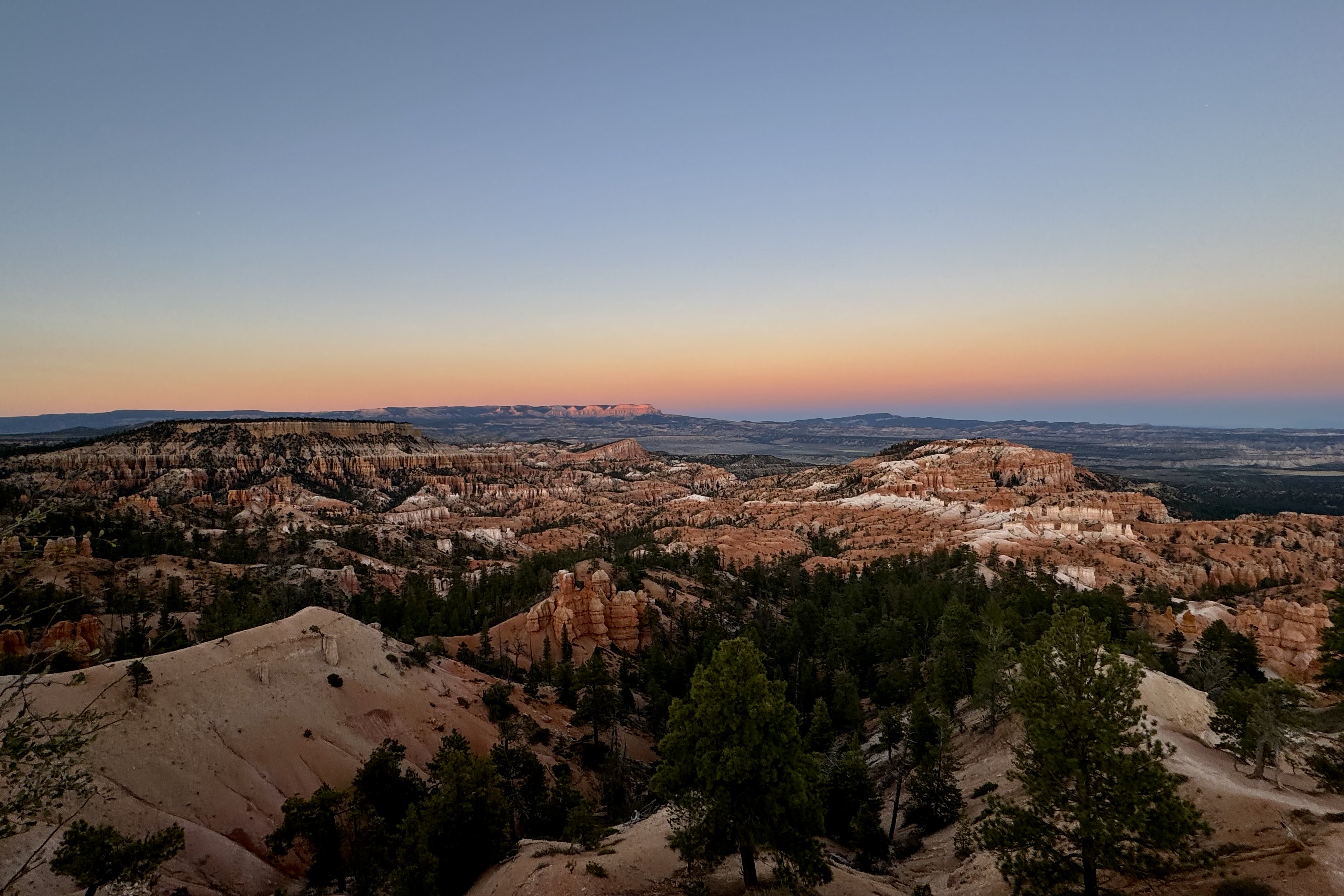
The only glitch in this otherwise perfect adventure was getting lost in finding my way back to the Lodge’s Sunset Hotel where my room was located. I had stayed on the rim until almost dark and had meandered all the way to Sunset Point which I soon realized was a ways beyond my lodging. I somehow did not recognize the path leading to the lodging and was quite disoriented at first. It was quite dark by now. Once I took the time and got my bearings, checked the map (I always take a picture of it so it is stored on my phone, ), turned on my iPhone flashlight, and hopped on the bike path, I knew I would get “home.” iPhone saves the day! I have done remarkably well on this trip for being quite directionally challenged.

The next morning, it was time to head west and make a beeline for my Oregon home….with one more stop to briefly re-visit Great Basin National Park but not stay and camp as I had originally intended. That “beeline” would take three days. Route 12 took me through Red Canyon but even I balked at taking one more striking picture or red rocks. So I continued on through the Escalante Desert with the several low rise mountain ranges breaking up the vast expanse of relatively featureless desert.

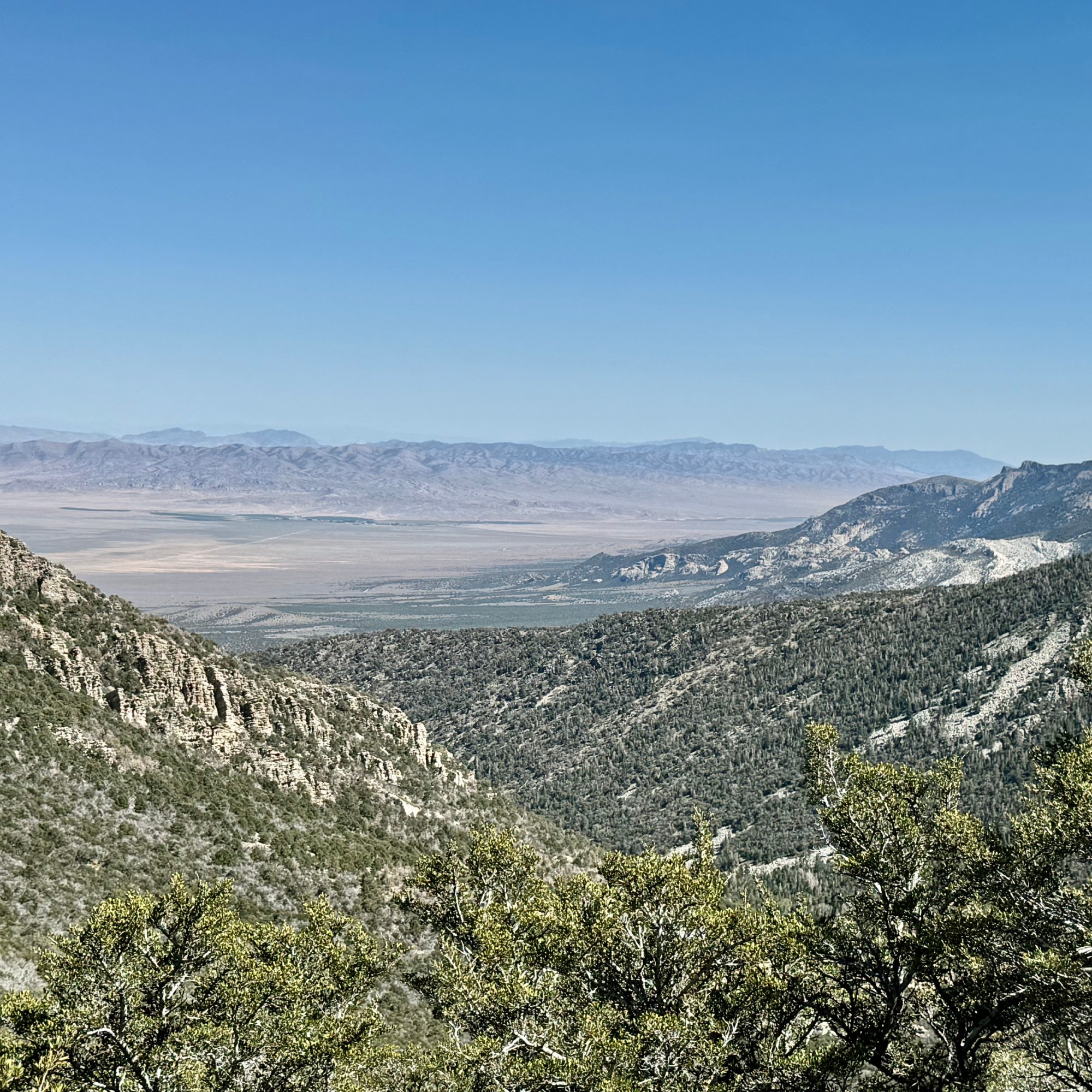
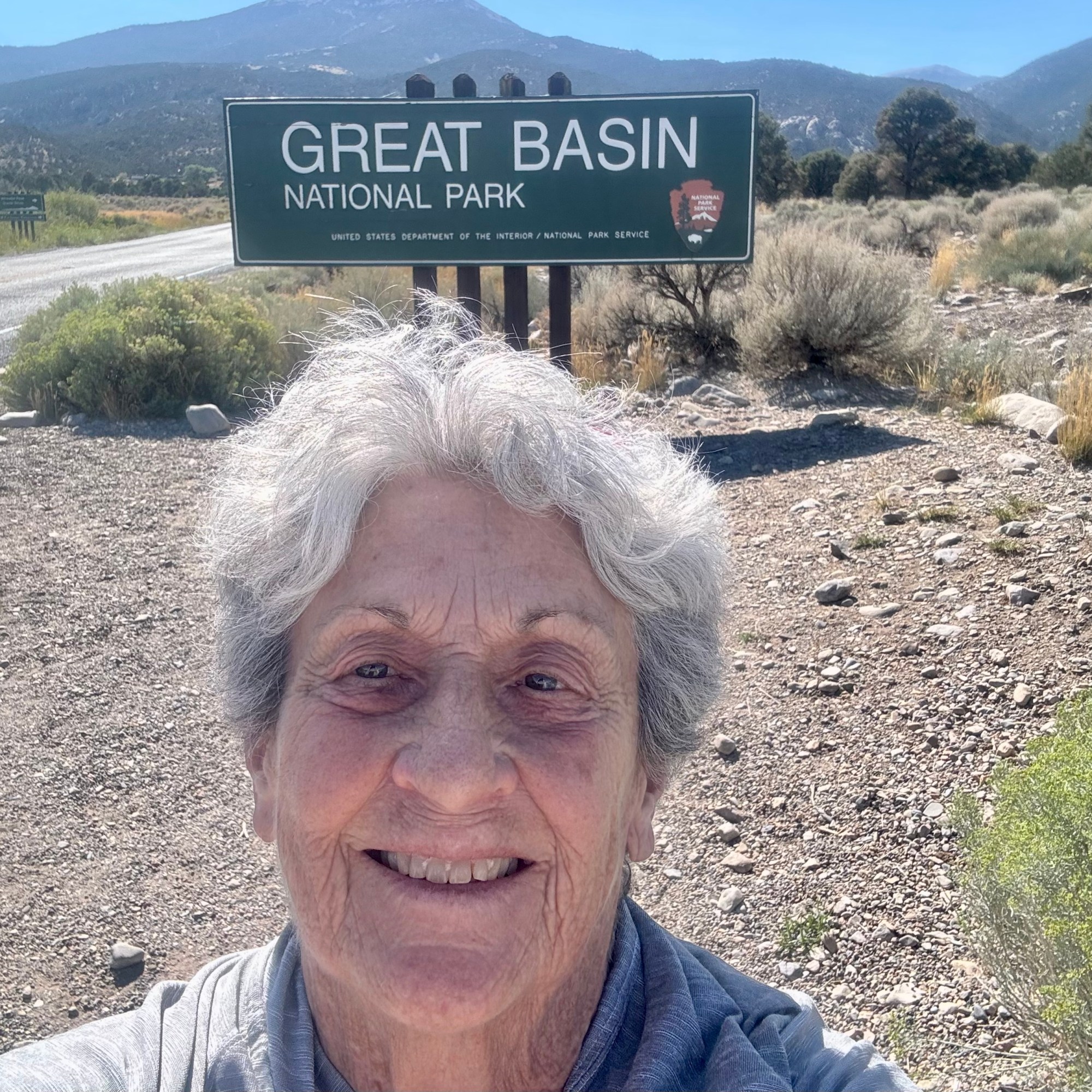
Around three pm I reached the town of Baker in Nevada which was the entrance point to Great Basin National Park. It was early enough to take the drive up to Wheeler Peak which transitions from a massive expanse of the desert of sagebrush I just drove through to the treeless rocky peaks of the South Snake Range. As in several other parks, the drive to the final viewpoint of Wheeler Peak was closed for resurfacing.

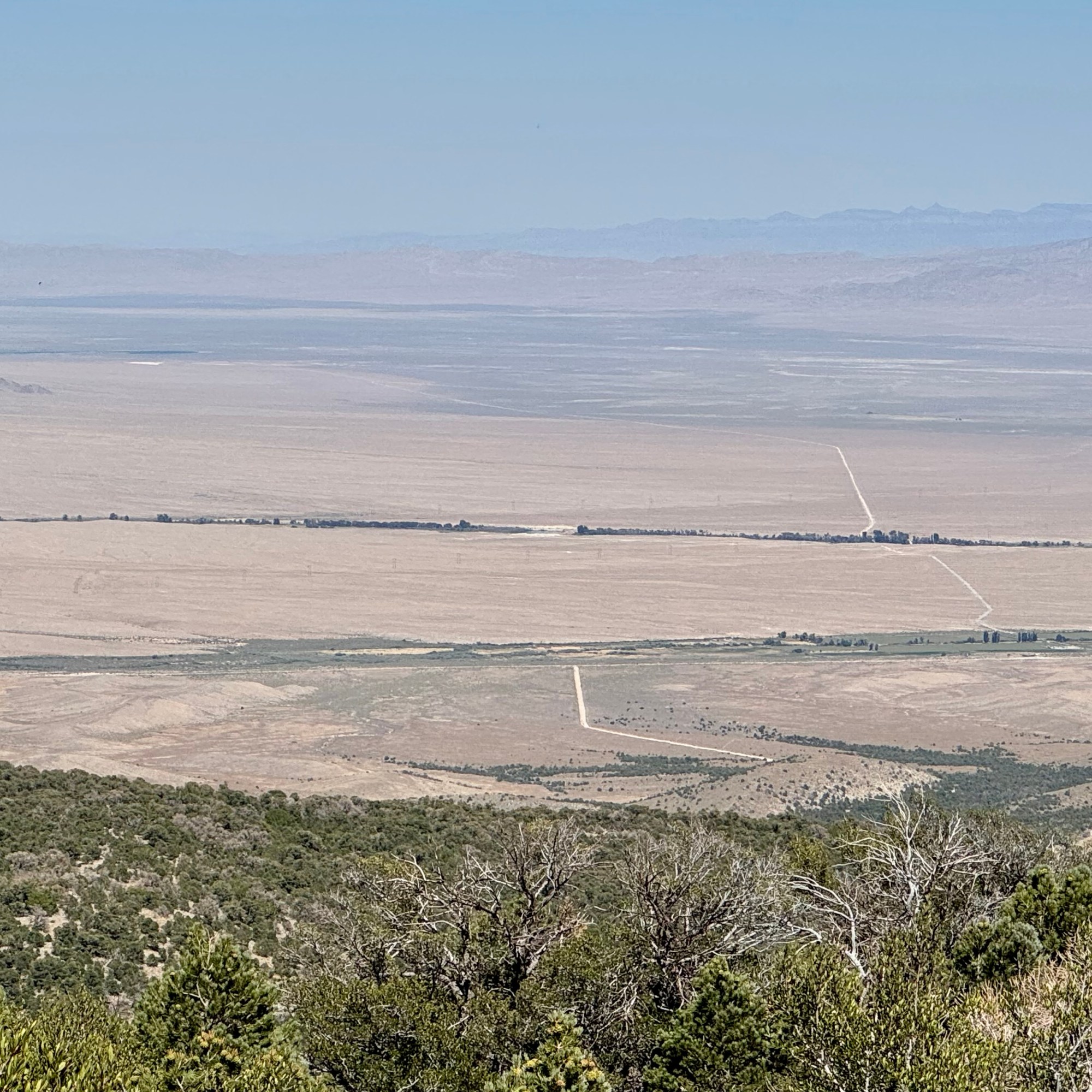
With both towns and motels few and far between, I stopped in the town of Ely. Ely is known for the Great Basin National Park, the Lehman Caves… but the websites does not want us to forget that “one of the reasons why people travel to Ely…the gaming.” To game or not to game was the question I posed to myself in this town where I had my first opportunity to partake in Nevada’s gambling-free-for-all everywhere. Clearly gambling is not one of my addictions as my heart did not beat wildly at the thought of this opportunity. So I curled up in my motel, slept well, and headed towards Oregon on U.S. Highway 50 the next morning. Traveling westward from the Nevada border to Fallon (about 60 miles from Reno), US 50 passes through only two towns and one small city (Ely) between Fallon and the Utah state line, over 400 miles distant. It is thus known as The Loneliest Road in America. Rarely was the desert landscape was broken up, except by the Bonneville Salt Flats, a recreation area which is used for land speed racing.
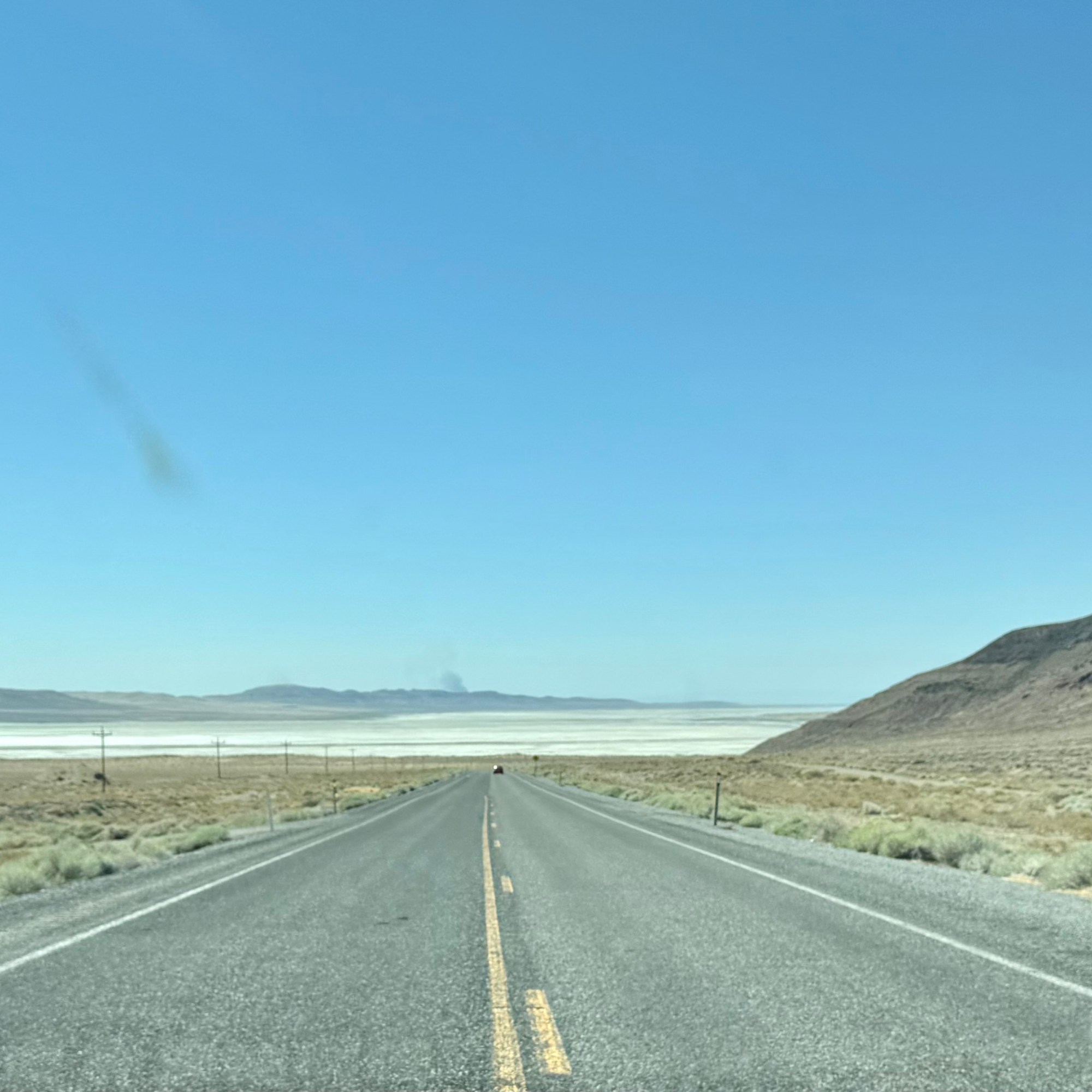
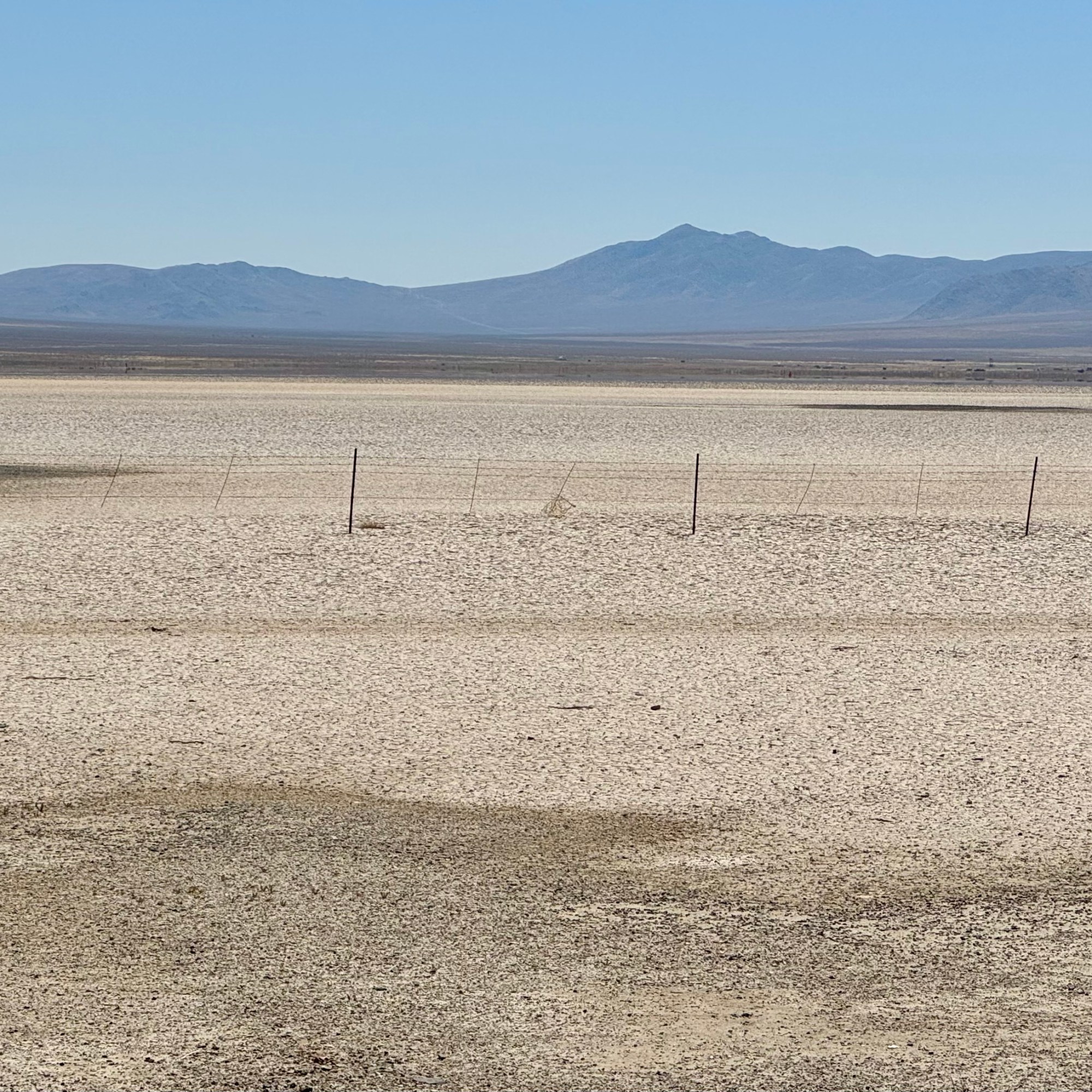
The final day took me through the congestion of Reno and some massive road construction projects, and on into California on secondary roads through Susanville and to Mt. Shasta and the final stretch home on I-5.

I travelled 9642 miles solo through 24 states and 5 Canadian Provinces in 63 days: camped 29 nights though I had planned on more but incredibly awful weather change some of that; motels 21 nights ; and stays with family and friends 13 nights. I visited 9 national parks and completed my quest to finish visiting all 61 of the 63 National Parks in the contiguous states and Alaska. Get ready American Samoa and The Virgin Island for I will be there in 2025.

Stout Trees, Bunyan Sized Rocks, and Swinging in the Tree Tops

Hugging big trees was the expressed wish of a Floridian friend, when we discussed a potential joint vacation. The palms of Florida aren’t exactly known for their massive trunks or the swath of shade they generate. Since I live in the Pacific Northwest, I immediately envisioned a trip to Redwoods National Park and perhaps other western national parks which are definitely beautifully draped out in extremely old and very large trees and extensive forests. Though I had no keen yearning to hug a big tree myself (especially those with slimy moss or sticky sap) , I mused that I could probably find a itinerary that would accommodate that wish and my desire to revisit some of the other national parks of the Pacific Northwest Region including Redwoods, Olympic National Park, Mt. Rainier, and Crater Lake, completing a big circle back to our starting point of Medford OR.
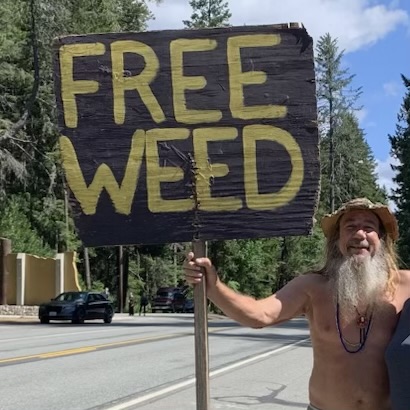
So after retrieving my friend and her luggage (which surprisingly arrived intact) at the Jackson County OR Airport, my mission at the moment was to head on down to Crescent City CA and the Oceanfront Lodge , our accommodation for three nights. My preference when traveling is to drive secondary roads ( isn’t there an old saying that the “the joy is in the journey” ) rather than what I find boring – the tedious frenetic interstate highways. This did not disappoint as, of note, enroute was the appearance of “Weed Man” offering free “weed” at the Oregon/California border. This was not about weed control (the kind you use on you lawn) nor a chance to buy legal weed since recreational marijuana is legal in both states, but a ploy to get travelers out of their automobiles to browse their flee market tables full of goods other people no longer wanted or needed. That ploy worked as my friend craved having her photo taken with the “Weed Dude” but definitely not to consume the weed itself. We definitely opted out of a shopping excursion.

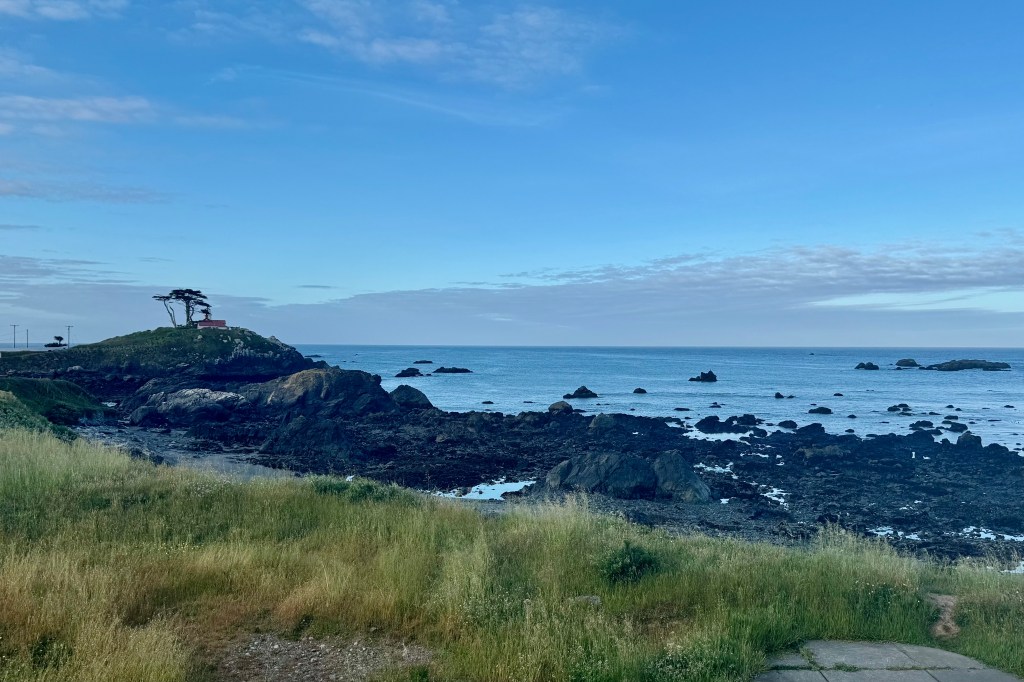
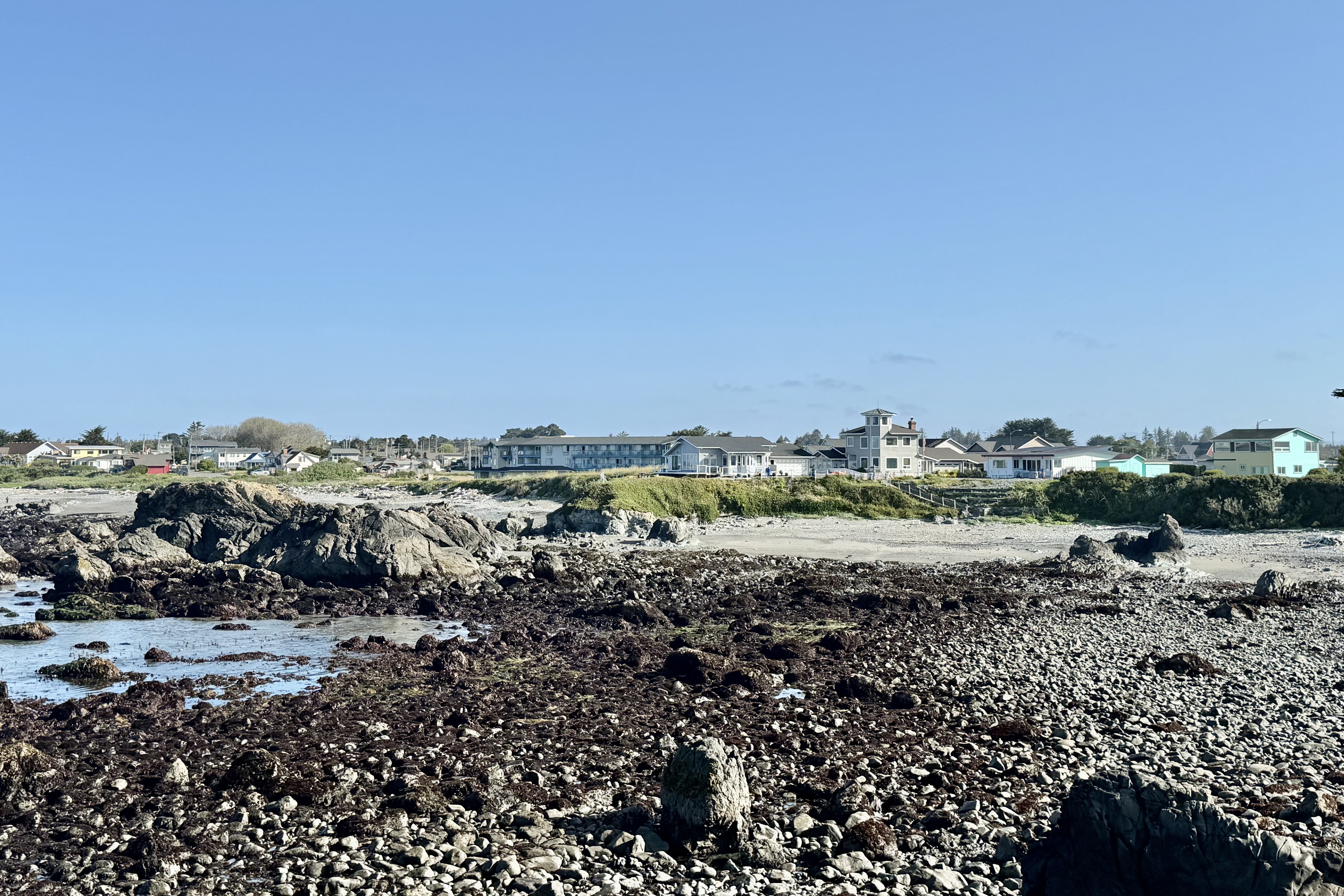
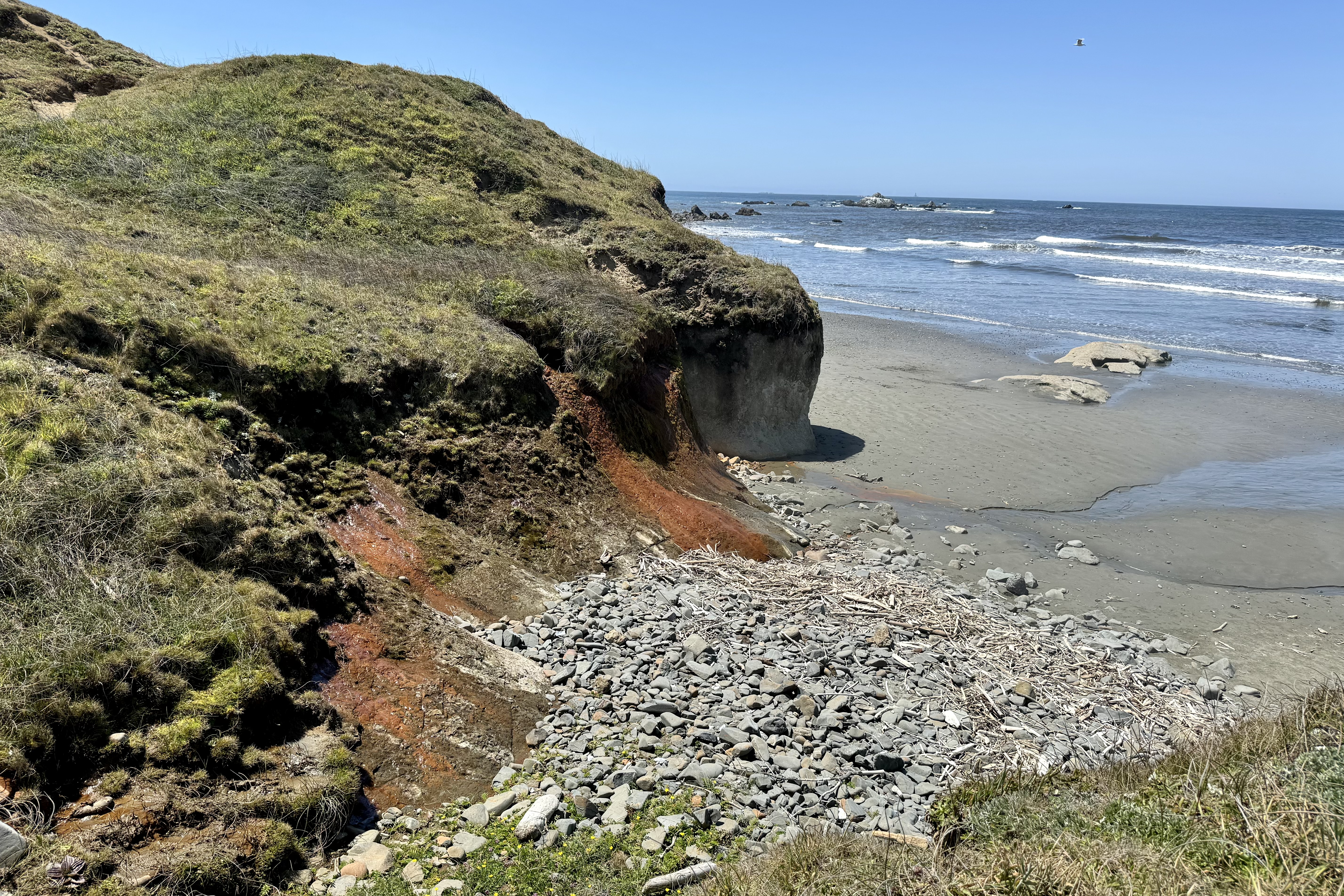
As is quite often the case, coastal cities in the Pacific Northwest get fogged in and true to form we were greeted with a temperature of 54 degrees and a shroud of fog at the oceanfront location of the Crescent City Lodge, the home base for three nights.  The best part of this hotel was its seaside location and the awesome views, especially  when the fog was no longer a gauzy blanket over the Pacific. The  Battery Lighthouse was a  picturesque  part of the view and was within walking distance. My first order of “business” was to head down to the beach. Seeing no unencumbered path,  I laboriously inched my way down through the vegetation, driftwood,  and stones to scattered patches of sand. A rough rocky shore, previously  not a challenge, was definitely a safety hazard for my osteoporotic bones and my need to use a hiking stick to hopefully avoid any tripping rocks and catastrophic falls on my barely healed gluteus medius and gluteus  minimus muscles. With it being chilly and foggy, I was becoming more interested in filling my belly than beach combing on this unstable surface. 

So it was back to the somewhat “tired” and dated room, which  faced the ocean and sported a very weathered balcony and rather uncomfortable chairs.  But just the magical sound and breeze of the ocean made up for a lot that the accommodation lacked. Sleeping with the sliding glass door open to hear the waves was so calming.  Dinner was in the  small understaffed restaurant downstairs with passable, though clearly not of the gourmet variety food.  But the flavor was definitely enhanced by the expanse  of the  Pacific, viewed through the spacious windows of the dining room. 

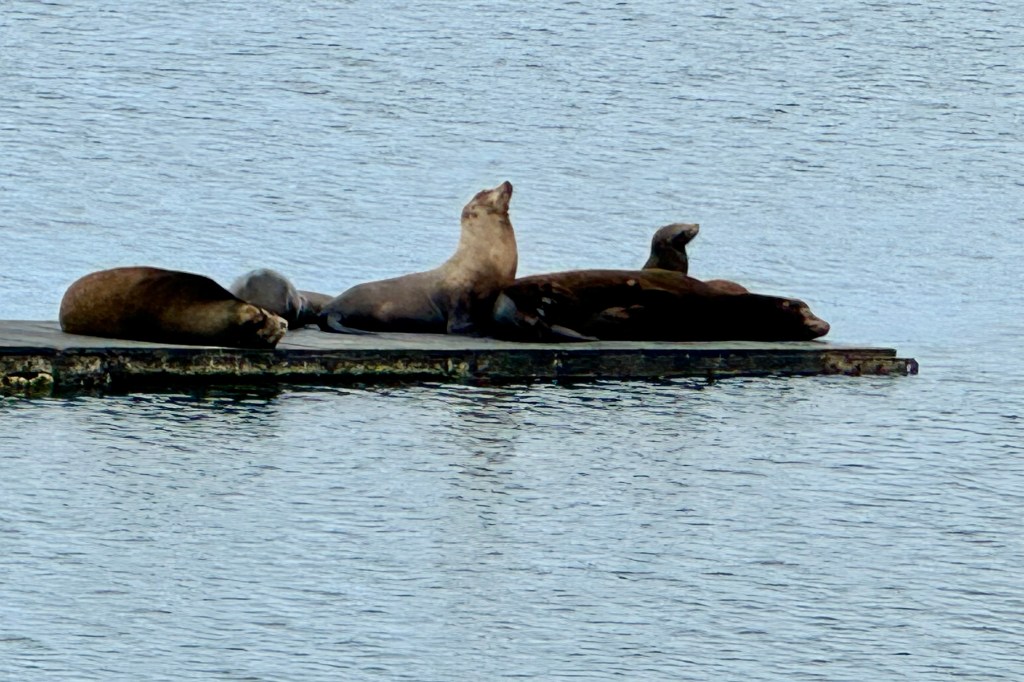
We awoke to a brilliant blue sky and were eager to be out and about. The first stop was at the Crescent City harbor to hopefully catch a glimpse of the resident harbor seals before they were out and about foraging for the days banquet. I guess by seal standards we missed the “boat” as there were but four of five hanging out in the harbor. So shortly we were on to the National Park Office to map out a plan for the two days in Redwoods.

An expressed desire of my friend was to visit Trees of Mystery and according to their brochure is “California’s premier attraction on the North Coast.” This seemed a bit of an exaggeration and though I was skeptical, I was game to give it a chance. This is not the type of tourist attraction I typically frequent having been programmed very early by my mother to NOT visit any “tourist traps.” We kids were deprived of experiencing the Michigan wonders of the Mystery Spot, the Underground Forest, and Sea Shell City so gaudily and frequently advertised along the highways.

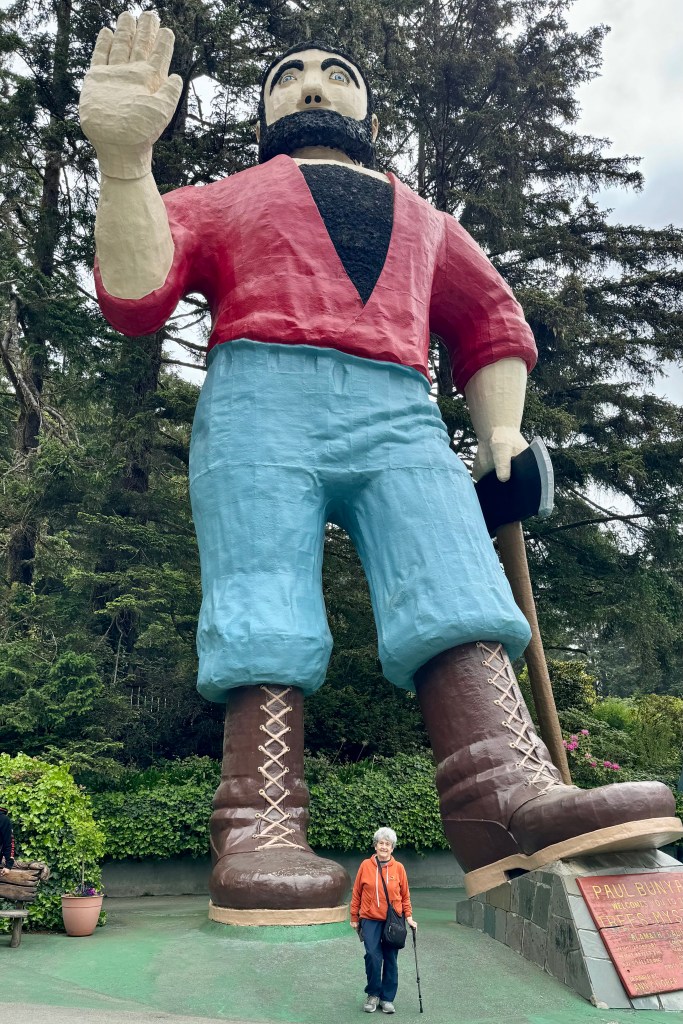
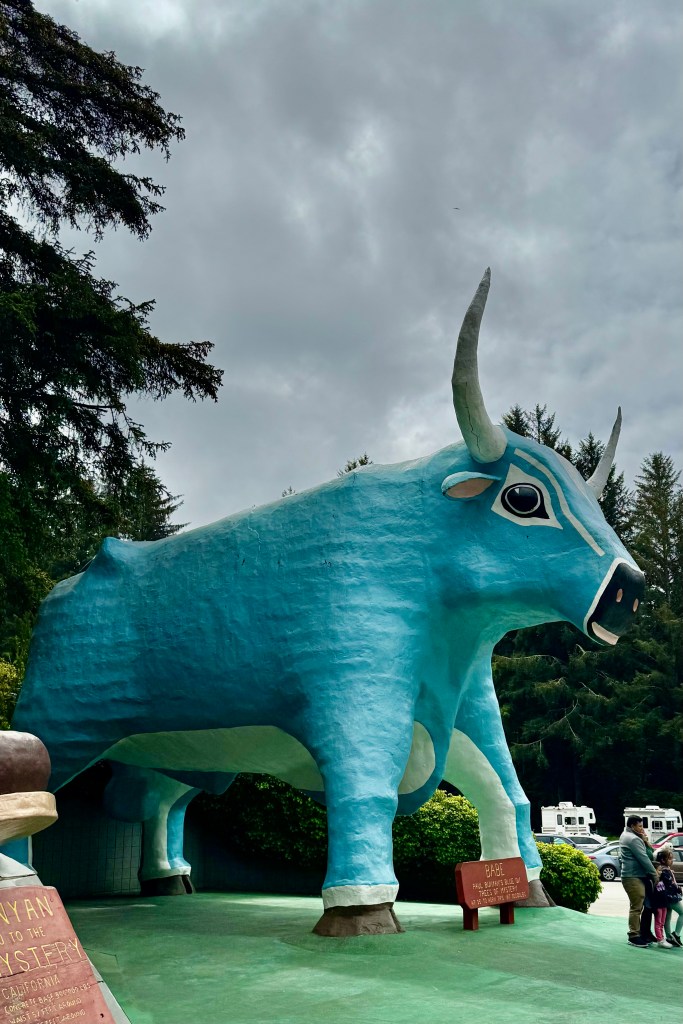
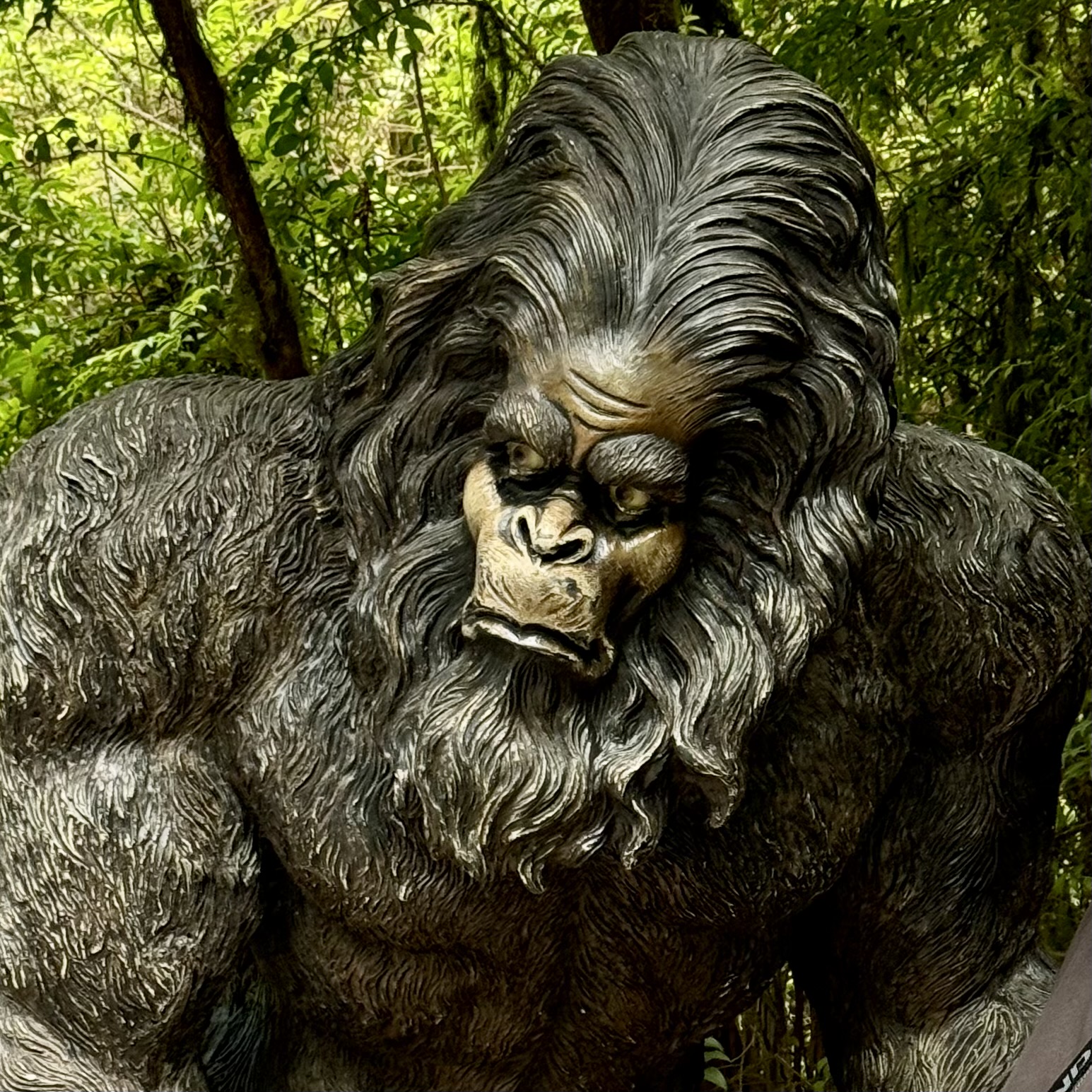
Upon driving up and being greeted by a massive talking Paul Bunyan and Babe the Blue Ox statues, I was even more skeptical as it looked mostly like a stop for kids and a bad attempt to copy a Disneyesque experience. But I was game as it advertised a canopy walk and gondola ride. Nevertheless, before we began, I felt compelled to have my picture take with Paul..

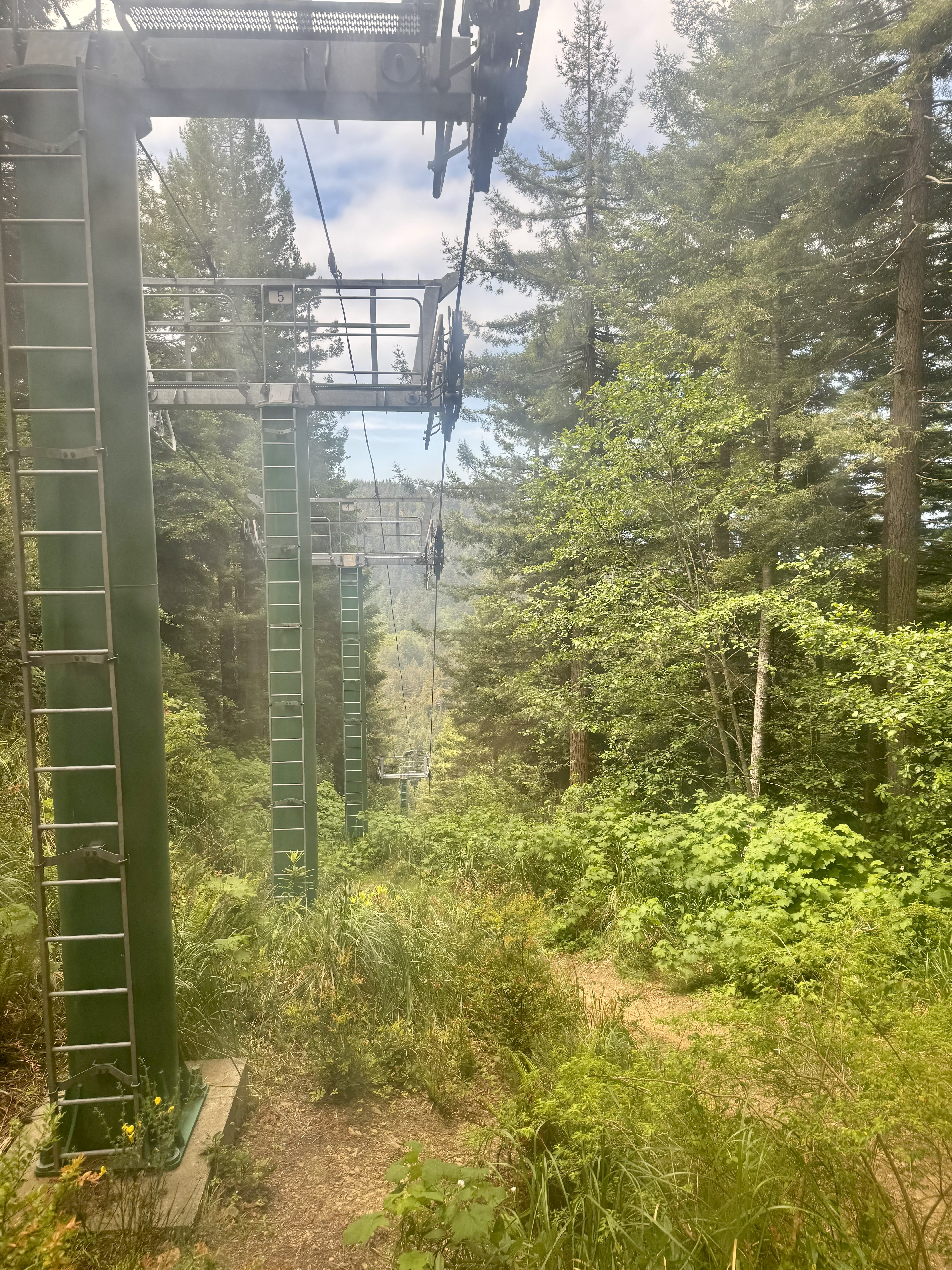
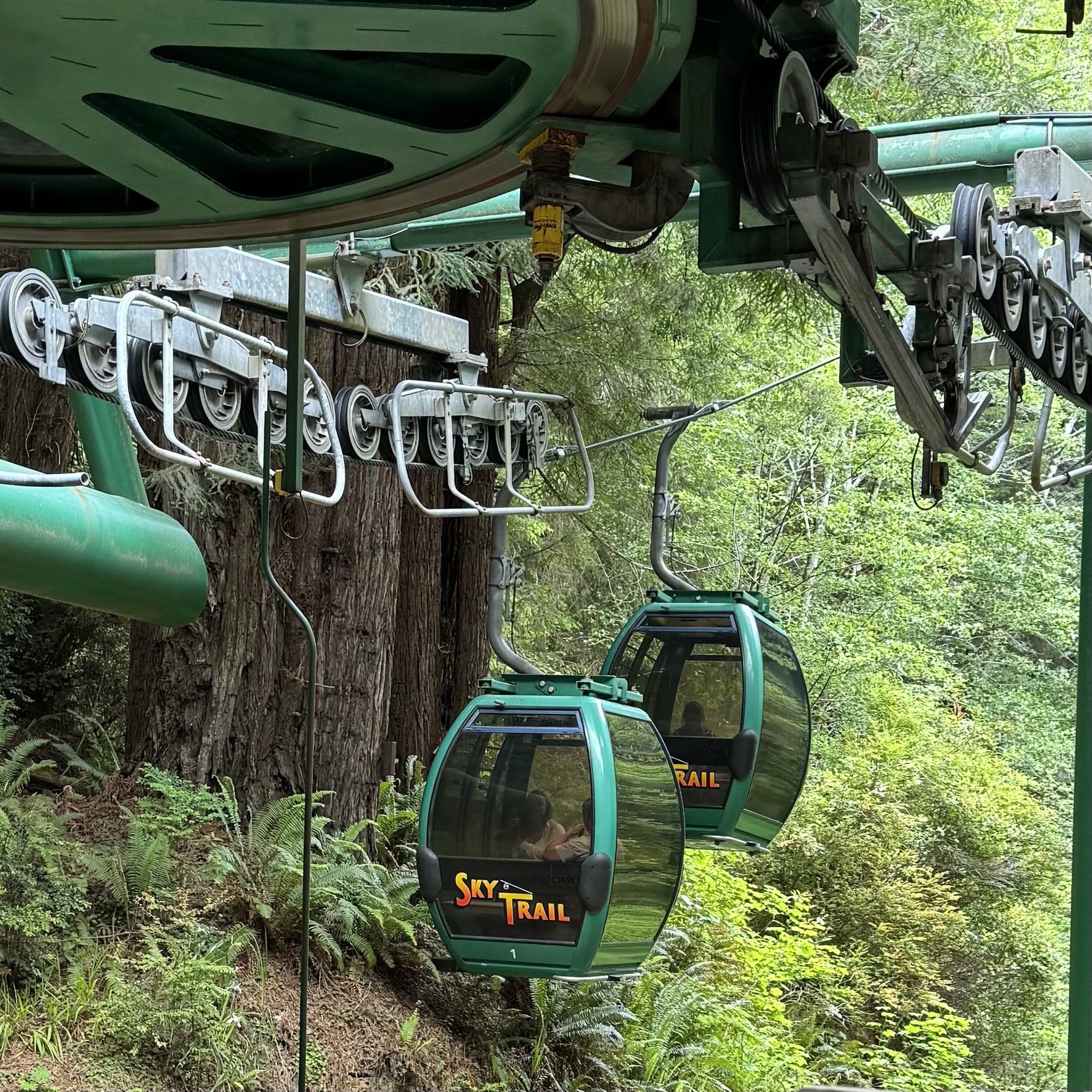
The first stop was the SkyTrail Gondola, a trip 1,570 feet up to the top of the mountain into the forest for an elevated view of the redwoods from the Ted’s Ridge Observation Deck as well as far-away views ( mostly obscured by overgrowth) of the Klamath Valley to the East and of the Pacific Ocean to the west. While I enjoyed the views, there were many spectacular scenic overlooks in Redwoods National Park along high 101 that are equally or more stunning, less crowded, and FREE. I found the gondola ride disappointing as it is not a glimpse of the canopy of giant redwoods, but rises through a hillside that appears to have been logged of redwoods years ago and overtaken by deciduous flora.

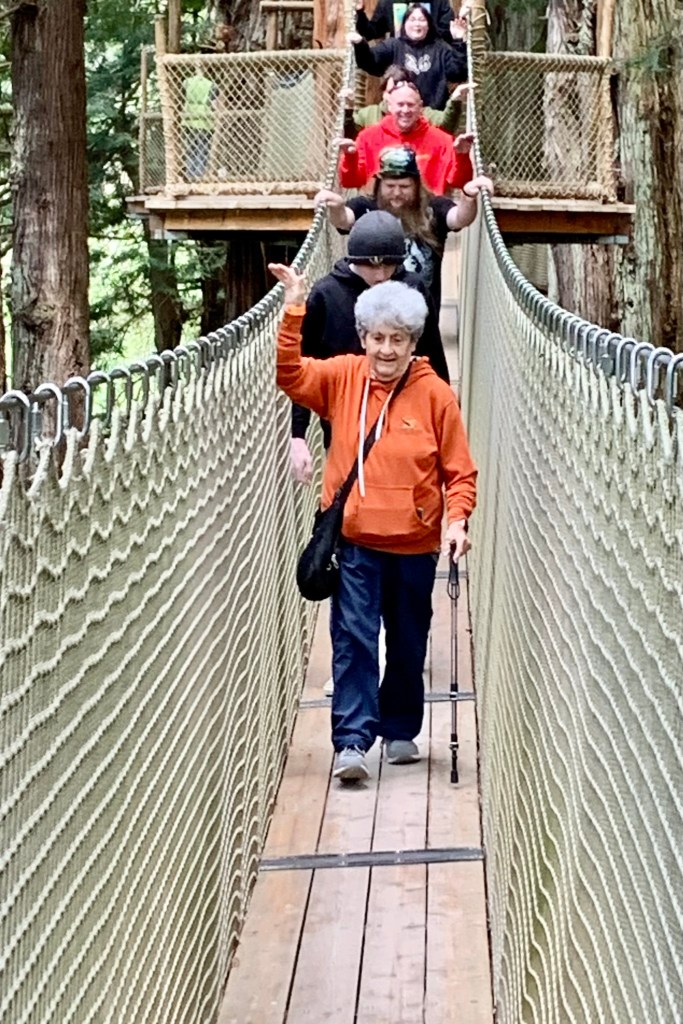
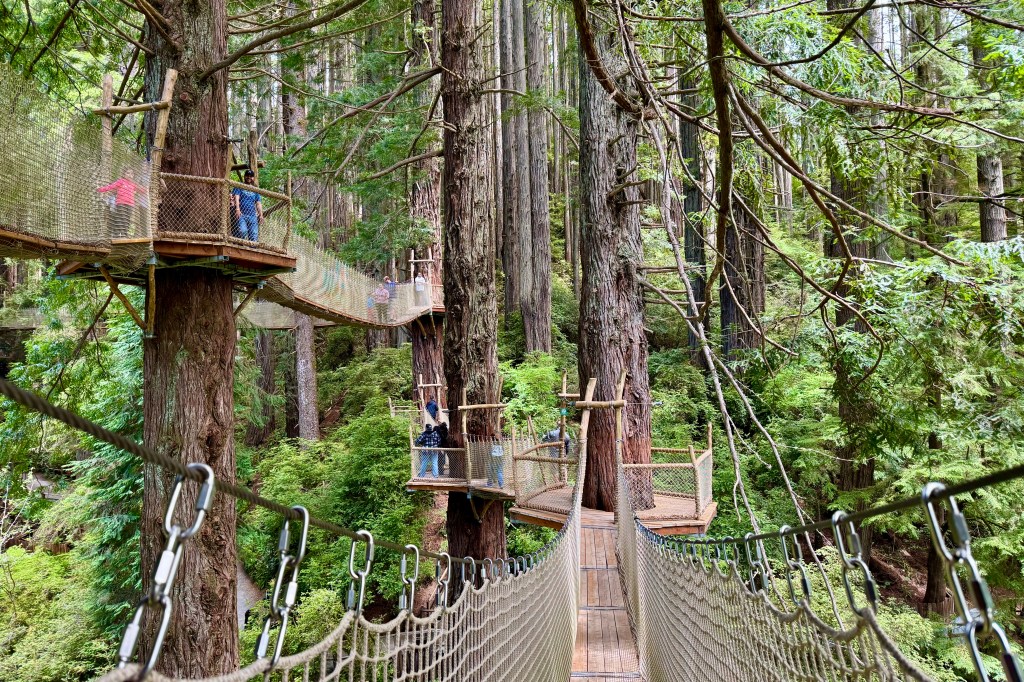
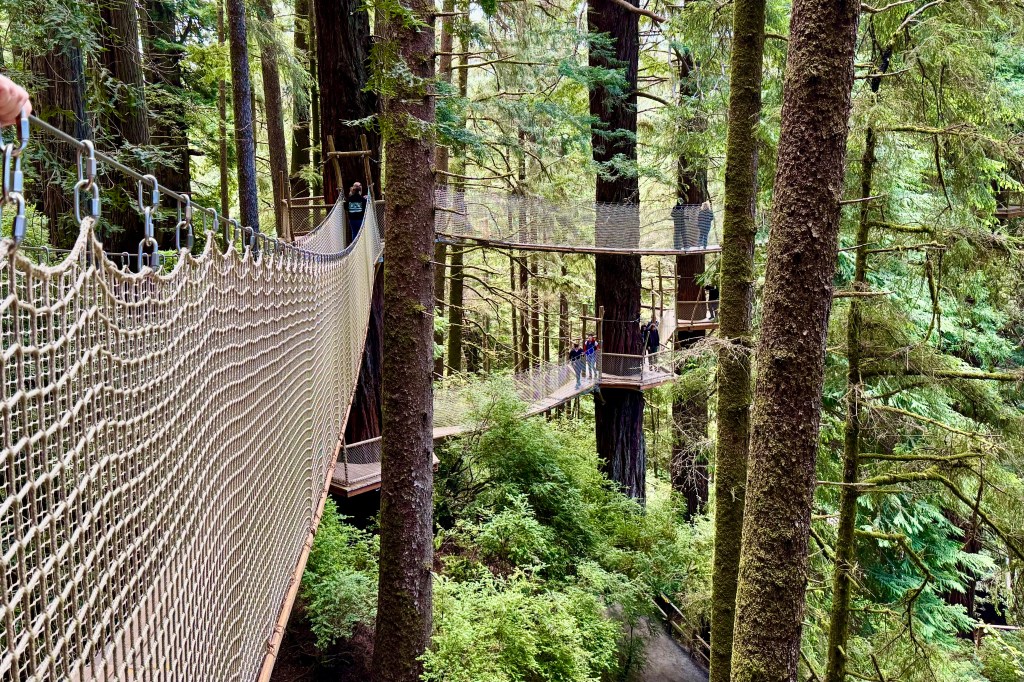
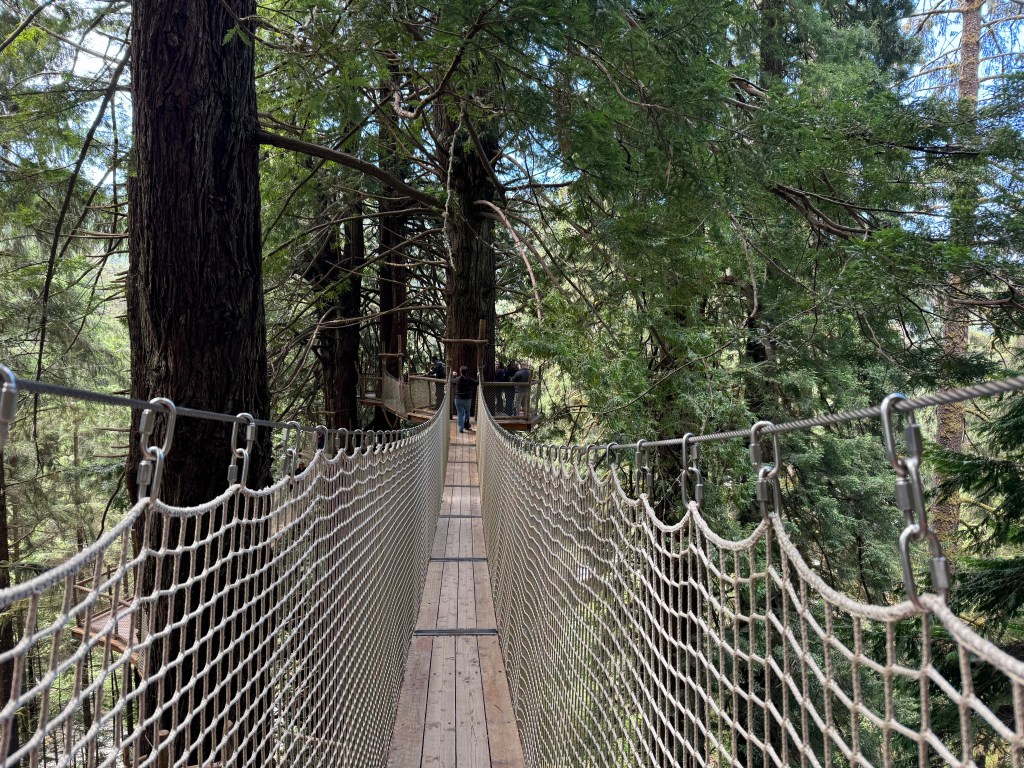
The biggest plus for me was to be the canopy walk which took us high into the redwoods through eight suspension bridges and ten platforms. To take in the sights, sounds and smells of NorCal’s world-famous redwoods would have been a noteworthy experience … except for the queue of people on my heals tromping across each bridge with nary a moment to take the surrounds in. These aerial netted suspension bridges perhaps 100 feet above the ground sway gently and BUT NOT so gently with the stomping and clomping of the rushers behind me who clearly were not in this to experience the grandeur of being high with nature doing what it does best – be awe inspiring – but perhaps to get a bit of an adrenaline rush with the swaying and rocking of the bridge structures. I was quite relieved not to be bowled over as I made my way across, teetering and tottering, by the swinging generated by the “trompers”. Nevertheless it was a fun experience.

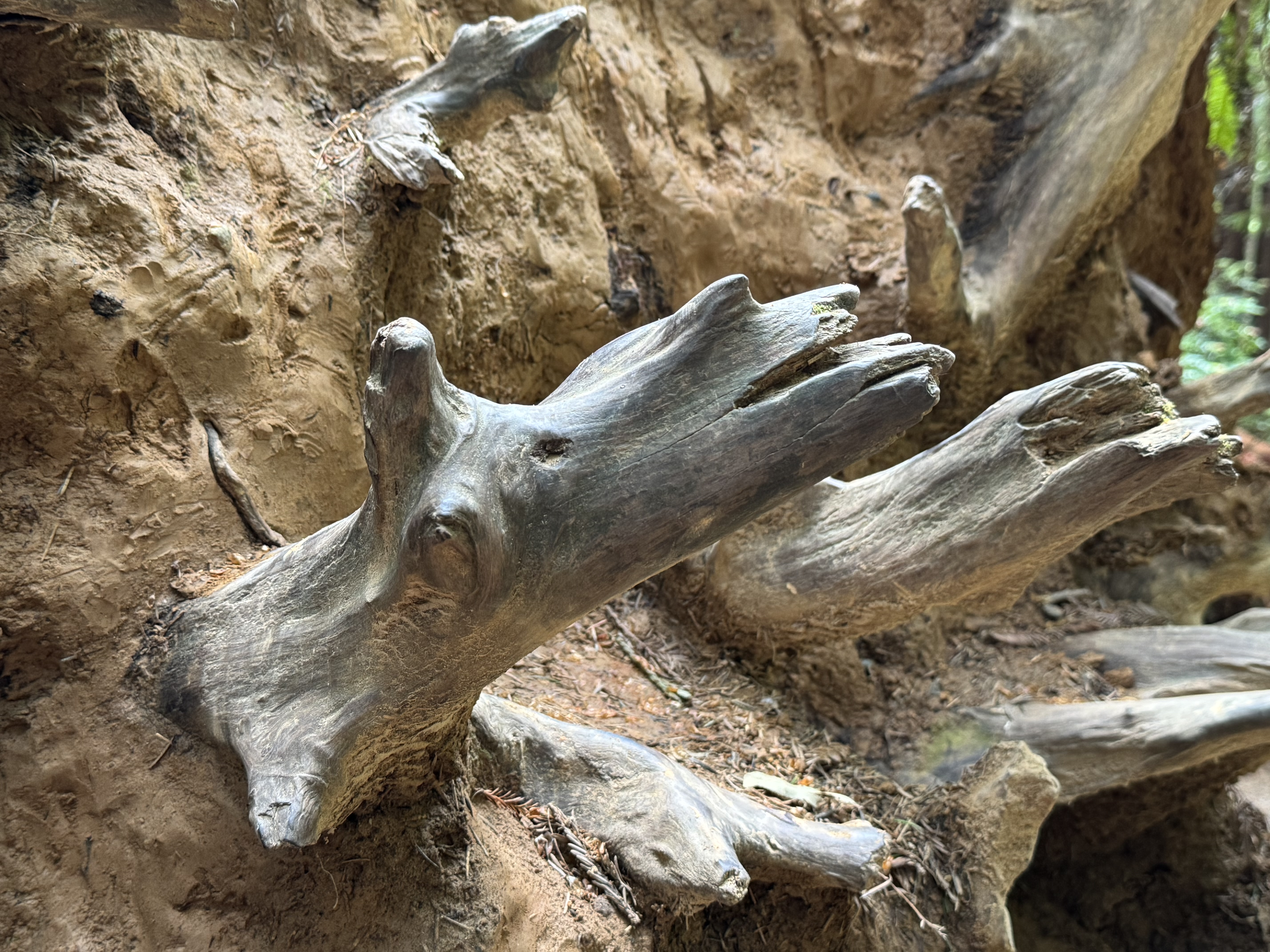
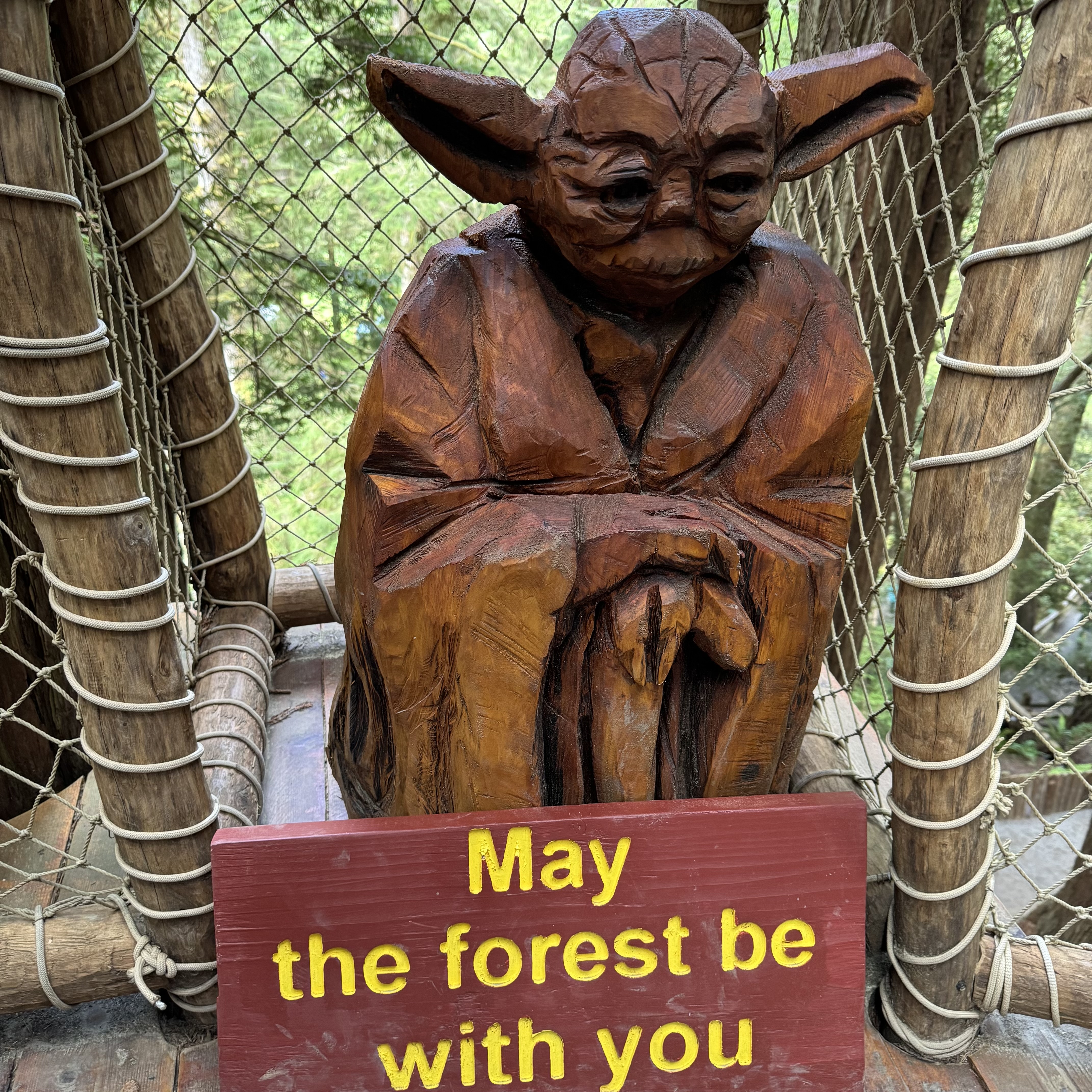
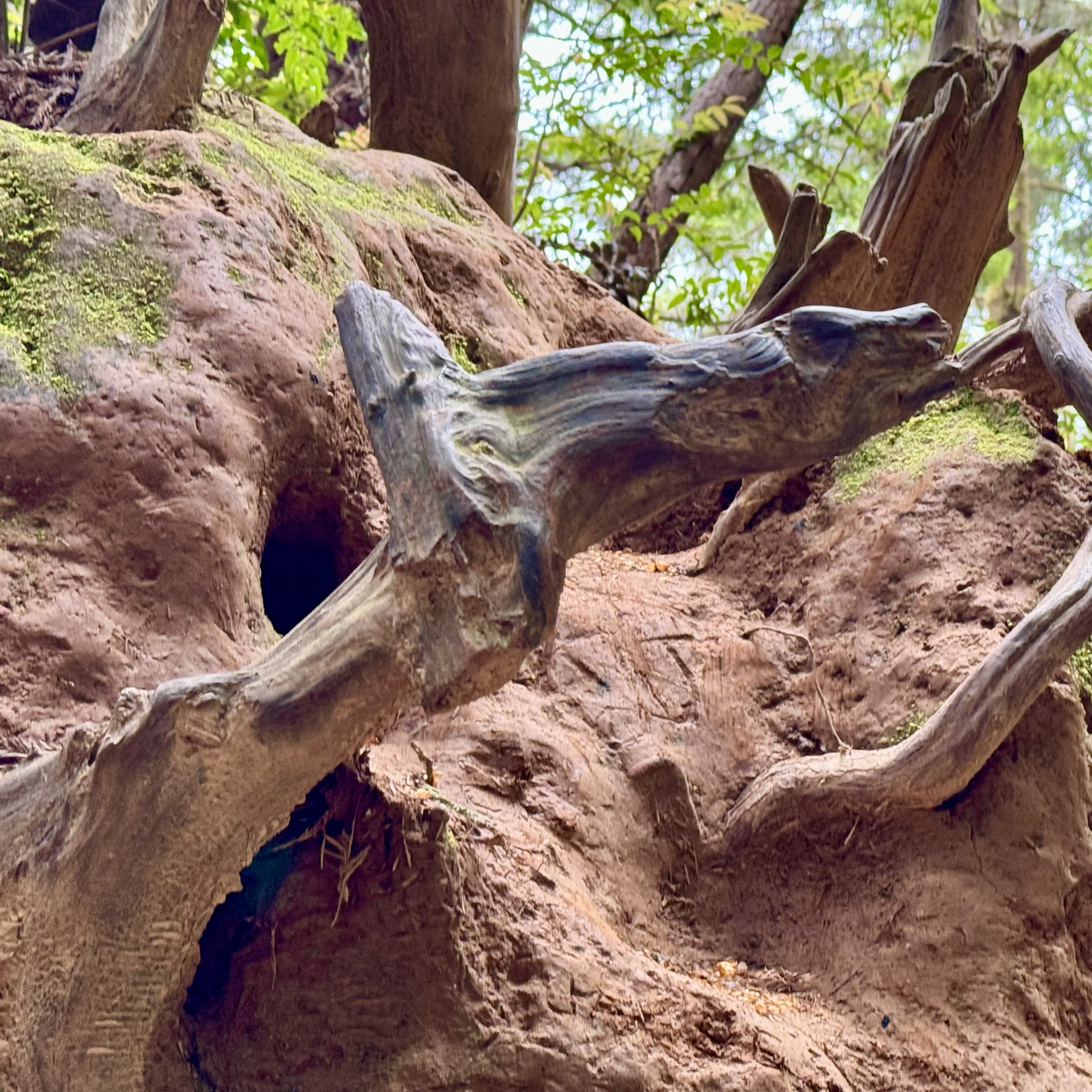
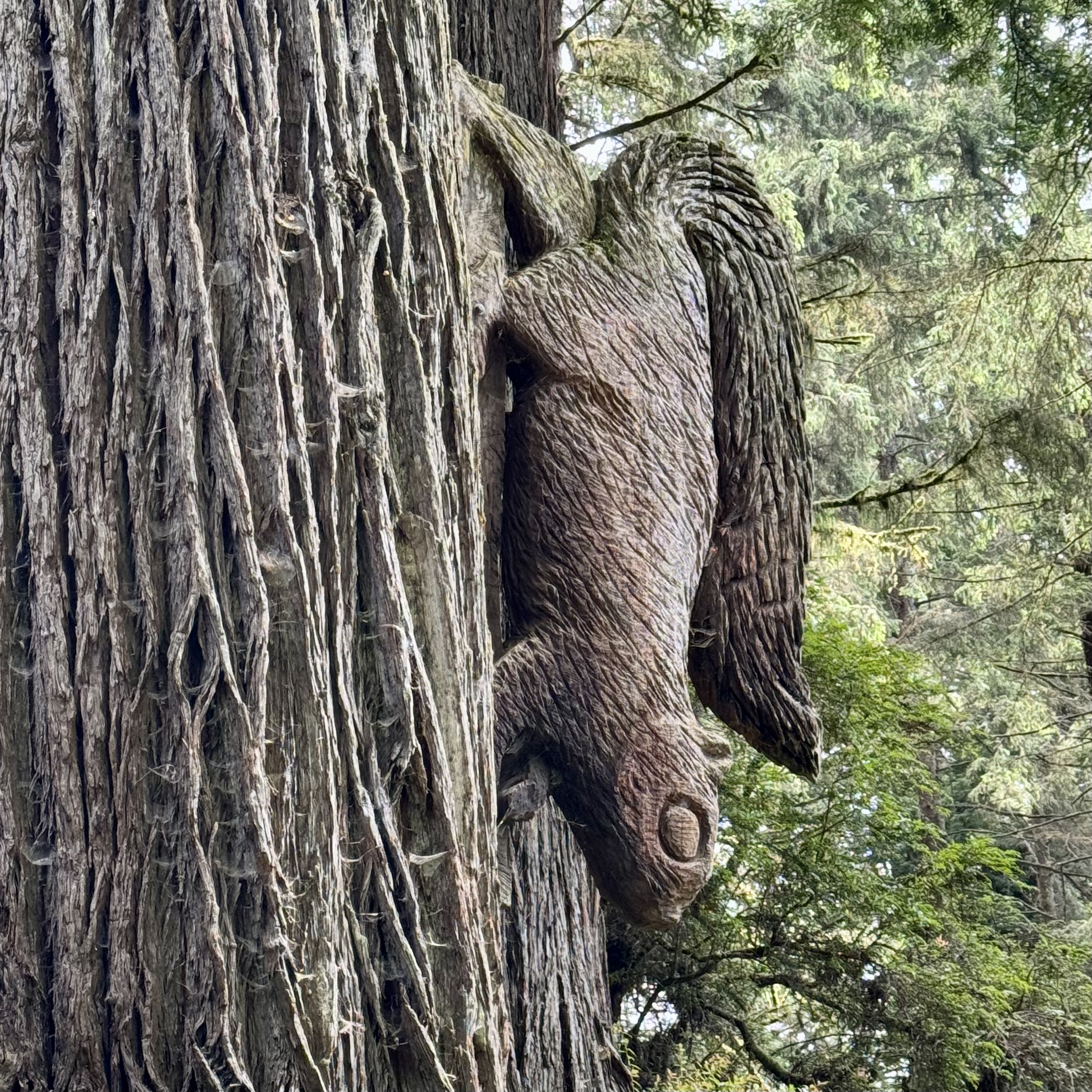
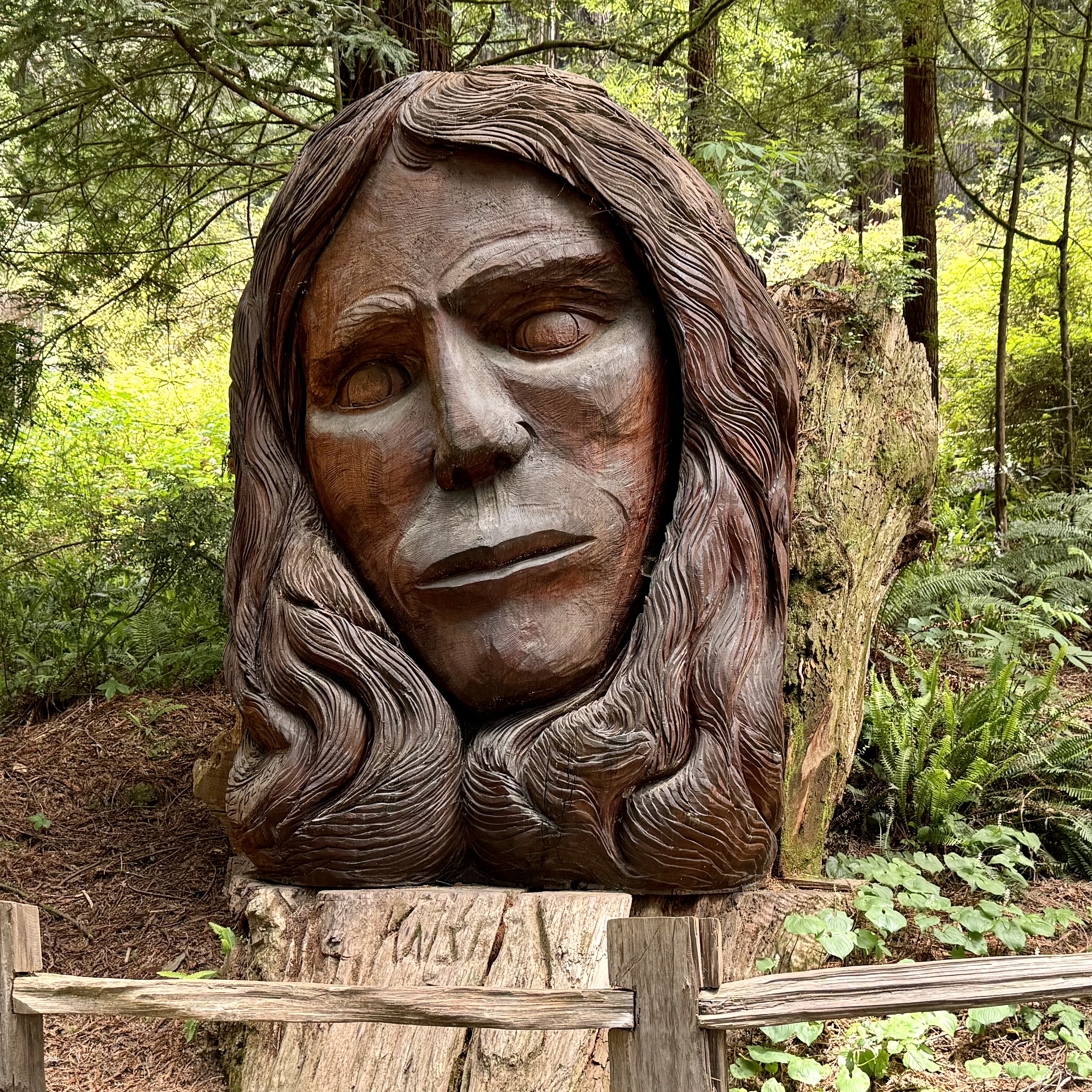
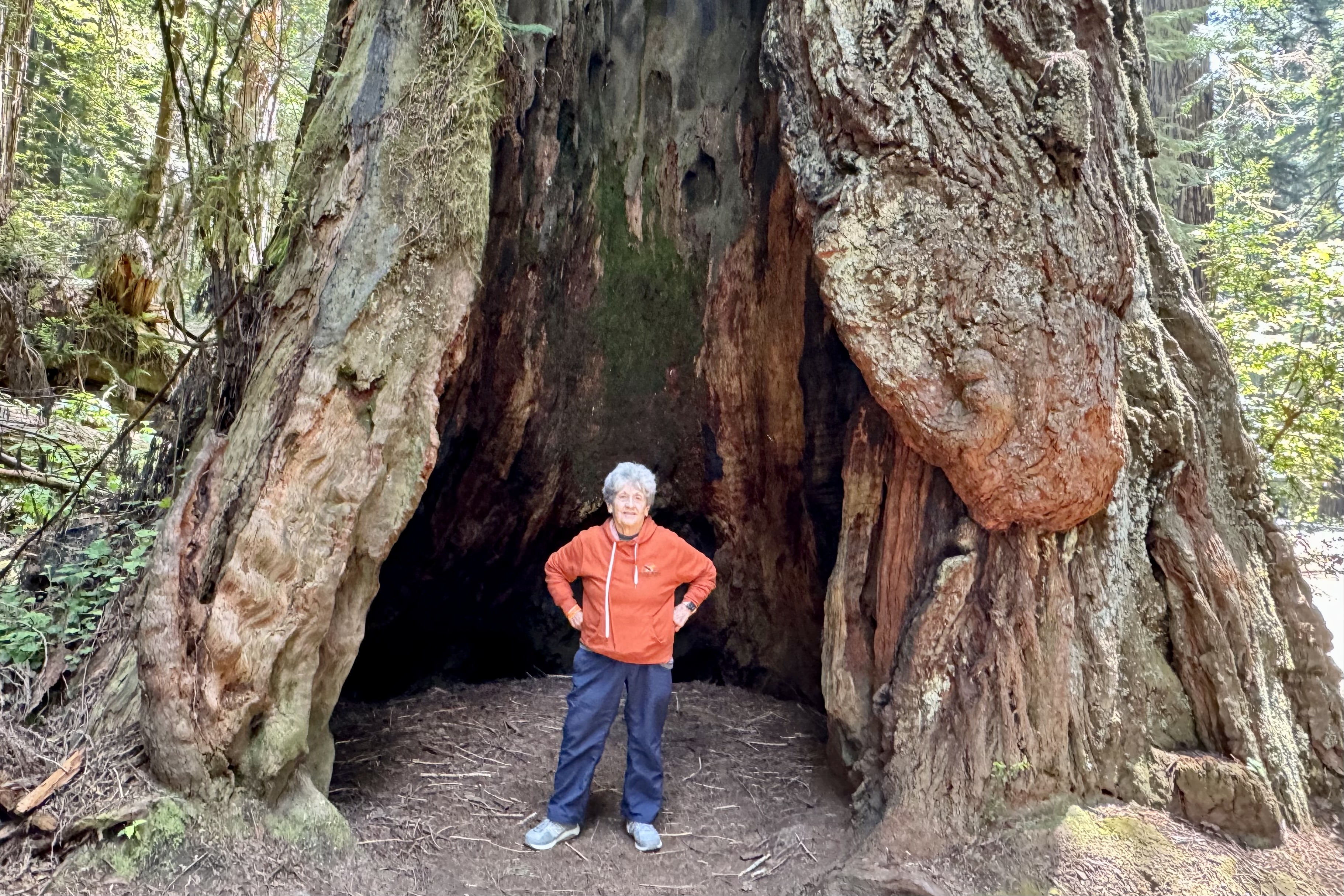
I never quite figured out what the “Trees of Mystery” were. But I let my imagination run wild , searching for some wildlife. Good fortune was with me for I spotted numerous wild “creatures” sculpted by the forces of nature or perhaps by the axe of Paul Bunyans but definitely not of the living variety. Can you spot the giraffe, alligator, Paul”s girlfriend…..

Not to be a total “Debbie Downer,” I enjoyed my visit  but after about 1.5 hours I had had my fill and we were off to what was for me a real experience of redwood old growth trees on part of the Brown Creek Trail in the redwood forest of  Prairie Creek State park, arriving via a pleasant drive down the Newton B. Drury scenic Parkway. I had no desire or need for human entertainment extras.  

Choosing not to patronize the hotel restaurant and preferring to soak in the sea breezes from our balcony,  a stop at Safeway for our own “room service” offerings was in order. After a delightful day, I spent a quiet evening of  breathing the salty air, listening to the melody of the waves, mesmerized by the ebb and flow of the water  and captivated by reflections of the sun on the panorama before me. 

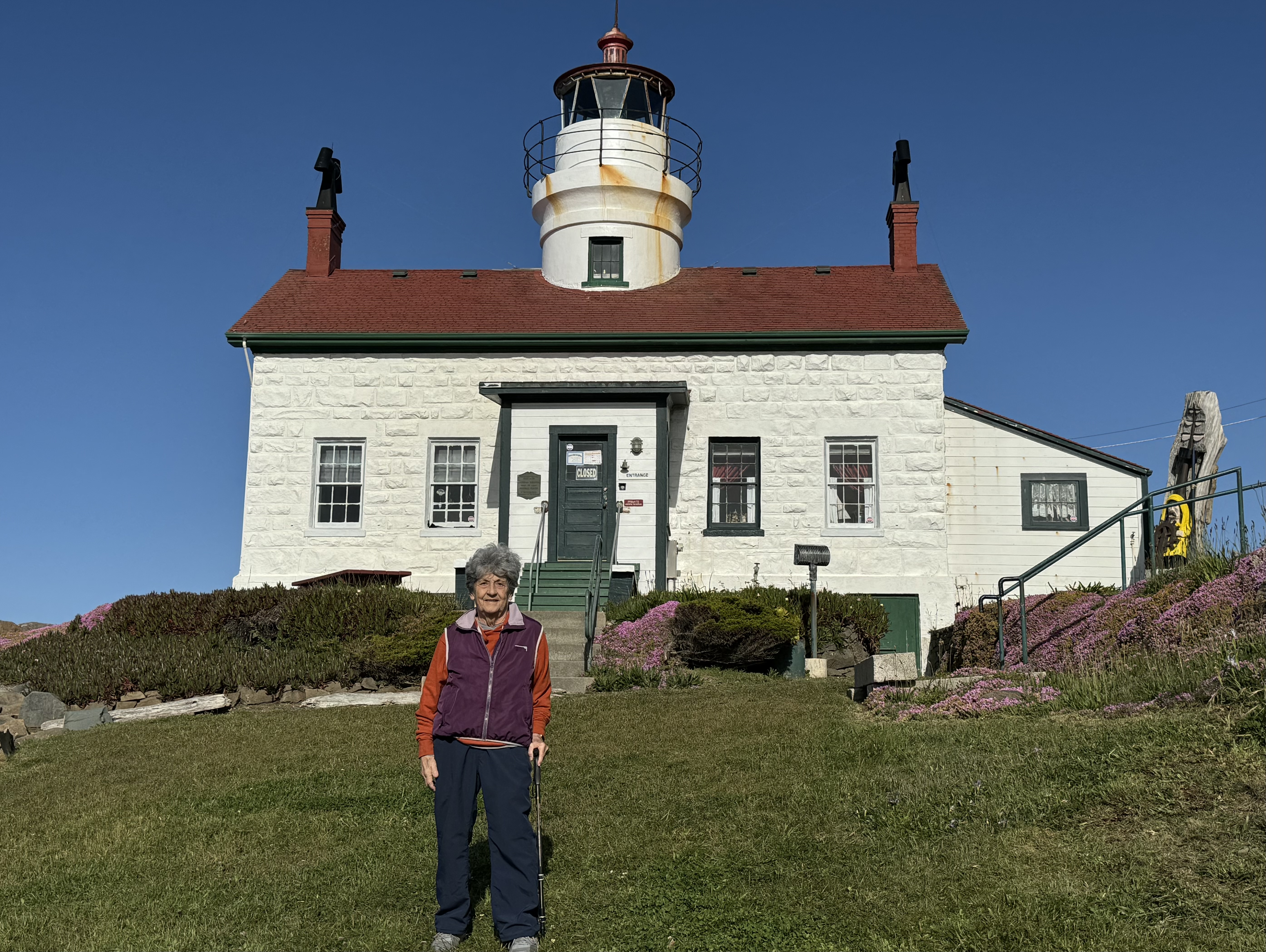
A visit to the Battery Point Island Lighthouse, a historical landmark,  the next day required being tuned into the tide charts as it was only at low tide when one could traverse the isthmus to the Lighthouse without wading through shifting sands, rocks  and the chilly chilly water. So we were out and about  around 7;30 am to catch the first low tide of the day. The harbor at Crescent City was booming during the mid-1800s due to massive redwood trees being harvested and loaded onto ships to build San Francisco and the US Government built a series of lighthouses along the coast.

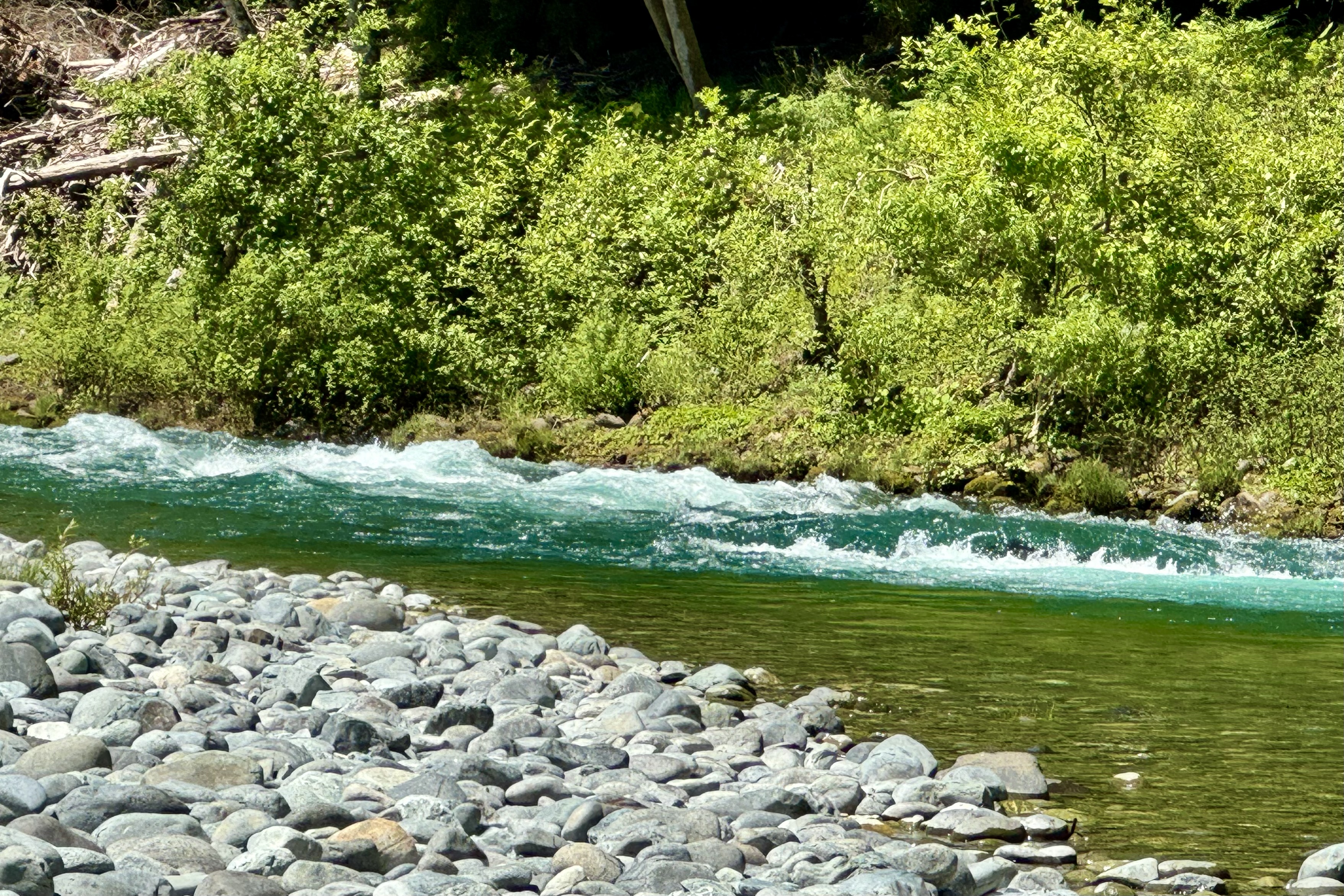
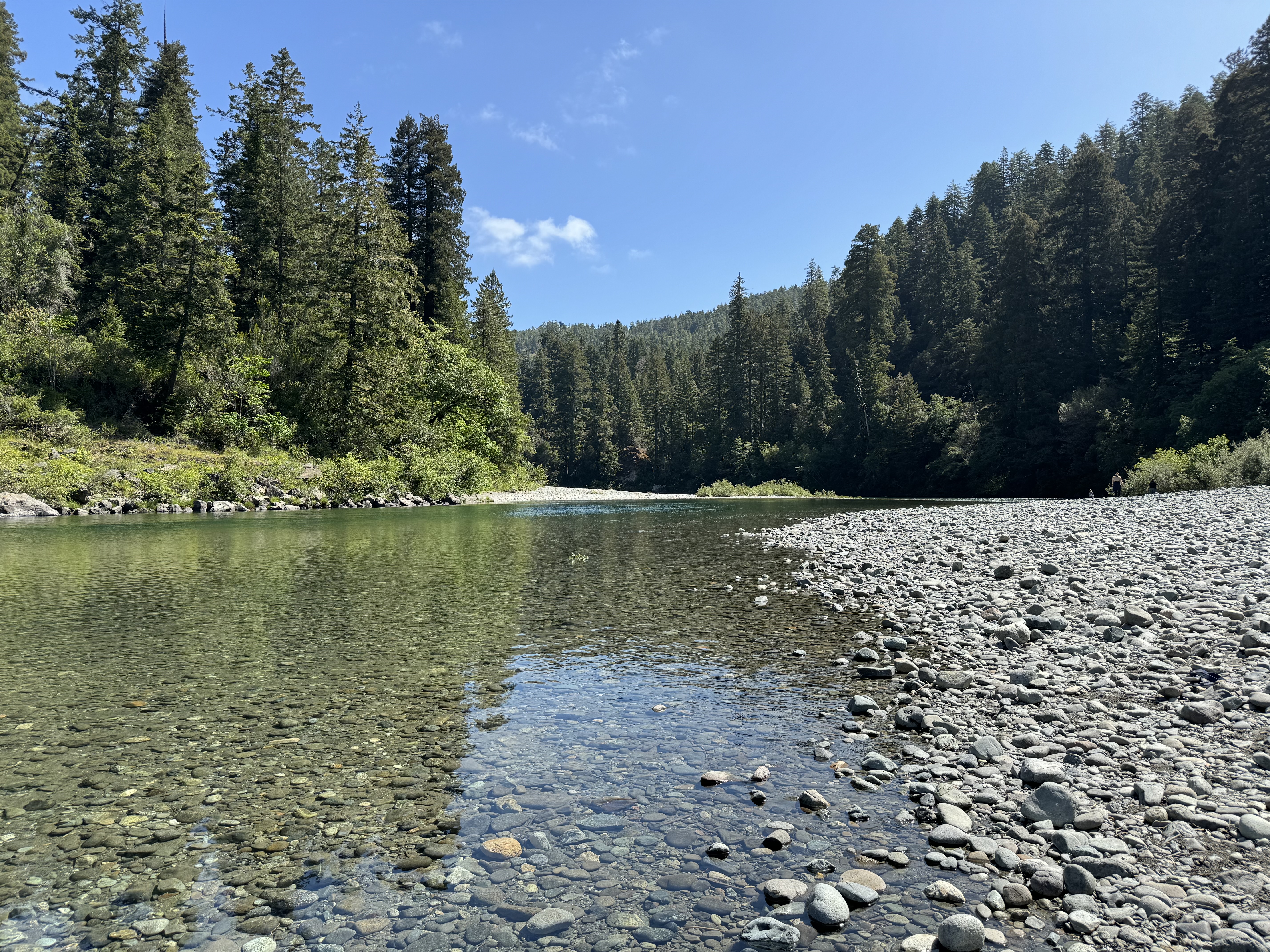
Though I would have liked to tour this historic facility, after enjoying the quiet  of the early morning seascape, I was eager to be on the road. to the Jedediah Smith Redwoods State Park and explore the Stout  Memorial Grove and other notoriously  massive trees. Being rather clueless about how to get where I was going, the first stop ended up at the South Fork of the Smith River and the Jededhia Smith State Park Nature Trail, which definitely was a good destination to be lost in. From there we headed over and about and around the forks of the Smith river to reach the famous and infamous, loved and hated Howland Hill Road. Howland Hill Road was a filming location for “Star Wars: Return of the Jedi” and is considered one of the most scenic drives in the Redwood National and State Parks.

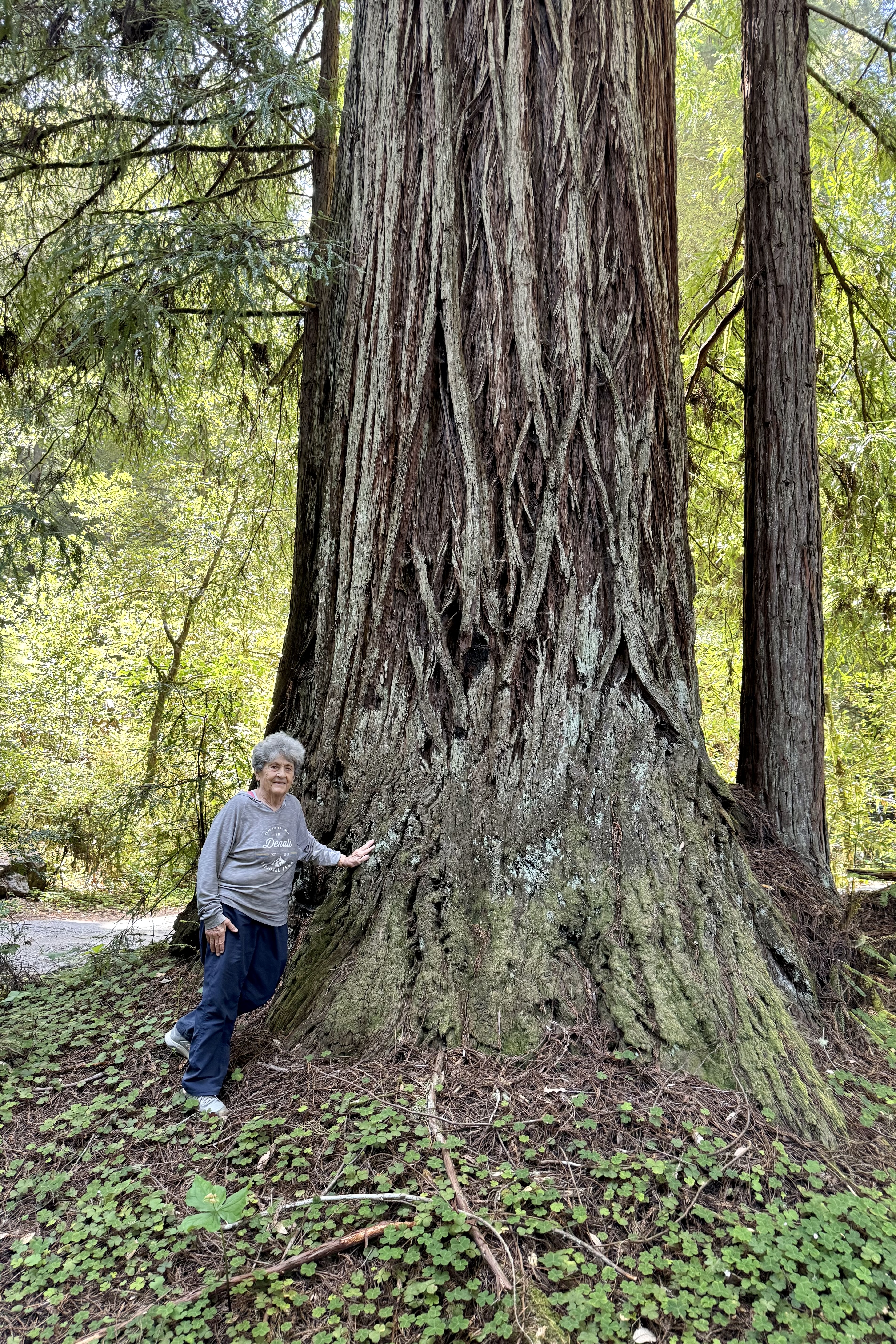
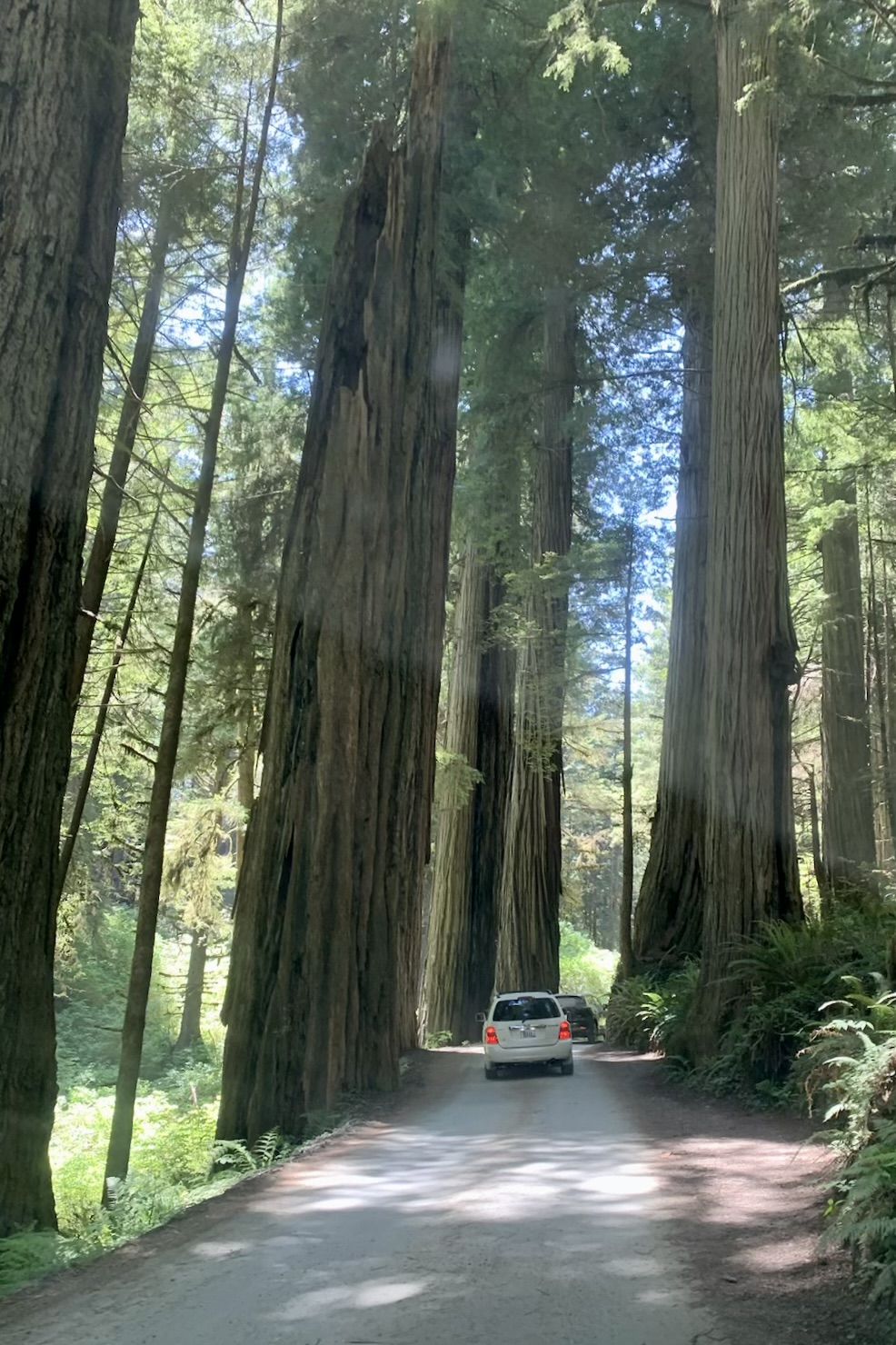
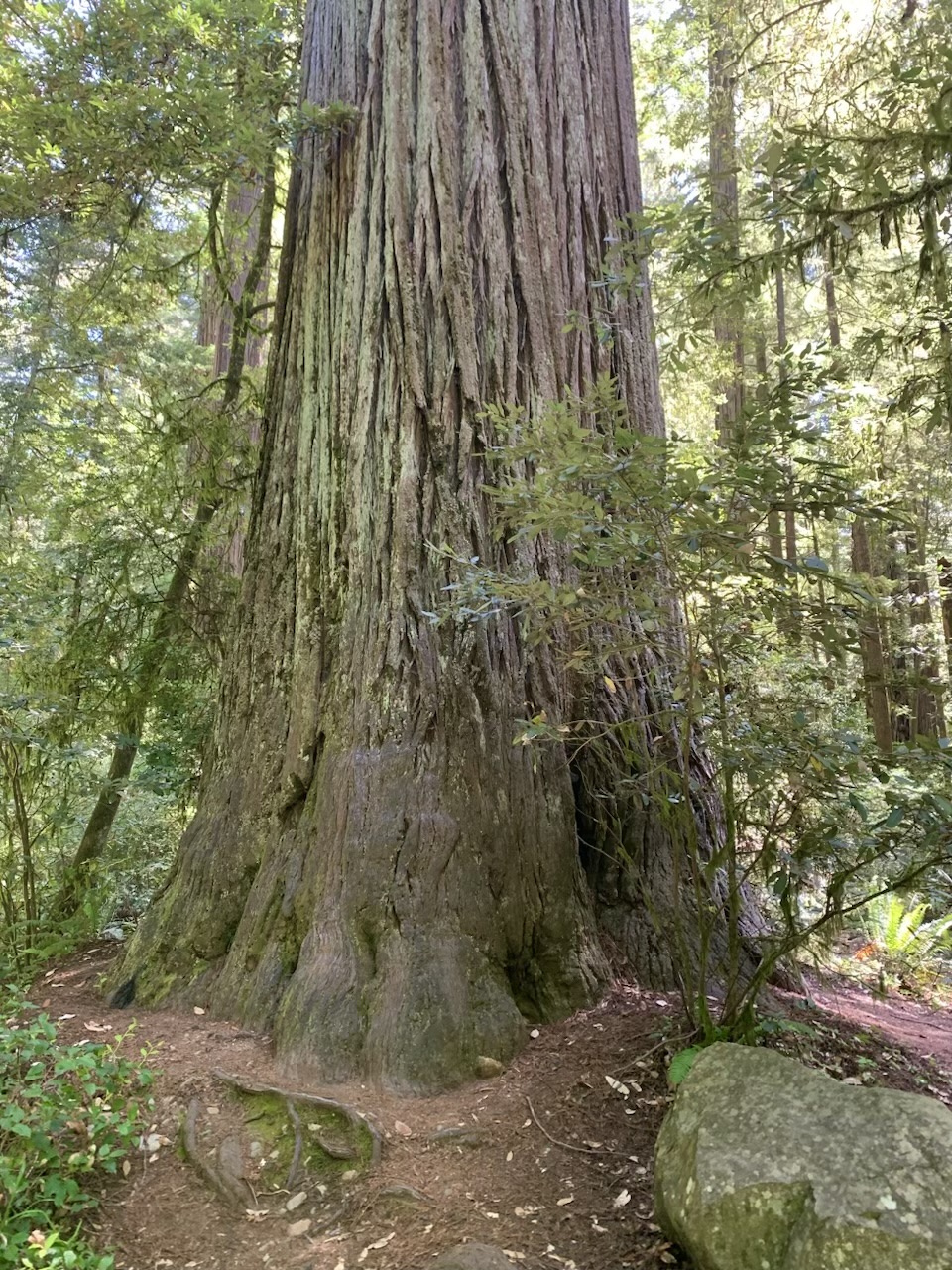
 If you can’t tolerate dust and  squeezing your shiny unblemished car between massive tree trucks, this is not the road for you. Part of this 10-mile road was once a stage coach road and my take on it is it hasn’t seen many  upgrades since that era. Most of Howland Hill Road is NARROW. It is a  non-tarred surface, single lane thus accommodating one car,  but naturally this is a two way road so one is required to make liberal use of the many pull-outs. It is about as intimate as one can get with a redwood without getting out and hugging it and it is akin to walking a path through the redwoods except in a car. Since this was a Sunday and Memorial Day week-end with halcyon weather, a myriad of folks also had their brilliant idea of driving the path of an old stage coach road so we pulled over and out again , over and out again and again. The road is not recommended for RV’s but there are always those individuals who believe they are the exception. It was as if they were driving a Conestoga Wagon on a path meant for a horse and buggy. After a wonderful hike of the Stout Memorial Grave, I opted out of stopping at any more trail heads to visit massive trees as the string  of cars parked on  the road near  every trailhead was extremely long. Walking the distance to the trail head would be akin to assisted suicide by the driver gawking at these very tall tree and oblivious to me on this road shrouded in a cloud of dust . P.S.  I absolutely loved the experience of driving this road. 

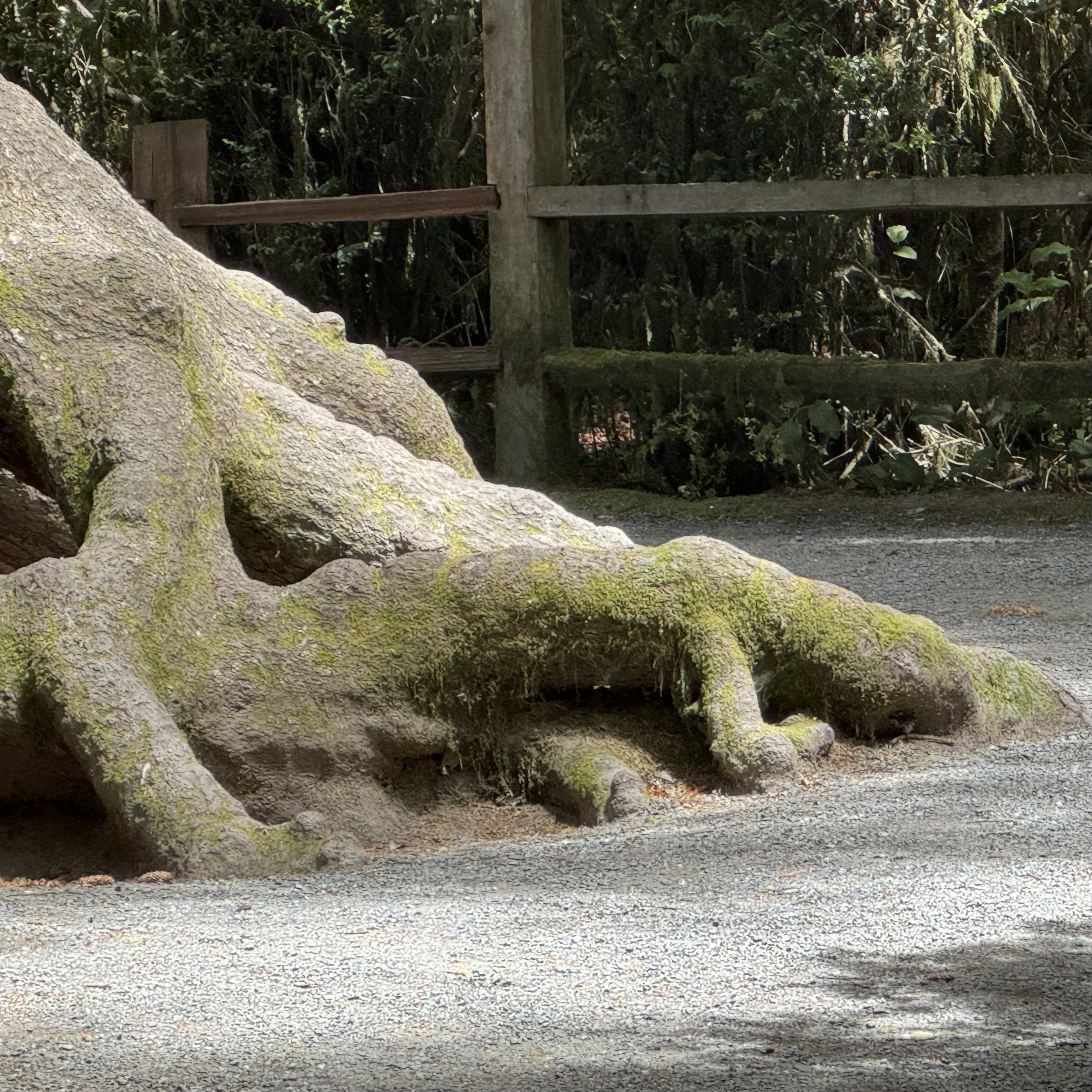
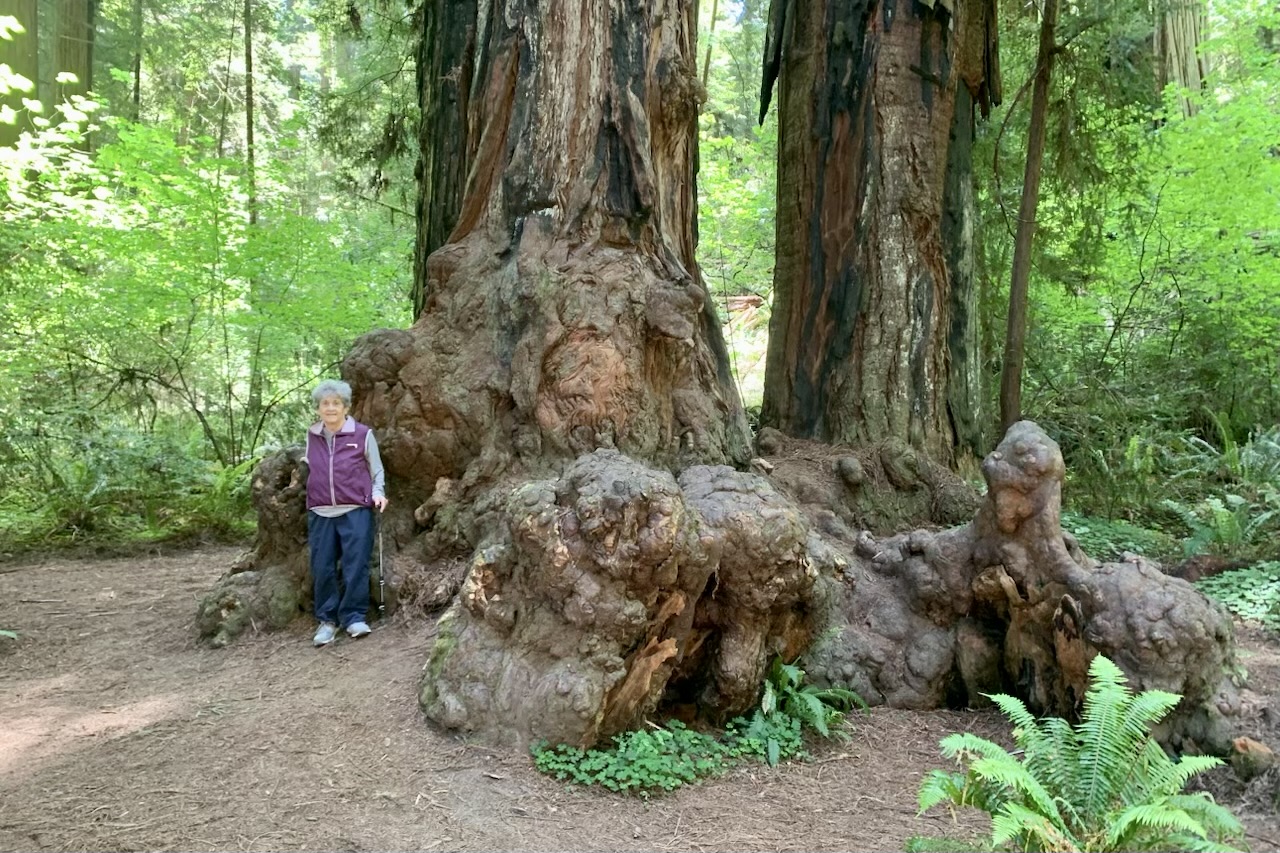
One thing of particular interest to me was the number of fallen trees. I subsequently read that between 2010 and 2020, a lot of big trees fell along the northern edge of the grove, where it borders the Smith River. Now the trail passes a nearly continuous string of fallen giants and the exposed roots of these uprooted Redwoods , which  in many instances remain intact.  One can observe  the intertwining web of redwood tree roots. These roots create a mesmerizing network that supports the towering giants and fosters a unique form of cooperation among the trees allowing these trees to withstand powerful winds and storms. We humans could learn a few lessons from this tree colony.

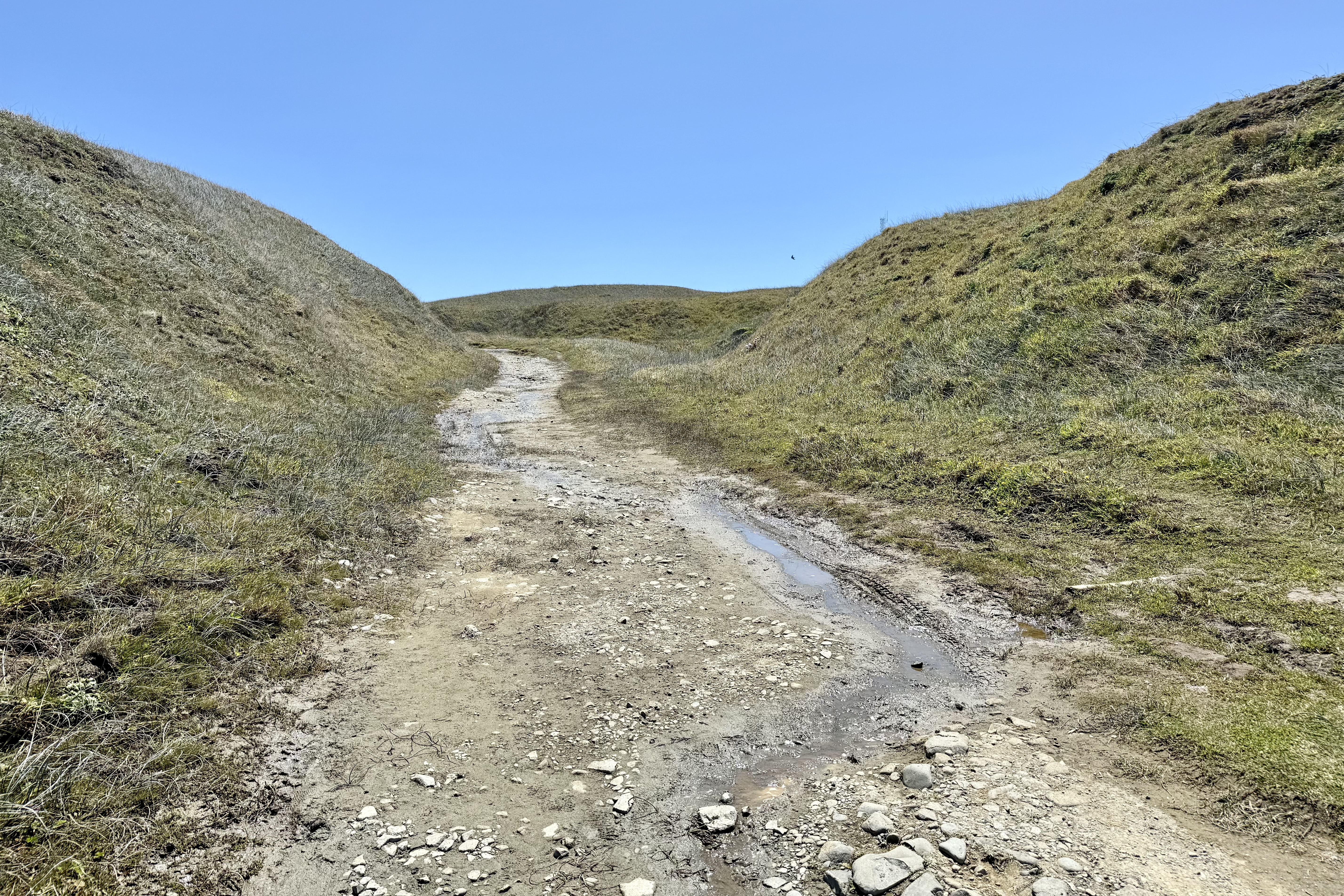
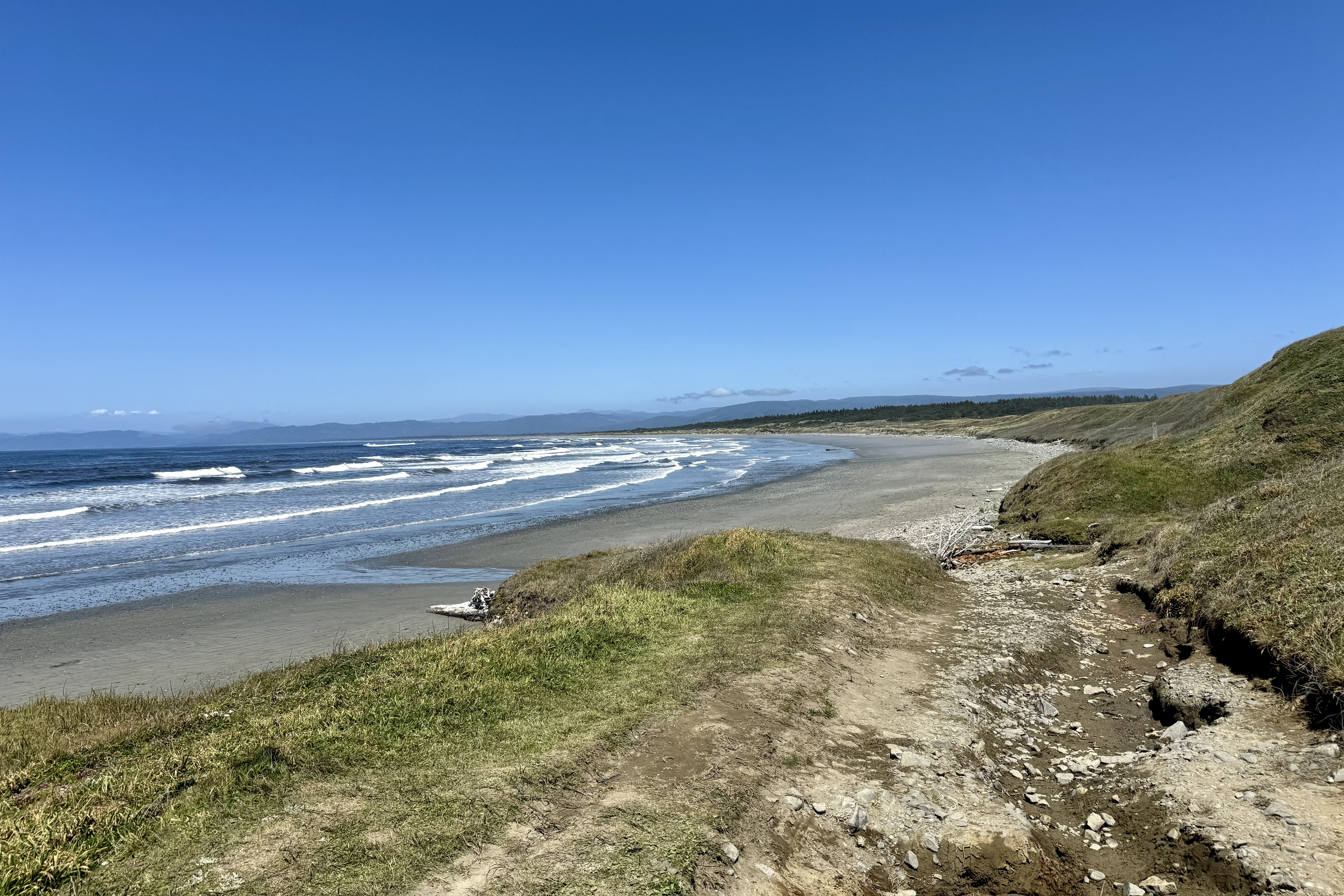
Having emerged from the Howland Hill  extreme adventure drive,  I swung north to Tolowa Dunes State Park and  Point St. George which is  located on the land of the Tolowa Dee-ni’. This is another area  with a very tragic history–because these are the ancestral lands of the Tolowa people, whose villages were attacked by settlers in the 1850s. The Dee-ni’ Holocaust began in California in 1851 with the goal of a war of extermination to continue to be waged between the two races until the Indian race became extinct. There was an  appropriation of one-million-four-hundred-thousand (1,400,000) dollars to pay vigilantes to destroy them under the slogan that rang across the land: “The only good Indian is a dead one”. A few hundred survived and were driven to concentration camps. Gazing across these ancestral lands yet again fills my heart with rage at the atrocities rendered upon native Americans in the white European settlers imperialistic   expansion of the West under the tenets of “Manifest Destiny “ – seeing their expansion  as a divinely ordained, moralistic assertion of American exceptionalism.

I drove until the road dead ended into a parking area and walked a path over dunes to the water and a relatively secluded beach bordered with driftwood. It was a nice contrast to the experience of the Redwood Parks to the south. Feeling sated by water and wood it was time to return to the hotel and enjoy the sights and sounds of the sea as it lapped the shore before me. A simple dinner of a Caesar Salad and clam chowder in the restaurant was a perfect end to a spectacular show produced by Mother Nature and Farther Time!.

Cattish Foxes, Barking Lions, Flipper’s Cousins

Santa Barbara Channel Dolphin Super Pod

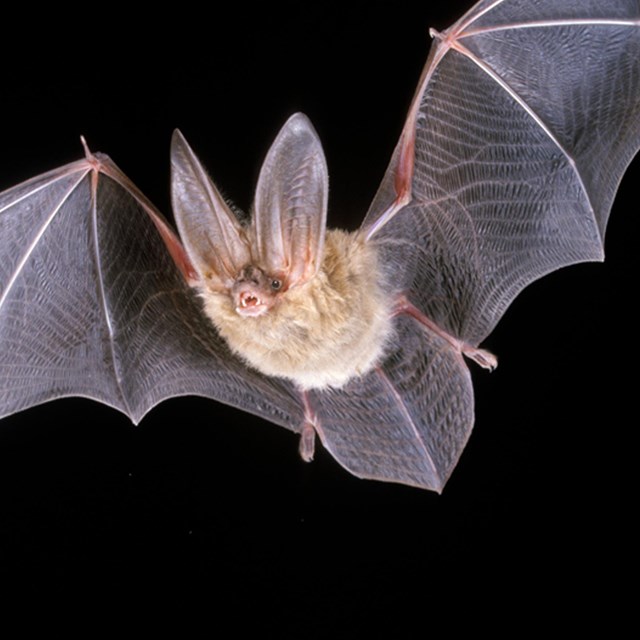
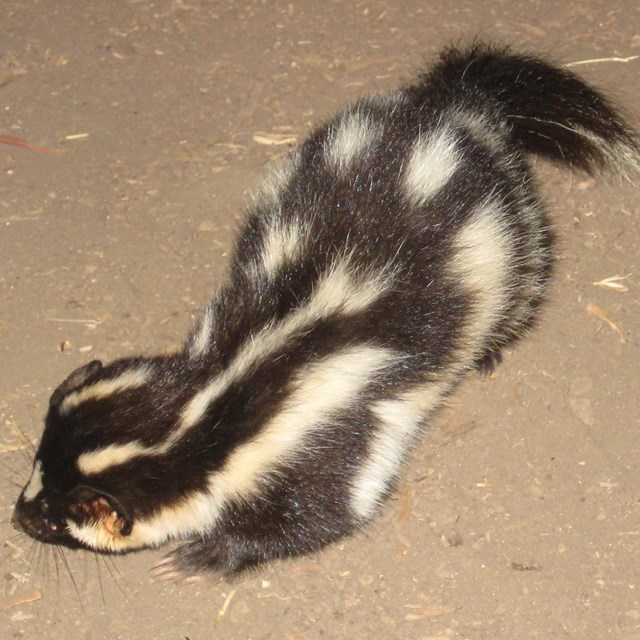
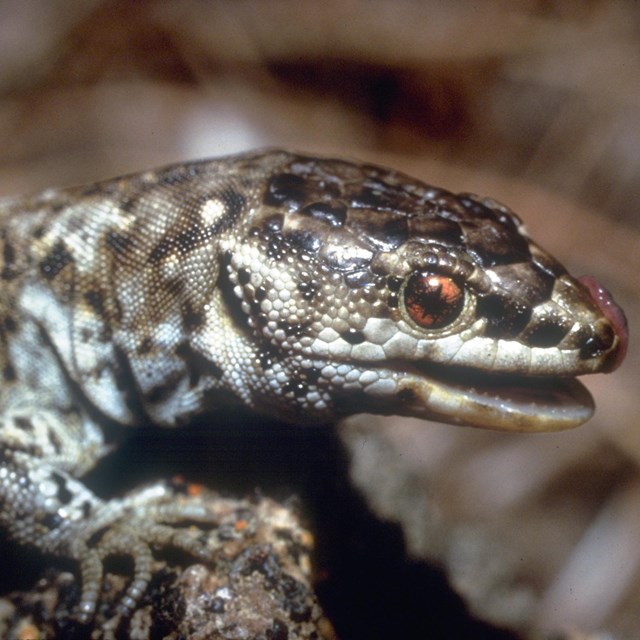
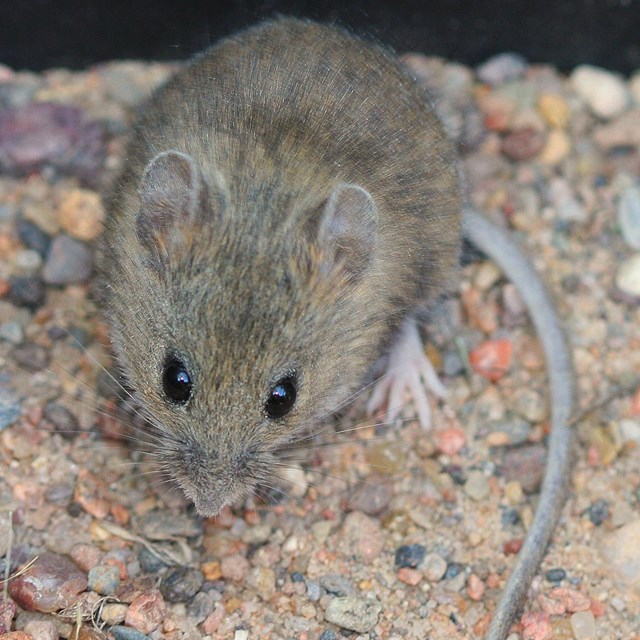
I had no idea what to expect when booking with Island Packers for a cruise to the island of Santa Cruz in Channel Islands National Park off the coast of California. My idea of “islands” is based mostly on my experiences in Florida, Hawaii, and the Bahamas with wide sandy beaches and swaying palms, ocean breezes, and balmy temperatures. As a “first-timer” to this park I had an inkling it would not be a typical Florida coastal island. Having been advised that there were no concessions, I packed a lunch, hiking poles, sun hat, a hoodie sweatshirt, and wore hiking boots, Perfect! Tasia and I arrived at Island Packers with plenty of time to spend money on hoodies, patches, and get the NP Passport stamped. Upon checking in at Island Packers, the person handling our reservations confirmed that we were spending 7 nights camping on Santa Cruz. Well that certainly was a surprise to me as my intention was to spend six hours. Seems I mistakingly (or perhaps a computer error since I don’t make mistakes like this) booked the following Saturday for our return. I only choked a little when she commented that she hoped she could be able to get us a seat on one of the retuning vessels that day. It would have been a rather chilly night sleeping under the stars in the campground with whiffs of the invasive blue and red gum trees (eucalyptus) which shade the campground; with a variety of nocturnal visitors including those adorable Island Foxes and other wild creatures such as Townsend’s big-eared bats, an island deer mouse or two (which carry deadly diseases); a spotted skunk, or a variety of lizards, snakes slithering about… My imagination was running wild when she triumphantly said there were seats on the 4:00pm return! I breathed a sigh of relief (though I love camping in my zippered up nylon Tent) and we were off shortly thereafter

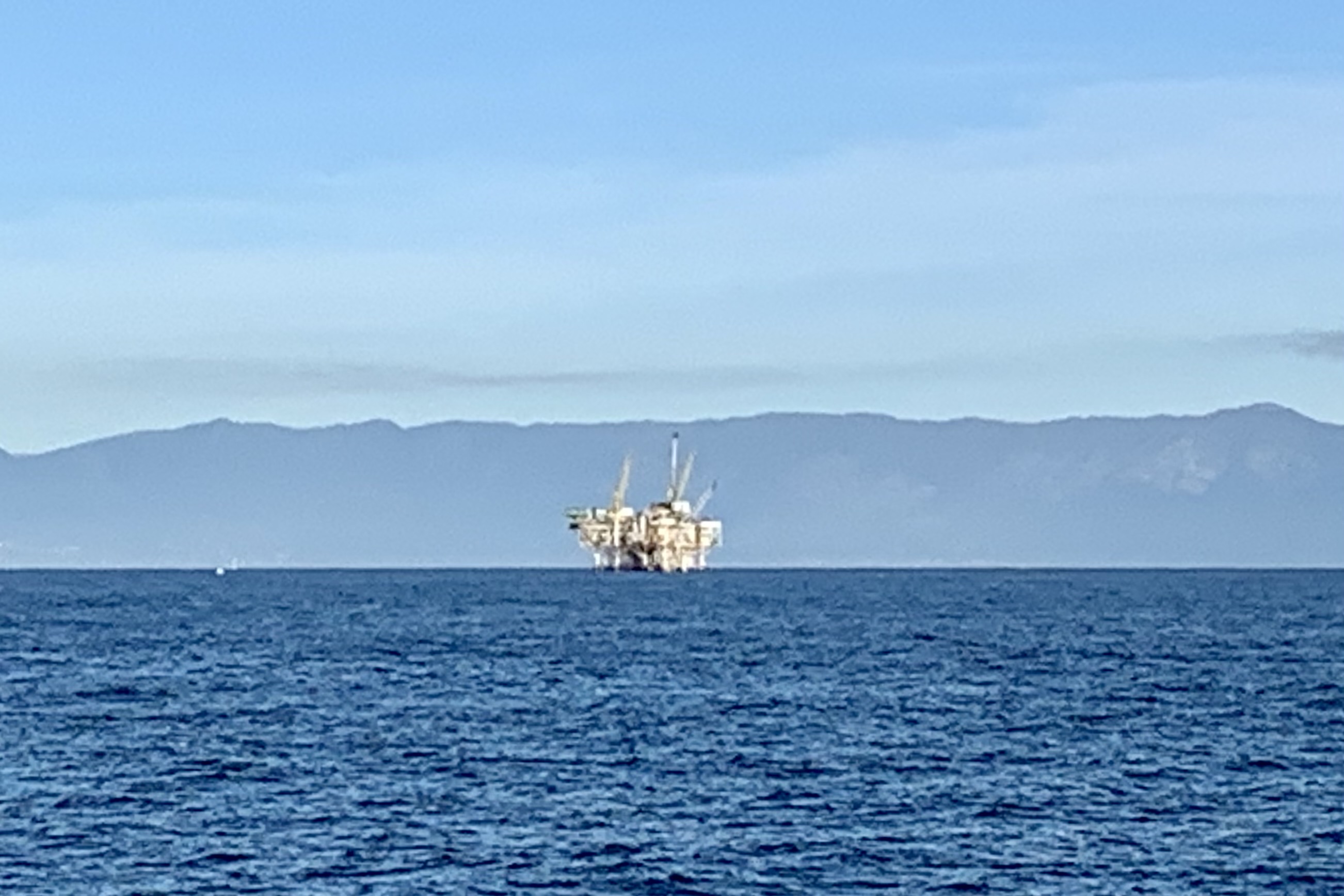
Though the Island was the destination and I imagined it would be the highlight, the Island Packers Cruise was the most thrilling. I noticed with interest several oil rigs in Santa Barbara Channel and from some  brief research I found that drilling has ceased and the wells of platforms Grace, Gail and Habitat, which we could, see have been plugged. 

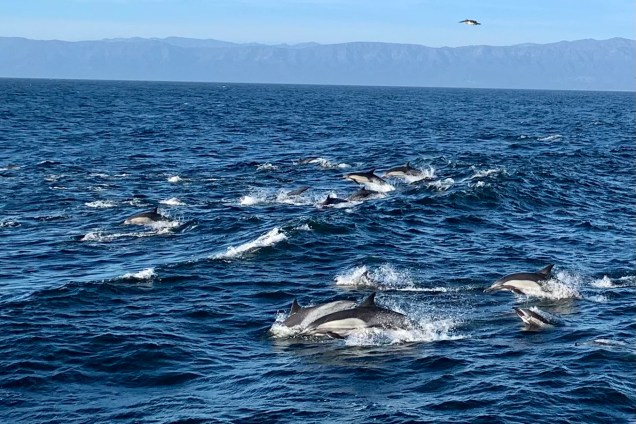
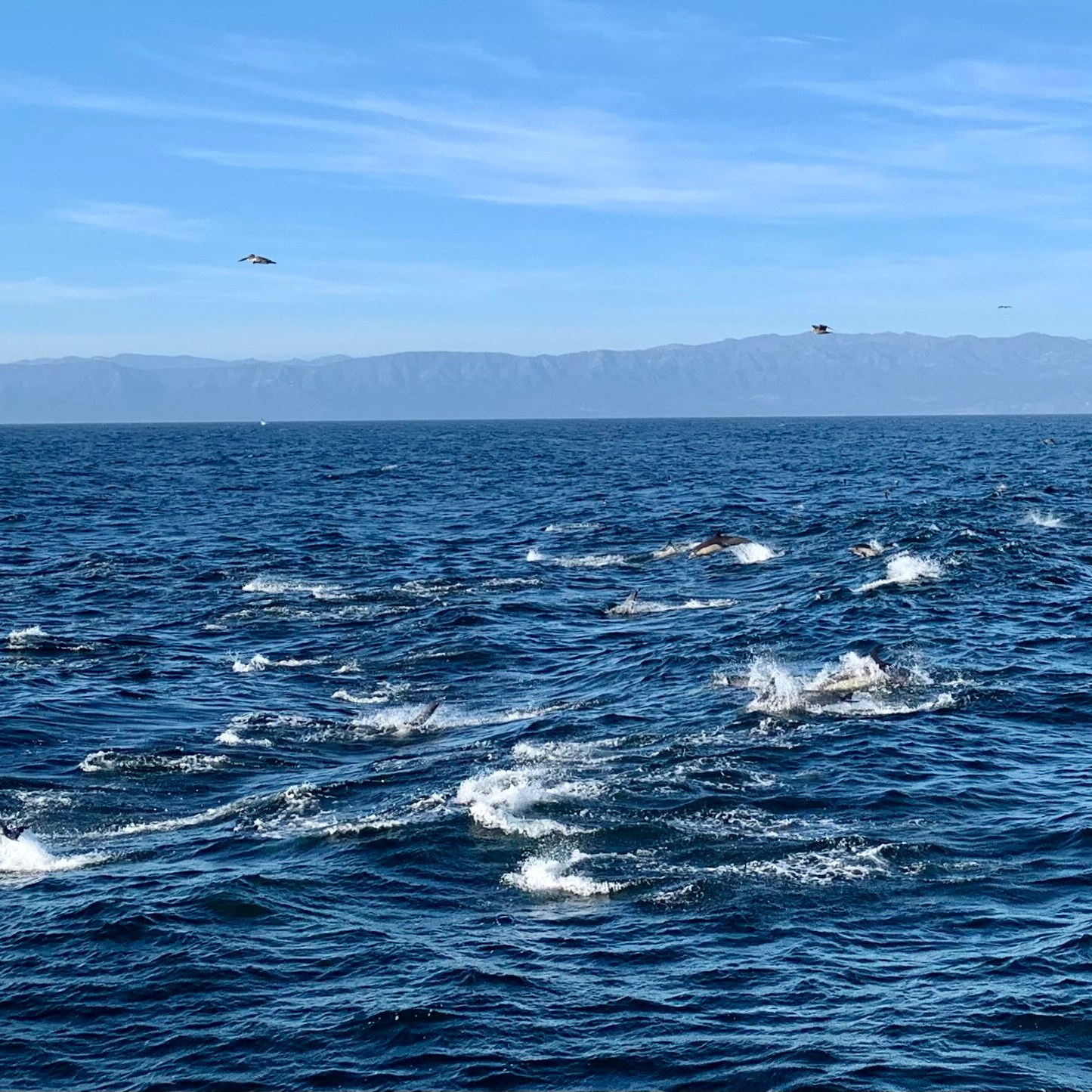
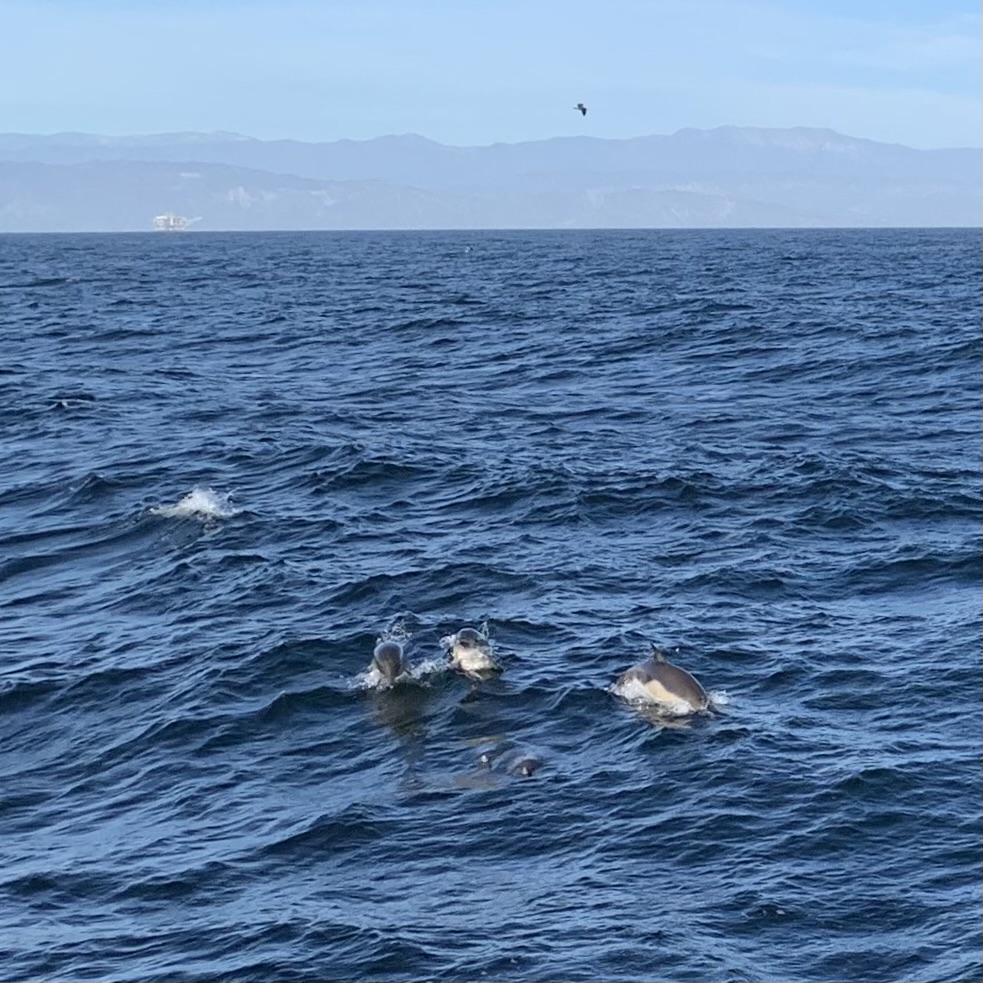
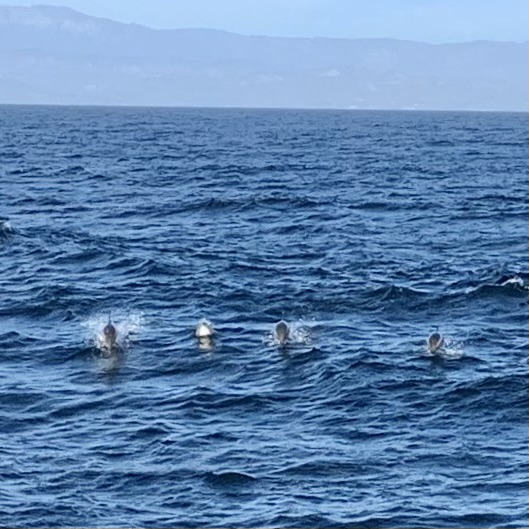
We were headed to Scorpion Anchorage and enjoying the ocean breezes on the upper deck when the captain announces that there was a pod of dolphins swimming alongside. To my astonishment they could be seen in front of, behind, and just about in every direction that I feasted my eyes on. There were hundreds of dolphins in this superpod. The sight of these dolphins speeding through the water was mesmerizing.  The traveling speed of the Islander Explorer is  usually  about 25 miles per hour and dolphins normal cruising speed is 3-6 miles per hour. But these marine mammals were swimming FAST in the wake of the vessel.. If they enjoy their wake surfing as much as I enjoyed wind surfing or water skiing they would be having a spectacular experience.

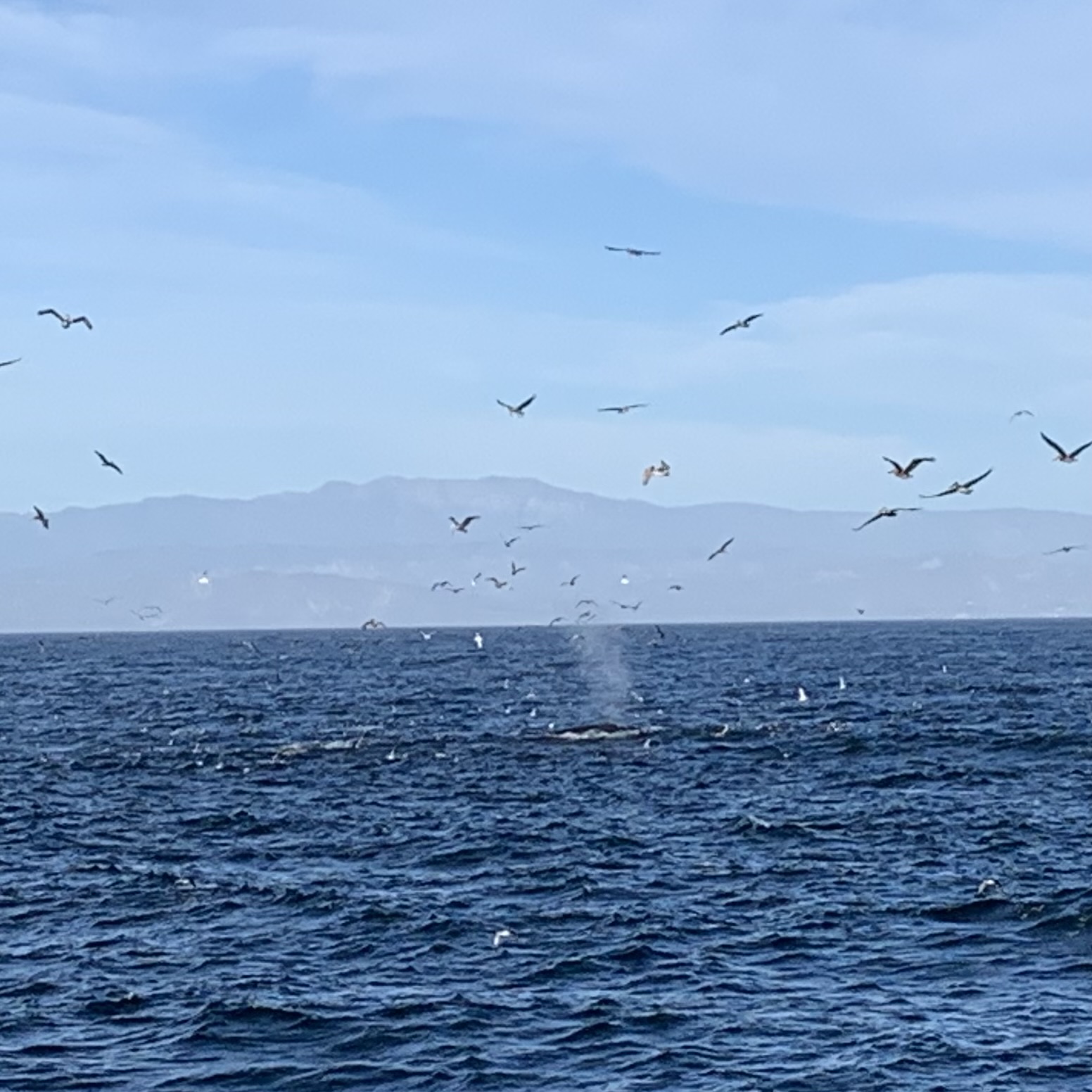
Swimming with dolphins is a very popular adventure seeking activity but I am quite sure I would have no desire to swim with this speeding herd of dolphin. It became evident that they were either taking performance enhancing drugs or have cleverly figured out that with the wake of the boat they can swim faster and use less energy to the cheers of the adoring crowd and perhaps feast on some hors d’oeuvres of churned up shrimp, herring, squid, or even a jelly-fish or two. Above us was the requisite scavenging of sea gulls. It definitely looked like these cousins of Flipper were having fun as they thrusted, jumped , dove and surfed the waves though that have yet to perfect the tricks of the famous TV star of the 60’s Flipper, i.e. her  trick of tail walking or perhaps launching herself in the air, twisting and halting mid-air… which would have nicely created a better photo op for their fan base of the moment. They were having a whale of a time in the midst of the more allusive humpback whales in the Santa Barbara Channel. Though numerous, the dolphin entertainment team was not as massive on our return trip, there also was an opportunity to see a  humpback whale spouting, breaching, slapping its fins and then deep diving.

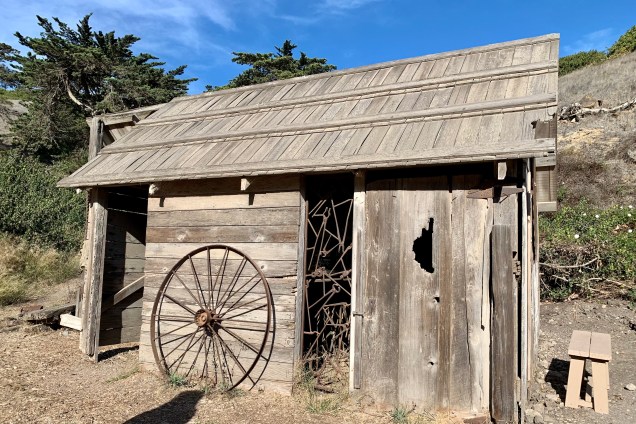
Santa Cruz, the largest of the Channel Islands lies from 19-25 miles off the mainland coast between Ventura and Santa Barbara. Today the ferryboat ride was about an hour and a half dock to dock. Since the guesstimate was one hour the power need to pull all of those dolphins in its wake slowed it down!!!! Though it is much more likely that the captain slowed down so we could adore the dolphins. Once docked at Scorpion Ranch (which once was a sheep farm), we planned how we were to spend our limited time there. With only about six hours on the island there was barely time to experience the huge variety of activities available. 

First off we chose not to wait in the very long lines for the pit privies and perused the museum and learned of the history of ranching as the economic mainstay by the late 1800”s…and how the introduction of non-native flora and fauna had a devastating effect on the ecological dynamics. Fortunately the natural biodiversity is being restored with the stewardship of the NPS and Nature Conservancy. Only the eastern  24 percent is owned and managed by the National Park Service with the other 76% owned and managed by the Nature Conservancy.. Since this  is a nature reserve it is not a tourist trap with a plethora of gift shops or restaurants. You bring in your own food and pack out all of your trash. The most elegant of services is the outdoor latrine (though less elegant after the 149 people from the boat used them) and potable water available in the Scorpion Canyon campground. This definitely contributes to keeping the crowds down as well as the fact that there are no trash cans and you have to transport your own garbage. 

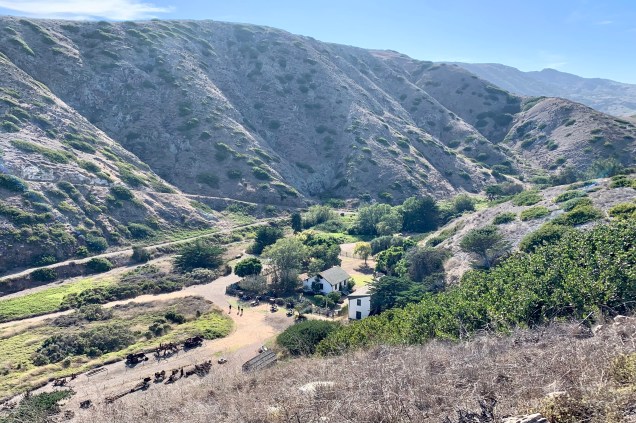
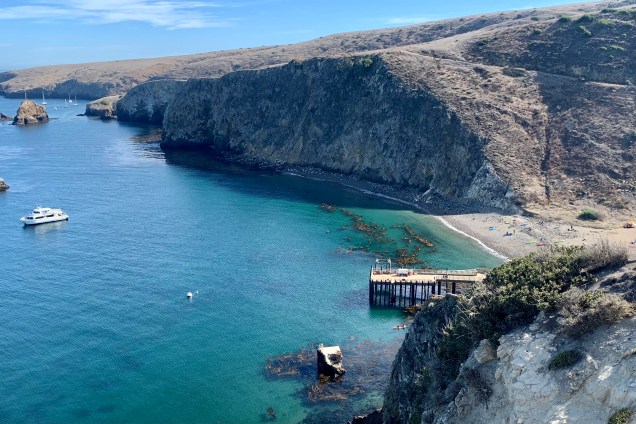
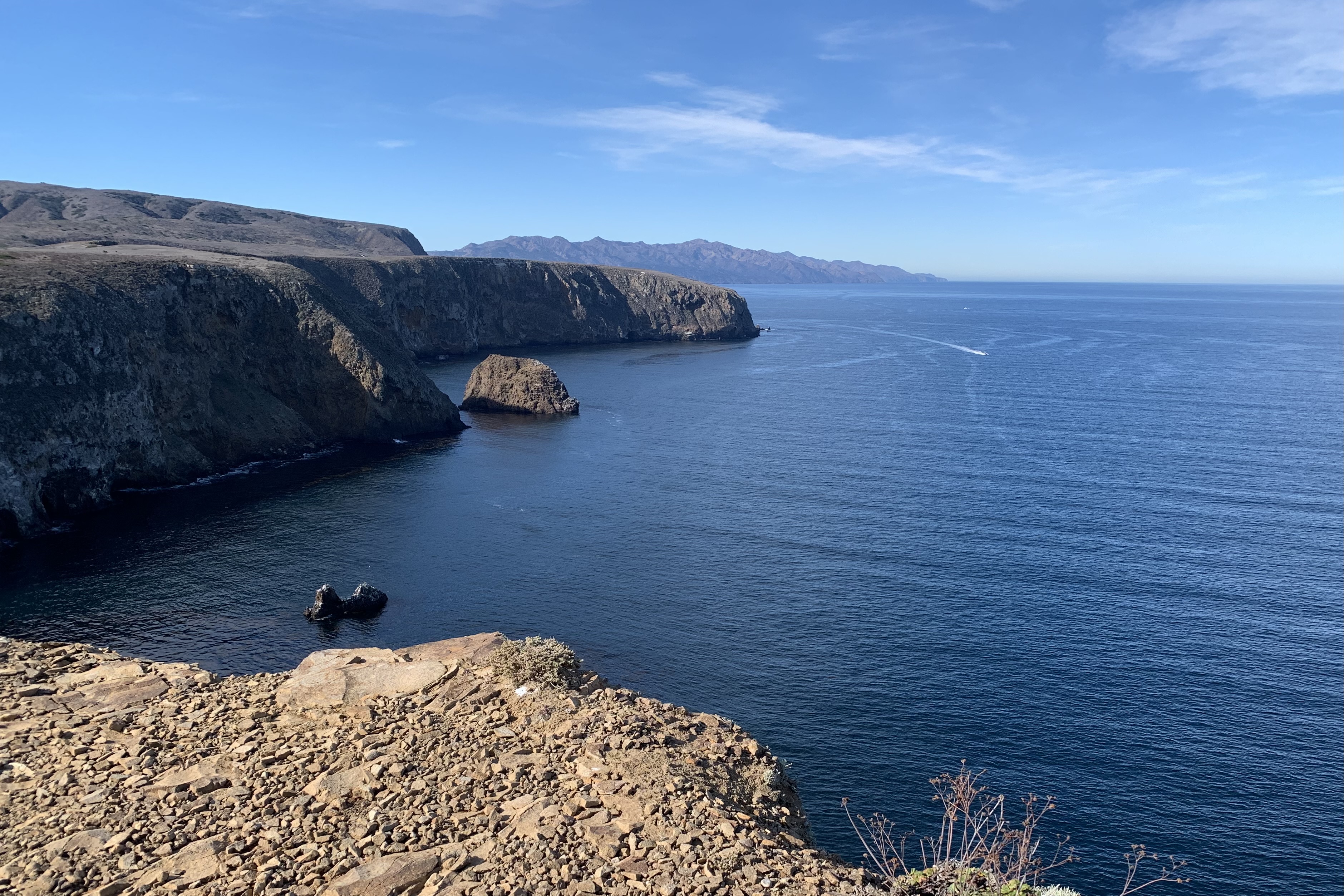
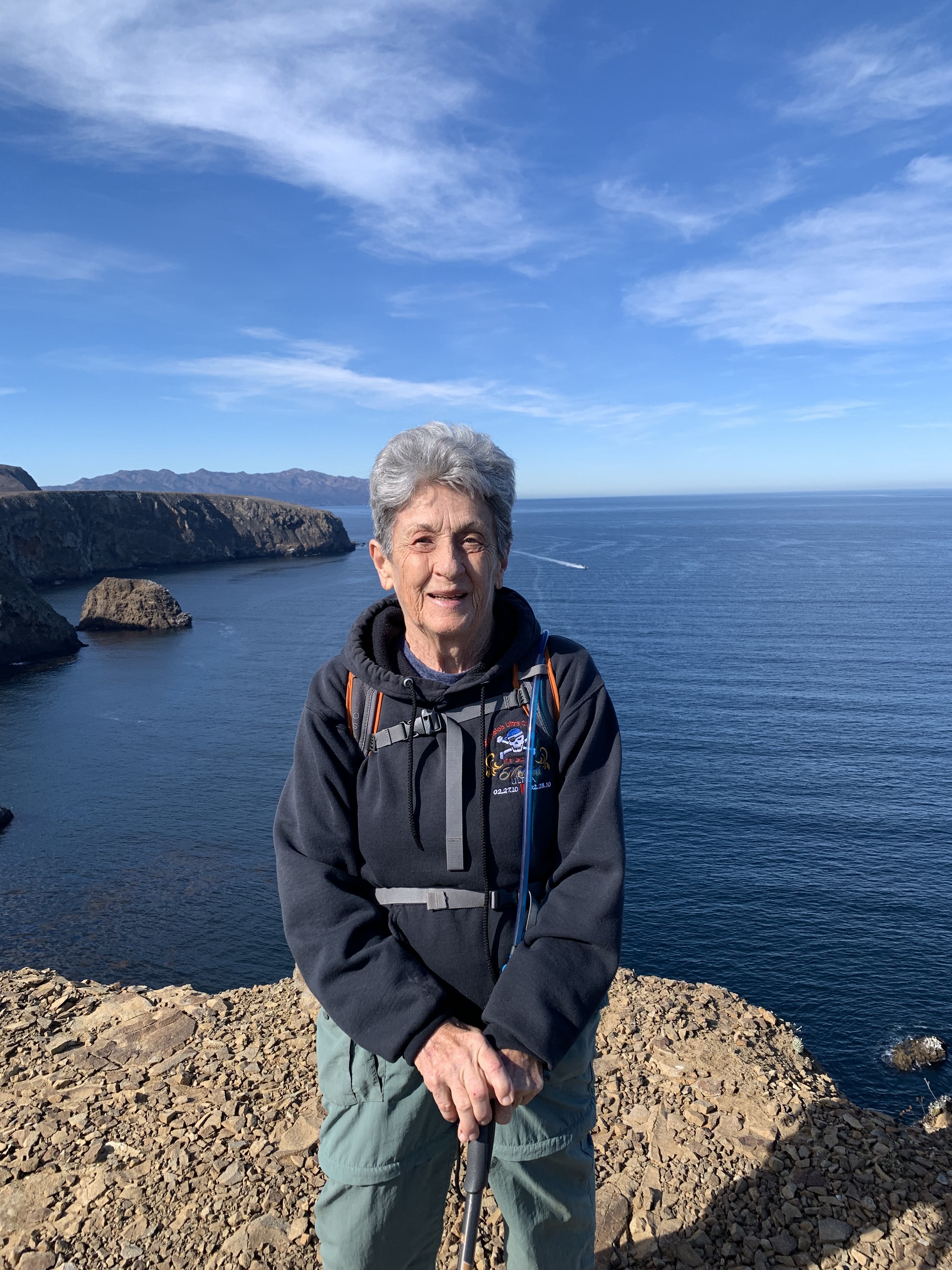
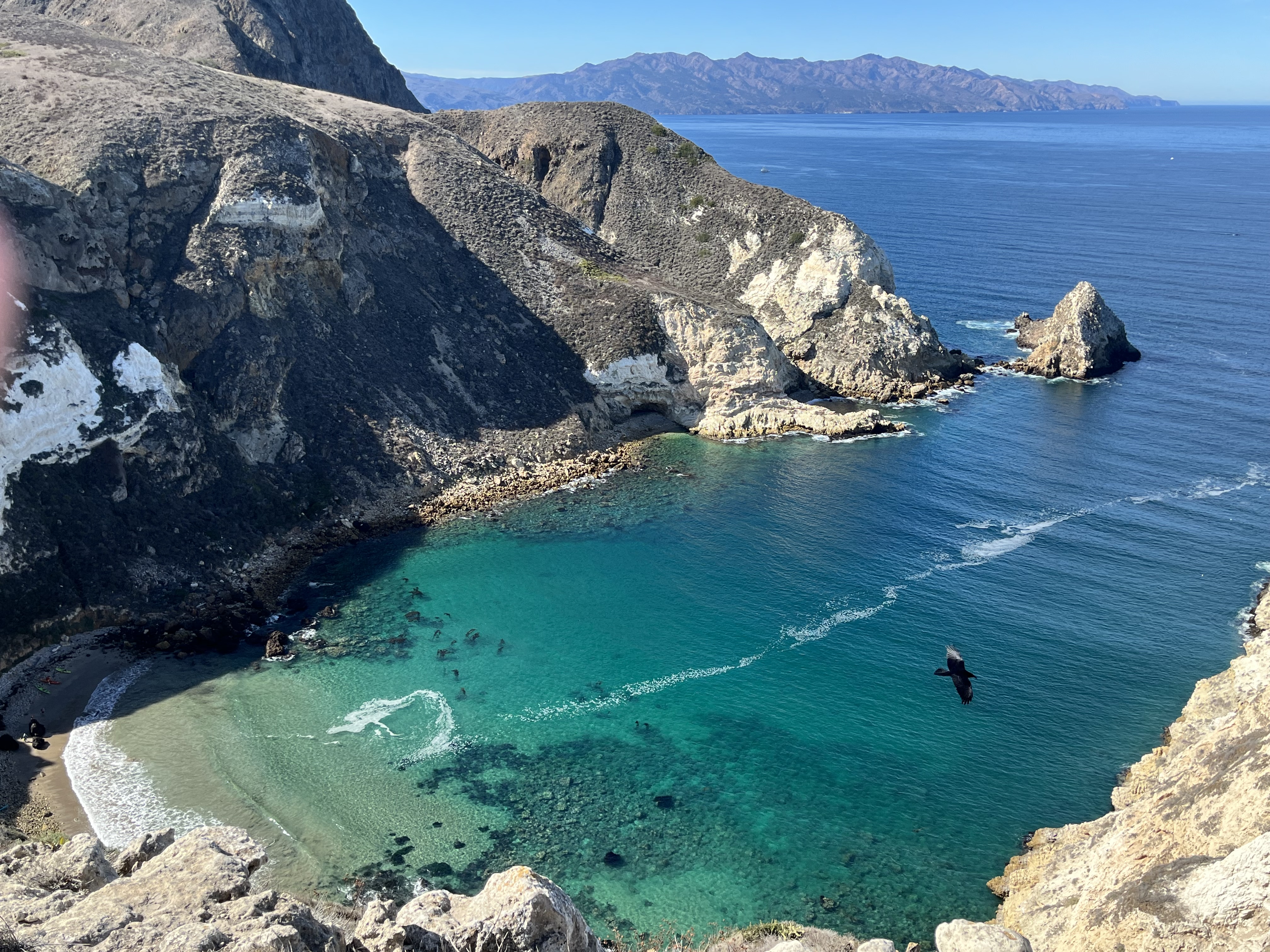
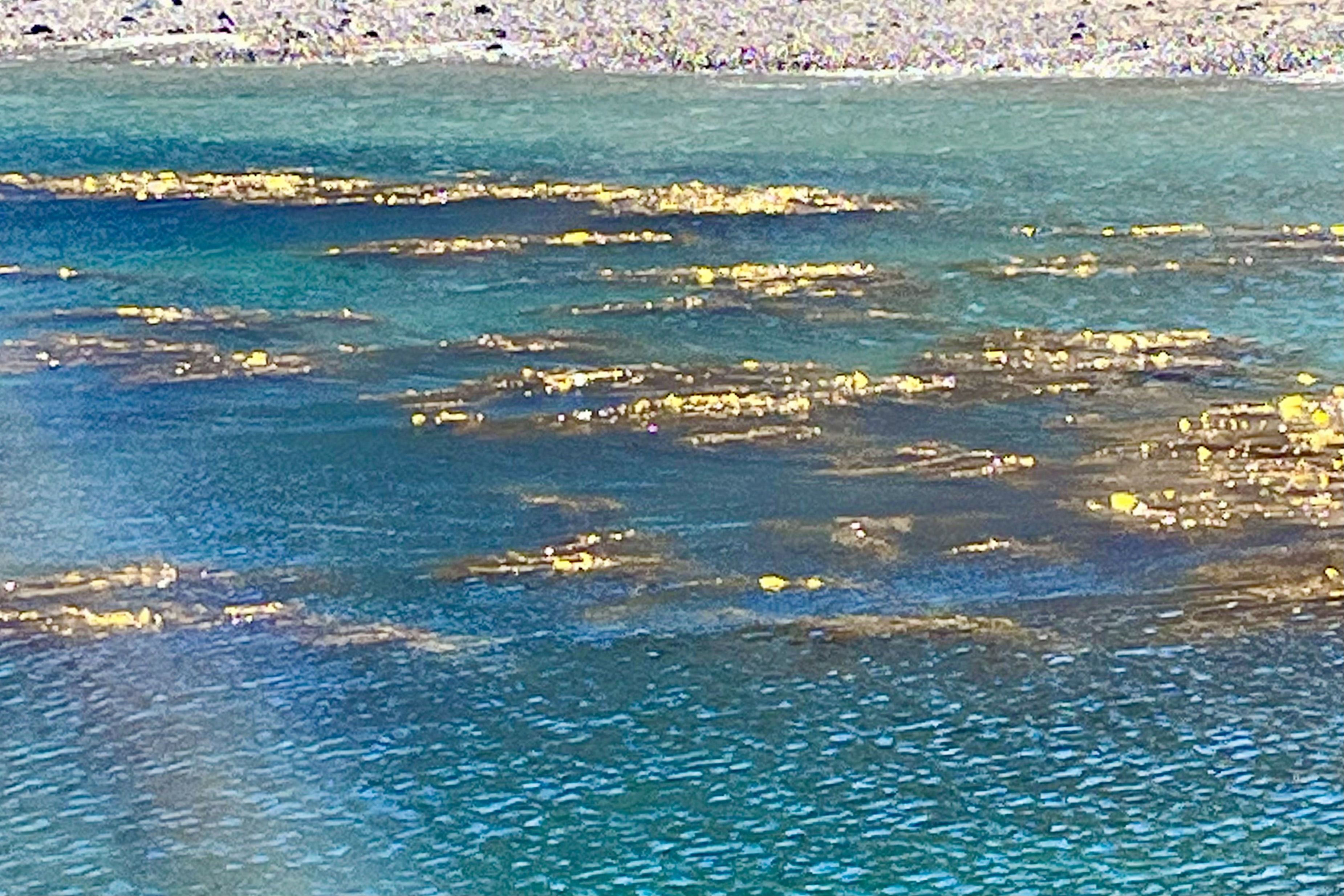
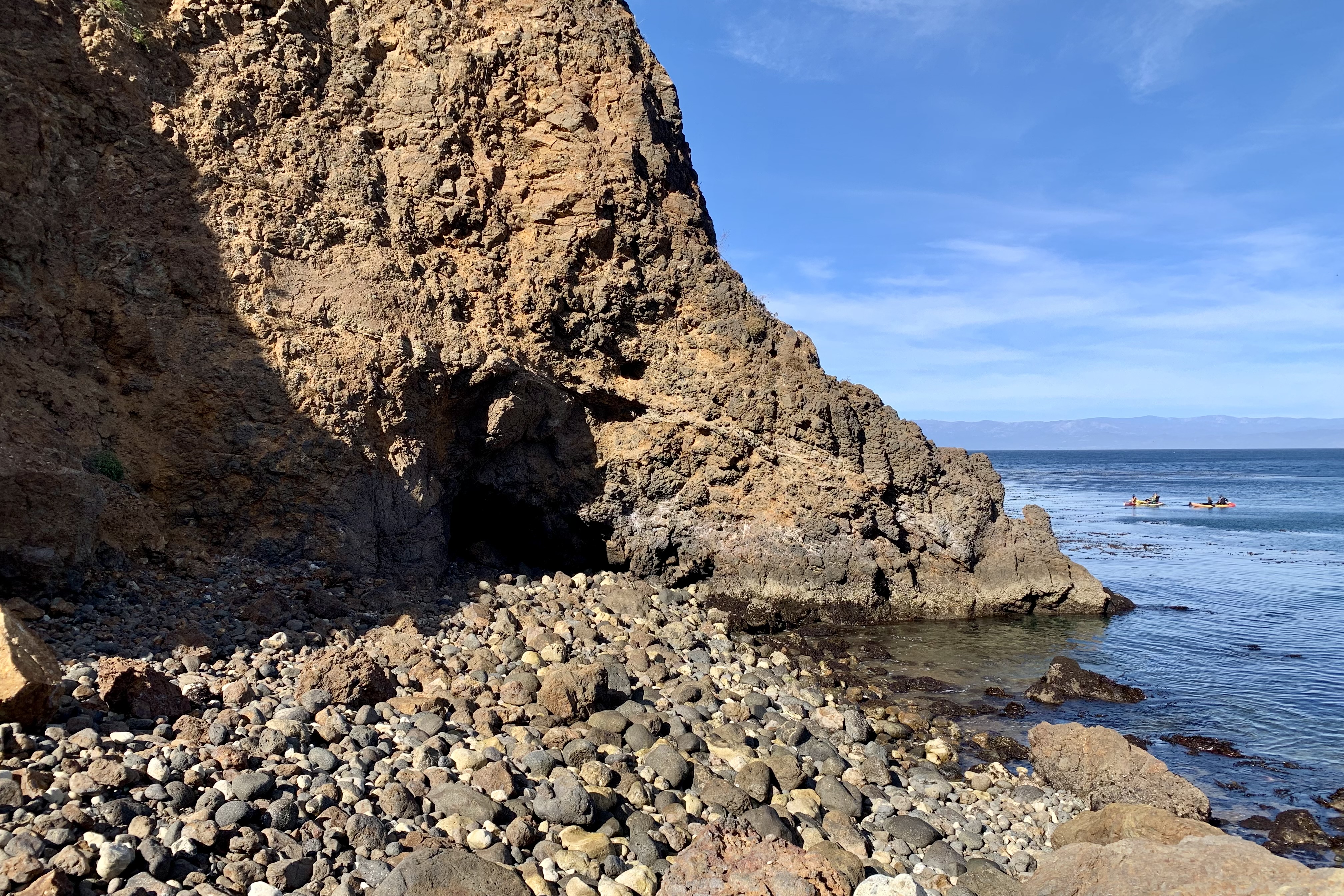
To my pleasant surprise Santa Cruz Island contained mountain; a large central valley/fault system; deep canyons with springs and streams; and many miles of craggy coastline cliffs, with sea caves, tidepools, and beaches (though not those wide sandy ones fringed by palms and perfect for building sand castle). It is rugged California at its finest. Though I would have loved to have several days to camp, snorkel in the kelp beds, swim, kayak the coast with its caves and tide-pools, the best choice for our visit was a hike on the craggy cliffs on the north side of the island overlooking the Santa Barbara Channel.  We chose the moderate hike to Potato Harbor. Planning to hike westerly, we first headed up the somewhat steep sandy trail to Cavern Point and encountered the  first of many magnificent vistas.  Once saturated with this raw beauty we  turned onto the North Bluff Trail  which took us all the way to Potato Harbor. 


Since it was only 5 miles round trip, we took our time to enjoy the absolutely breathtaking scenery the whole way, snapping photos and eating our packed in lunch overlooking Potato Harbor. I did not read anything about farming potatoes or wholesale potato importing on this island so after a bit of research I found it gets its name from its oval shape! Since there is no beach access at Potato Harbor, I contented myself with the surrounding beauty, a gentle ocean breeze, listening to the loud barks, growls, and grunts of the sea lions (which I could hear but not see on the rocky outcrops in the distance) and watching for and then spotting a whale blowing, jumping out of the water and slapping the surface with its pectoral fins. I certainly could not discern what species of whale this was as gray, blue, humpback, sperm, and pilot whales all live in these waters. This rocky coast line was gorgeous. We also saw ravens and dolphins. We opted to stay high on the cliffs for our return hike to take in a second round of this gorgeous coast. We hiked clockwise around Cavern Point, glad to be heading down on this steeper decent rather than up, and enjoying a good vista of Scorpion Anchorage below.

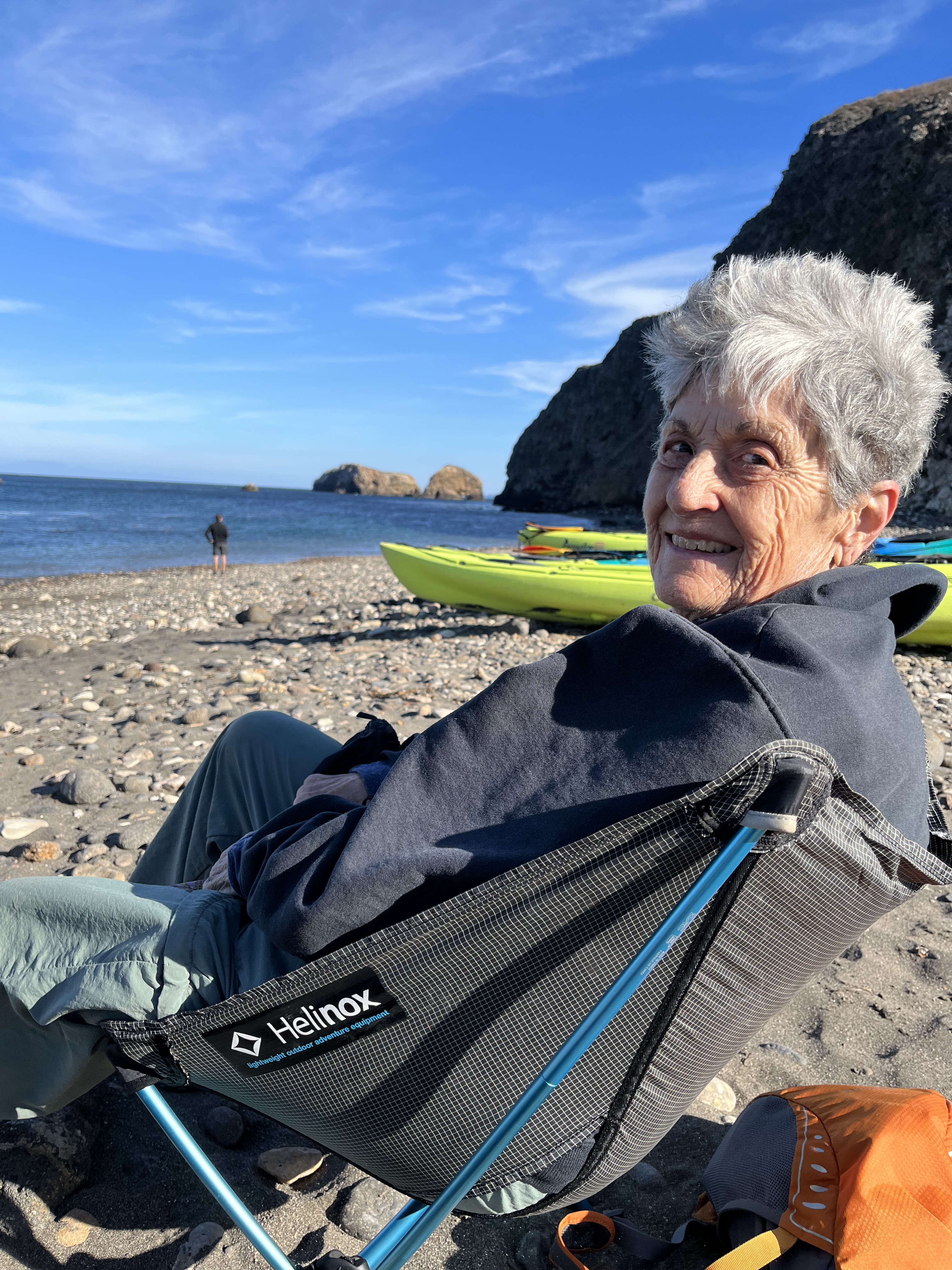
Once down to the Scorpion Harbor we had time to prowl around the rocky shore and relax in the picnic grove were we were payed a visit by this unique and adorable “island fox.”  We had been forewarned not to feed them but I get the feeling that they know people sitting at picnic tables consume food and often shed crumbs and it was not long before they showed their foxy faces and bushy tails. I thought at first I could be  seeing a large cat with a bushy tail, or perhaps a strange species of squirrel… but what a delight to see this fox species that is found only on Channel Islands  and nowhere else on earth. Guess they aren’t very good swimmers and able to make it to the mainland to proliferate. With a bit of time left before boarding for our return  trip to Ventura, we sat on the beach watching the swimmer and snorkelers calling it a day and shivering their way up the rocky gravely beach to return their gear and change out of there wet paraphernalia.  

This was basically the end of our National Parks Journey. After witnessing more dolphin dives on the return ride to Ventura, it was time plan the return route back to Oregon, a brief stop for brunch the following day at my nephew Eric’s place in Santa Barbara, a night at a motel north of Sacramento CA, and some dicey traveling through the pass on I-5 around Mt. Shasta

Dolphin Dives

Alien Jerky, a Very Tall Pyrometer, and “Blood Alley”

Leaving Death Valley National Park, we headed south on route 127 as with our destination Ventura California for a trip to Channel Islands National Park the next day.  Now, I do not ordinarily write blogs about a travel day which I anticipated would be tedious, boring, of very little interest to the reader… But this is an exception. What I did not know was that this route was the prime time route from “Tinseltown” to “Sin City ” or “The Strip” back to “Hollywood and Vine.” It was Friday afternoon and the Vegas-ites were headed to LA and the Lost Angels were on their way to Vegas, and we were mired in the muck of a major artery designed for traffic in 1934! But I am getting ahead of myself and there will be more on that down the road!!!

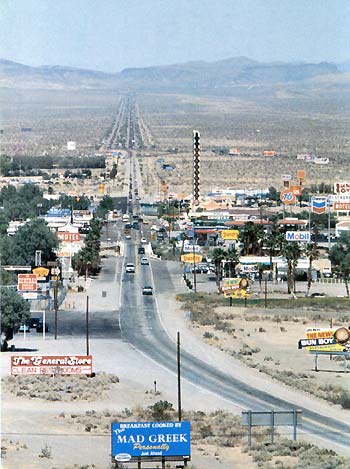
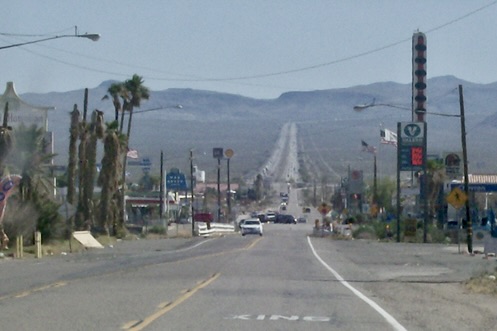
What we thought would be a rather dull driving day, making time and arriving in short order, did not play out that way.   Now ordinarily I would not consider Baker a place to be, to visit, to live in etc….  a town of 735 people, 215 households located in the Mojave desert. The only reason I can think of for its existence is that it is a pit stop when driving through a desert devoid of pit stops. But Baker has risen to the occasion by becoming the next great tourist trap and I am sure they hope a destination in itself. I must applaud Tasia for finding these breath stopping unique spectacles in downtown Baker. So if you have never been to Baker CA make sure you leave plenty of time (perhaps 5-10 minutes) to visit these two kitschy attractions there. 

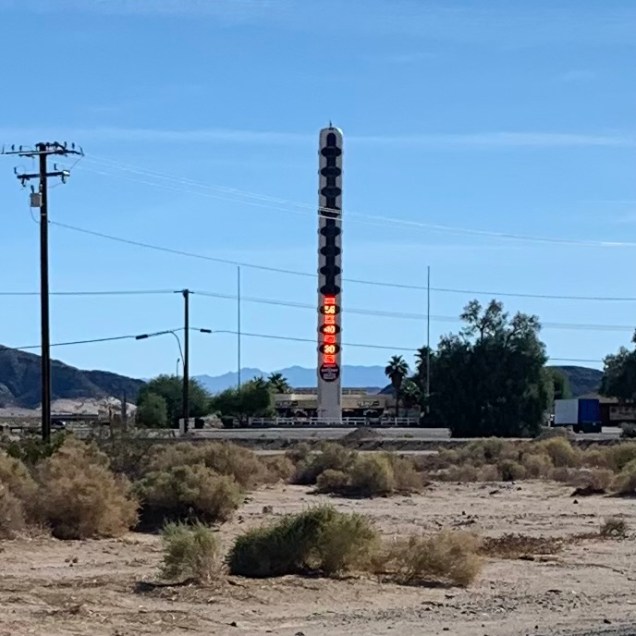
# 1. Now I am not necessarily a fan of the world’s biggest things but my son Nick had quite the selection of photos of “biggest things,” so not to be outdone by him, I was all in on taking a little side trip through town. My photo probably does not do justice the World’s Tallest Thermometer (especially since it is growing out of my head) as it was not displaying it’s sizzling hot, egg frying maximum temperature of 134 but a mere 57 degrees. But 134 is there since that is the world’s hottest temperature ever recorded with Death Valley, which holds this record set on July 10,1913. In August 1995, the Baker thermometer recorded its highest temperature 127.

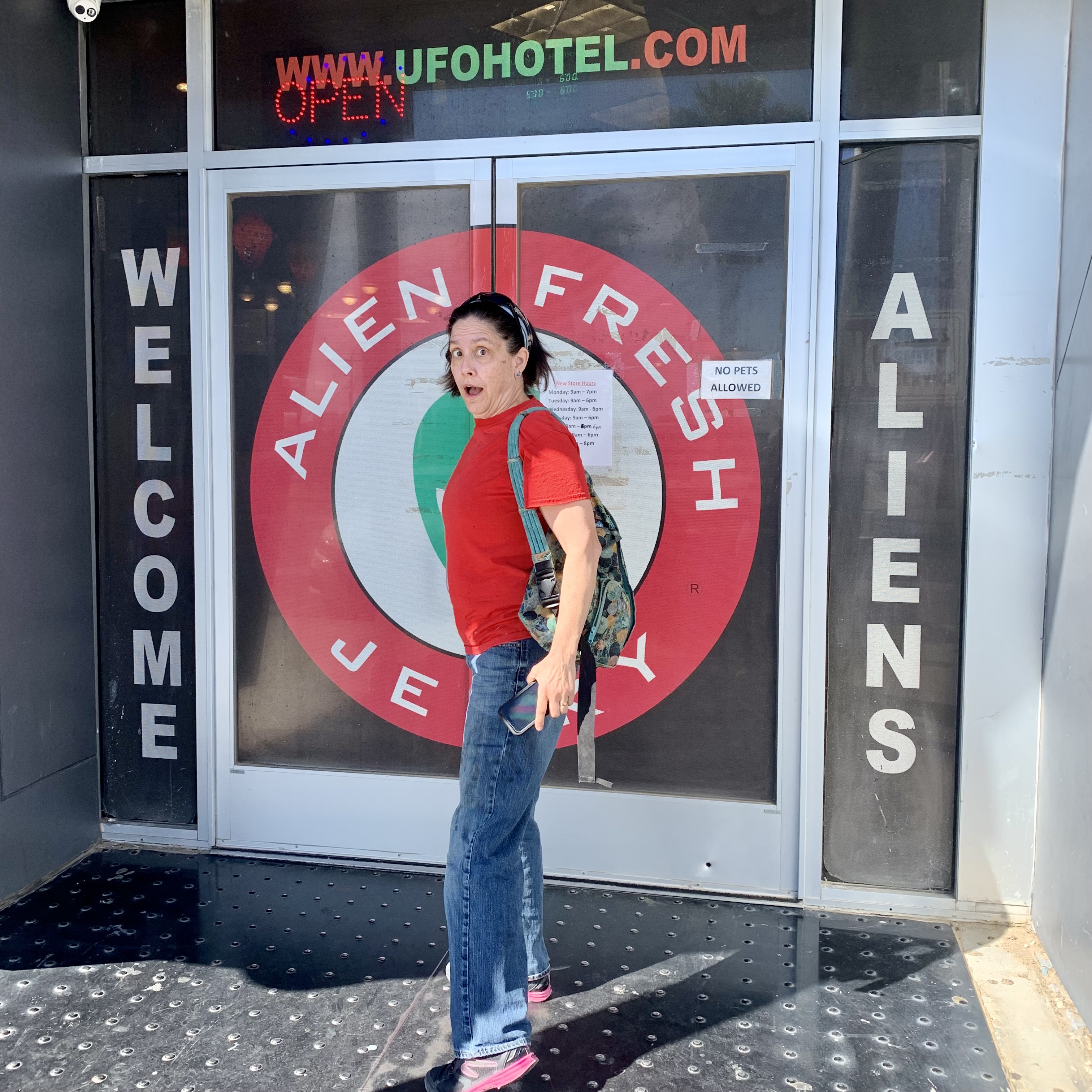
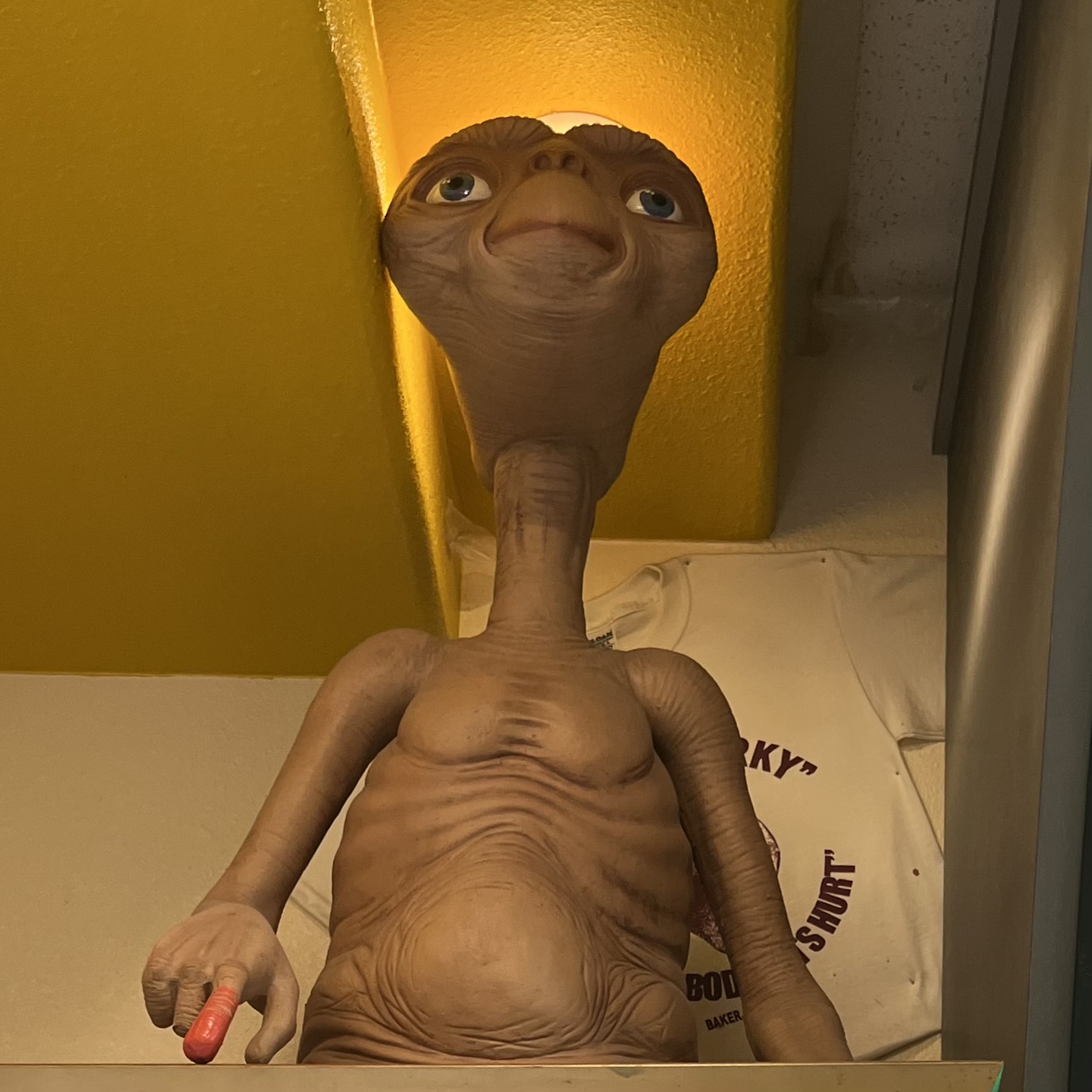
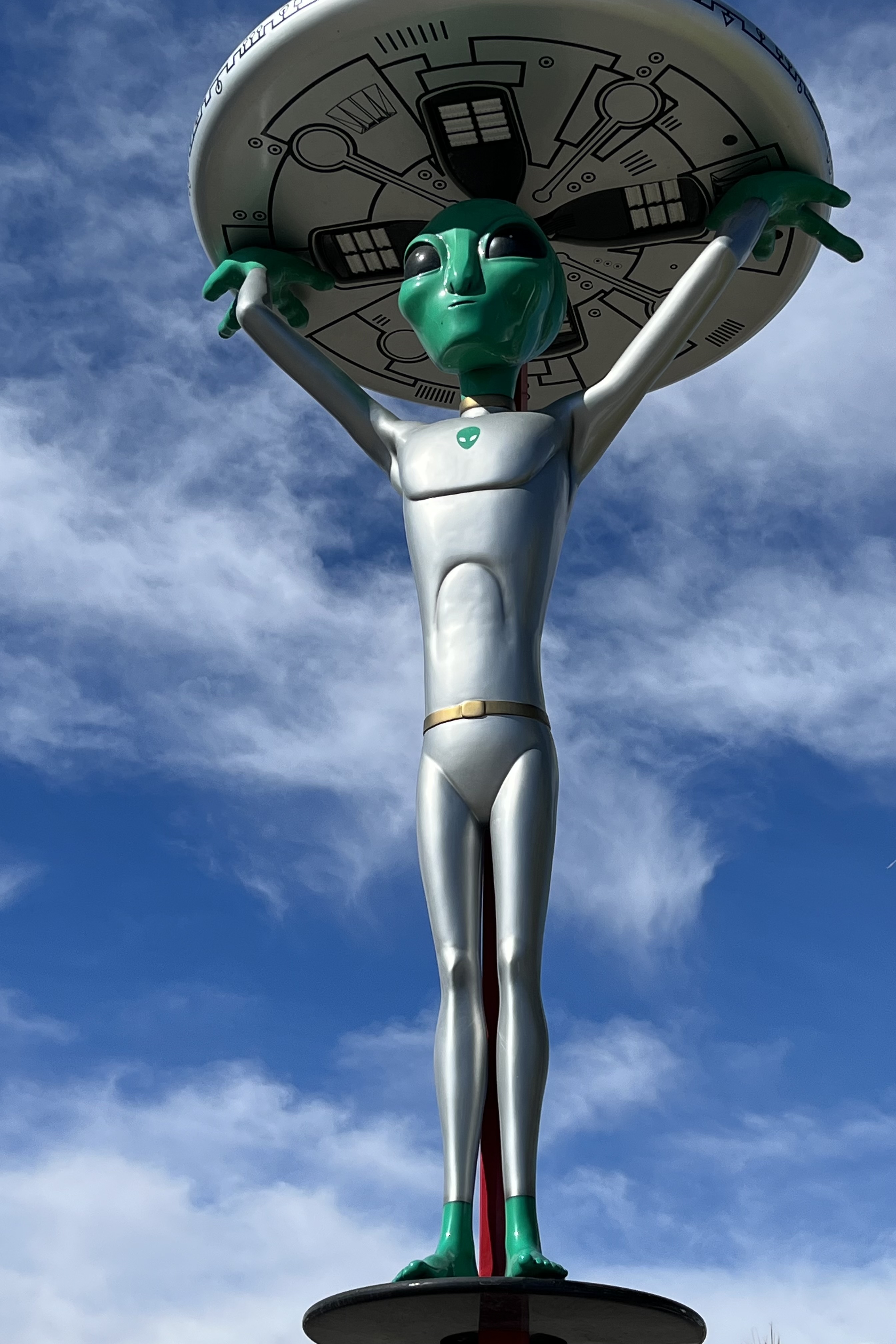
#2 We stumbled upon the Alien Fresh Jerky Store down the street from that super-sized thermometer and it is truly out-of-this world or perhaps I should say outlandish, with UFO’s and little green men decorating the exterior and parking lot of the shop. Strange? Quirky? Weird? Wacky?

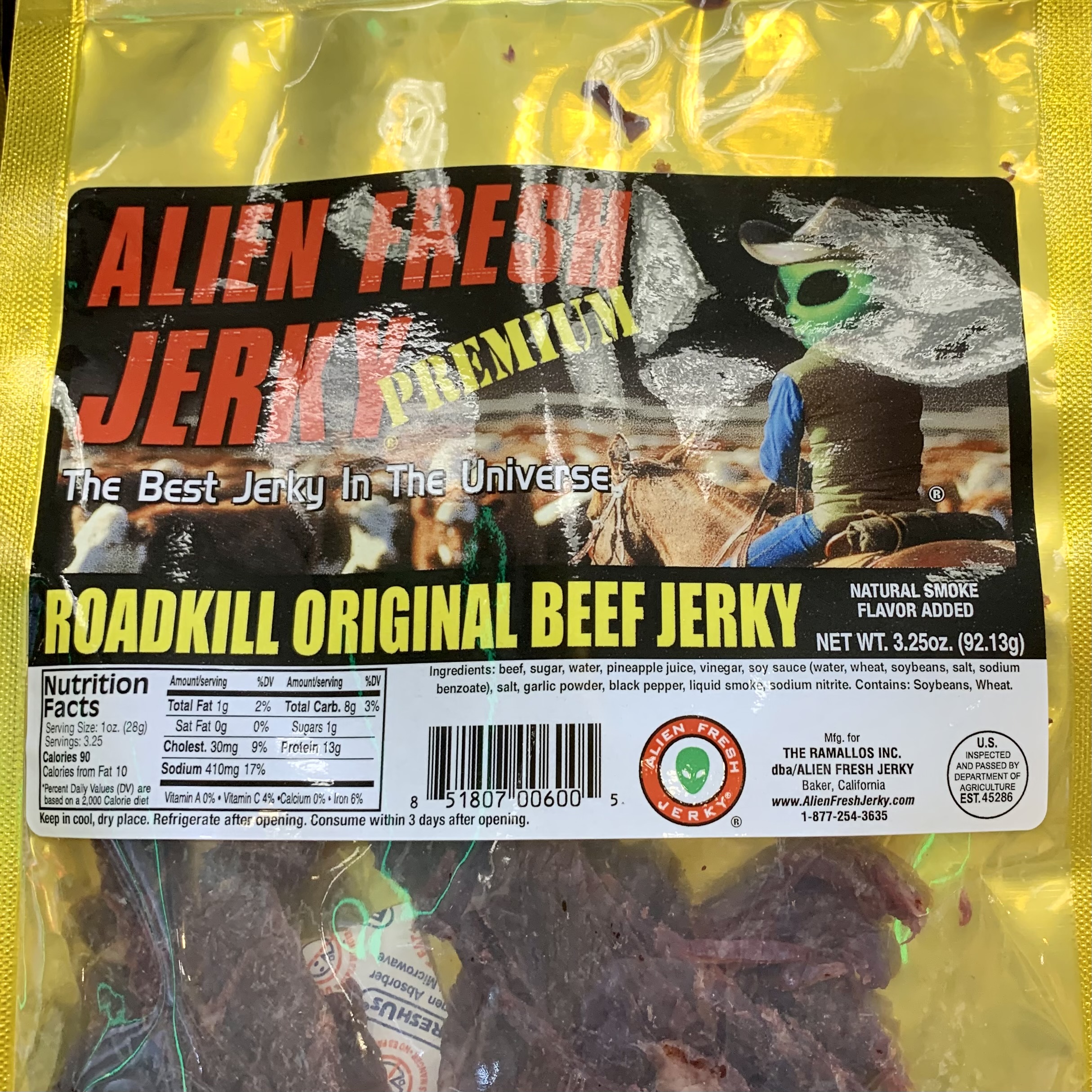
If you are a fan of beef jerky or just into a cheesy establishment STOP! You might want to try such delights as Weed Killer Hot Beef Jerky, Abducted Cow Beef Jerky, Road Kill Original Beef Jerky, Space Cowboy Pepper Beef Jerky, Barbecue on the Moon Beef Jerky and Texas Style Ghost Pepper Beef Jerky. Now if you still have an appetite for jerky after perusing this partial menu of their offerings, you should perhaps consider upping your credit limit on the charge card you might wish to use. But even more exciting to think about is next to this market, the owner envisions construction of a UFO themed hotel. May the Aliens be with you!

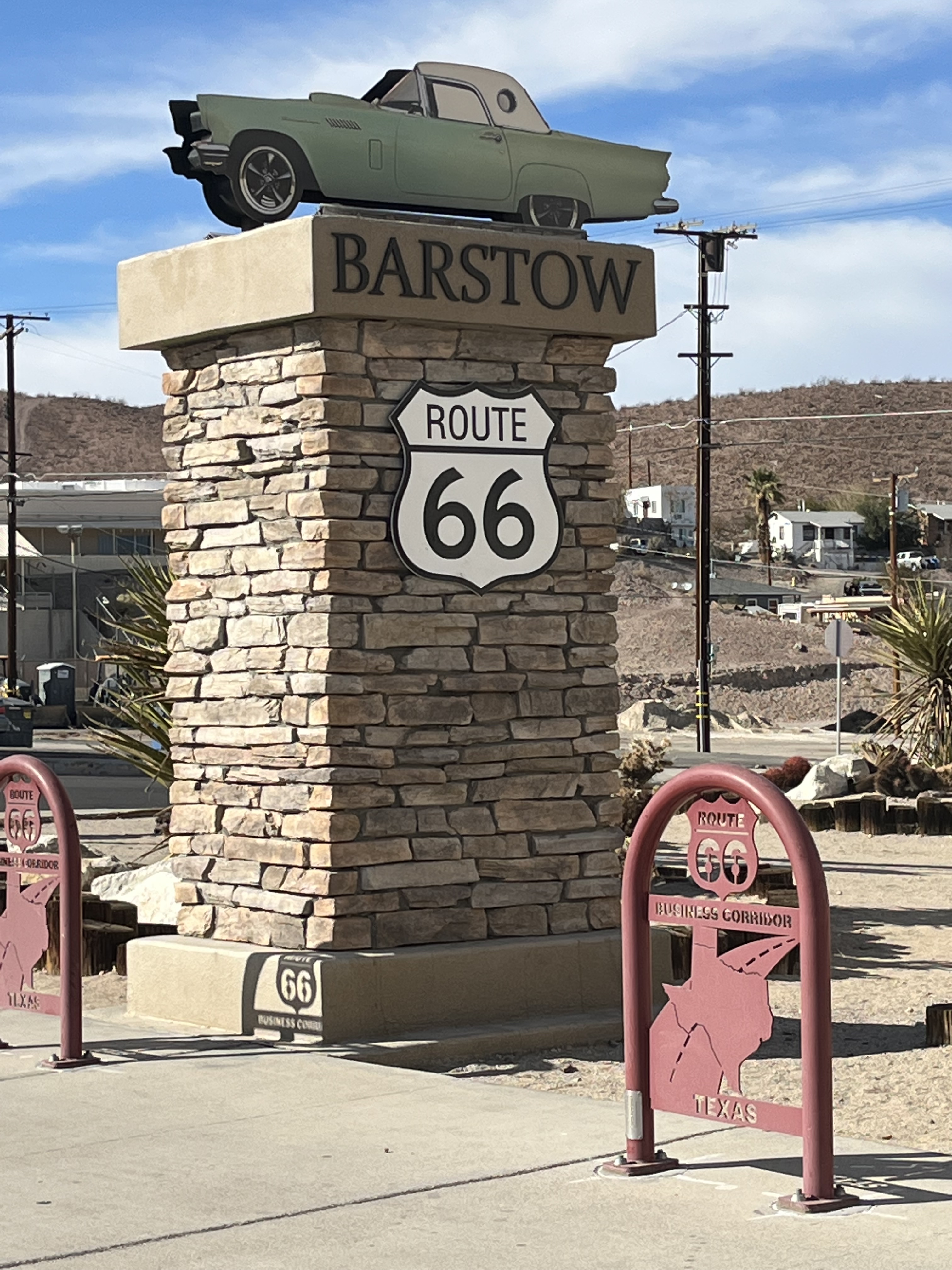
An update on Hugly: after long boring days left in the hotel at Death Valley, Hugly was excited to be back on the road, watching for roadkill, and drinking an ice cold coke (I think Hugly is thinking about making some desert rat jerky). Now, after so much excitement, we just motored on through California, acquiescing to using Interstate 15 to Barstow but opted to exit and pick up a bit of old rout 66. From there, not so cautious Siri, using iMaps, routed us onto Pear Blossom Highway (US State Route 138). Now that sounded like a lovely name for a road through the Santa Clara Valley, along the Santa Clara River and perhaps through a lovely corridor of lovely pear orchards. (It’s name, Pearblossom, came from the multitude of local pear farms in Antelope Valley but few still exist today.) Tasia began reading about the surrounds and learned the stretch we were driving on was one of the most dangerous roads historically as it has been the location of numerous serious and fatal automobile accidents. Though it became clear that improvement have been made to the road, I breathed easier when we were through that heavily trafficked road filled with freight trucks and a multitude of LA’ers hitting the road most travelled and rushing to the slots and craps in Las Vegas.

That state of calm did not last long before we were routed onto State Route 126. Years ago, In February 1996, the Los Angeles Times published an article about the dangers of California 126, writing that “despite the beauty, to drive along the 126 is to flirt with mortality… especially on a “two-lane, six-mile segment of 126 known as ‘Blood Alley.’” with head on collisions common on this older, curvey, two lanes sections. Though the highway has since been improved in most areas, traffic fatalities are still quite common.

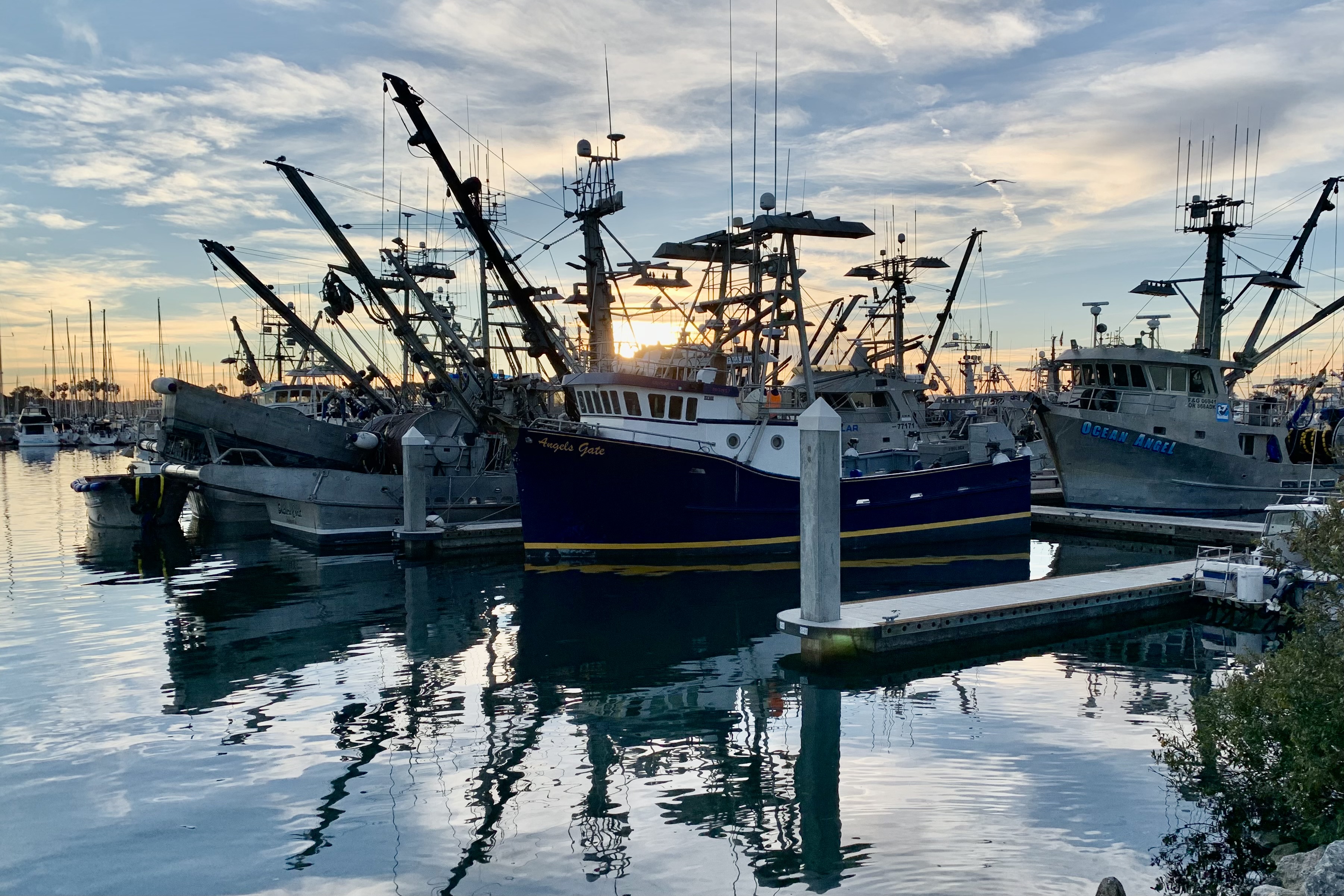
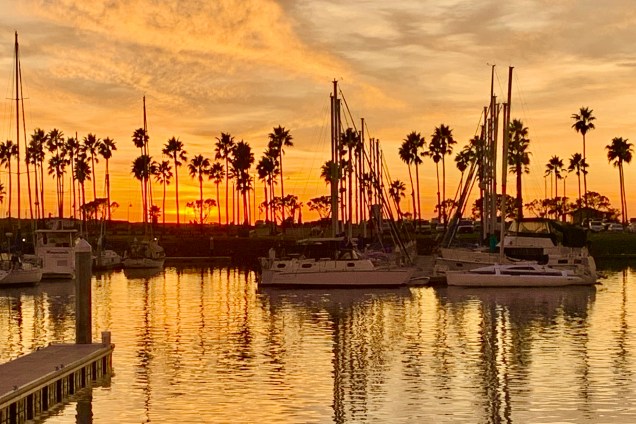
I was grateful to be pulling into Ventura around sunset but before checking into the hotel we decided to scout out the harbor area where we would be boarding for our Island Packer Cruise to Santa Cruz early the next morning. We arrived at Ventura Harbor in time to witness a magical sunset.