Voyagers Voyageur, Lighthouse Graffiti, Selfies, and Statues Obscura

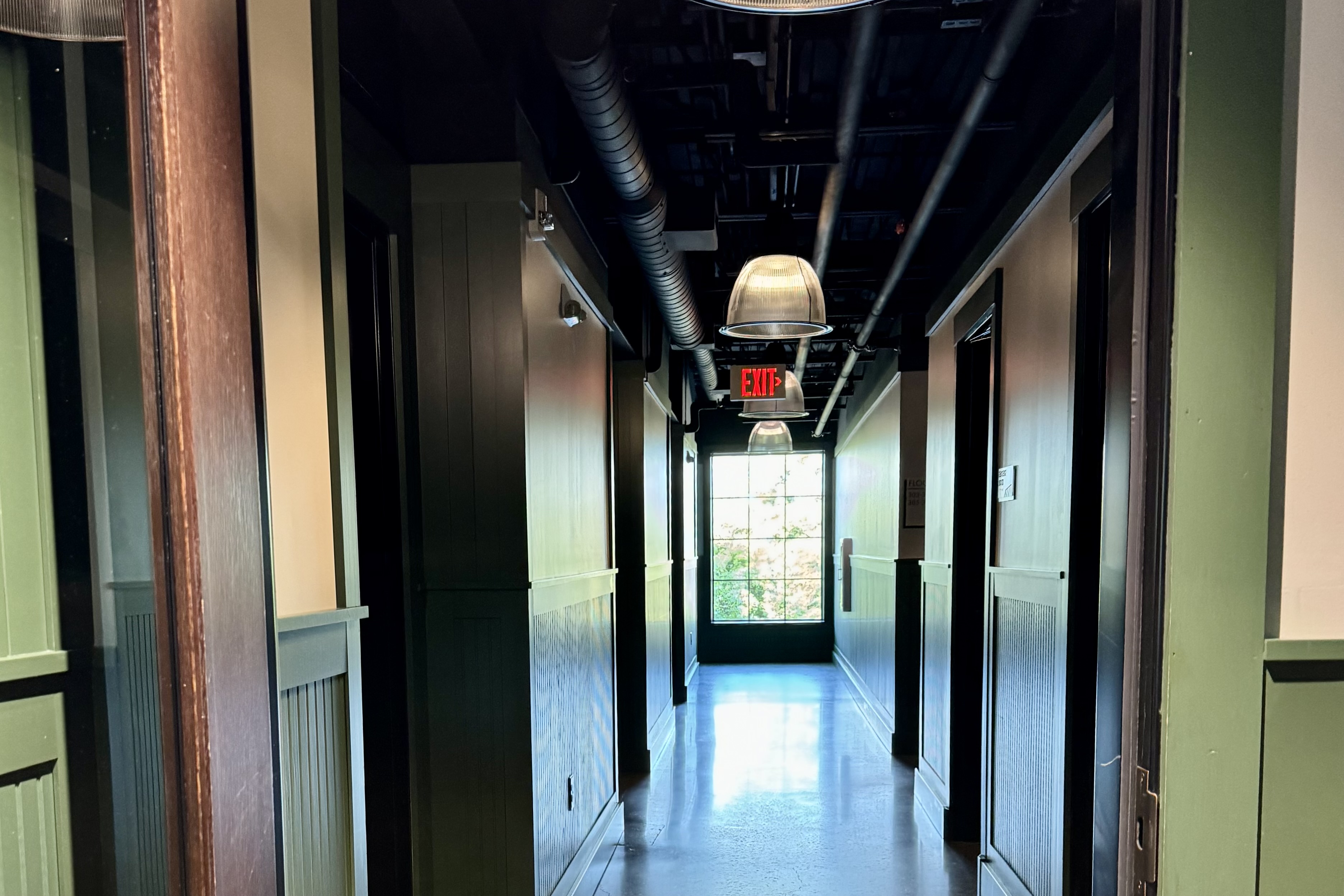
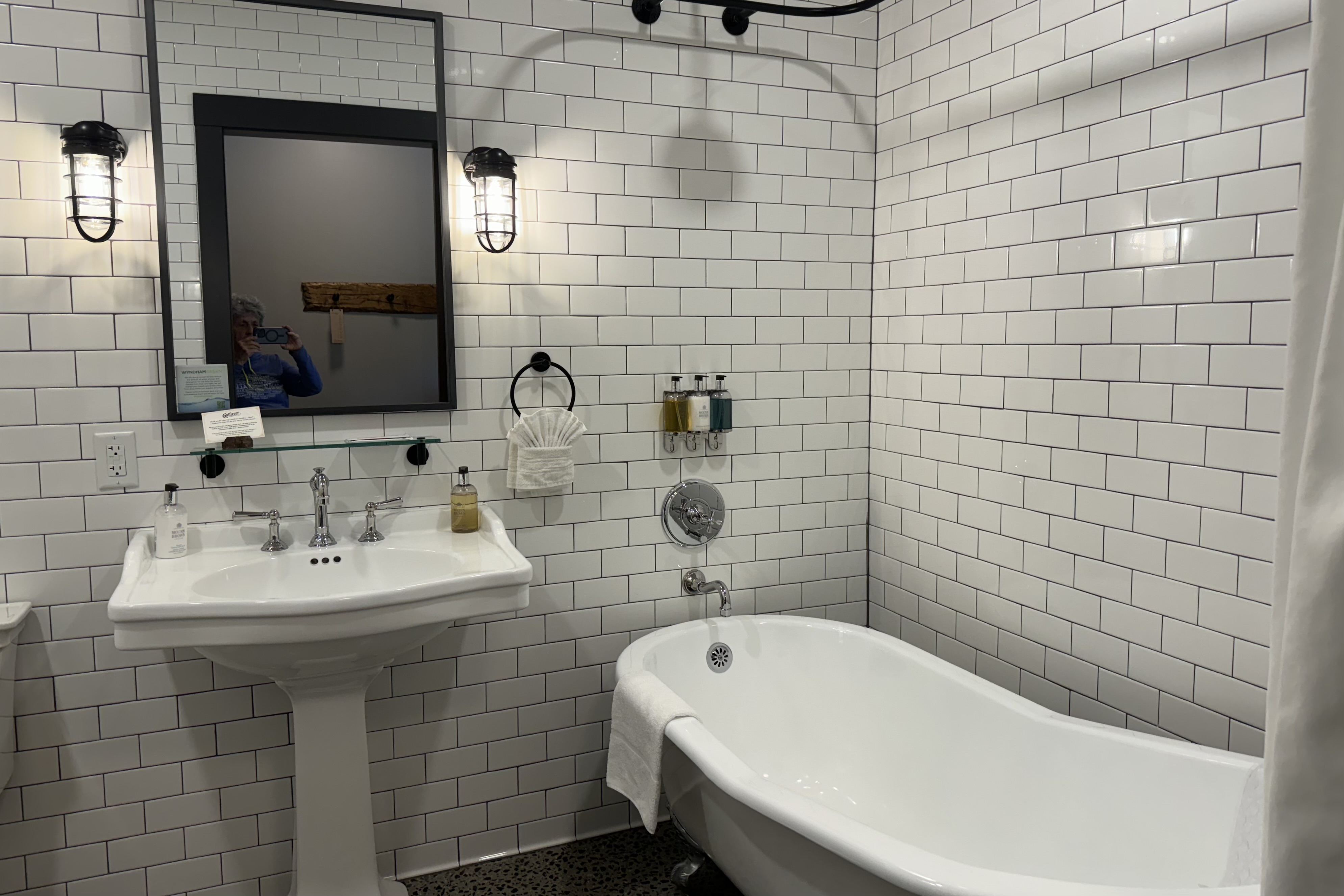
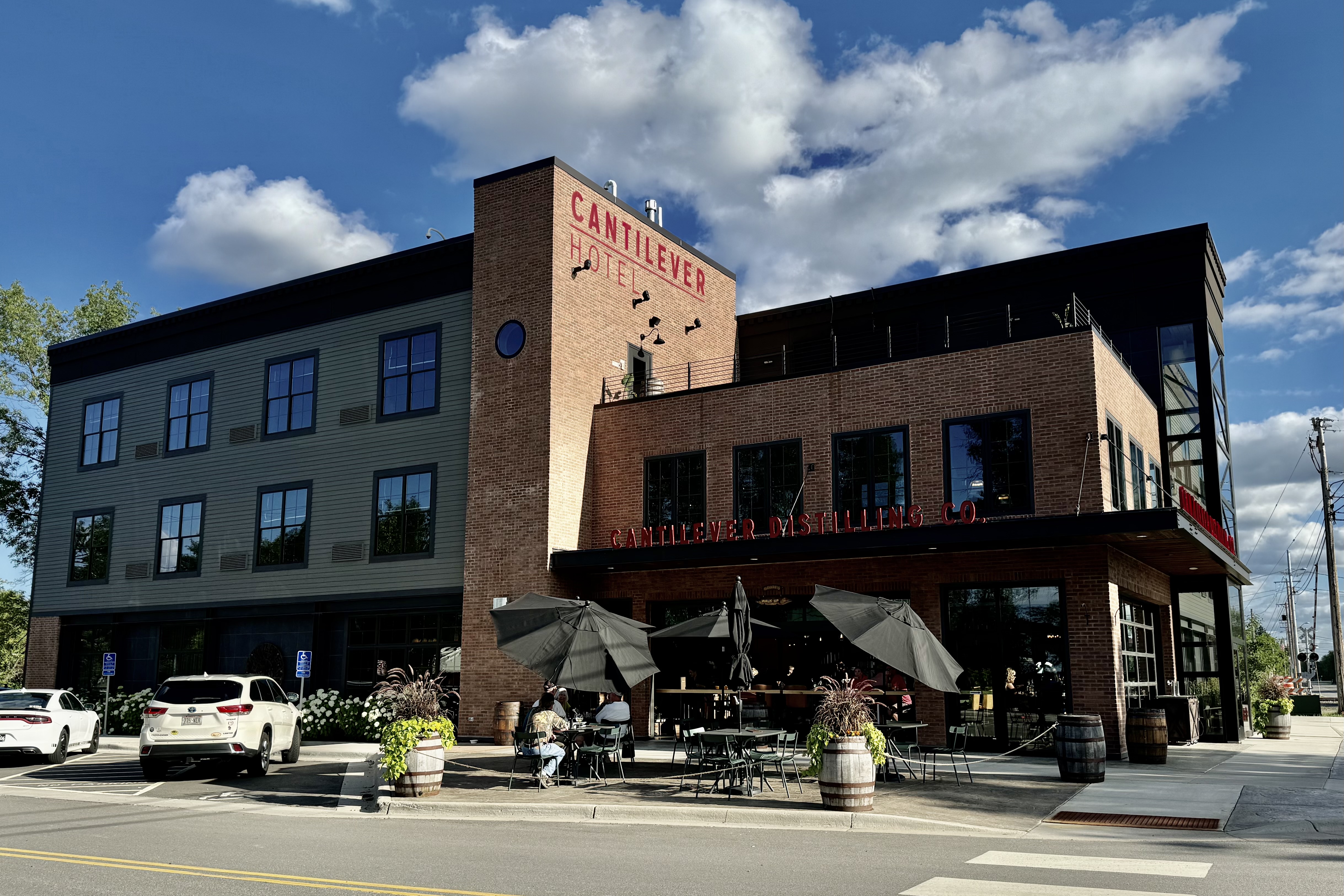
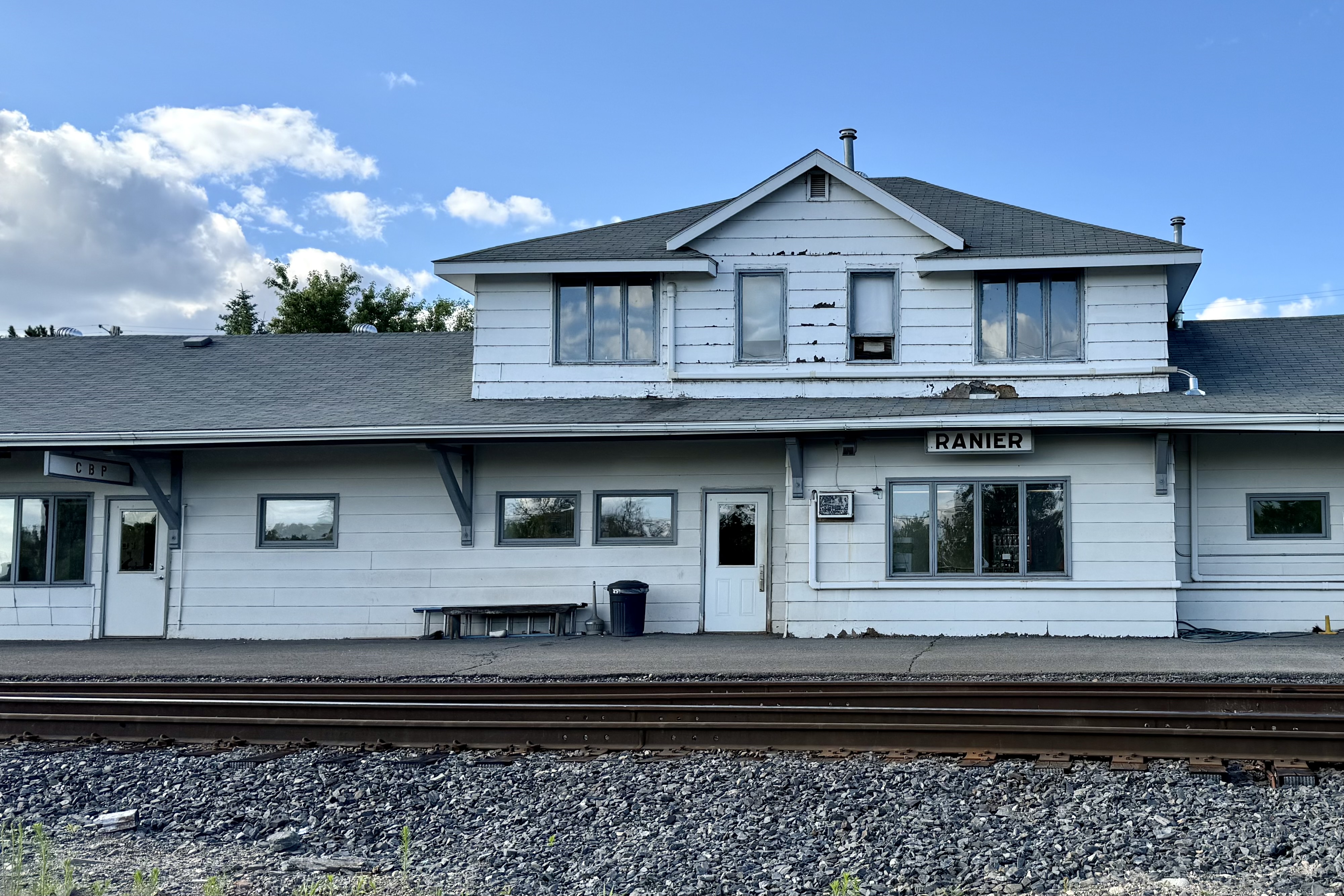
There was no dawdling after our Isle Royale Seaplane landed as we had over a 400 mile drive to reach Ranier MN for our Voyagers National Park visit. This would be the 56th park I have visited. After working our way through the expressway construction in Duluth, the drive was mostly easy and uneventful with Jamie and I sharing the driving.   To relieve the feeling of road weariness setting in, we stopped for lunch at  Culver’s (BUT skipped the ice cream) and arrived in Ranier MN , our destination by late afternoon. We were staying at the Cantilever Hotel and Distillery off Rainy Lake and close to the gateway of Voyageurs National Park. This boutique hotel to me was quite an anomaly in this town with a population of 569, with it being quite cosmopolitan in a town with an historically gnarly reputation and basically a spot to watch the trains cross the international border on the Ranier Lift Bridge. It was proximate to Rainy Lake and right next to a very very very busy train track which had a cantilever bridge, the oldest cantilevered bridge in North America. I rarely remark on hotel rooms but its hotel rooms are supposed to bring back an experience of this bygone era with tall ceilings, industrial elements, bathrooms with claw foot tubs. I found it quite an inviting experience but clearly it is new “old” not old “new”. No ancient rust stains in the claw foot tubs. The fun part of this room was to watch the high volume of train rumbling past the hotel —- they even provide ear plugs for patrons. For sleeping purposes, I found them easy to ignore and not nearly as plentiful during the night. There would have been a day when it would have been “the cat’s meow” to have a distillery out my hotel room door.
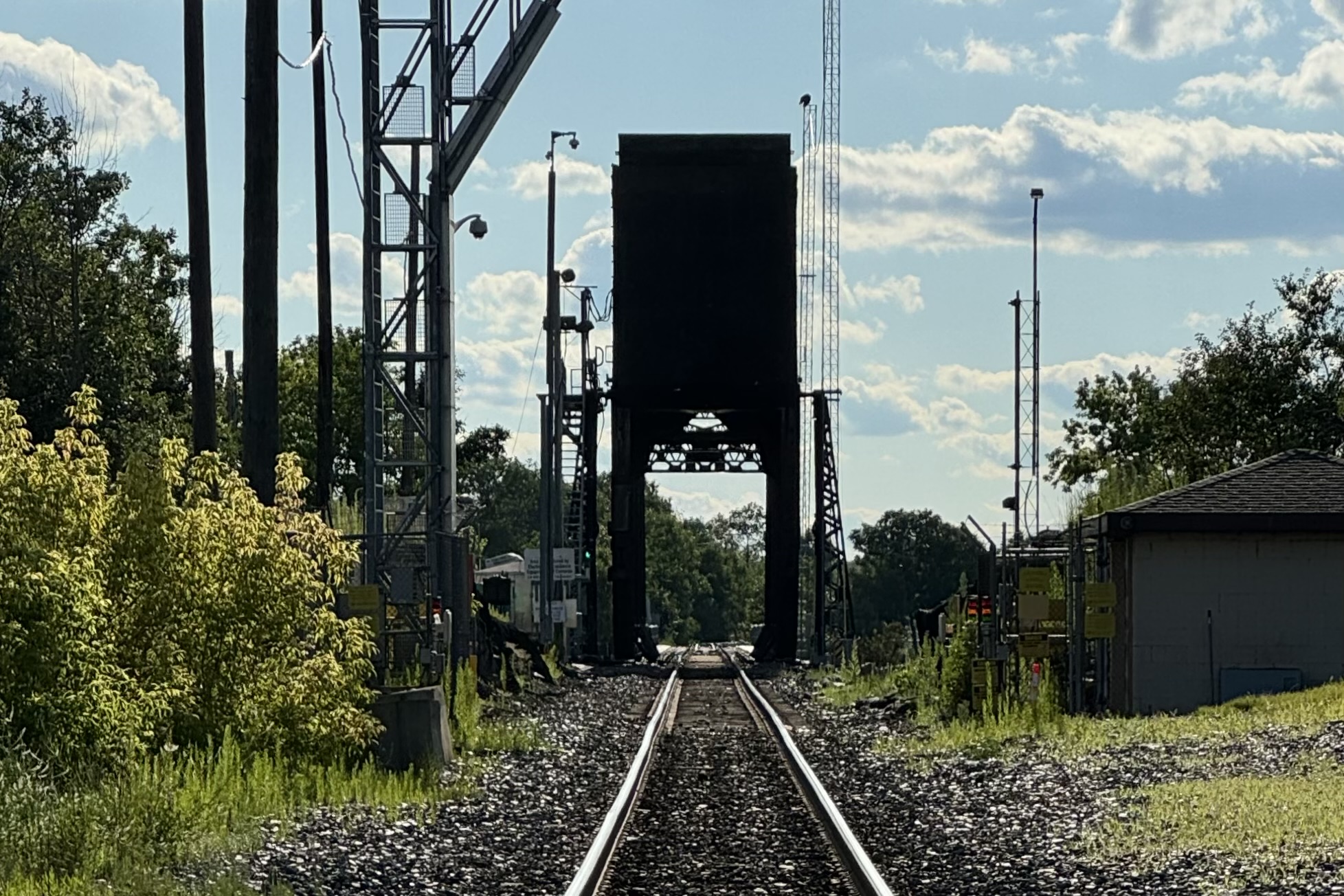
Bridges are becoming the obsession since encountering the two vertical lift bridges in Duluth MN and Hancock MI.  Bear with this obsession if you will. The Ranier Lift Bridge is a Rolling Lift Bridge, and was the epicenter for importing contraband liquid libations during the Prohibition (hence the gnarly reputation) . The single-track lift bridge crosses Rainy River between Ranier, Minnesota, and Fort Frances, Ontario, and is one of the busiest ports of entry for international rail freight in the United States. This very small town is very very busy train wise! . Traffic over the Ranier Bridge is more than twenty trains a day with most pulling between 100 and 200 cars. Theycan be 1.5 miles long and a very long wait (20 + minutes) at many intersection you might want to cross. Hopefully residents have a schedule of trains so as not to be 20 minutes late for work. Our post “sitting in the car all day hike” was an attempt to get a good vantage point to see this bridge.  The one access would be up a prohibited road and we definitely did not want an already ticked off station master who was already hollering at a cyclist chasing us down.
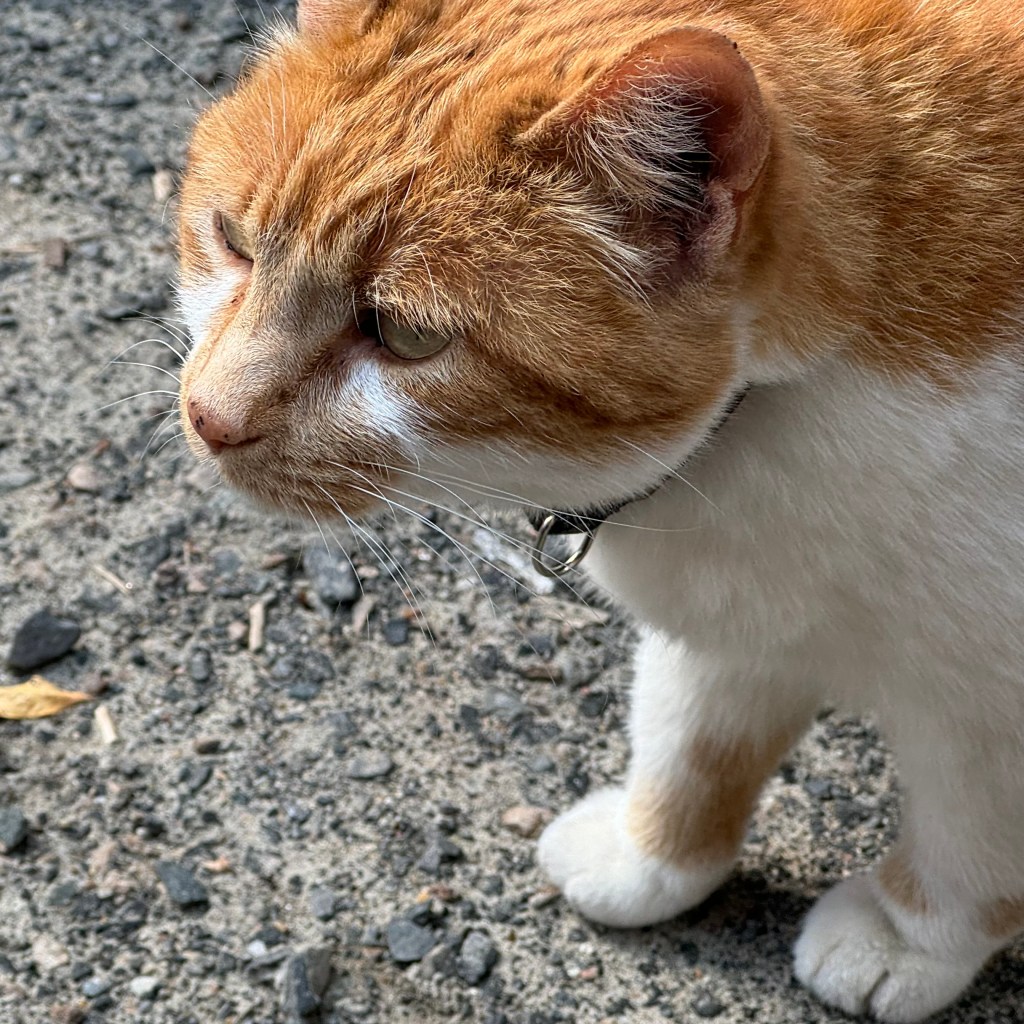
So we gave up the search and decided to have dinner at the hotel restaurant. It was a nice 70 degree evening and that demanded sitting at a table outside.  It definitely was not a “come back another time experience “.  The waitress was quite surly and totally inefficient and inattentive. It took forever to get our drinks and getting our meals took even longer than forever so not the most generous of tips was given. The best part of the dinner was watching this big orange tabby cat trying to sneak into the bar and a neighborhood dog cruising the tables looking for handouts ( evidenced by his girth he appears to have received quite a number of handouts) . Ranier is a dog friendly city and allows its resident dog owners the privilege of letting their dogs roam unleashed.
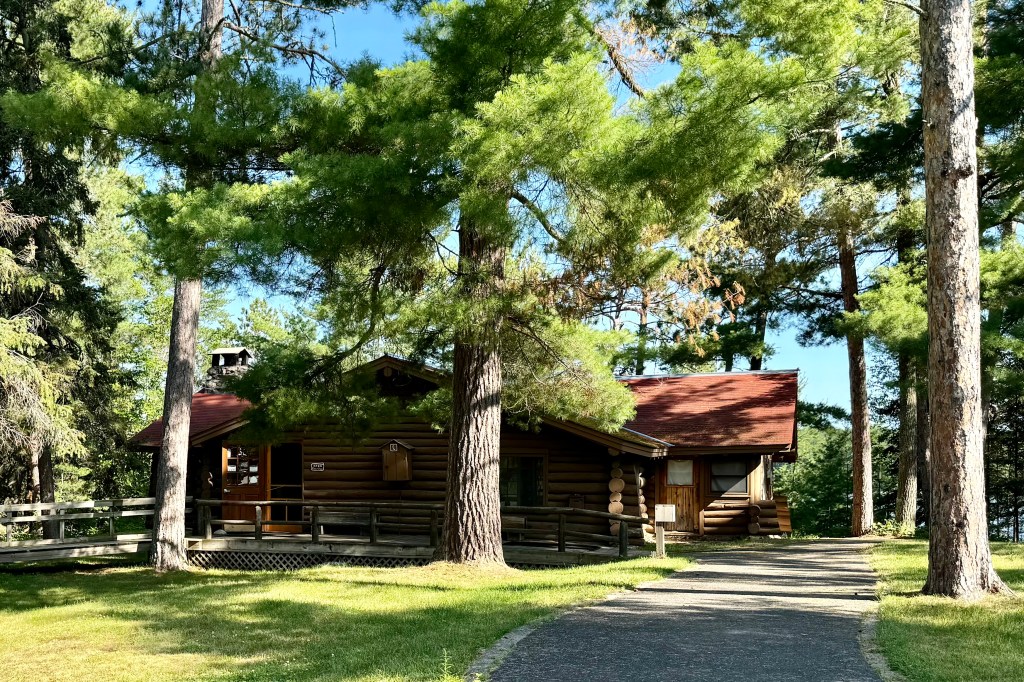
We awoke on July 18th early enough to get on the road to the Ash River Visitors Center in Voyageurs National Park for a scheduled boat excursion to Kettle Falls at 10:00 am. Voyageurs is a water-based park with no drive-to sites in the park. Campsites and house-boat sites are all boat-in, hence one of the reasons we did not stay in the park. I did not haul my boat across country. Actually I would have had to buy a boat to haul it cross-country.
Thus, the natural choice was to book a water-based event and travel a water-based highway to experience the water based park. But before we departed , we filled the hotel traveler cups with a truly awful brown water which they served up as coffee and charged as much as a fancy late’ at Starbuck’s. This has been quite an issue of late as it seems every time we ordered coffee in Michigan and Minnesota it is truly tasteless and this is probably the first time ever that I can recall never being able to finish my first cup of coffee. I guess not many people around here favor robust dark roasted beans and the nice rich strong taste of coffee they produce. My comments are not meant to offend those who enjoy brown water! But we all managed to be awake enough to get to the Ash River Center.

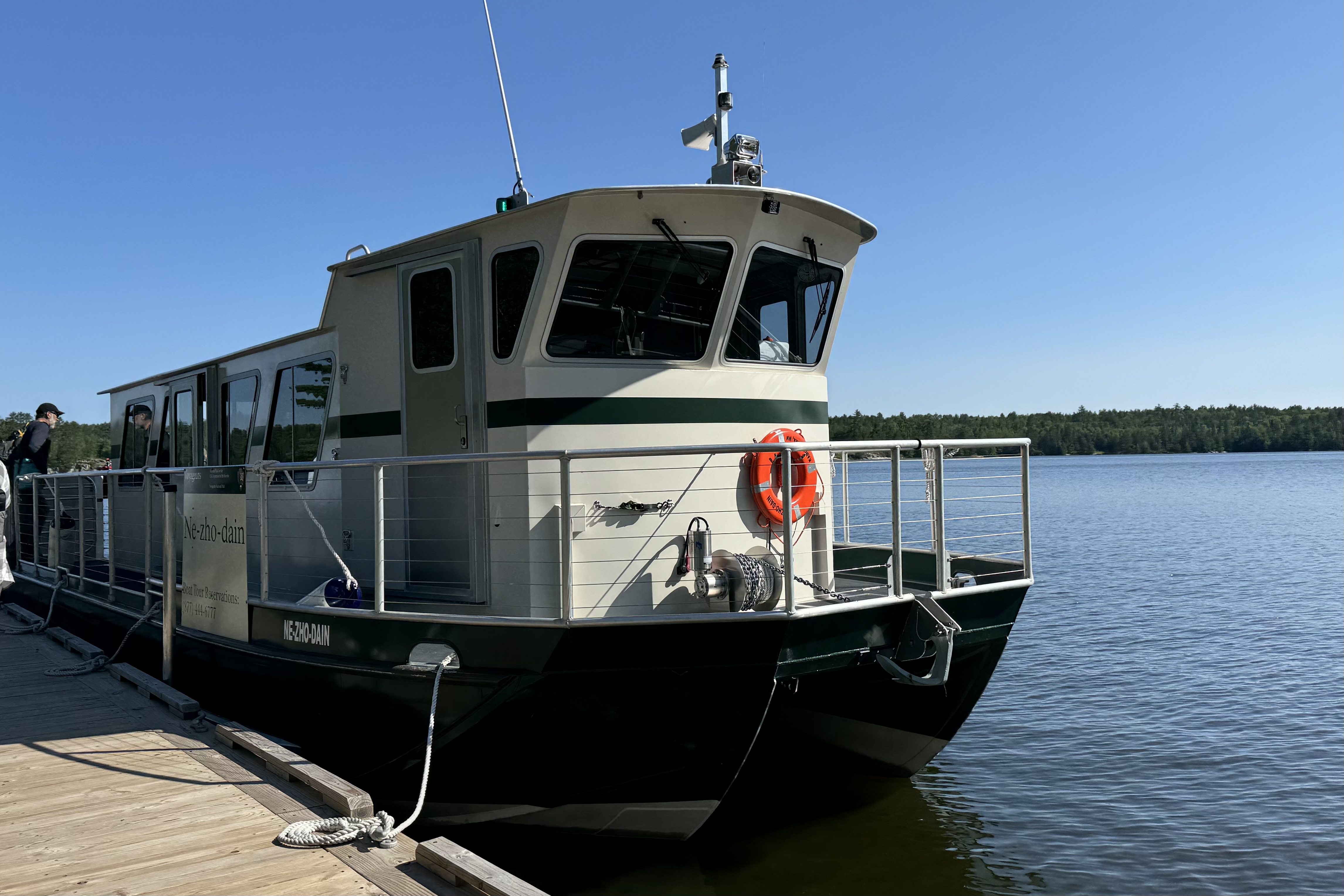
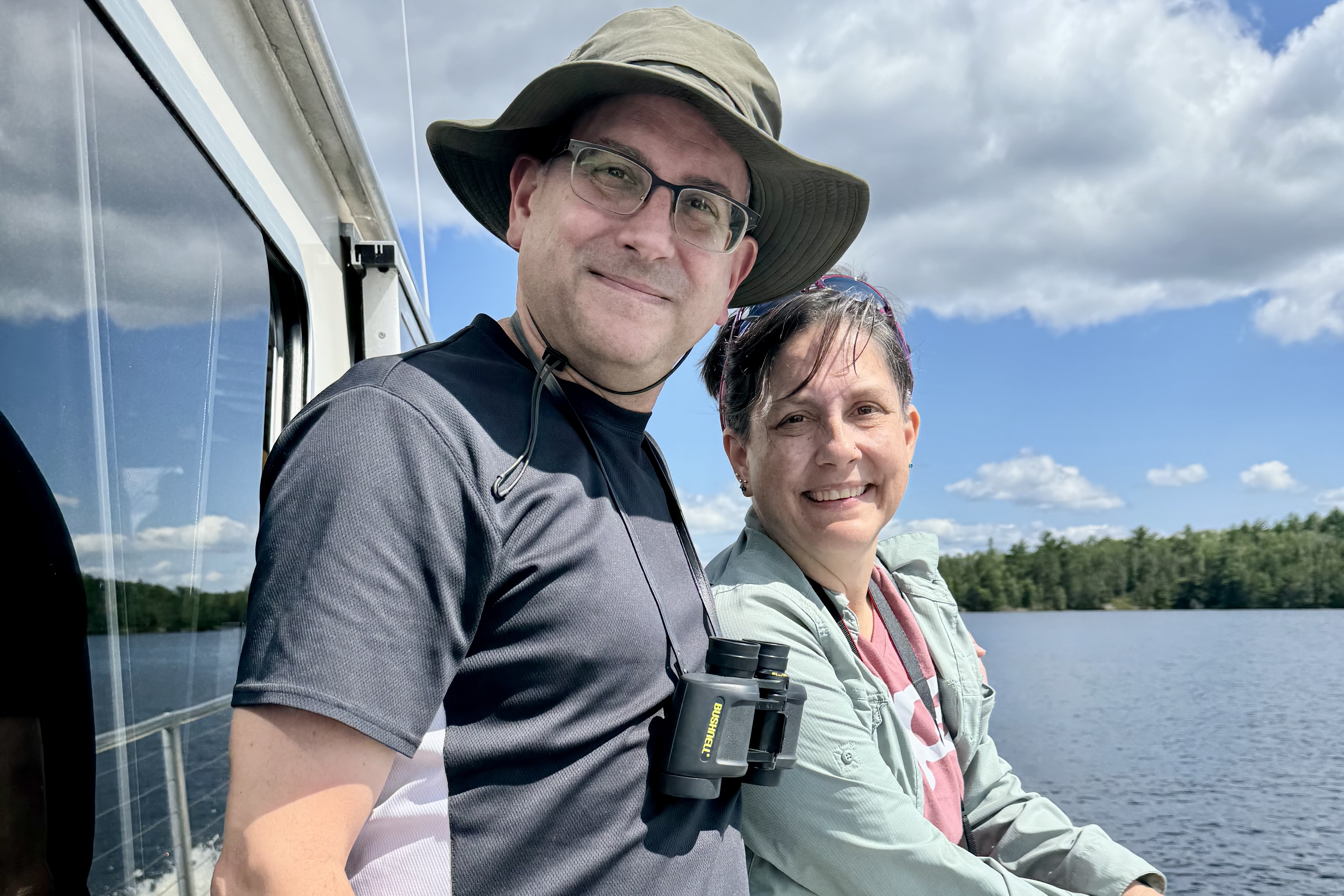
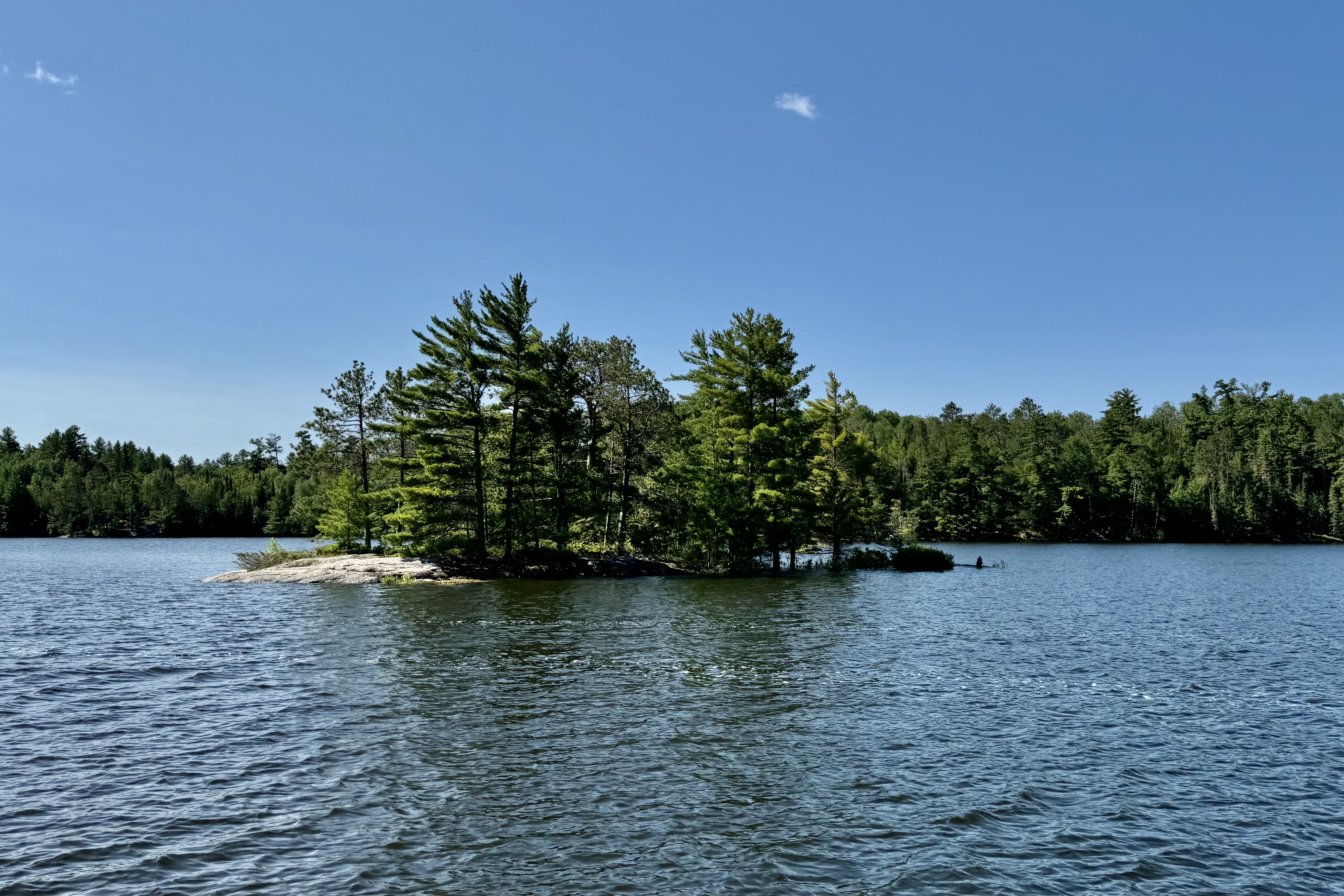
The Ne-zho-dain tour boat a 42-foot-long Catamaran style flat bottom “chug along ” had about 30 people and as per usual 26 were there and ready to board and of course 4 showed up about 1 minute past the appointed hour to leave. We were actually told to report at 9:30, a half hour ahead of time. Then of course we had to wait for their bathroom excursion (no potty on board) and once aboard for the woman, who thought she left her phone in the aromatic pit toilet building, to retrieve it where, all the while , it was in her husbands pocket who was on board! The voyage to the historic Kettle Falls Hotel took about two hours aboard the Ne-zho-dain tour boat and what a great feeling of immersion into this pristine area of shimmering waters, forested islands, and towering pines – several of which were home to massive bald eagles nests.
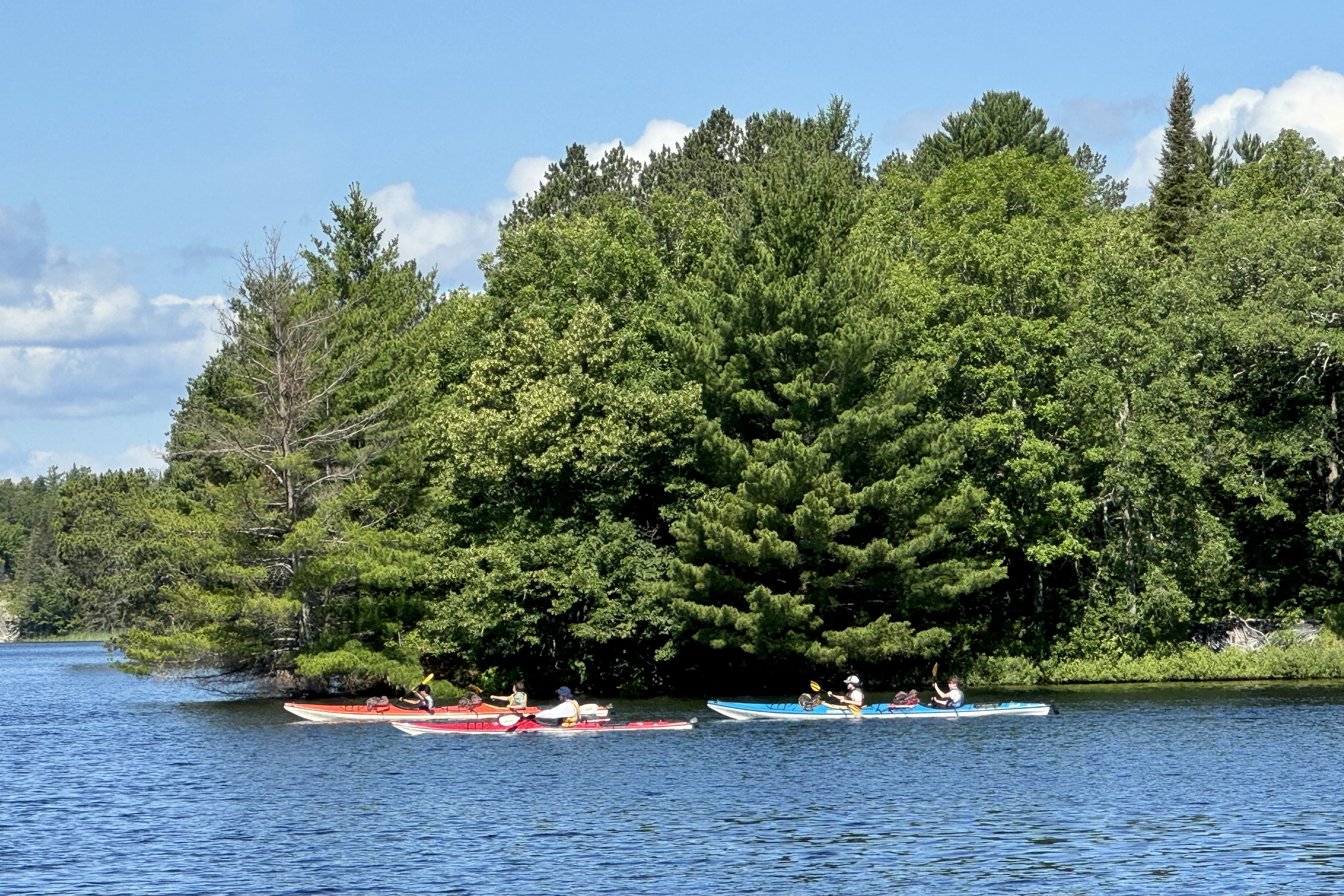
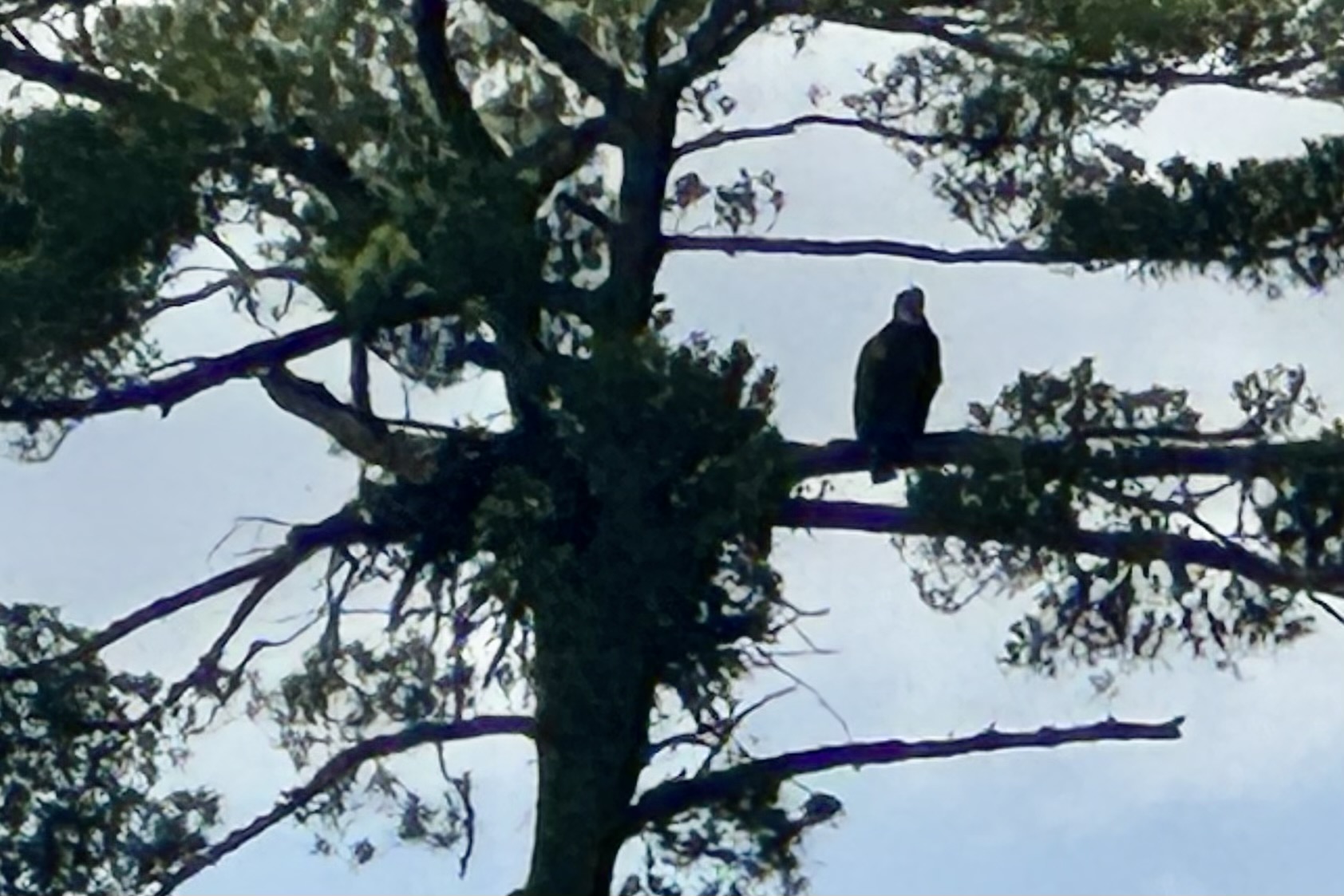
Bald eagles build massive nests and they are usually built high in trees.  On this day, the eagles who owned these nest were out and about and preferring not stay home for our arrival. However we were able to spy on at least four inhabitants of this wilderness area when they weren’t aware of our need to capture their image . o these photos are not posed.

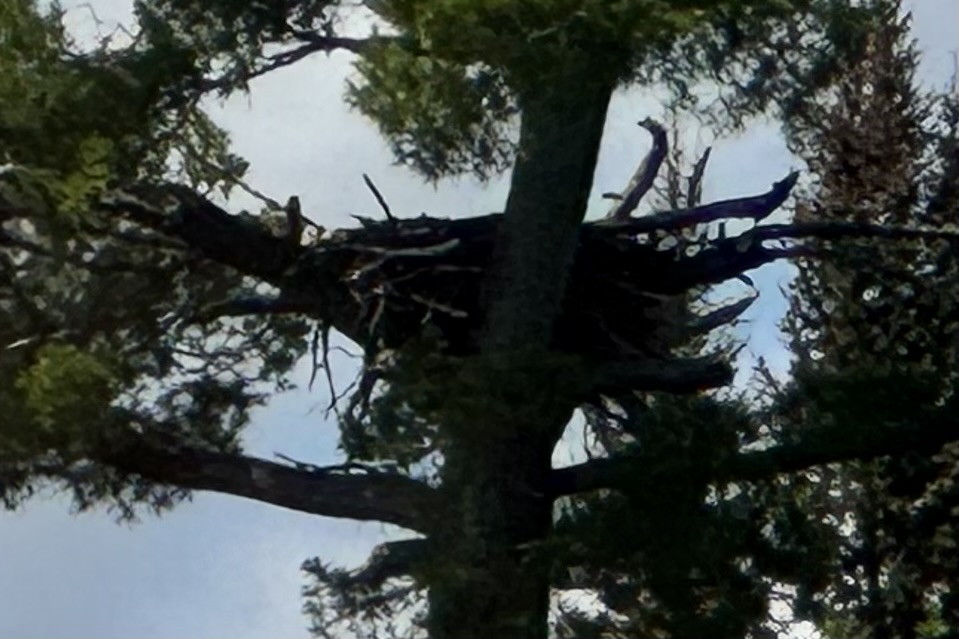
As we cruised the interconnected water ways, I mused about kayaking to one of the campsites and pitching my tent for a few days but would definitely want a site that is not on one of the main watery highways with the many boats zipping and roaring about. I mused again about how it’s not exactly true wilderness when humans can get about an area with scads of motorized vehicles rather than being confined to using two feet to walk or two arms to paddle. Eye-strain as we might, we could not sight any wolves or moose on shore and had to be content with eyeing the loons and eagles.
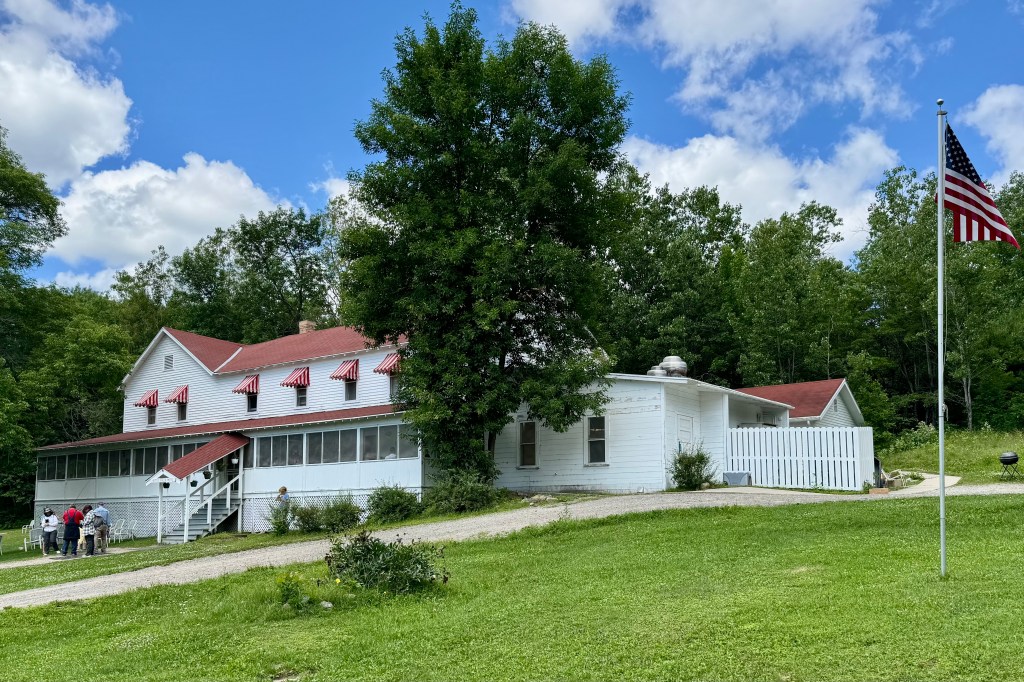
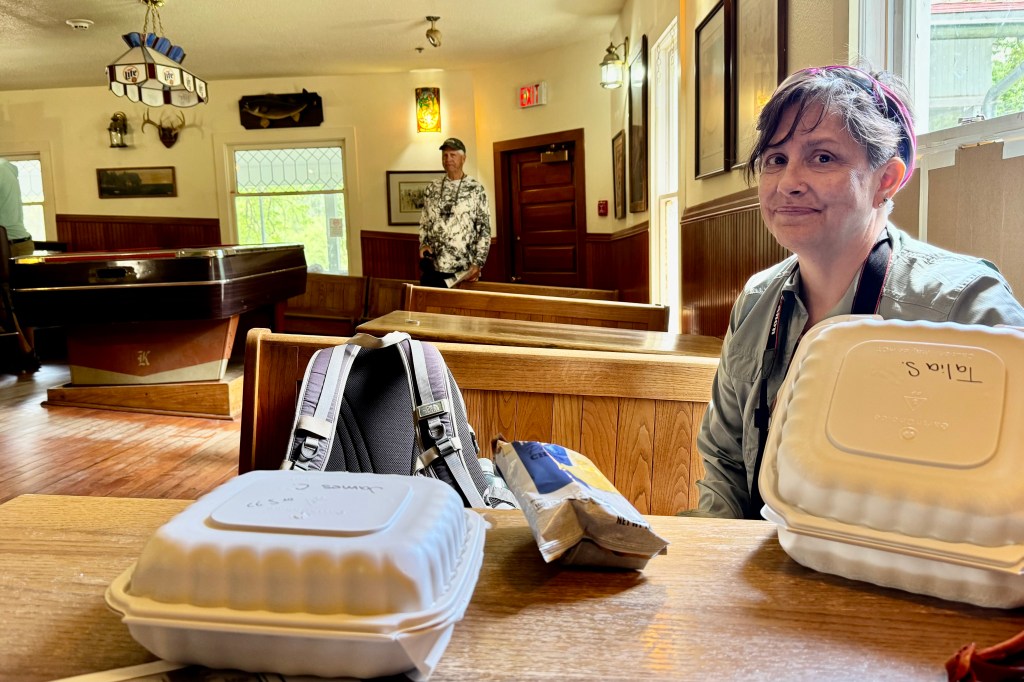
Upon arriving at the Kettle Falls Hotel, opened in 1913 , we were allowed two hours to spend on land for dining hiking, and touring the hotel and nearby dam. First we picked up the overpriced box lunch we order before departing. The upside was it was ready when we arrived but the downside was that it consisted of bread with the texture and shape of Wonder Bread (though I ordered it in brown ) and one slice of meat, and one slice of cheese (Tasia got two slices of cheese for the vegetarian option) and a small bag of chips, all for the whopping price of $17.25. Drinks extra. Glad we hadn’t expected fine dining or gourmet vittles. The hotel maintains much of its old time character with the best part being eating Wonder Bread in the Lumberjack Saloon (aka Tiltin’ Hilton) with its sloping floor (to the extreme). The floor was preserved when a renovation fixed the clay foundation (which became mushy over time and the whole bottom level sported sloping floors) .
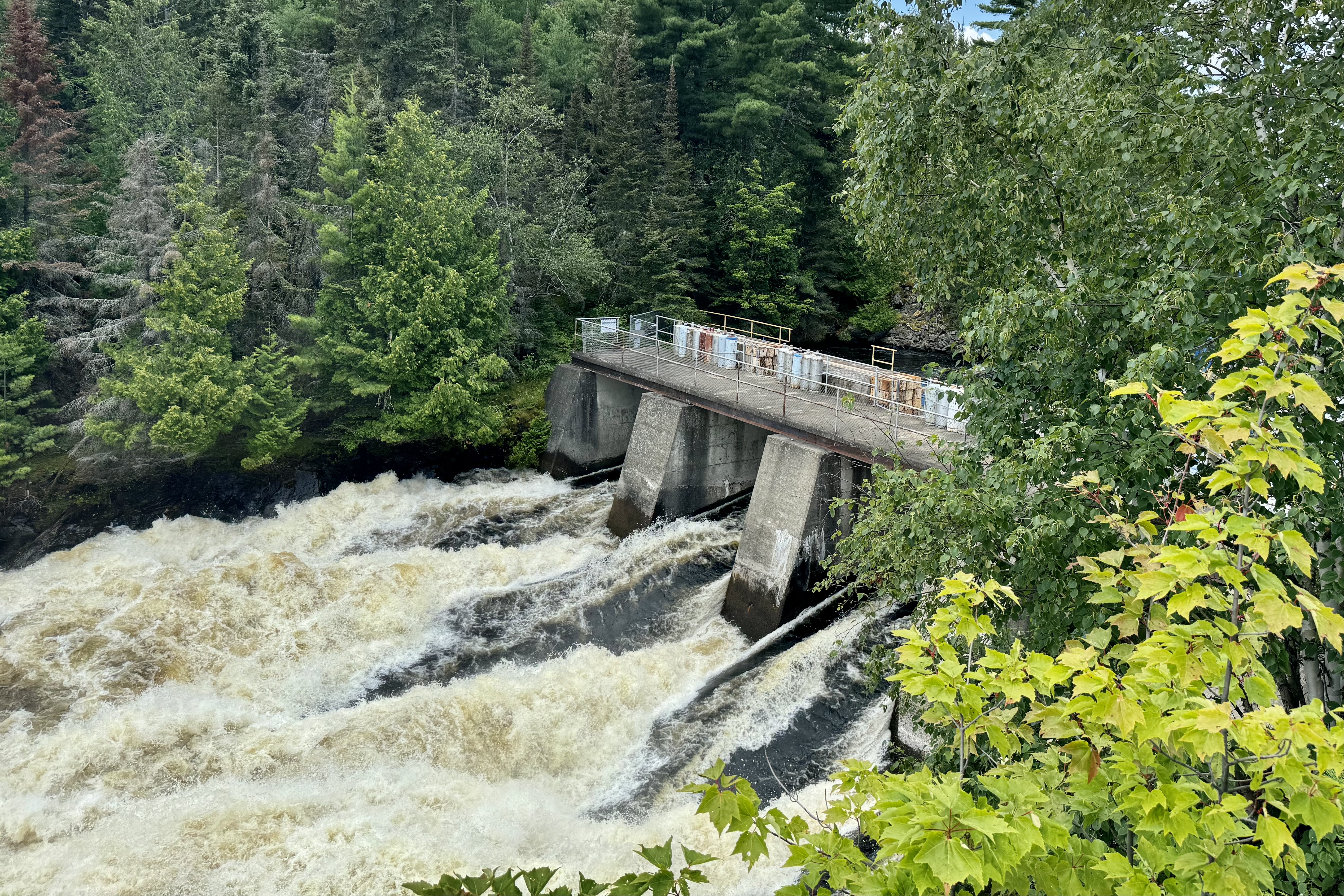
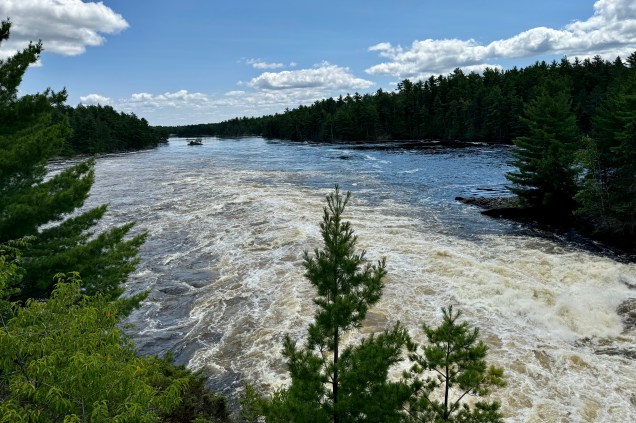
It was time to explore the surrounds and we set out to hike the area around the hotel and view the dam. Kettle Falls is a result of water from Namakan Lake descending into Rainy Lake. We can no longer view the original falls as today a large dam is in its place. But the roiling water rushing down the sluice ways was a visual treat and not to be missed once there.
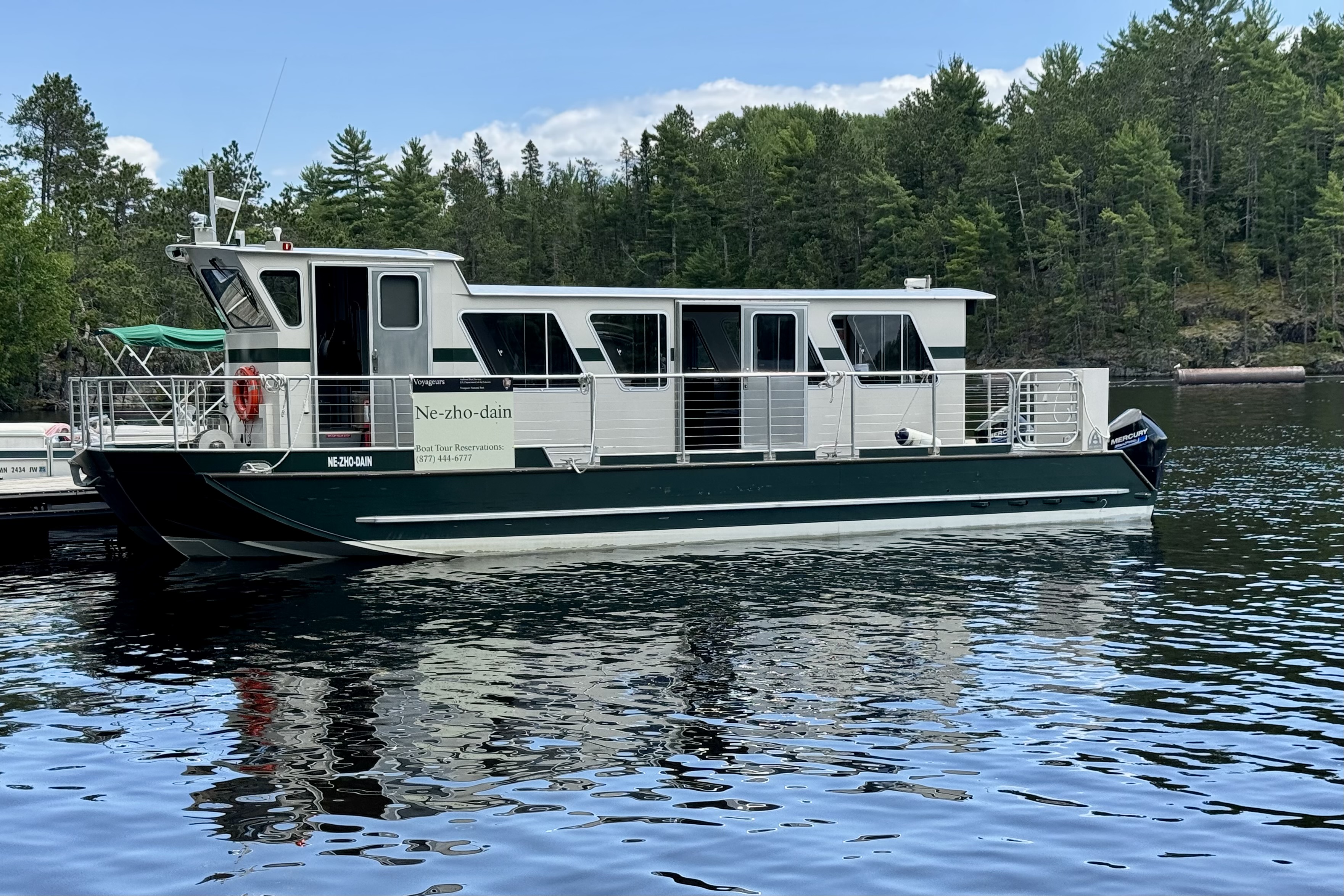
The return trip through this maze of interconnected waterways and islands was an equally pleasing scenic excursion. I was curious about navigating the area as the waterway we voyaged was proximate to the international boundary between the US and Canada. Seems the boundary was established by the customary water channel used by the American fur traders. Would that such international boundaries be so readily established today. My issue with international boundaries concerns how this invisible boundary line will be enough to stop AT&T from charging me $12.00 for a International Day Pass should the Captain creep over the dotted line we see on the map. When I was in Port Angeles Washington, proximate to the Canadian Border’s invisible very watery boundary line, I got dinged even though I never left the States.

After disembarking, a brief hike on the Beaver Pond Overlook Trail was in order but nary a beaver or beaver’s lodge to behold. Then a trip to International Falls Minnesota was the consensus destination. This is another destination I had pictured as a somewhat cosmopolitan tourist enclave. NOT.
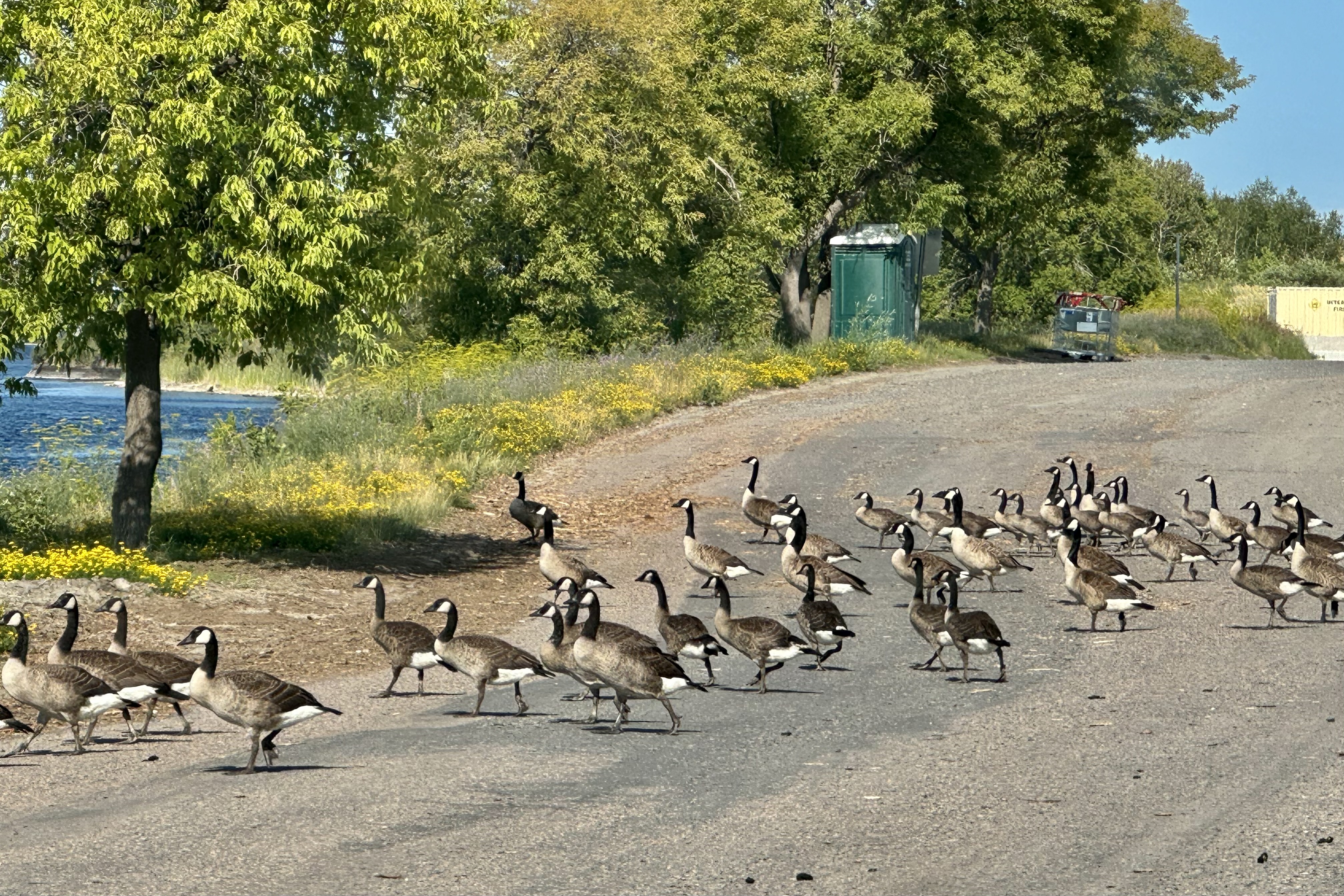
First there was no falls. Next, a giant Smokey Bear Statue stood quite tall (26′ only to be beat out by a 30′ Smokey in South Dakota) in the middle of a downtown city park. Not very cultivated but definitely relating to the logging industry. The piles of sawdust and paper mills there give the air a heavy smell of rotting wood. Thirdly, other than its claim to fame as the “Icebox of the Nation” being one of the coldest places in the lower 48, it seems that you can find here such things as the “famous” last port-a potty before Canada, the last flock of geese before crossing over, the last paper mill on this side of the border before getting to Canada (whose factories along the Rainy River here spew nonstop bad odors as well), and concluding from our search for a place to eat dinner, the last not-so-good-place-to-eat before Canada.

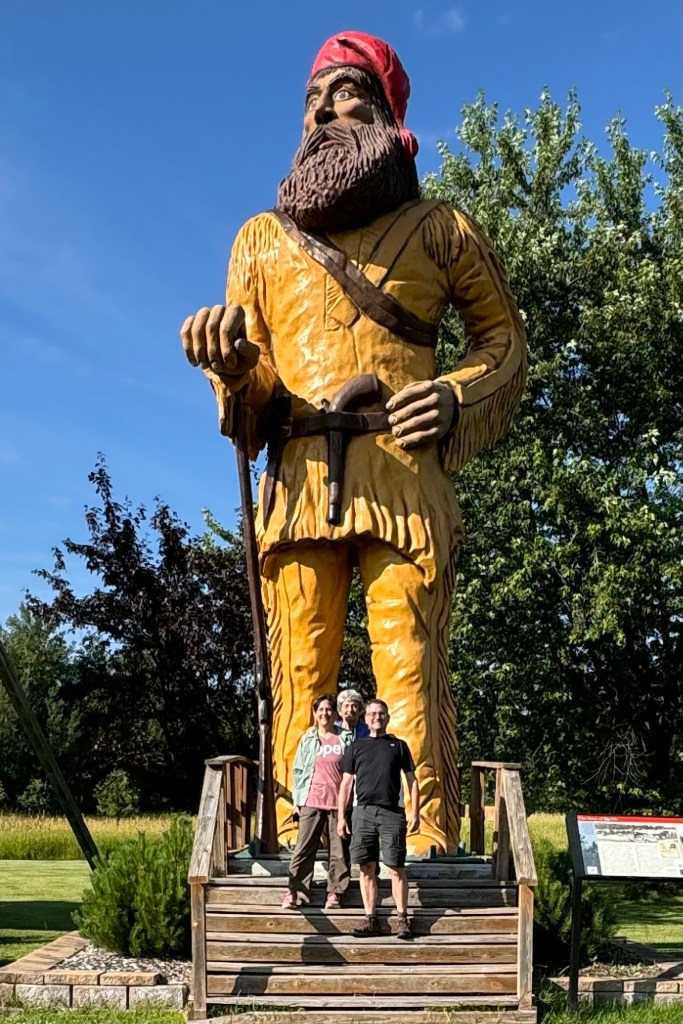
Heading back to Ranier, with our new found passion for BIG statues, we stopped to investigate “Vic”, a 25-foot-tall statue of a voyageur that was built as a protest (by Vic Davis) to a property dispute against the U.S. government using eminent domain to seize private land for the creation of Voyageurs National Park . Now towards days end , we opted out of what we deemed as somewhat dodgy restaurant in Ranier , Louie’s, and ate yet again at the hotel distillery restaurant which we swore we would never again patronize. .What a difference a day makes. Good food, decent service, good waitress followed by a good night.

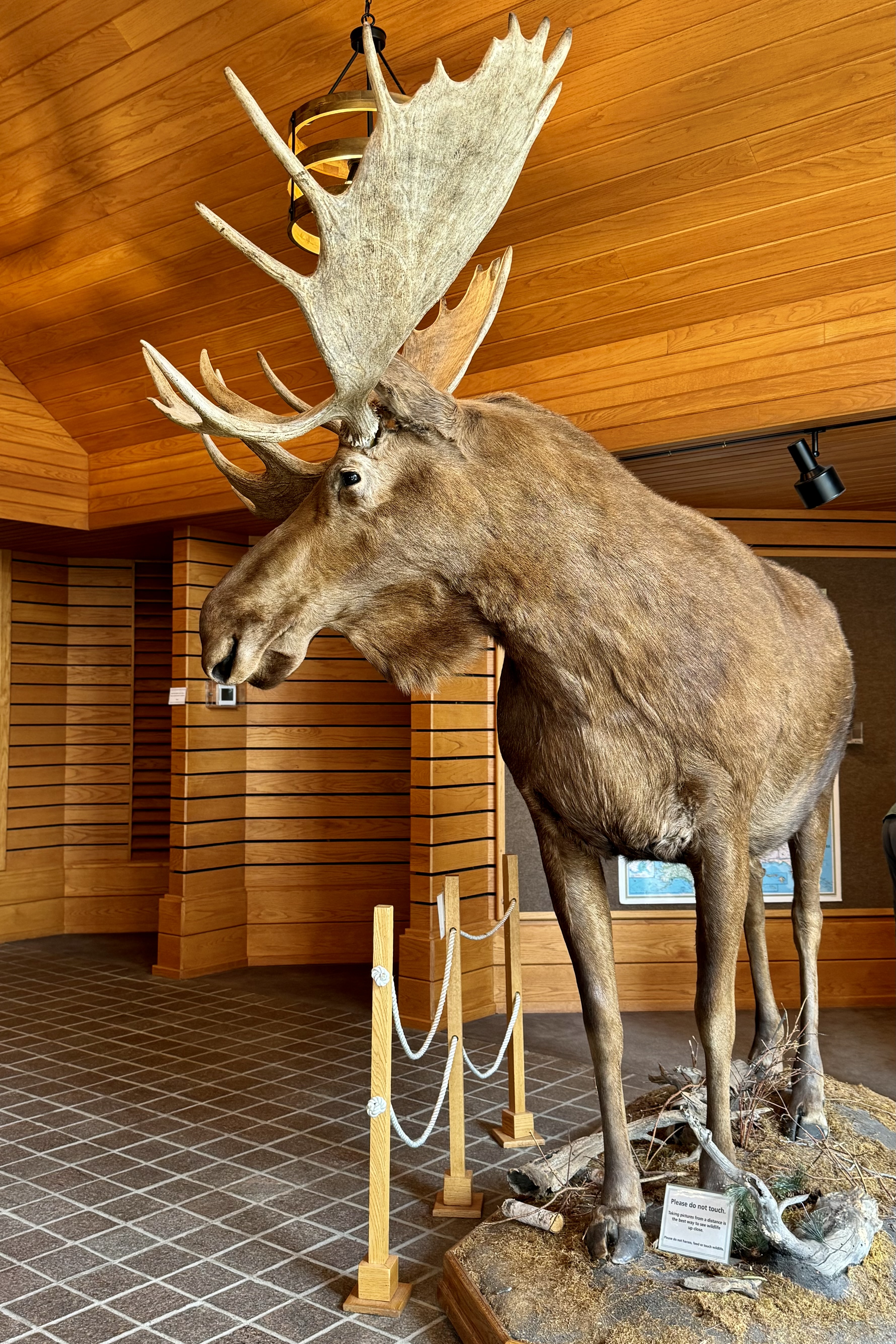
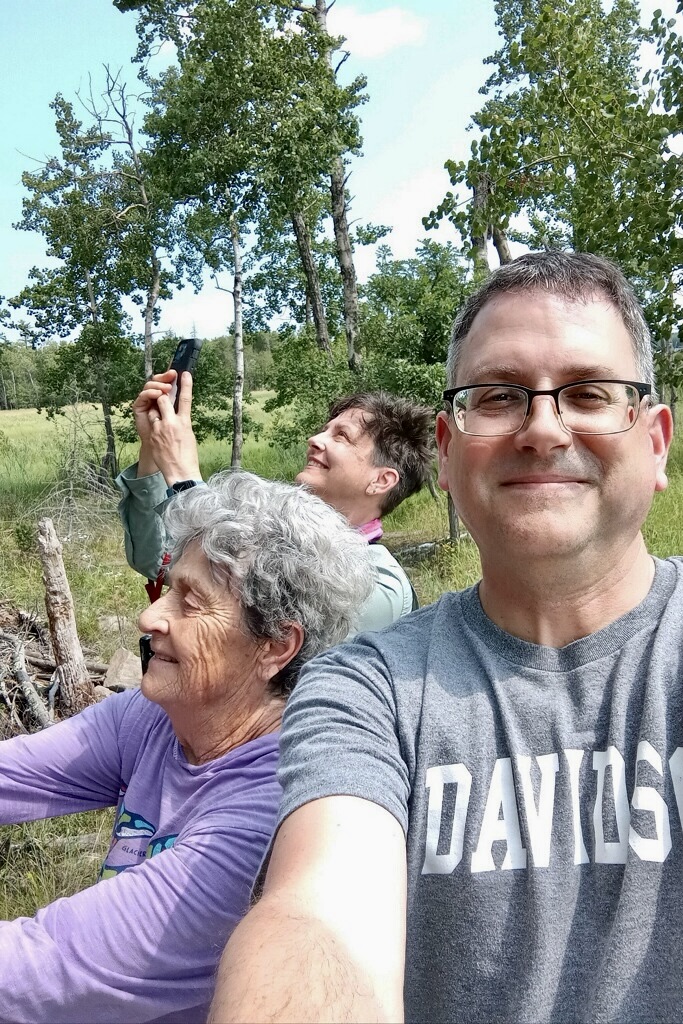
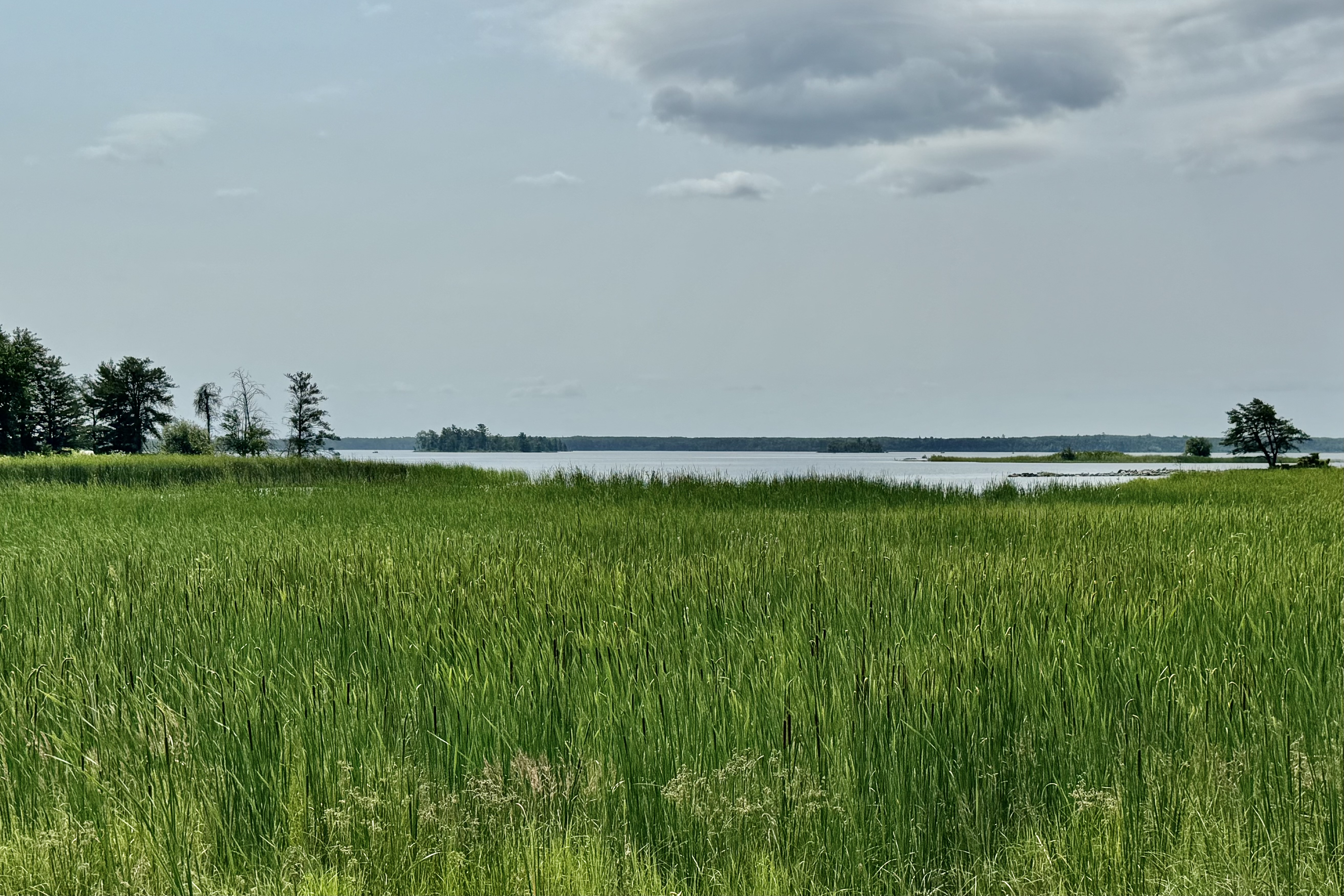
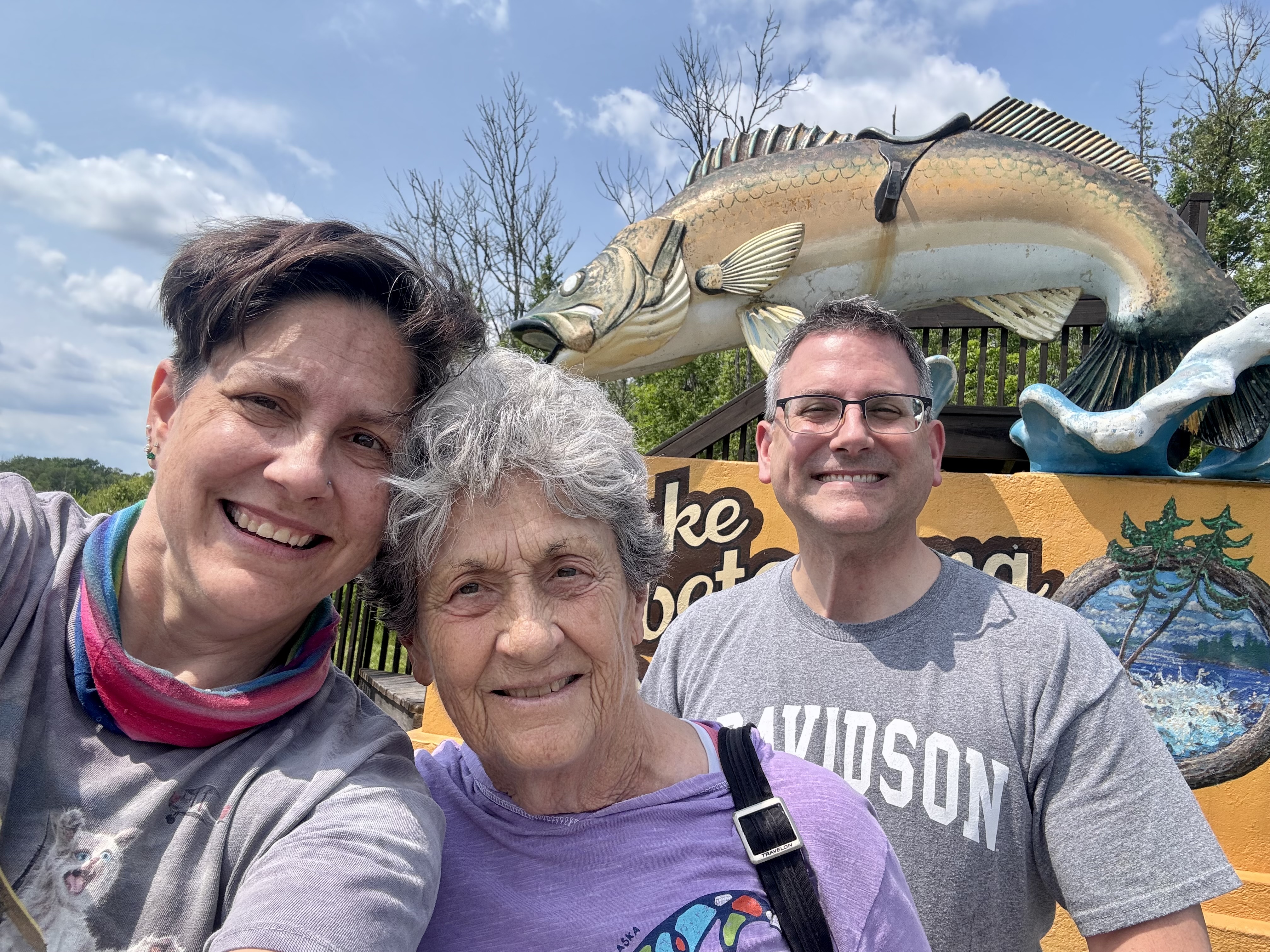
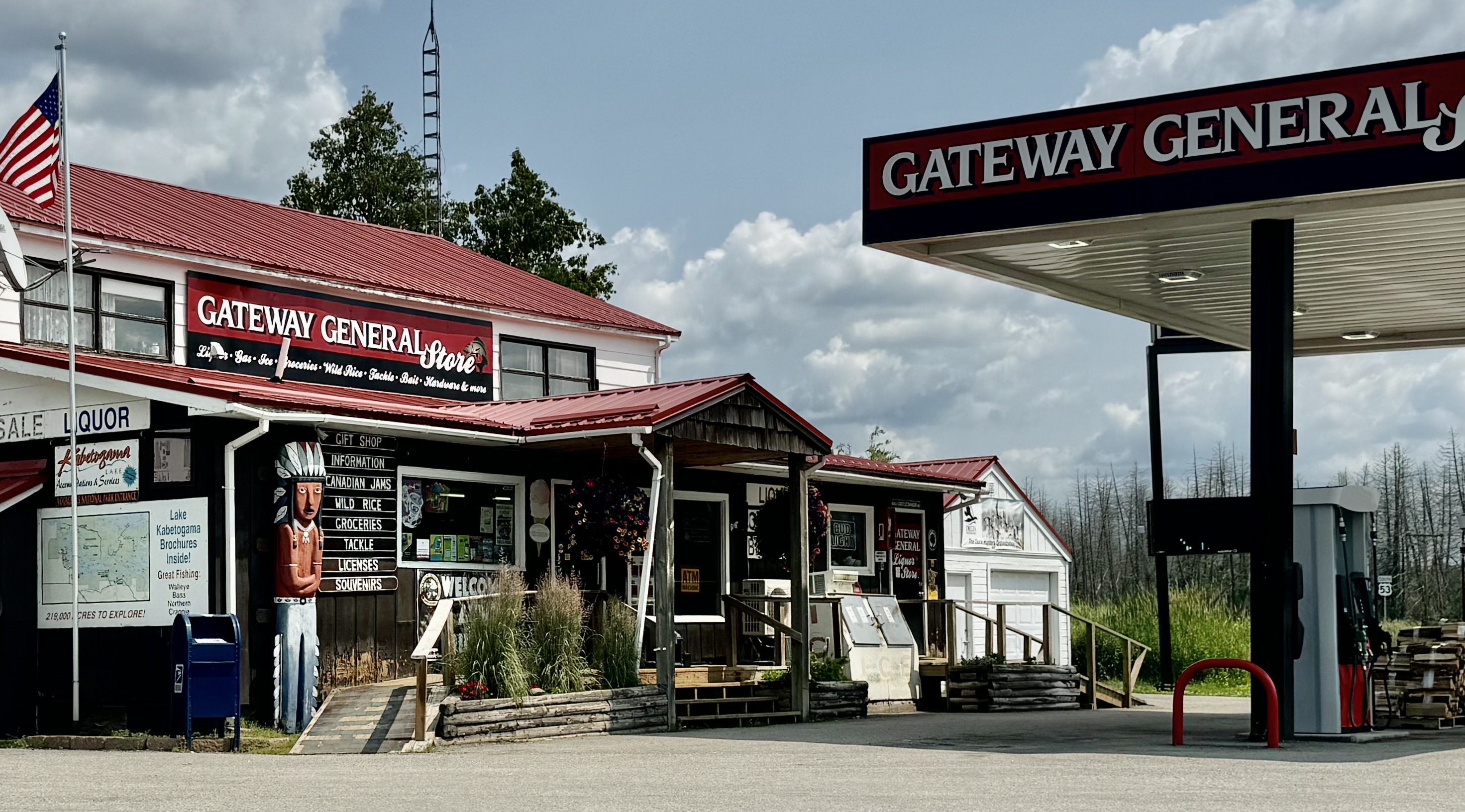
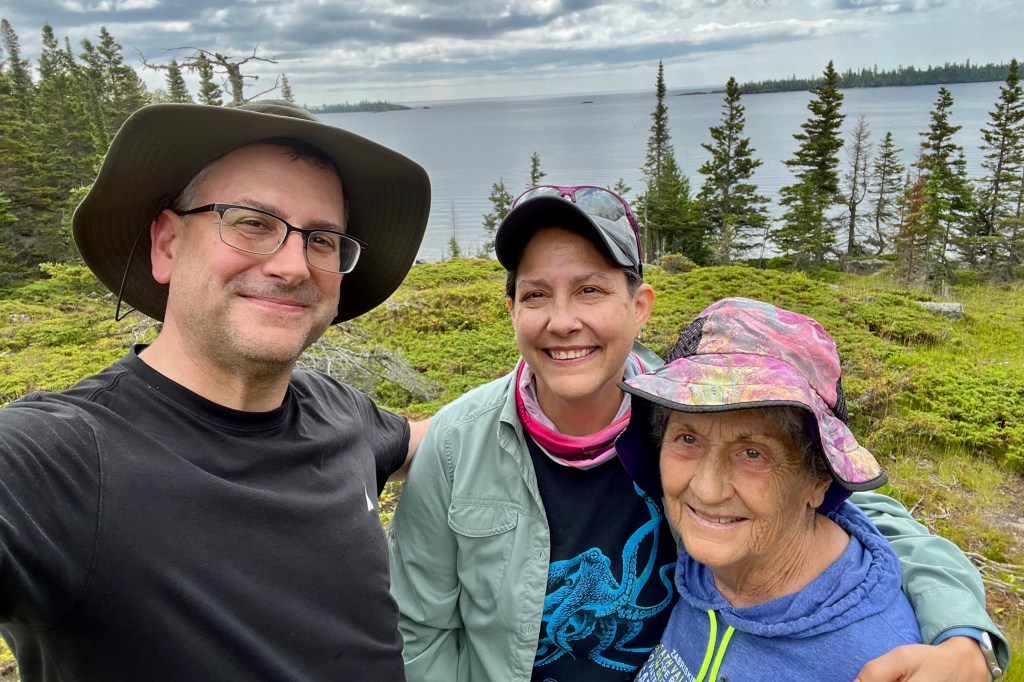
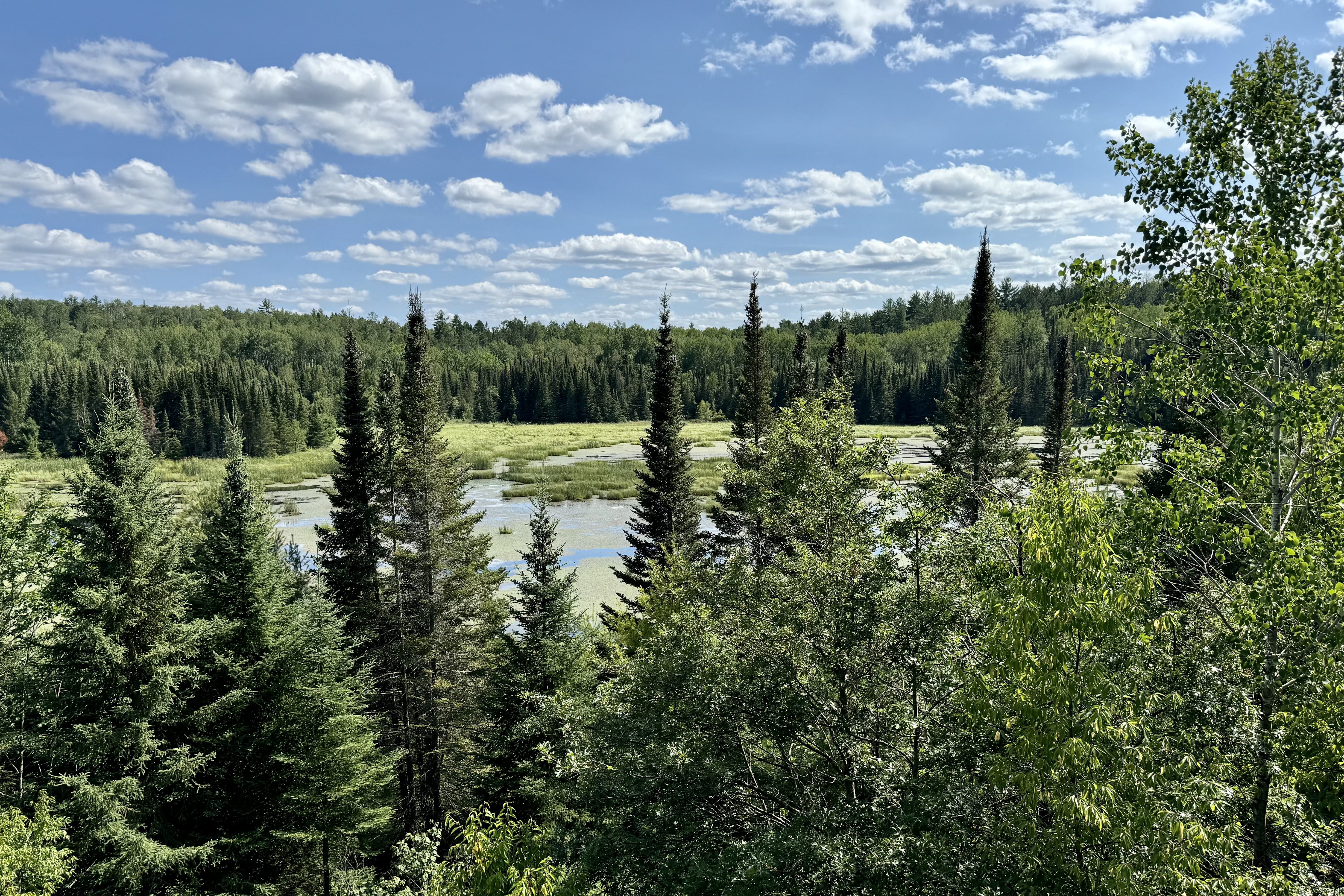
Before getting on the road to Duluth we headed over to the Rainy Lake visitors center to spend money on NPS “stuff and such!” and have a close encounter with some no so alive wildlife. Since the mileage to Duluth was not crazy long, a hike before a long sit in the car was in order. The Oberholtzer Trail proximate to the visitors center, two mile relatively easy hike was the logical choice . We wandered through deciduous and conifer forest as the trail twisted around the edge of a cattail filled wetland and enjoyed two different overlooks with marsh and lake views. Have you ever gotten so used to taking selfies that you might totally “just do it” even when there are others right there with you to snap that handsomely beautiful face in that handsomely beautiful spot (which more often than not is obscured by your handsomely beautiful prominent face blocking almost everything out. Note: above photo was not posed. But first a stop in Kabetogama for gas and a bit of Walleye fishing.

This was the last evening we would be together, so the dinner restaurant choice for our “farewell” was in Downtown Duluth at the Zeitgeist Restaurant, part of a nonprofit theatre arts complex. Other than major parking issues (as with just about every downtown) it was a great choice.

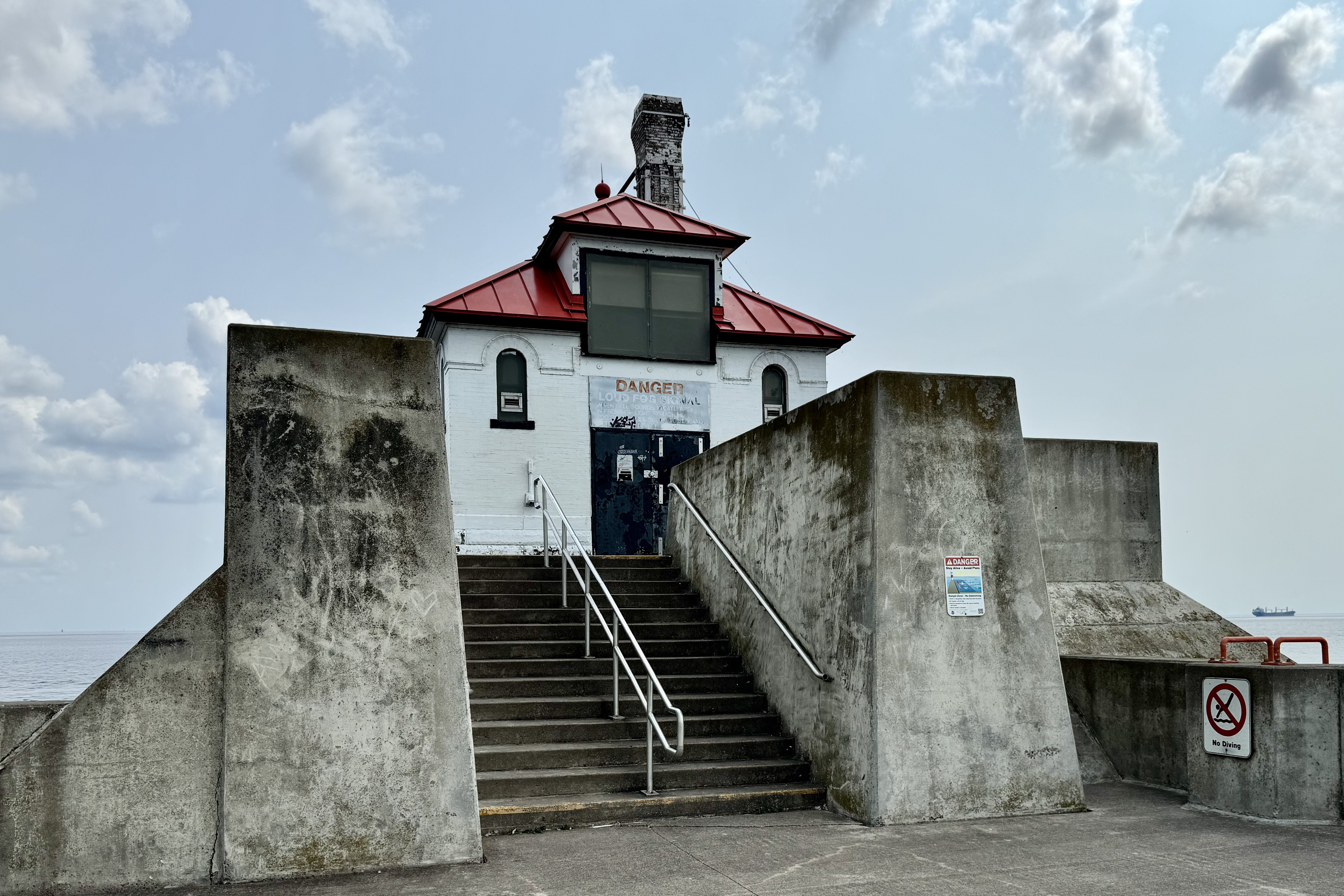
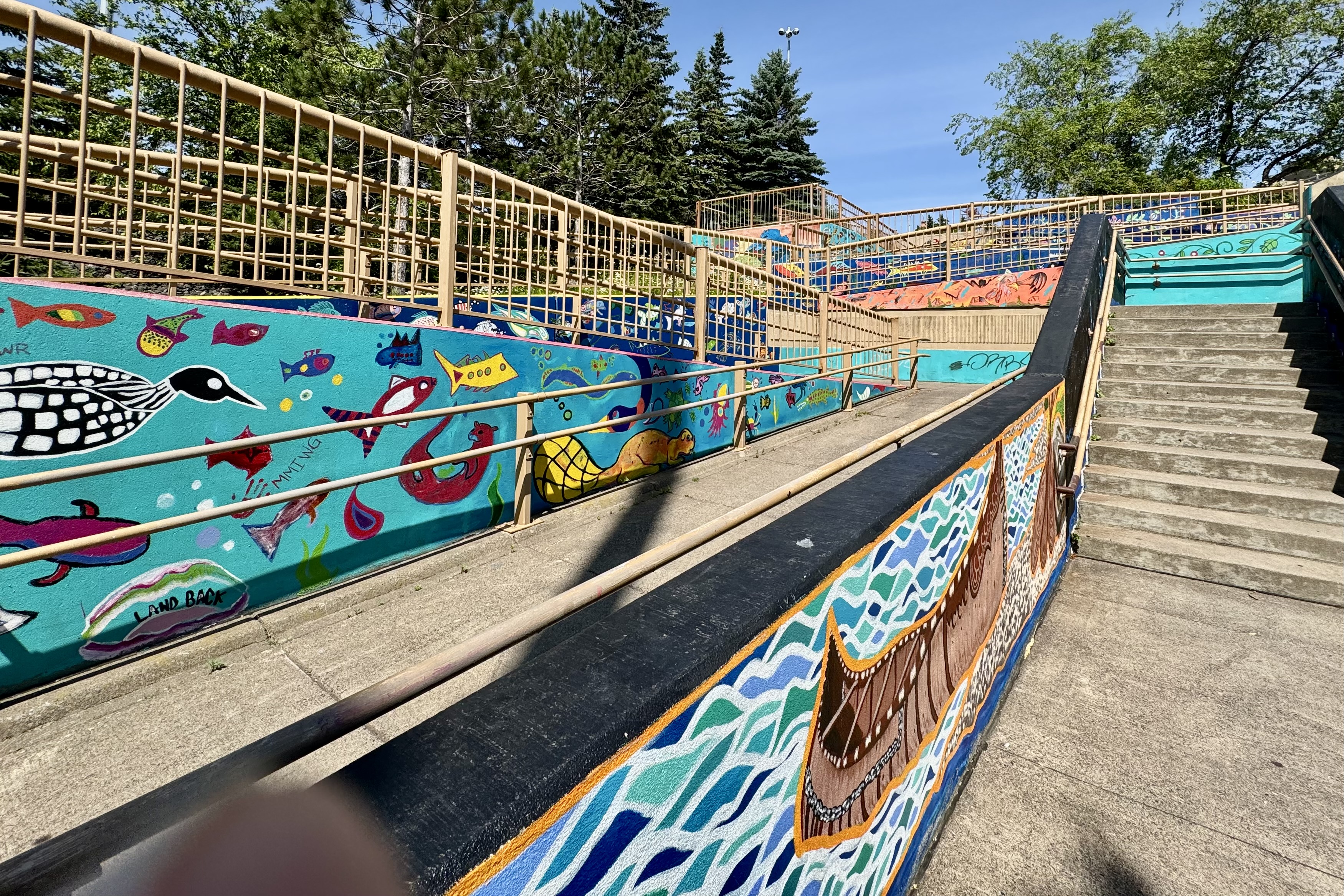
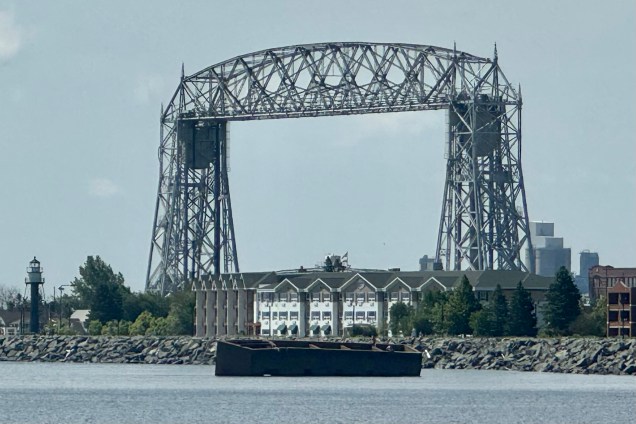
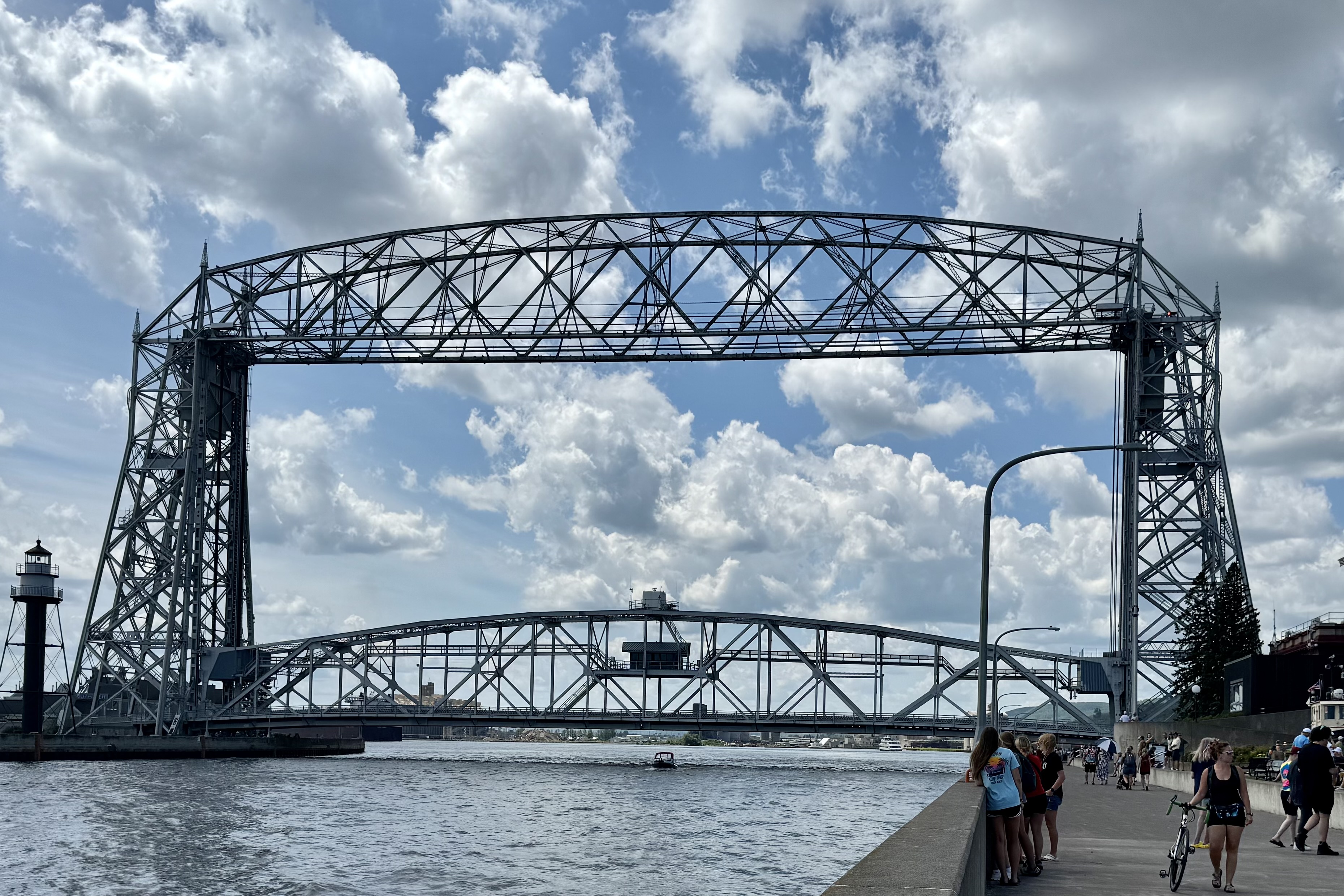
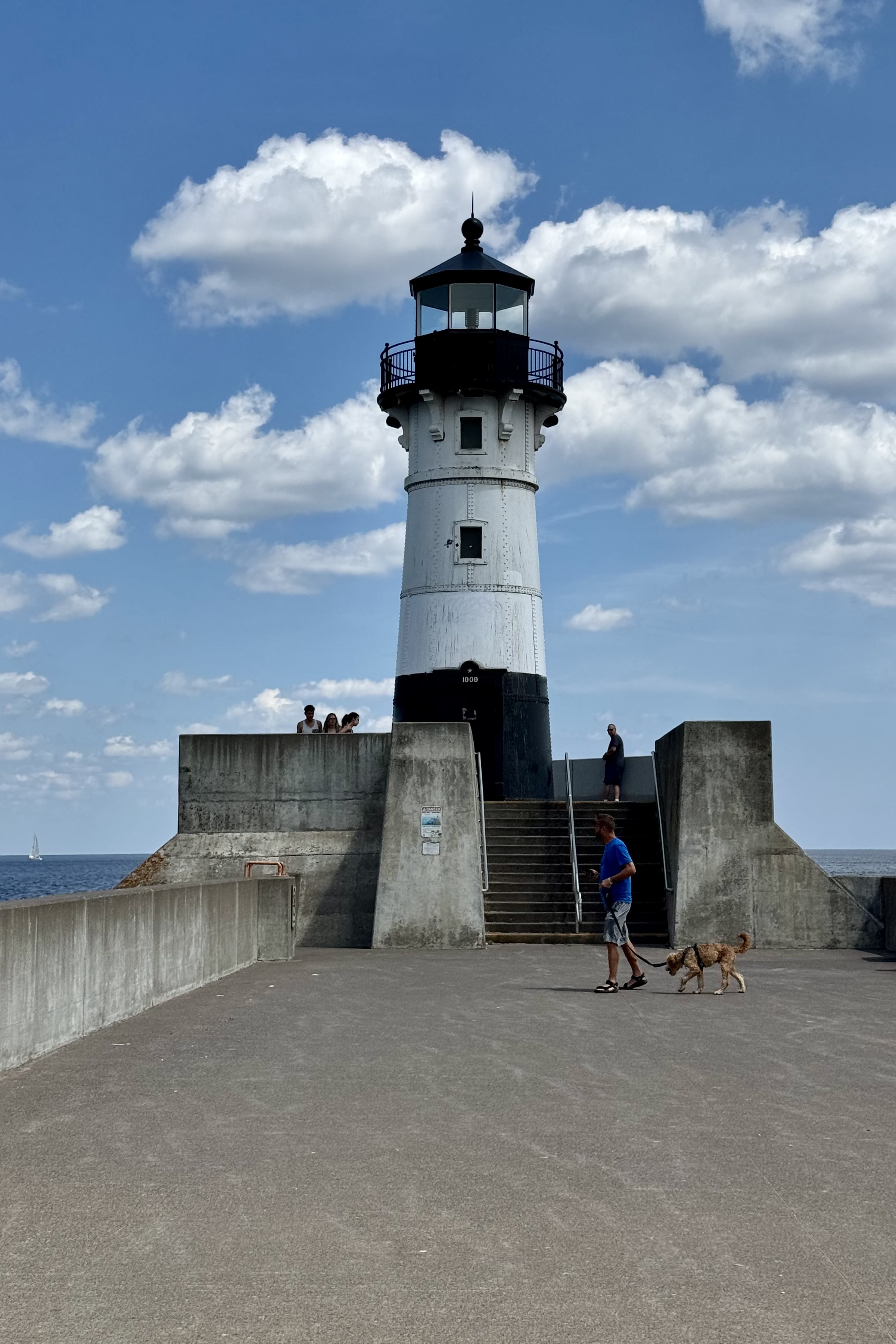
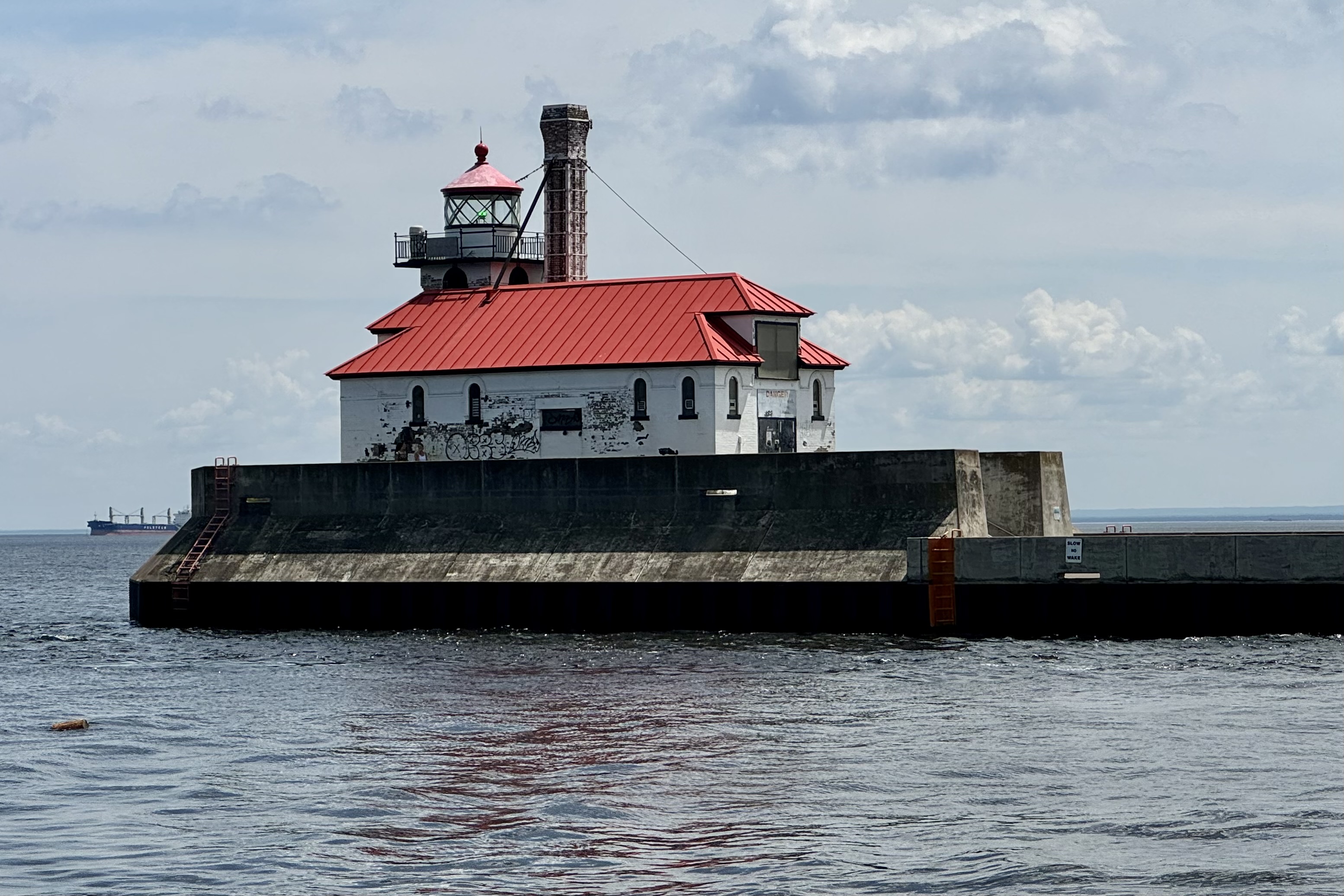
July 20th was a travel day but not the leasts bit boring . Since Tasia and Jamies departure time was not until mid-afternoon, a morning down at Canal Park was in order after an exploration of the neighborhood where my father’s family lived in the early 1900’s. Feeding our keen fascination with bridge structure (here I go again) and definitely wanting Jamie to experience the Aerial Lift Bridge in Duluth, we headed to Canal Park. Our hope was that there would also be a cargo ship coming into port. We were to be in luck. After exploring the US Army Core of Engineers Maritime Museum, we decided to walk across the Aerial Lift Bridge. Once on the other side we could access the lighthouse on the southern breakwater pier and get an up close read of the graffiti. Few surfaces are safe from graffiti artists. We decided they must paint over it every couple of years since some of the art was dated and the oldest date was only a couple years past. The Duluth Harbor North Pier Lighthouse located on north breakwater appeared less available to the artists and thus not bedecked (or painted more often).
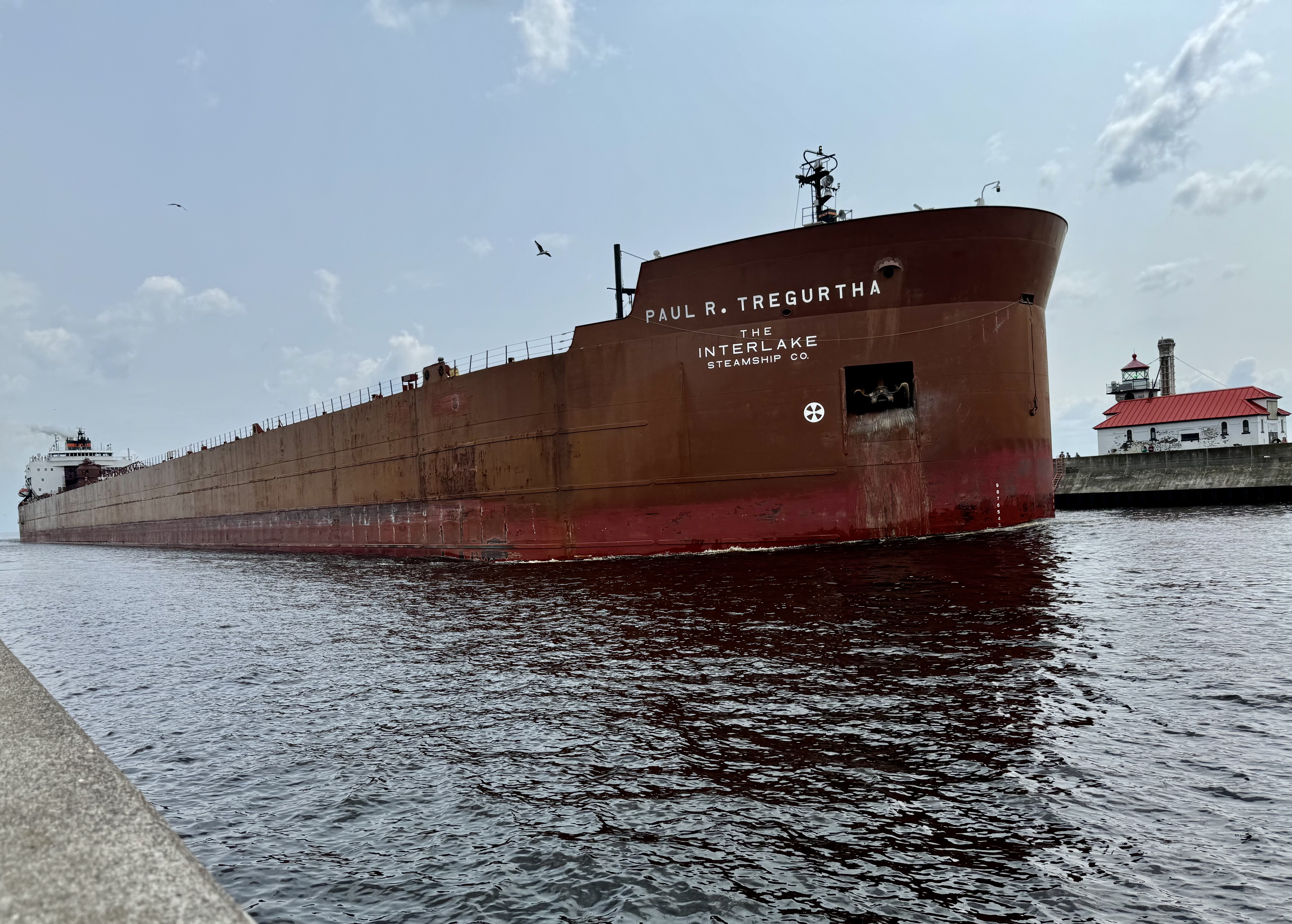
It was fascinating and remarkable experience traversing the bridge and there was plenty of time to welcome the Paul R. Tregurth, “Queen of the Lakes, ” a 1003 ft long x 150 wide cargo ship and the longest vessel on the Great Lakes come into port and of course the Aerial Lift Bridge put on its show, The size is so massive that it makes what happened to the Frances Scott Key Bridge even more imaginable.
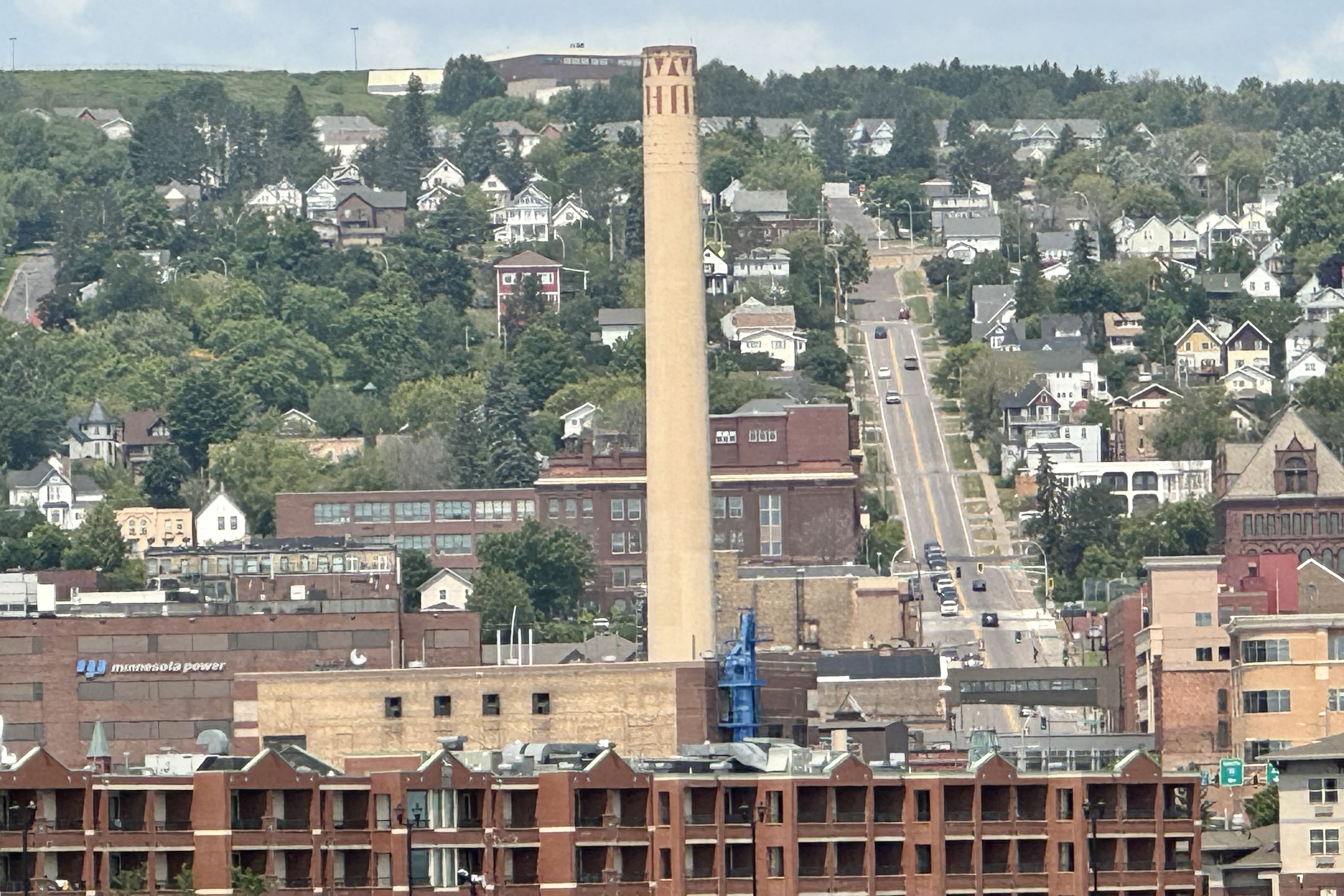
Subsequently, I dropped Tasia and Jamie around 1:30 PM and after doing a very minor re-organization of the car to find the things I needed to get to my first campsite of phase three of this trip, I was on the road headed to Munising, Michigan and a forest service campground in the Hiawatha National Forest. Having started out late and need to take several “stretch the legs and bathroom” stops, I was pushing it to reach my destination to arrive with adequate light top set up my tent etc. The “highlight” of the trip was the text chain that began when Tasia noted that her flight had been delayed… and Jamie’s as well since they were on the same flight. They would miss their connections in Minneapolis. The real rub was that Tasia had the same occurrence on the way into Duluth and got stuck in Minneapolis . Of course there was nothing I could do and even though they are my kids, they are grown adults who can figure it out themselves. Turns out this was all part of the Delta debacle as a result of the CrowdStrike snafu. They slept one night on the Minneapolis airport floor and two in a hotel before they finally airlifted out on Tuesday. I was headed to Michigan for my own campsite challenge.


A Regal Island, Unforeseen Carnivores, and an Infestation of Bloodsuckers

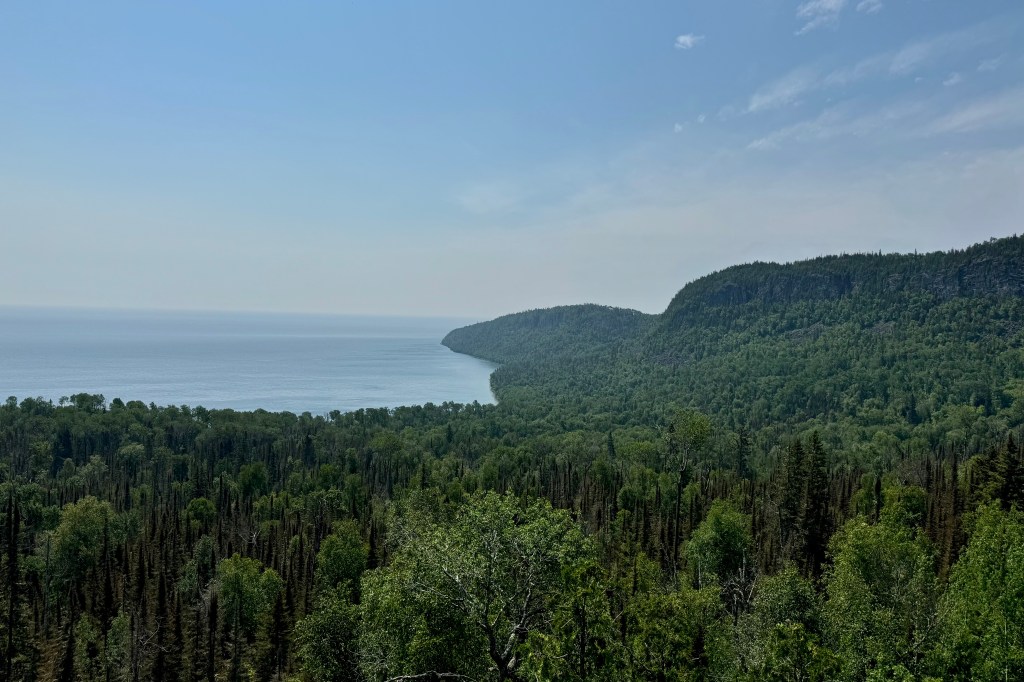
The next day was a travel day from Thunder Bay to Duluth MN for the beginning of a highly anticipated week with two of my adult children who were flying into Duluth and the subsequent visit to Isle Royale and Voyageurs National Park with me.  It was a beauteous day with great panoramas of Lake Superior as the road hugged the shoreline. However, as on most two lane roads, the fast surges forward and the great feeling of “alas I am finally making good time”  and then stomping on the  brakes to a slow crawl  in the touristy small town traffic was the pattern.   I am not sure most of the time why I am in a hurry but old habits and cultural norms of living frenetically seem to control my inner driving guide. 

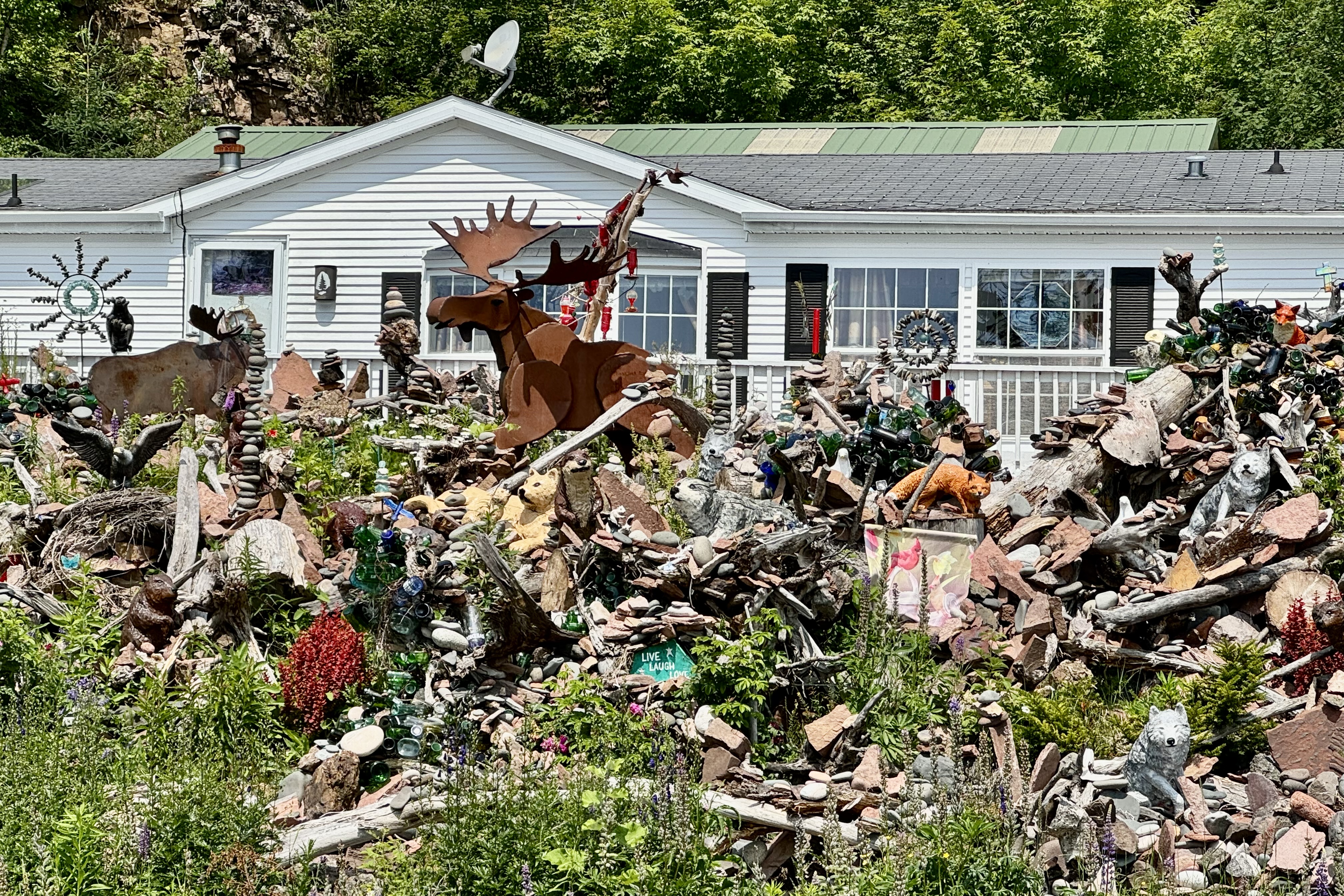
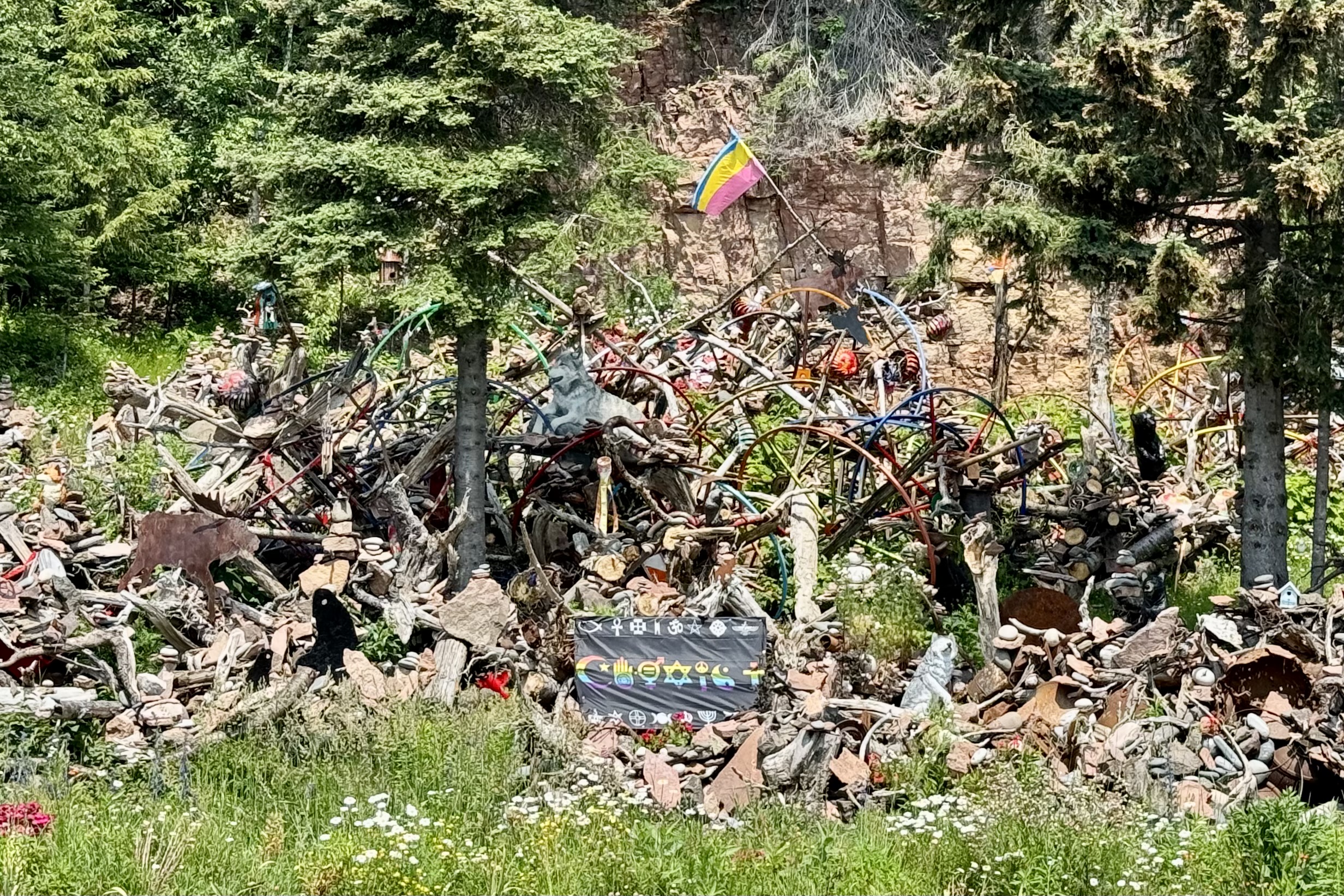
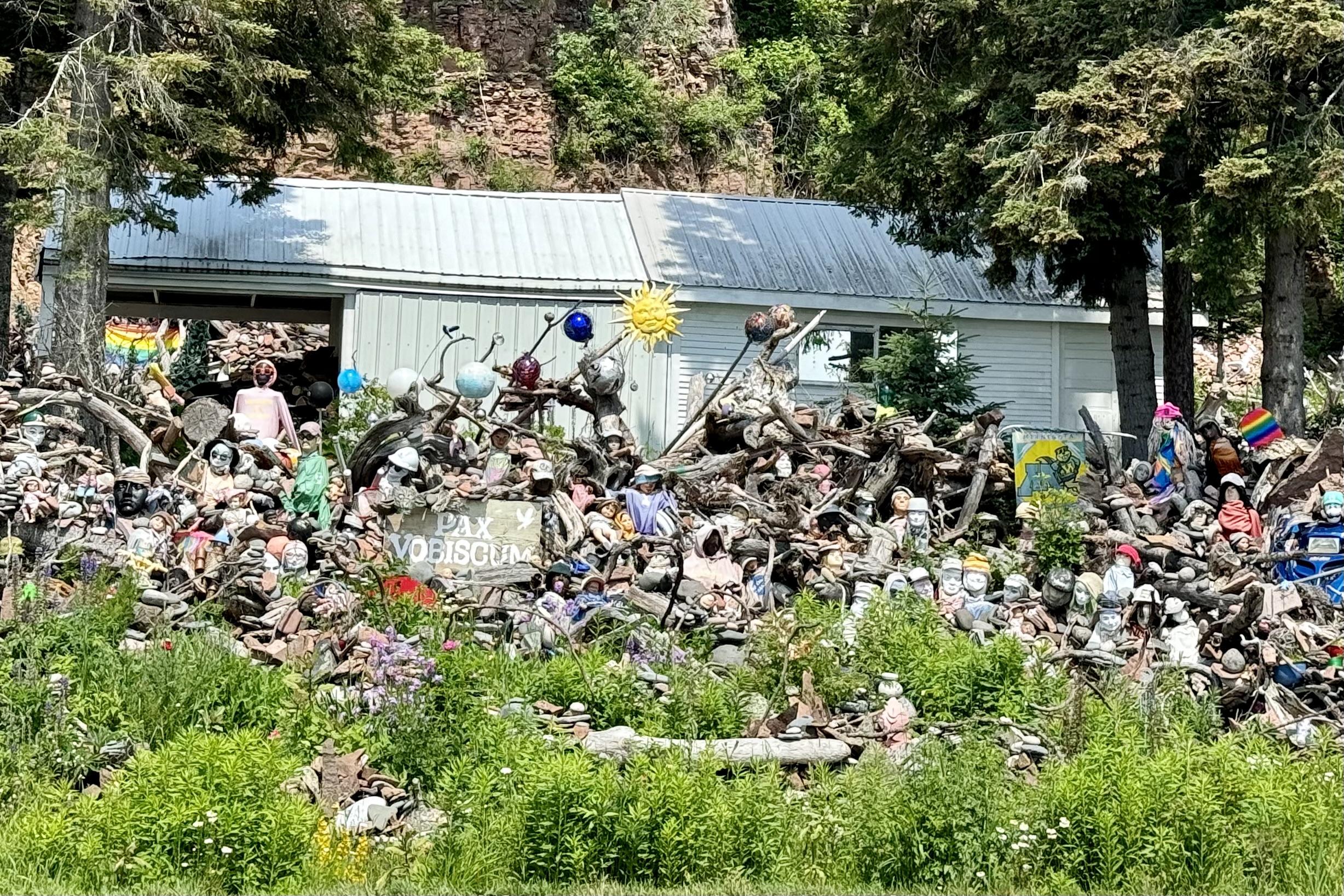
I had been so disappointed when planning this trip that I was unable to get a flight out of Grand Marais to Isle Royale. As I crawled through this very popular destination for tourists, that disappointment dissipated quickly as it was overflowing with tourists looking for their tchotchke with Grand Marais imprinted on whatever or anything else their inner consumer desired at the moment and nary a spot to park. Continuing south I cruised by what was a bizarre looking yard and decided I definitly need to do a U-turn to get a better look and a couple pictures of it. I could not quite decide if this fell into the in the realm of quirky art or collection of pure junk and a poor attempt meant to create art.

Along the way was a beautiful waterfall tumbling into Lake Superior at Cross River. I took a break to experience its beauty and energy. When en route my daughter Tasia, who was meeting me that evening in Duluth, called to say her plane was delayed in Salt Lake City and she would miss the Minneapolis flight. So began the saga of whether she would arrive tonight or tomorrow. I arrived at the Comfort Inn in Duluth negotiating a maze of highway construction, weaving many a loop successfully thanks to Siri. What a stark difference this Comfort Inn was from the one in Thunder Bay, with friendly staff and an elegant feel. I was desperate to do laundry and “twas a good way to pass the time while I waited for updates from Tasia about her arrival. Finally about 1:00 am I went to sleep knowing that she would either get a flight in or I would drive Minneapolis to get her.

I had set my alarm to make sure I was up and had all options open to retrieve Tasia  and learned she would be arriving  in Duluth at around 10:15 (12 hours beyond the original arrival).  So I breakfasted, packed up, and headed to the airport and eagerly heard the story of her  bad travel karma. The choice point for her was sleep in the Minneapolis airport or get a motel room with the airline  voucher.  Had she known where she was going to end up ( a dodgy Super 8 in a smoking room for 4 hours), I think the better choice might have  been to sleep on the airport floor.  With four hours to fill  before retrieving Jamie we headed over to Canal Park, the #1 choice on the  “What to do in Duluth” lists.  It turned out to be a bonanza of a choice.

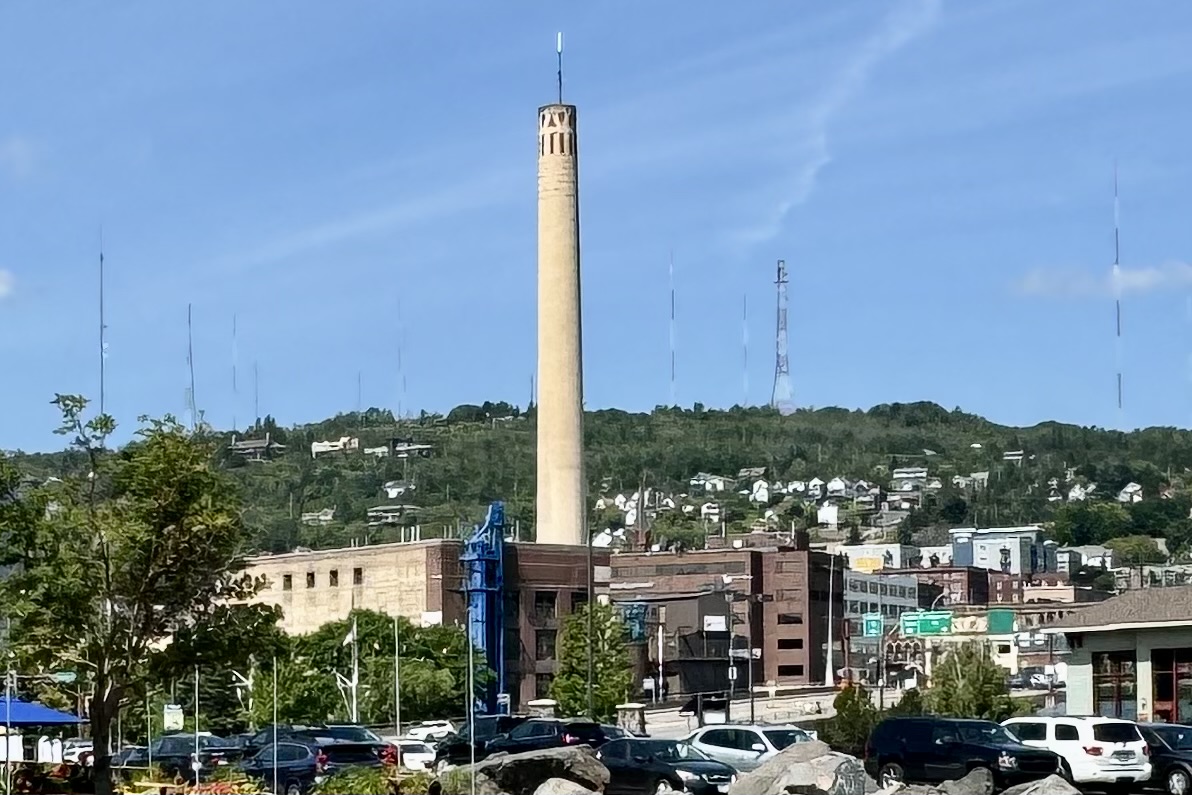
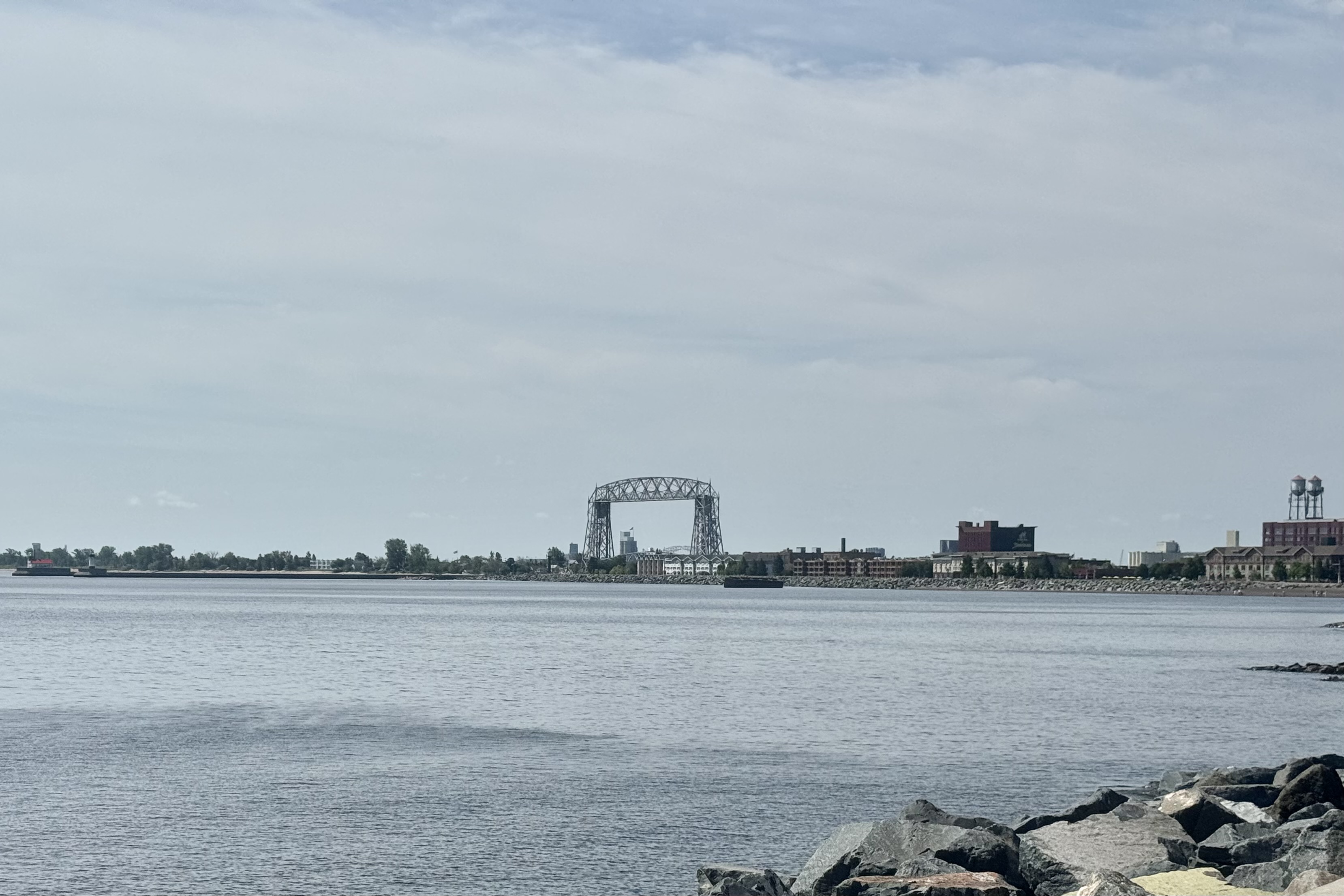
Duluth has a great Lake Superior Waterfront and since it wasn’t yet too blistering hot we walked the multi-use path along the inland sea to enjoying the breezes off of the lake and discovering some of the industrial history as we observed stacks, the historic Finger’s Brewery Complex, Enger Tower in the distance and the landmark Aerial Lift Bridge. Once back we went to Gramma’s for lunch – the first good meal I had had since leaving home and also to cool down and rehydrated after a hot walk.

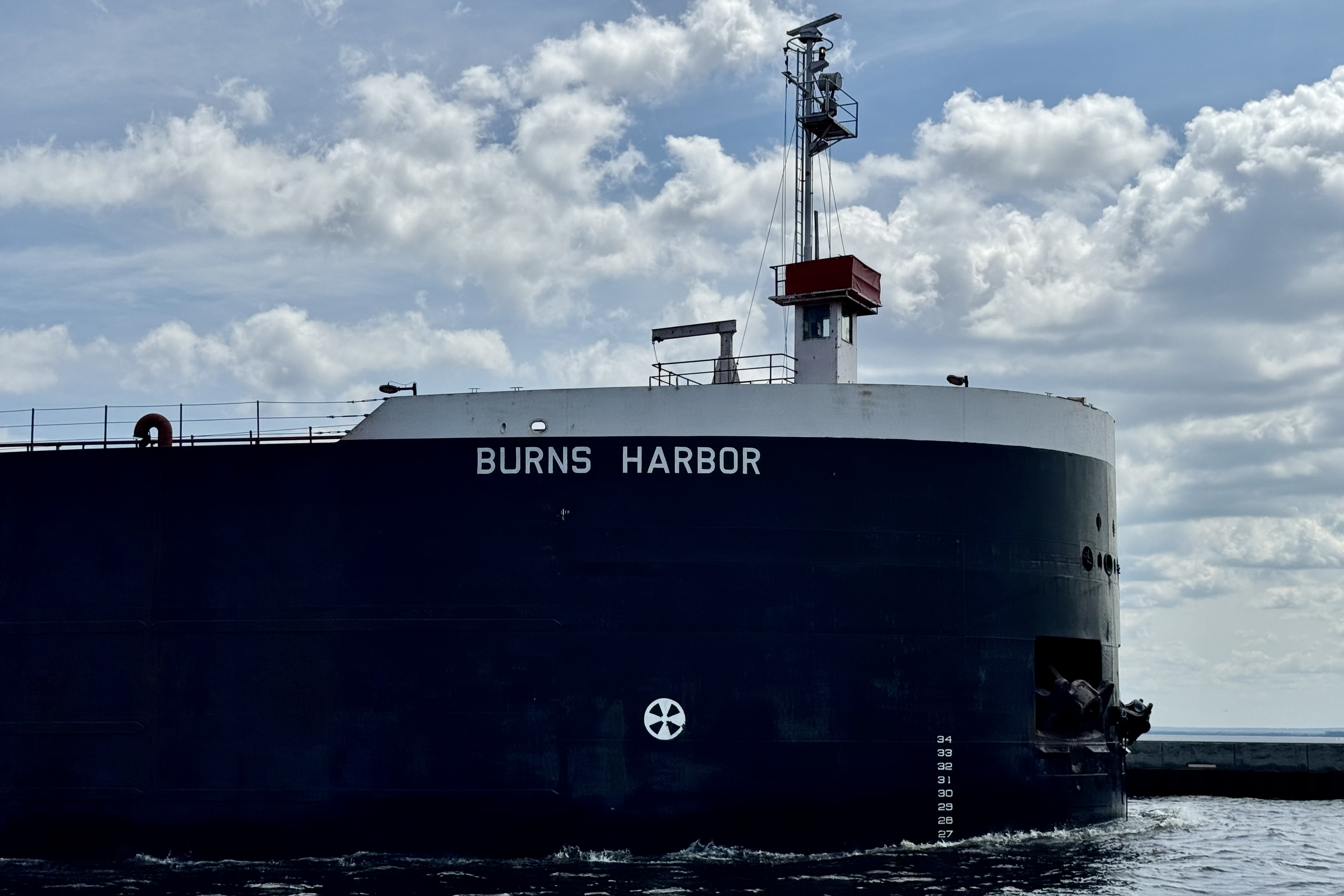
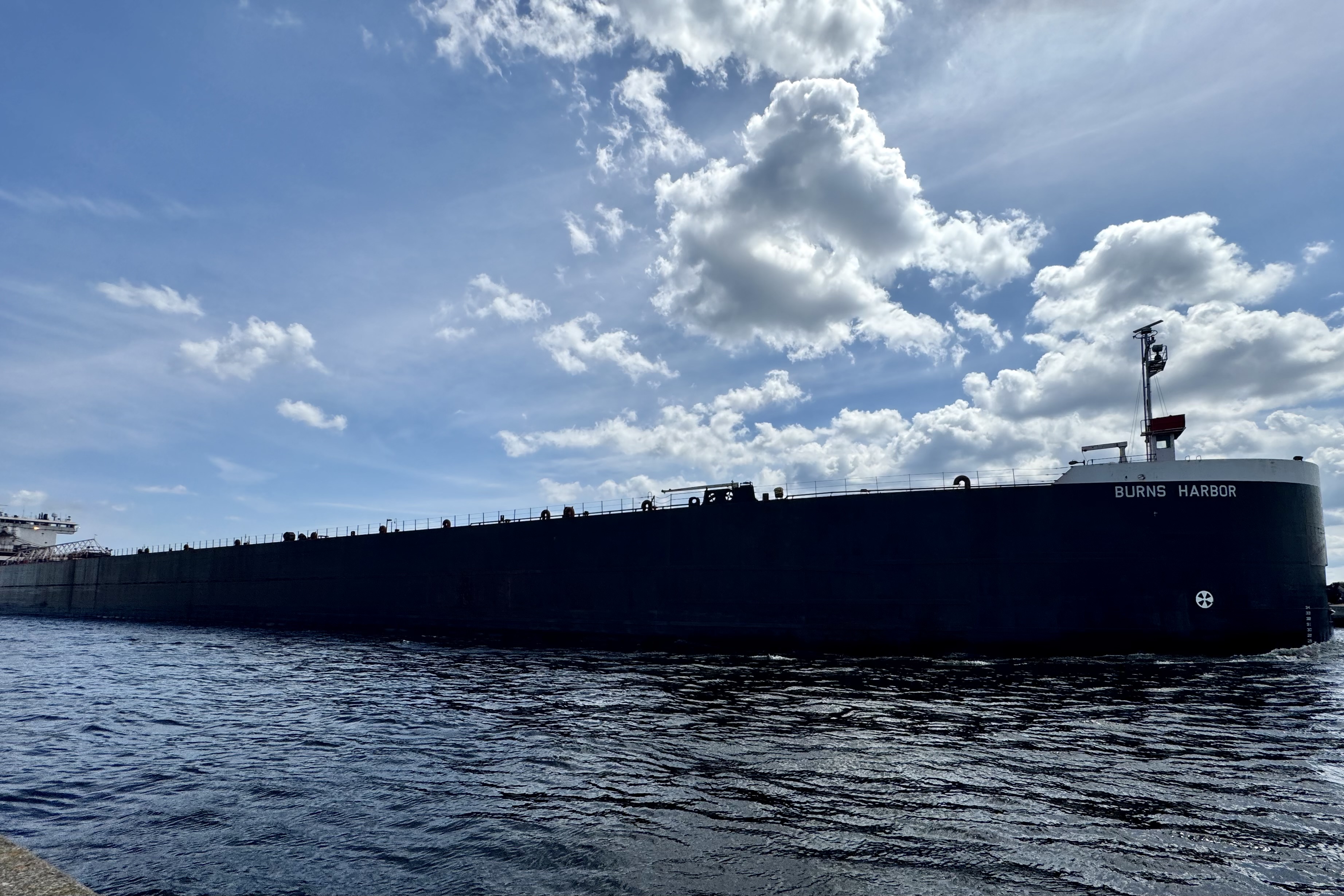
Exiting the restaurant near the Canal Business District we observed a significant number of people gathered along the canal … quite puzzling… surmised it was such a pleasant Sunday that folks turned out to enjoy the lake shore. It turns out they were waiting for the Aerial Lift Bridge to slowly ascend, allowing the sailboats and other craft to enter and exit the harbor. But most interesting was the arrival of the ship Burns Harbor, a massive lake freighter carrying coal or iron ore into port. Its sheer length (1000 feet long and 105 feet wide) was astounding to see. A football field is 360 feet. A bit of research showed that it was close to the same length as the Dali (984 feet long and 158 feet wide) , the container ship that took out the Frances Scott Keyes Bridge in Baltimore last year. Determined to become knowledgeable of vertical lift bridges since we found its operation fascinating, I discovered there was one in Portland which I had traversed but not knowing that it was this type
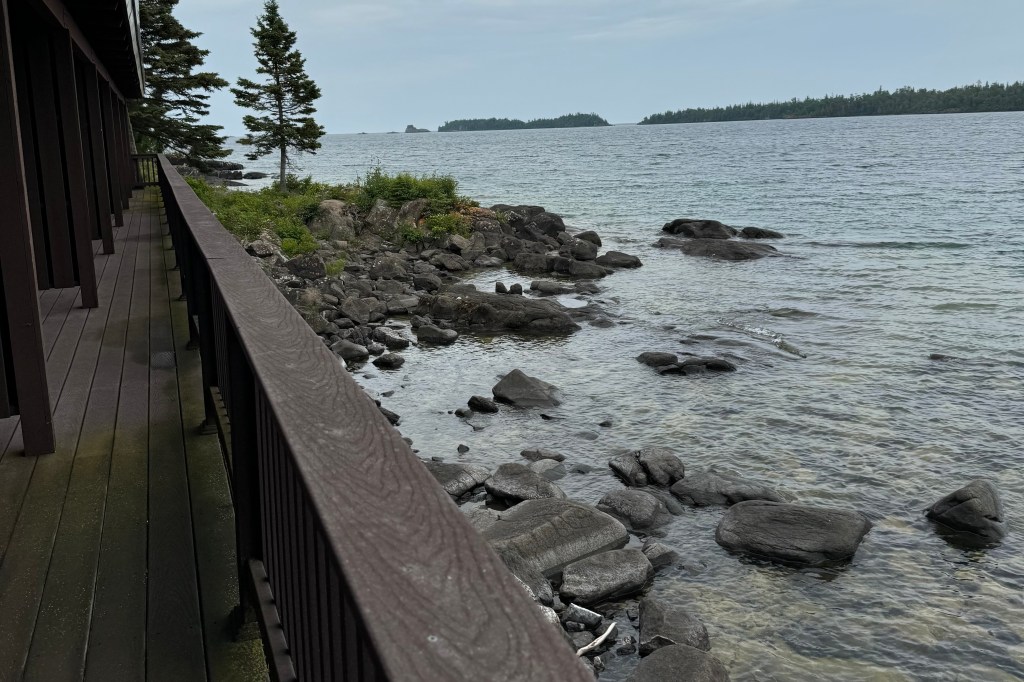
After walking the length of the breakwater/pier it was time pick up Jamie at the Duluth Airports and set out for the 4 hour drive to Houghton /Hancock Michigan for our departure to Isle Royal the following day?

It was a relatively easy drive on two lane roads with low volume traffic. Lots of banter and laughs were so welcome after being by myself traveling for two weeks.

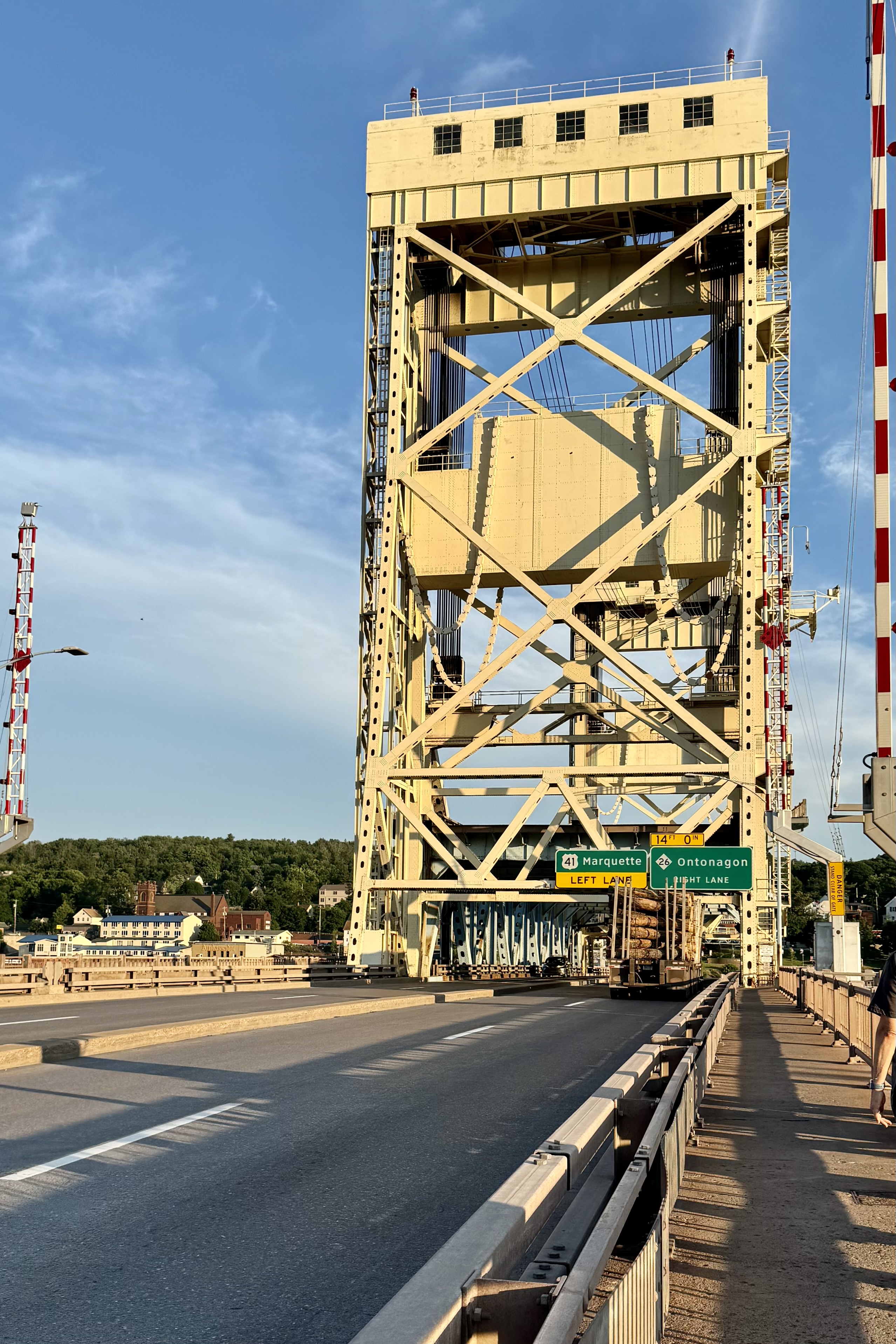
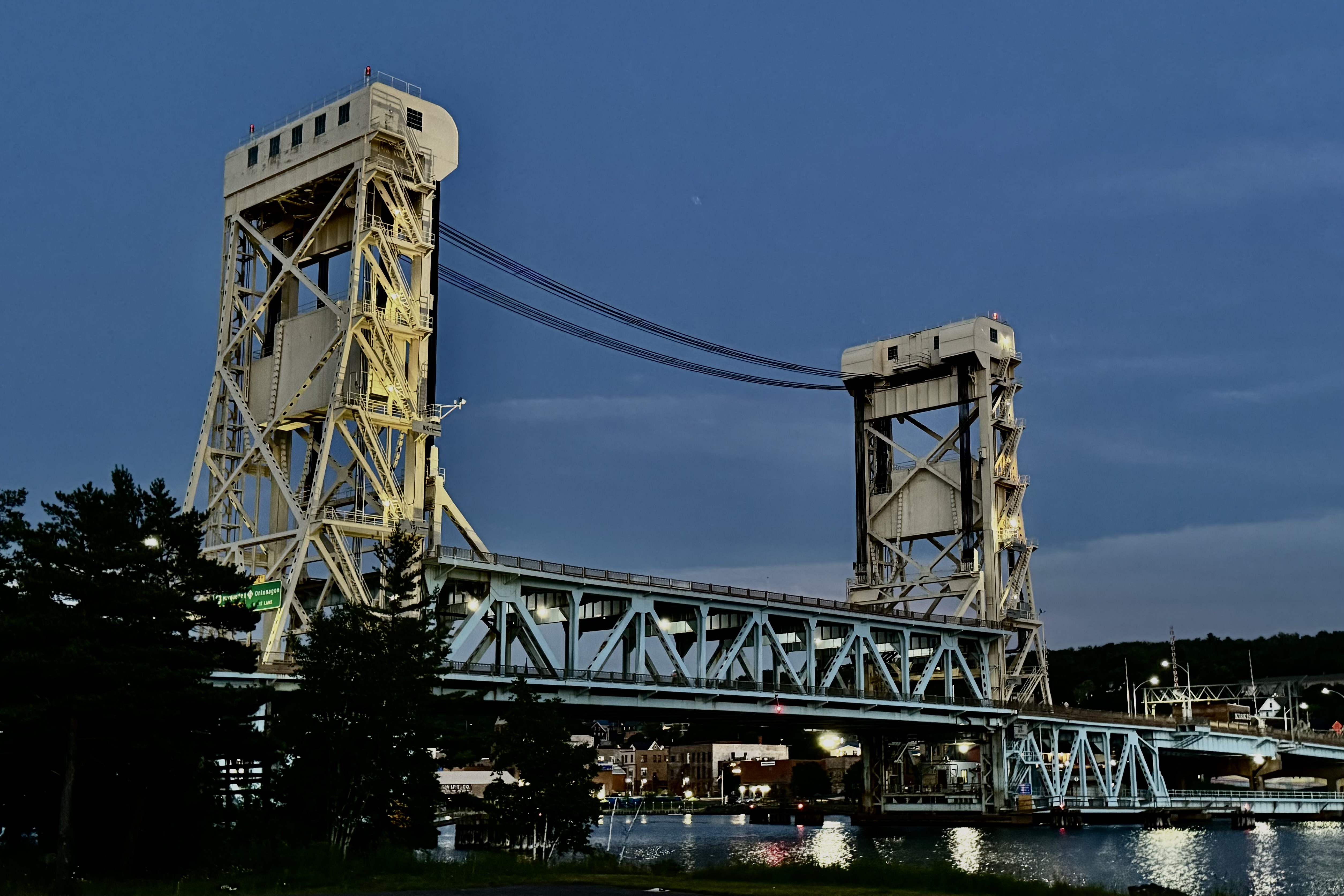
We arrived at the Ramada Inn in Hancock around 7:30ish and were quite astounded to see that right there by the motel was yet another Vertical Lift Bridge. I was pleased with our hotel room overlooking the Keweenaw Waterway, a partly natural, partly artificial waterway connecting at both ends to Lake Superior despite the room being on the second floor with no elevator… not to worry… I had my two “sherpas” with me to haul my stuff. Needing dinner and discovering few restaurants were open past 8:00 on Sunday pm, we selected a pizza restaurant across the Keweenaw River. Since it was only about 1/2 mile away (on the other side of the river), I decided that a walk across the Vertical Lift Bridges was the best mode of transportation. Easier said than done as we had to climb over a highway guardrail, cross highways etc. since the side we planned to travese was blocked off. But I made it over with a bit of help from my longer legged and stronger adult kids. After an excellent meal we headed on back and enjoyed the views of the vertical lift bridge (our new found obsession) lit up.

Our flight the following day was not until 2:00 pm so we opted for a hike to the Hungarian Falls in Hancock MI proximate to the Sea Plane Base.  It was a pleasant hike with some even terrain and other part of the path full of tripping roots and rocks.  It was a lovely way to spend the time with nature but nothing  particularly spectacular about the falls. 
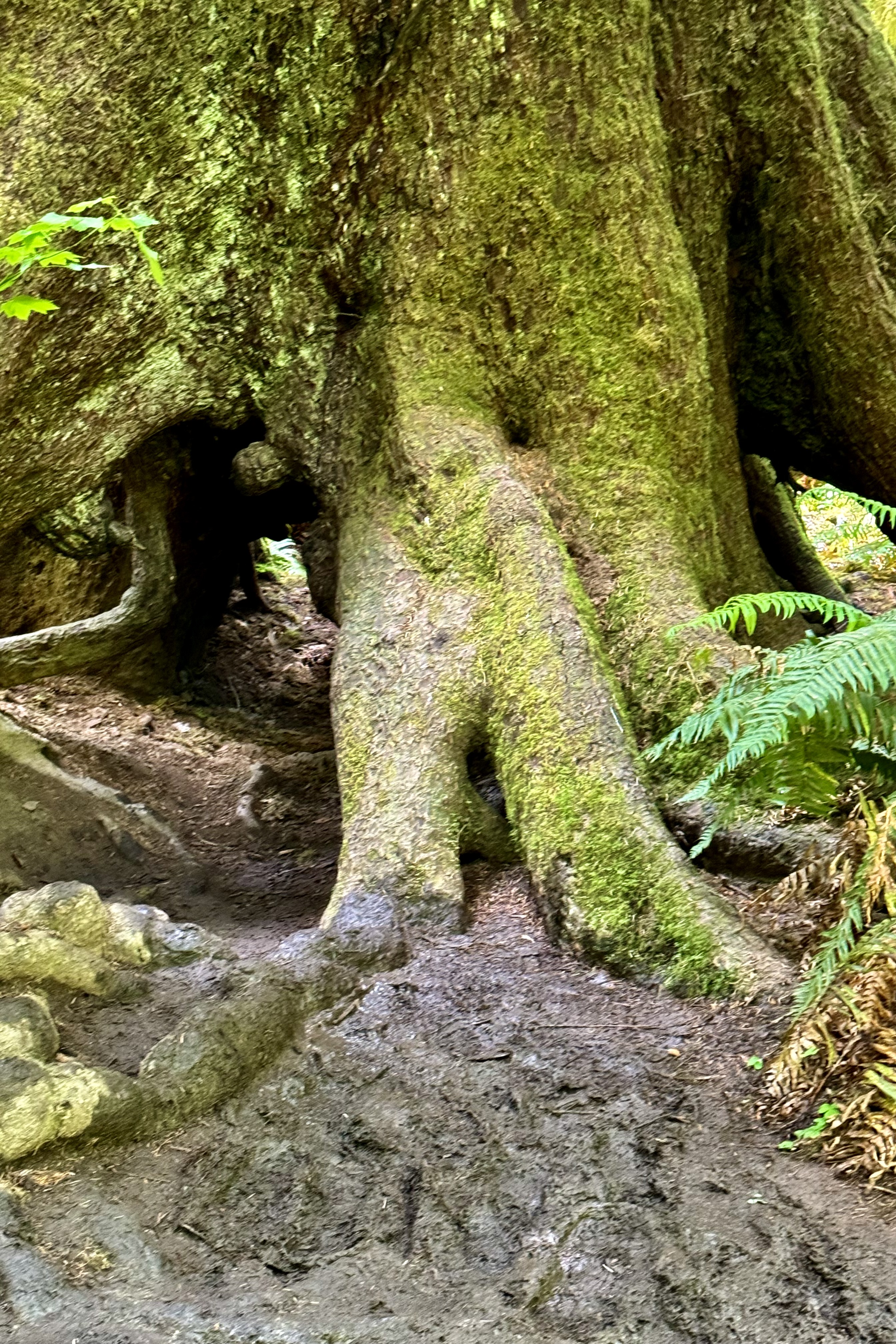
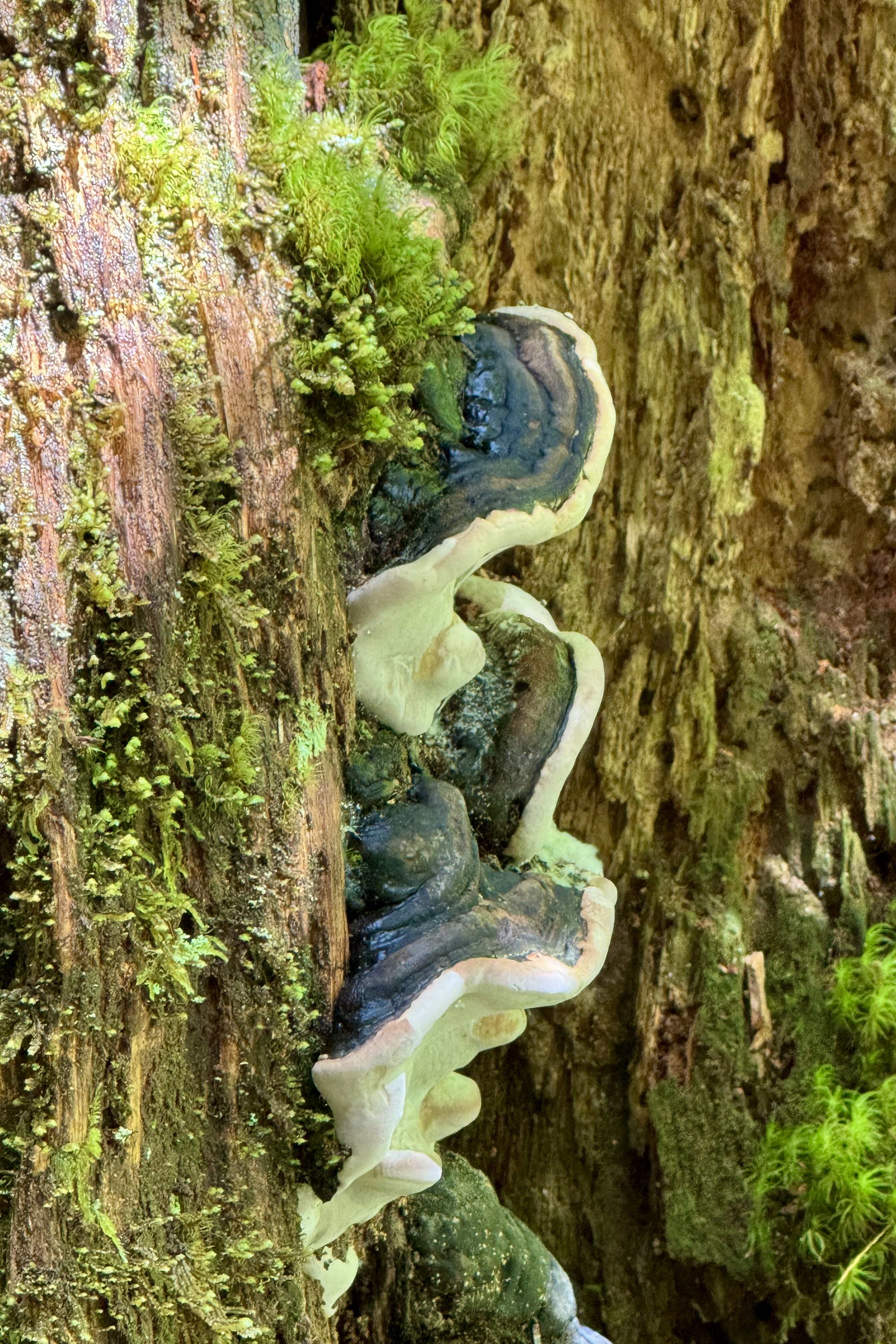
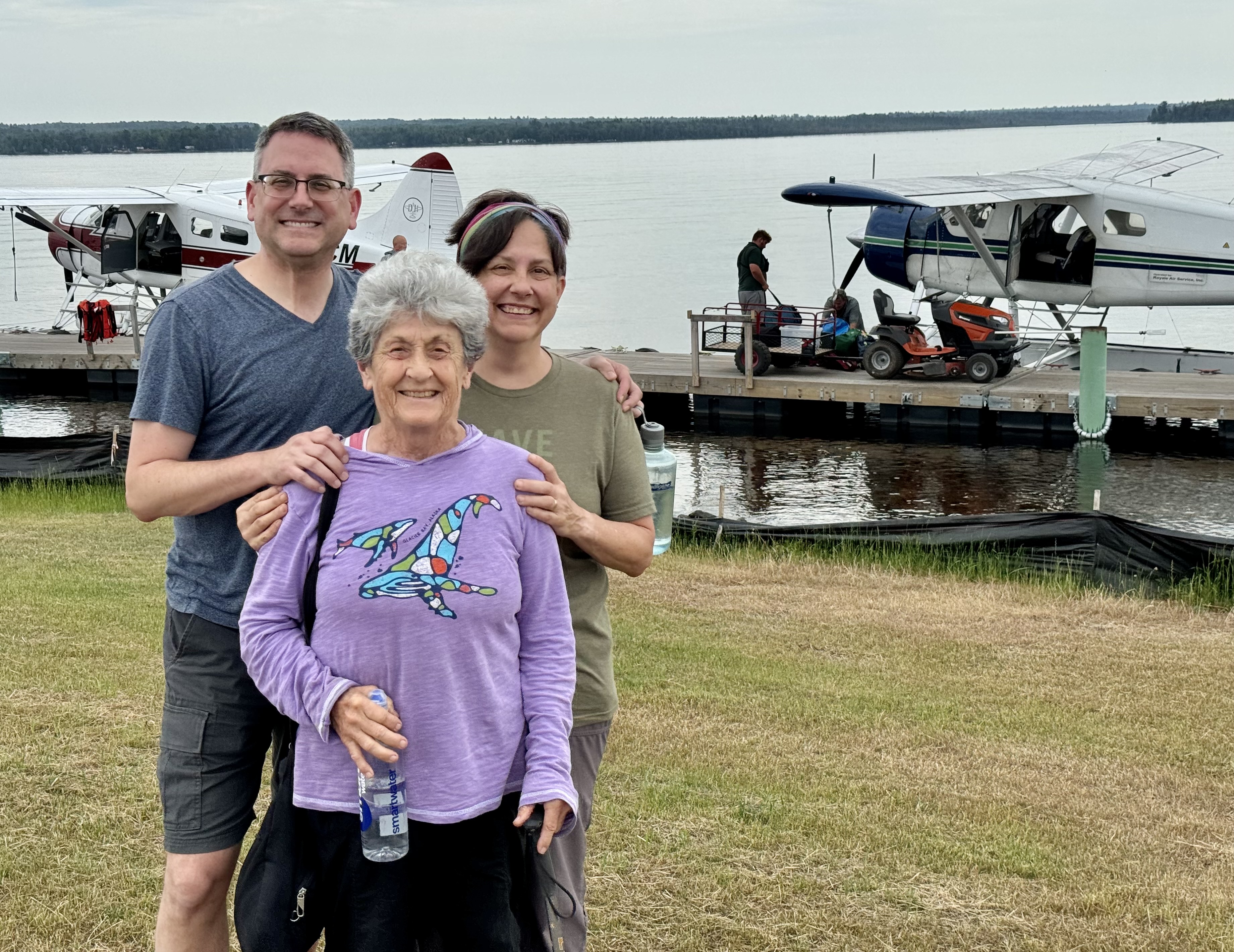
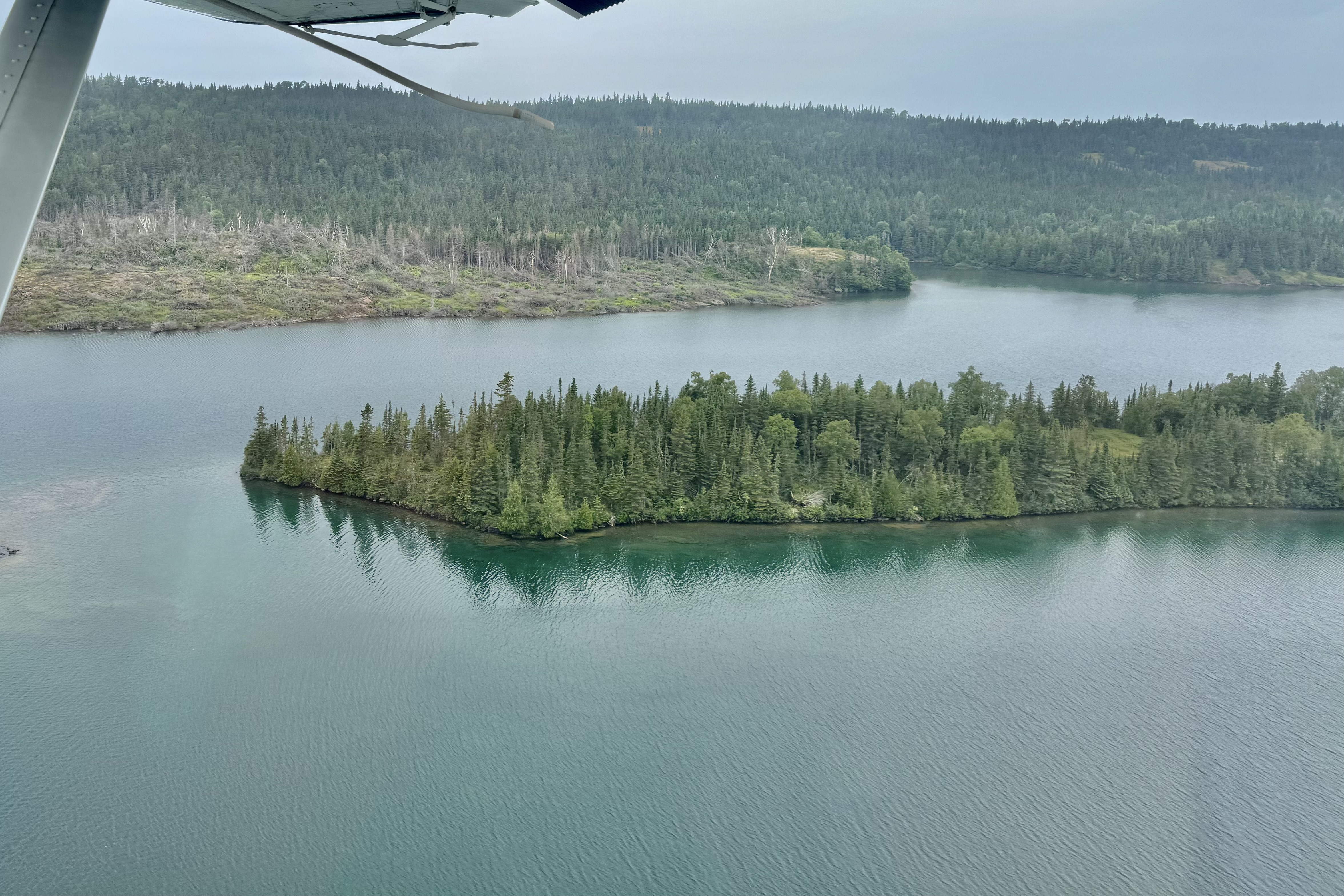
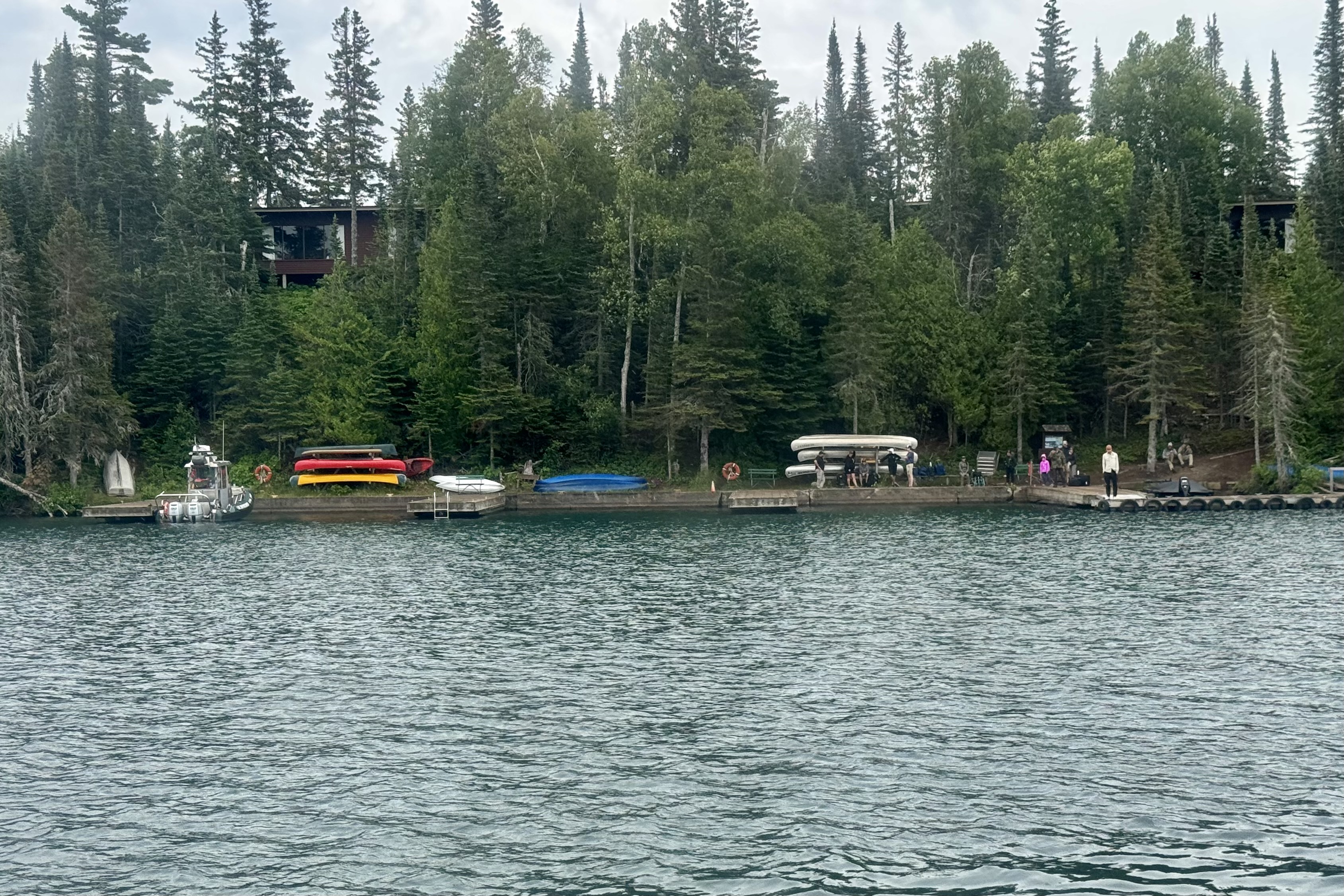
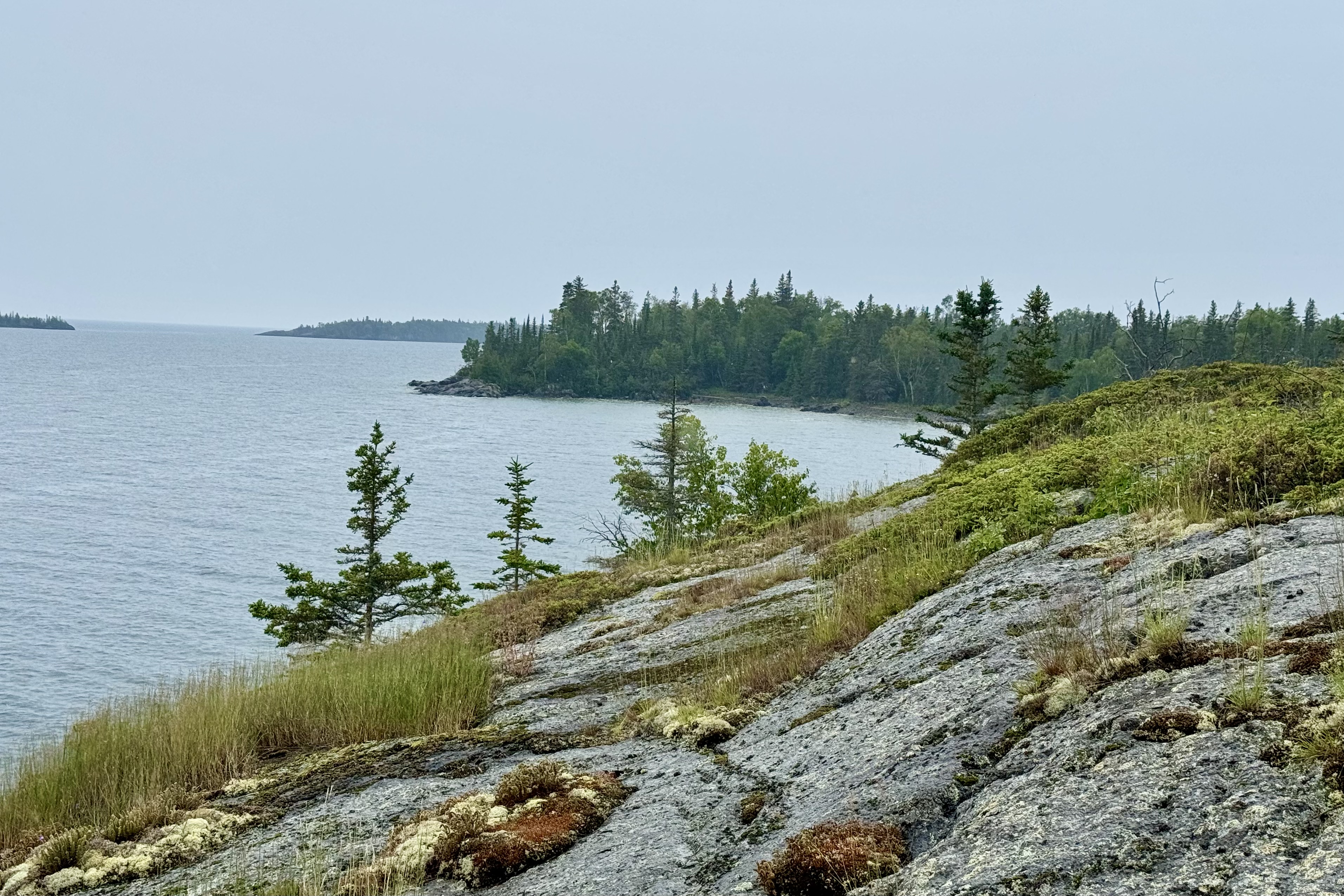
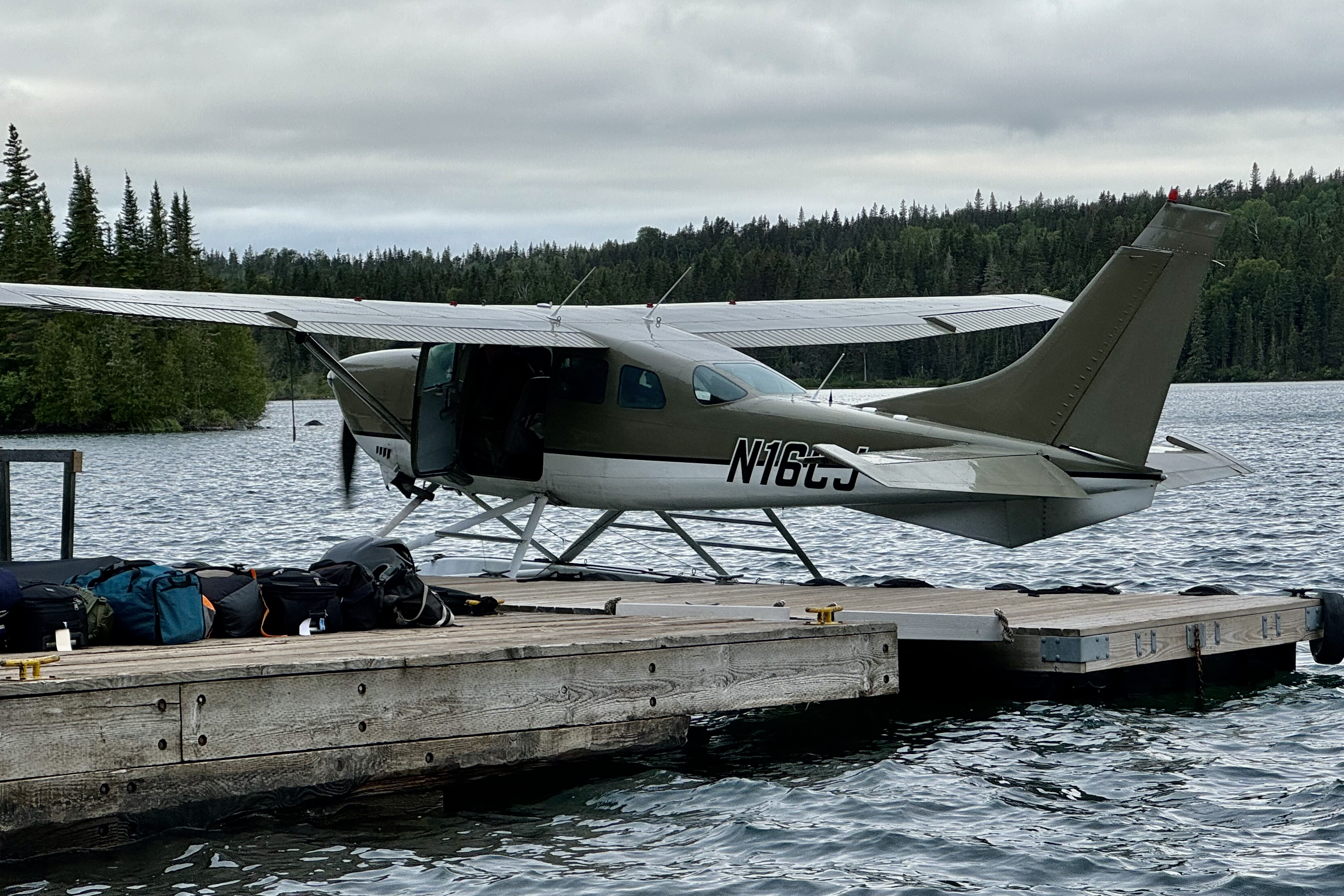
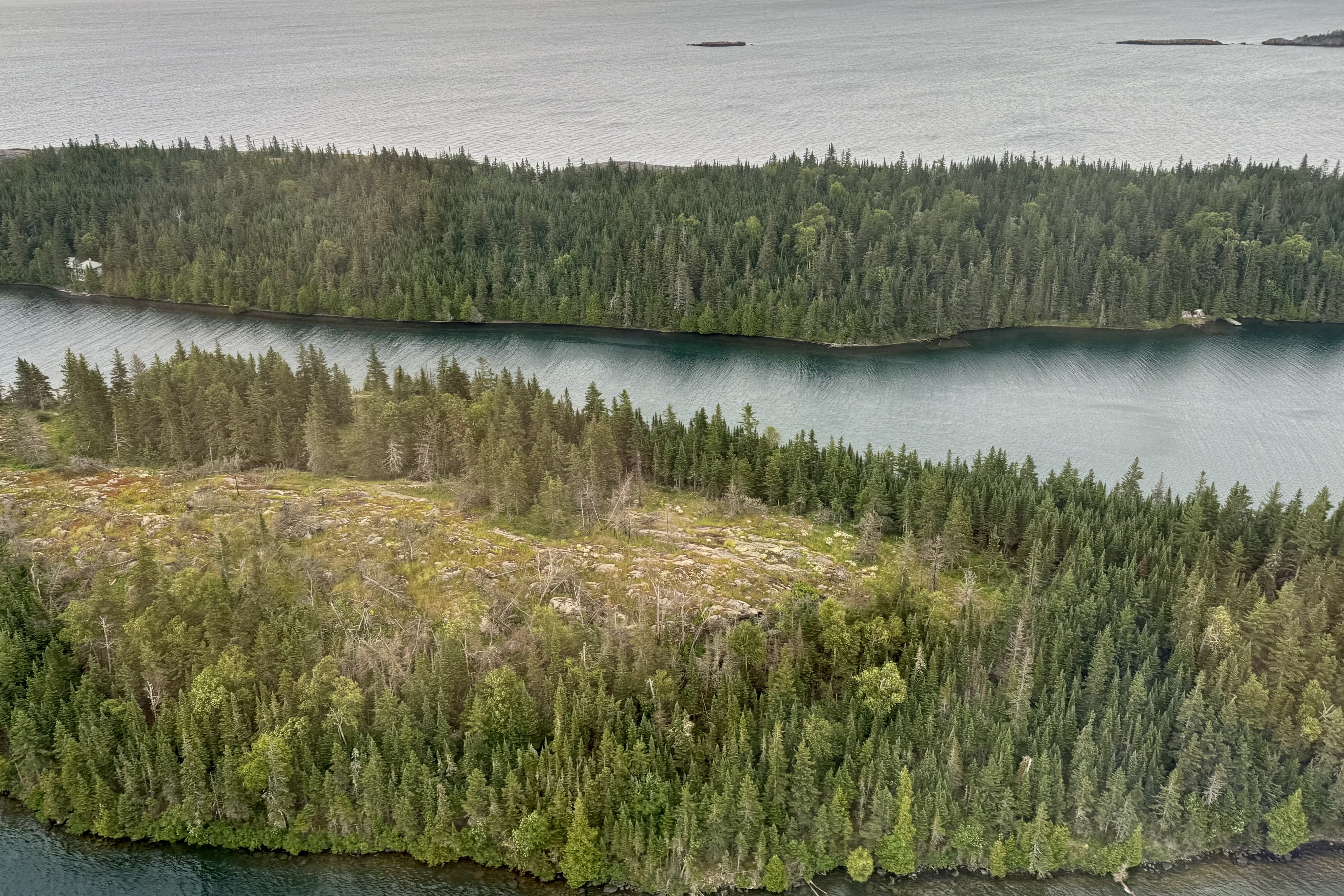
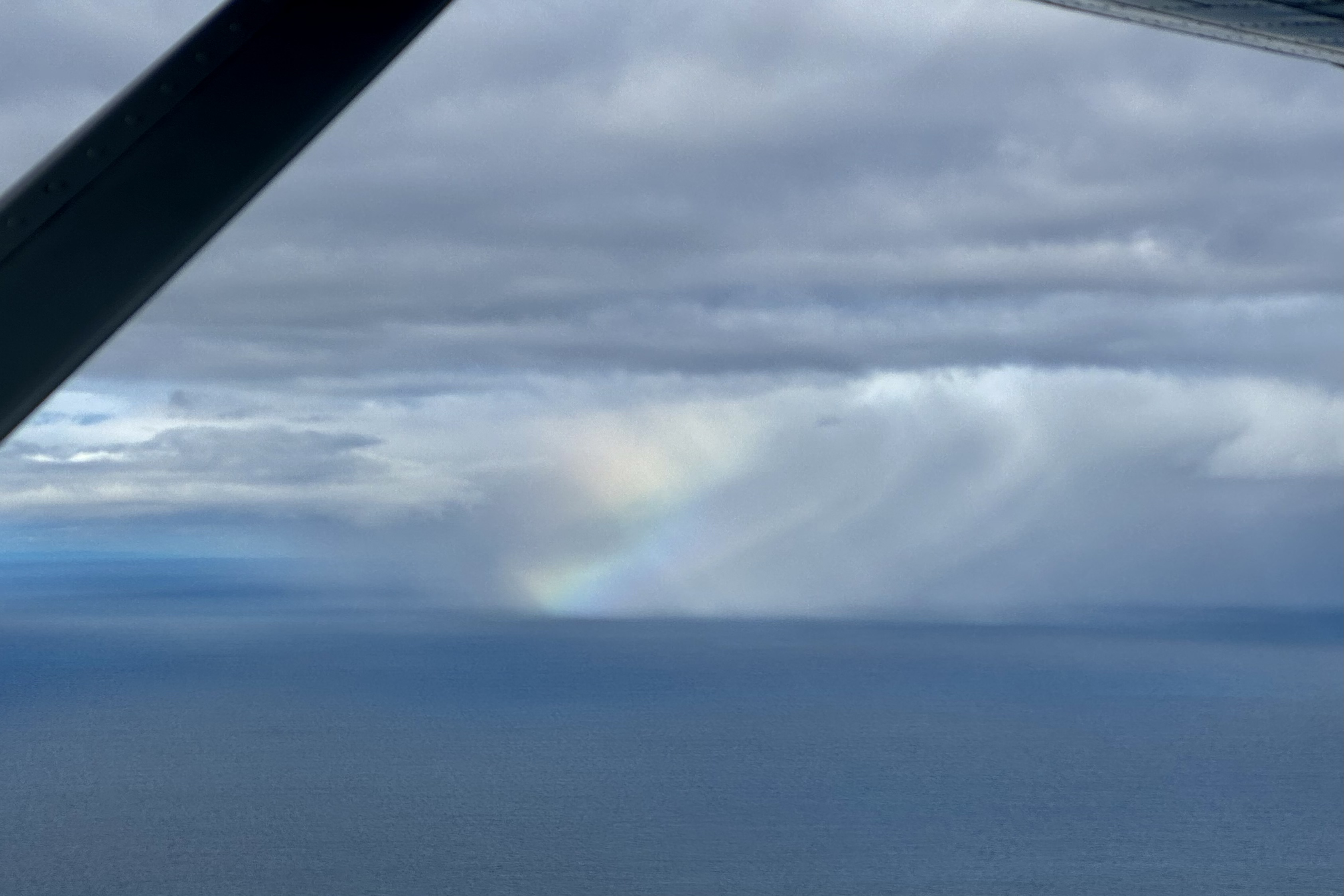
We grabbed some lunch at the Grub Drive Thru and headed over to check in at Isle Royale Sea Planes for our flight.  Checking in was quite painless- as they only weighed our luggage and NOT us as well. On some small plane excursions in Alaska we had to be weighed as well.  The 45 minute flight was quite uneventful and for the most part was over Sea Superior. Superior could technically be considered a sea due to its incredible size and its weather patterns. Like the ocean, the weather on Superior can change quickly. Since it holds such a striking resemblance to the ocean, some believe Superior should be classified as an inland sea. It was a cloudy rainy day over the Isle and it was almost impossible to see where the water ended and the sky began – as completely blended into each other. We glided into Rock Harbor and were shortly about to began the Isle Royale National Park adventure.

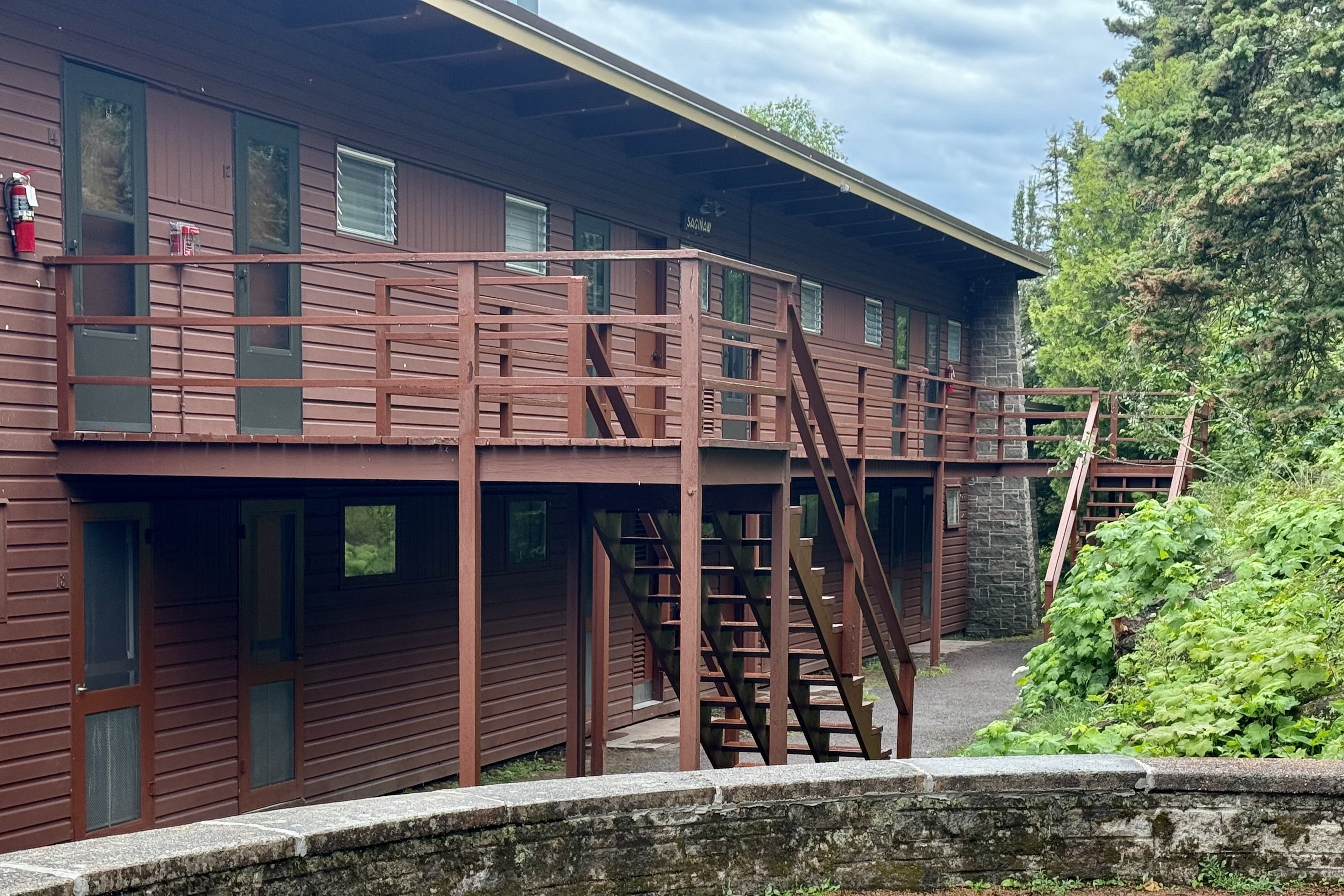
This would be the 55th park visited . After checking into our hotel room Tasia and Jamie suggested we take a short hike around the Lodge area.

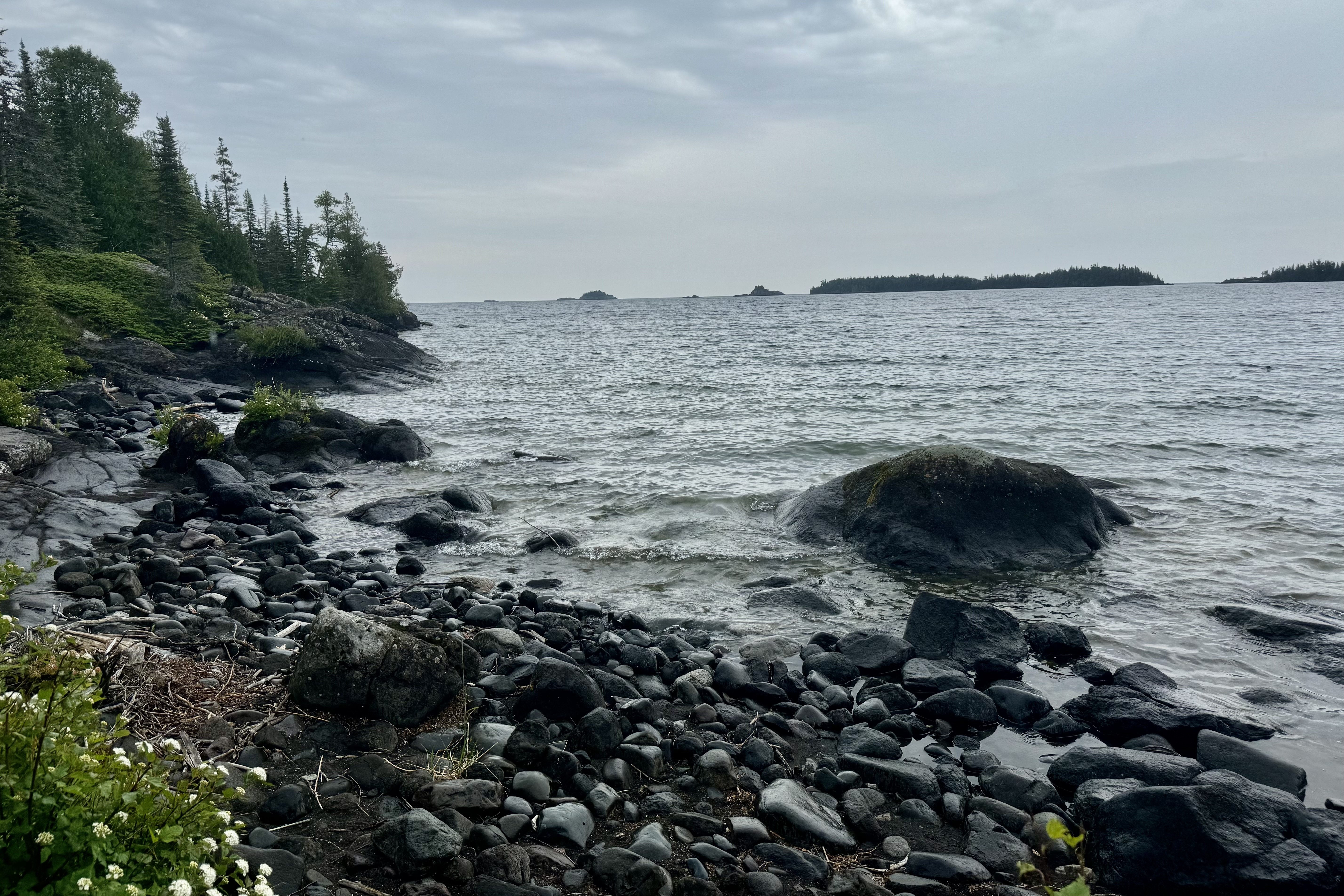
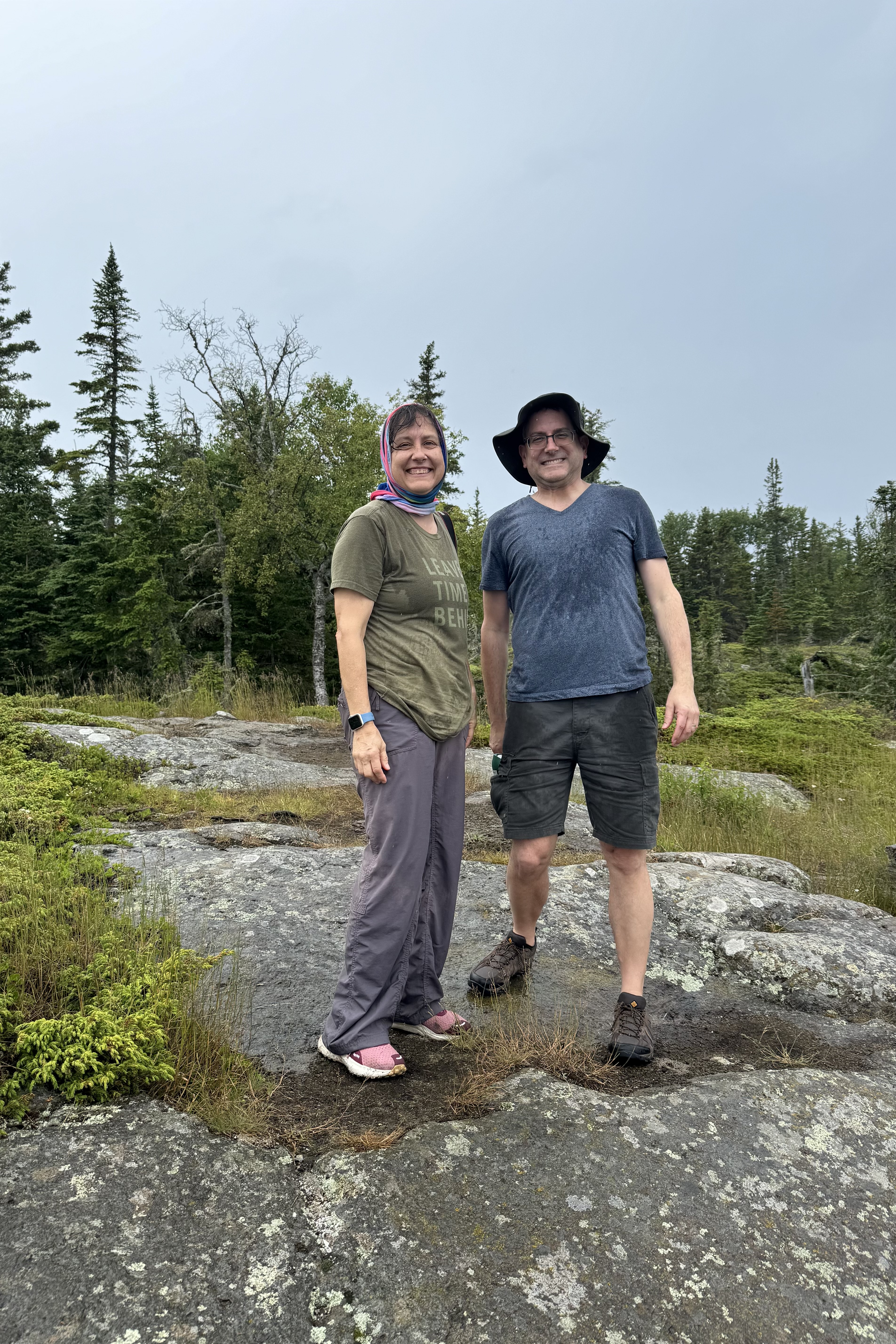
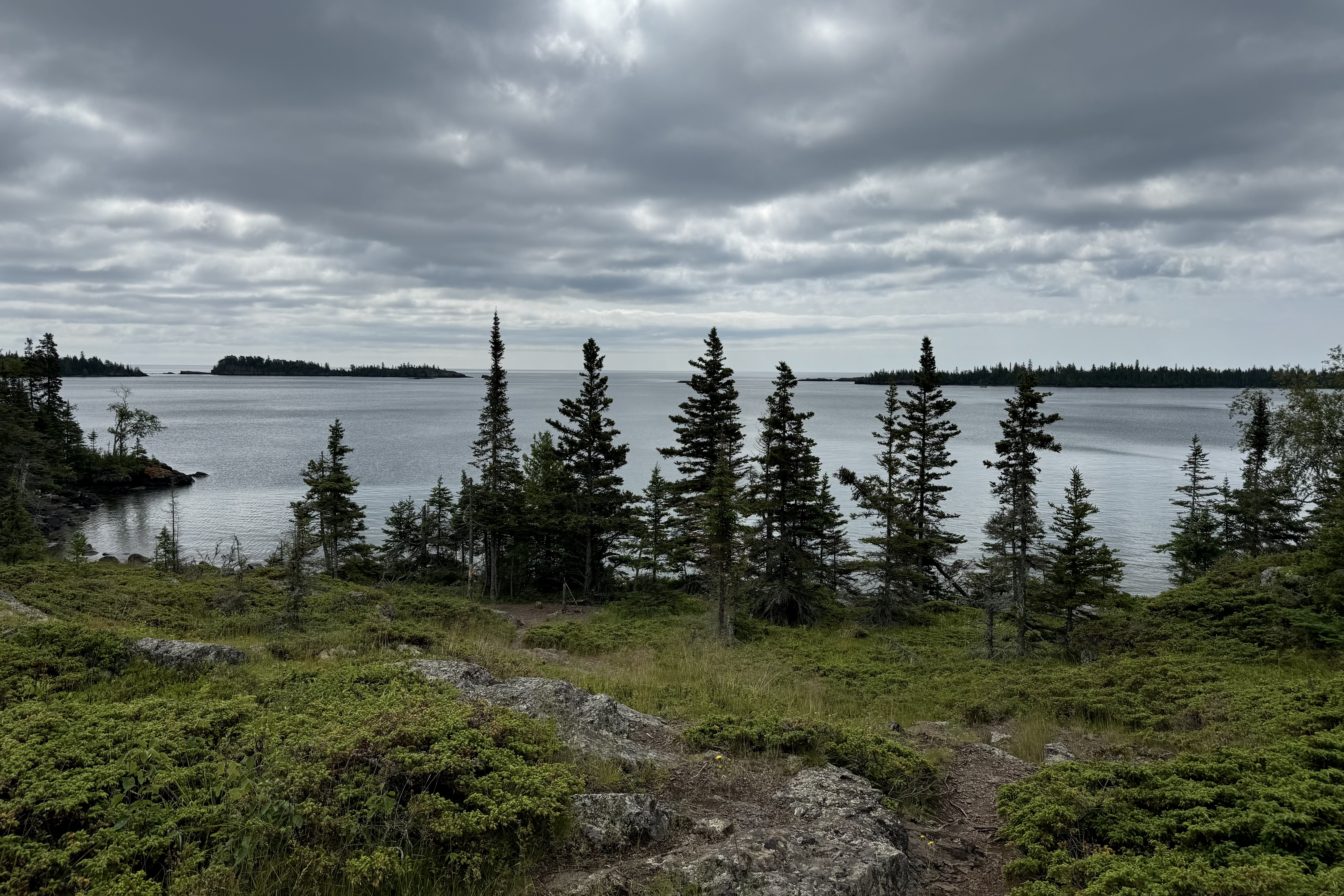
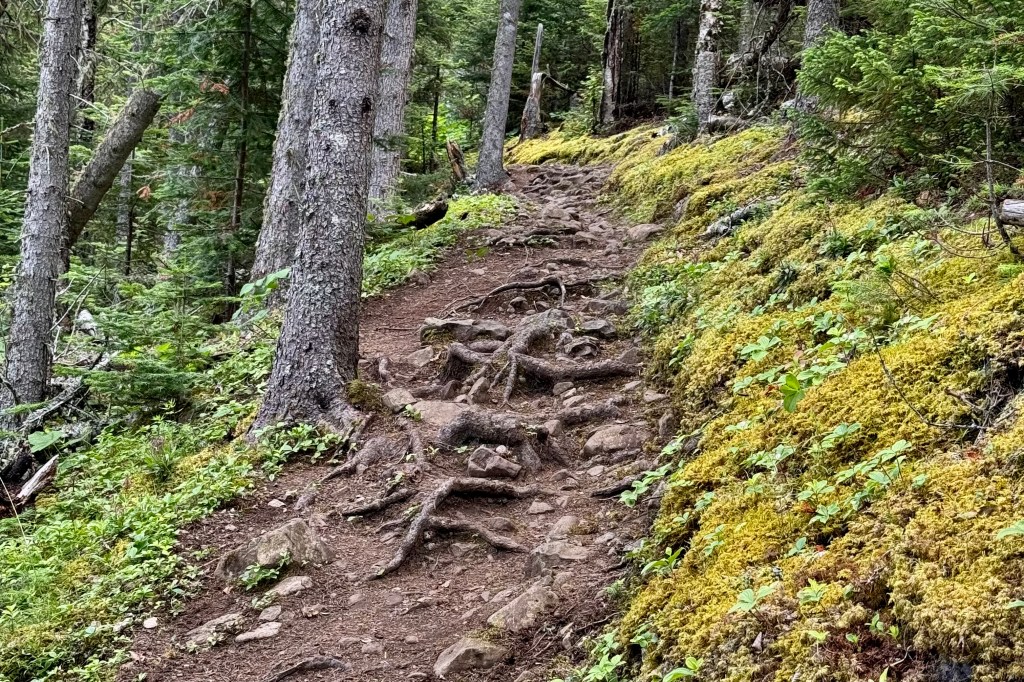
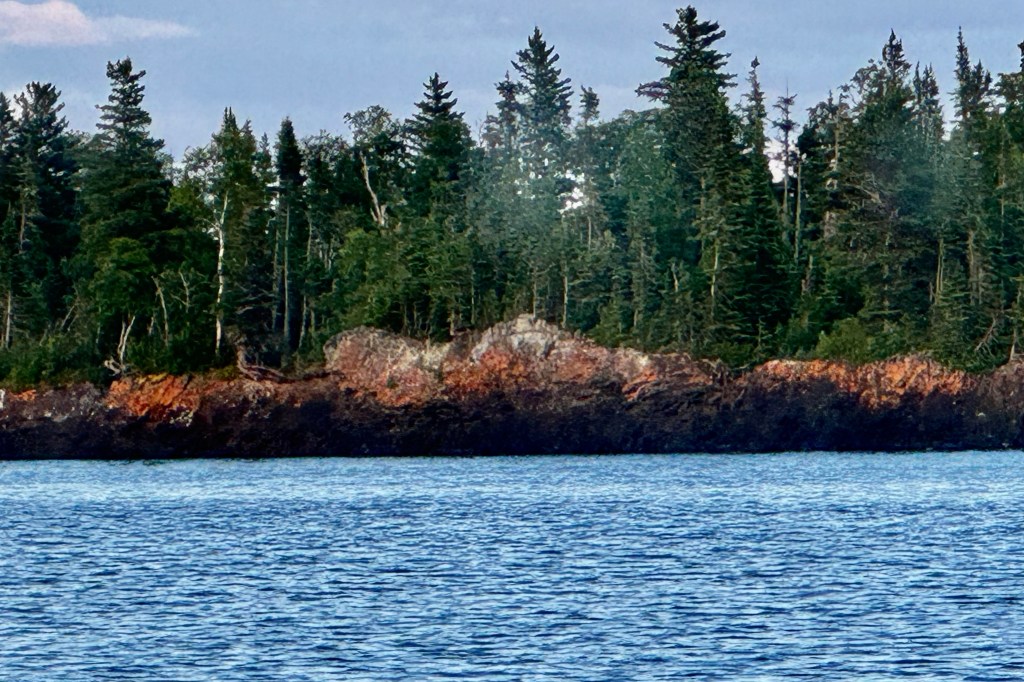
I should learn not to follow Tasia without a clearer knowledge of what I might be getting into. Her definition of short is not even close to my definition of short. We were on the Stoll Trail towards Scoville Point and opted for a portion of it figure eight configuration . The trail wound back and forth between the forest and the shoreline, with marshland and exposed rocky outcrops on the Rock Harbor side and primarily forest on the Tobin Harbor side. About 2-3 minutes into the hike it began to spatter and then drizzle rain which was definitely a whole lot less annoying than the legion of mosquitos which had been dispersed in thick swarms throughout this boggy area by Beelzebub and who were trying relentlessly to do their life’s work of sucking blood from human hosts. Though I am not too fond of hiking in the rain (though in the last couple of years this seems about the most frequently experienced weather systems I have encountered) nor fond of flailing my arms and hat to avoid being eaten alive, even through the thick fog of Deet generously applied, it was an exhilarating time. There were many stellar views of both the shore of Lake Superior and the Harbor shore and there is something enlivening about putting aside that which is unpleasant and appreciating the flow of the natural word with its beauty and curses. Though the hike felt like a 10K to my legs it was a bit less than three miles and set me up with a good appetite for dinner at the Rock Harbor Lighthouse Restaurant and for the challenge of drying out three sets of very wet clothing.

Tasia spied a fan in the closet area and set everything on hangers in the bath room area with the fan sitting on top of the toilet blowing air – an indoor clothes line in the wind. We headed to dinner and all ordered fish and chips and water! They don’t believe in club soda or sparkilng water here. After unsuccessfully attempting to sign into the wi-fi here to no avail it was back to our lovely lakeside room to enjoy the rest of the evening.

I can’t say that I am addicted to cell phones and the internet but I arrived here assuming there would be no cell or wi-fi. Definitely no cell but the park service had internet available for a few hours a day and the Lodge had it for 12 hours a day for guests. So I thought I could connect to family but internet availability doesn’t necessarily mean it is available. I say this because I was feeling annoyed that they promised me something, raised my expectations, and then reneged. I was totally unable to log in but being okay with that and being annoyed by it can co-exist.

I awoke the next morning to a blue sky and calm seas. It was so peaceful to sip coffee, hearing the lapping of the waves outside our lakefront room. Once the coffee jolted us awake we headed to the grill to get some mighty big breakfast burritos and consumed them lakeside. It looked like a beautiful day for a hike so we suited up (i.e. anointing ourselves with a substantial layer of Deet) and headed out for an out and back hike to Susie’s cave along the Tobin Harbor Trail.

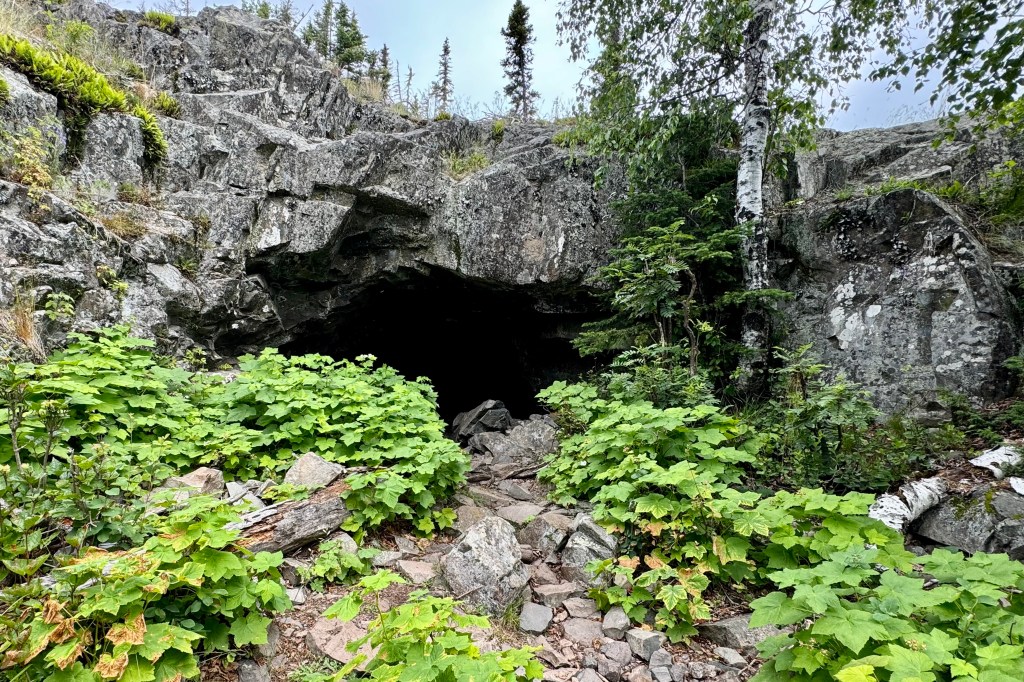
It seemed like almost a miracle had happened overnight and the swarms of mosquitoes had migrated elsewhere. It was pleasantly cool, a shaded and moderately difficult trail, and though not bug free, much more pleasant than the mega-swatting hike yesterday… at least, that is until the mosquitos finally woke up around 11:00 and were ready for their bloody breakfast. But we cruised along thoroughly enjoying the harbor views, the array of wildflowers, the bird song and the occasion wildlife which was primarily red squirrels and a jackrabbit. The moose wanted no part of our visit and the grey wolves clearly visited earlier as evidence by their scat. The hike ended up being 4.75 miles of wilderness connection.

Back at the Lodge area, we grabbed a quick bite to eat and afterwards it was time to spend some money at the park store and secure the park stamp for my NPS Passport book, and rest the legs for an evening hike and sunset boat cruise.

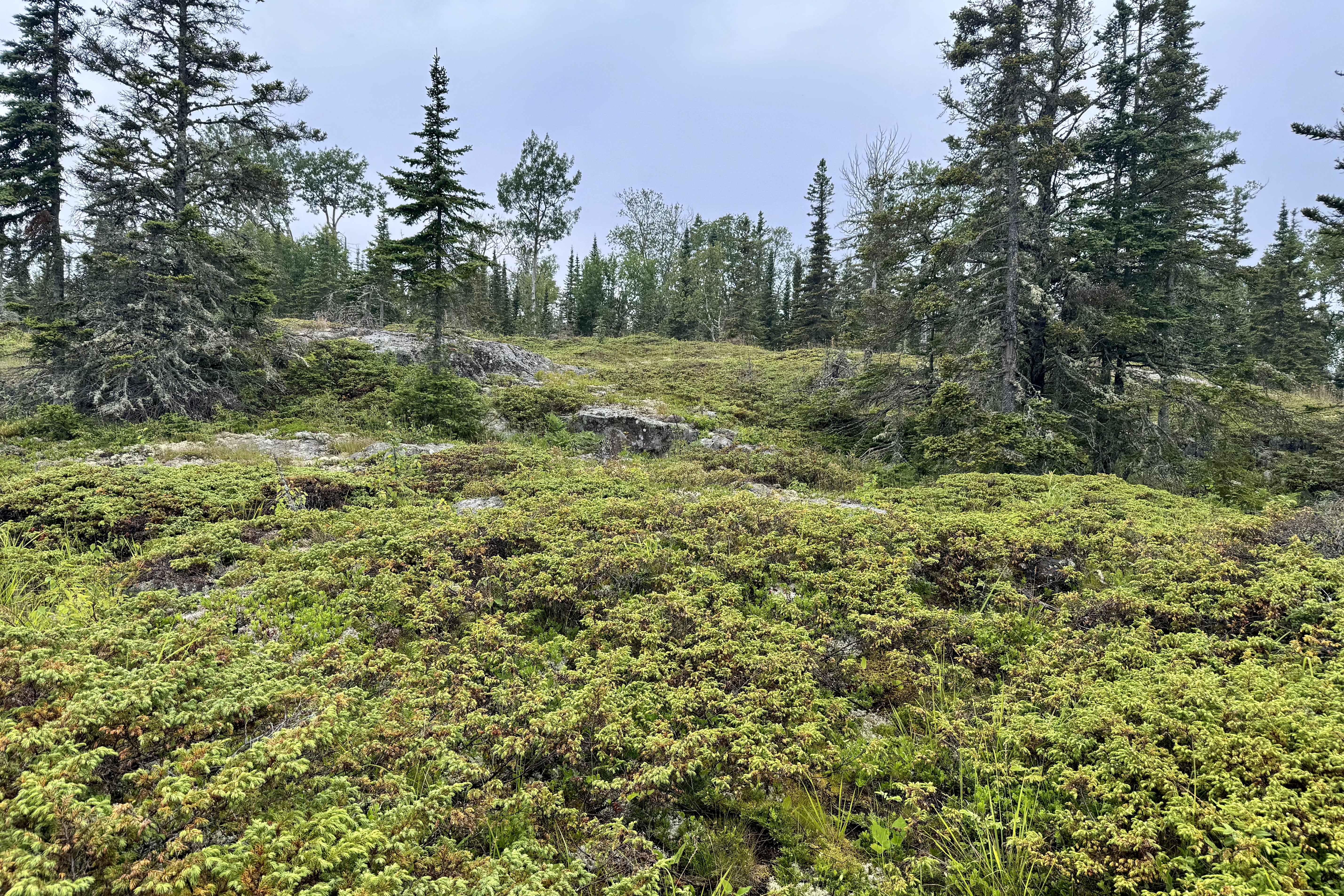
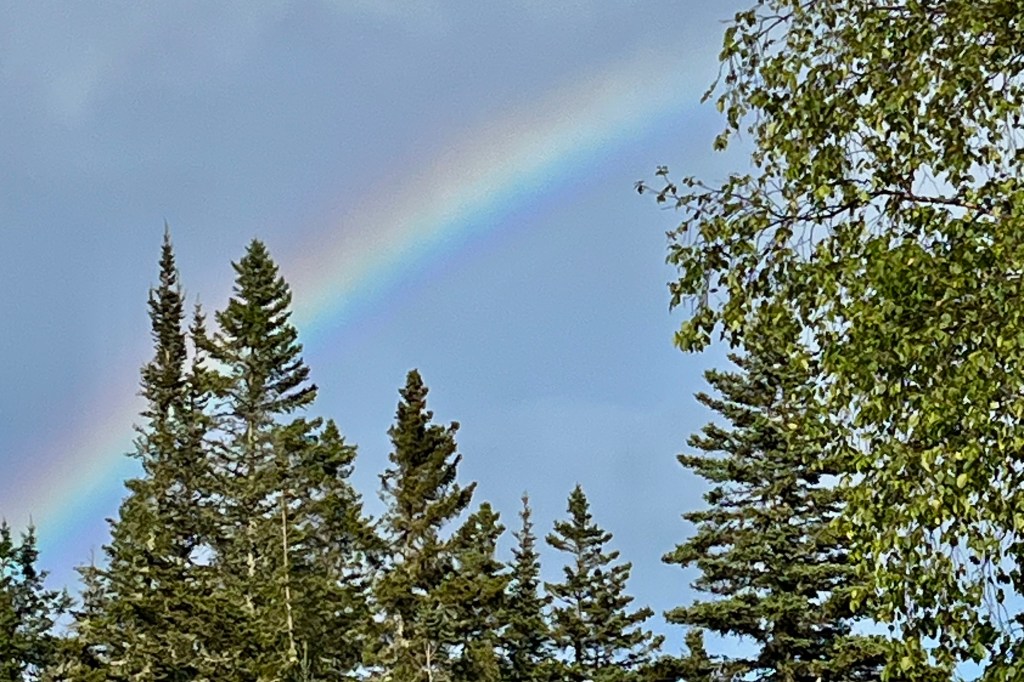
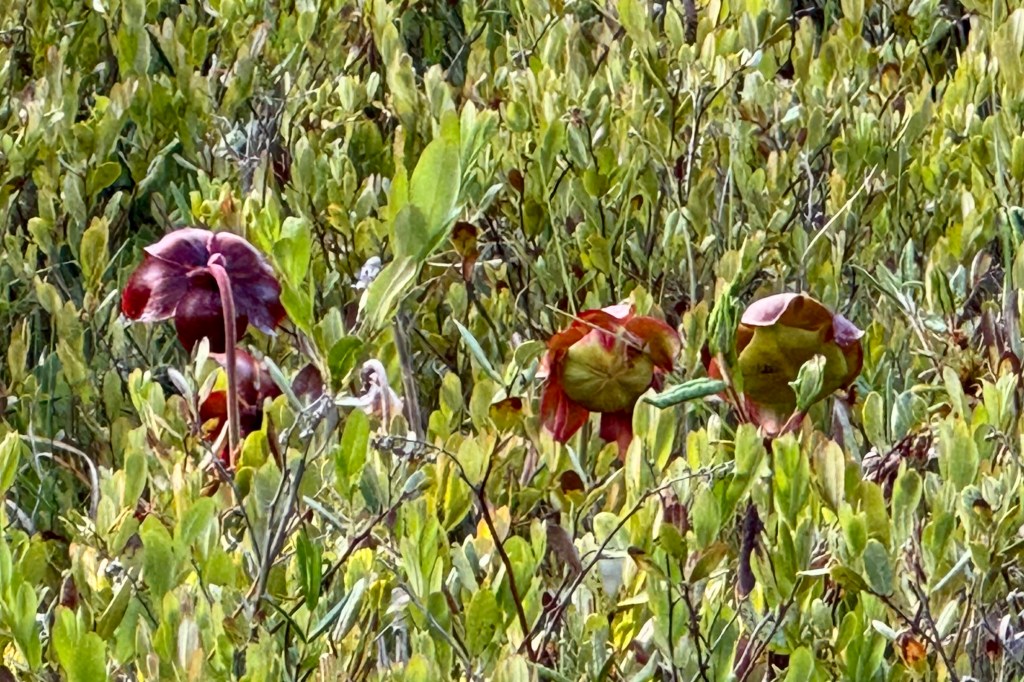
Within 5 minutes of when we sat down, to dinner at an outdoor table harbor-side, it started to sprinkle. My immediate inclination was to stay put but everyone tore into the grill dining area and it was a good thing we followed suit as a heavy drencher followed …which was followed by a burst of sun and then a rainbow. It cleared nicely for our scheduled sunset boat ride to Raspberry Island for a 1 mile hike about the island and then a cruise out to see the sunset over Sea Superior. A one mile hike around Raspberry Island more than met our expectations. We yearned for a bog as we itched for an encounter with the pitcher plant (a carnivorous plant). Luck was on our side. After making our way through the boreal forest, we came upon a bog with paths and planked bridges leading past many of the insect-eating pitcher plants that thrive in this acidic bog environment and supplement the available nutrients and minerals needed with a constituent of insects that have the misfortune of taking a moment to pollinate this vicious flower .

The cirque was actually only .61 miles but upon our return the boat was mostly boarded and we were on our way for a cruise out to the Superior Sea to watch the sunset.

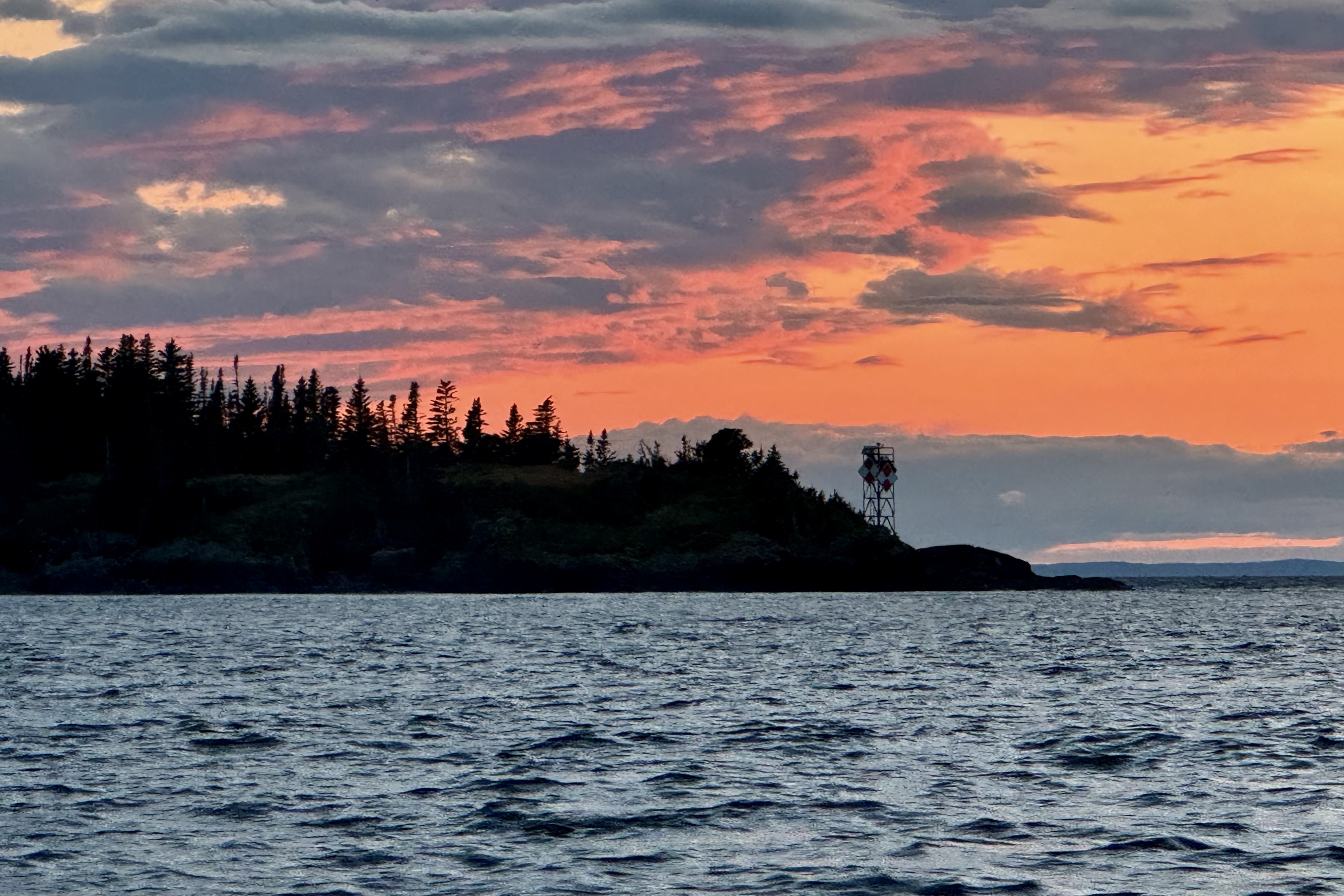
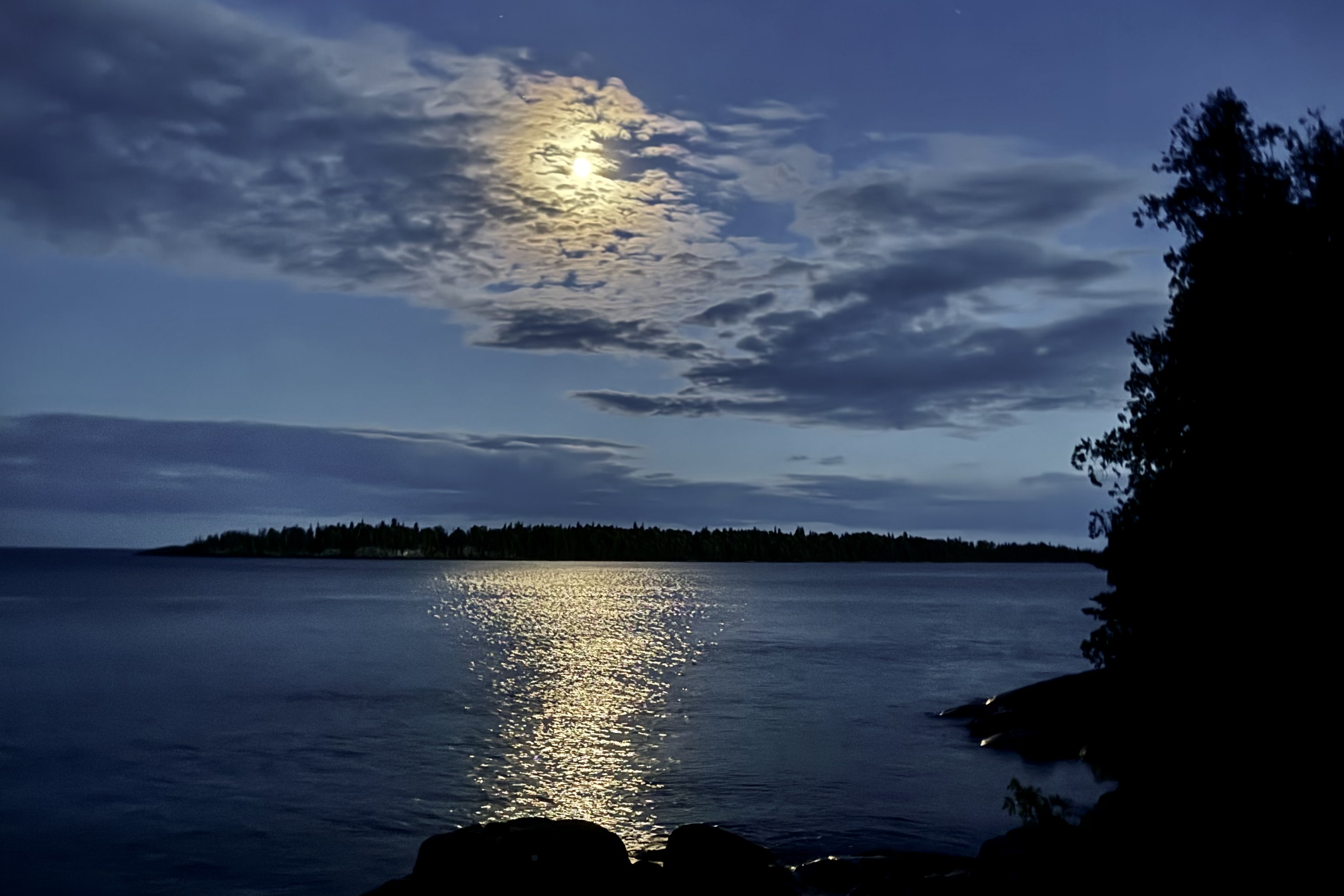
Our travel karma turned positive and we were treated to a magnificent array of golds, pinks, purples, reds, oranges and a slow setting sun at this latitude. We returned to the dock about 10:30 and gazed at the moon with its shaft of light arrayed on the water. Returning to the room it was time to pack up shower and get ready to depart by seaplane at 9:00 am the morrow.

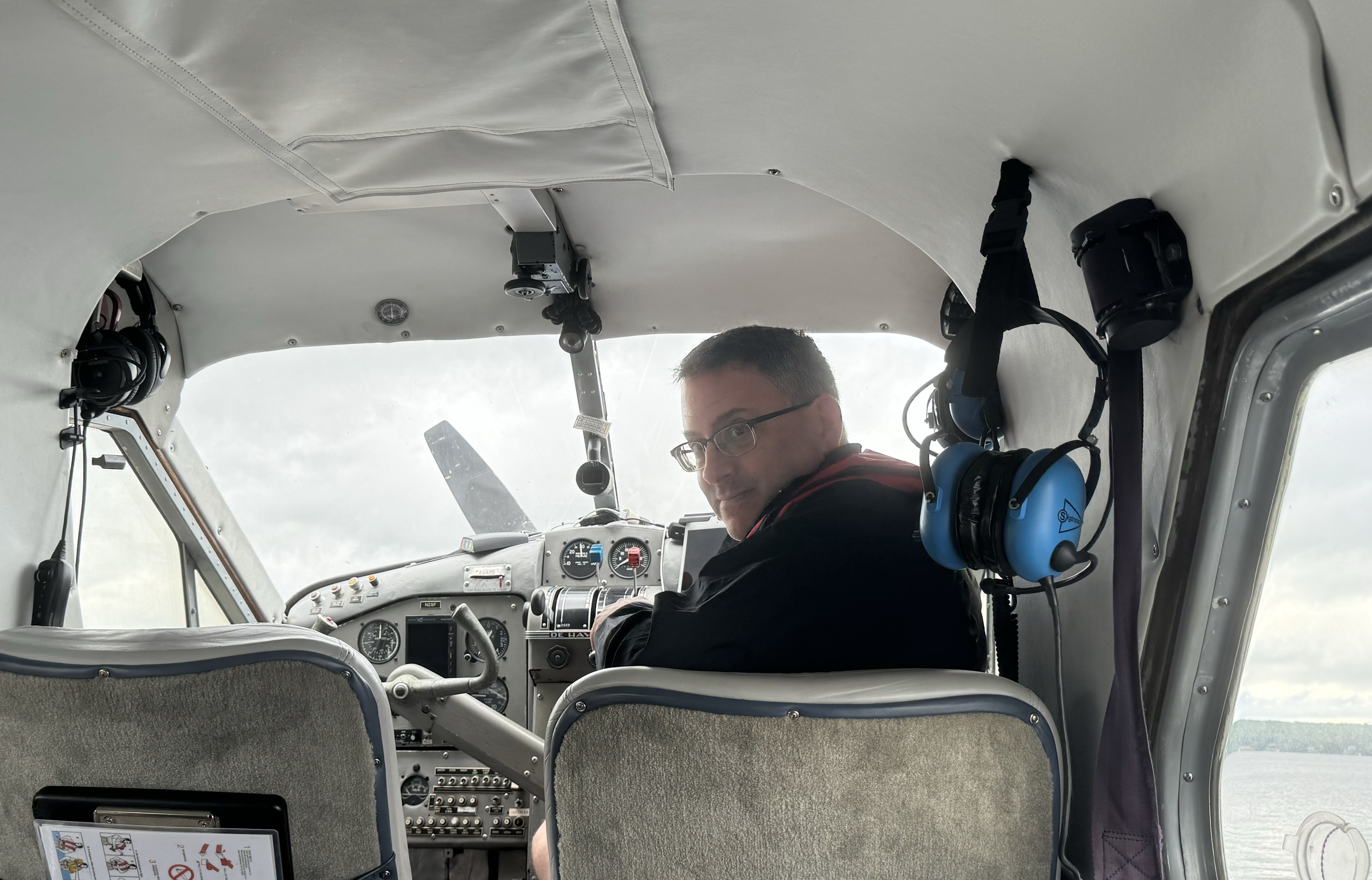
It was up a seven to be set to depart from  Isle Royale by 9:00 am. Bags were to be retrieved at eight so after packing up we headed over to the Greenstone Grill for coffee and a breakfast of yogurt, fruit and granola.  It was time to meander down to the seaplane dock area for the flight back to Hancock.  This overcast day with thunderstorms visible in the distance did not pose any flight delays. Jamie was assigned the copilot seat while   Tasia myself and another young girl were very tightly squeezed into the rear seat .  Even with the impending weather the 45 minute flight was smooth and uneventful. 

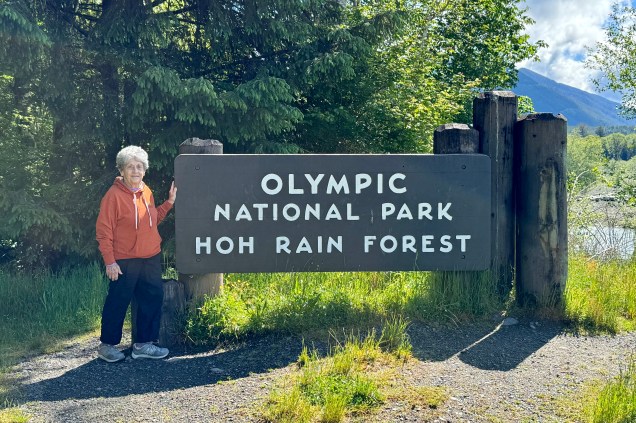
Hoh (not Ho, Ho-Ho or Hi-Ho) Rainforest and Olympic Park Hurricanes

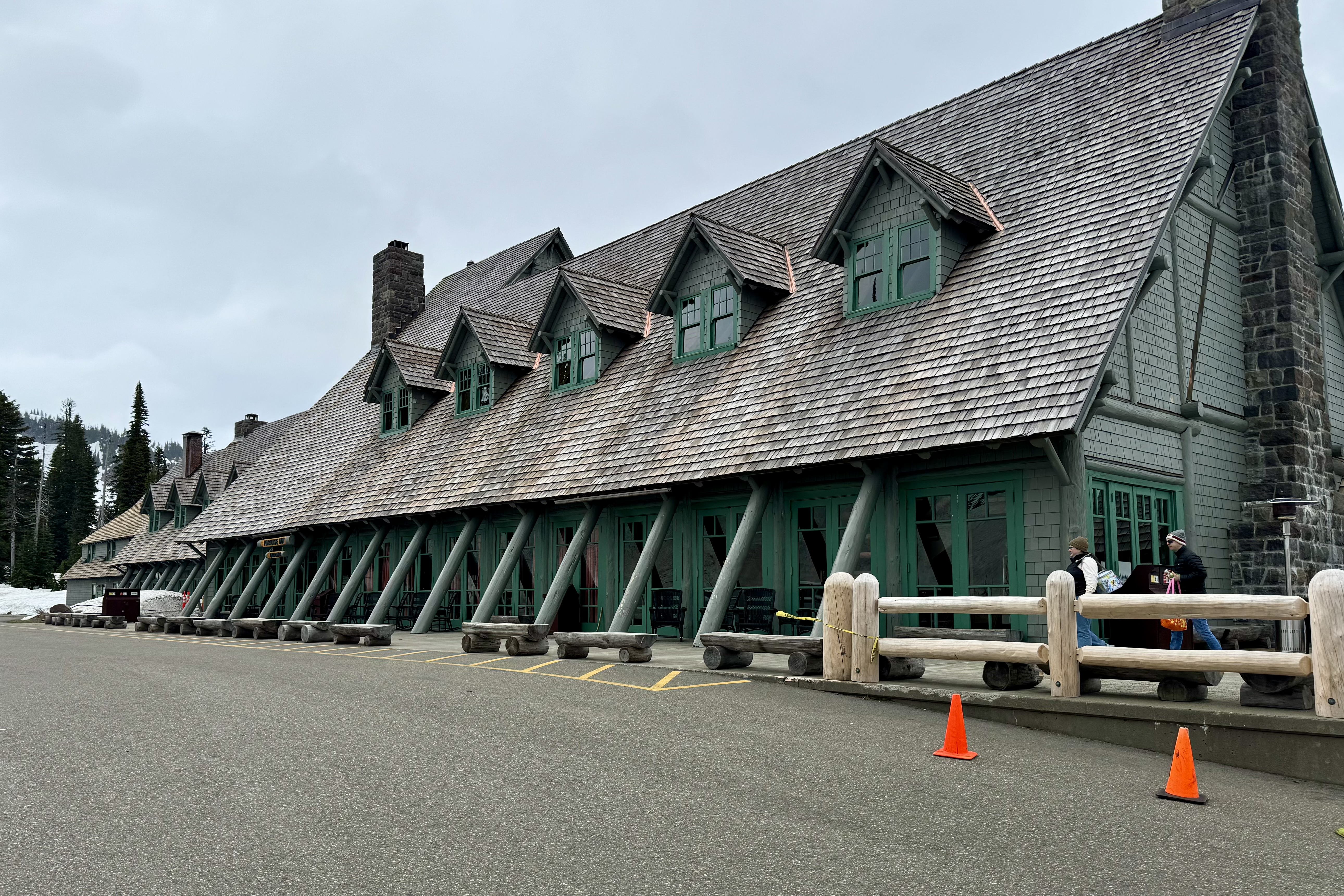
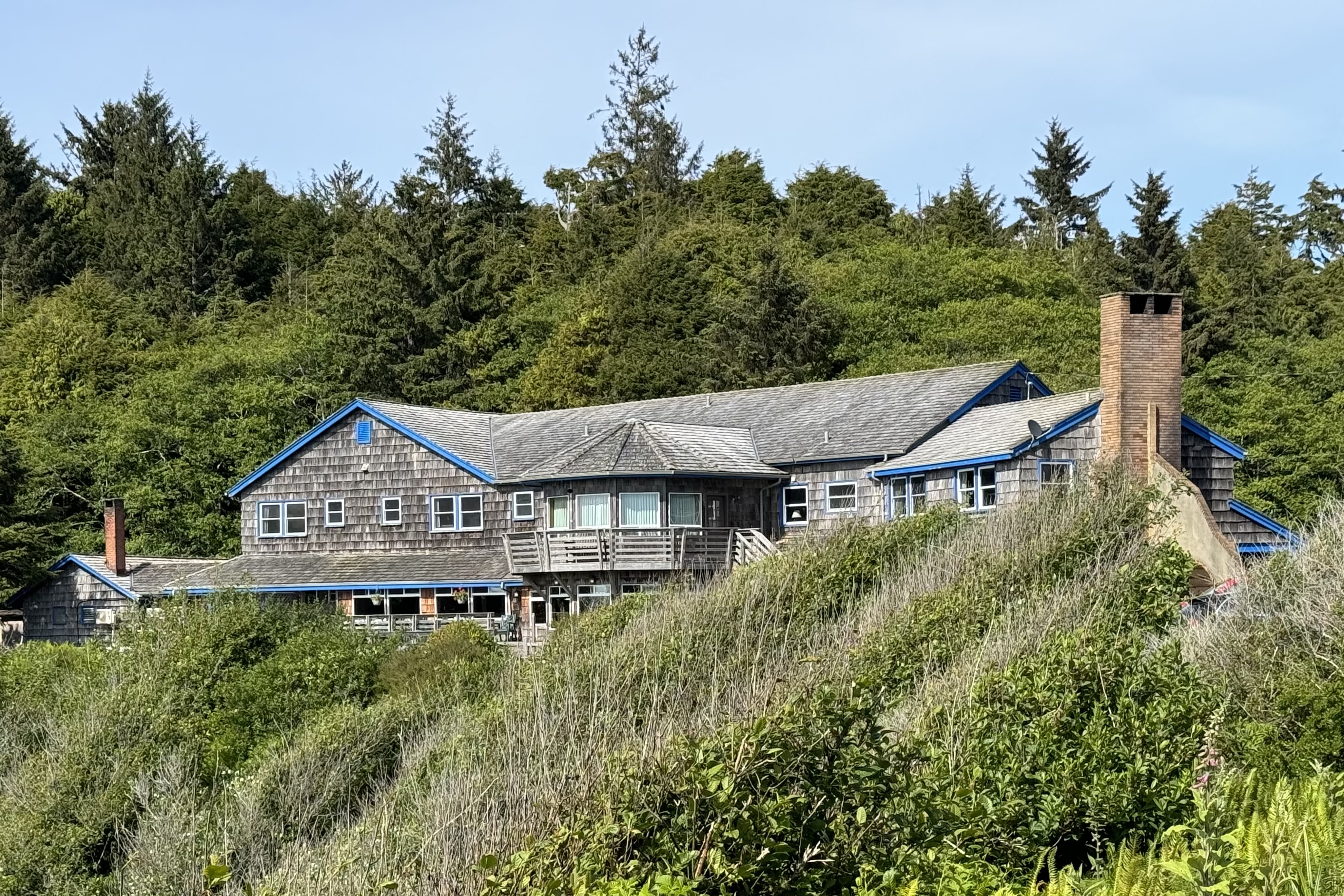
When contemplating a trip to a national park in days gone bye, the major decision was which campground or backpacking trail was the destination and thus reserve accordingly. I would not want to venture that those option are completely off my radar, but my current bent is more towards a stay in one of the iconic National Park Lodges. My mission is to spend any inheritance that has the potential to be forthcoming to my heirs when I go misssing… hopefully several years down the road. So with an anticipated stay in Olympic National Park and a desire to focus on the western coastal area and the Hot Rain Forest, a given for me was to make a reservation at the Kalaloch Lodge, an historical building with minimal amenities at a 2024 inflationary price tag.

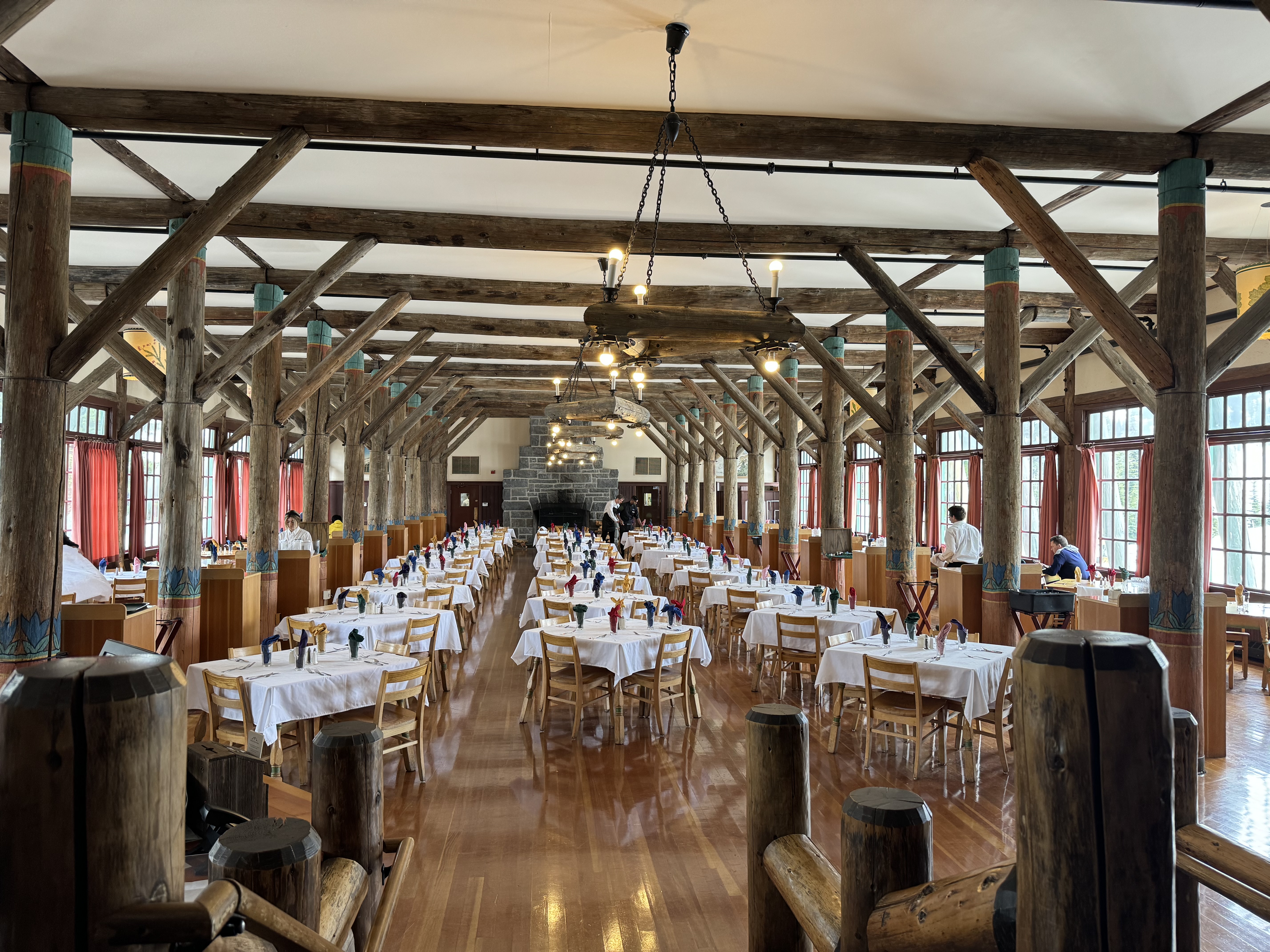
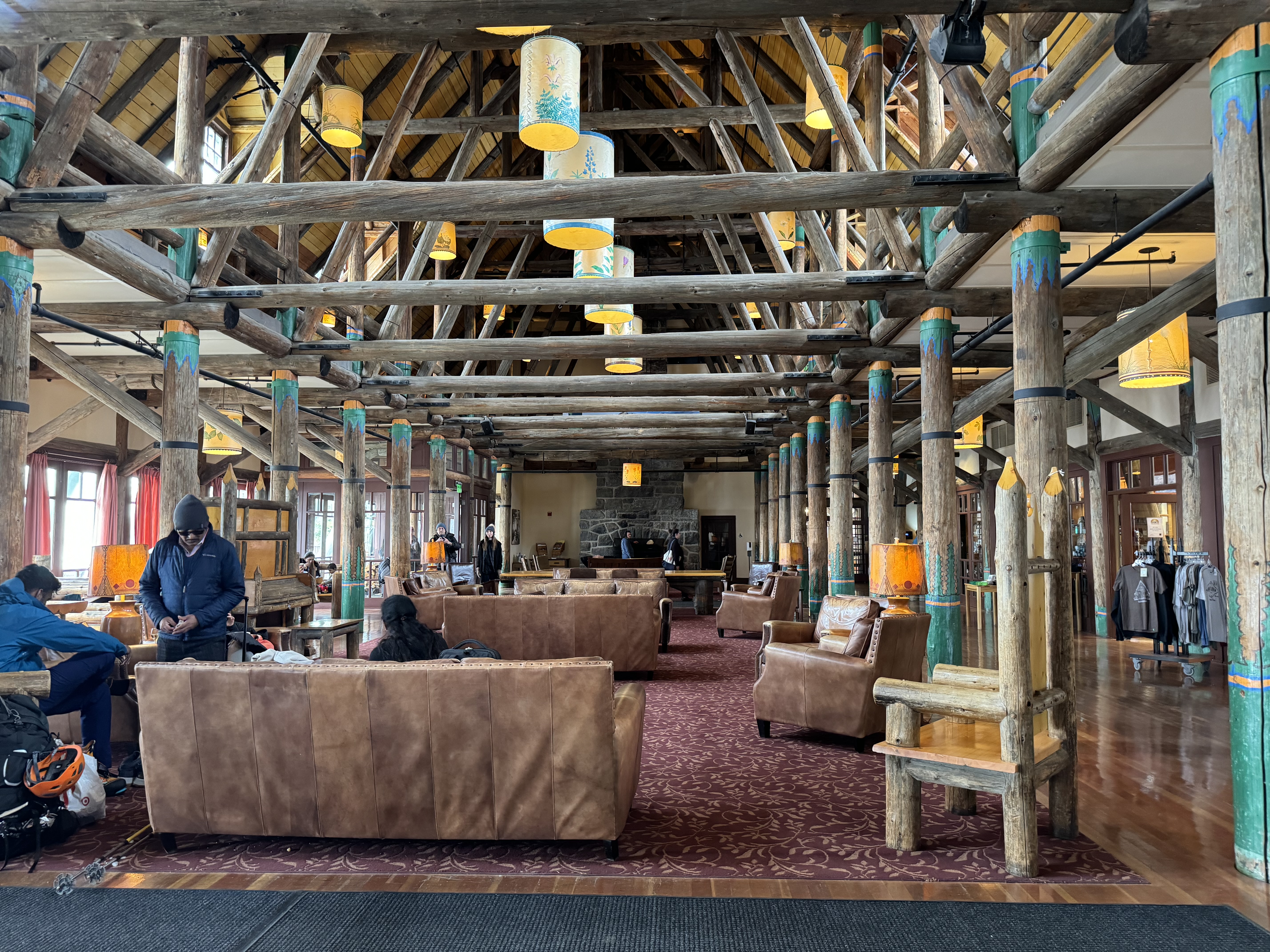
A note about park hotels and lodges: In order to preserve wildlife and wilderness, I think the best idea back in 1872 was setting the Yellowstone region aside as a national park thus beginning the creating of a network of parks. The next best idea might well have been the creation of the National Park Lodges. These structures were built with a vision of blending in with the environment via architecture that now has been coined as “Parkitecture. ” This is the rustic architecture that harmonizes with nature, – building something that fit right into place and not detracting from nature’s beauty. It features wood and stone from the area, has massive overhangs, wide logs, timber columns and very large common areas… magnificence without the glass and metals in favor today by most and another way we become totally disconnected from the natural world.

National Park lodges are not like today’s typical hotel rooms.  If you need  multiple USB plug-ins, a color flatscreen TV with cable, a gym, High-speed WIFI, complimentary continental breakfast, and a swimming pool,  be forewarned, this is not the place for you. Many of the National Park Lodges were constructed in the early 1900s an  era  when leisure travel was a social event.  This  meant getting dolled up for dinner and actually socializing with other guests. Many lobbies had  large fireplaces, many seating areas, usually a  gift shop, and a piano. Many of the hotel rooms themselves were small and did not have a private bath or shower, saving the extra space for the  larger communal areas such as a large dining rooms and lobby.

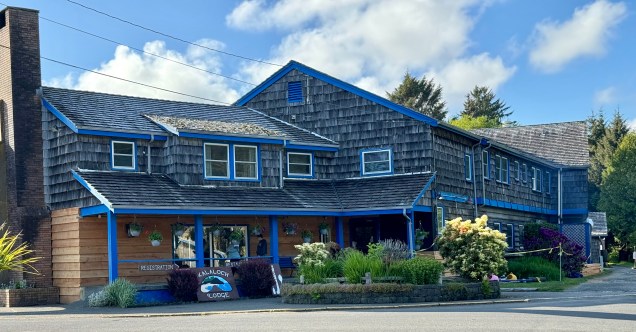
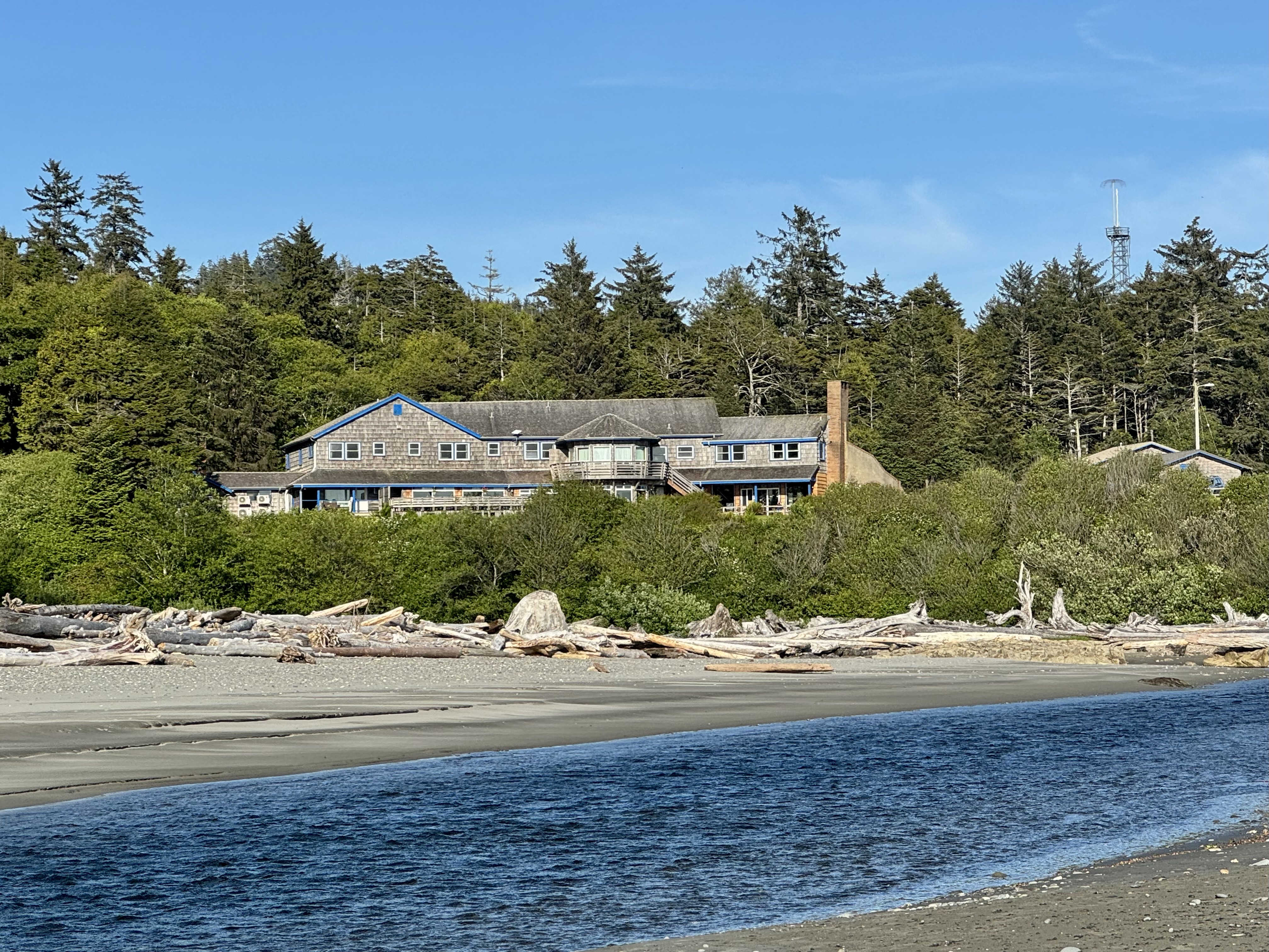
Kalaloch Lodge, built in 1925, is one of those relics of a past era with limited facilities (such as wi-fi in the lobby only, no TV, no swimming pool, no cell service in area) but I gladly spent $ 359.00 a night (least expensive room) to stay in the Seacrest house at this historic property . It’s a beautiful location on a bluff with access to a wildly sumptuous beach.

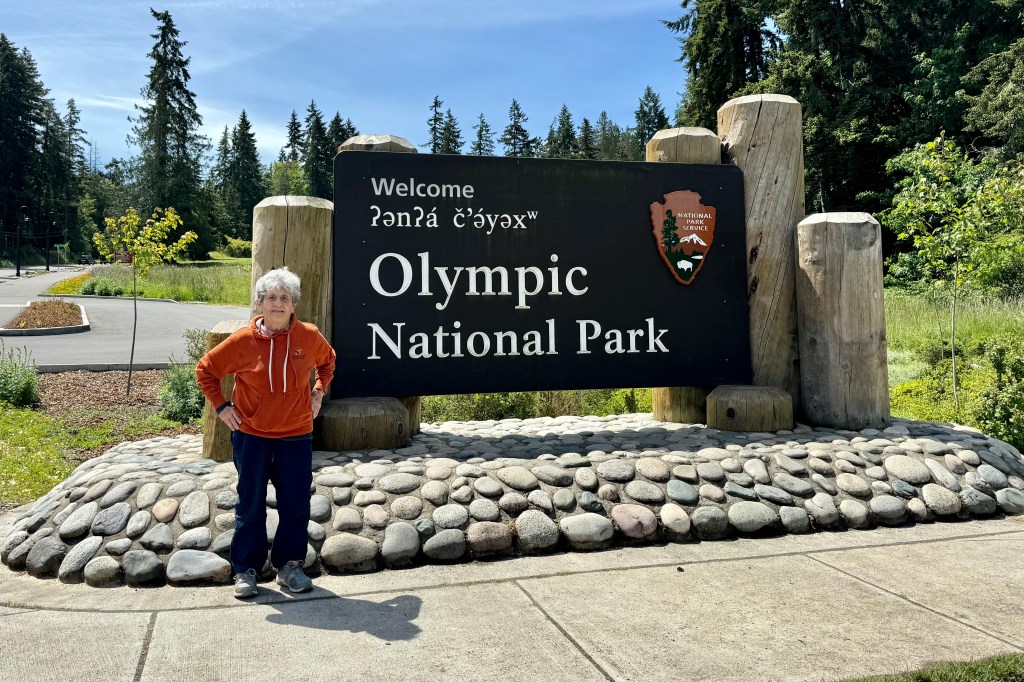
Olympic is one of the mid-sized national parks of about a million acres but when I reserved the room at the Kalaloch Lodge I anticipated a short drive to the Hoh Visitors Center and hiking trailheads. I was surprised to discover it was at least 40 miles and an hours drive along a rural winding road. At that point I began to realize the shear size of this park. It is not just a small outpost on the Olympic Peninsula in Washington, but three ecosystems: snow-capped mountains, temperate rain forests, and 70 miles of stunning coastal beaches. This is the perfect destination in our society of over-choice and FOMO (fear of missing out.). That’s me! I was intent on experiencing the diversity of all of them. Not having three full days and with my friend’s affinity for hugging trees, the biggest focus would be the Hoh Rain Forest. So the next morning we were heading there on a beautiful sunny day but this was not on a day that would be adding to the 140 inches of the annual precipitation which feeds its lush canopy and dense undergrowth. We would not be able to experience Hoh in all its dripping glory as it is directly benefits from buckets of fluid leaking from the heavens.

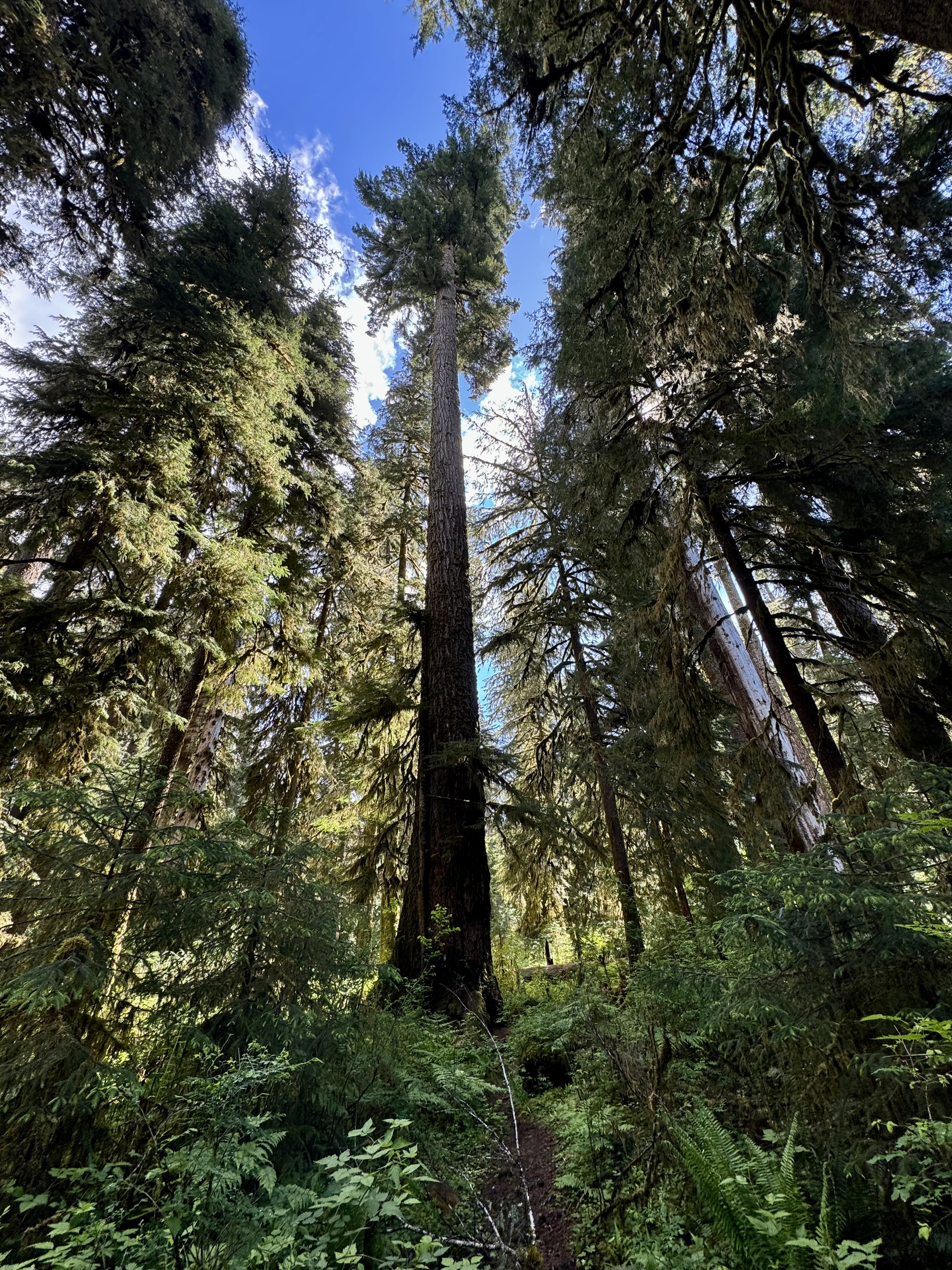
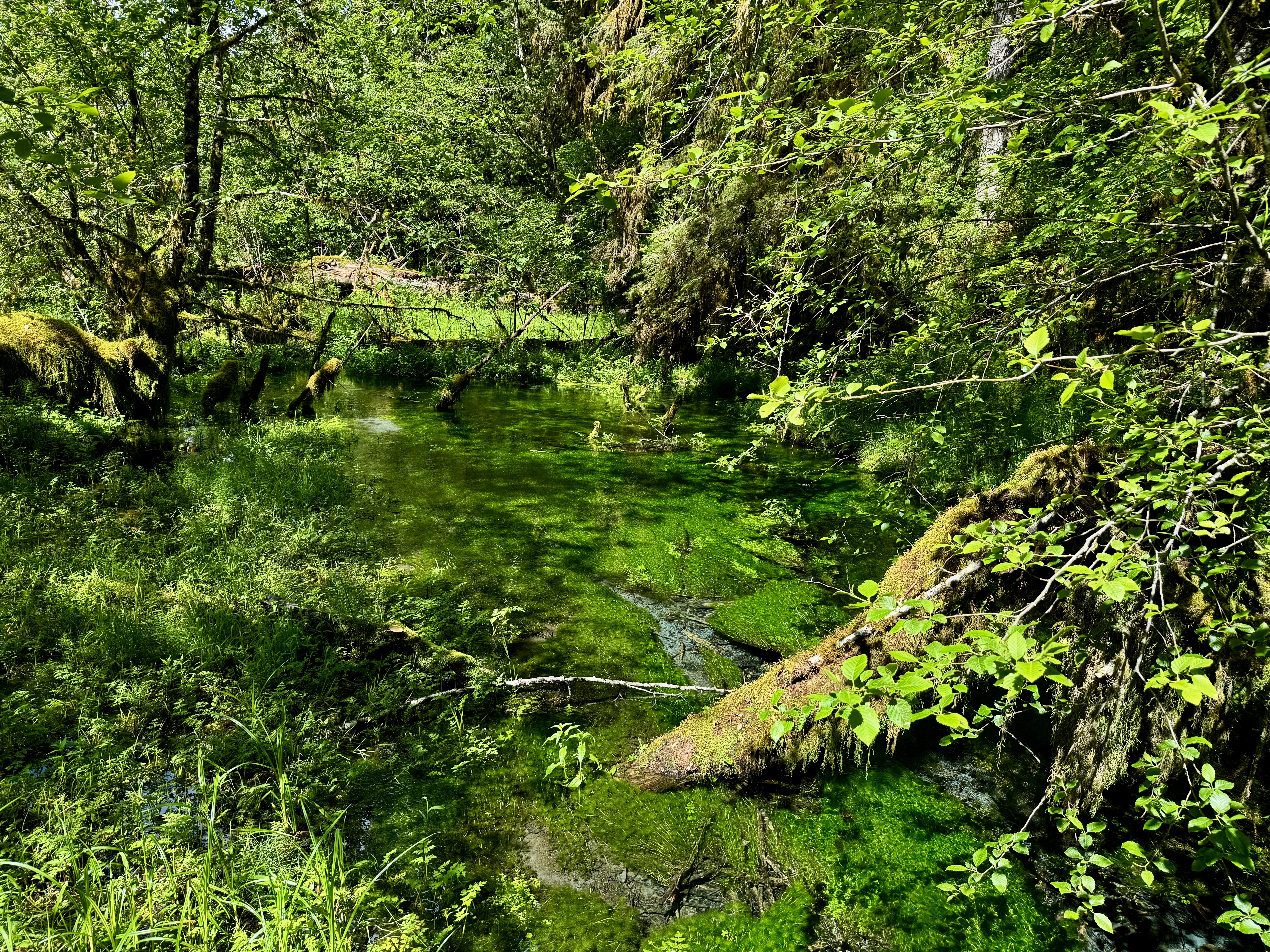
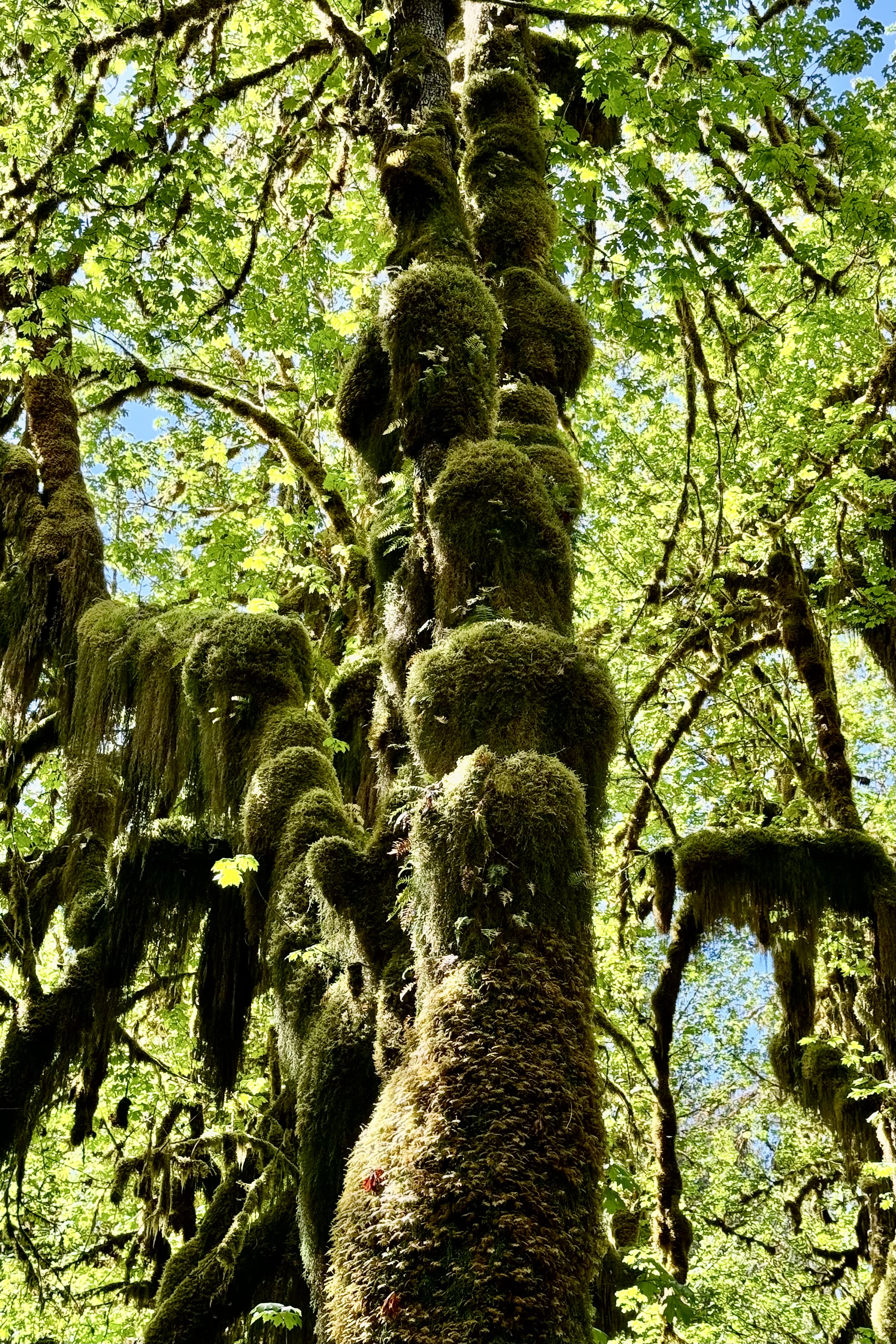
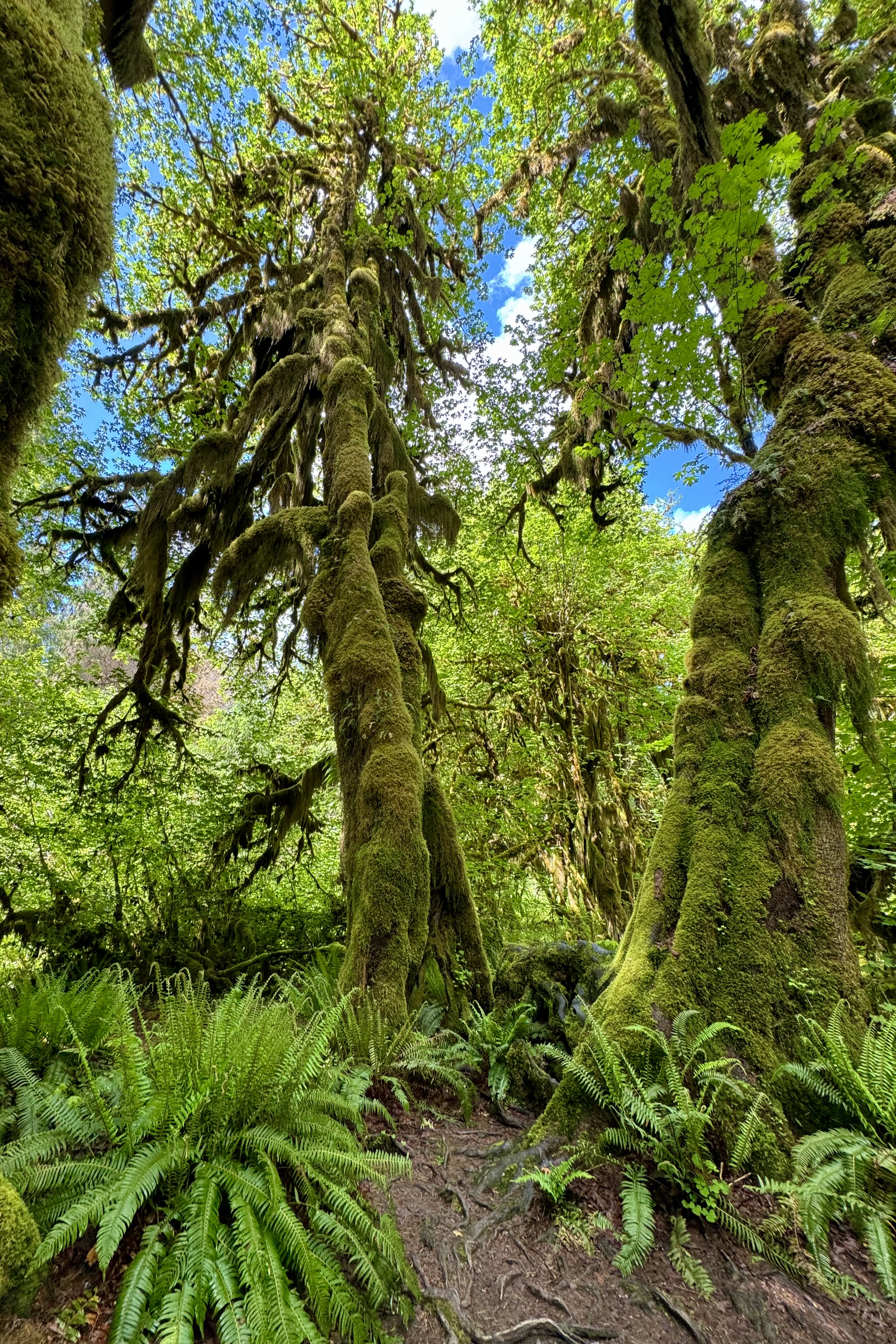
It was a totally immersive experience as I took a deep dive into the Hoh woodland. While hiking the 1.25-mile Hall of Mosses trail, I was “swimming “ in a sea of geriatric moss-covered Sitka Spruce with buttressed moss covered roots, Western Hemlock, Western Redcedar and the mighty Douglas firs. Many of these trees are over 700 years old in this oldest of rain forests in North America. This forest is thick, wet, furry, and dense with many vibrant shades of green ranging from a brilliant emerald to a dusky sage. It is a “Tolkien-esqe” jungle of spongy moss draped giant trees and their understory that is filled with fallen trees, saplings, and ferns. I was again feeling insubstantial and humbled as I hiked in this garden of plants and trees dripping moss and tried to imagine the history that has unfolded during the lifetime of the oldest of the giants. My imagination ran a bit wild envisioning dinosaurs roaming this jurassic jungle. The 1.2 mile Spruce Nature Trail, much less crowded, was now must as I was not yet sated by the trees and the army of epiphytes that surround them. It also served up views of the wild Hoh river.

I was again feeling insubstantial and humbled as I hiked in this garden of plants and trees dripping moss and tried to imagine the history that has unfolded during the lifetime of the oldest of the giants. My imagination ran a bit wild envisioning dinosaurs roaming this jurassic jungle. The 1.2 mile Spruce Nature Trail, much less crowded, was now must as I was not yet sated by the trees and the army of epiphytes that surround them. It also served up views of the wild Hoh river.

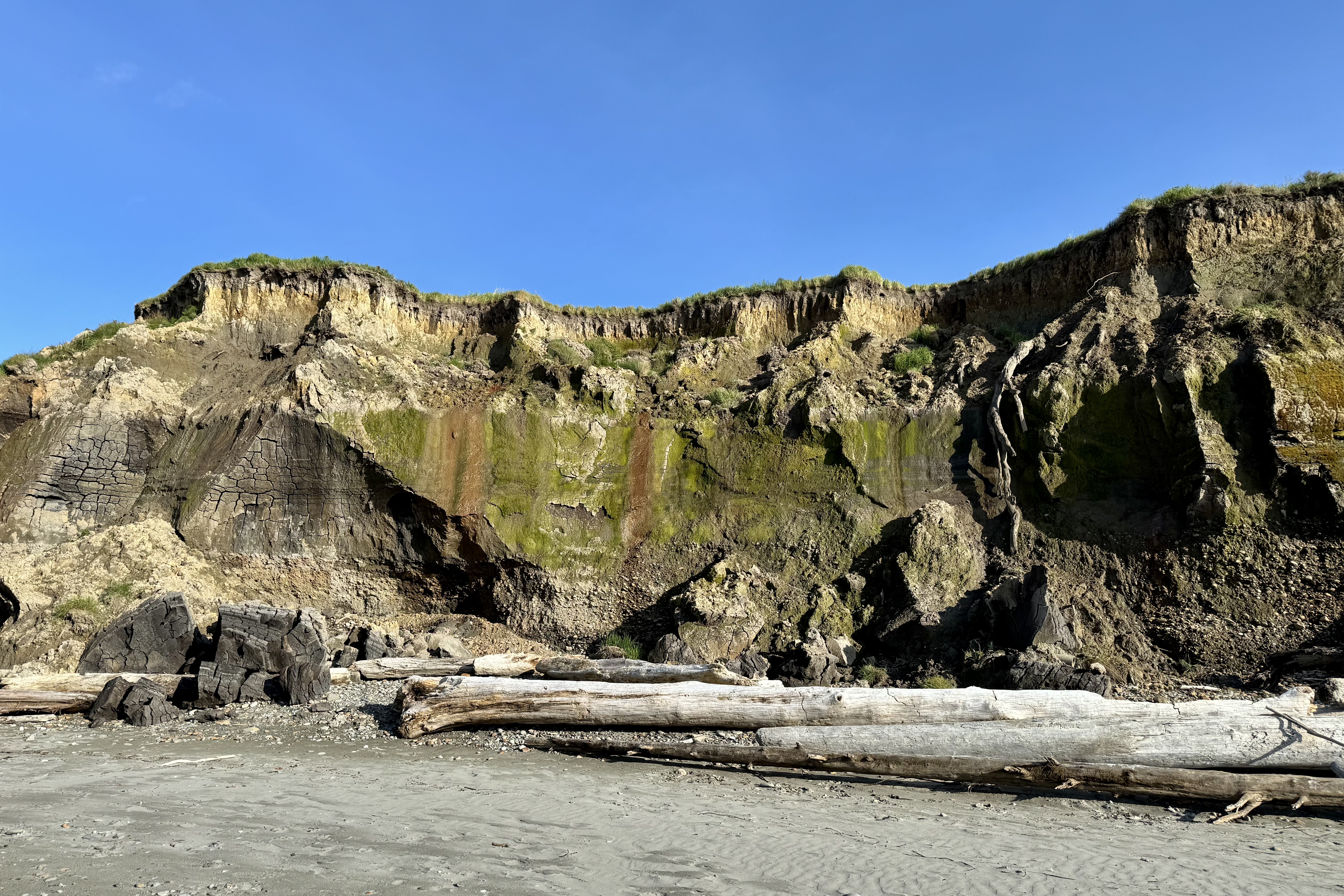
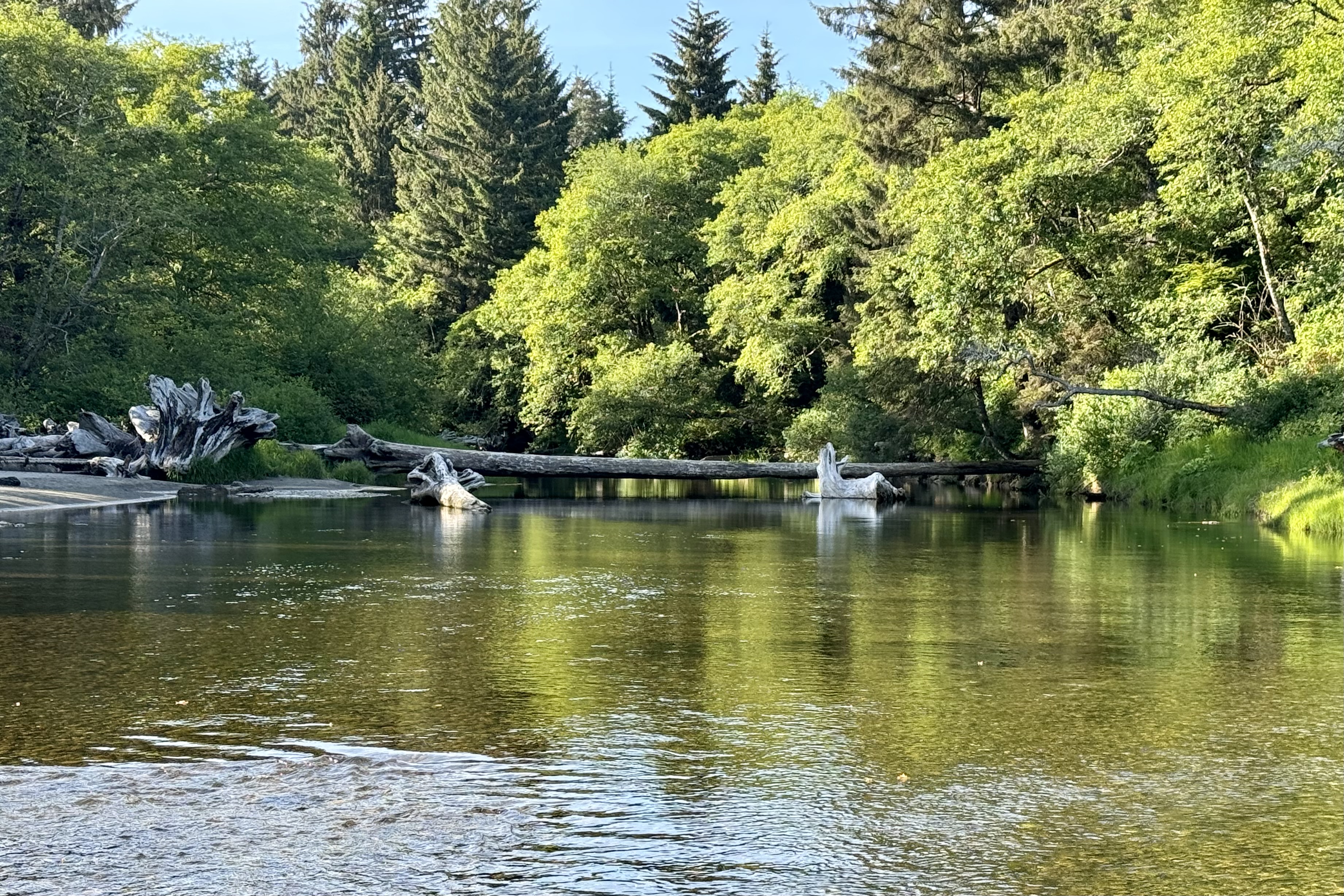
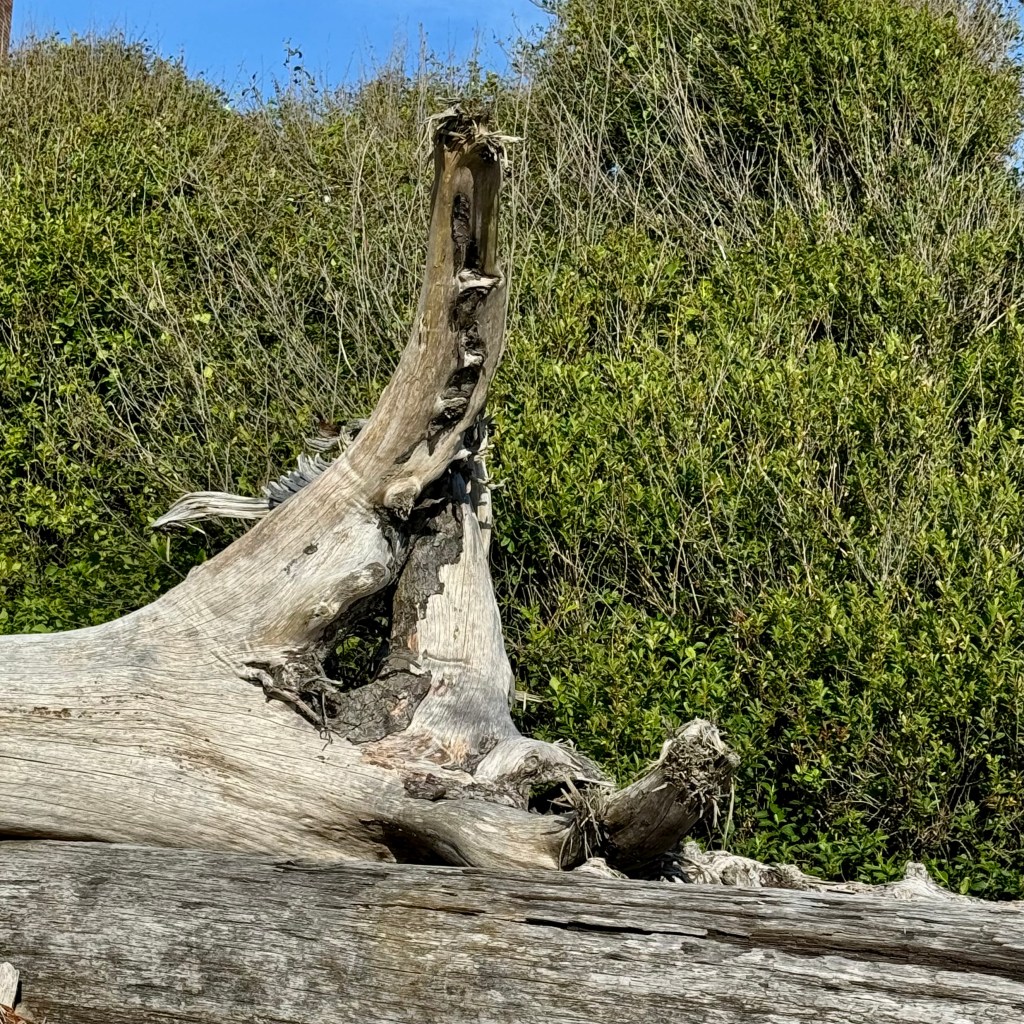
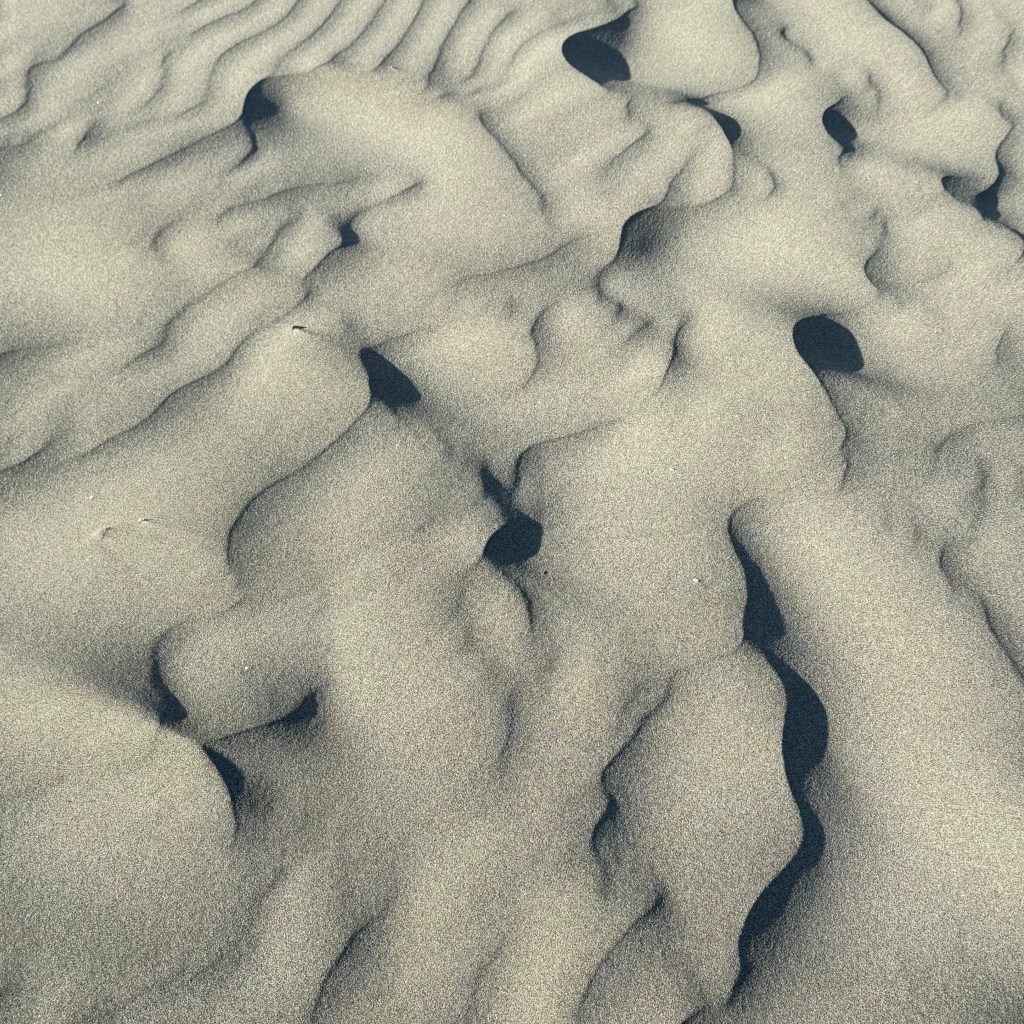
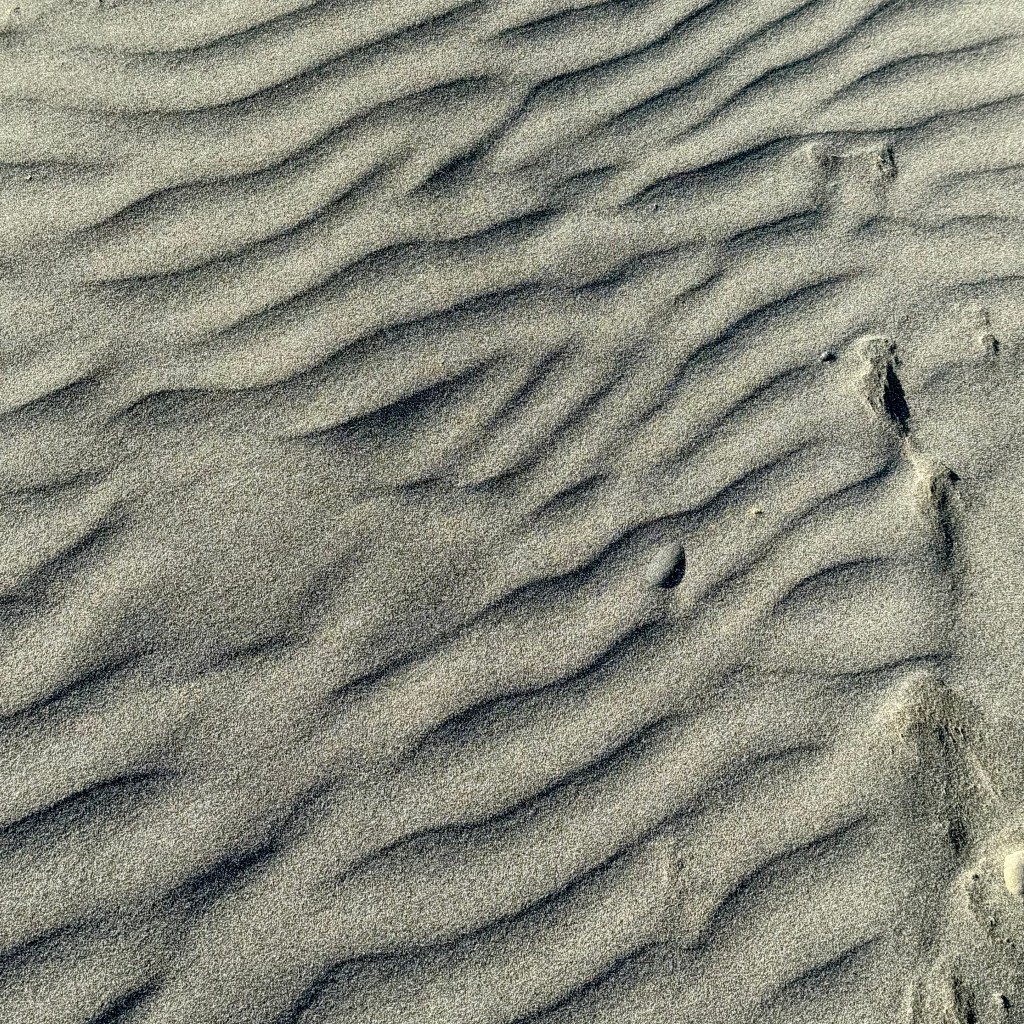
After a harrowing drive back … mind you it was not harrowing for me as the driver but for my passenger who has very little experience being a passenger with a driver who is quite assertive in how she approaches the task of getting somewhere on these narrow curvaceous hilly roads. I vowed to do better next time. Once safely back at the Lodge I determined it was time to explore the beach with its wind-sheared trees, museum of driftwood sculptures, wind swept sands, and eroded sea cliffs. The sky was a clear expanse of blue, the sun shining bright, the wind strong and relentless. Though invigorating, the sandpapering of my legs , all the while pushing against me, did not promote the kind of connection with nature I was seeking. So I meandered up by the egress of Kalaloch Creek, exploring the massive driftwood “carvings” and meandering along this wind-swept beach.

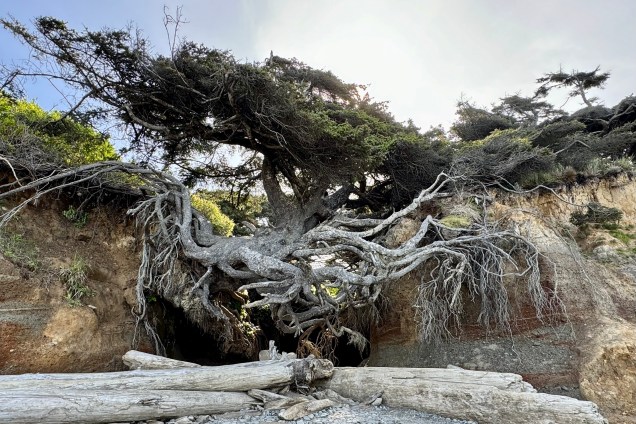
I awoke to a bright and beautiful day for traveling the perimeter of Olympic National Park and then onward to Mt. Rainier. But first I opted to stop just north of the Lodge at “The Tree of Life.” Which Tree of Life do you think I discovered here at Kalaloch? Do you recognize the others?

The Olympic Tree of Life, a Sitka Spruce is quite unique, located on the edge of a sandy bluff- and straddling two cliffs. Erosion from a stream flowing behind the tree weathered away the ground underneath it. A few coiling stems cling to each side of the cliff support the tree’s weight, which by any rational standard should not be able to support its massive size, especially with the rugged wind and storms on the coast.

There definitely is no direct way to cross the park to experience the northern region. The park is encircled by a well-maintained very scenic perimeter road of 329 miles. (Hwy 101) with a few more short paved roads penetrating the interior and dead ending. So if I intended to visit Crescent Lake and Hurricane Ridge I would need to head north and east on the narrow loop road and today adopt a gentler but firm approach to negotiating the twist and turns, the sharp bends and arcs with less focus on the thrill of the drive and an adrenaline rush, especially if I want to maintain my friendship and finish the trip and not have my friend demand an immediate transport to the Seattle Airport. I will save those exhilarating drives of being one with the road when traveling solo.

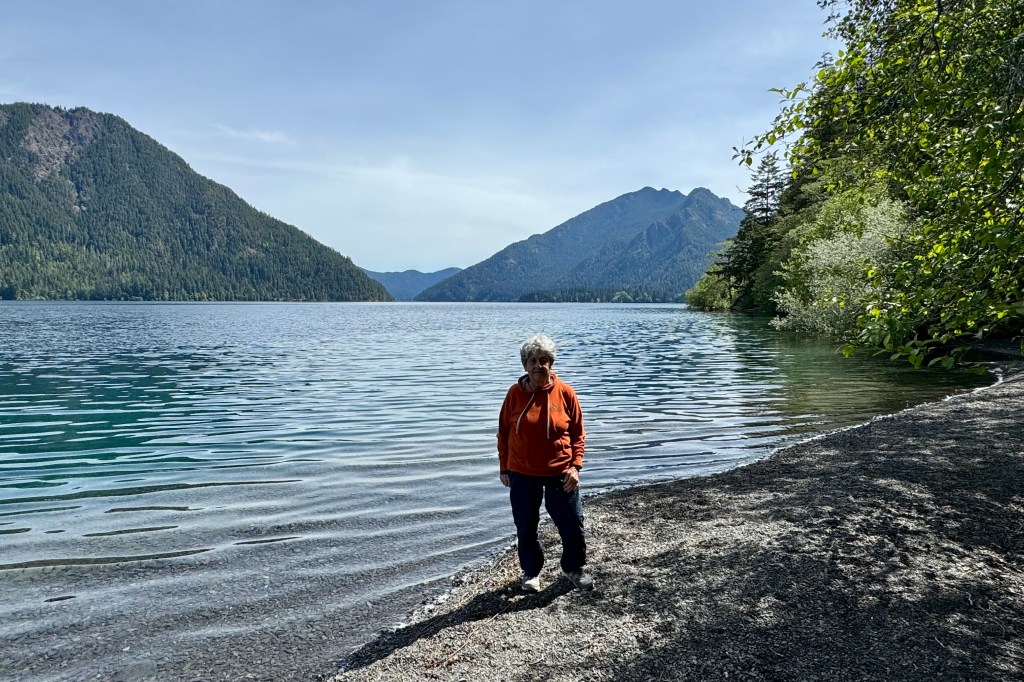
Two hours later we were skirting Lake Crescent and remarking on its crystal-clear deep blue waters viewing it against the backdrop of the Olympic Mountains and the lush temperate rainforests. It was tempting to stay and drink in the tranquility of this lake but Hurricane Ridge beckoned.

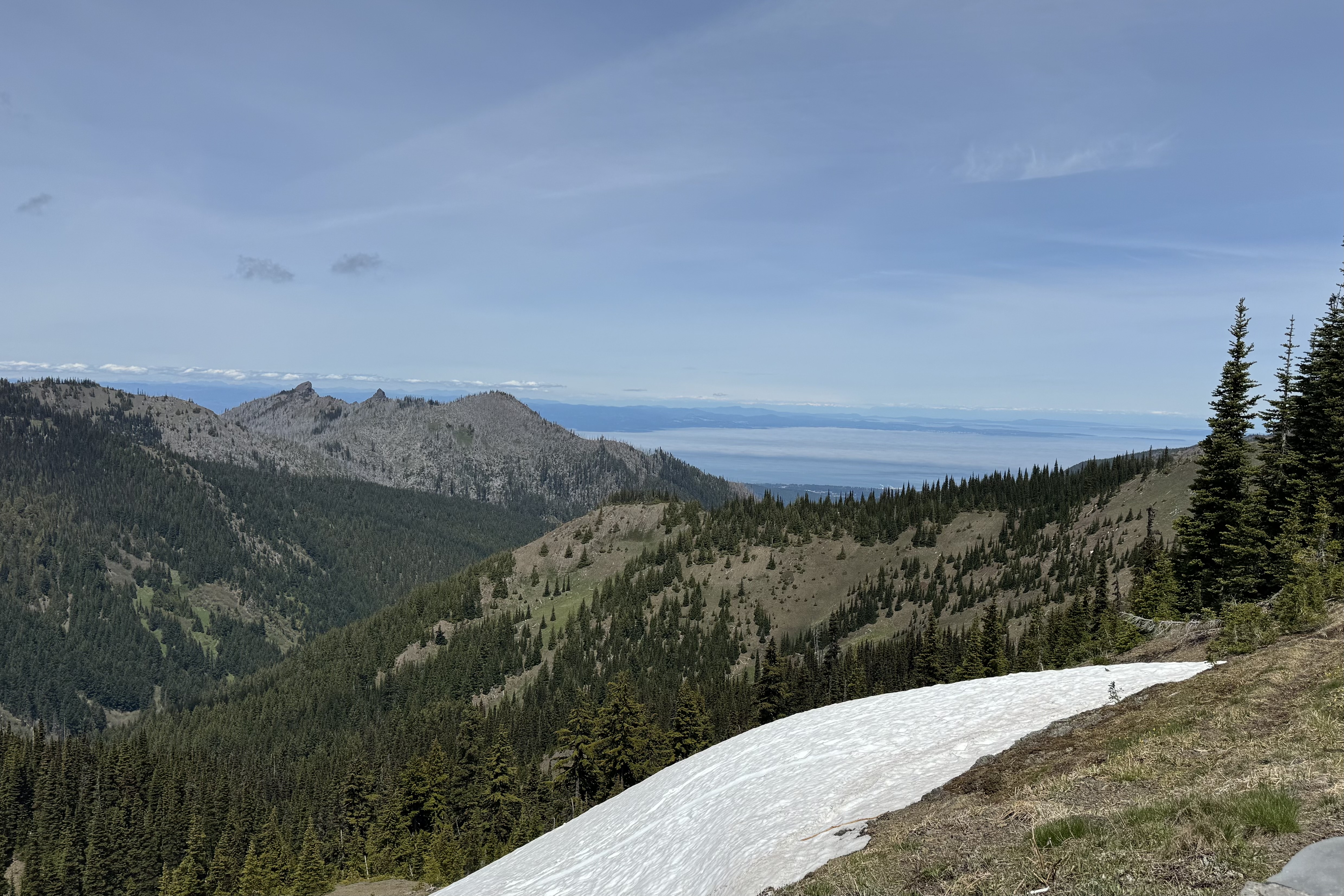
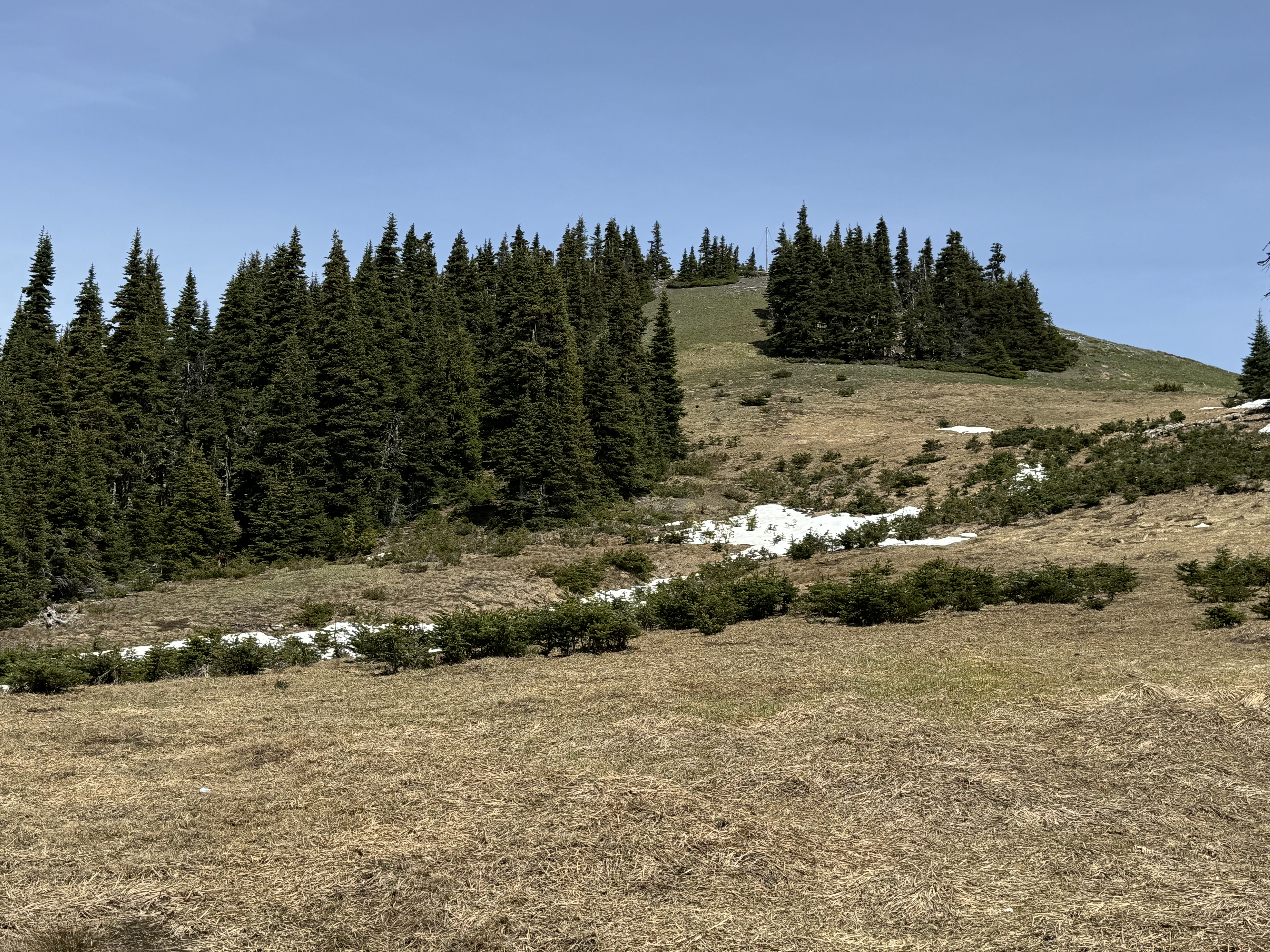
At Port Angeles so began the 18 mile ascent from the coastline at sea level up to 5200 feet. The traverse is initially through dense forest but opening up to vistas of distant peaks, including the 10,778 ft Mt. Baker, and eventually transitioning into subalpine and alpine topography.

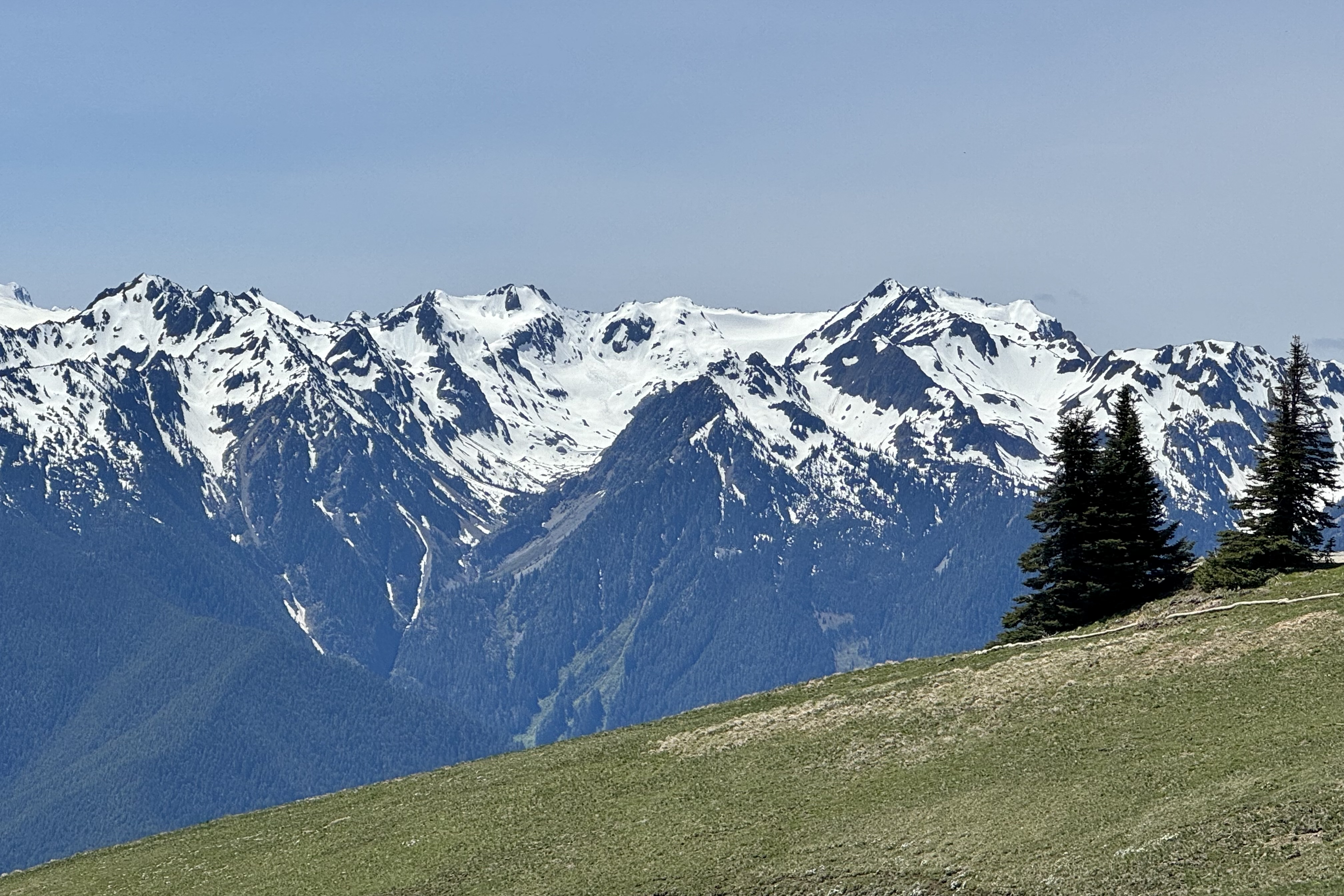
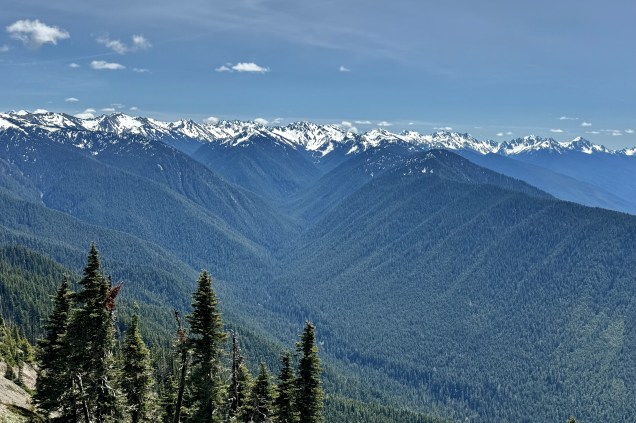
The journey itself, along the road’s twists and turns (yes I found it exhilarating even at a rational pace) ) was as much a part of this adventure as the hike up the High Ridge Trail. The road dead ends and from there we simply enjoyed the panoramic views of the Olympic Mountain Range with its snowcapped mountains , evergreen forests and Mt. Olympus..

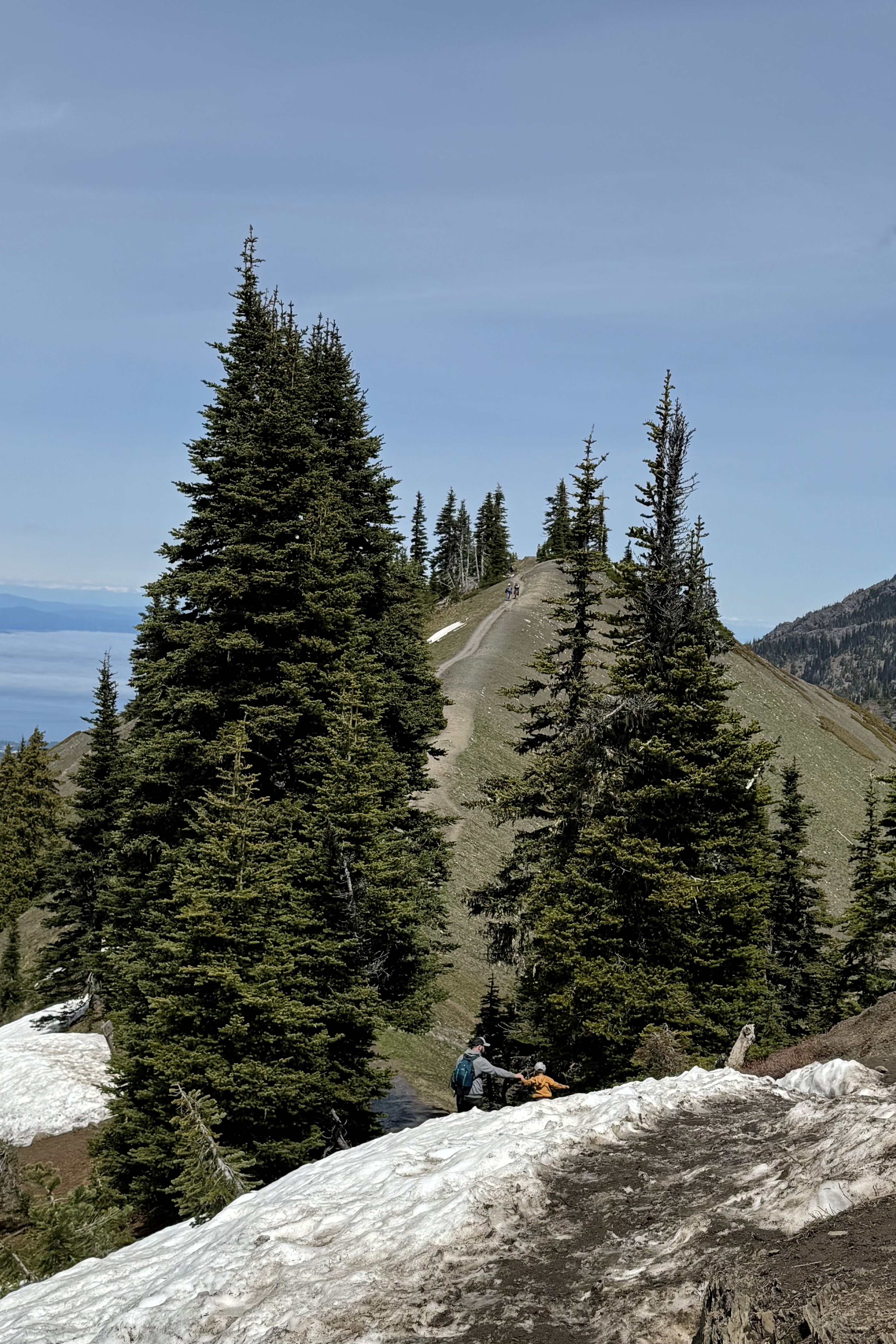
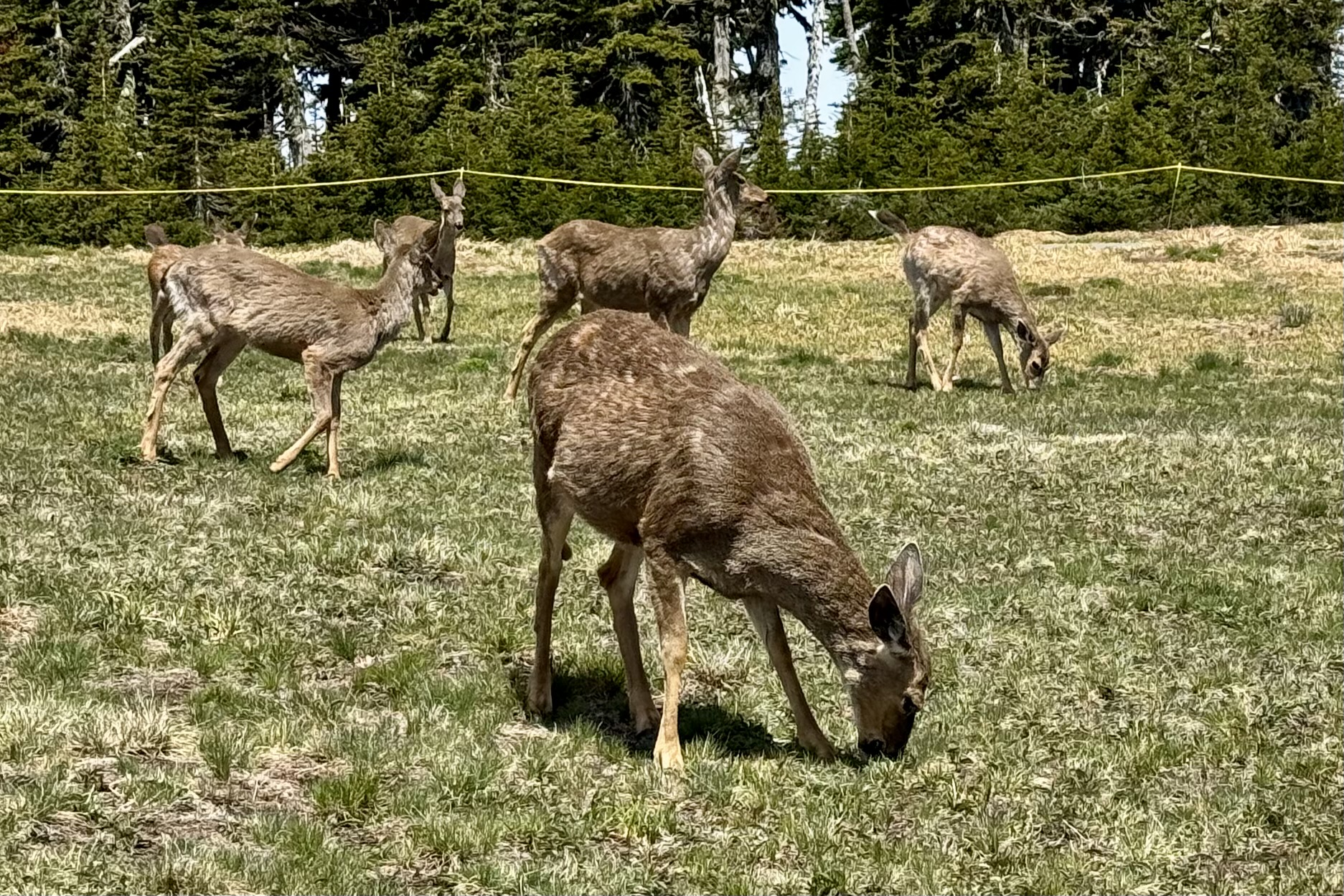
But, I was yearning for a hike, so decided to hike at least part of the High Ridge Trail. A popular and easily accessible trail, there was no paucity of other trekkers. Black-tailed deer were grazing at the trailhead and seemed totally undisturbed by the bevy of humans trespassing on their meadow. We made an elevation gain of about 250 feet and a 2/3rds of a mile ascent and though this seems like an almost nothing hike compared to “what-could-have-been “ we would opt to not go further given minimally a 5-6 hour rive to our nights destination . The views may have gotten even better but I would not be appreciating them on the very curvy, switchback twisting road to Paradise Inn in Mount Rainier National park after dark .

Stout Trees, Bunyan Sized Rocks, and Swinging in the Tree Tops

Hugging big trees was the expressed wish of a Floridian friend, when we discussed a potential joint vacation. The palms of Florida aren’t exactly known for their massive trunks or the swath of shade they generate. Since I live in the Pacific Northwest, I immediately envisioned a trip to Redwoods National Park and perhaps other western national parks which are definitely beautifully draped out in extremely old and very large trees and extensive forests. Though I had no keen yearning to hug a big tree myself (especially those with slimy moss or sticky sap) , I mused that I could probably find a itinerary that would accommodate that wish and my desire to revisit some of the other national parks of the Pacific Northwest Region including Redwoods, Olympic National Park, Mt. Rainier, and Crater Lake, completing a big circle back to our starting point of Medford OR.

So after retrieving my friend and her luggage (which surprisingly arrived intact) at the Jackson County OR Airport, my mission at the moment was to head on down to Crescent City CA and the Oceanfront Lodge , our accommodation for three nights. My preference when traveling is to drive secondary roads ( isn’t there an old saying that the “the joy is in the journey” ) rather than what I find boring – the tedious frenetic interstate highways. This did not disappoint as, of note, enroute was the appearance of “Weed Man” offering free “weed” at the Oregon/California border. This was not about weed control (the kind you use on you lawn) nor a chance to buy legal weed since recreational marijuana is legal in both states, but a ploy to get travelers out of their automobiles to browse their flee market tables full of goods other people no longer wanted or needed. That ploy worked as my friend craved having her photo taken with the “Weed Dude” but definitely not to consume the weed itself. We definitely opted out of a shopping excursion.

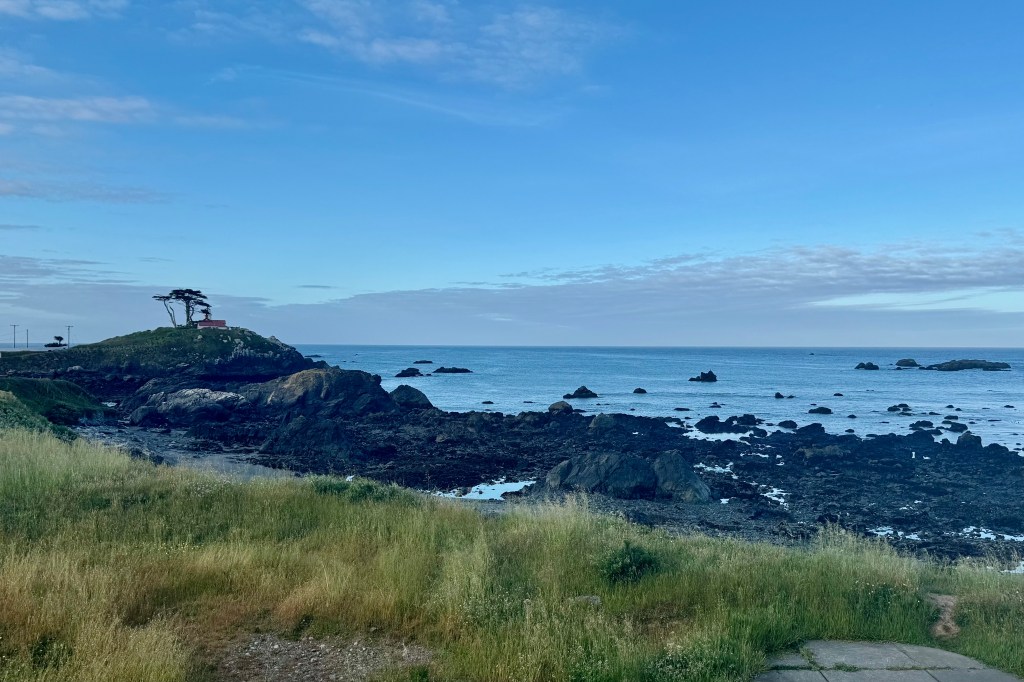
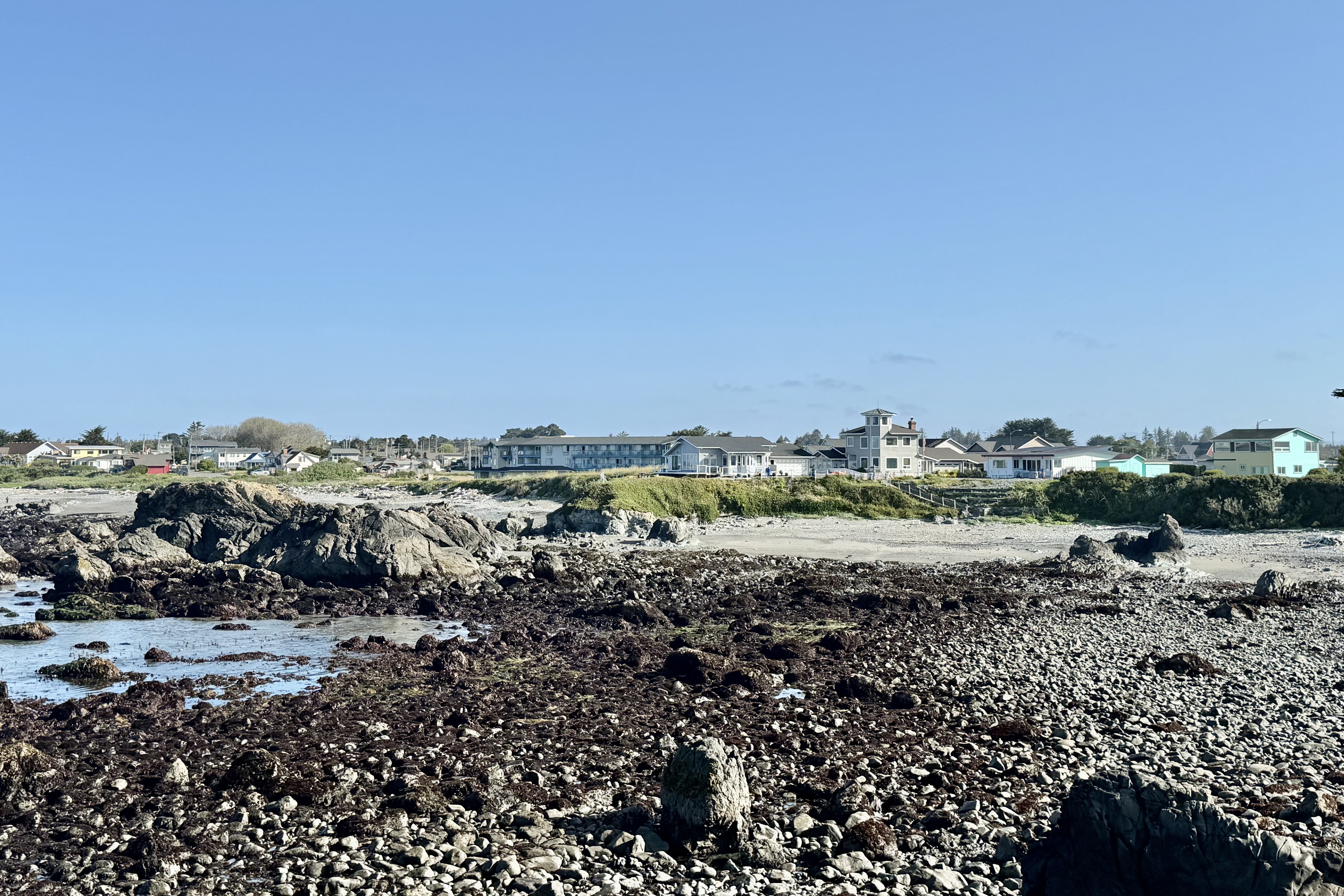
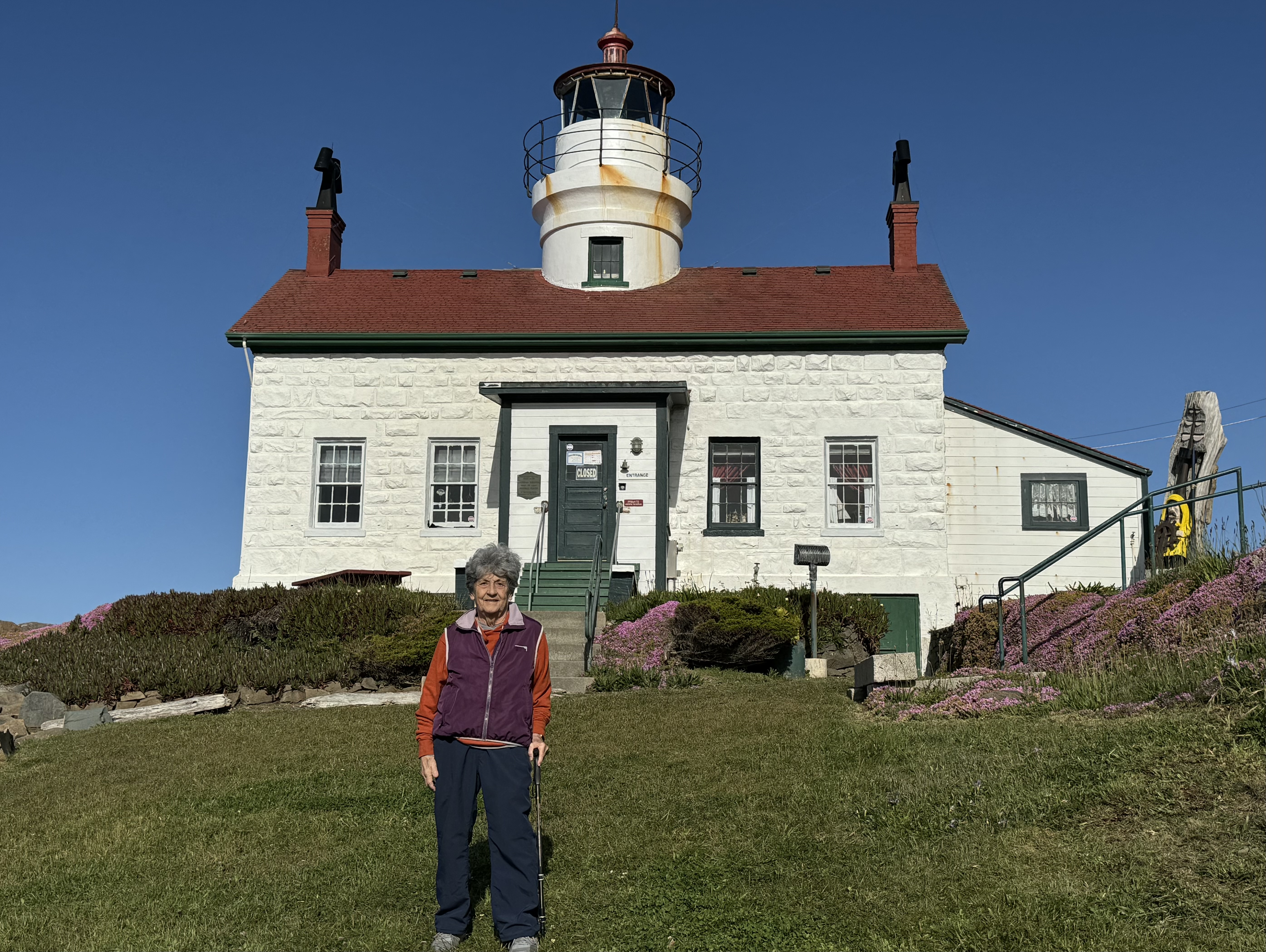
As is quite often the case, coastal cities in the Pacific Northwest get fogged in and true to form we were greeted with a temperature of 54 degrees and a shroud of fog at the oceanfront location of the Crescent City Lodge, the home base for three nights.  The best part of this hotel was its seaside location and the awesome views, especially  when the fog was no longer a gauzy blanket over the Pacific. The  Battery Lighthouse was a  picturesque  part of the view and was within walking distance. My first order of “business” was to head down to the beach. Seeing no unencumbered path,  I laboriously inched my way down through the vegetation, driftwood,  and stones to scattered patches of sand. A rough rocky shore, previously  not a challenge, was definitely a safety hazard for my osteoporotic bones and my need to use a hiking stick to hopefully avoid any tripping rocks and catastrophic falls on my barely healed gluteus medius and gluteus  minimus muscles. With it being chilly and foggy, I was becoming more interested in filling my belly than beach combing on this unstable surface. 

So it was back to the somewhat “tired” and dated room, which  faced the ocean and sported a very weathered balcony and rather uncomfortable chairs.  But just the magical sound and breeze of the ocean made up for a lot that the accommodation lacked. Sleeping with the sliding glass door open to hear the waves was so calming.  Dinner was in the  small understaffed restaurant downstairs with passable, though clearly not of the gourmet variety food.  But the flavor was definitely enhanced by the expanse  of the  Pacific, viewed through the spacious windows of the dining room. 

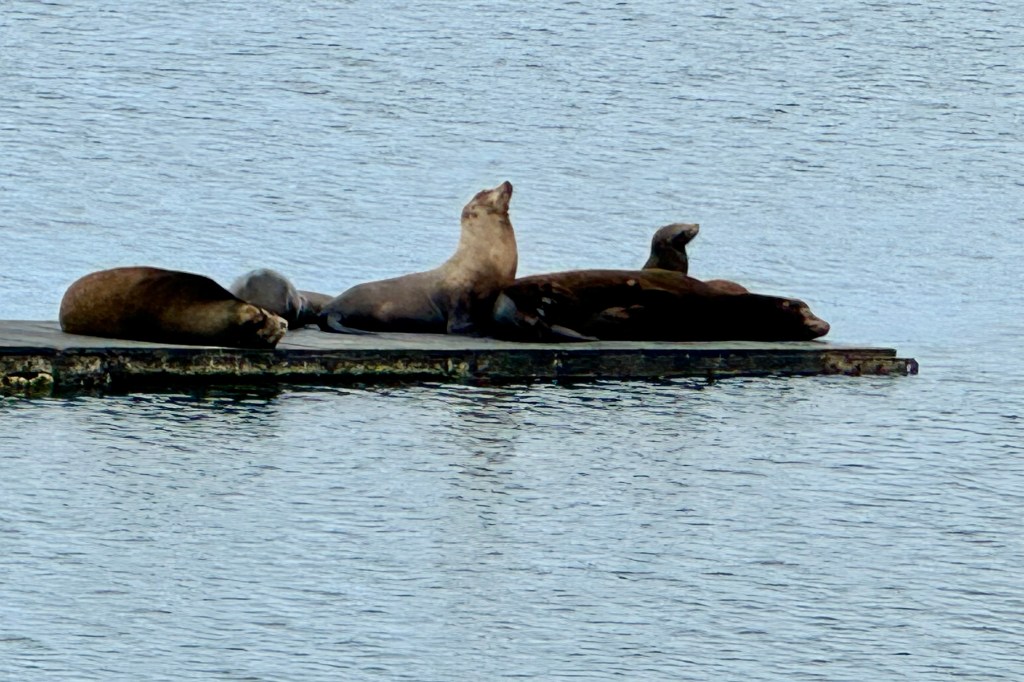
We awoke to a brilliant blue sky and were eager to be out and about. The first stop was at the Crescent City harbor to hopefully catch a glimpse of the resident harbor seals before they were out and about foraging for the days banquet. I guess by seal standards we missed the “boat” as there were but four of five hanging out in the harbor. So shortly we were on to the National Park Office to map out a plan for the two days in Redwoods.

An expressed desire of my friend was to visit Trees of Mystery and according to their brochure is “California’s premier attraction on the North Coast.” This seemed a bit of an exaggeration and though I was skeptical, I was game to give it a chance. This is not the type of tourist attraction I typically frequent having been programmed very early by my mother to NOT visit any “tourist traps.” We kids were deprived of experiencing the Michigan wonders of the Mystery Spot, the Underground Forest, and Sea Shell City so gaudily and frequently advertised along the highways.

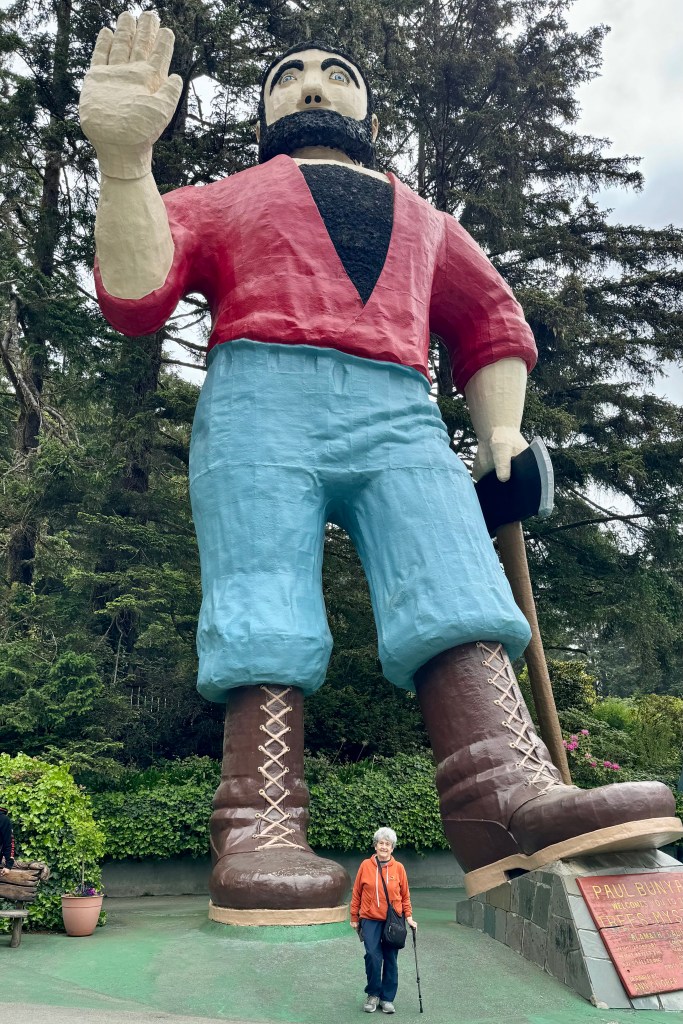
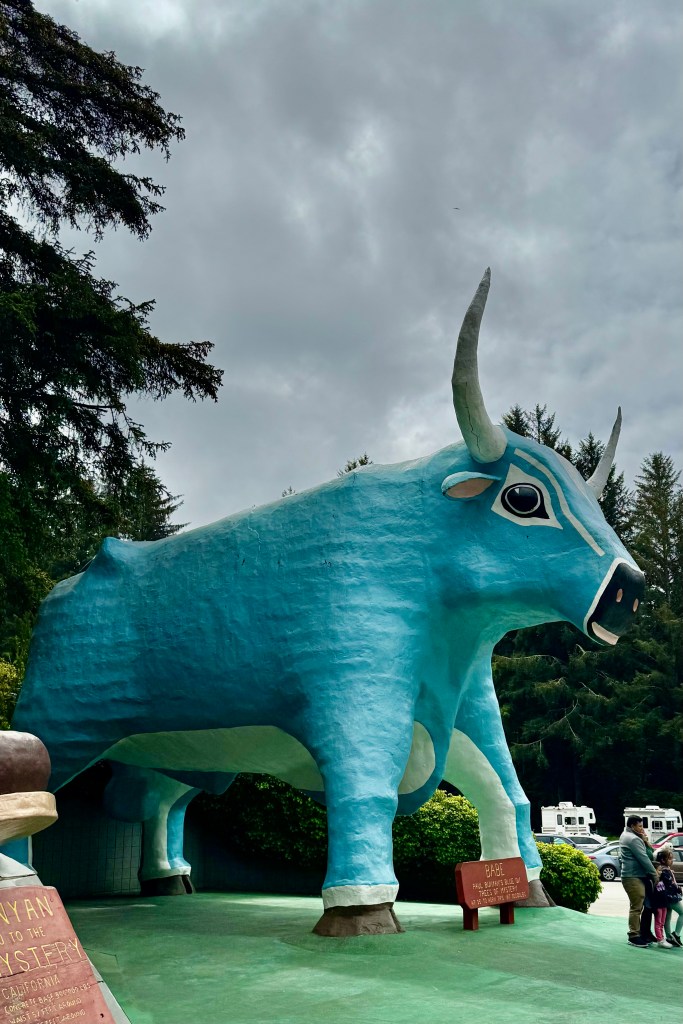
Upon driving up and being greeted by a massive talking Paul Bunyan and Babe the Blue Ox statues, I was even more skeptical as it looked mostly like a stop for kids and a bad attempt to copy a Disneyesque experience. But I was game as it advertised a canopy walk and gondola ride. Nevertheless, before we began, I felt compelled to have my picture take with Paul..

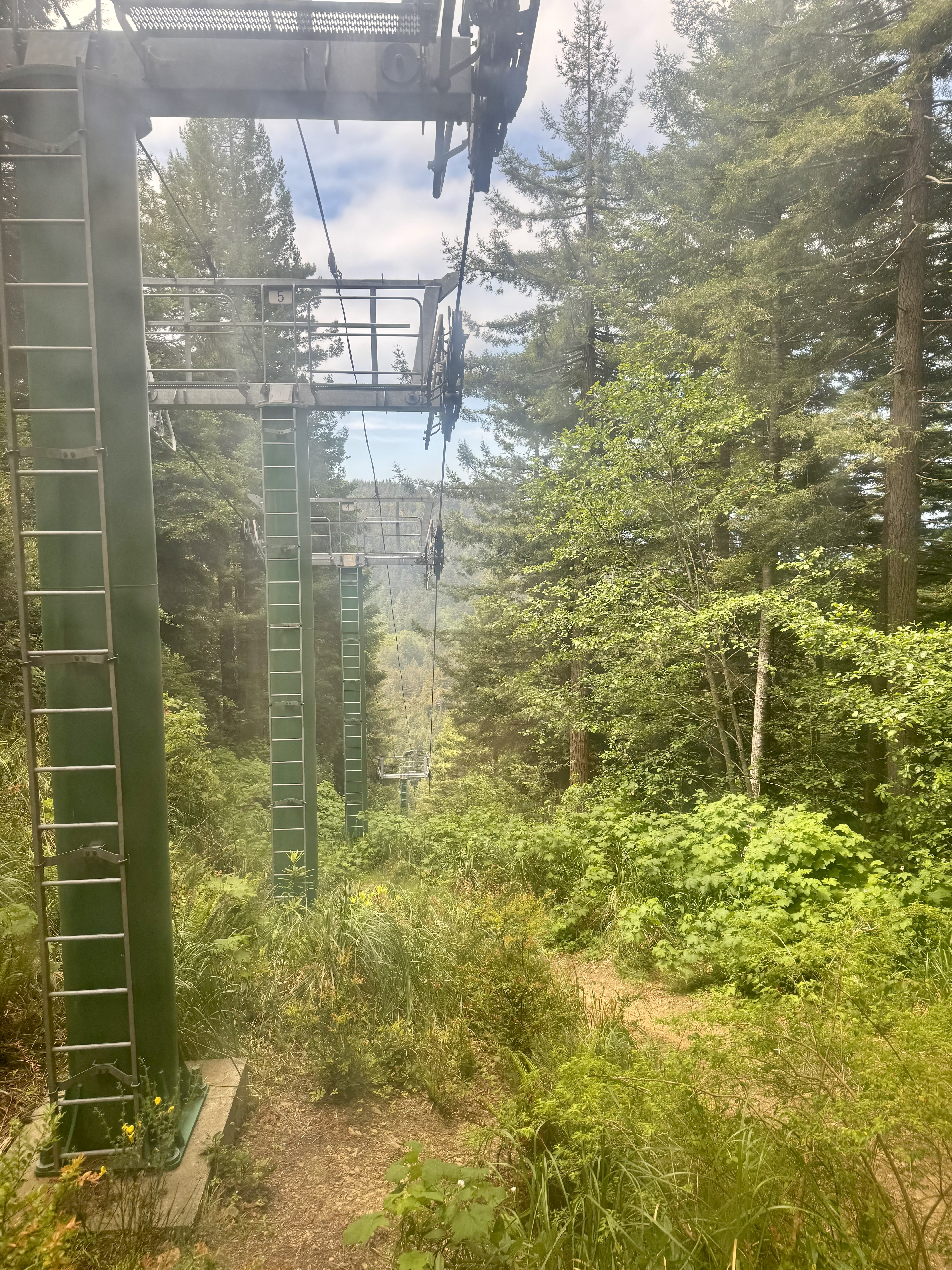
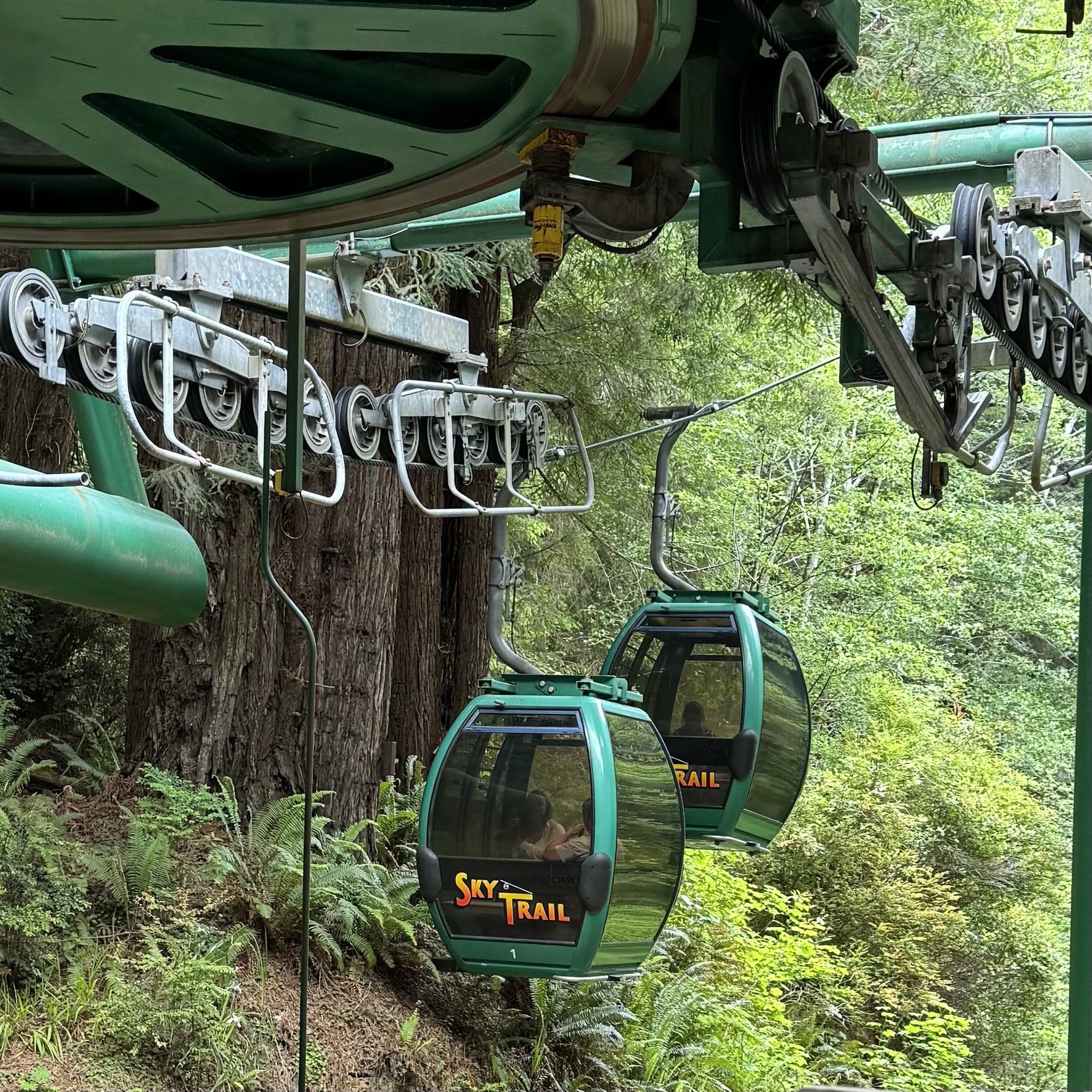
The first stop was the SkyTrail Gondola, a trip 1,570 feet up to the top of the mountain into the forest for an elevated view of the redwoods from the Ted’s Ridge Observation Deck as well as far-away views ( mostly obscured by overgrowth) of the Klamath Valley to the East and of the Pacific Ocean to the west. While I enjoyed the views, there were many spectacular scenic overlooks in Redwoods National Park along high 101 that are equally or more stunning, less crowded, and FREE. I found the gondola ride disappointing as it is not a glimpse of the canopy of giant redwoods, but rises through a hillside that appears to have been logged of redwoods years ago and overtaken by deciduous flora.

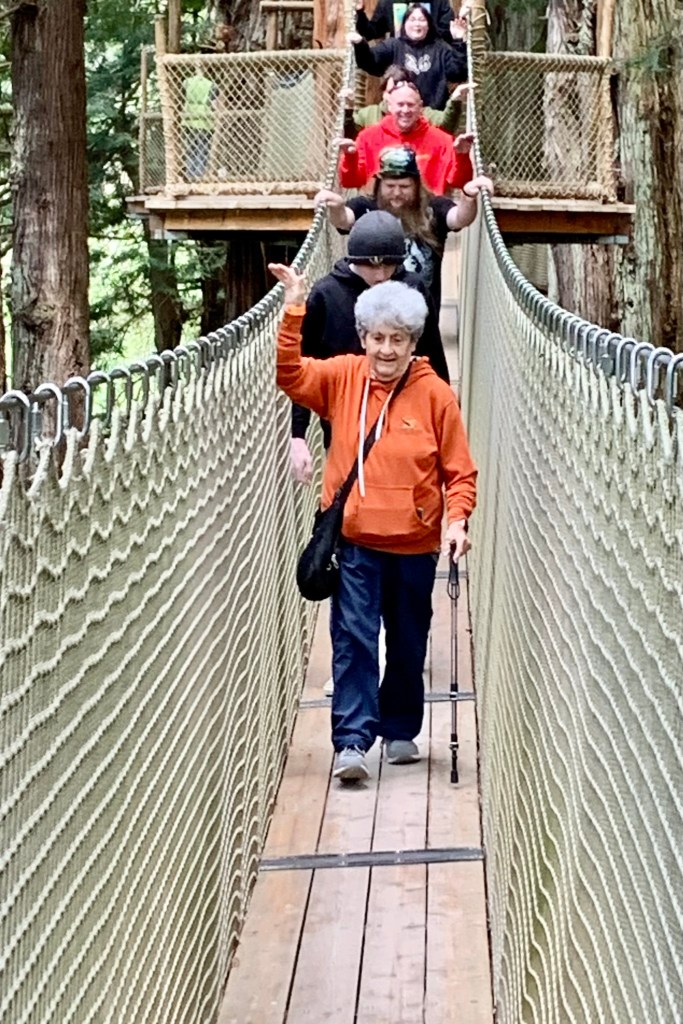
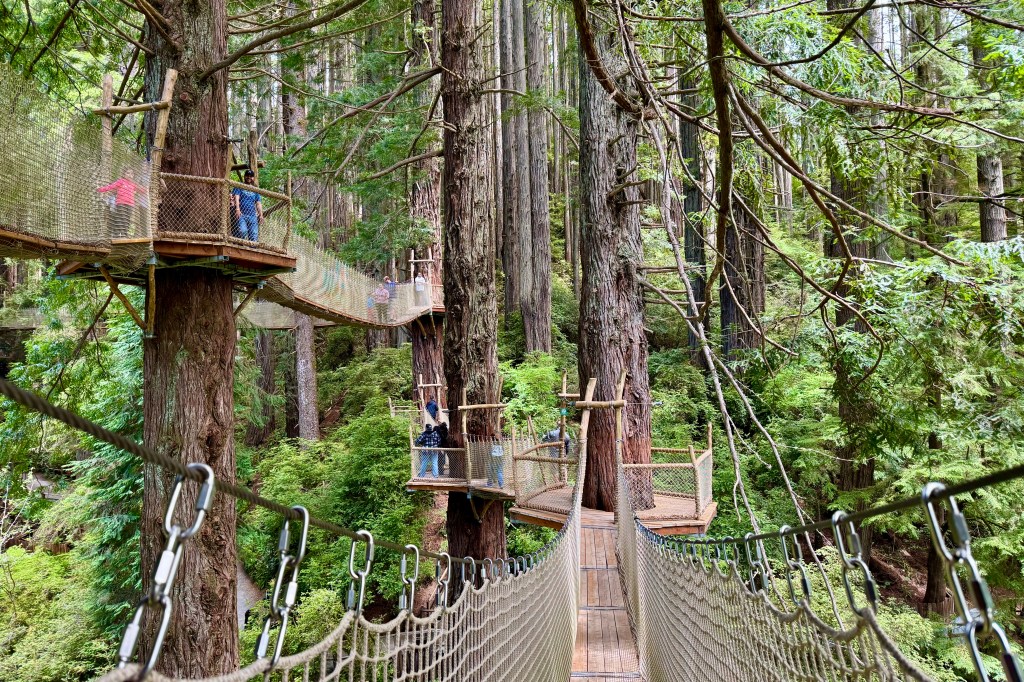
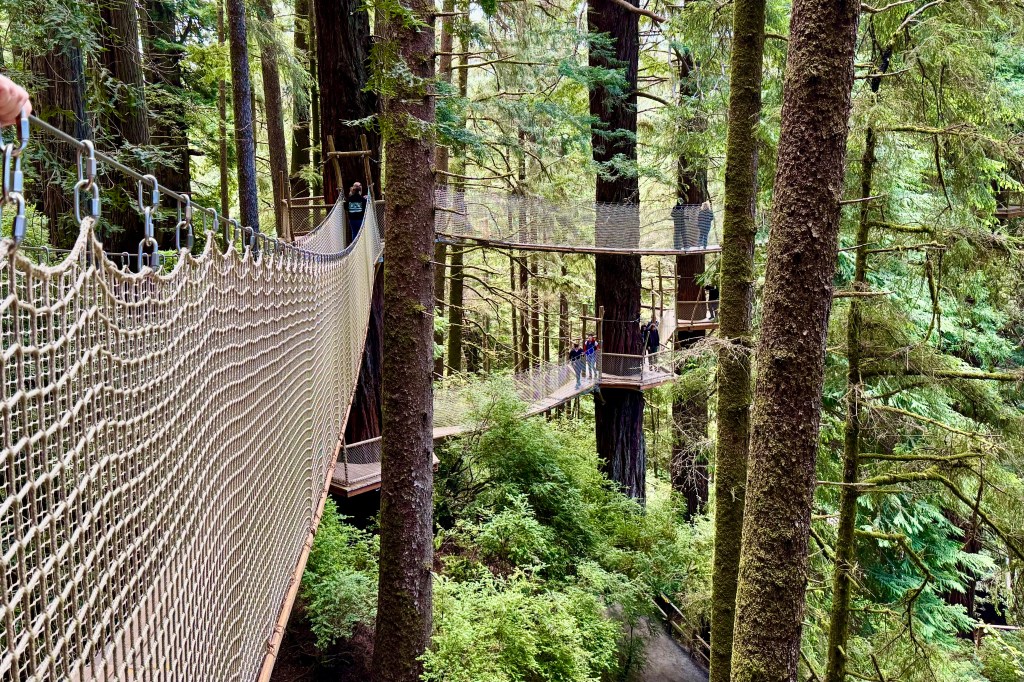
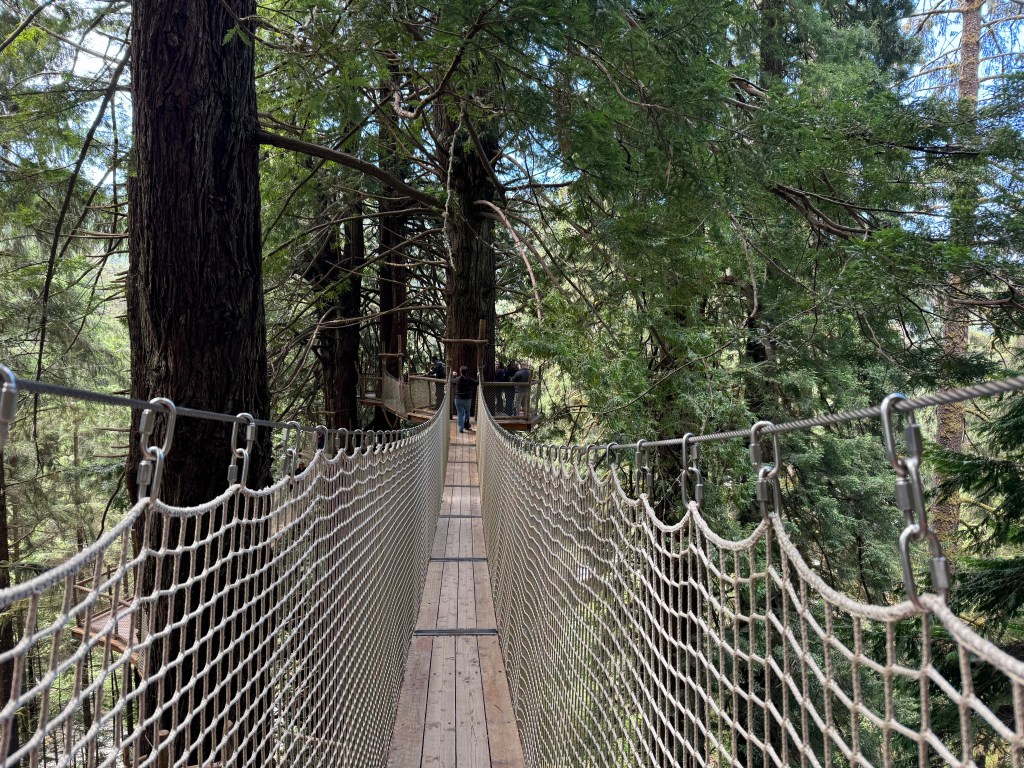
The biggest plus for me was to be the canopy walk which took us high into the redwoods through eight suspension bridges and ten platforms. To take in the sights, sounds and smells of NorCal’s world-famous redwoods would have been a noteworthy experience … except for the queue of people on my heals tromping across each bridge with nary a moment to take the surrounds in. These aerial netted suspension bridges perhaps 100 feet above the ground sway gently and BUT NOT so gently with the stomping and clomping of the rushers behind me who clearly were not in this to experience the grandeur of being high with nature doing what it does best – be awe inspiring – but perhaps to get a bit of an adrenaline rush with the swaying and rocking of the bridge structures. I was quite relieved not to be bowled over as I made my way across, teetering and tottering, by the swinging generated by the “trompers”. Nevertheless it was a fun experience.

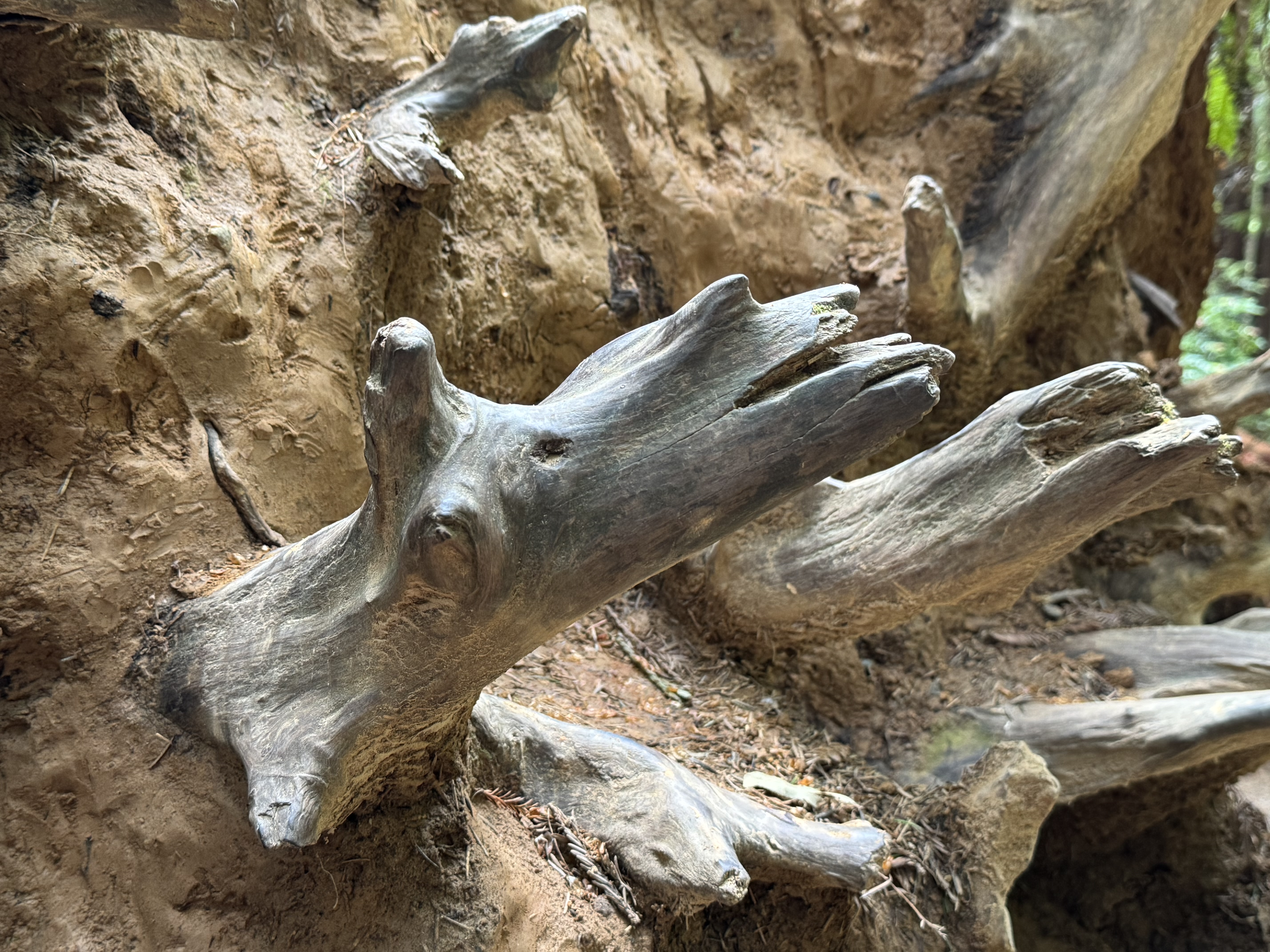
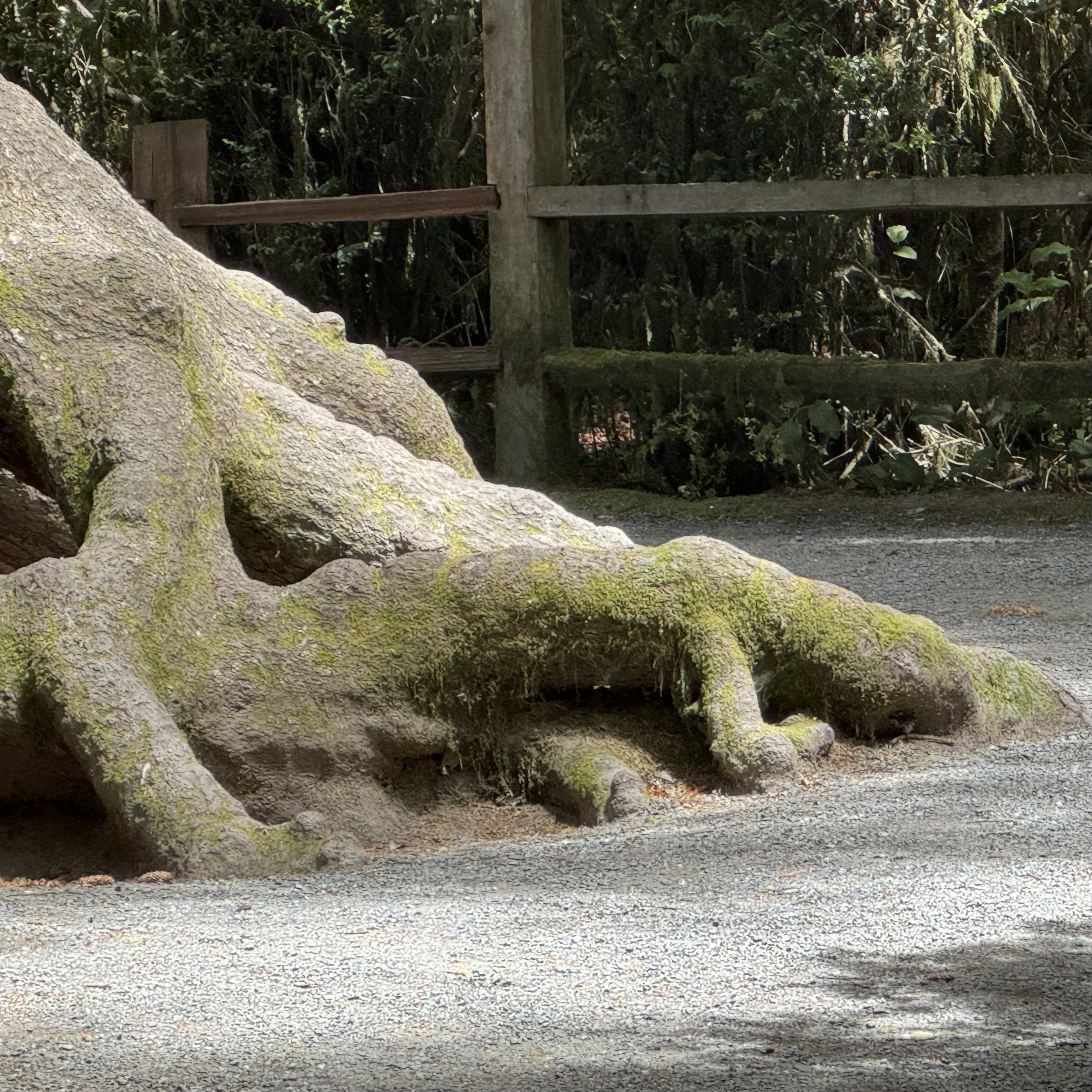
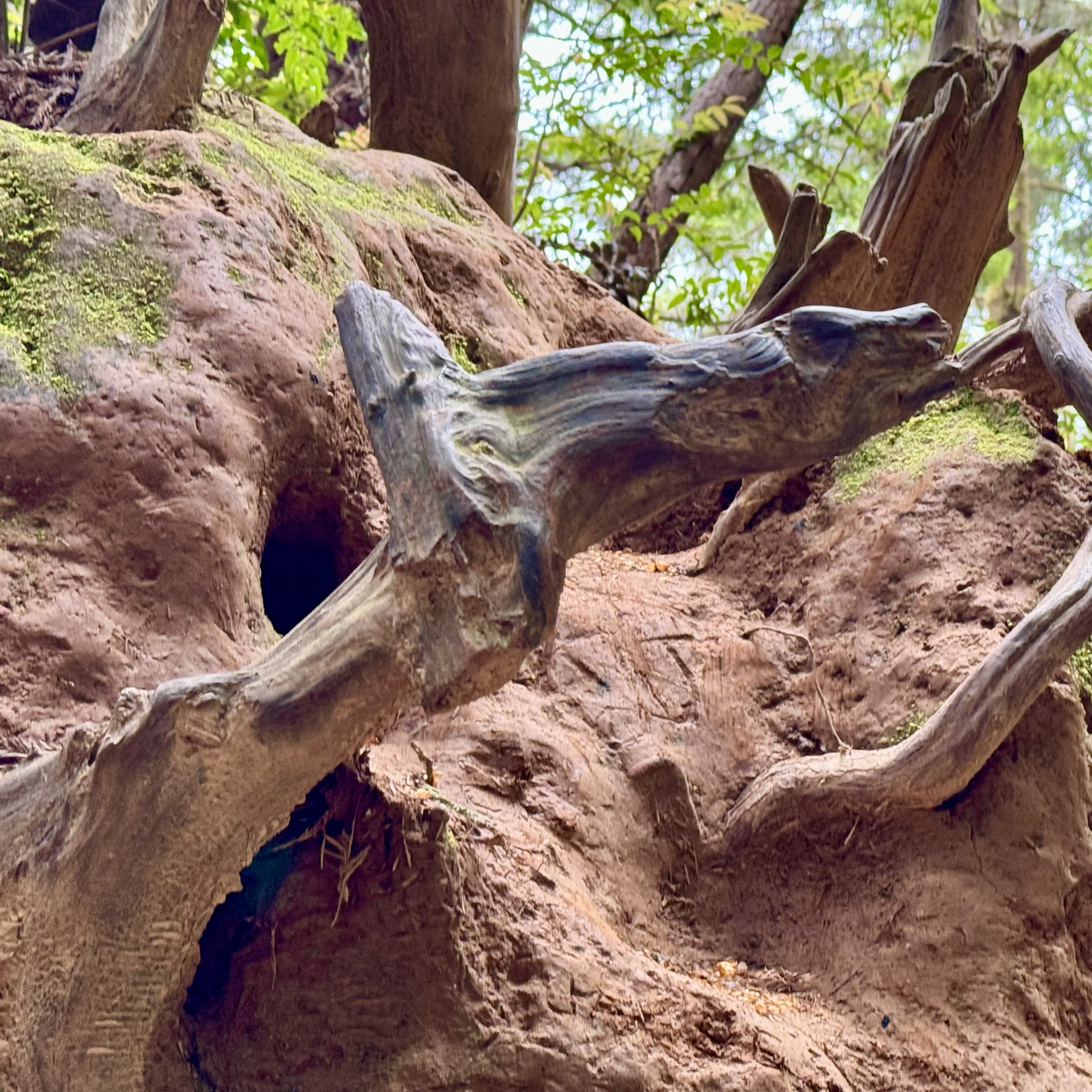
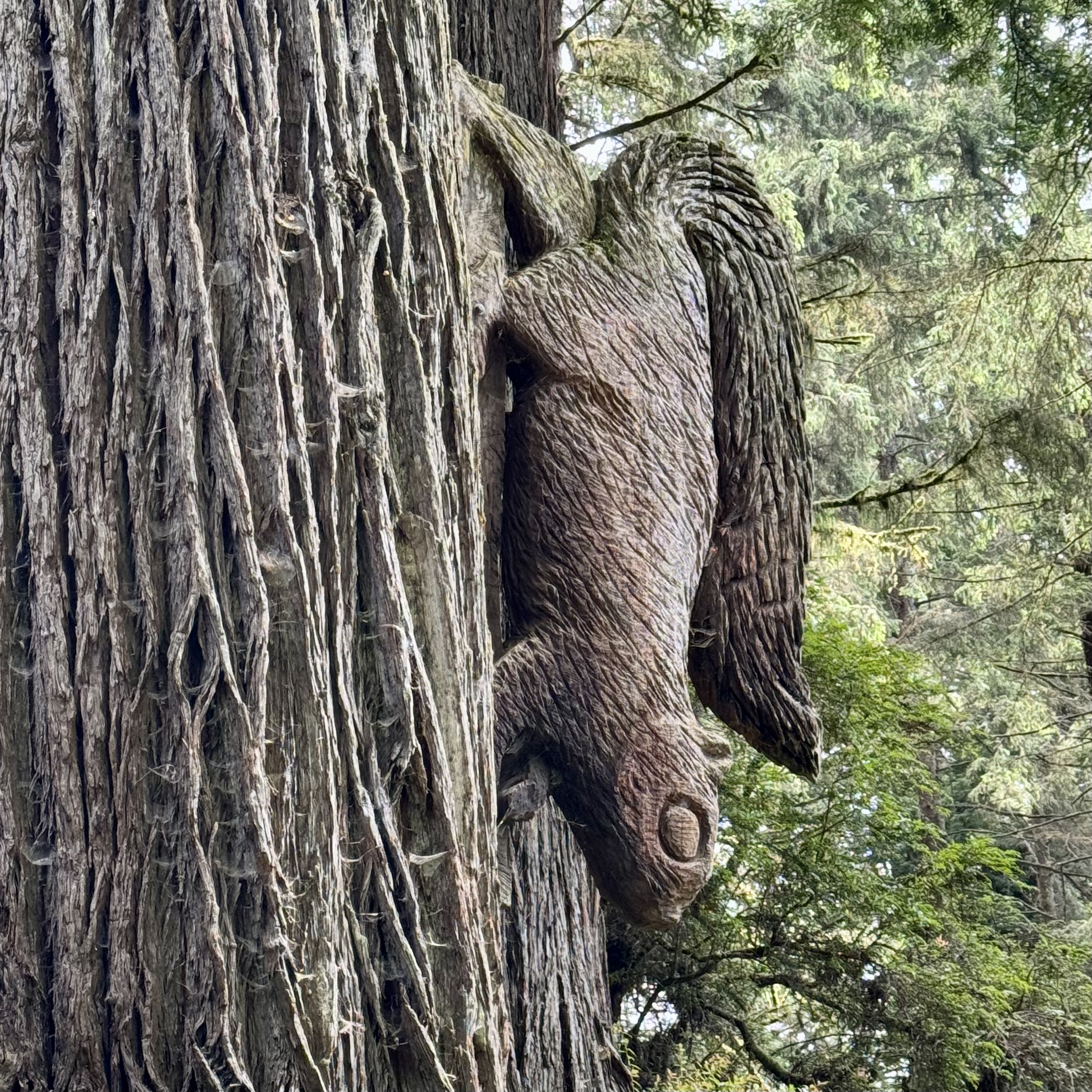
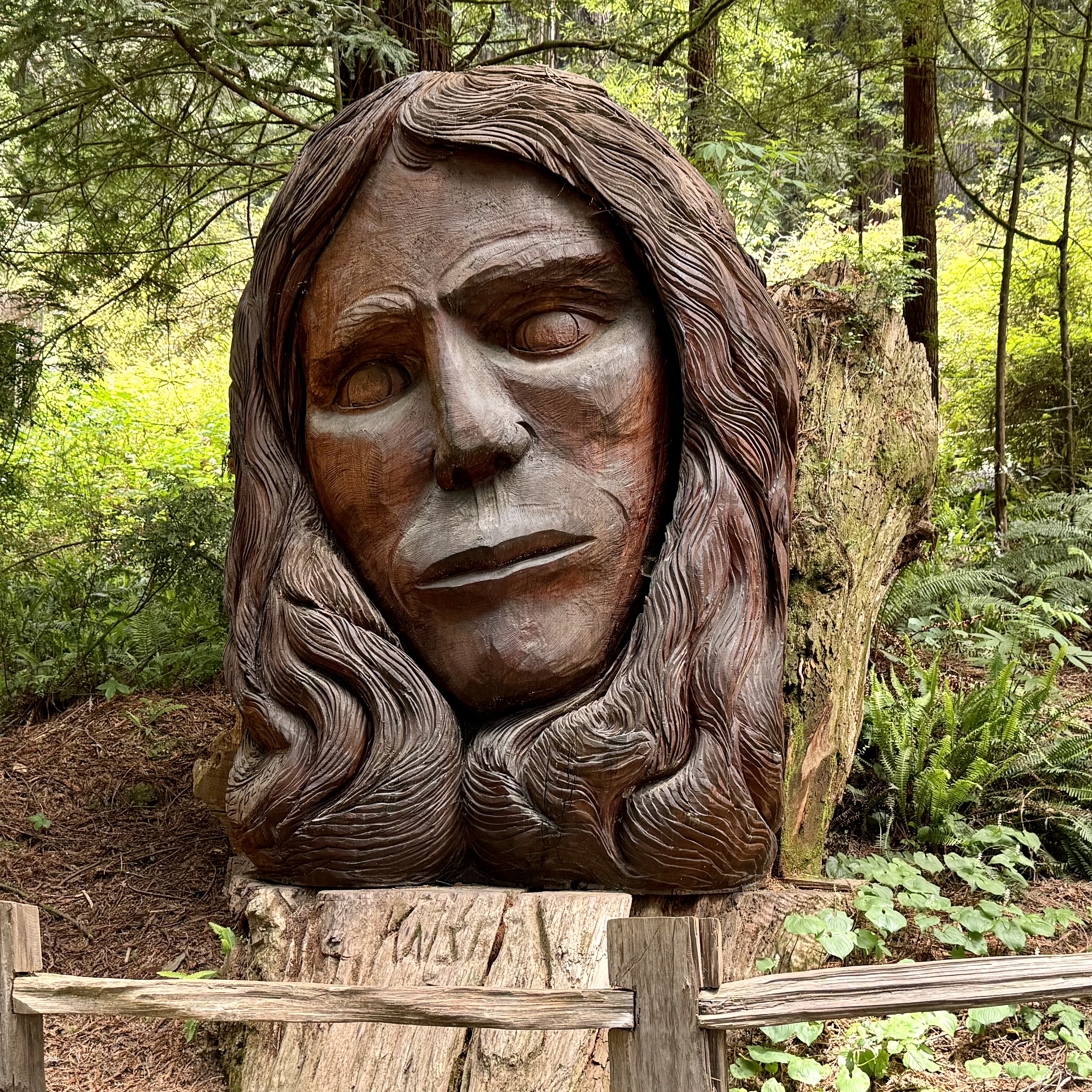
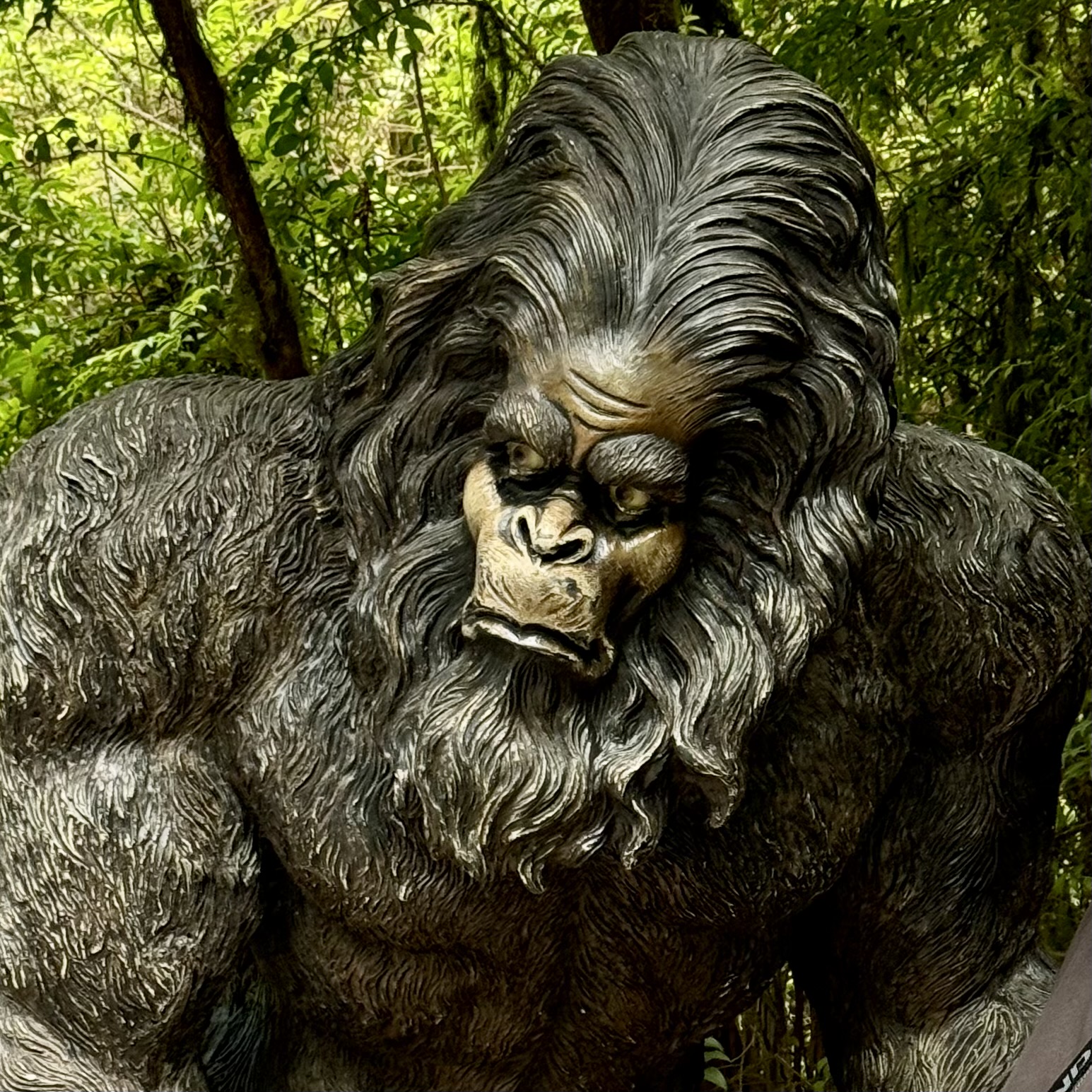
I never quite figured out what the “Trees of Mystery” were. But I let my imagination run wild , searching for some wildlife. Good fortune was with me for I spotted numerous wild “creatures” sculpted by the forces of nature or perhaps by the axe of Paul Bunyans but definitely not of the living variety. Can you spot the giraffe, alligator, Paul”s girlfriend…..

Not to be a total “Debbie Downer,” I enjoyed my visit  but after about 1.5 hours I had had my fill and we were off to what was for me a real experience of redwood old growth trees on part of the Brown Creek Trail in the redwood forest of  Prairie Creek State park, arriving via a pleasant drive down the Newton B. Drury scenic Parkway. I had no desire or need for human entertainment extras.  

Choosing not to patronize the hotel restaurant and preferring to soak in the sea breezes from our balcony,  a stop at Safeway for our own “room service” offerings was in order. After a delightful day, I spent a quiet evening of  breathing the salty air, listening to the melody of the waves, mesmerized by the ebb and flow of the water  and captivated by reflections of the sun on the panorama before me. 

A visit to the Battery Point Island Lighthouse, a historical landmark,  the next day required being tuned into the tide charts as it was only at low tide when one could traverse the isthmus to the Lighthouse without wading through shifting sands, rocks  and the chilly chilly water. So we were out and about  around 7;30 am to catch the first low tide of the day. The harbor at Crescent City was booming during the mid-1800s due to massive redwood trees being harvested and loaded onto ships to build San Francisco and the US Government built a series of lighthouses along the coast.

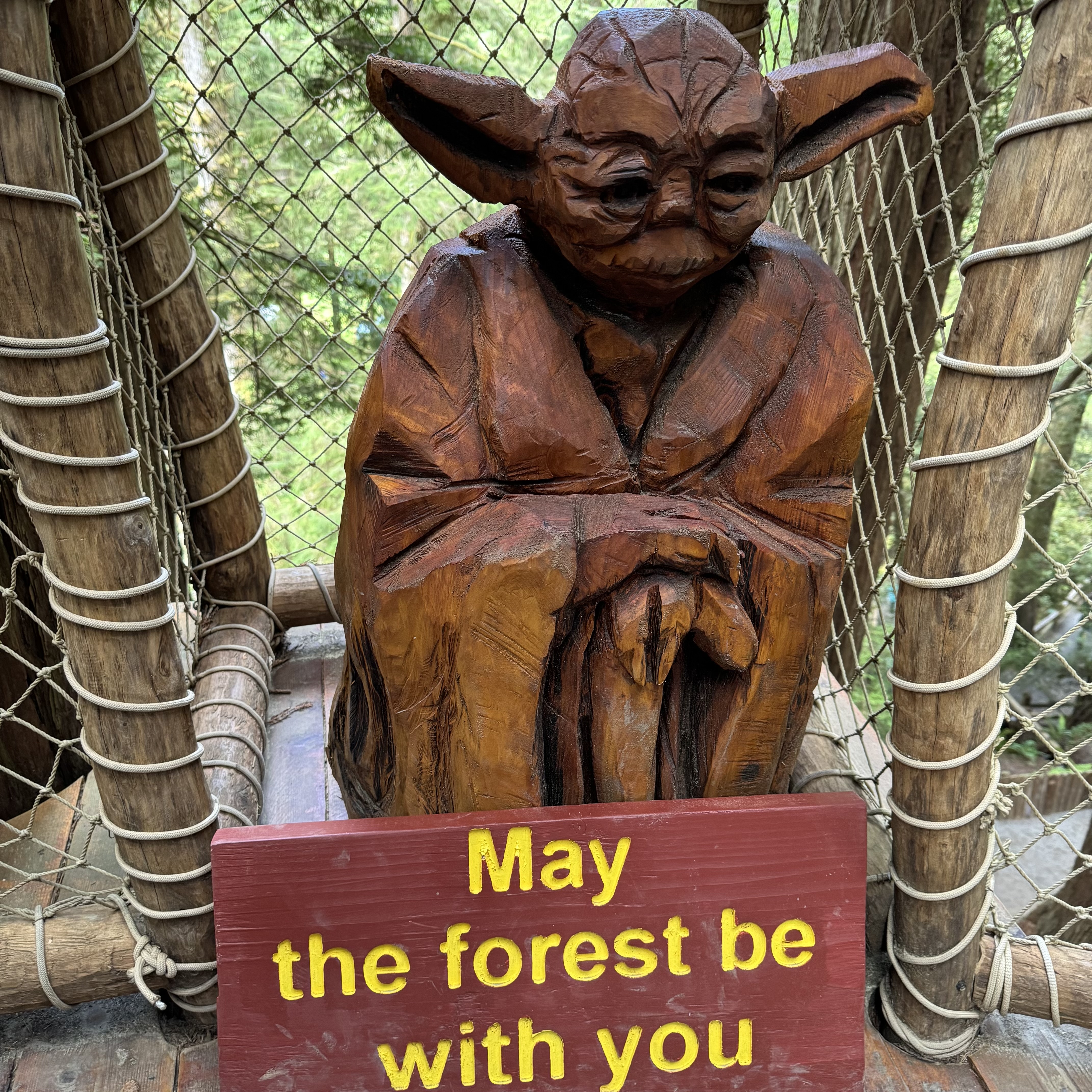
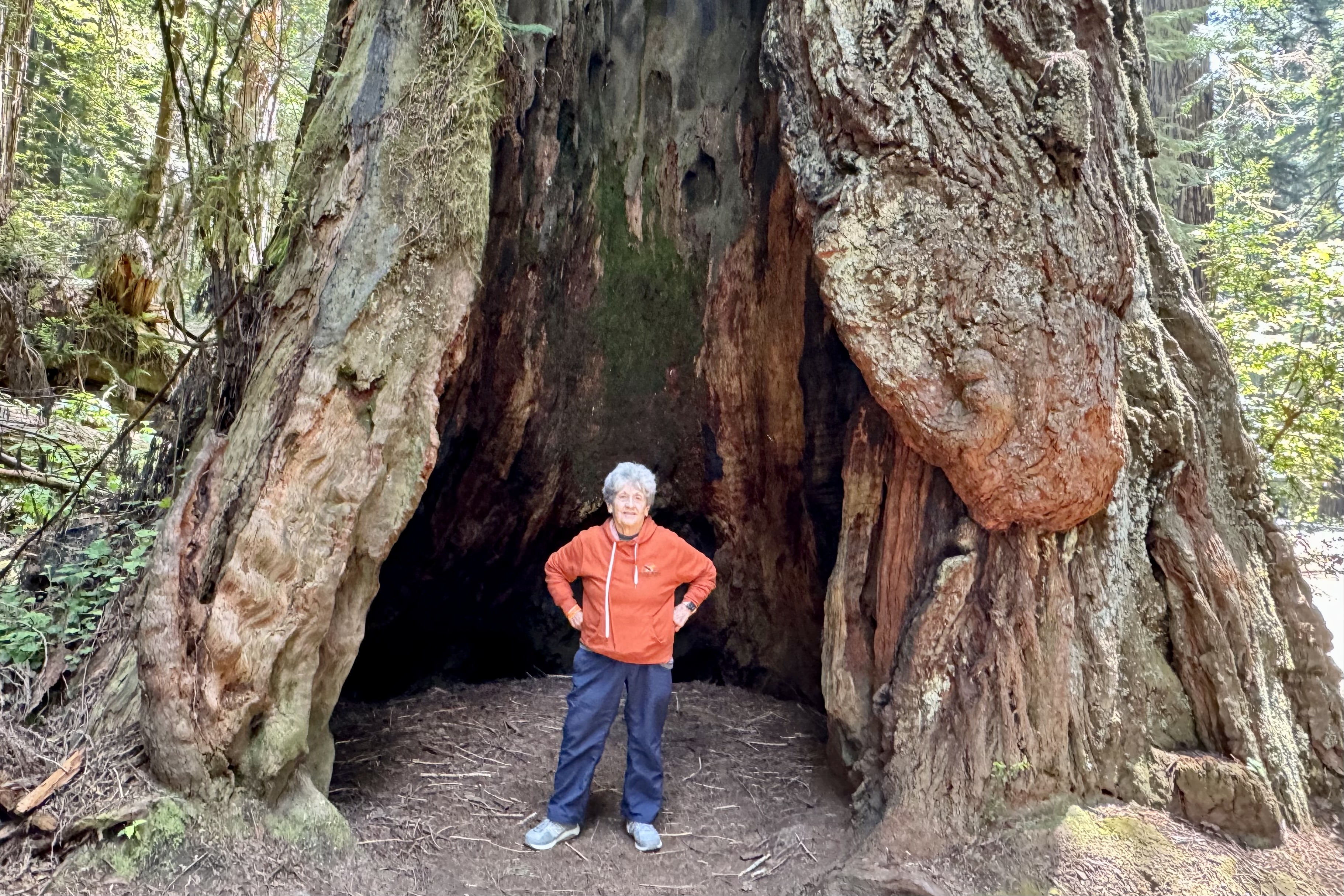
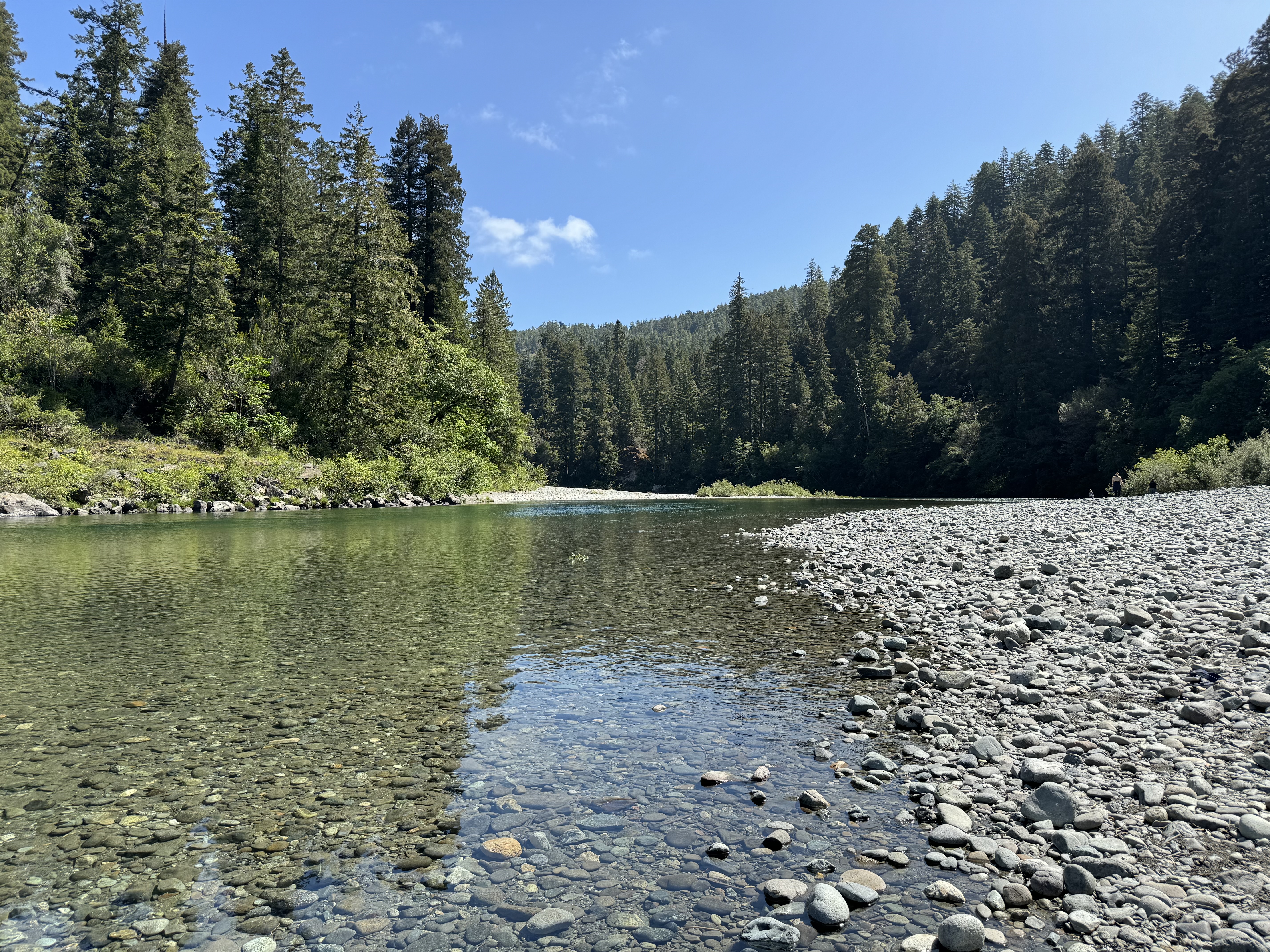
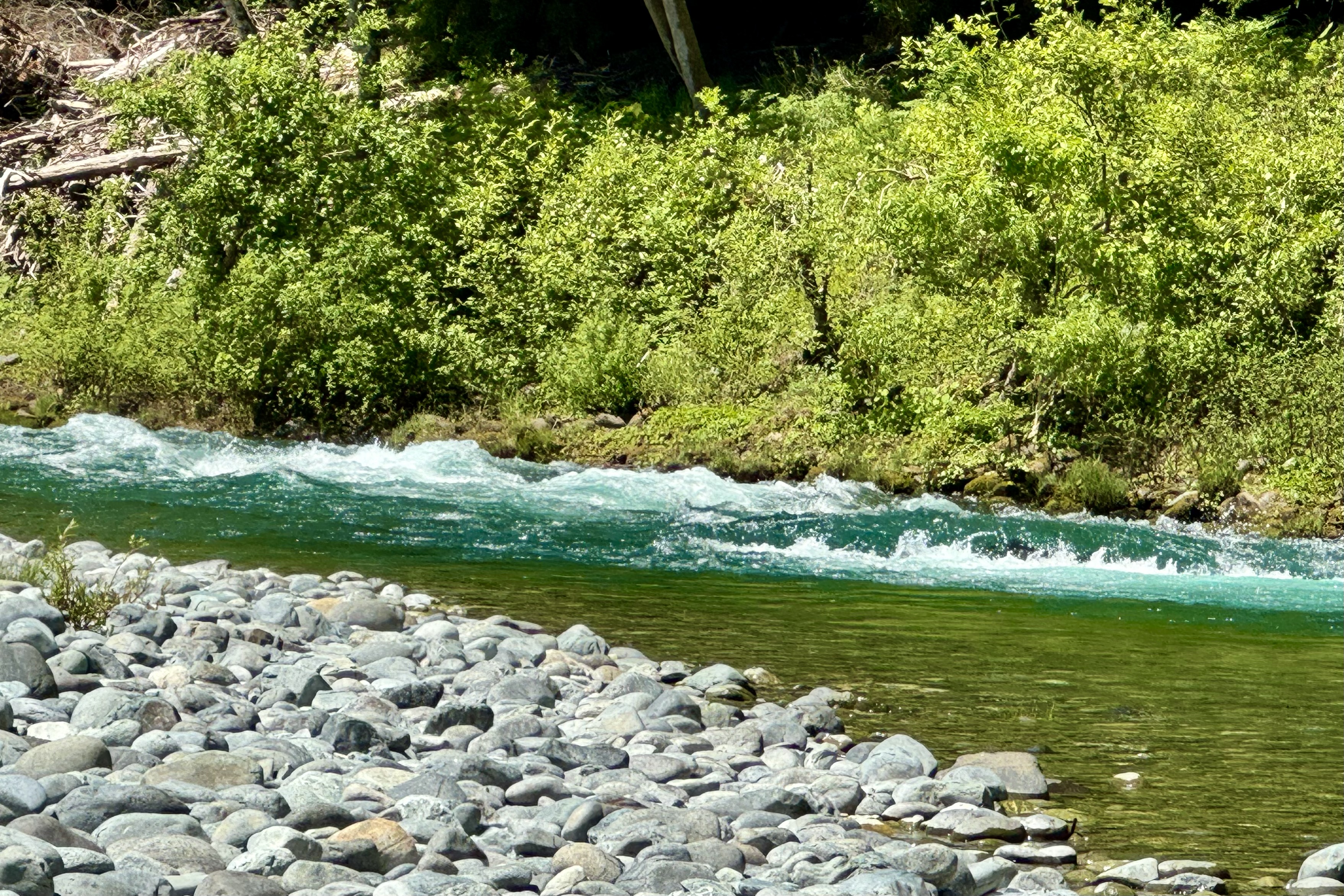
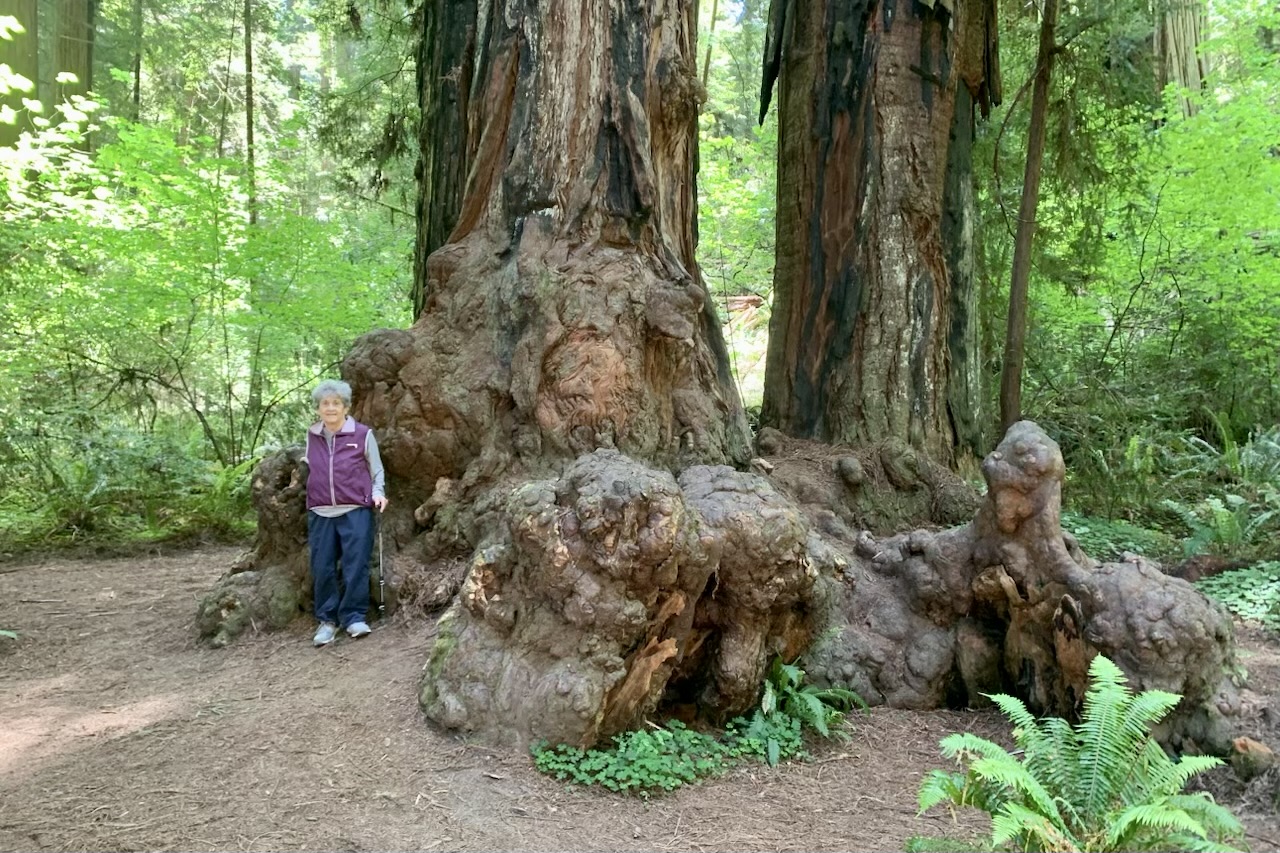
Though I would have liked to tour this historic facility, after enjoying the quiet  of the early morning seascape, I was eager to be on the road. to the Jedediah Smith Redwoods State Park and explore the Stout  Memorial Grove and other notoriously  massive trees. Being rather clueless about how to get where I was going, the first stop ended up at the South Fork of the Smith River and the Jededhia Smith State Park Nature Trail, which definitely was a good destination to be lost in. From there we headed over and about and around the forks of the Smith river to reach the famous and infamous, loved and hated Howland Hill Road. Howland Hill Road was a filming location for “Star Wars: Return of the Jedi” and is considered one of the most scenic drives in the Redwood National and State Parks.

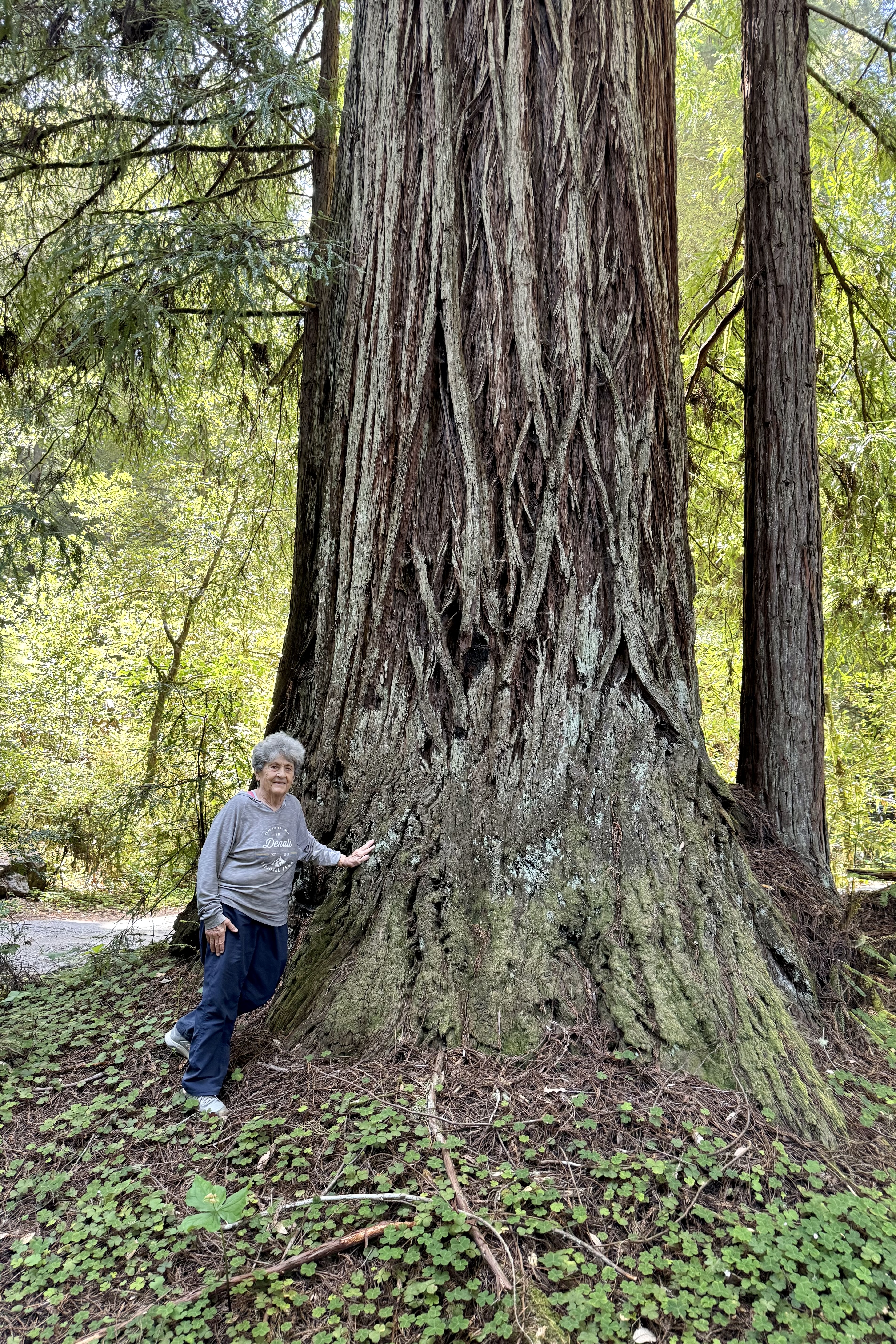
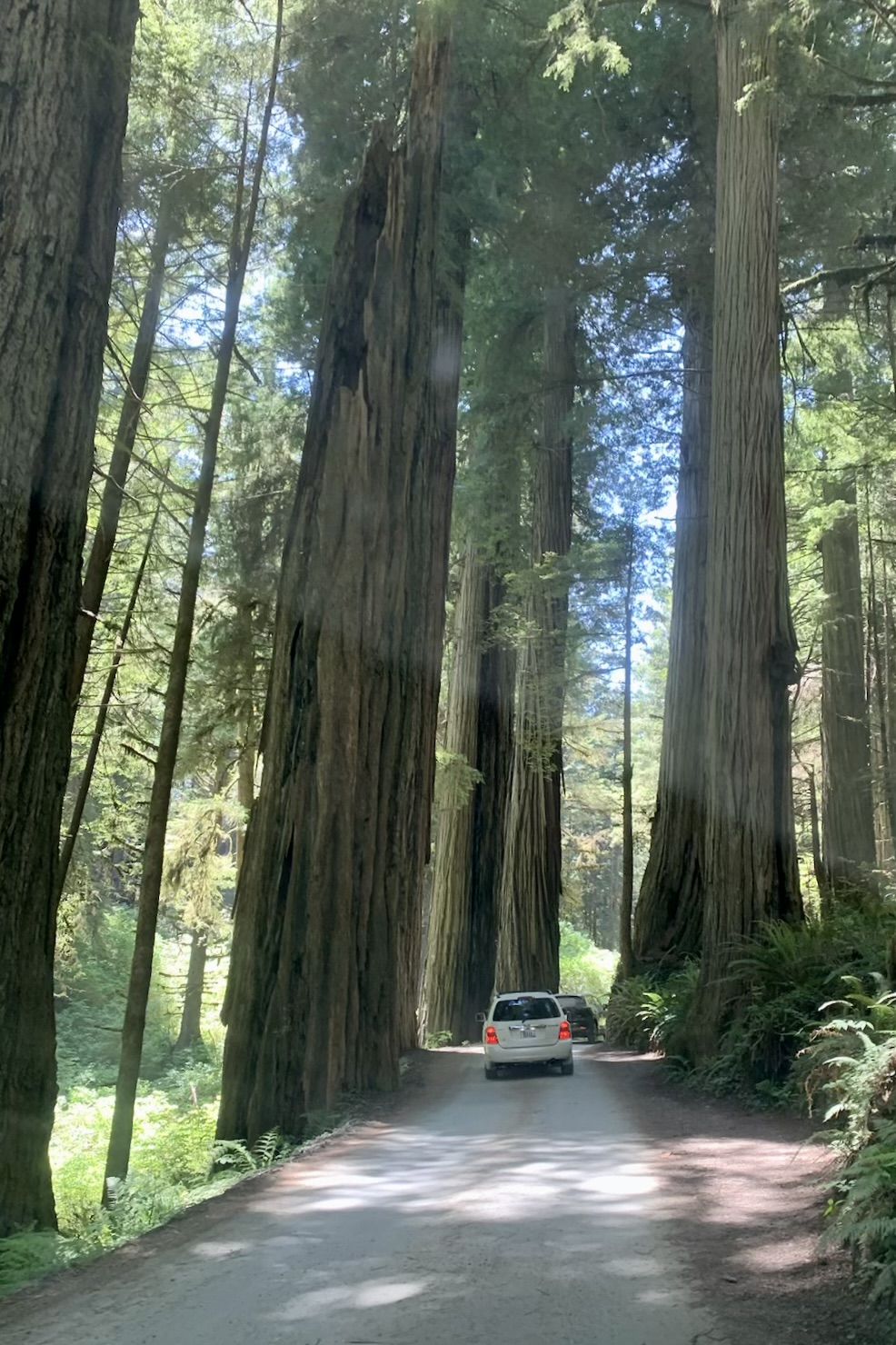
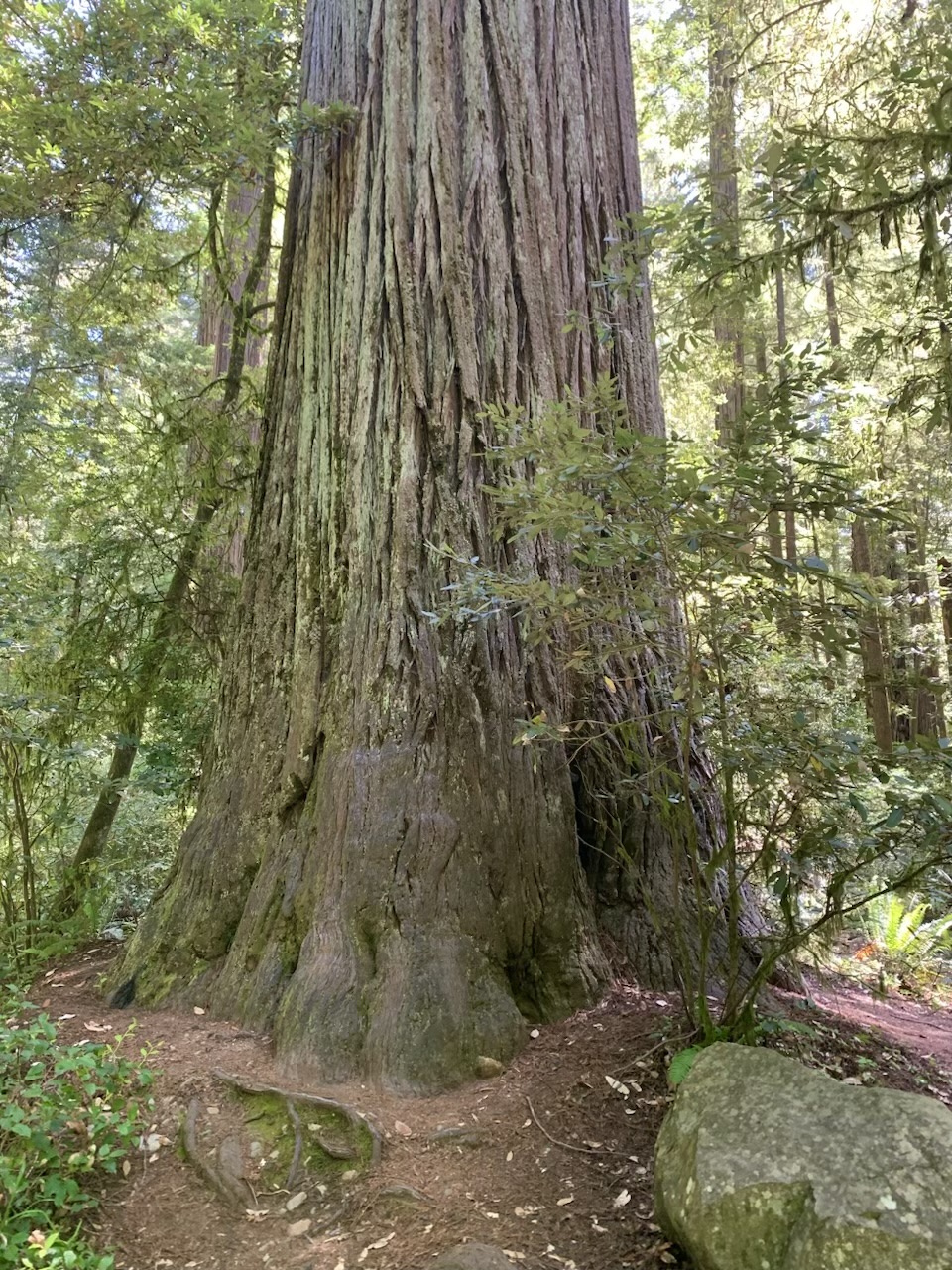
 If you can’t tolerate dust and  squeezing your shiny unblemished car between massive tree trucks, this is not the road for you. Part of this 10-mile road was once a stage coach road and my take on it is it hasn’t seen many  upgrades since that era. Most of Howland Hill Road is NARROW. It is a  non-tarred surface, single lane thus accommodating one car,  but naturally this is a two way road so one is required to make liberal use of the many pull-outs. It is about as intimate as one can get with a redwood without getting out and hugging it and it is akin to walking a path through the redwoods except in a car. Since this was a Sunday and Memorial Day week-end with halcyon weather, a myriad of folks also had their brilliant idea of driving the path of an old stage coach road so we pulled over and out again , over and out again and again. The road is not recommended for RV’s but there are always those individuals who believe they are the exception. It was as if they were driving a Conestoga Wagon on a path meant for a horse and buggy. After a wonderful hike of the Stout Memorial Grave, I opted out of stopping at any more trail heads to visit massive trees as the string  of cars parked on  the road near  every trailhead was extremely long. Walking the distance to the trail head would be akin to assisted suicide by the driver gawking at these very tall tree and oblivious to me on this road shrouded in a cloud of dust . P.S.  I absolutely loved the experience of driving this road. 

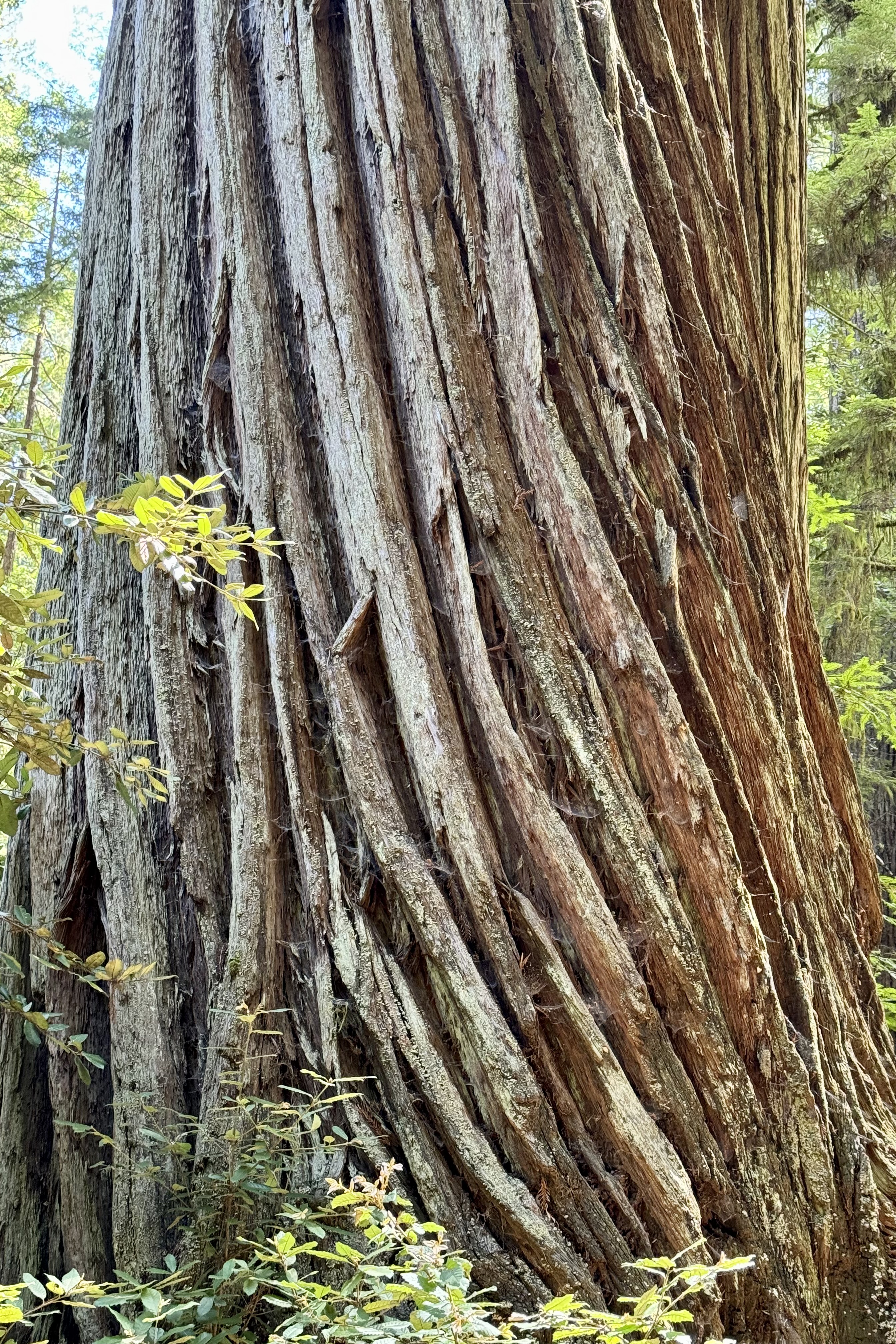
One thing of particular interest to me was the number of fallen trees. I subsequently read that between 2010 and 2020, a lot of big trees fell along the northern edge of the grove, where it borders the Smith River. Now the trail passes a nearly continuous string of fallen giants and the exposed roots of these uprooted Redwoods , which  in many instances remain intact.  One can observe  the intertwining web of redwood tree roots. These roots create a mesmerizing network that supports the towering giants and fosters a unique form of cooperation among the trees allowing these trees to withstand powerful winds and storms. We humans could learn a few lessons from this tree colony.

Having emerged from the Howland Hill  extreme adventure drive,  I swung north to Tolowa Dunes State Park and  Point St. George which is  located on the land of the Tolowa Dee-ni’. This is another area  with a very tragic history–because these are the ancestral lands of the Tolowa people, whose villages were attacked by settlers in the 1850s. The Dee-ni’ Holocaust began in California in 1851 with the goal of a war of extermination to continue to be waged between the two races until the Indian race became extinct. There was an  appropriation of one-million-four-hundred-thousand (1,400,000) dollars to pay vigilantes to destroy them under the slogan that rang across the land: “The only good Indian is a dead one”. A few hundred survived and were driven to concentration camps. Gazing across these ancestral lands yet again fills my heart with rage at the atrocities rendered upon native Americans in the white European settlers imperialistic   expansion of the West under the tenets of “Manifest Destiny “ – seeing their expansion  as a divinely ordained, moralistic assertion of American exceptionalism.

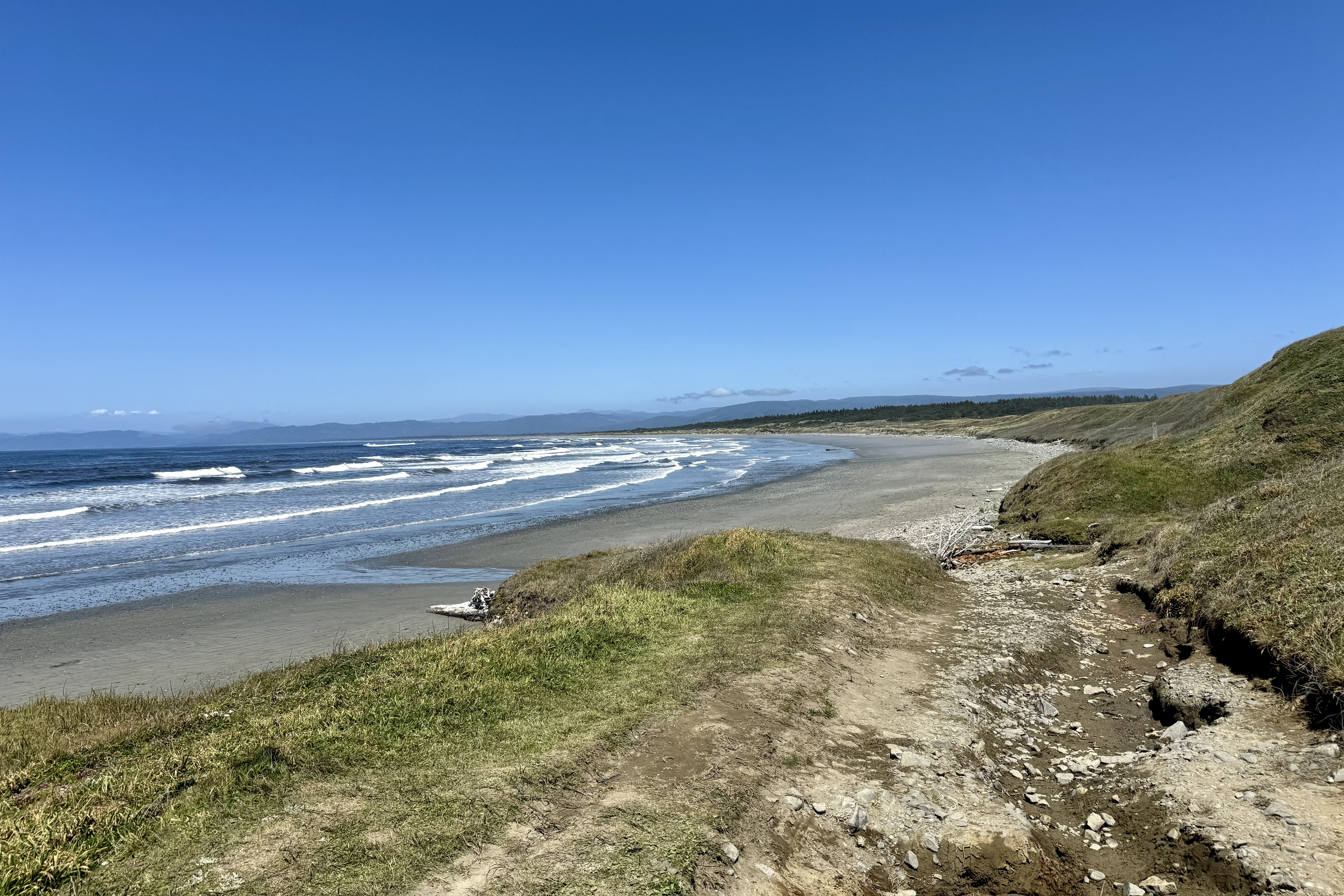
I drove until the road dead ended into a parking area and walked a path over dunes to the water and a relatively secluded beach bordered with driftwood. It was a nice contrast to the experience of the Redwood Parks to the south. Feeling sated by water and wood it was time to return to the hotel and enjoy the sights and sounds of the sea as it lapped the shore before me. A simple dinner of a Caesar Salad and clam chowder in the restaurant was a perfect end to a spectacular show produced by Mother Nature and Farther Time!.