To Tent or not to Tent, a Conga Line Hike and a Non-Creek

It is now July 13th and I left Ashland Oregon on June 28th on a mega journey to the coast of Maine and back.. But first a stop on my way to the  Columbia River Gorge in Salem OR to visit with my daughter and my grandkids, Kira and Connor.  After 2 fun filled days of pool swimming, good eats, grand dog walking and  an afternoon at the World Beat Celebration in the Riverfront Park in Salem, I bade good-bye to family at around 1:00 pm on Sunday the 30th.  I was headed off on  the “real” beginning of  an ambitious journey to visit the last six of the continental USA National Parks I had not yet been to. I would be out 63 days  with 36 of them tent camping  and of course no RV-ing for this former Girl Scout, Outward Bound graduate, and backpacker. I am hoping I don’t regret this stalwart attitude.  Given that I am staying in both USA and Canadian National Parks with no access to wi-fi and minimal if any cell coverage, posting blogs will be quite intermittent.

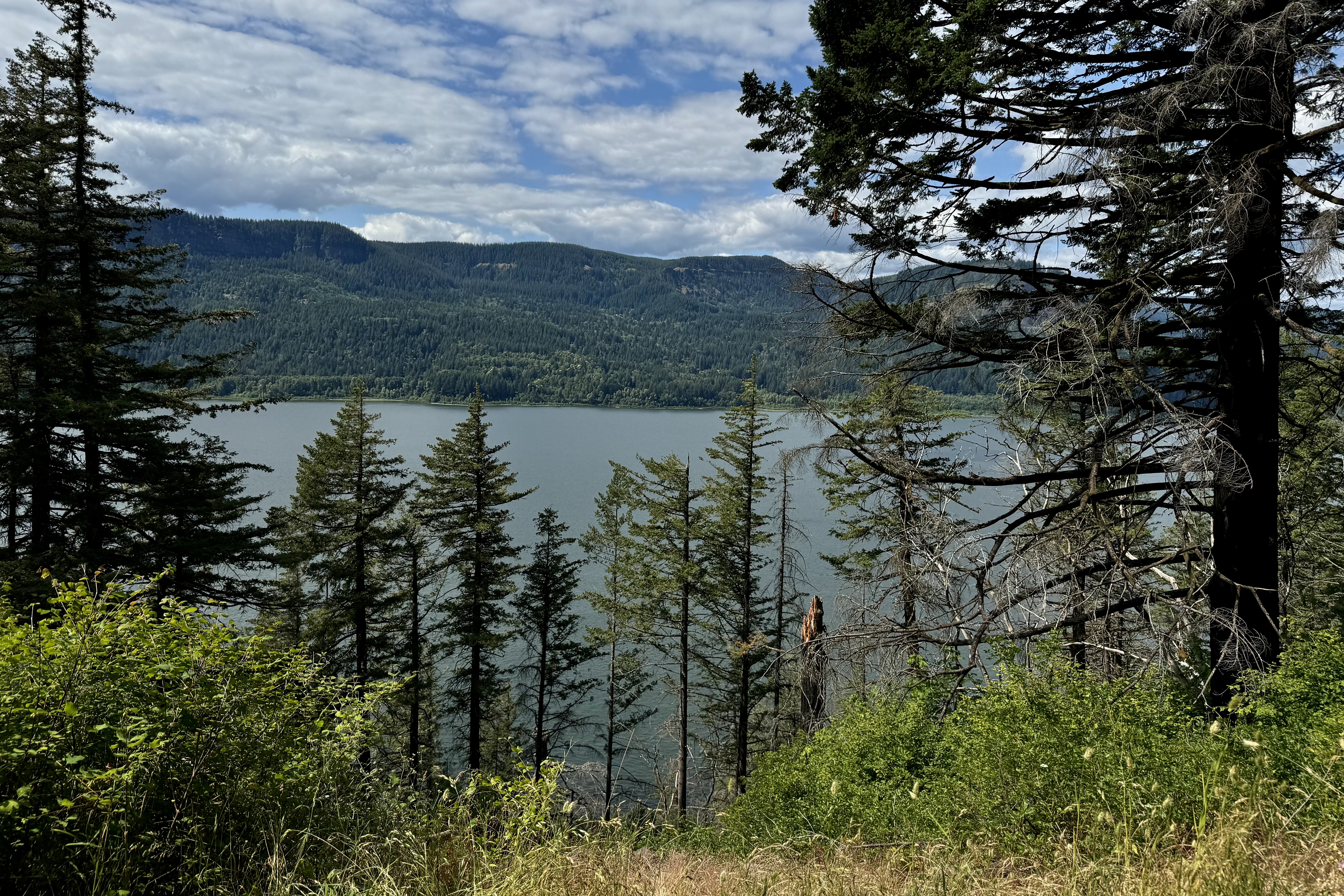
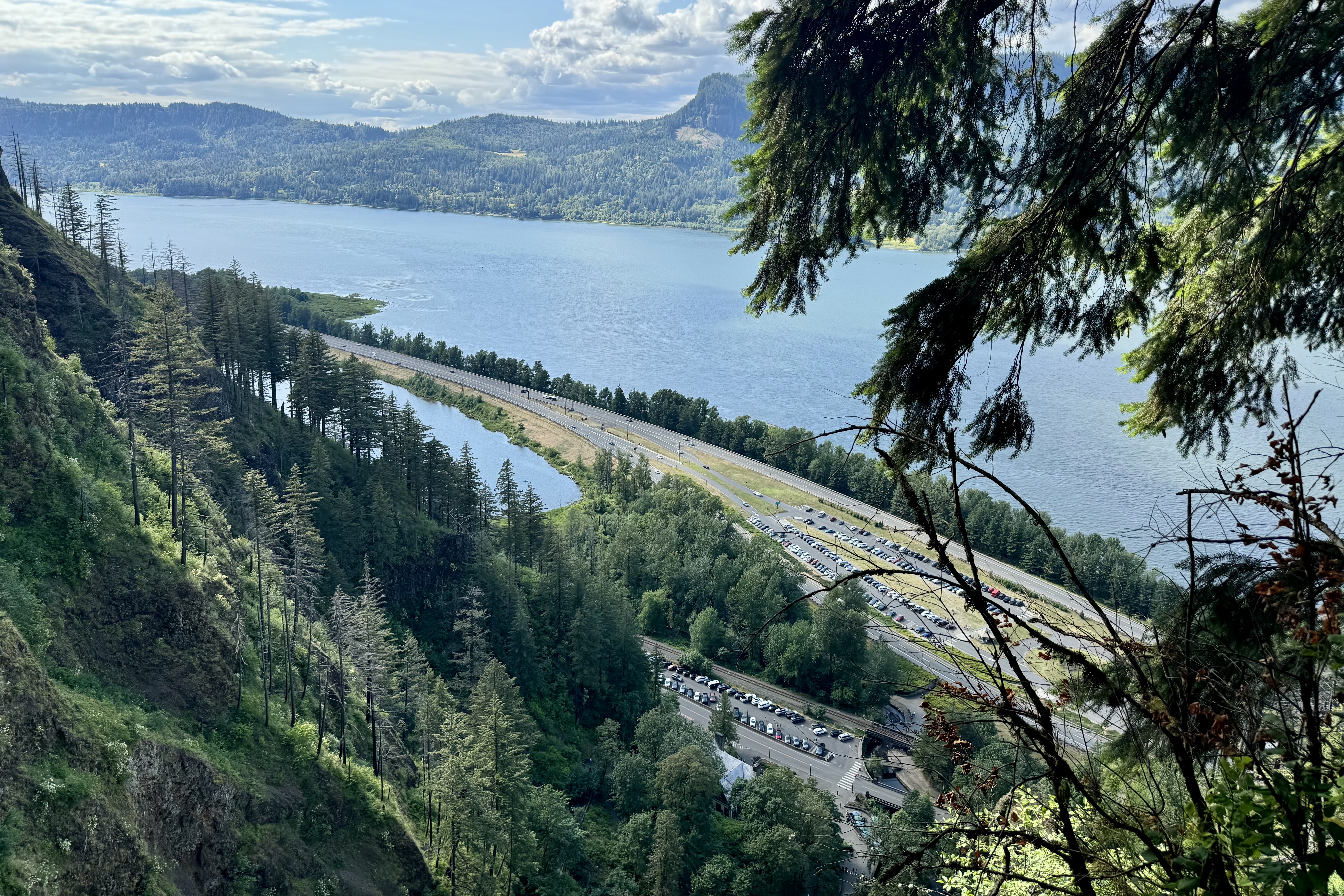
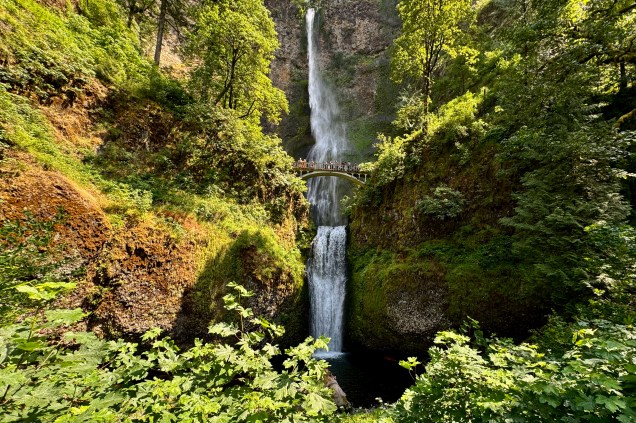
Since I would be traveling along the Columbia River Gorge, I wanted to visit Multnomah Falls, a very popular site along this corridor.  I was forewarned that there was quite  limited parking available.  So I secured a time entry permit that gives a specific hour you can enter the parking lot (though space availability was not guaranteed).   Driving the narrow highway heading east to reach the  falls,  I began to see cars parked along the road at all kinds of jaunty angles and pedestrians risking their life by walking along this squished road. I began to worry about parking. Just opposite the  entrance to the falls was a sign for parking and I didn’t know if this was the place I had reserved but when the  attendant said there was space and the parking fee was 20 dollars (this was a private lot). I figured  for $20.00 and a whole lot of convenience,  I would pony up the fee.

Being mid-summer and the week-end before July 4th,  I think half the population of Oregon decided to visit this falls and many taking the hike to the top of the falls. A very diverse cadre of people were all vying for a spot on the railing for a perfect photo op. I would join the mob but I knew realistically it was impossible to get the full height of the falls in a photo so even though I asked an individual to take a photo of me, it was awful but decided it was not necessary to prove that I indeed had been there.   There were hiking options and the hike up to the bridge was . 2 mile and then to the top 1 mile.  I was game…not really anticipating that not only people but signs often lie ( a national pastime at this point in history) and my rational brain did not engage enough to consider that perhaps hiking to the top of the falls was not the sanest of plans.
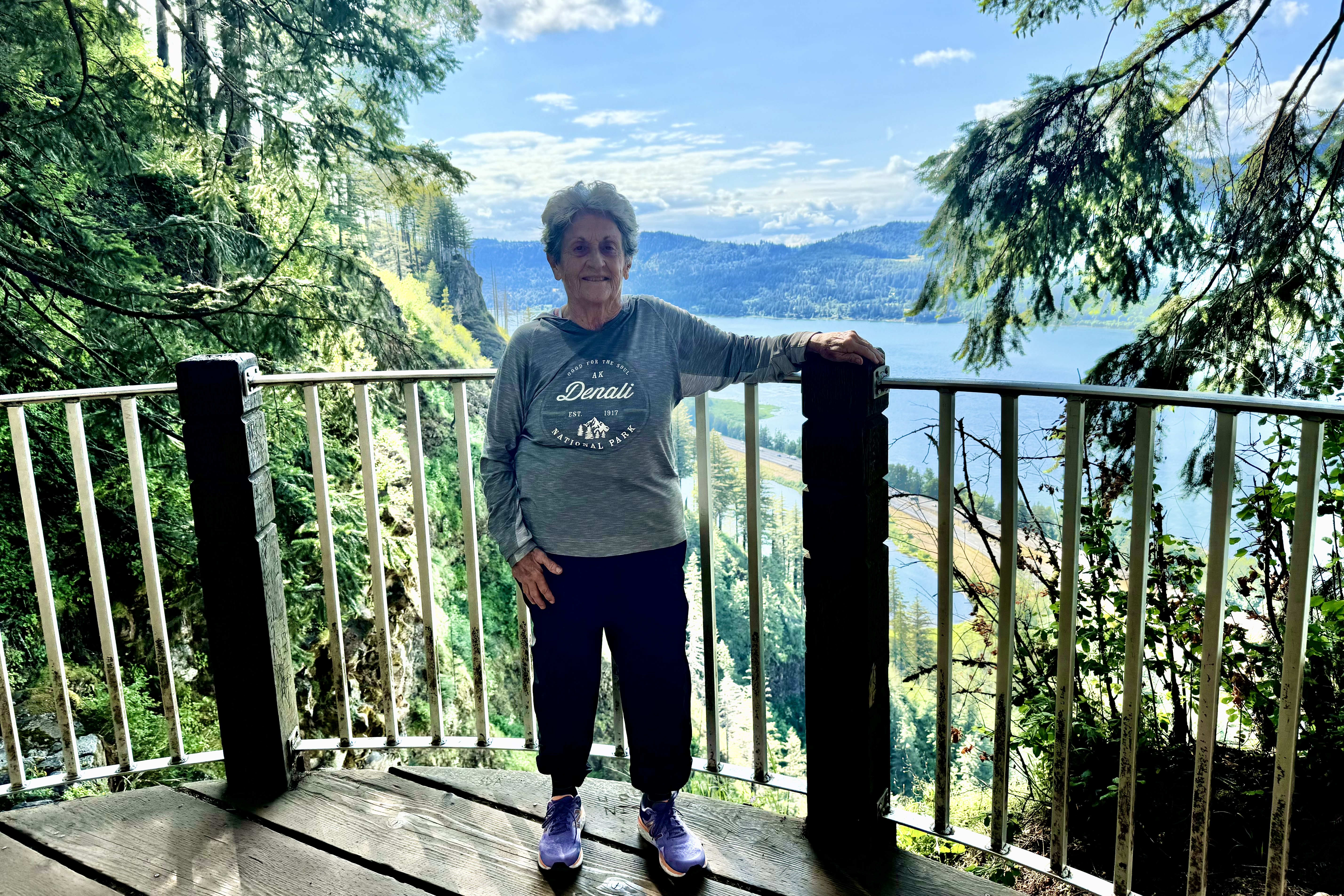
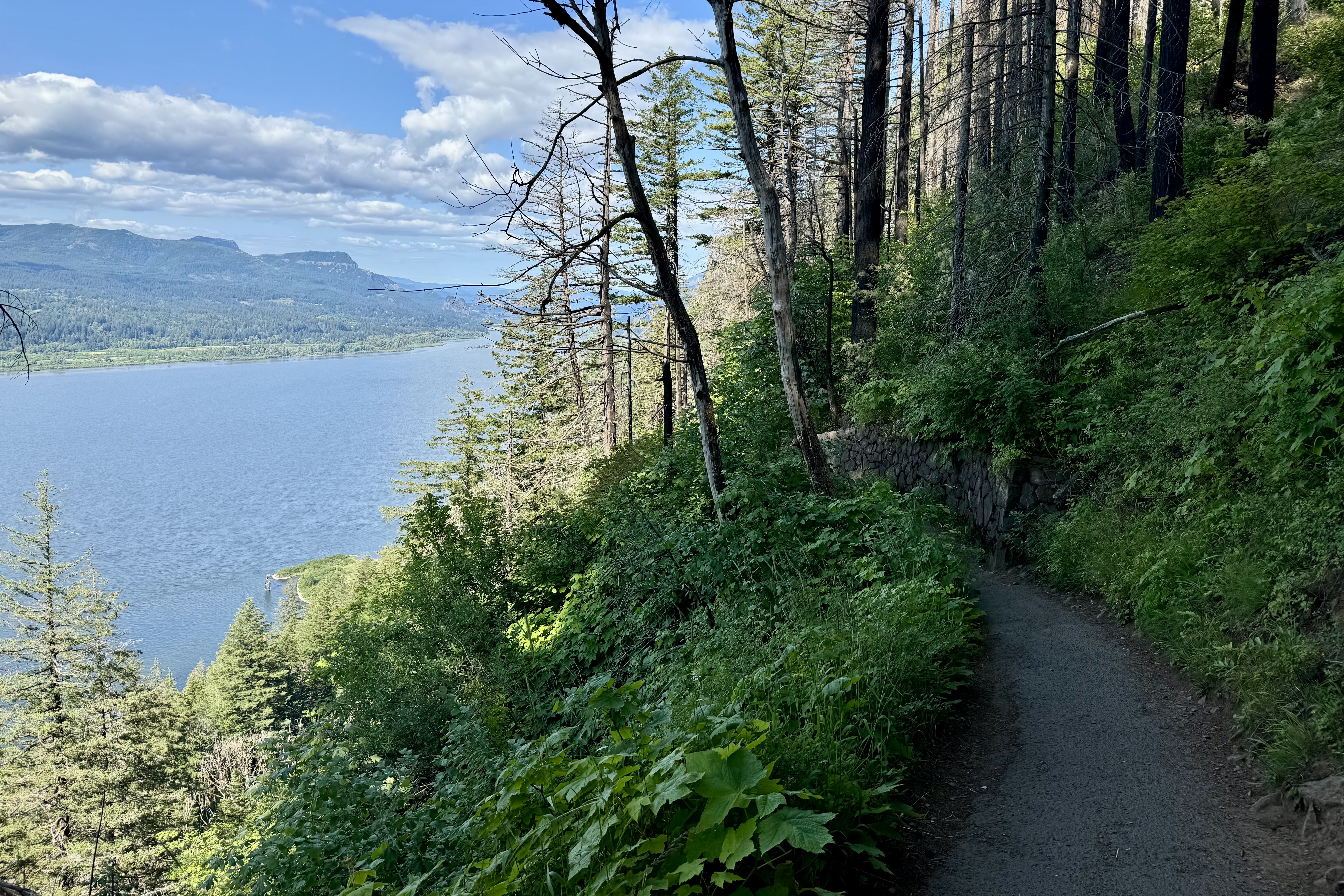
But not to be daunted, I trudged on up and up and up around the 11 switchbacks at the hottest part of the day with numerous hikers inquiring how old I was and was I really planning to hike to the top! It still didn’t register that perhaps I was probably taxing my body to its limits. Glad this wasn’t a 5K race as this 5K hike took 2 hours 17 minutes and a pace of 44’28” per mile The finish line would have been removed and the venue deserted.Once back at the trail head, i was exultant that I had the made a very wise decision of parking close. My legs were aching and spent.

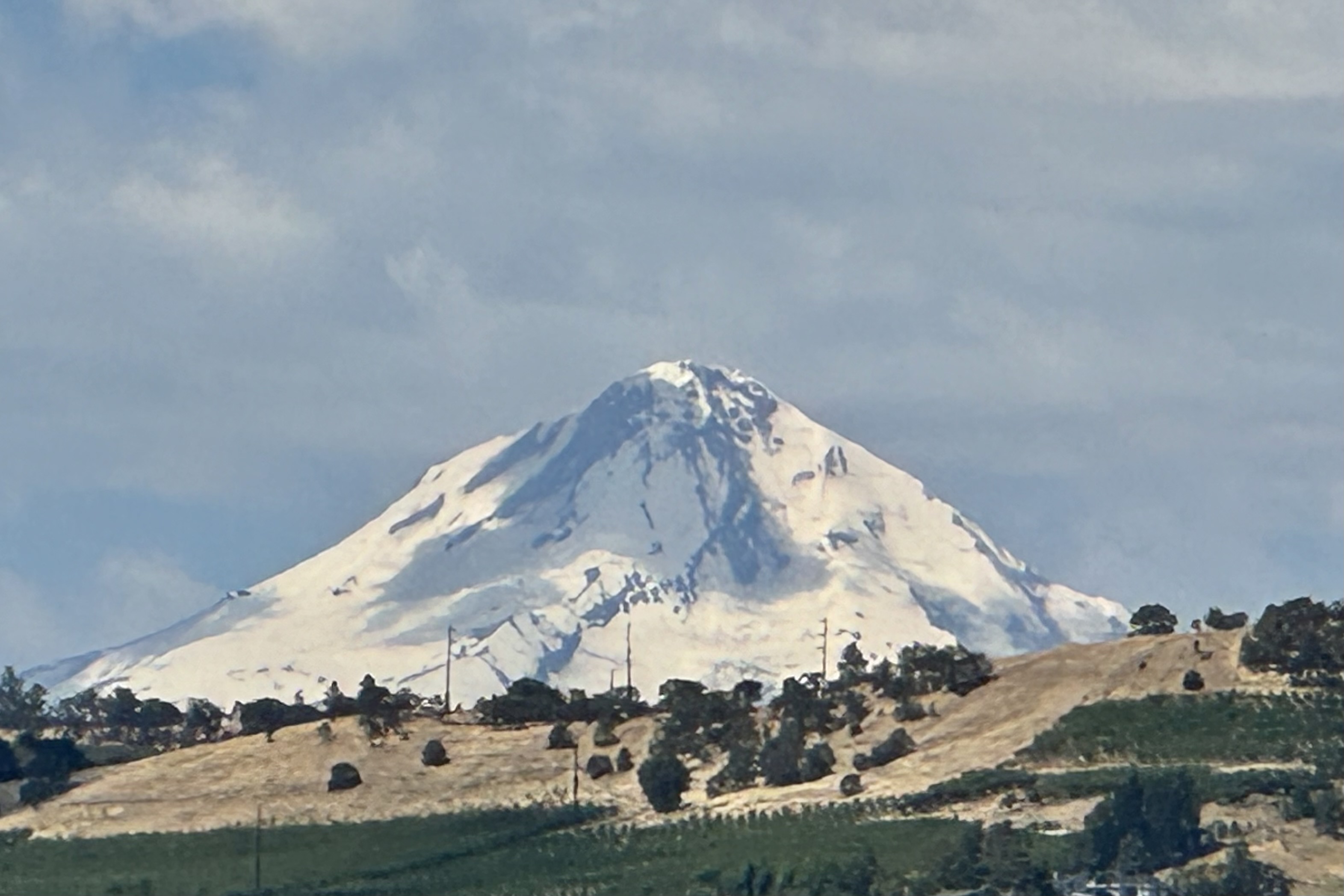
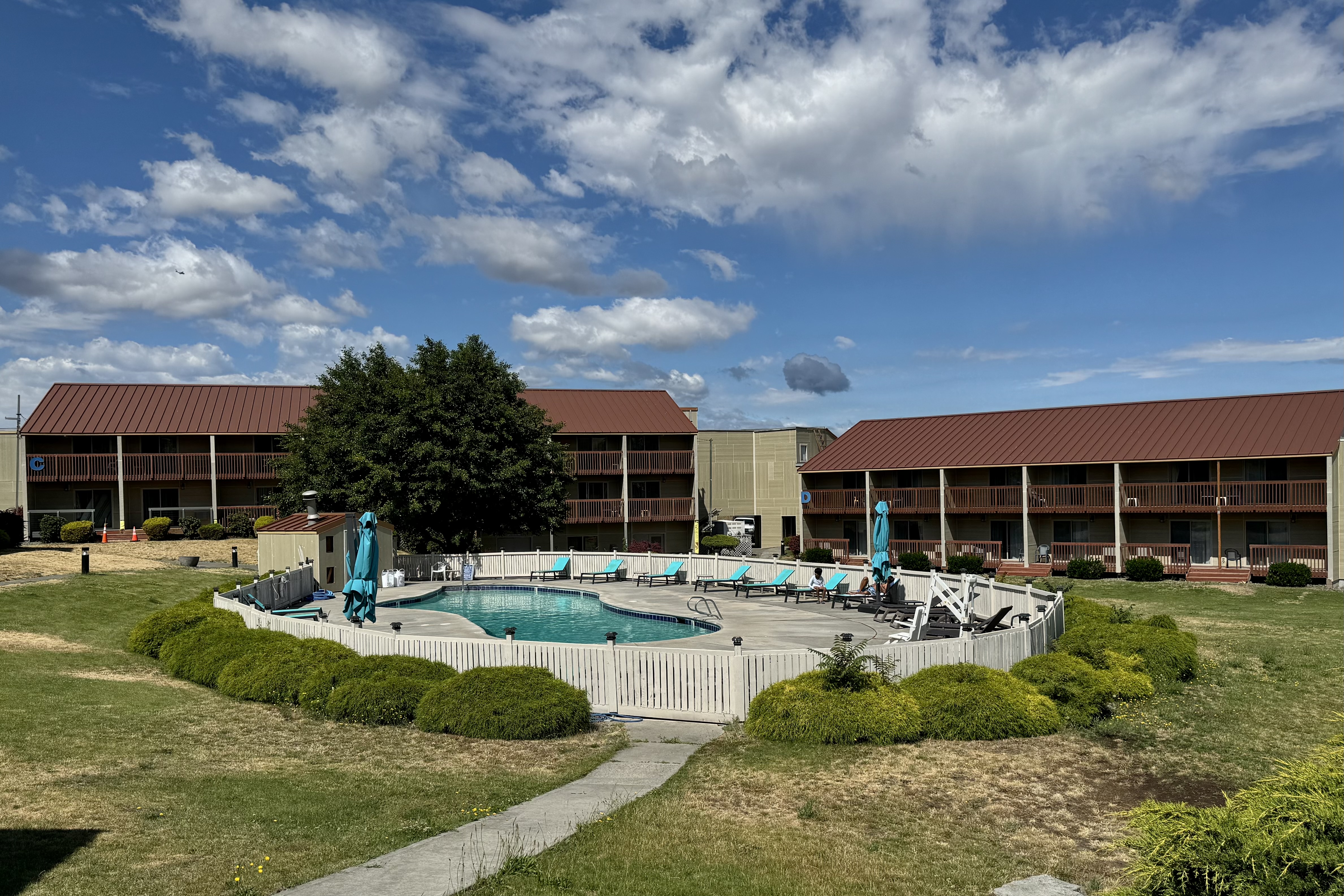
 I headed down the historic Columbia River highway, made  a quick stop at Horsetail Falls, and on to The Dalles and a night in the Columbia River Hotel. I was patting myself on the back for cancelling my camping reservation along the gorge since the site description warned of the high noise volume there from the highway next door. The loud highway rumble was the background music  hiking to the top of the gorge. So I was glad for a comfy and nice quiet hotel room until I discovered the air conditioner did not work. Since I did not want to pack up and move to another room I decided to tough it out since I needed to “practice” dealing with the hot and cold temperature options I would encounter in my tent. Besides I was not sure I could walk one more step. The next morning I eased into the day by walking the grounds, observing  the Dalles and marveling at the clarity of the 11,217 feet Mt. Hood in the distance before I headed out to  travel  along this canyon that “houses” the Columbia River. 

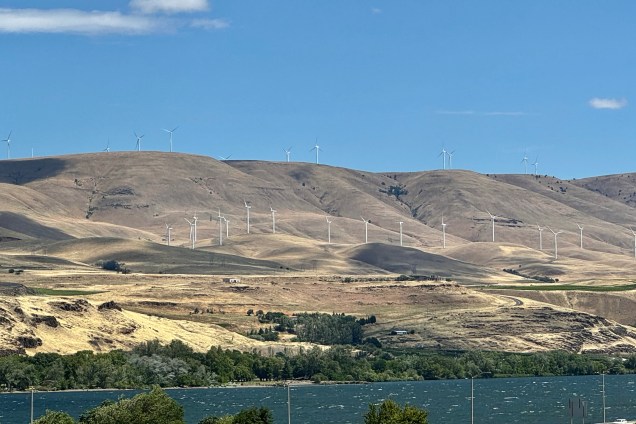
The western gorge eco system of lush green forests gave way to a semi arid eco system — a mosaic of mostly treeless hills\ peppered with sagebrush, sporting an array of tans, golds, browns and rusts. There was a certain beauty to this National Scenic Area if you can reconcile the hydroelectric power plants serviced by the 4 dams (Bonnevile, The Dalles, John Day , McNary ) of this section of the gorge with the concomitant high voltage transmission lines. Additionally in the last few years the proliferation of wind power as a source electricity has resulted in this area of the grassy savannah of the Columbia Plateau being dotted with windmills. I often lament the price our planet pays for our relentless need not only to survive but to increase and multiply and grow the domestic product index the huge need to consume, consume, consume ad nauseam.

The destination on July 1st was Beauty Creek Campground in Coeur d’ Aline. So far the drive on this trip has been nerve racking. For expediency it was necessary to take the Interstates which were abuzz with every assortment of cars, regular semi-trucks, semi’s with two or three trailers, wide-loads, self contained RV’s, RV’s pulling boats, 4 wheelers and an array of other conveyance. All were very much in a hurry to get some where or to start their vacation now. I, who promised myself to follow the speed limit on this trip, was the “little old lady” driving the Model-T surpassed by almost all but a very few other Model-T drivers. When I hit Kennewick heading up into Washington I was forever grateful that I did not have a Model T but an SUV with a screen upon which my iPhone displays the iMap route I selected and Siri tells me step by step the distance and which lane to be in…I have no idea how I would have negotiated the lanes and interchange that i would encounter to head up to Spokane. I have no desire to drive through the maze of horribly designed interchanges in Kennewick WA. ever again. I recall the AAA Triptiks of days of yore but one really needs a navigator who can understand maps and has a good sense of direction…but i guess back then there were less travelers and less complicate interchanges – mostly stop and go lights!!!! Once I neared Spokane the traffic was less frenetic and I was entering mountainous terrain and gaining a bit in elevation and arrived at Coeur d’Aline Beauty Creek Campground around 5:45.

I was pleasantly surprise to find #19 at the end of the line, with plenty of distance between campsites and nature’s “privacy screens” of thick vegetation and trees.  Reserving a campsite online is a crapshoot.  What you hope you are getting and what you actually get are often two different things.   I won at craps this time since many of the sites were in an open field. Though I reserved a creekside site, Beauty Creek was no beauty and no creek but a dry bed of stones and decaying logs,   This was to be my first go at setting up my campsite – new tent, new cot etc. and I was racing against an ominous looking sky ready to dump. I fumbled about but eventually managed while encountering only a few spatters of rain.  My weary body said enough.  Tonight is not the night to cook a hot meal.  So began the challenge of how to organize all of my necessary and not so necessary stuff in the tent and what stuff would rest better in the car. It began by tossing everything in all direction all over the car  which I had so meticulously organized prior to departures. The upside was I was able to select only the necessary items for this one night stand and not have to drown inside the tent in my piles of stuff. I’d like to report that I slept well in my new digs with my traveling Squishmallow., Banks the Badger. Banks loves to camp.
Hoh (not Ho, Ho-Ho or Hi-Ho) Rainforest and Olympic Park Hurricanes

When contemplating a trip to a national park in days gone bye, the major decision was which campground or backpacking trail was the destination and thus reserve accordingly. I would not want to venture that those option are completely off my radar, but my current bent is more towards a stay in one of the iconic National Park Lodges. My mission is to spend any inheritance that has the potential to be forthcoming to my heirs when I go misssing… hopefully several years down the road. So with an anticipated stay in Olympic National Park and a desire to focus on the western coastal area and the Hot Rain Forest, a given for me was to make a reservation at the Kalaloch Lodge, an historical building with minimal amenities at a 2024 inflationary price tag.
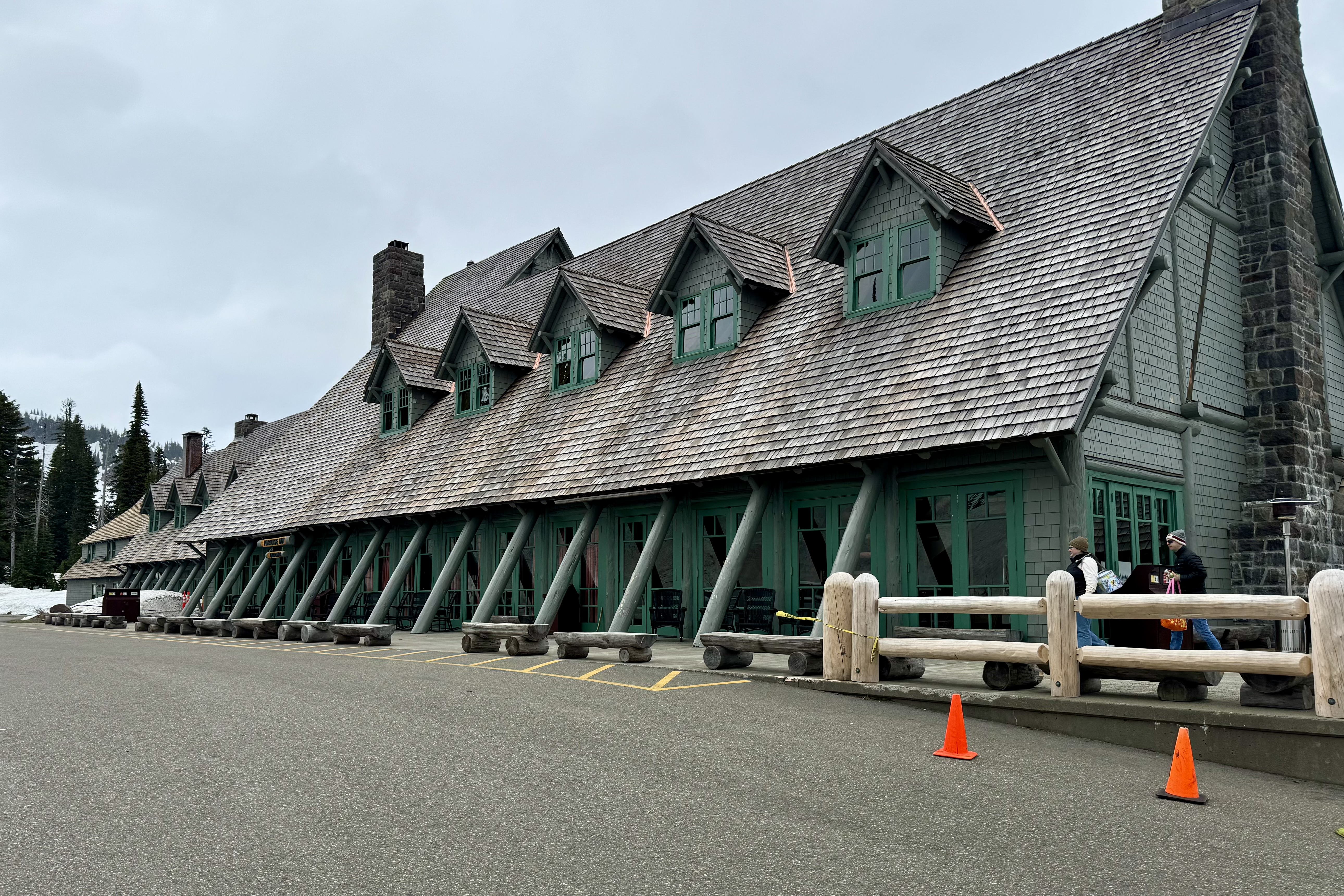
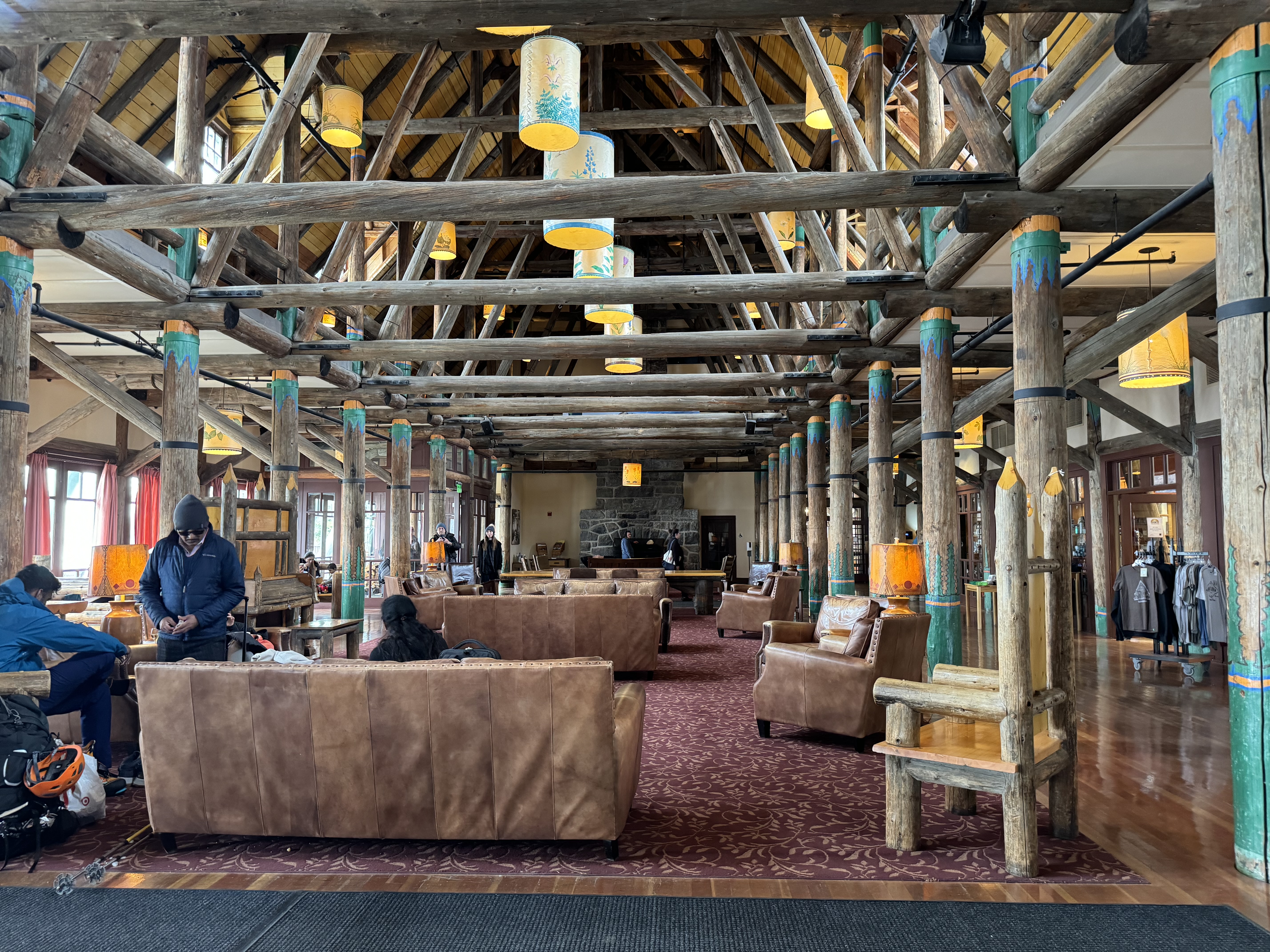
A note about park hotels and lodges: In order to preserve wildlife and wilderness, I think the best idea back in 1872 was setting the Yellowstone region aside as a national park thus beginning the creating of a network of parks. The next best idea might well have been the creation of the National Park Lodges. These structures were built with a vision of blending in with the environment via architecture that now has been coined as “Parkitecture. ” This is the rustic architecture that harmonizes with nature, – building something that fit right into place and not detracting from nature’s beauty. It features wood and stone from the area, has massive overhangs, wide logs, timber columns and very large common areas… magnificence without the glass and metals in favor today by most and another way we become totally disconnected from the natural world.

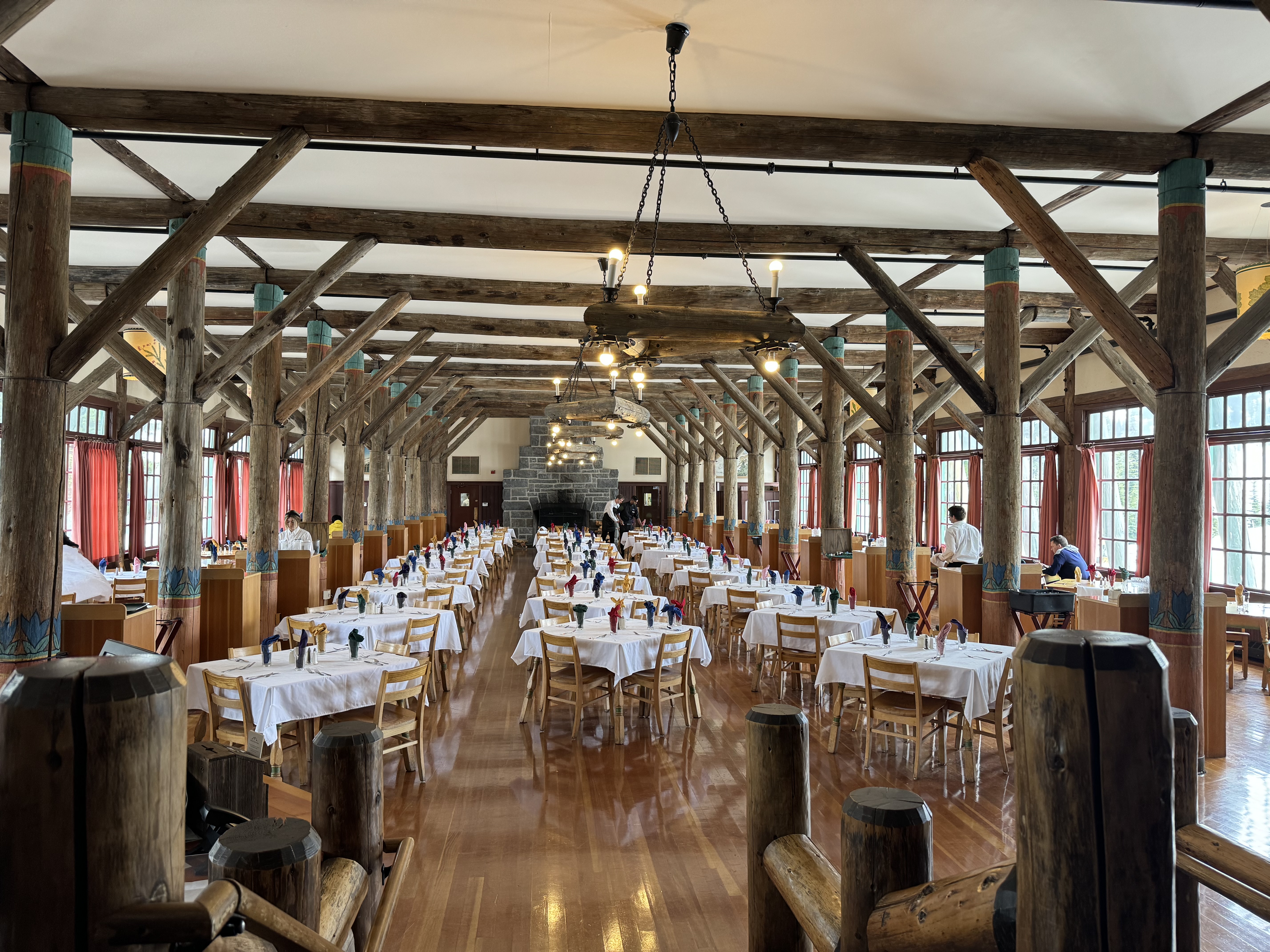
National Park lodges are not like today’s typical hotel rooms.  If you need  multiple USB plug-ins, a color flatscreen TV with cable, a gym, High-speed WIFI, complimentary continental breakfast, and a swimming pool,  be forewarned, this is not the place for you. Many of the National Park Lodges were constructed in the early 1900s an  era  when leisure travel was a social event.  This  meant getting dolled up for dinner and actually socializing with other guests. Many lobbies had  large fireplaces, many seating areas, usually a  gift shop, and a piano. Many of the hotel rooms themselves were small and did not have a private bath or shower, saving the extra space for the  larger communal areas such as a large dining rooms and lobby.

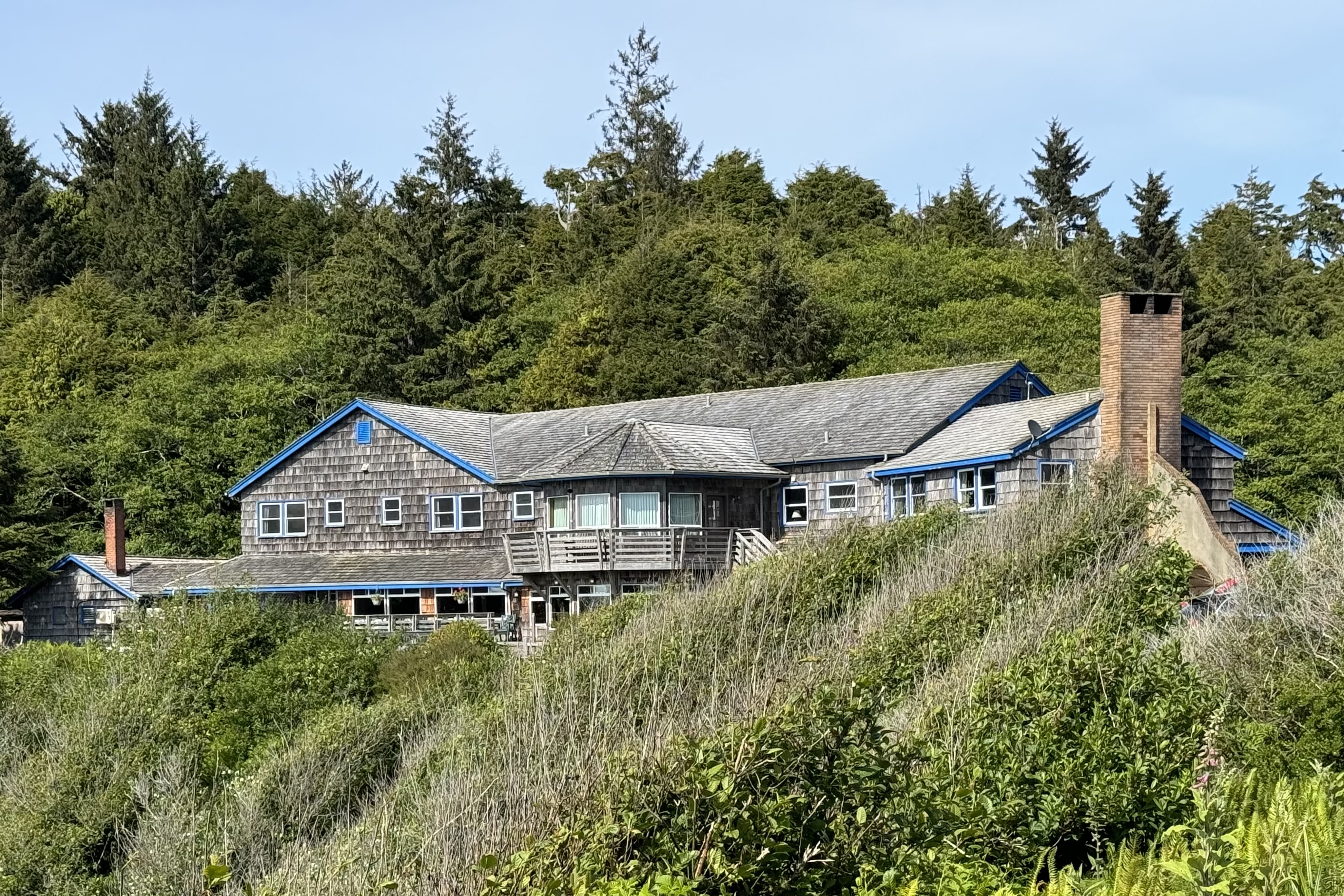
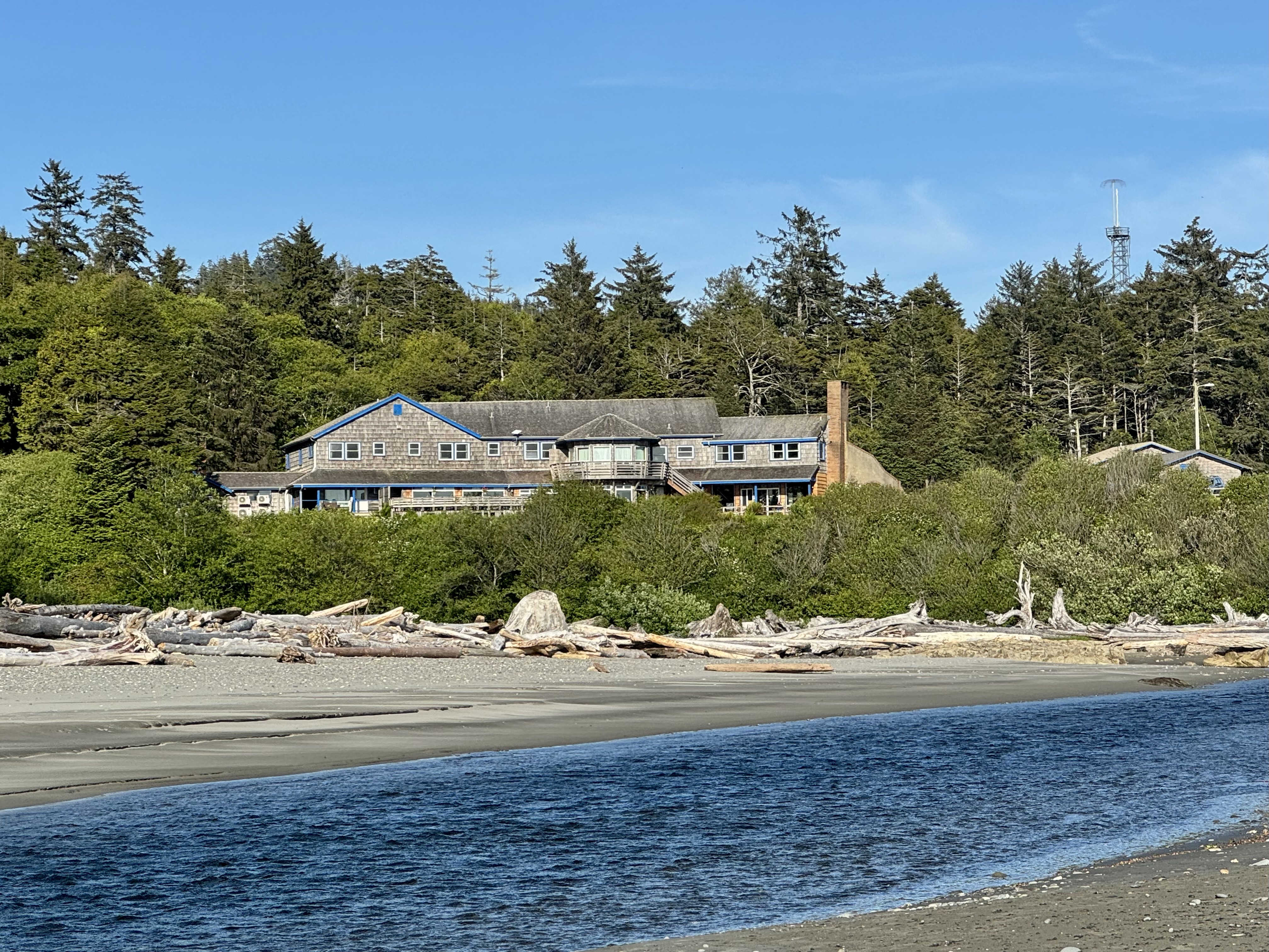
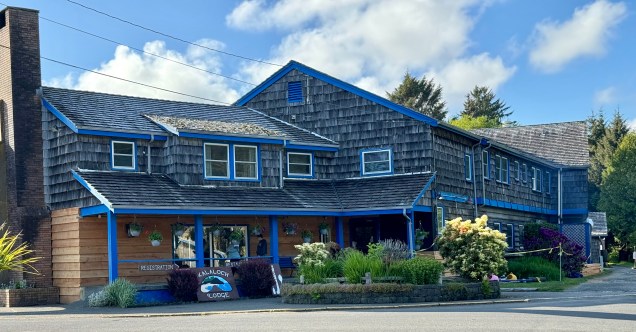
Kalaloch Lodge, built in 1925, is one of those relics of a past era with limited facilities (such as wi-fi in the lobby only, no TV, no swimming pool, no cell service in area) but I gladly spent $ 359.00 a night (least expensive room) to stay in the Seacrest house at this historic property . It’s a beautiful location on a bluff with access to a wildly sumptuous beach.

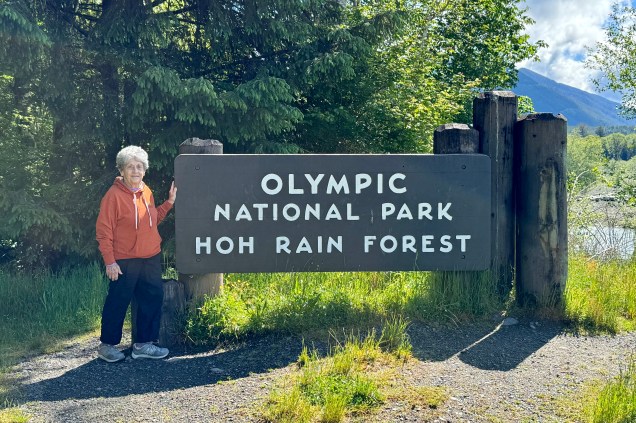
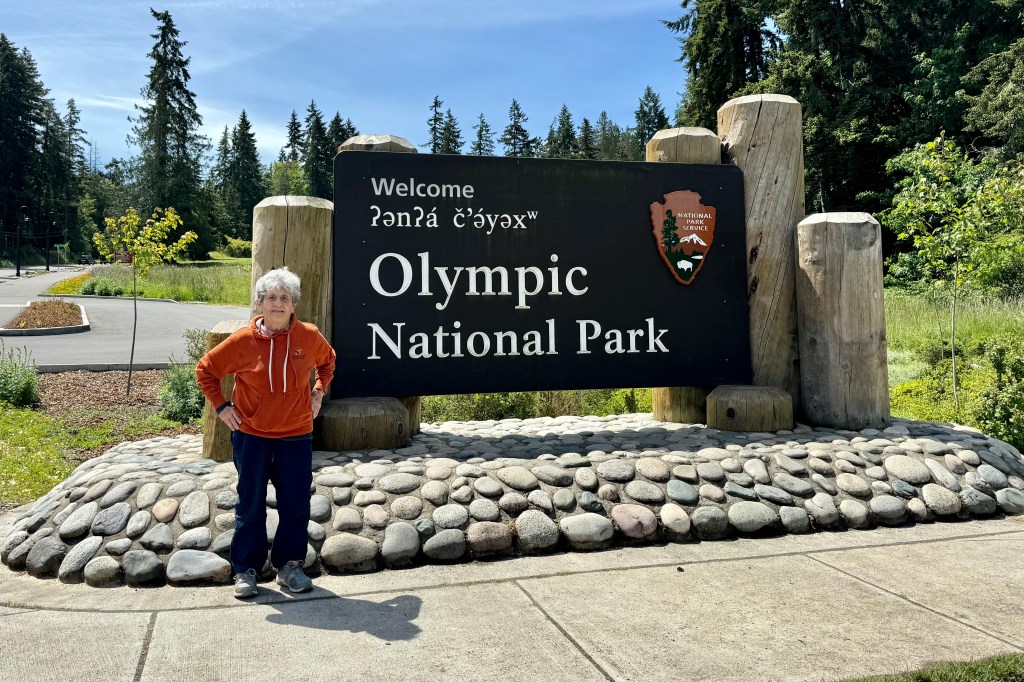
Olympic is one of the mid-sized national parks of about a million acres but when I reserved the room at the Kalaloch Lodge I anticipated a short drive to the Hoh Visitors Center and hiking trailheads. I was surprised to discover it was at least 40 miles and an hours drive along a rural winding road. At that point I began to realize the shear size of this park. It is not just a small outpost on the Olympic Peninsula in Washington, but three ecosystems: snow-capped mountains, temperate rain forests, and 70 miles of stunning coastal beaches. This is the perfect destination in our society of over-choice and FOMO (fear of missing out.). That’s me! I was intent on experiencing the diversity of all of them. Not having three full days and with my friend’s affinity for hugging trees, the biggest focus would be the Hoh Rain Forest. So the next morning we were heading there on a beautiful sunny day but this was not on a day that would be adding to the 140 inches of the annual precipitation which feeds its lush canopy and dense undergrowth. We would not be able to experience Hoh in all its dripping glory as it is directly benefits from buckets of fluid leaking from the heavens.

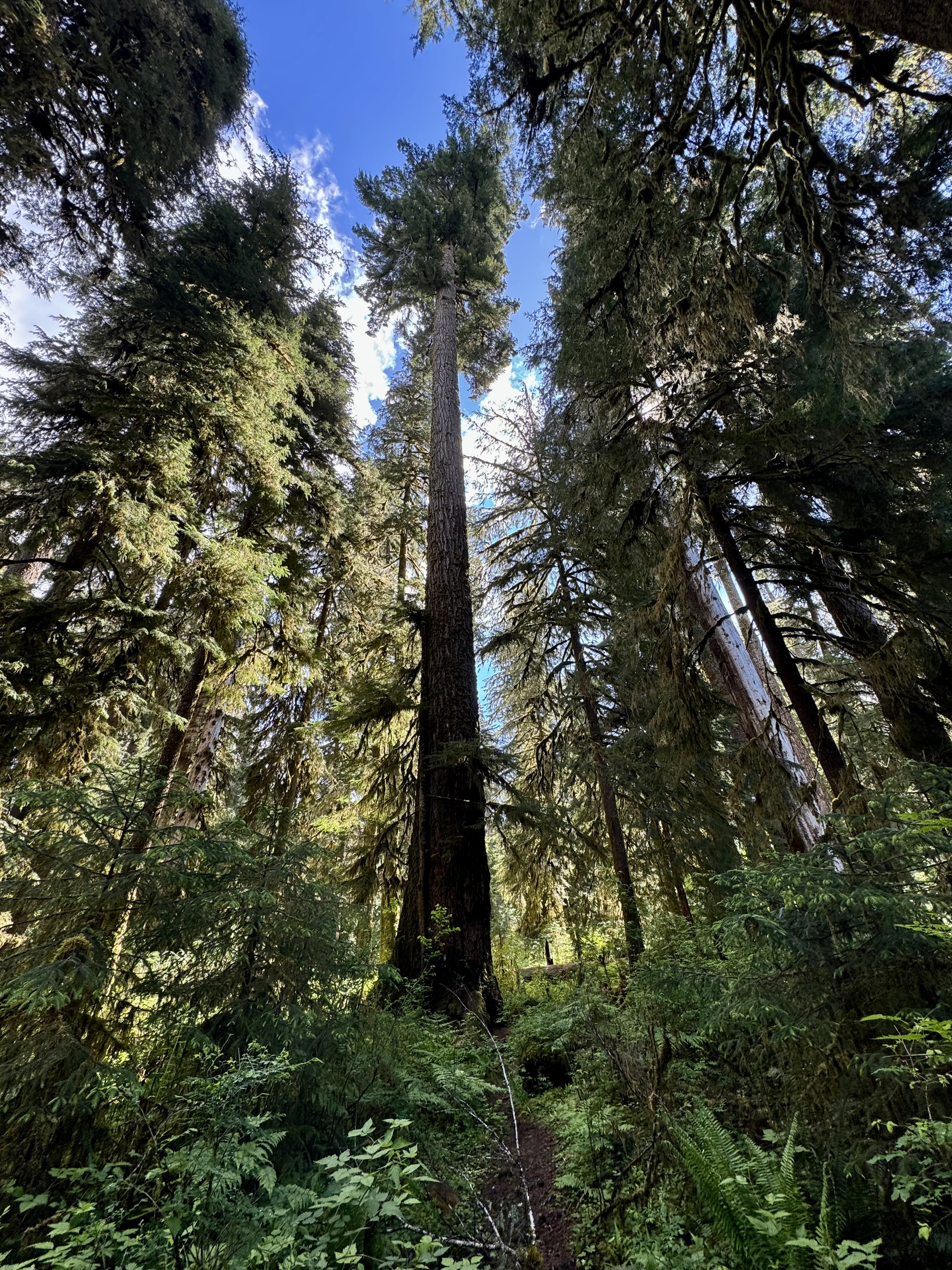
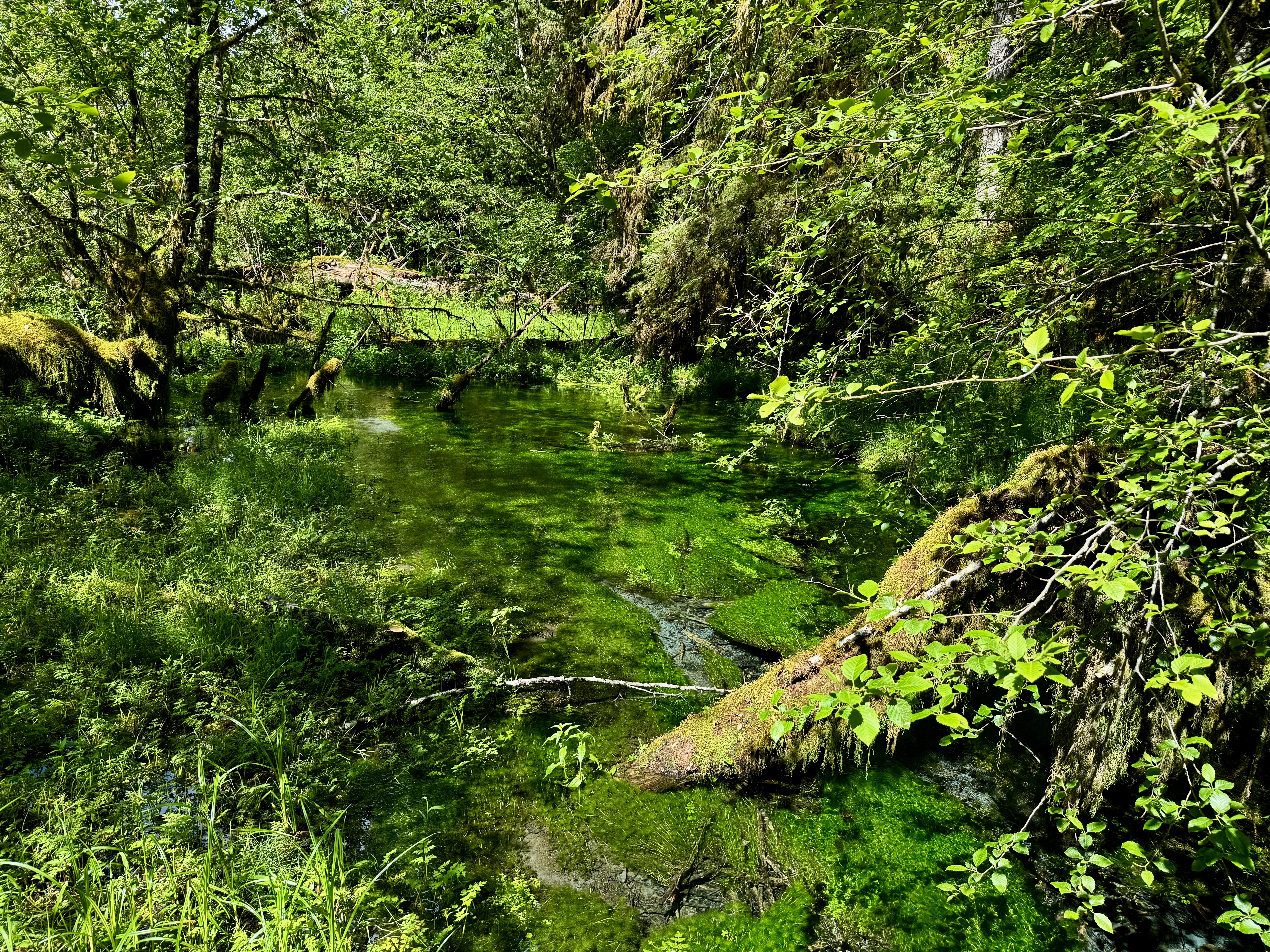
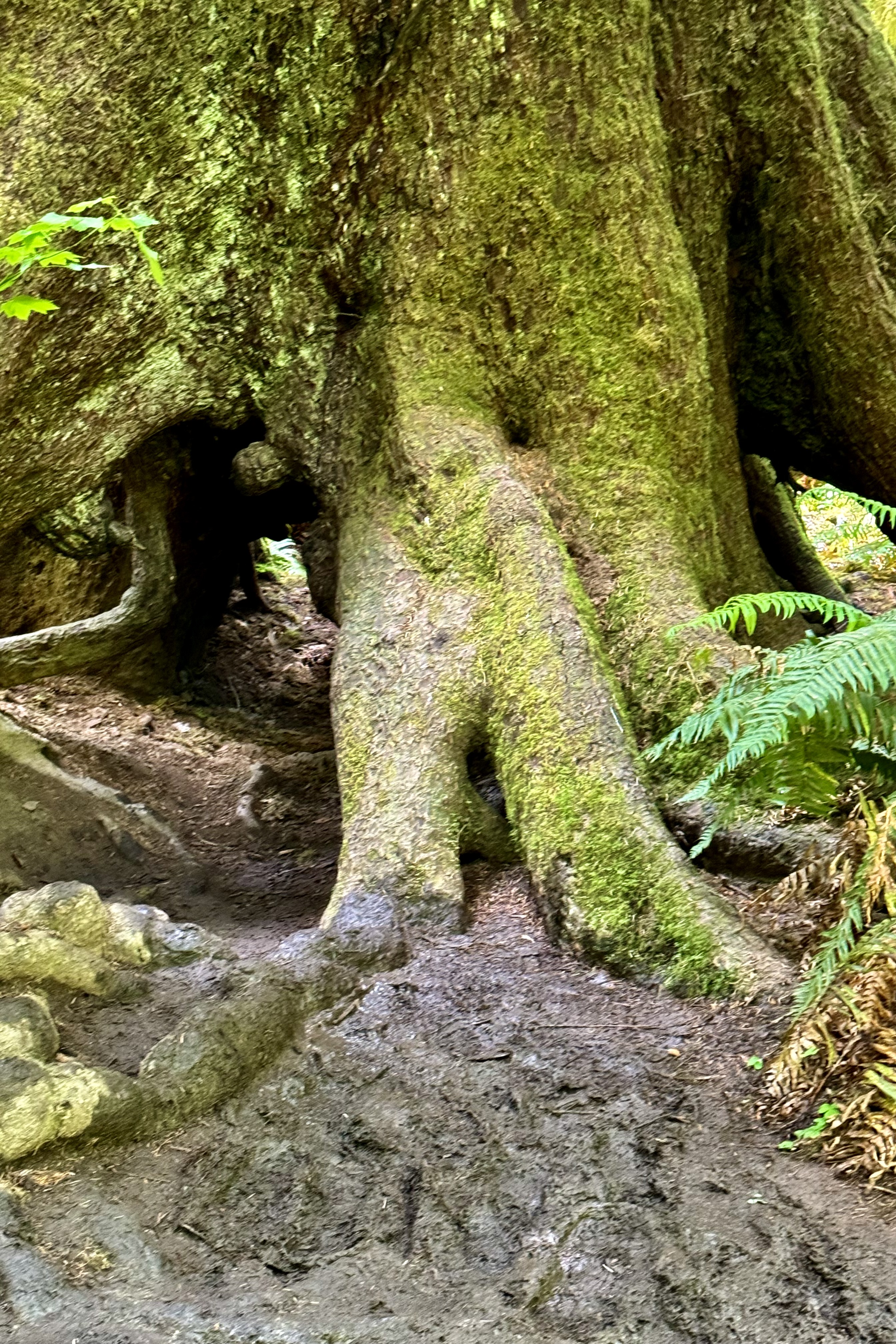
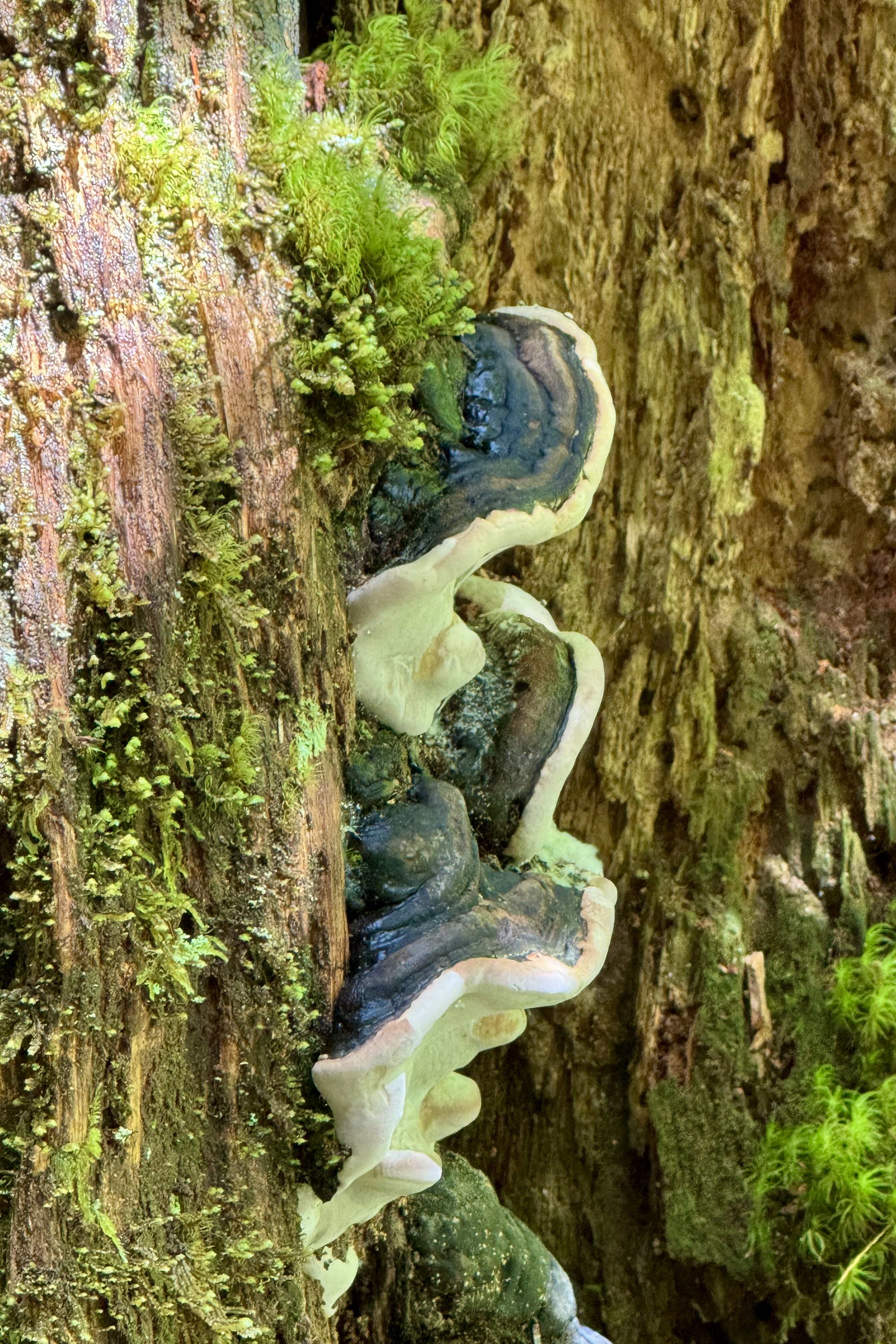
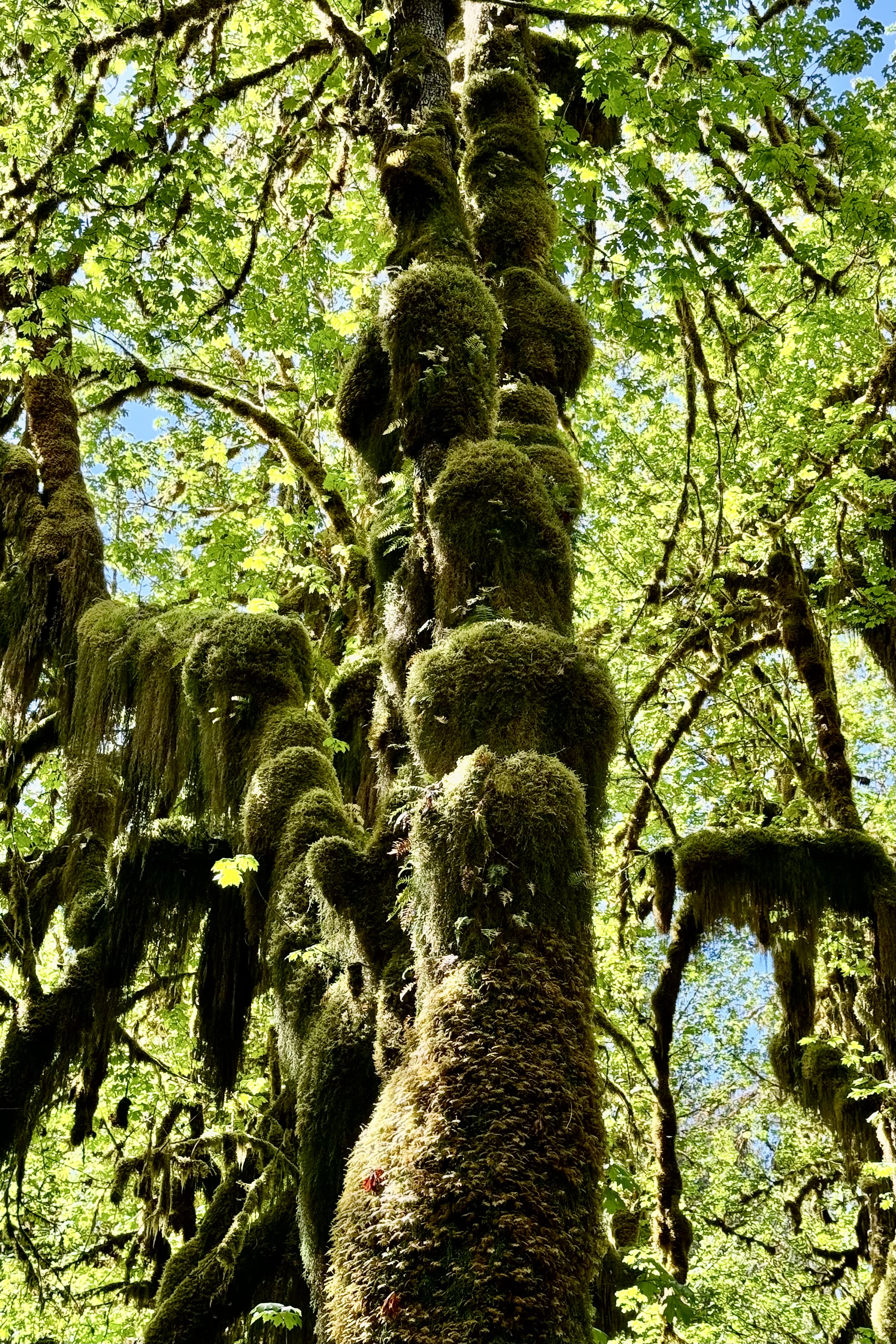
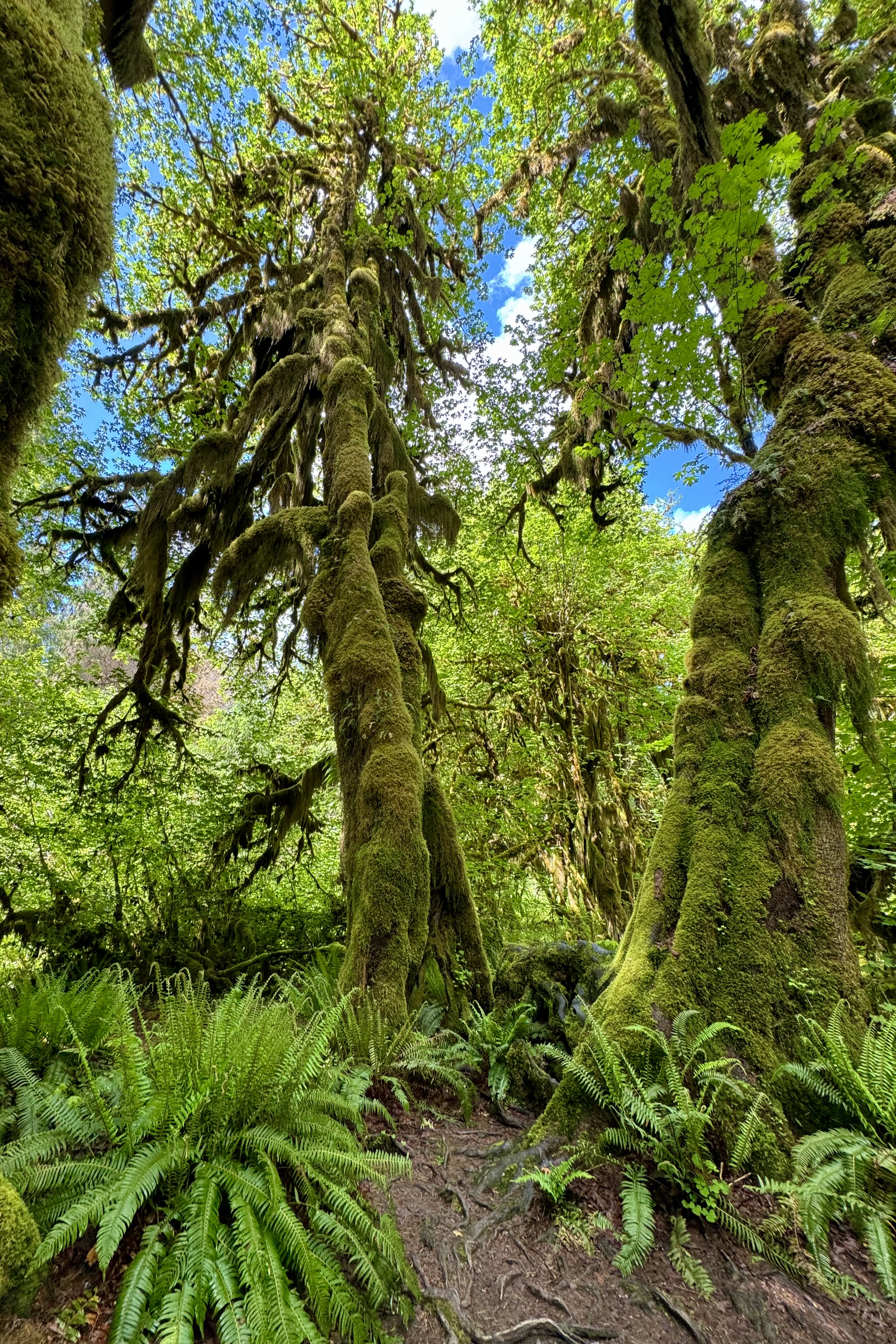
It was a totally immersive experience as I took a deep dive into the Hoh woodland. While hiking the 1.25-mile Hall of Mosses trail, I was “swimming “ in a sea of geriatric moss-covered Sitka Spruce with buttressed moss covered roots, Western Hemlock, Western Redcedar and the mighty Douglas firs. Many of these trees are over 700 years old in this oldest of rain forests in North America. This forest is thick, wet, furry, and dense with many vibrant shades of green ranging from a brilliant emerald to a dusky sage. It is a “Tolkien-esqe” jungle of spongy moss draped giant trees and their understory that is filled with fallen trees, saplings, and ferns. I was again feeling insubstantial and humbled as I hiked in this garden of plants and trees dripping moss and tried to imagine the history that has unfolded during the lifetime of the oldest of the giants. My imagination ran a bit wild envisioning dinosaurs roaming this jurassic jungle. The 1.2 mile Spruce Nature Trail, much less crowded, was now must as I was not yet sated by the trees and the army of epiphytes that surround them. It also served up views of the wild Hoh river.

I was again feeling insubstantial and humbled as I hiked in this garden of plants and trees dripping moss and tried to imagine the history that has unfolded during the lifetime of the oldest of the giants. My imagination ran a bit wild envisioning dinosaurs roaming this jurassic jungle. The 1.2 mile Spruce Nature Trail, much less crowded, was now must as I was not yet sated by the trees and the army of epiphytes that surround them. It also served up views of the wild Hoh river.

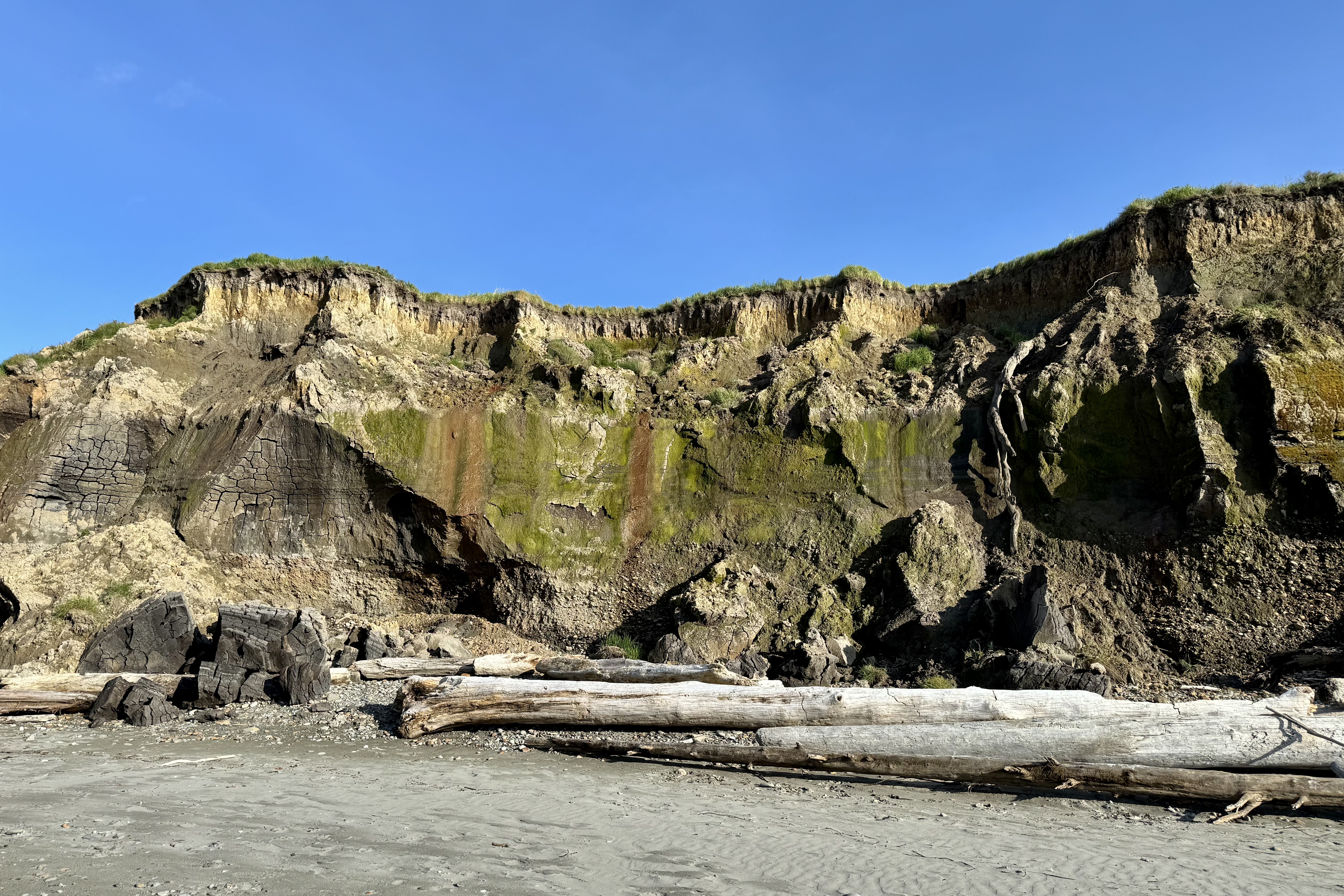
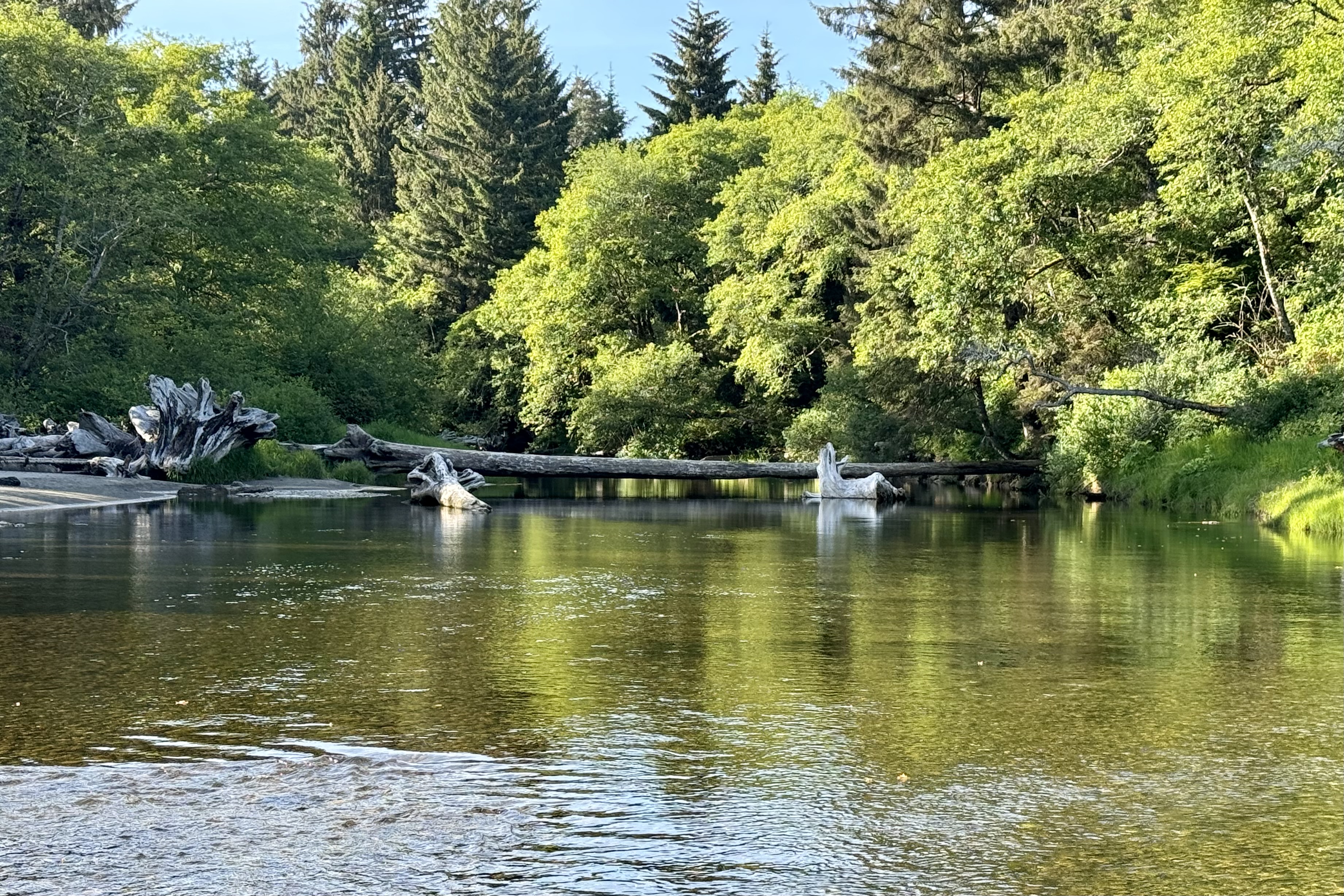
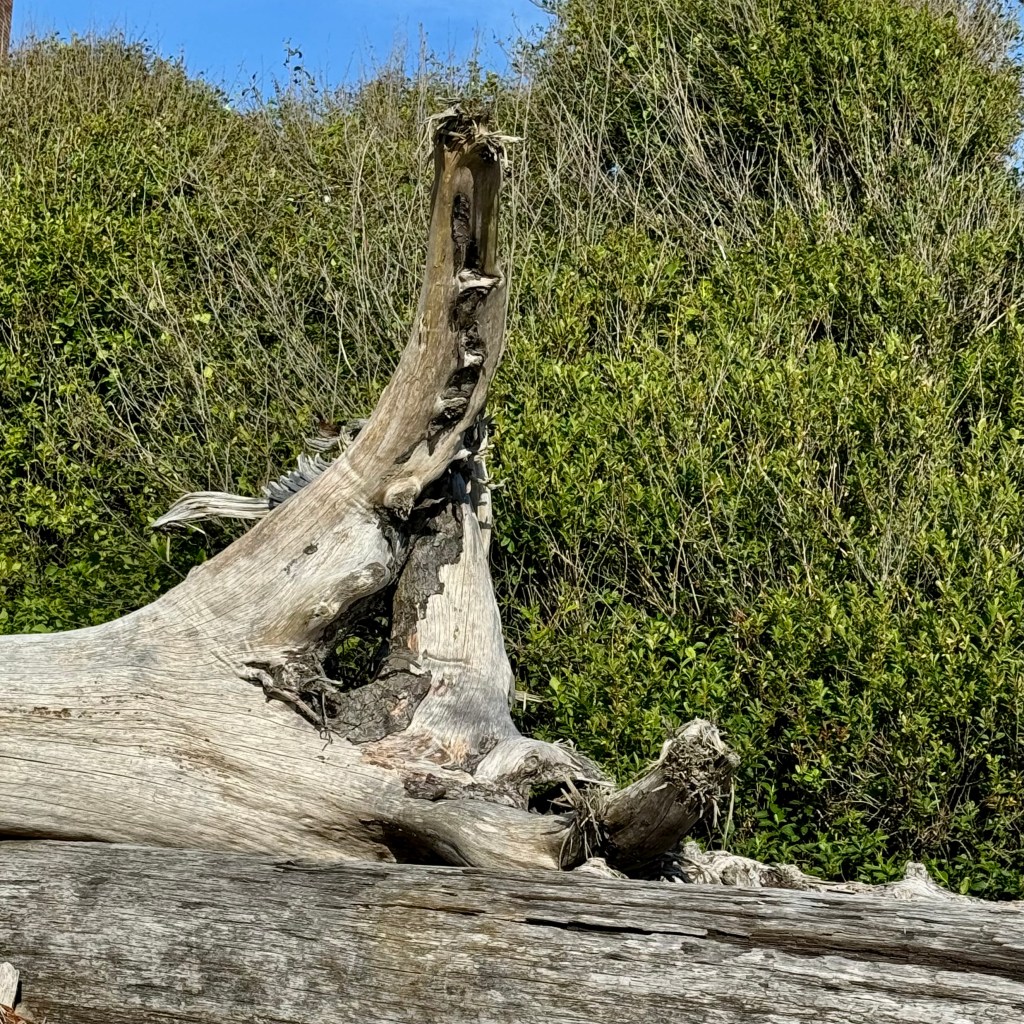
After a harrowing drive back … mind you it was not harrowing for me as the driver but for my passenger who has very little experience being a passenger with a driver who is quite assertive in how she approaches the task of getting somewhere on these narrow curvaceous hilly roads. I vowed to do better next time. Once safely back at the Lodge I determined it was time to explore the beach with its wind-sheared trees, museum of driftwood sculptures, wind swept sands, and eroded sea cliffs. The sky was a clear expanse of blue, the sun shining bright, the wind strong and relentless. Though invigorating, the sandpapering of my legs , all the while pushing against me, did not promote the kind of connection with nature I was seeking. So I meandered up by the egress of Kalaloch Creek, exploring the massive driftwood “carvings” and meandering along this wind-swept beach.

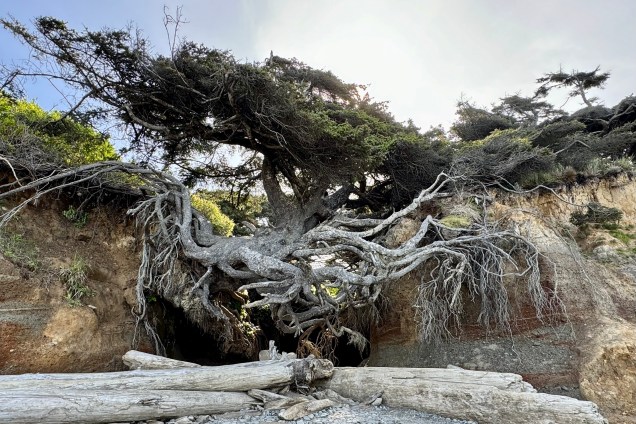
I awoke to a bright and beautiful day for traveling the perimeter of Olympic National Park and then onward to Mt. Rainier. But first I opted to stop just north of the Lodge at “The Tree of Life.” Which Tree of Life do you think I discovered here at Kalaloch? Do you recognize the others?

The Olympic Tree of Life, a Sitka Spruce is quite unique, located on the edge of a sandy bluff- and straddling two cliffs. Erosion from a stream flowing behind the tree weathered away the ground underneath it. A few coiling stems cling to each side of the cliff support the tree’s weight, which by any rational standard should not be able to support its massive size, especially with the rugged wind and storms on the coast.

There definitely is no direct way to cross the park to experience the northern region. The park is encircled by a well-maintained very scenic perimeter road of 329 miles. (Hwy 101) with a few more short paved roads penetrating the interior and dead ending. So if I intended to visit Crescent Lake and Hurricane Ridge I would need to head north and east on the narrow loop road and today adopt a gentler but firm approach to negotiating the twist and turns, the sharp bends and arcs with less focus on the thrill of the drive and an adrenaline rush, especially if I want to maintain my friendship and finish the trip and not have my friend demand an immediate transport to the Seattle Airport. I will save those exhilarating drives of being one with the road when traveling solo.

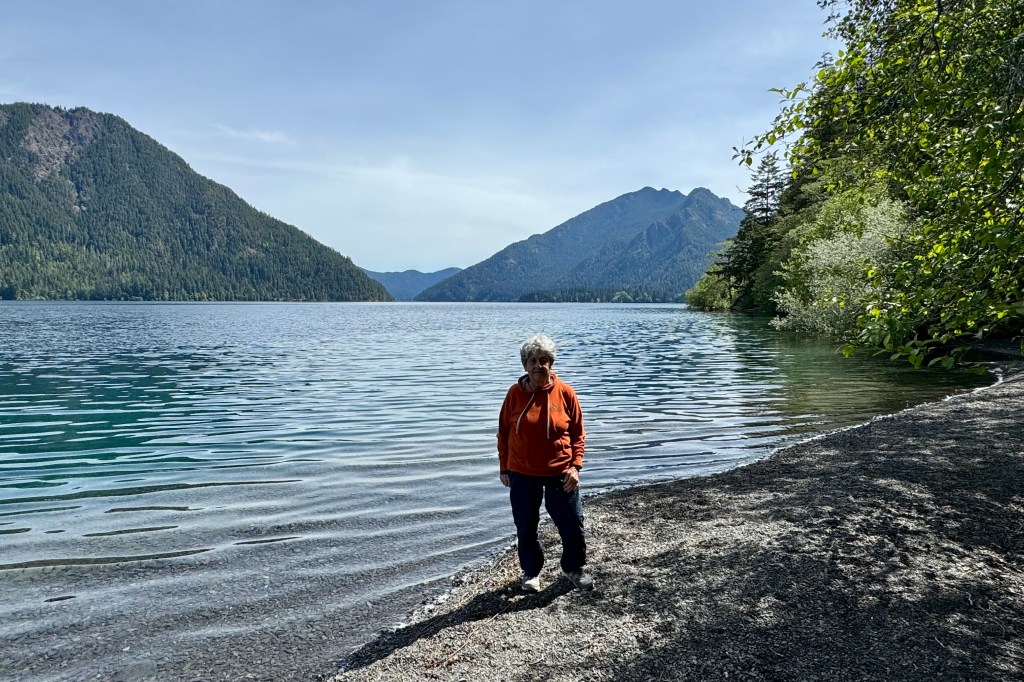
Two hours later we were skirting Lake Crescent and remarking on its crystal-clear deep blue waters viewing it against the backdrop of the Olympic Mountains and the lush temperate rainforests. It was tempting to stay and drink in the tranquility of this lake but Hurricane Ridge beckoned.

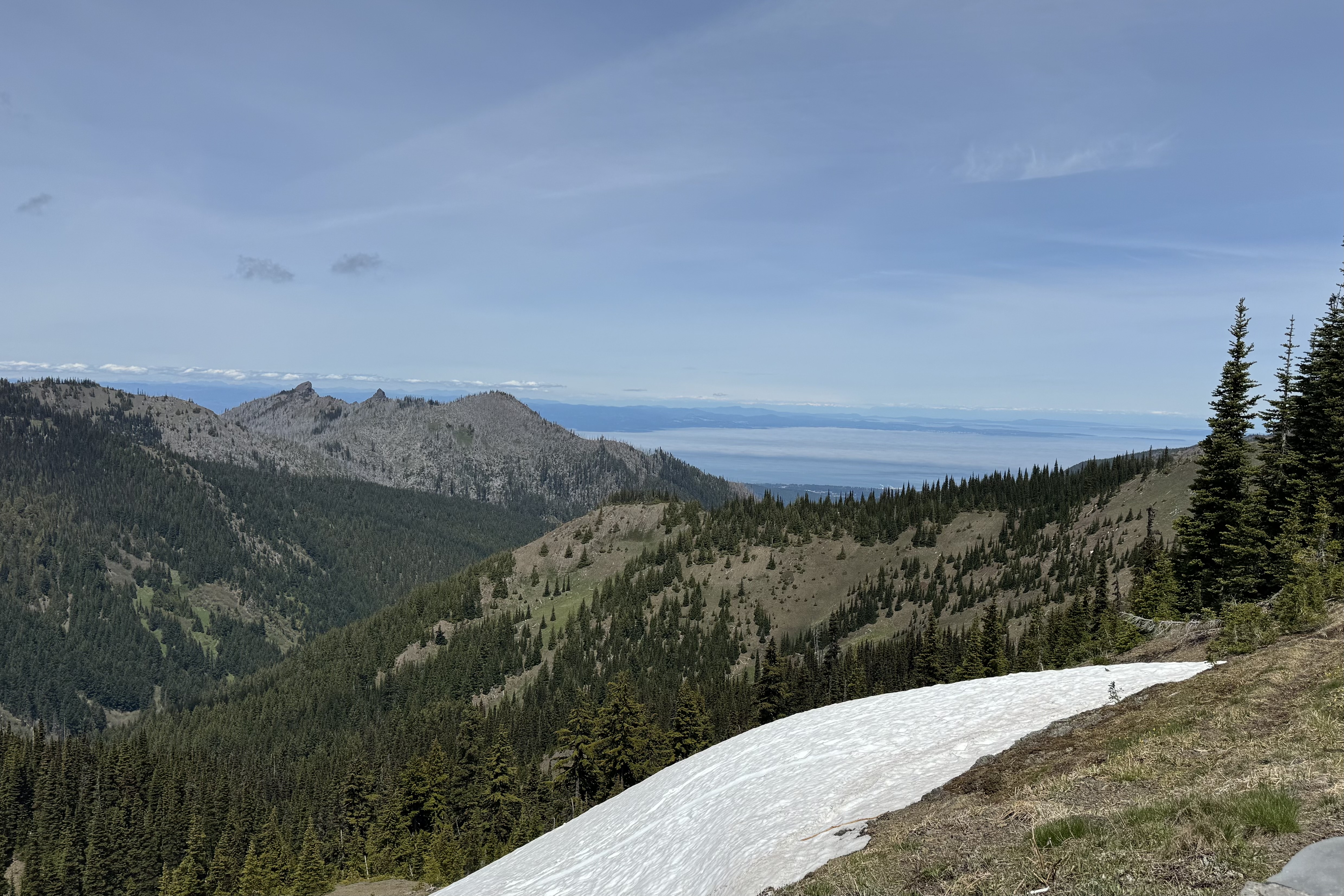
At Port Angeles so began the 18 mile ascent from the coastline at sea level up to 5200 feet. The traverse is initially through dense forest but opening up to vistas of distant peaks, including the 10,778 ft Mt. Baker, and eventually transitioning into subalpine and alpine topography.

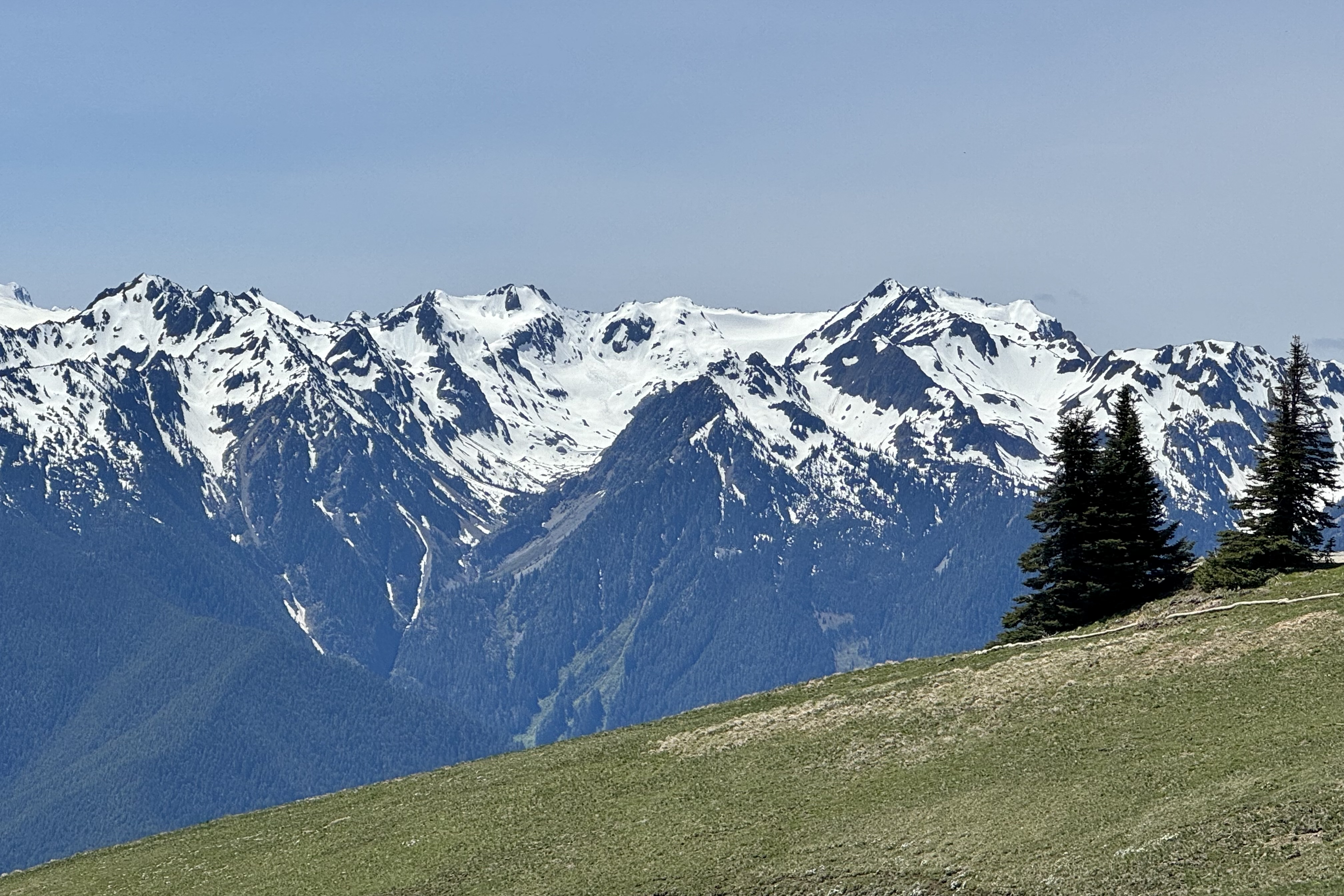
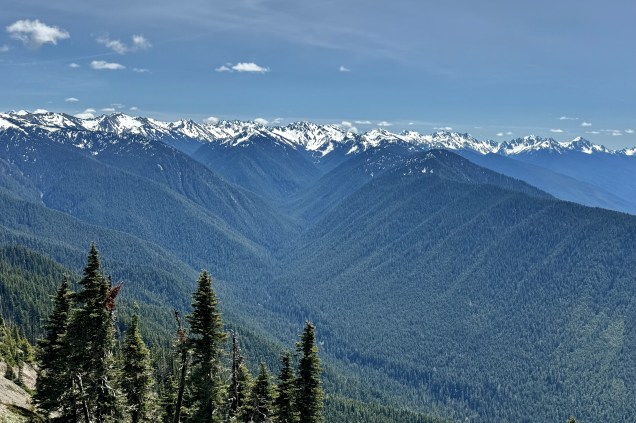
The journey itself, along the road’s twists and turns (yes I found it exhilarating even at a rational pace) ) was as much a part of this adventure as the hike up the High Ridge Trail. The road dead ends and from there we simply enjoyed the panoramic views of the Olympic Mountain Range with its snowcapped mountains , evergreen forests and Mt. Olympus..

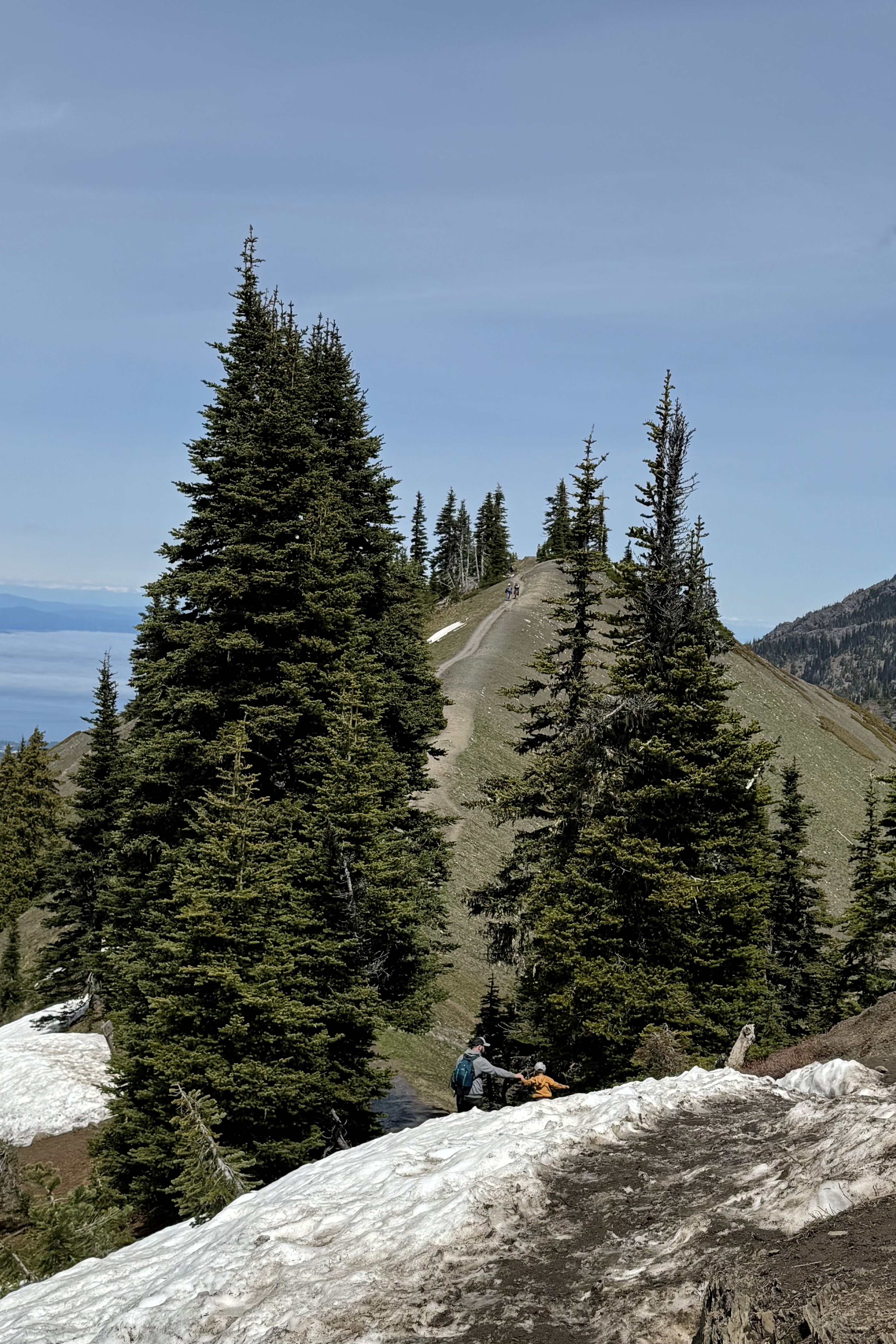
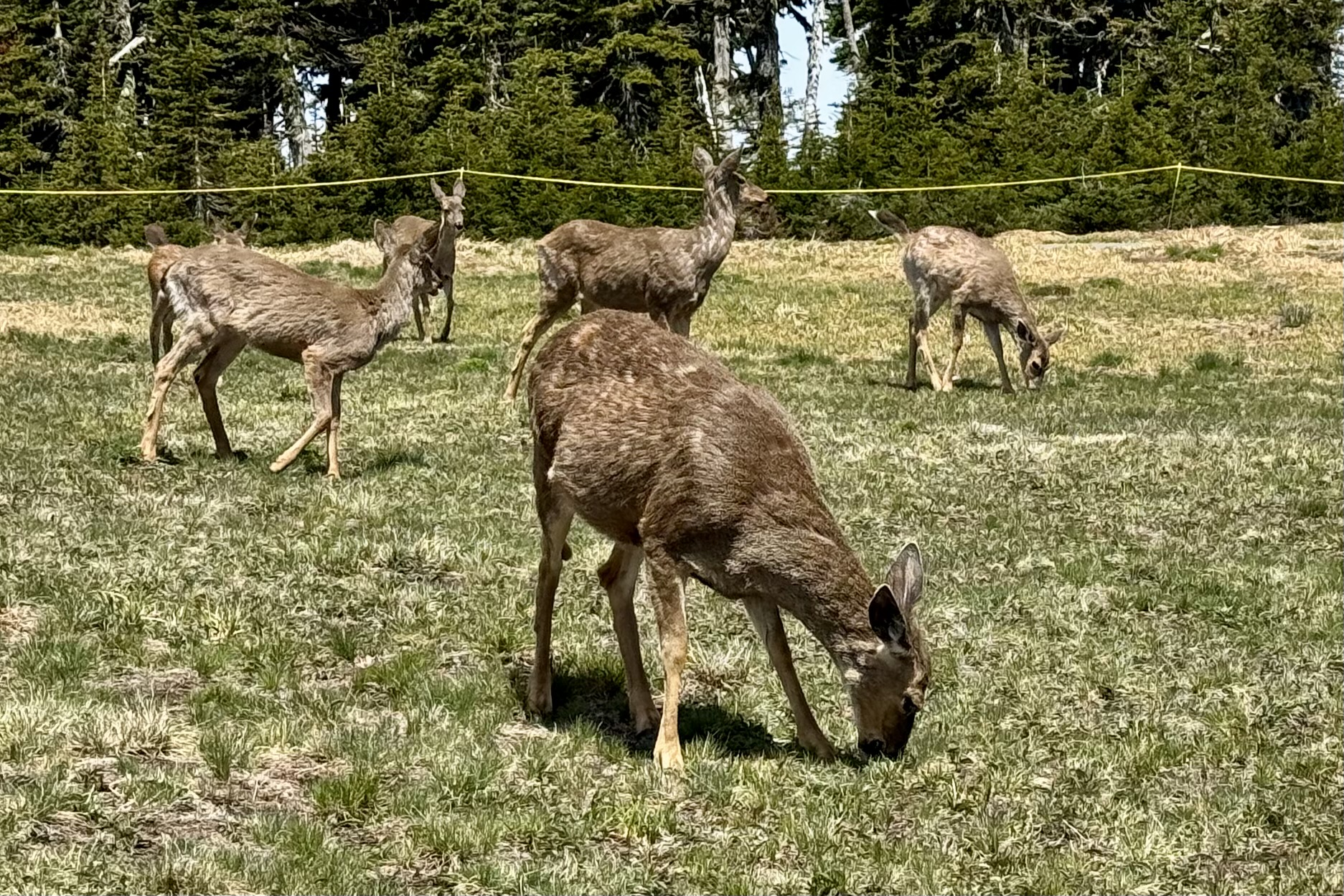
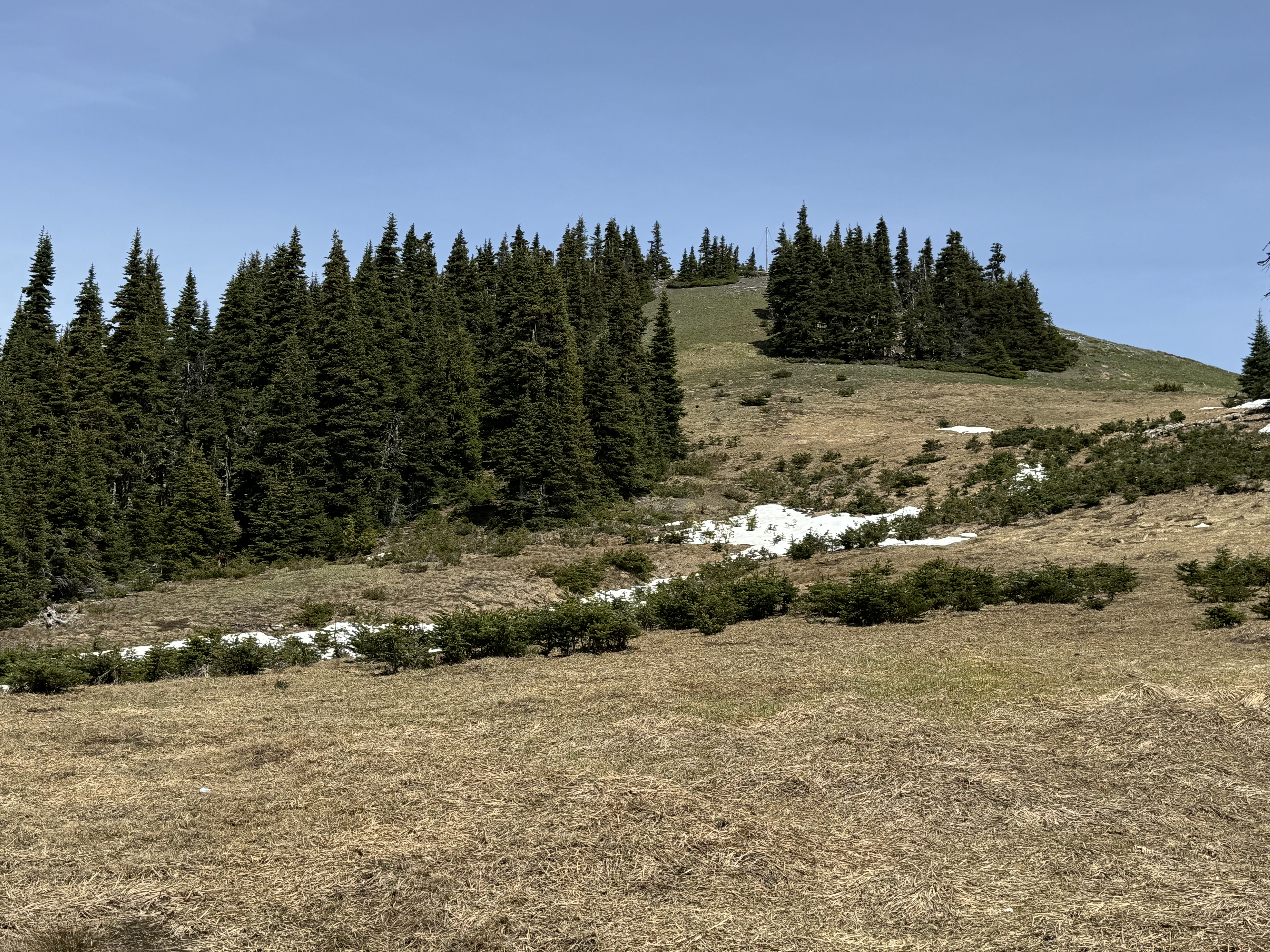
But, I was yearning for a hike, so decided to hike at least part of the High Ridge Trail. A popular and easily accessible trail, there was no paucity of other trekkers. Black-tailed deer were grazing at the trailhead and seemed totally undisturbed by the bevy of humans trespassing on their meadow. We made an elevation gain of about 250 feet and a 2/3rds of a mile ascent and though this seems like an almost nothing hike compared to “what-could-have-been “ we would opt to not go further given minimally a 5-6 hour rive to our nights destination . The views may have gotten even better but I would not be appreciating them on the very curvy, switchback twisting road to Paradise Inn in Mount Rainier National park after dark .

Stout Trees, Bunyan Sized Rocks, and Swinging in the Tree Tops

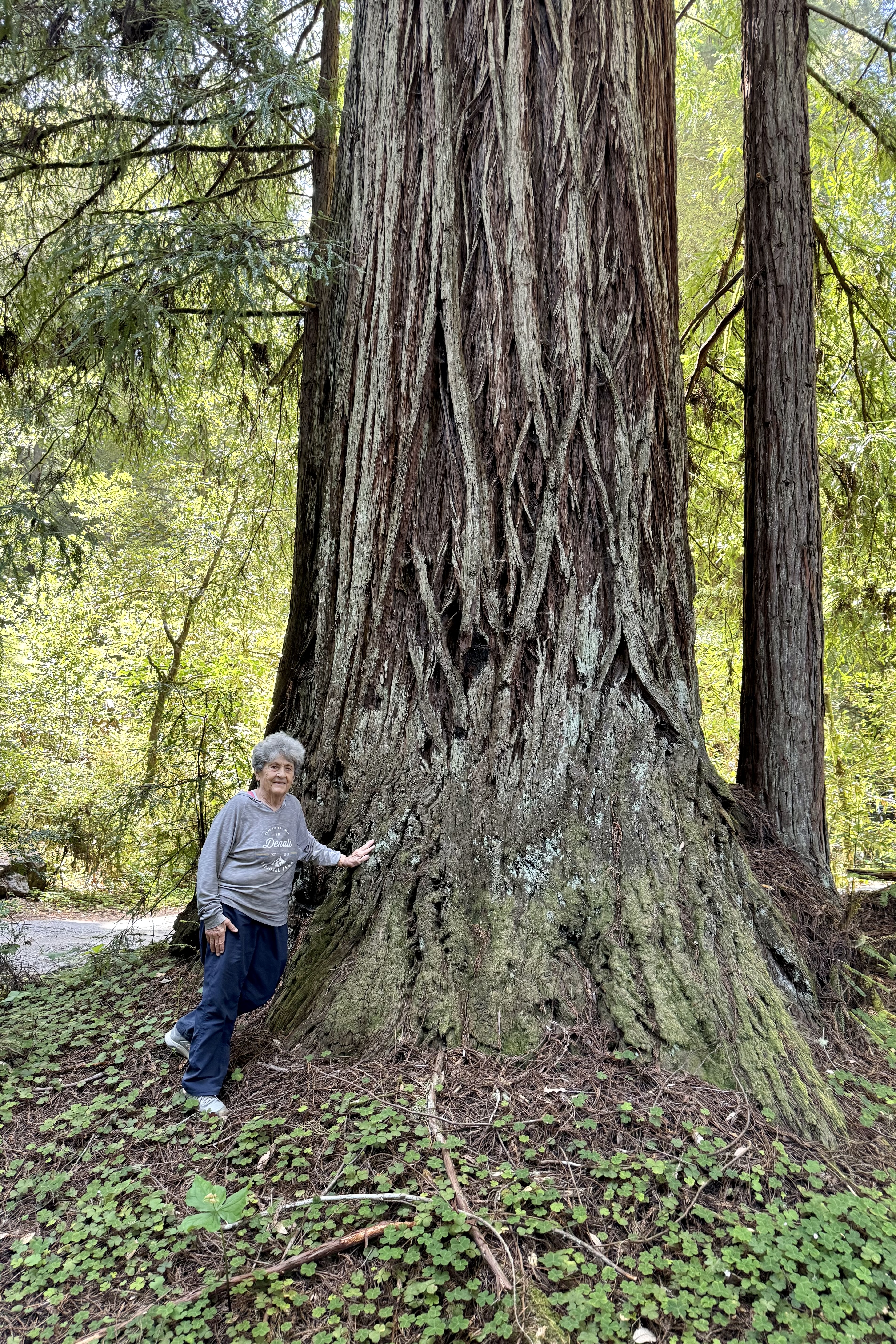
Hugging big trees was the expressed wish of a Floridian friend, when we discussed a potential joint vacation. The palms of Florida aren’t exactly known for their massive trunks or the swath of shade they generate. Since I live in the Pacific Northwest, I immediately envisioned a trip to Redwoods National Park and perhaps other western national parks which are definitely beautifully draped out in extremely old and very large trees and extensive forests. Though I had no keen yearning to hug a big tree myself (especially those with slimy moss or sticky sap) , I mused that I could probably find a itinerary that would accommodate that wish and my desire to revisit some of the other national parks of the Pacific Northwest Region including Redwoods, Olympic National Park, Mt. Rainier, and Crater Lake, completing a big circle back to our starting point of Medford OR.

So after retrieving my friend and her luggage (which surprisingly arrived intact) at the Jackson County OR Airport, my mission at the moment was to head on down to Crescent City CA and the Oceanfront Lodge , our accommodation for three nights. My preference when traveling is to drive secondary roads ( isn’t there an old saying that the “the joy is in the journey” ) rather than what I find boring – the tedious frenetic interstate highways. This did not disappoint as, of note, enroute was the appearance of “Weed Man” offering free “weed” at the Oregon/California border. This was not about weed control (the kind you use on you lawn) nor a chance to buy legal weed since recreational marijuana is legal in both states, but a ploy to get travelers out of their automobiles to browse their flee market tables full of goods other people no longer wanted or needed. That ploy worked as my friend craved having her photo taken with the “Weed Dude” but definitely not to consume the weed itself. We definitely opted out of a shopping excursion.

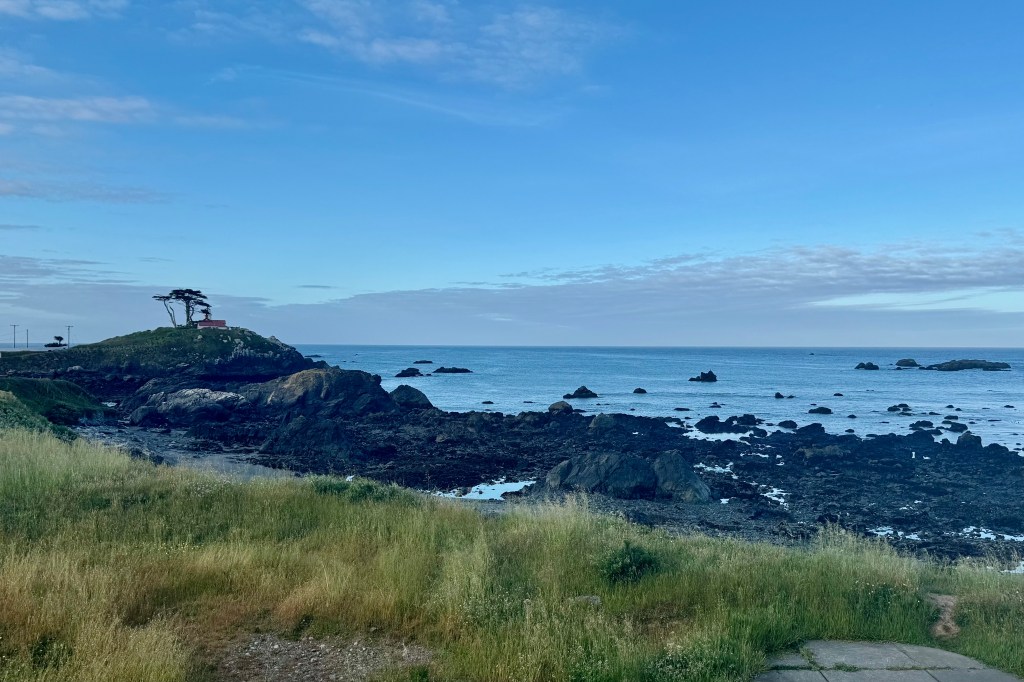
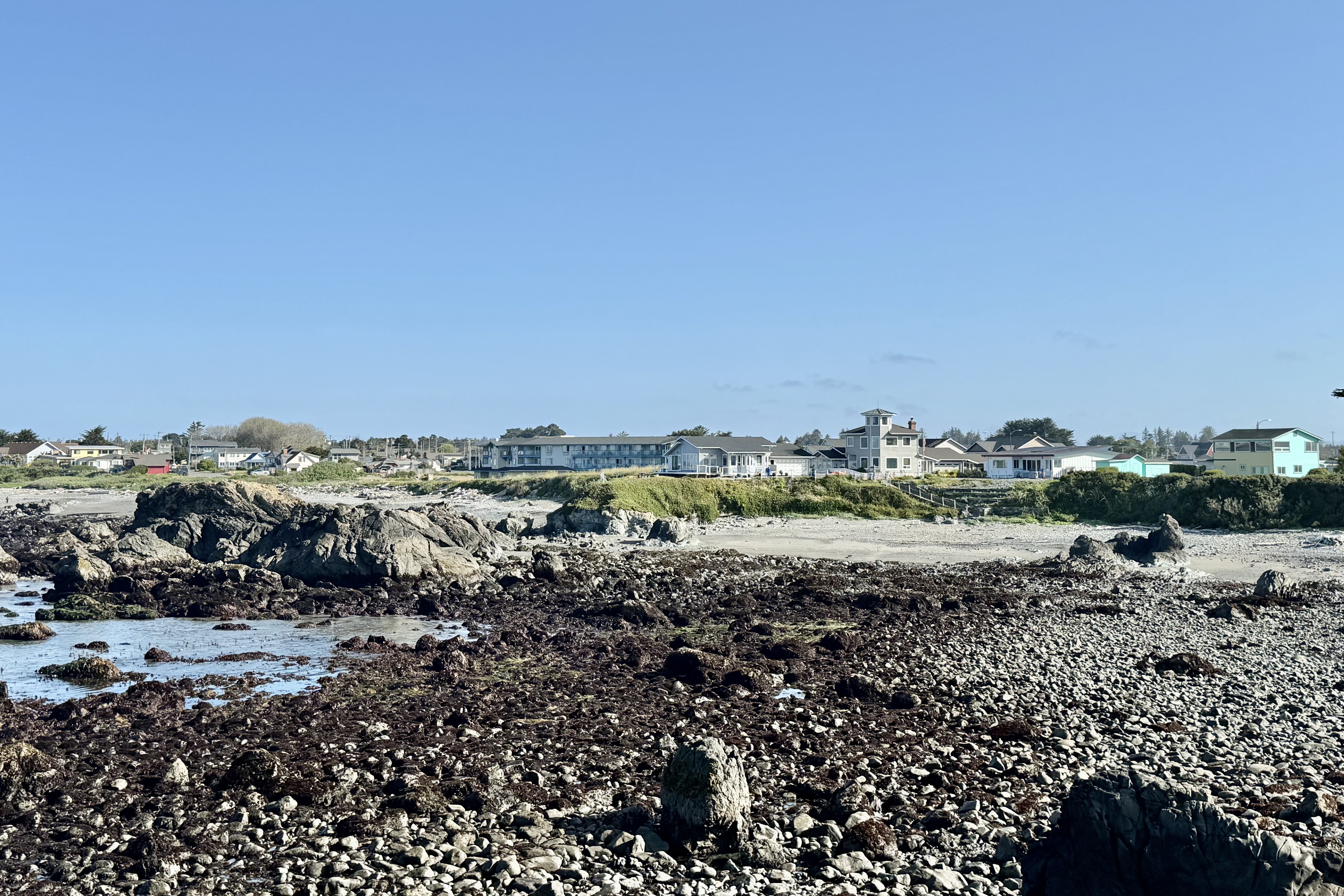
As is quite often the case, coastal cities in the Pacific Northwest get fogged in and true to form we were greeted with a temperature of 54 degrees and a shroud of fog at the oceanfront location of the Crescent City Lodge, the home base for three nights.  The best part of this hotel was its seaside location and the awesome views, especially  when the fog was no longer a gauzy blanket over the Pacific. The  Battery Lighthouse was a  picturesque  part of the view and was within walking distance. My first order of “business” was to head down to the beach. Seeing no unencumbered path,  I laboriously inched my way down through the vegetation, driftwood,  and stones to scattered patches of sand. A rough rocky shore, previously  not a challenge, was definitely a safety hazard for my osteoporotic bones and my need to use a hiking stick to hopefully avoid any tripping rocks and catastrophic falls on my barely healed gluteus medius and gluteus  minimus muscles. With it being chilly and foggy, I was becoming more interested in filling my belly than beach combing on this unstable surface. 

So it was back to the somewhat “tired” and dated room, which  faced the ocean and sported a very weathered balcony and rather uncomfortable chairs.  But just the magical sound and breeze of the ocean made up for a lot that the accommodation lacked. Sleeping with the sliding glass door open to hear the waves was so calming.  Dinner was in the  small understaffed restaurant downstairs with passable, though clearly not of the gourmet variety food.  But the flavor was definitely enhanced by the expanse  of the  Pacific, viewed through the spacious windows of the dining room. 

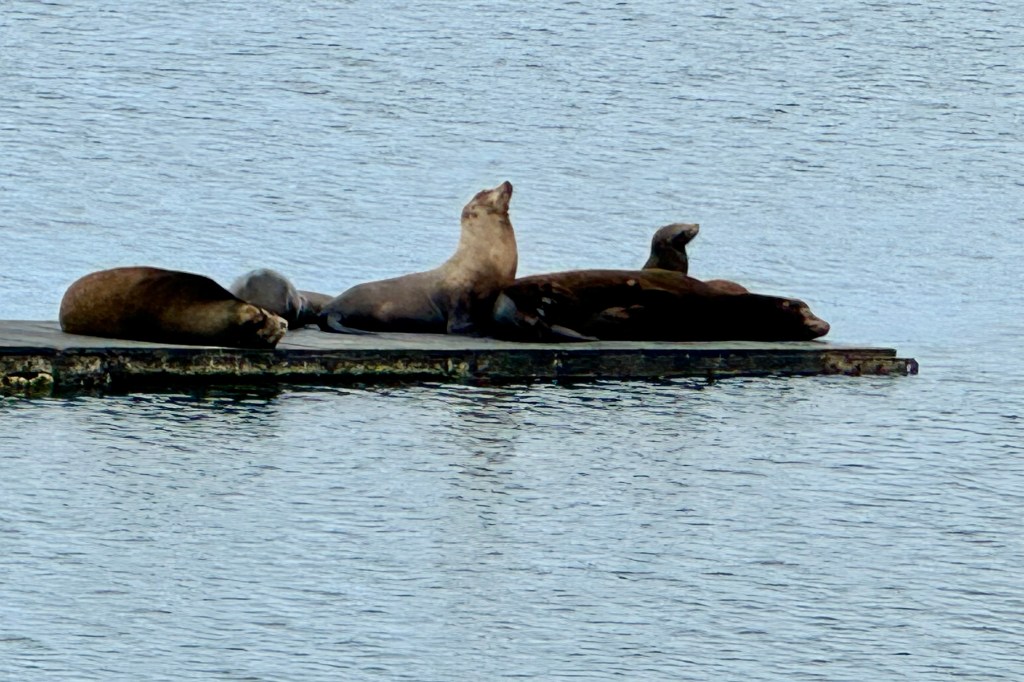
We awoke to a brilliant blue sky and were eager to be out and about. The first stop was at the Crescent City harbor to hopefully catch a glimpse of the resident harbor seals before they were out and about foraging for the days banquet. I guess by seal standards we missed the “boat” as there were but four of five hanging out in the harbor. So shortly we were on to the National Park Office to map out a plan for the two days in Redwoods.

An expressed desire of my friend was to visit Trees of Mystery and according to their brochure is “California’s premier attraction on the North Coast.” This seemed a bit of an exaggeration and though I was skeptical, I was game to give it a chance. This is not the type of tourist attraction I typically frequent having been programmed very early by my mother to NOT visit any “tourist traps.” We kids were deprived of experiencing the Michigan wonders of the Mystery Spot, the Underground Forest, and Sea Shell City so gaudily and frequently advertised along the highways.

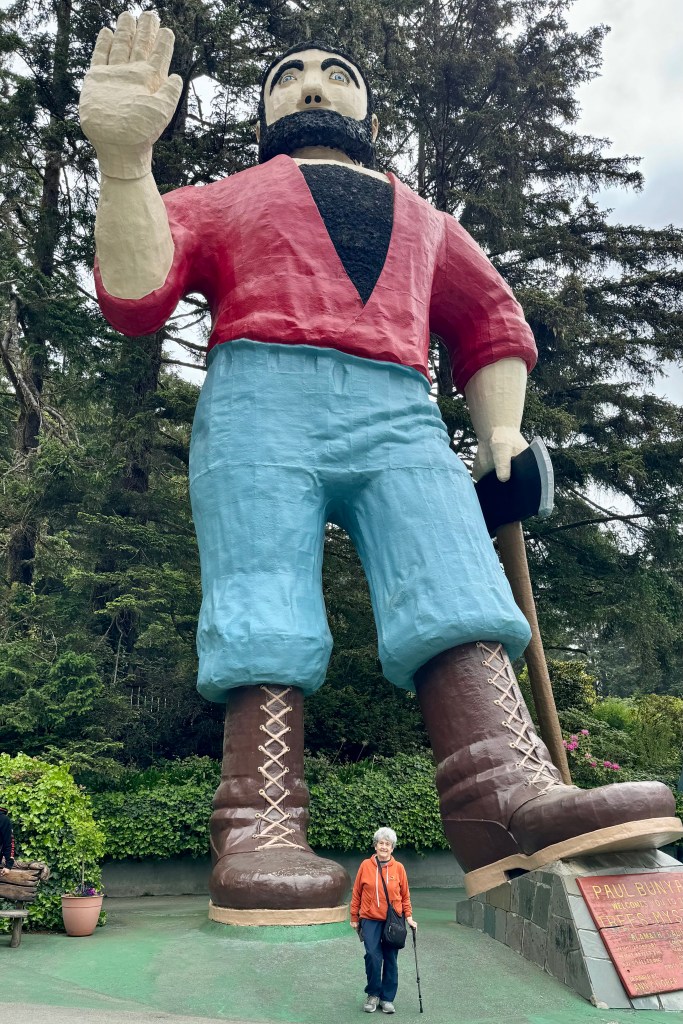
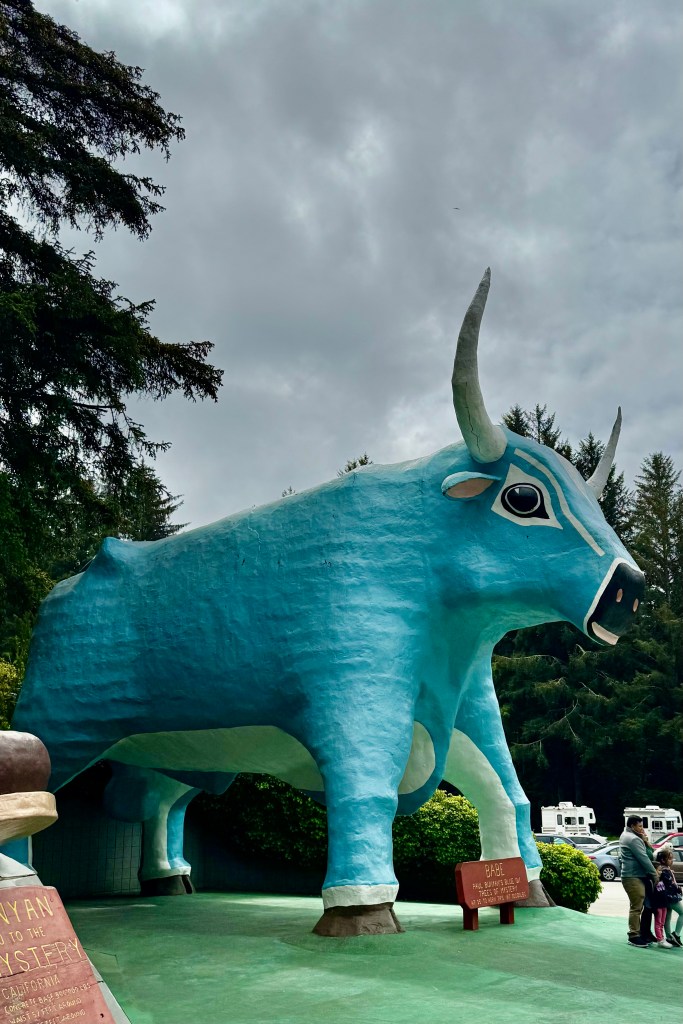
Upon driving up and being greeted by a massive talking Paul Bunyan and Babe the Blue Ox statues, I was even more skeptical as it looked mostly like a stop for kids and a bad attempt to copy a Disneyesque experience. But I was game as it advertised a canopy walk and gondola ride. Nevertheless, before we began, I felt compelled to have my picture take with Paul..

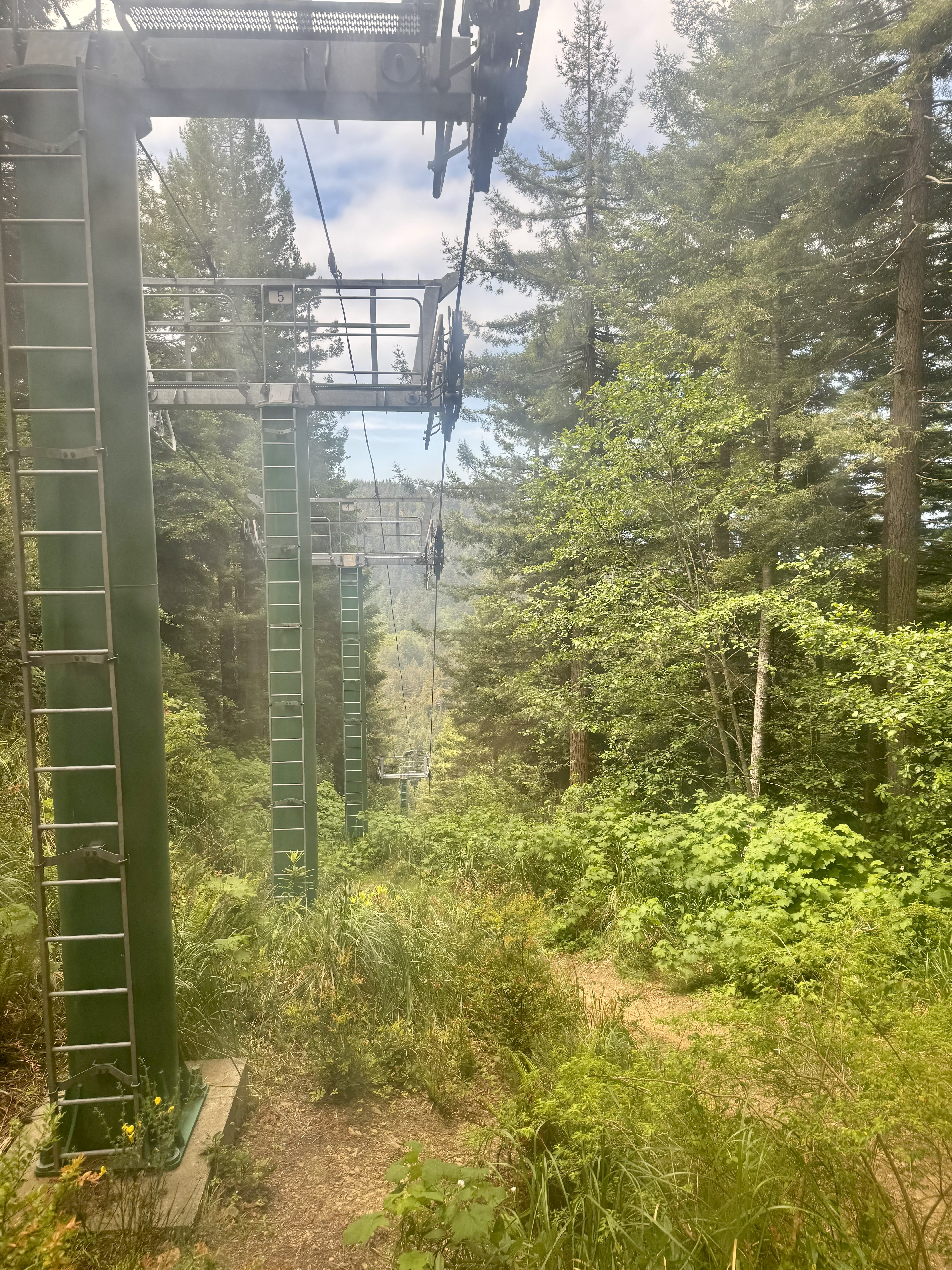
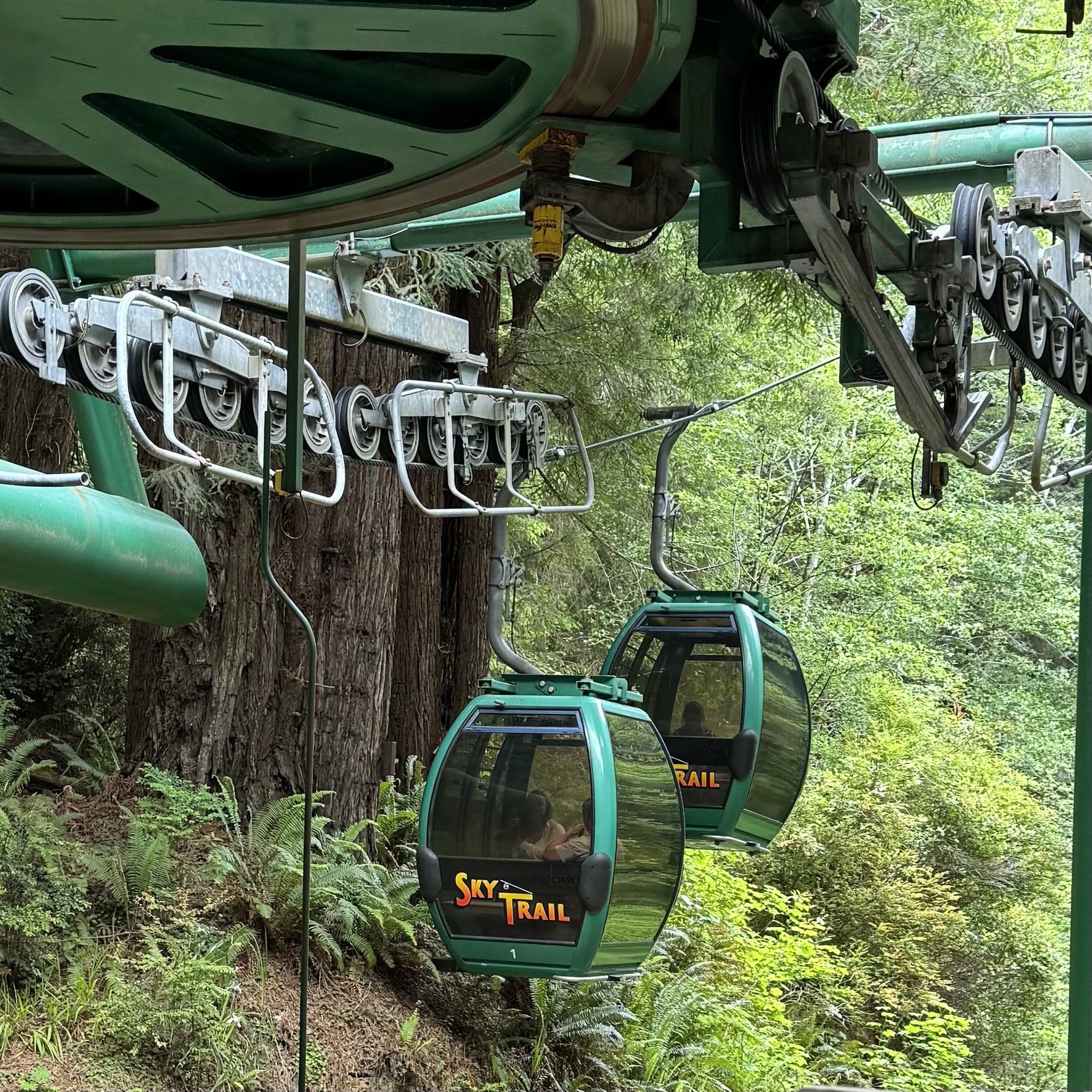
The first stop was the SkyTrail Gondola, a trip 1,570 feet up to the top of the mountain into the forest for an elevated view of the redwoods from the Ted’s Ridge Observation Deck as well as far-away views ( mostly obscured by overgrowth) of the Klamath Valley to the East and of the Pacific Ocean to the west. While I enjoyed the views, there were many spectacular scenic overlooks in Redwoods National Park along high 101 that are equally or more stunning, less crowded, and FREE. I found the gondola ride disappointing as it is not a glimpse of the canopy of giant redwoods, but rises through a hillside that appears to have been logged of redwoods years ago and overtaken by deciduous flora.

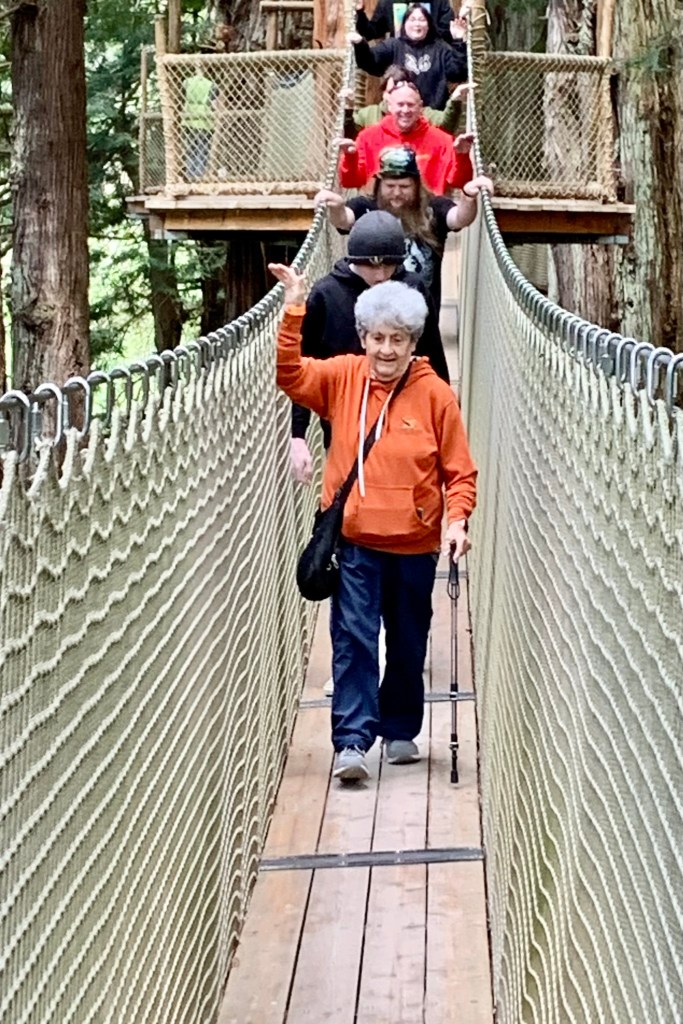
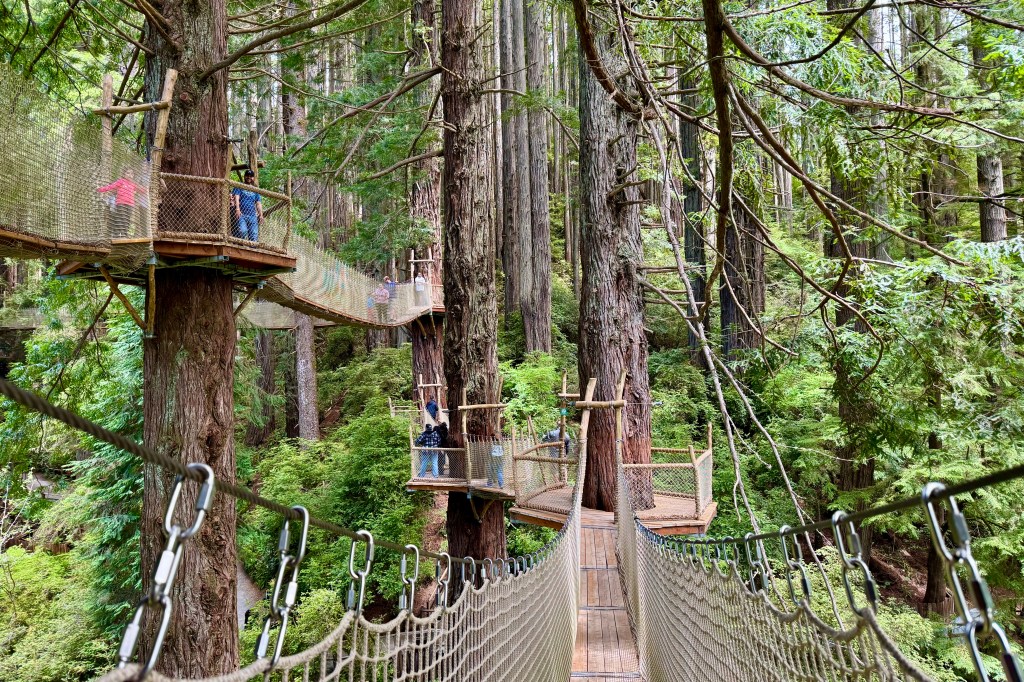
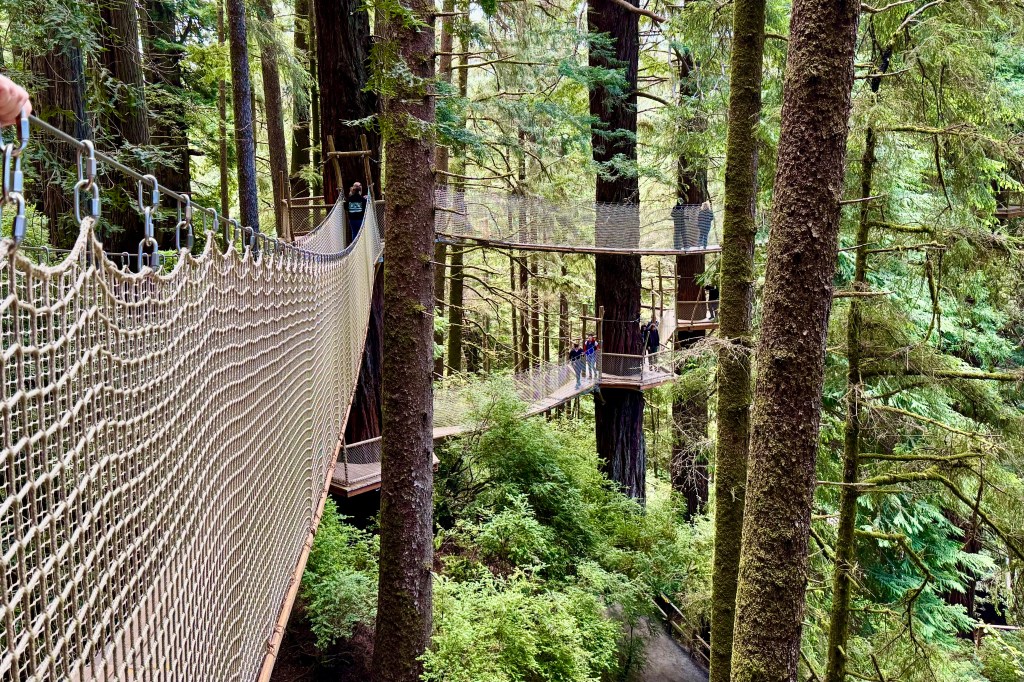
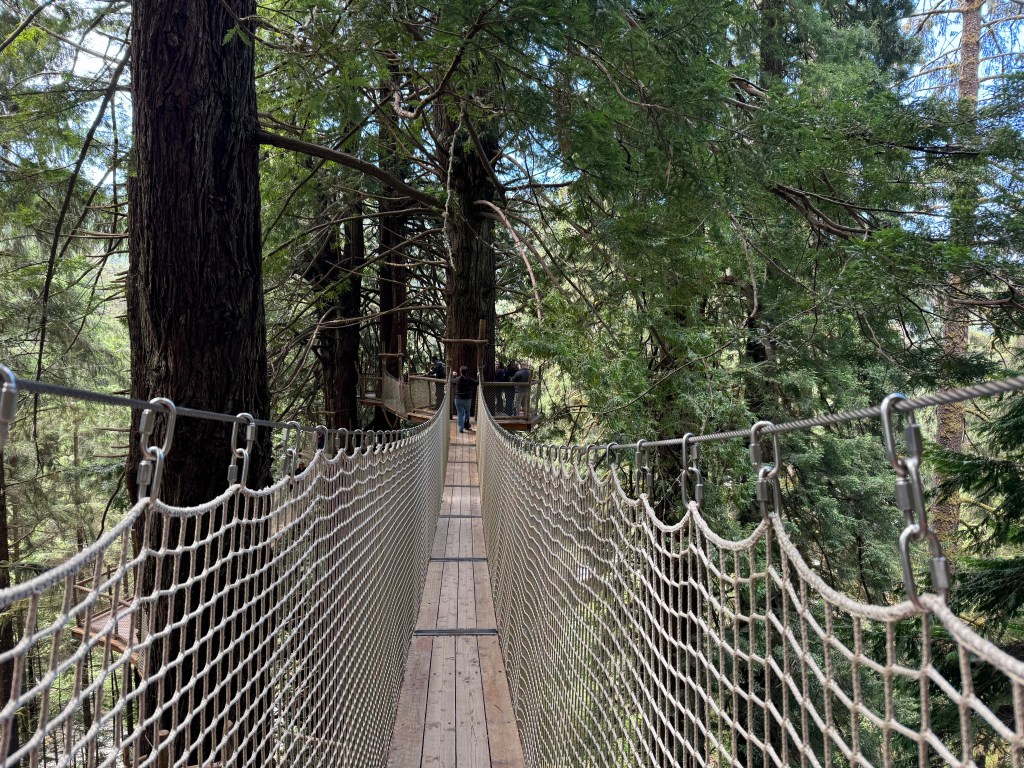
The biggest plus for me was to be the canopy walk which took us high into the redwoods through eight suspension bridges and ten platforms. To take in the sights, sounds and smells of NorCal’s world-famous redwoods would have been a noteworthy experience … except for the queue of people on my heals tromping across each bridge with nary a moment to take the surrounds in. These aerial netted suspension bridges perhaps 100 feet above the ground sway gently and BUT NOT so gently with the stomping and clomping of the rushers behind me who clearly were not in this to experience the grandeur of being high with nature doing what it does best – be awe inspiring – but perhaps to get a bit of an adrenaline rush with the swaying and rocking of the bridge structures. I was quite relieved not to be bowled over as I made my way across, teetering and tottering, by the swinging generated by the “trompers”. Nevertheless it was a fun experience.

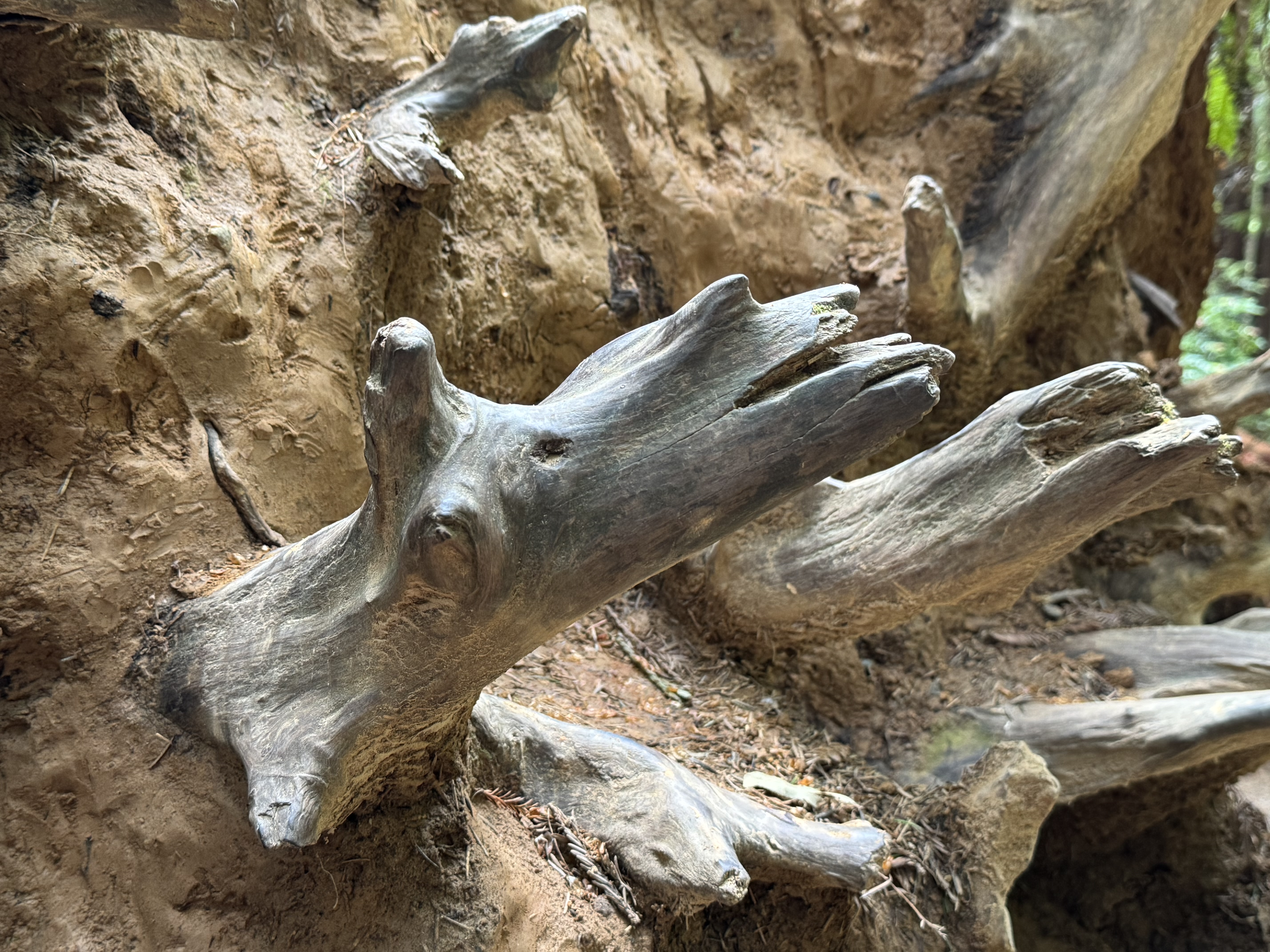
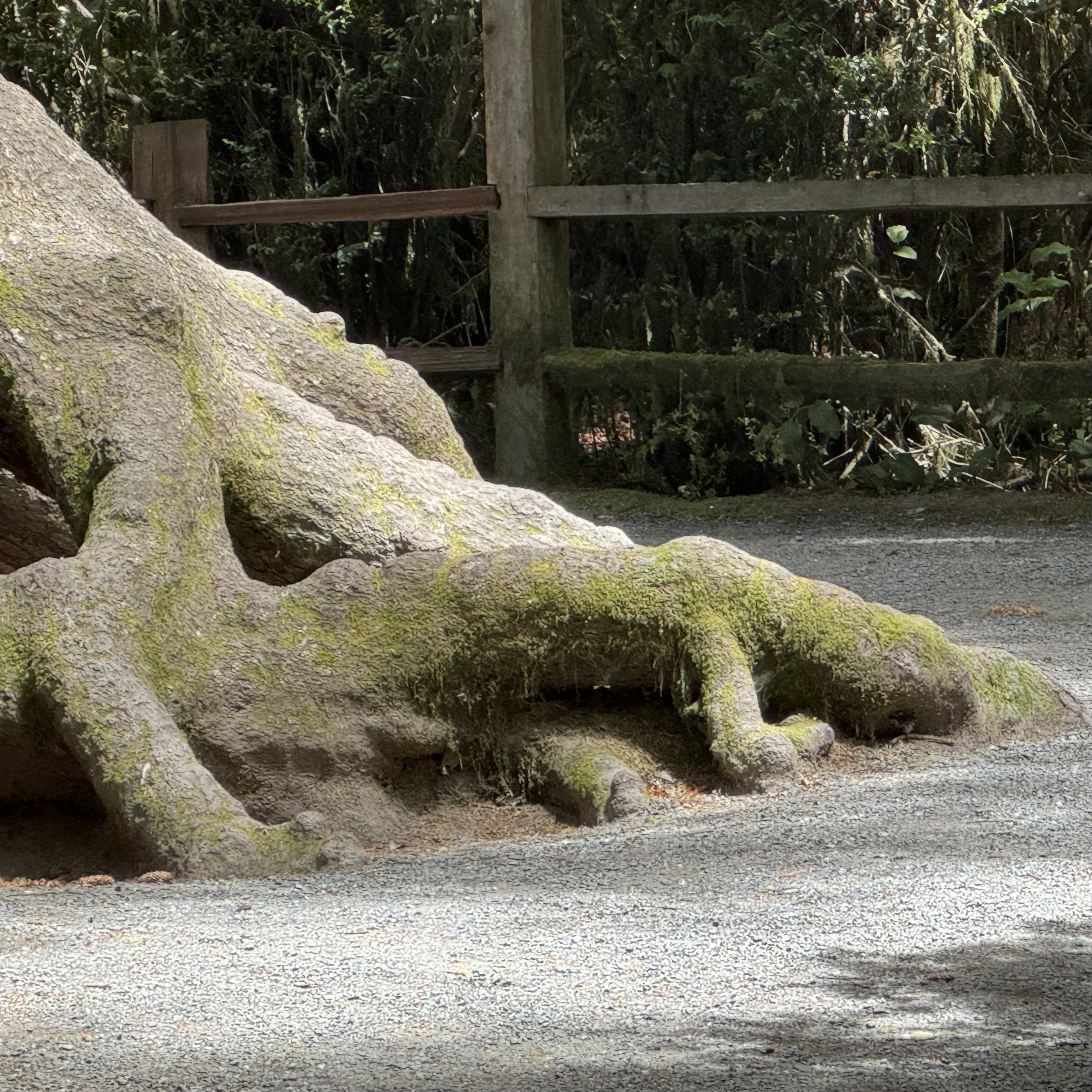
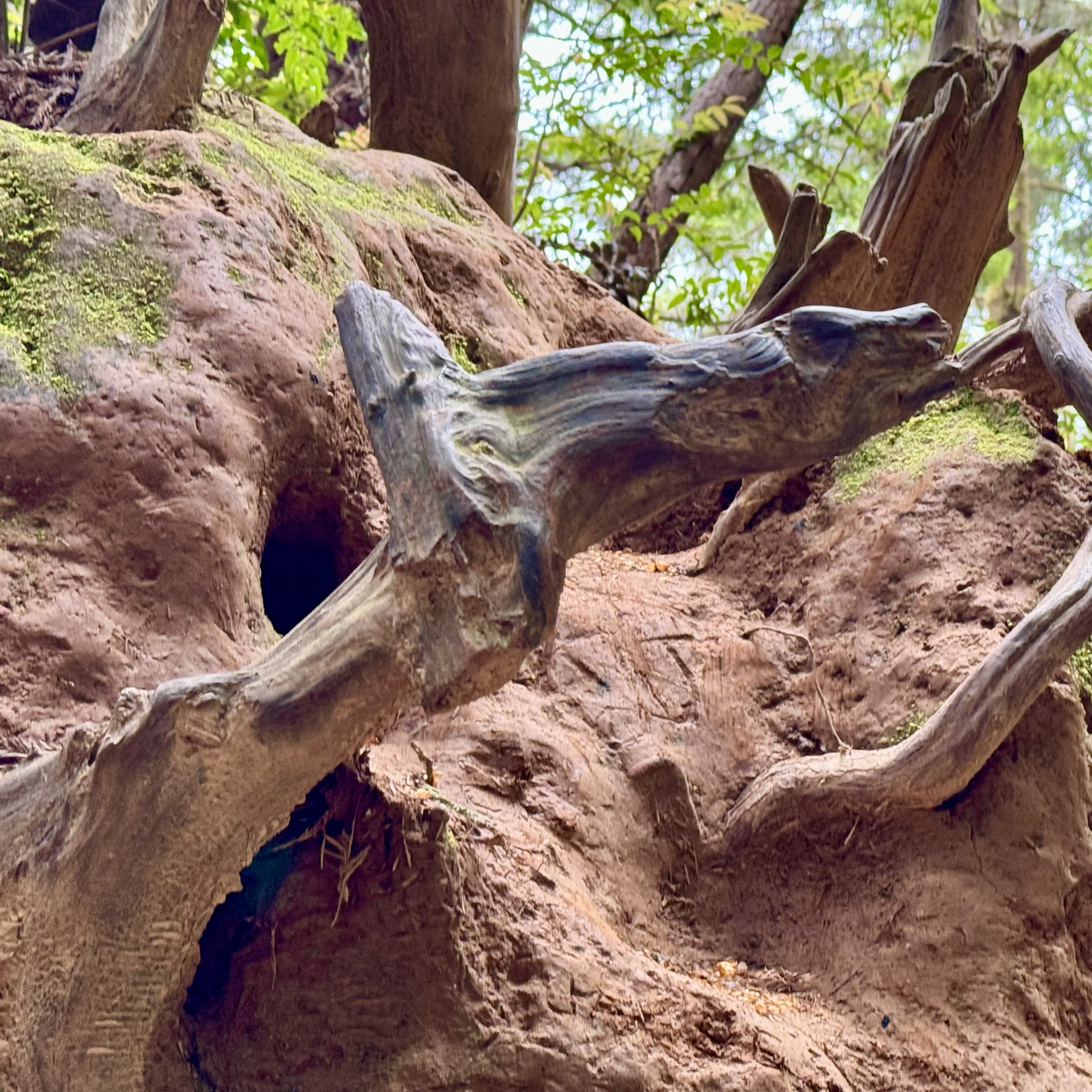
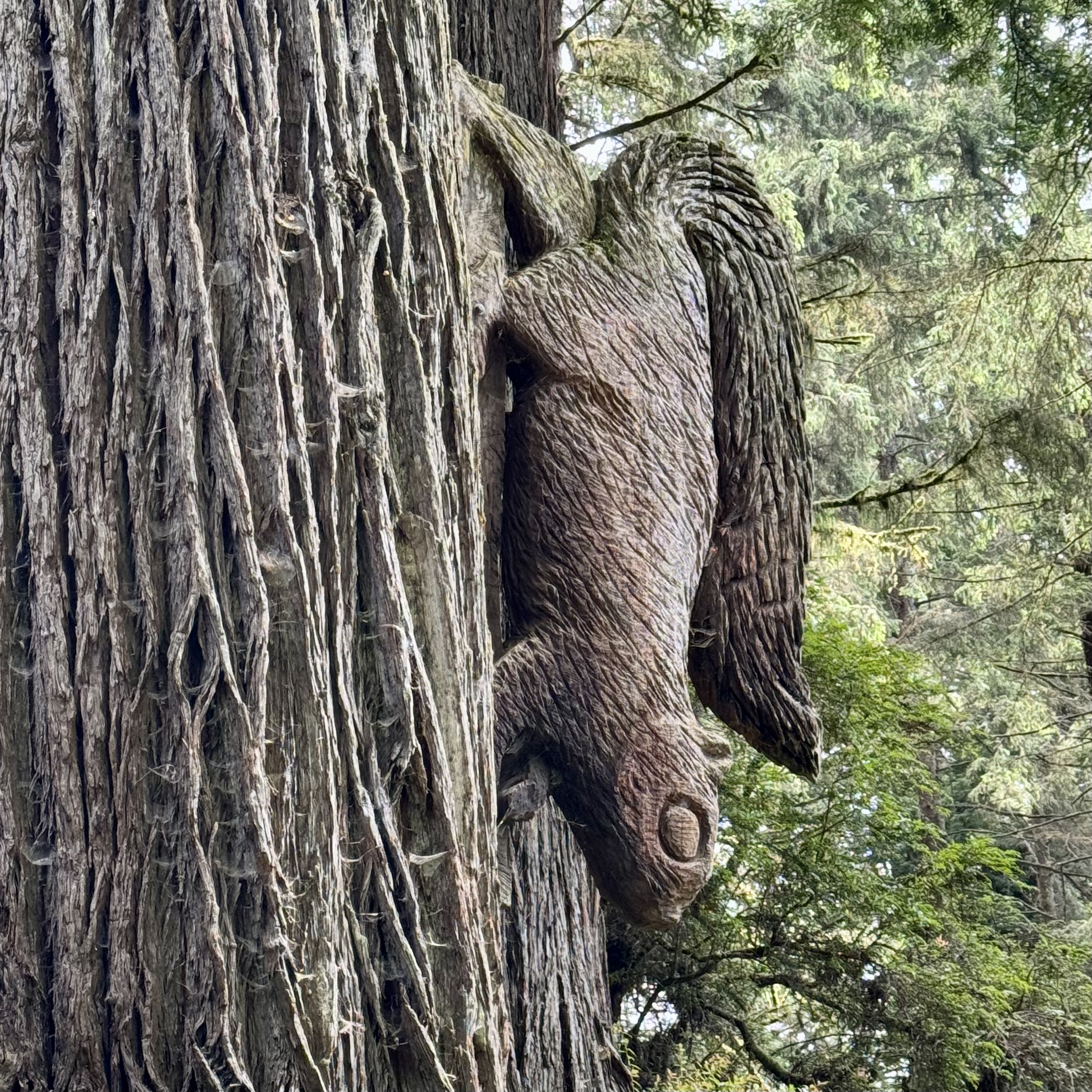
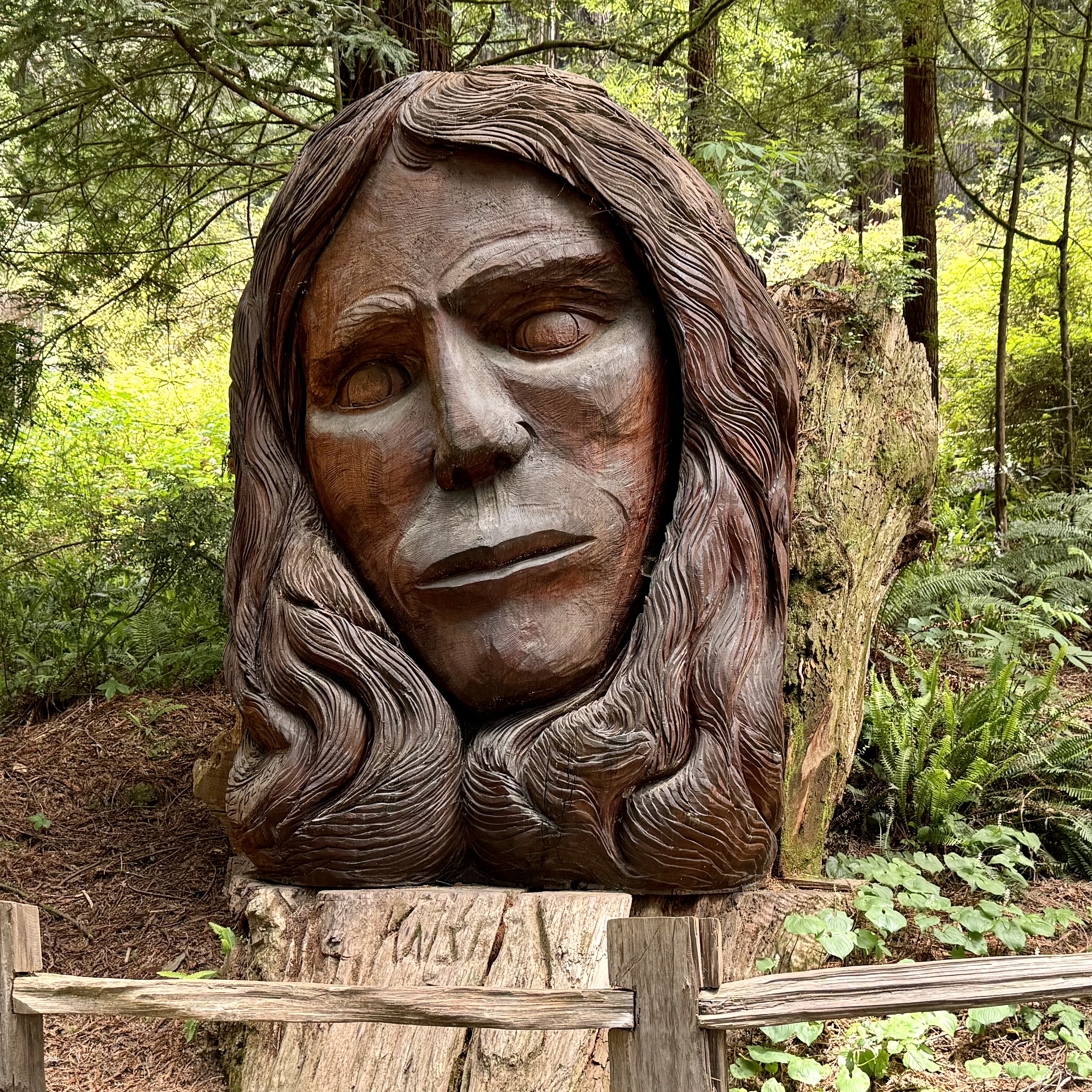
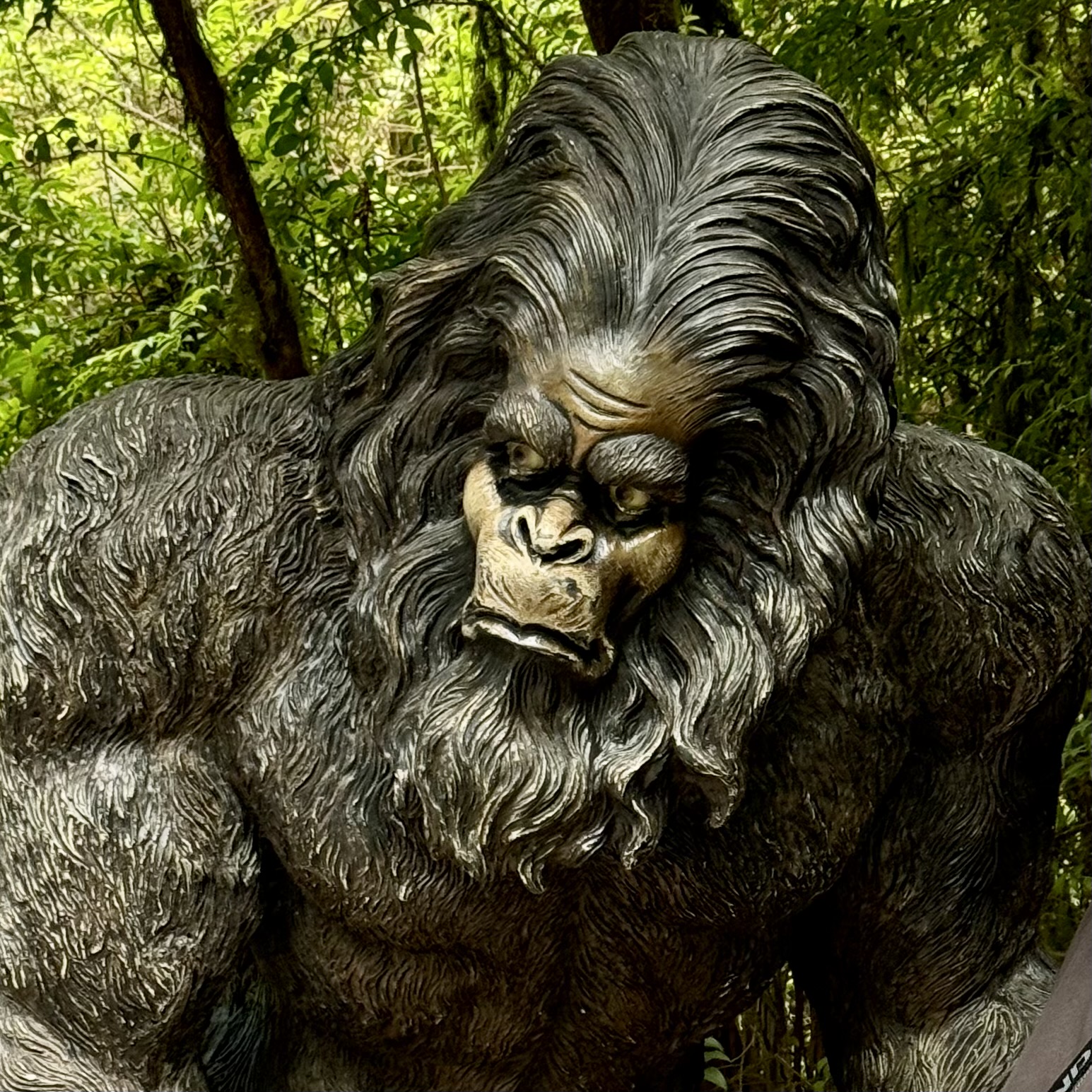
I never quite figured out what the “Trees of Mystery” were. But I let my imagination run wild , searching for some wildlife. Good fortune was with me for I spotted numerous wild “creatures” sculpted by the forces of nature or perhaps by the axe of Paul Bunyans but definitely not of the living variety. Can you spot the giraffe, alligator, Paul”s girlfriend…..

Not to be a total “Debbie Downer,” I enjoyed my visit  but after about 1.5 hours I had had my fill and we were off to what was for me a real experience of redwood old growth trees on part of the Brown Creek Trail in the redwood forest of  Prairie Creek State park, arriving via a pleasant drive down the Newton B. Drury scenic Parkway. I had no desire or need for human entertainment extras.  

Choosing not to patronize the hotel restaurant and preferring to soak in the sea breezes from our balcony,  a stop at Safeway for our own “room service” offerings was in order. After a delightful day, I spent a quiet evening of  breathing the salty air, listening to the melody of the waves, mesmerized by the ebb and flow of the water  and captivated by reflections of the sun on the panorama before me. 

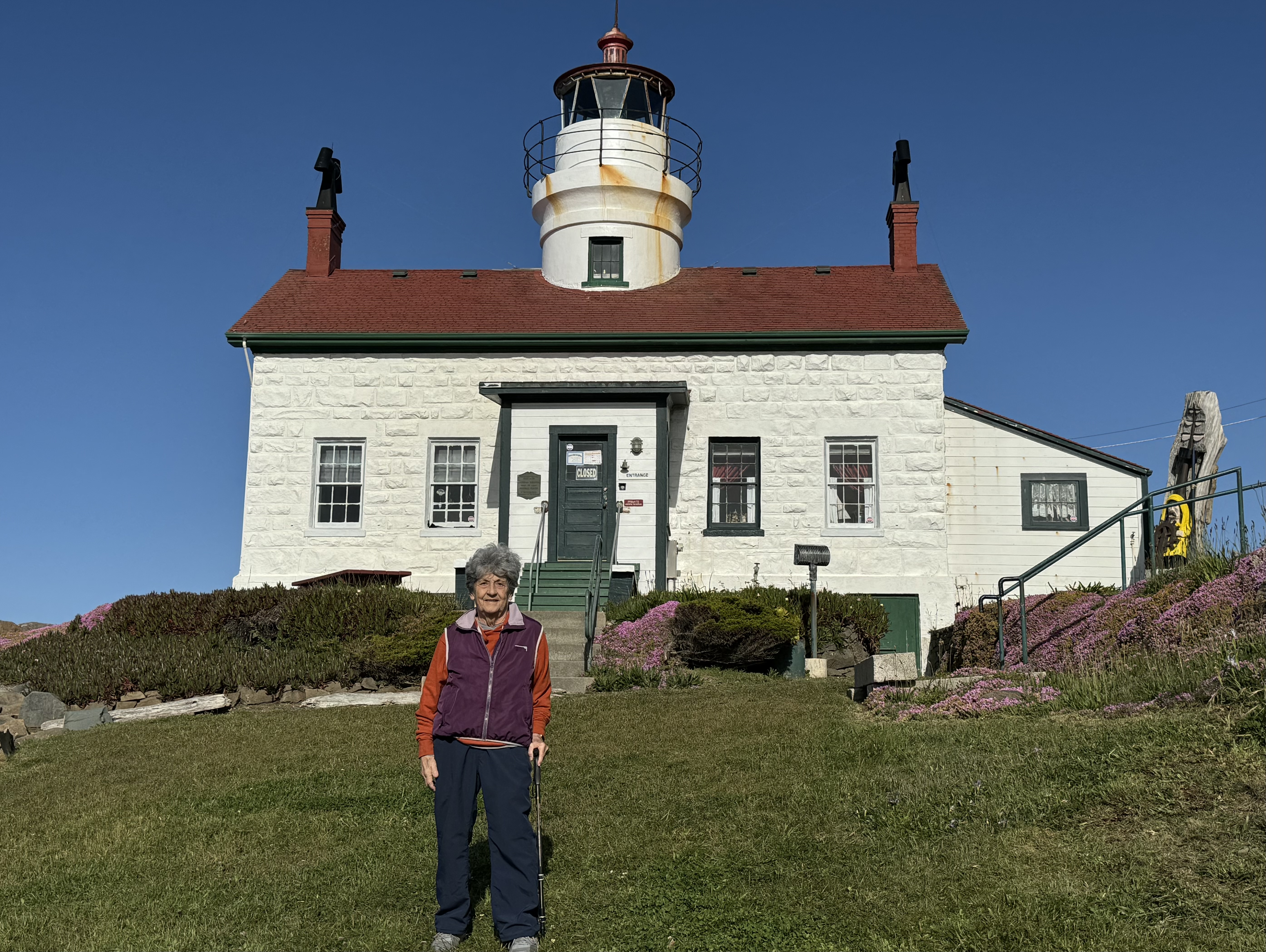
A visit to the Battery Point Island Lighthouse, a historical landmark,  the next day required being tuned into the tide charts as it was only at low tide when one could traverse the isthmus to the Lighthouse without wading through shifting sands, rocks  and the chilly chilly water. So we were out and about  around 7;30 am to catch the first low tide of the day. The harbor at Crescent City was booming during the mid-1800s due to massive redwood trees being harvested and loaded onto ships to build San Francisco and the US Government built a series of lighthouses along the coast.

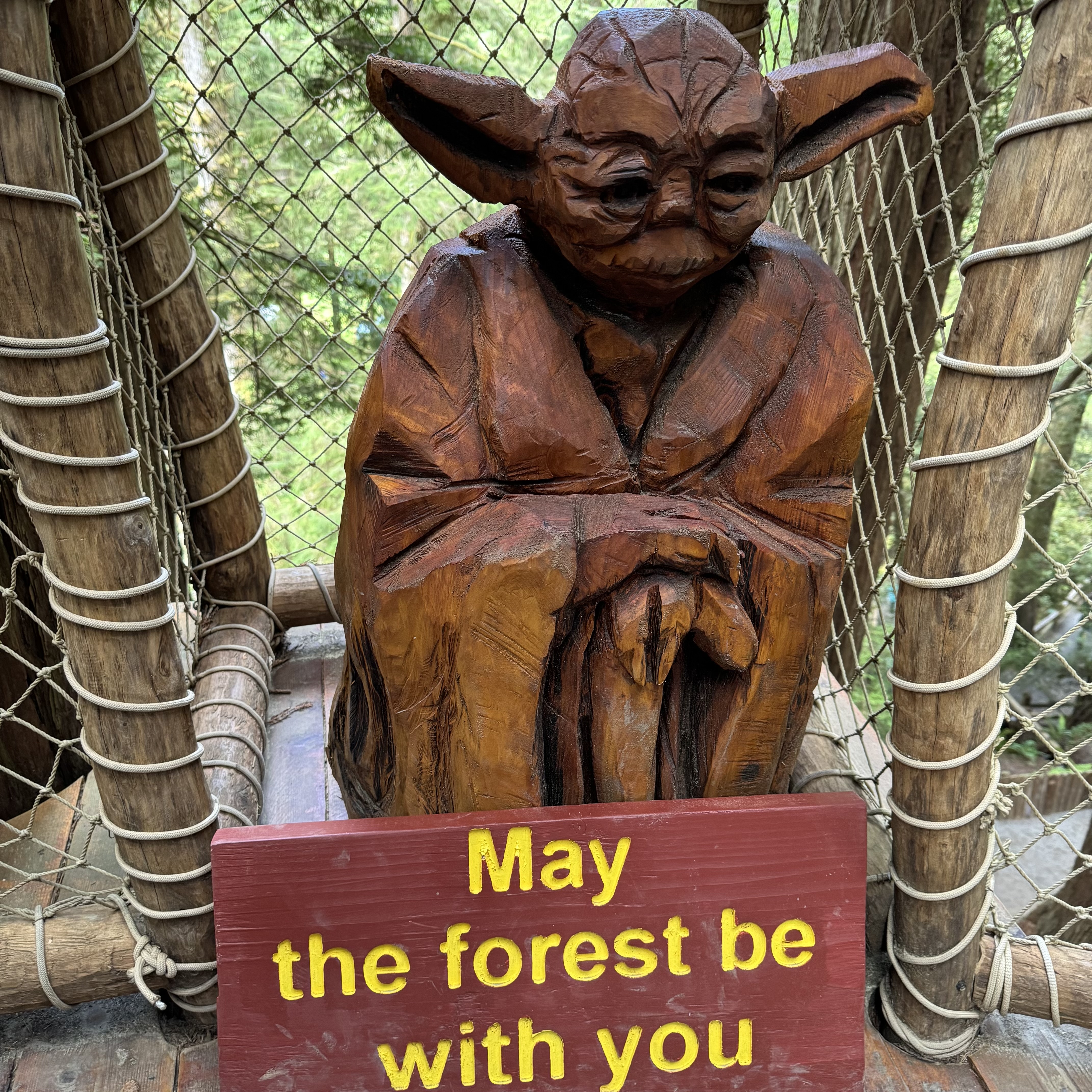
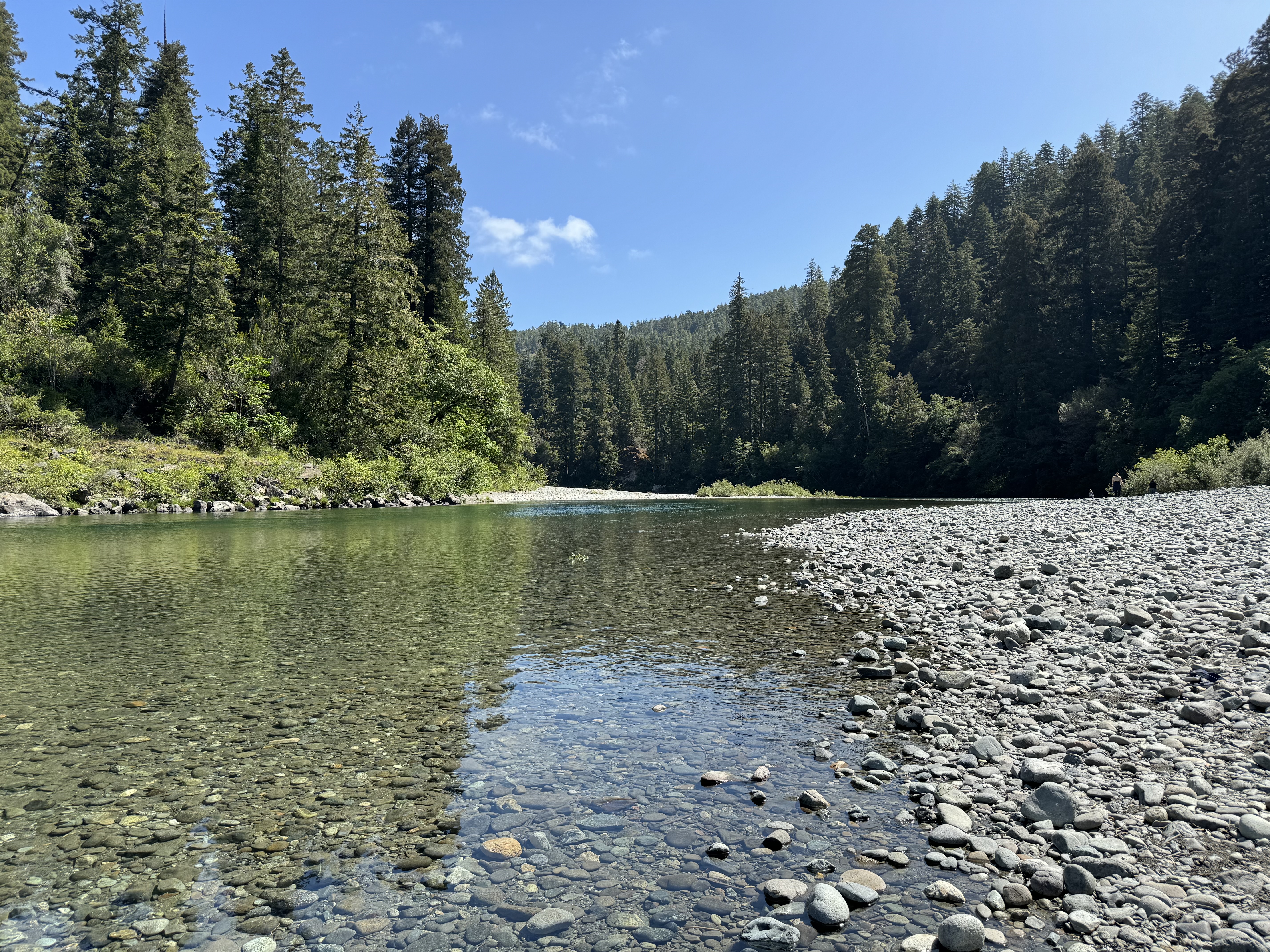
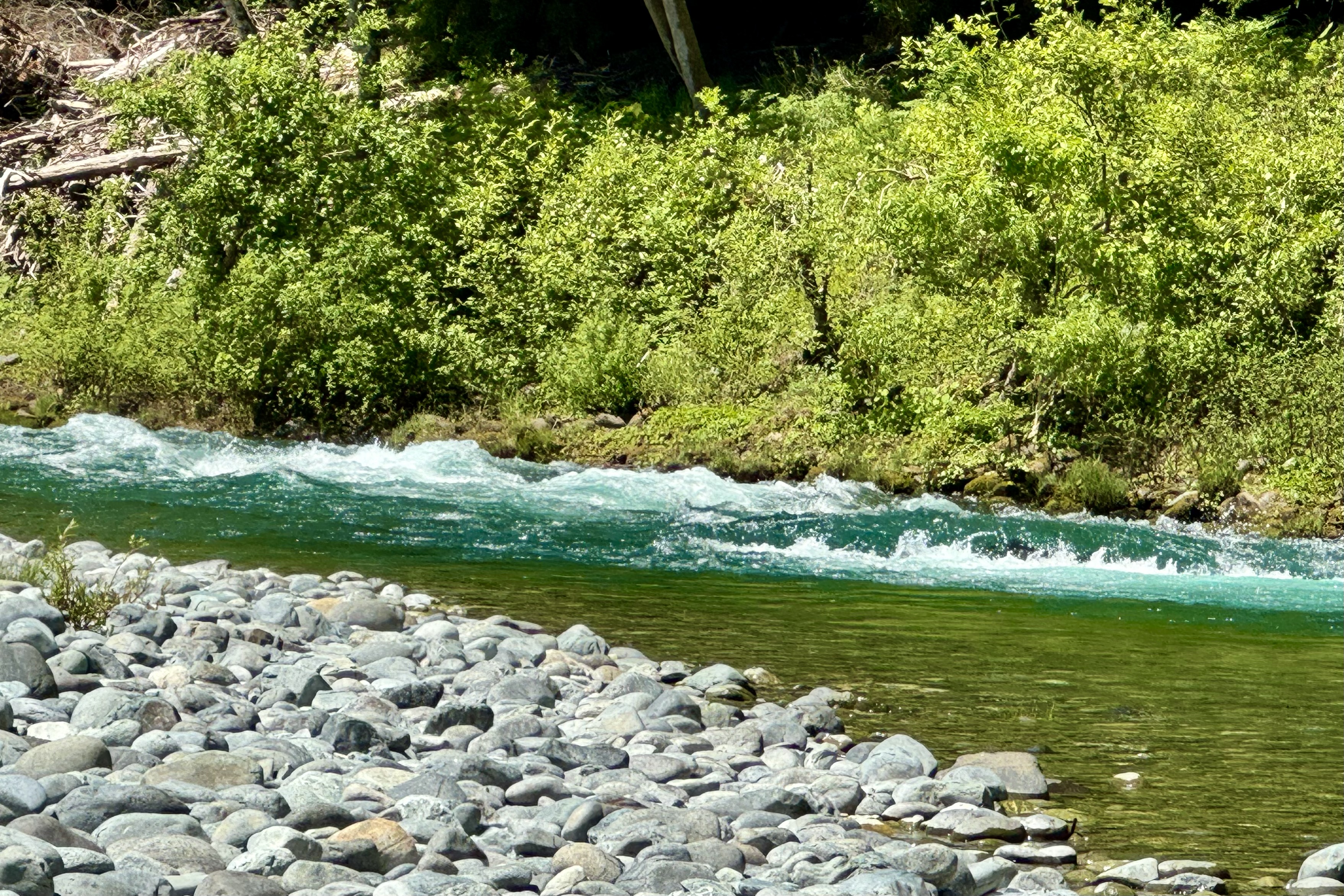
Though I would have liked to tour this historic facility, after enjoying the quiet  of the early morning seascape, I was eager to be on the road. to the Jedediah Smith Redwoods State Park and explore the Stout  Memorial Grove and other notoriously  massive trees. Being rather clueless about how to get where I was going, the first stop ended up at the South Fork of the Smith River and the Jededhia Smith State Park Nature Trail, which definitely was a good destination to be lost in. From there we headed over and about and around the forks of the Smith river to reach the famous and infamous, loved and hated Howland Hill Road. Howland Hill Road was a filming location for “Star Wars: Return of the Jedi” and is considered one of the most scenic drives in the Redwood National and State Parks.

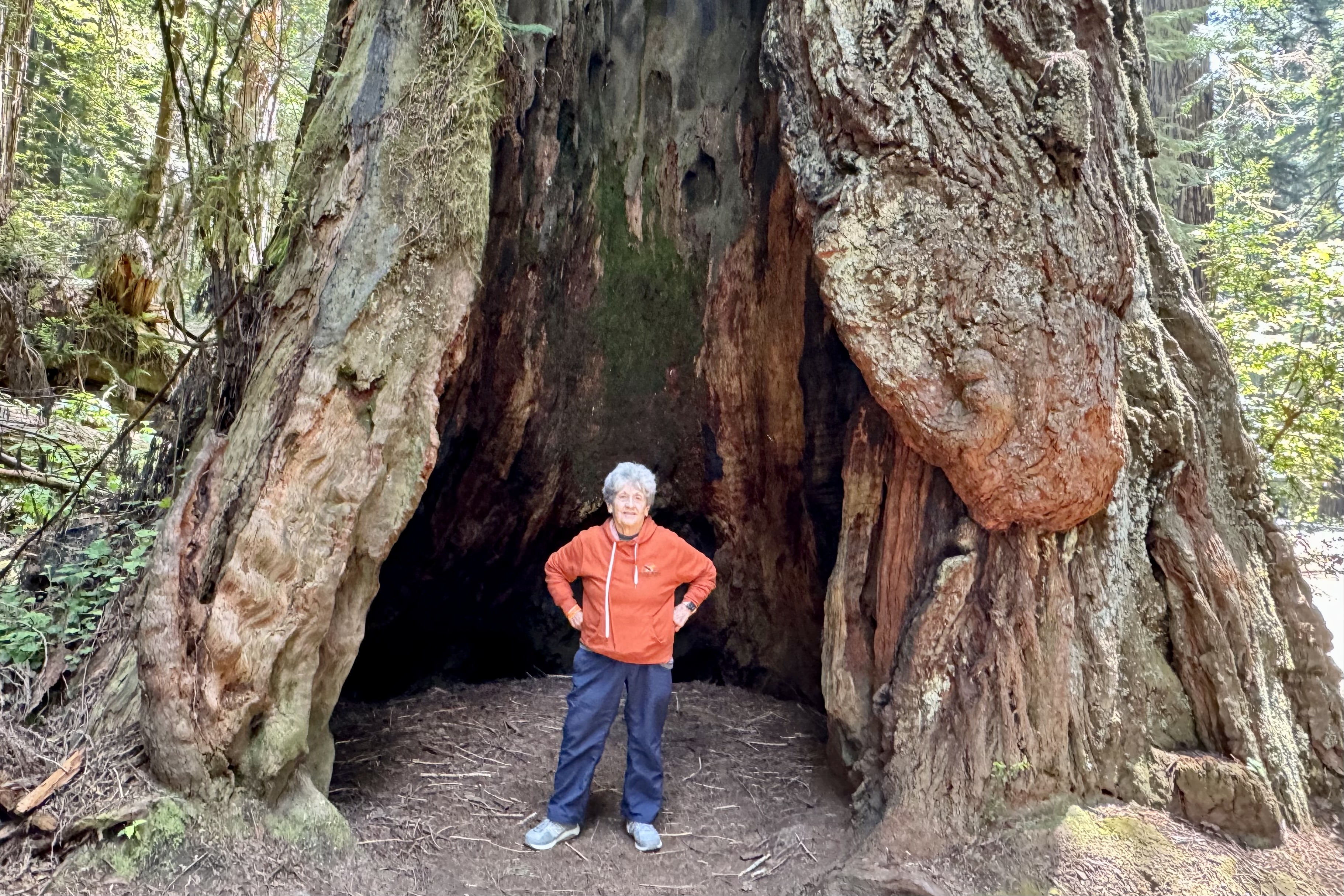
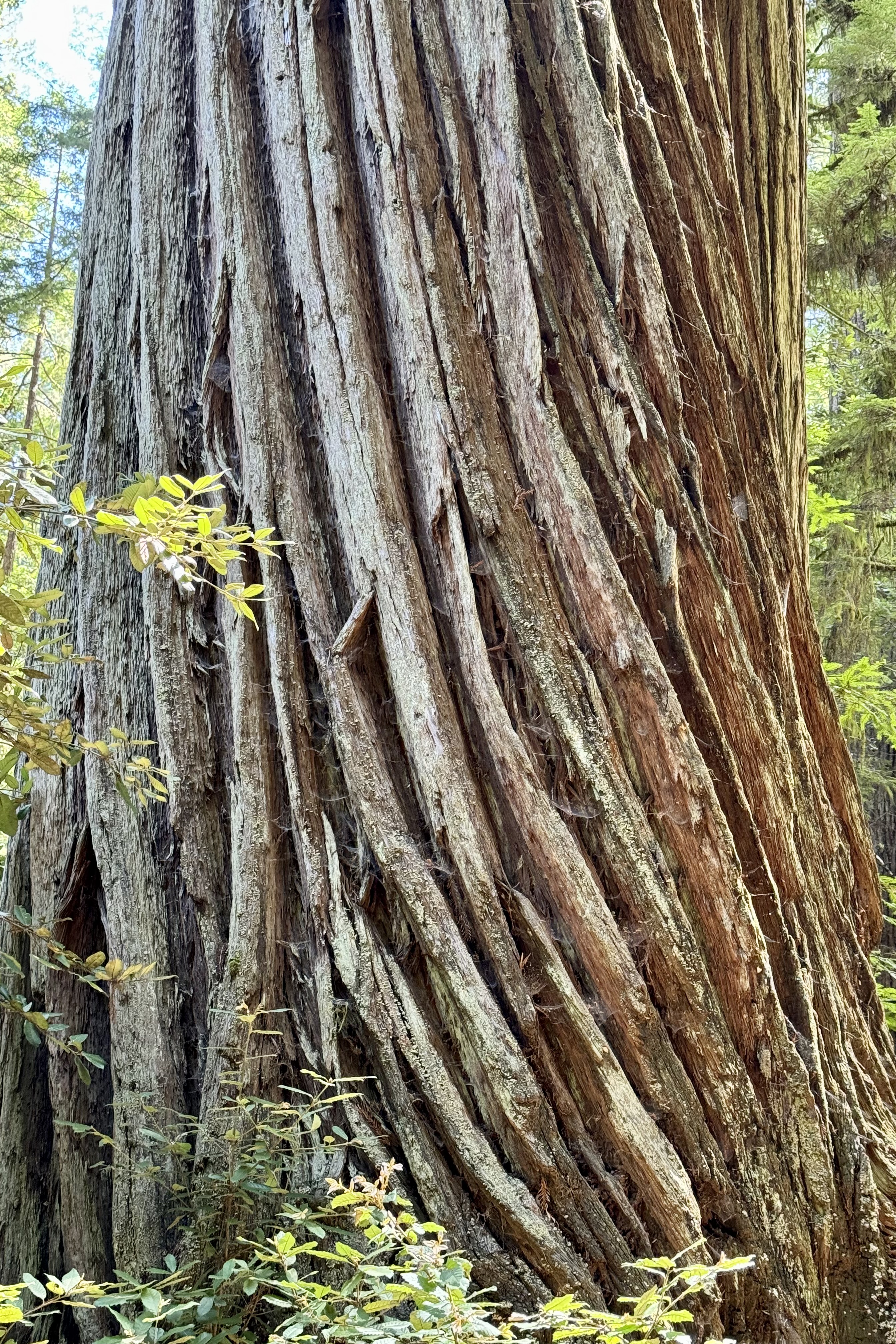
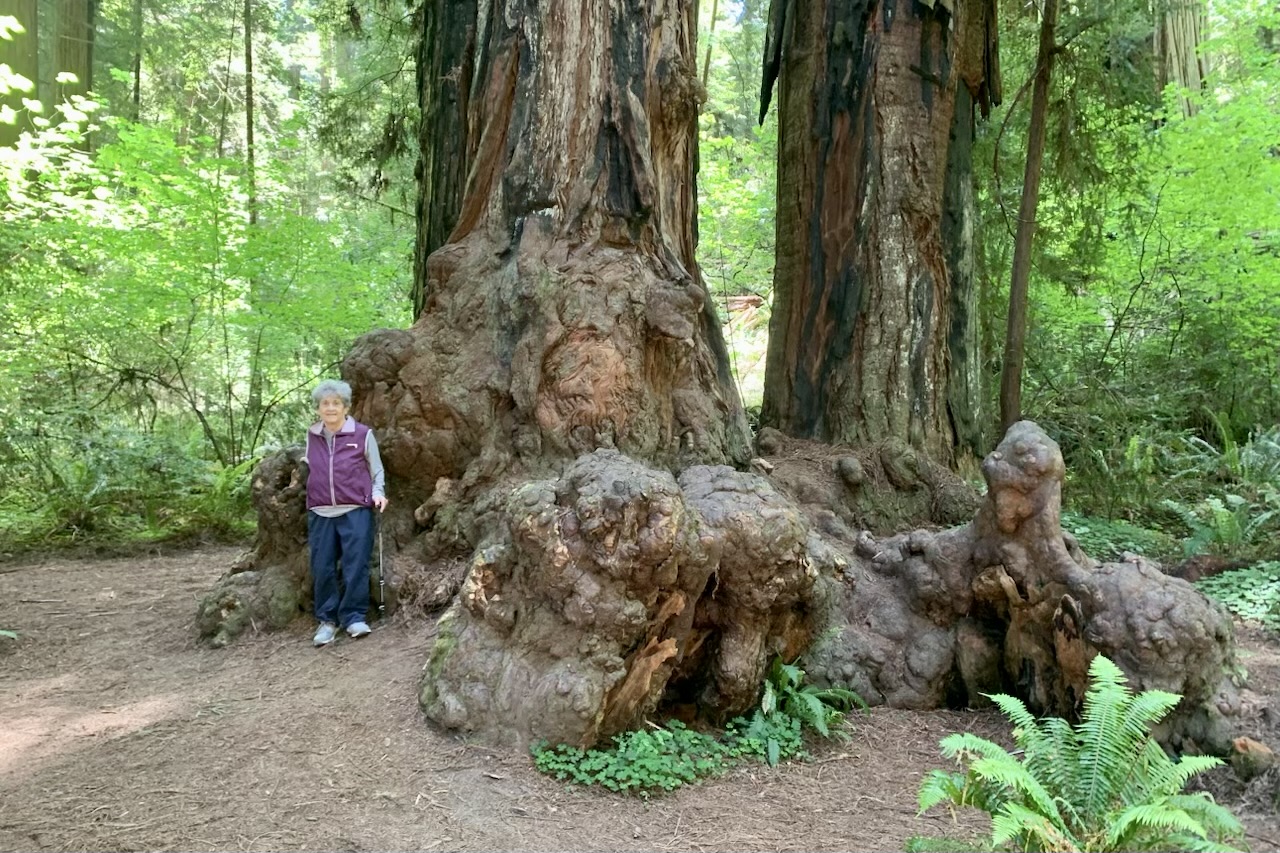
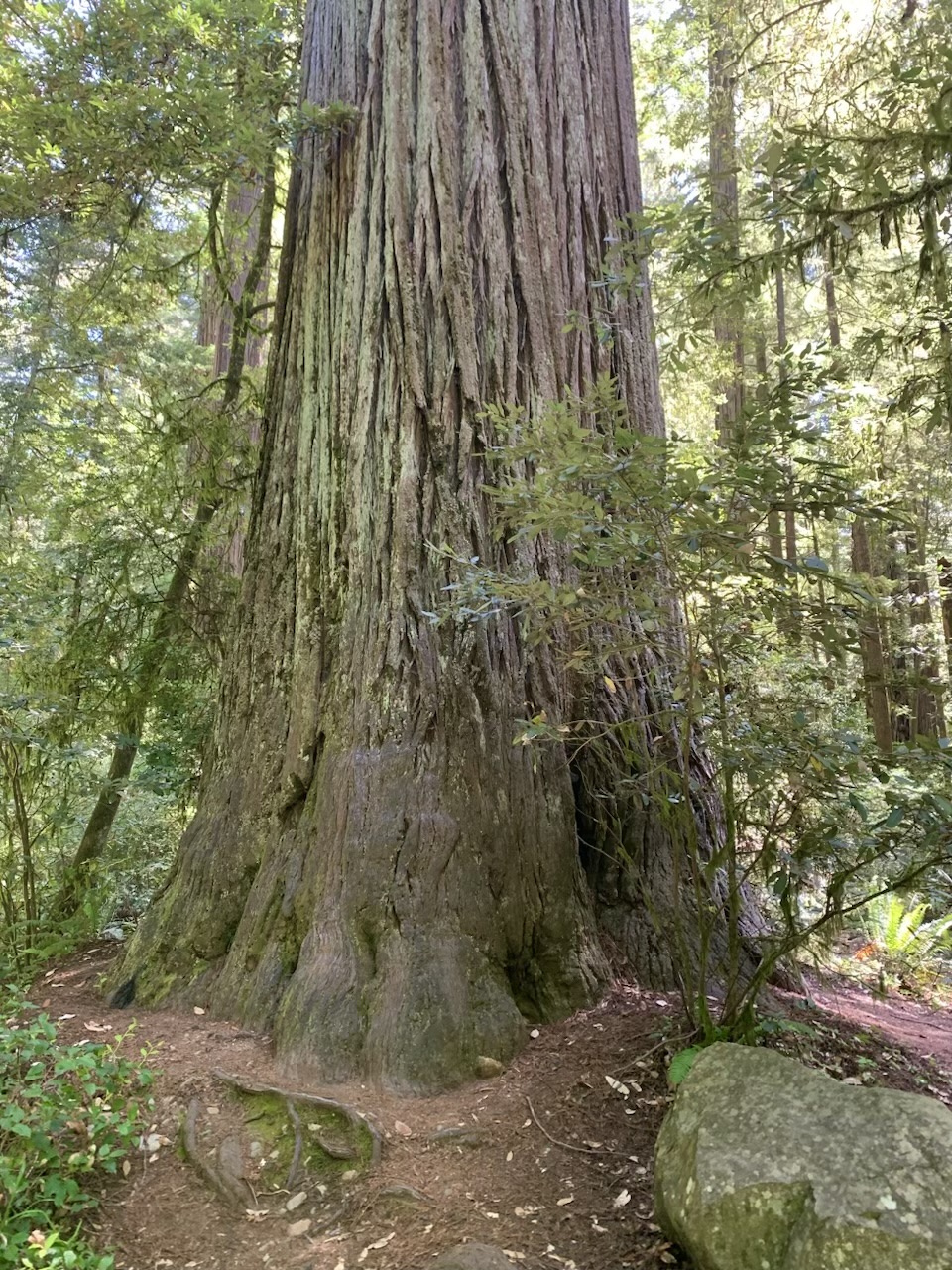
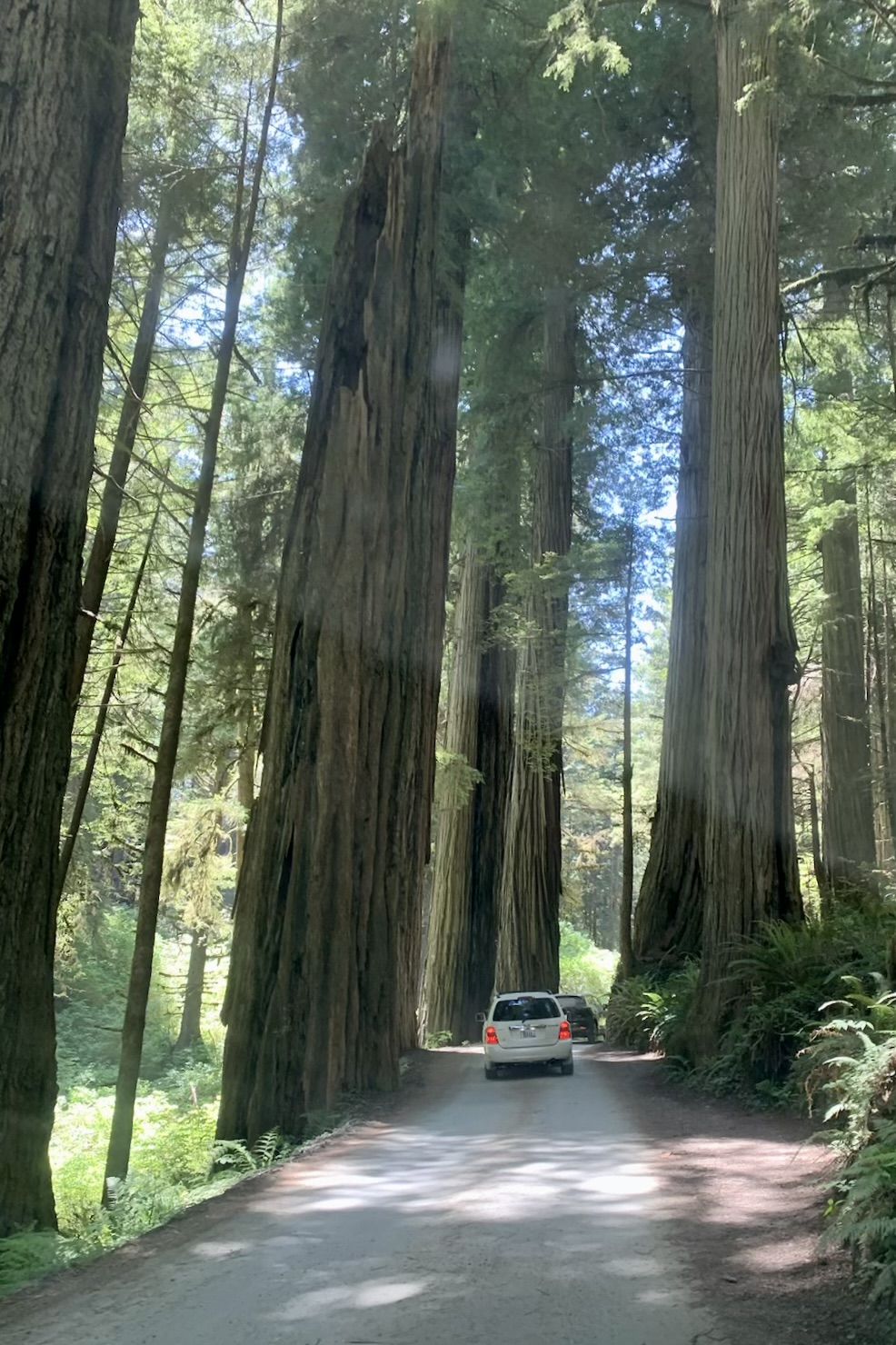
 If you can’t tolerate dust and  squeezing your shiny unblemished car between massive tree trucks, this is not the road for you. Part of this 10-mile road was once a stage coach road and my take on it is it hasn’t seen many  upgrades since that era. Most of Howland Hill Road is NARROW. It is a  non-tarred surface, single lane thus accommodating one car,  but naturally this is a two way road so one is required to make liberal use of the many pull-outs. It is about as intimate as one can get with a redwood without getting out and hugging it and it is akin to walking a path through the redwoods except in a car. Since this was a Sunday and Memorial Day week-end with halcyon weather, a myriad of folks also had their brilliant idea of driving the path of an old stage coach road so we pulled over and out again , over and out again and again. The road is not recommended for RV’s but there are always those individuals who believe they are the exception. It was as if they were driving a Conestoga Wagon on a path meant for a horse and buggy. After a wonderful hike of the Stout Memorial Grave, I opted out of stopping at any more trail heads to visit massive trees as the string  of cars parked on  the road near  every trailhead was extremely long. Walking the distance to the trail head would be akin to assisted suicide by the driver gawking at these very tall tree and oblivious to me on this road shrouded in a cloud of dust . P.S.  I absolutely loved the experience of driving this road. 

One thing of particular interest to me was the number of fallen trees. I subsequently read that between 2010 and 2020, a lot of big trees fell along the northern edge of the grove, where it borders the Smith River. Now the trail passes a nearly continuous string of fallen giants and the exposed roots of these uprooted Redwoods , which  in many instances remain intact.  One can observe  the intertwining web of redwood tree roots. These roots create a mesmerizing network that supports the towering giants and fosters a unique form of cooperation among the trees allowing these trees to withstand powerful winds and storms. We humans could learn a few lessons from this tree colony.

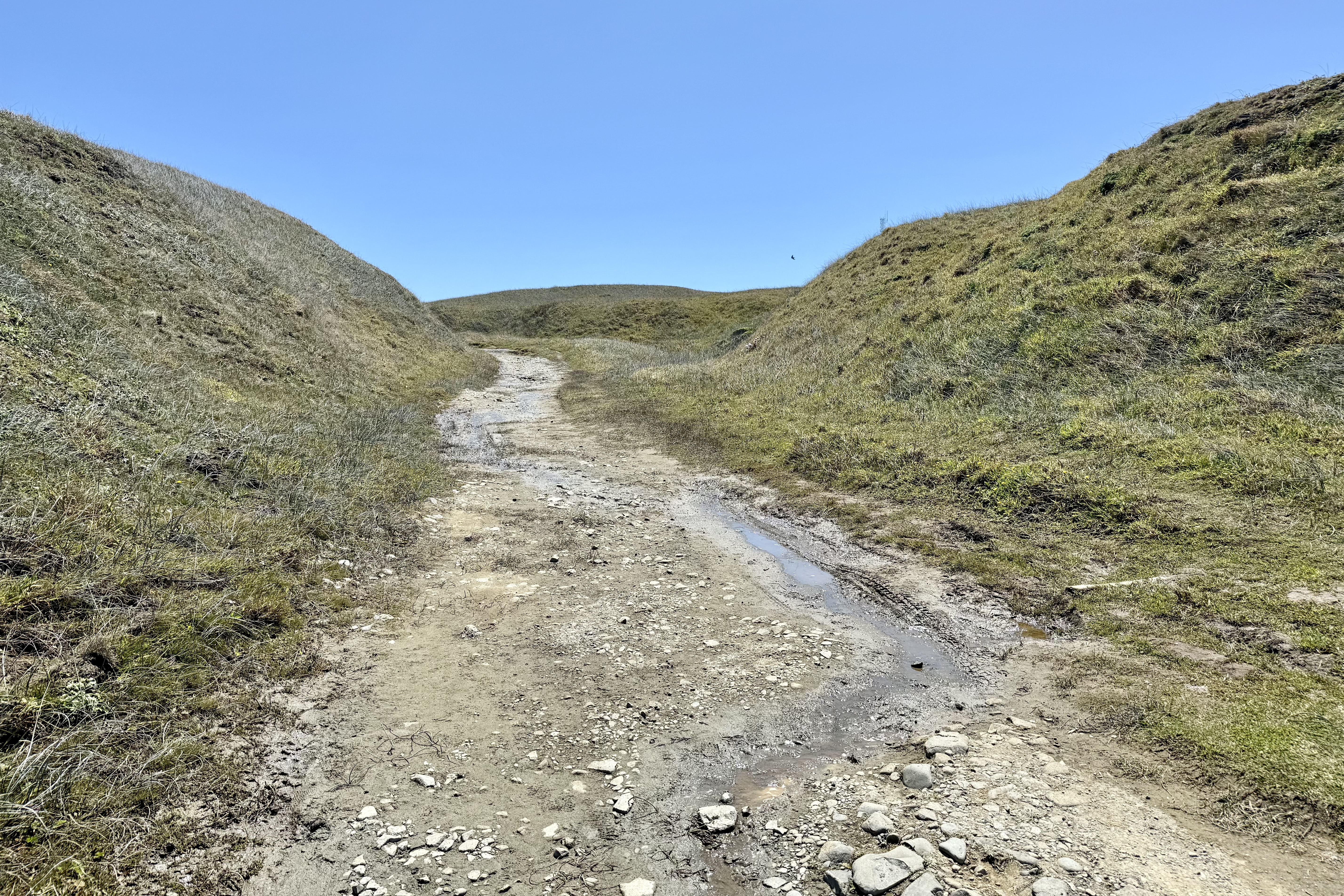
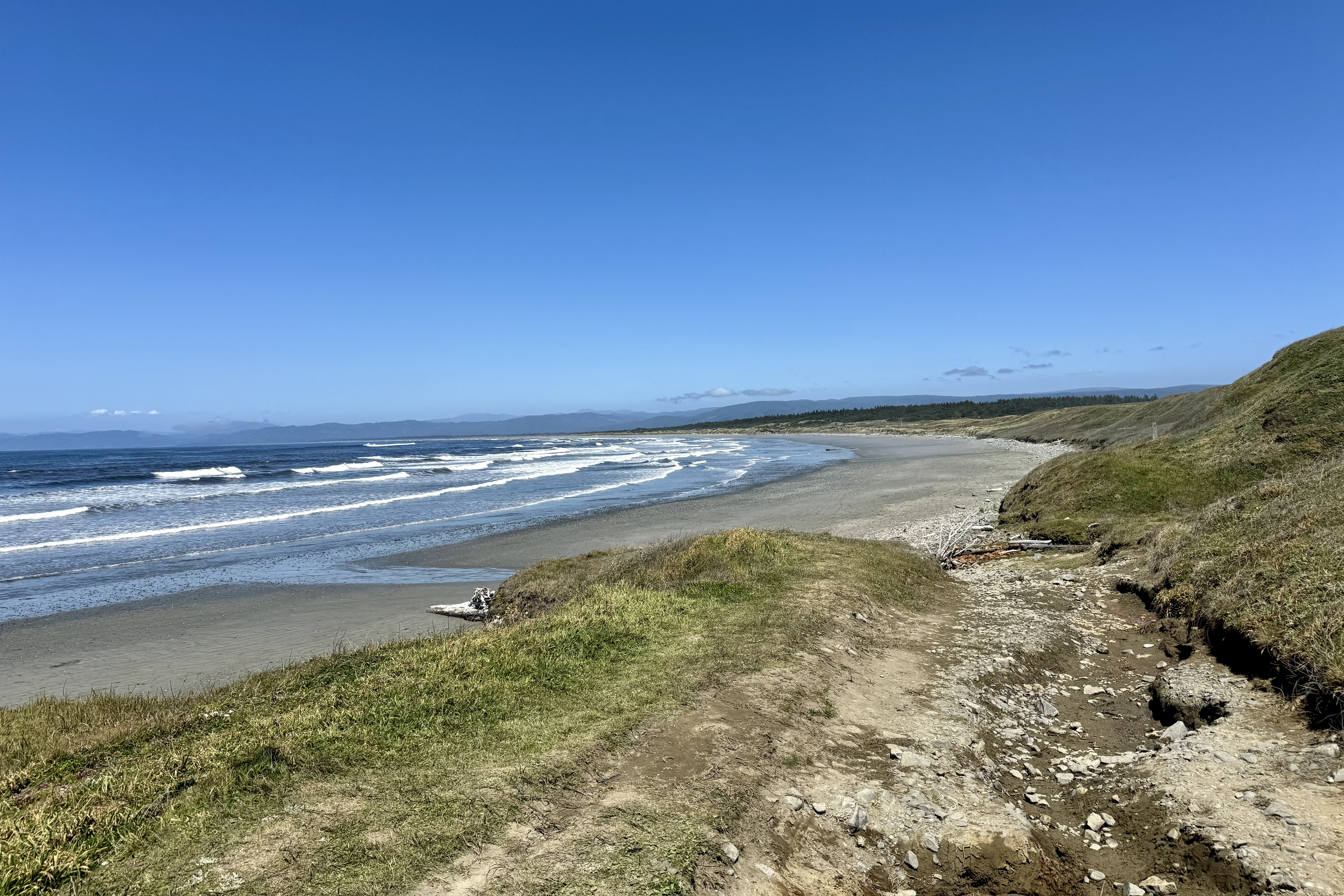
Having emerged from the Howland Hill  extreme adventure drive,  I swung north to Tolowa Dunes State Park and  Point St. George which is  located on the land of the Tolowa Dee-ni’. This is another area  with a very tragic history–because these are the ancestral lands of the Tolowa people, whose villages were attacked by settlers in the 1850s. The Dee-ni’ Holocaust began in California in 1851 with the goal of a war of extermination to continue to be waged between the two races until the Indian race became extinct. There was an  appropriation of one-million-four-hundred-thousand (1,400,000) dollars to pay vigilantes to destroy them under the slogan that rang across the land: “The only good Indian is a dead one”. A few hundred survived and were driven to concentration camps. Gazing across these ancestral lands yet again fills my heart with rage at the atrocities rendered upon native Americans in the white European settlers imperialistic   expansion of the West under the tenets of “Manifest Destiny “ – seeing their expansion  as a divinely ordained, moralistic assertion of American exceptionalism.

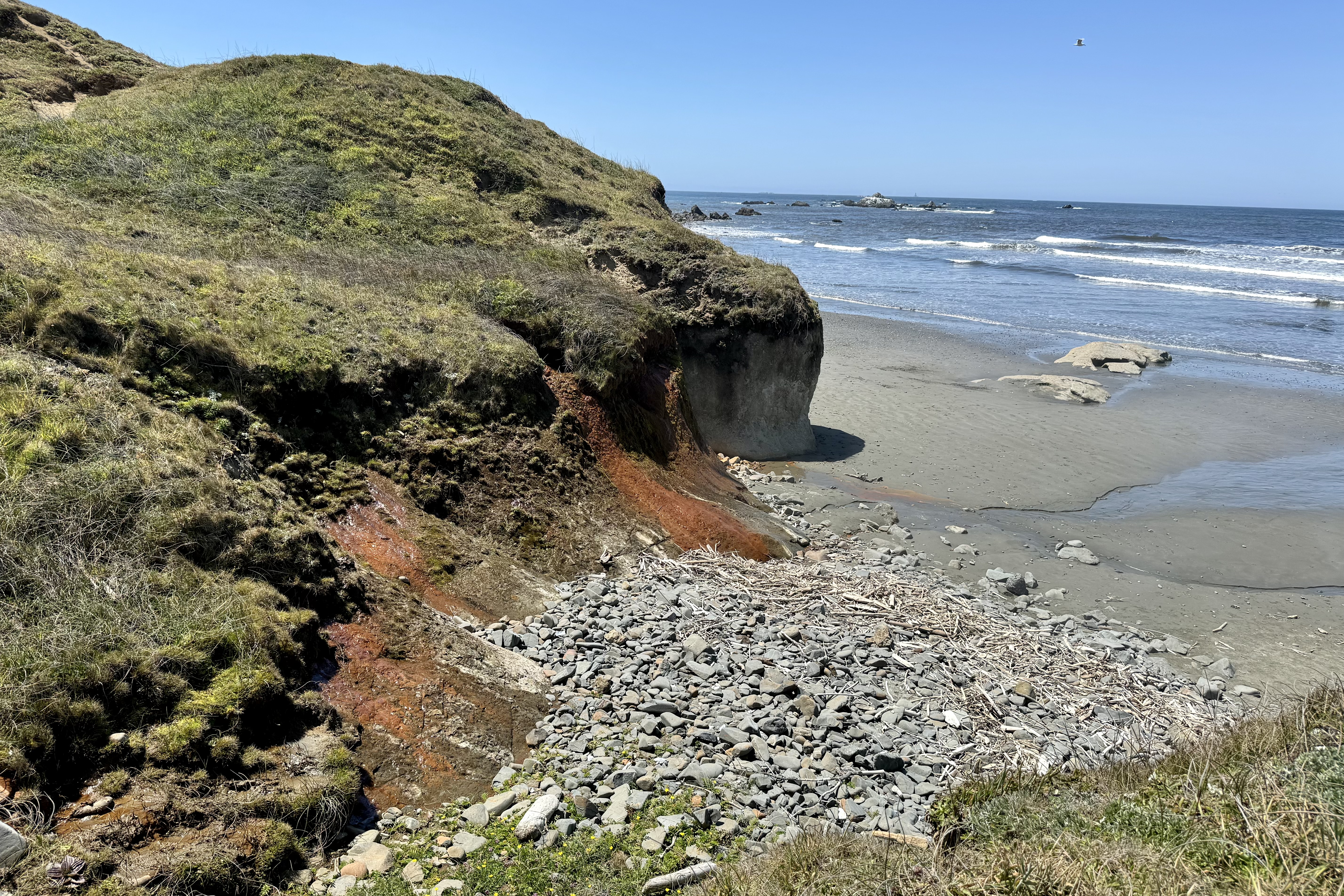
I drove until the road dead ended into a parking area and walked a path over dunes to the water and a relatively secluded beach bordered with driftwood. It was a nice contrast to the experience of the Redwood Parks to the south. Feeling sated by water and wood it was time to return to the hotel and enjoy the sights and sounds of the sea as it lapped the shore before me. A simple dinner of a Caesar Salad and clam chowder in the restaurant was a perfect end to a spectacular show produced by Mother Nature and Farther Time!.