No Fish on This Reef, Escalante Needs an Escalator, and Hoodoos Shooting Skyward

I got on the road late morning from Gunnison CO and selected a longer but designated scenic highway to Arches National Park. With minimal traffic, I at times felt like I was the sole individual who preferred to drive scenic highways. There can be such joy in the journey and this day was joyful.

The route put me on Interstate 70 for about 40 miles and per usual I was grateful to get on a beautiful secondary road, one of those roads on my AAA maps marked with ………… designating it as awesome scenery. It would take me through Capitol Reef National Park and Grand Staircase Escalante National Monument. I had visited Capitol Reef in 2016 so opted for a cruise through its magnificence on the way to Bryce via Utah scenic byway 12, aka “Wild Roads.” Escalante was new territory.

Scenic Byway UT-24 (also named Capitol Reef Country Scenic Byway) is more than just a sneak preview to the equally scenic and incredible UT-12. From Hanksville to Torrey on the far side of Capitol Reef National Park, the panoramas and the artists’ palette that painted this area was splendorous. It seemed we had gone mostly from the red “hot” spectrum of colors to a “cold” array of the grey and chocolate hues of our nature world.

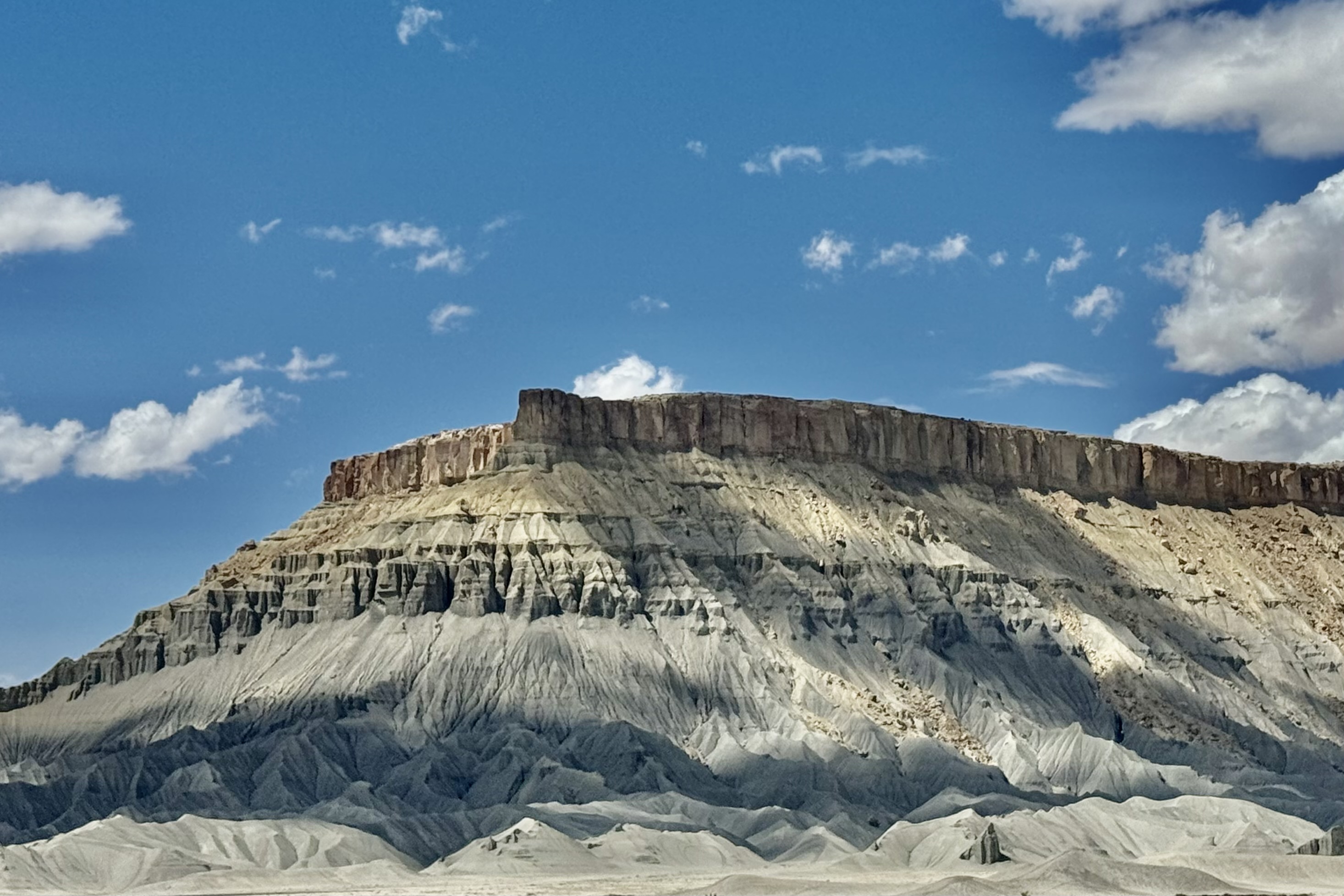
The scenery really been to pop around Hanksville, along the Route UT-24 . Factory Butte was grand and was a kaleidoscope of what might be termed as cold colors . Here there is a little something for everybody. Swing Arm City, near Caineville is an OVH recreational area which is intended for off-road vehicles (such 4×4, dune buggies, motocross bikes) but is open to all vehicles. I only drove in a few hundred feet ( there is no road marked) but it felt surreal and a bit like a lunar landscape, with the Factory Butte and the North Caineville Mesa on the horizon.

Heading into Capitol Reef, via the eastern entrance , the light blue, greenish-gray, and off-white tones of the sedimentary rocks was quite remarkable but I also found the solution cavities in these roc k surfaces ( known as honeycomb weathering) notable. These surface holes are caused by the weathering effects of wind, water, and ice but they are only surface.

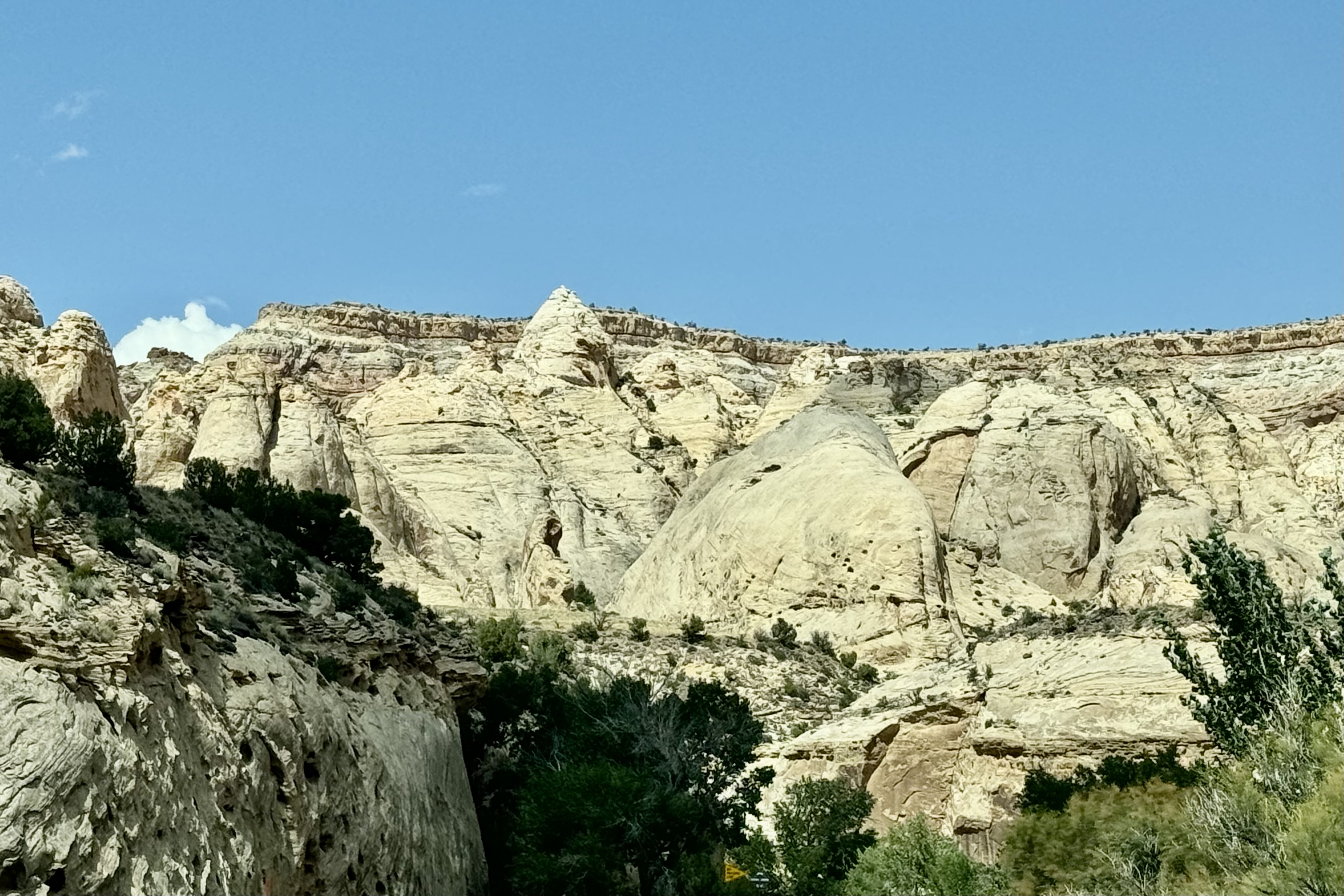
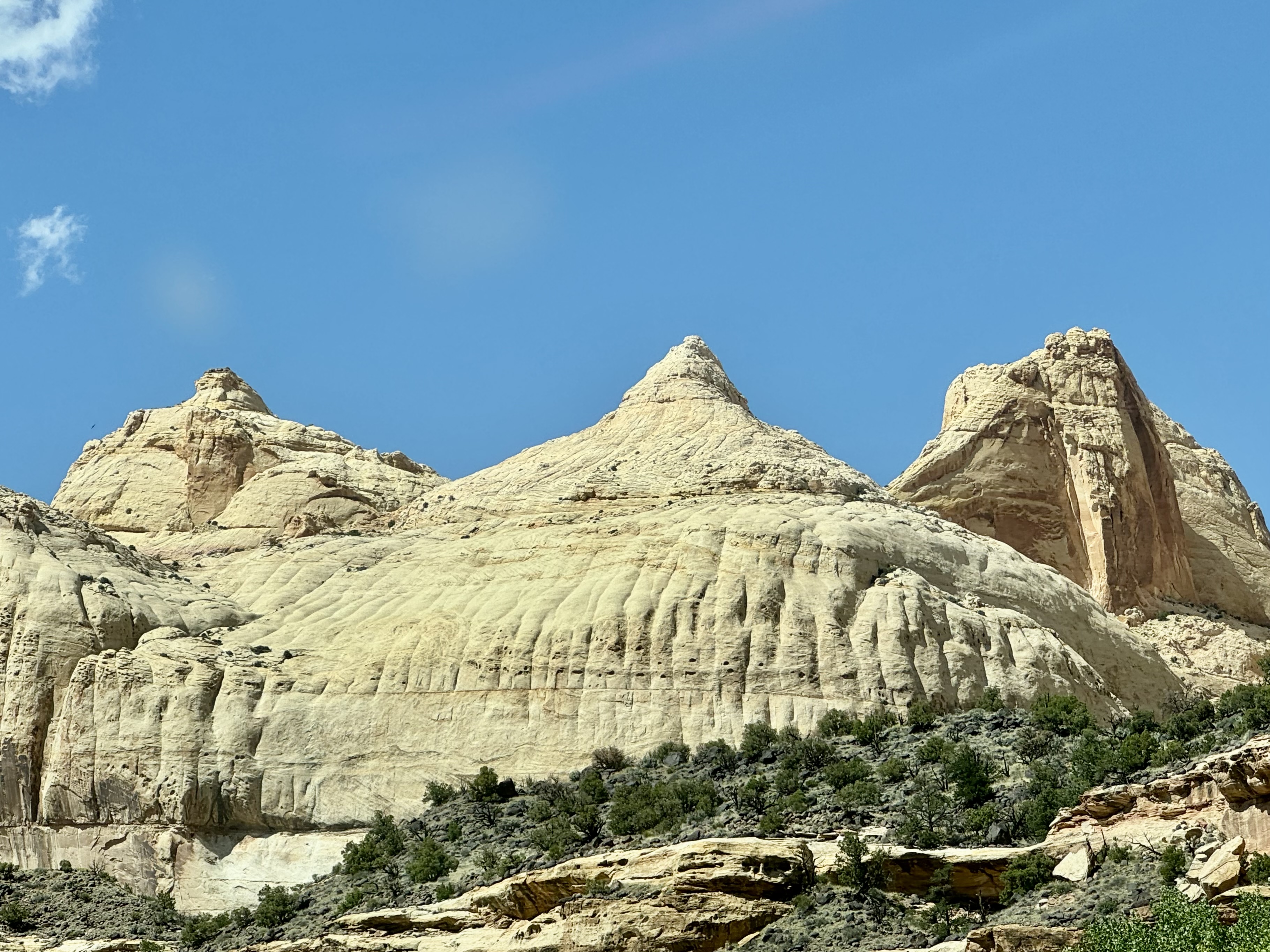
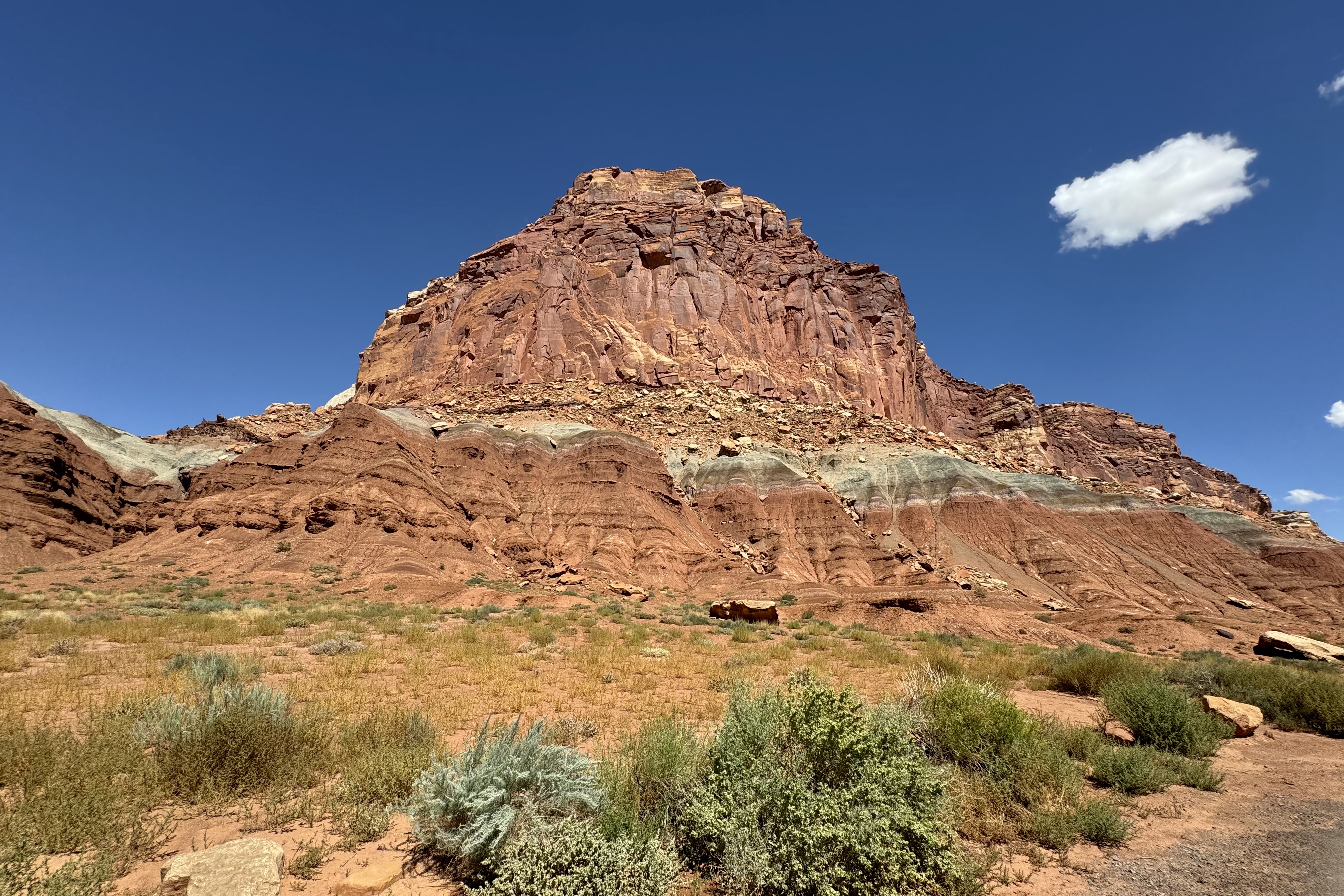
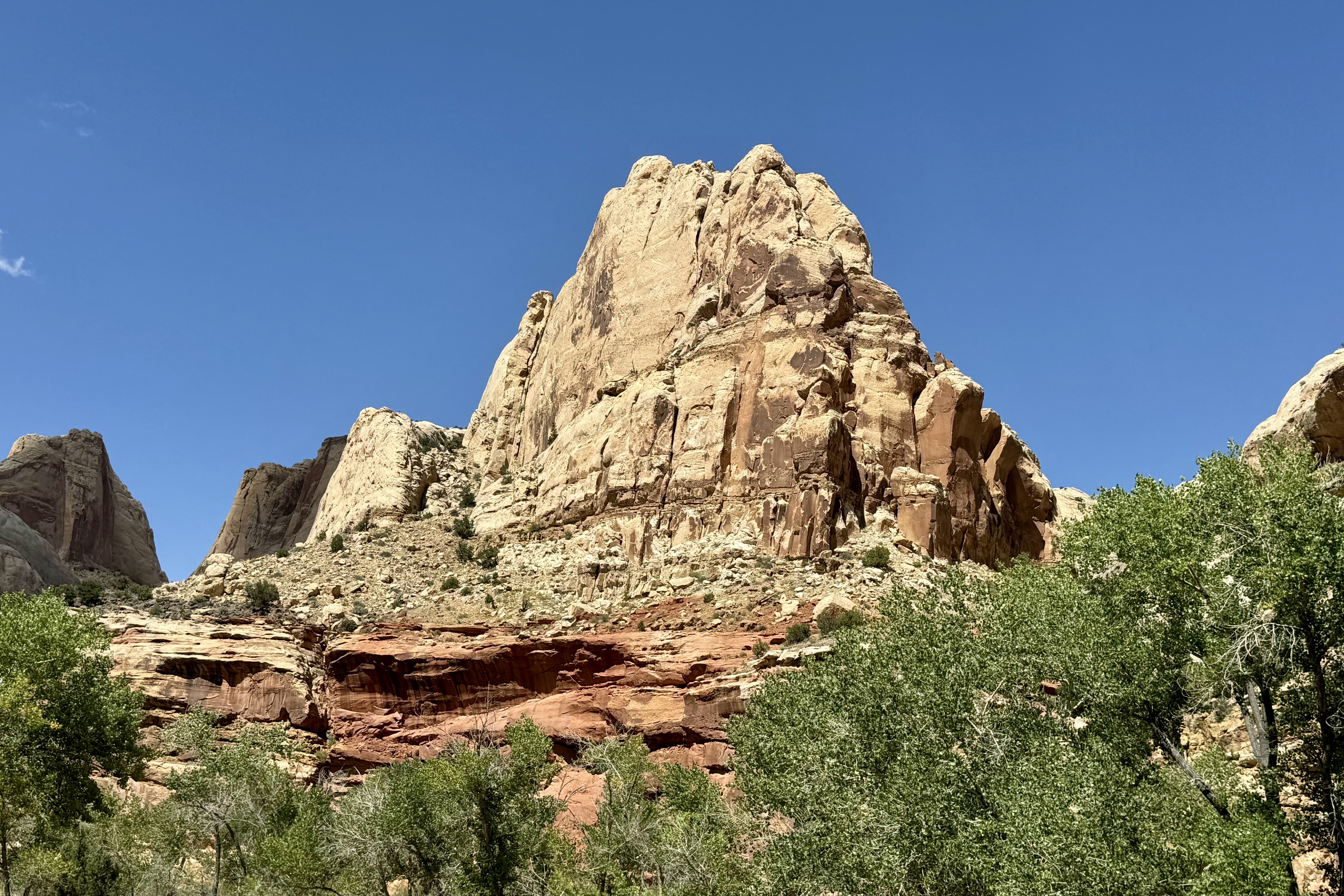
But it wasn’t long before the vermillion, white, red and pink sandstone formations that are so prominent in most of the southwestern parks began appearing in grand style – one after another, like models on the runway strutting their stuff. Disappointedly , the scenic drive within the park was closed for road work but clearly there was still plenty of scenery..

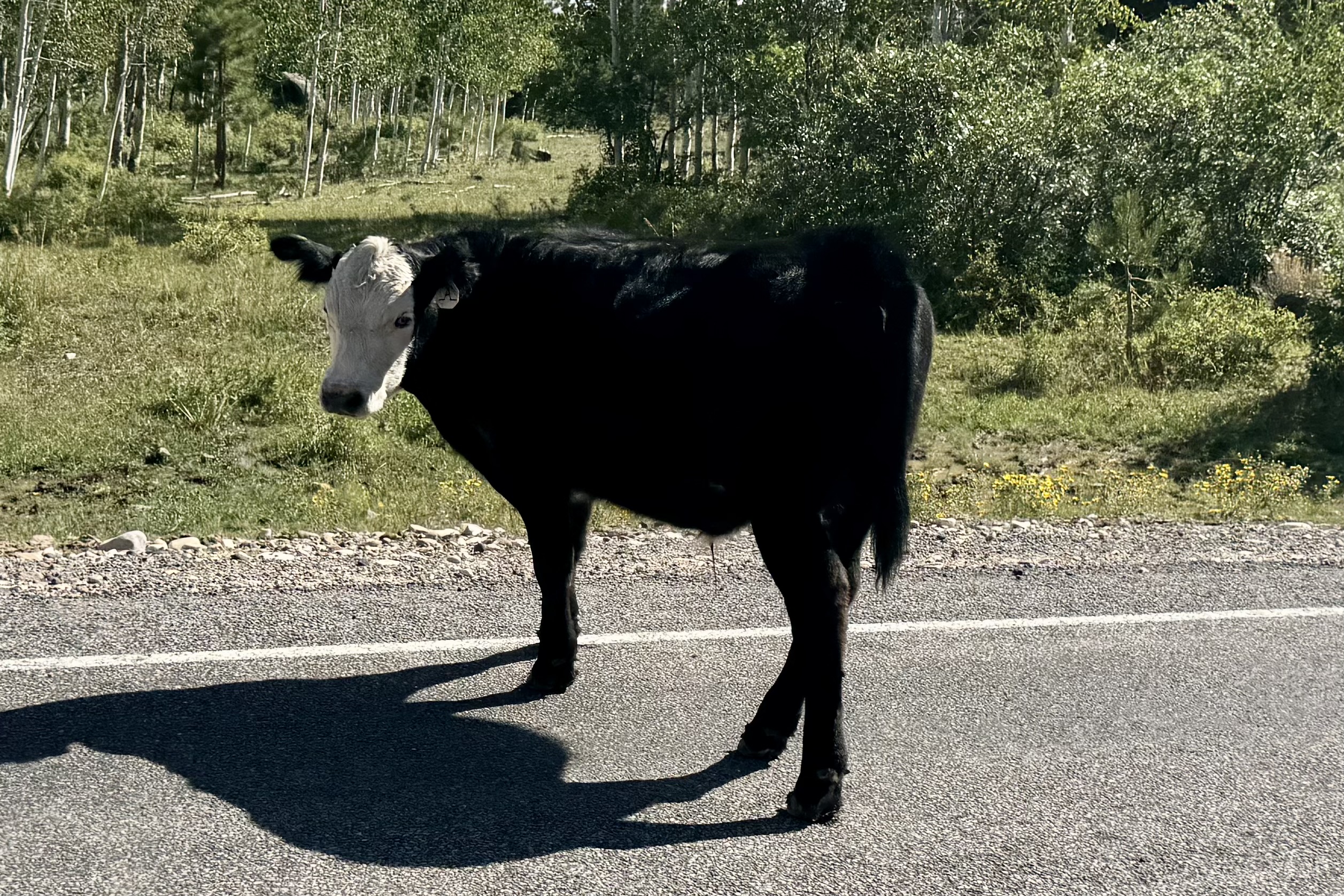
Heading south from Torrey to Boulder Utah , it was a delight traveling on UT12, as the road ascended through the Dixie National Forest with numerous vista points along the route and to add a bit of fun, it was open range in which cattle are permitted to roamed. .. and that they did. It was 124 miles of scenic exhilaration. .

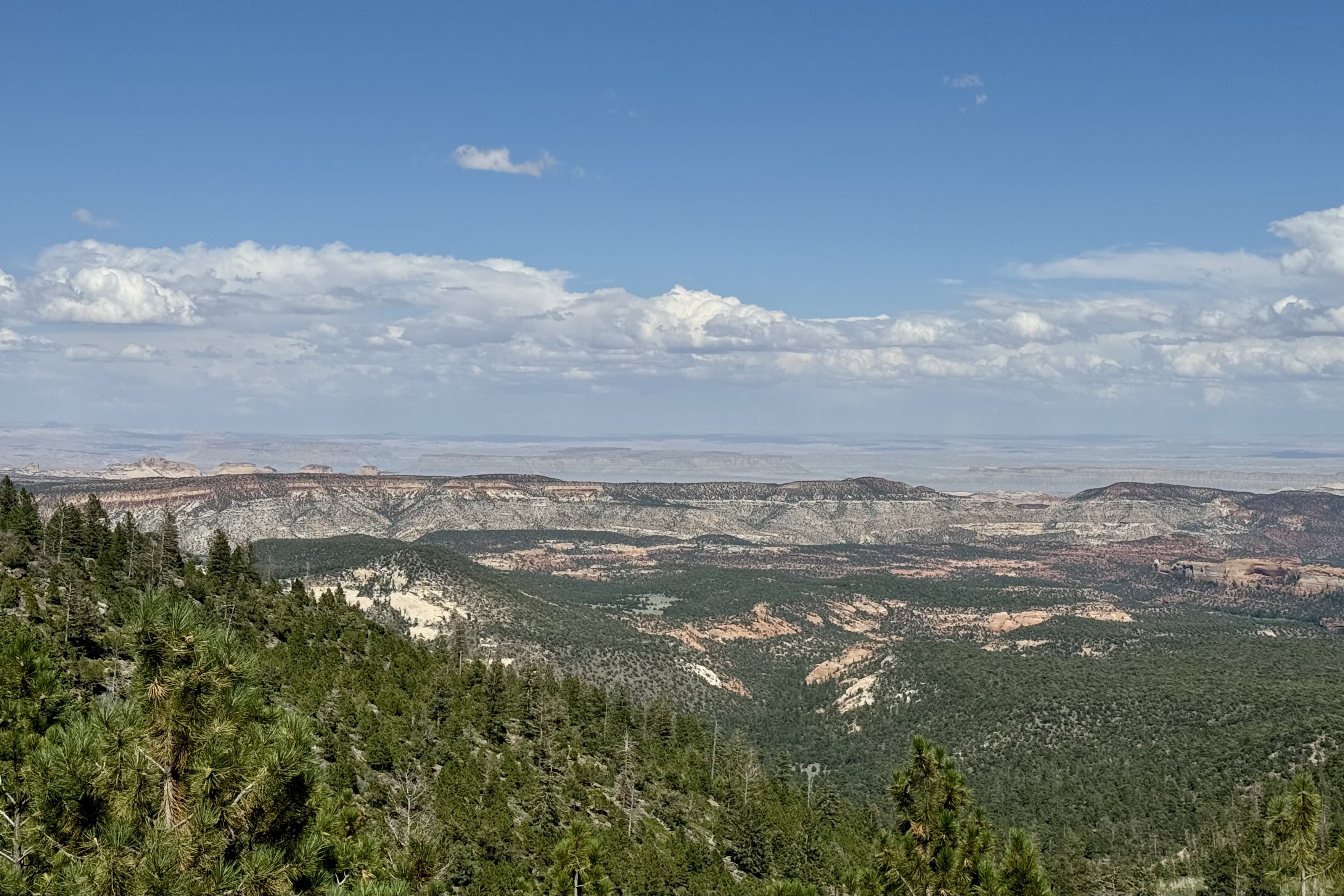
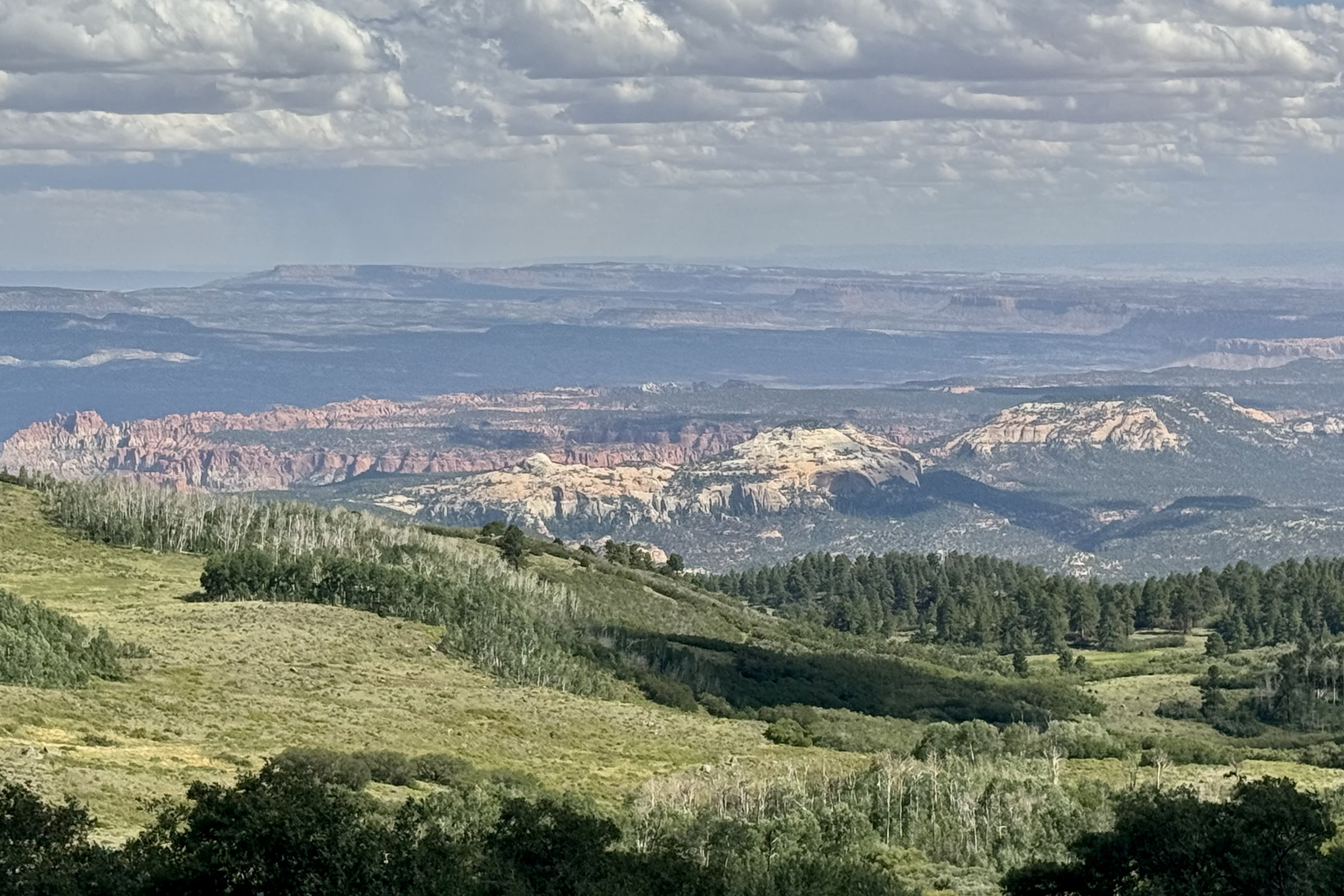
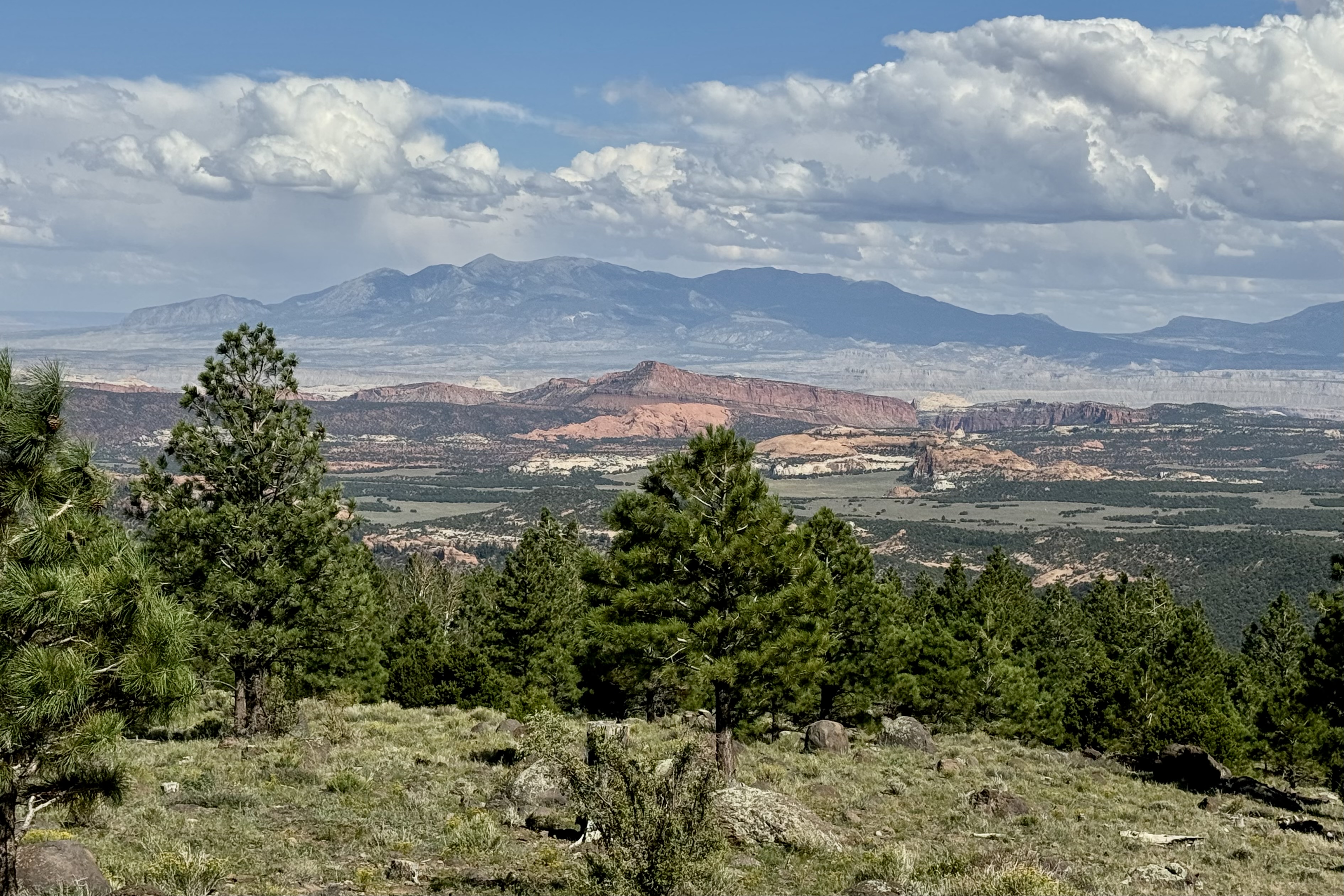
Once south of Boulder , the diversity of landscape again was evident as I began driving through Grand Staircase Escalante National Monument. This remote section of Utah is a vast and austere landscape with extensive expanses of grey-green photo-hungry rock-forms. I gladly obliged its photo thirst.
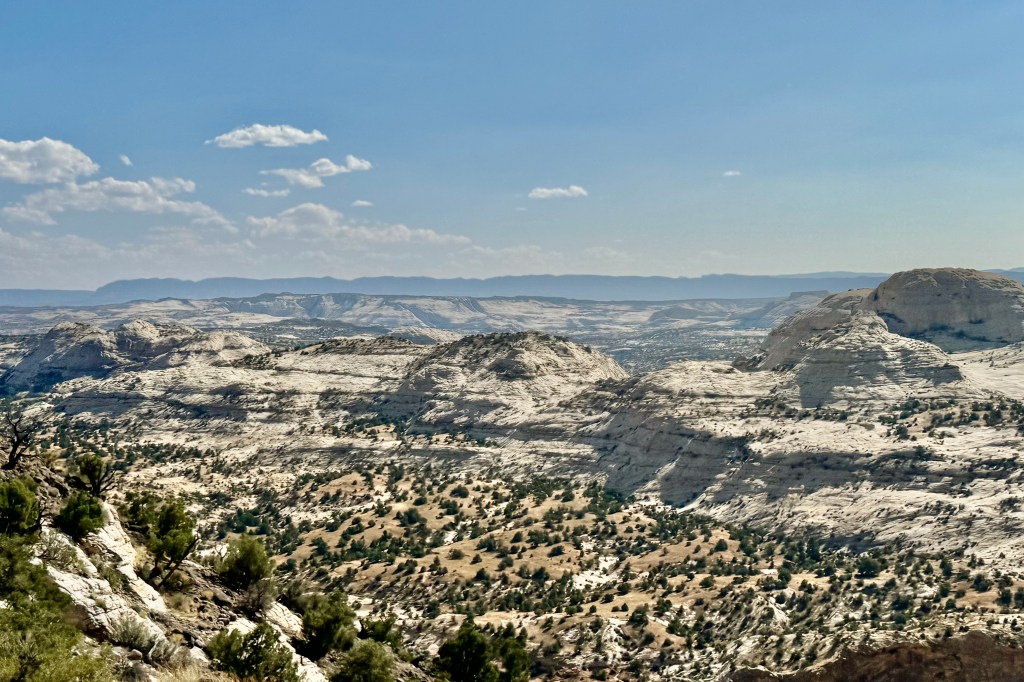
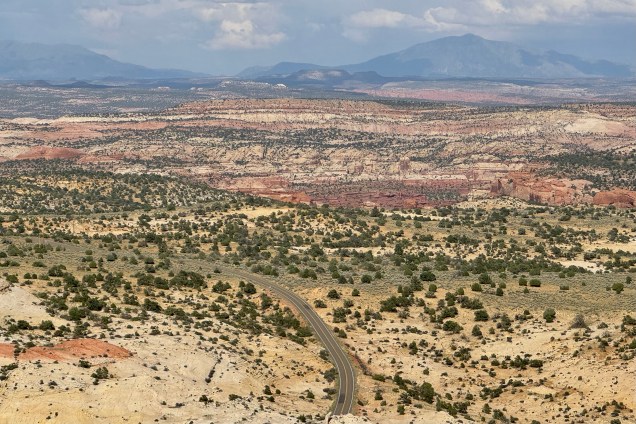
If you have followed my travels, you will certainly comprehend why this was “the magic kingdom” experience to satisfy my driving bliss which occurs when traveling twisting , curving roads with switchbacks and hairpin turns. The breathtaking overlooks, sweeping views, and steep inclines pushed my adrenaline into overdrive.

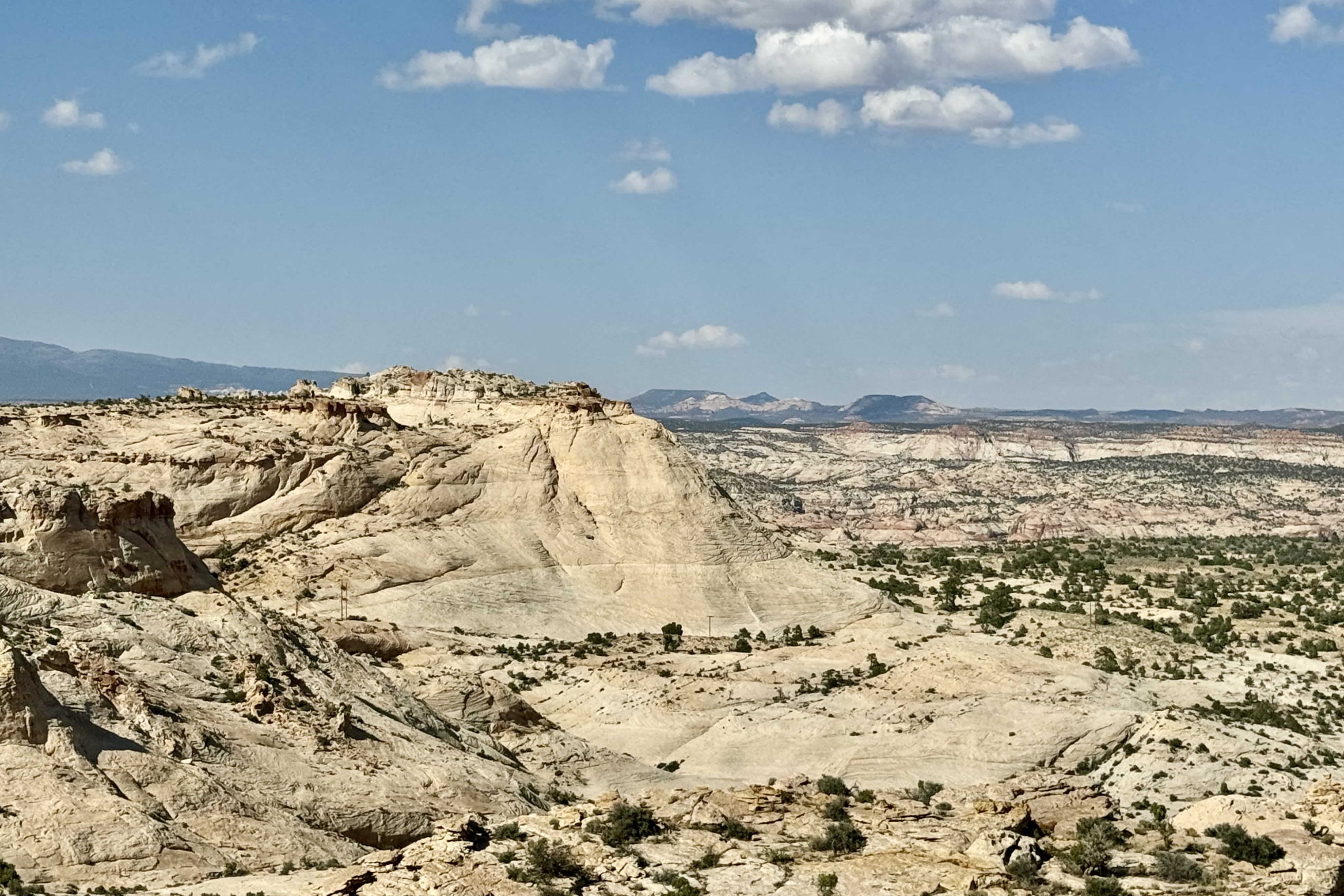
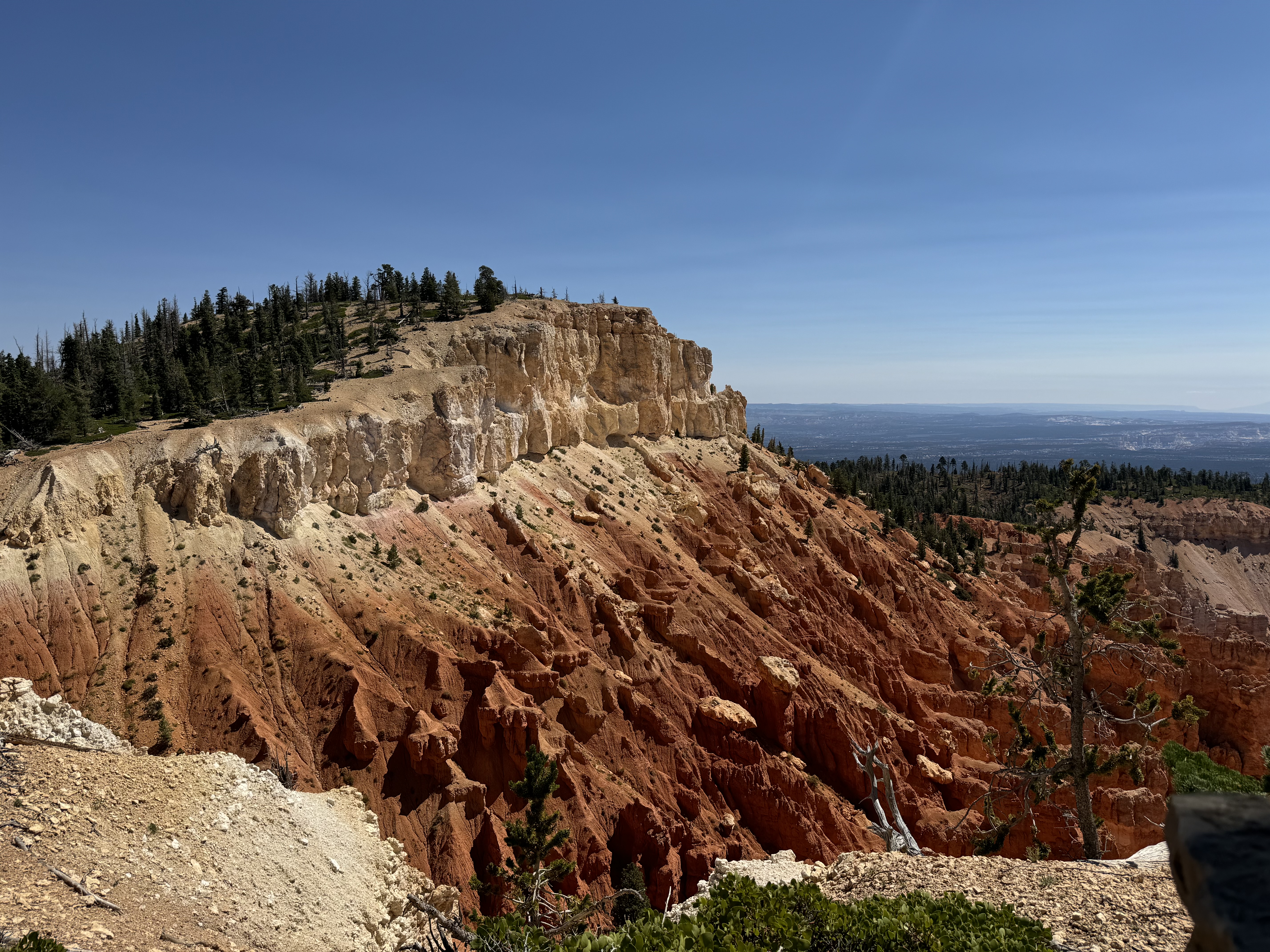
A stop at the Head of the Rocks Overlook was a must. The big sky views over the Grand Staircase Escalante National Monuments showcased this slick rock terrain in its fashionable shades of white, pink, vermillion, tan, chocolate , and grey.
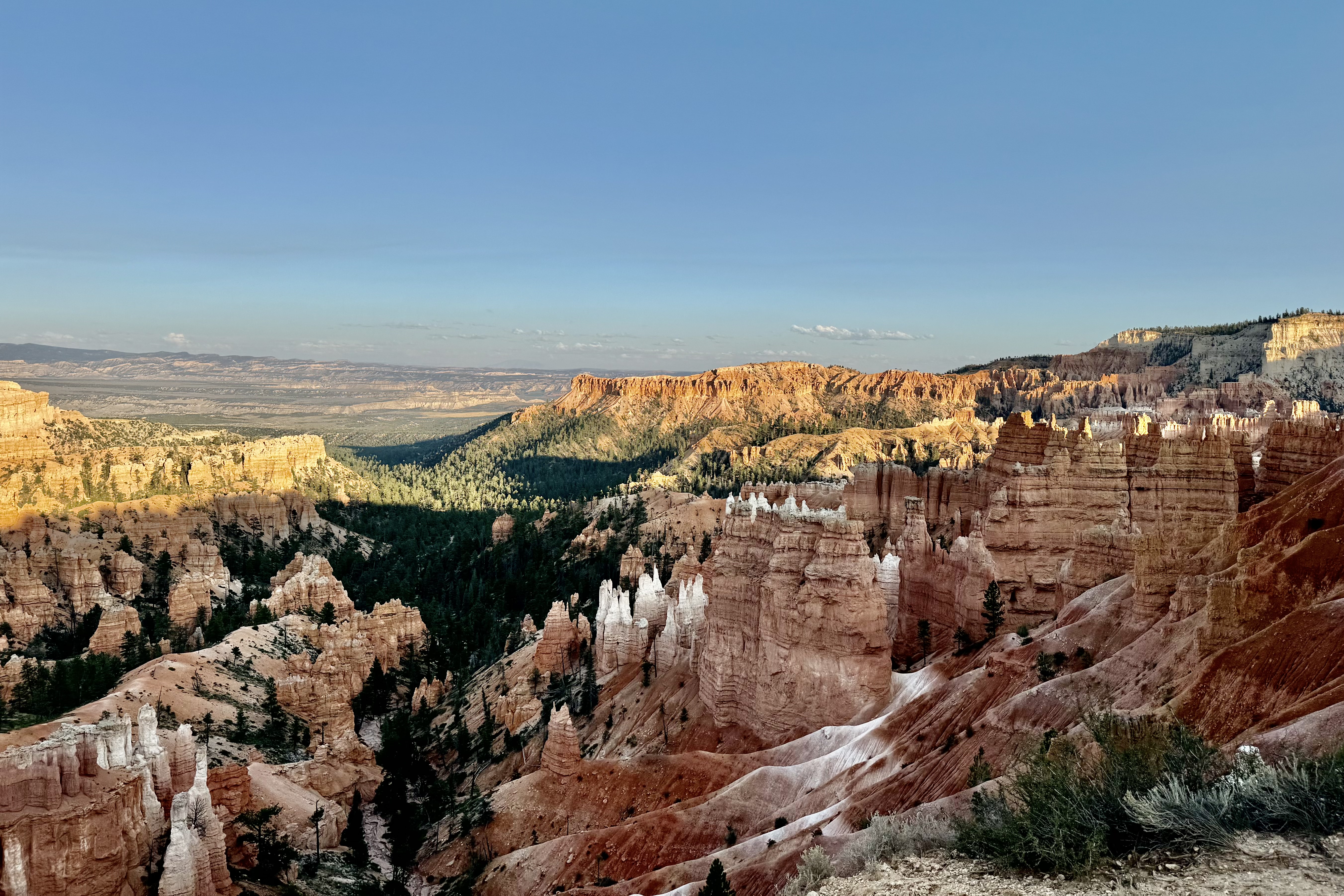
I was in no rush to get to Bryce as I was staying in The Lodge at Bryce Canyon, on a mesa near the canyon rim, and hence no camp set-up or meal prep. I was DONE camping for this trip. Finally I pulled in around 6:30 feeling totally sated by the Capitol Reef and Grand Staircase smorgasbord. After the desk clerk arranged for a ground floor room (since I had been assigned 2nd floor with no elevator), I received all the necessary instructions including the time to go to Sunset Point for sunrise and Sunrise point for sunset. Figure that one out? After checking into my room, I decided on a brief walk along the canyon rim as the sun was beginning its downward slide.

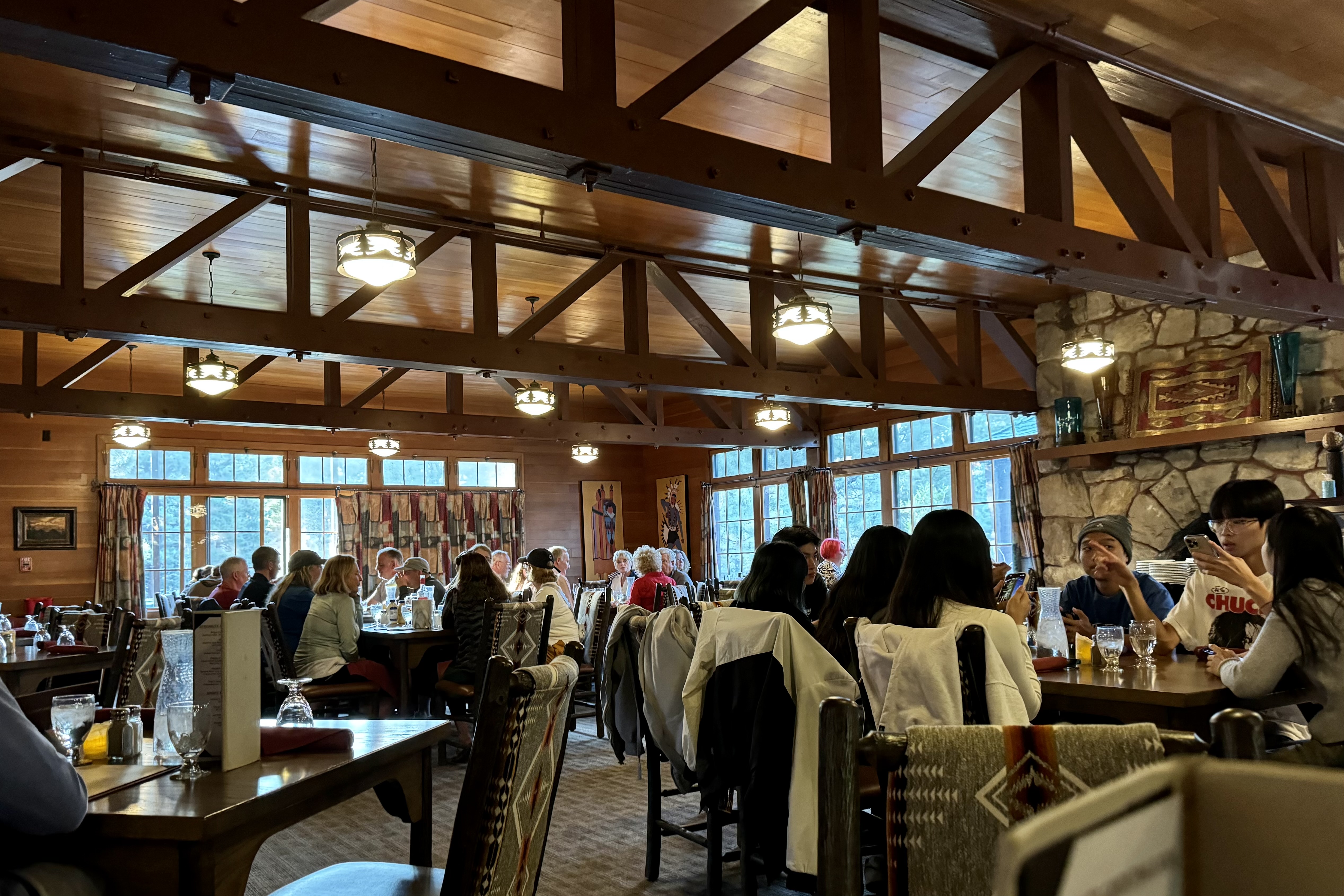
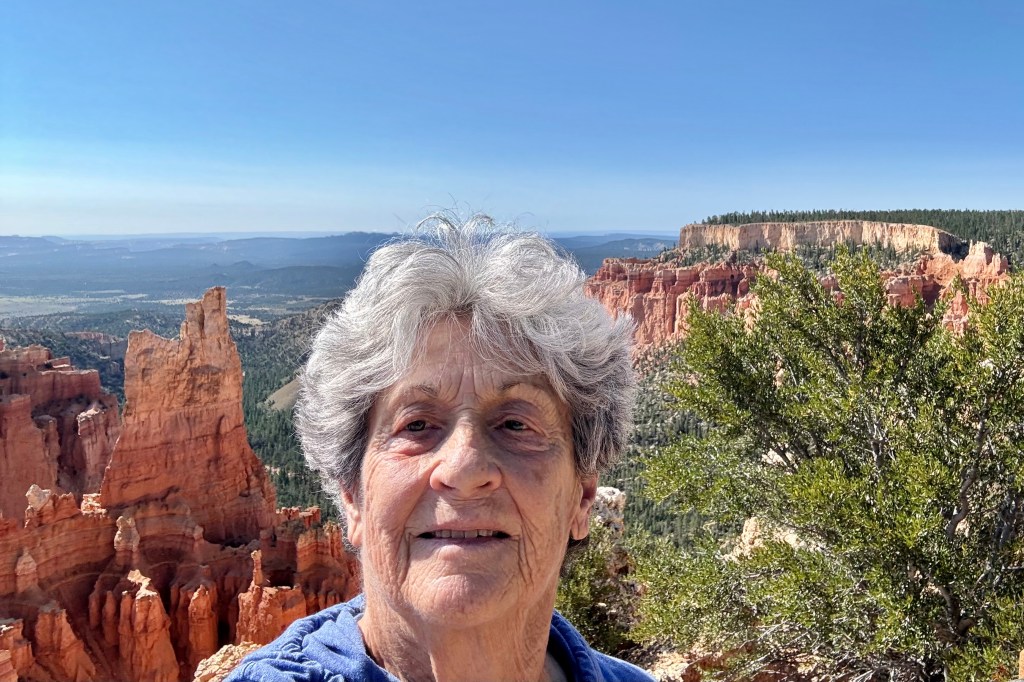
Though I have visited and hiked in Bryce before, my first look was of enchantment and awe. I proceeded to dinner in the Lodge dining room (mediocre) and then a rest up for a fairyland adventure on the ‘morrow.
This rustic lodge like many of the other historic park lodges is constructed of milled timbers, steeply pitched roofs, and extensive stonework. There is the large lobby for socializing, stone fireplaces, and a large dining room. Unlike many NP Hotels, there was internet service but true to form no televisions in the room or cable service…all intended to promote socializing and experiencing the natural world..

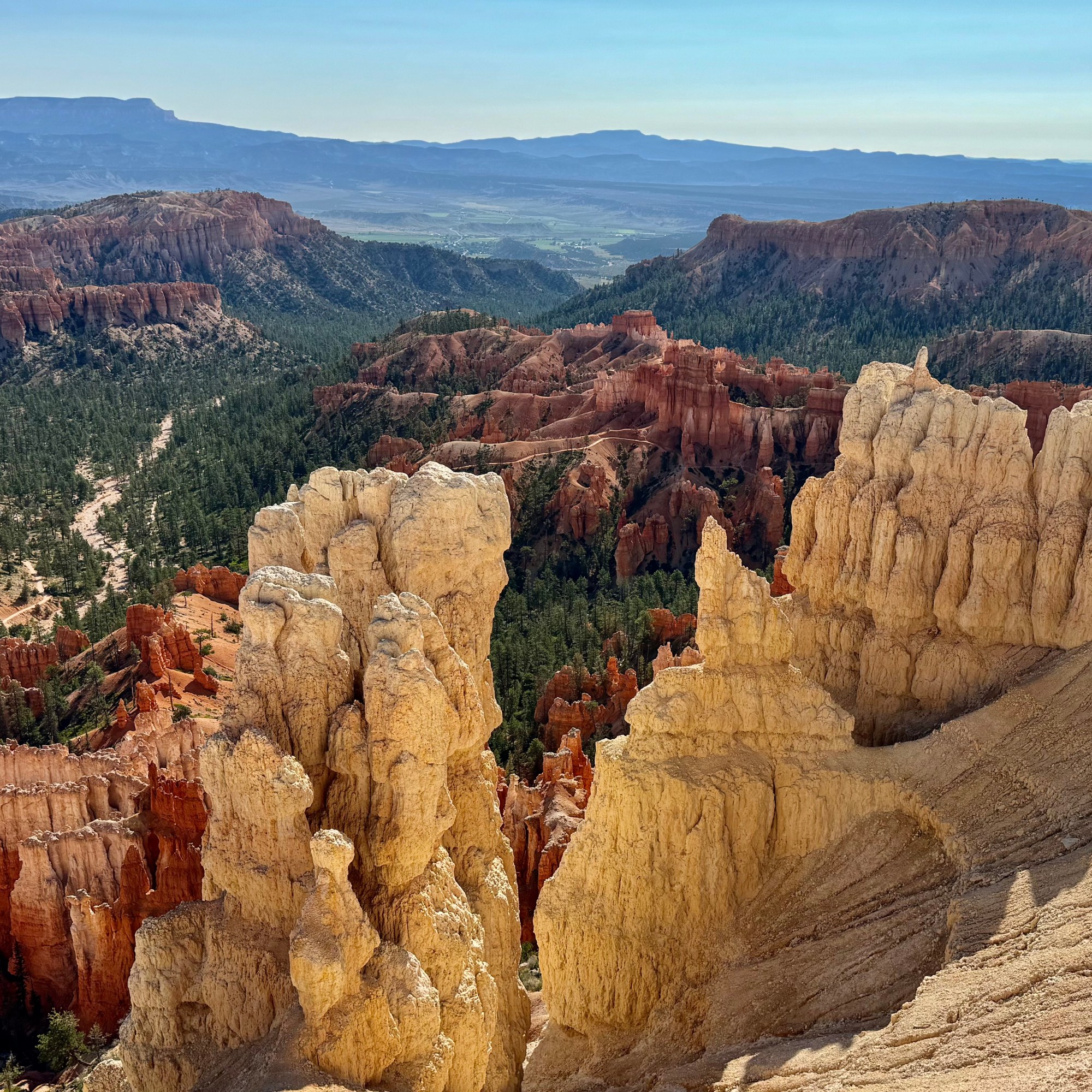
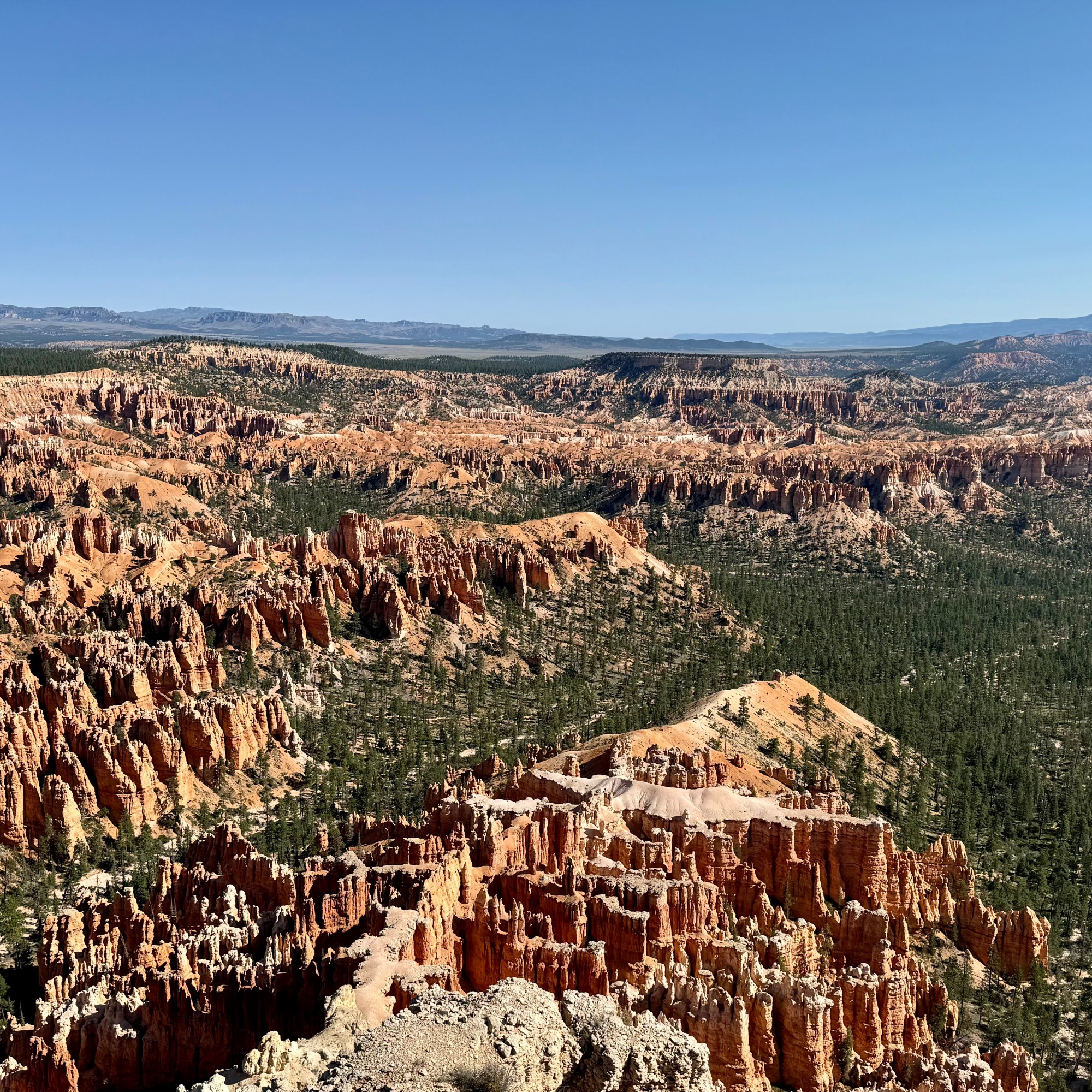
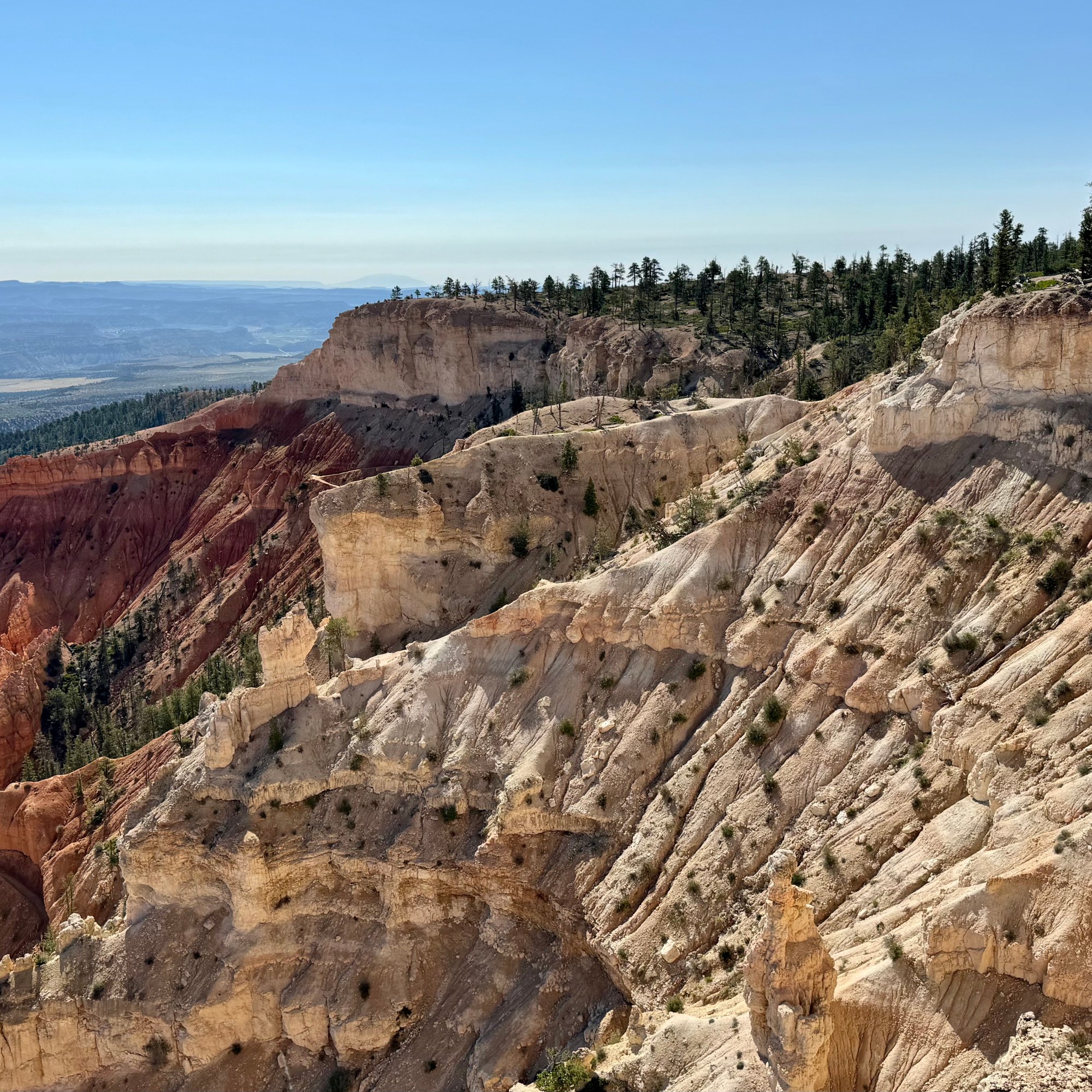
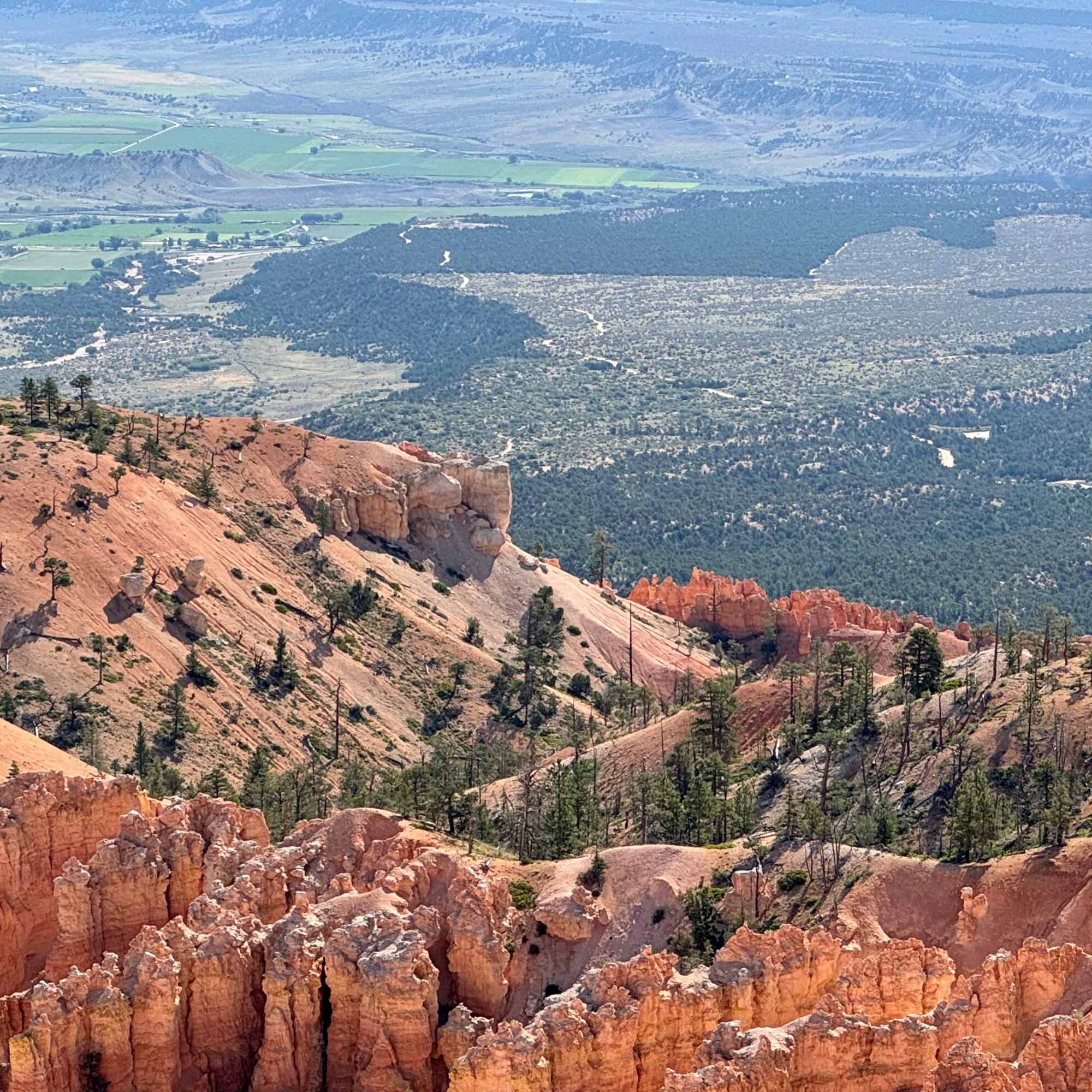
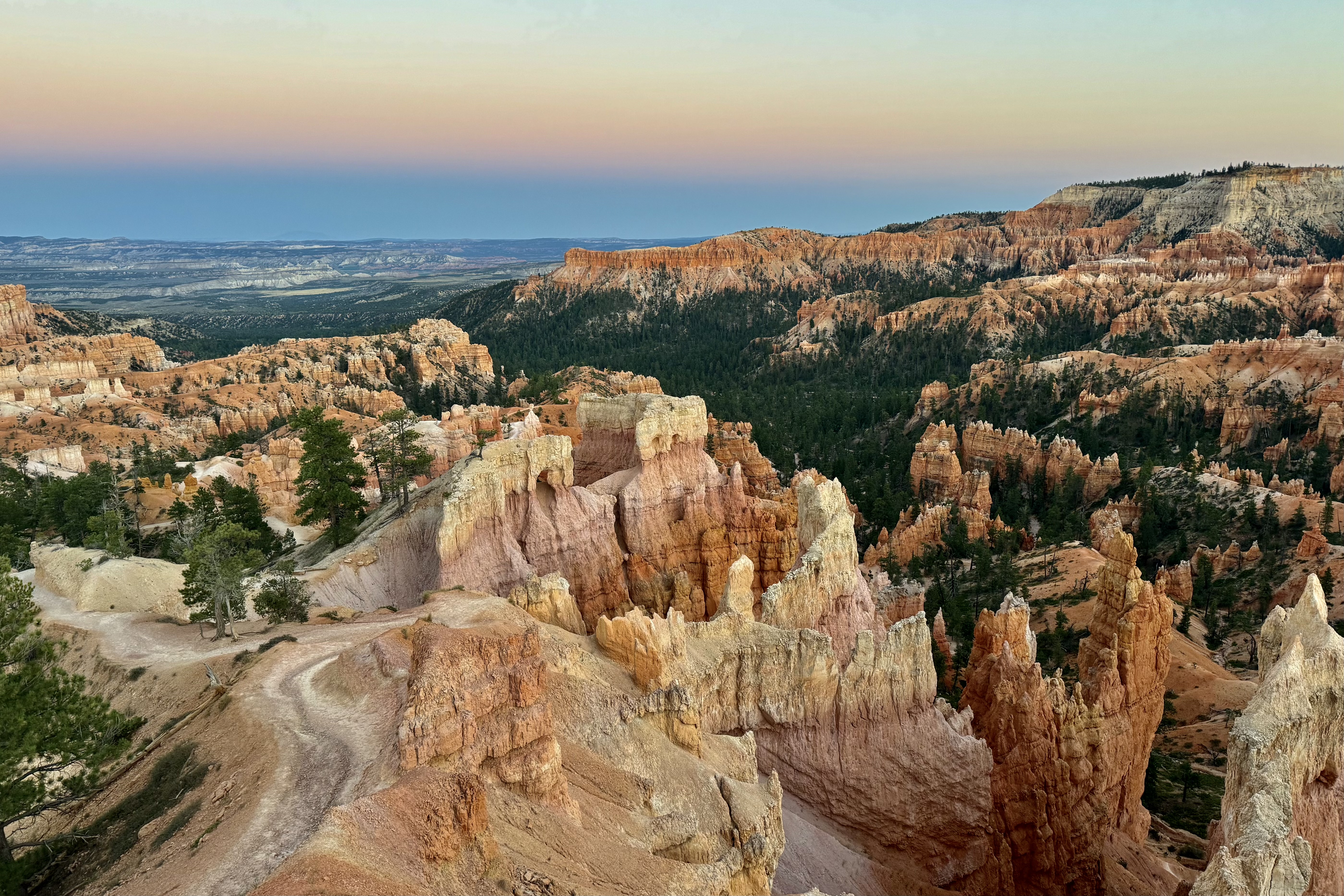
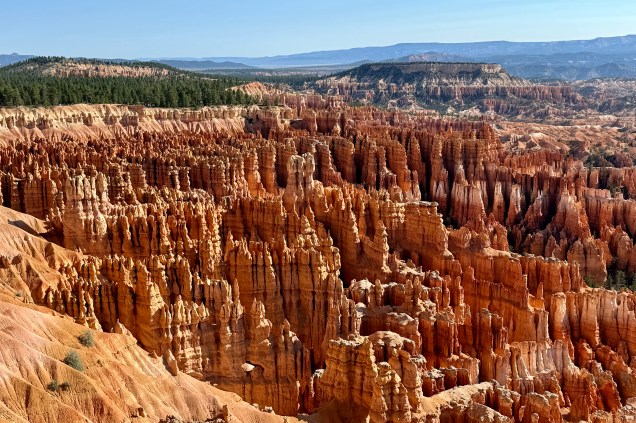
If you can imagine rocks as a lyrical poem or dance between weathering and erosion, you might be imagining the process that creates these unique shafts of rock that grow skyward from the bottom of the basin in Bryce to the tip of the hoodoos. Hoodoo means to bewitch! These shafts are so enchanting that they evoked in me a steady stream of wonder and amazement at the deep reds, soft pinks, oranges and creams of these sentinels.

I had already decided I was not going to do a hike down into Bryce Canyon as at the altitude of 8000 feet the thin air was leaving me quite short of breath upon exertion. Brochures kept reiterating you will usually get down in 1/3 the time it takes you to climb up and out. I had hiked down many years ago and it was as magical then as it was today. At some point I would take an easy hike on the rim and focus on the views of “the amphitheater” later but first complete the scenic drive from the hotel out to Rainbow Point before it got too crowded. In retrospect, that was not a worry because there were relatively few cars on this day at any of the view points.

Sunset Point Elevation 8100 feet

Inspiration Point 8100

Bryce Point Elevation 8300 feet

Paria View Elevation 8175 feet

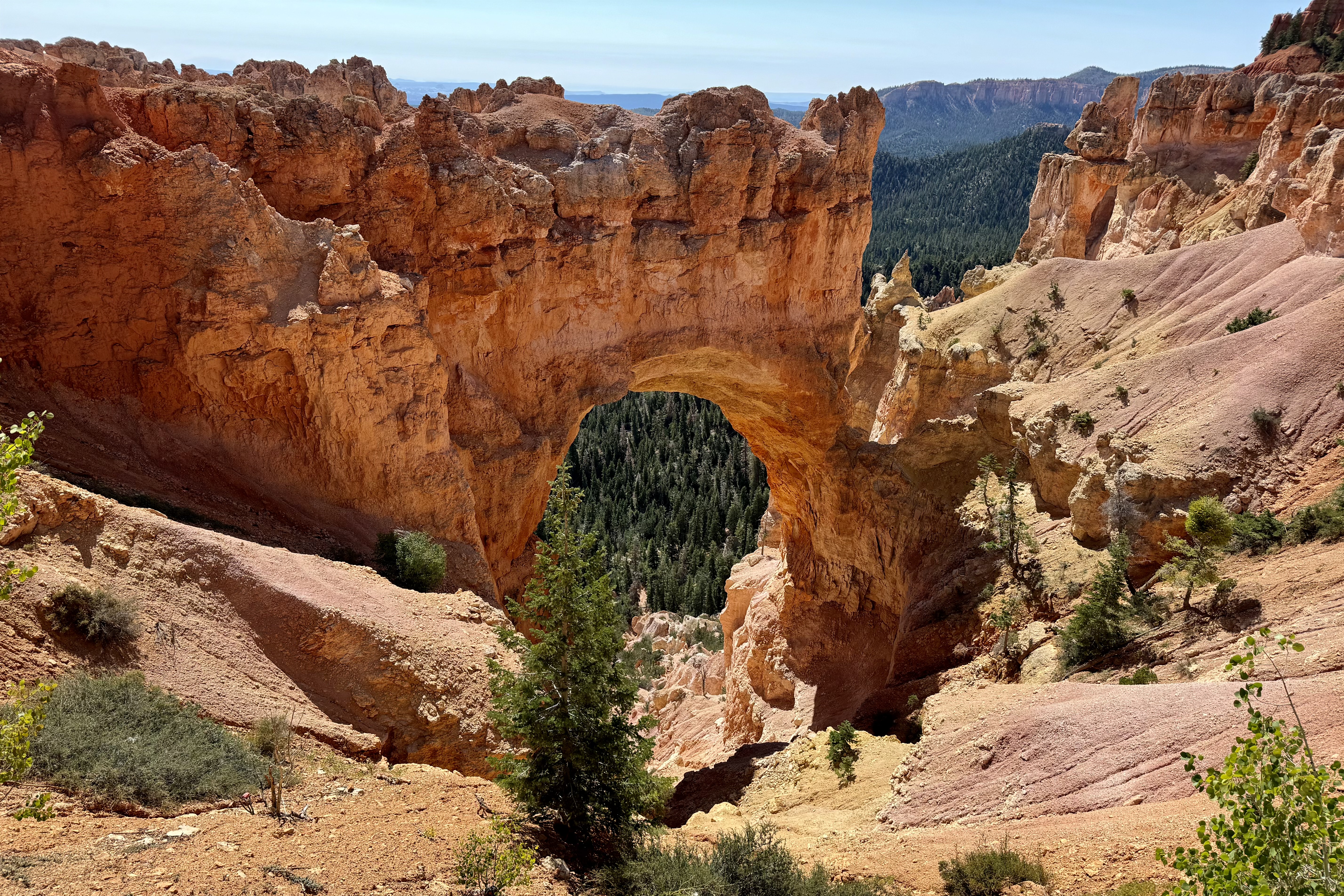
Fairview Point Elevation 8819 Natural Bridge 8627 Elevation
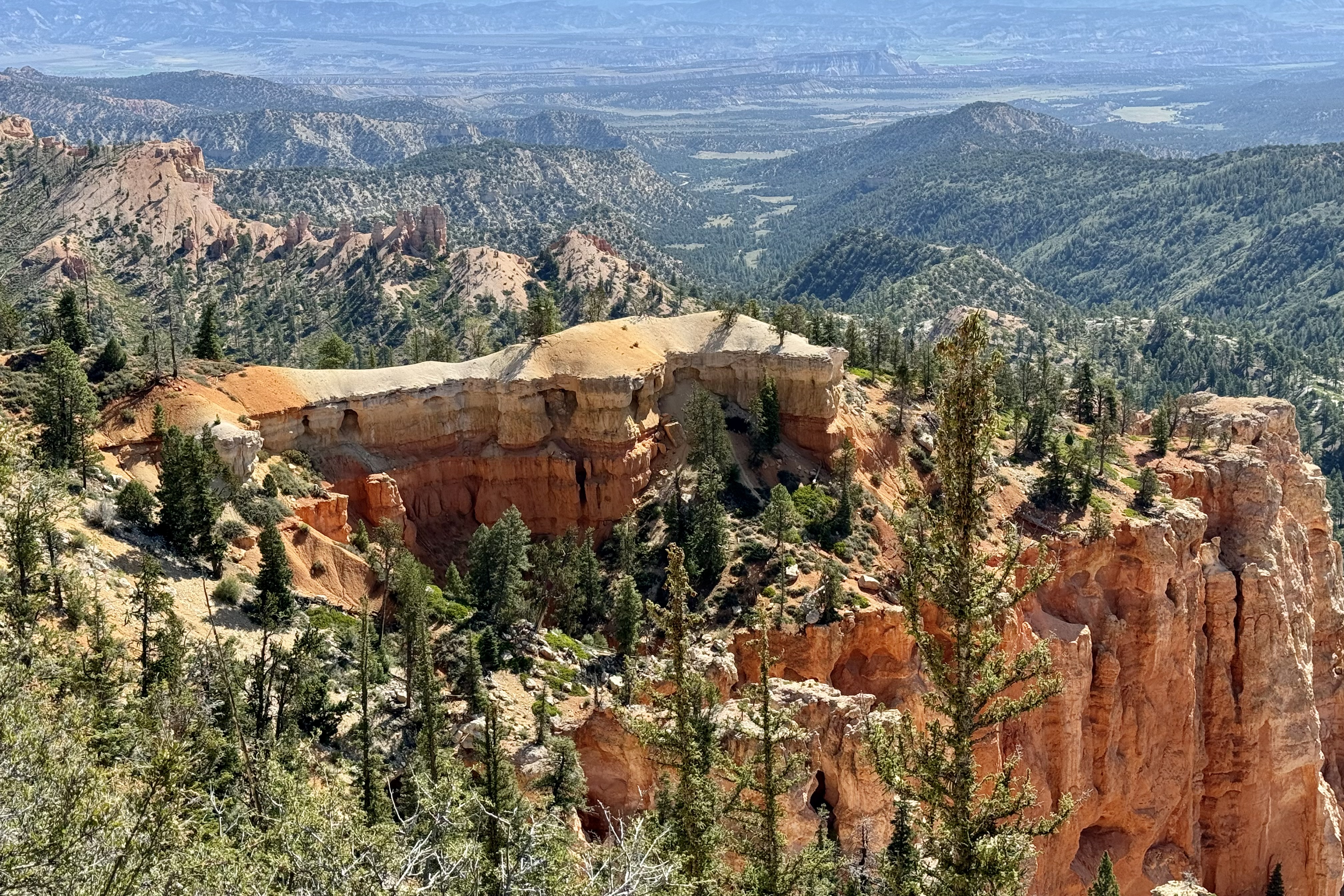
I was nearing the end of this scenic trek via motor car and feeling grateful for this halcyon day and the grandeur of this small but very unique section of our country. The final “push” was views from Ponderosa Point( elevation 8904); Rainbow Point (elevation 9115) ; Yovimpa Point; and a short 1.3 mile hike of the Bristlecone Loop at Rainbow Point.

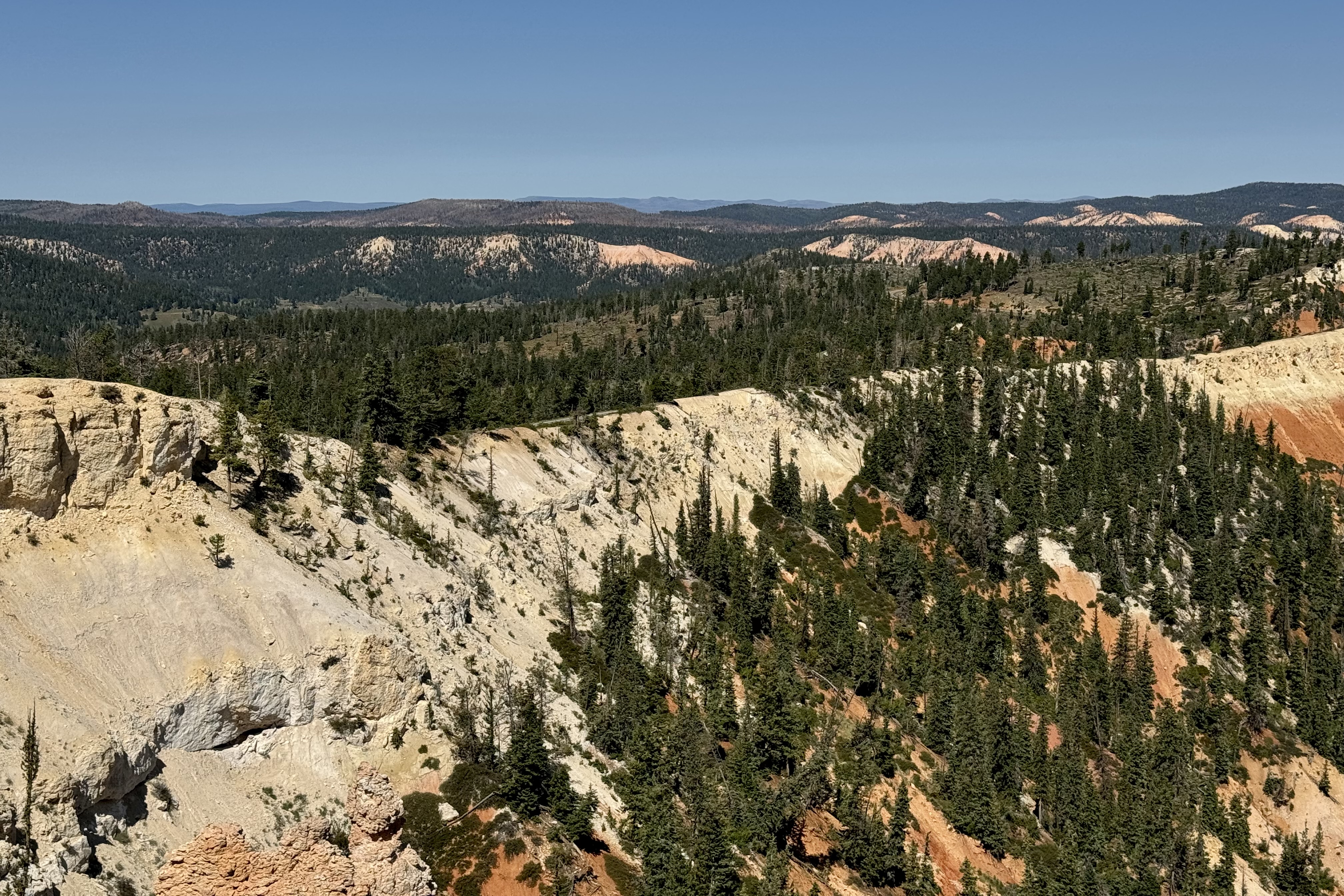
On the drive back to the Lodge, I was also extremely thankful that so many presidents and congress have had the foresight to make conserving land a priority and thus bringing so much joy to like minded Americans who revel in immersing themselves into so much unspoiled wilderness. I hope I can pass on some of this awe and love to my grandchildren (my adult children already embrace the natural world. )

By far the most iconic section of the park, the Bryce Amphitheater ( so called as it is a bowl shaped area formed by the drainage of seasonal rains and melting snow) is home to the greatest concentration of the irregular rock spires called “hoodoos” and I had explored almost all of the viewpoints along the first 3 miles of the main road except for Sunrise Point. I headed towards the mercantile and visitors center before retreating to the Lodge until sunset and then I walked to the last viewpoint I would be visiting : Sunrise Point. This was another spiritual experience as the sun sank below the horizon behind us but lit up the sky before me.

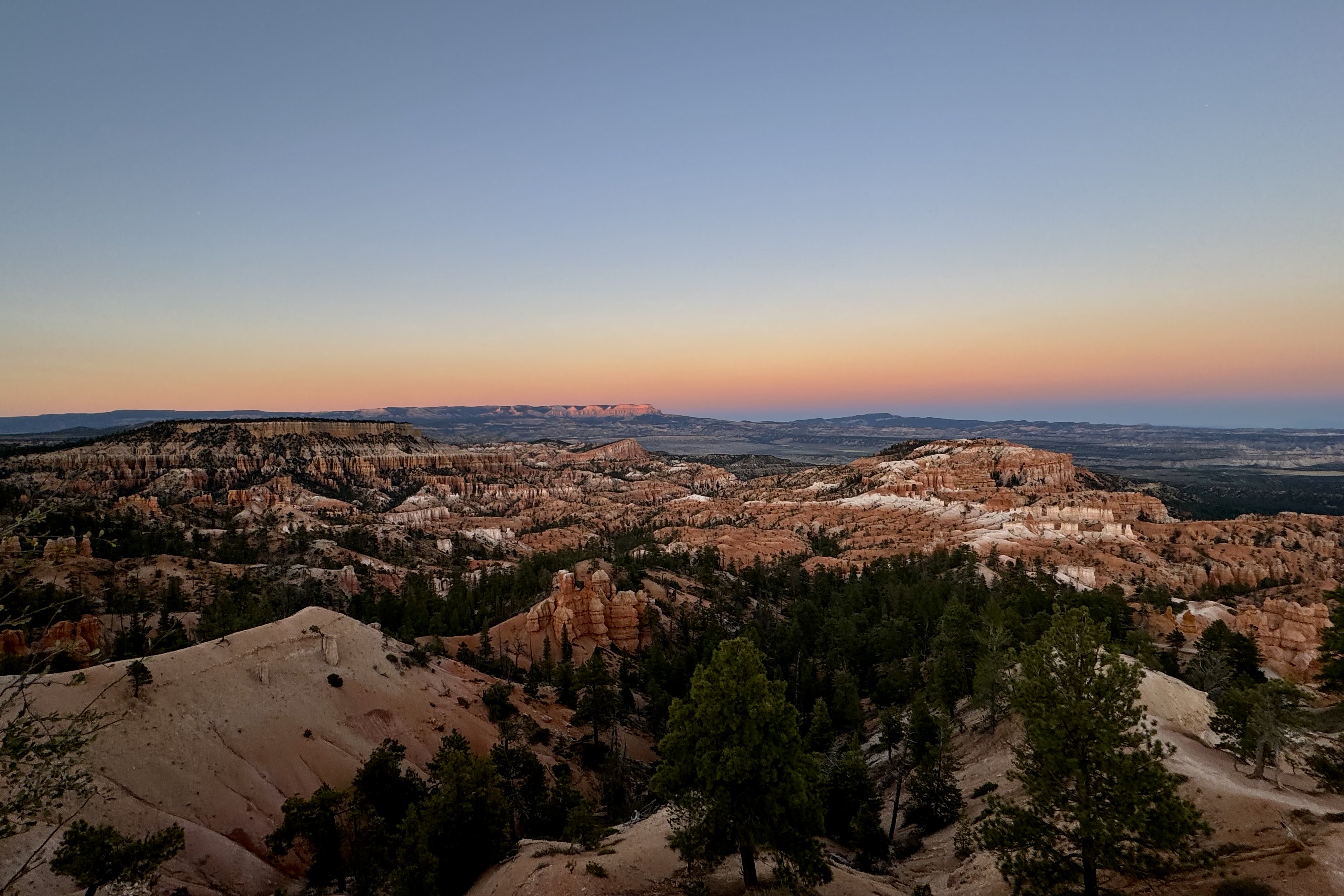
The only glitch in this otherwise perfect adventure was getting lost in finding my way back to the Lodge’s Sunset Hotel where my room was located. I had stayed on the rim until almost dark and had meandered all the way to Sunset Point which I soon realized was a ways beyond my lodging. I somehow did not recognize the path leading to the lodging and was quite disoriented at first. It was quite dark by now. Once I took the time and got my bearings, checked the map (I always take a picture of it so it is stored on my phone, ), turned on my iPhone flashlight, and hopped on the bike path, I knew I would get “home.” iPhone saves the day! I have done remarkably well on this trip for being quite directionally challenged.

The next morning, it was time to head west and make a beeline for my Oregon home….with one more stop to briefly re-visit Great Basin National Park but not stay and camp as I had originally intended. That “beeline” would take three days. Route 12 took me through Red Canyon but even I balked at taking one more striking picture or red rocks. So I continued on through the Escalante Desert with the several low rise mountain ranges breaking up the vast expanse of relatively featureless desert.

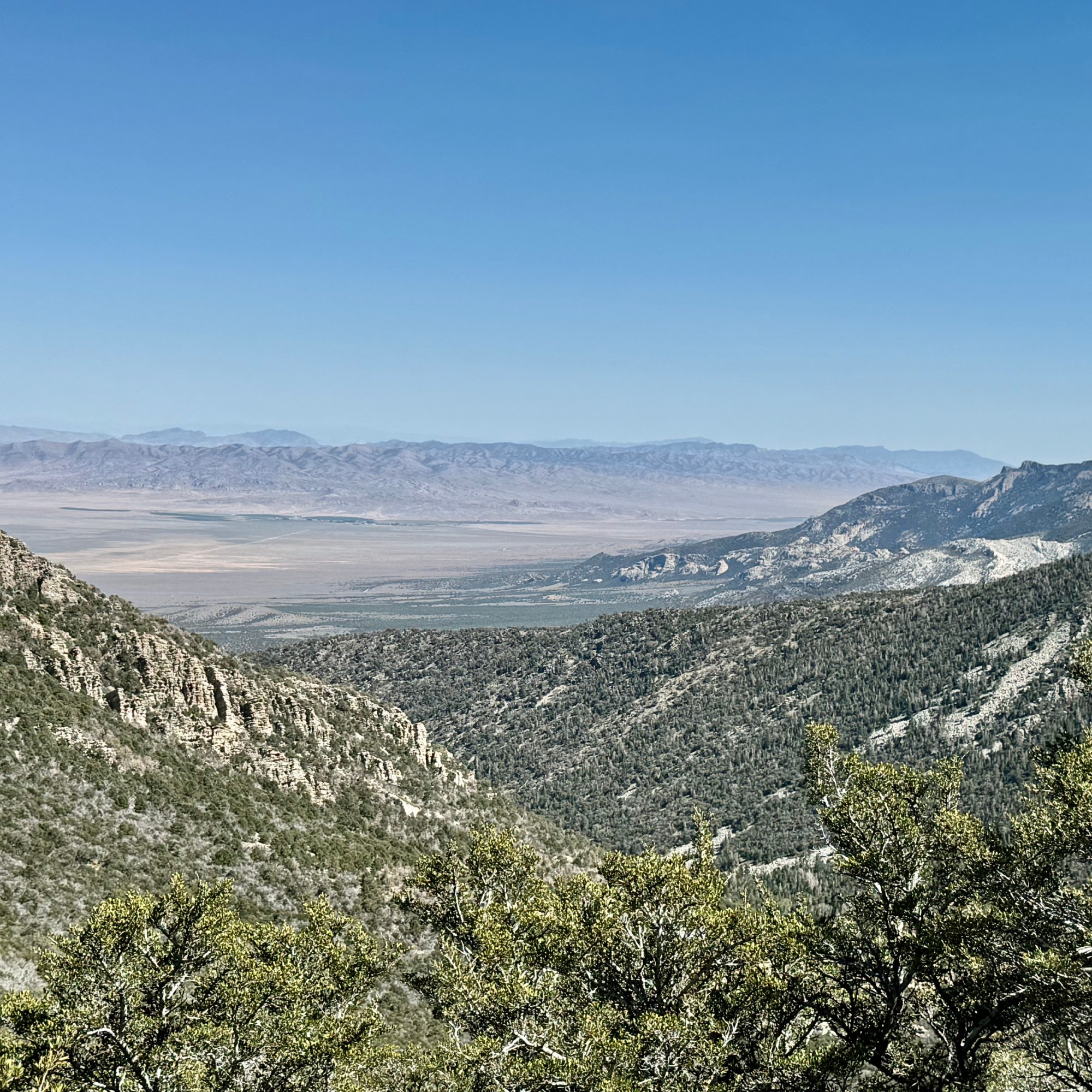
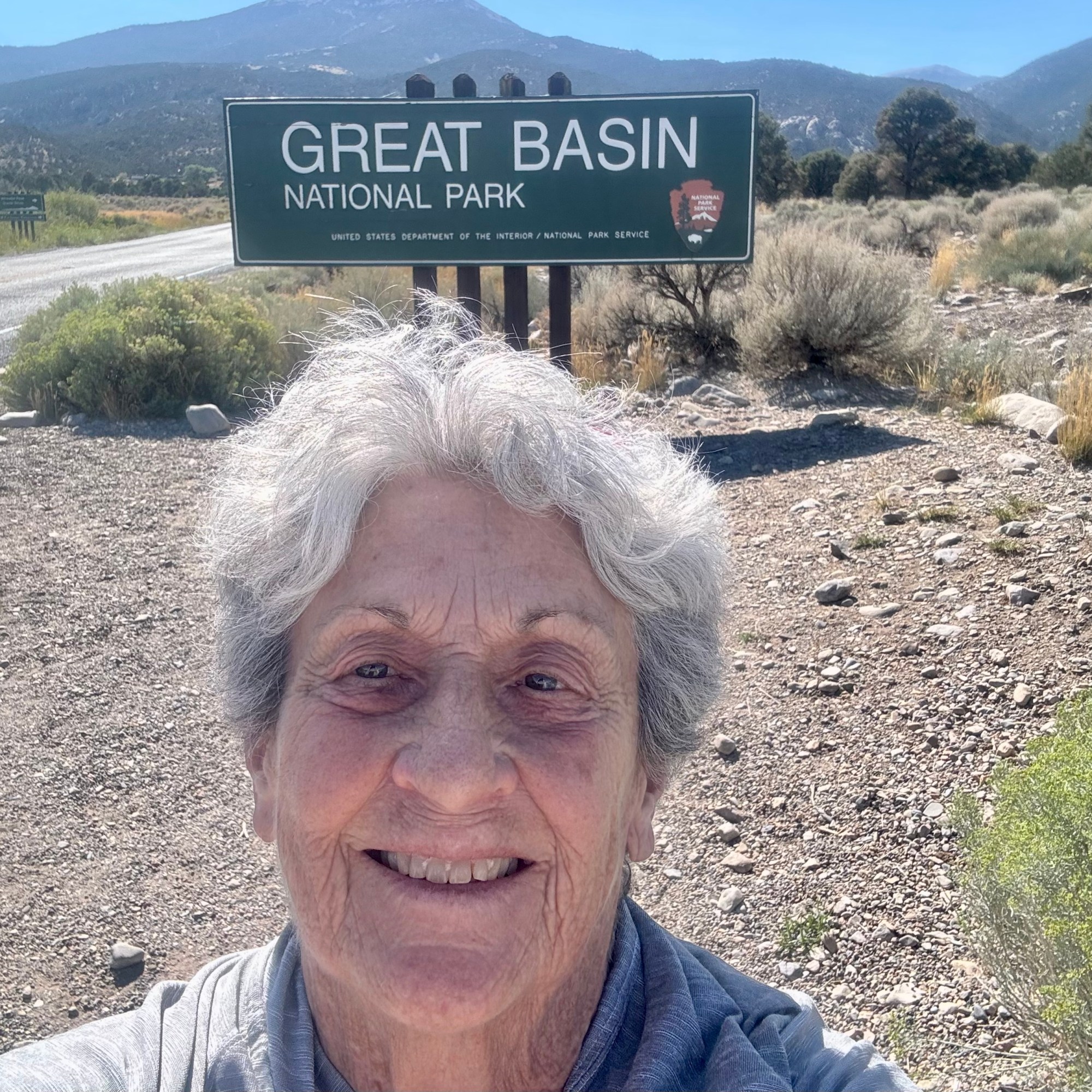
Around three pm I reached the town of Baker in Nevada which was the entrance point to Great Basin National Park. It was early enough to take the drive up to Wheeler Peak which transitions from a massive expanse of the desert of sagebrush I just drove through to the treeless rocky peaks of the South Snake Range. As in several other parks, the drive to the final viewpoint of Wheeler Peak was closed for resurfacing.

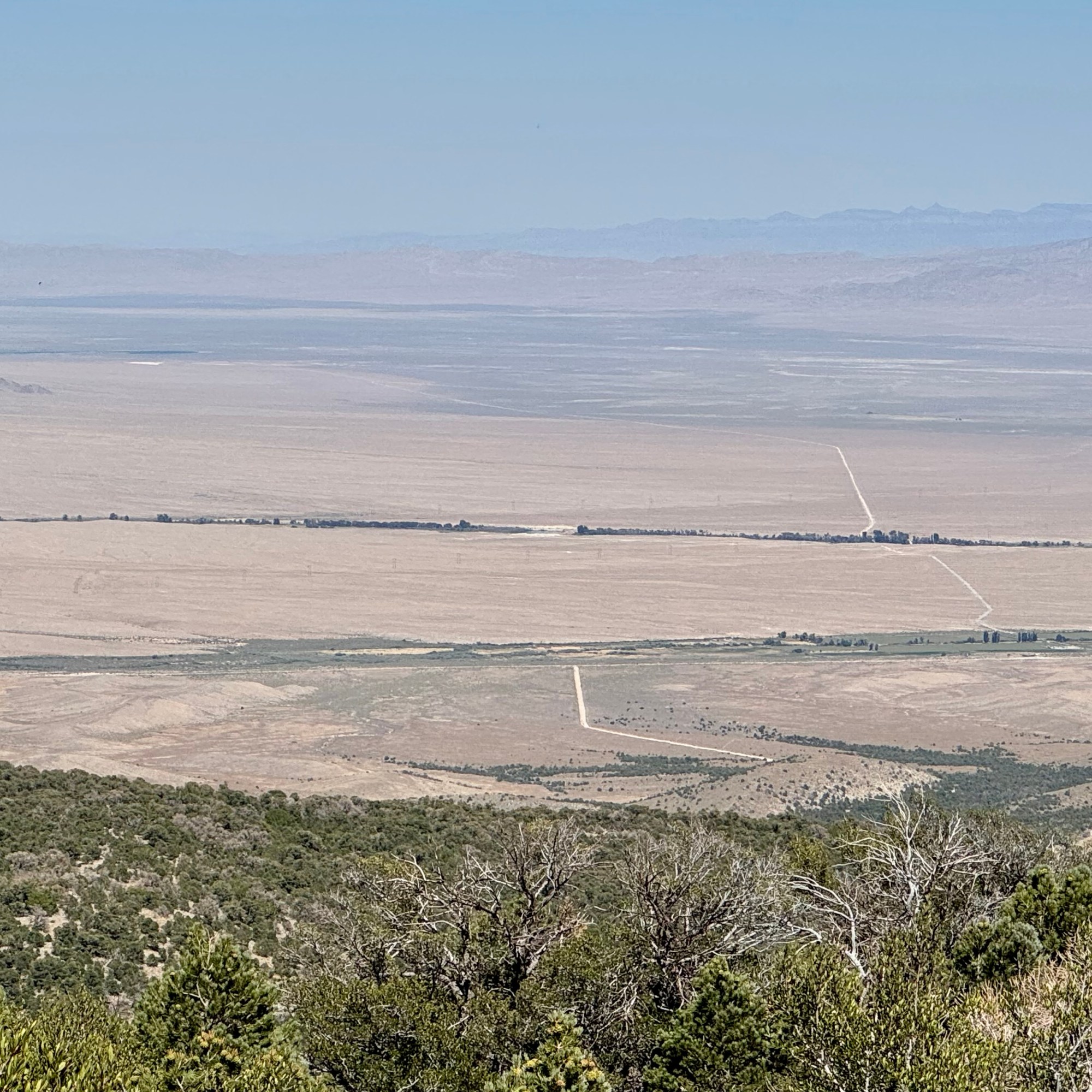
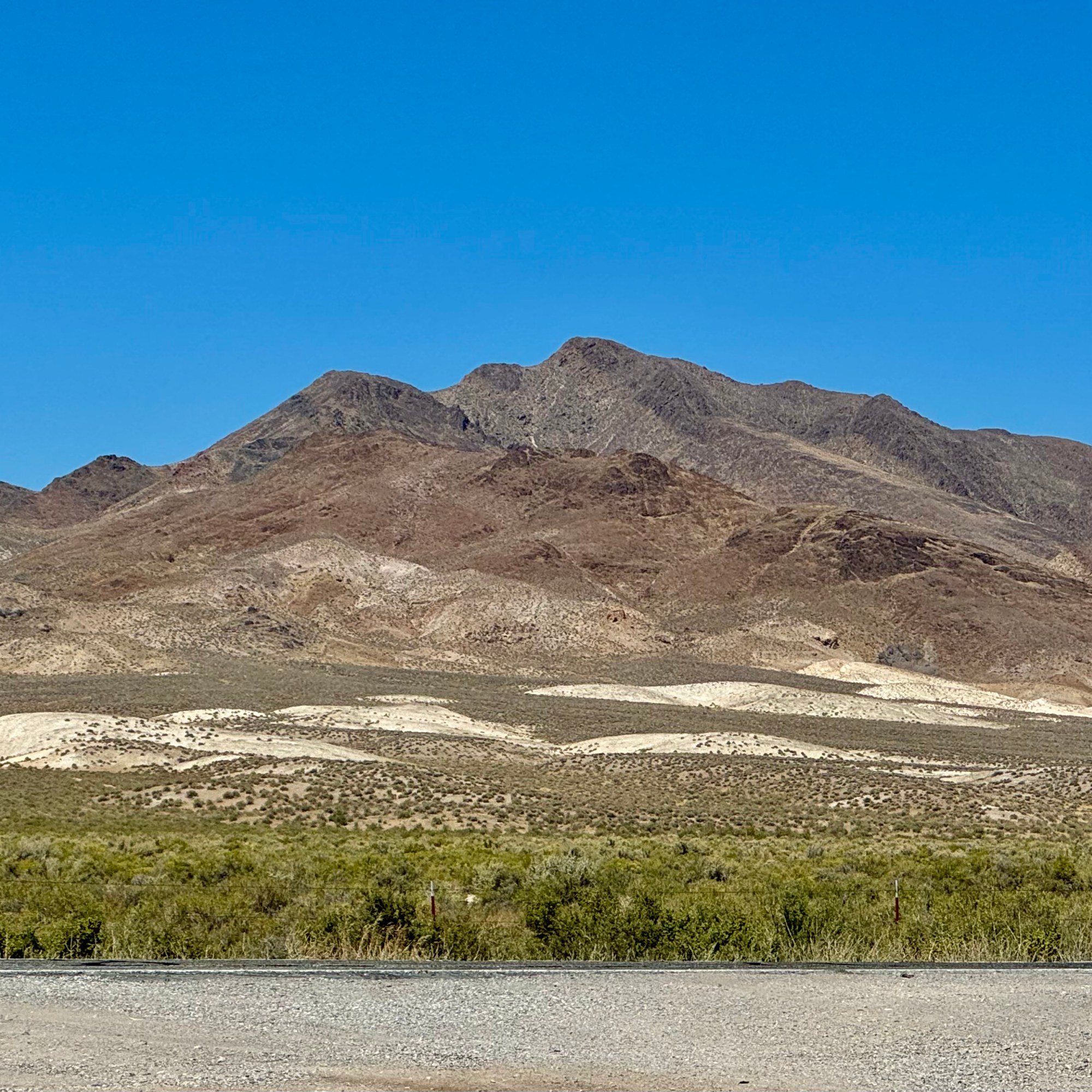
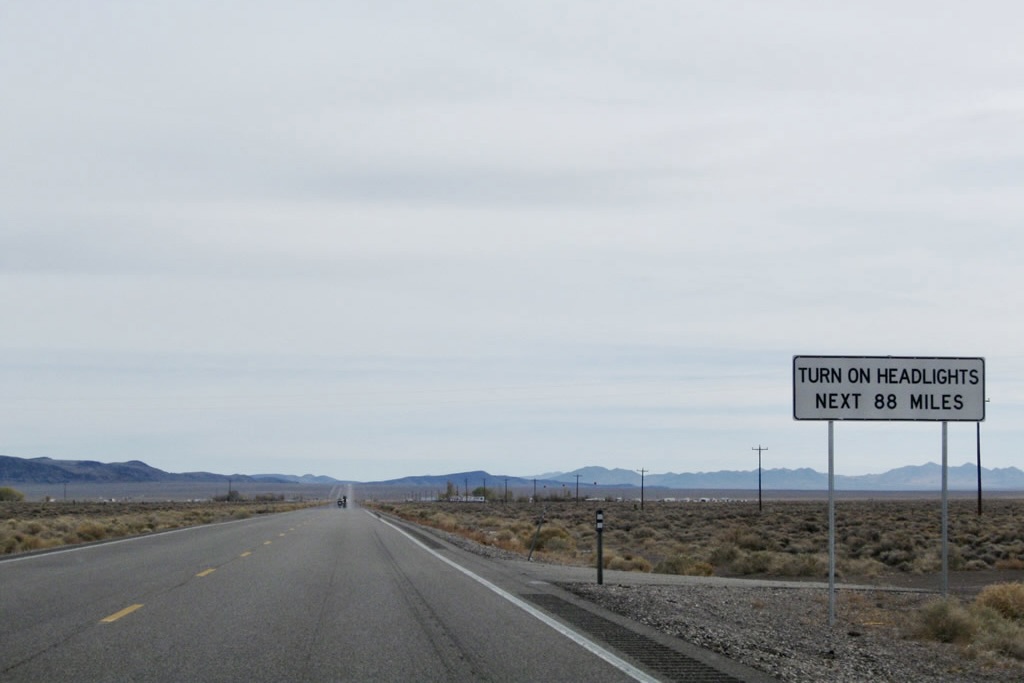
With both towns and motels few and far between, I stopped in the town of Ely. Ely is known for the Great Basin National Park, the Lehman Caves… but the websites does not want us to forget that “one of the reasons why people travel to Ely…the gaming.” To game or not to game was the question I posed to myself in this town where I had my first opportunity to partake in Nevada’s gambling-free-for-all everywhere. Clearly gambling is not one of my addictions as my heart did not beat wildly at the thought of this opportunity. So I curled up in my motel, slept well, and headed towards Oregon on U.S. Highway 50 the next morning. Traveling westward from the Nevada border to Fallon (about 60 miles from Reno), US 50 passes through only two towns and one small city (Ely) between Fallon and the Utah state line, over 400 miles distant. It is thus known as The Loneliest Road in America. Rarely was the desert landscape was broken up, except by the Bonneville Salt Flats, a recreation area which is used for land speed racing.
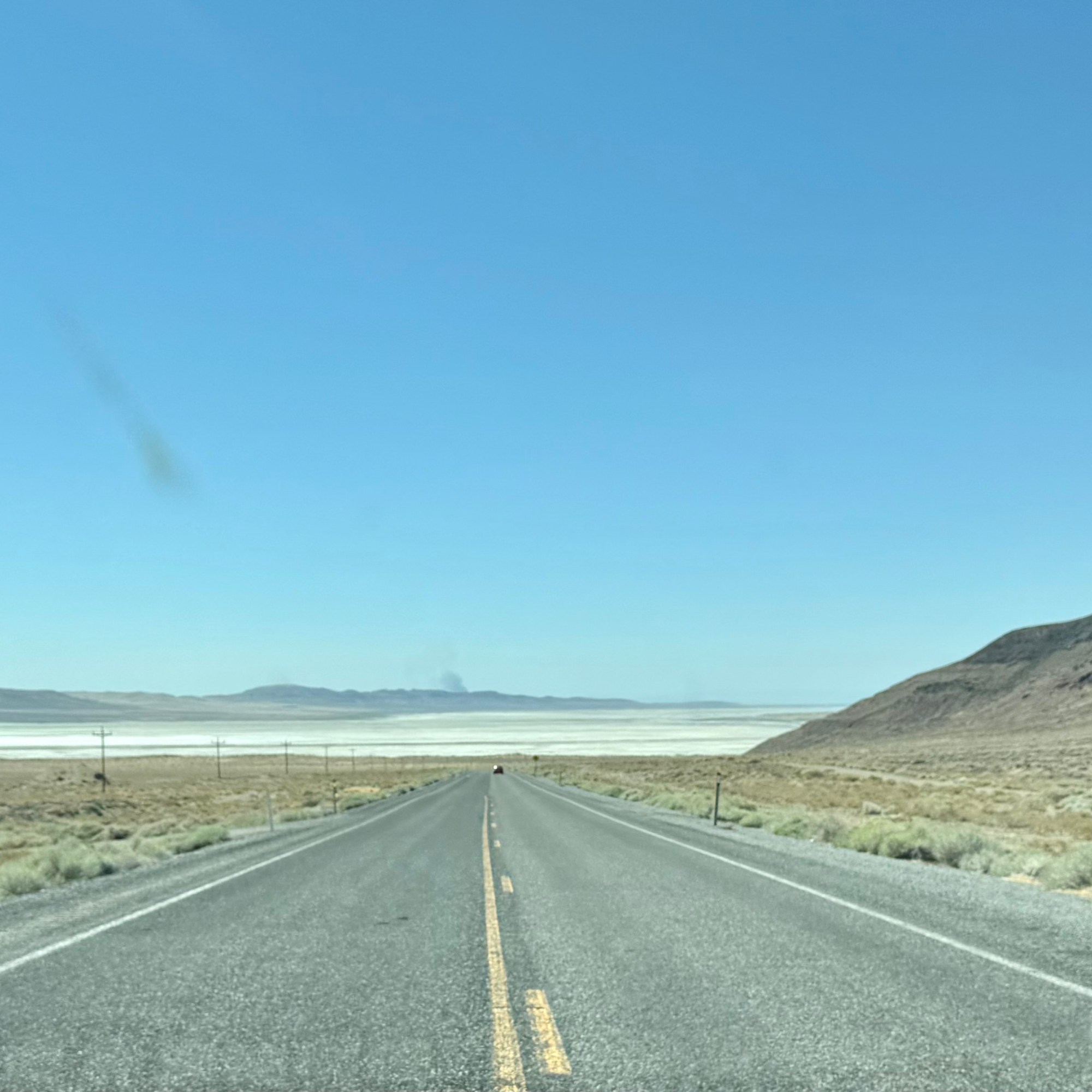
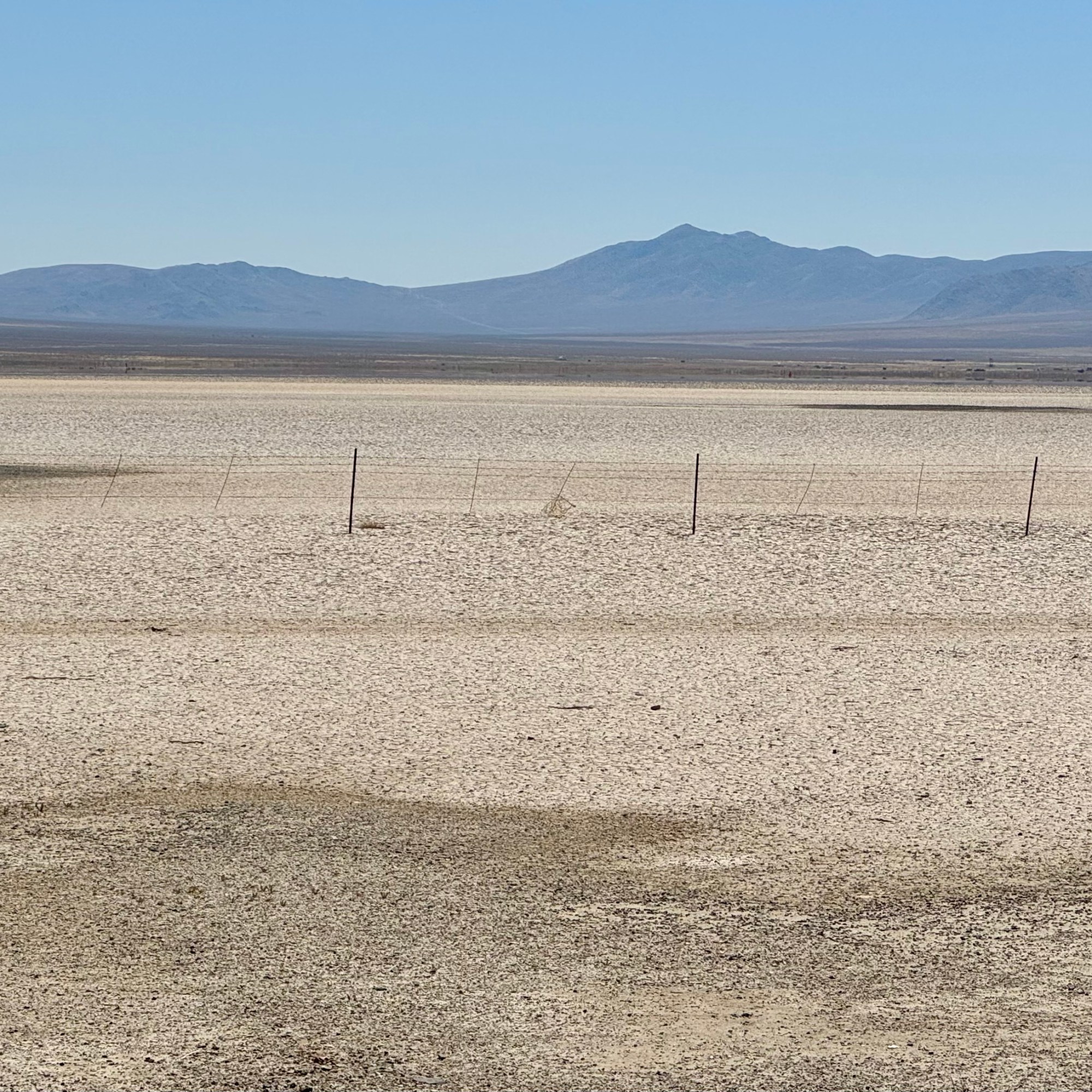
The final day took me through the congestion of Reno and some massive road construction projects, and on into California on secondary roads through Susanville and to Mt. Shasta and the final stretch home on I-5.

I travelled 9642 miles solo through 24 states and 5 Canadian Provinces in 63 days: camped 29 nights though I had planned on more but incredibly awful weather change some of that; motels 21 nights ; and stays with family and friends 13 nights. I visited 9 national parks and completed my quest to finish visiting all 61 of the 63 National Parks in the contiguous states and Alaska. Get ready American Samoa and The Virgin Island for I will be there in 2025.
Dead Lakes, Shuttered Saloons, and a Lady in Red en route to Death Valley

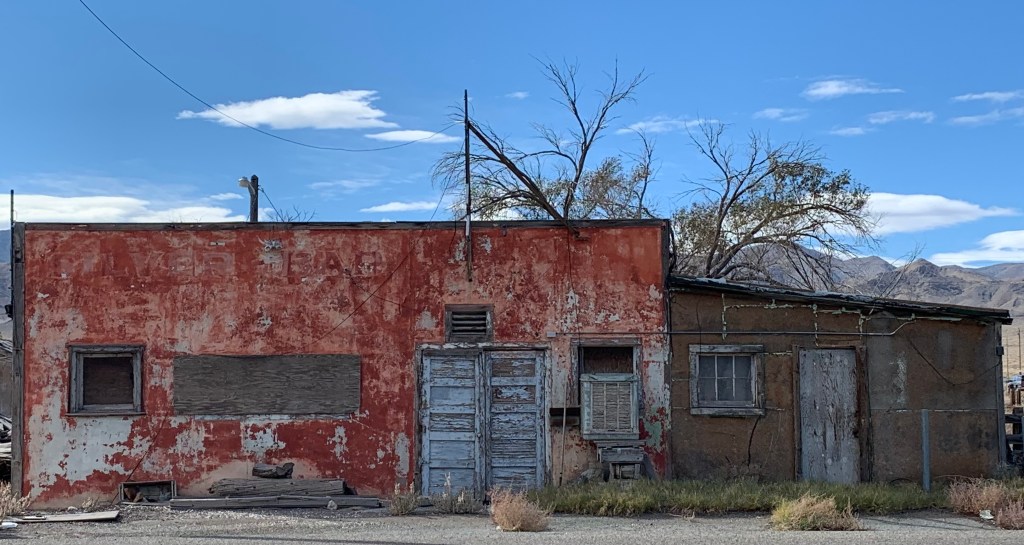
The Long Branch Saloon, Luning NV

With great anticipation, Tasia and I backed  out of the driveway around 10:00 am, October 31st, heading southward from Ashland Oregon towards Death Valley California, via Reno Nevada. But not until…  Since I mostly travel by airplane, I had packed light though I did throw a few extra things into the car such as a heavier coat and hiking boots.  But all too soon, when I realized the much larger capacity for STUFF, we made several trips in and out, adding just one more thing untilI I actually decided to take my big body pillow (named Hugly) and seat belted it into the back seat to enjoy the scenery.  It was time to draw the line before I packed the coffee pot, Soda Stream and microwave. 

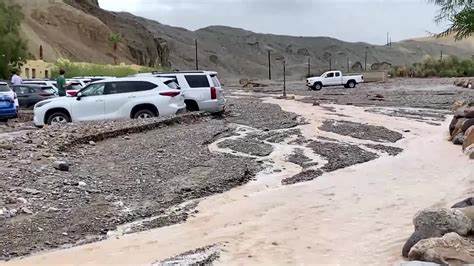
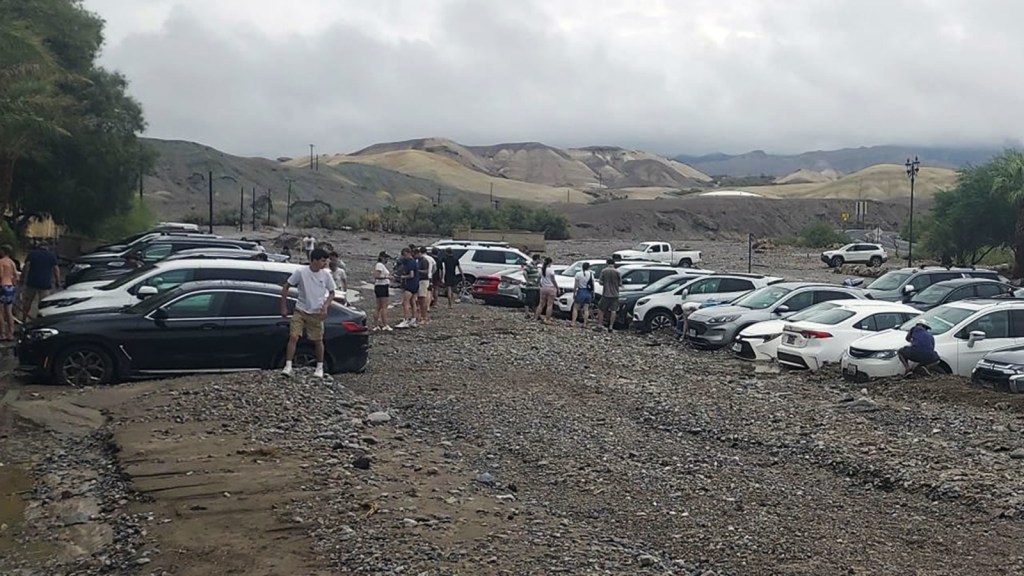
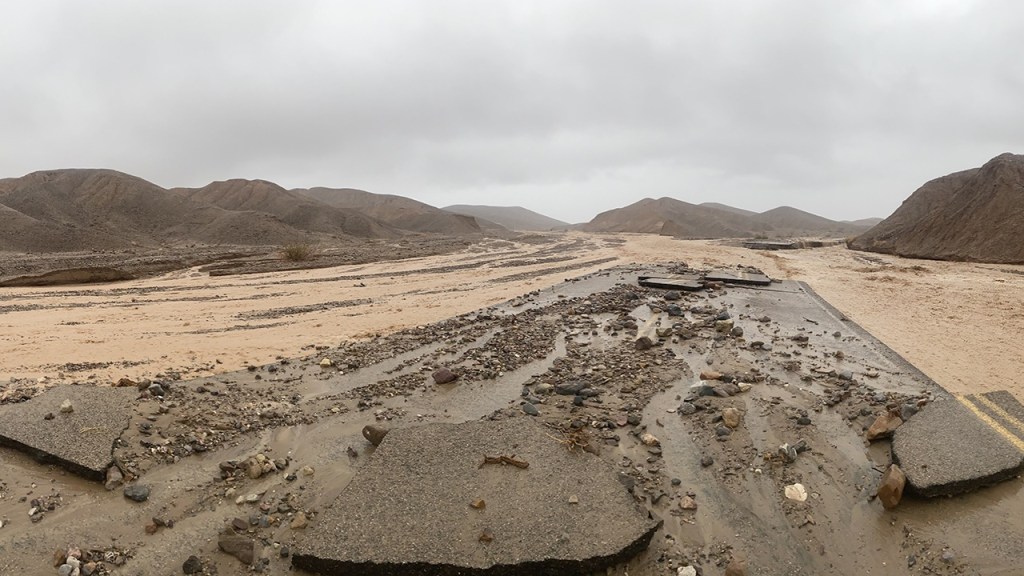
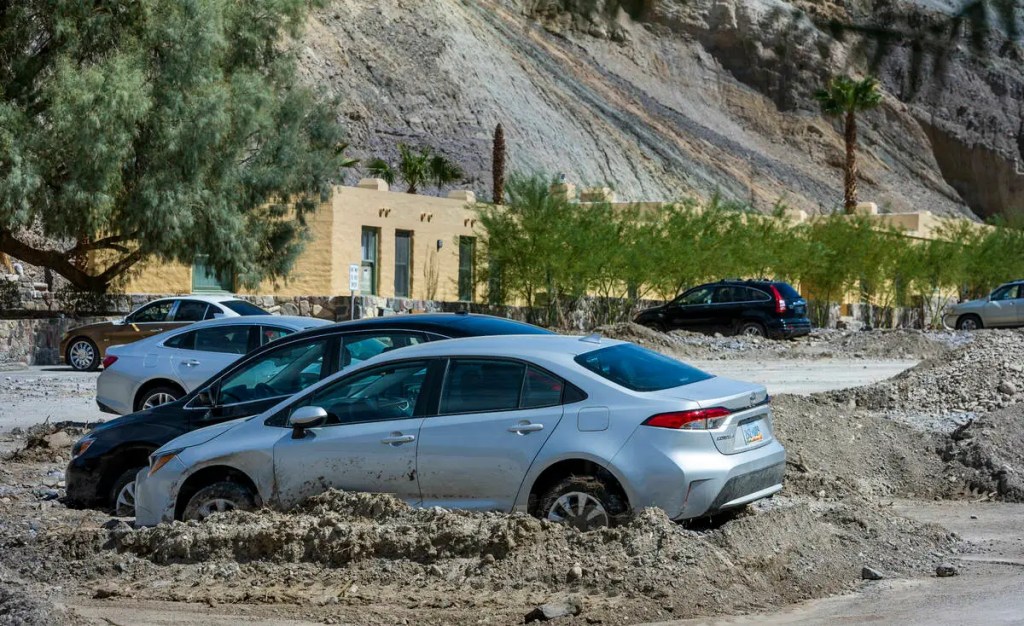
I have not done any significant road trips since I had driven across country, when moving from Venice Florida to Oregon, and then driving on up to my second home in Alaska. Knowing that COVID, politics, and inflation have significantly altered the “landscape”of travel, including how things are now done AND how much things cost, I was in for some pleasant and unpleasant surprises. I had made a reservation for a hotel in Sparks NV, anticipating it was about the halfway point. Previous to leaving, I had become quite puzzled by the routing that all of the map apps I had checked recommended (Google, AAA, iMaps ). We would be heading over and down to the east side of the park through the Nevada desert and entering the park via Route 373/127 to 190. The night before leaving, in the process of checking for any last minute information, I saw an ALERT that due to a massive flood in August, many of the park roads, even after two months, were still impassible and the park could not be entered from the California side. Hence the circuitous routing down through NV, also bypassing the northern and closest Nevada route # 374 entrance. This naturally added an extra 80-90 miles to the trip so Sparks was certainly NOT half way. I guess a few miles extra on the road is not much of an inconvenience since I was not one of those 1000 people stranded in the park with my car mired in the mud in August.

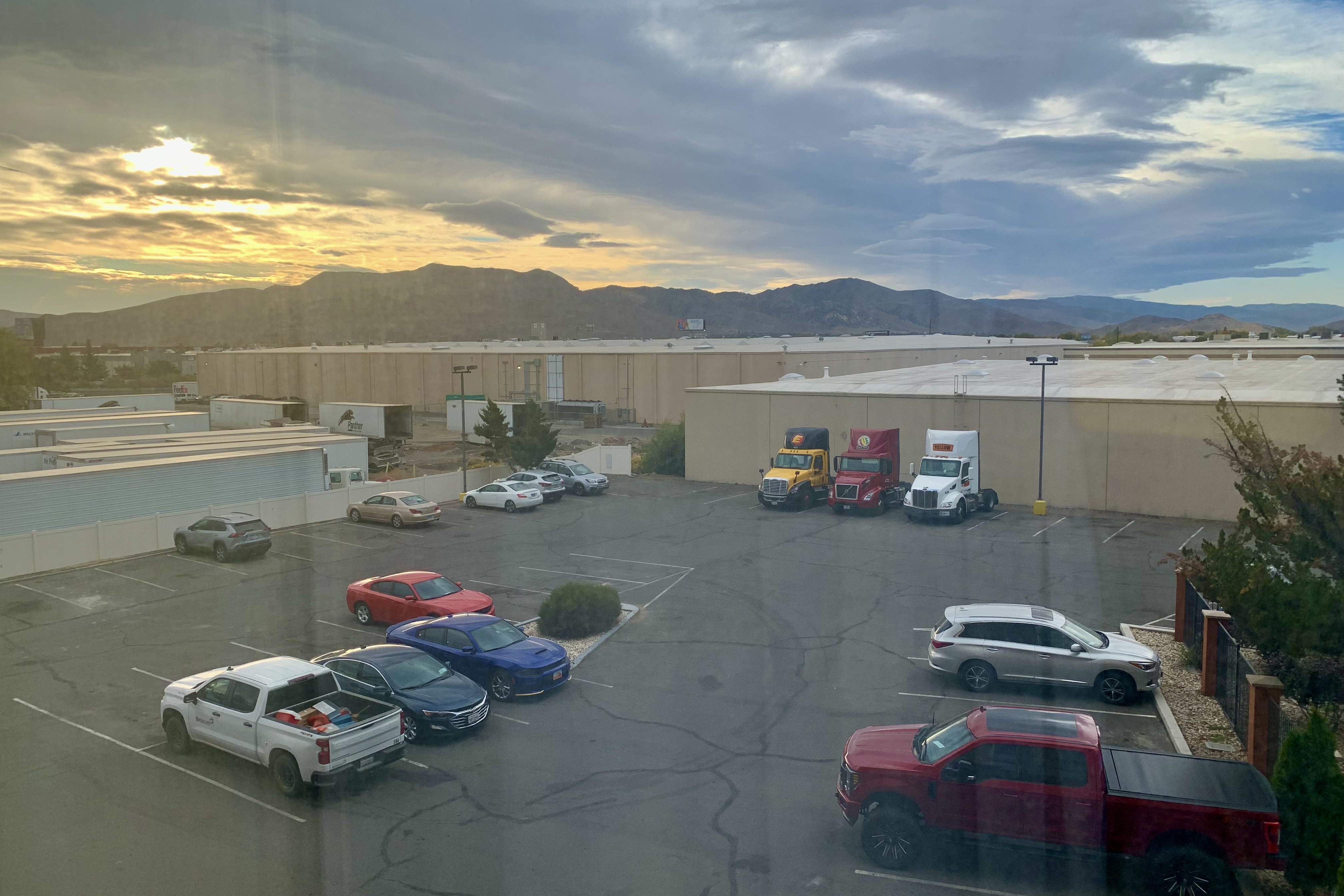
Driving day #1: The advent of the interstate road system allows drivers to tear on through the these corridors, getting a macro-view of the countryside. For many, a myriad of reasons make this a sensible choice. But I have often asked myself what am I missing out on in my rush to the “finish line.” Is not part of the joy of traveling the journey and not just the destination. So I often take all the back roads and avoid interstate travel as much as possible. Fortunately after the first 75 miles, our routing was not on the interstate corridor of I-5 with its massive volume of semi-truck traffic and on which most drivers preferring to go minimally 10-15 miles over the speed limit. Now I am not actually opposed to going over the speed limit but I don’t care to dole out my whole months retirement income on a speeding ticket so I keep to, at most, 4-7 mph over, so as to preserve my sanity. Of course even then, a fast approaching vehicles behind will find it necessary to ride my tail until the other cars in the other lanes are all done jockeying for their position to get around the pokey Subaru going 70 (Speed Limit 65mph) . I don’t find this as much on the backroads and thus I arrived in the Reno area with my nerves not so badly frayed since the trip was on the rural two lane highways through small towns. We had to succumb to the interstate near Reno, exiting at the Golden Nugget Hotel and Casino (which we definitely were not staying at) but we did not head towards that area as I would have anticipated, but turned left and were immediately in a warehouse district with a multitude of big tractor trailers on each side of this newly renovated Best Western Plus Sparks-Reno Hotel. I am curious as to how they were able to photograph the facility and not get any of the surrounds.

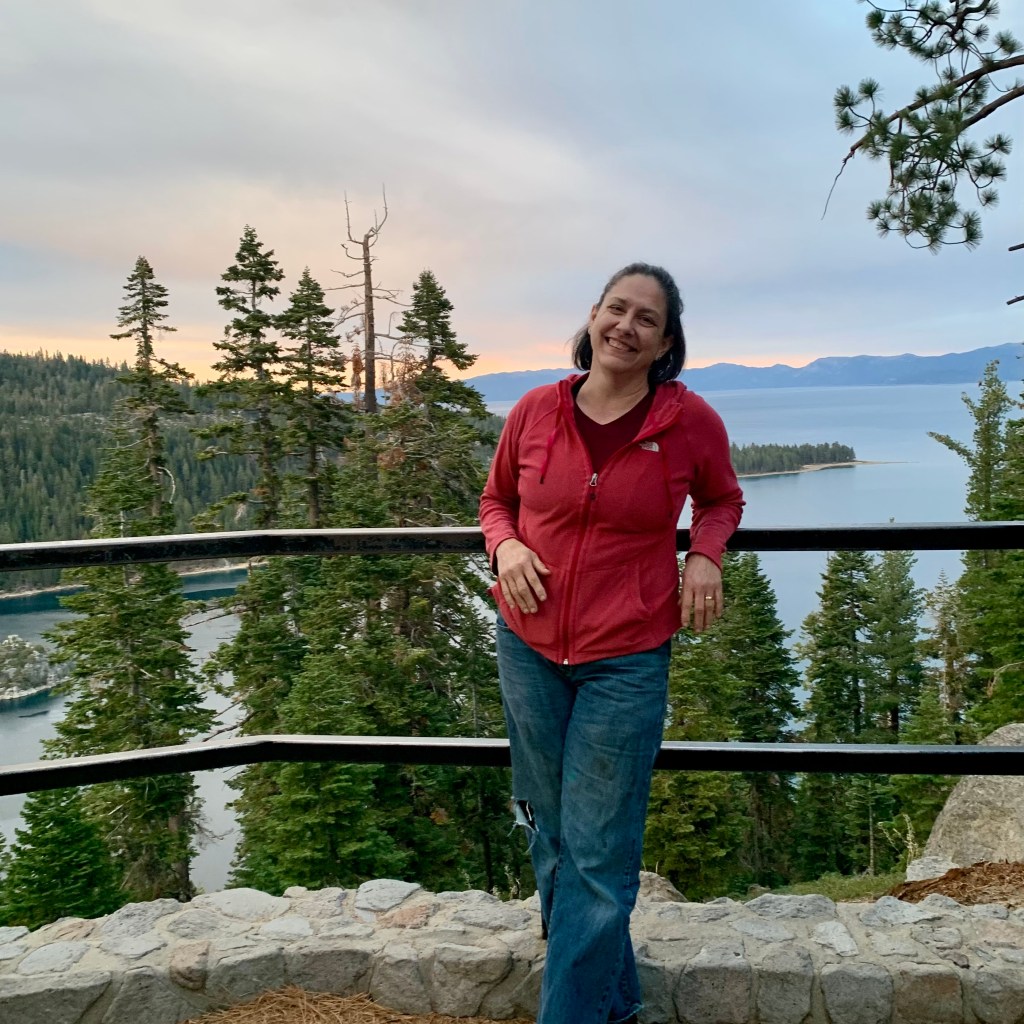
Tasia and I were not feeling motivated to either sit in our hotel room (which was actually quite nice) and admire the mural of the city of Reno on the wall (pasted above for you to enjoy) since visiting the city and casinos here was not on our dance card. Nor were we motivated to walk about and admire the big rigs in our neighborhood. So we set out for a late-ish afternoon 150 mile round trip drive to South Lake Tahoe. Having never been there, it seemed like a splendid idea but we were going to have to high tail it as we would barely make it down there before sunset. But that we did, and after a slow drive along the lake enjoying the towns and houses rimming the lake, we arrived at a high vista point with enough sunlight left to genuinely appreciate the beauty of this lake. It was definitely a worthwhile “side trip” to add on to a low mileage day (350). Given inflation, I was gritting my teeth having heard about the exorbitantly high California gas prices and it was time to fill the tank, and in a resort town no less. One of the pleasant surprises was that in most places it was actually cheeper than in our area of Southern Oregon. Of course cheeper does not mean cheap, but I found I was paying between $4.79-5.49. All of this is a prelude to my rationalization that it would not cost much to go on this boondoggle driving adventure.

Lake Tahoe Visit Point, South lake Tahoe

Driving Day #2 : Avoiding interstate travel provides a lot of pleasure, experiencing some of the joys of the lesser roads traveled in todays world of traveling at stressful high speeds and weaving in and out between the massive piggy back trucks hauling all those Fed-Ex packages or Amazon prime purchases. So it was a pleasureful day of traveling from Sparks down to Death Valley and taking the time to explore the side “streets” of the typical highway bergs that existed before being cut off because of the rise of the limited access speedways. Its hard to fathom that the dying towns, the already deceased ghost towns, the dead lakes, and the abandoned mines which supported the towns and ghosts towns were thriving residential and commercial centers in earlier times.

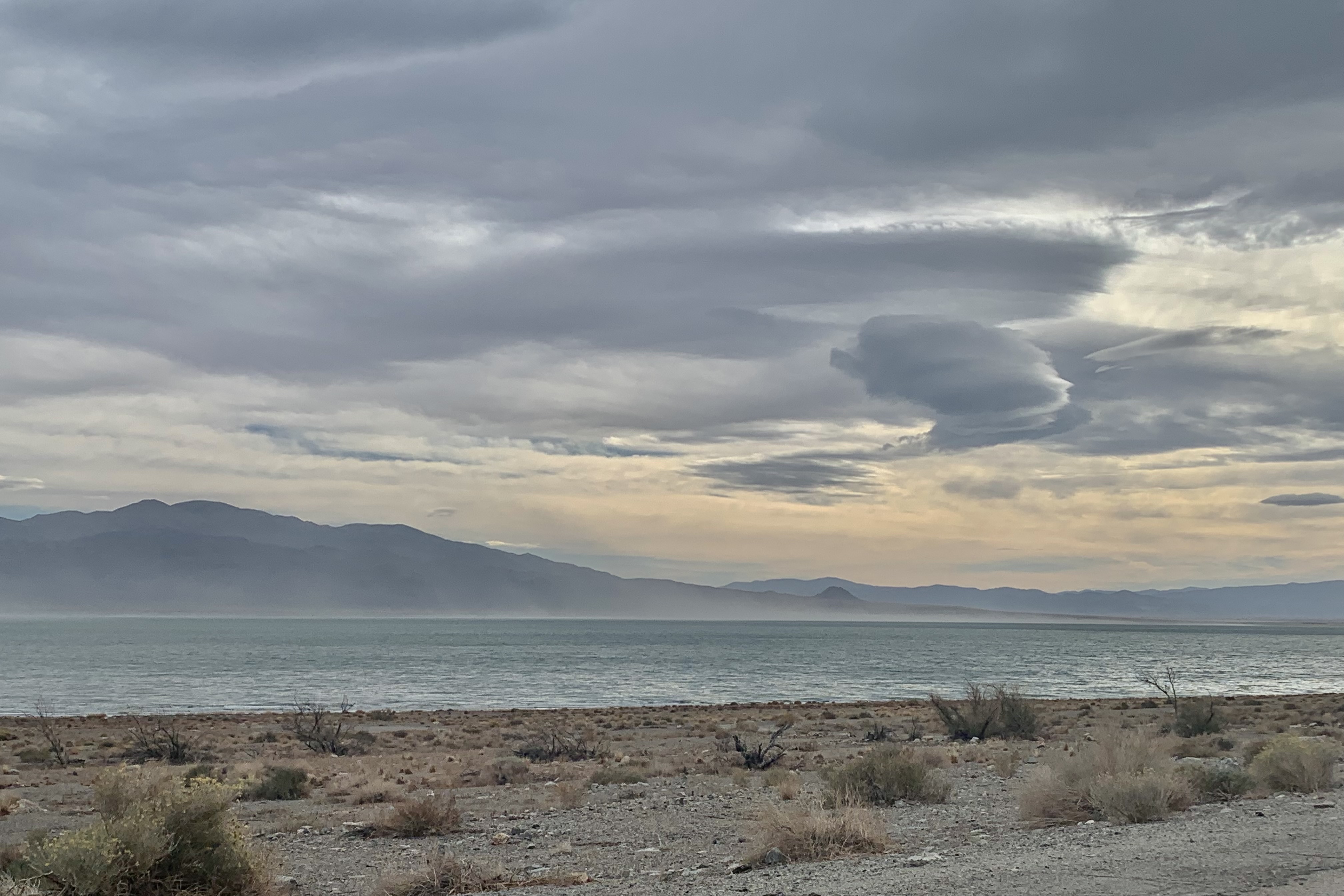
Walker Lake Nevada, A High Desert Lake

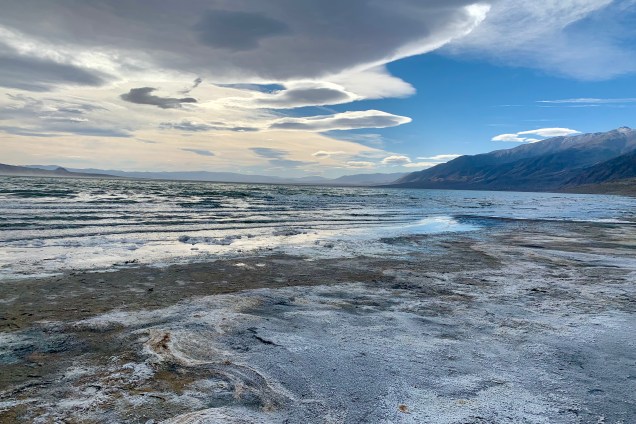
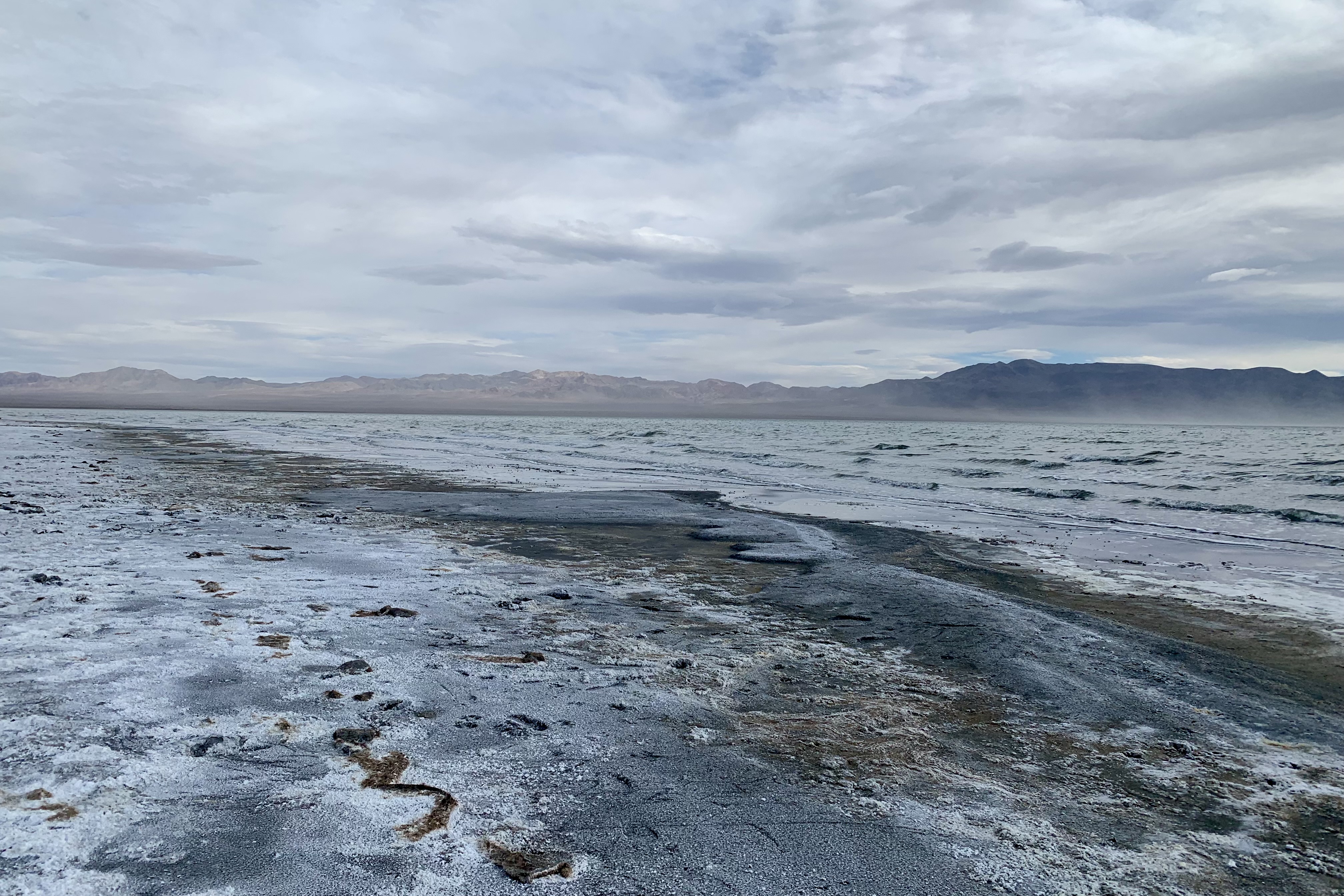
Driving down Highway 95, Walker Lake, a high desert lake,  was a surreal sight in this arid desert scenery. It initially appeared to me as a mirage on the horizon as it came into view. The wind was brisk and a pulsating fog appeared on the steep rocky western shore of the lake. Upon driving  closer, the  mist rising off of it and the view of this ephemeral  lake nestled between rugged mountains in this desert valley corridor, was quite enticing.  Since I would soon need a break,  I somewhat impulsively pulled off the highway at Tamarack Beach  into the Walker Lake State Recreation Area. We clattered down the rutty gravel road with the dual purpose of using the outhouse ( always a crap shoot- pun intended- it was well maintained) and exploring the lakeshore. Thick slick muck covered with salt on the shoreline replaced what I thought would be a sandy beach and my shoes collected a good sample as I sunk in. I eventually proceeded to get the salty muck all over the floor of car, my jeans, my purse and anything else that got near those newly adorned trail shoes. From the lakeshore Walker Lake looked far less appealing when up close than it did from the highway. You would not know this or any of the following things from the government and local websites. 

In case you are still eager to have a camping or a day outing to this lake on your next vacation, keep in  mind a few of things. Timing is everything. I read that every summer the shores are infested with many many thousands of orb weaving spiders, vying for space on your campsite, intent upon attaching their spiral wheel-shaped webs too every available surface (i.e. plants, campers, picnic tables, you) onto which their sticky legs will attach. Guess they are the impatient sort because it seems this infestation is much more in keeping with the spirit of Halloween rather than infiltrating the area for summer vacationers. But since I was there the day after Halloween, I was mighty glad they vacationed in the summer. Since there are not  many natural predators for the spiders anymore, with the disappearance of species needing a healthy lake,  I can only imagine it will get even creepier. 

This lake, is fed from the north by the Walker River but too much damming and water diversion for agriculture has taken its toll. It has lost 90% of its volume and is considered a terminal lake, meaning that the lake elevation is low and there are no natural outflows other than evaporation, aka a DEAD lake. Any water comes mostly from spring snowmelt running down from the Sierra Nevada. Because water levels have declined so dramatically, the total dissolved solid levels in Walker Lake have increased and salinity as well to the point where it can no longer support its native fish and wildlife populations. As agriculture thrives, the lake dies.

An environmental cleanup of Walker was undertaken about 10 years ago. After a removal action, a 6.5 mile fence was erected around the impact area and the northern part of the Hawthorn Army Depot. The fence is to keep unauthorized personnel out of the impact area of this historical  munitions range on the land side and the second is to keep a wild horse herd from wandering onto Highway 95.  So unless you are eager for the possibilities of a lake funeral, being trampled by wild horses or blown up by unexploded ordnance you might reconsider this designation.
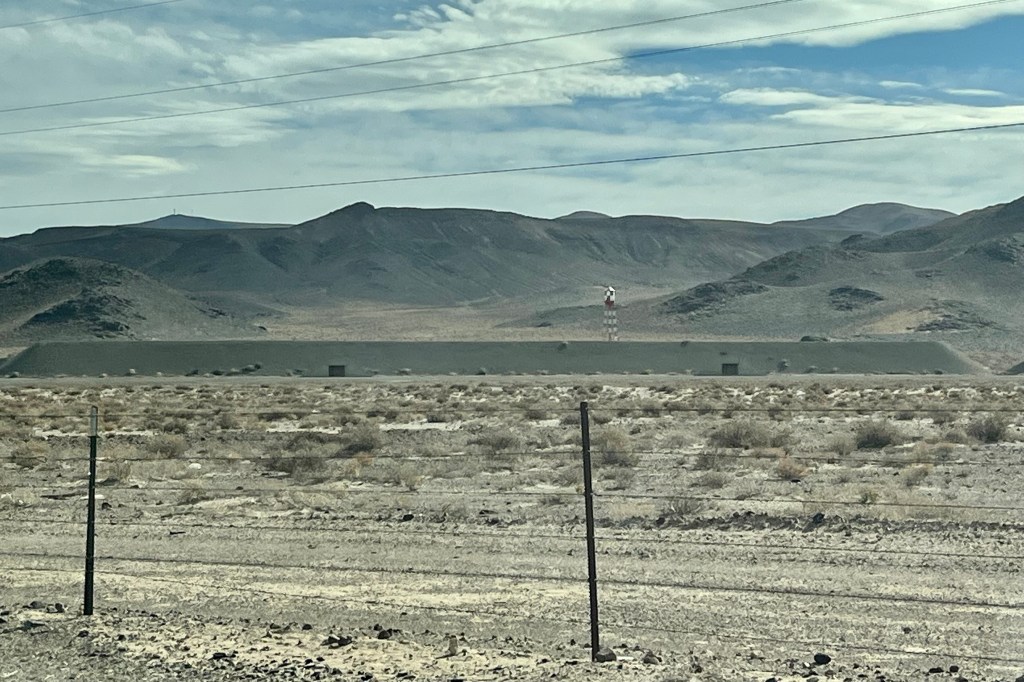
Hawthorn Army Depot Protected by a 5 Strand Barbed Wire Fence.

Shortly after being back on the road, we noticed that we were traveling through the  Hawthorne Army Depot which stores war reserve ammunition to be used after the first 30 days of a major conflict (meaning the first thirty days are stored on ship or base) and the depot will resupply as needed. It is the largest such facility on earth. Established in 1930, the Hawthorne Army Depot continues to be a vital element to the storage, renovation and issuing of weapons, equipment and ammunition for all branches of the military. I found it a tad unnerving to know that on both side of the road there were munitions bunkers which I am sure are well secured and guarded but the barbed wire fence sure did not looked veery imposing.

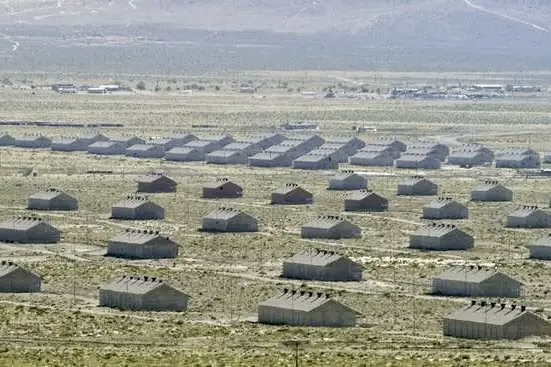
I was dumbfounded to discover that this munitions facility is managed by an independent contractor. Since it is run by civilian contractors, much of the land surrounding the depot is now deserted as the civilians and military personnel who once lived beside the post now have moved. Babbitt NV, a now-abandoned town established for military housing  encompassed approximately 40 blocks and 584 duplexes by the end of World War II with all duplexes on the same 10 room plan, with 4 bedrooms, 2 bathrooms, 2 kitchens, and two living rooms. Was this perhaps the prelude to the cookie-cutter neighborhoods and the tract housing of Levittowns built after World War II for returning white veterans and their new families. 

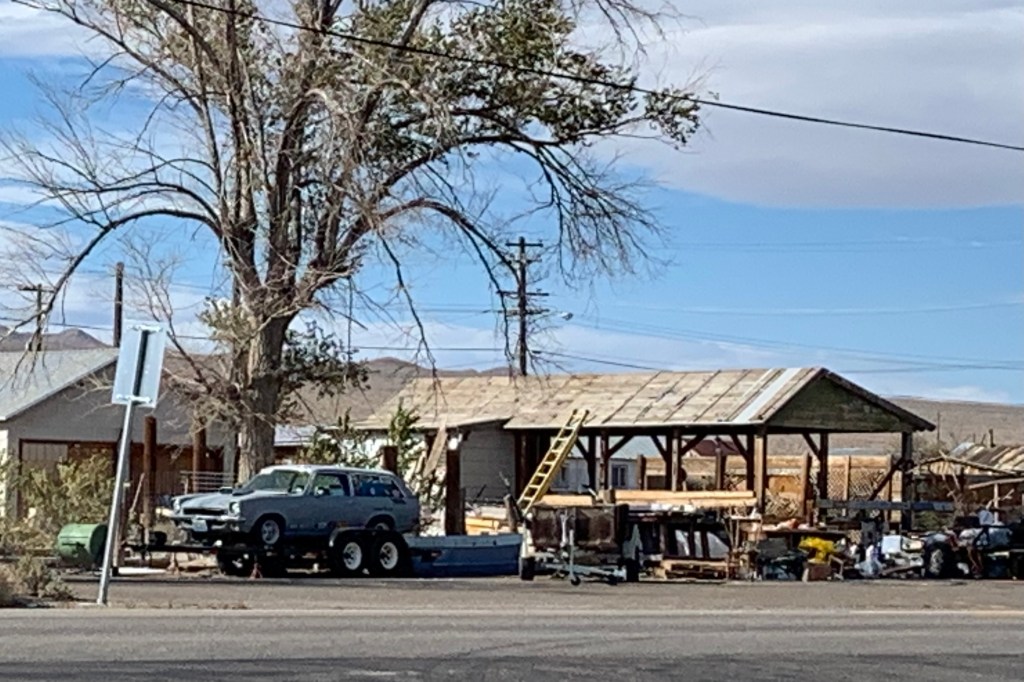
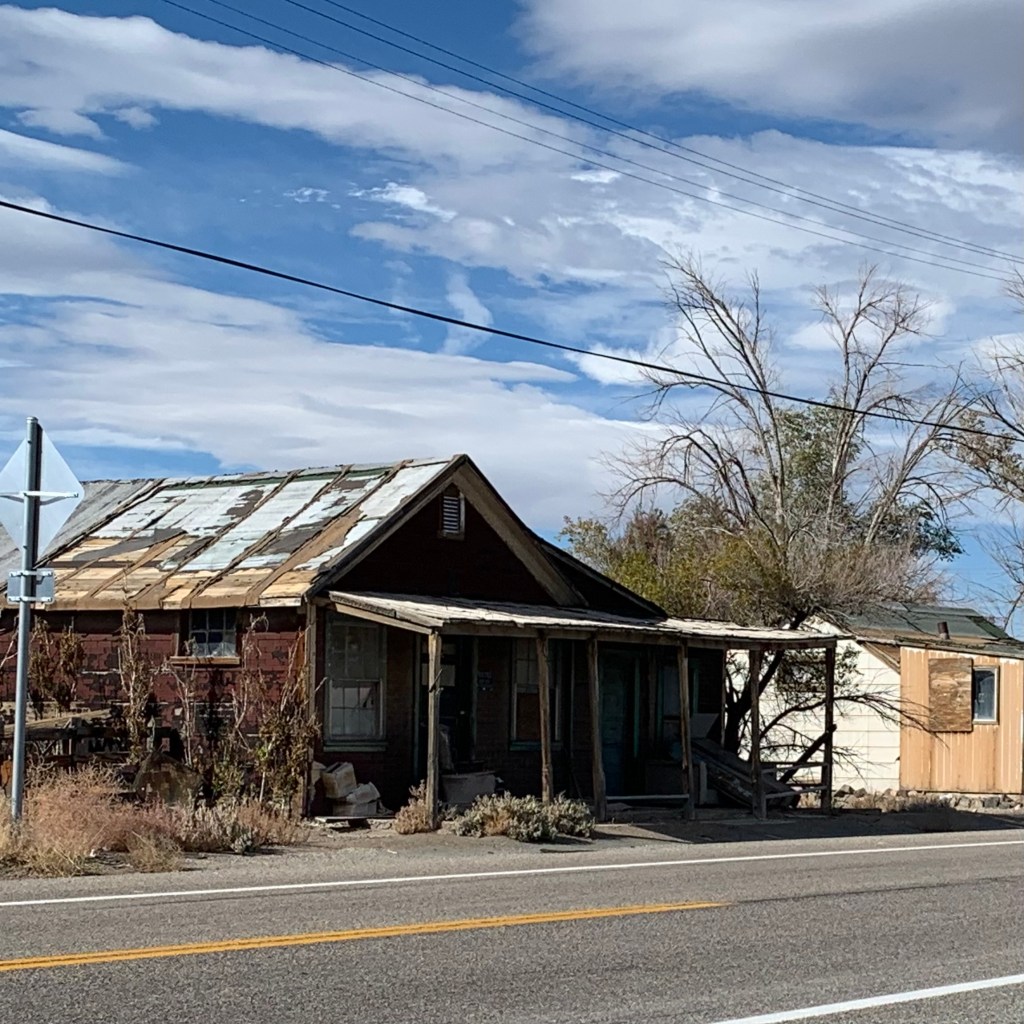
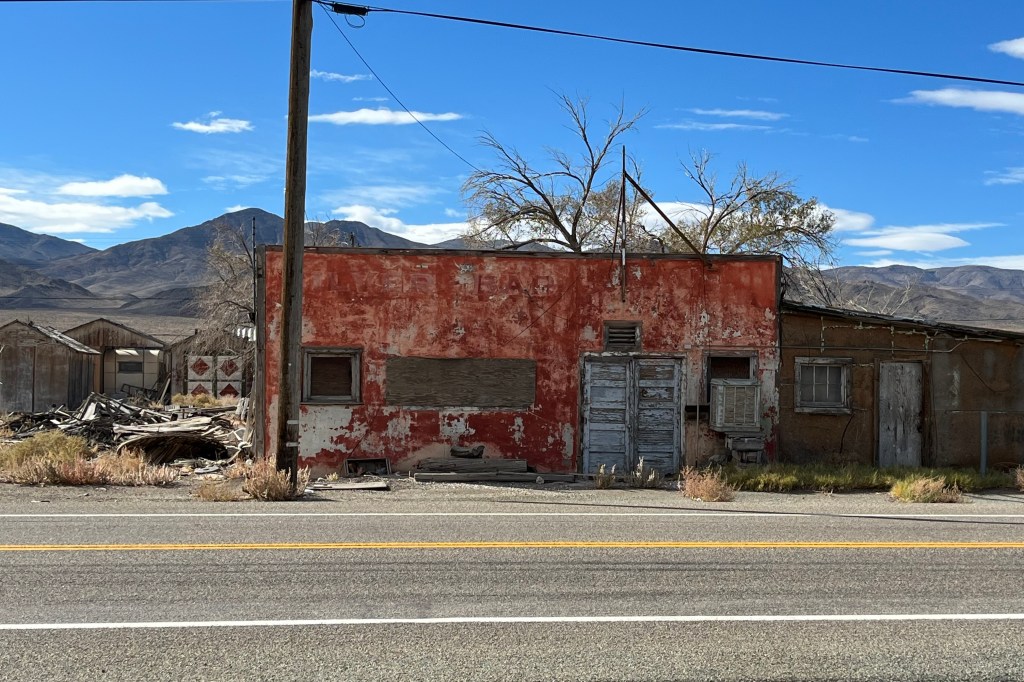
Our next adventure was the town of Luning. It’s main street – Plymire Street – is named after a long-time resident, Dr. Fred A. Plymire. After 20 years in Luning, Dr. Fred returned to California, retired there and died in 1929 at Napa State Hospital in “general paralysis of insane.” Hopefully Luning residents have fared much better, at least mentally if not economically than their patron. Luning had an active railroad loading facility for many years. Magnesium ore was trucked to Luning and transferred to railroad cars. We particularly admired the now shuttered Long Branch Saloon but were also very pleased to hear that, the news of import here was of their newly renovated public restrooms and the arrival of the internet! (Sorry, no photo of this very ordinary public restroom .) ON down the road was Coaldale, a former mining town, and is described as a true ghost town. Somehow, even though there are supposedly a few decayed structures in this true ghost town, it was about as visible for me as any ghost would be.  Perhaps I blinked.

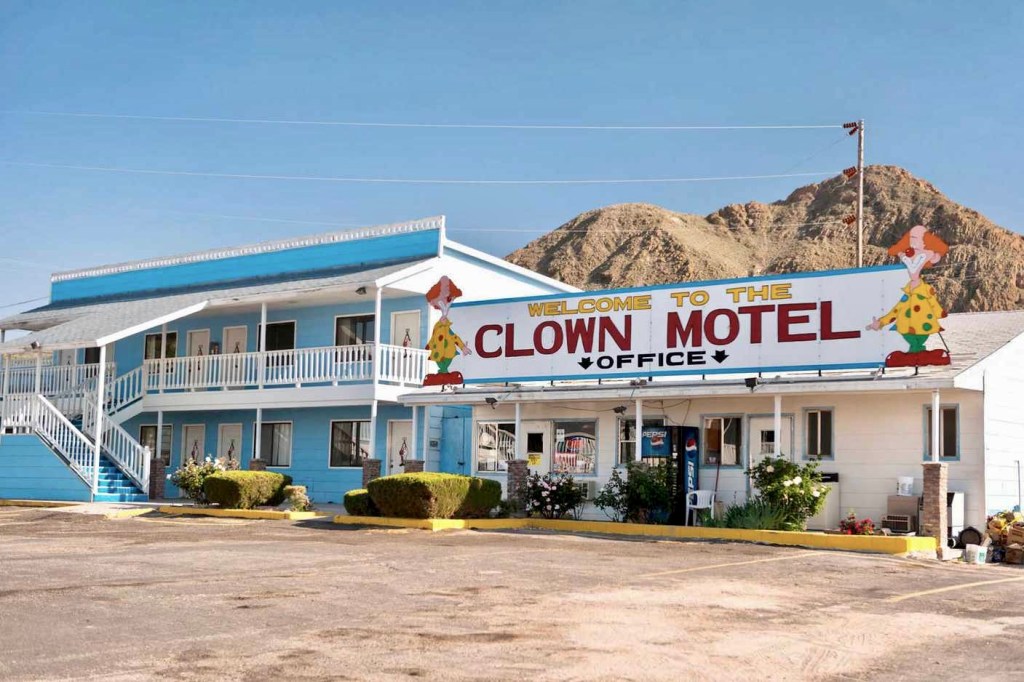
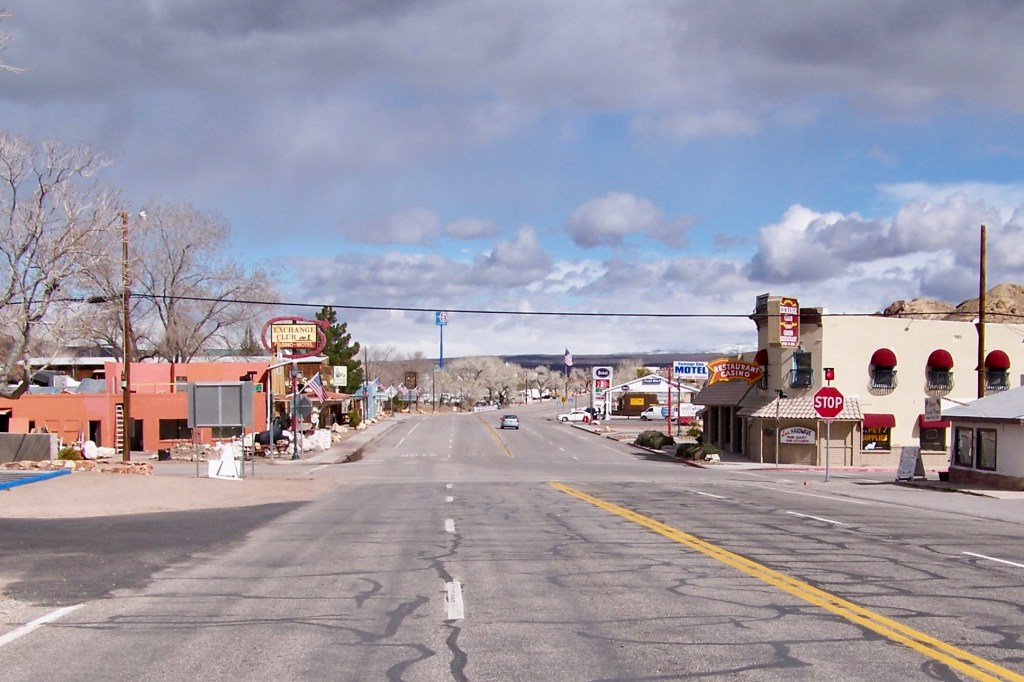
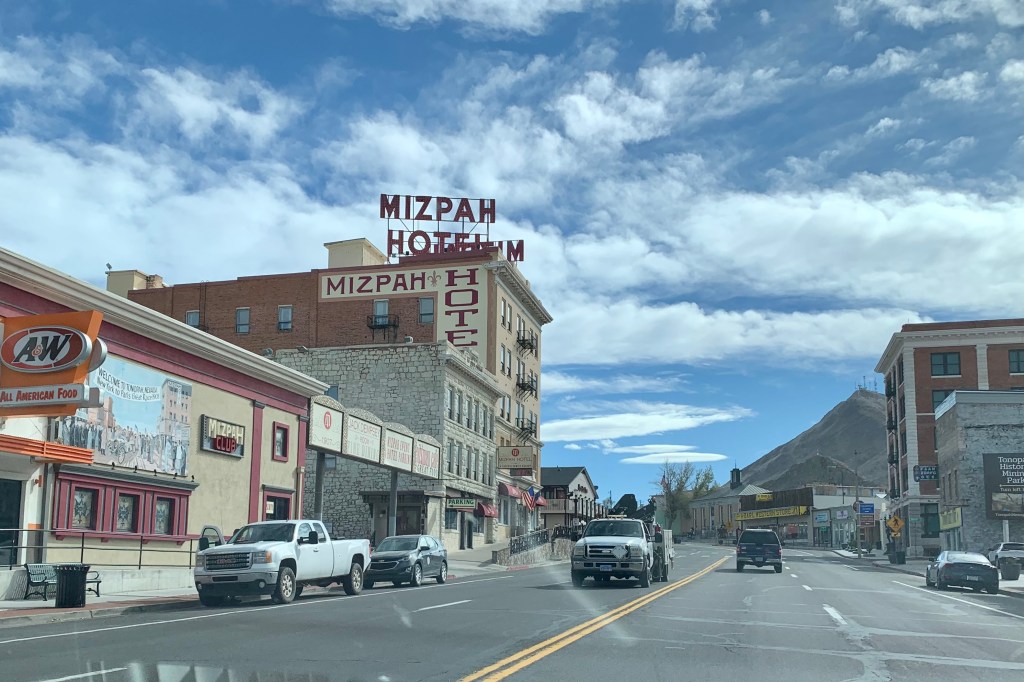
The true prize of a town on this route was Tonopah, significantly larger and a bit more prosperous looking. One of its claims is that because it’s so far from the bright lights of any major city, its night skies are considered among the best in the country for stargazing. We opted not to hang around to find out. But the true focal point here would be The Clown Motel, a Tonopah landmark and supposedly, it is quite well known, though I am not sure where! Now, if I had only known!!! It is definitely a must do should I ever return to this area or NOT. So should you decided to travel to this desolate area  you just might want to spend the night here.

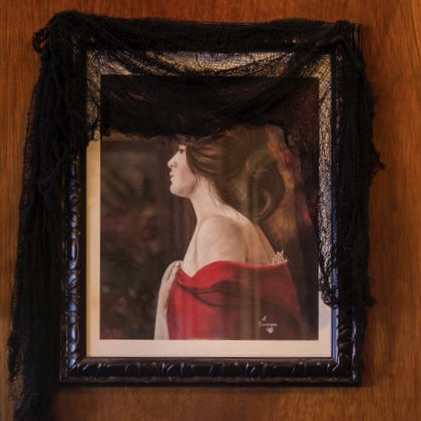
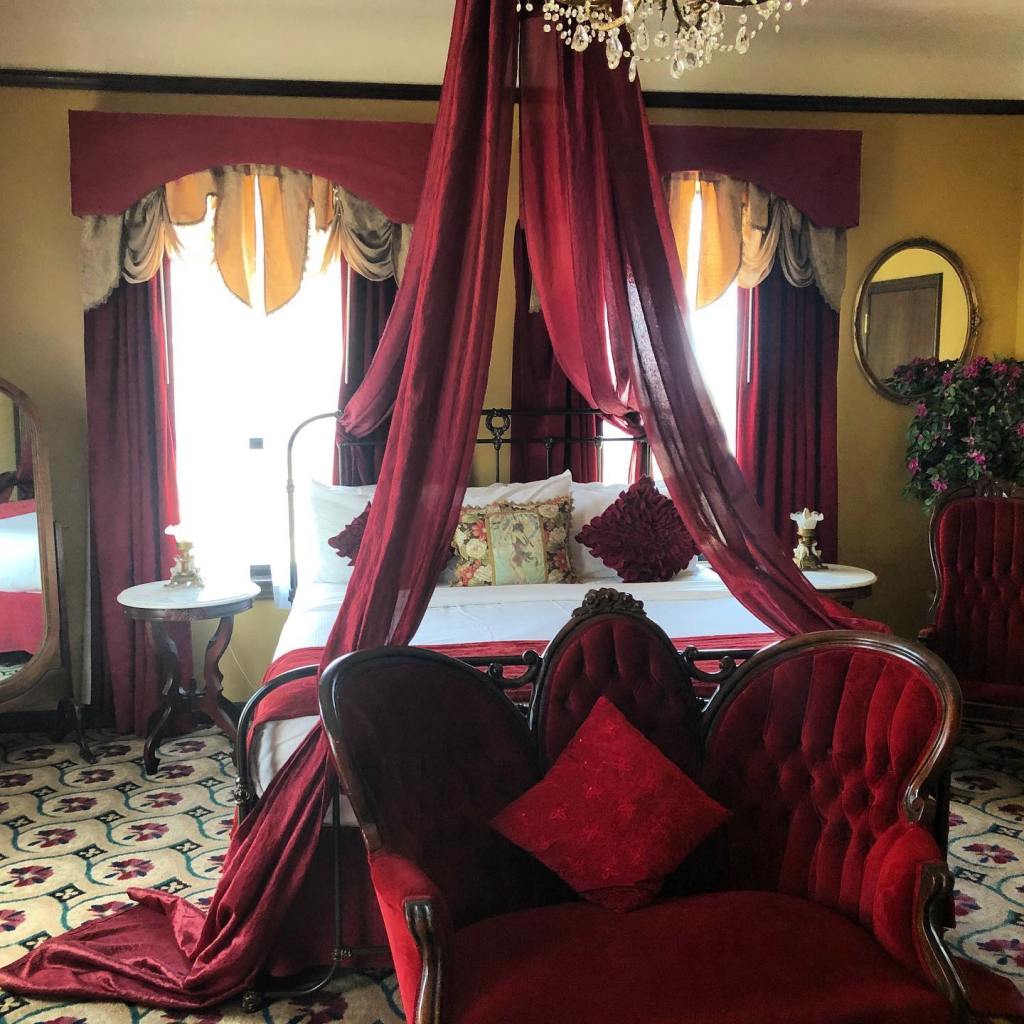
At some point (who knows when and by who) the Clown Motel was named “America’s Scariest Motel” because of its clown theme (scary, they are, to a kid for sure) and proximity to the Old Tonopah Cemetery. It is a well know fact (hmmm! to who?) that some of the murals in guest rooms will definitely give guests nightmares. Somewhere it states (https://www.tonopahnevada.com/clown-motel/ ) that The Clown Motel’s collection of clowns numbers 2,050! The other building of interest is the Mizpah Hotel. It was built in 1907 and has been restored to its former grandeur. If you choose to stay there, you might meet some spirits in this historic hotel, and preferably their resident ghost, the Lady in Red! The story goes that the hotel, which was voted the top haunted hotel in a 2011 USA Today Readers’ Choice awards, is haunted by the Lady in Red who was a prostitute that conducted her business with Mizpah patrons in the 1920s. A wealthy man supposedly killed her in a room on the fifth floor in a rageful fit when learning she was not his exclusively but had many many customers. Legend has it that the ghost of this lady roams the hotel to this day.

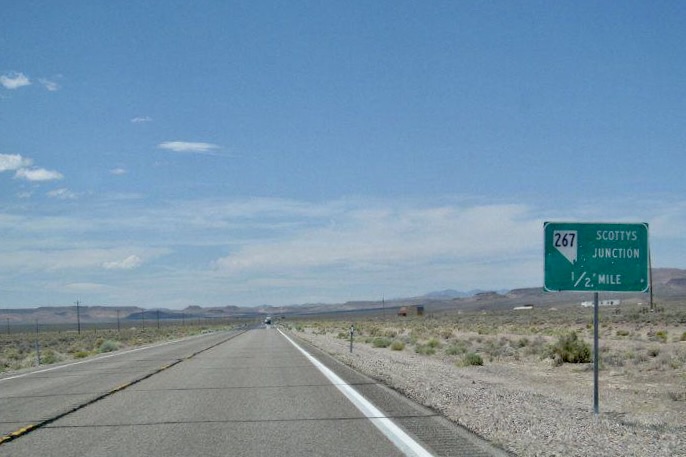
We breezed through Goldfield, Nevada (termed a”living ghost town”) and then on through Scotties Junction, a less than memorable place, and  shortly we were traveling adjacent to an extensive alkali flat glistening in the sun (alkali flat, also called salina, or salt alat, a playa, or dried-out desert lake, that containing high concentrations of precipitated dry, salts ). This was “the trailer” for what we would be seeing in Death Valley.

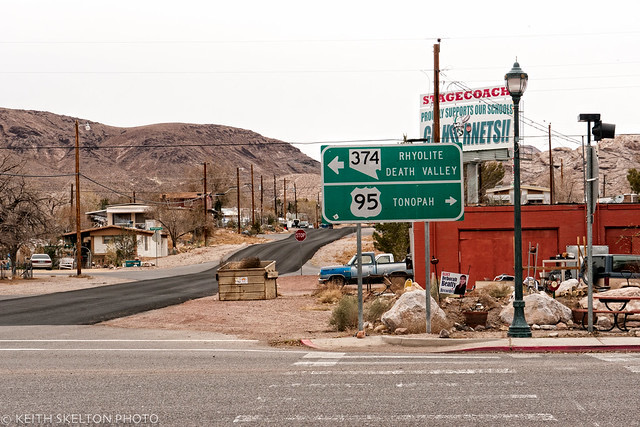
Located on the crossroads of Hwy. 95 and State Route 374, was the town of Beatty. The town  considers itself “the  Gateway to Death Valley National Park.” Not this year though. The August unprecedented amounts of rainfall (the park received 1.46 inches of rain at the Furnace Creek area) was about 75% of what the area typically gets in a year and more than has ever been recorded for the entire month of August. This Gateway town is likely suffering because with tourism one of its main business, it claim to be the Gateway is on hold, at least for the time with 374 closed. There definitely was none of the glitz nor the garishness I have seen at many national park gateway town and there was not anything that drew me to stay beyond the necessary pit stop and gas. I would not want to have my lodging there in Beatty and travel about 180 miles round trip to get to Furnace Creek and all the “not-to be missed”areas of the park. So unless you have a camper or plan to tent camp,  your only other alternative  for lodging near Death Valley is in the National Park at their very pricey hotels. We gassed up, got a few snacks and left Beatty behind, arriving 30 miles later at 373, the current Gateway to DVNP. Nothing remotely imposing here either. After another 25 miles through the Armagosa Desert and Valley, we arrived at route 190, the main thoroughfare through the park. It turned out to be an extraordinary travel day.

So much for the preface. Next chapter Death Valley National Park.