
Feeling thoroughly diminutive admidst the Redwood behemoths (of course at 4’11” it is hard not to feel minuscule most places), I was ready to head up the coast of Oregon to hopefully reclaim a feeling of altitude. I have always found the Oregon Coast a spectacular place to experience. The massive sea cliffs overlooking the ocean waters are both picturesque and impressive but this image becomes significantly enhanced by the large, unique sea stacks, those insane rock formations that are jutting out from the sea. The sheer size and shape of them is quite impressive to witness. In fact, I yet again felt pretty small and insignificant with this array of “rocky beasts” sitting in front of me. Sea stacks are amazing vertical rock formations standing in the sea that were formed entirely by wind and water. The sea creates cracks in the headland, which later collapse, and thus forms free-standing stacks.


There were many scenic viewpoints overlooking Oregon’s free public coastline and my first pullout was at Harris Beach State Park just north of Brookings, a mere 27 miles up the coast. from Crescent City. Harris Beach offered a splendid seascape of a sea stacked coast and a driftwood dotted expansive beach. After soaking in the “serenescape” with the lapping of the waves on this beachy shore, I began to realize that if I stopped at each vista it would be way past nightfall before we made it up to the next stop of Depoe Bay OR (187 miles total).
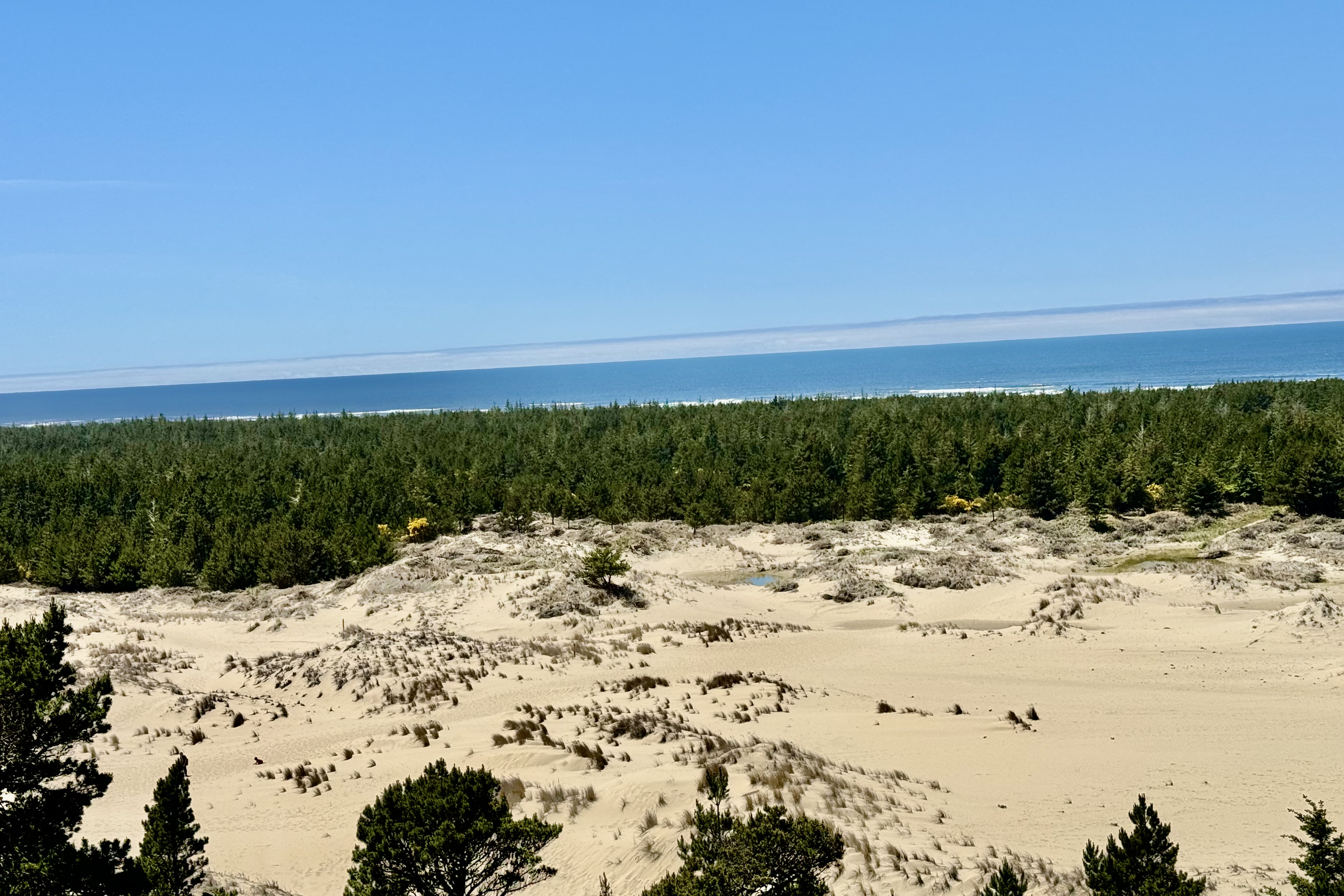

So I drove gently (well maybe not so gently) up the coast until our lunch stop 3.5 hours later at Gardiner and its overlook of the Oregon Dunes National Recreation Area. This is a 40-mile-long playground for sand-boarders, dune buggies and off-highway vehicles so if you are into climbing up sliding sands or roaring about in a noise emitting buggy this is the place for you. . Not being a fan of noise-enhanced recreation, unless it is a product of the earth’s natural forces, I made note to not put this area on the top of my bucket list of things to do in Oregon. To each his own!
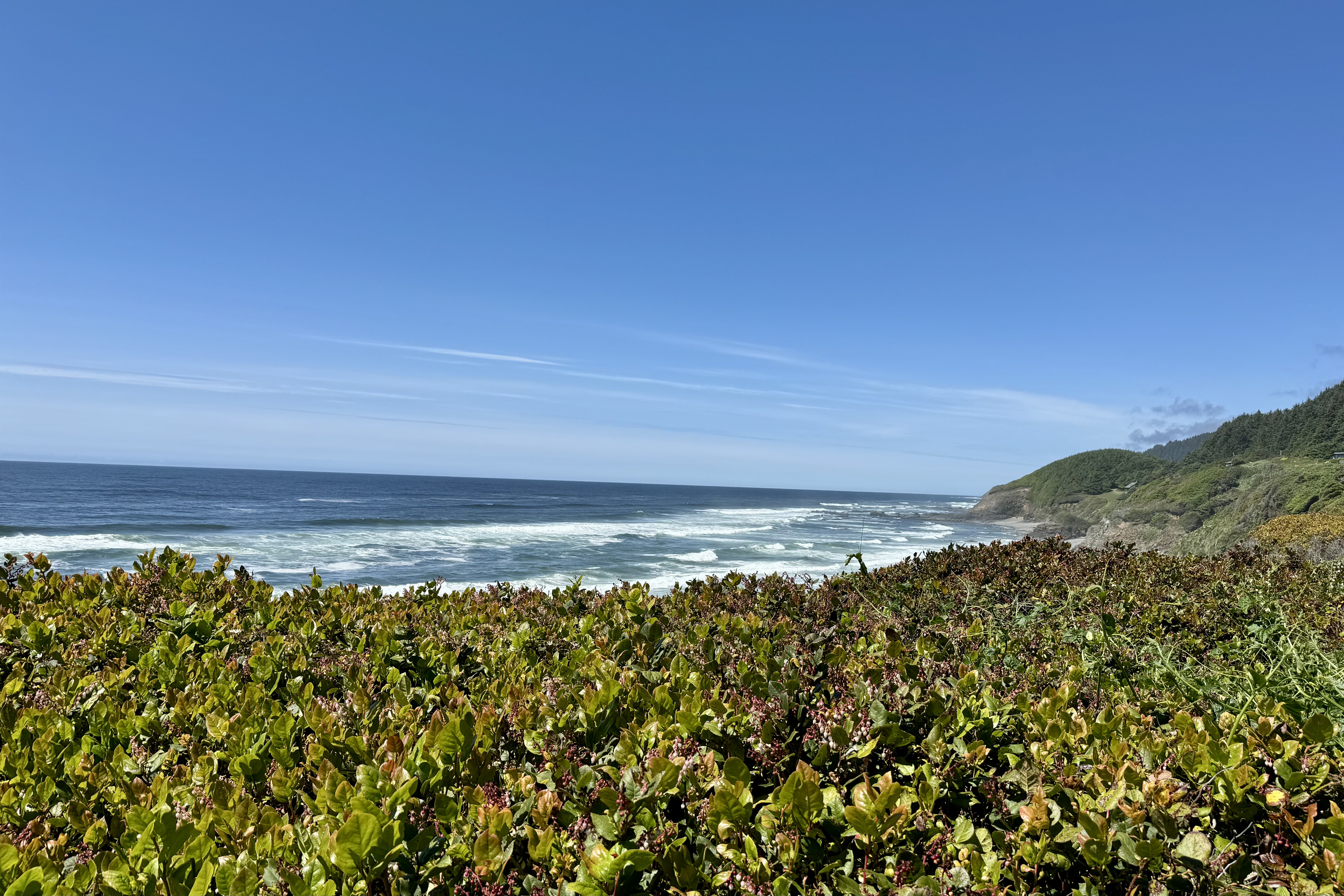


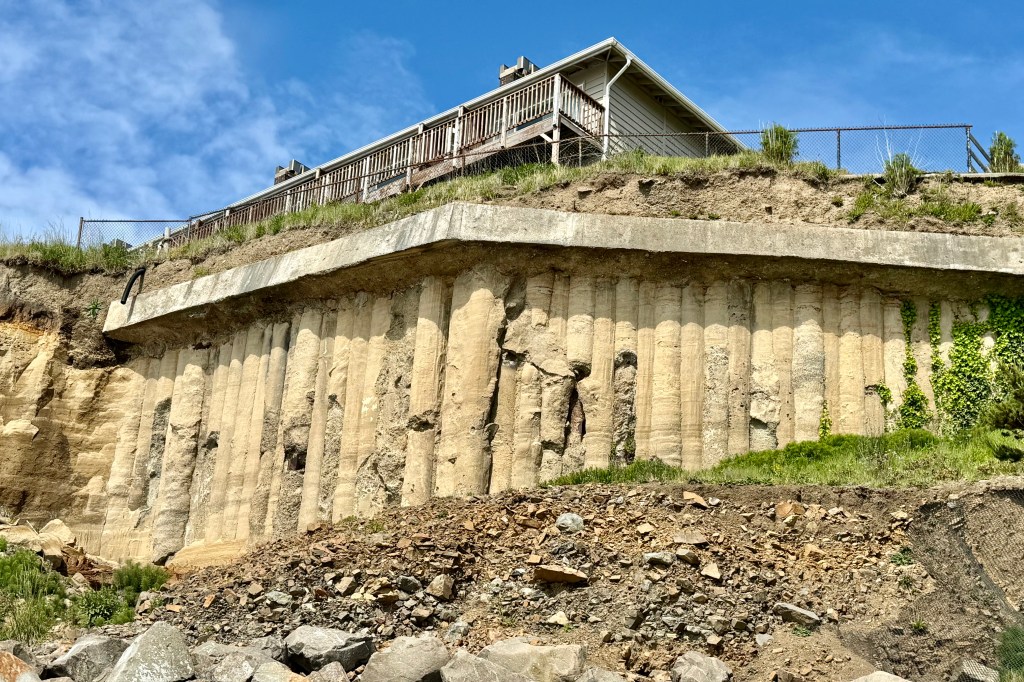
Yet again, its hard for Lady Spitfire (my car’s name) to not just veer off into a random scenic pullout so I found myself at the Tokatee Klootchman State Natural Site on a bend that is dangerous to pull into when traveling northbound between Florence and Yachats. . The big vista from this elevated wayside is pleasing but not flashing dramatically plunging cliffs nor vast dunes. I viewed cobbled pockets of beach between dark bedrock formations and thought it perhaps would be a good whale watching vantage point but the steep overgrown trail down to the beach did not call out to me. Soon we were safely back on the road and finally arrived at the Lincoln Beach/Depoe Bay area, and our bed-siting-room for the next two nights. Our hotel, definitely weathered beaten by the offshore winds and perching perilously close to the eroded bluff, was a great spot to for a land lubber to scan the horizon for whales. Though weather worn on the outside we were in lovely refurbished room overlooking the ocean.

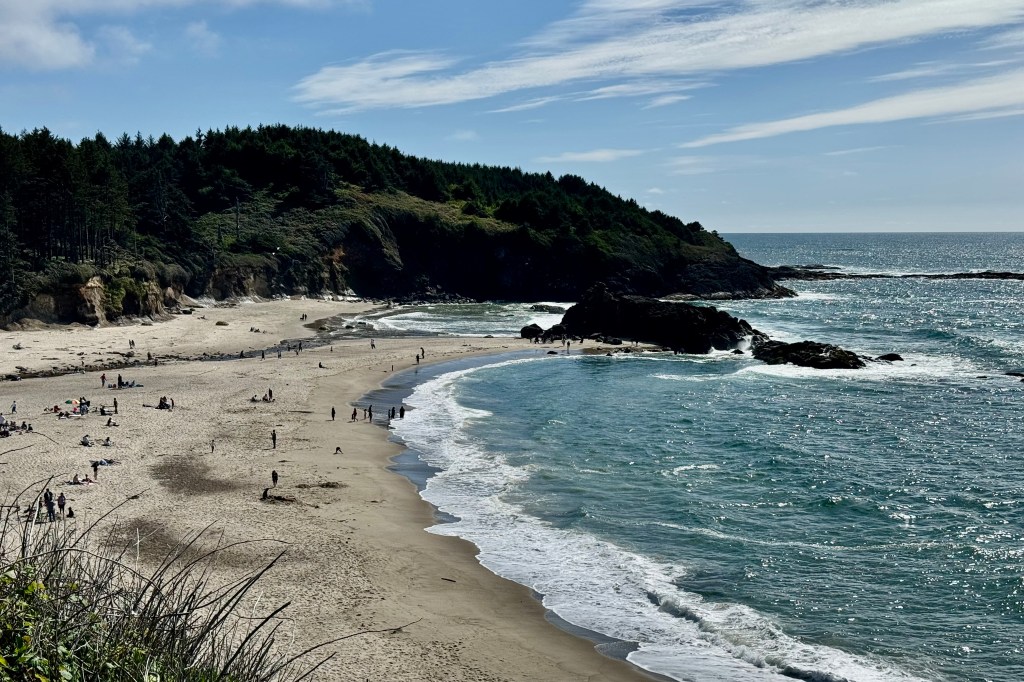
Why Depoe Bay? A seawall protected town, Depoe Bay’s harbor is noteworthy for being the smallest natural active navigable harbor in the WORLD. But that can’t surely be the reason for choosing Depot Bay you might surmise as I have never been on a tear to search out navigable harbors (US National Parks for sure but not harbors).
Voila! Depoe Bay is also known as the “whale watching capital of the Oregon Coast”. The ocean currents near Depoe Bay seem to draw whales to its horizon and the town, anticipating whale migrations, has a Whale Watch Center (which was closed the day I was there), shore observation decks, and charter boats for up-close viewing. Since 20,000 whales migrate south and then back north yearly, I anticipated catching the end of the northward migration which occurs between March and end of first week of June. Since it was the last week of May I was eager but also resigned to settle for observing a few of the stragglers carving their way north.


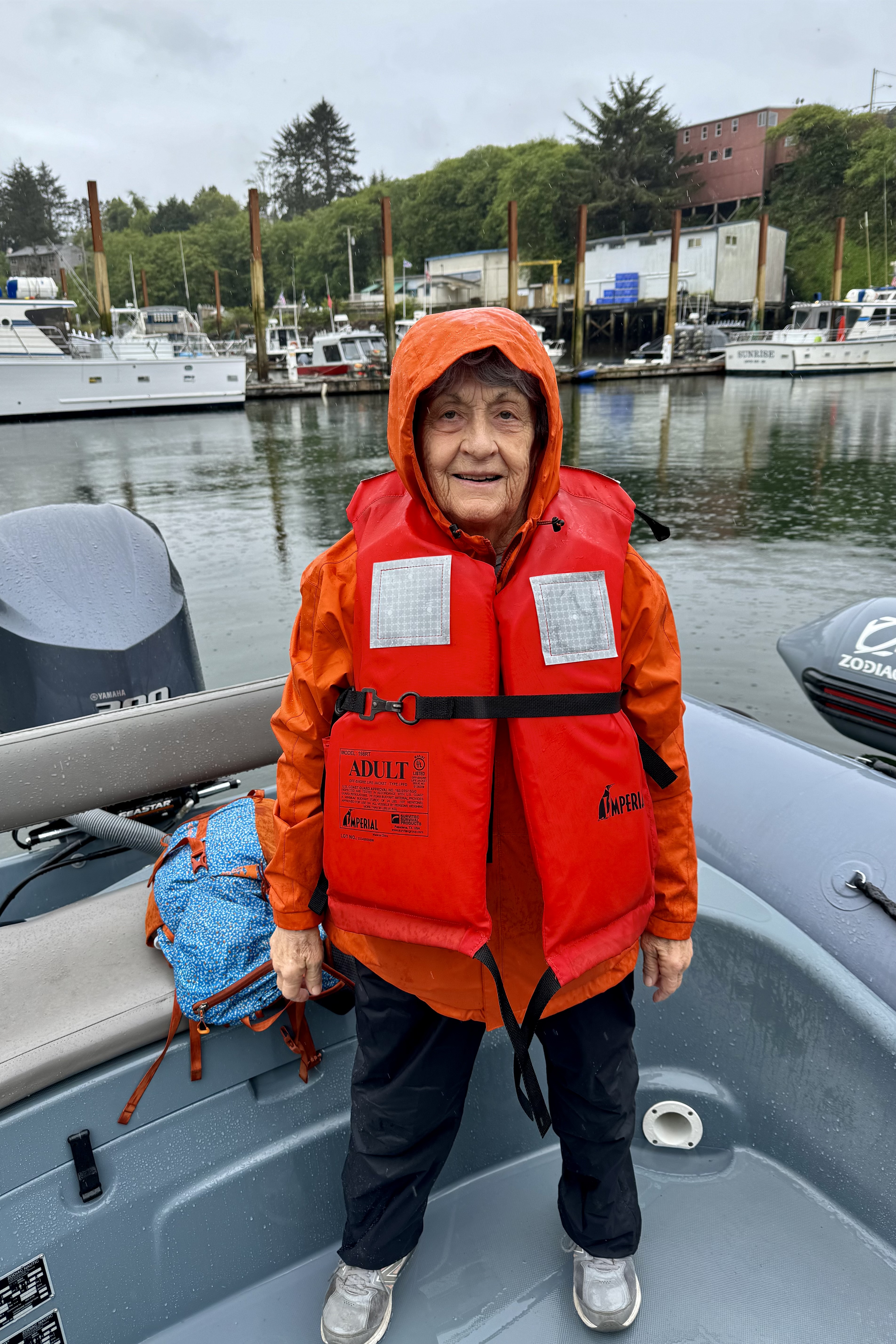
So the next morning we made our way down to Depoe Bay and hopped aboard a zodiac RHIB (Ridged Hull Inflatable Boats) for what I hoped would be a thrilling whale watching tour. First some caveats. I was not exactly thrilled when the skies let loose with a downpour as we were readying to board our inflatable. I was even more rattled and less than thrilled as I had to negotiate the hypotenuse of a right triangled gangway ramp to reach this “rubber duck”. At this point I had a flashback to the last time I was in a rubber boat …a white water rafting adventure where everyone ended in the drink, so I didn’t exactly try to hop aboard this dinghy. So it was even a less thrilling challenge getting from the dock into this rubber dinghy which meant getting my body onto and over the flexible tubing to the bench seat in the aft of the raft. But with assistance of our “Salty Dog Sailor “ who would be piloting our craft, I deftly plopped myself onto the bench seat in the stern, ready for our “Whale’s Tails” excursion as we navigated through the world’s smallest navigable harbor. Wow! Well, to be honest, I wasn’t exactly wowed by the harbor!
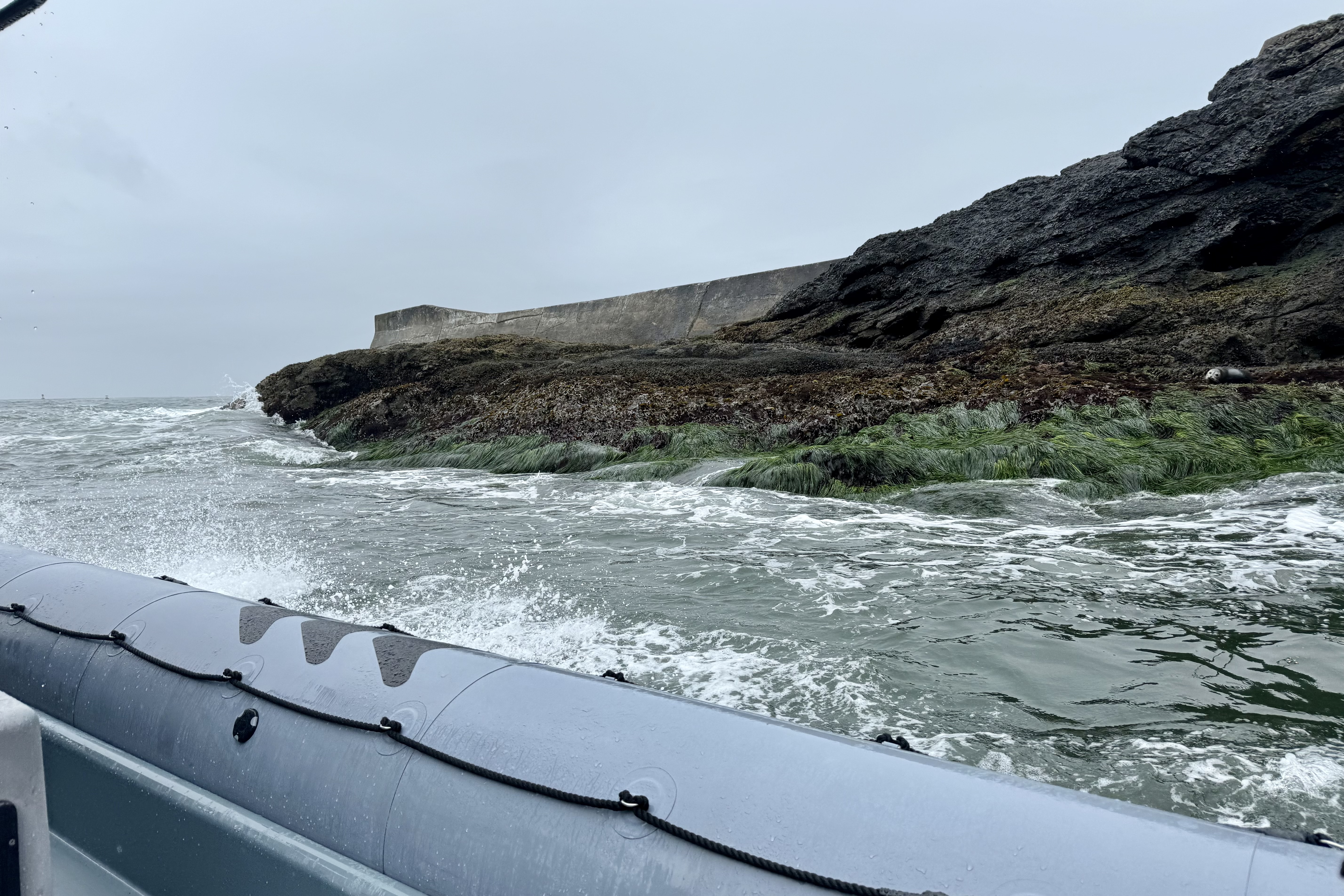
The brochures advertising this excursion touted these boats as low-to-the-water, comfortable, quiet, speedy, maneuverable, and stable allowing one to spend more time around the whales and have an up closer and more personal perspective of whales and other marine life. Of course this premise assumes that there is going to lovely weather and there will be whales with whom we can have this very personal relationship. I am sure theses massive aquatic mammals were gliding gracefully through the deep blue blending into the underwater world, disappearing into the depths of the vast ocean, but on this day they did not have the courtesy to indulge me by dramatically emerging from the depths, surging upward, and majestically leaping skyward and descending with a thunderous smash… or to even spout a gentle mist from a blowhole. I am surmising that their echolocation capability sensed the somewhat tumultuous waters above generated by the wind and rain and wisely had no desire to emerge from the calmer seas below. Approximately 200 gray whales are “residents” and hang out between from June to October in the area but chose not to grace our whale watch expedition.

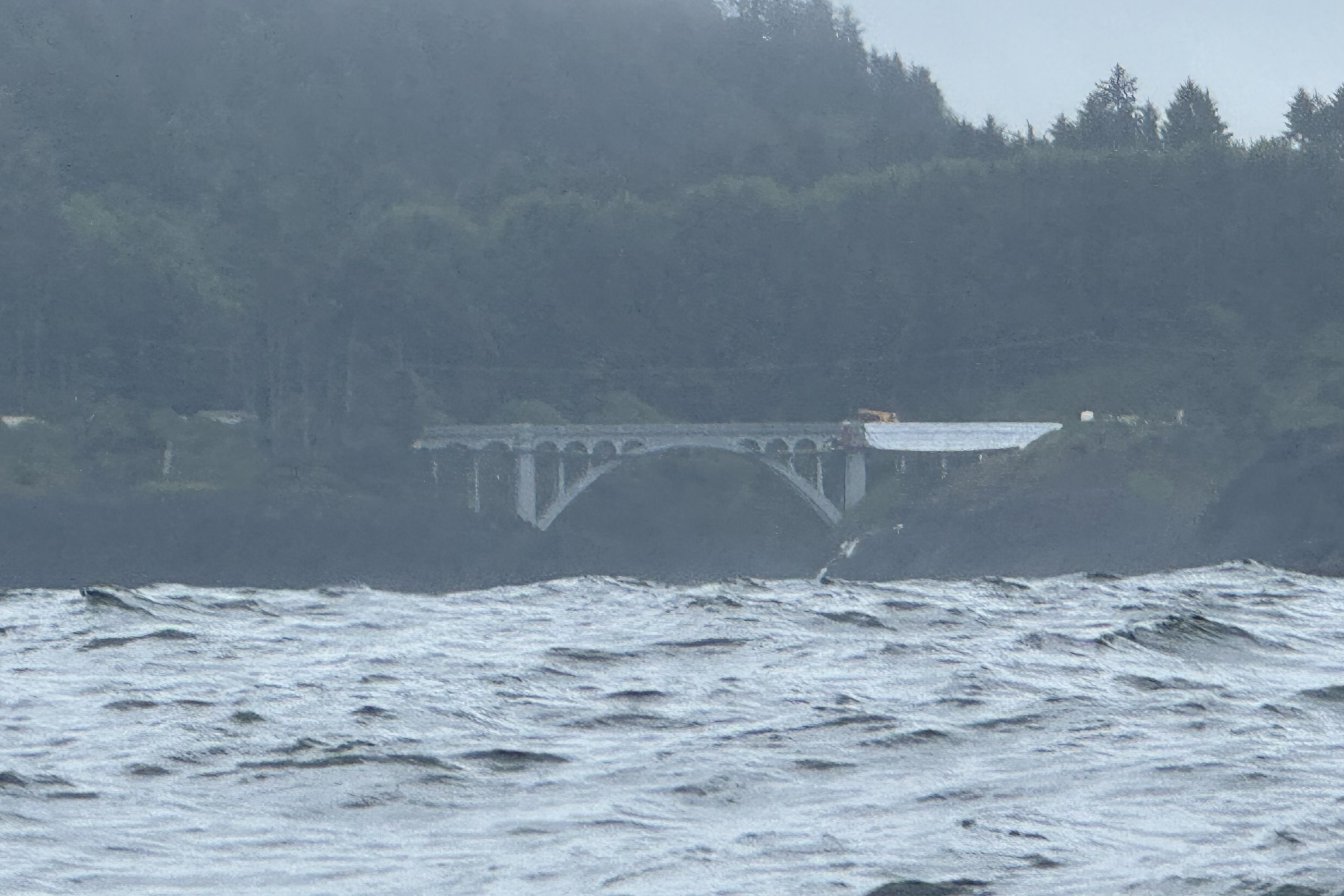

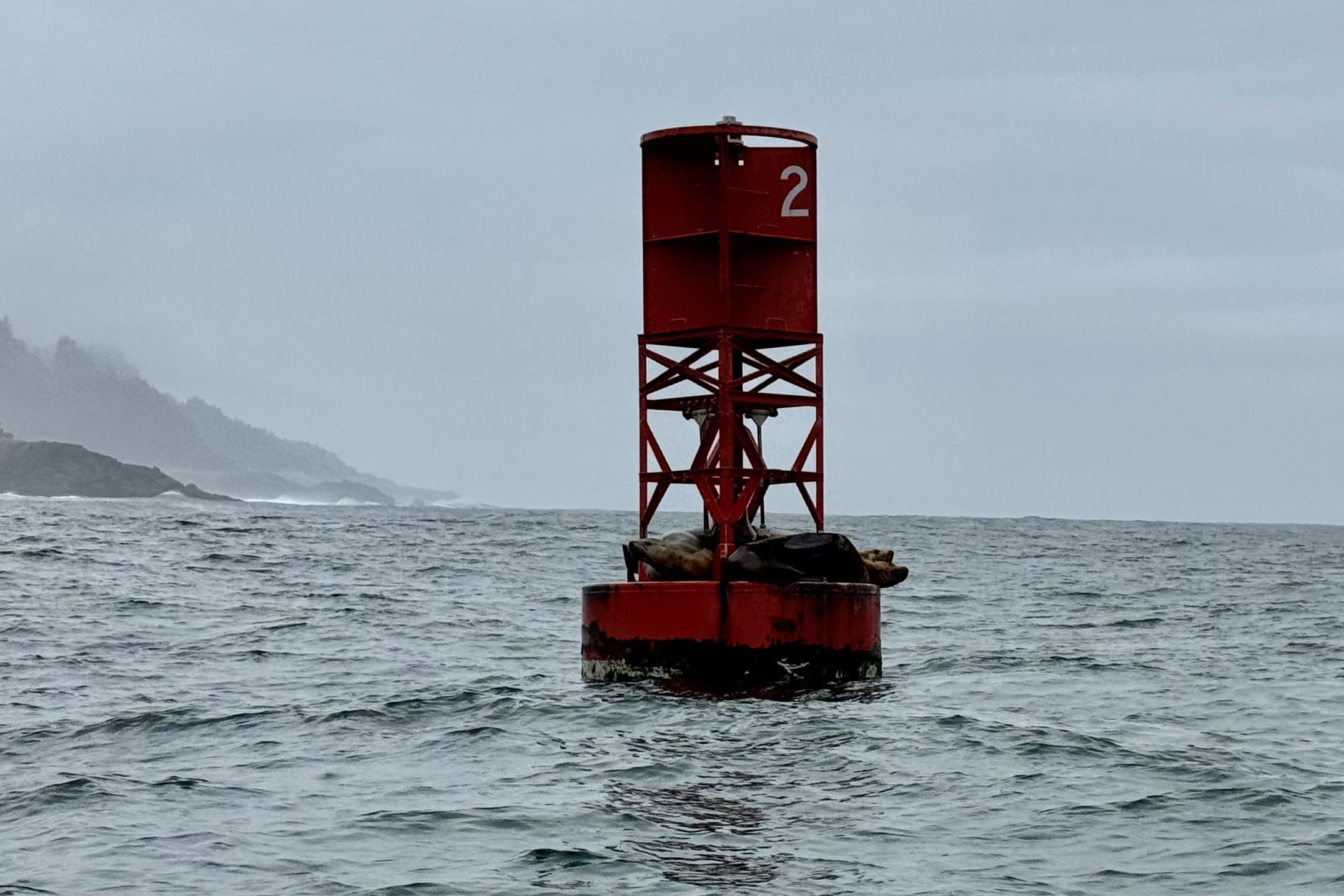
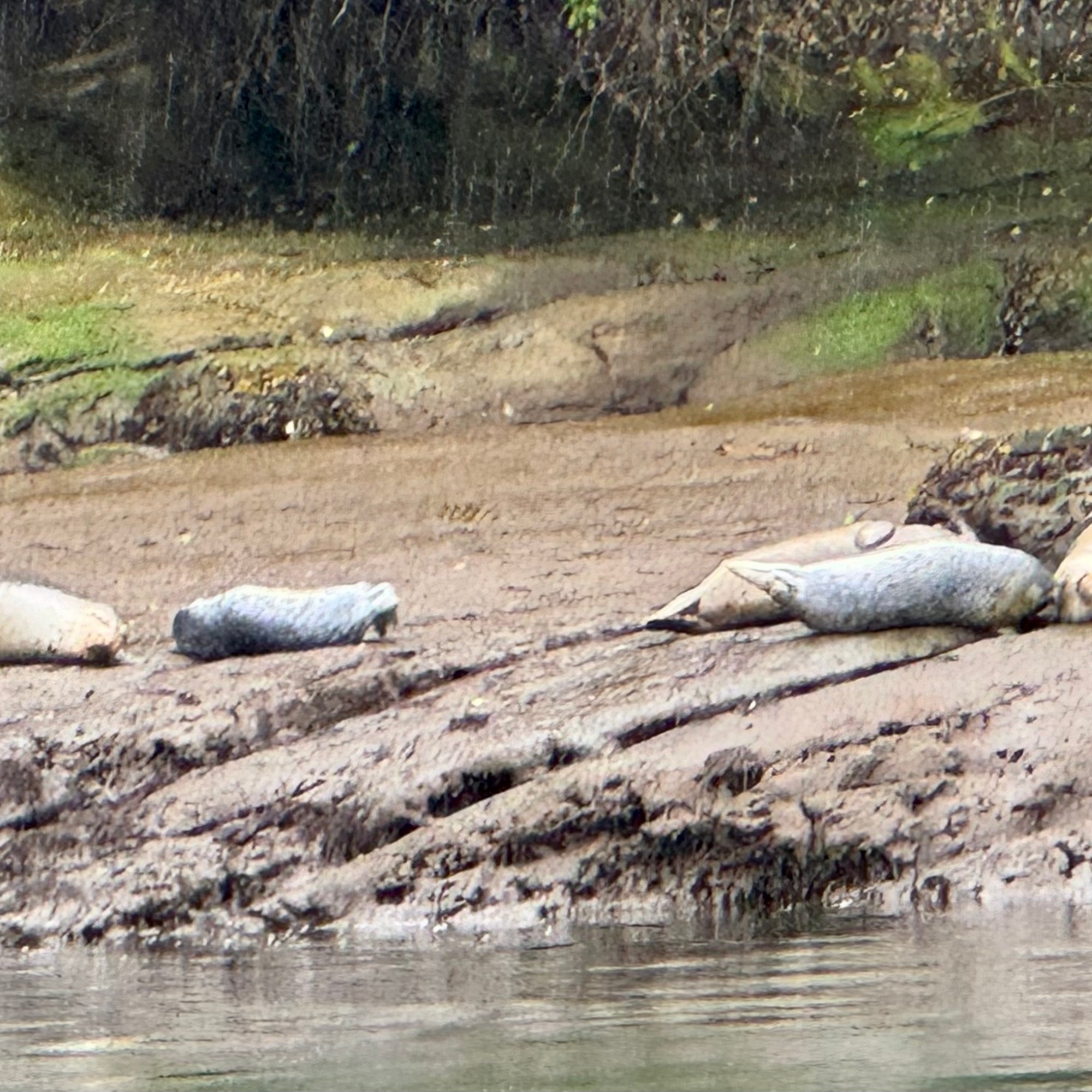
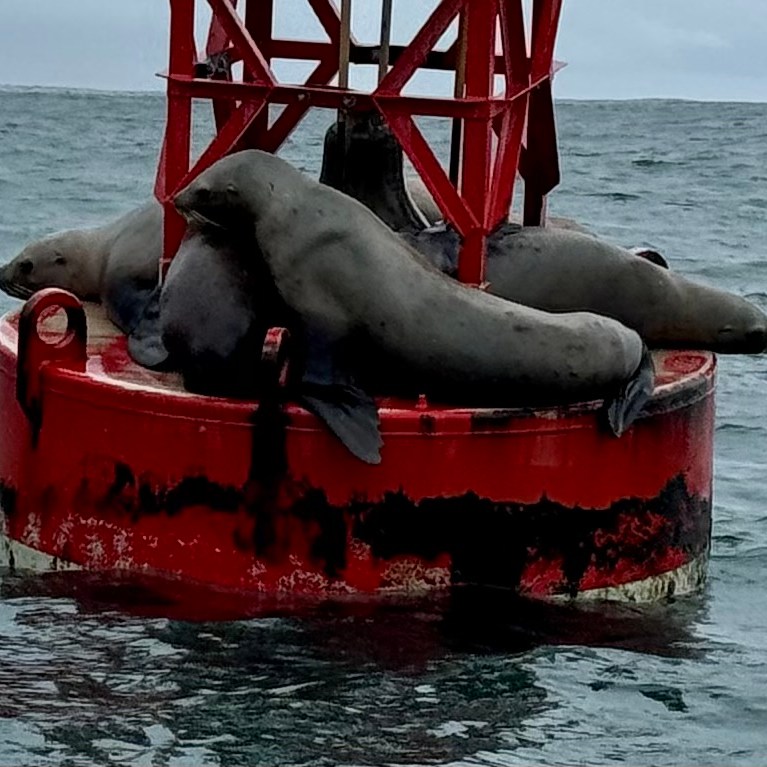
This was definitely an adventure but not of the kind I anticipated. I do not even have to tell a tall tale about having a thoroughly immersive encounter with the elements of nature, experiencing the untamed energy of a steely gray ocean, the hiss of the raindrops on the water, and my cold rain drenched attire. Oh, and lest I forget, the pleasure of being choked by the bulky orange “buoyancy aids. ” Our total wildlife sightings: one flock of birds feeding on a school of fish, 4 harbor seals on a channel marker, and 5 harbor seals on the harbor embankment. My gratitude list: I was not seated in the bow with the wind and rain pushing against me and I was somewhat protected from a total direct hit of the piercing drops by the pilot’s console and windshield.


After stripping off the drenched outerwear it was time to do the other touristy thing. Depoe Bay is clearly a tourists’ town, evidence by the large number of tourist tchotchke shops and eating establishments advertising clam chowder. So, who am I to try and swim upstream, so I had a nice hot bowl of clam chowder at the Chowder Bowl of Depoe Bay. Afterwards I decided to have a bit of a personal chat with Sasquatch as it seemed every tourist shop, retail clothing store, sock shop etc. had a picture of this large, hairy, humanlike creature emblazoned upon just about anything. I was hoping to get a bit of insight into this phenom but he/she was quite mute. A visit to the whale watching center was thwarted due to the fact it was closed.


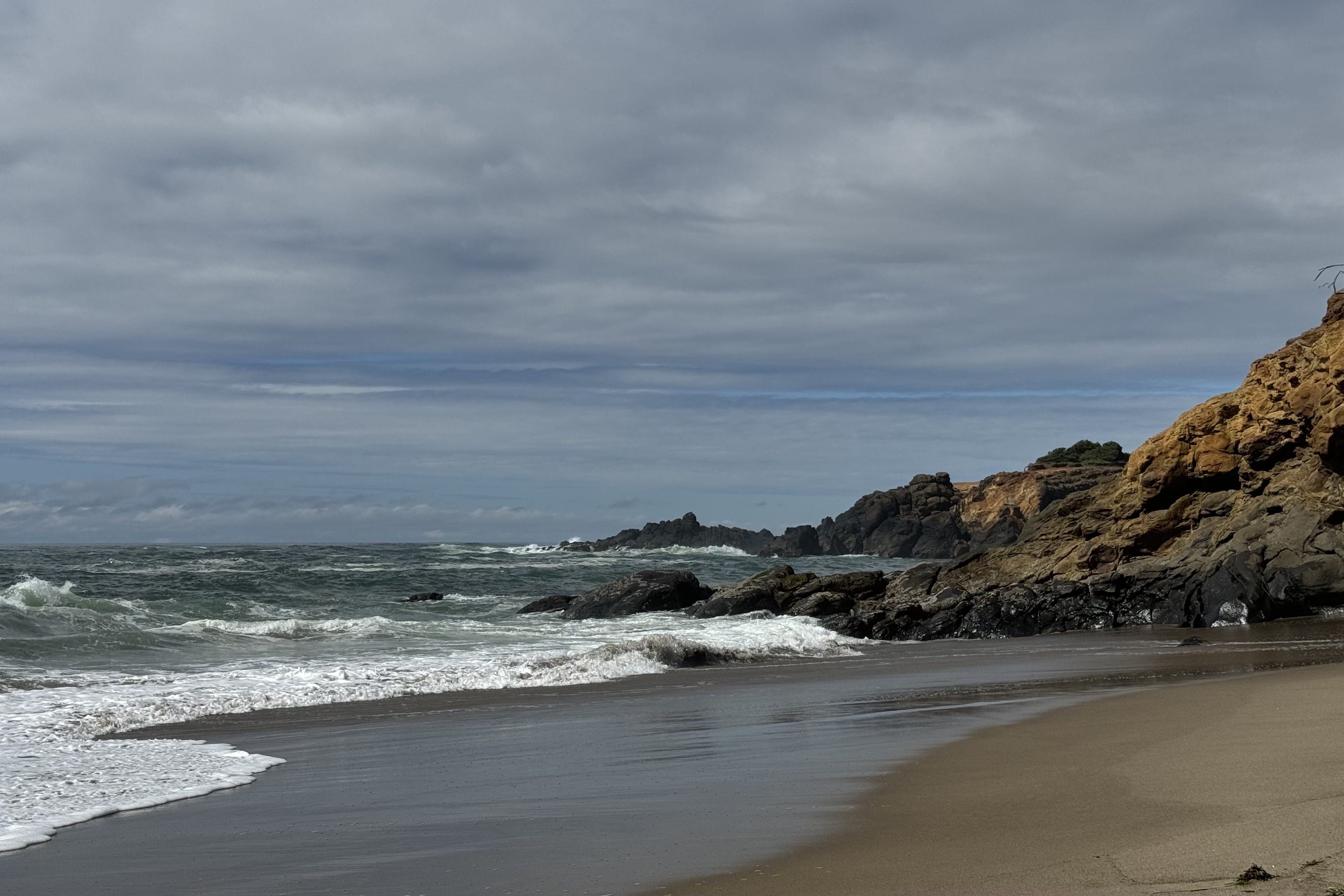
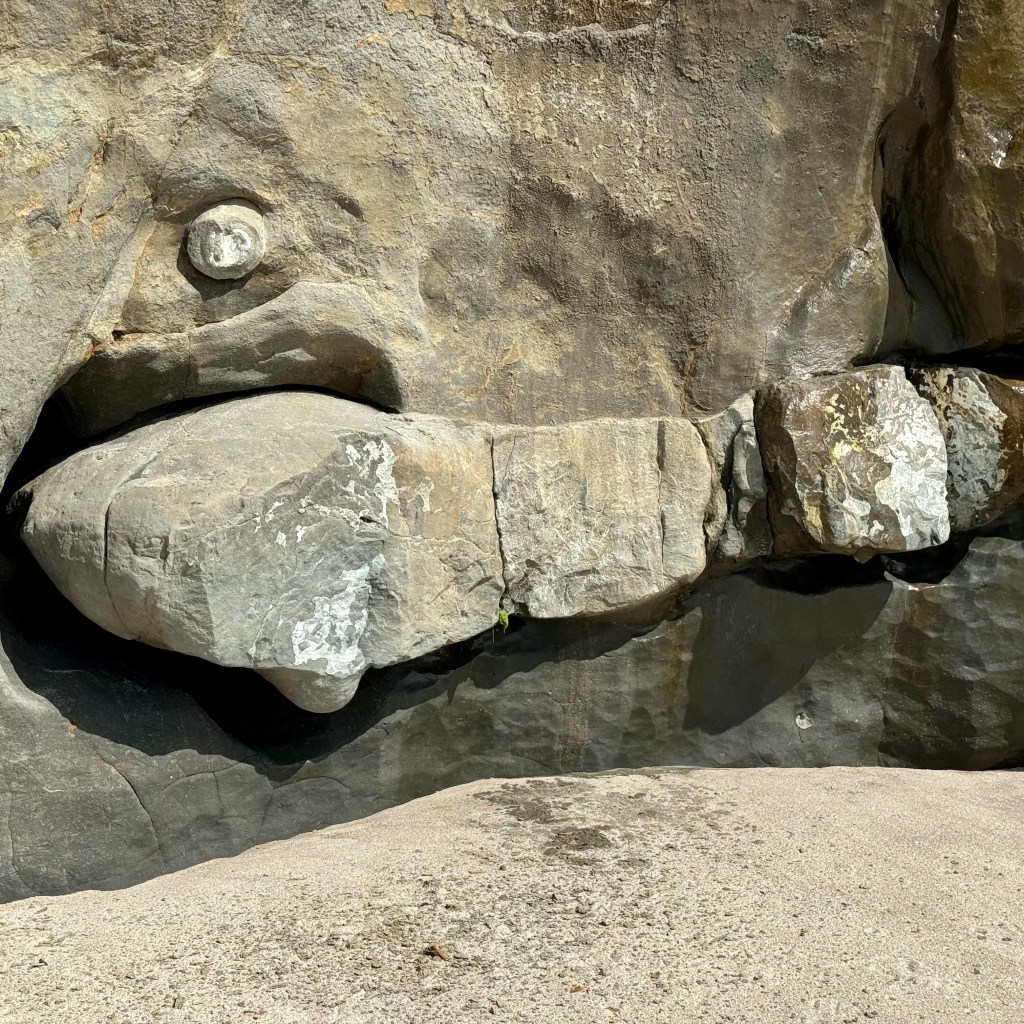
The day naturally turned sunny late afternoon and I was motivated to walk the beach of Fogerty Creek State Recreation area near our hotel. The erosion is significant but it is definitely a fascinating peek into the geology of some of the coastal area.



One of the best night-caps ever was a brilliant sunset at the end of a wonderful day of adventure.

The following day was a travel day and I was headed up to the Kalaloch Lodge in Olympic National Park WA. Enroute, my intent was to stop in Cannon Beach, renown for its sea stacks and the iconic Haystack Rock. Cannon Beach appeared quite trendy and a stop at the Driftwood Restaurant was a wise choice before venturing towards the beach and stacks. Parking was limited so wanting to get up close to the rock required parking on a side street and walking about 1/3 mile to the staircase which was the ingress to the beach.
This 235 foot monolith(3rd in the world in size) is impressive and the “marine garden” surrounding it is vibrant. The tide pools are teeming with green sea anemones, sea stars , barnacles, and rocks elegantly draped in brilliant lacy mats of green algae. A poor rating of one star on Trip Advisor stated” it is just a rock…we didn’t bother getting out of the car.” They have no idea what they truly were missing out on.


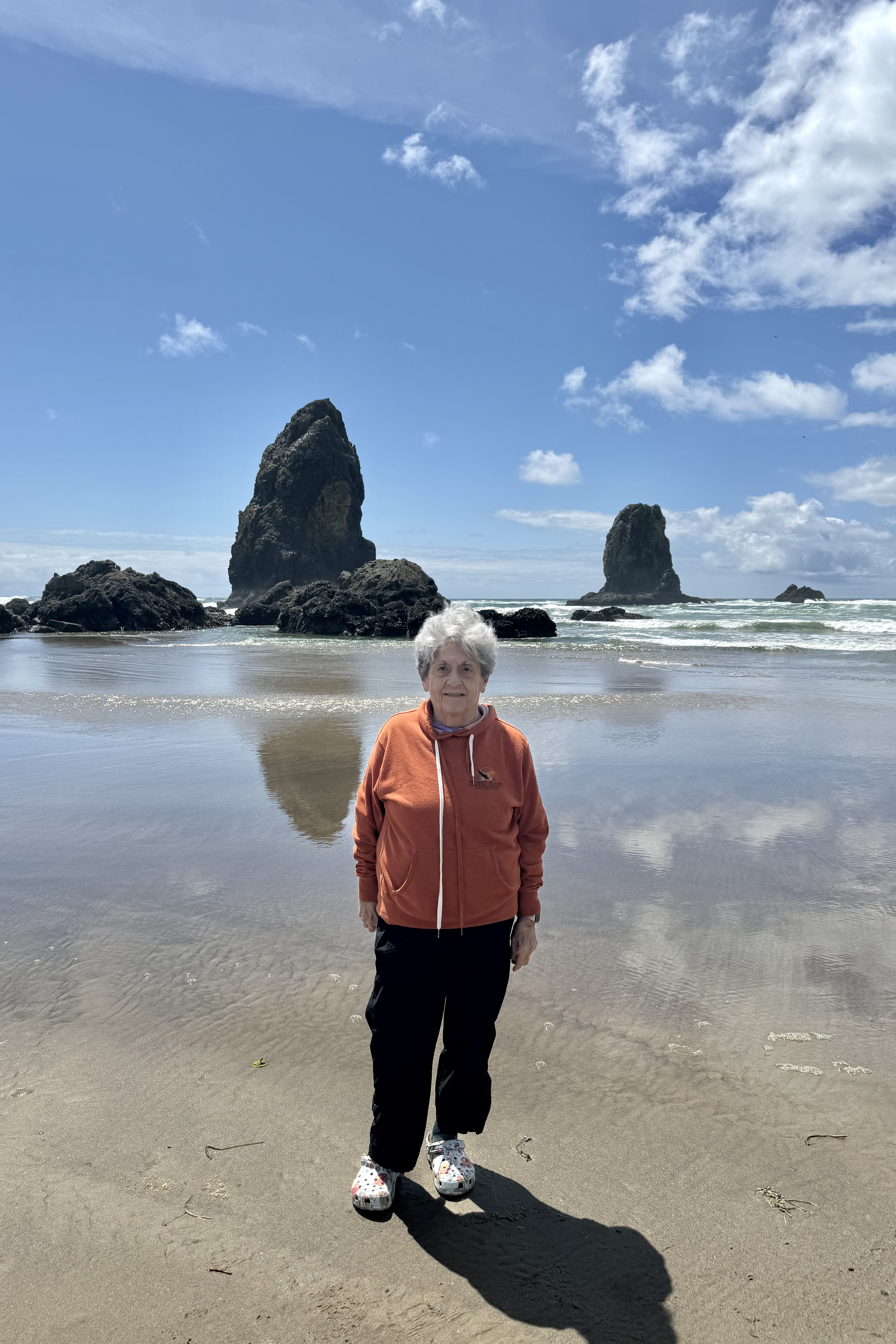
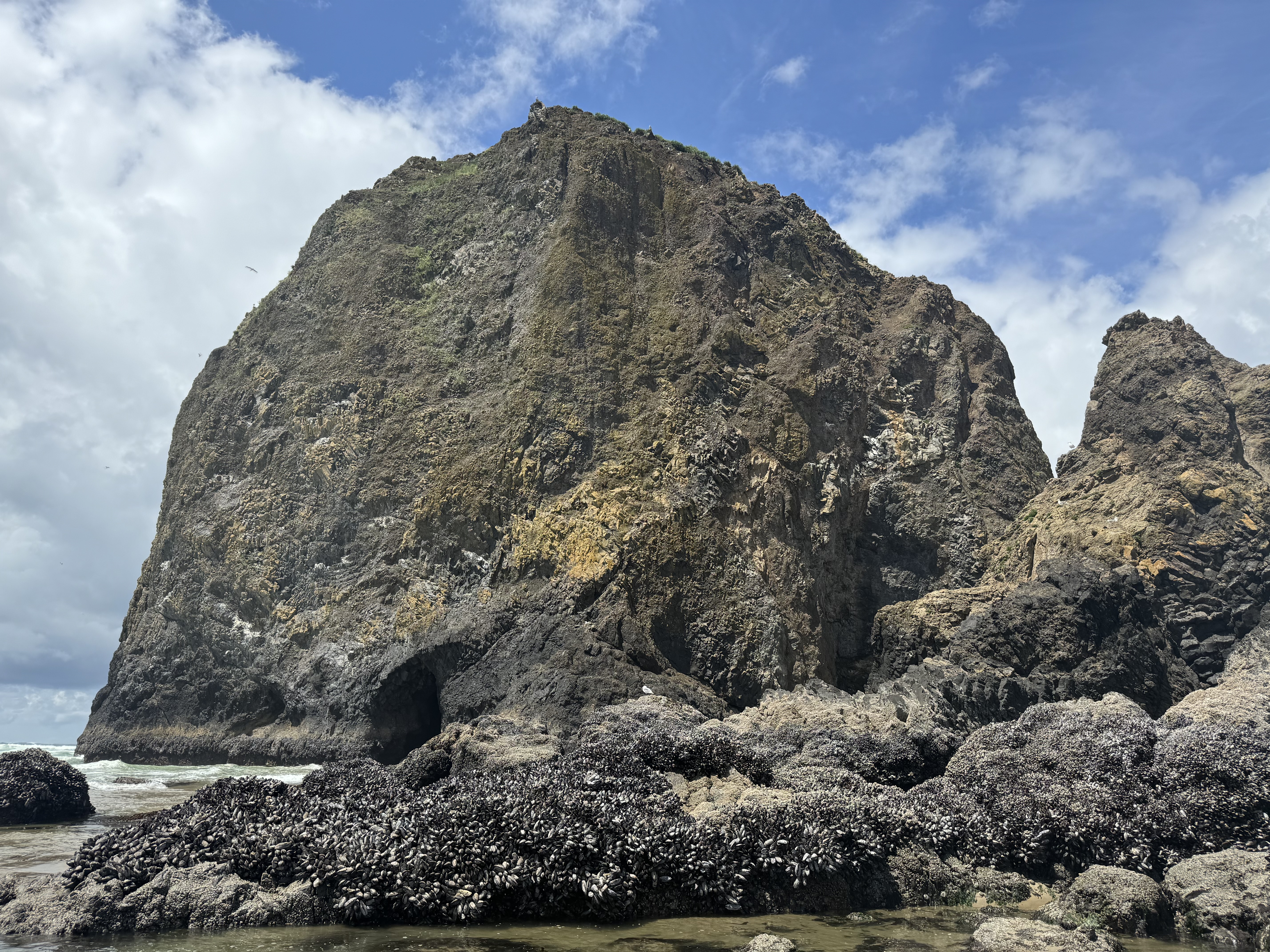


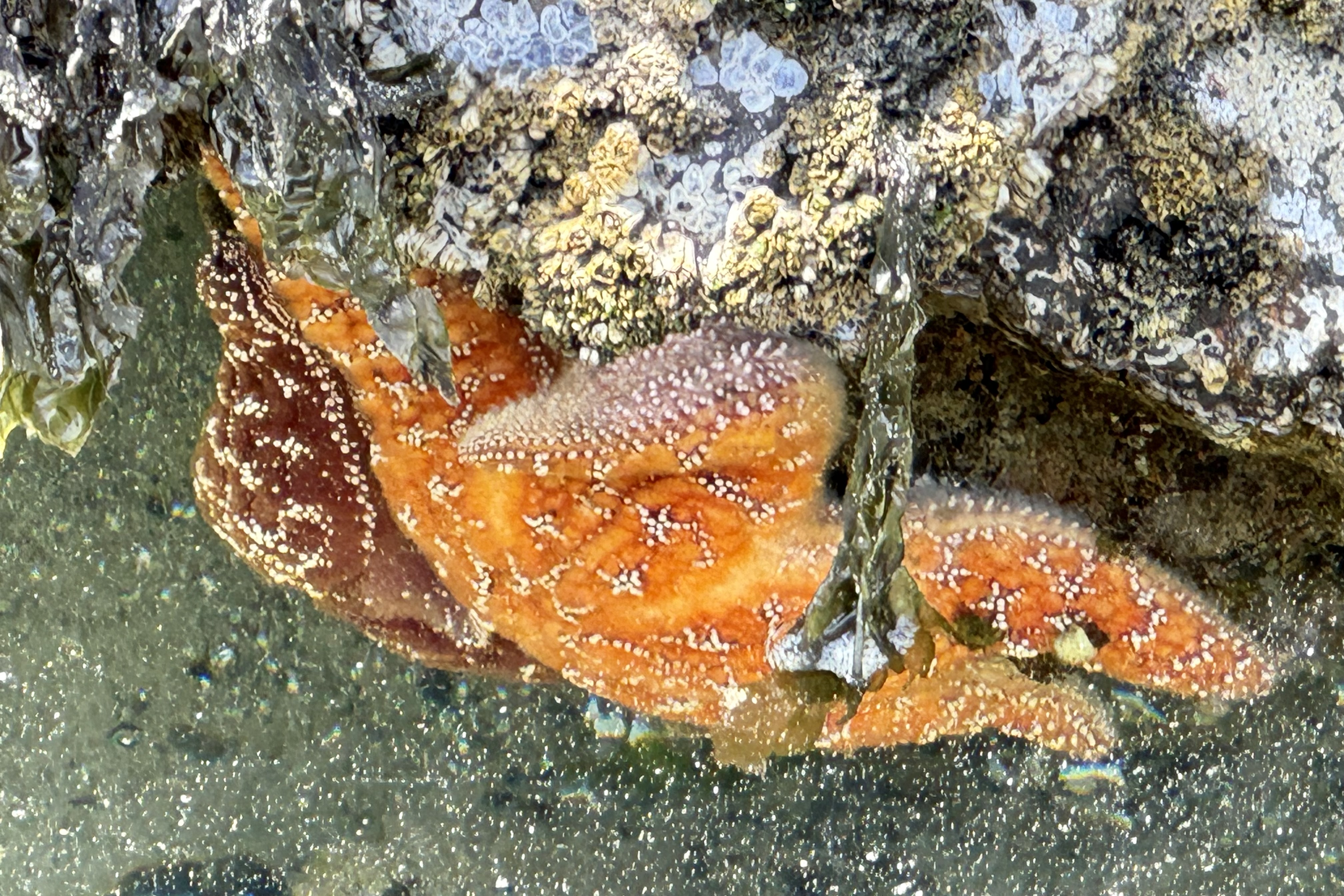

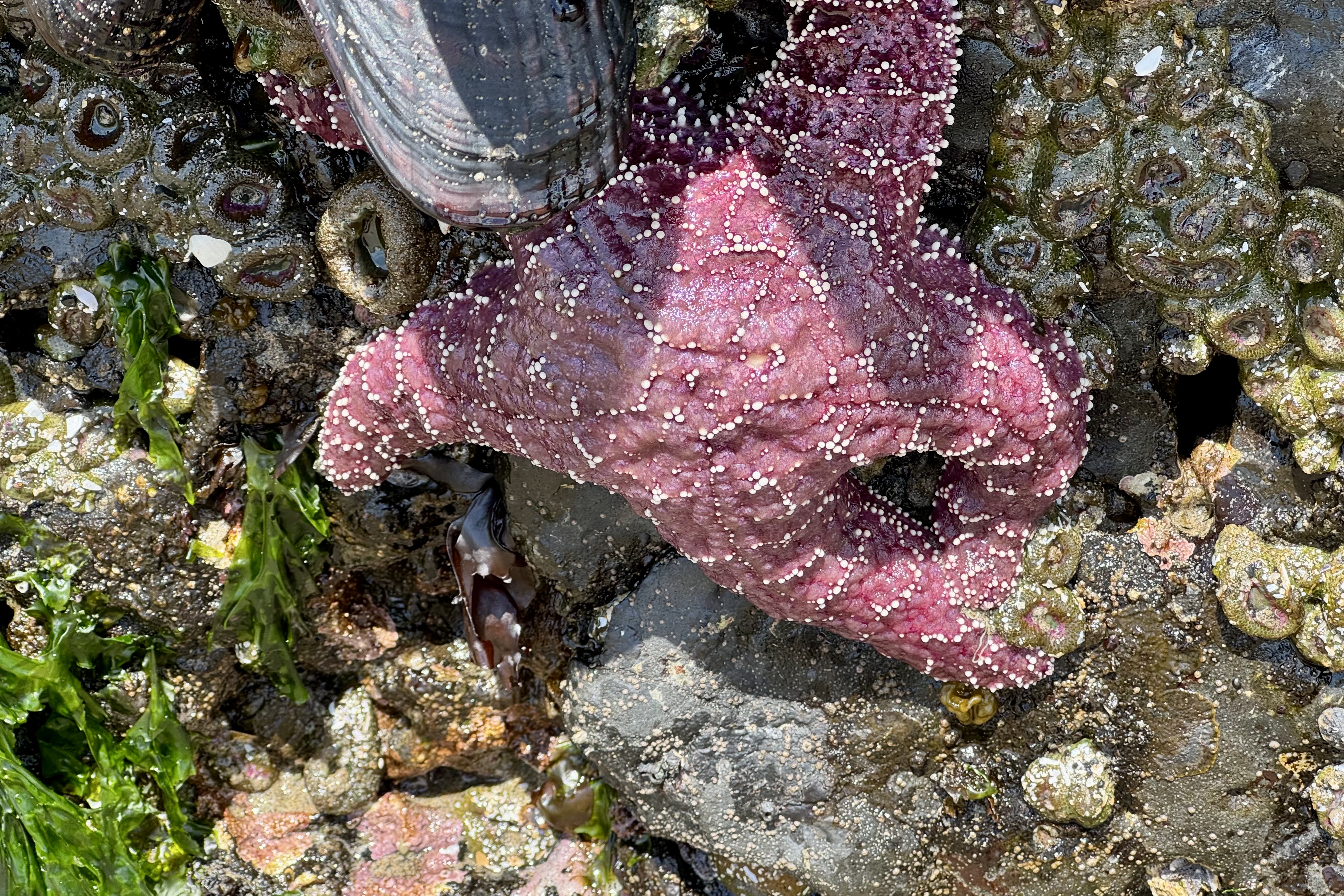


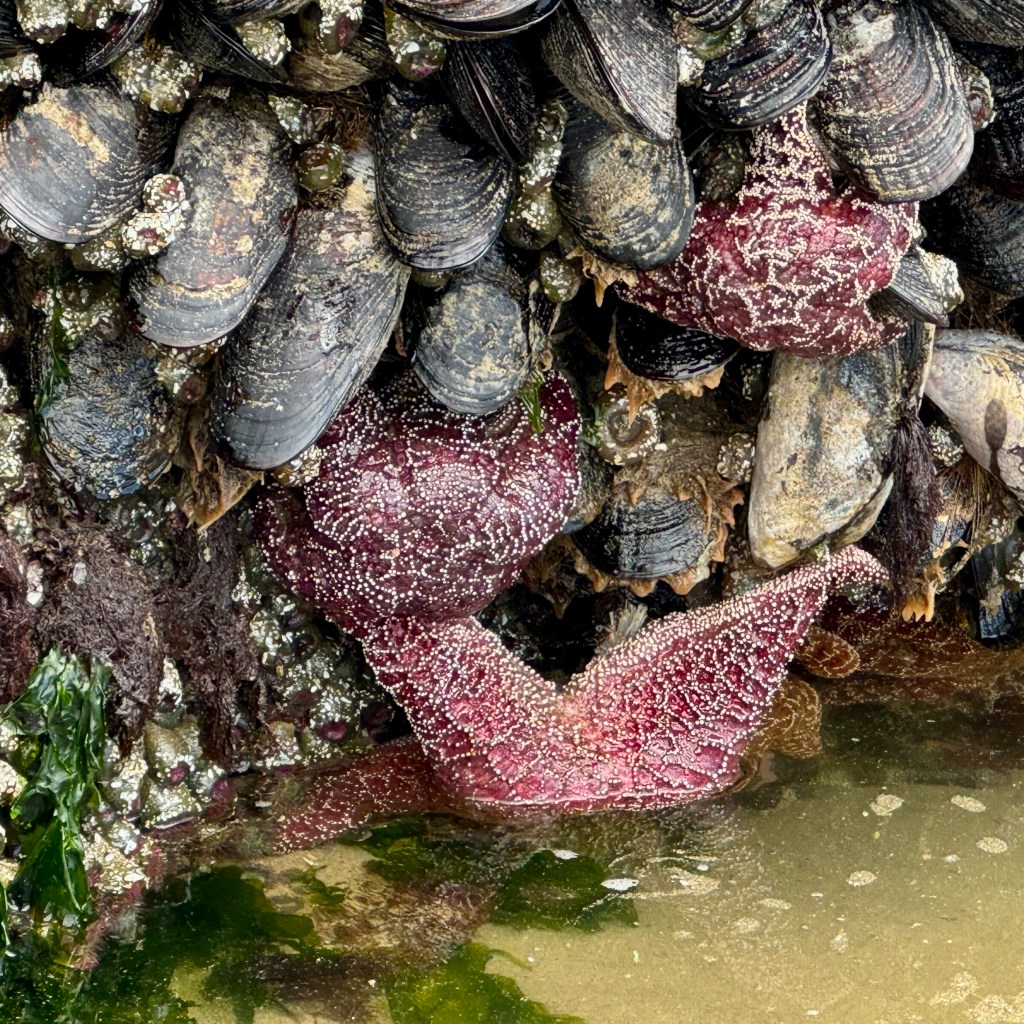
I could have stayed longer, mesmerized by the tide pools and this seaside sanctuary but I still had minimally a three and one-half hour drive to the Kalaloch Lodge so I bade farewell to this breathtaking seaside landmark. We were no longer hugging the coast but the drive to Kalaloch was low traffic winding rural road and we arrived at the Lodge by the dinner hour.
 Uniquely Theo