Mushing Dogs, Tundra Trampolines, Muck Boots, and the “Slums” of Bettles

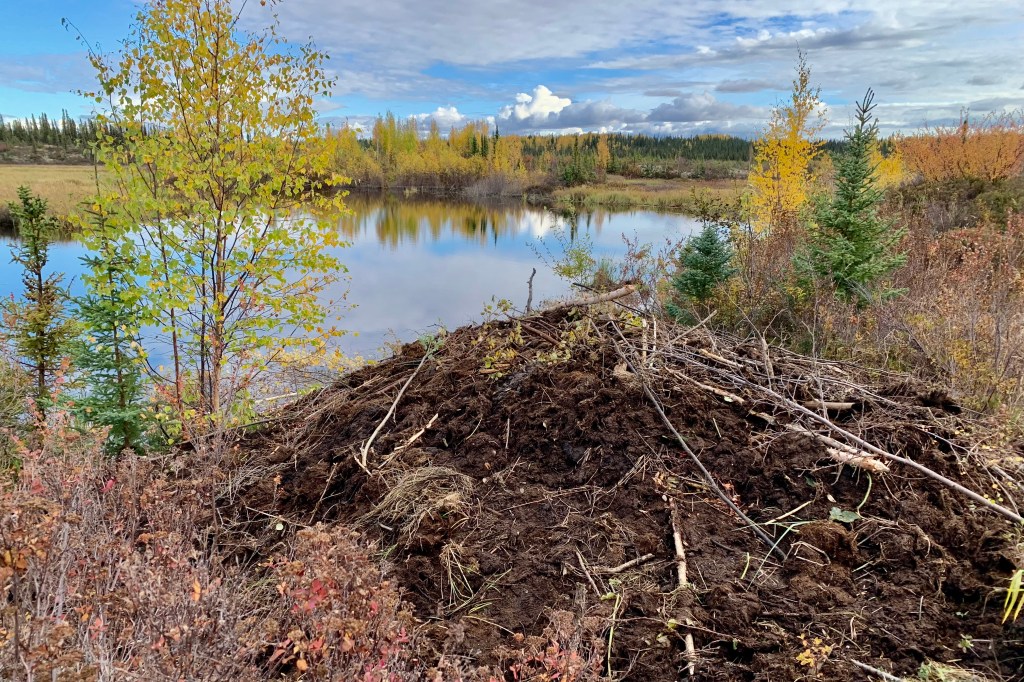
A Beaver Lodge – Construction Phase

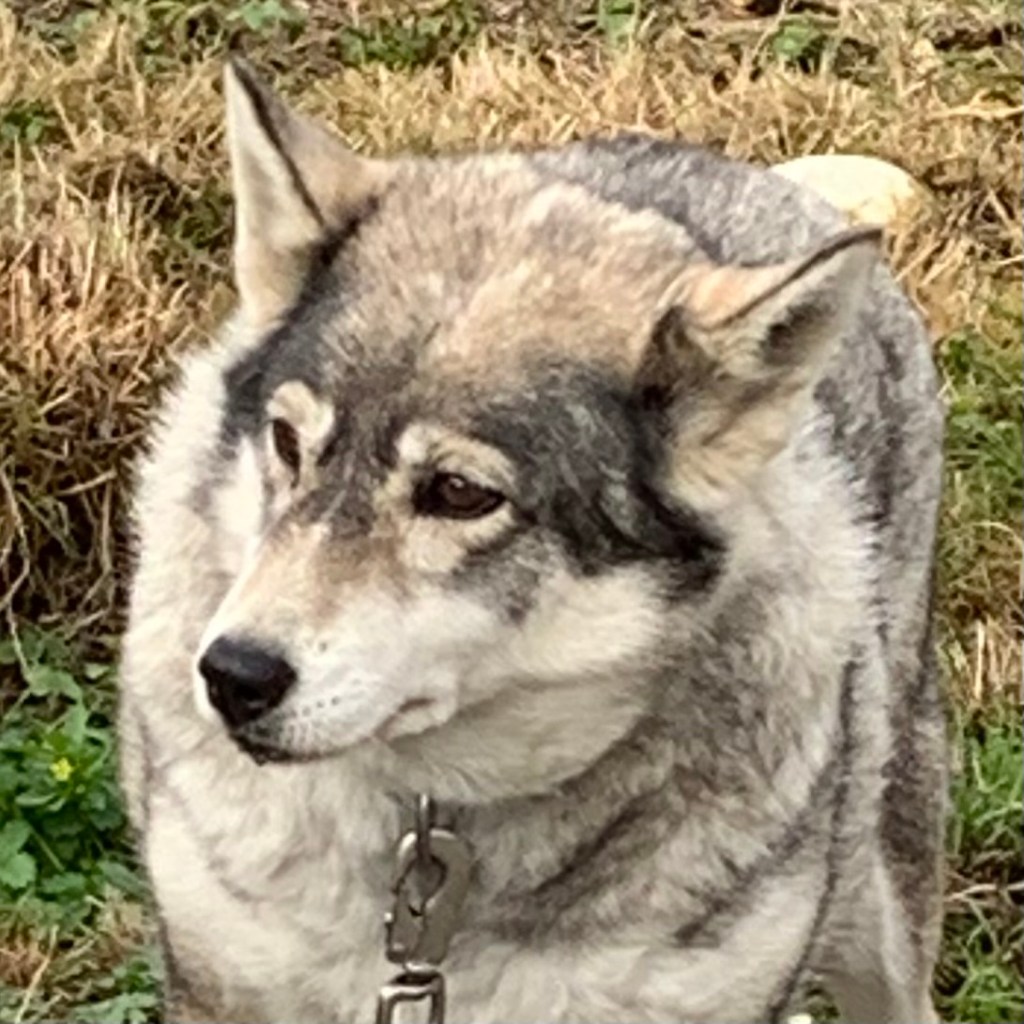
Our third day at Bettles was a mish mash of mushing dogs, a “river cruise” and the donning of break-up-boots for a meander in the Kanuti Wildlife Refuge. On the first night of this Bettles adventure,  I was outside of the Aurora Lodge around 11:00pm, scouting the sky for any hints of the aurora and I kept hearing periods of prolonged howling… the mournful tone, length and harmony left me with a feeling of loneliness but also wonderment. I imagined wolves communicating affectionately with members of their pack, or perhaps it was a social rally call for party-time, or better yet a warning to the “deranged” humans, running around in the middle of the night taking pictures of the dark sky, to stay off their territory. Of course, my adrenaline also shot up and I excitedly envisioned a pack of grey wolves out there on the perimeter of Bettles calling. I knew this type of howling is a guttural call that’s associated with wolves, especially the grey wolf which is the distant ancestor of our dogs .  But eventually I recalled that, on the website and  in our orientation, there was a resident team of sled dogs down the road which were “100% Alaskan Husky and also 100% friendly”. I also knew the Husky, Alaskan Malamute, Akita, and Samoyed are more inclined to howl.  So I made it a point the following day to set up a “meet and greet” session with the local husky population.

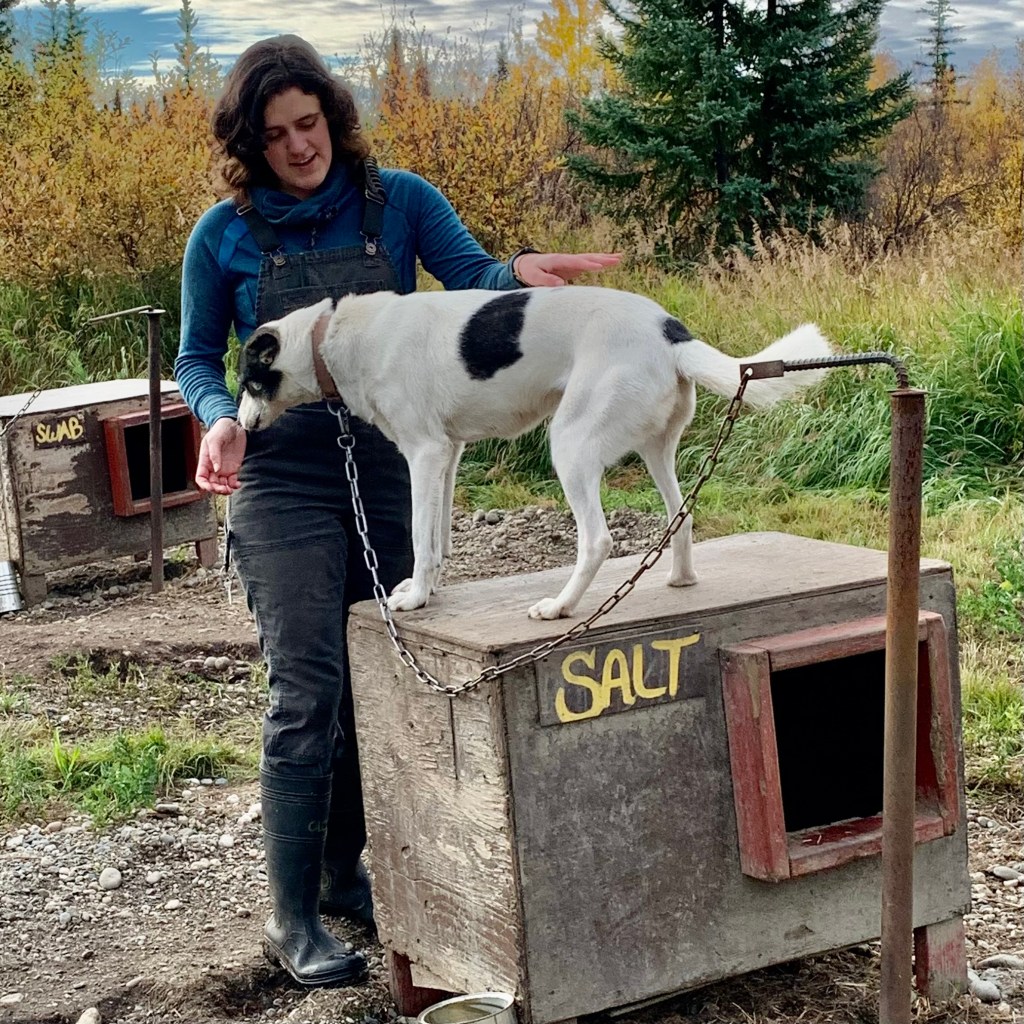
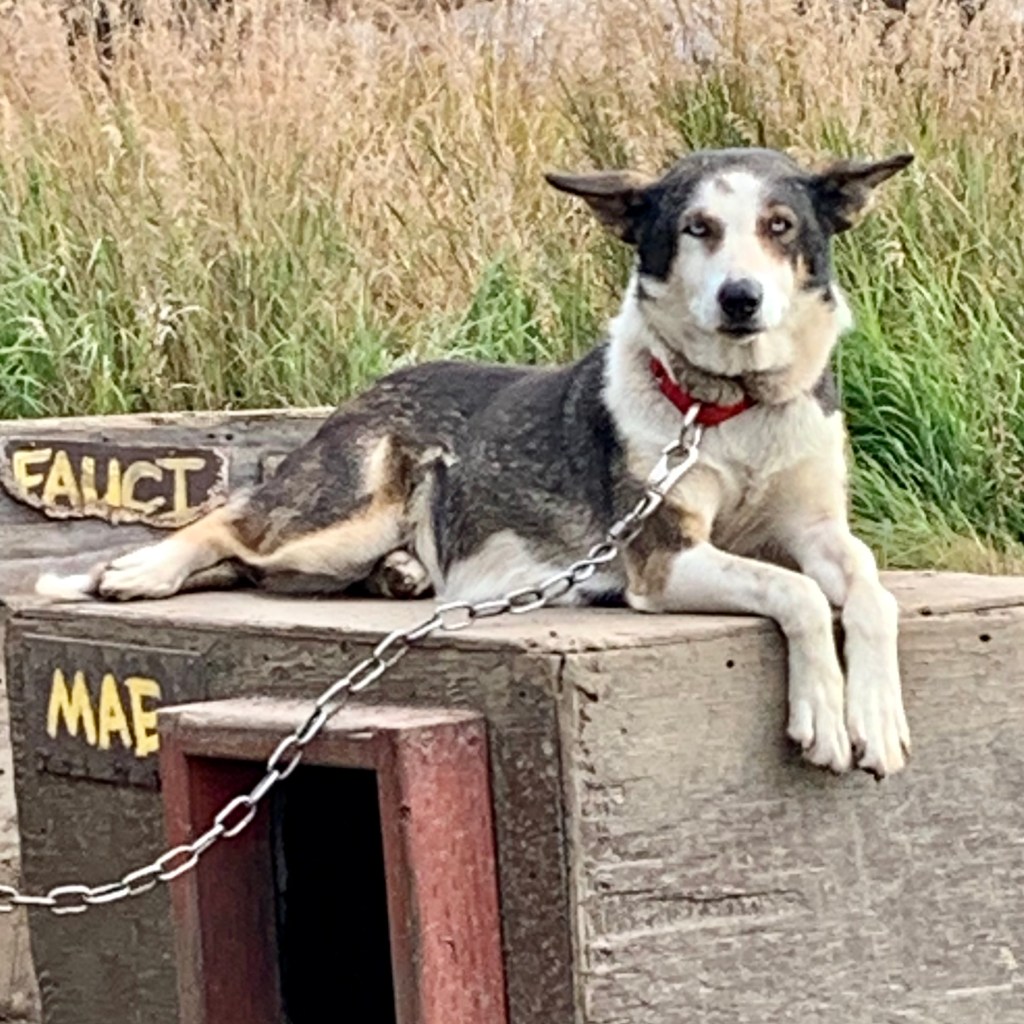
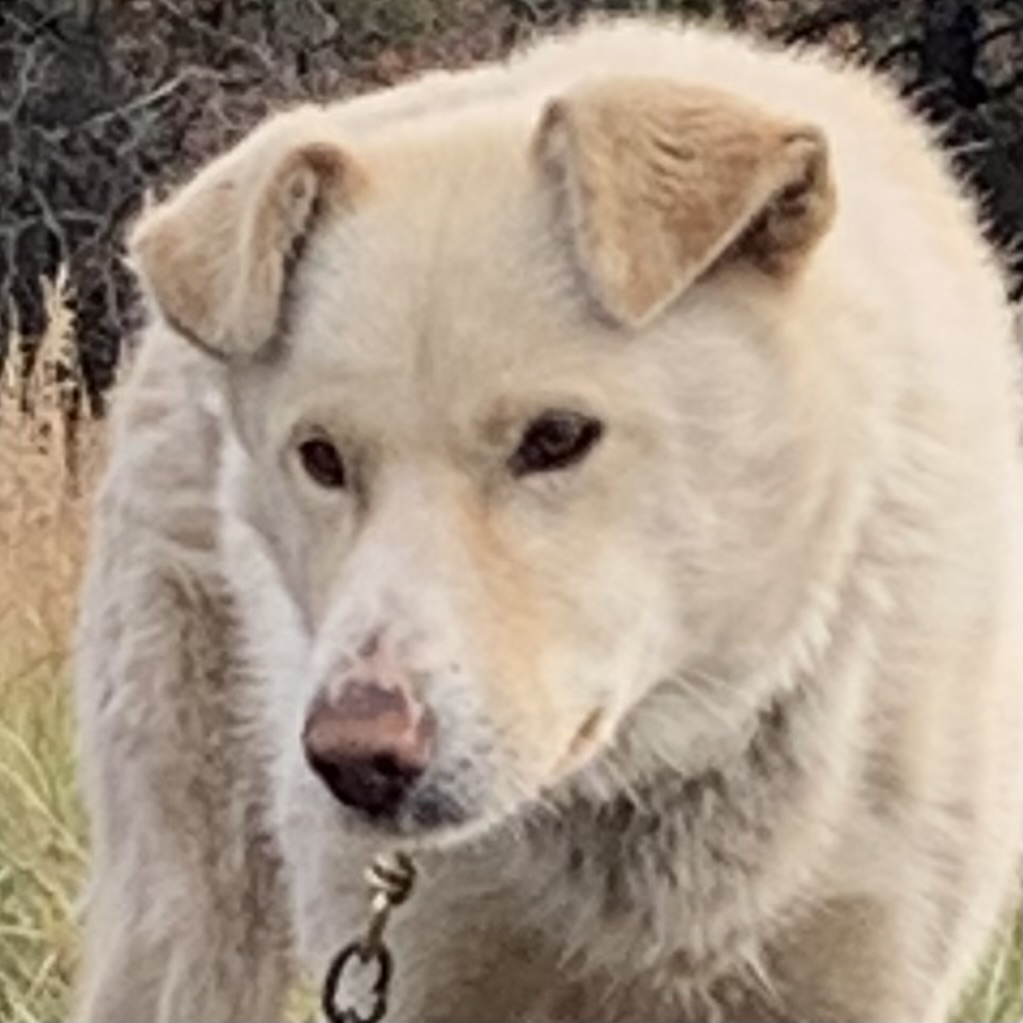
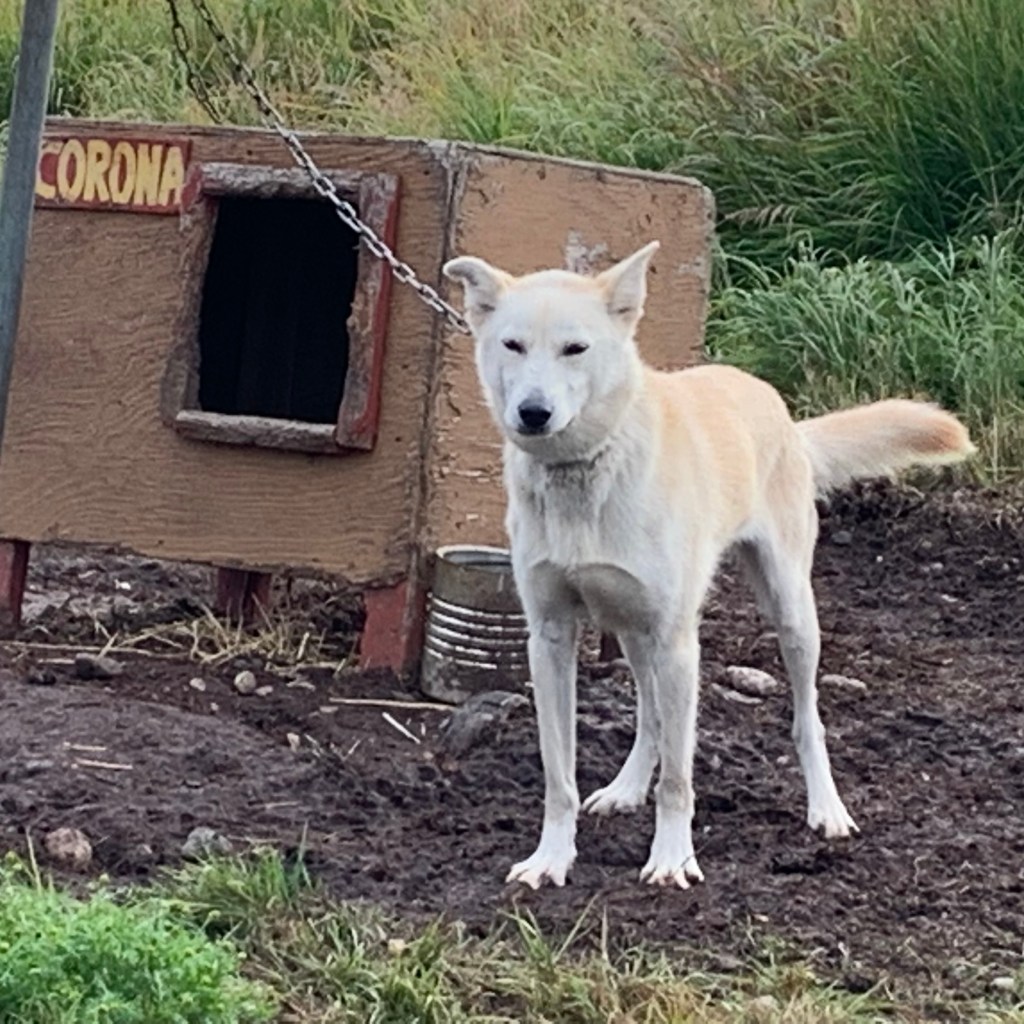
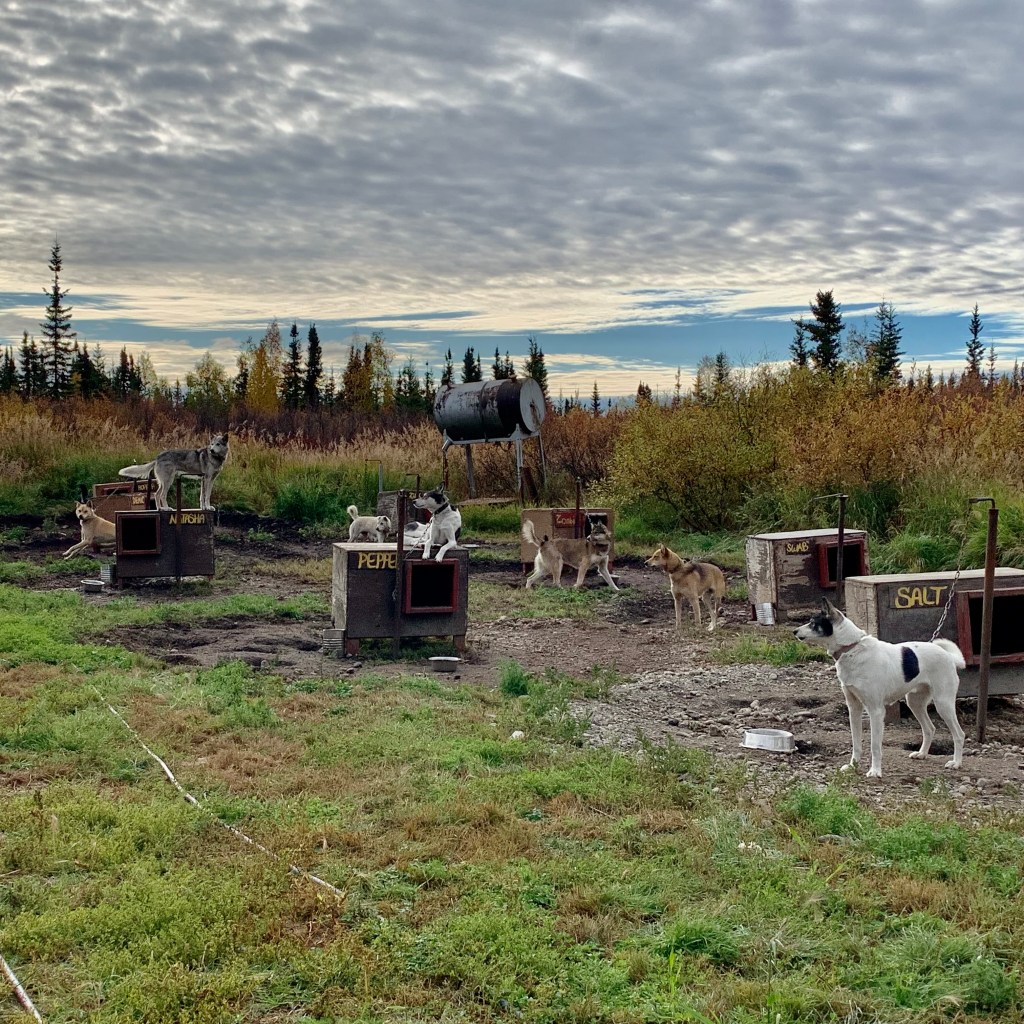
Now we did not disturb the dogs but I am quite sure that their howling might have been disturbing to some guests. On the third morning, we visited the dog yard with their musher. Each dog has their own doghouse and they are tethered to a pole by a chain so they can run in a circle This does not sound like fun to me but I am not a husky who is bred to run – which I wasn’t bred to do and only was able to slog painfully as a triathlete. These canine residents were all quite eager to greet us and thanks goodness for the chain providing a modicum of restraint. Otherwise I would have repeatedly been bowled over by very eager-to-greet-me dogs . Come winter they will be working as mushing dogs. When one or maybe more dogs are utilized for pulling a sled, it is referred to as “mushing.” They will transporting loaded sleds (in this case tourist adventurers) around the metropolis of Bettles, population 23.

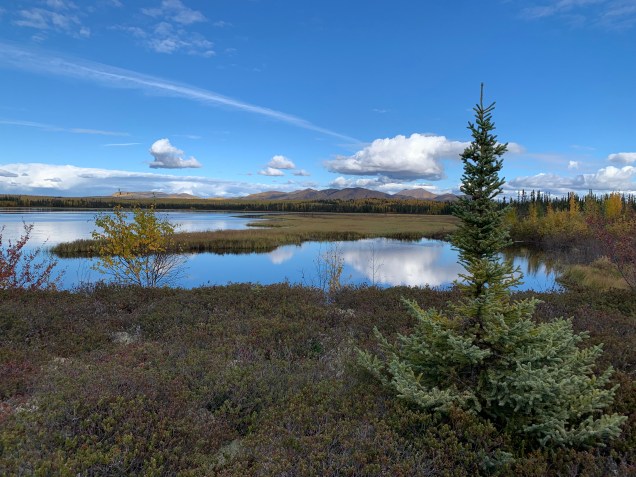
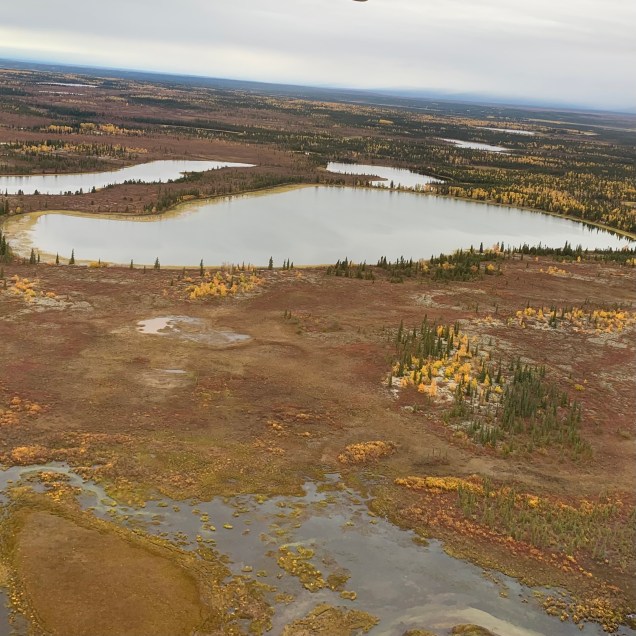
Late in the afternoon , Teresa, Chris, Rob and myself decided we wanted to attempt the hike into the Kanuti Wildlife Refuge which commenced at the end of the float plane lake. Kanuti is the Americanized version of the the Athabascan name “Kk’toonootne” meaning “well traveled river by both man and animals.” This area of the Kanuti Refuge is an example of Alaska’s boreal ecosystem and is dominated by black and white spruce and willow, highbush cranberry fireweed, and blueberry to name a few. We were advised to bring rubber boots if we were interested in hiking, but to save weight and space, I opted not to bring my rubberized boots which Alaskans call “break up boots” (so named for the puddles and mud, and soggy trails, especially in the early spring when the ice jams, the snow melts and the ground thaws). After viewing the wetland terrain from above I began to regret my decision as I could well imagine that the water and mud would be pouring over the top and into my ankle high hiking boots in a matter of minutes or perhaps seconds. We were informed that this hike (as are almost all wilderness hikes in Alaska) tend to be extremely wet, boggy and muddy.
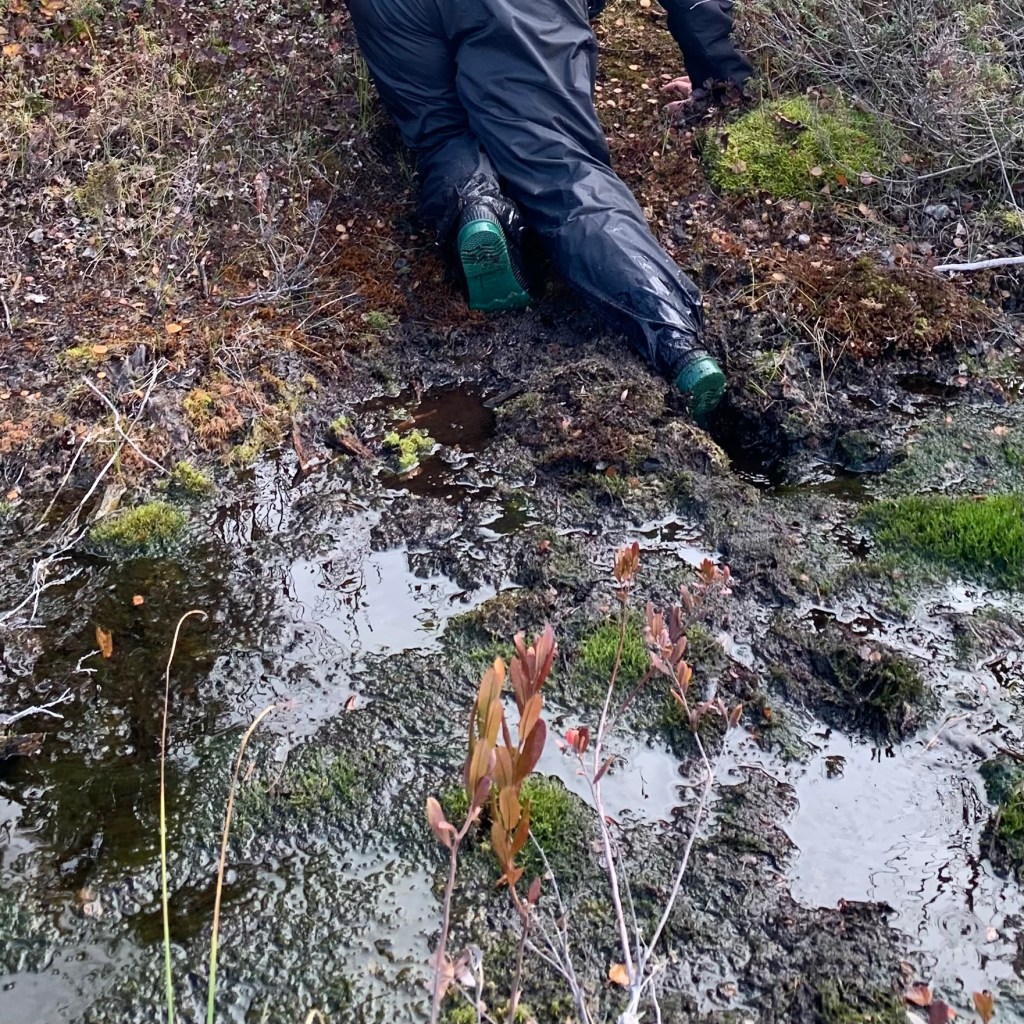
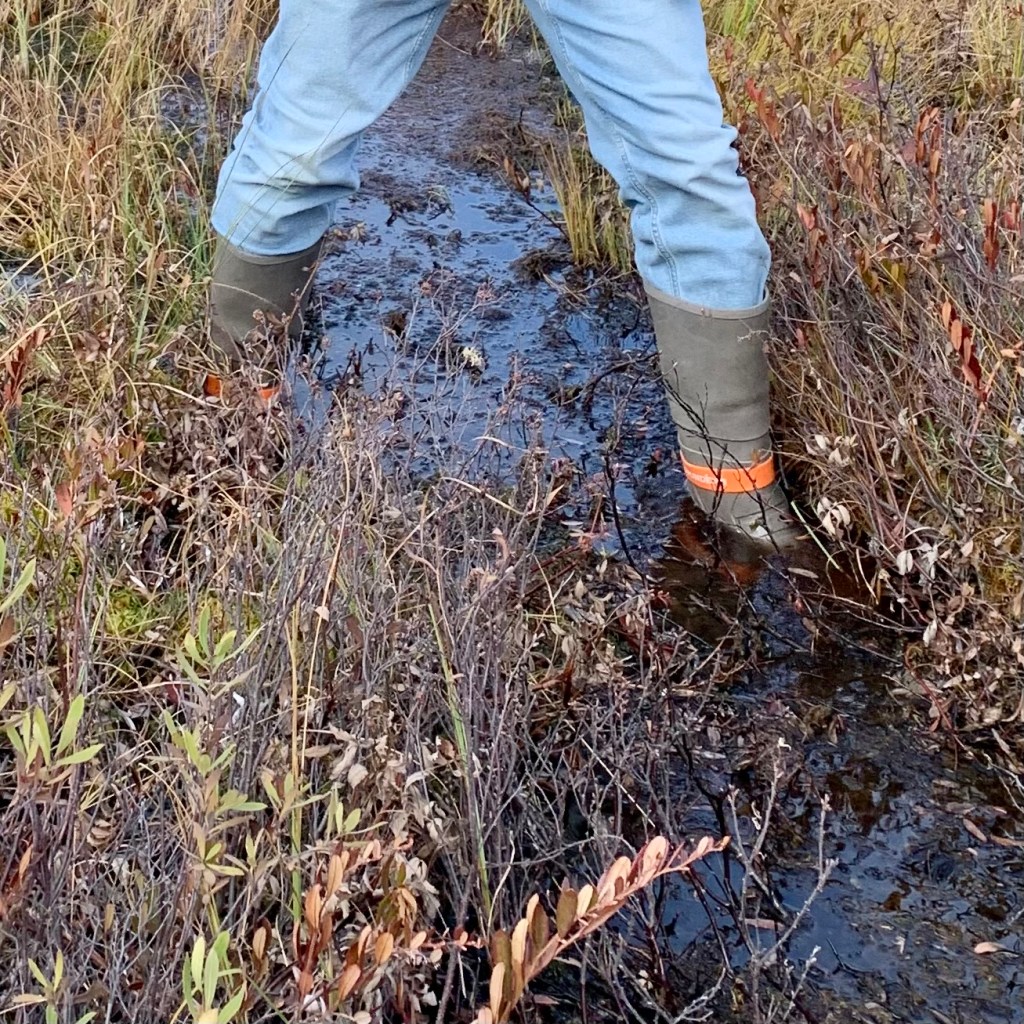
Fortunately the Lodge had a decent selection  of “wellies” or “Wellingtons” that we could borrow. What follows is more not very useful or pertinent information : The type of boots I am talking about are what most people way up there in Alaska call  Alaska Sneakers, aka gumboots, or break-up-boots. They are almost up to ones knees and made of rubber or neoprene. The “Wellington” boot became  the foot wear for the British aristocracy and later middle class in the early 19th century and the  name was subsequently given to waterproof boots made of rubber.  Growing up as a kid we often called our rubber footwear galoshes. Galoshes are also known as dickersons, gumshoes, rubbers, or overshoes. So call them what you will.  I was able to find a pair that were a reasonable good fit, though being on the larger size for my foot, I was hoping they would not be sucked off by any mud we might encounter.

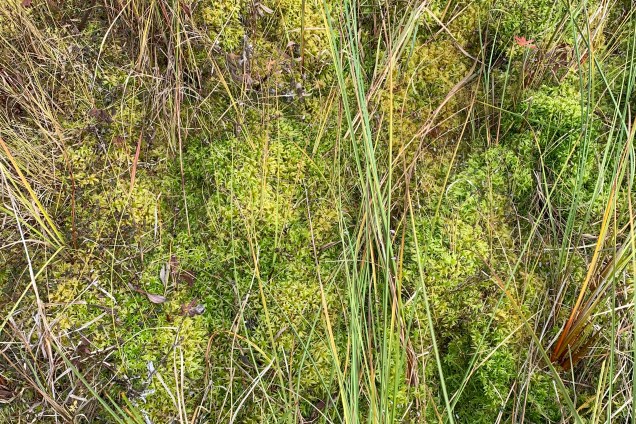
Well this trail did not disappoint. There was lots of sucking mud, spongy moss, and tundra grasses with very shallow root systems that allow water to collect below with the thawing of the permafrost.  What ground that would normally be solid had turned into a grassy trampoline.
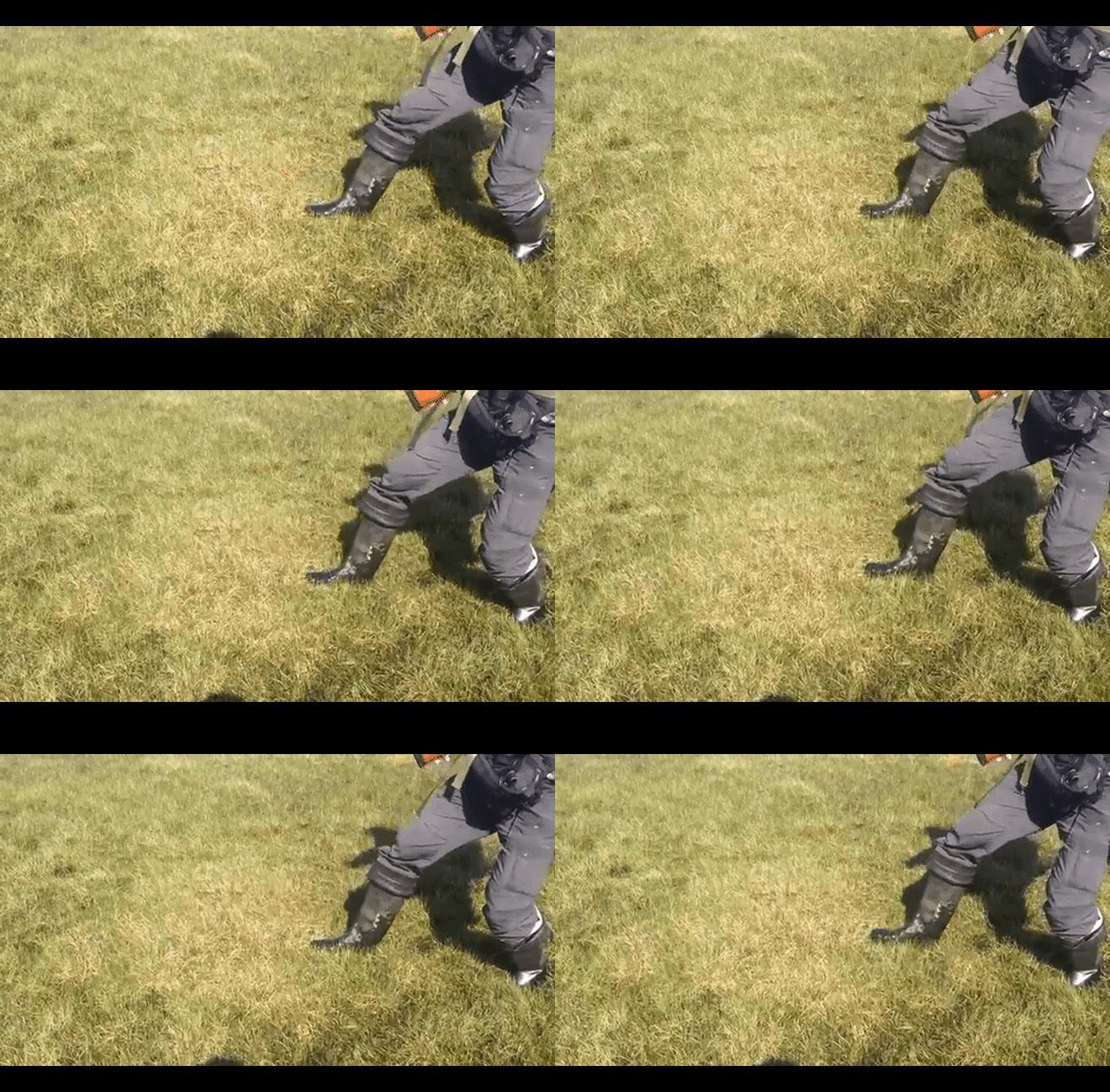
Grassy Trampolines from Discover Magazine July 22 2016

The cause of the quivering patches is likely due to climate change and the current unprecedented thawing events occurring north of the Arctic Circle. How astonished I was when I planted my “wellies” on the green plants and grasses pictured below the ground wiggled and wobbled. I had just stepped on nature’s trampoline . Now I never have done anything remotely technical on a trampoline, so I executed only one of my entire repertoire of three moves: the straight jump and due to the level of springiness of this massive grass mat I rose about 1 inch. I chose not to do a seat or stomach drop (or more accurately flop) for some very obvious reasons, though if I had had on rain pants I might have been tempted.

One of the government monitoring projects in Kanuti is to conduct Beaver food caches surveys so we were particularly excited to discover a beaver lodge in the process of being actively constructed along the refuge lake. This usually begins in the late summer or early autumn (they are right on schedule there) so as to have a cozy den for the upcoming season of cold, ice and snow. This was a large domed structure built by the local beaver residents of Kanuti out of sticks, twigs, rocks, logs, and mud. Clearly these beavers did not have an architect nor were they working from a clear set of drawings but piling sticks and logs together haphazardly and dropping and plopping large clumps of muddy sediment from the bottom of the lake on top of the lodge and and probably hoping that it drips down to seal the massive cracks. If this were my log cabin this would not be a good thing but since it is a beaver lodgeI I have heard it provides ventilation and this will allow the lovely aroma of wet beaver fur, the gases they pass, and anything else that fouls the air to escape.
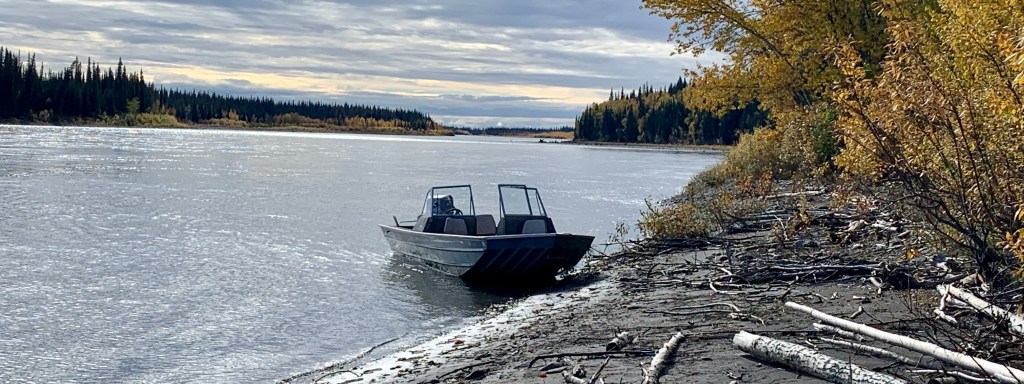
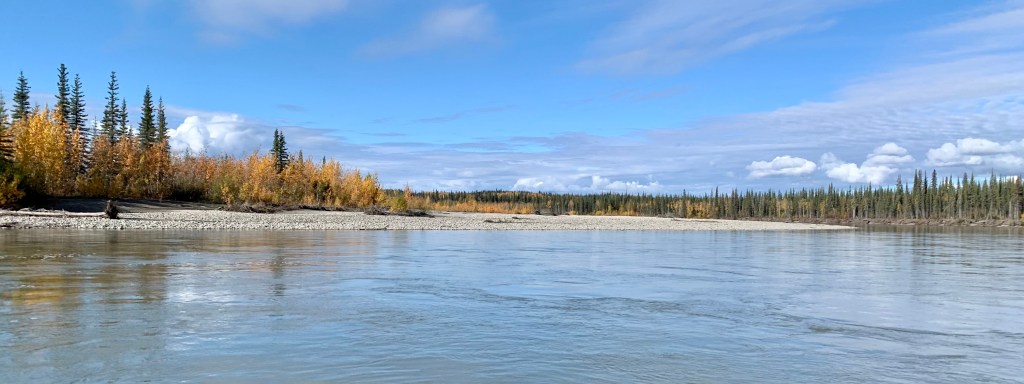
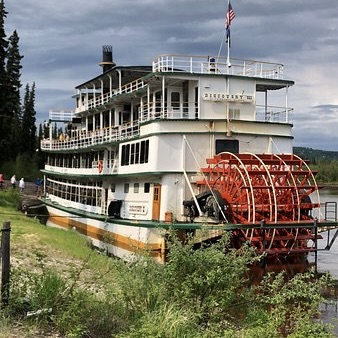
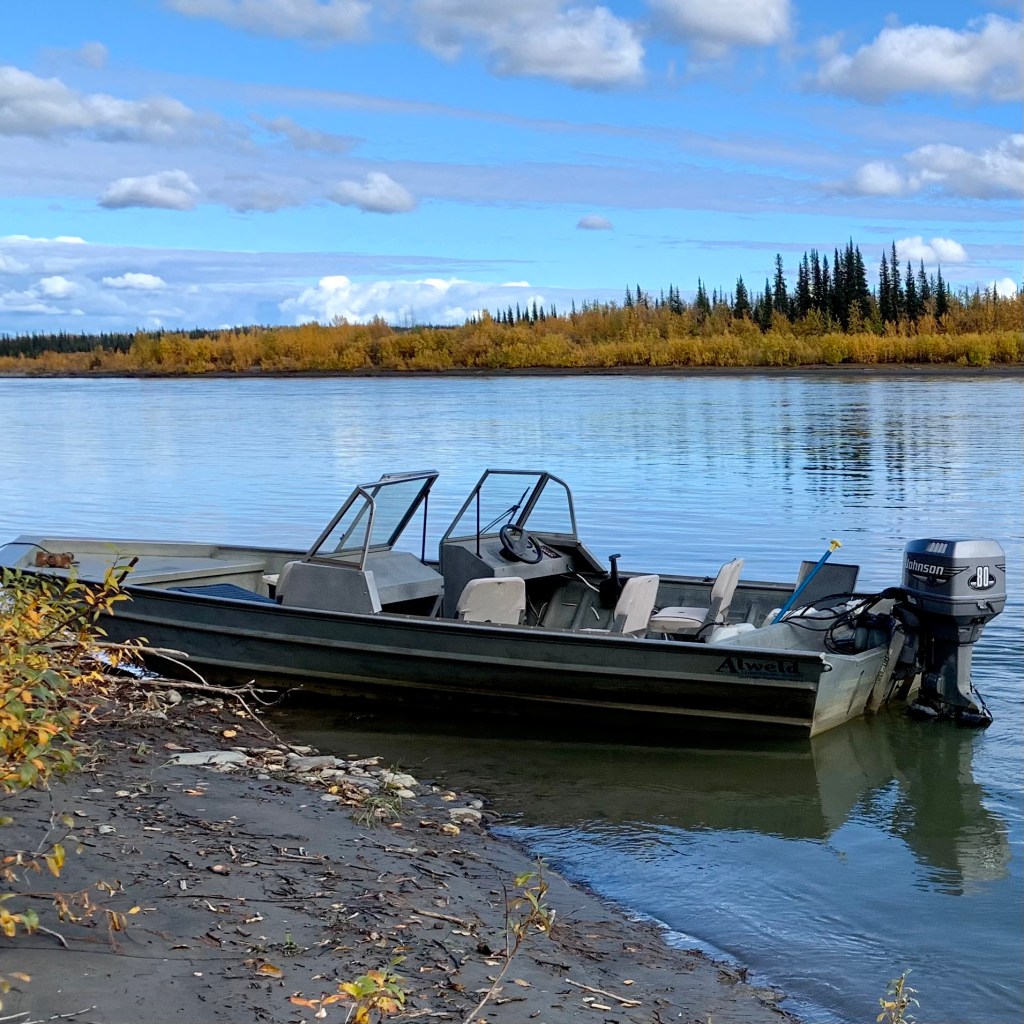
When reading the promotional material for the Bettles package, it stated that included in the package “will be the exciting Koyukuk River boat tour to the ghost town of “Old Bettles” founded in 1898, where the last gold rush took place.” I am not sure what I was expecting, but when I hear riverboat tour I think of the large Paddle-wheelers churning on down the Mississippi, or even the Riverboat Discovery Cruise in Fairbanks. Now I knew it would not be these but I kind of anticipated something much smaller but a tad fancier… but I had not expected a quite basic aluminum fishing outboard for our “cruise.”

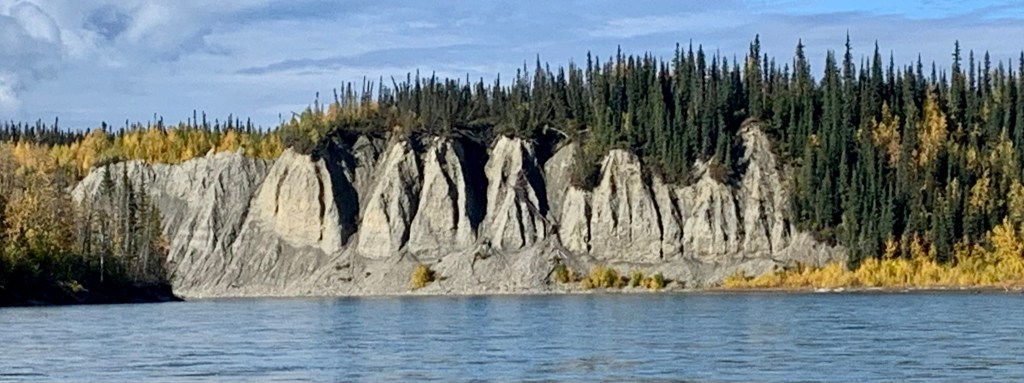
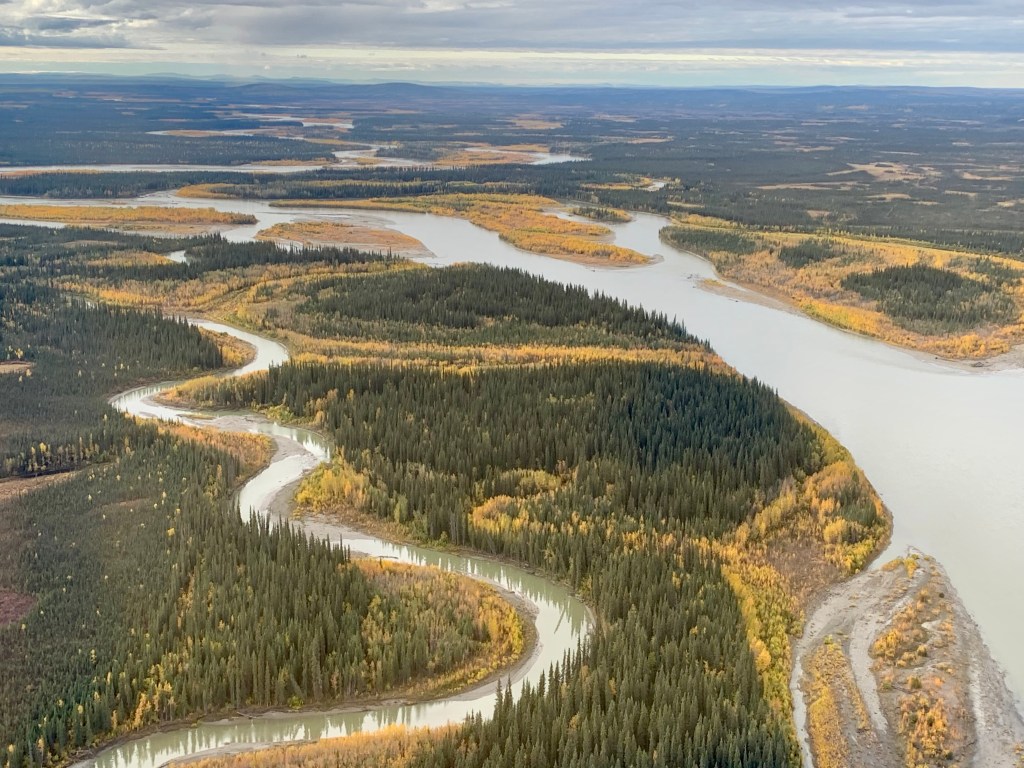
Never-the-less our fishing boat excursion was really quite satisfactory and I should know better than to have visions of what might be available in rural Alaska, especially above the Artic Circle. We motored on down the Koyukuk River to Old Bettles, enjoying the scenery and the very brisk air.
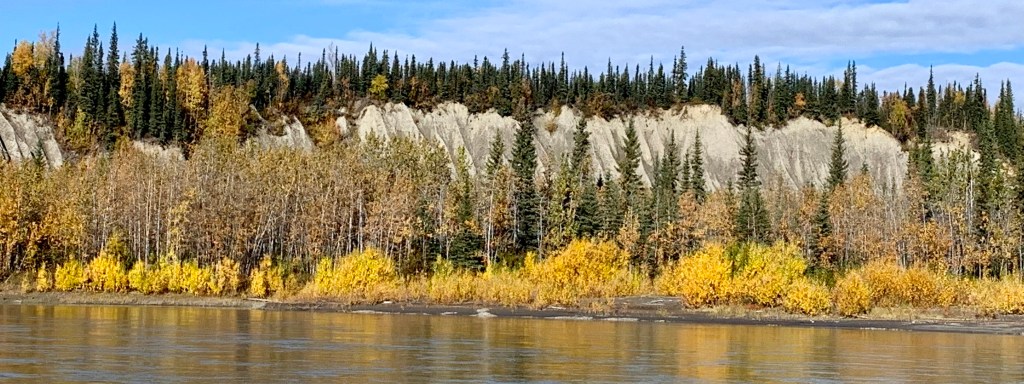
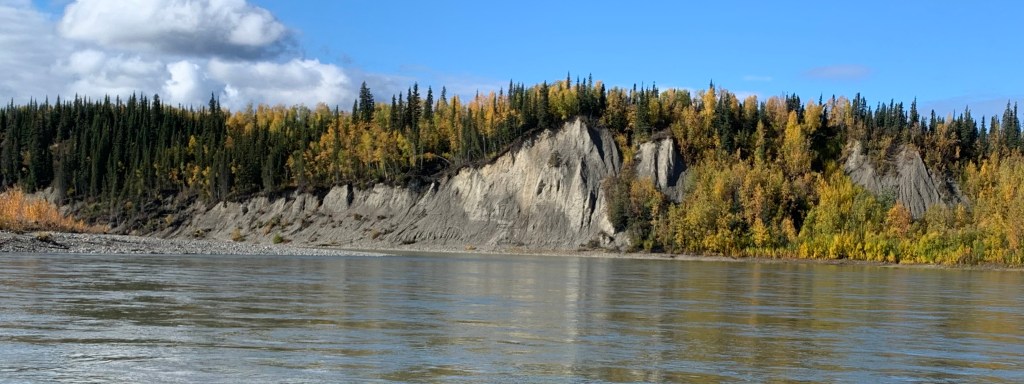
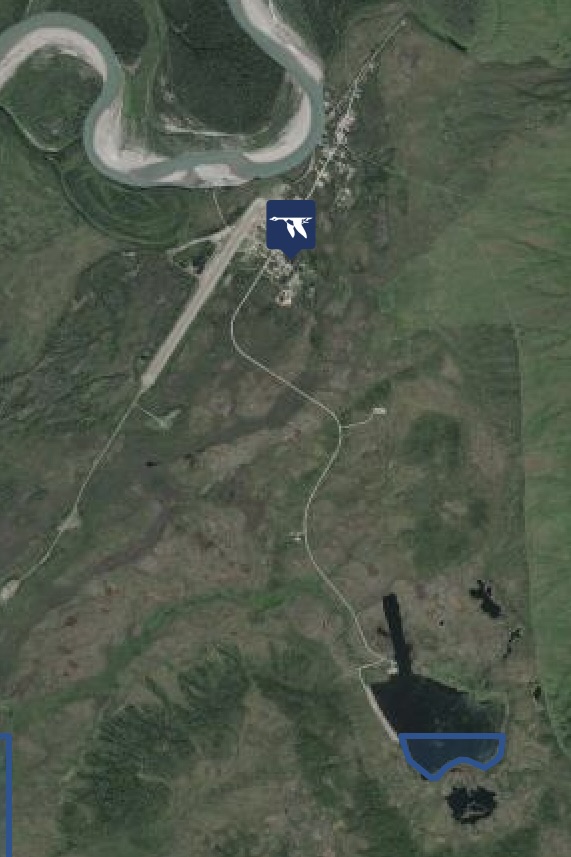
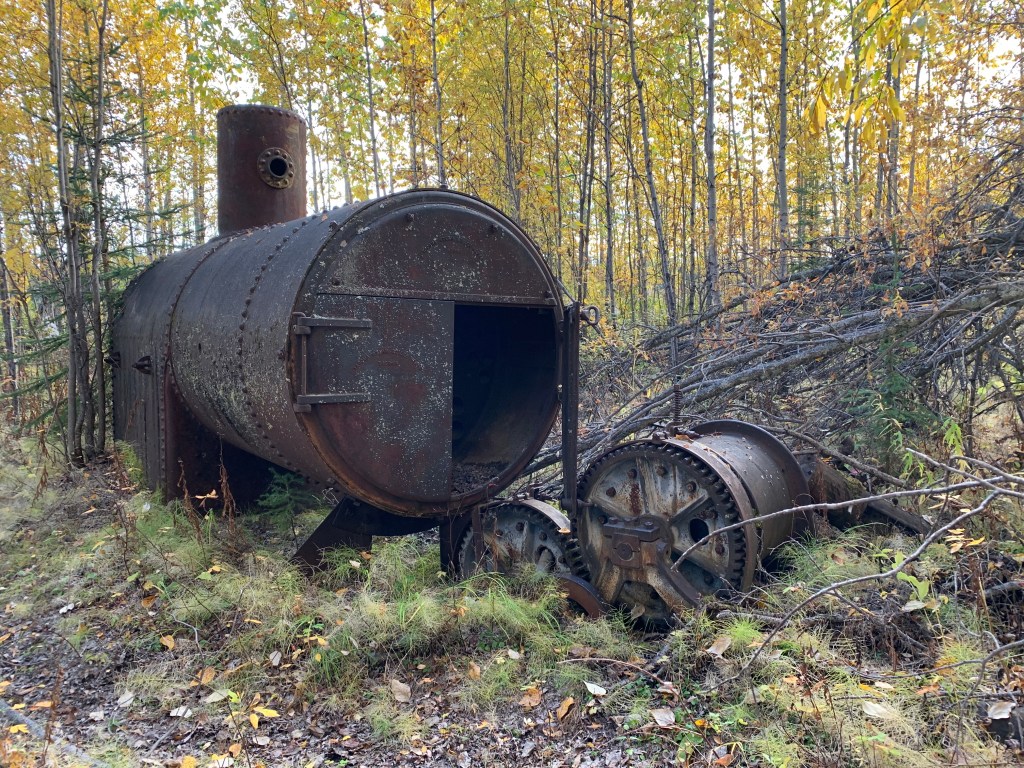
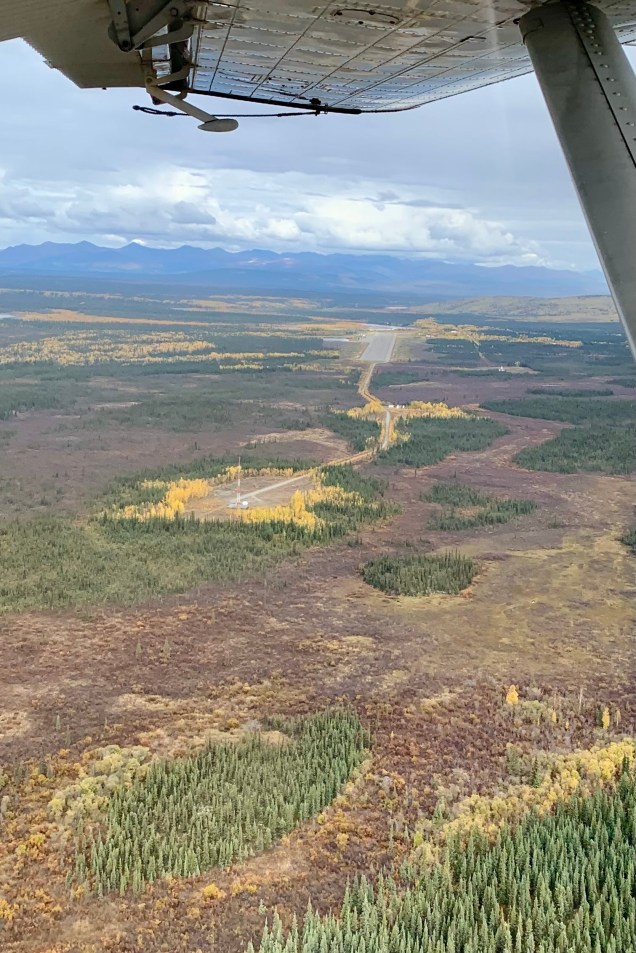
“Old Bettles,” which I cursorily  called  the “slums” of Bettles, was founded in 1898 during the last great gold rush in Alaska. Gordon Bettles established a trading post at the junction of the John River and the Koyukuk River. This was the age of transport by large steam-powered paddle boats which brought miners and their supplies into the region. Old Bettles was the northern terminus of the Koyukuk River barge line.  But as the gold rush came to an end and aircraft replaced the riverboat as the main mode of transportation, the community migrated to the airstrip built up-river, 6 miles from the original location and the current location of “New Bettles” where we were staying. This airstrip that serves the community today was built in World War II. The post office closed in 1956 and the last inhabitants of ”Old Bettles” moved out in 1997.
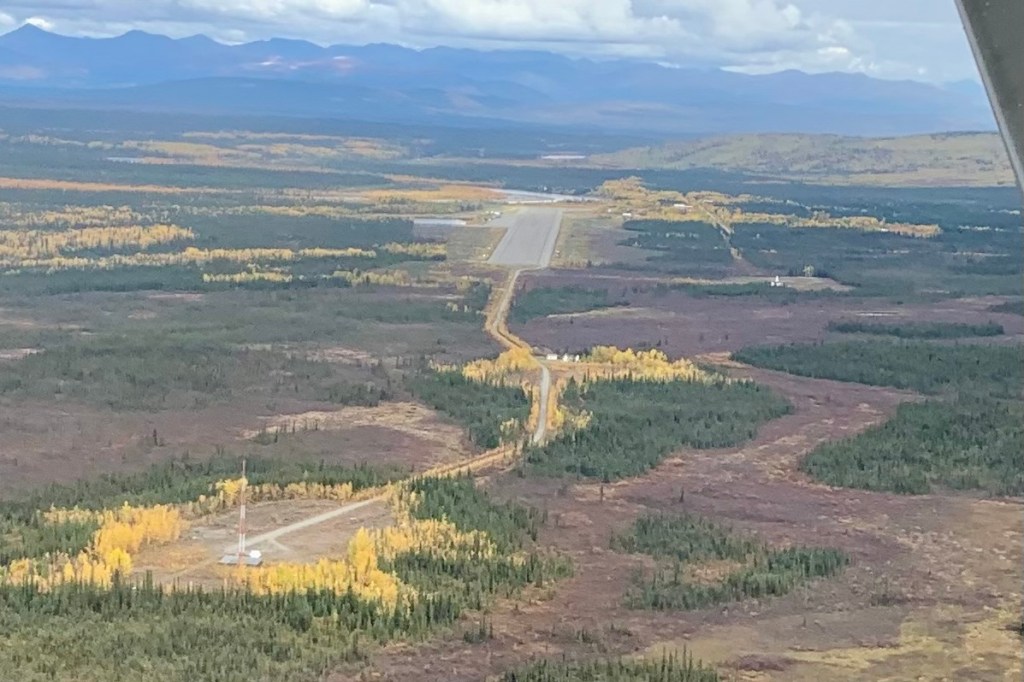
Bettles Airstrip

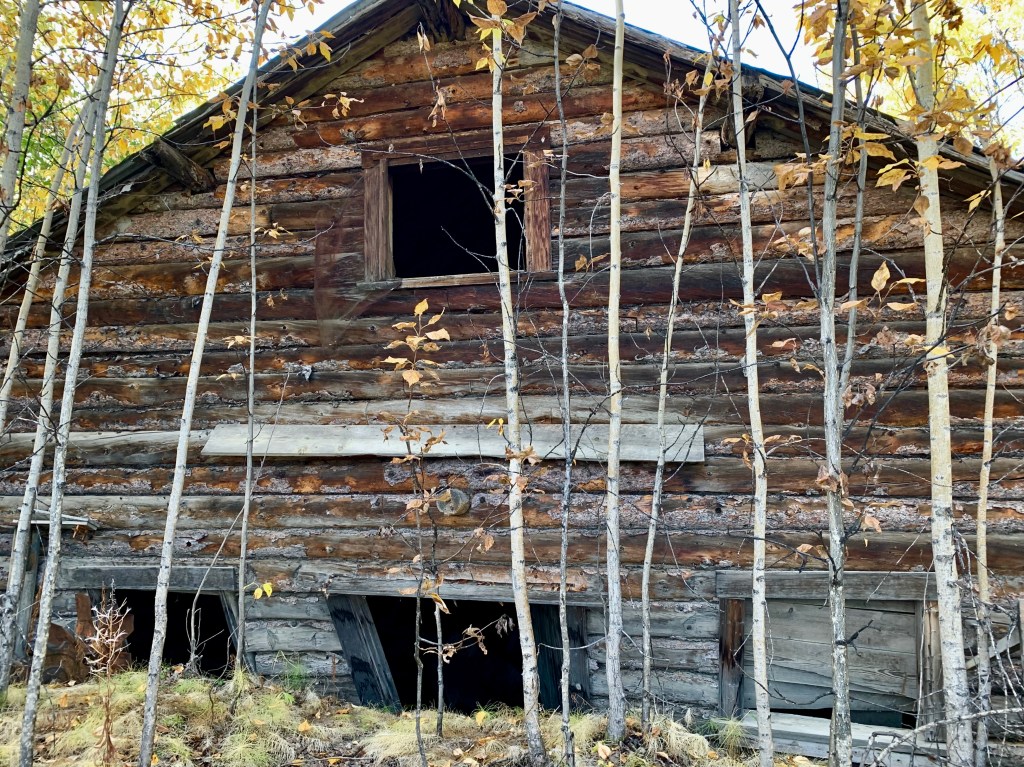
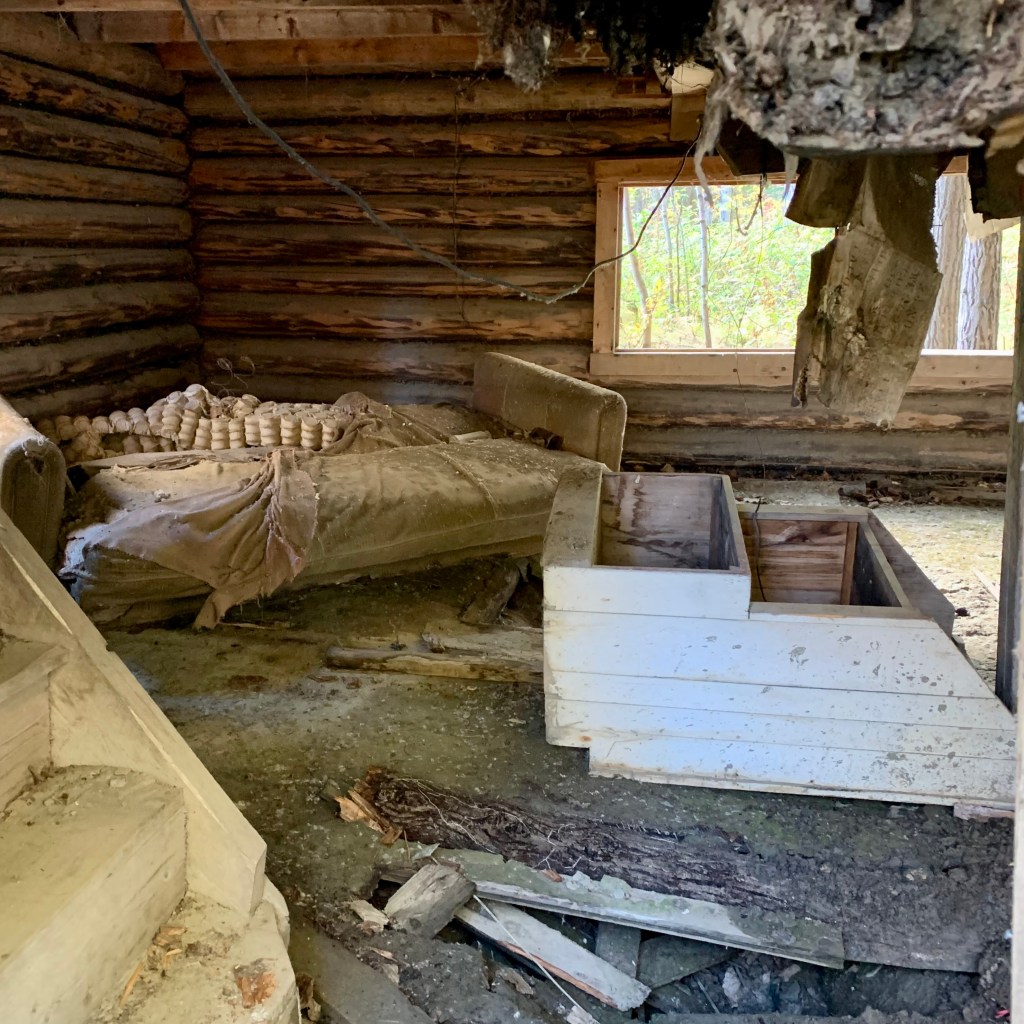
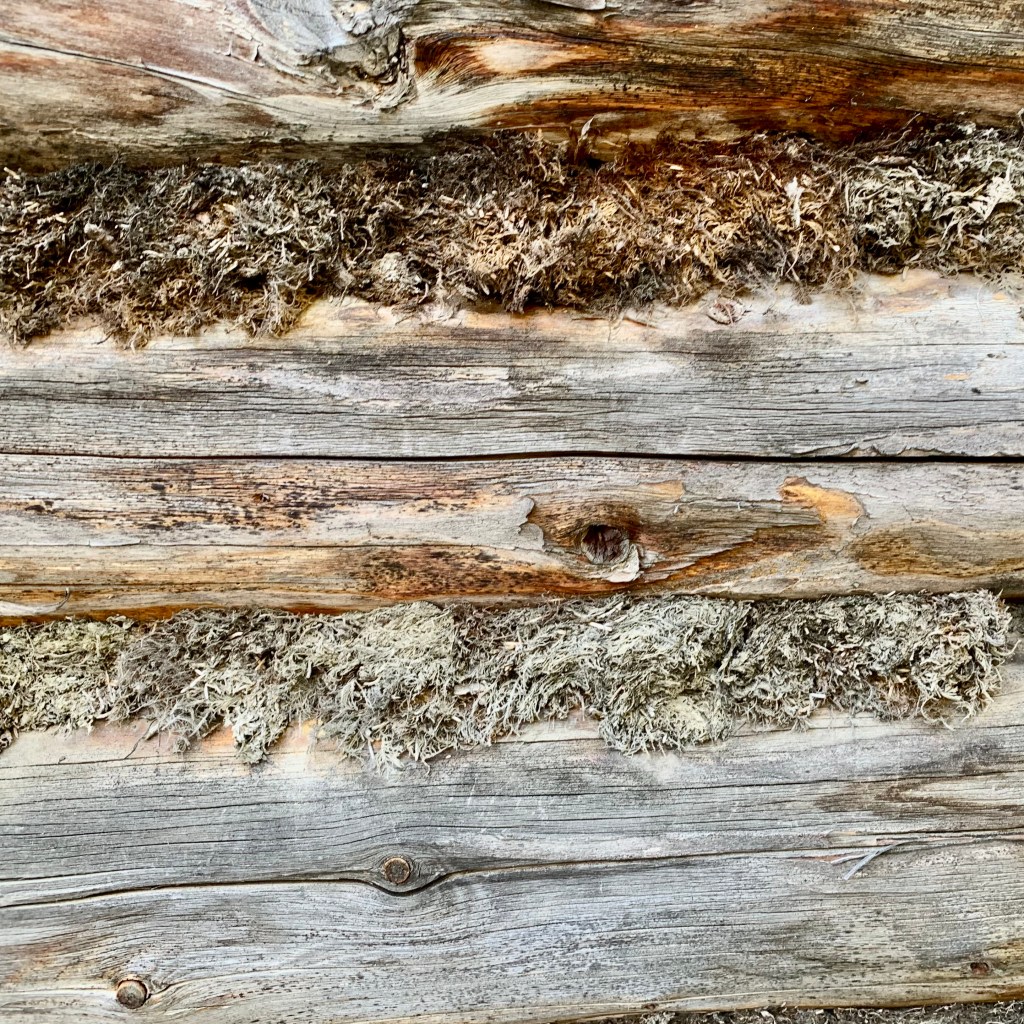
Several “buildings” or better described as remnants of  buildings remain 25 years later, with the buildings left to decay … no historical society “lives” up here to preserve history. In its heyday, it was most likely a village built of rugged log homes and businesses. Some places appeared as if residents moved out in haste leaving behind, beds, appliances and some still are adorned with weathered moose sheds! The story is that the cost and task of moving belongings even a few miles can be prohibitive. So now there are those beds in “Old Bettles” but I don’t think they were one of the offerings in the brochure. I was glad not to be roughing it over there, as definitely not a AAA 4 diamond property. Definitely not too comfortable looking. All the buildings were in some stage of decay and you could see also that most buildings were slowly sinking into the soil because of the freezing and thawing of the permafrost. What an odd site this was. Perhaps thousands of years from now there will be an archeological did that uncovers the artifacts of life in “Old Bettles.”

Should you consider a trip to Bettles ? Bettles promised an authentic Alaskan experience 35 Miles North of the Arctic Circle and that is true. This was quite a unique experience unlike any other I have had. However from the detailed descriptions on their website (http://bettleslodge.com), I had expected something a tad more upscale that what Bettles actually was. But then I also know that most photos, brochures and internet descriptions are for the most part much more glamorous appearing that the actuality. The food was excellent, the personal friendly knowledgeable, and accommodating. The accommodation in the Aurora Lodge is clean and comfortable, though the wifi is sketchy at its best. Our room had a spa (which was basically a souped up, regular bathtub right in the room with a pull curtain if you wished privacy…). Most rooms have shared facilities. Both the communal rooms and bedrooms have everything that you need to make your stay extremely comfortable including soft drinks, hot chocolate, tea, coffee, snacks,  many DVD’s & board games. However if you desire modern and/or elegant facilities, fine dining, TV , fast internet, cell phone service, a structured schedule, events happening on time ( ideal Alaska weather and the aurora are not available for streaming “on-demand “) this is not the adventure for you. I thrive with this type of adventure and compared to some of mine it is downright luxurious.

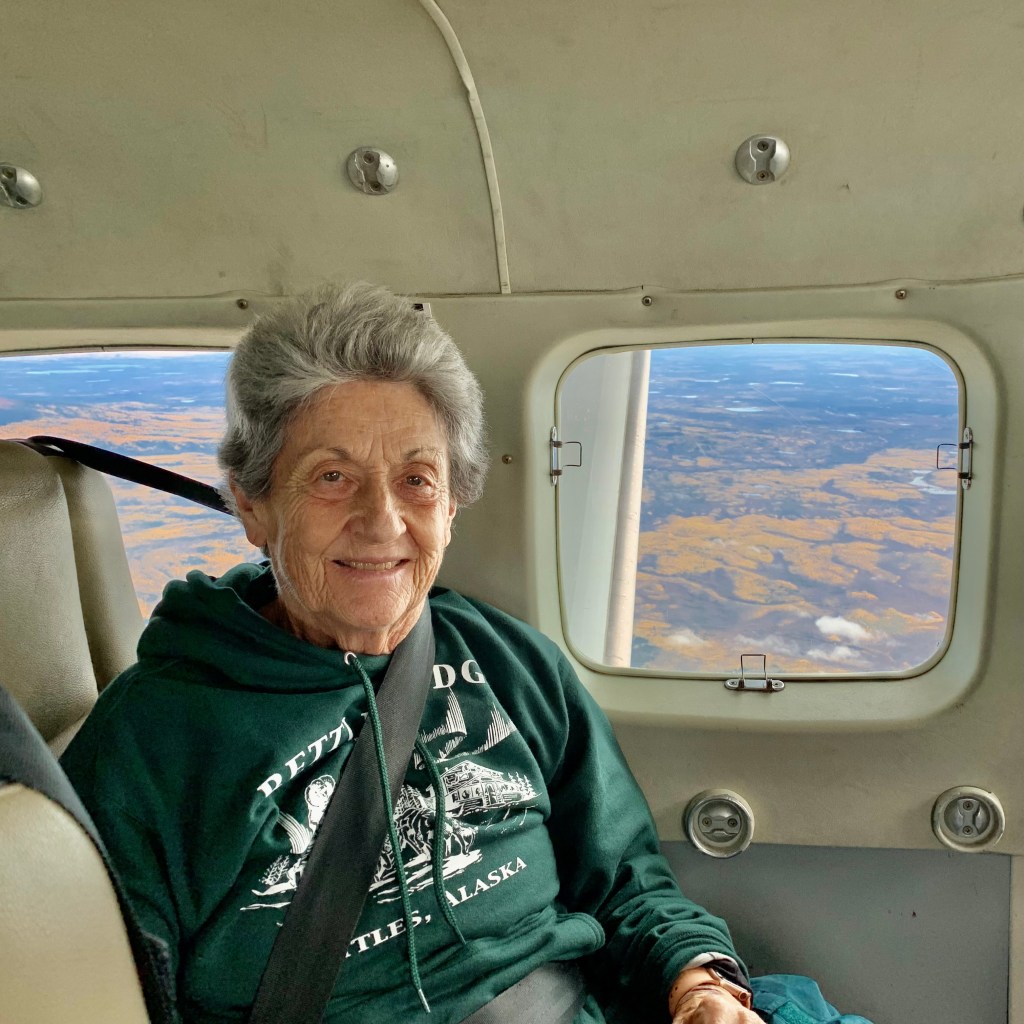
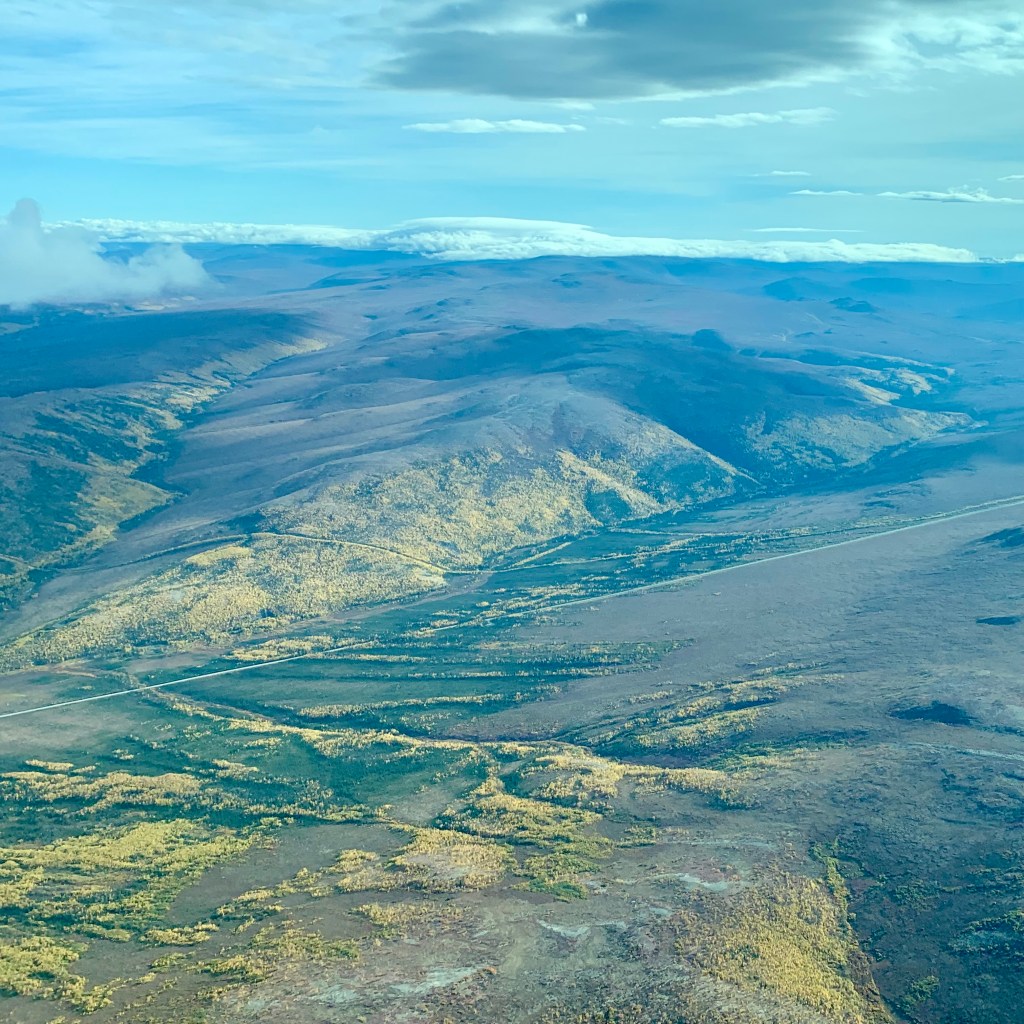
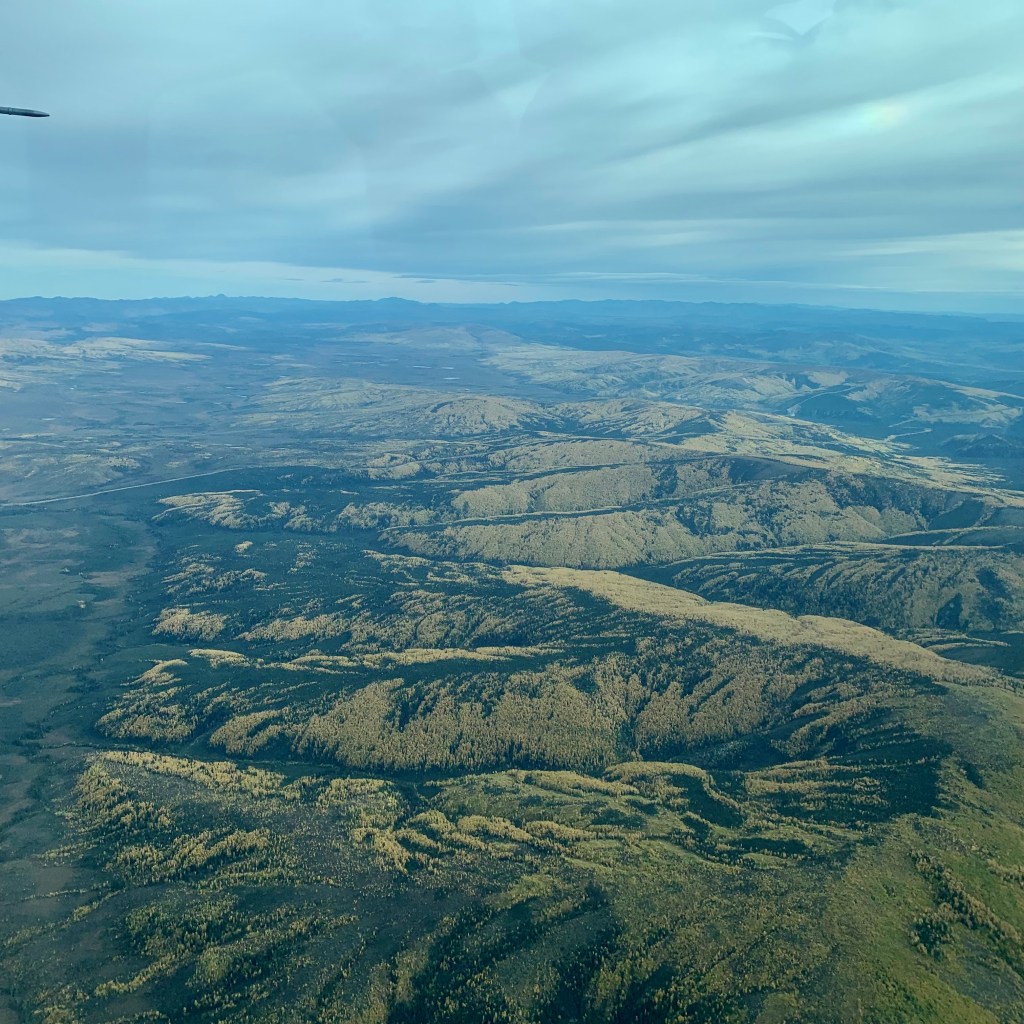
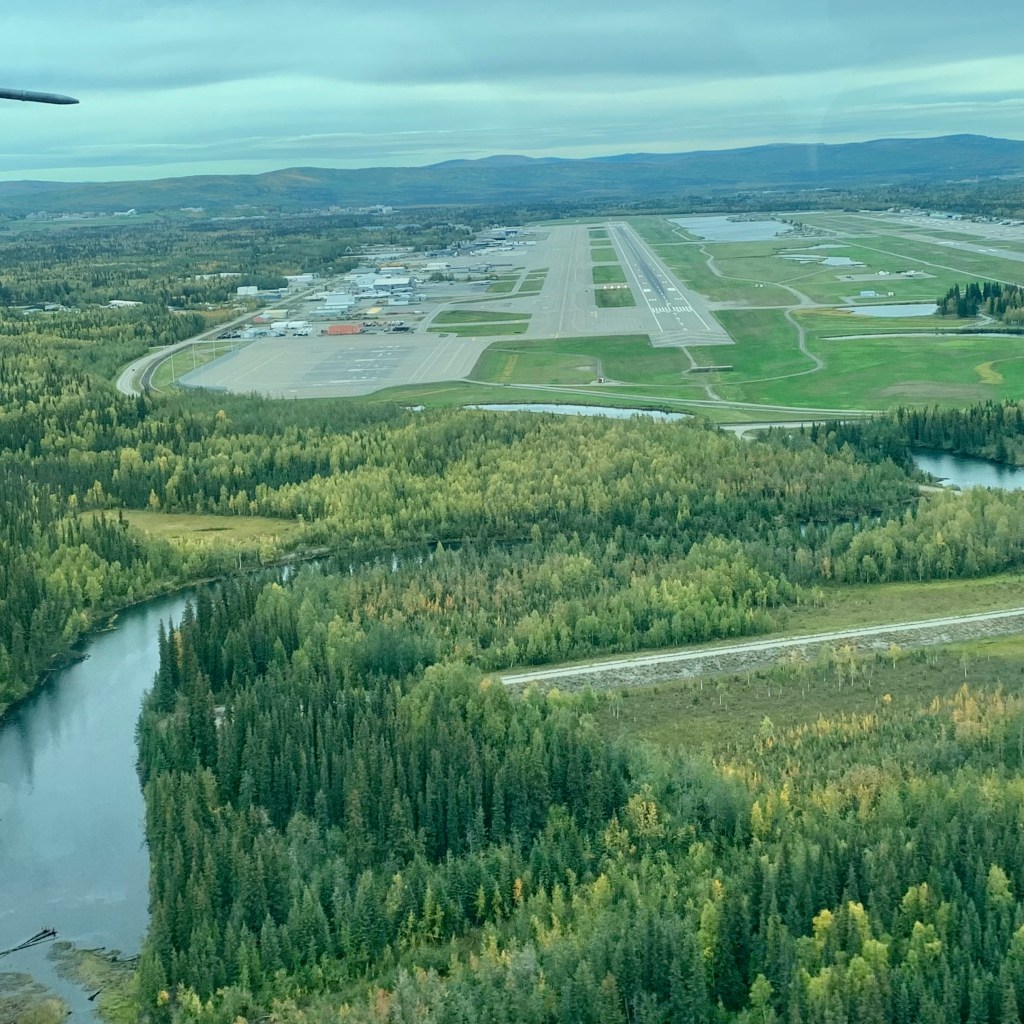
The following morning we were scheduled to depart. The weather appeared ideal and we all too soon were on out way to Fairbanks. I was mostly fascinated by views of the famous “Haul Road,” aka Dalton Highway. The highway, which directly parallels the trans-Alaska pipeline, is one of the most isolated roads in the United States. It was visible below for most of the flight and this highway is described as primitive in places and traveled through rolling, forested hills, across the Yukon River and Arctic Circle. The surface is gravel and can be quite rough, dusty or slippery depending on the weather. There are long distances between commercial operations and here is where the problem lies. Don’t have any mechanical difficulties or medical problems as it can take hours or days to get help.
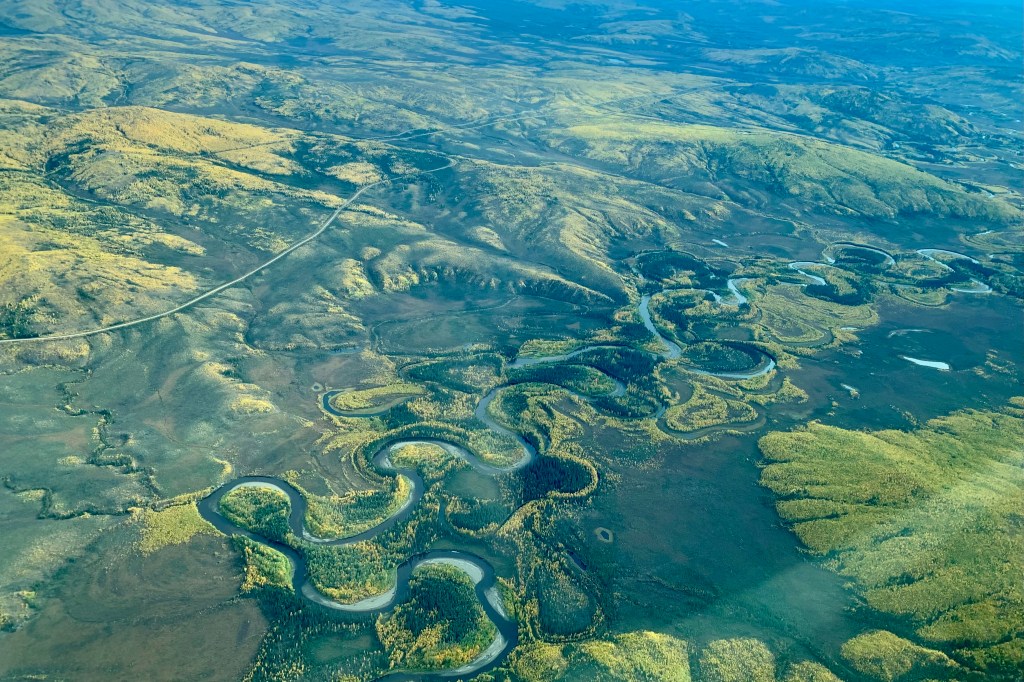
Flight Path over the Dalton Highway and the Trans-Alaska Pipeline to Fairbanks

Still known locally as the “Haul Road” it can be a very challenging highway to travel for many reasons. The primary users of the Dalton highway are the oil companies, which means most of the vehicles on the highway are large trucks. These truckers are professional drivers but they also tend to take up a lot of room on the narrow road (28 ft/8.5 meter wide). Could it be described as a scenic drive? Absolutely … that is if you can take you eyes of this largely gravel and extremely remote road, with little human habitation outside of its terminus. Now if you are eager to drive “The Haul” after my brief introduction, this is a list of supplies you will need to bring along: 2 full-size spares, emergency flares, extra gas and windshield wiper fluid, bug repellent, rain gear, first aid kit, emergency food & water and camping gear and be sure to travel with your lights on, slow down when other vehicles are approaching, do not stop on the road. Game anyone?

Next up: The Alaska Railroad from Fairbanks to Anchorage

“Bush Plane” or “Air Taxi” Accessing Gates of the Arctic National Park…

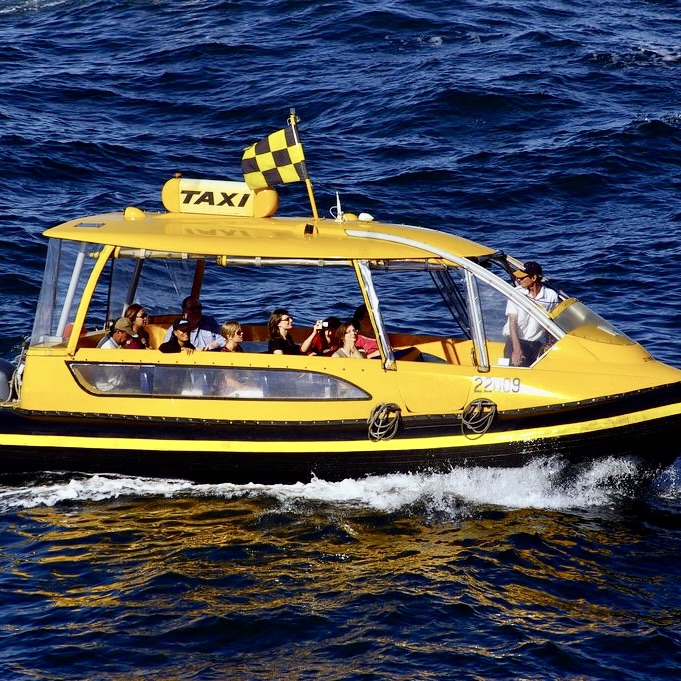
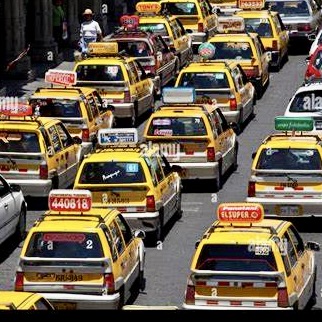
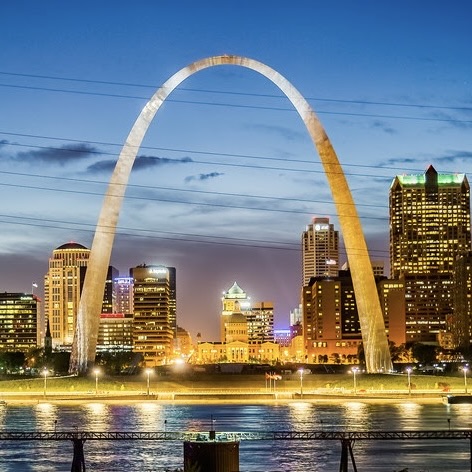
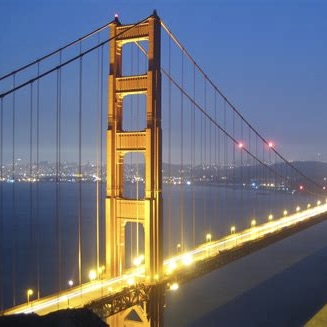
No Uber or Lift drivers or taxi cabs there. Not even a water taxi. An article I read stated one would need to hire an air taxi to get to both Gates of the Arctic and Kobuk Valley National Parks. Now, when I hear the word taxi, I conjure up pictures of a gaudy Yellow Cab, the driver laying on the horn, idling in a massive traffic gridlock on New York City Streets (or Chicago Streets etc.…). Hiring an “air taxi” in Alaska is not exactly like hailing a cab on a busy street corner. Perhaps that writer was misled by the term “Gates of the Arctic,” picturing something more akin to Gateway Arch National Park or the Golden Gate Bridge. As an aside, be it known up front (in case you are anticipating an awesome photo), that there are no actual gates in Gates of the Arctic National Park.

In deciding how to visit these parks, I knew I would most likely have to come in by plane, our rather multiple planes and thus quite expensive. Actually, it is possible to access the park by hiking in from the rugged Dalton Highway – the closest road to the Gates of the Arctic boundary, but a hike in this remote and challenging landscape could not be taken lightly and definitely not for either the feint of heart or novice hiker. Probably a fair amount of bushwhacking, several cans of bear repellent, and orienteering skills would be in order as well. Once in, there would be no roads or trails, campsites, visitor centers, public facilities or lights.

Another way to explore Gates of the Arctic, would be by floating one of its six wild rivers: John River, Noatak River, Kobuk River, Alatna River, Tinyaguk River, and Koyukuk River. Of course this would also require being flown in with ones inflatable raft or canoe. In years gone by, I might have considered one of those options, chance taker and reckless adventurer that I have been, but at some point my rational sobersided self took over and I opted for the definitely more sedate approach to my latest park chaser adventure.

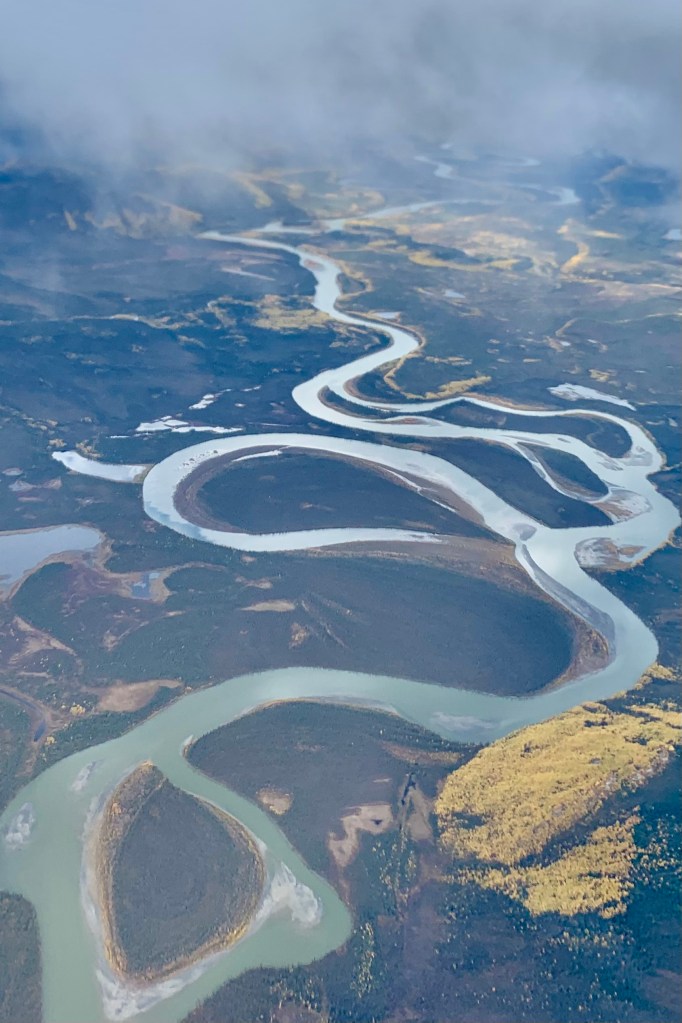
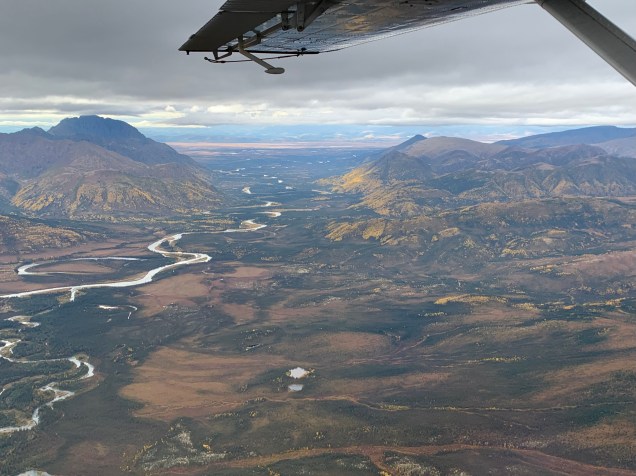
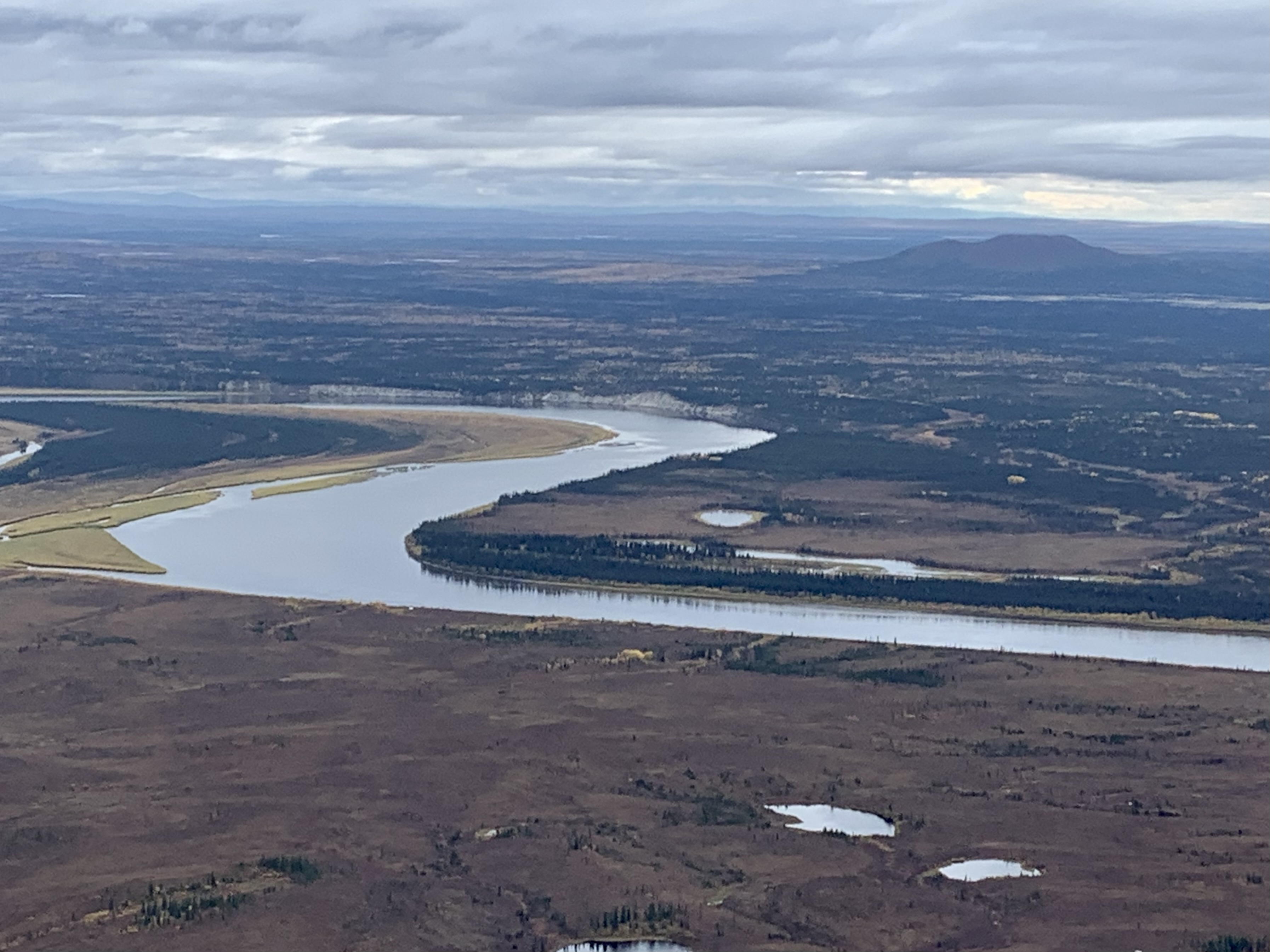
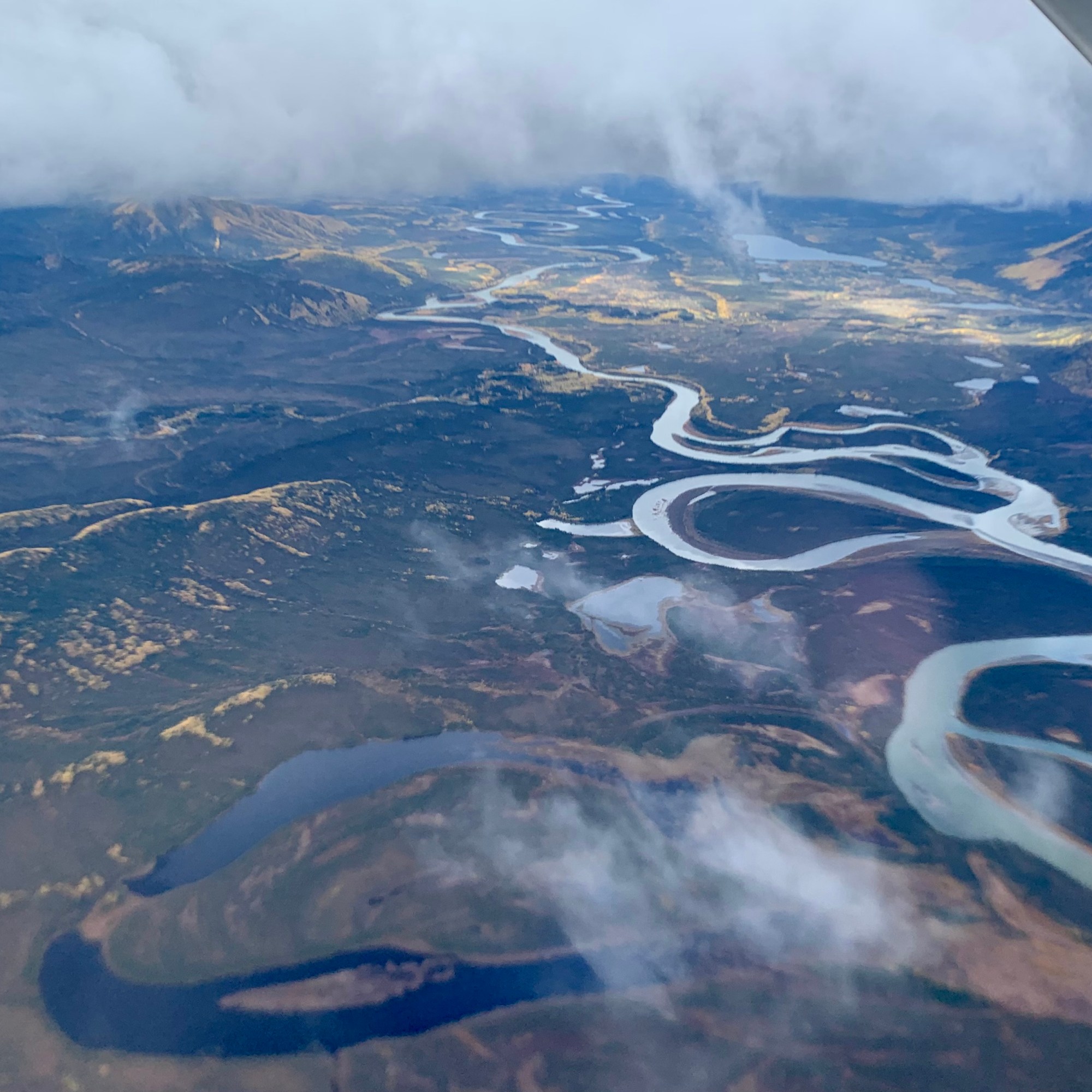
An other consideration when traveling in this remote area…is to look at Air Miles vs. Road  Miles vs. River Miles.  In the early days of pioneering Alaska, about the only mode of travel would have been by river. As I gazed down at the rivers snaking and slithering  about the tundra, it would have been a very long and roundabout journey. Once the Dalton was built it was almost a “strait” shot north but getting anywhere else wouldn’t involve “off-roading.” So with the advent of  bush planes and float planes this wilderness became much more accessible.and the shortest route for point A to Point B.

Northwest Artic Boroughthe Challenge of River Miles

Back to my issue: So why not use the classic tried  and true, good old fashioned term BUSH PLANE, for that is its destination: the BUSH (defined as a large uncleared or sparsely settled area such as in Arctic tundra,  usually scrub-covered or forested). A bush airplane is used to provide passenger and flight services to remote, undeveloped areas, such as the Alaskan tundra, the African bush or savanna, Amazon rainforest or the Australian Outback. So I took a  BUSH PLANE, getting to this dramatic landscape, with its endless space, wetlands, rivers,  and serrated peaks, it’s remoteness and isolation. This has been described as nature at its wildest.

Gates of the Artic National Park Area

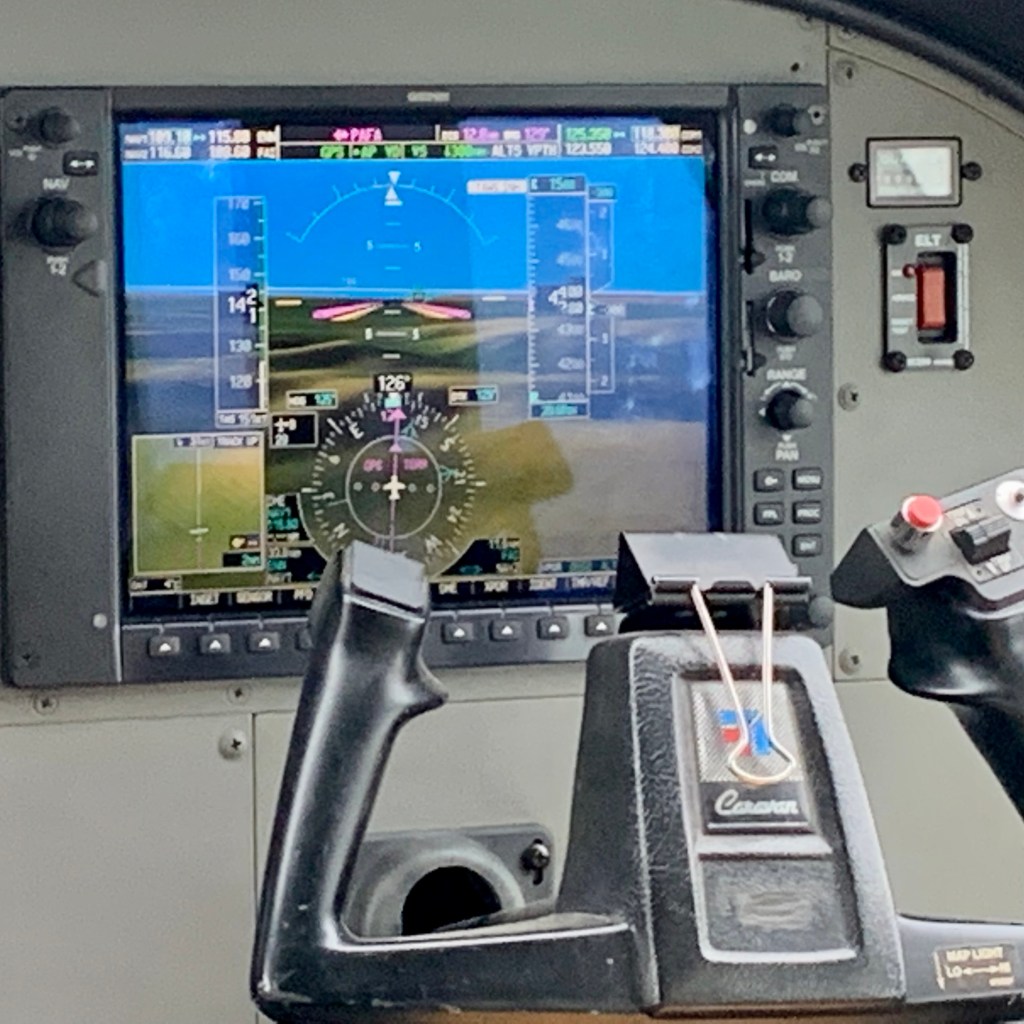
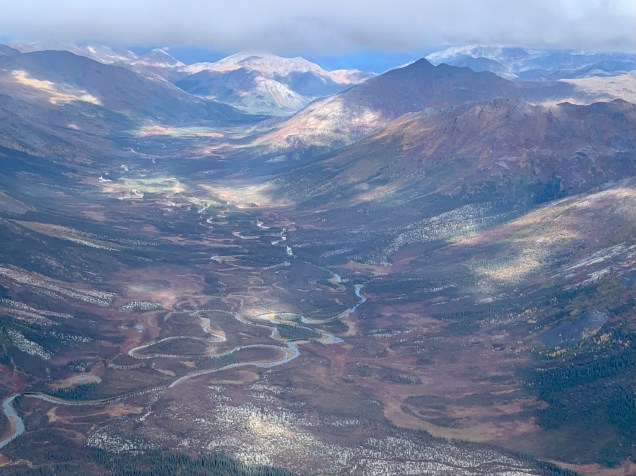
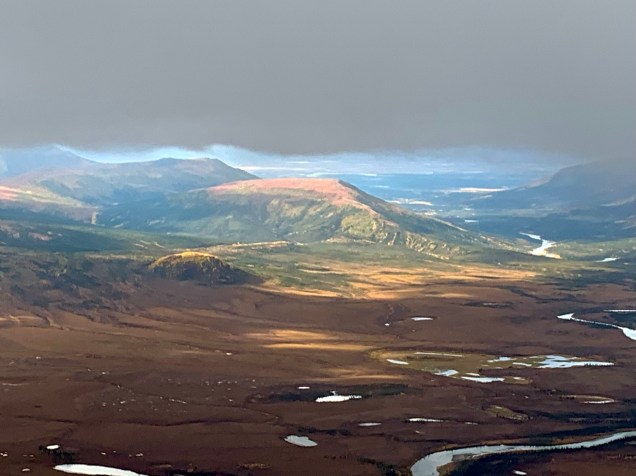
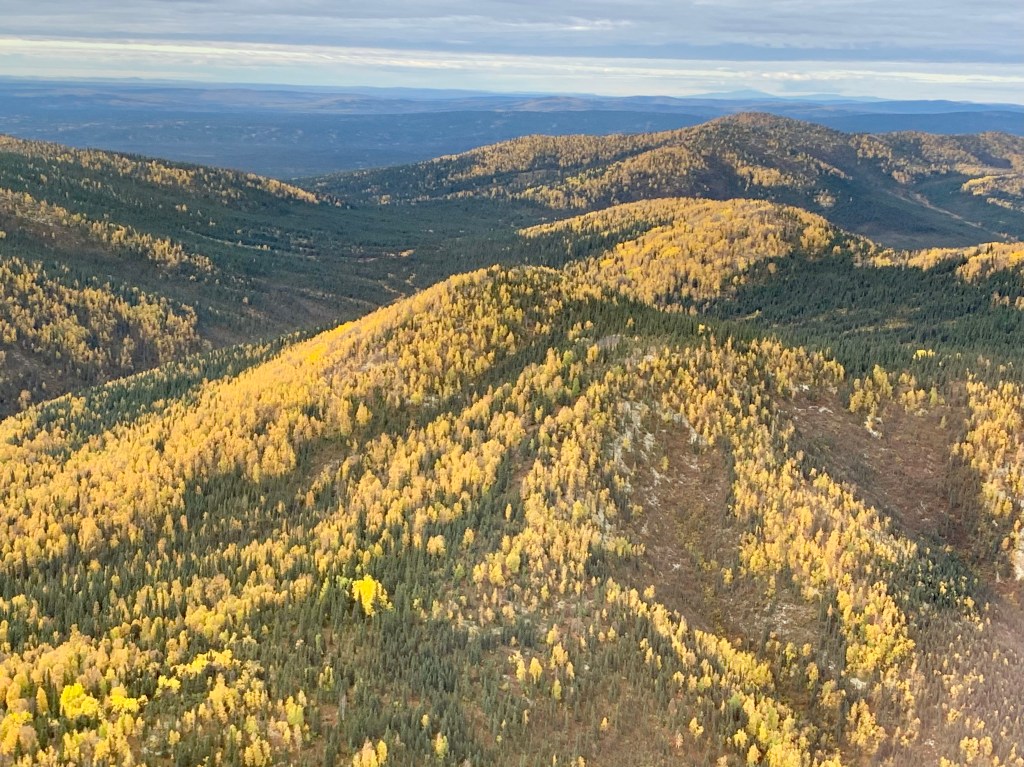
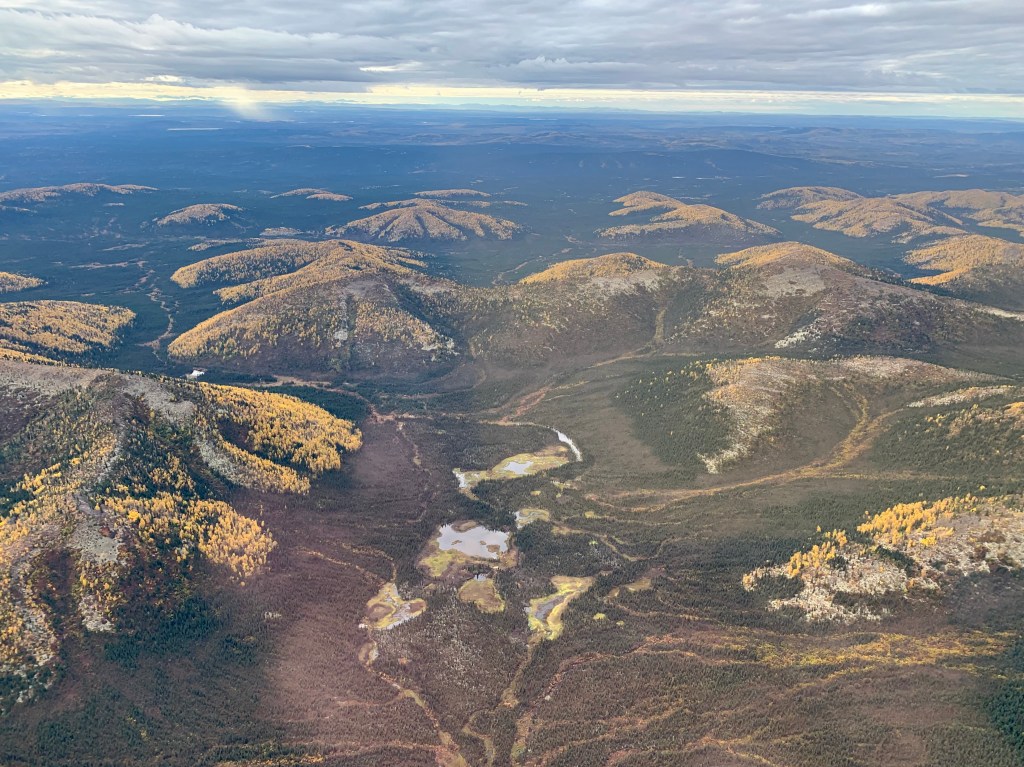
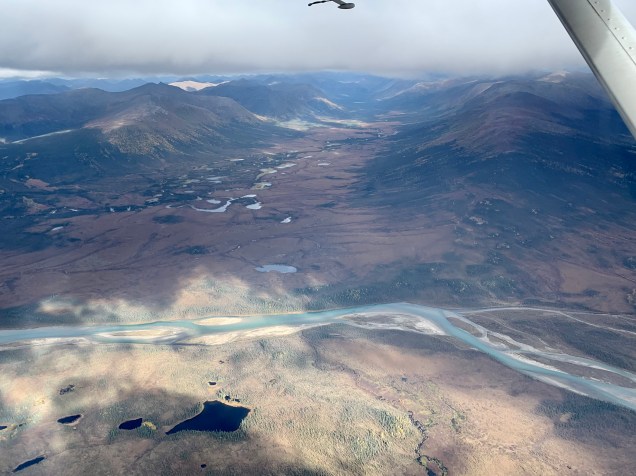
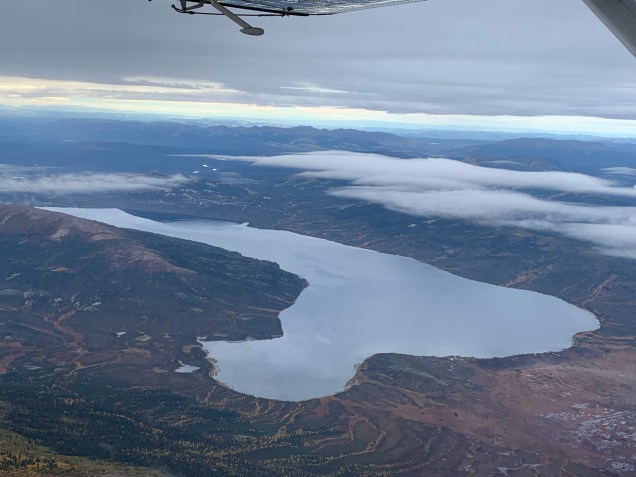
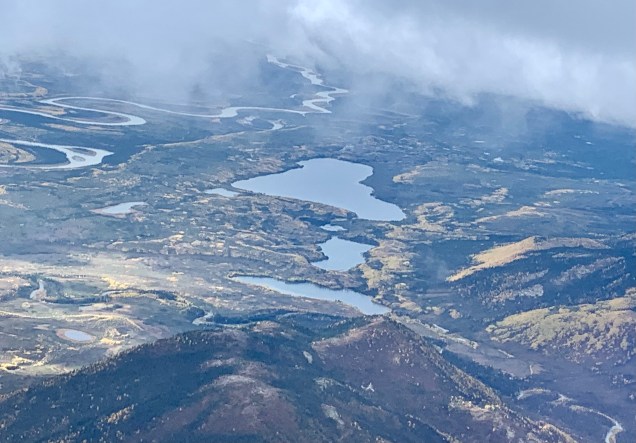
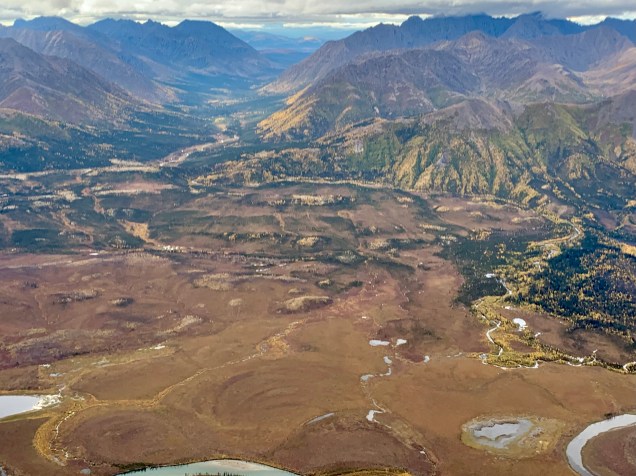
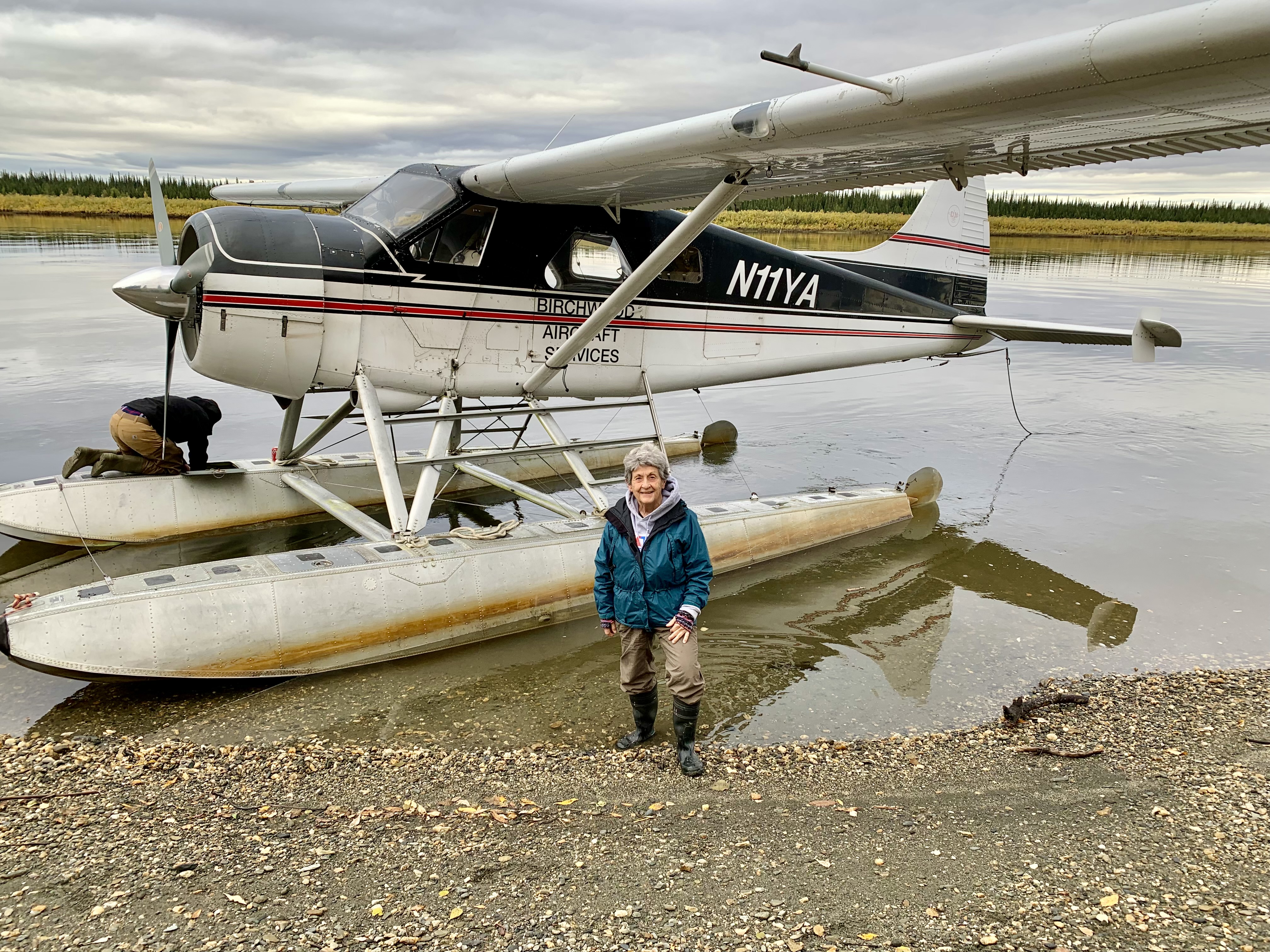
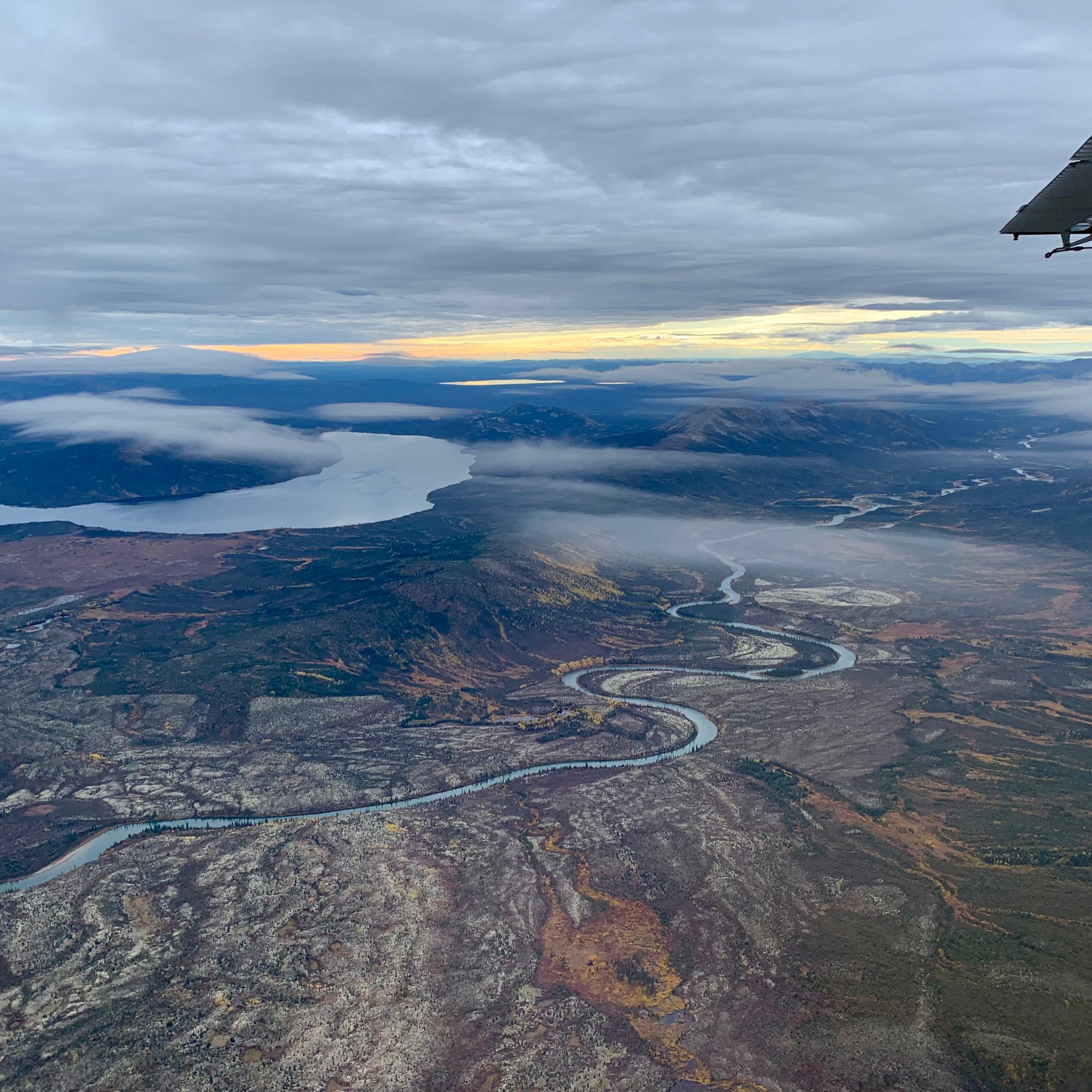
The morning of our planned park hopping expedition out of Bettles by bush plane to both Kobuk Valley National Park and Gates of the Arctic National Park was fraught with anxiety. The weather did not look promising as there was significant cloud cover in the area of Bettles. Though I am usually that pollyanna-ish sort of person, it had been an extremely wet summer with record rainfall in many areas of Alaska, so I was beginning to feel despondent. I was astonished when our pilot gave us the thumbs up and our flight seeing adventure was a “GO.” Seems the weather up farther north in the Brooks Range was considerably better so it wasn’t long before Kris, Rob, Teresa and I were climbing aboard our floatplane a DeHavilIand DHC-2 (which in this case, I maintain is my bush plane atop two pontoons under the fuselage). Now, I learned that this was an aircraft that was preferred by bush pilots but also it was a relatively old aircraft. The manufacturing of this craft ceased in 1967 so even if ours was the latest model it would be 55 years old. Now I definitely would not drive a 55 year old car. And since I was not about to give up this flight, I transposed my chronological body age at 55 years onto this aircraft’s age at 55 and determined that it would be an awesome safe ride since I was well tuned and healthy and did my first triathlon at 55 and my last Ironman at 69. Age isn’t everything. It still had lots of life and miles to fly. I only doubted this analogy once when the engine stalled out ( my adrenaline went into overdrive), though the pilot had it rectified long before I finished my Hail Mary. Our very accomplished pilot kept us flying as low as safety permitted, given the air currents and clouds. What an incredible montage the land gifted us with as we floated over its profuse wetlands, serpentine rivers, deep valleys, mosaic of trees, shrubs and low tundra vegetation, and rugged mountains.
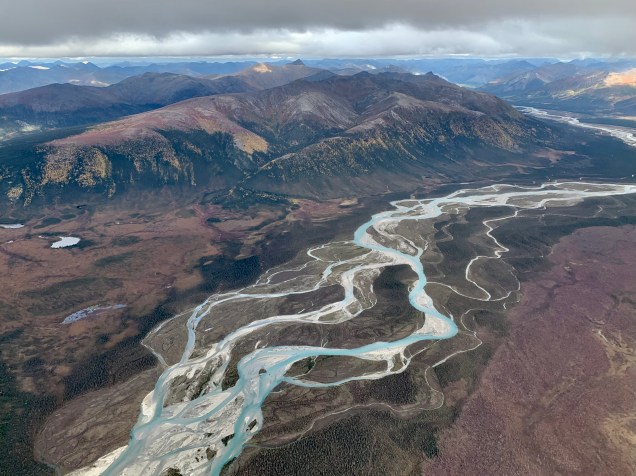
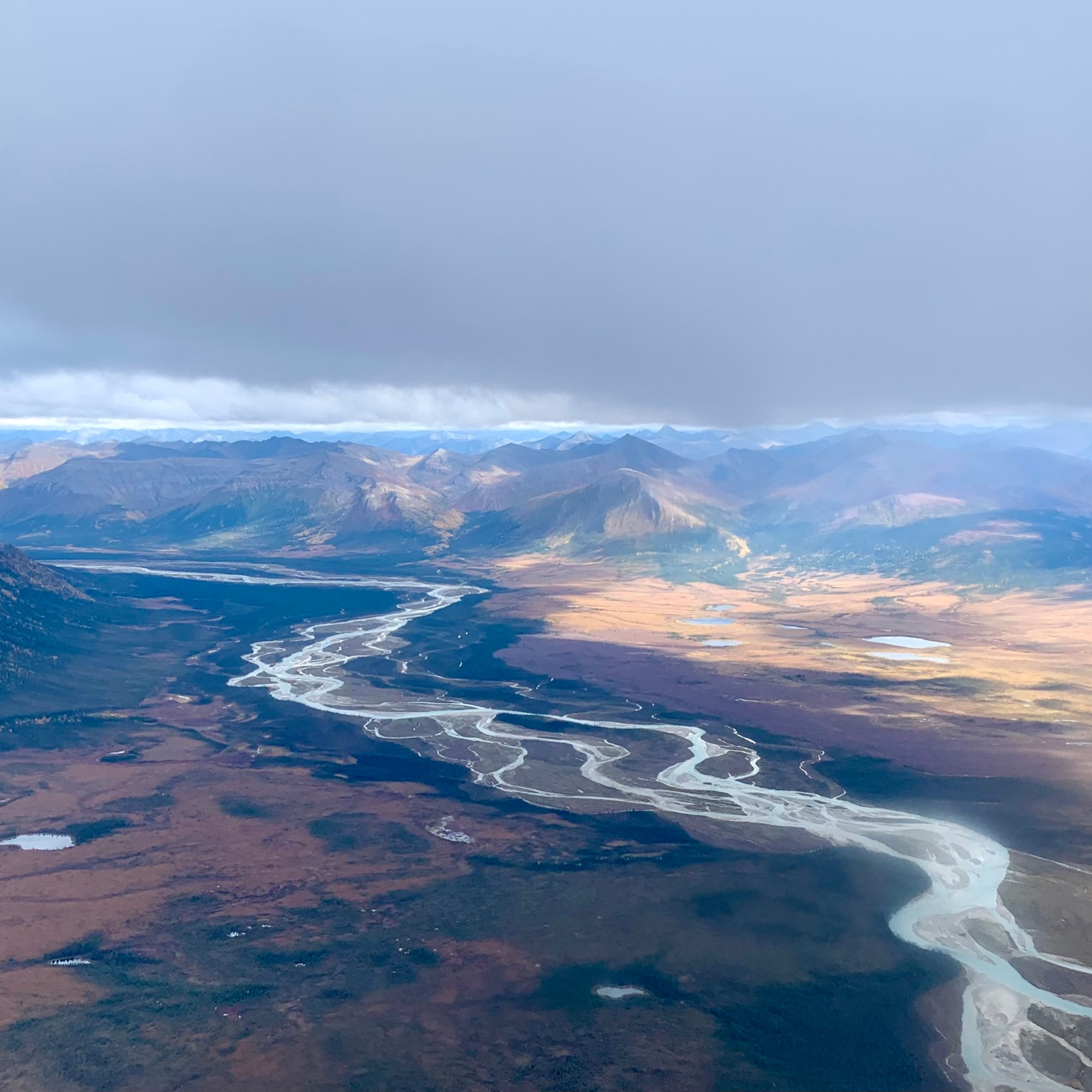
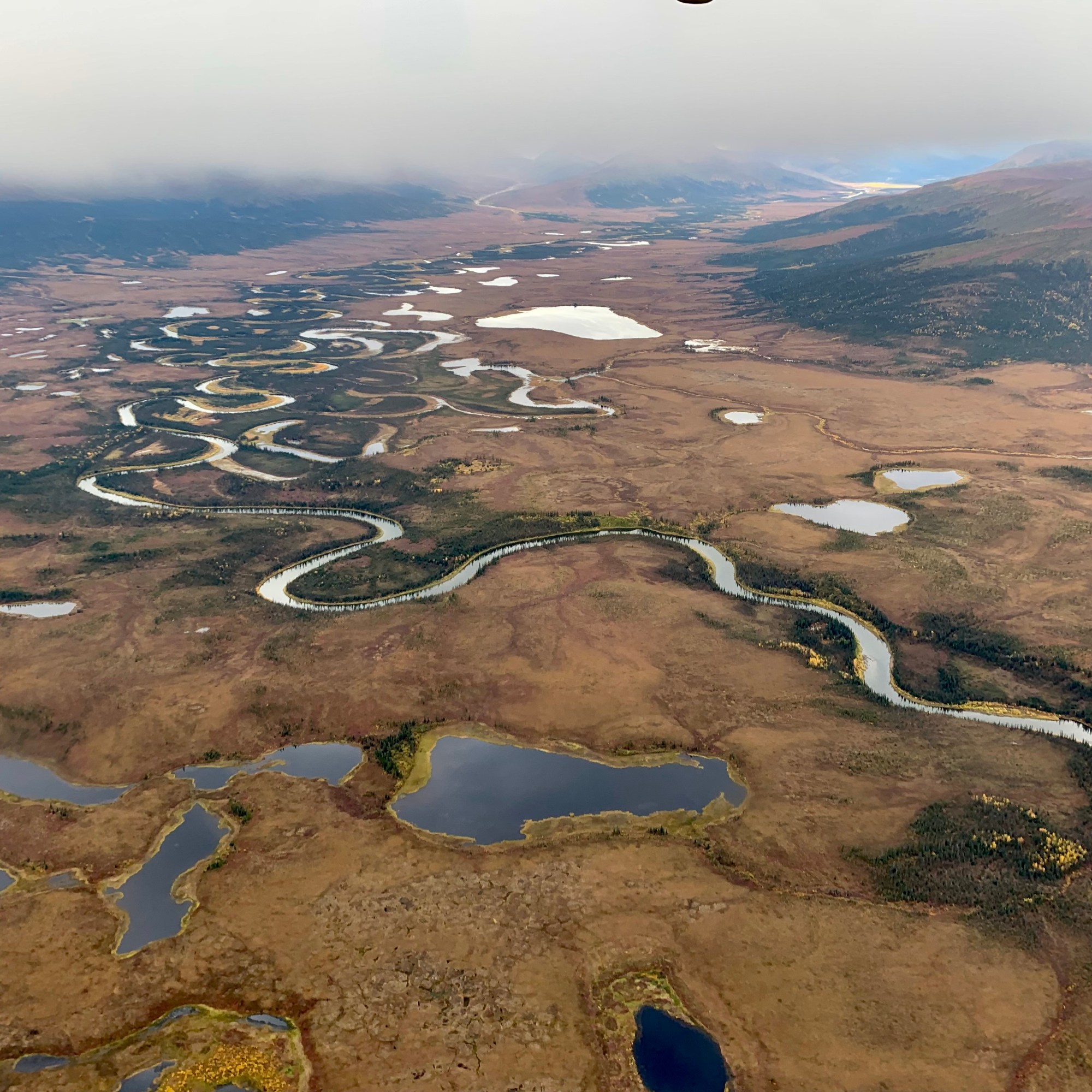
We flew over Gates of the Arctic NP on the way to our first landing at Kobuk Valley NP. Gates of the Arctic NP is oft described as a true pristine wilderness, the final frontier of modern civilization. In this  vast landscape (8 million acres), there’re no roads  running through it (yet) or trails other than those blazed by caribou migrations. Thus it is no surprise to learn that it is both the northernmost and the least visited of the 63 national parks with 7362 visits in 2021 (ironically, the second fewest visitors is the southernmost America Samoa National Park in a remote part of the South Pacific, 14.3 degrees south of equator with  8,495 recreation visits).

This true wonderland (nothing akin to Fantasyland or Tomorrowland “a la Disney”) is almost the farthest north you can go in the U.S. and I almost  made  the mistake of thinking this is unhabitable and thus uninhabited.  Not so,  as we saw several isolated villages and their gravel airstrips and learned that this land has been occupied by the Inuit people through the ages. Several tribes continue living within it. They  survive by living in this  land as indigenous people have done for thousands of years, sharing the landscape with the caribou, wolves, grizzly bears and  those big shaggy musk oxen (and bush plane cargo deliveries). So I sat back and feasted my eyes on the the jagged peaks, gentle valleys, wild rivers, numerous lakes seen below:

Kobuk River Landing

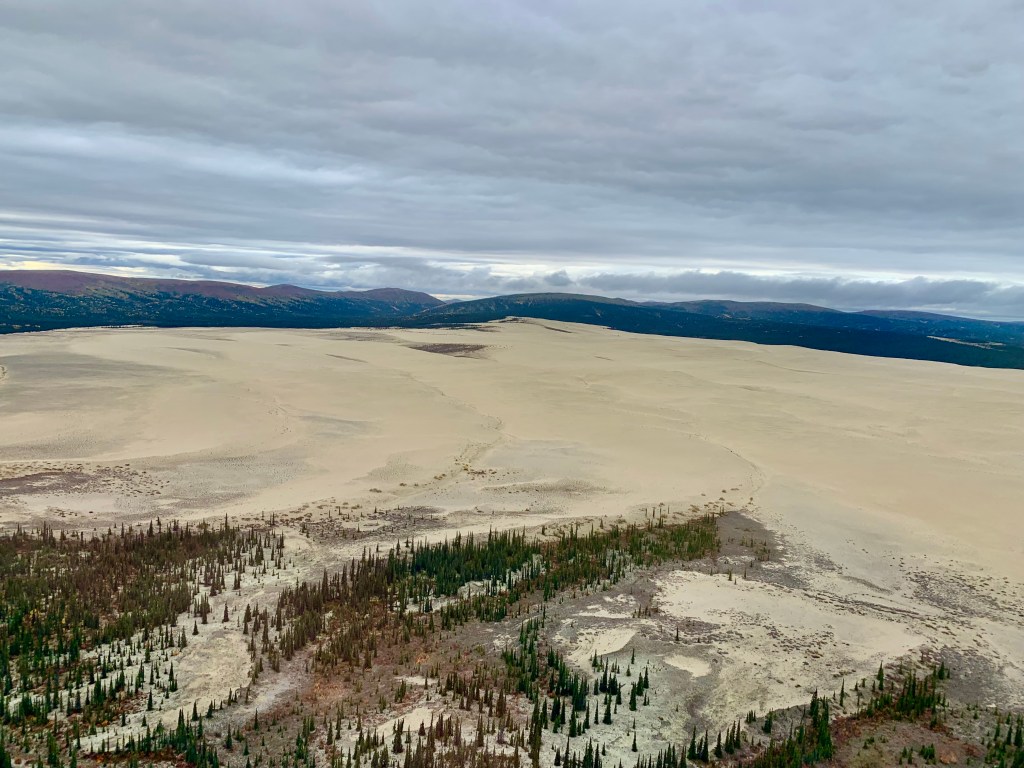
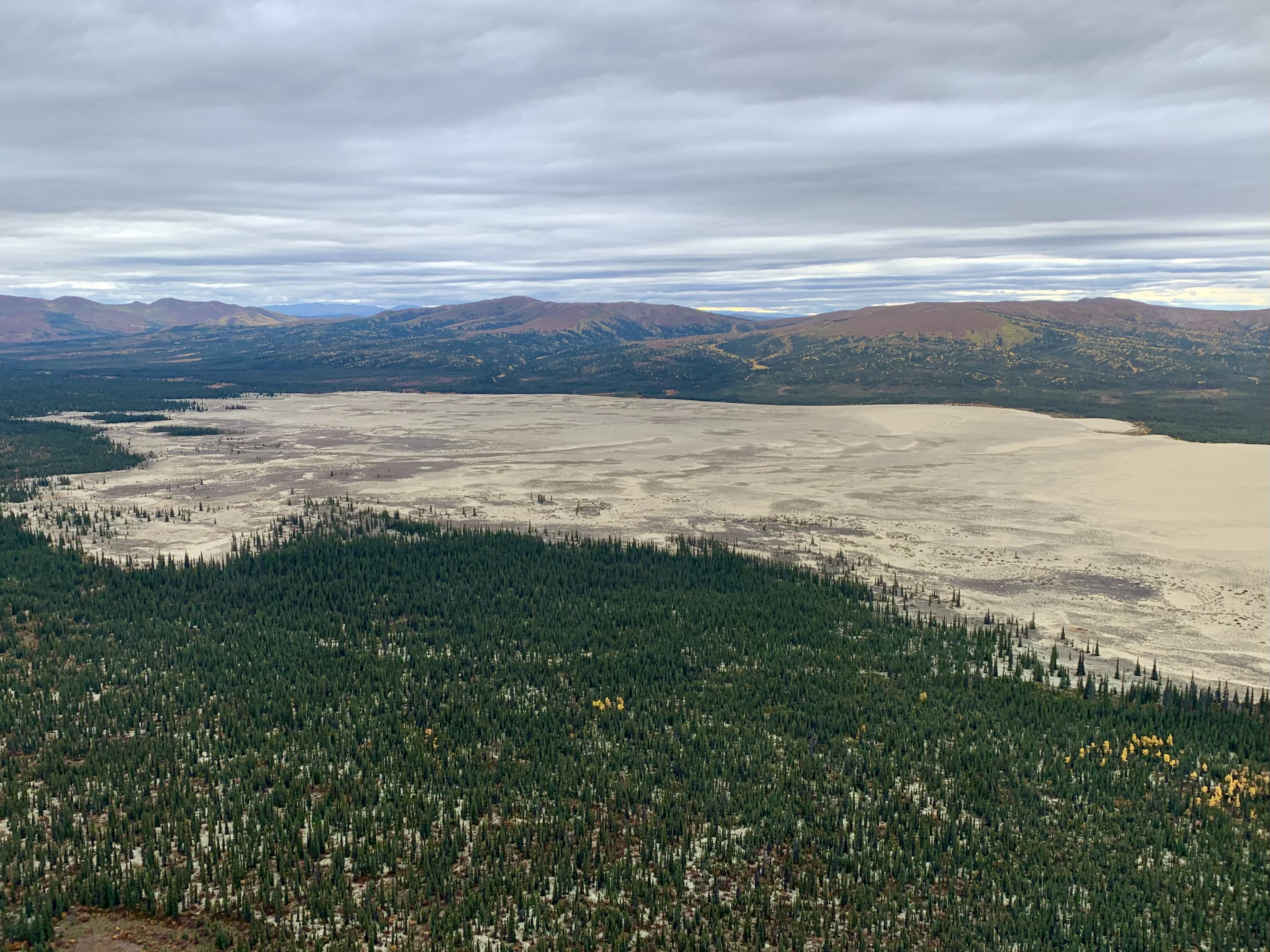
Kobuk Valley National Park has slightly more visitor (#3 @11,540 recreation visits in 2021).  Here also, there are no roads, campgrounds or entrance gates for this 1.75 million-acre expanse. The meandering Kobuk River creates beautifully curved patterns visible from the air. It would have been most exciting to have seen some of  the half a million caribou which migrate through this park crossing, 2x a year,  the Kobuk River and  and the  Great Kobuk Sand Dunes in the middle of the Artic… I was hopeful because they migrate late August to October but the they don’t migrate when the director calls “roll it!” on command Disneyesque style. I thought I had visited all of the national parks that featured sand dunes (White Sands NP, Great Sand Dunes NP, Indiana Dunes NP). So it was amazing to see the Great Kobuk Sand Dunes, formed from retreating glacier deposits and winds  sweeping sand from the sandbars of the Kobuk River.  Three sets of dunes cover more than 20,000 acres, with drifts upwards of 100 feet high. I had not anticipated a wind swept desert in middle of these wetlands but this is the largest active, high-latitude, dune field on earth. A significant swath of this area has now  been stabilized by vegetation and comprises the  southern portion of Kobuk Valley.

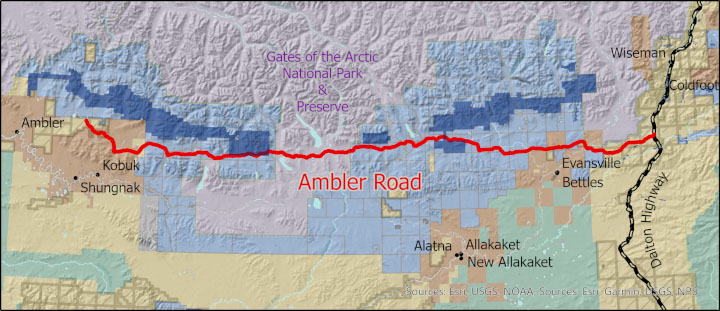
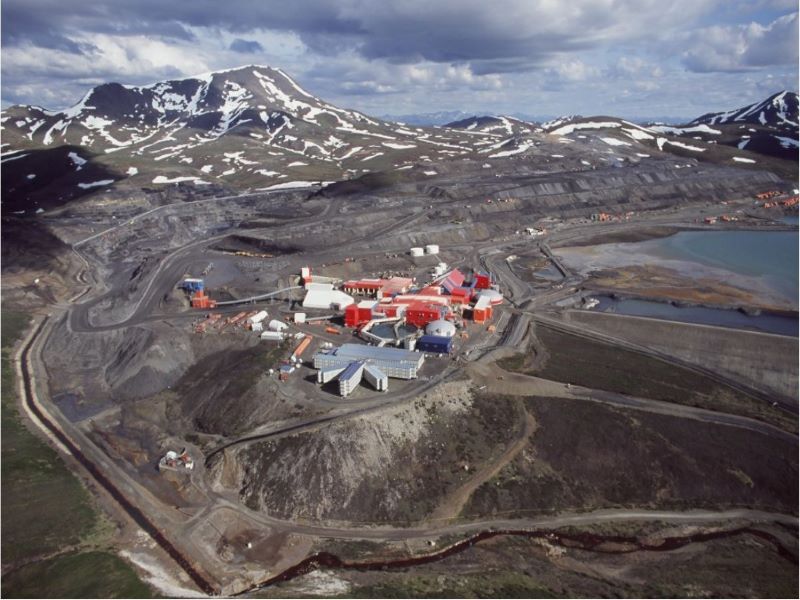
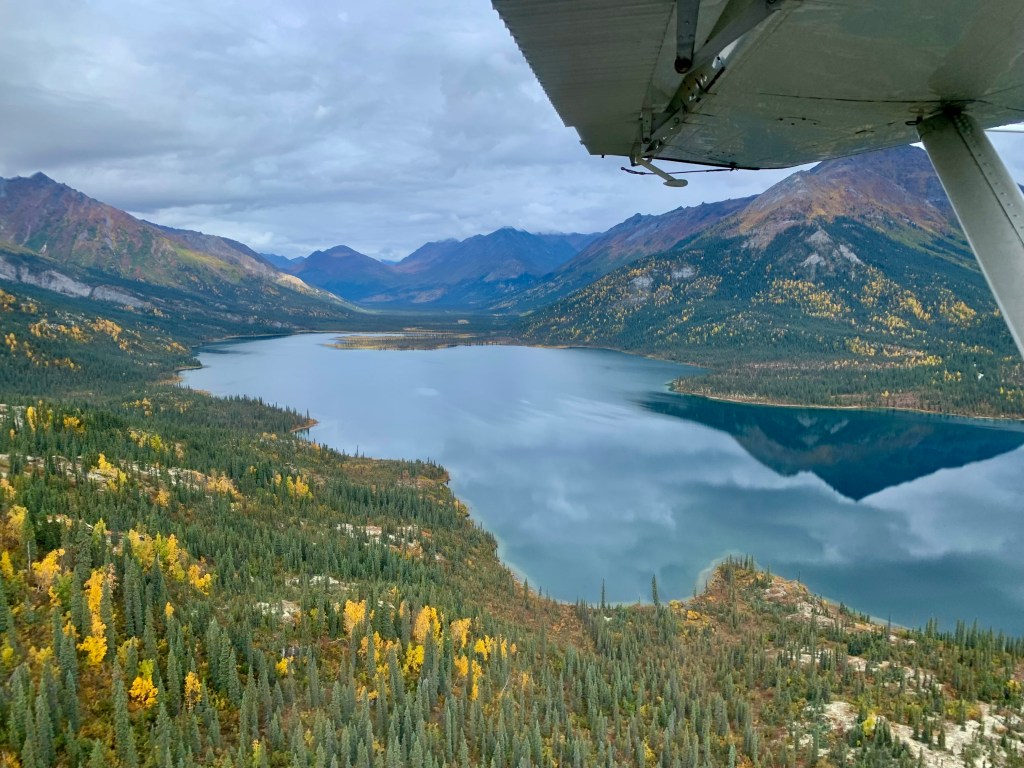
The flight seeing adventure continued as we wove our way back to a lake landing on Walker Lake in Gates of the Artic NP. As I continued to gaze at what is basically a pristine wilderness pictured below , the topic of the Ambler Road Project was brought up by our pilot as he was pointing out mines in the area.

Gates of the Artic Northwest Artic Borough

For example, the Alatna River was identified during our flight and is a federally designated wild and scenic river partially contained within the boundaries of Gates of the Arctic National Park, Alaska. It has been described as a mellow river, a gorgeously beautiful river, a wildly meandering river, with the scenery ranging from mountain peaks to hilly boreal forest. Lake Anirak, is a Native Alaskan language means “place to go out”  and is located in the Ambler Lowland of Northwest Artic Borough amongst the abundance of other villages, lakes, and rivers. I mention these because I wonder if there will be the same (positive or negative) outcomes with the building and completion of the Ambler Road Project in the southern Brooks Range.

Gates of the Arctic National Park and Preserve was to be managed “to maintain the wild and undeveloped character of the area… to provide continued opportunities, including reasonable access, for mountain climbing, mountaineering, and other wilderness recreational activities.”  How is this road compatible with maintaining its wildness whether it is within the park boundaries or in the vicinity? But the rational side to myself also can understand our current dilemma with supply chain issues and that the political instability and distortionary trade practices in the world today pose an increasing threat to disrupt America’s critical minerals supply chain—with domestic development as the solution. For those not interested in the environmental politics of Alaska and this project skip ahead as more details on this project follow.

This proposal is for the construction and operation of an approximately 200-mile long all-season controlled-access industrial road connecting the Ambler Mining District with the Dalton Highway and across a portion of Gates of the Arctic NP. I was immediately horrified envisioning the potential environmental, social and economic impacts upon wildlife, fish, and their habitat, and rural and traditional lifestyles including subsistence activities. I researched it a bit and a 50-year Right-of-Way permit for the full length of the Ambler Road was signed by NPS, BLM, and AIDEA in January of 2021 under the Trump administration. But in May 2022 the U.S. District Court for Alaska remanded the project approval to the BLM to conduct additional analysis stating the Trump administration’s review did not properly consult with tribal governments or consider subsistence and cultural concerns.

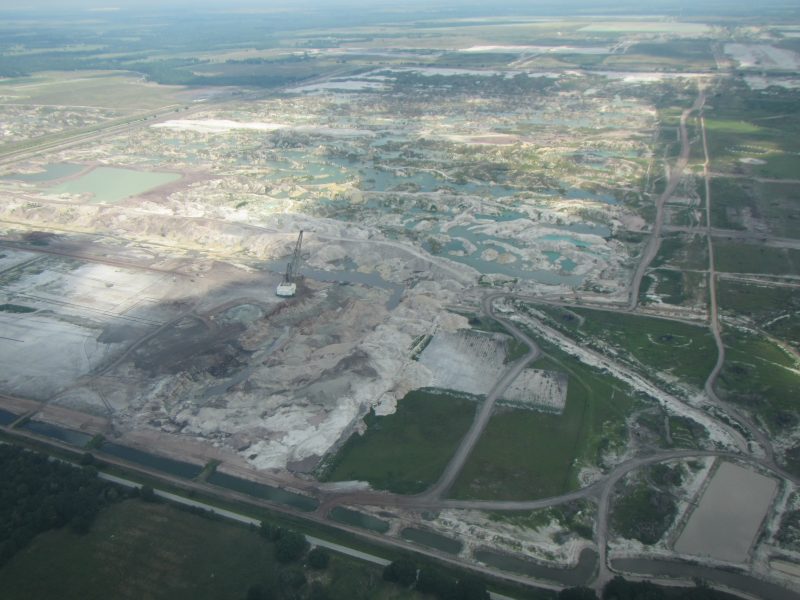
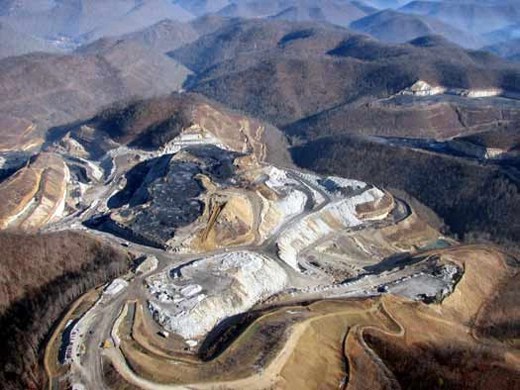
I considering the impact that production like this will have, I can clearly picture the material sites, massive amounts of equipment, construction camps for outside workers, frequent overflights and long-term maintenance camps, airstrips, drilling,  fiber optic and radio communications lines, guard stations etc. which would all be needed to maintain this project’s restricted-access toll road with public access prohibited and irrevocably harming this remarkable landscape. We have all seen and oft experienced what similar operations like this (i.e. in AK the Red Dog Mine, phosphates in Florida, logging in Oregon, mining in West Virginia…) have wrecked on our land  with toxic levels of waste,  coal and metallurgical dust, erosion and wastewater discharge. 

My understand is the road is to be built to enable commercial development of mines that would produce copper and other metals and transport them more cheaply. A prospectus  anticipated this Arctic operation to reach 10,000 tons/day of material, with annual yields of Copper at 125 million pounds, zinc at 152 million pounds, lead at 24 million pounds, gold at 29,000 ounces, and silver at 2.5 million ounces. It is touted for its prospective copper-zinc mineral belt with deposits of cobalt, germanium, gallium, arsenic, palladium, lead, gold, silver, and platinum. These elements are essential for our nation’s tech-focused economy and military effectiveness from smart phones and solar panels to electric vehicles and airplanes. But it also opens up the area for future projects and roads to access other minerals and metals. Right now, this project appears to align with current federal policy to identify new sources of critical minerals, increasing activity at all levels of the supply chain (exploration, mining, concentration, and separation) and streamline the leasing and permitting processes to expedite the exploration and production of critical minerals. My internal “jury ” is out so in the meantime I refocused …

Walker Lake – Gates of the Artic National Park

Since this was an issue which would have no resolution in the near future, I continued to gaze on the land below and to be awestruck by the geography of this area. Soon we were approaching Walker Lake for our picnic In Gates of the Arctic NP. It’s almost too much to take in, that there I was in this rugged, wet, and wild part of Alaska above the Arctic Circle, sitting on a rocky beach eating a turkey and cheese wrap and drinking a diet coke. The majestic and the ordinary entwined.

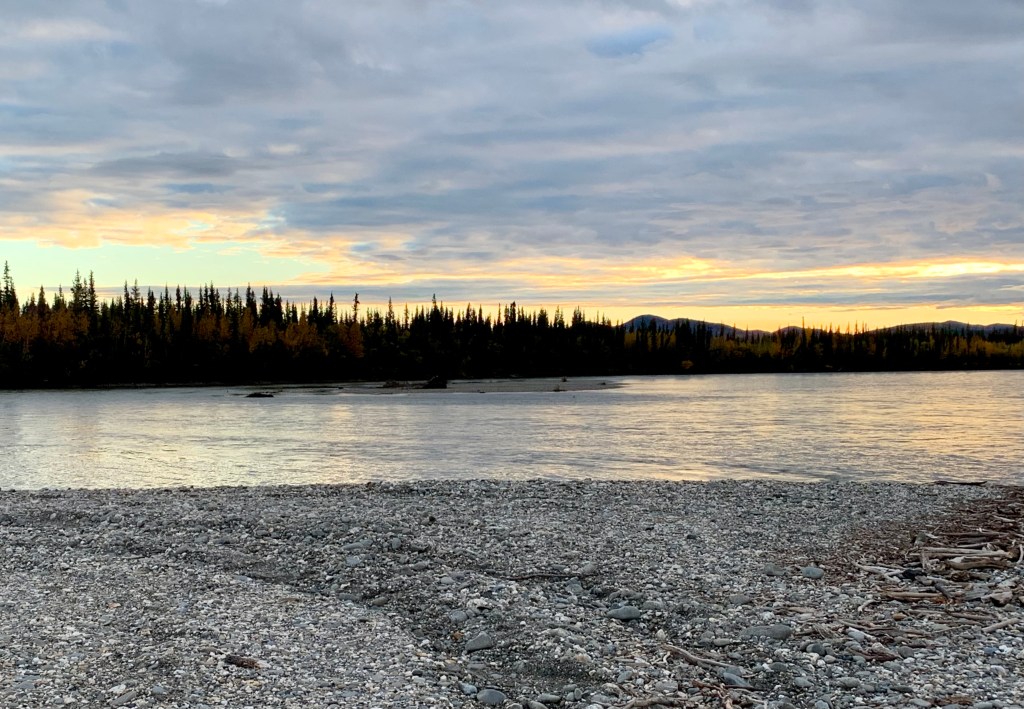
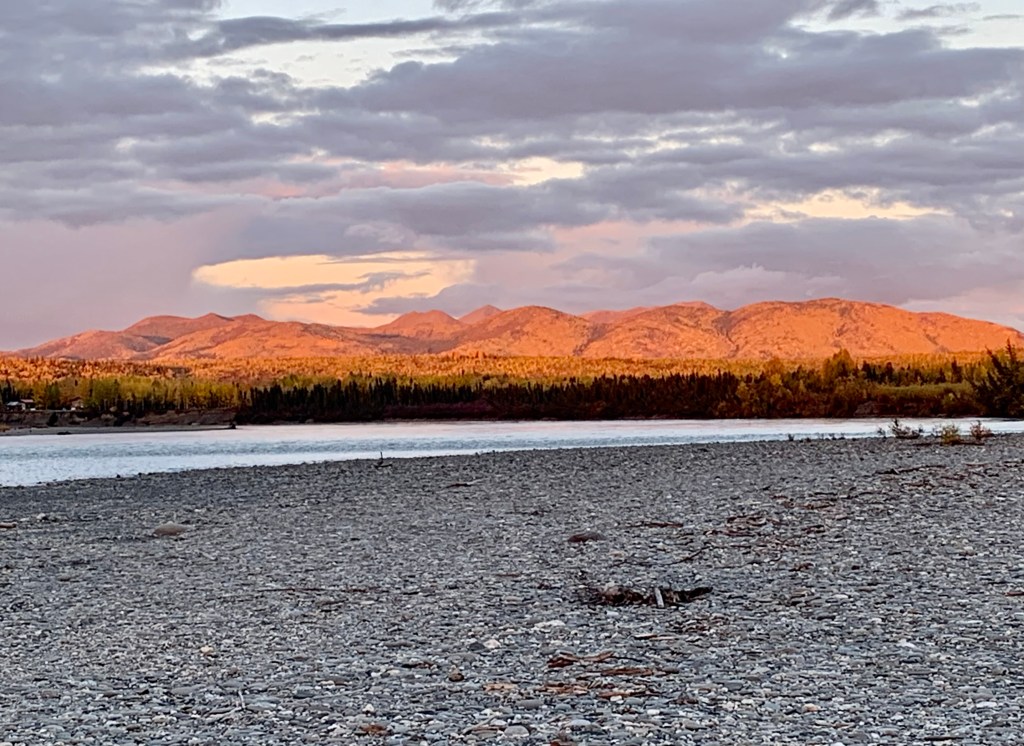
After exploring the shore for a while (making note of the bear tracks) it was time for our flight back to Bettles, flying quite low with hopes of spotting bear or moose. I must admit I was quite unnerved when it appeared to me that we were going to skim the tree tops. I kept reiterating to myself that this is an experienced pilot and he knows the size and whereabouts of his pontoons as I know the whereabouts of my fenders when I drive a car. Disappointingly, the local bear and moose residents did not show up for the “directors” on stage call. Later, after dinner, to top off an almost perfect day, there was a bonfire on the banks of the Koyukuk River and a brilliant sunset to meditatively end this extraordinary experience.