Riding the Alaska Maritime Highway, Ruby vs Columbia, and Lady Spitfire

Needing to get my beloved Lady Spitfire Jeep Compass from Soldotna AK to my now year-round home in Ashland Oregon, as I was permanently leaving Alaska, I had to decided what would be the best way for me to do so, traveling solo.  In moving up to Soldotna 5 years ago I drove the entire 3000 miles solo accompanied by my  “a dog is a man’s (though I am not a man) best friend(s) ” Kili and SImba. This relatively unpopulated route suited me well as I had planned on camping the entire trip. But since my buddies have passed on, I did not see this drive as an appealing solution and camping  alone in late September was not even a remotely plausible lodging solution. 
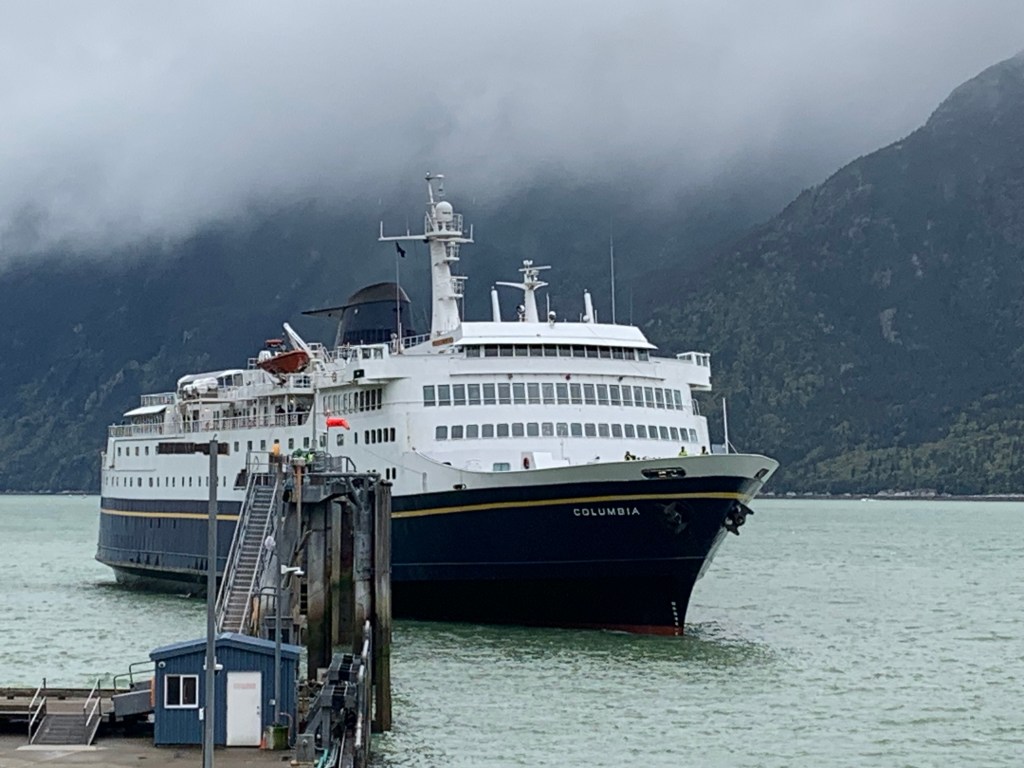
Opting to drive to Skagway from Anchorage was feasible and I then decided to  booked myself and Lady Spitfire space on the Columbia, a 50 year old  passenger and car ferry that plies the  Alaska Maritime Highway.

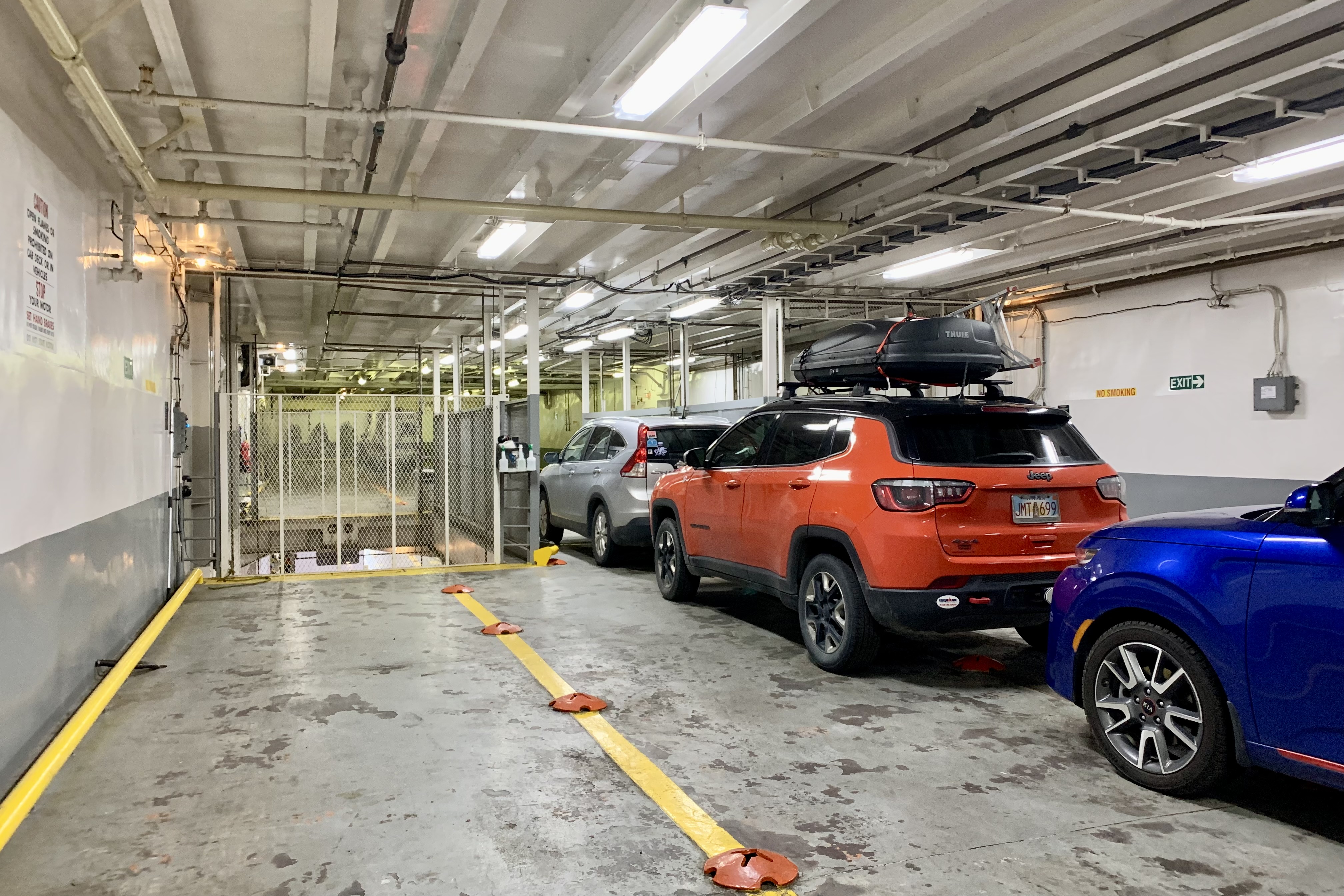
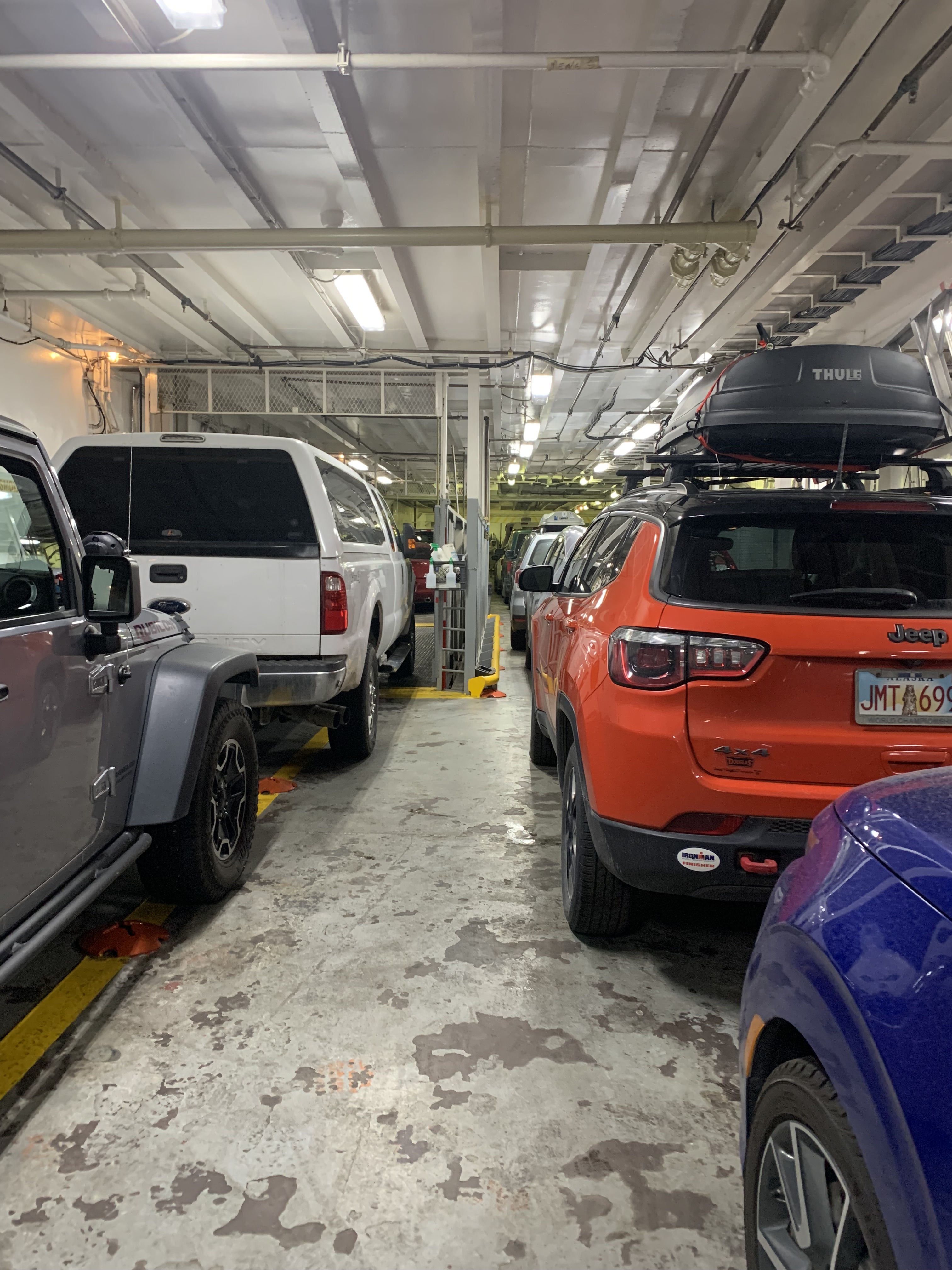
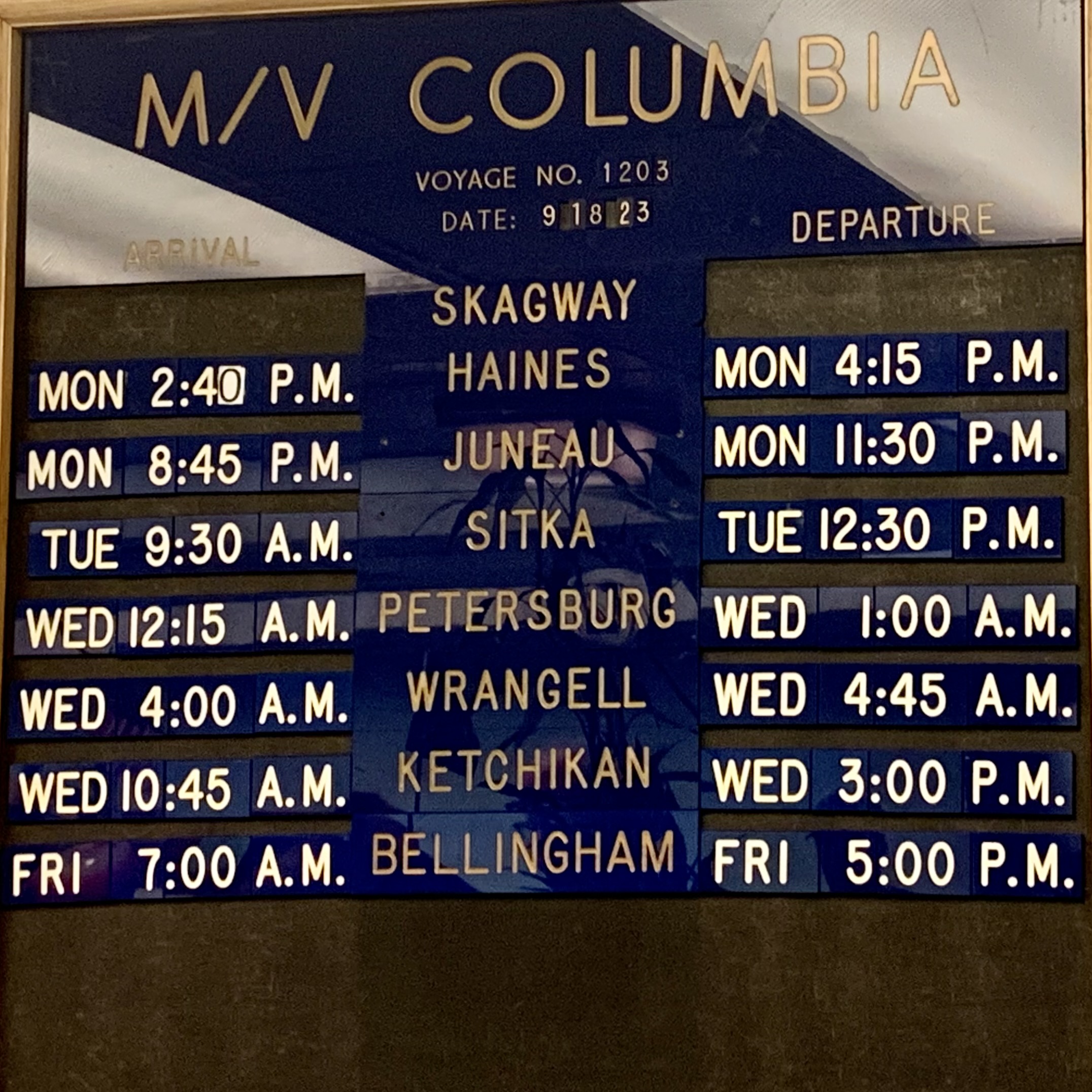
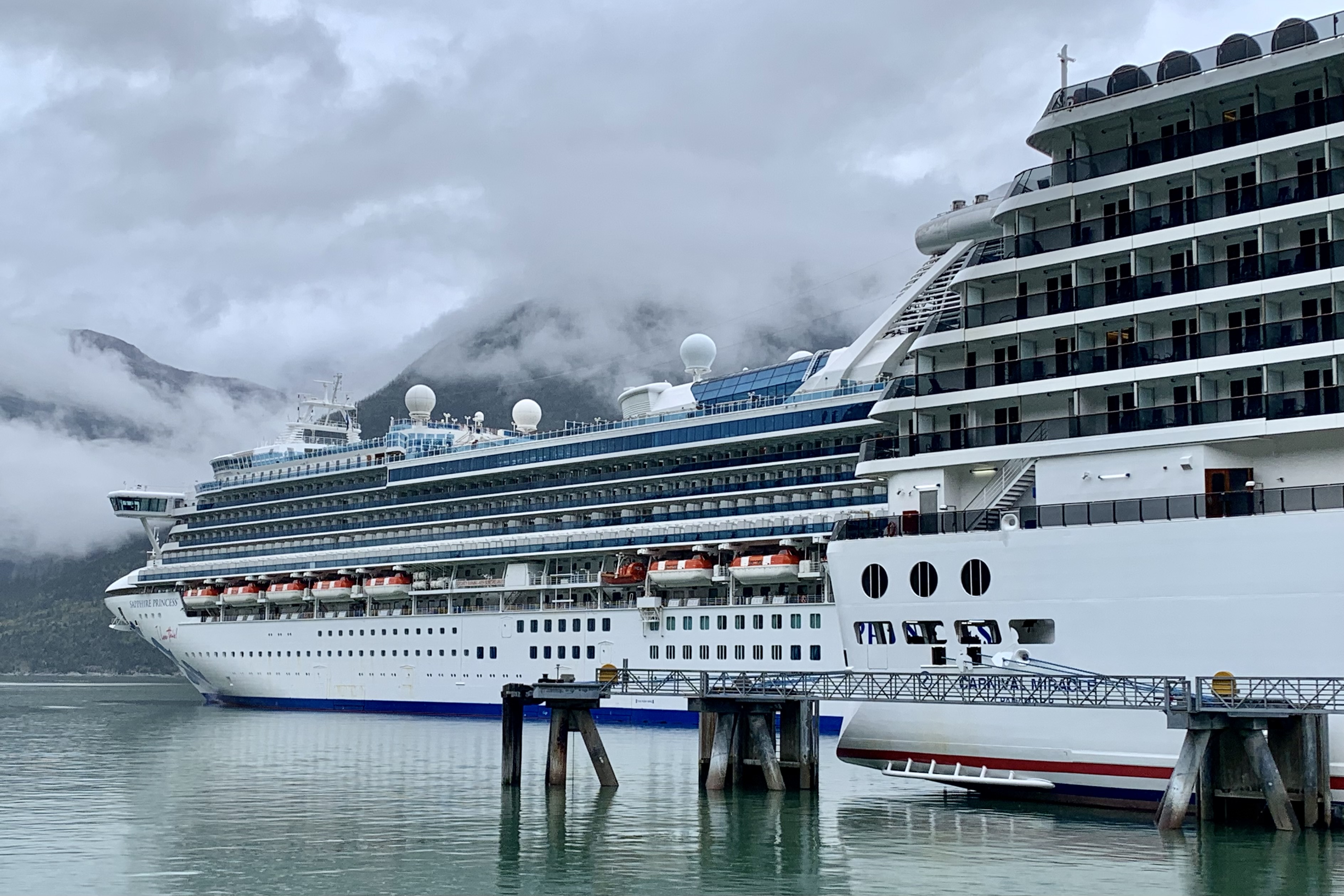
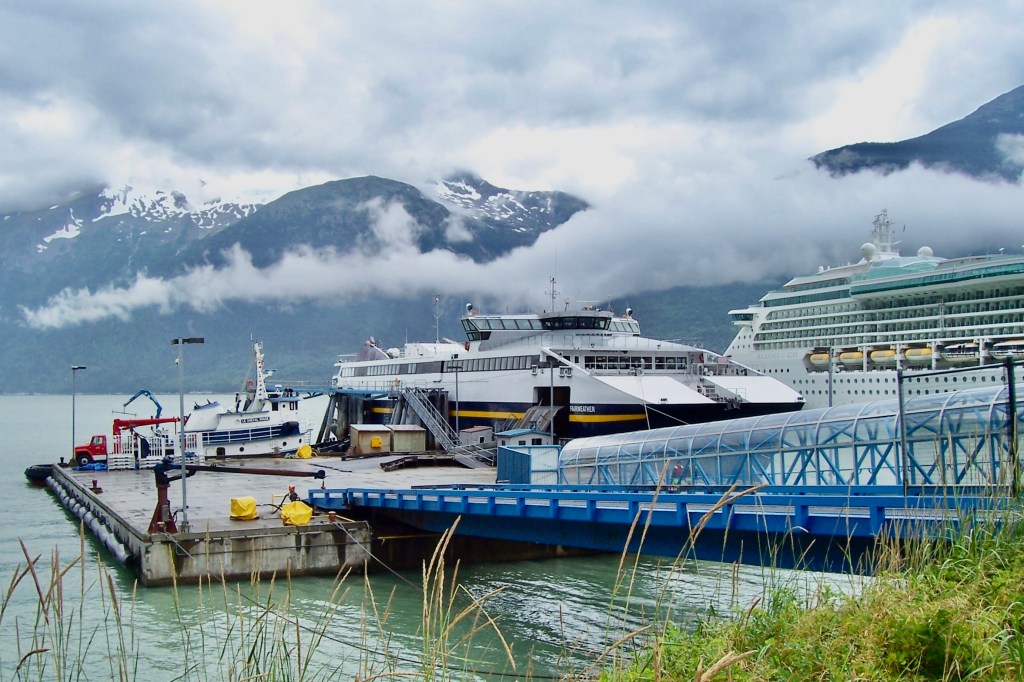
The Columbia was definitely dwarfed by the Ruby Princess as they were moored adjacent to each other in Skagway. The cruise ships follow the ferry route or is it that the ferry route follows the cruise ships. There are eight ports of call including Skagway where I embarked, Haines, Juneau, Sitka, Petersburg. Wrangell, Ketchikan and finally Bellingham. At every port there is the laborious time consuming process of off-loading  and then on-loading of vehicles. When I loaded, 2nd in line as I arrived early, I drove onto an elevator and was lifted to the cabin deck and had to back trough a narrow passage way between the car elevators to my assigned spot-  which I  assume would facilitate the exit process. I will add right now it did NOT…I had to go back through that narrow passage and back onto the elevator. Since I was the 2nd car to be loaded in Skagway I naturally was the 2nd to last off, waiting an hour to be sprung free . I definitely had a lot of time to ponder the windshield and steering wheel in Lady Spitfire as we had to remain in our car.
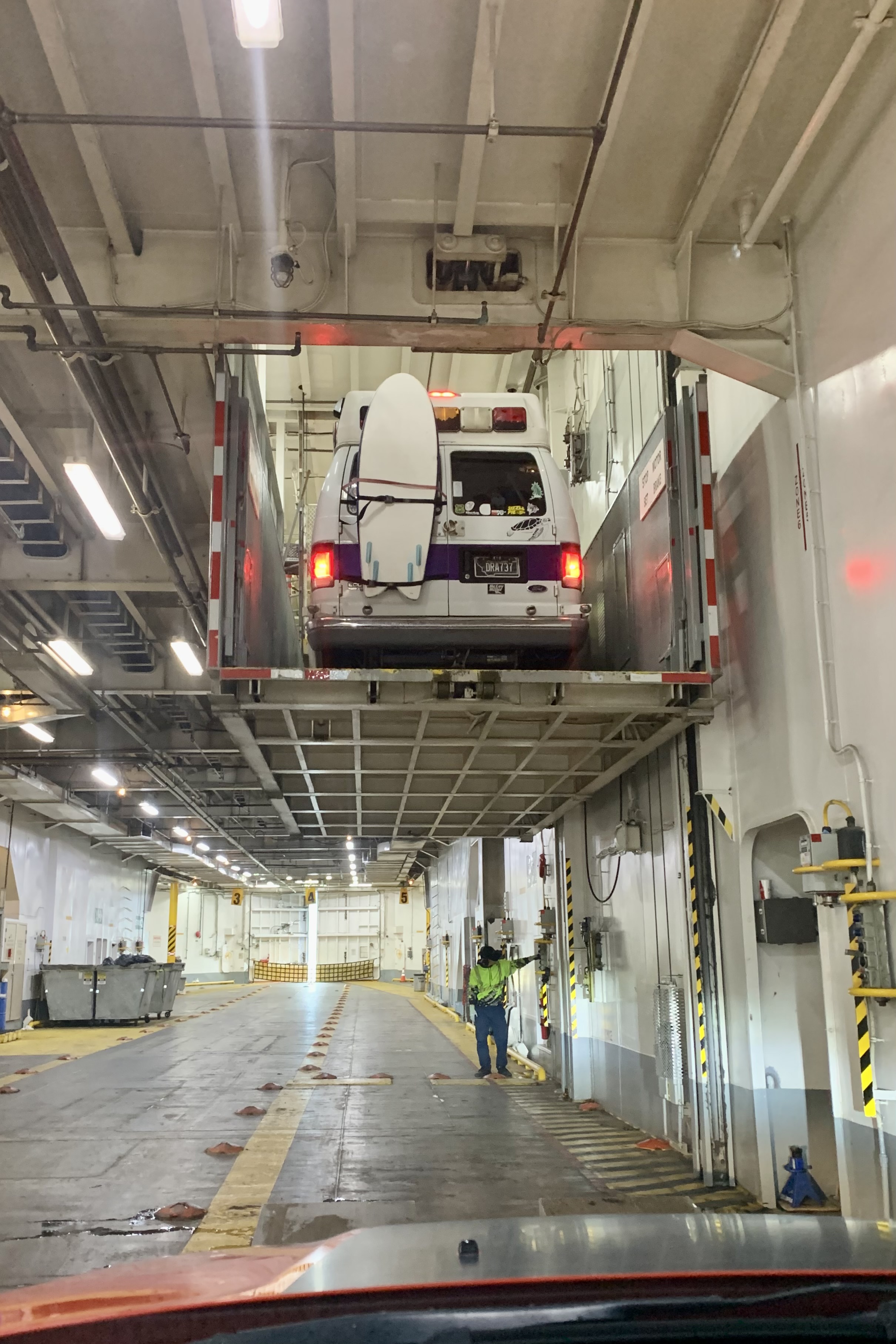
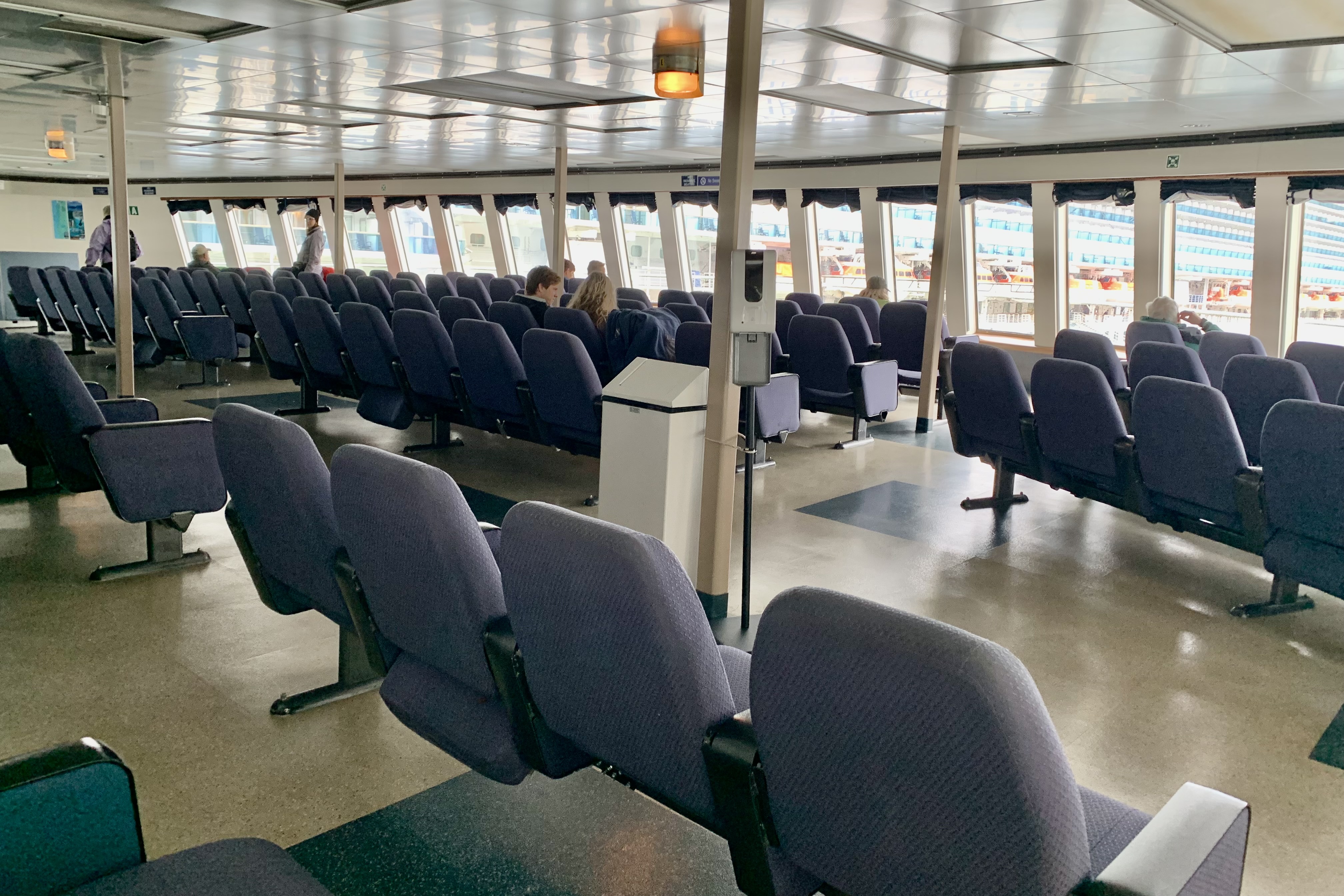
My “Lady” had a “berth” on the Upper Deck as did I. However my quarters were a very spare sort of “stateroom” and hers was a tight space in vehicle stowage. I am not familiar with the terminology of decks on a ship. But the upper deck was far from the being the upper deck and actually was the lowest passenger deck. I was assigned cabin #119 which was quite close to the pursers desk, the elevator, but most importantly Lady Spitfires assigned spot. Why is this important? It may seem like I have personified this car, but actually it was quite easy to unload the luggage initially and then access the car (at appointed times or when in port) if there was something in there that I desired to move to my “stateroom.” The contents of said vehicle was a jumble of anything leftover from the move that didn’t get into the U-box, miscellaneous food items, clean and dirty clothes, maps, and a tall ladder.

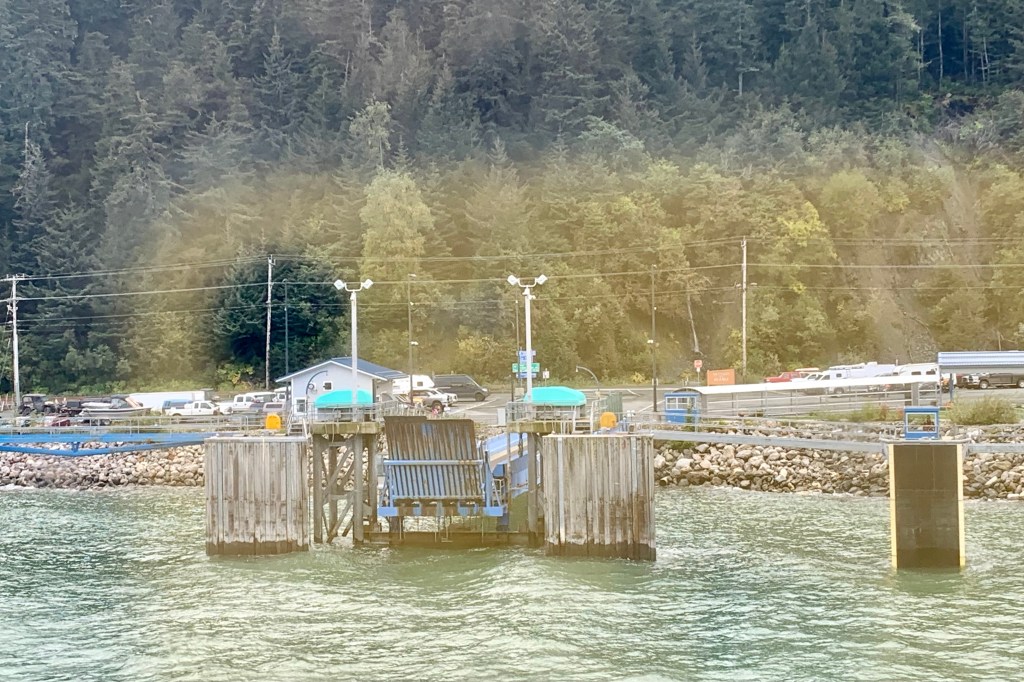
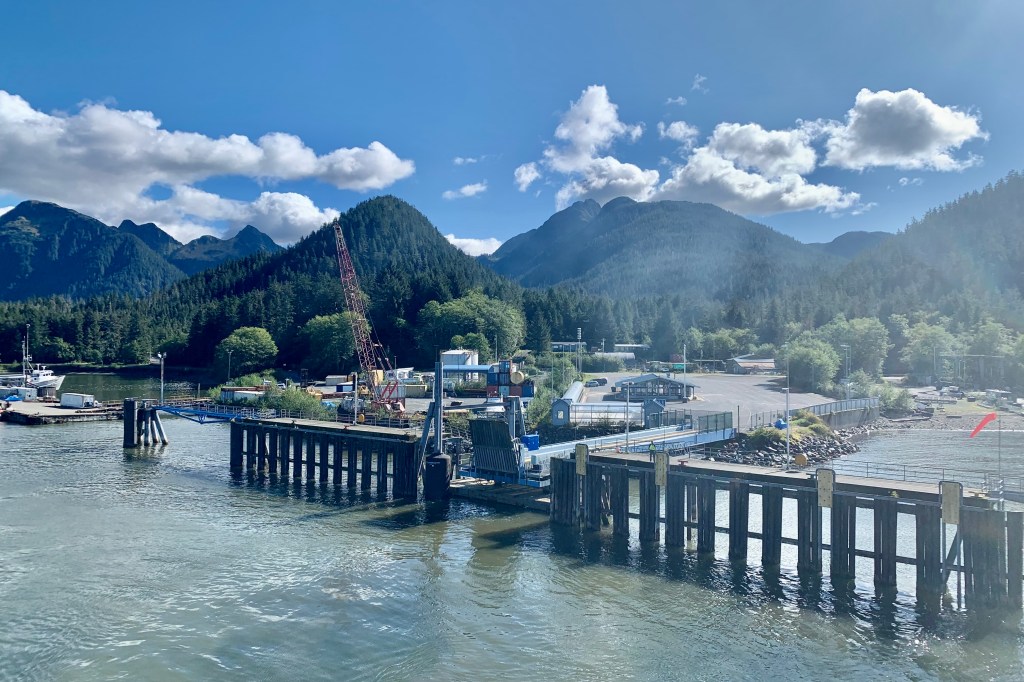
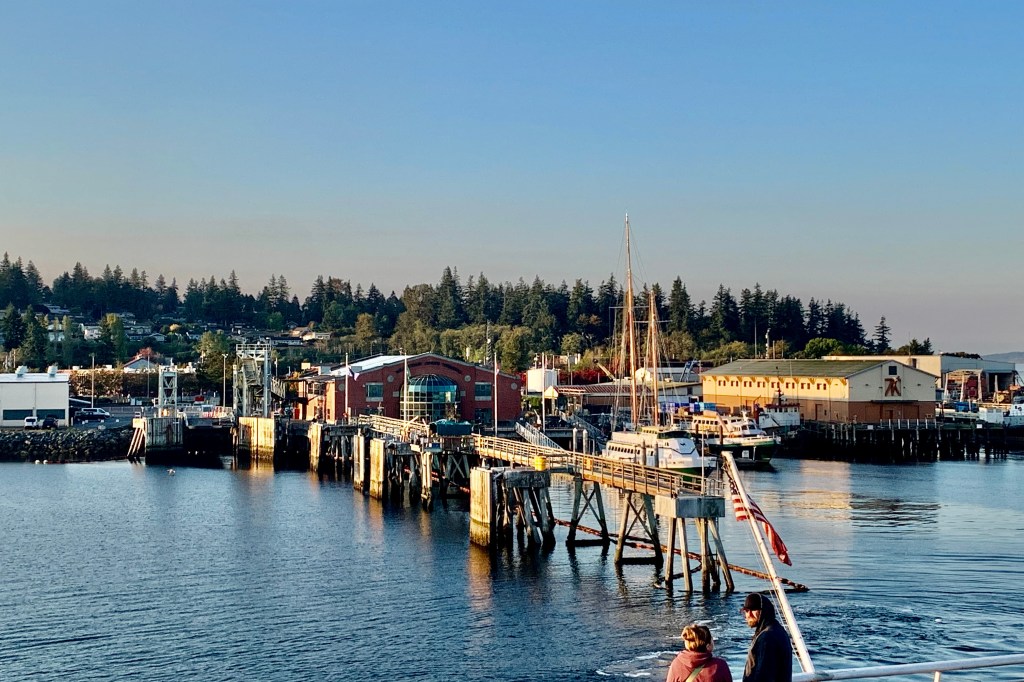
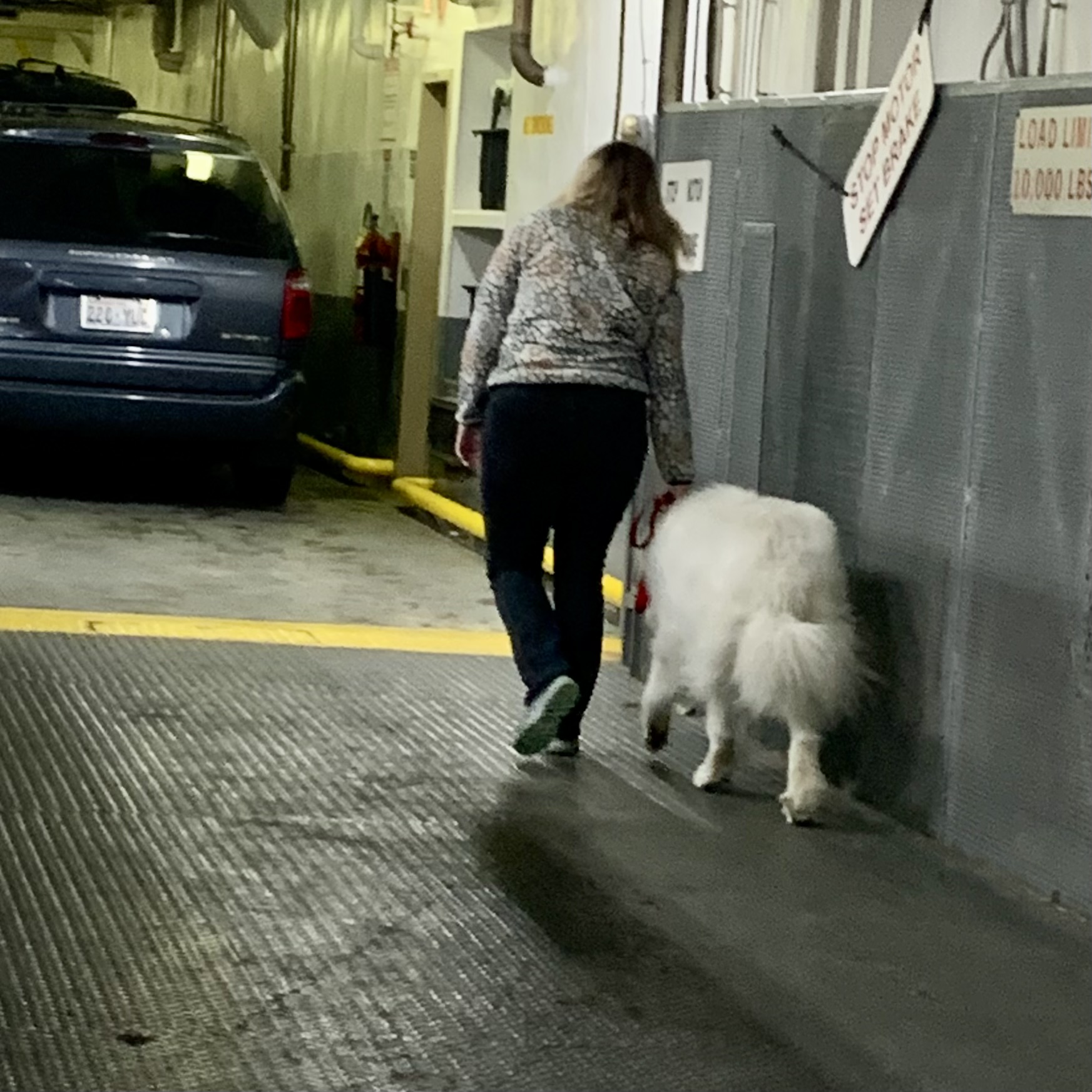
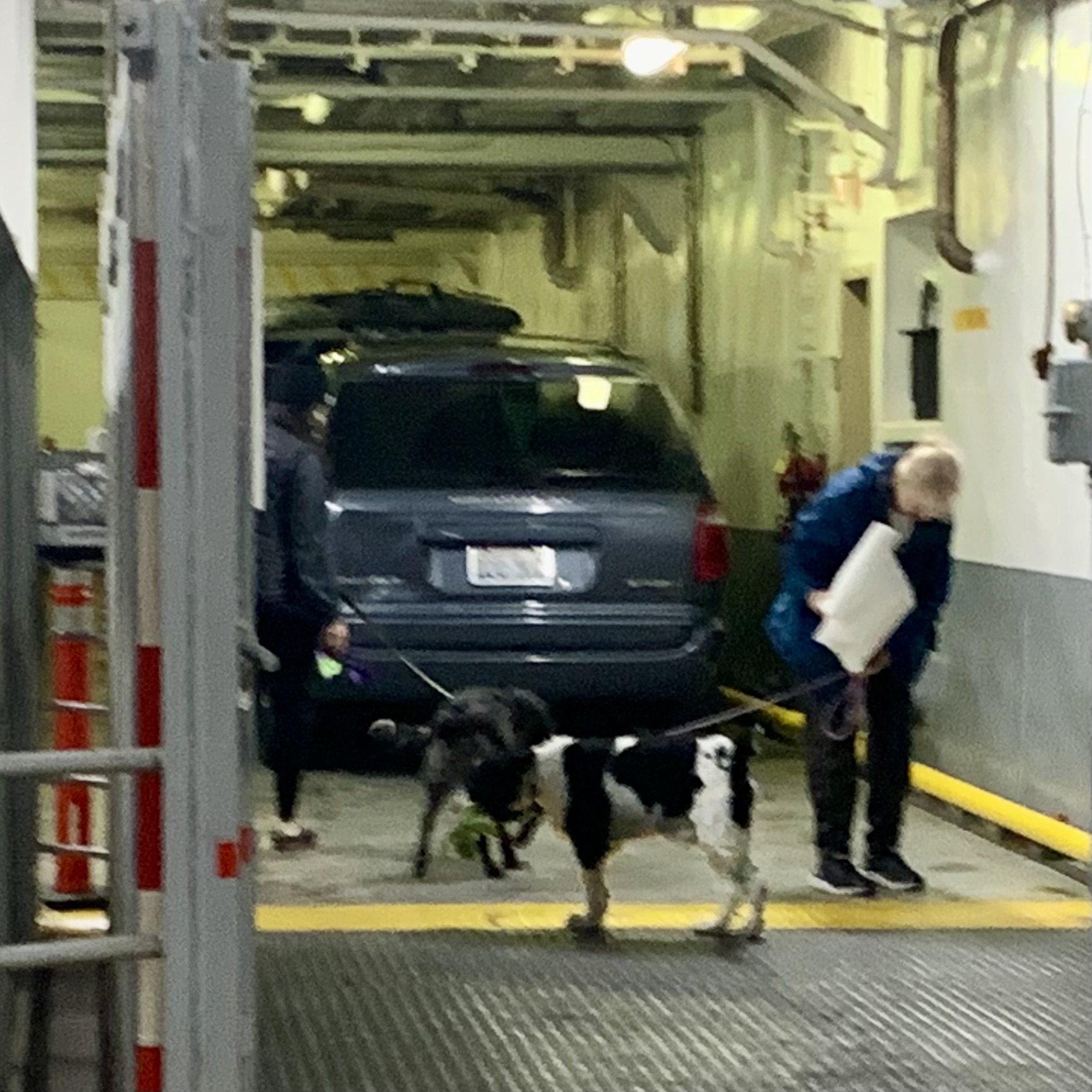
At most ports there is barely adequate time to visit the town which for the most part are designed to accommodate  the many cruise ships belching out their passenger, fulfilling the  need to spend money on the local “artifacts” crafts, and t-shirts (which are often made in China). Every port had minimally one and usually two or three of these massively huge floating cities (and 4 in the high season). Princess and Carnival Cruisers are definitely in competition for how massive of a cruise ship they can build.  The Ruby Princess showed her ponderous self when I was in Glacier Bay in August, in Skagway now and in Ketchikan at the end of it’s cruise adventure. There was rarely a center of town berthing for our diminutive ferry so we often docked in an industrial area outside of town. Thus it was usually quite a distance into town with a need of sturdy walking shoes or use of public transportation. In Skagway “Ruby” was harbored adjacent to the center of downtown. BUT in the “Ruby” vs the Columbia match-up, the Princess does not allow you to bring your animal nor your car on board so for the many folks who can’t travel without their dogs, cats, birds etc. , (or cars) it is an opportunity to tend to the food and bodily function needs of the furry friends. Some caveats however- pets are not allowed on passenger decks or cabins and must be secured in vehicles or carriers. During “pet calls” you can hear the barking and howling of some very excited or distraught animals.
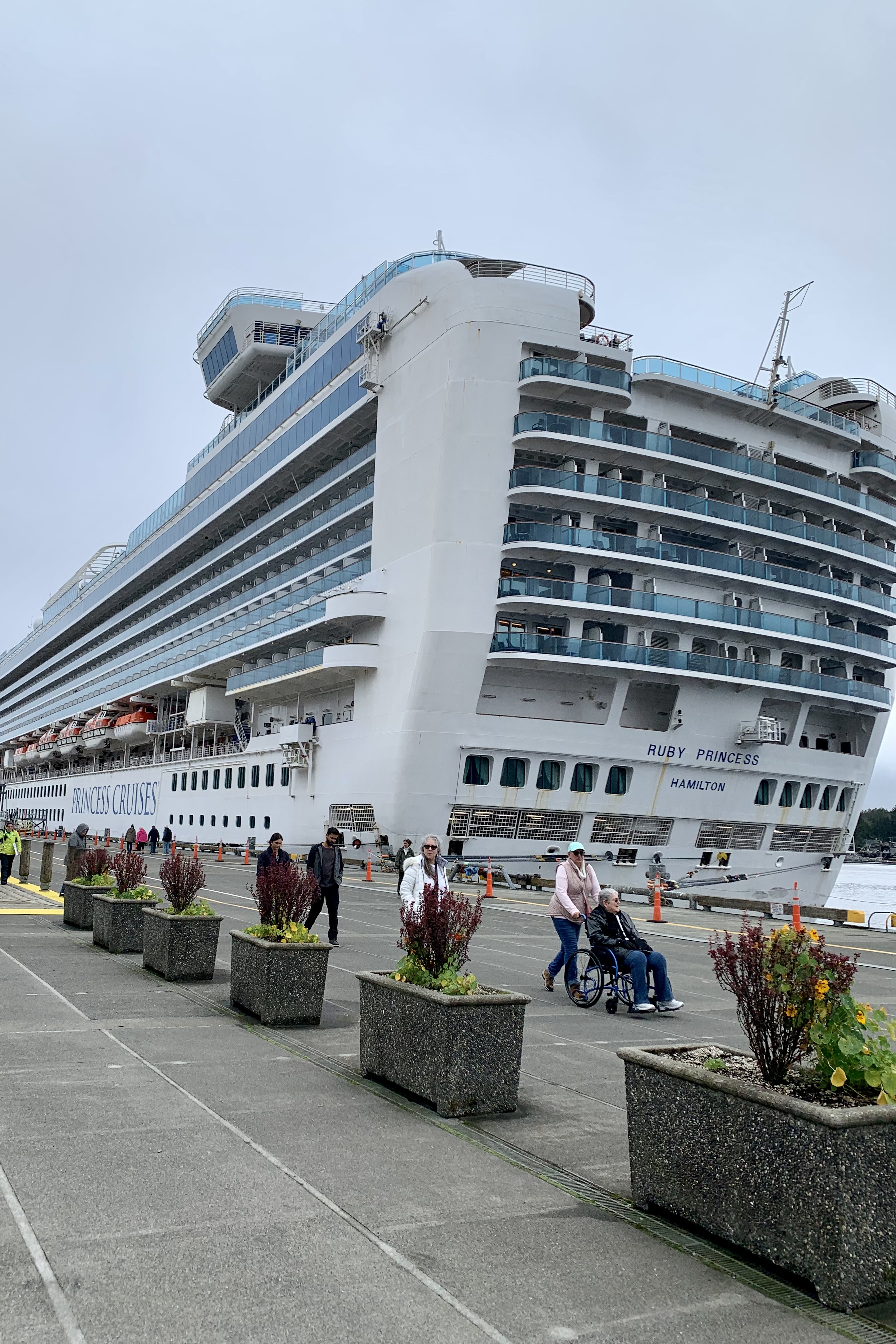
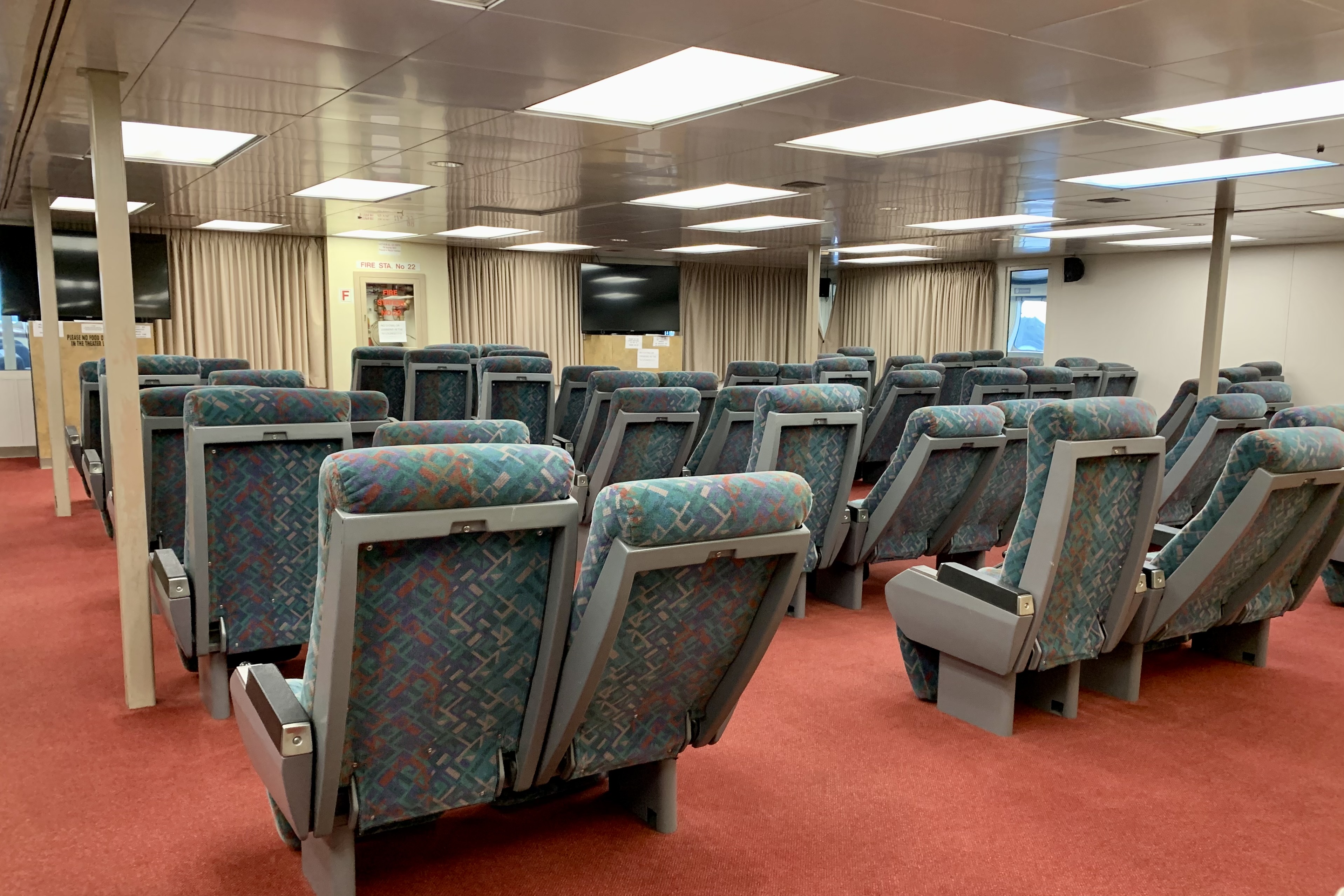
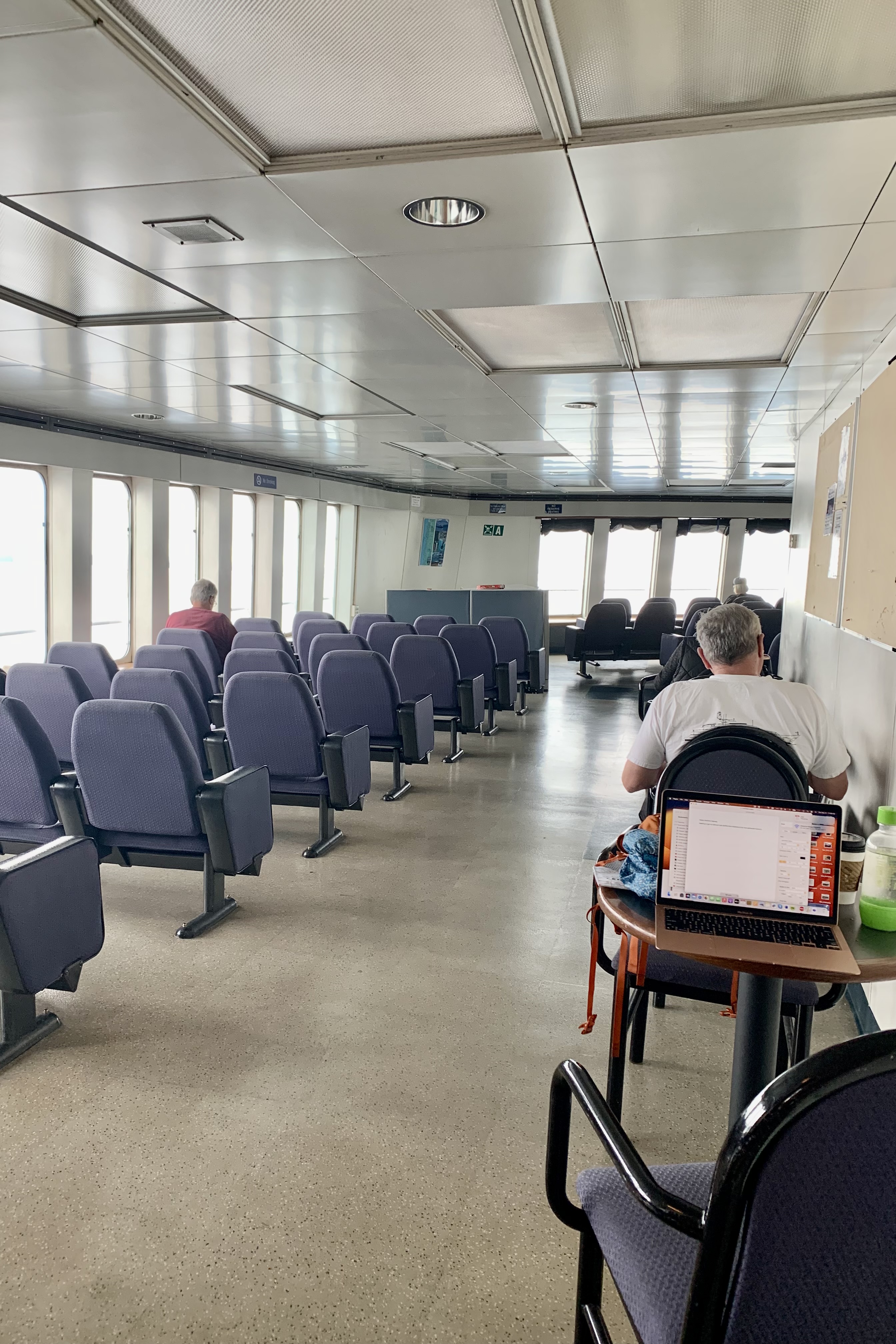
The ferry cabins are quite spare having minimal amenities.  A real upside of the ferry is that one need not book a room but can opt to sleep most everywhere — in the observation lounges, on deck chairs in the covered heated solarium, in a pitched tent on the solarium deck, the movie lounge (which actually has only a large screen broken television).   For the “un-cabined”  there are  lockers and showers available  to use.
The ferry population thus is comprised of many young and/or older adults, hardy backpackers, tenters, adults on the go who could not otherwise afford a cabin, lots of retired baby boomer travelers in cabins, budget conscious travelers, the well-dressed to the scruffy,  or just plain folks traveling with their recreation vehicles,  kayakers, four-wheelers etc. and don’t want to make the long drive down to Washington. 

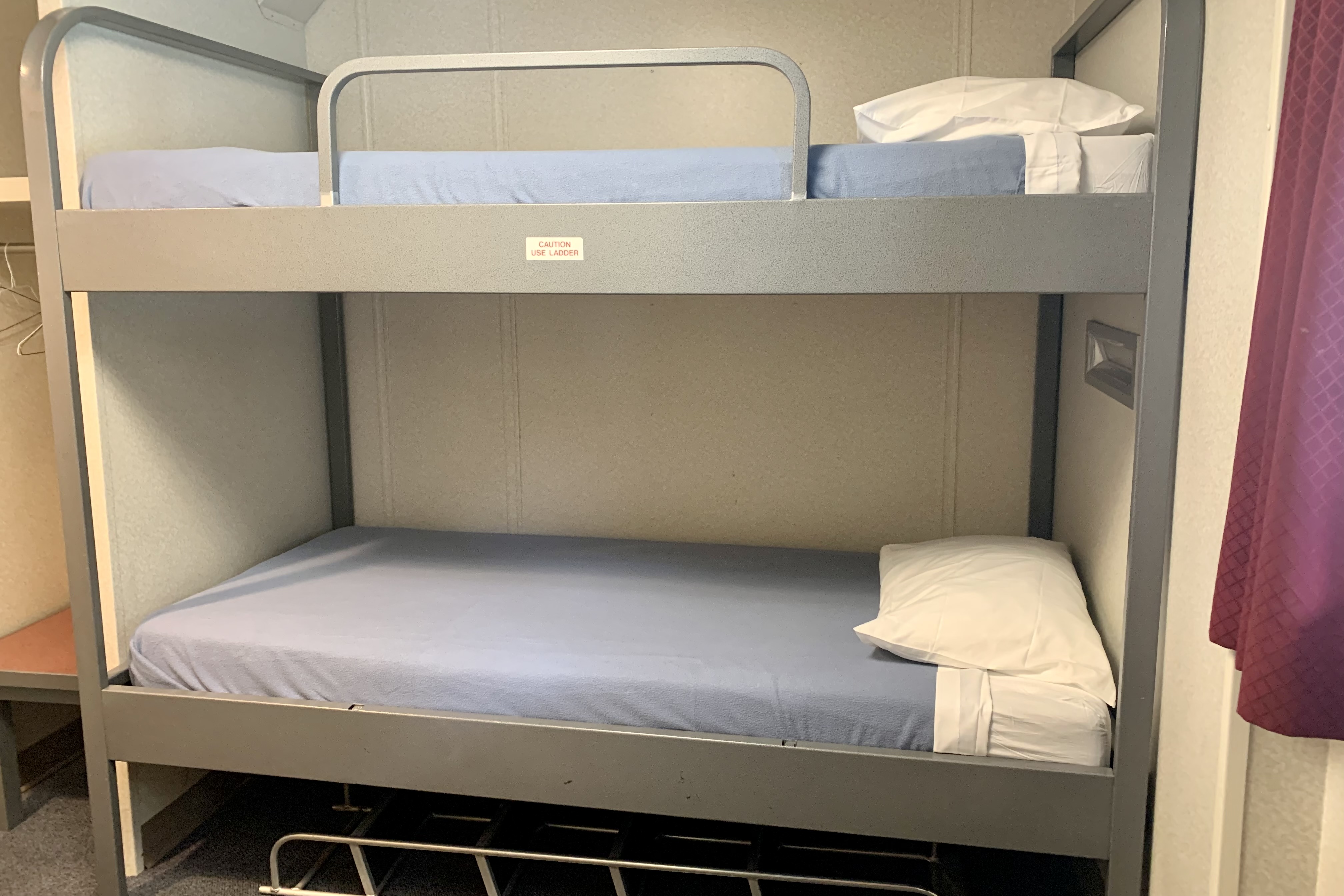
I planned on eating my dinners in the dining room. I have observed in some other restaurants and definitely the first night here that there is a proclivity to seat single individuals at less favorable tables. The first night in the dining room, the couple in front of me was taken to a window table up front. The host offered me a booth towards the back. I decline this and was then hesitantly offered a table nearer the front windows which I accepted. I then noticed that he seated the two men behind me at a window table. This definitely annoyed me but I wanted to enjoy what turned out to be a very mediocre dinner of grilled halibut, a microwaved baked potato and cauliflower that was thickly draped in some kind of spicy seasoning. So the second night when it was my turn to be seated I asked for a window table. The look on the mans face and the hemming and hawing was blatant. He took me to the front and then offered me a booth behind the tables by the window. I said I wanted one of the tables right up front. He very begrudgingly after looking all around finally gave me what I had asked for. To me it is a form of discrimination that couples or foursomes trump a single in table selection, especially here as the personnel are all state employees and no tipping is allowed. Money doesn’t talk and I would not go to the dining room again.
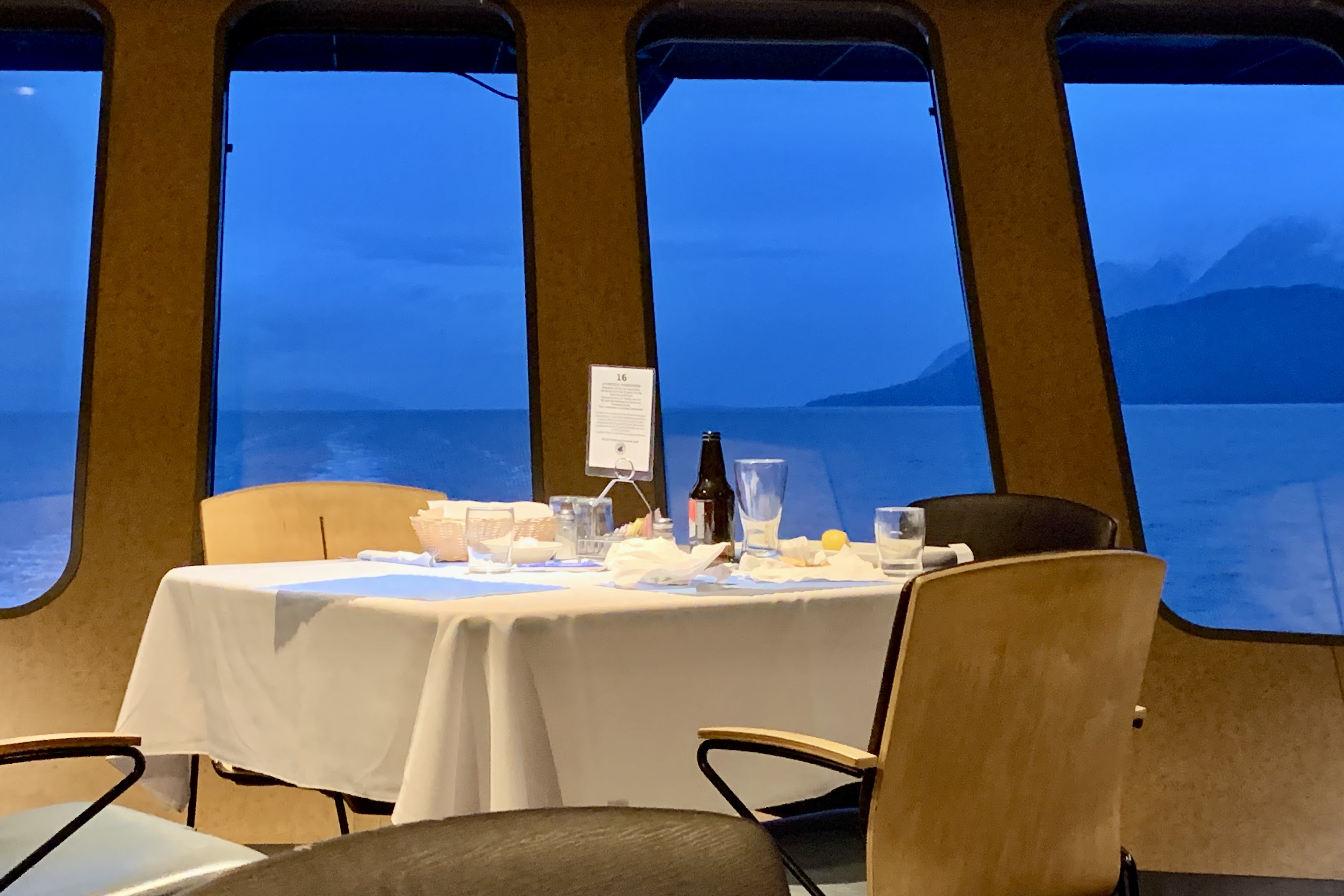
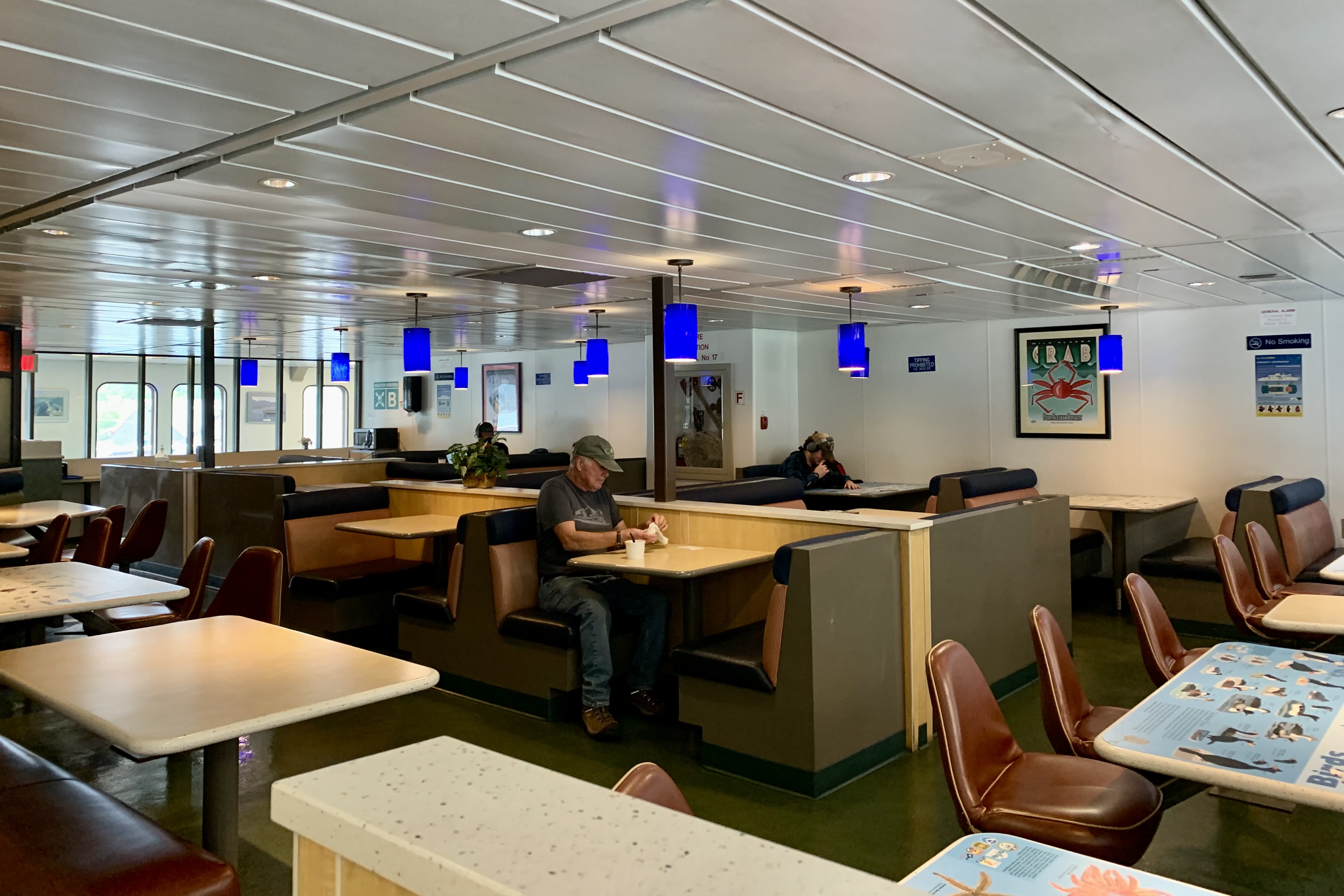
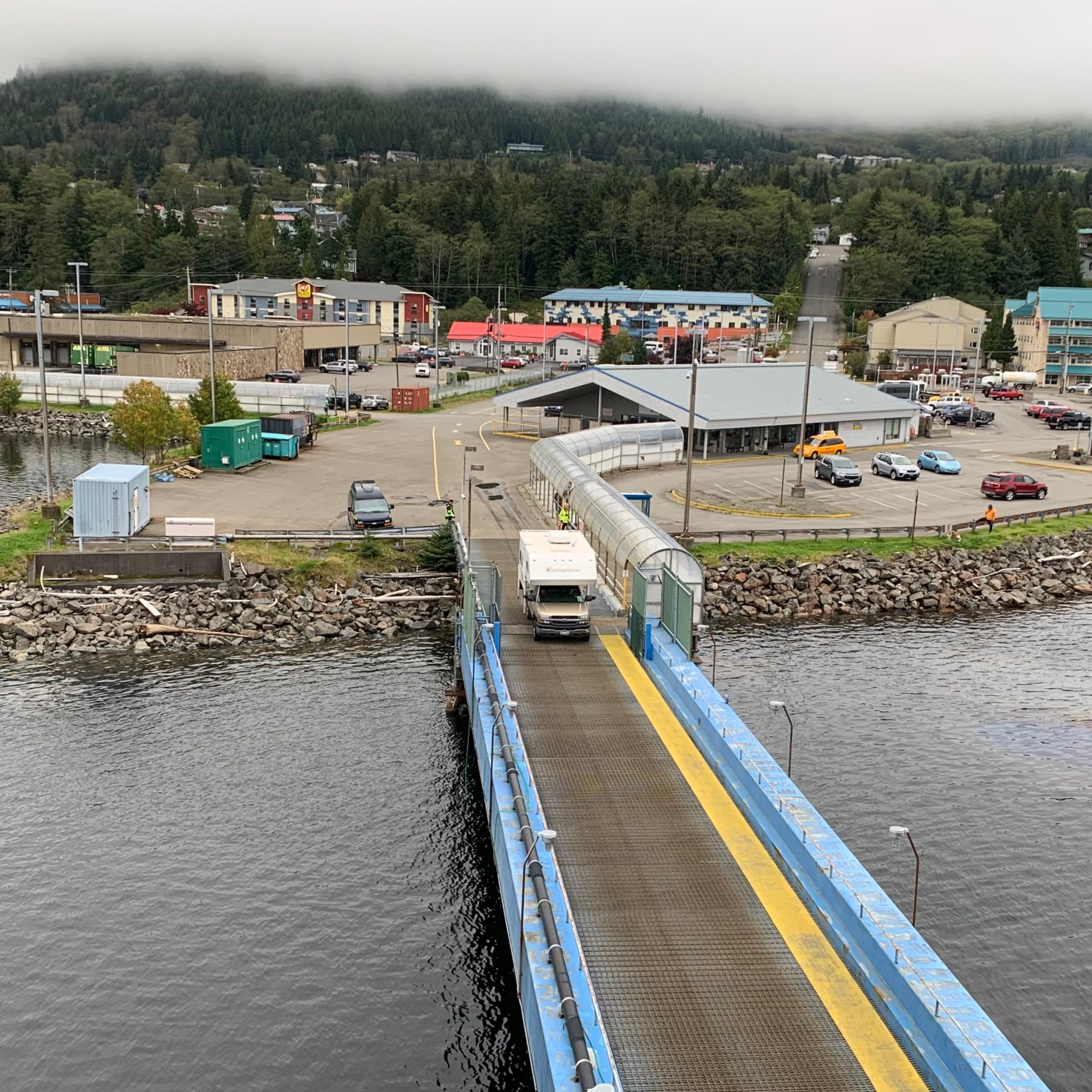
The ferry has both a snack bar/cafeteria and a dining room. The snack bar has the normal fare of lots of sandwiches, fried food and burgers. Having observed other people’s  trays I didn’t see anything appealing and knowing  from the trip to Kodiak on an Alaska Maritime Ferry  there would be a microwave etc. I had brought a few food items for breakfast and lunch. I figured I would have my dinner meal in the dining room but after 2 nights I was by now pretty turned off by the dining room food and staff. I stopped in at the A&P across from the ferry dock in Ketchikan to replenish my food stores and purchase items I could heat in the micro-wave for dinners for the rest of the journey down to Bellingham.

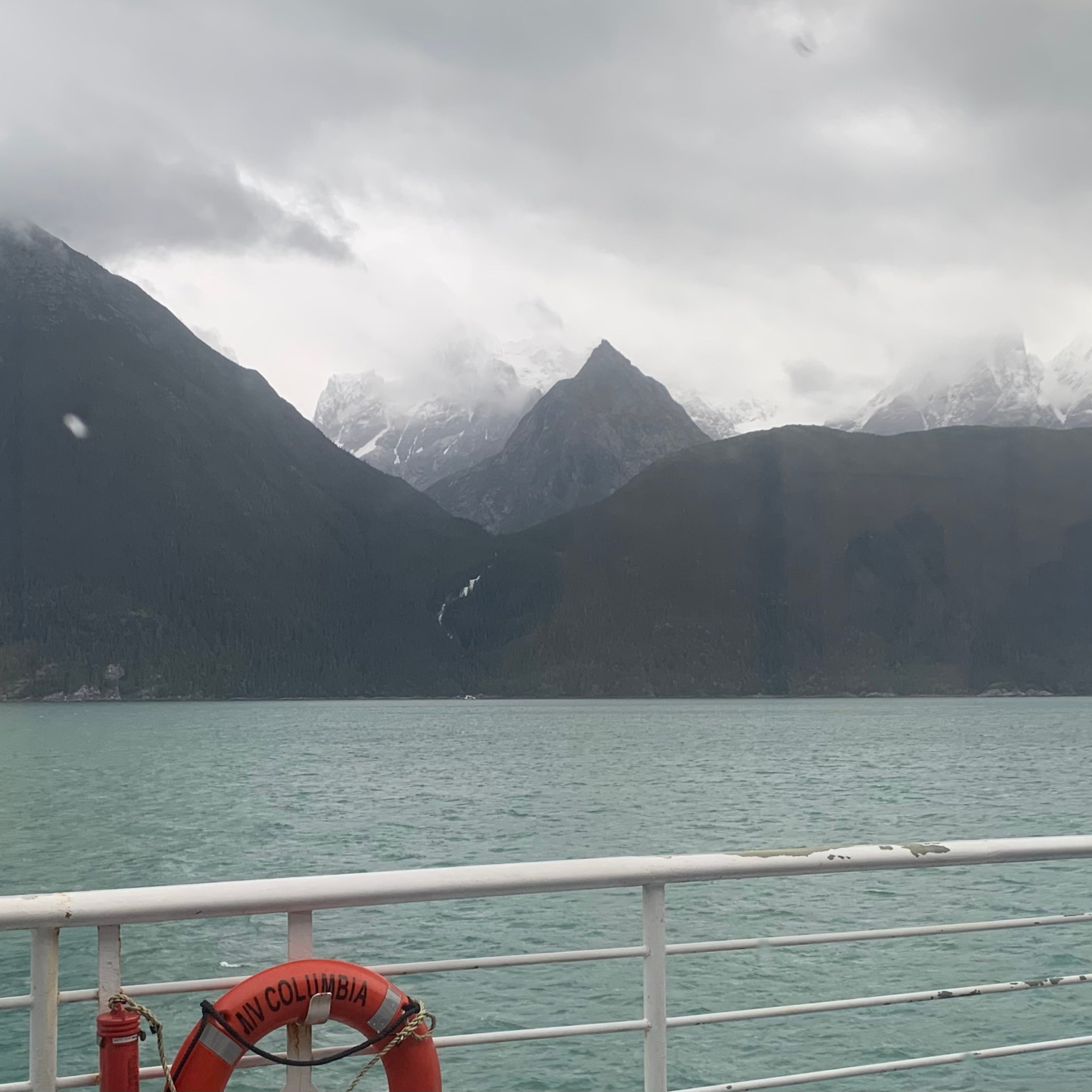
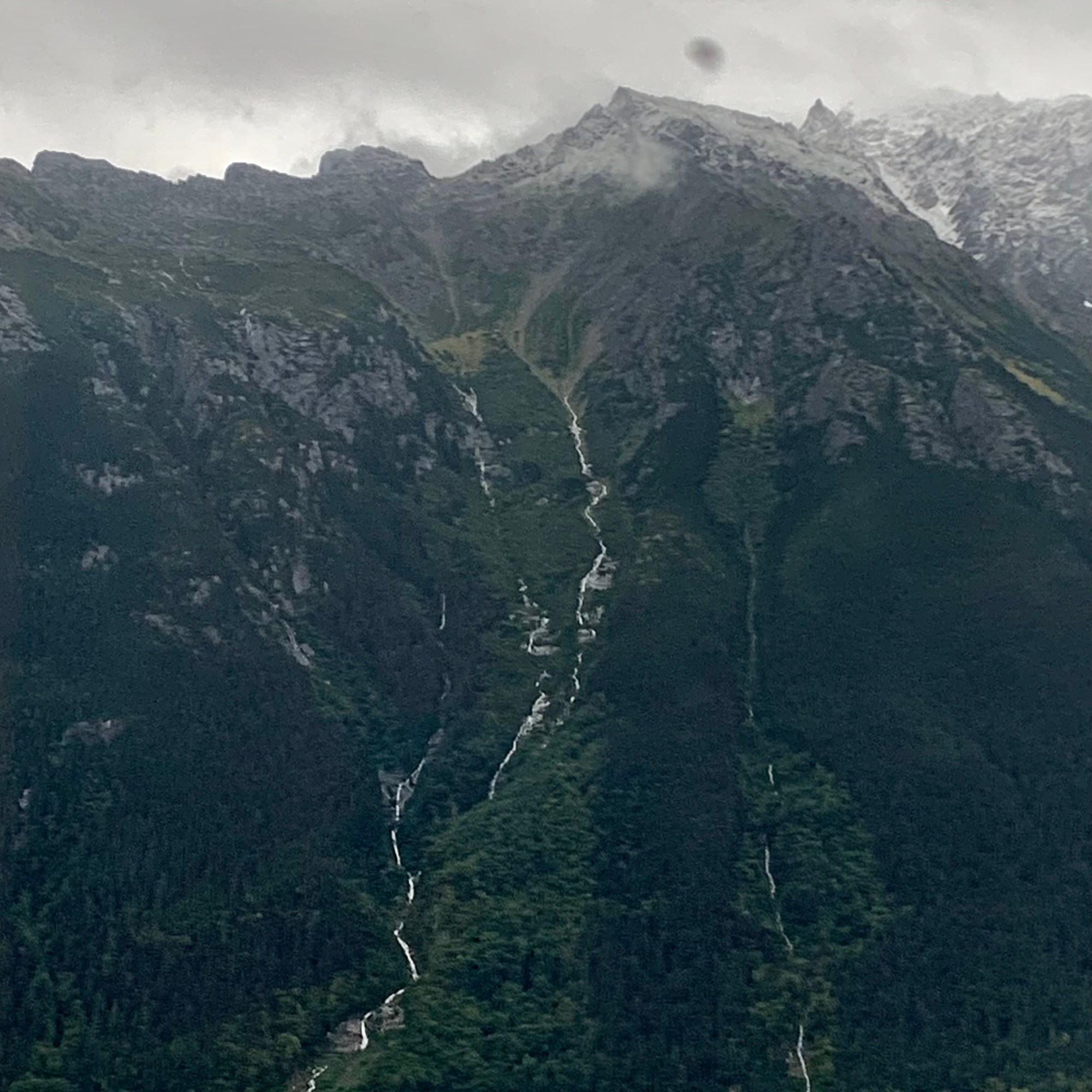
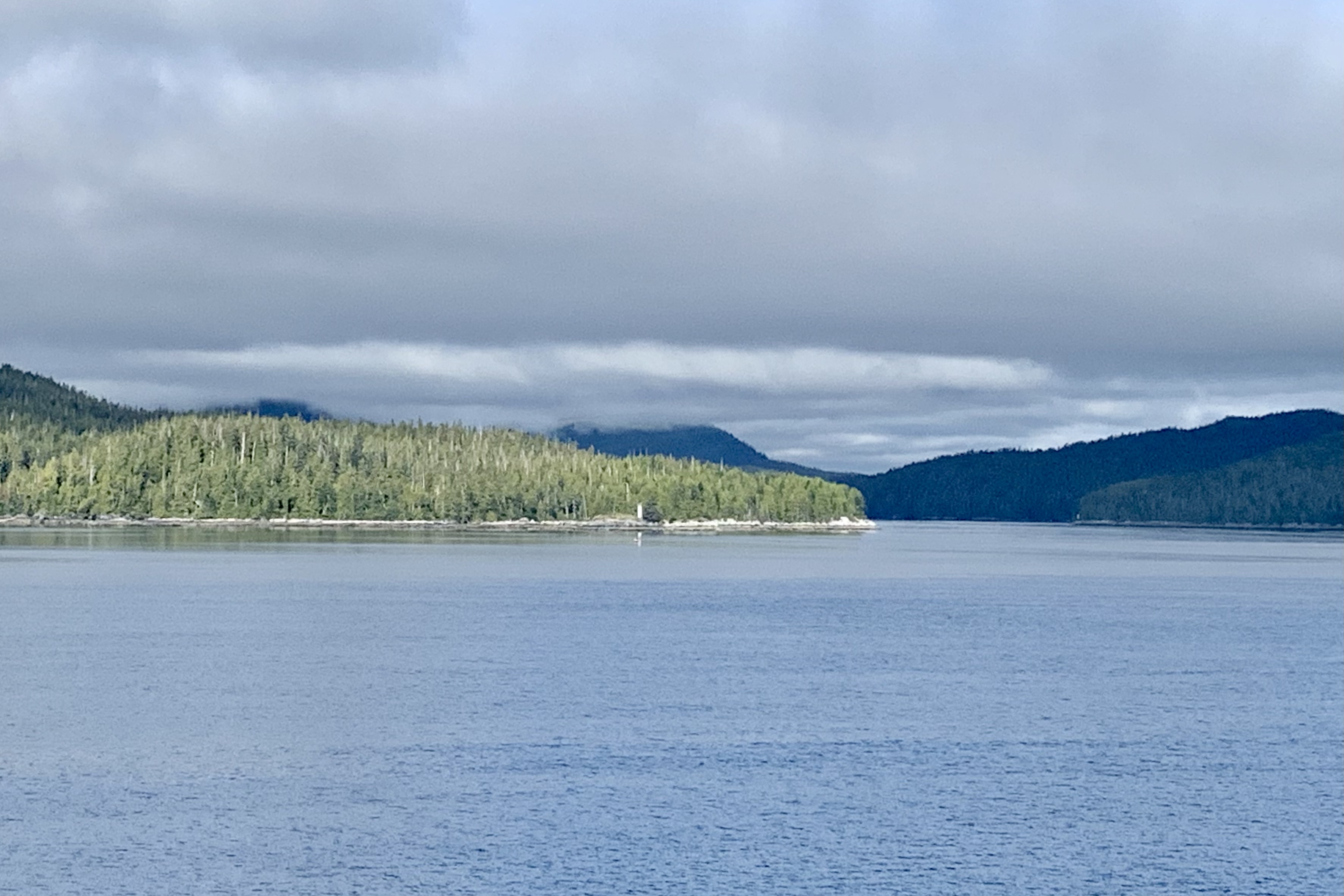
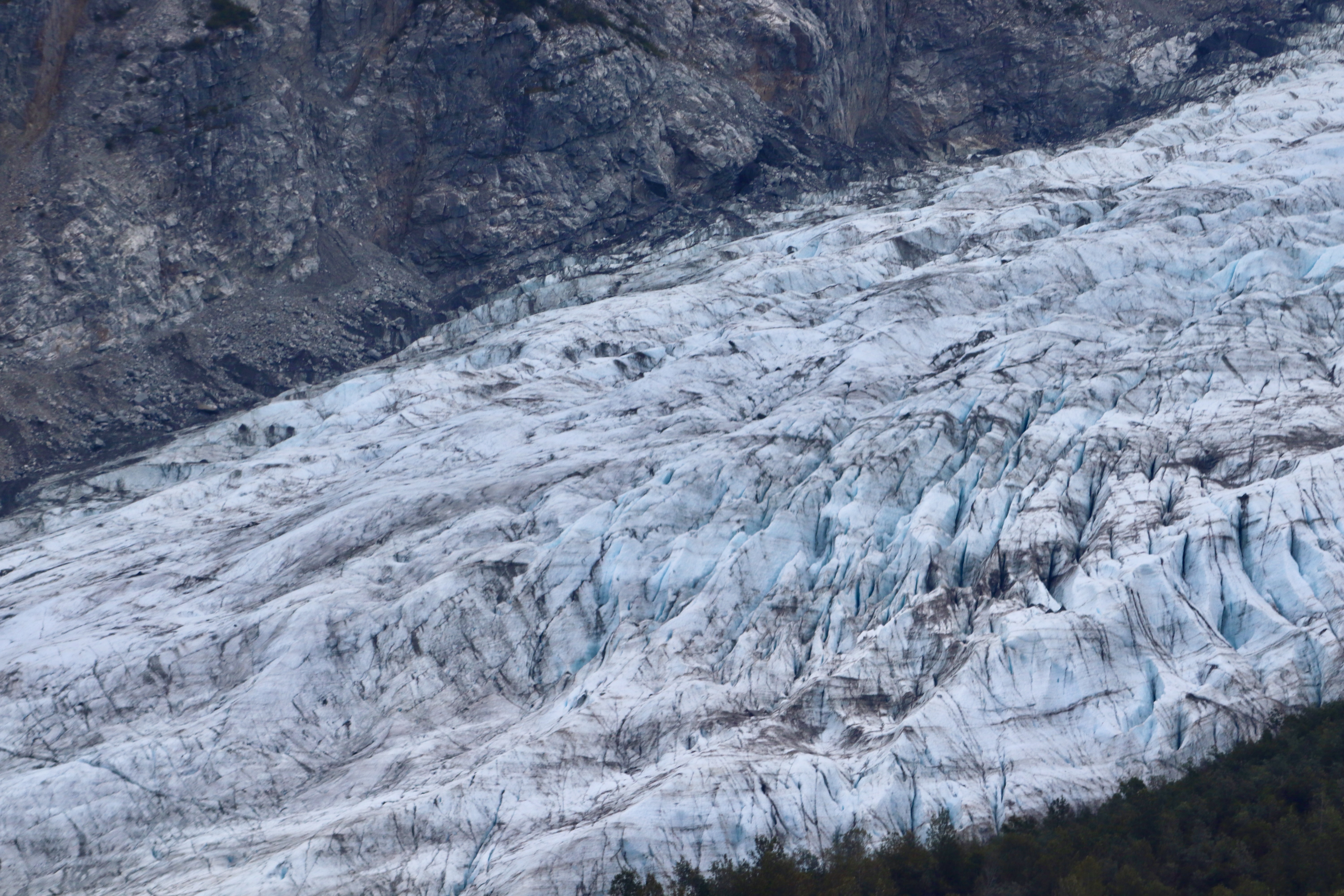
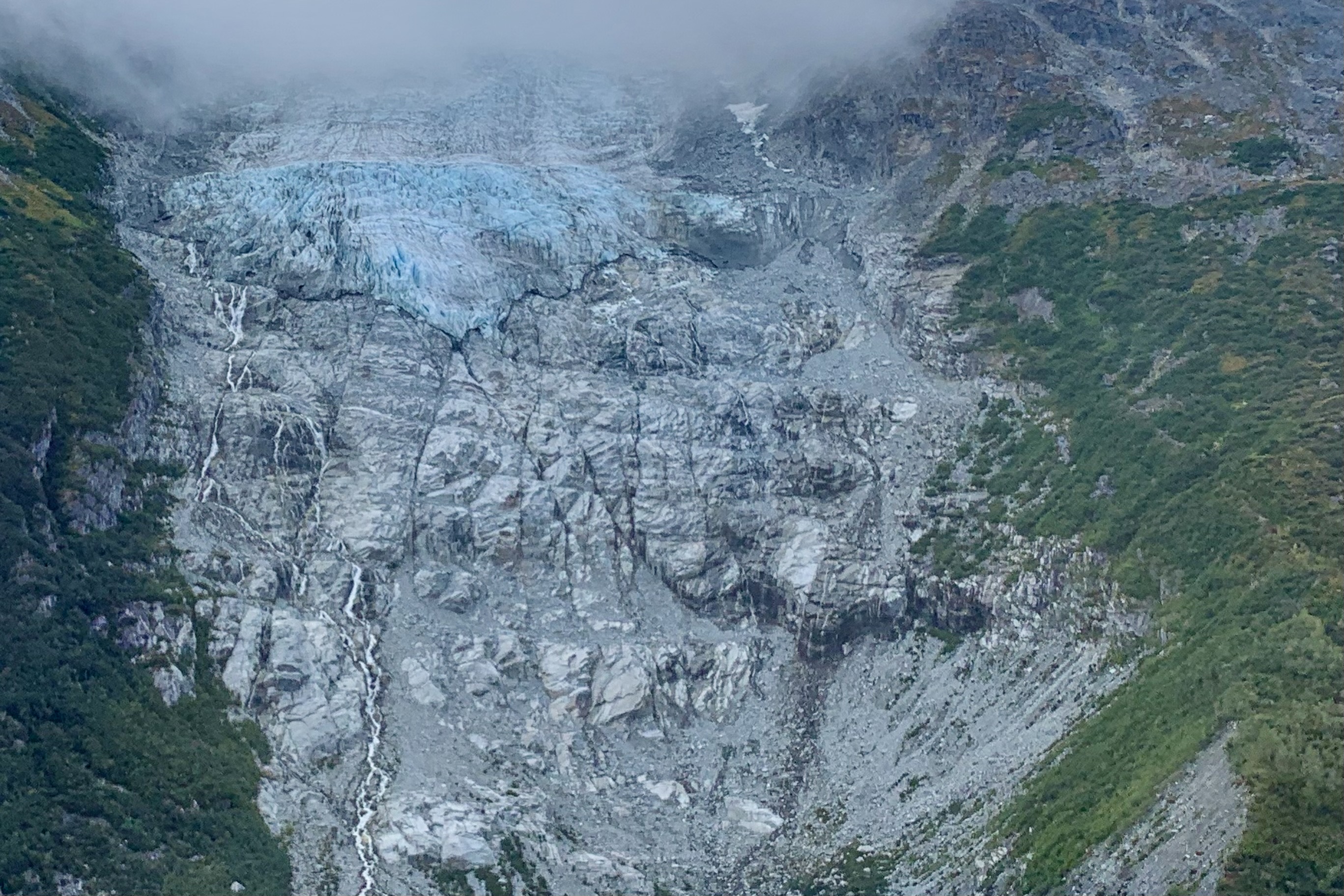
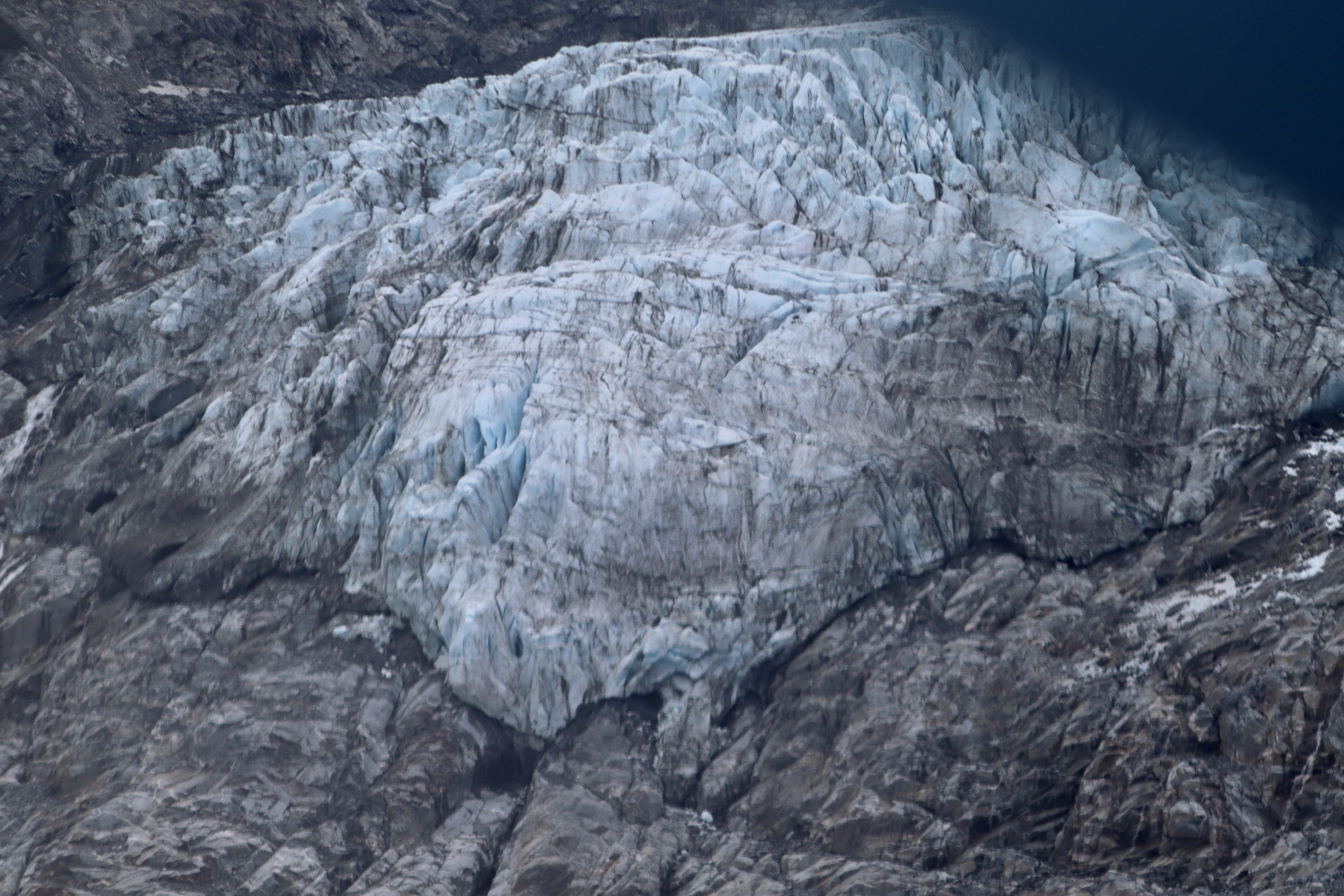
As I have often discovered, the “textbook” descriptions of places I am visiting is quite the mismatch from what I am actually experiencing. Description of the Inside Passage include such things as thundering cataracts, silvery mists, rocky promontories, dense foliage, and “the paved highway” to adventure . The first hour of our journey took us from Skagway over to the first port of Haines. Having left Skagway around 1:30 and heading toward an ominously dark sky, I was not too hopeful of getting that picture perfect photo of the mountainous terrain and glacial valleys purportedly lining the waterway. The jagged peaks and the hanging glaciers ranging down the mountainside were mostly shrouded in fog and though there was a diaphanous quality about the panorama it was difficult to experience the grandeur so often described by the poets and naturalists.
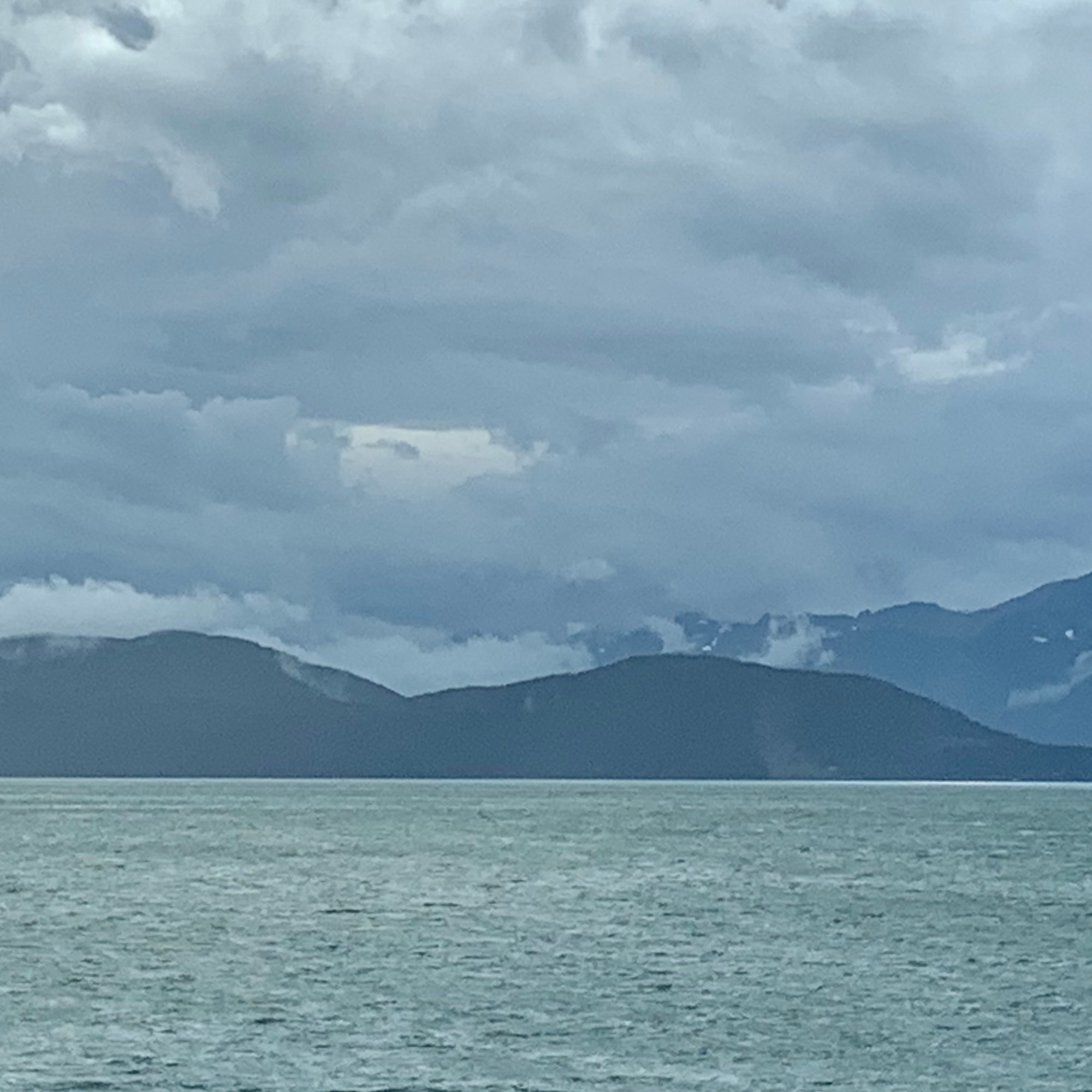
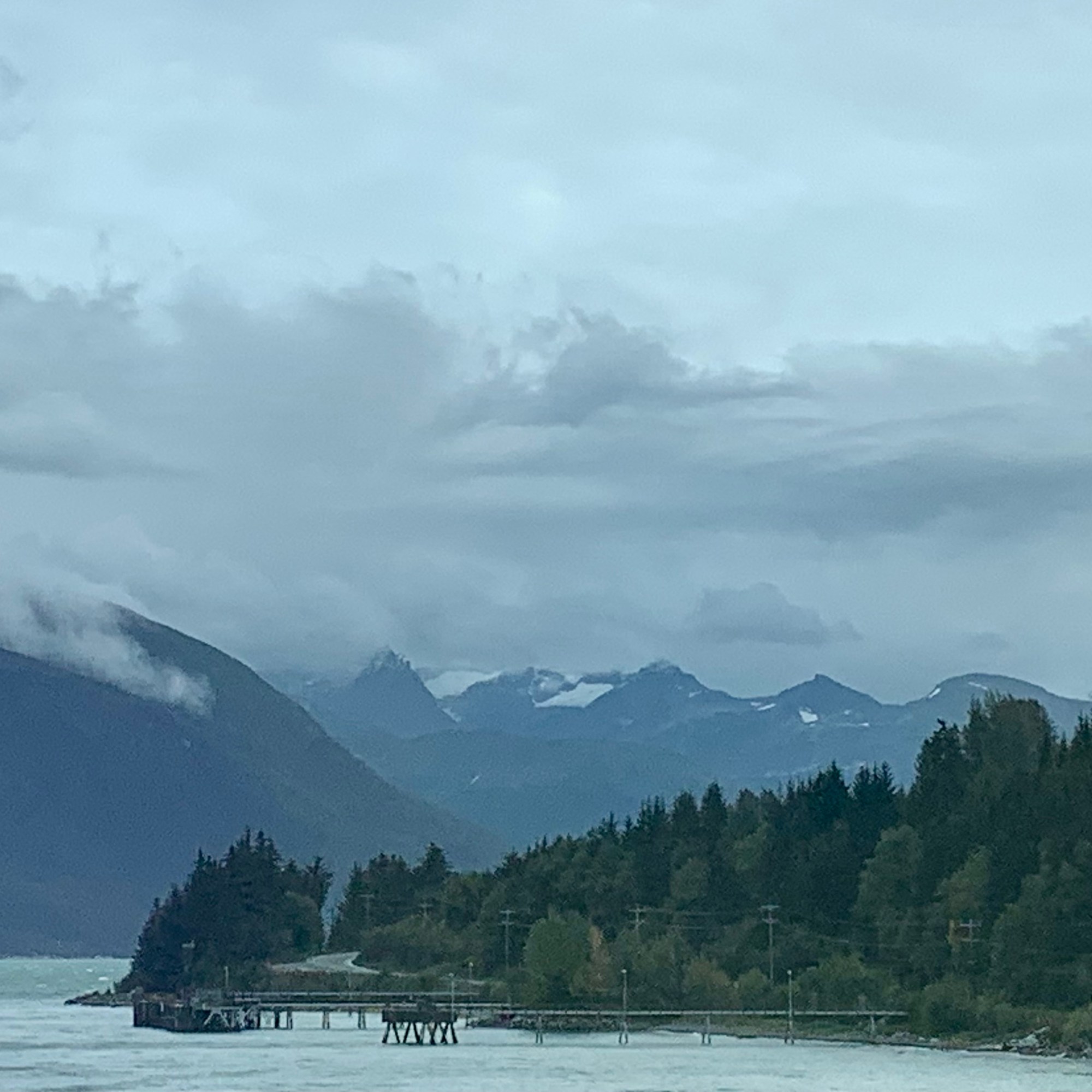
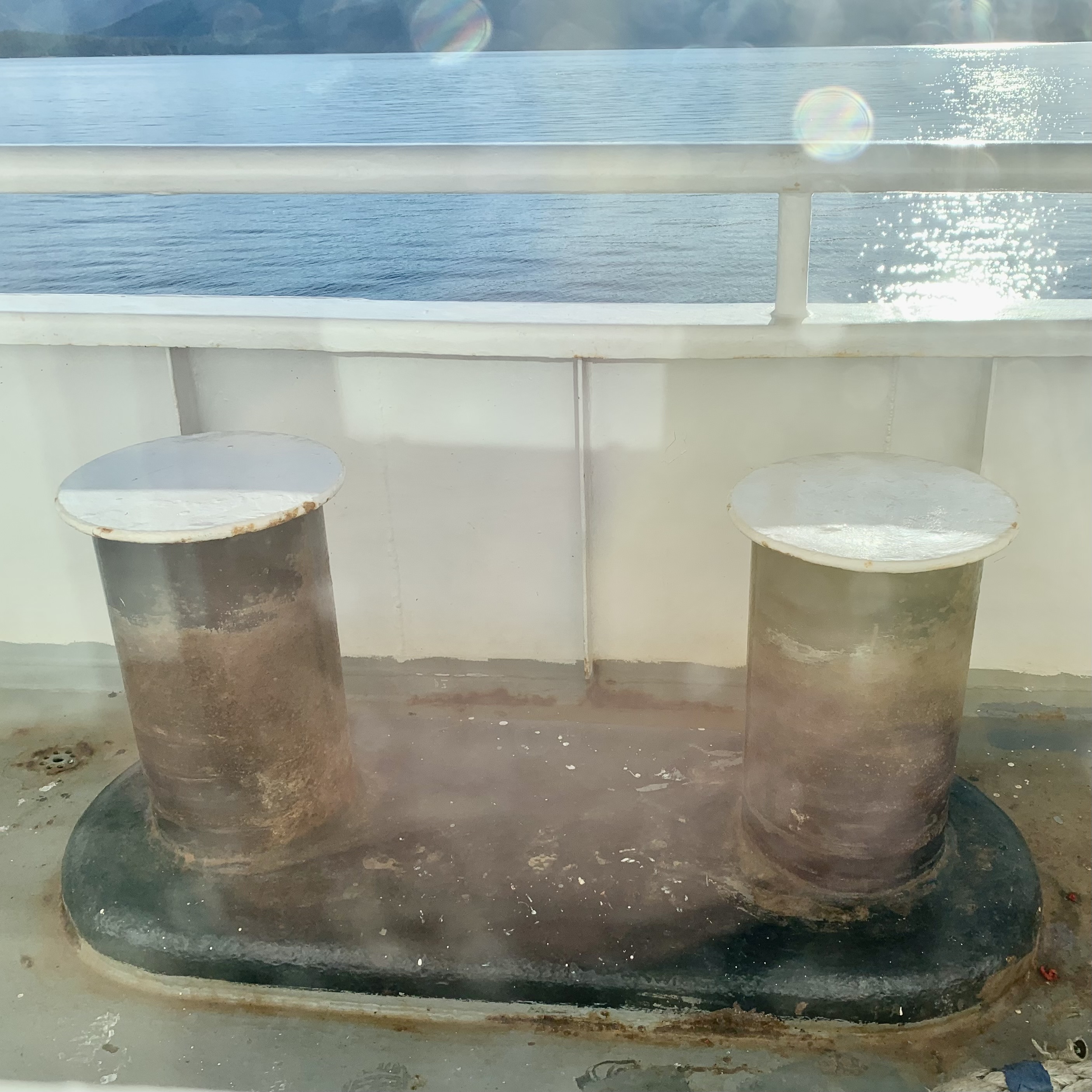
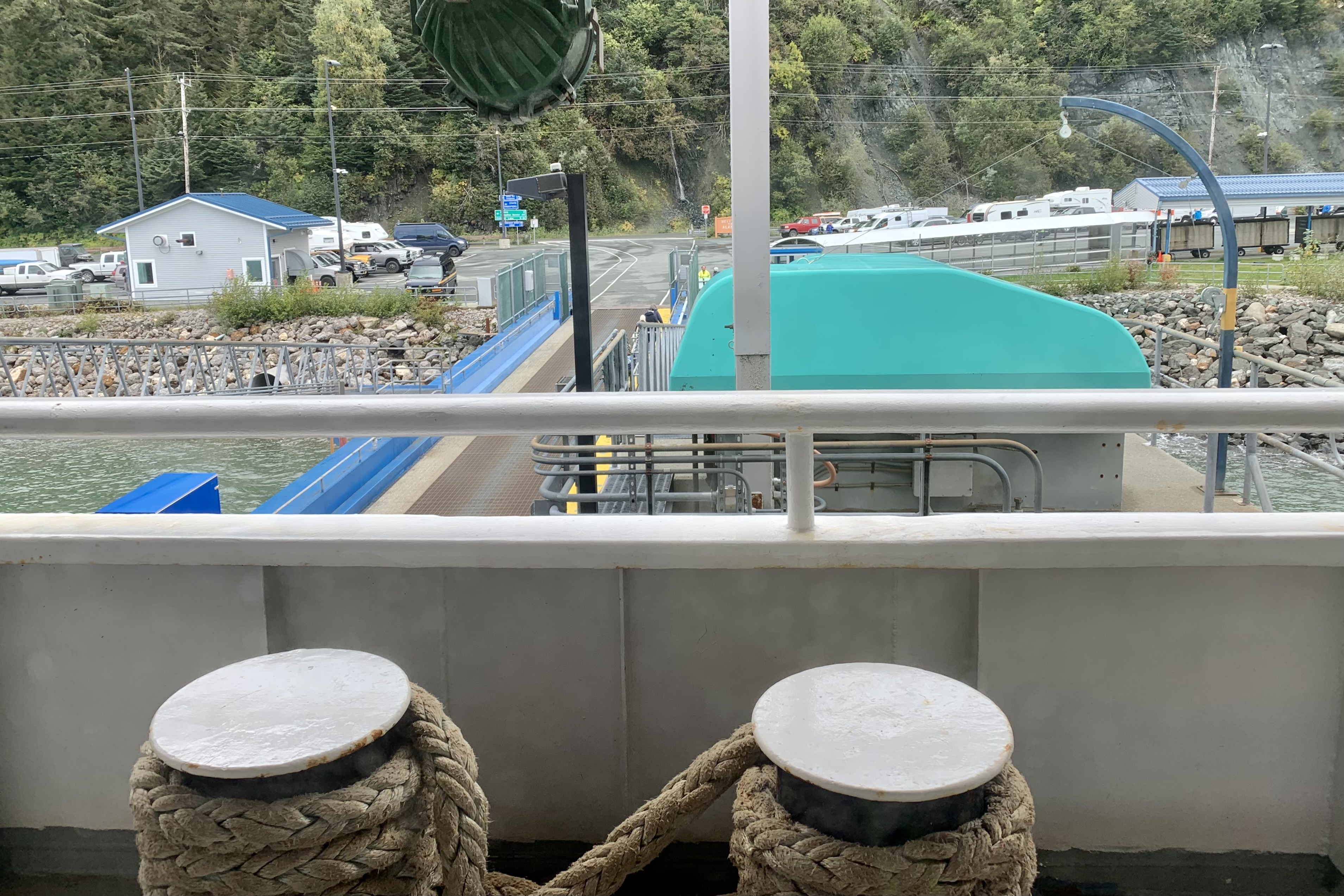
After the time consuming process of unloading and loading the vehicles and cargo we plowed onward to Juneau with a scheduled arrival of around 9:00 pm. By now I was ready to tuck in and was delighted when I awoke the next morning to blue sky and sunshine. I had totally missed the port-of-call of Juneau and now we were only a couple hours out of Sitka. I had been obsessing about the docking and vehicle loading process as my room was right over the cargo entrance door on the main deck below and the capstans were right below my window on the starboard side of the deck. At the previous port, the deploying and securing of the mooring lines, then 2-3 hours later the process of releasing and rewinding of the massive ropes, and the clattering the vehicles rolling on the metal ramp was quite a clangorous process. I doubt it was a quiet process so I must have been dead to the world soothed by the gentle vibrations and hum of the engines.
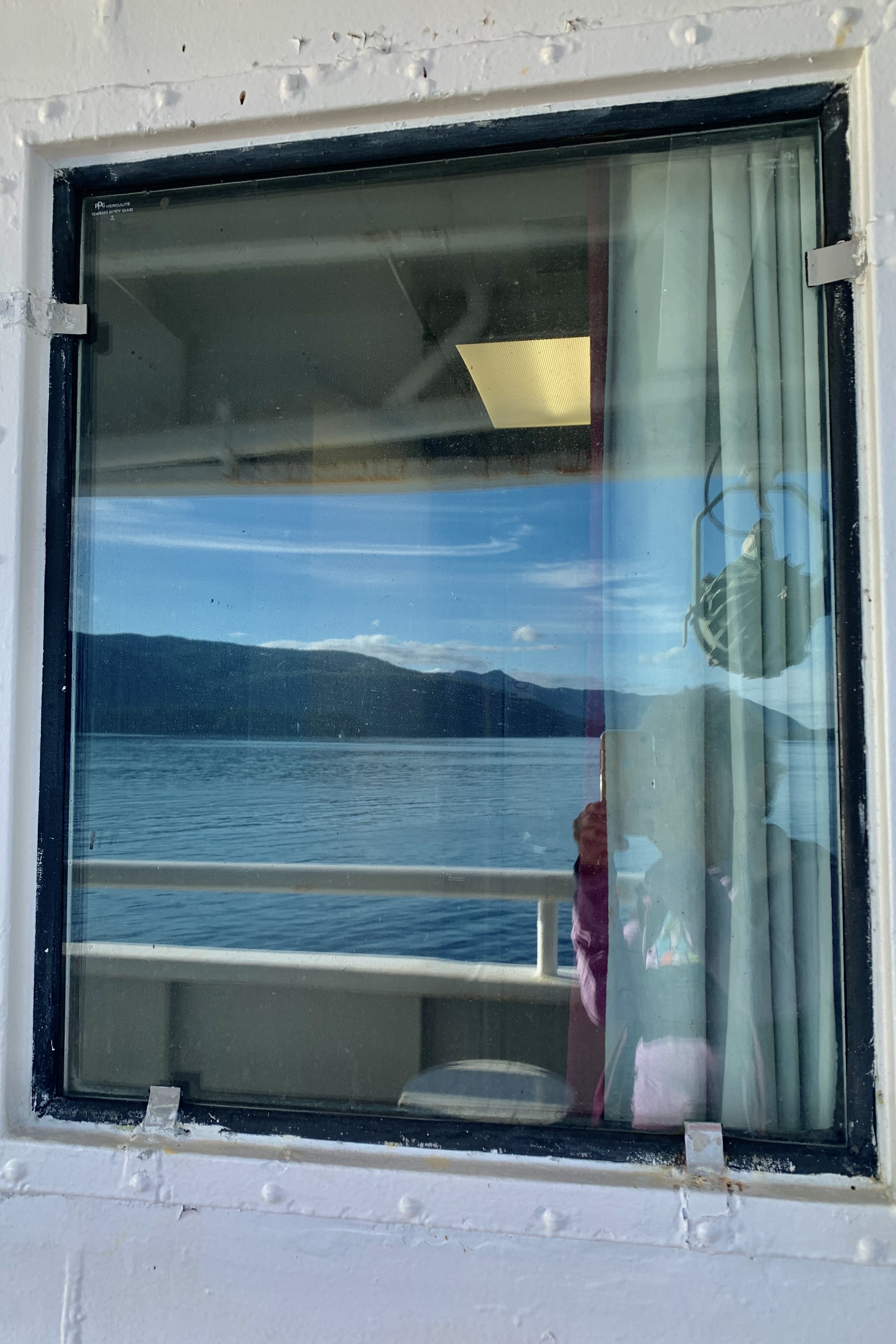
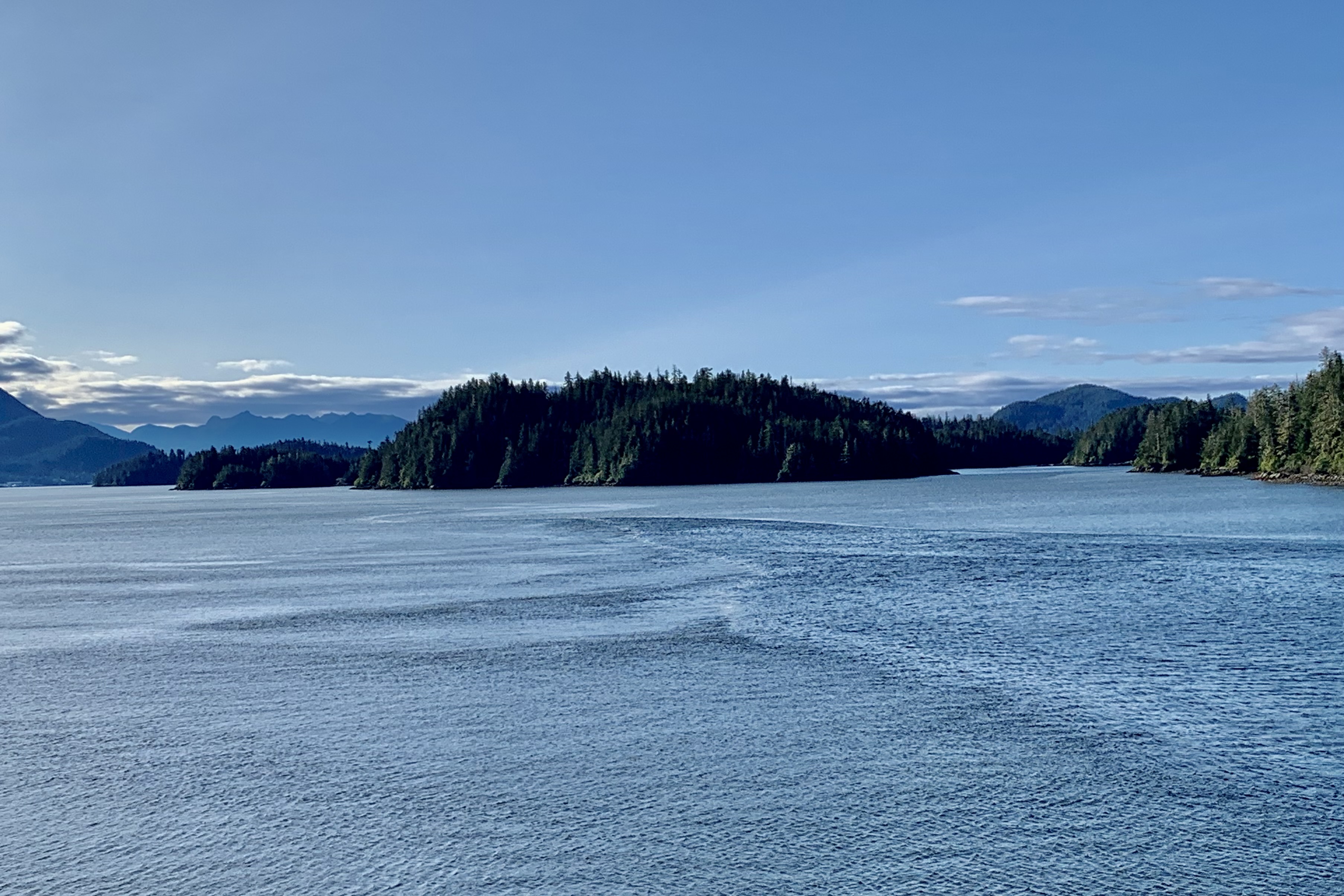
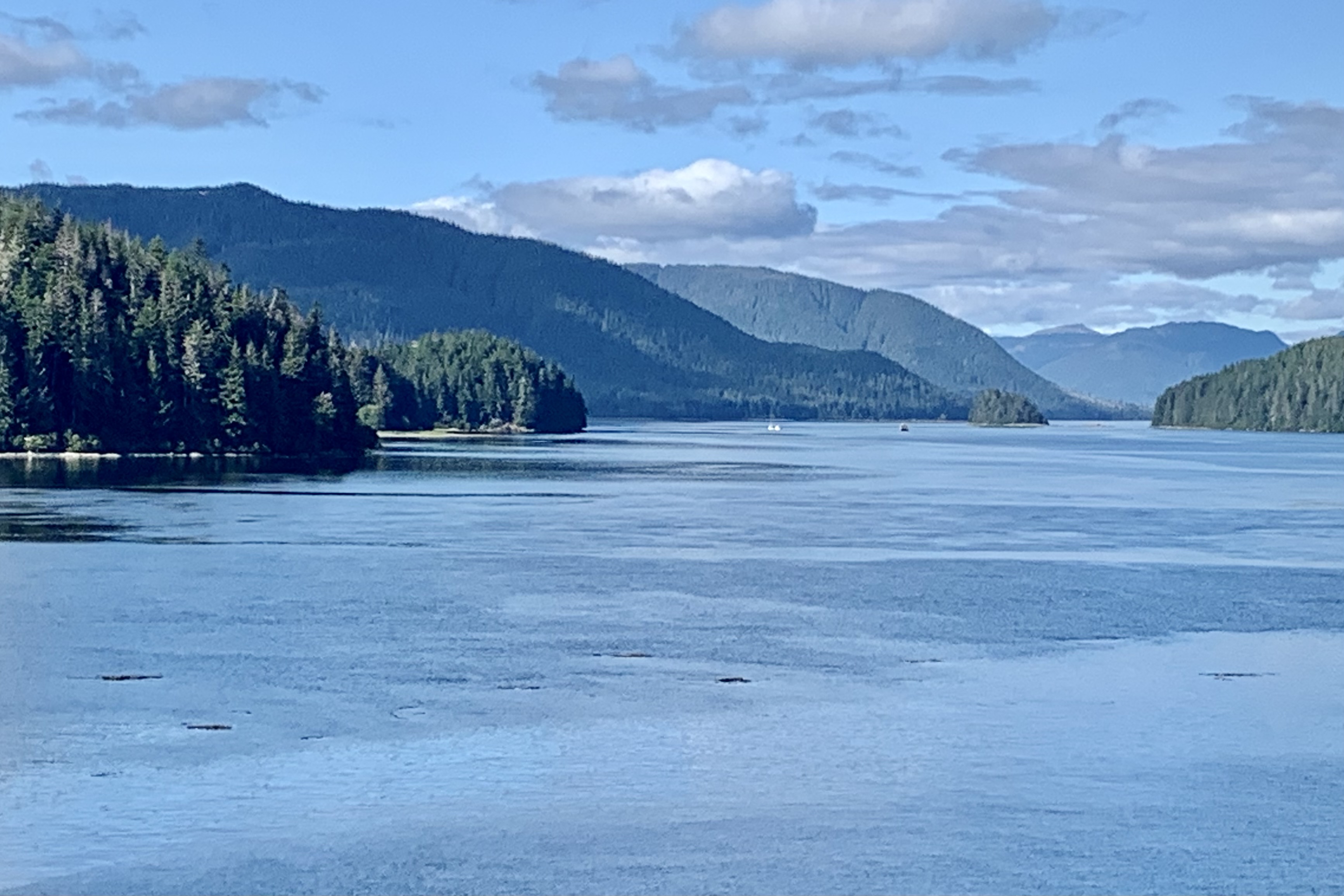
After arising and a K- cup of coffee, I found the early morning splendor of lush foliage, serene waters, a blushing sky and veils of mist over the islands was truly mesmerizing. Though we were now south of the higher jagged peaks and most of the mountains now lacked the ragged edges and snowy crowns of their northern sisters, I found them nonetheless captivating and elegant with the softer undulating shapes, the verdancy of forest-clad mountains, the rugged coastal reaches of Tongass National Forest,
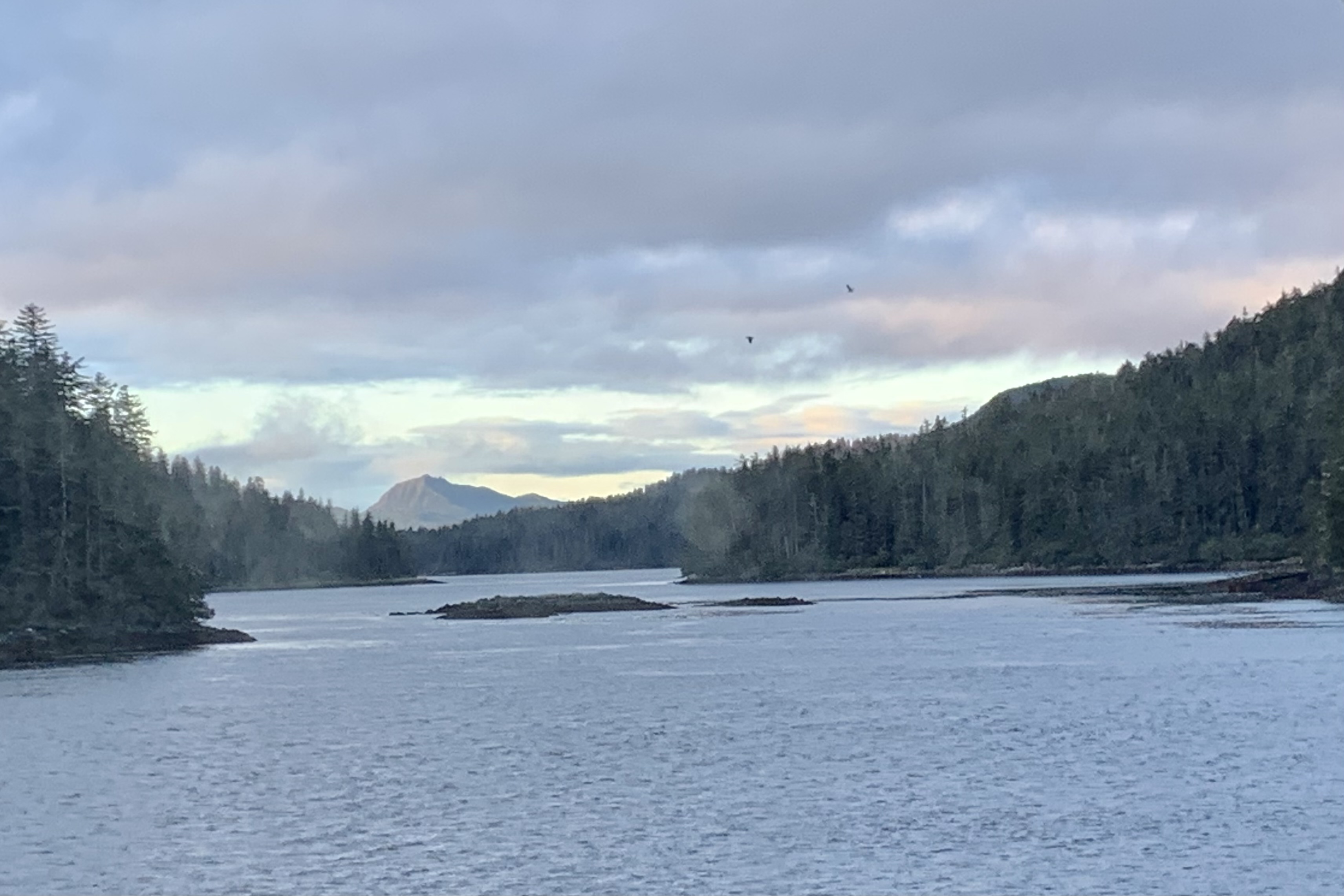
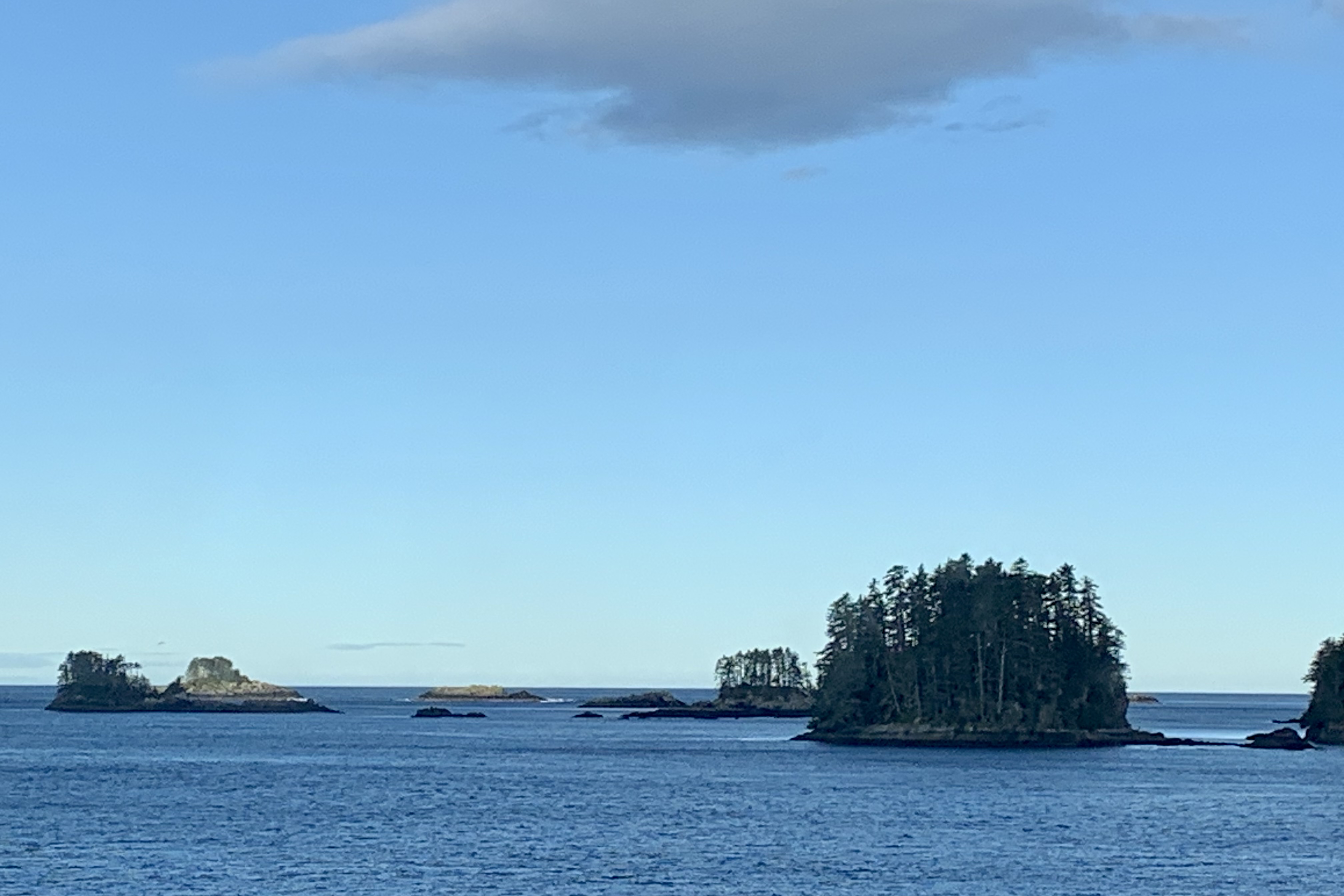
As we approached the port of Sitka, I made an executive decision to forgo a venture into town as our time in port was to be 3 hours and I definitely had my fill of the carbon copy tourist focused establishments while in Skagway. A Sitka adventure necessitated getting a public bus or taxi and ’twas not my idea of an inspiring exploration when I could sit on deck port side and drink in the beauty of Baranof Island and watch the Celebrity Eclipse glide through the channel on its way south .
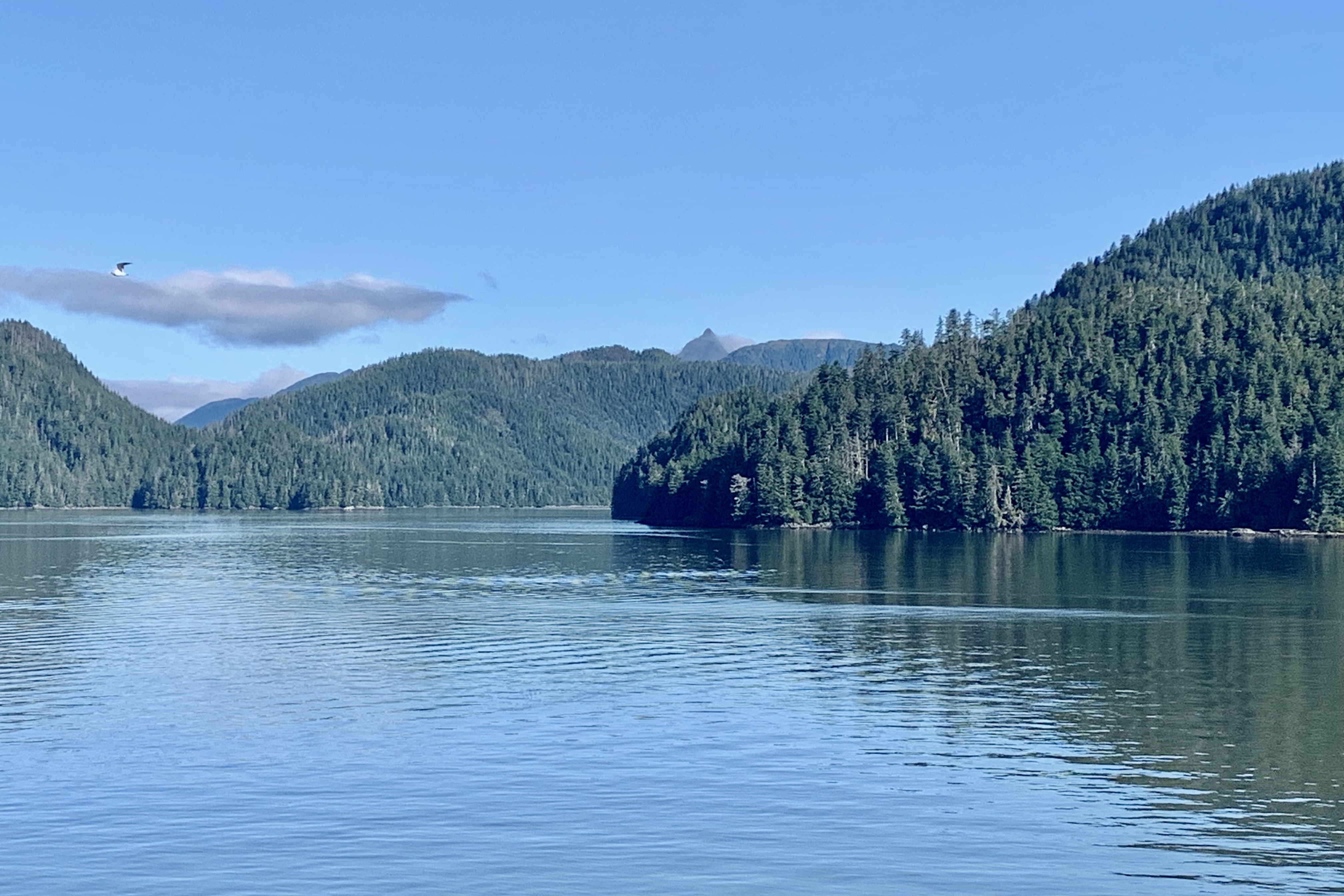
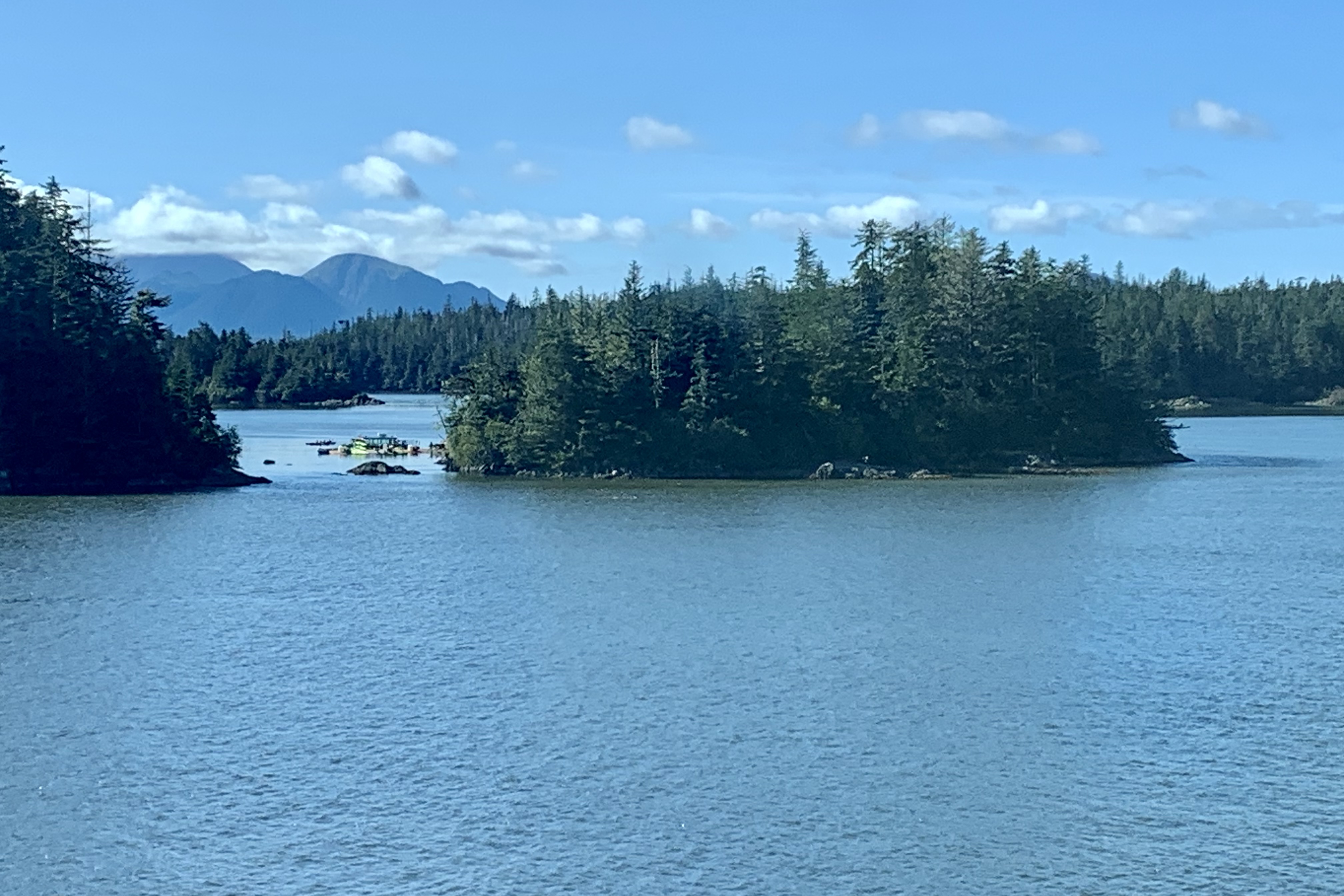
Upon motoring out of Sitka around one pm, the waters remain tranquil for the rest of the day and the seaside views were an ongoing visual treat of a rolling landscape adorned with conifer forest , and clouds casting their mirrors image on the water. Towards days end while sitting at my window table in the restaurant, the sky became a pallet of orange and gold though it felt a bit ominous that the dense dark cloud banks did not take on any of the hues of the setting sun. I rested well having had a joyous day filled with eye candy.
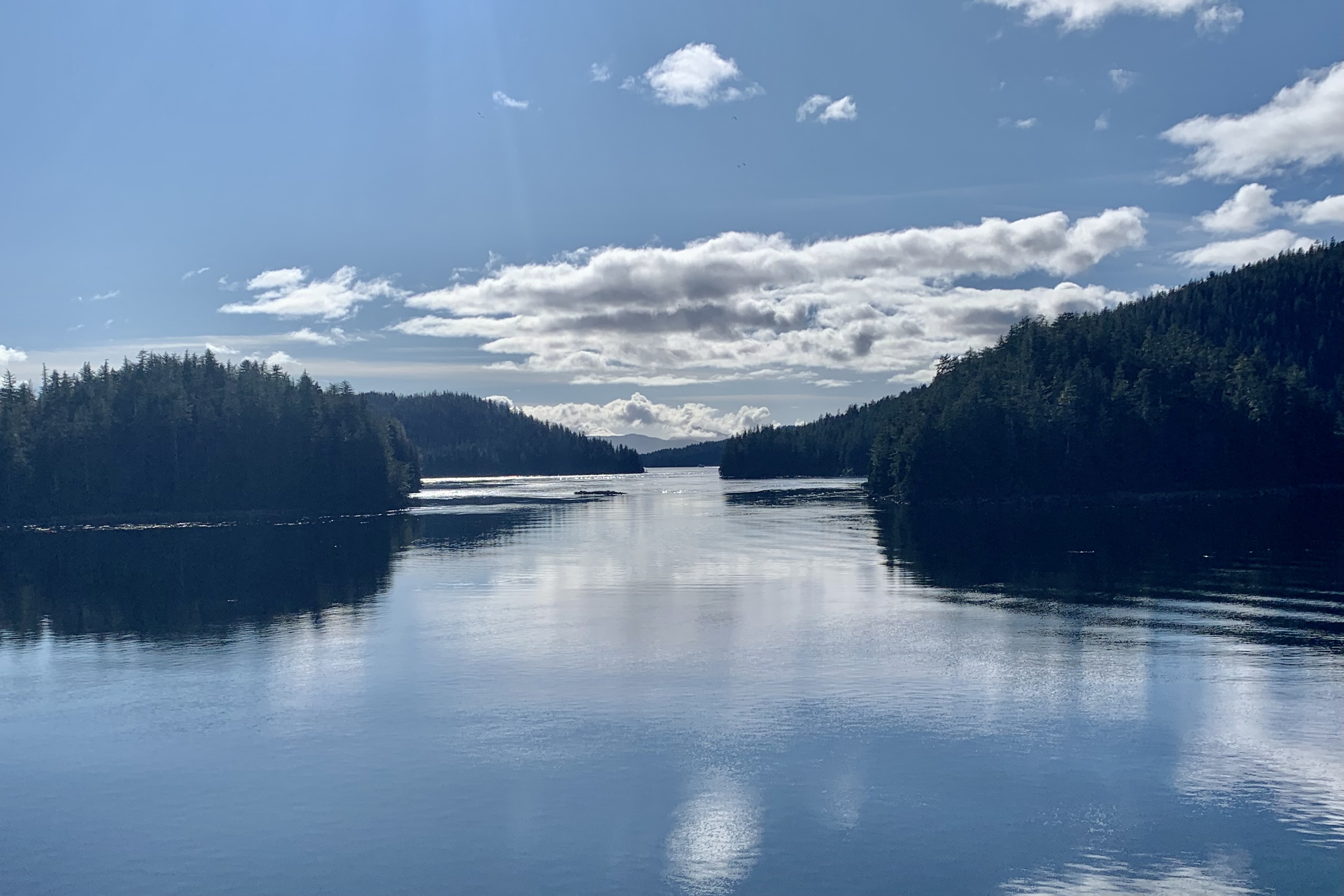
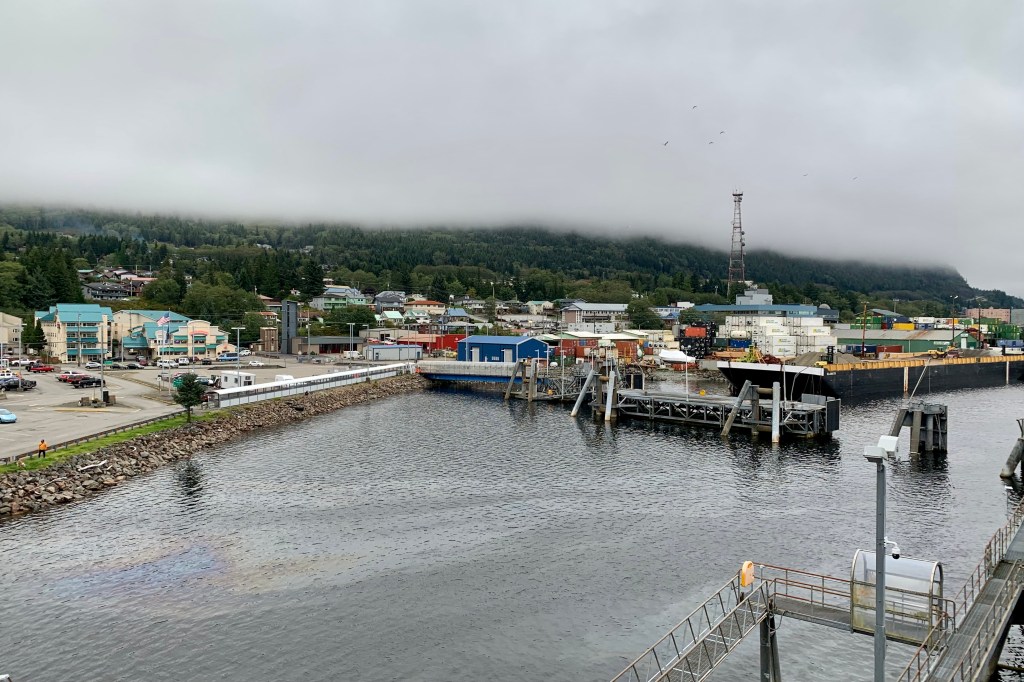
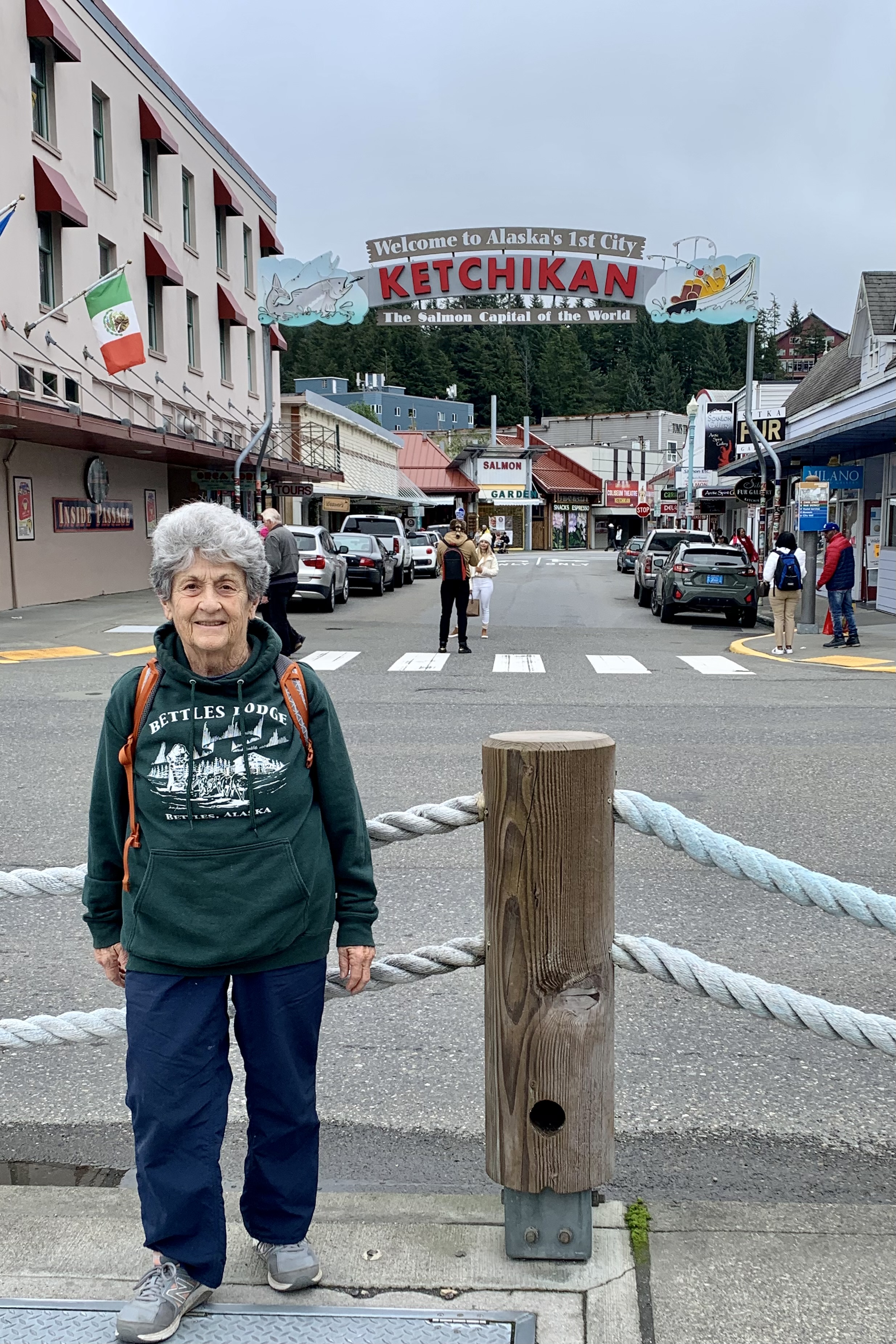
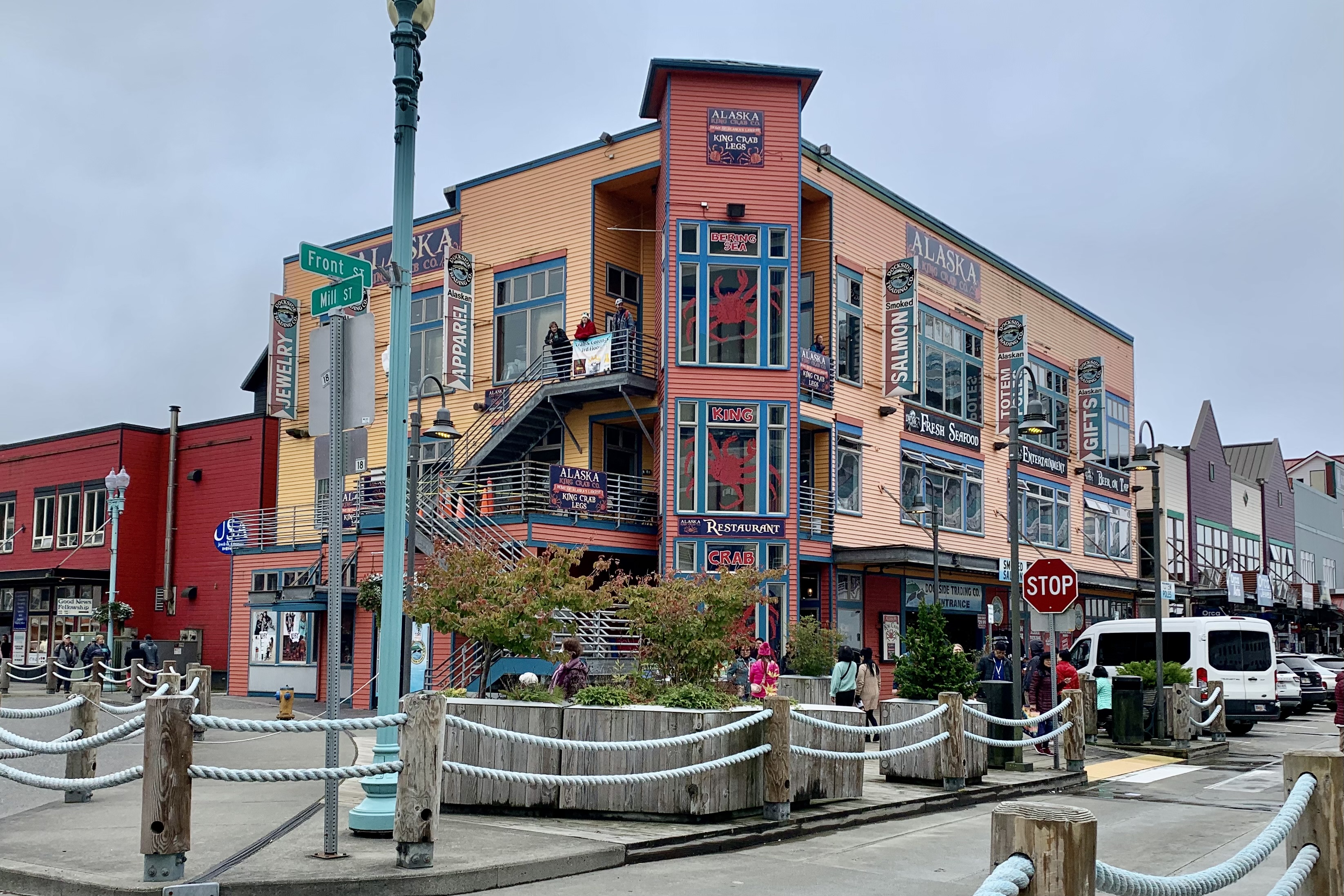
I sleeping soundly and never awakened to the rumbling sounds of the activity at the two nighttime ports-of-call : Petersburg and Wrangell. We were enveloped in a dense fog and I guess it had been too much to hope for to have more than 0ne sunny day. This was the only port, Ketchikan, that I was opting to visit other than Skagway where I boarded.  I was enthused as I had visited this town about fifteen tears ago and found it charming. I hopped on a city bus to get downtown as it was about 3 miles from the ferry dock. I was glad for the circuitous route of the bus as it travelled through many part of the town.

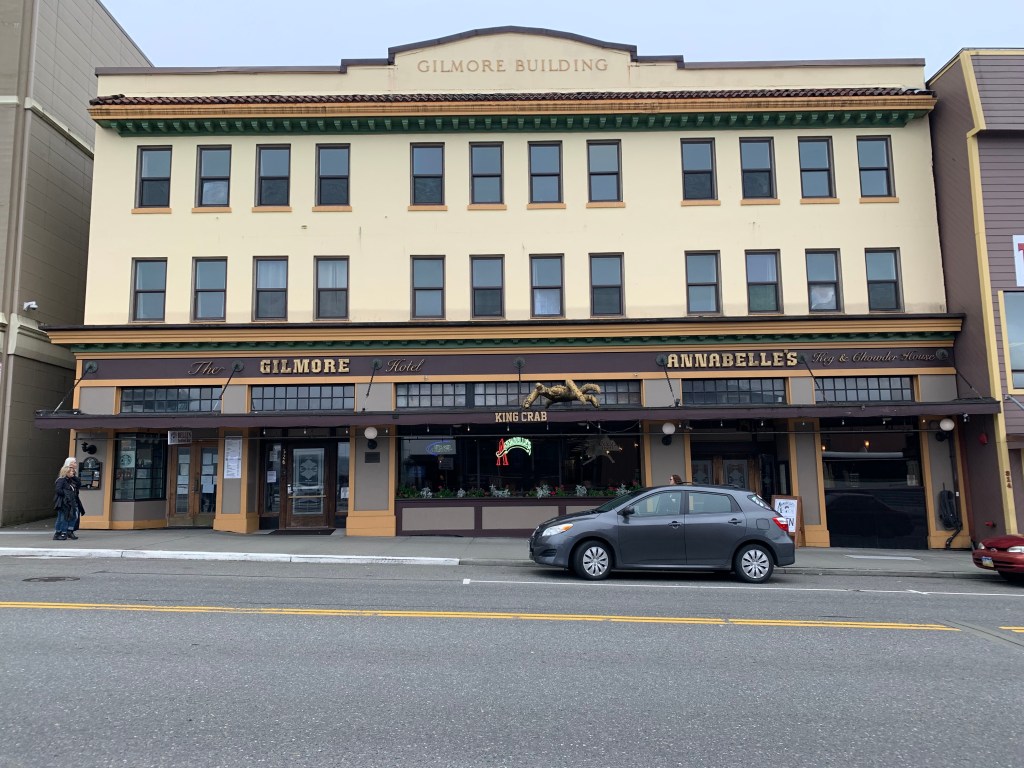
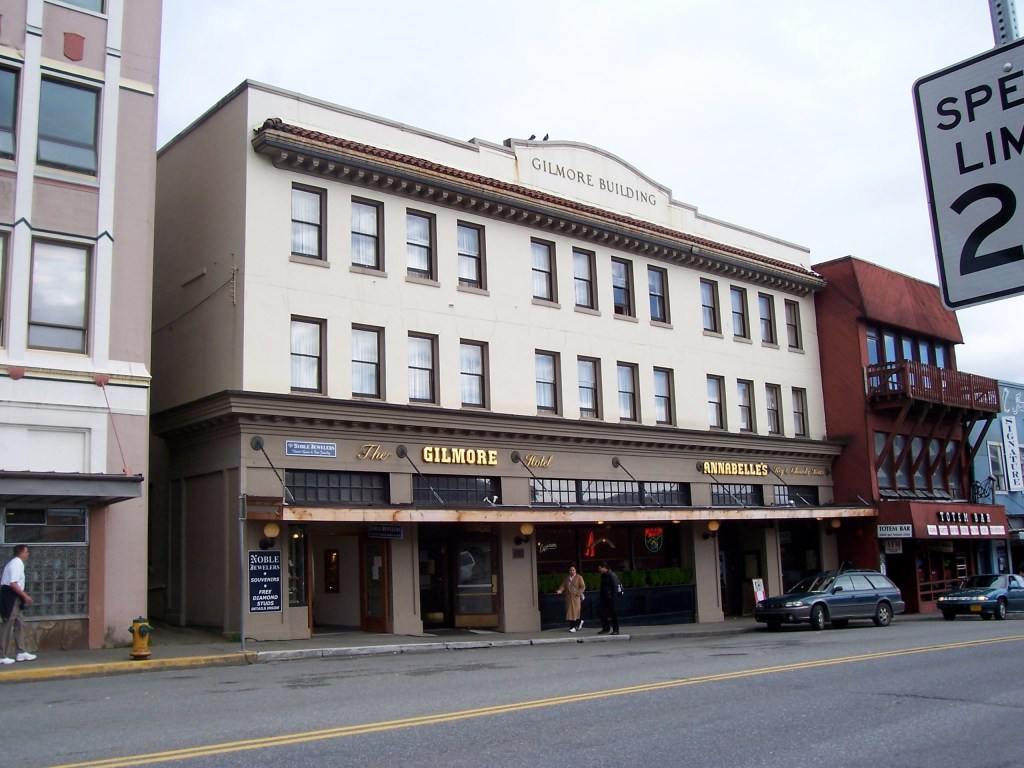
It didn’t take long once downtown before the jostling masses, thus needing to weave my way through the sheer numbers of shoppers, got the best of me and after taking a couple of photos of sights I remembered, the Gilmore Hotel which I stayed in 2007 and Eagle Park (not much had changed in 16 years), I was ready to skip town.
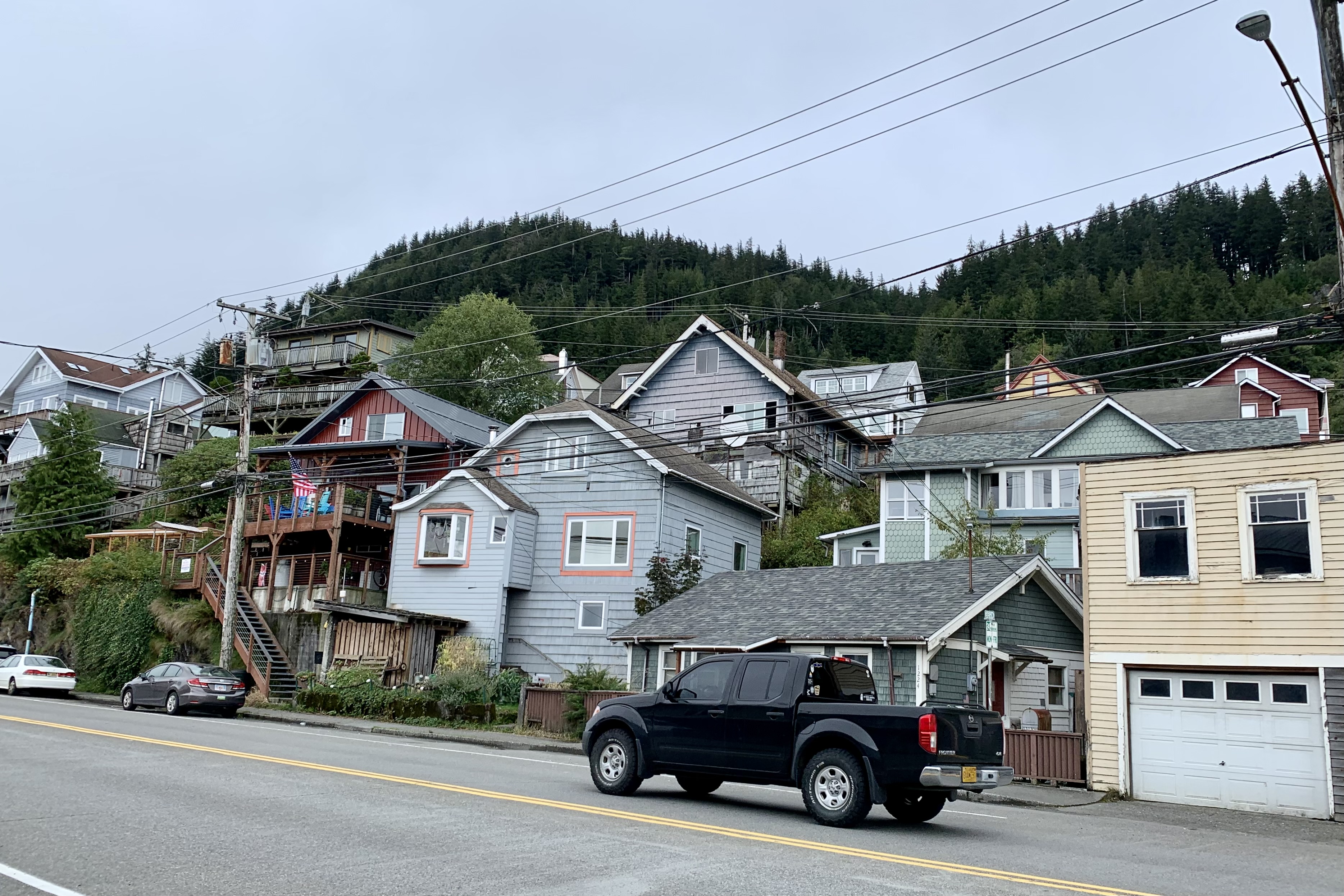
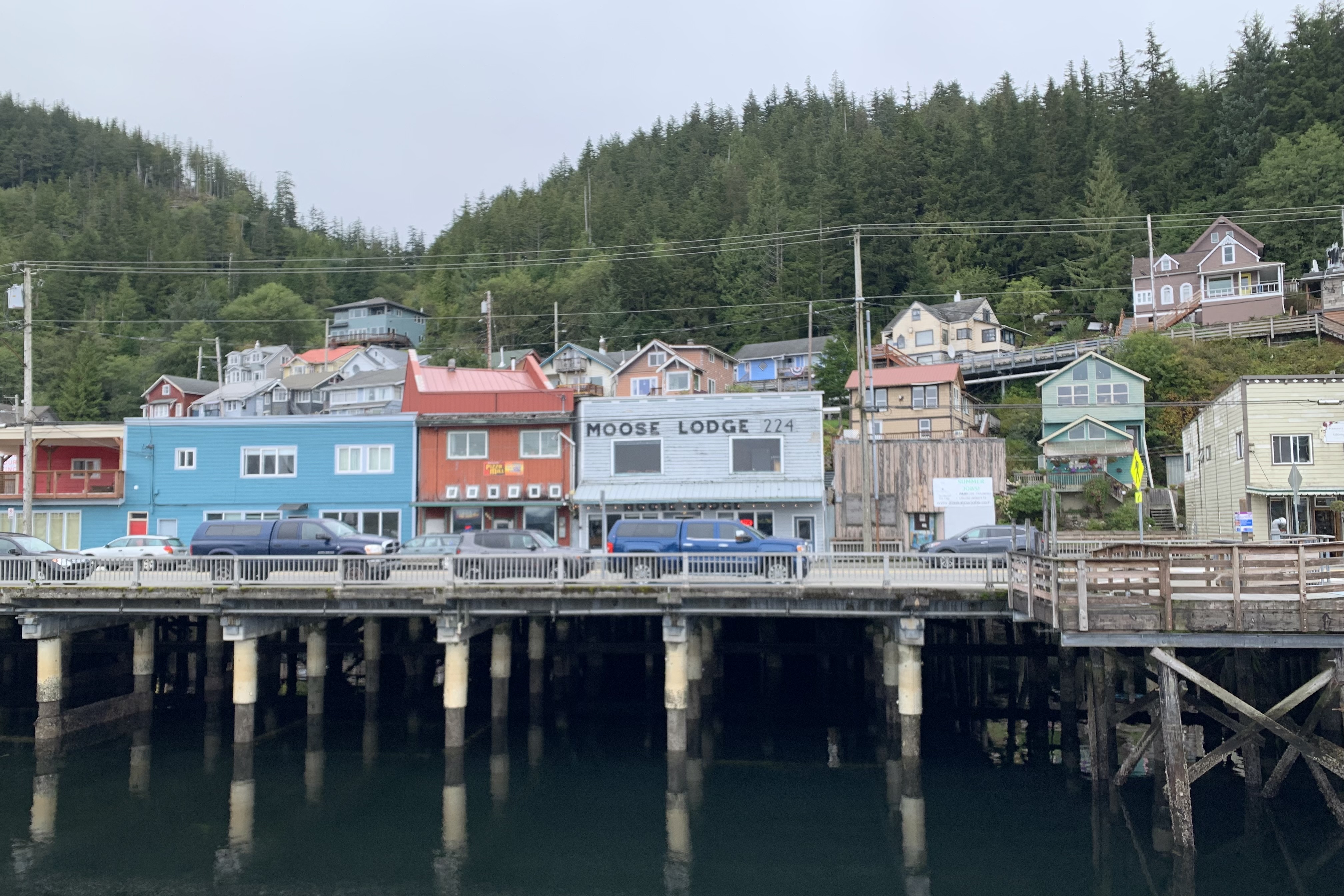
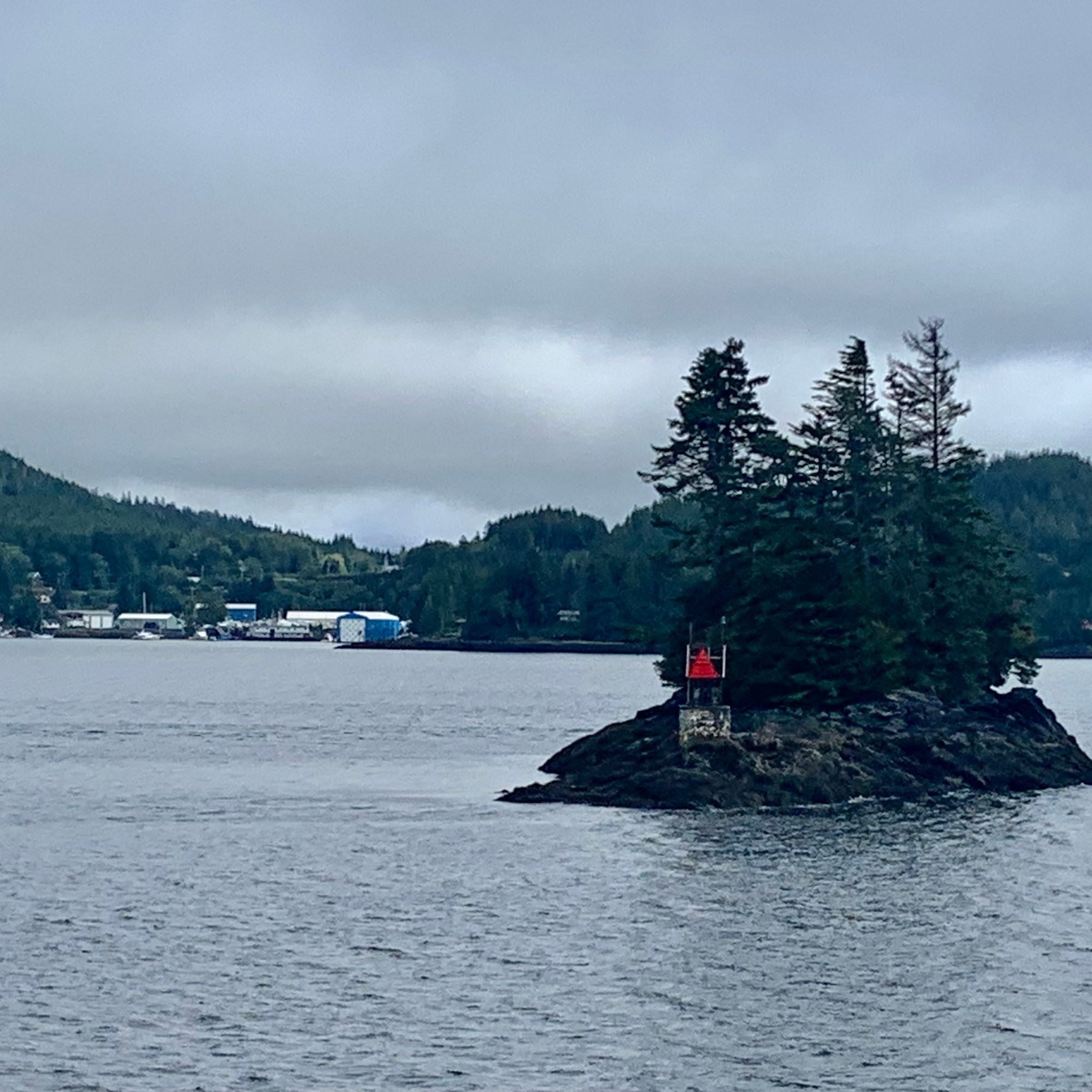
I had decided a nice brisk walk back to the ferry was in order.  The boardwalk meandered past many tourist shops, boutiques, and eating establishments initially and eventually turned broken sidewalk and passed local business and the boat harbors and dockyards. There was a certain charm to the city with so many of it dwelling perched high on the rock coast but I was saddened by the huge similarity between all of the  centers of these  port cities with the plethora of jewelry store, souvenir shops, and eateries.
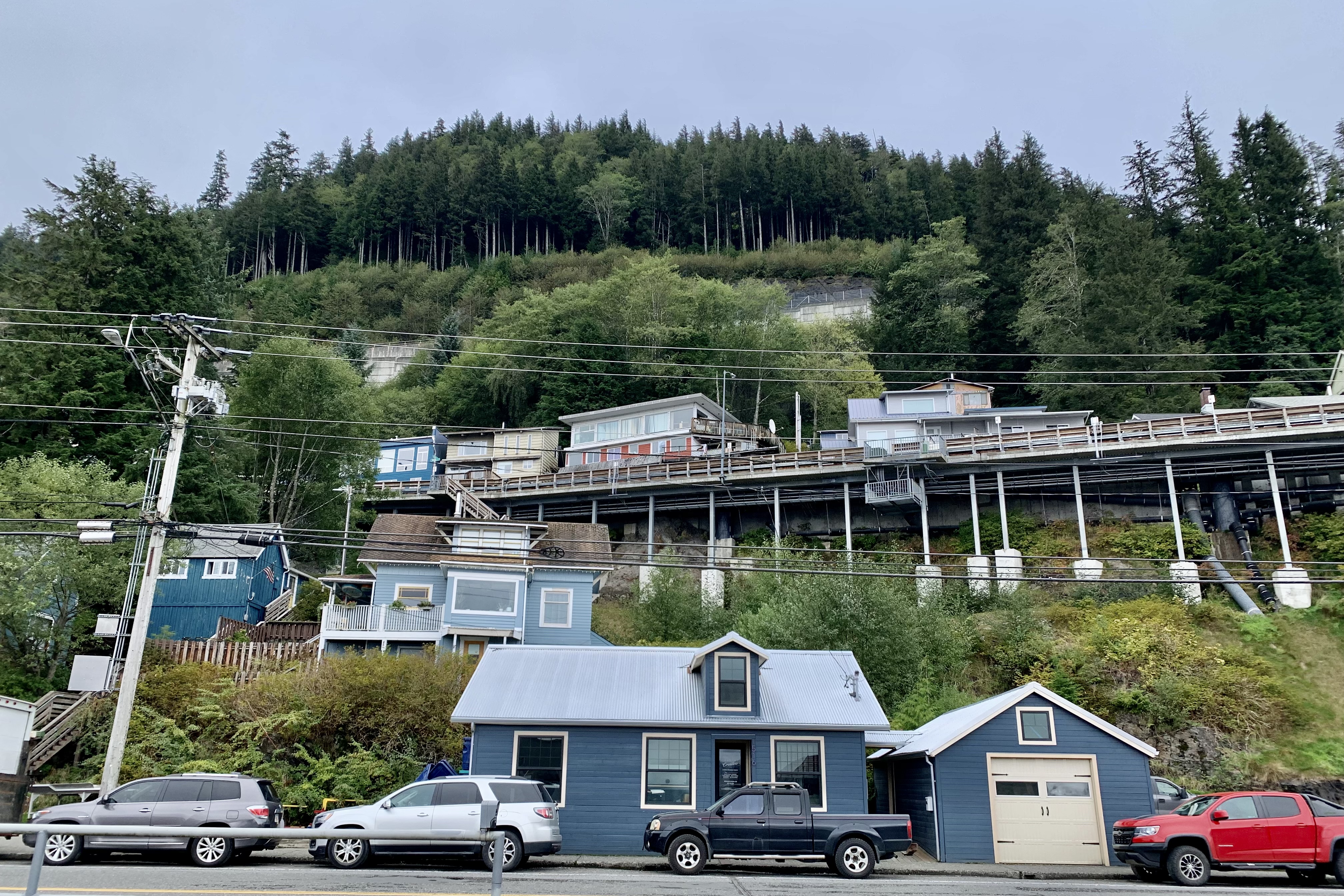
The “best” part of the walk was laboriously trudging many flights of stairs to Water Street for an elevated perspective of the harbor area. It was not the expansive view I was hoping for but nonetheless it was the best quad workout I have had in a while.

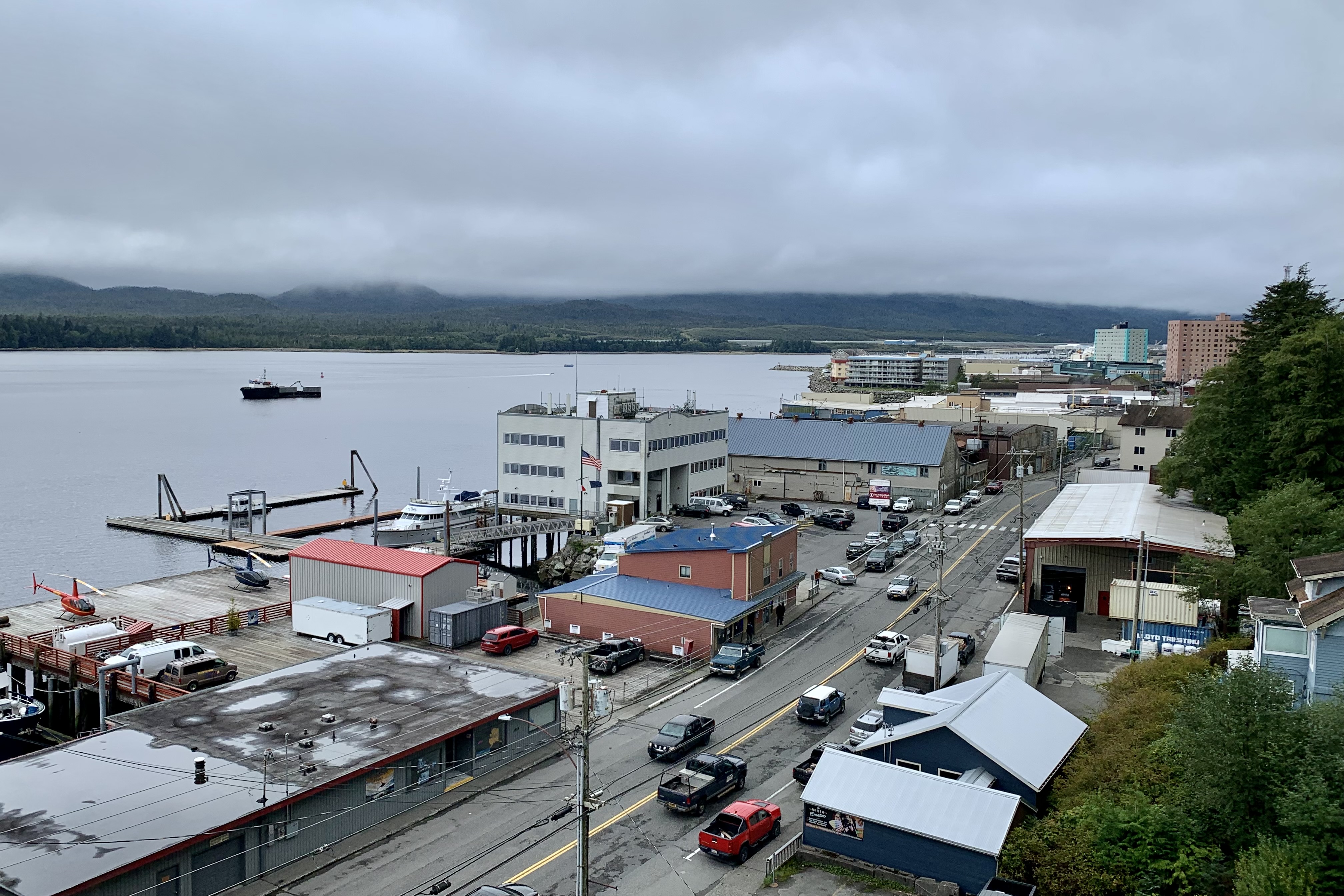
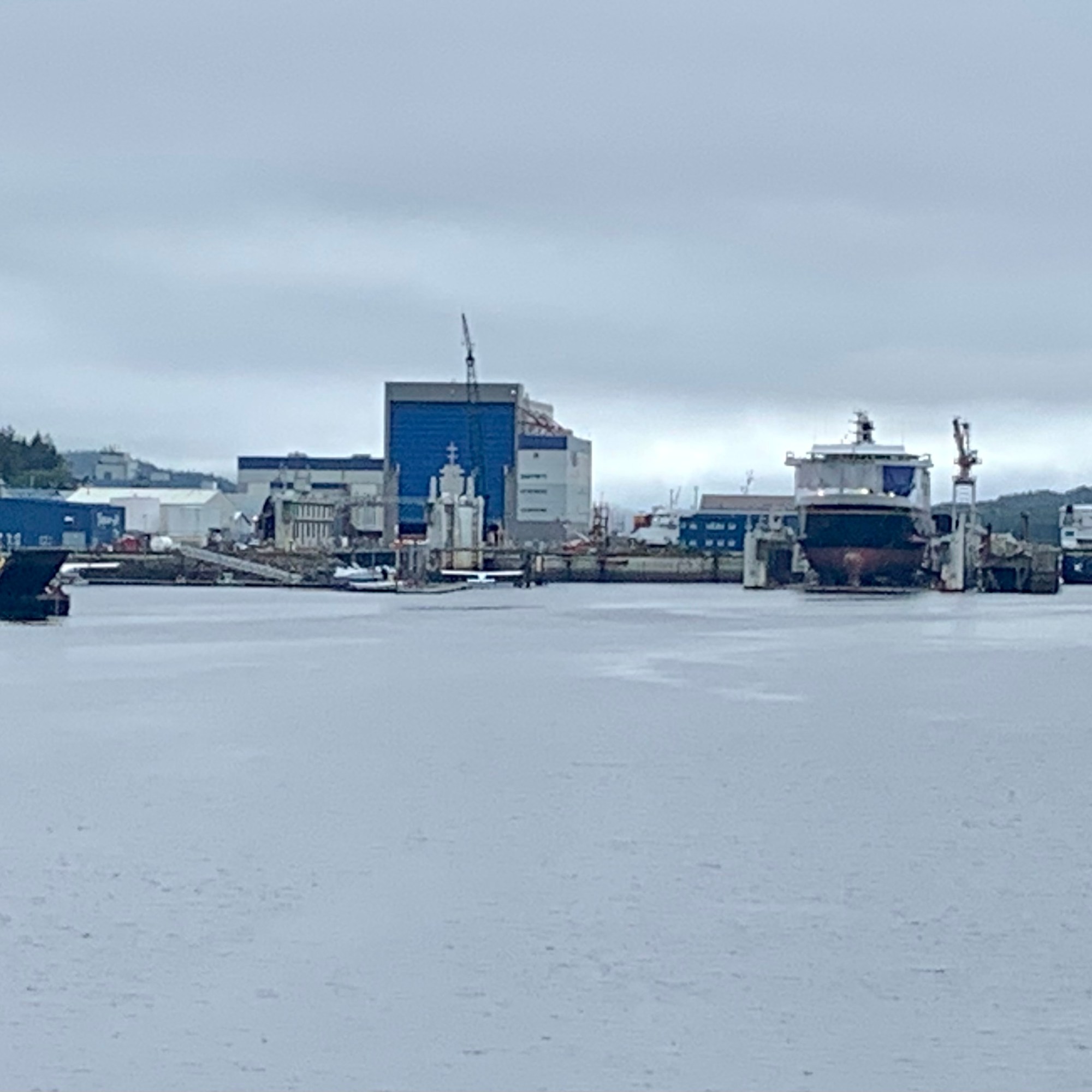
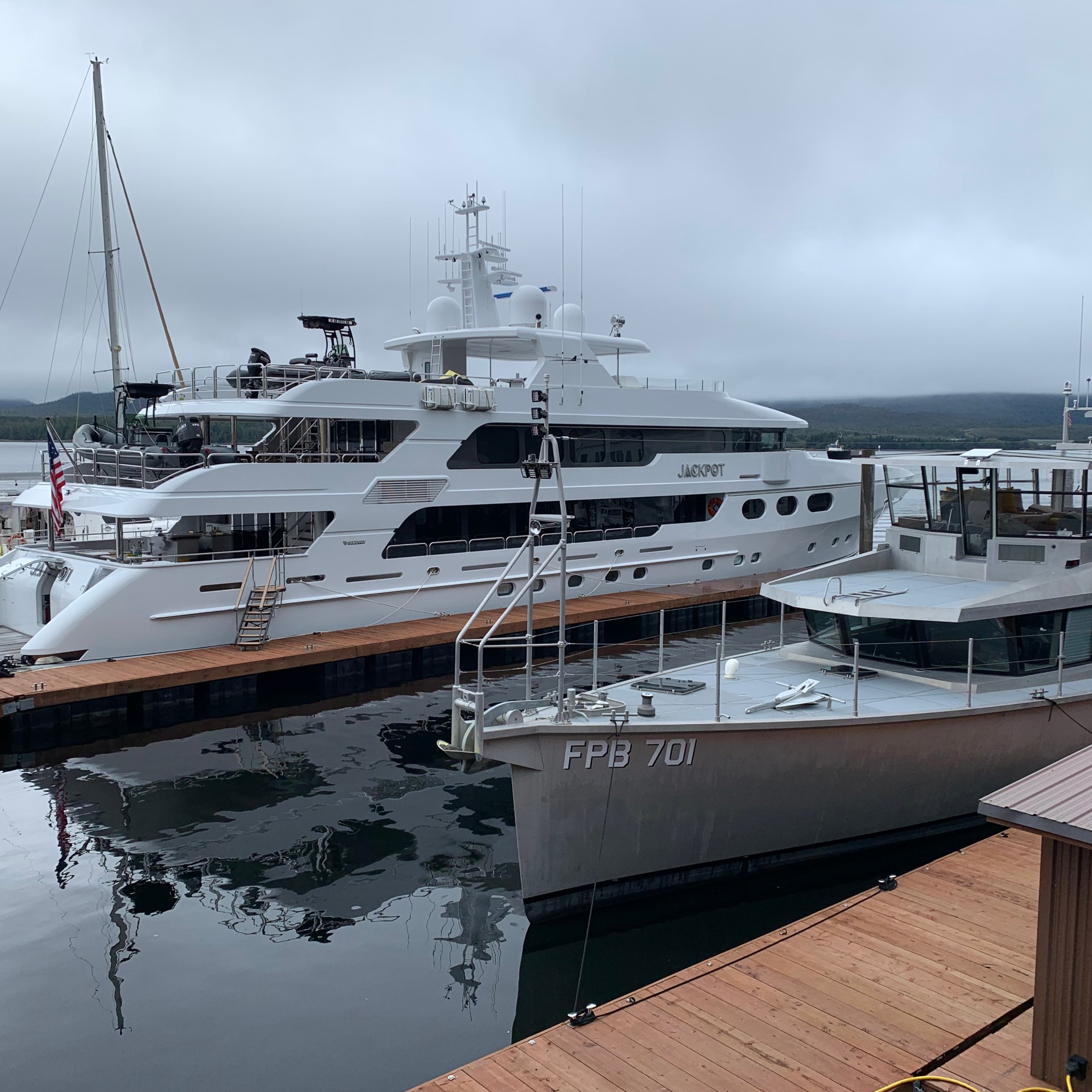
During the meander back to the Columbia, I wanted to experience the heartbeat of the other industries in addition to tourism frenzy contributing to the economy of Ketchikan as I viewed docked along the harbor colorful fishing boats, cruise ships, yachts, ship yards , cargo container storage lots, and local businesses.
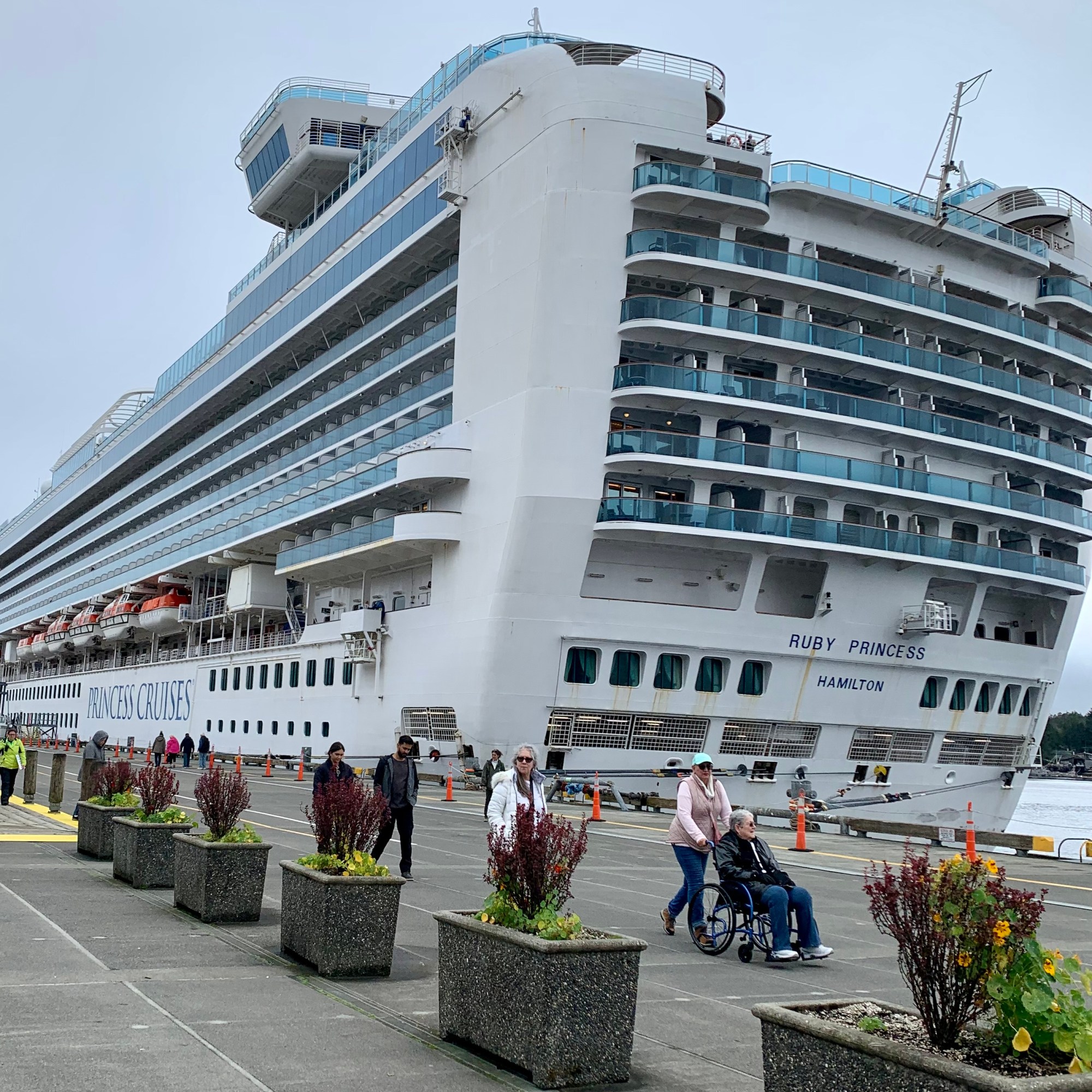
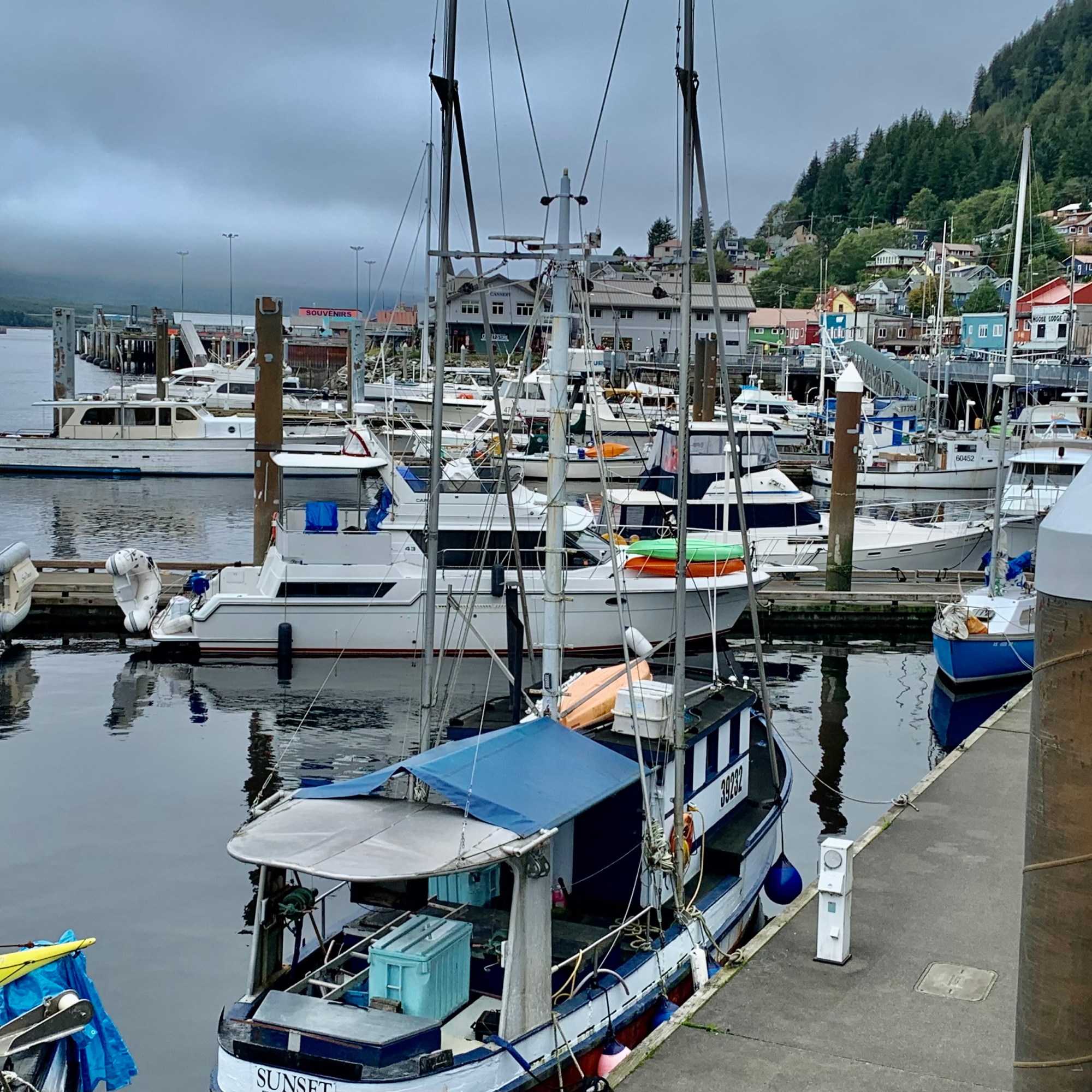
Departing Ketchikan around 5:00 pm, we would be “at sea” for the next 40hours as there were no additional docking until the final destination of Bellingham Washington. The scene out of Ketchikan was similar to the entry with the coastline shrouded in clouds and fog.

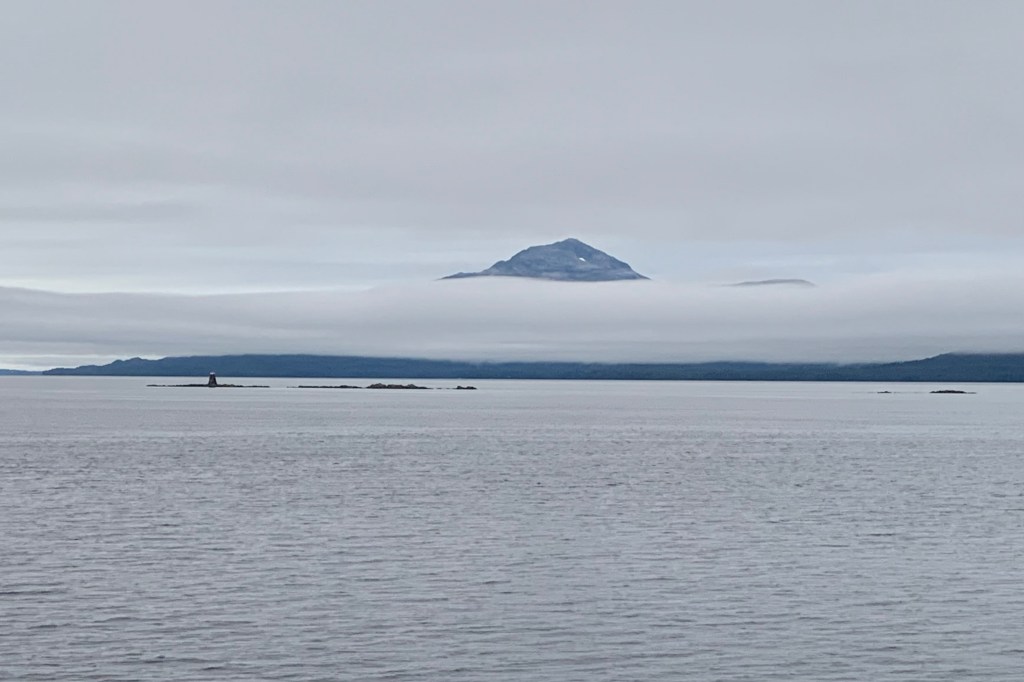
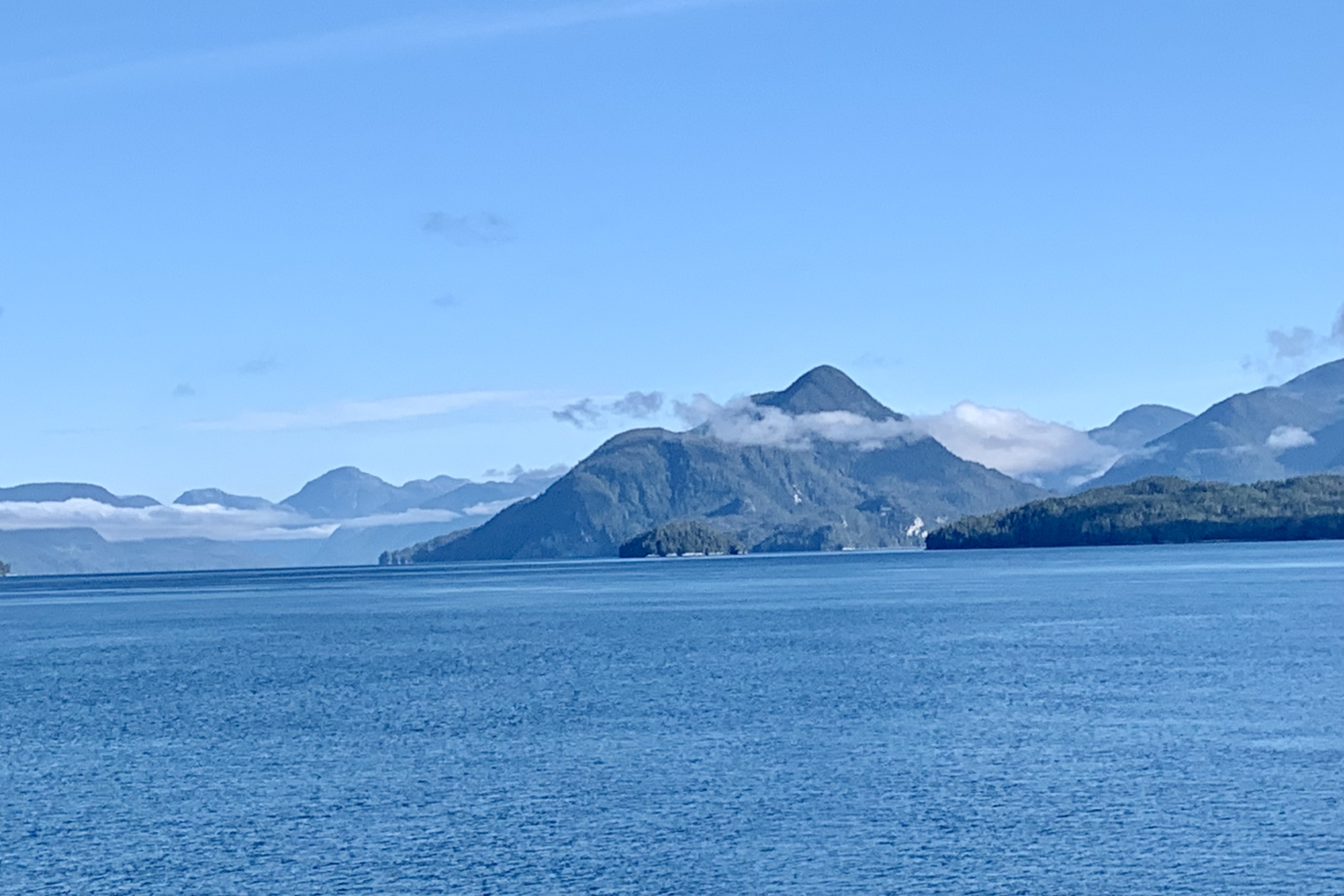
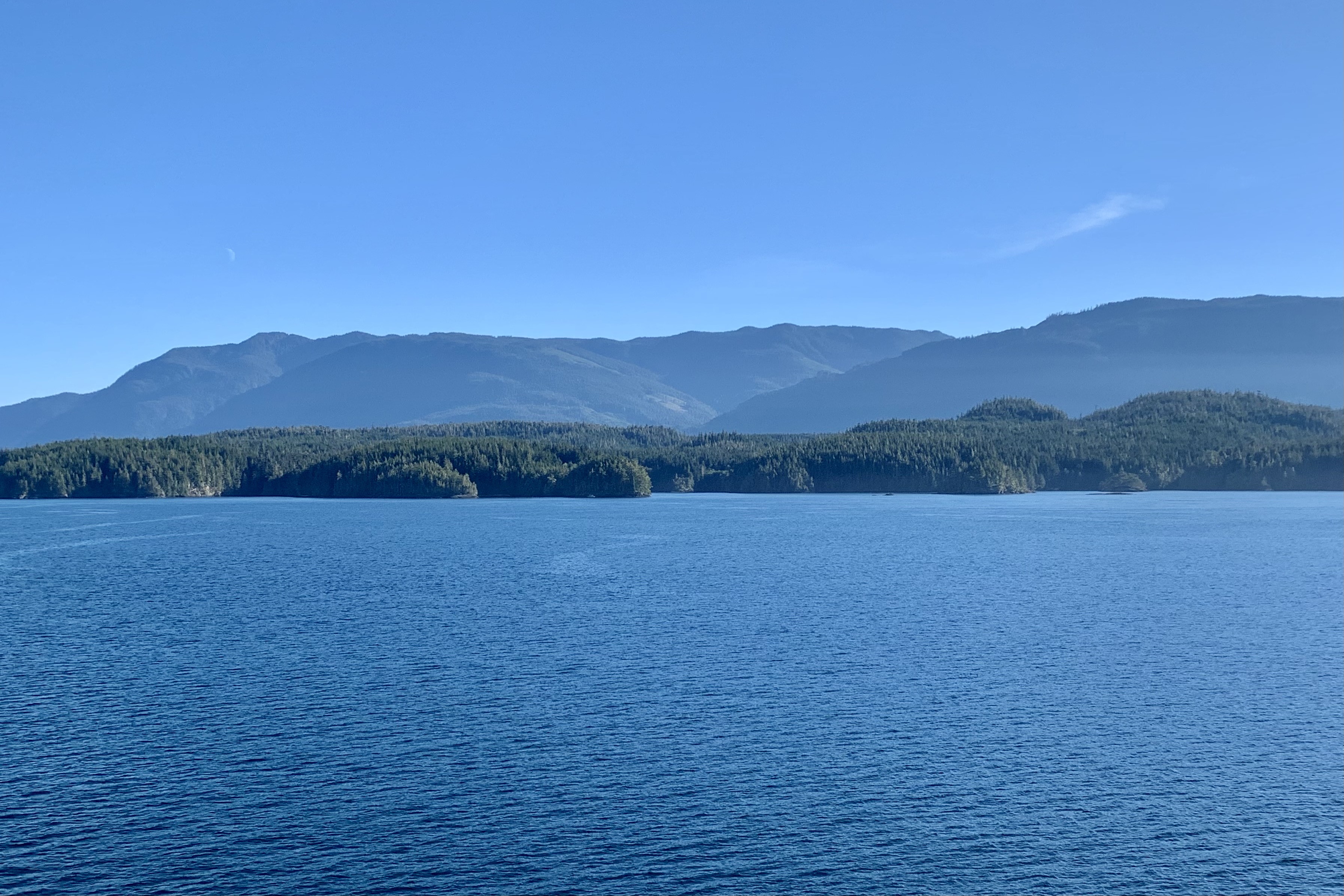
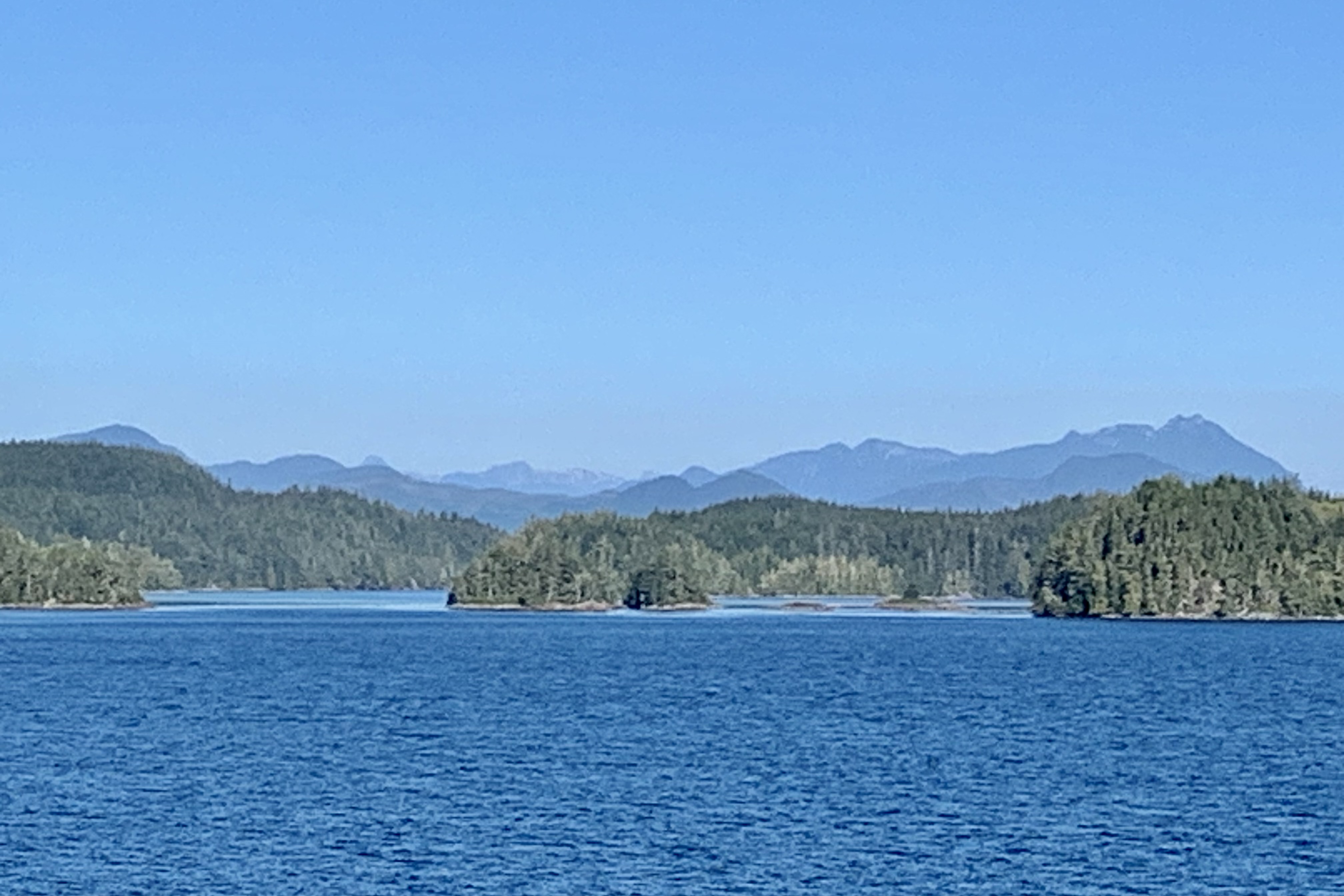
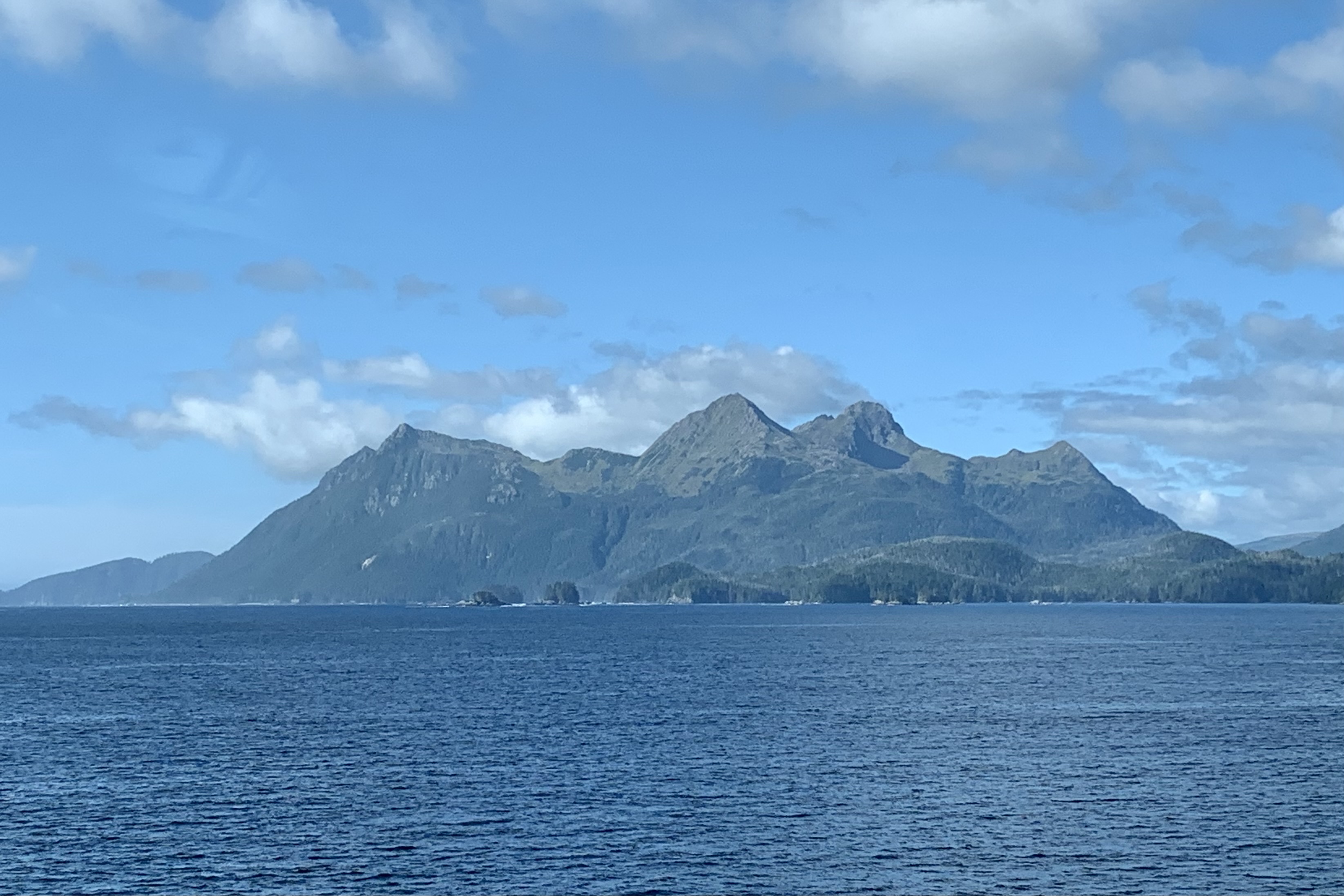
With fewer distractions, the following day was time to catch up on some reading and writing. Since there was no wi-fi available on the Alaska Maritime Ferries and very few spots with cell phone reception, it was a time for reflection, relaxing on deck as the day eventually turned out beautiful blue skies and scenery of forested islands and undulating mountain with rounded contours, an occasional jagged peak punched in between and shimmering ripples on the water. Overall the day’s journey was one of serene beauty and had calming hypnotic effect.
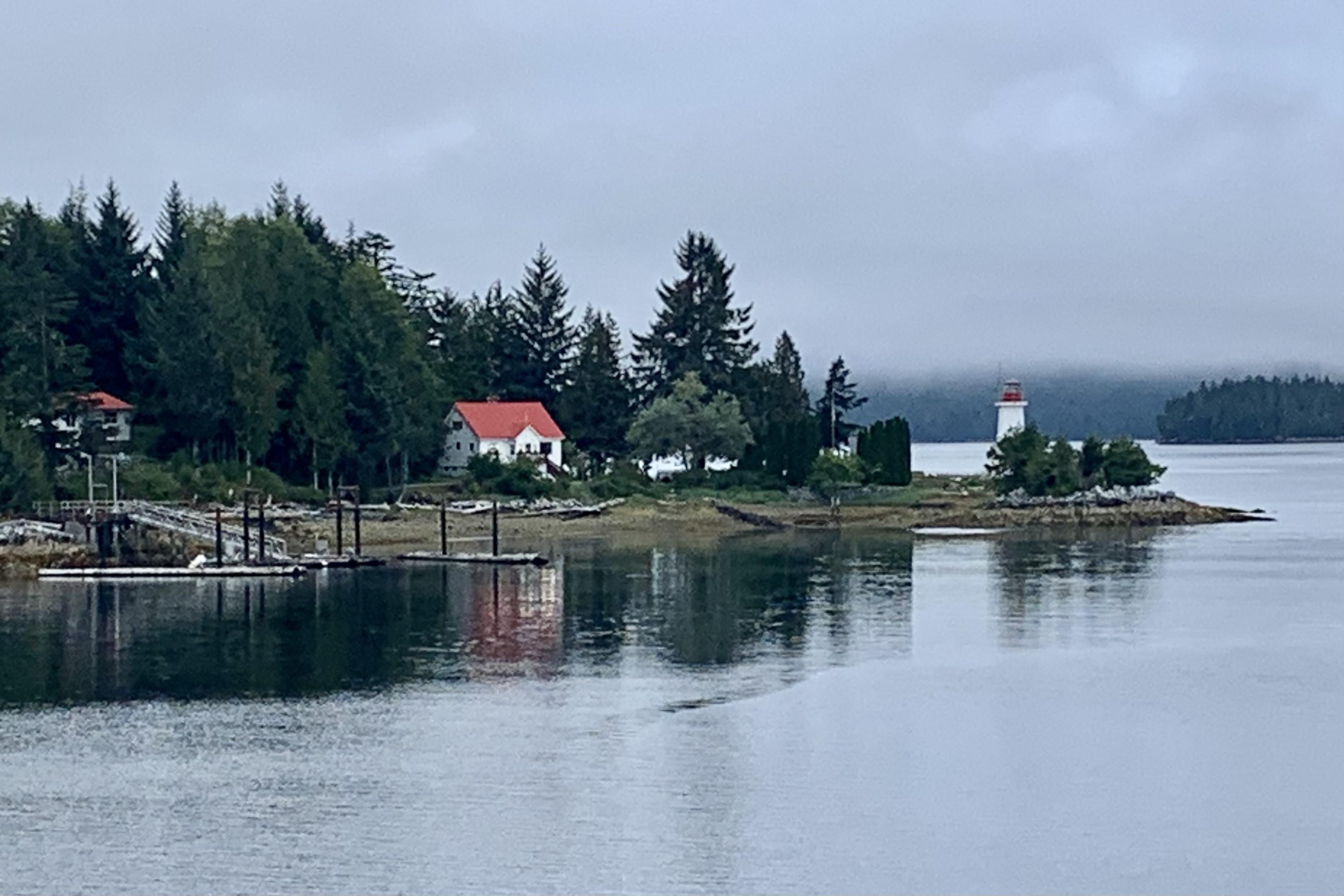
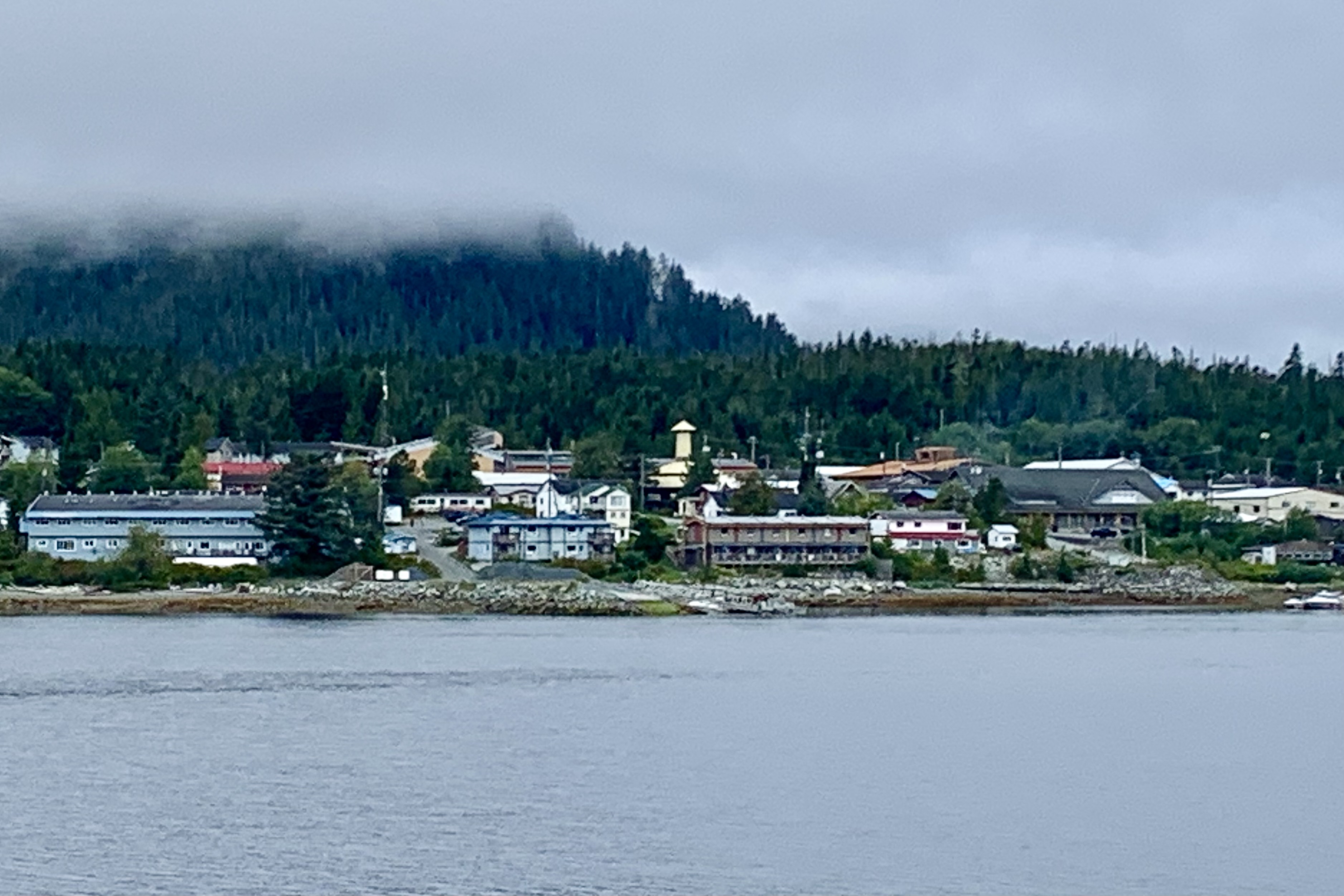
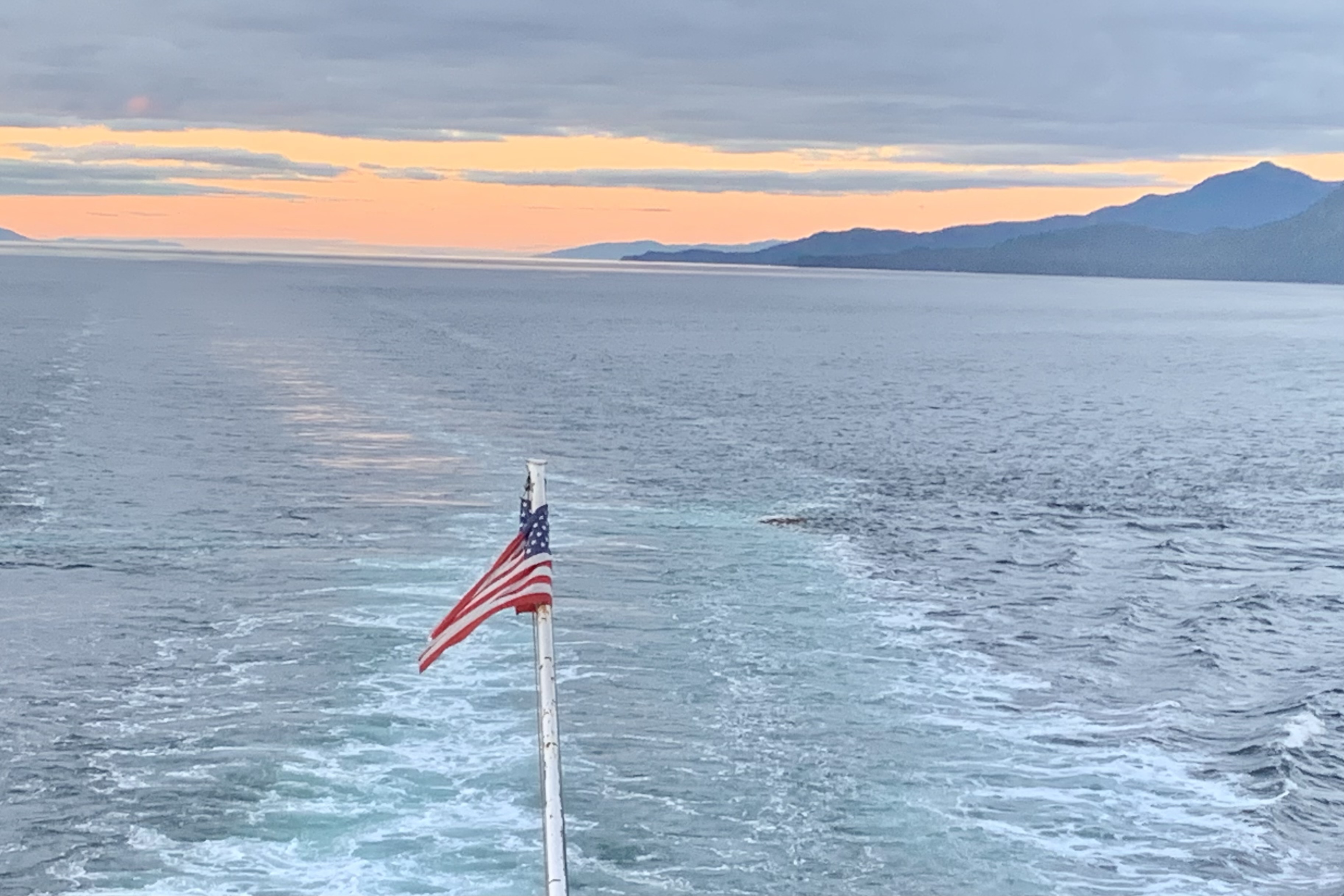
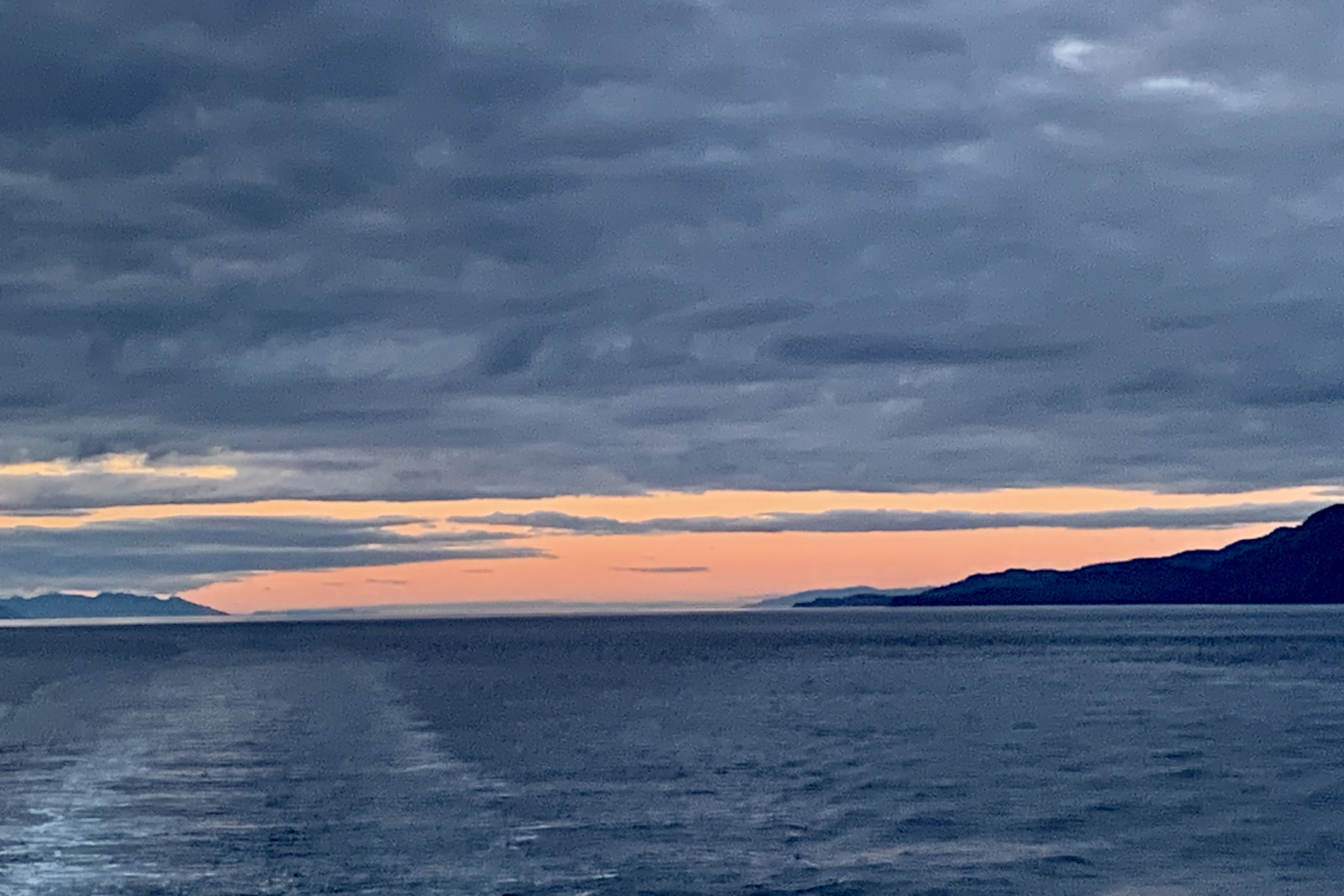
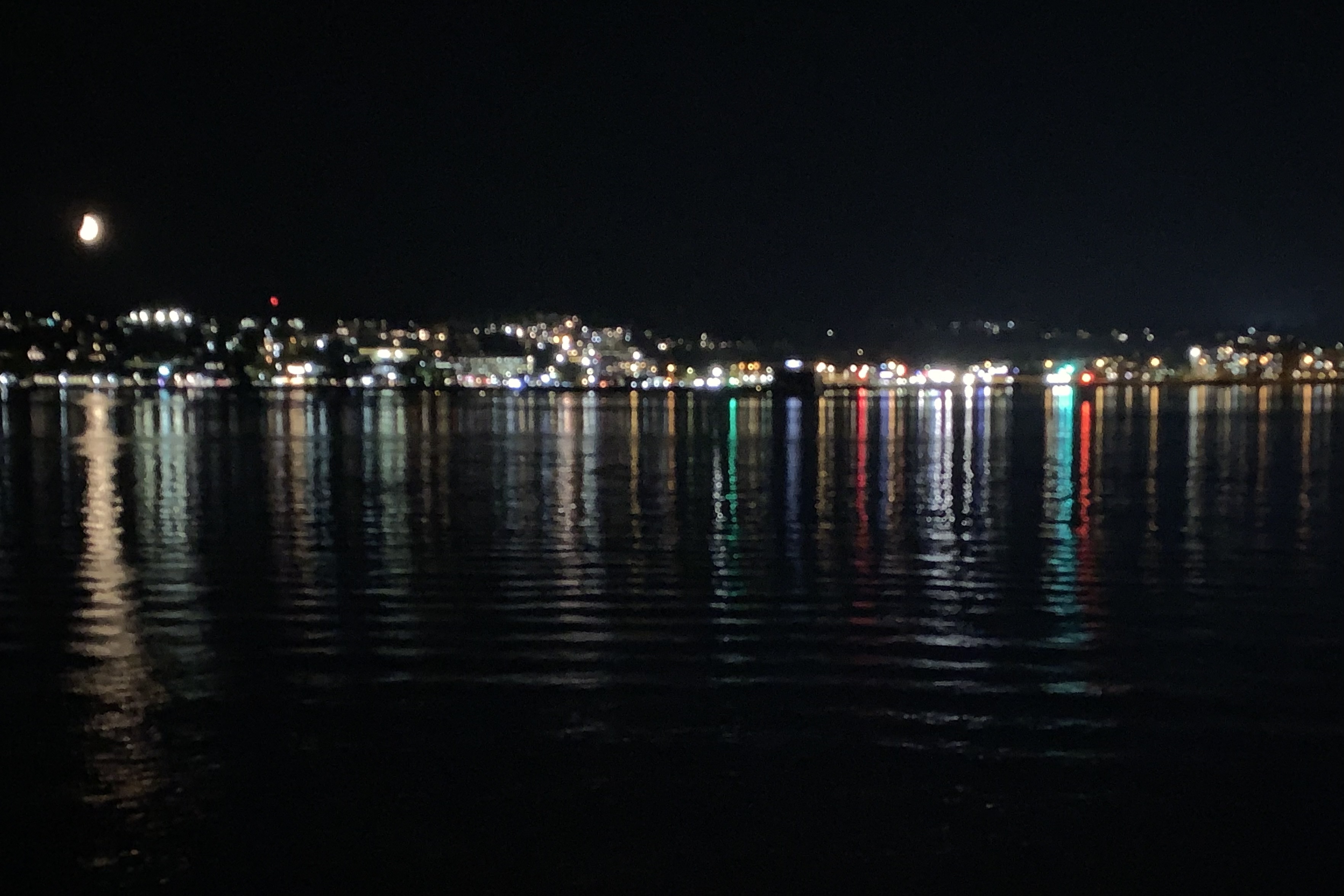
The tranquility of the evening was enhanced by a sky artistically painted with hues of tangerine, gold and orange, the moon’s reflection on the water , and the lights of the cities dancing along the shore. But it was time to get down to the business of preparing for the off-loading the following morning. The evening car deck call was an opportunity to start transferring all of the not essential items that had mysteriously accumulated in the cabin, so as to facilitate the exit of the myriad of motorized vehicles the following morning. Being quite near Miss Priss’ maritime domicile was a huge advantage as lines of people were traipsing down the stairs or waiting for the elevator with there massive suitcases, coolers, backpacks, and made in China treasures from the ports …
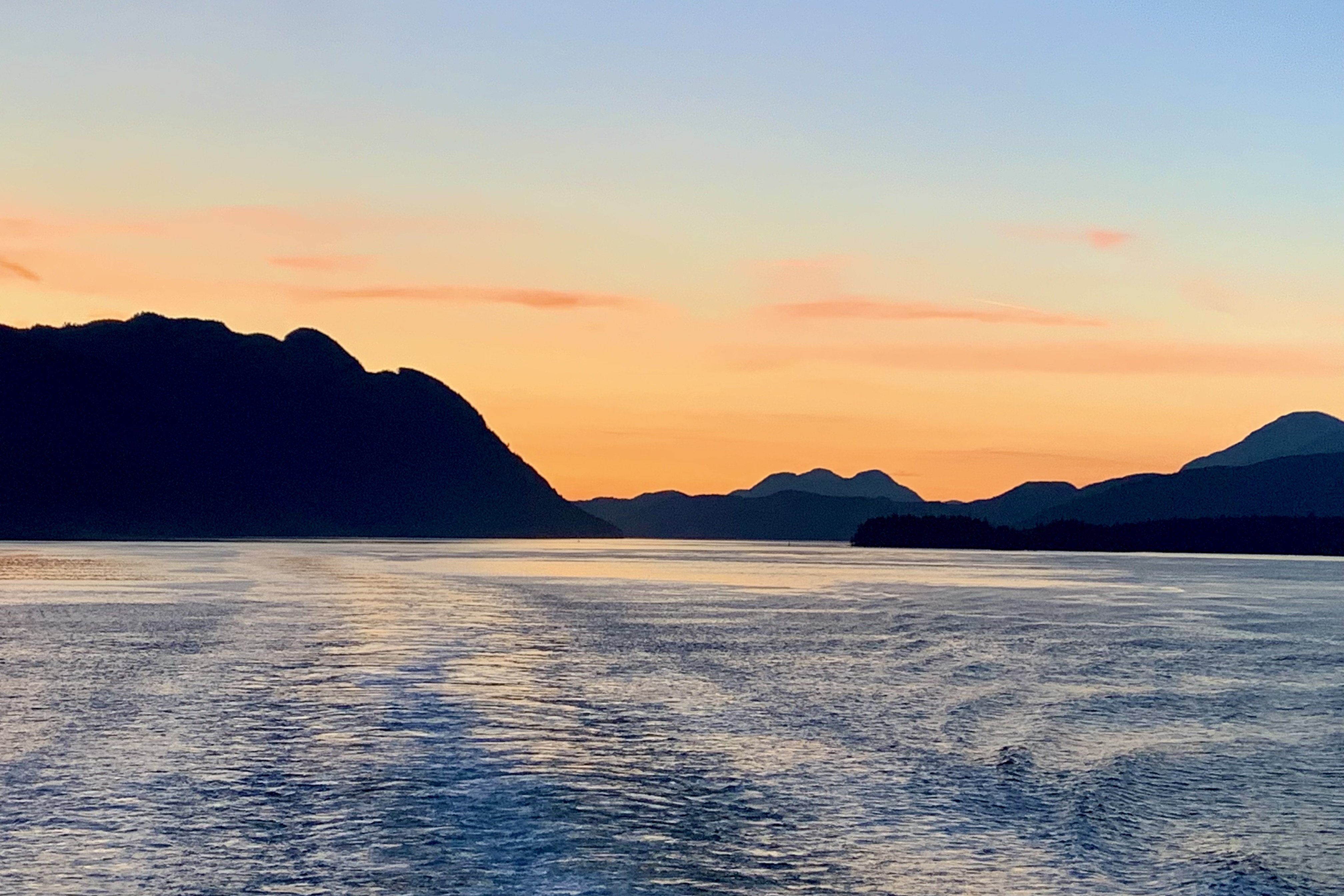
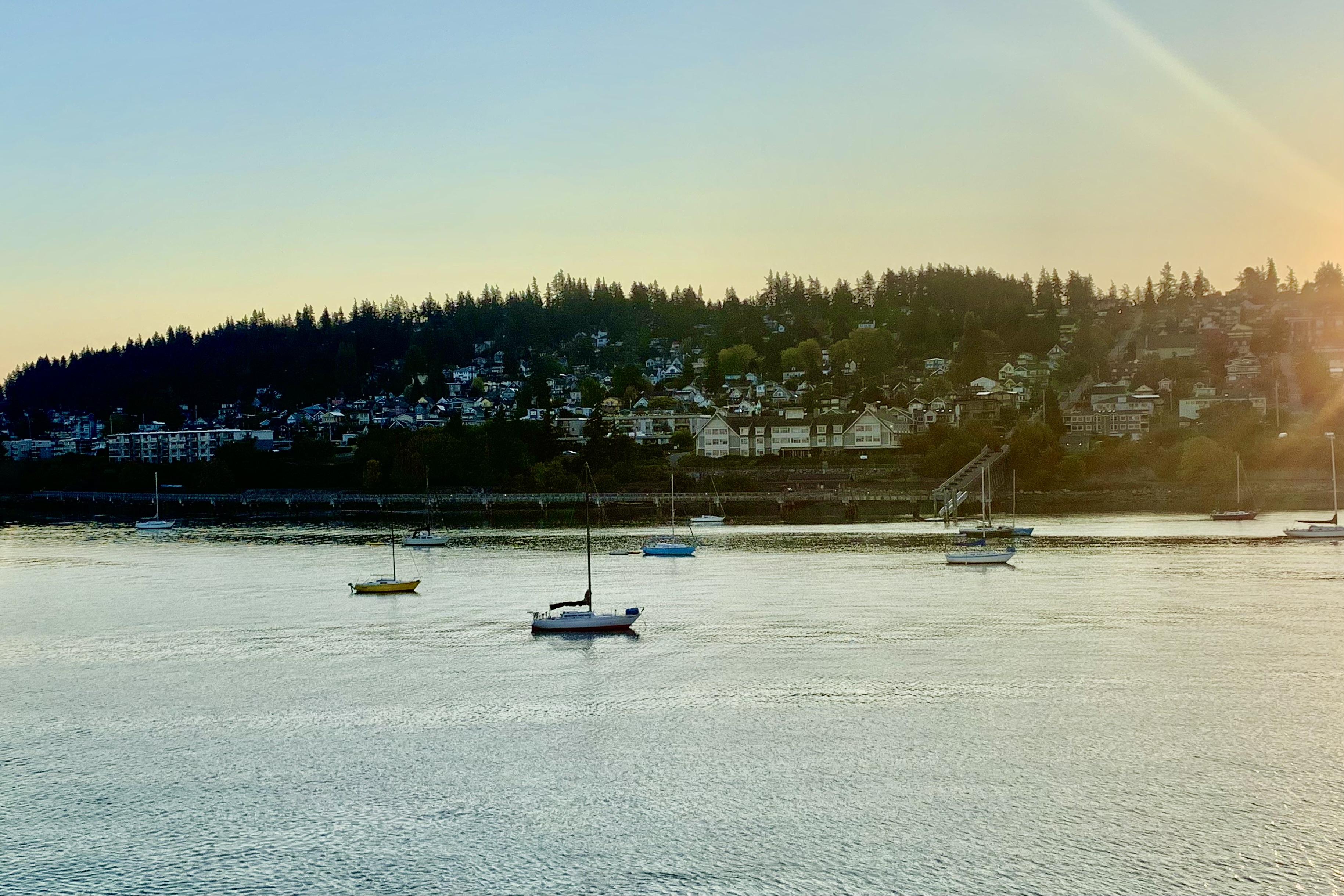
The very loud speaker broadcasting through the ship greeted us around 5:30 am and forceful banging on the door to hopefully awaken any stragglers who might be malingering and not ready to hop into their vehicles and tear out of the belly of the ferry upon docking, assured me that I would shortly arrive in Bellingham. Heeding the first summons to get ready, I was able to buy a cup of coffee and experience the a golden sunrise as we approached the Bellingham-Fairhaven Harbor.

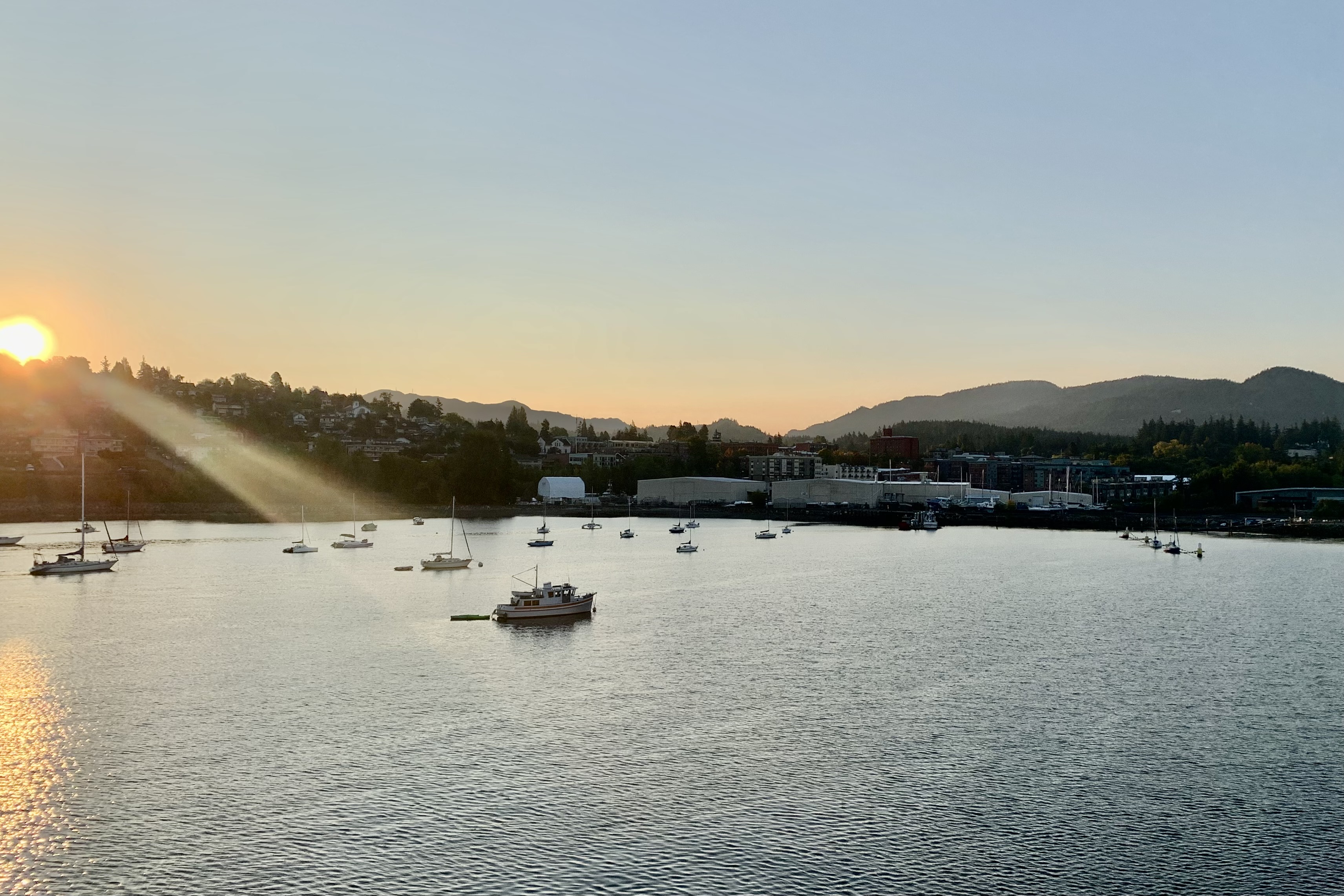
I would soon be on the road to Salem Oregon to spend the week-end with my daughter and grandchildren, but savored the final moments of this nautical adventure. There was no Ruby Princess in Bellingham nor would I have traded my adventure on the Alaska maritime ferry Columbia for a berth on the Ruby Princess. Despite all the amenities a large cruise ship could provided, the fewer distractions of a simpler vessel like the ferries was a fitting way to end my journey of living in “The Last Frontier”, so named because of its remoteness from the “lower 48″states, as well as its rough environment and climate,


Cross Cars, a not so “hot” Hot Springs, and Hoofed Ruminants

After the incredible expedition in Lake Clark and Katmai National Parks,  I had a week to fill with adventure before I would board the Alaska Maritime Ferry “Columbia”   in Skagway for the trip to Bellingham Washington. The reckless adventurer in me toyed with the idea of driving the Dalton Highway, a 414-mile stretch of gravel and dirt that runs from north of Fairbanks up to Prudhoe Bay. Remote it is. There are only three very small towns along the way from the midpoint Coldfoot to the end and there are no gas stations, restaurants, rest stops, or hotels the entire 240-mile stretch. It is stated that The Dalton Highway is brutal on ALL vehicles. So somehow the sane self realized that this undertaking would be sheer folly for an older adult female traveling solo in her Jeep Compass since I would have to camp, get extra tires, buy all the supplies, emergency equipment and food, so I started romanticizing  a different Alaskan style adventure with a stay at an Old Roadhouse, a soak in the lauded Chena Hot Springs, a warm cozy night at Caribou Cabin in Tok, and a return visit to the beautiful Hidden Valley B & B in Whitehorse , Yukon Territory before arriving in Skagway.  

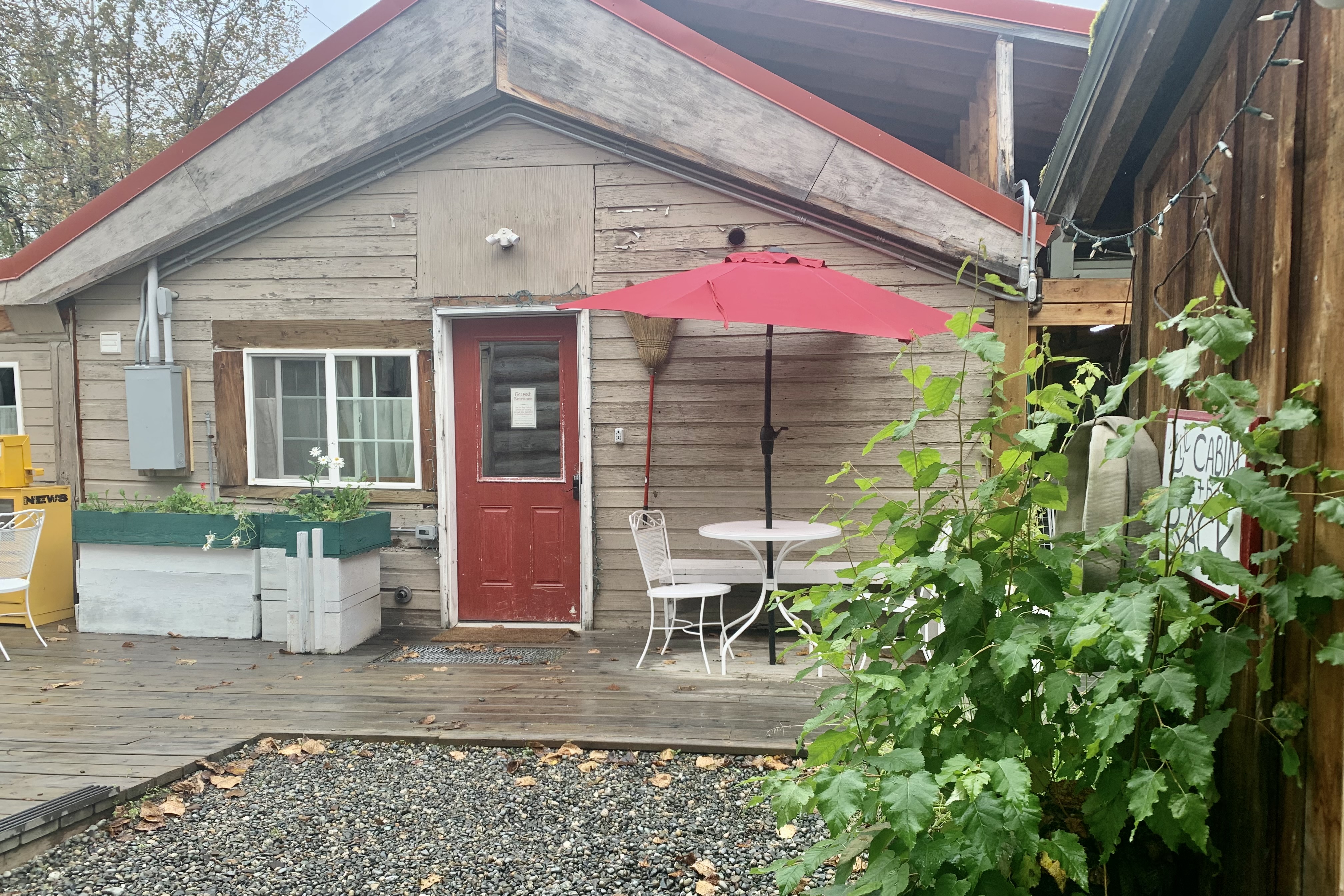
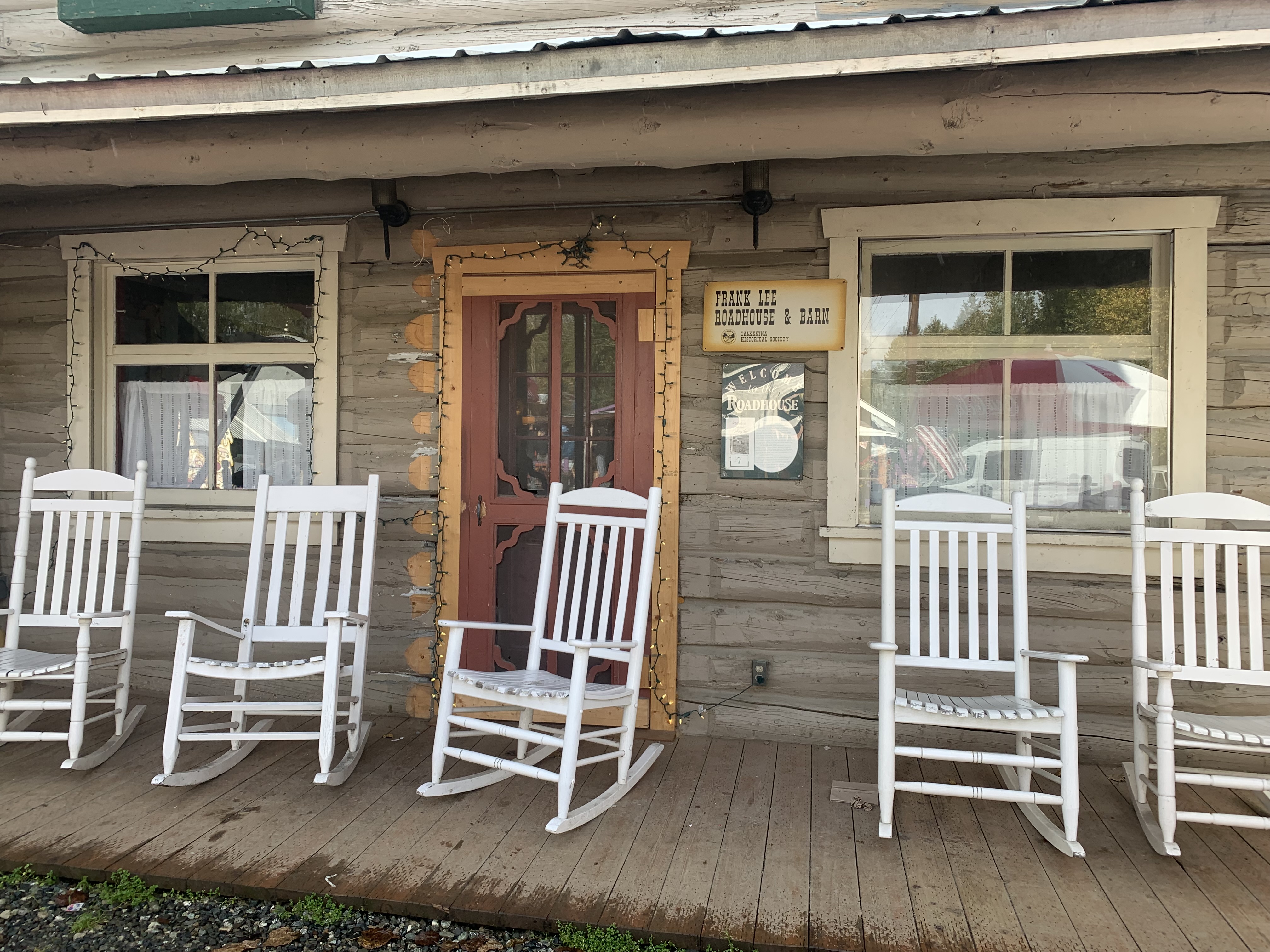
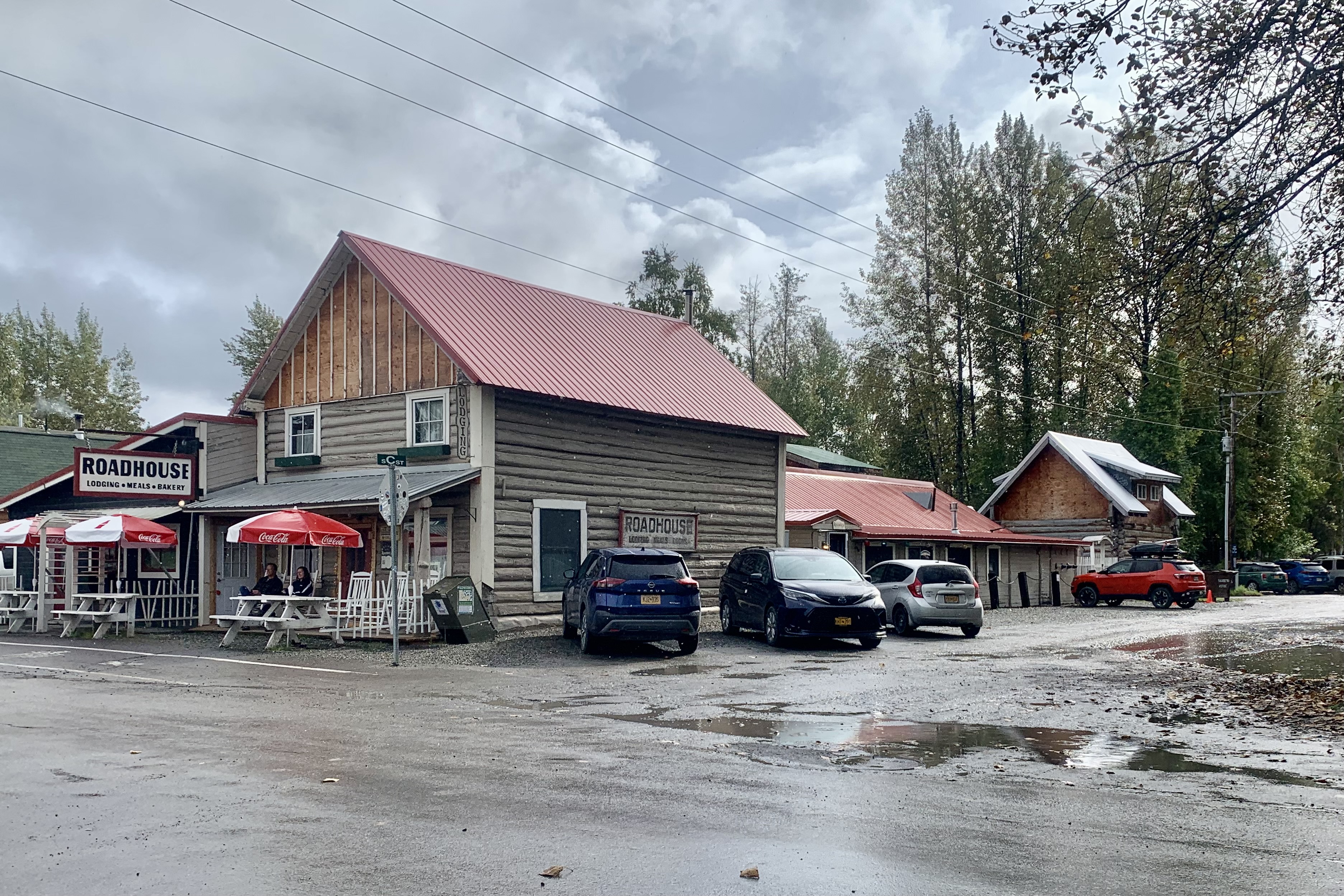
I had no interest in going back to  Soldotna so I booked my first two nights at the Talkeetna Roadhouse Inn. I had spent a few hours there in August of 2019 and had a meal at the roadhouse. It was a very lively bustling place known for its hearty meals, served family style at big tables, and lodging which had a tremendous amount of historical charm. It’s bakery was famous for its cinnamon rolls, pies, cookies and breads.  So I was eagerly anticipating a repeat experience when I booked the ‘Lil Cabin in the Back for two nights. Much to my disappointment and dismay the place was as quiet as a tomb, unpopulated, and not a soul around. The bakery had very limited fare and only on weekends. 

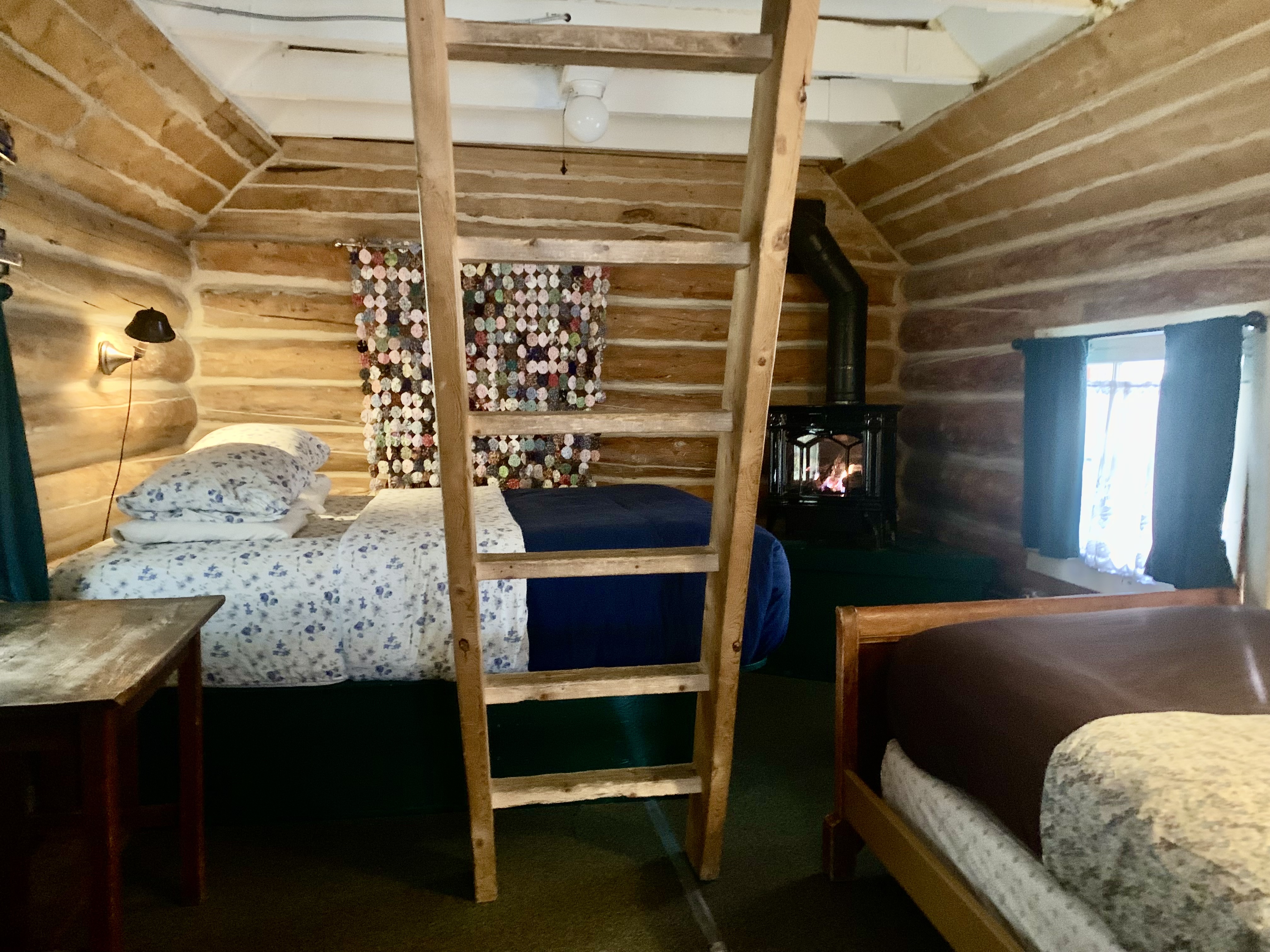
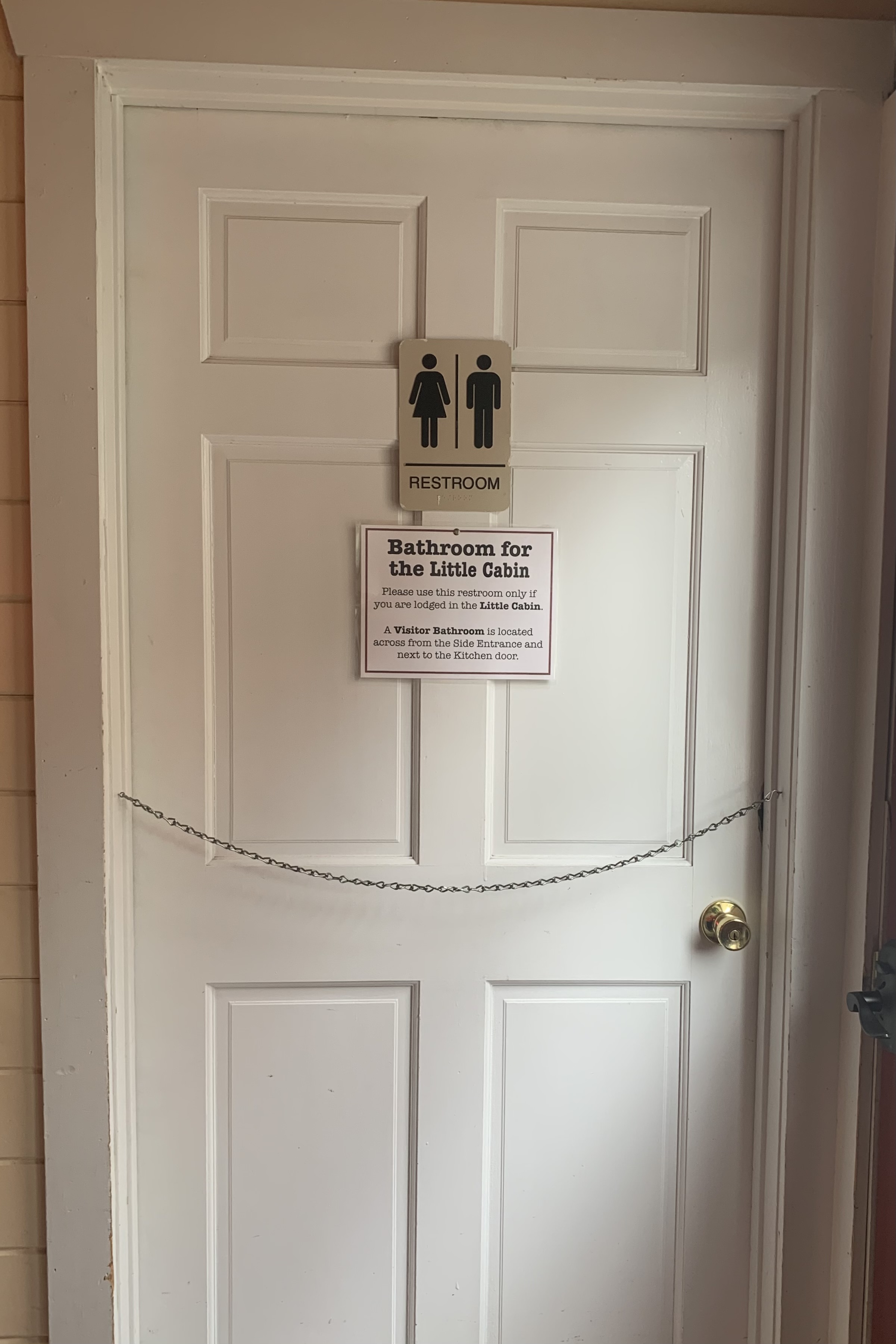
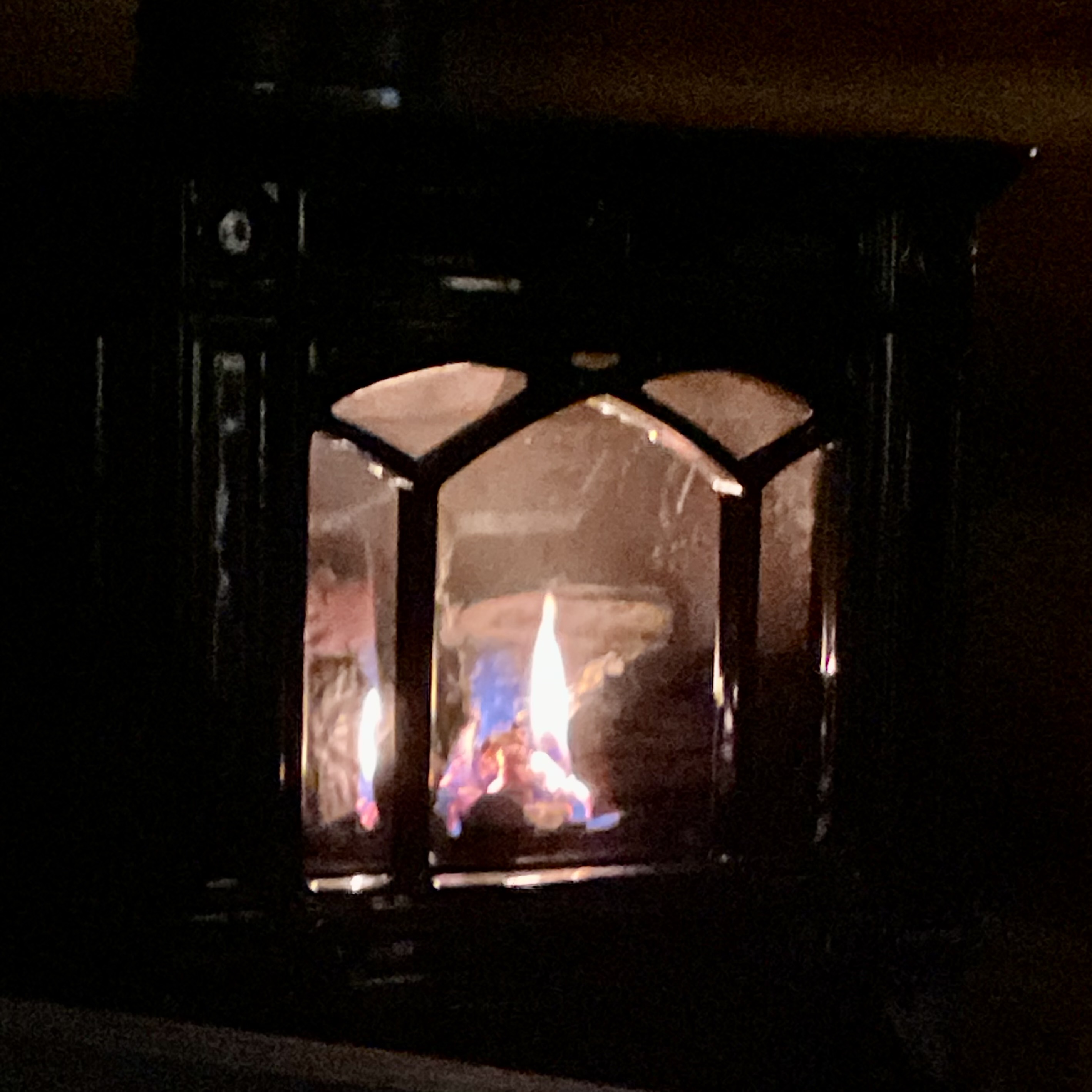
Seems the Roadhouse is focused on lodging only and the bakery and restaurants are the victim of COVID.  A big point made in the booking information was that guest no longer had to share bathroom facilities as bathroom are now assigned. My ‘Lil Cabin in the Back was assigned a bathroom in the main building as it did not have its own water supply. It’s what is termed a “dry cabin” and this incidentally gave me a modified camping experience of trotting out of my shelter in the drizzle for a middle of the night peeing adventure. BUT aside from that, the dry Cabin was delightful with big comfy queen bed with a view of the gas fireplace, a micro-wave and small refrigerator, a french press coffee pot, wi-fi…

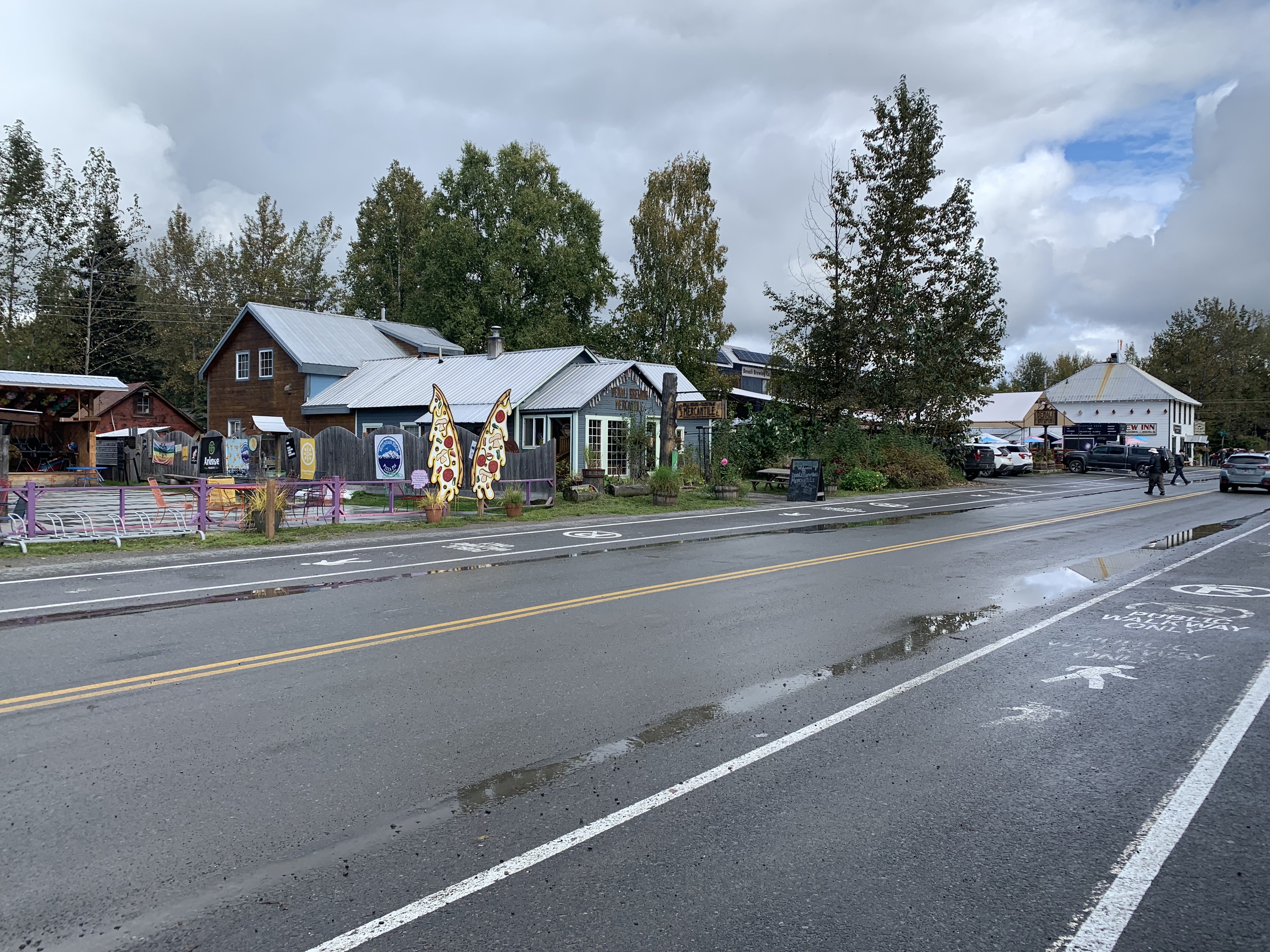
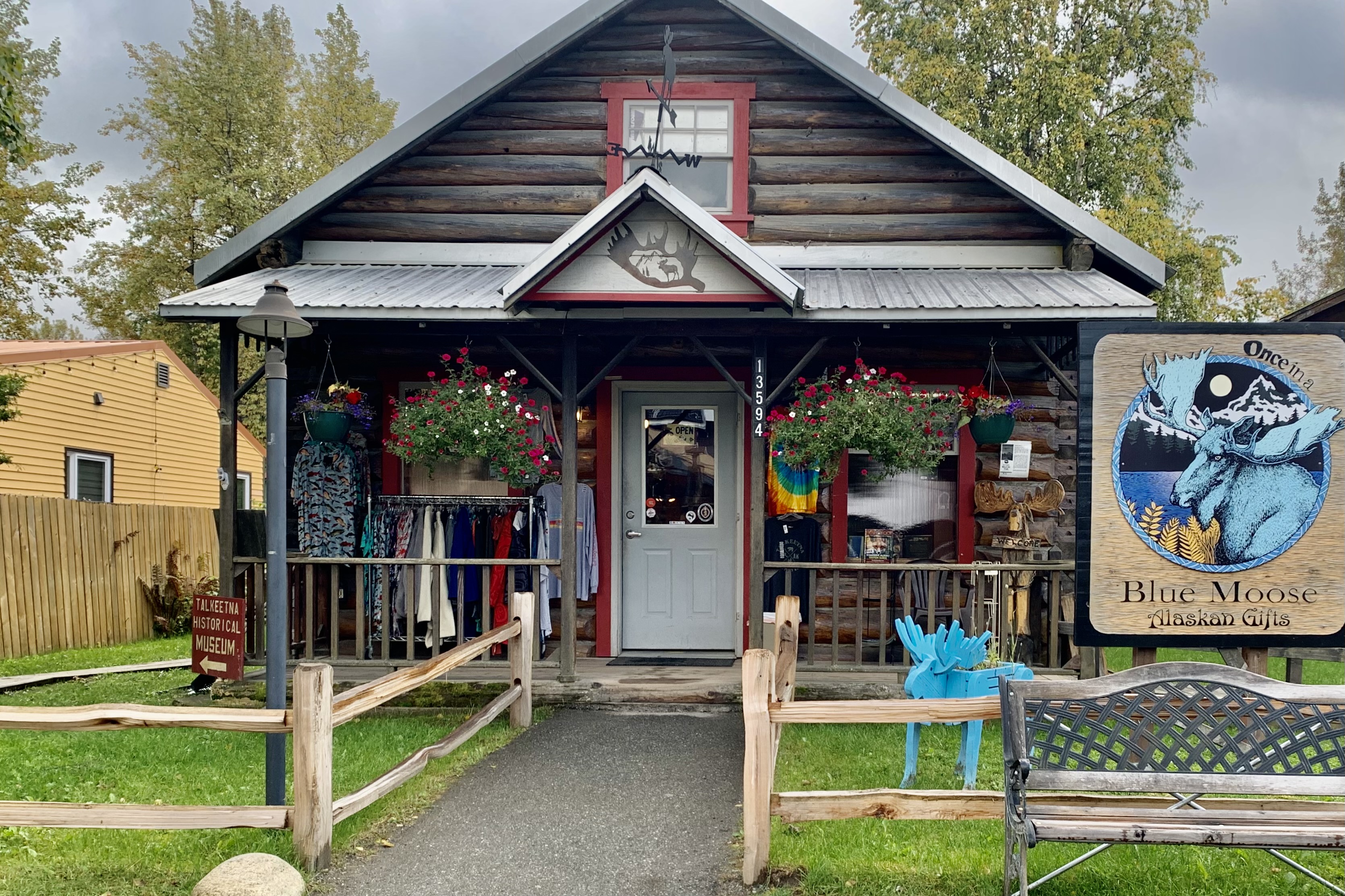
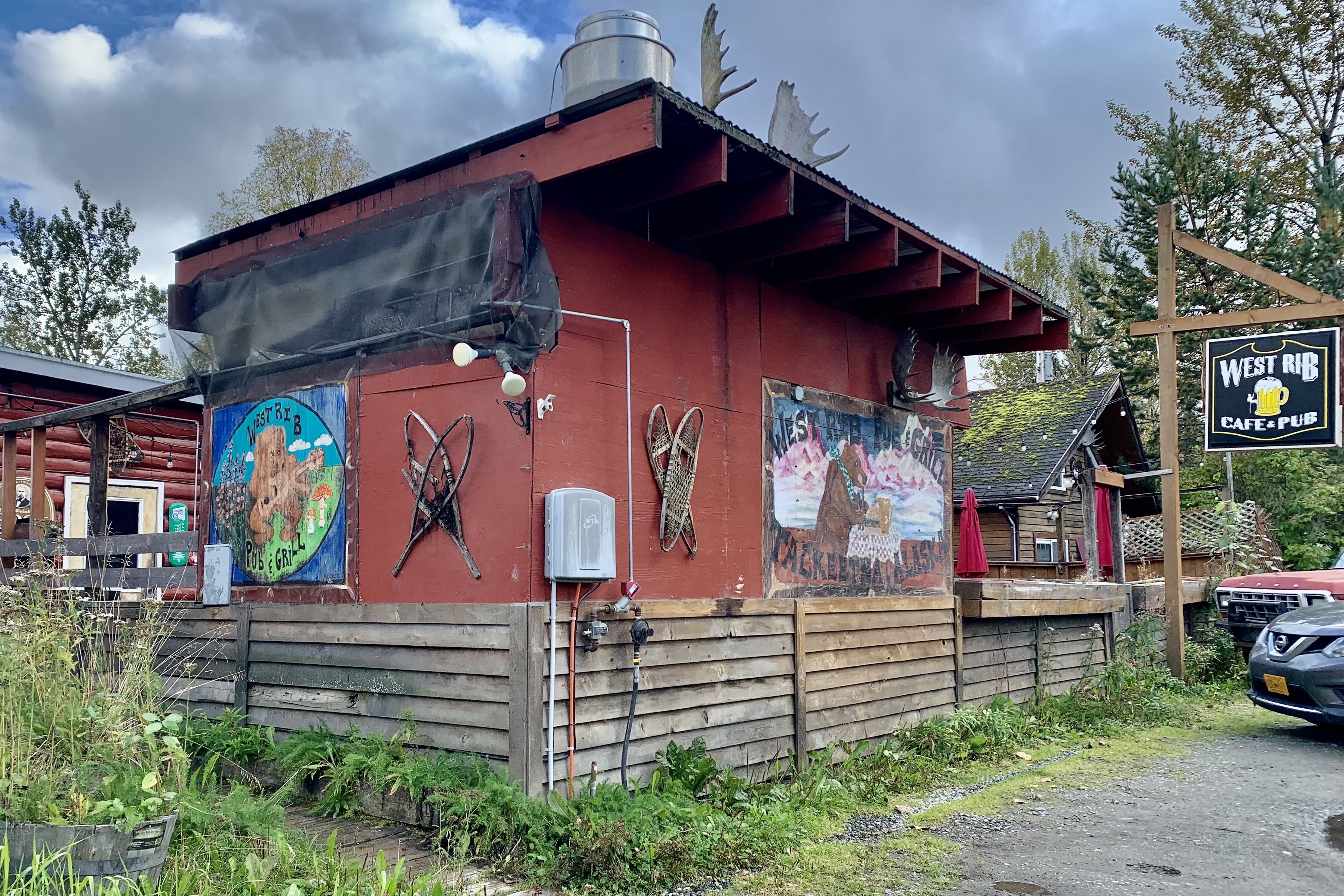
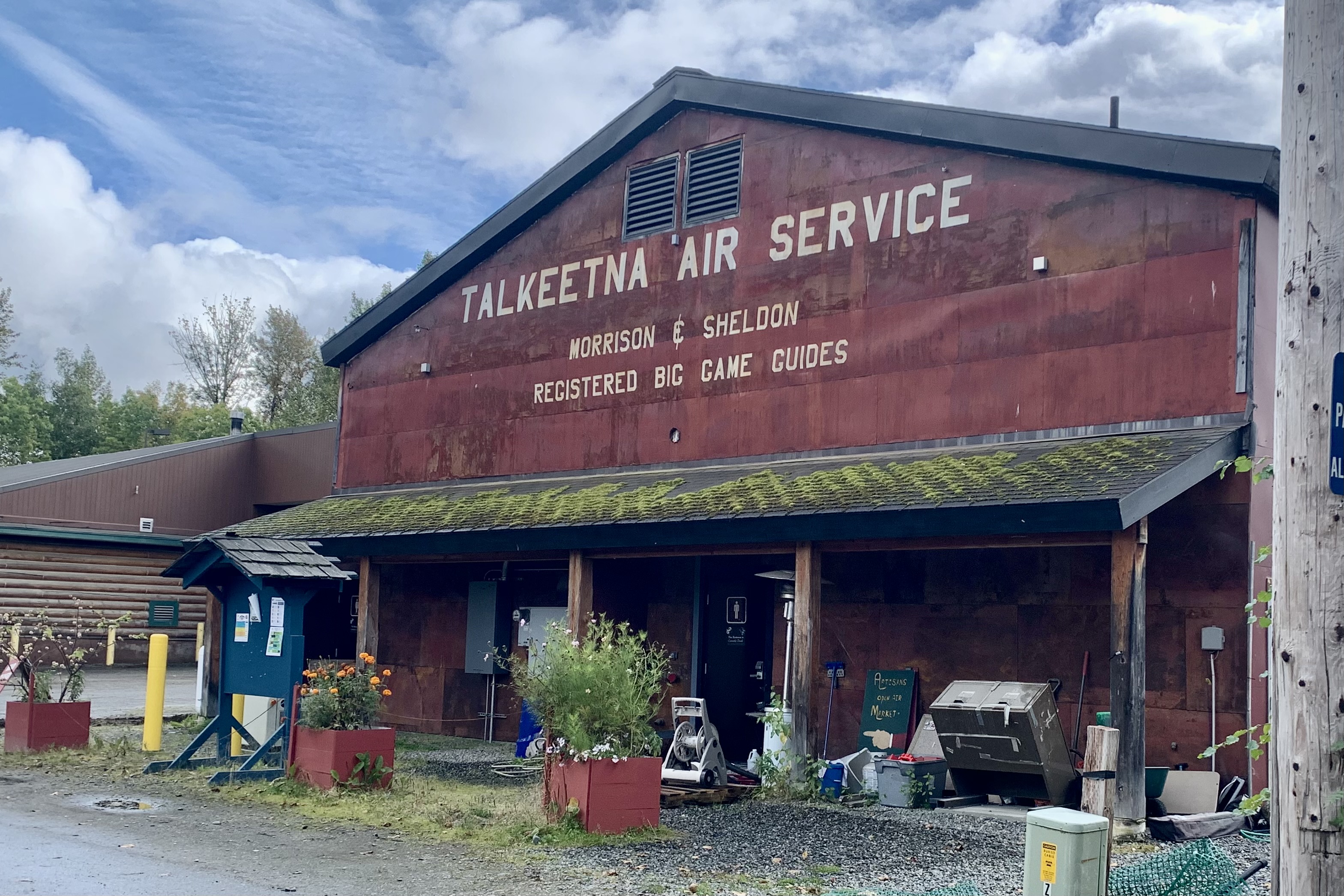
According to alaska.org : “Capture the feeling of bustling small-town Alaska in a stroll down Talkeetna’s Main Street, a 2-block journey through historic buildings, art shops, restaurants, coffee shops, ice cream stops and a micro-brewery.”

True, the bustling small town is there except it would be more accurate to describe my stroll as an adventure in jockeying around the several hundred passengers off-loaded from the Princess Cruise Line buses, passing on very over-priced ice cream and coffee drinks, perusing the carbon copy souvenir shops that can be found in almost every tourist city in the world (except Talkeetna Alaska is emblazoned on them), passing the acclaimed Talkeetna Roadhouse and mourning the demise of their famous food and people extravaganza, and walking through the mud puddles at Talkeetna River Park at the confluence of three wild rivers (East, West, and main stem of the Sustina River)… all the while staring into the distant horizon searching for a glimpse of Denali which of course was obscured by the massive cloud banks and rain.

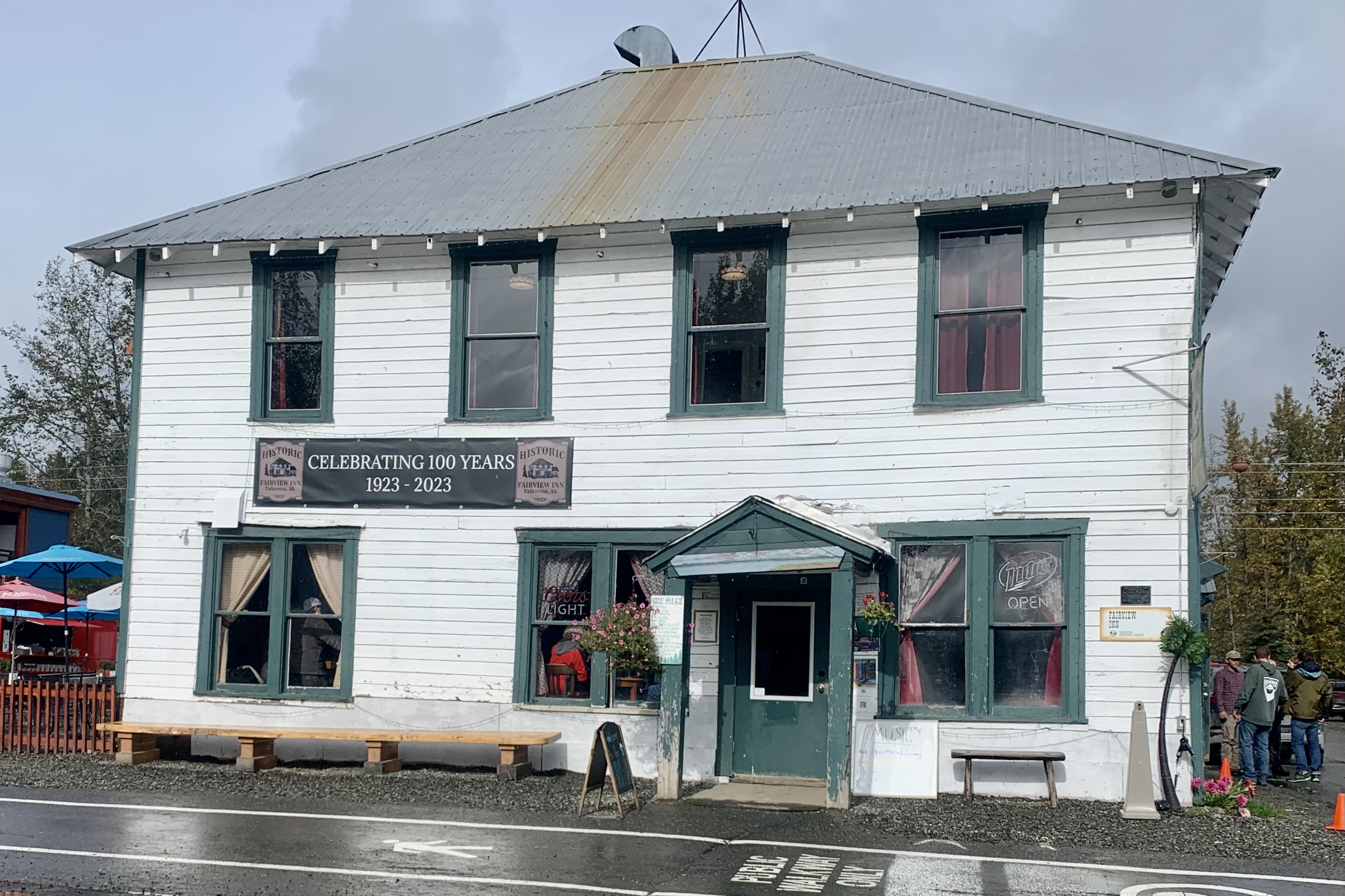
To be fair there was much that I did enjoy. There were  some shops filled with local art, Alaskana, and colorful characters. A walking tour of downtown area (Talkeetna Historic District) which is on the register of National Historic Places, with buildings dating from the early 1900s  was quite interesting.  Nagley’s General Store,  the Fairview Inn and the Talkeetna Roadhouse all are still in operation. But the true highlight for the two nights there  was staying in  this very cozy warm cabins, propped up in bed, reading and experiencing the dancing flames in the firepalce. 

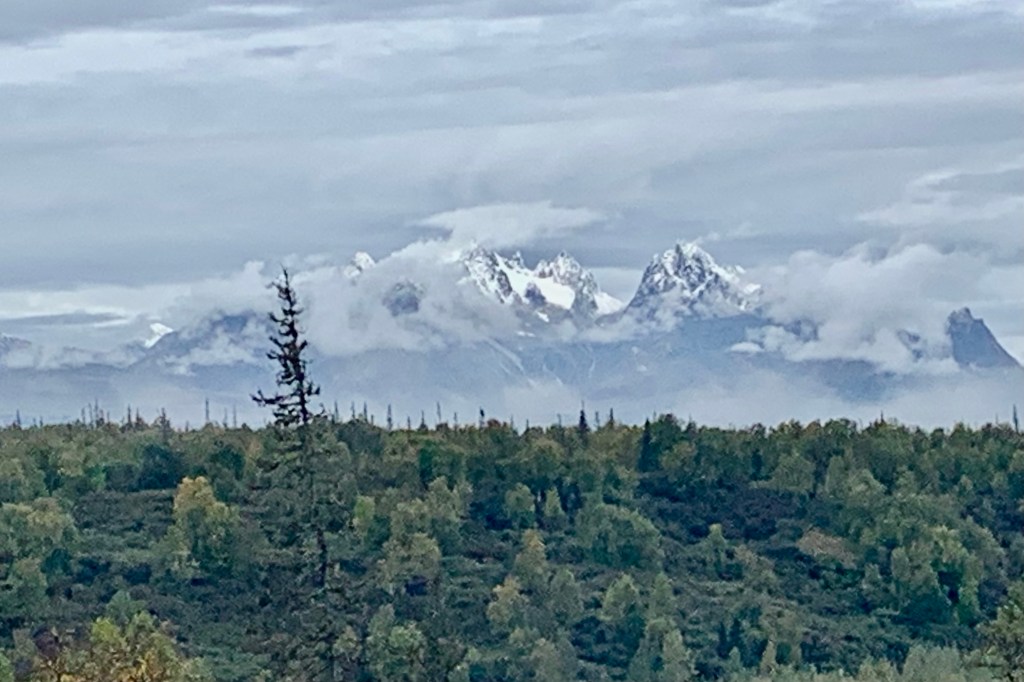
After two nights in “Lil Cabin in the Back” I was off to Chena Hot Springs Resort. I was excited as it was not a total “washout” of a day with non-relenting drizzle. I thus was finally able to get a partial view of Denali from a roadside pullout

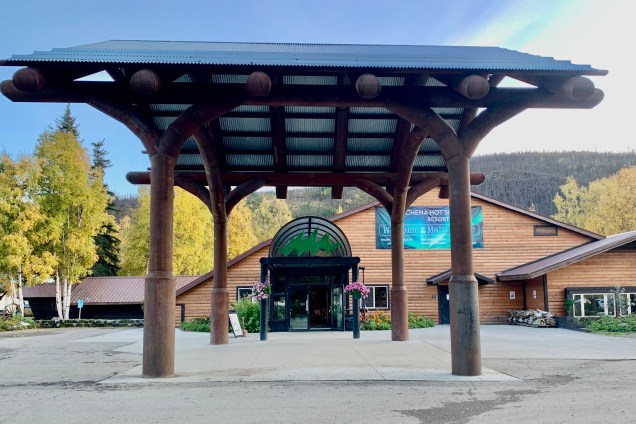
The Chena Hot Springs “resort” was not at all what I had expected. My first impression upon entering the property was positive. The main building appeared well maintained and resort-ish! Chena was described in their reservation confirmation as a “Rustic Alaskan-style resort found in the Interior, 60 miles away from Fairbanks featuring a hotel, multiple types of tours and activities, and hot springs.. Relax in the hot springs, view the Aurora, and experience Alaska as Chena Hot Springs knows it.”

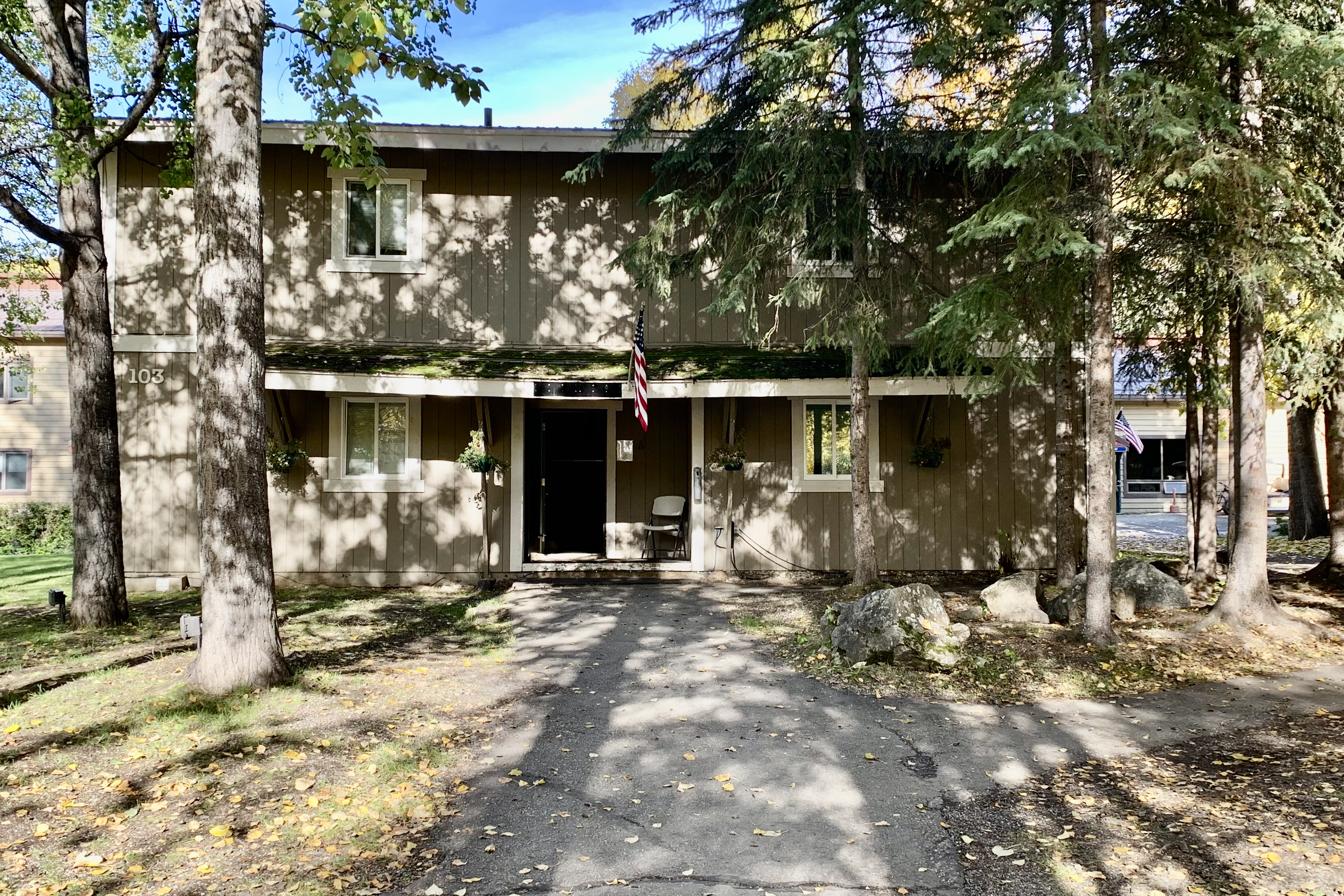
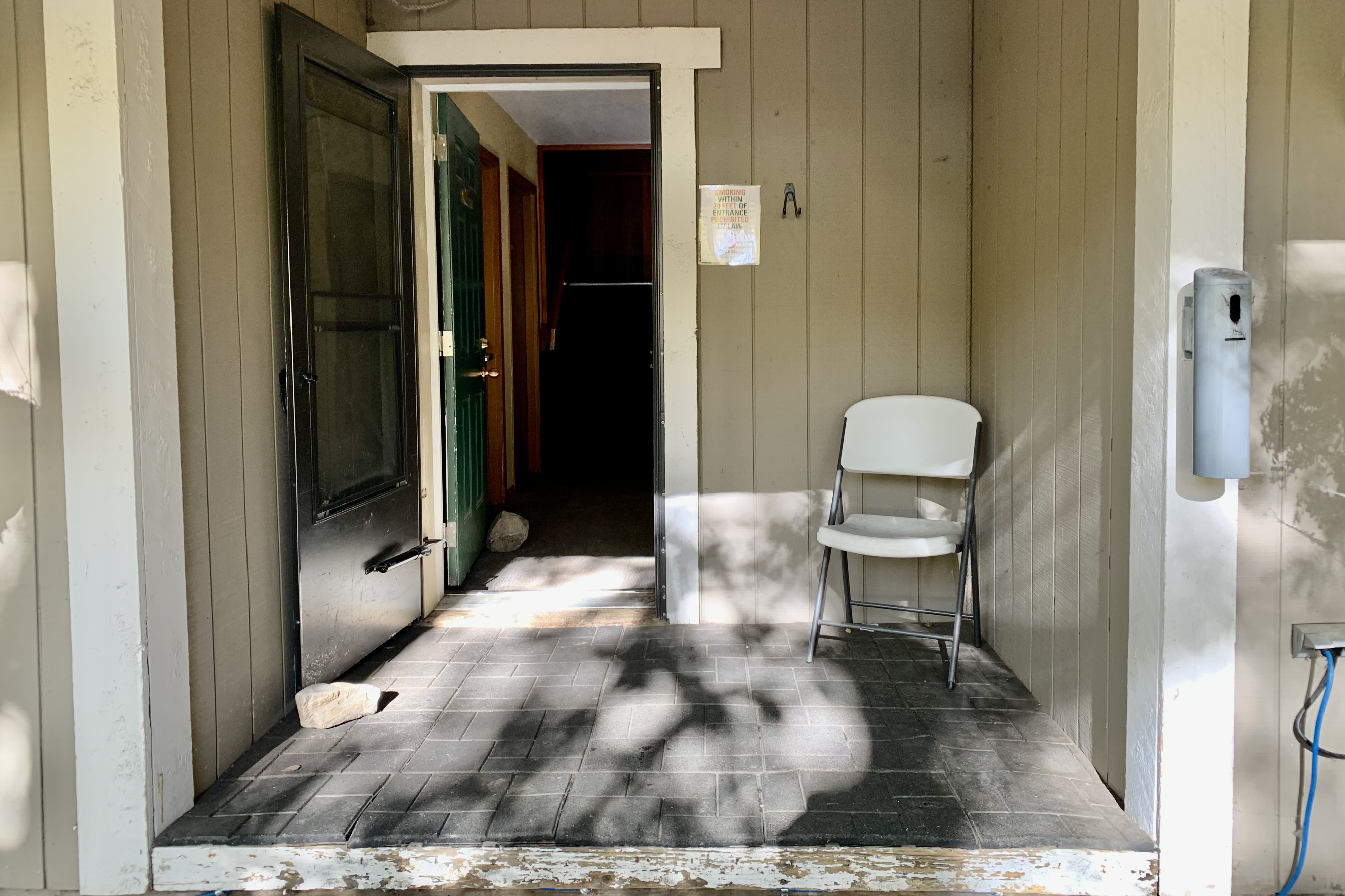
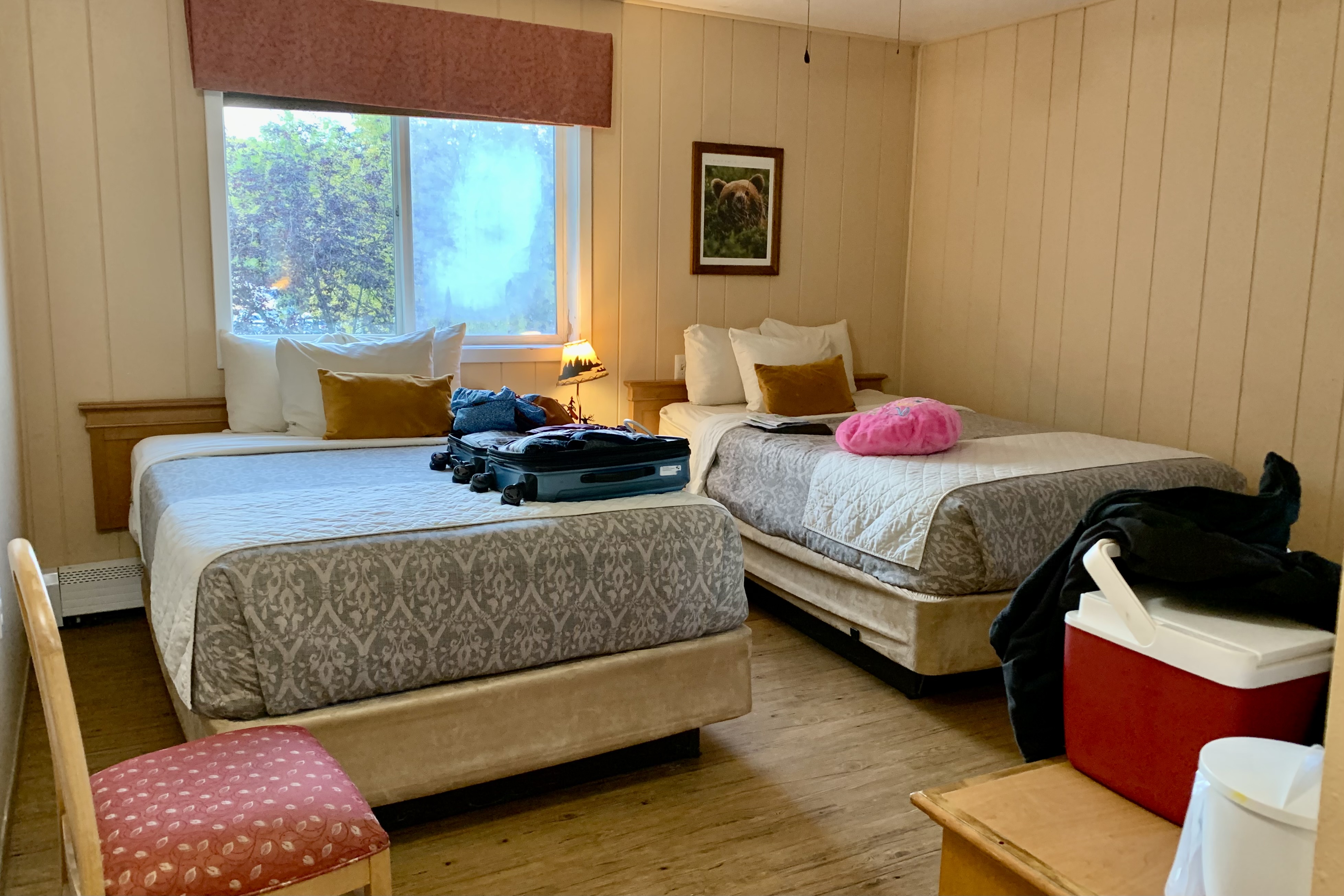
But there it ended. Rustic it was …but not even in a cute backwoodsy sense but shabby Motel 6 kind of way. I had anticipated a classier accommodation for an off-season price of $162.00 per night for a Fox room. Basically this rundown Fox accommodation was a quadplex building of 8 rooms in each, 4 downstairs and 4 upstairs. Naturally my assigned room was on the second flour which I reached by negotiating the grungy entrance and dark dumpy stairwell laboriously hauling my suitcase on up. The Fox Rooms, were touted to have a unique Alaska decor. My decor was a picture of a bear on the wall. But in our inflationary economy I guess that is the going rate for shabby.

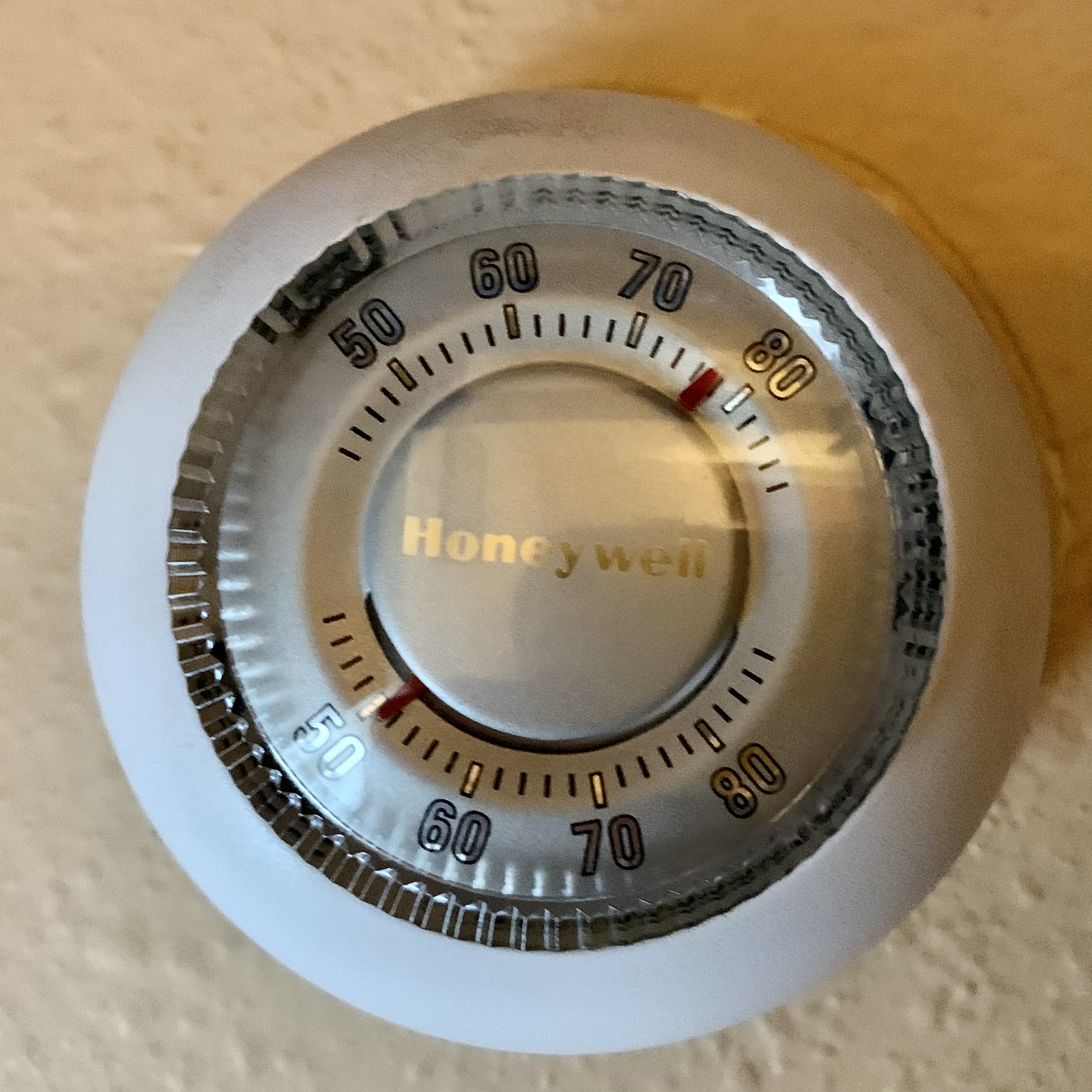
Again this was not a resort. I did not mind the small room but the cheep wood paneling on the wall was definitely not what I would consider worthy of the resort designation. There is no microwave or refrigerator so one is captive and thus needing to use their restaurant. The room was very cold and had a no functioning thermostat ( which created the illusion guest actually had power over the temperature in their room). I went to the front desk to ask if something could be done, the staff was rather rude and abrupt but said they would send someone up. Two hours later there still was no resolution or maintenance person and I tried many times calling the desk but they never answered the phone. I finally put on extra sleepwear and went to bed. I went to the desk in the morning to again complain about the cold room and phone attempts to reach front desk. I was rudely told that they are so busy they just don’t answer the calls. The positive ending to the no heat saga was that I hijacked the individual cleaning the rooms on my floor and inquired about the heat. He immediately went to their closet and produced a space heater which served nicely to provided me with a toasty sleeping experience the second night.

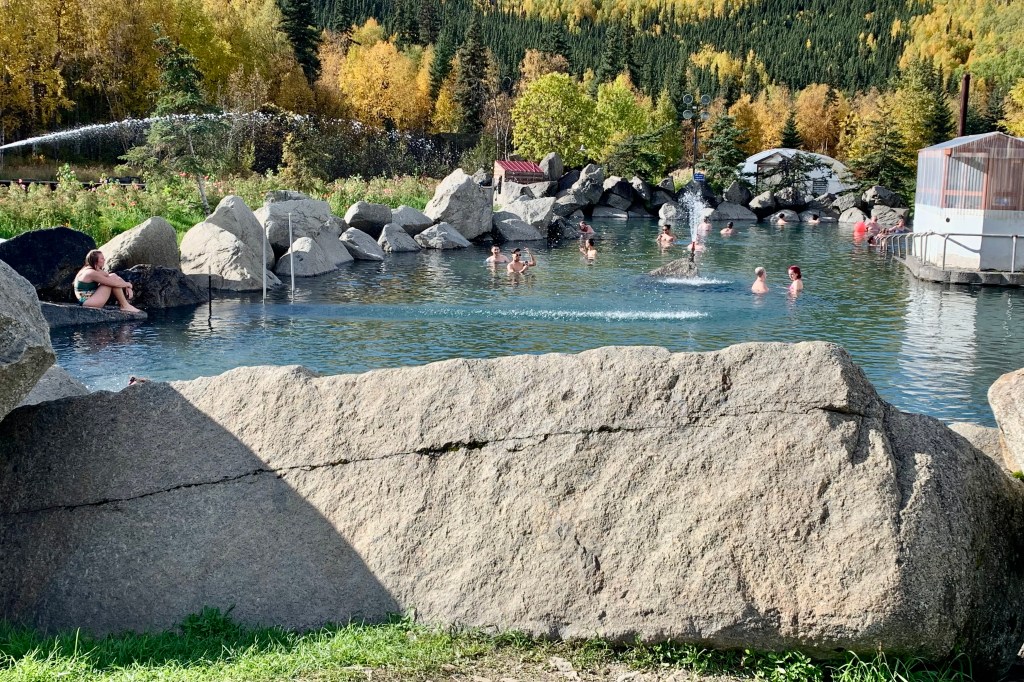
The mineral spring water rises from the earth at about 150 degrees. Thank goodness it is cooled down to about 106 degrees when feeding the boulder lined outdoor “lake pool”with it’s sandy bottom. Soak I did each morning before the crowds descended, all the while strolling around as there was no place to sit in the lake. Unfortunately I did not feel healed by the healing waters. What I had enchantingly pictured for a hot springs experience was a whole lot more raw nature (as pictured in my backpacker magazines out there in the wilderness) than a man-made lake. Though there was a real hot spring, it was cordoned off by a falling down fence around the hot spring that could not be used. There was also an outdoor hot tub and indoor hot tub and large pool, but I was turned off by the smell of chlorine permeating the air and thus opted out of a relaxing swim. I carefully negotiated the gym like locker room, feeding quarters to the hungry lockers, and changed out in what was akin to the locker room in an ancient gymnasium.

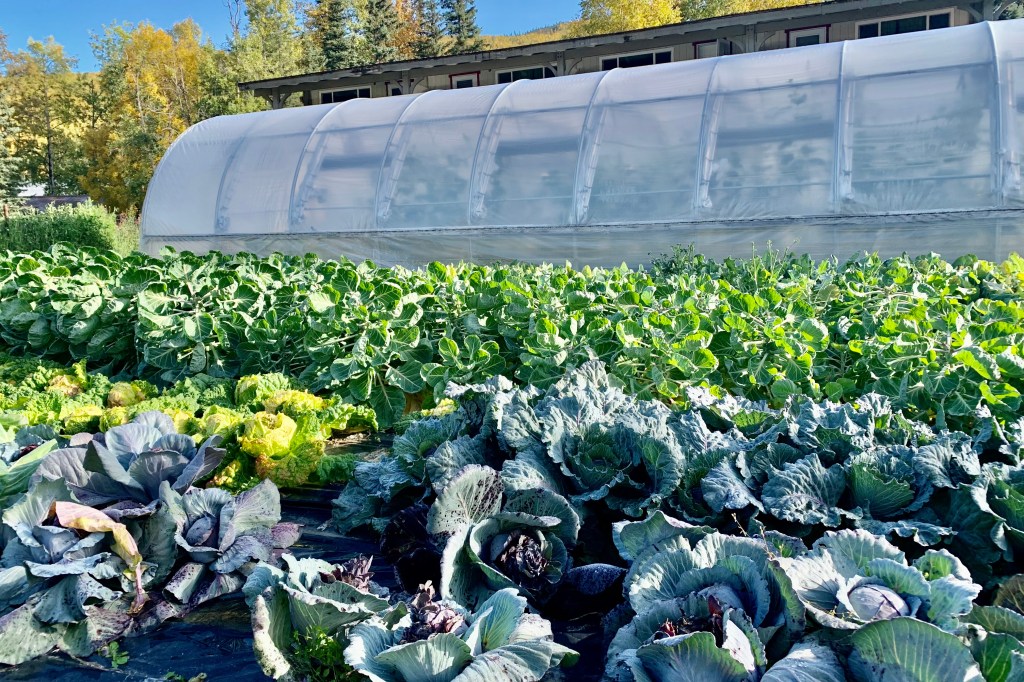
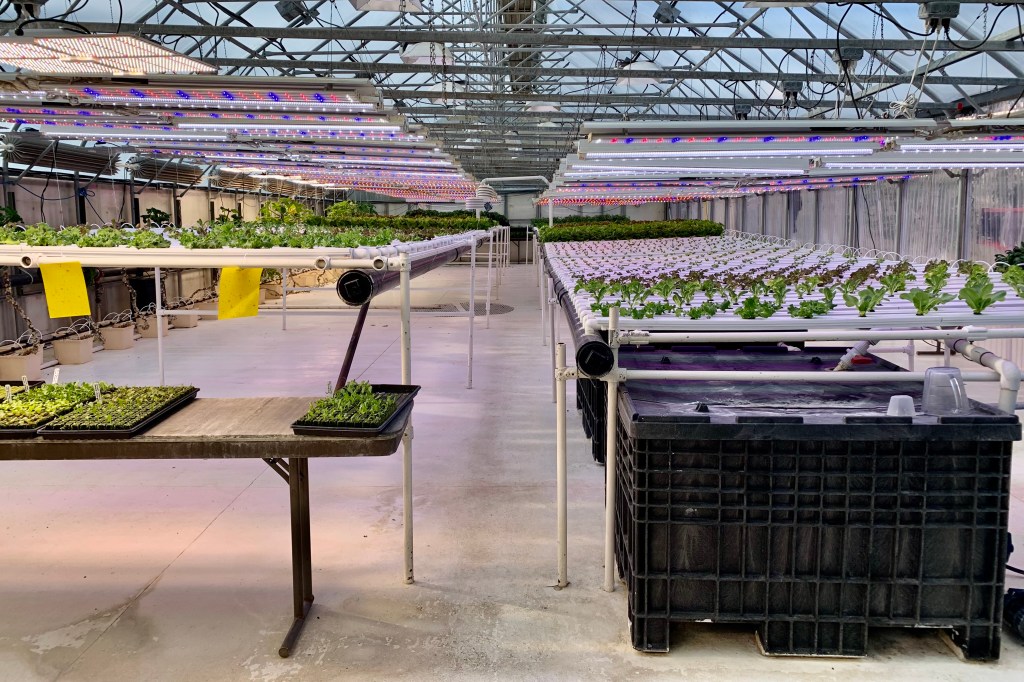
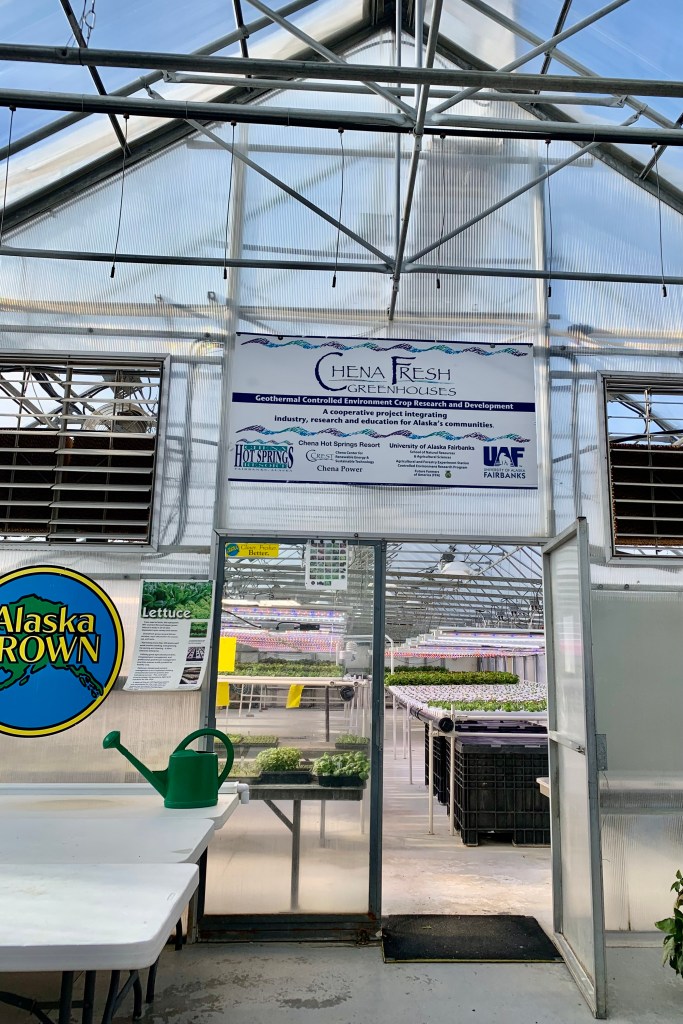
I was less than impressed with the restaurant. Upon entering, I asked to be seated and stated I was alone. First thing out of the hostesses’ mouth was “would you like to sit at the bar!” Seems like if I wanted to sit at the bar I would have asked to sit at the bar. . Clearly it is not quite as lucrative to have a table which could seat four occupied by this lone woman. Since there are no other food/dining options nearby, eating there was my only option. In general I found the food mediocre and overpriced BUT the one thing that was excellent was the salads.  Chena is a greenhouse to table restaurant  so greenhouse grown lettuce, tomatoes, peppers, cucumbers, and herbs were on the menu. The second night I was seated in the adjacent banquet area…I figured they were opening this for additional  guests but seems I was the only additional guest! Hmm! I see a pattern emerging since there were open tables in the main part of the restaurant. and there don’t take reservations. I did enjoy the fresh salad and chowder but was a tad taken aback when served a hot roll, which clearly had the temperature and texture of a bread that had been microwaved. Fortunately, in preparation for the upcoming ferry ride I had nonperishable breakfast and lunch items in my car which saved me from having to depend on the restaurant for 3 squares and since it was cold at night what perishables I did have in the cooler stayed chilled!

On the positive side, I toured the greenhouses where they grow much of their fruit, vegetables, and herbs and this left me in awe of the sustainability aspect of the property. They definitely are doing certain things right. Following that there was a geothermal energy tour of the property which was very interesting. The geothermal powering of everything in Chena, by harnessing the power of the hot springs, is incredulous. I felt like I was in a time warp though as ambling over to the geothermal plower plant I found my self in a “graveyard” of all manner of rusted out trucks, cars, machinery . I came away with the impression that anything that arrives in Chena over the years stays in Chena ad infinitum.

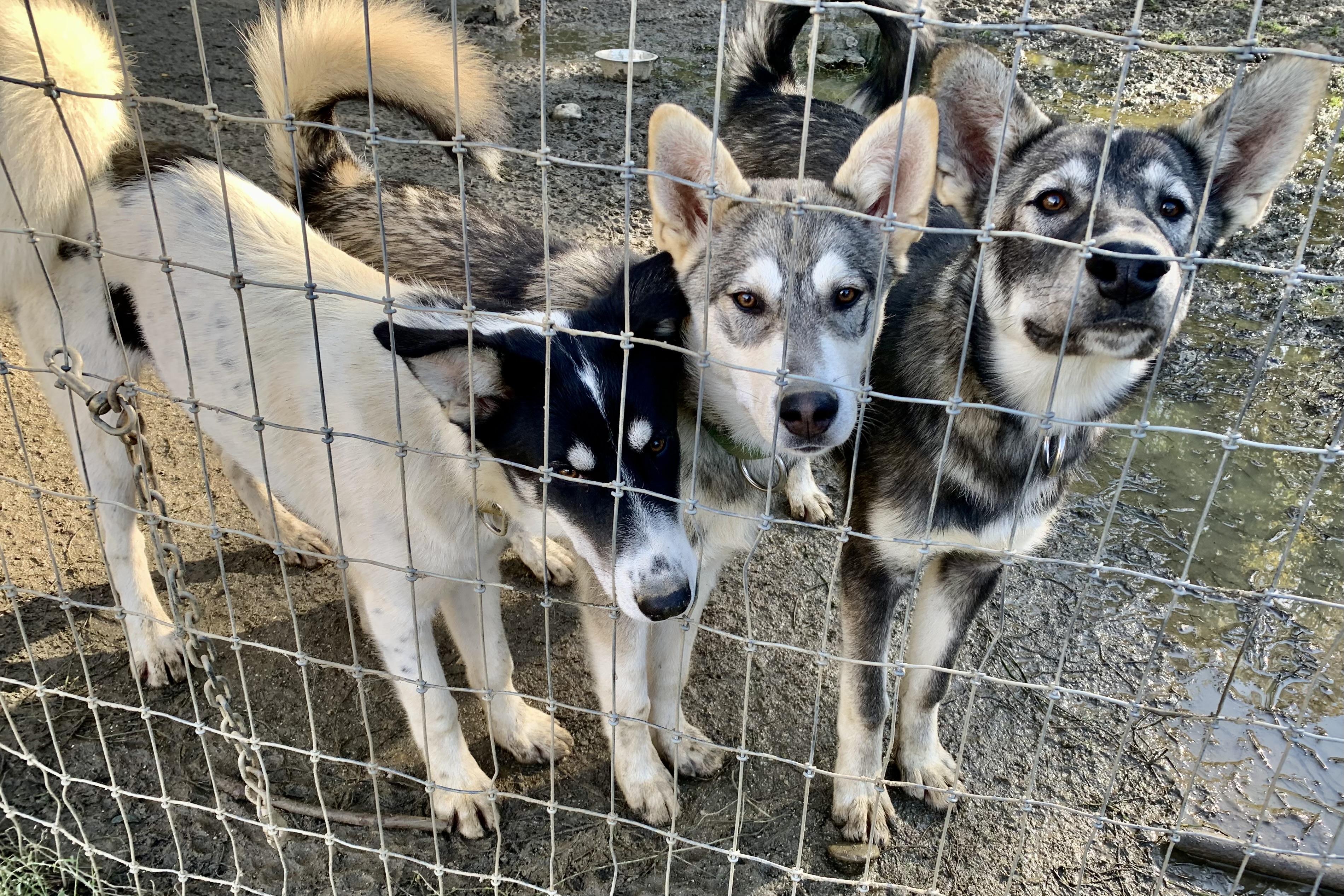
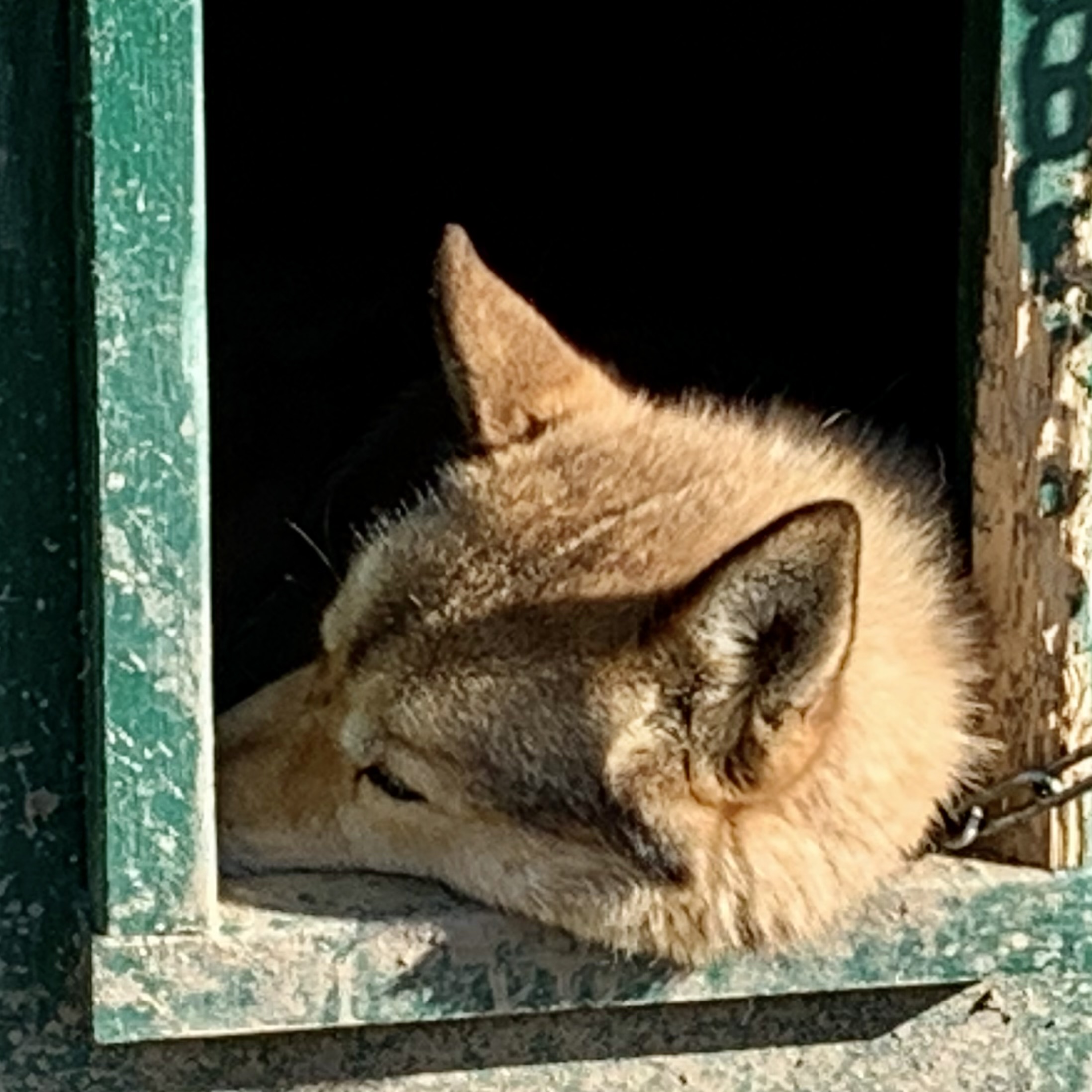
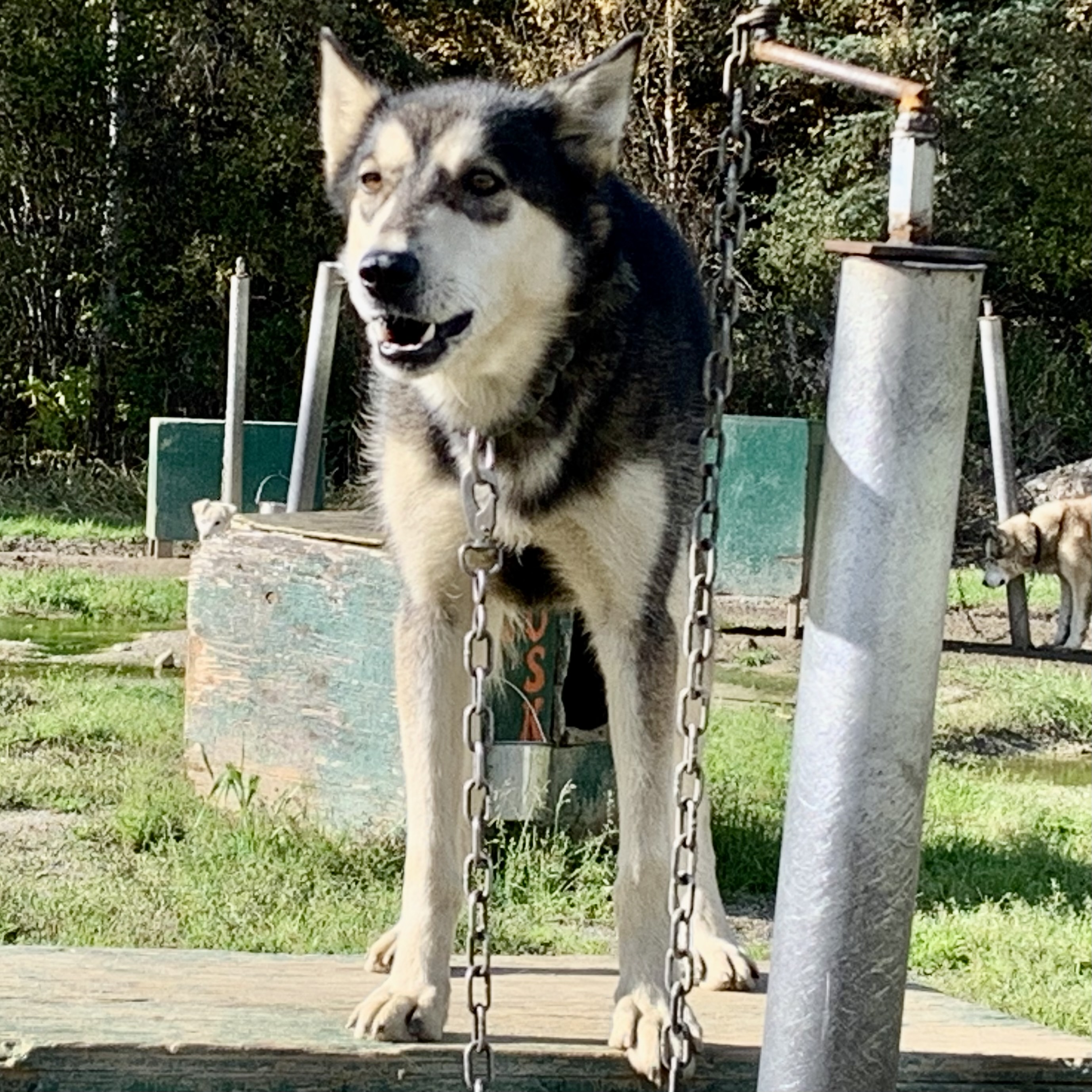
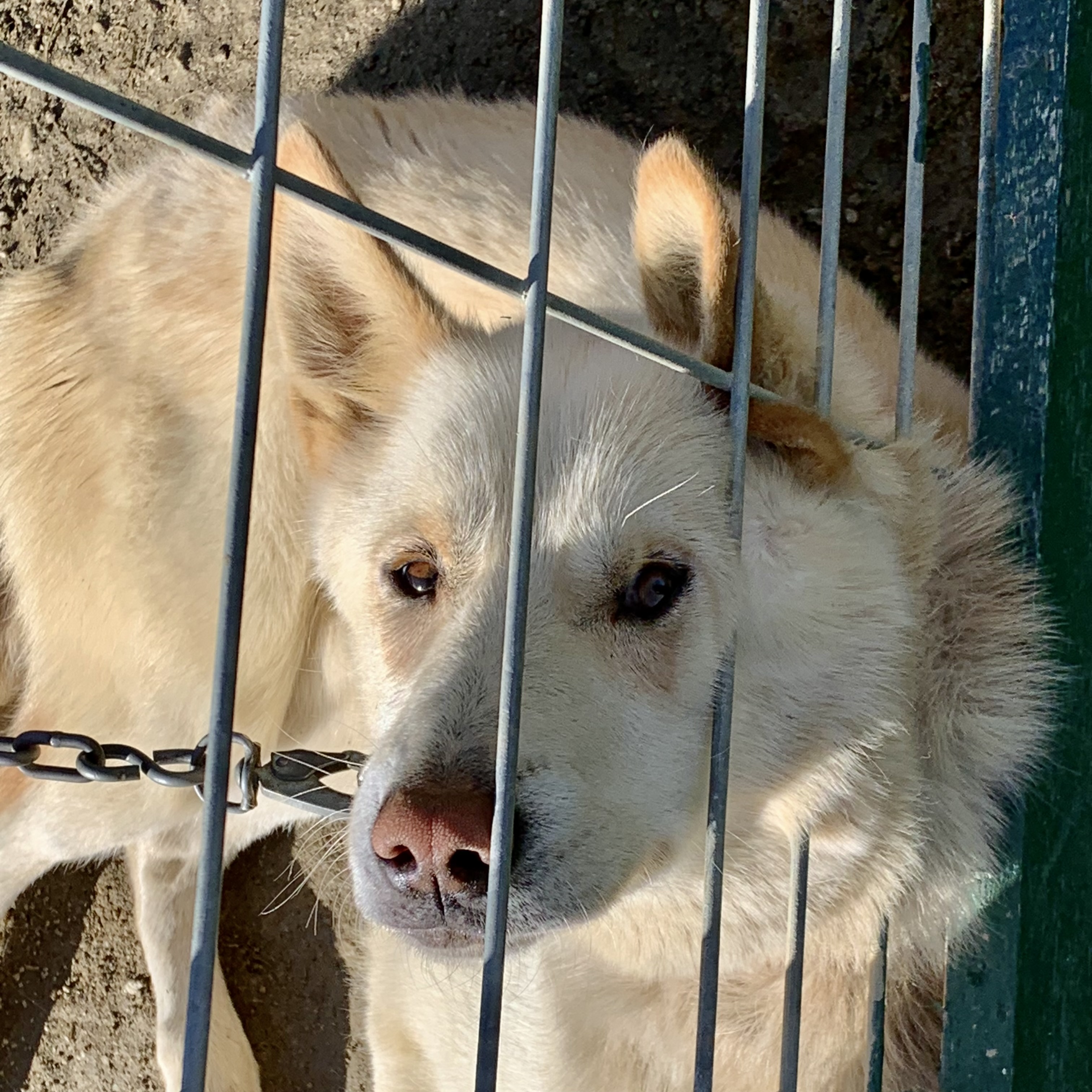
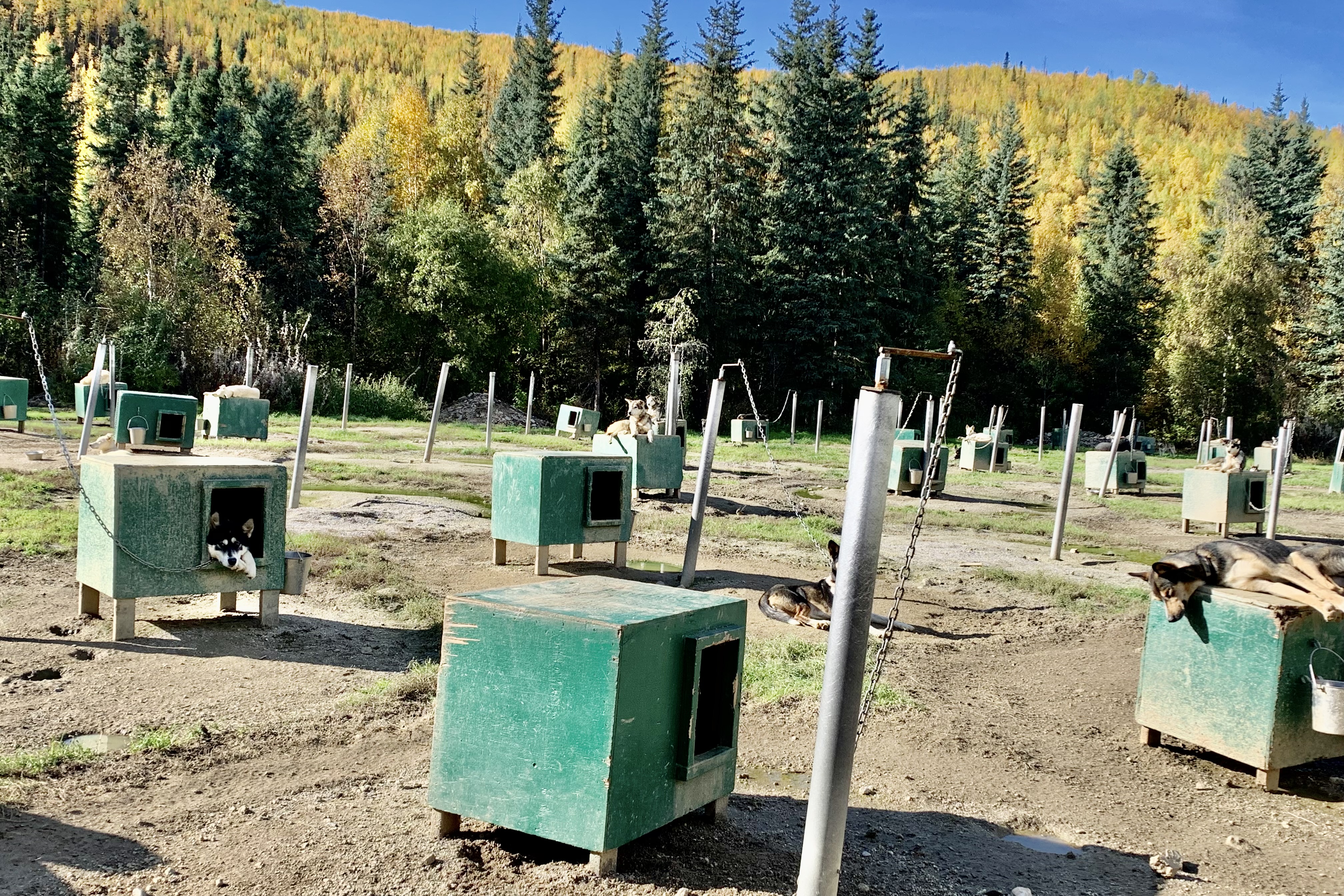
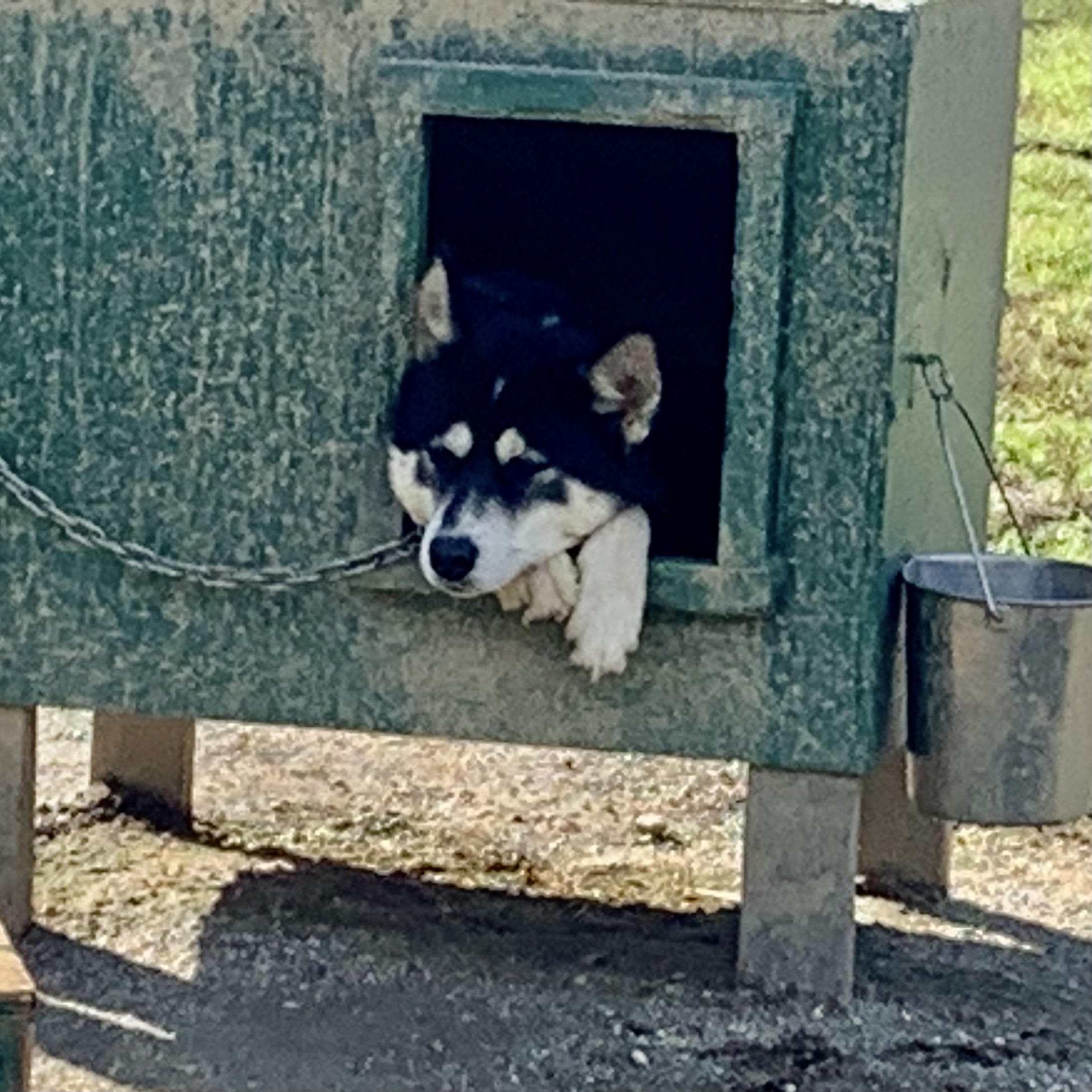
There was a sled dog kennel tour available but it was pricey and I discovered it was okay to wander over to the kenneling area and visit with the dogs. Exceptionally nice was the opportunity to go into the adoption yard area where the dogs who are aging and no longer able to pull the sled are available for adoption. They were all so eager to be petted. Oh, how I wished I could have taken several of them home.

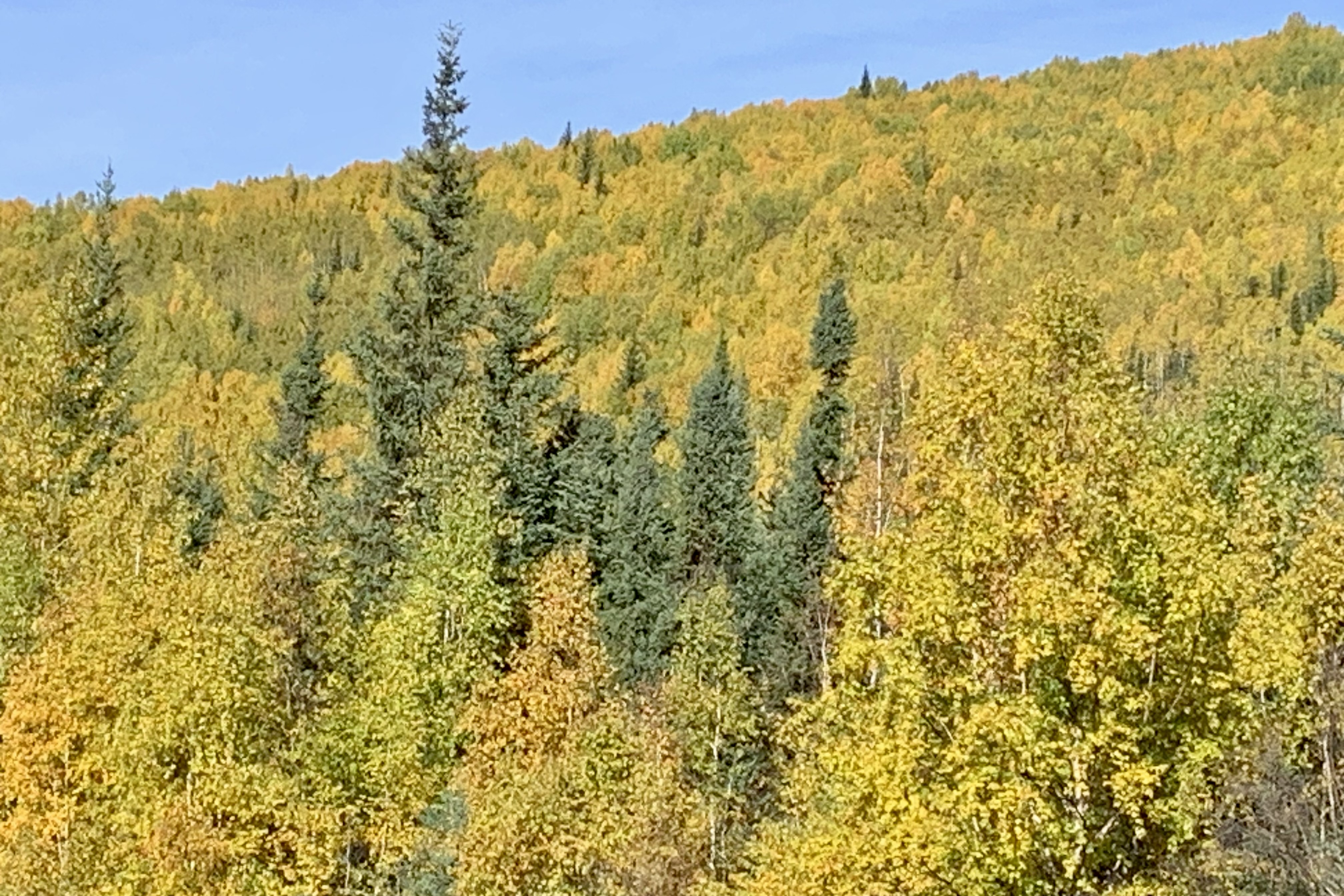
The surrounding area had beautiful views of mountains. It was September and  the mountains were all dressed out in their golden finery. Several hiking trail option were available but I decide to keep it simple and follow the designated nature trail around the beaver pond. But in the maize of trails around and a very unclear hiking map and trail signage, I never did discover the beaver pond. But it was a beautiful day exploring the surrounding woods and property., 

As with most  resorts (I use the term loosely)  the main attraction seems to be never enough and all kinds of side gigs (for a price) are available for extra bucks and a way to “soak” customers if the hot springs isn’t enough of a soak. I did not opt for a visit to the Aurora Ice Museum,  a sled dog cart ride, 4 wheel drive adventure,  ATV Wheeler drive….or the Apple Martini from the  ice bar where you drink out of ice glasses and then smash them. 

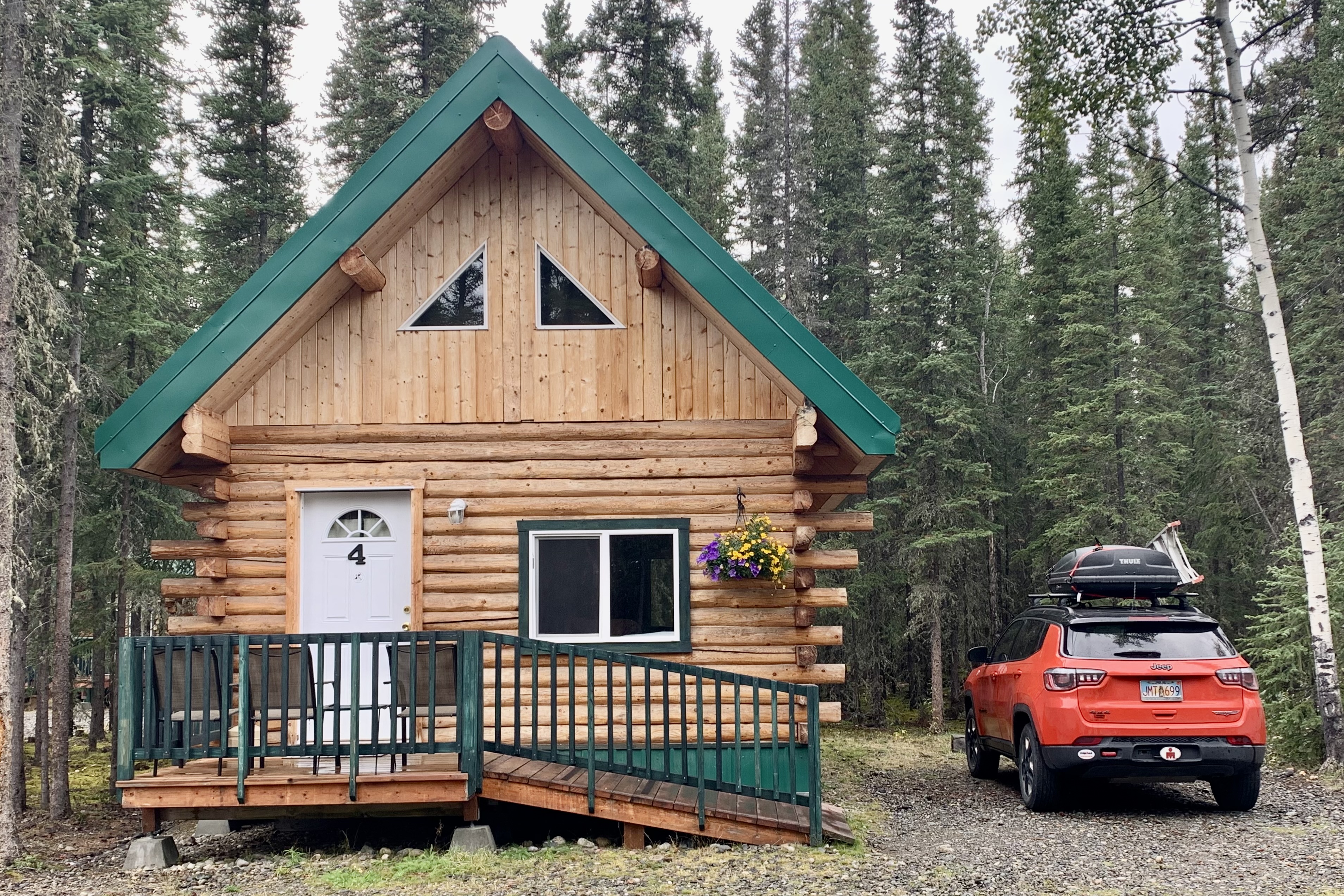
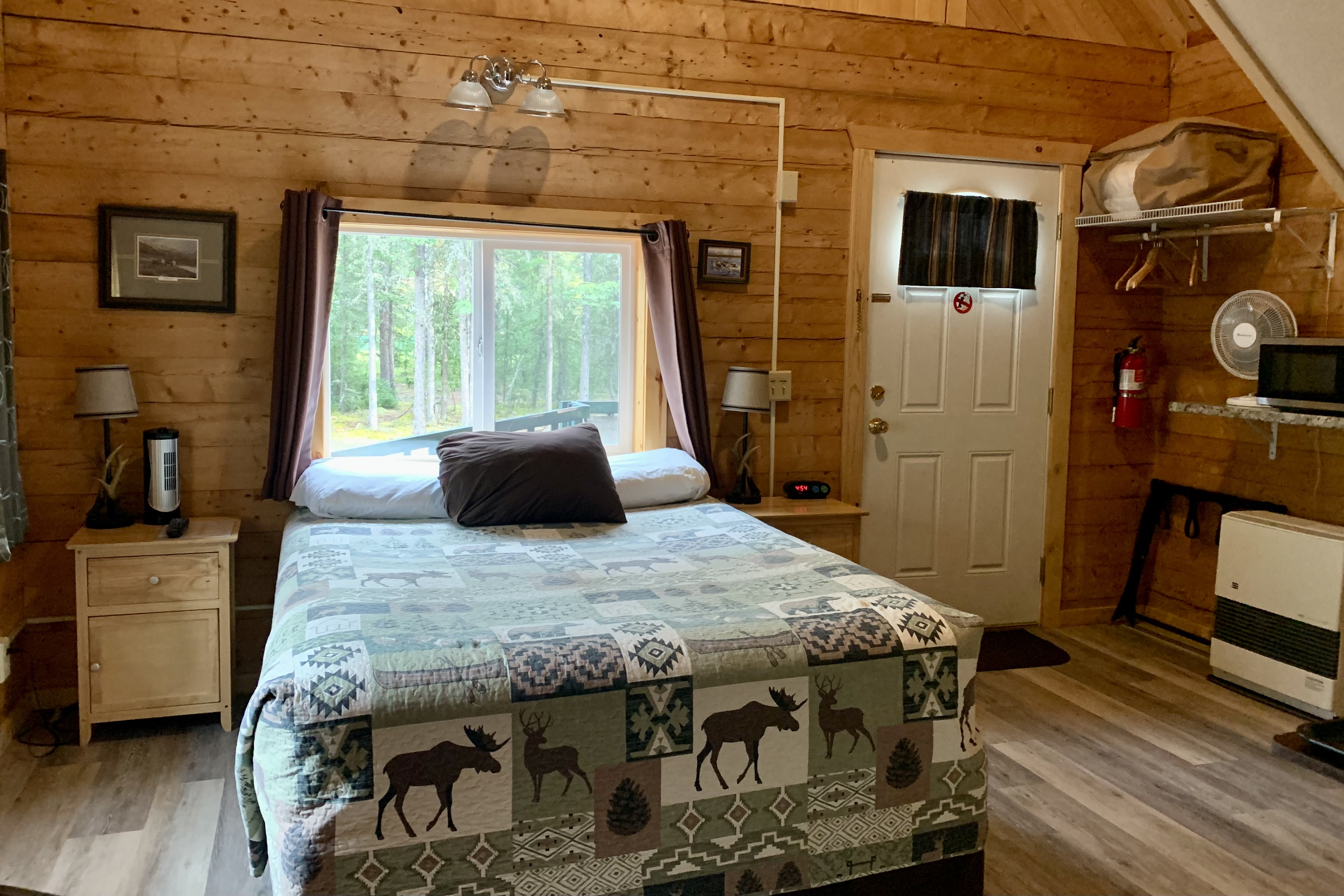
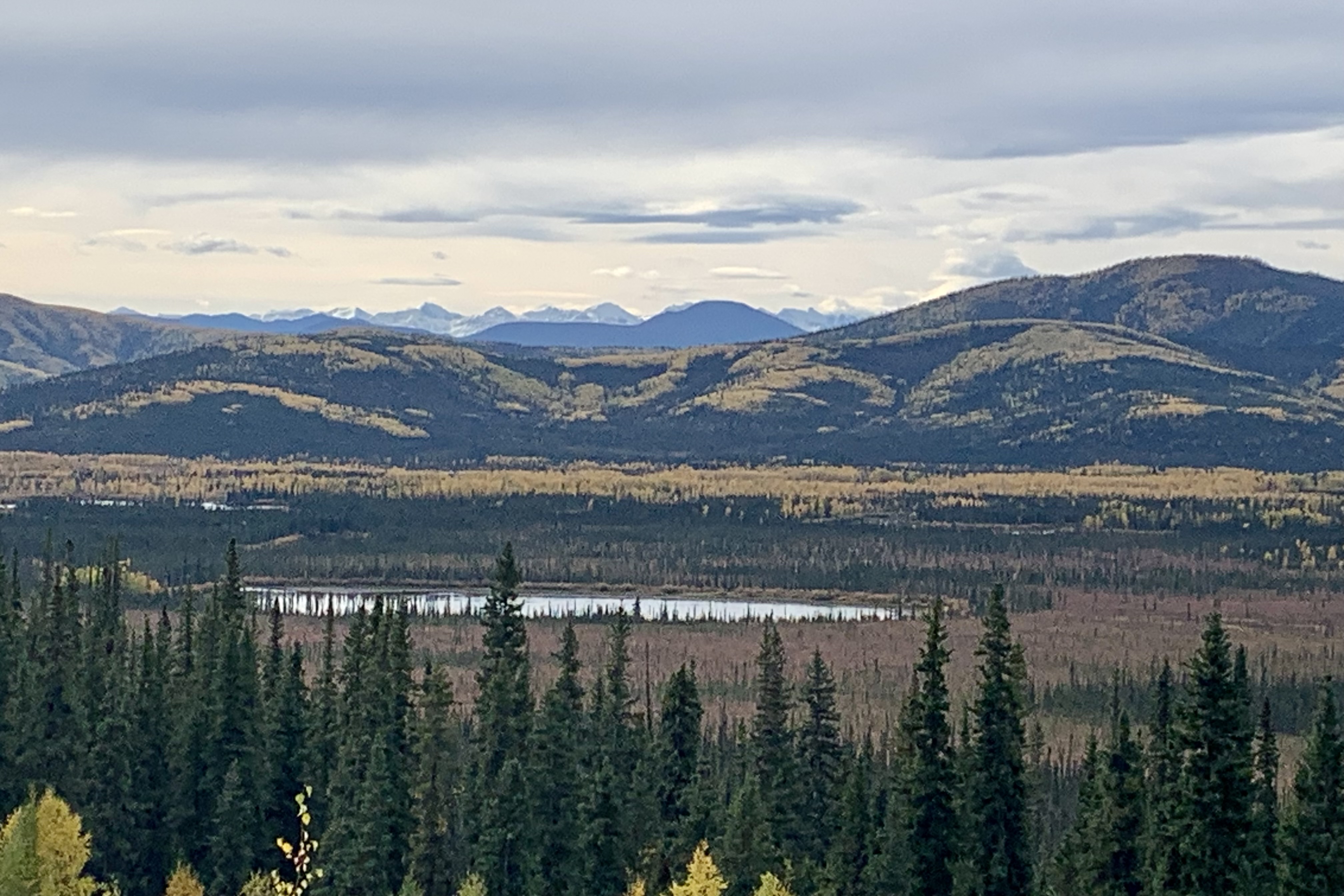
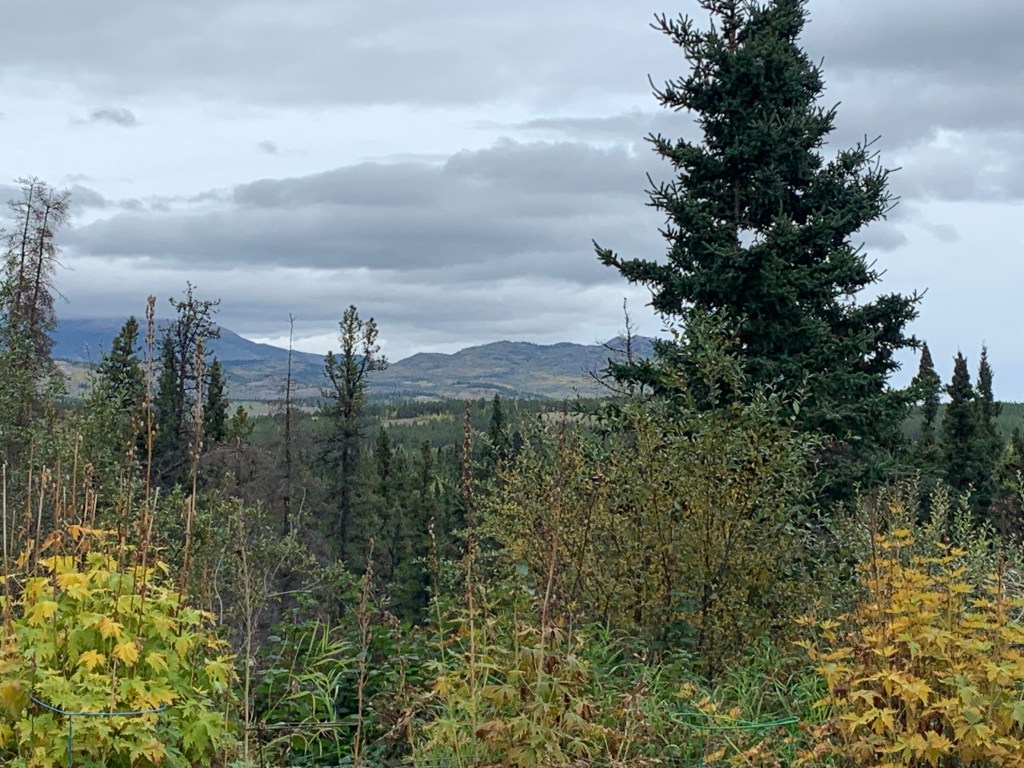
After a less than illustrious experience at  Chena, I headed over to TOK, about a 250 mile drive and situated at the crossroads of the Alaska Highway (AK 2) and the Glen Highway (AK1). Much of the landscape out of Chena and, after negotiating the the urban sprawl through Fairbanks is boreal forest. It then  heads east along the meandering Tanana River with the landscape opening up into a wider valley of tundra and impressive view of the Alaska Range to southwest and eventually the distant rugged peaks of the Wrangell and Mentasta Mountains. There was definitely minimal traffic (and services) on this Alaskan road through the wilderness. My traveling buddy Siri did a very poor job of directing me to my nights lodging at Caribou Cabins but after a bit of backtracking and finding accurate directions on the reservation sheet, I made it to this very quiet, wooded setting. What a great cabin, beautifully constructed  and  spotless, spacious, bright and very comfortable. I’d give it a five star if I were to rate it, especially because it had a great assortment of K-cup pods for the Kuerig coffee maker.

The name Caribou Cabins indicates  what the favorite pets are.  There are two reindeer(caribou) in a fenced in area behind the main building.  Though it was quite fun seeing these large antlered hoofed ruminants,  I felt sad seeing them so confined and not able romped around the lovely forests with the other 750,000 wild caribou in Alaska. 

Motoring on over to Yukon territory was a re-run as I had travel this section of the Alcan Highway when I had motored up to Alaska in 2018. The route traversed skirts the Tetlin Wildlife Refuge and cuts through the valleys adjacent to the  Wragell and St Elias Mountain Ranges.

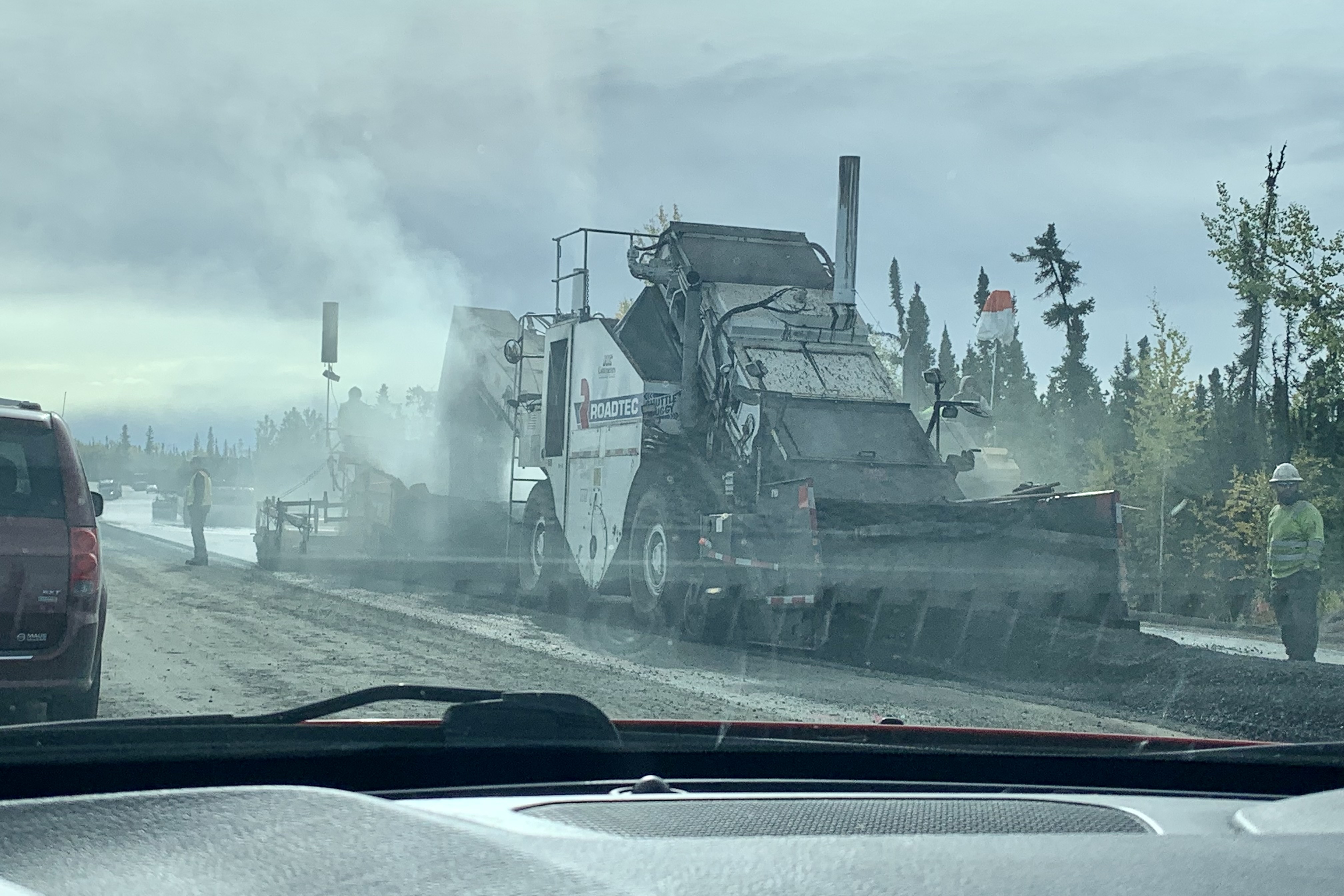
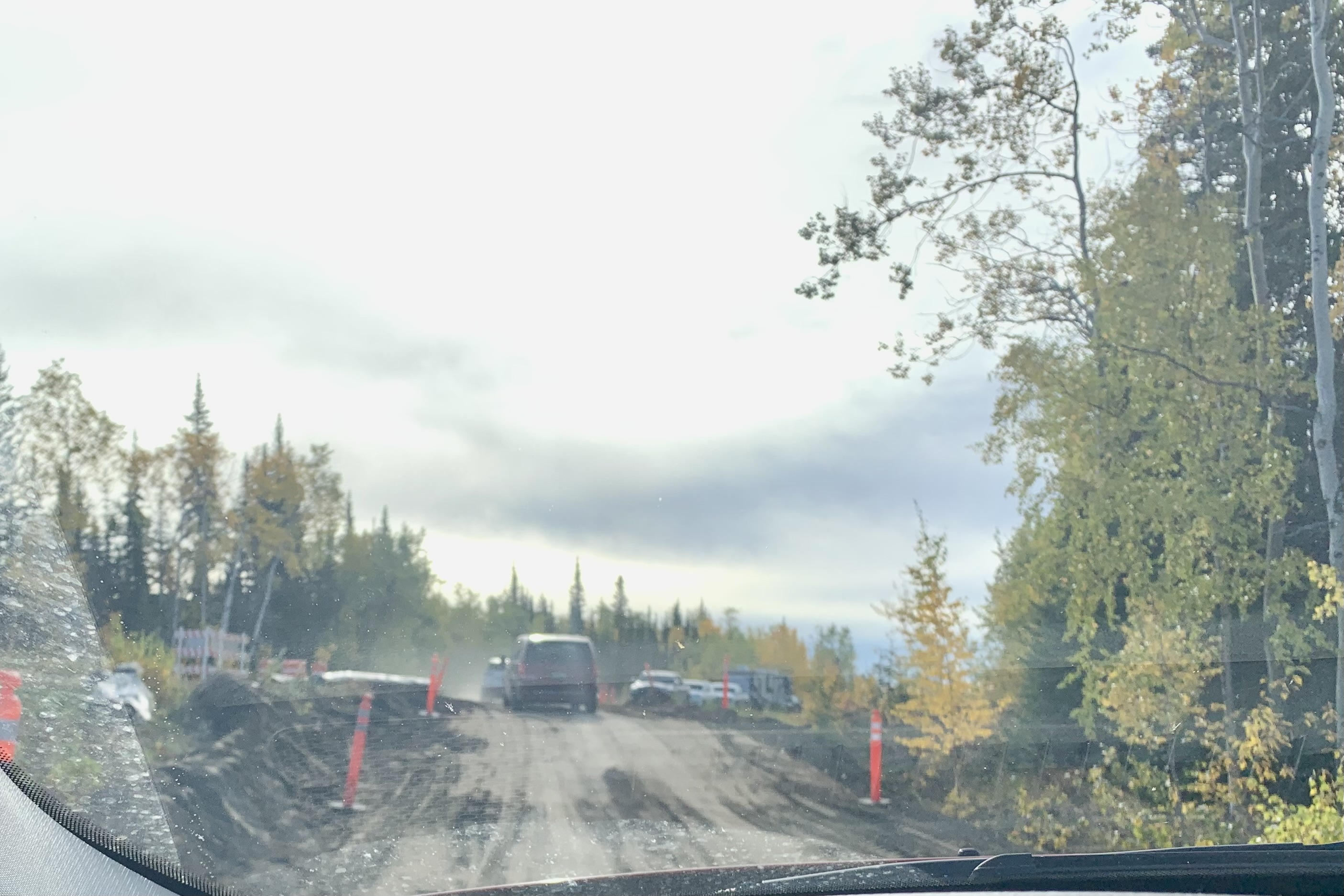
It was not exactly smooth sailing as there was a significant amount of road work which appeared to be repaving but mostly a repair of the road heaves from the previous winter. I was in need of a pee stop but got stuck in construction zone just a few miles short short of the Tetlin Wildlife Refuge Visitors Center. As the minutes piled up and I was feeling more desperate, I began eyeing the port-a-potty on the roadside up ahead… of course that would be sheer desperation but I was actually considering  pulling my car out of the line  and braving a rather awkward  encounter with the construction crew and probably a completely grungy potty. I have never wished to be a guy, but right then I would loved to have been able to step out of the car and just whip it out for instant relief. I sat there practicing the Kegalls and taking calming breaths when after 25 minutes the line of cars began to slowly move forward. Thank goodness about 15 minutes later I was at the refuge visitors center and their hygienic bathrooms.

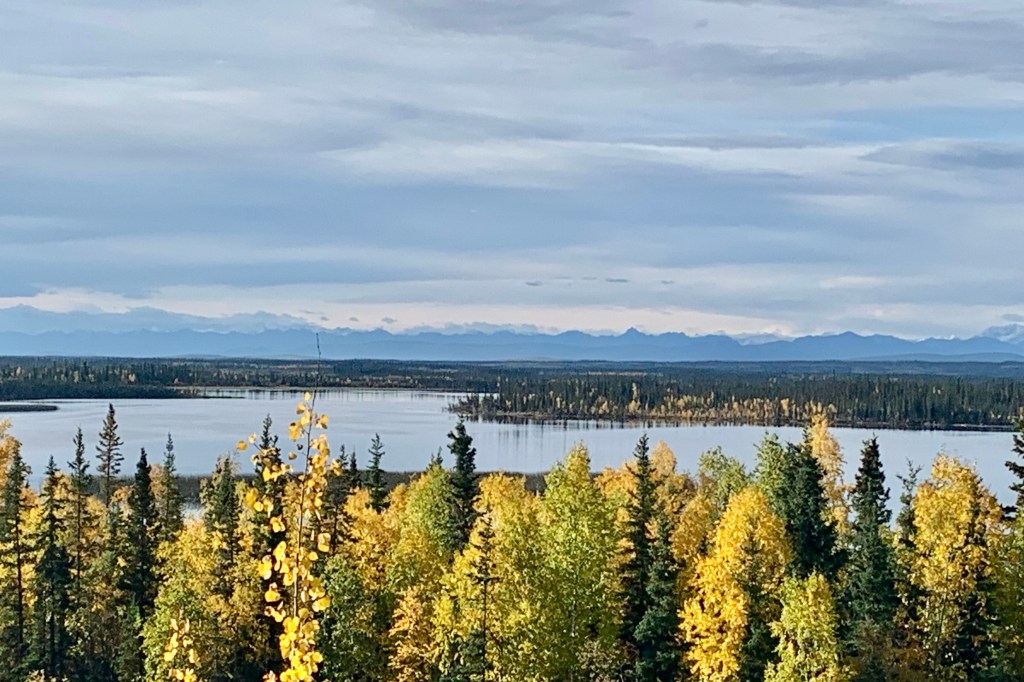
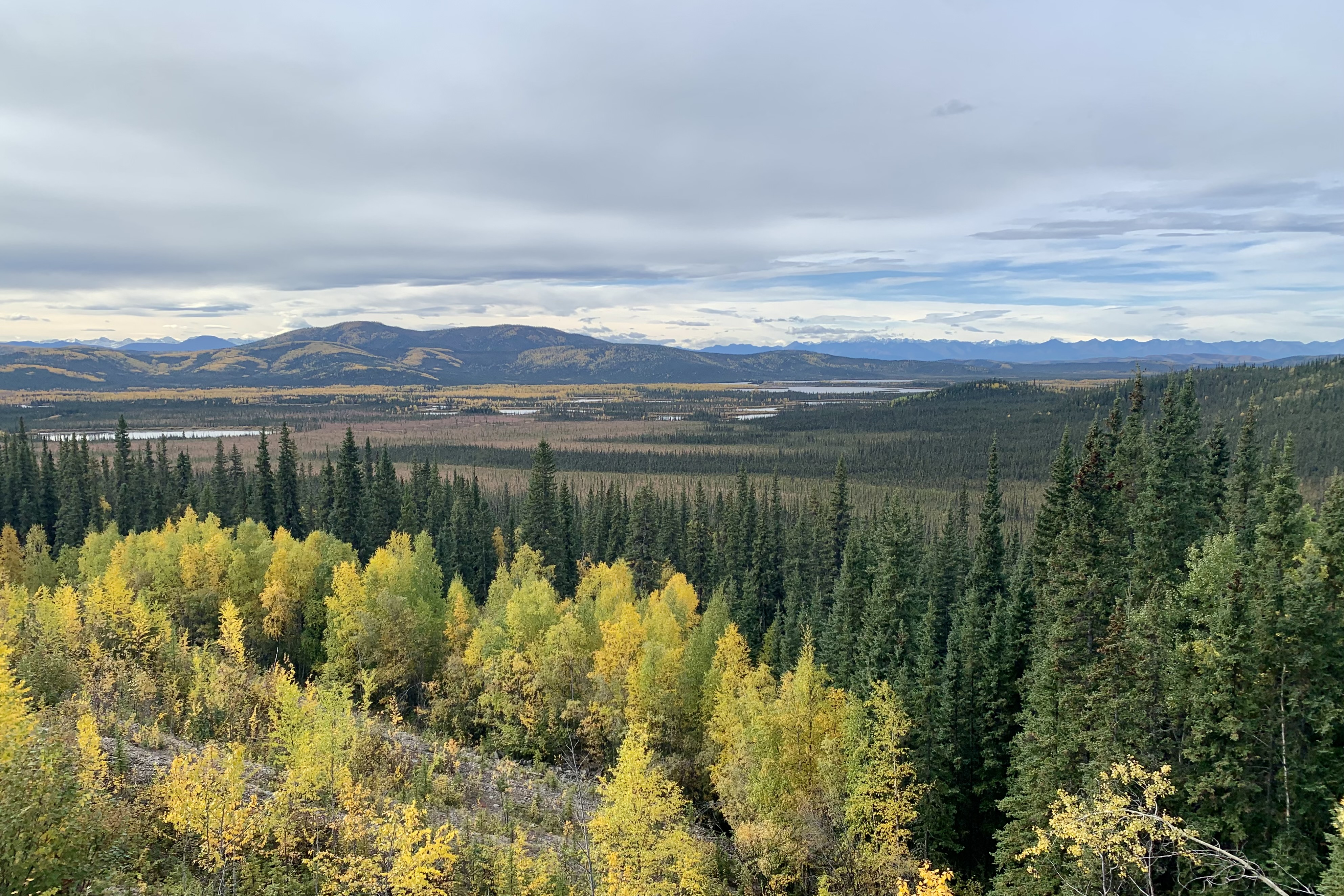
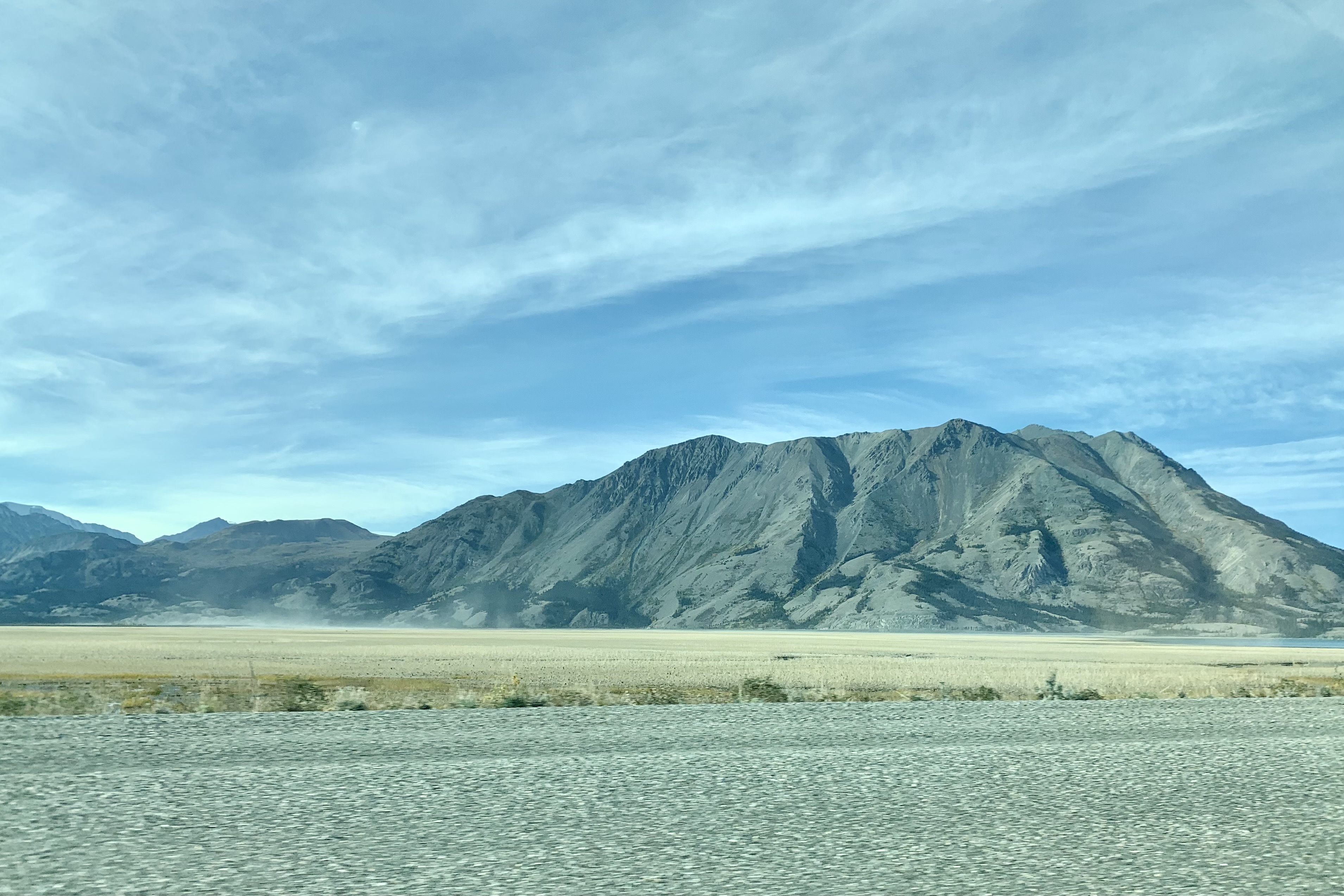
This was to be a 400 + mile driving day so I was soon back on the road and crossing into Canada, This wilderness area is not heavily trafficked so it was quite a relaxing drive  all the while being thoroughly awed by the surrounds and drinking in the scenic Kluane Mountains to the southwest and Lake Kluane  to the northeast. Being mid-September the fall foliage was perking up and there was a panoply of golden hues roadside.

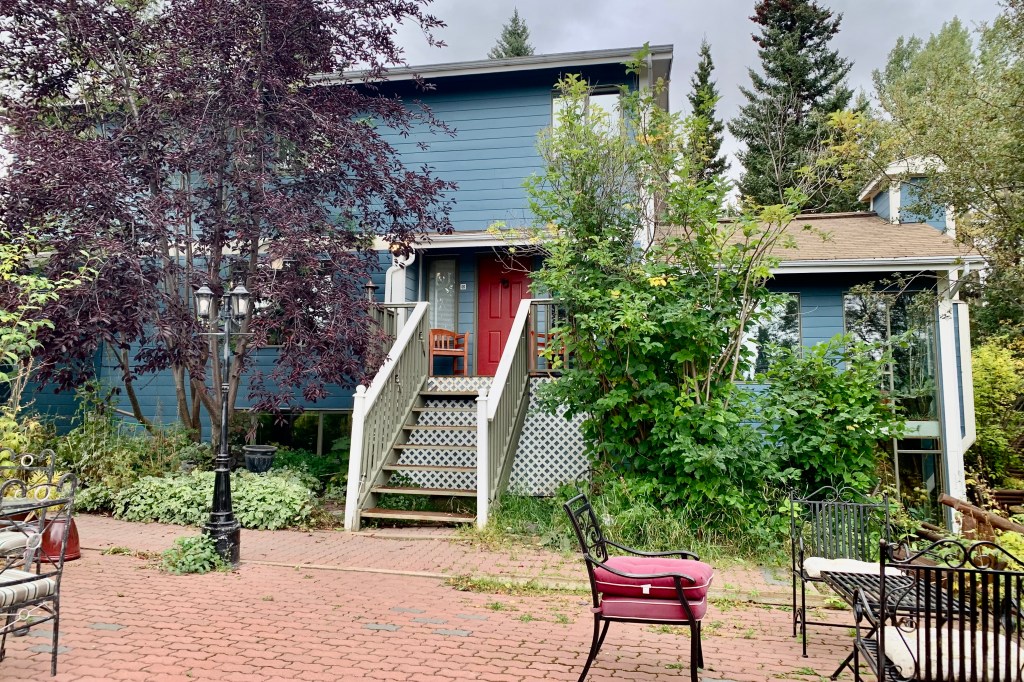
I arrived at Hidden Valley Bed and Breakfast around 6:00 pm.  As I experienced in Talkeetna , things are not quite the same since COVID. No repeat performances here either. Being a different season (fall versus mid summer) , the grounds were void of the magniifcant flower gardens and outdoor seating areas surround by beautiful pots of flowers.  It looked quite dreary arrayed in dead plants. I found a note on the door to let myself in and headed up the stairs per direction to the Blue Room.  Fortunately it did not turn out to be the tomb like atmosphere of Talkeetna, but it was obvious the woman who owned the B & B had aged considerably and was not the same peppy purveyor of 5 years ago.  I did ask her for a restaurant recommendation and ended up going to the recommended Whiskey Jacks’s Pub and Grill. Being around 7:30 on a Friday evening  and desperately hungry, I  ended up sitting at the bar (not my preference for sure as discussed in Chena Hot Springs ) so as not to have to wait an hour or more for a table.   I was actually quite  entertained throughout my meal by the bartender whipping up and out with a flourish hundreds of alcoholic drinks. The Blue Room slept well!

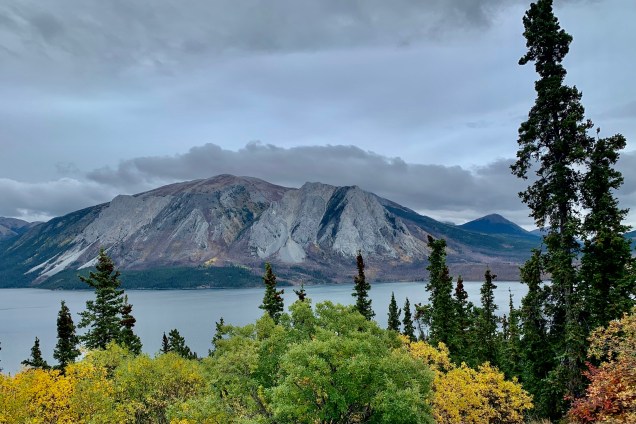
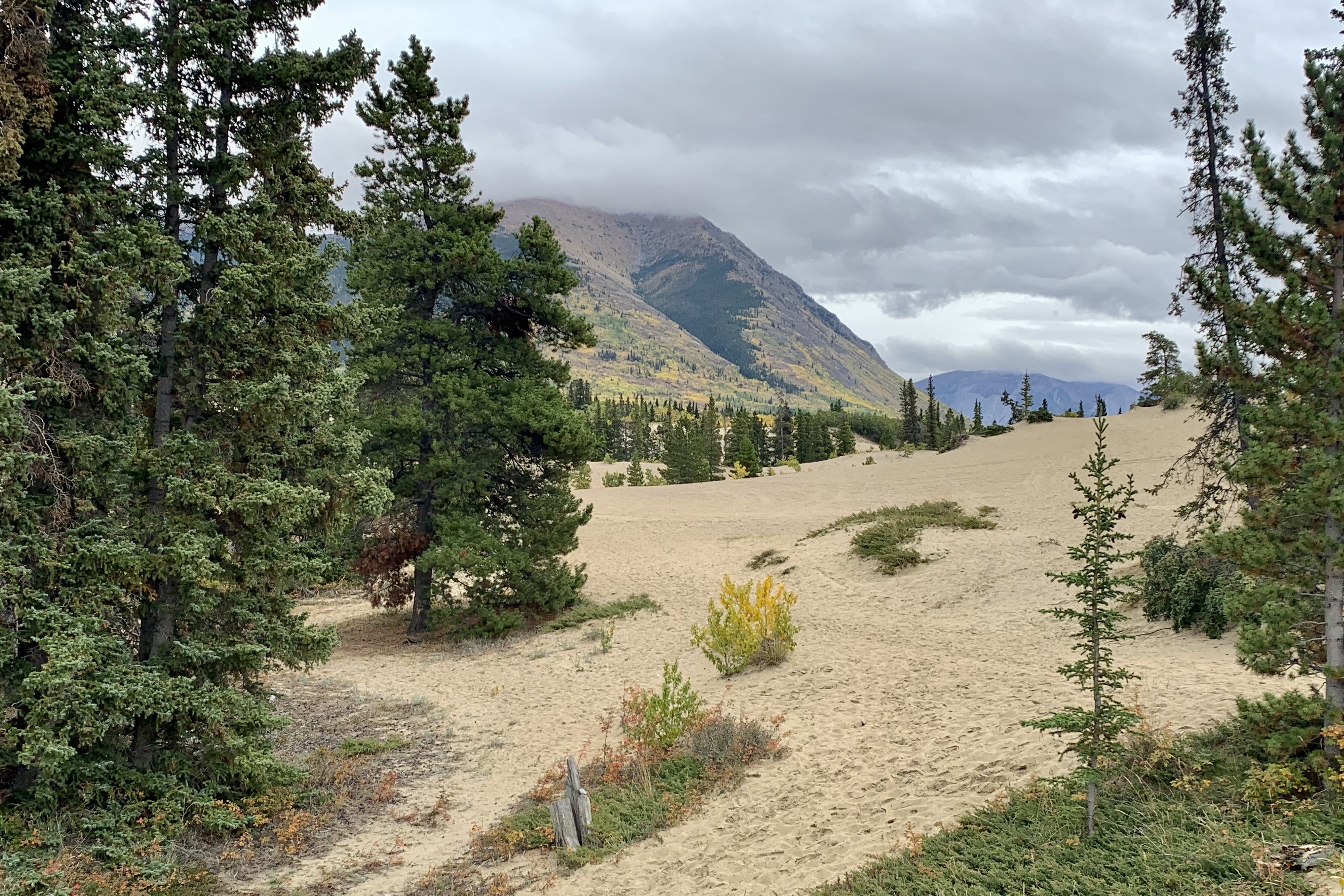
After a not very appetizing breakfast of a rubbery poached egg on toast, I head out for the final driving excursion to Skagway Alaska on a very cool, foggy rainy day. Since the distance would only be a bit over 120 miles, I could have a leisurely drive through a very picturesque and historic area. After a sort 40 minute drive just short of Carcross (Tagish First Nation) Emerald Lake came in to view…though on this day it would not be touted as a fin ‘gem’ since it was not shimmering with a brilliant emerald green hue that promotional literature states captivates so many visitors. It was lovely none-the-less with the fall foliage adding a bit of colorful contrast. Back on the road again, I was intrigued when I came upon a small dunescape , the Carcross Desert, which clearly seemed out of place in this area of snow capped mountains, lakes, and forests. It is touted as the World’s Smallest Desert.

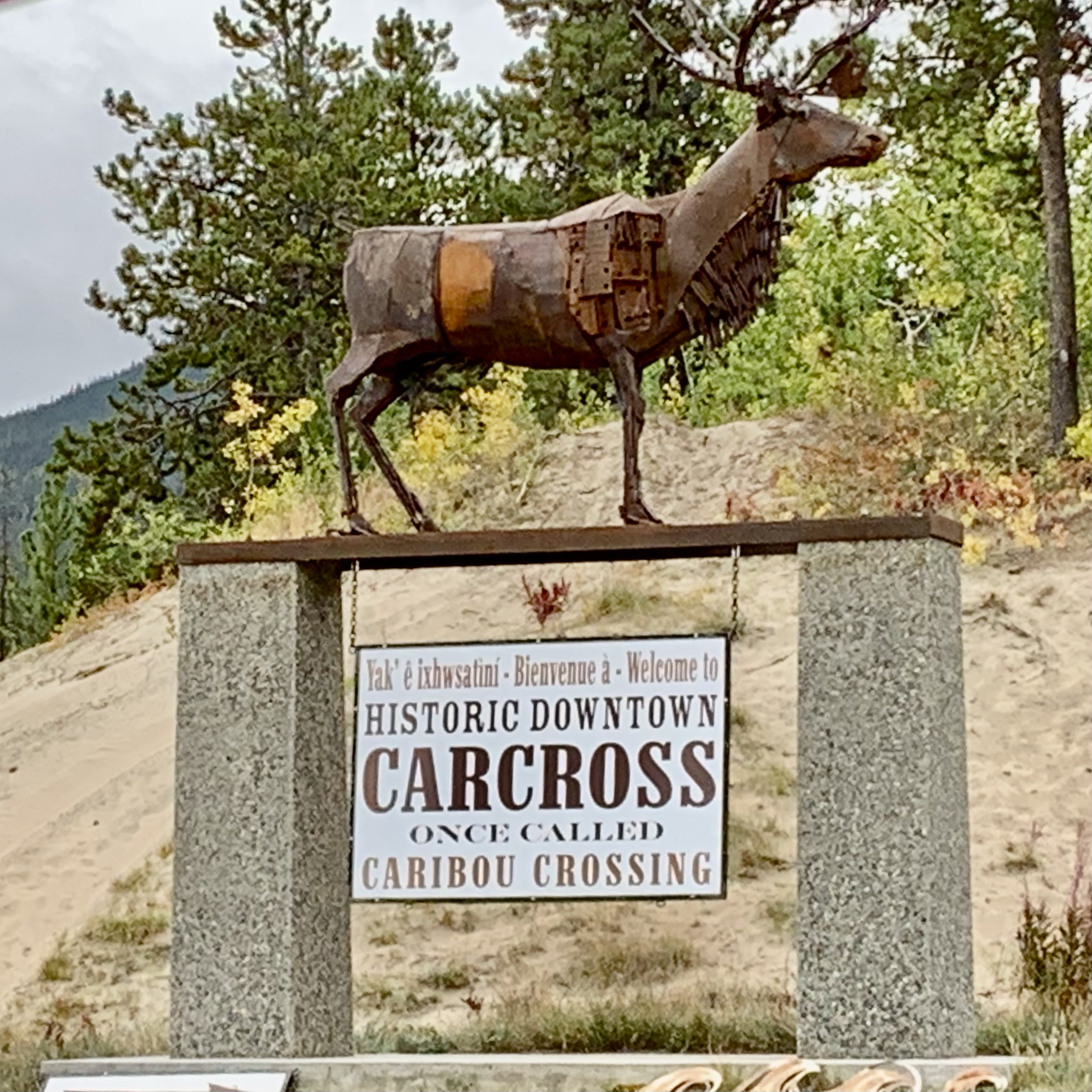
Carcross, (previously know as Caribou Crossing), at the north end of Bennet Lake , was an encampment on the way up to Dawson City for the Klondike. I wondered why they change the name.  I fantasized it was because the local caribou made a decision to avoid the gold rushers and disappeared north and  the town needed to be renamed because the motorcar was doing most of the crossing in the territory. My thought process was very dense as I failed to deduce that it was a truncation of the original name to simplify postal service…a very utilitarian reason but having nothing to do with the motor car. 

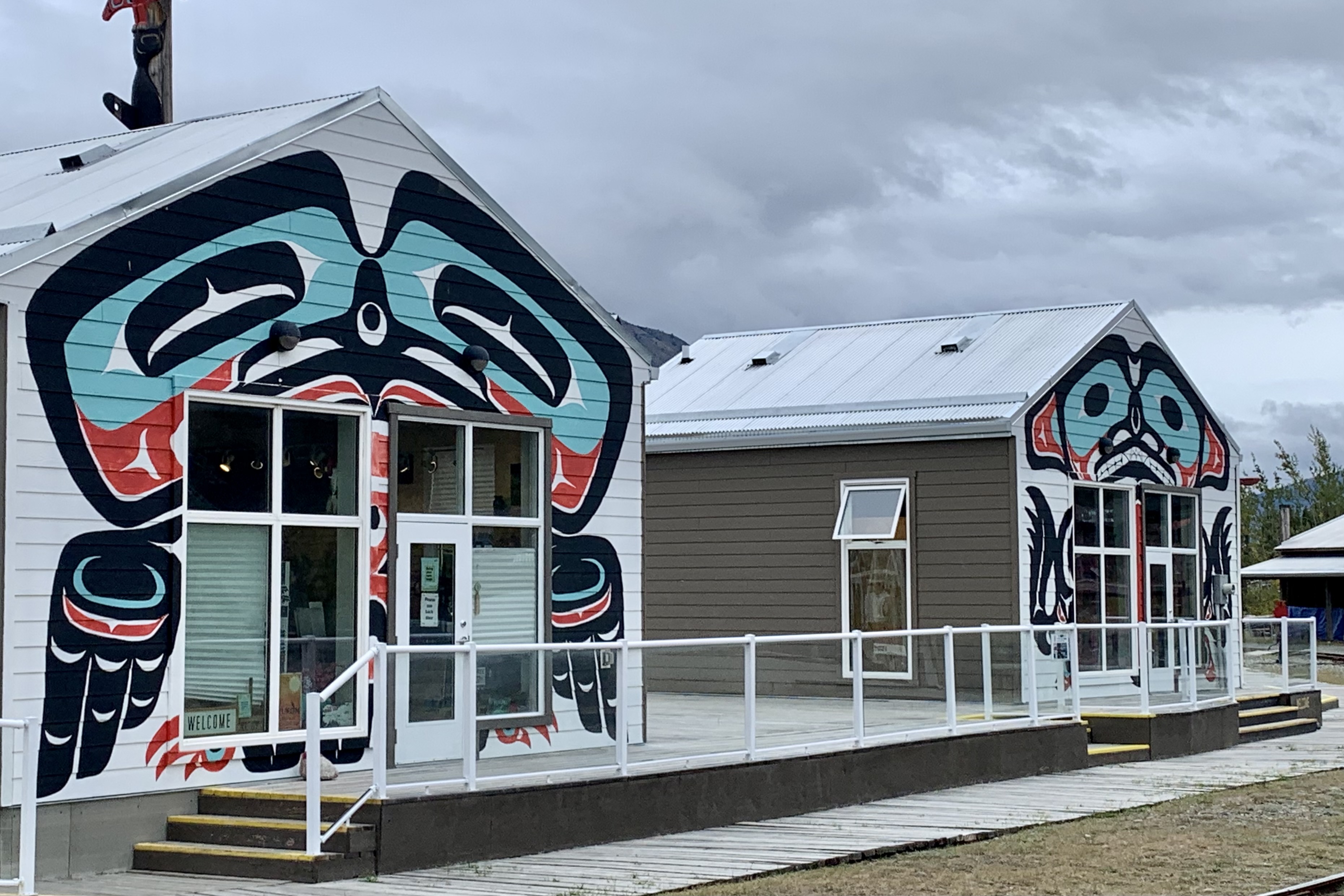
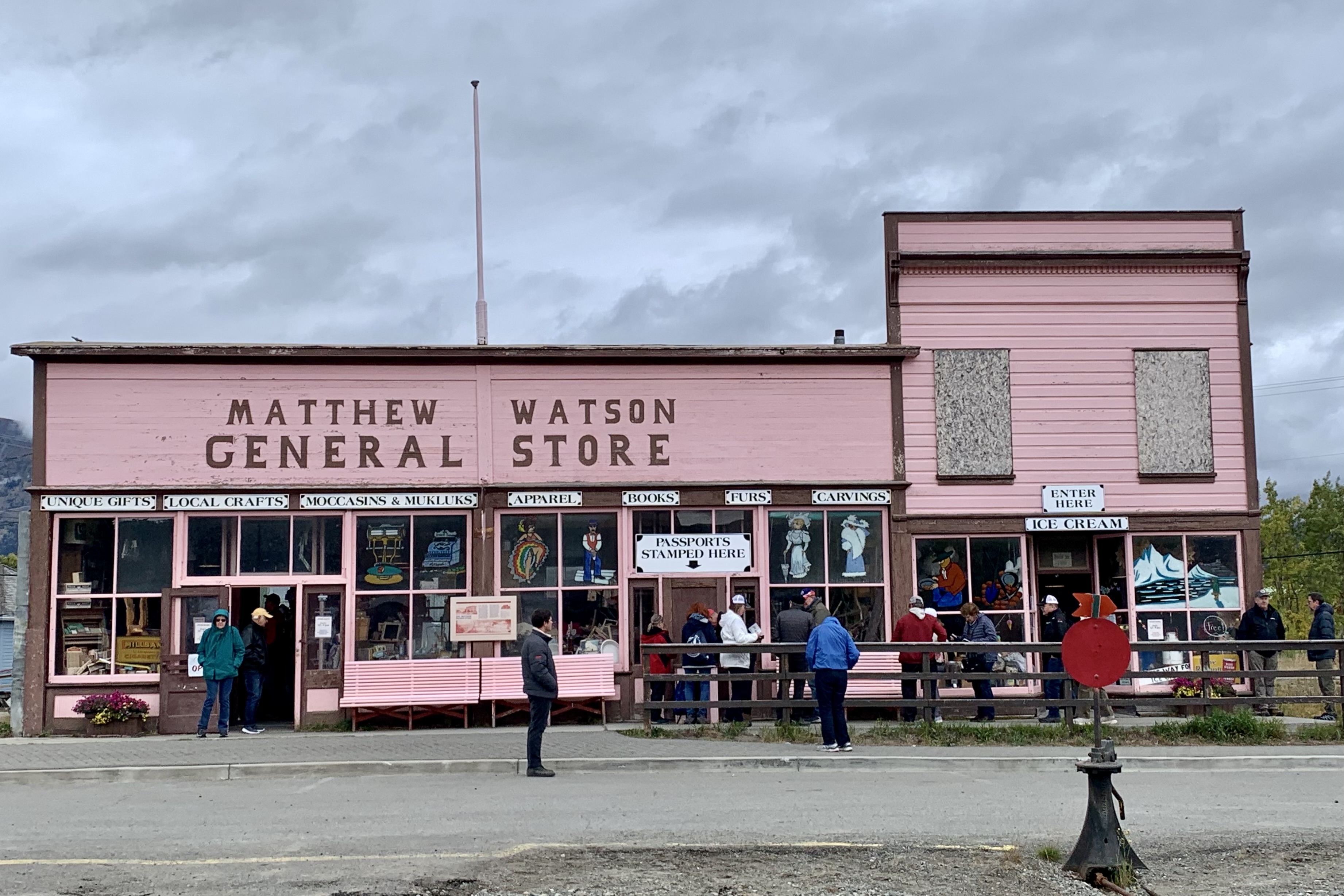
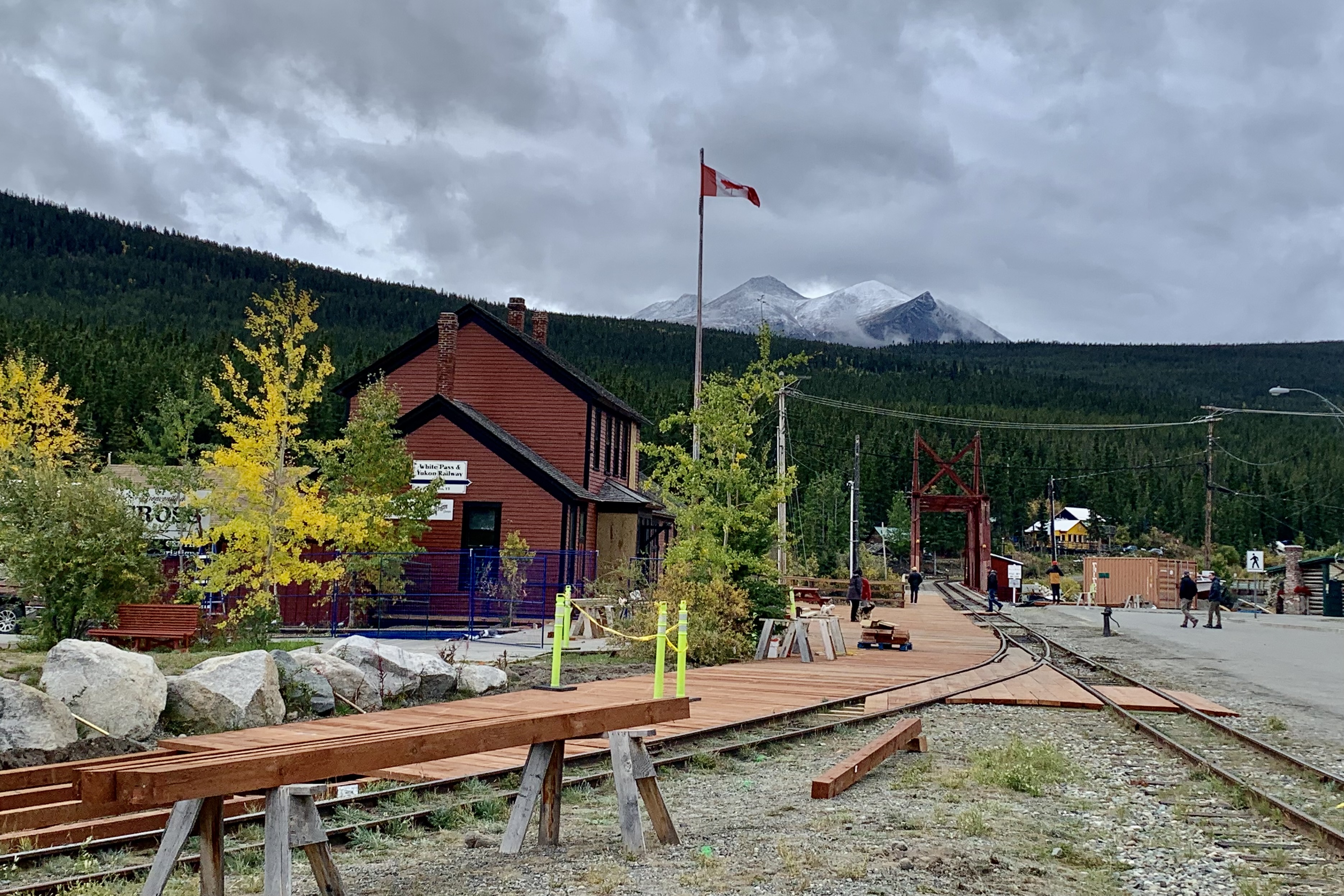
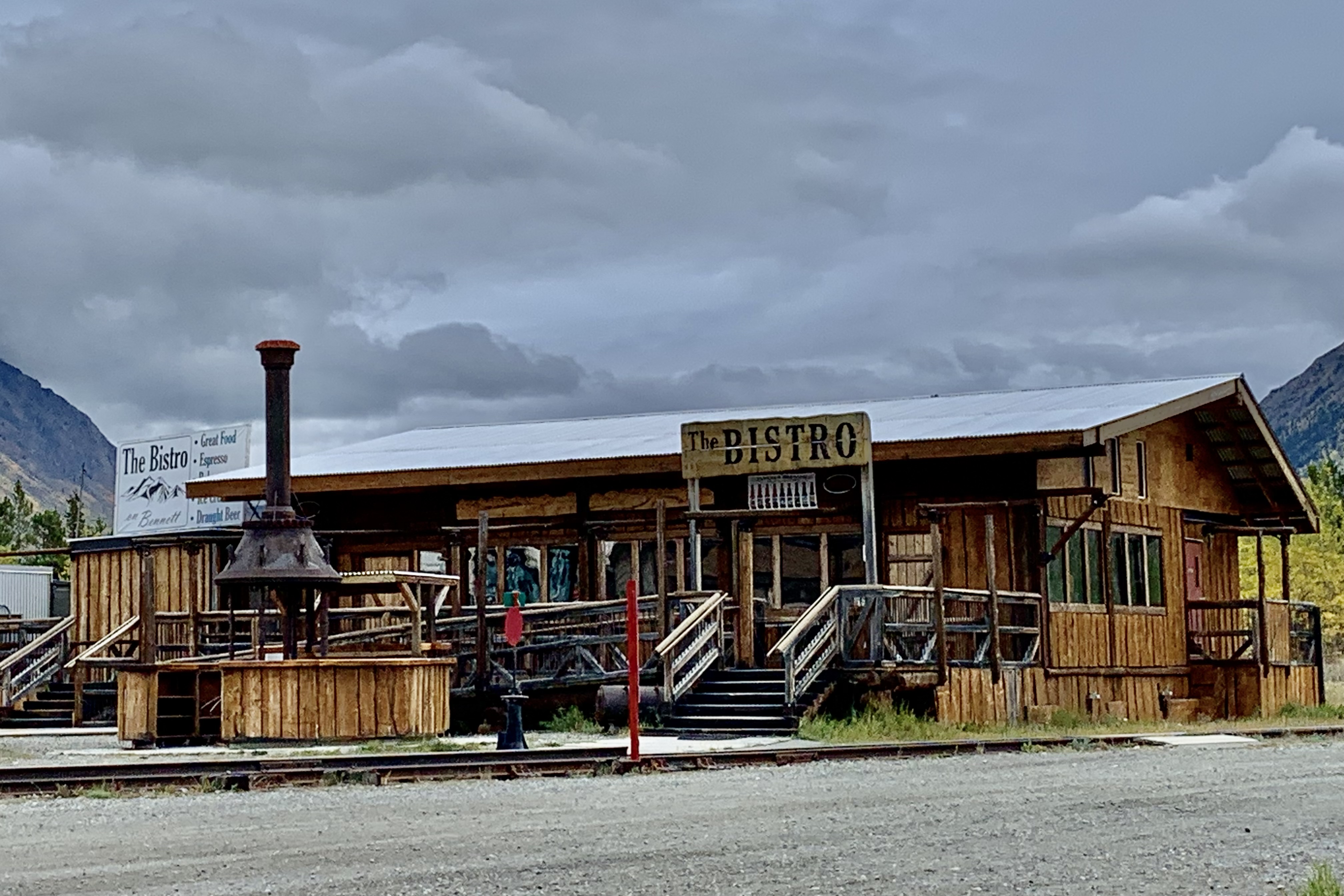
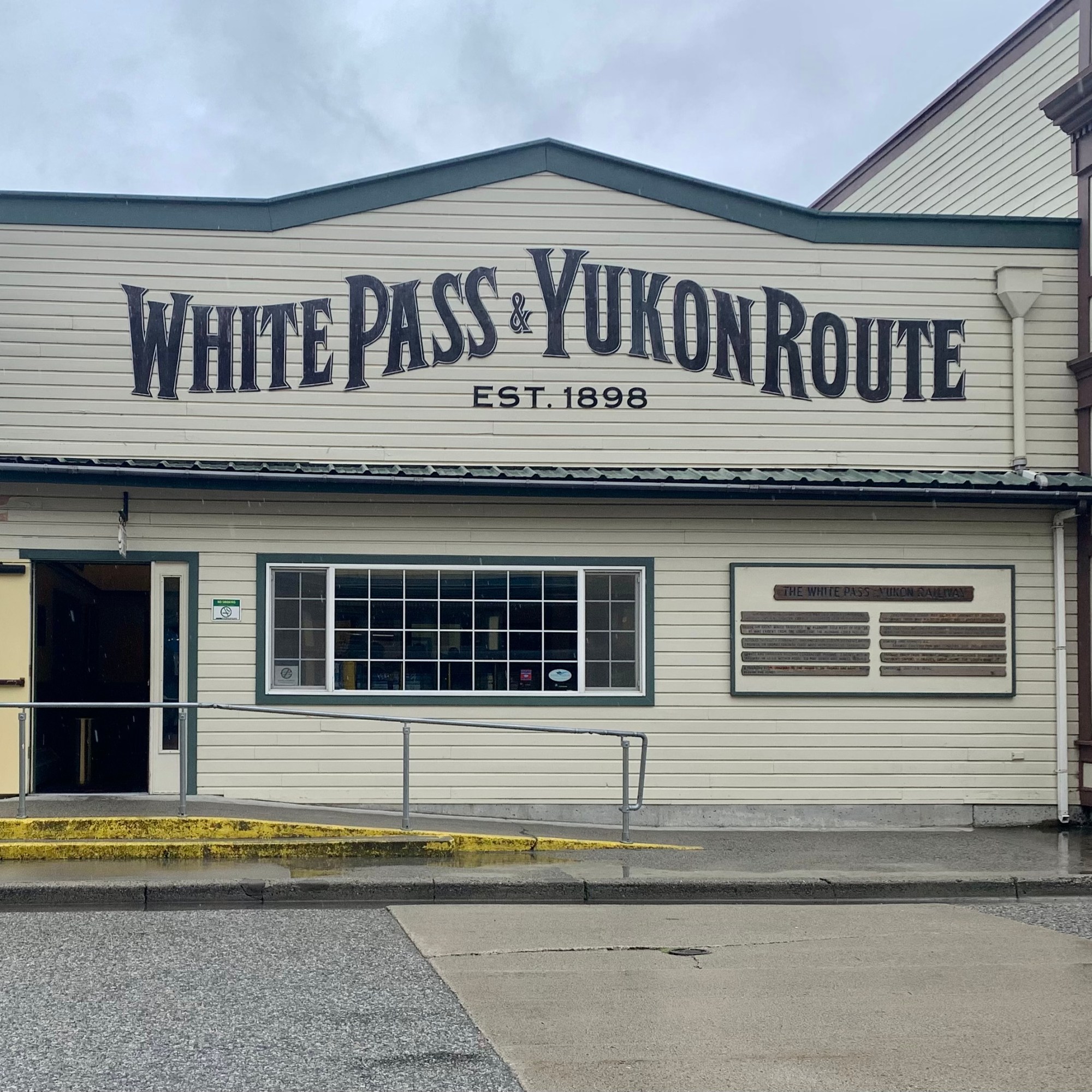
Carcross has a significant indigenous heritage and a whole lot of historical charm with several historical buildings lining the street. Its a mixture of artisan shops, galleries, cafes, many  newer but also old decaying buildings,  It also was over run on this day with Holland American  Cruise Line  Buses which disgorged  many many passengers.. I weaved through the streets of Carcoross, visited the White Pass and Yukon Railway Station, walked a bit on the beach of Bennet lake, explored the restoration site of the S.S. Tutshi BUT avoided the packed shops and galleries.  .

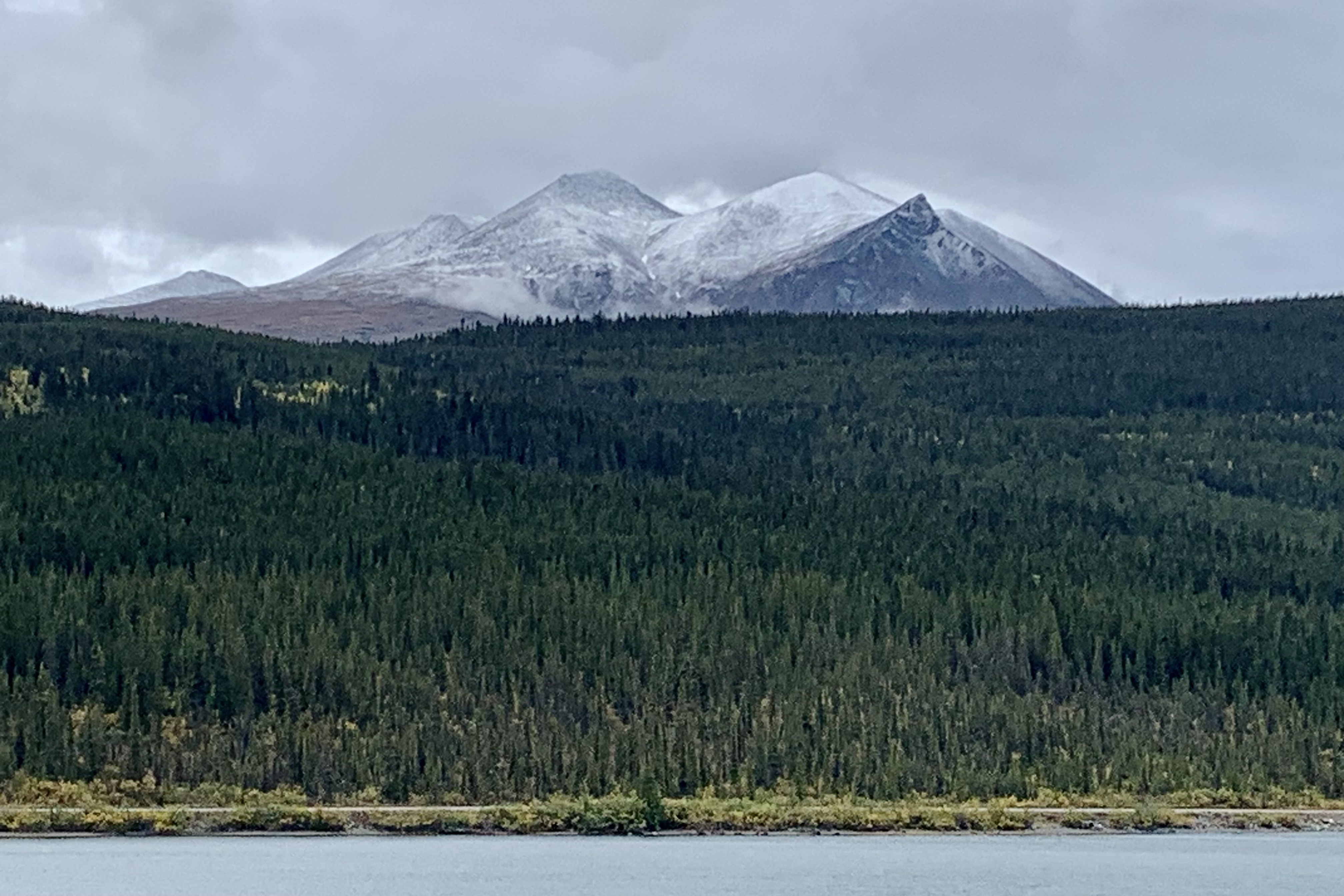
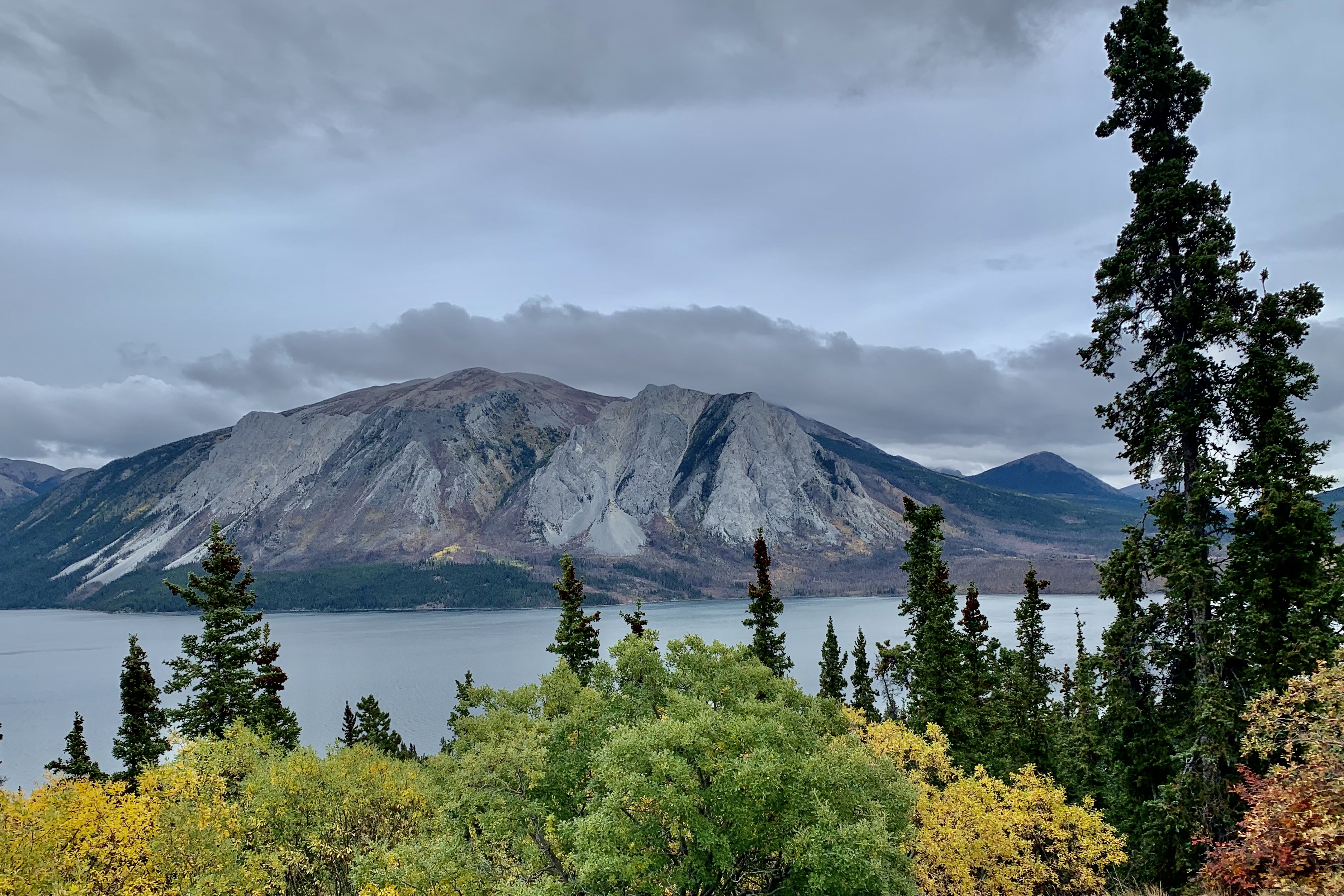
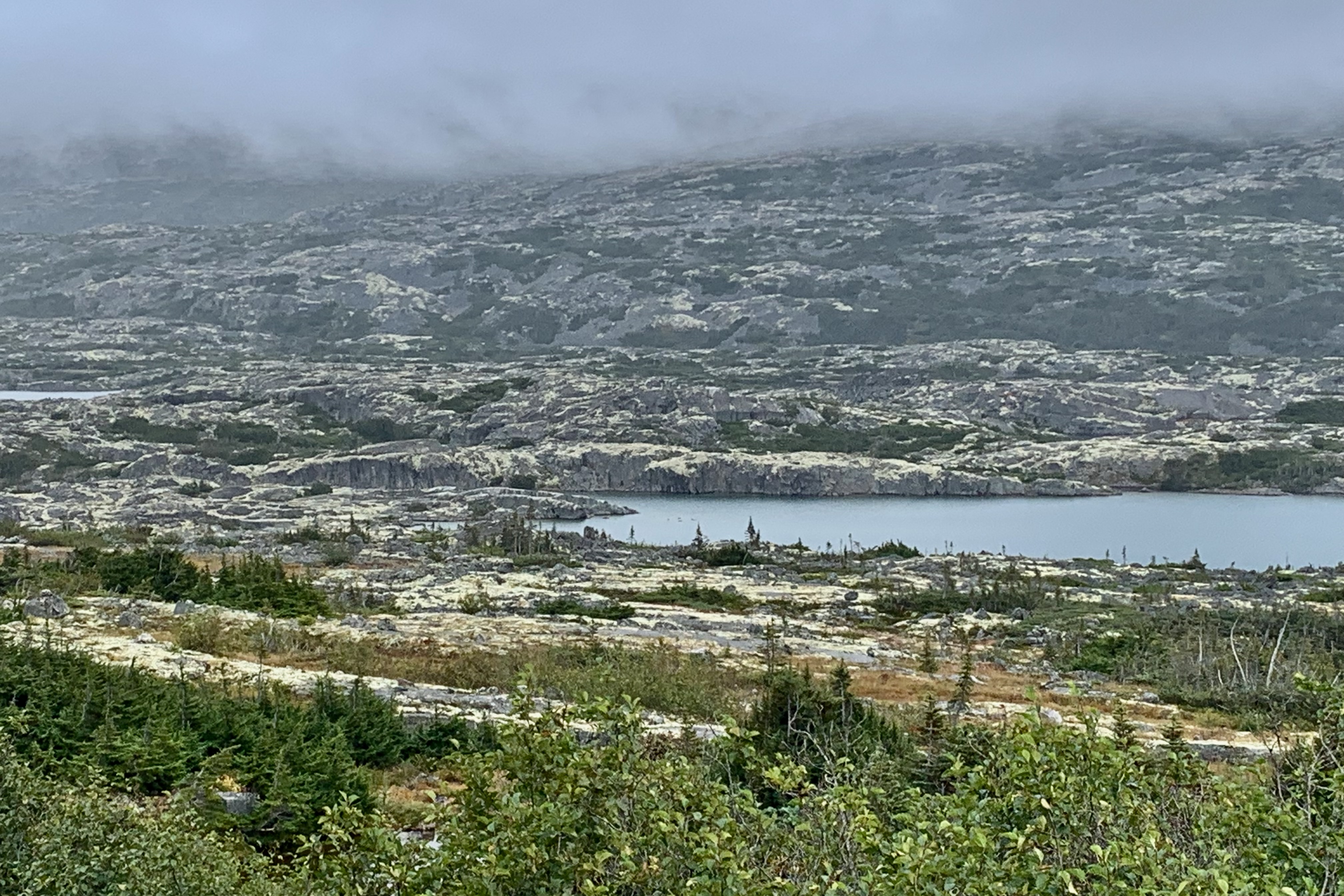
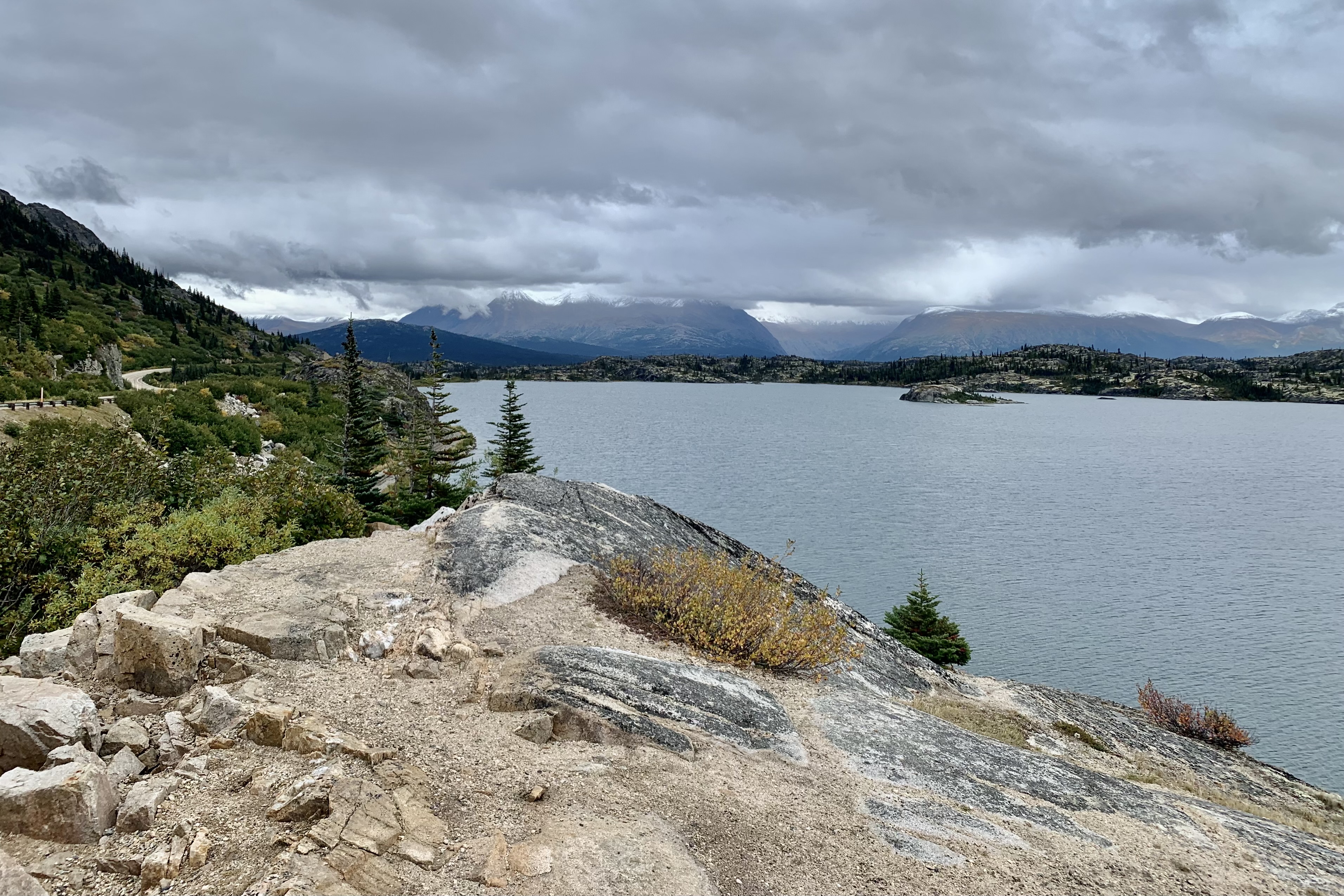
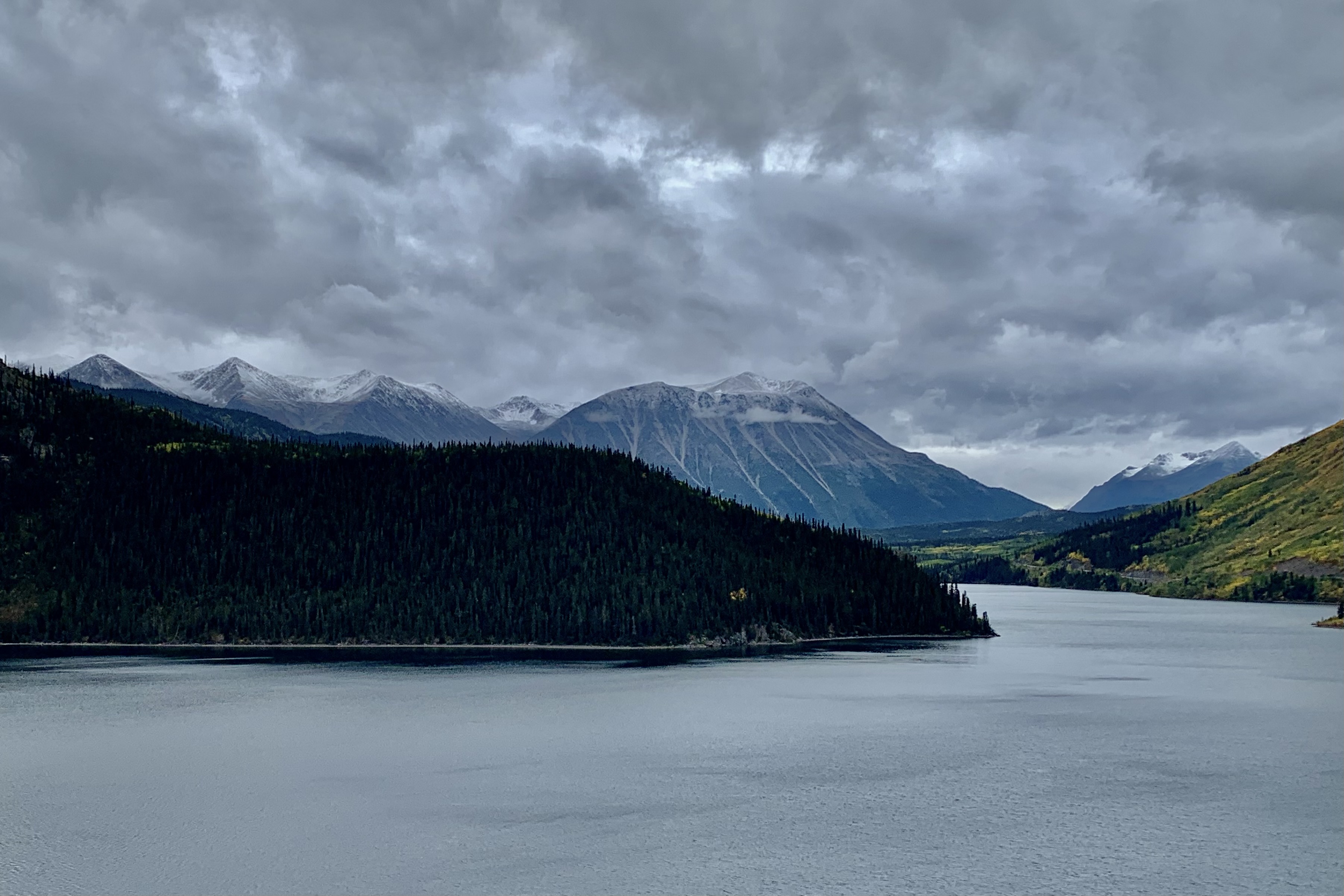
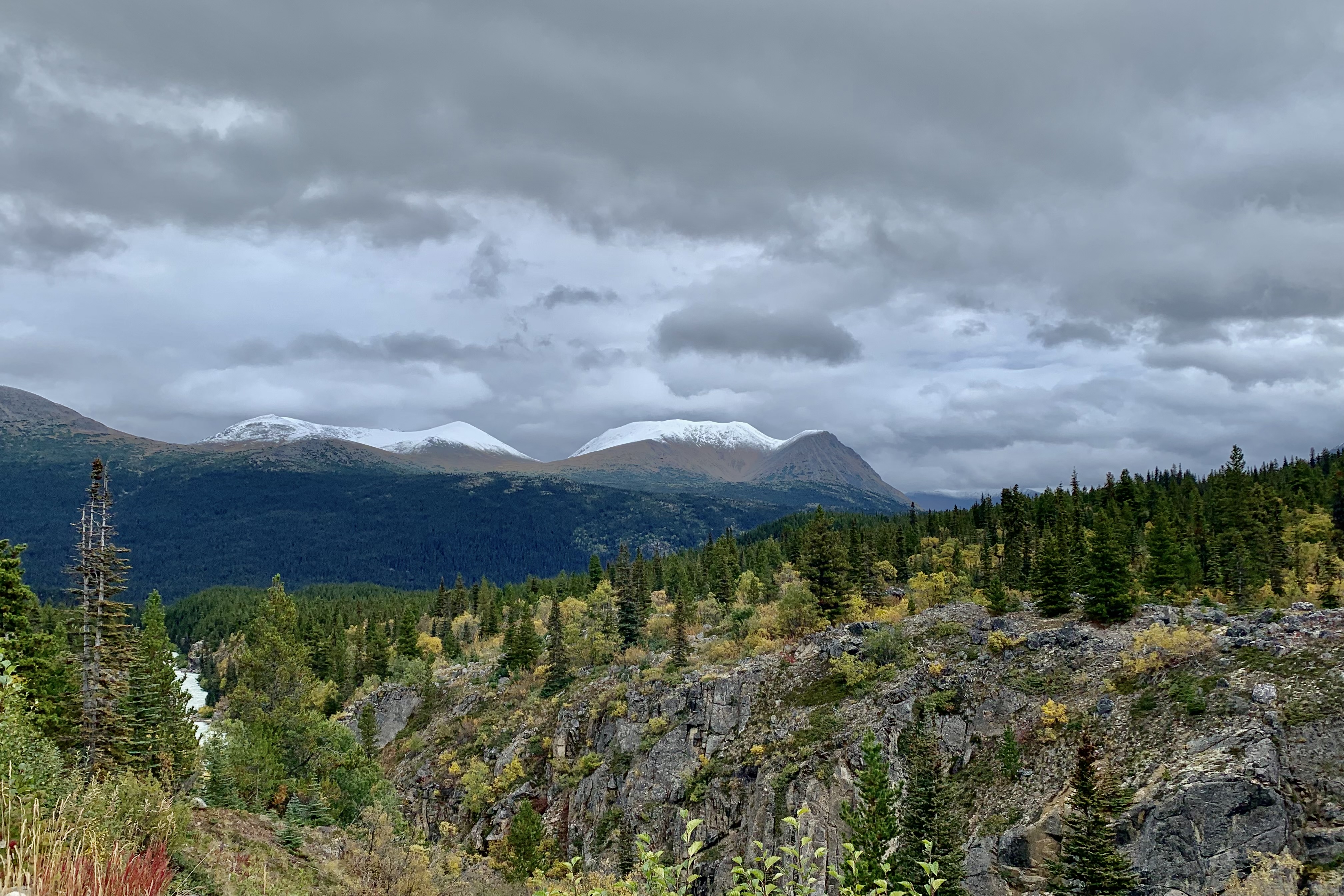
The territory covered, traveling beyond Carcross/Tagish First Nation on the south Klondike highway, was dressed out with snow capped  rugged mountains bordering  a wide wilderness valley hosting Bennett and Tutshi Lakes, rugged lichen encrusted rocks, rushing rivers,  picturesque waterfalls, ascending up to White Pass  and the  Alaska Border. The road was steeper with  many curves and a bit more of a navigation challenge that I had encounttered so far under most circumstance but more so with a steady drizzle and fog at the higher elevations. I however did find the area quite striking until I ended up with no scenery at all given the density of the fog at there top of White Pass. I had been looking forward to the panoramic vista  from the White Pass summit at 3292 feet but twas not to be. 

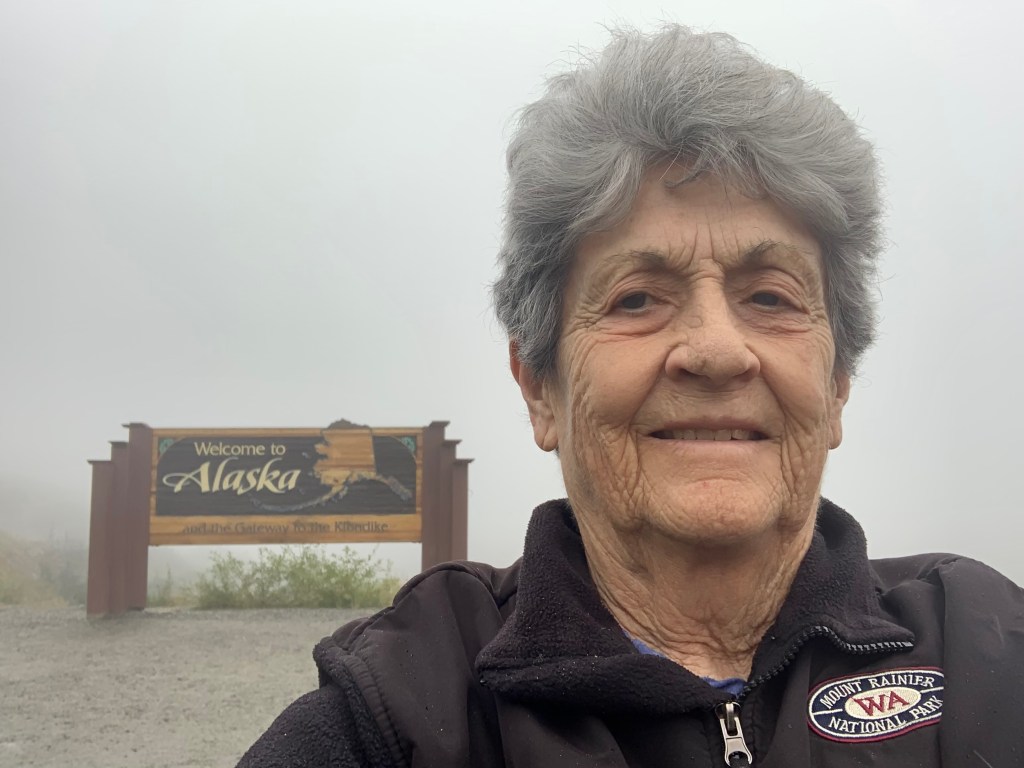
For prosperity’s sake I had to do a photo of five years later with the Welcome to Alaska sign  as I did on the day I entered Alaska when I was moving to Soldotna in 2018. 

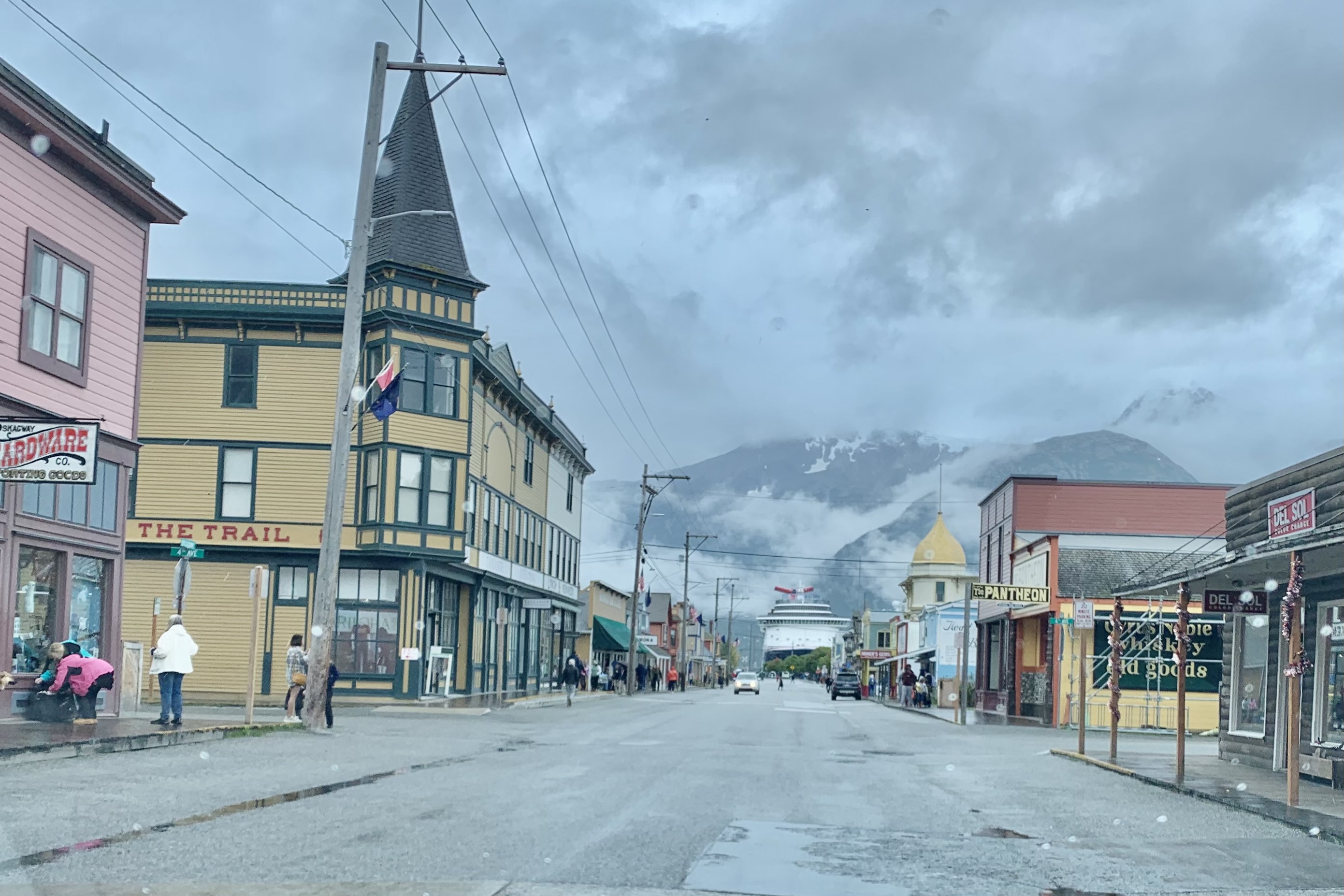
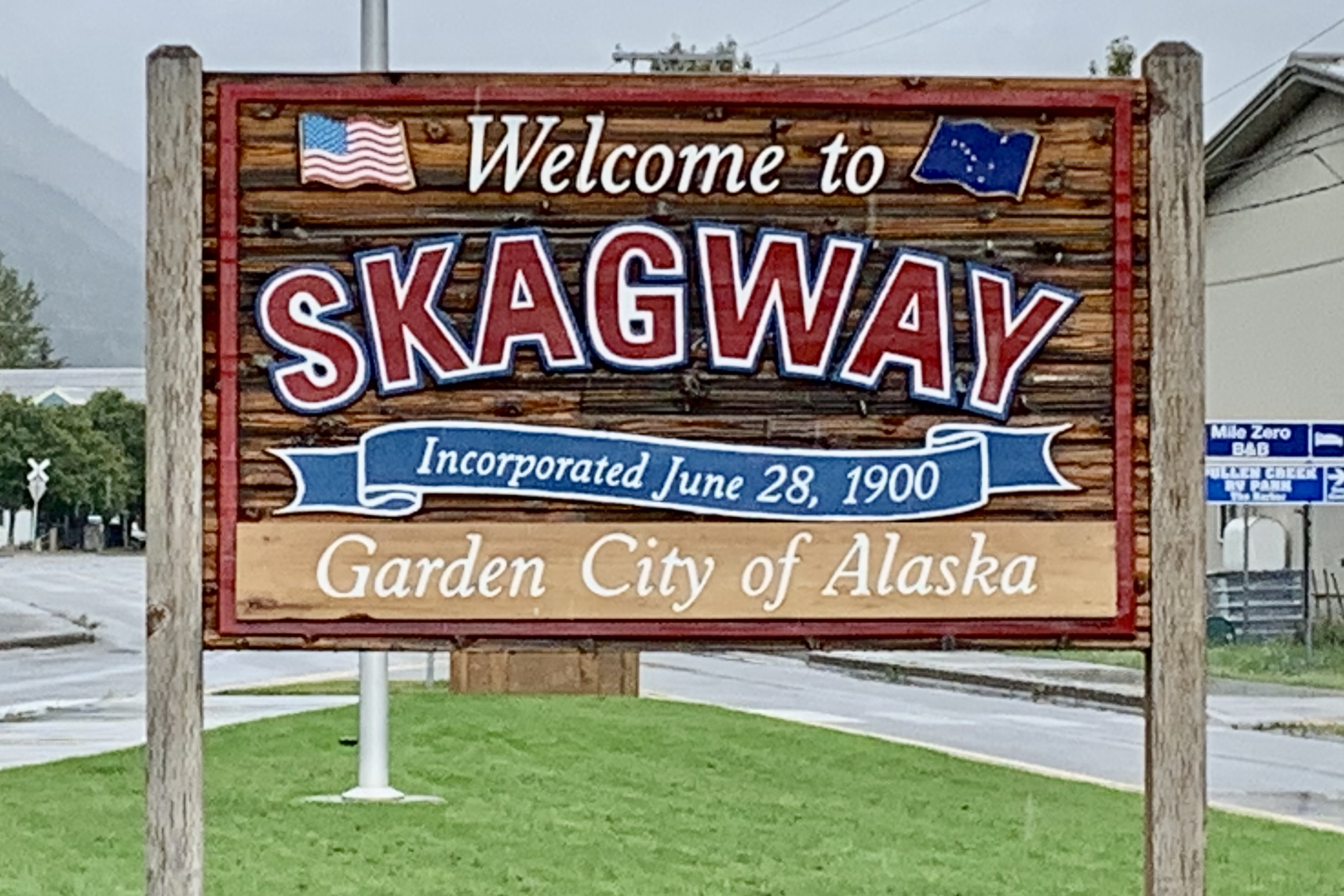
I arrived  in Skagway,  a quaint Klondike Boom Town of 1000, which is steeped in gold rush history and situated  between  towering peaks and the coast line of the Inside Passage. The primary commercial street, Broadway, is lined with all manner of tourist oriented shops and restaurants and has tried hard to replicate the look of the buildings of 100 years ago. My first weave down Broadway in my car was a cautionary challenge avoiding the packs of off loaded cruisers rushing about to find end of season bargains and other tourist tchotchke emblazoned with Skagway. Smack dab at the end of the road was the cruise ship the Carnival Miracle , a Spirit Class ship accommodating 2000 +  with the Sapphire Princess, a Grande Class cruiser with 2600 spots docked next to it.  These two of the three massive cruising vessels in harbor this day had the potential to disgorge thousands as their capacities run fro 2000-3000 passengers each. Skagway host approximately one million visitors each summer, meaning thousands per day patrol the streets in the 4 month long season.

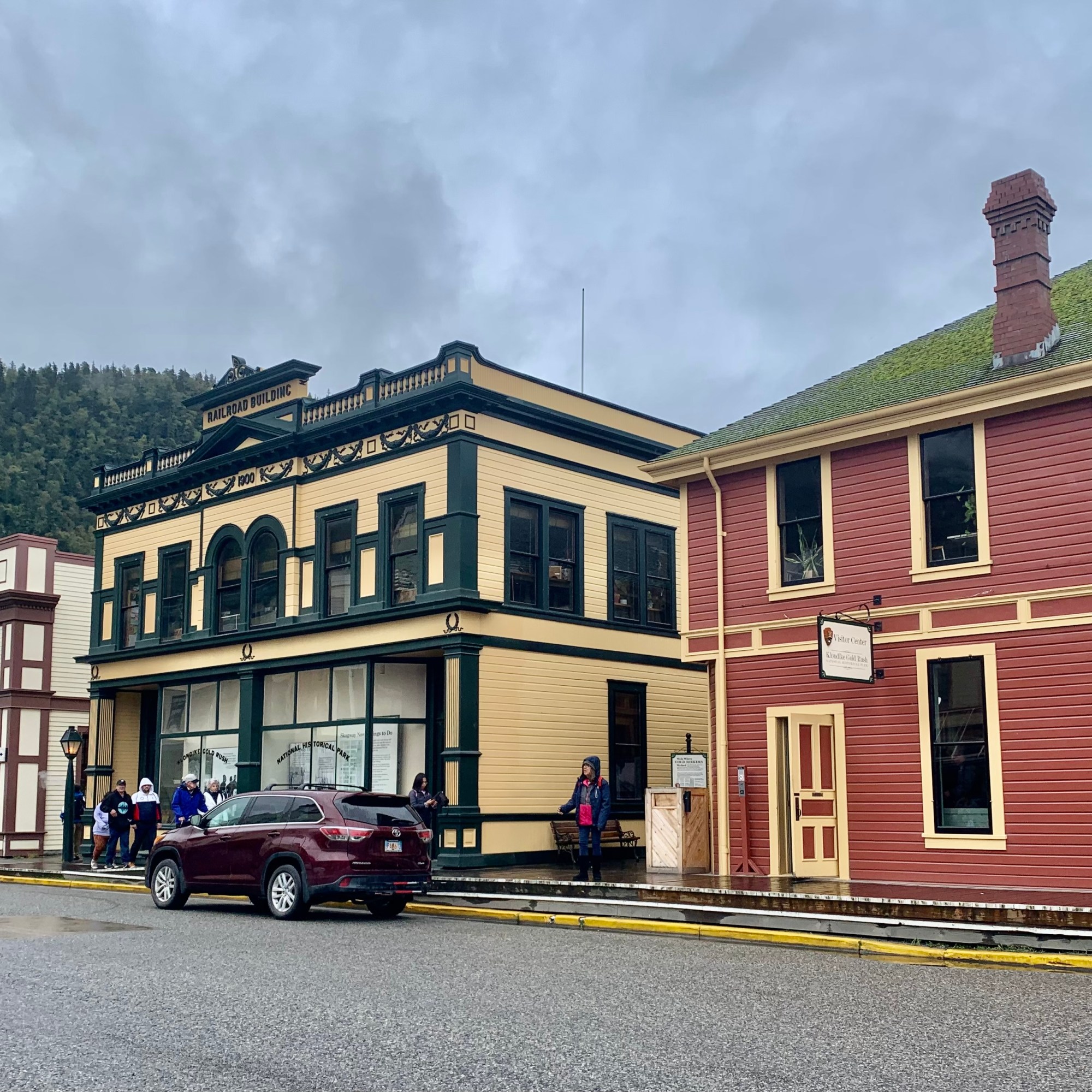
The good news was that most ships require passengers to be back on board by 5:00 pm so that left the streets relatively calm and unpopulated and no line for dinner at the Skagway Brewing Company either night.  I normally would not revisit a restaurant except that this was the only one open on Sunday evening. The town had pretty much shut down for the season. I am sure, by now you have guessed, I don’t care to mingle amidst massive crowds. Late Saturday afternoon and on Sunday , with only one ship in port, the crowds were sparse and the streets were relatively empty. It was quite enjoyable, despite intermittent showers. The town is steeped in Klondike Gold Rush history so perusing the historic buildings was warranted.

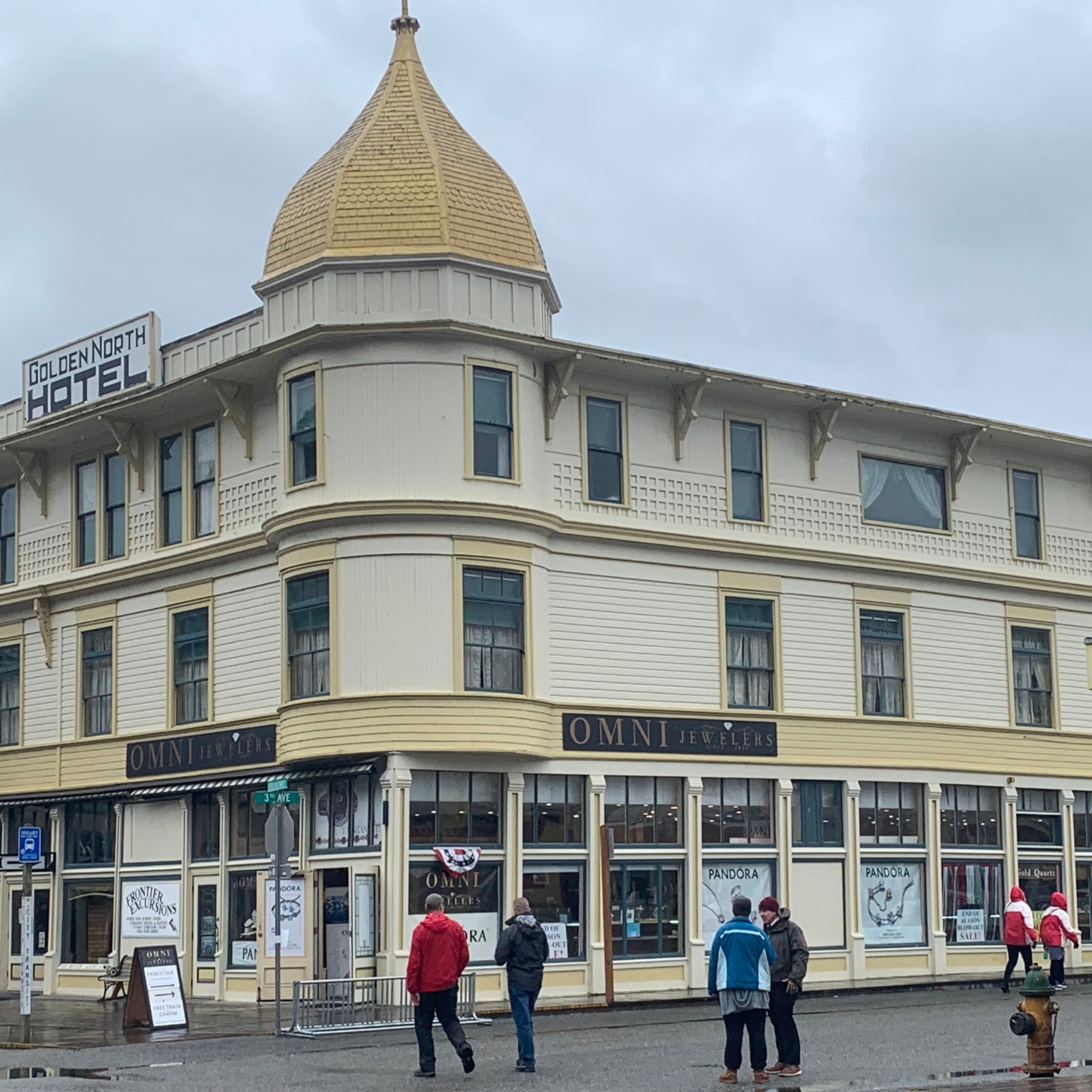
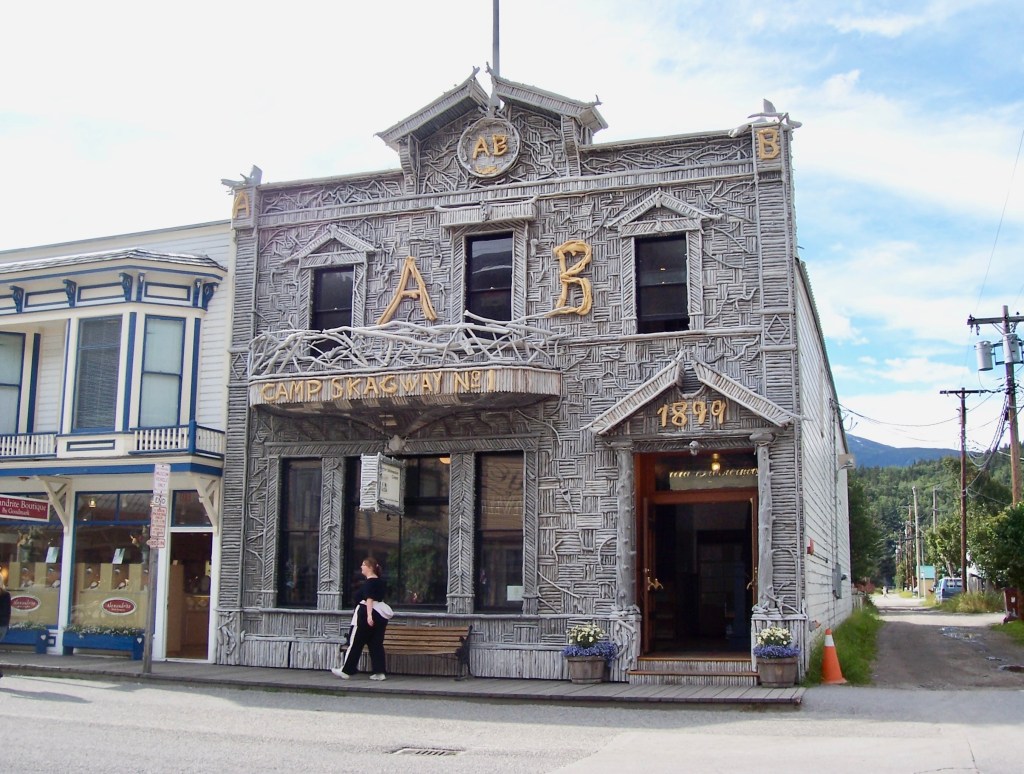
My main goal became enjoying my spacious bright room, perusing the town after the crowds thinned, acquiring food for the ferry trip, and finding the docks and procedures for the boarding on Monday. I had visited Skagway about 15 years ago and not much had really changed visually.  Below are a few photos from 2007 including the Arctic Brotherhood Hall, the Golden North Hotel and the Alaska Maritime Ferry and a large cruise ship in the harbor.

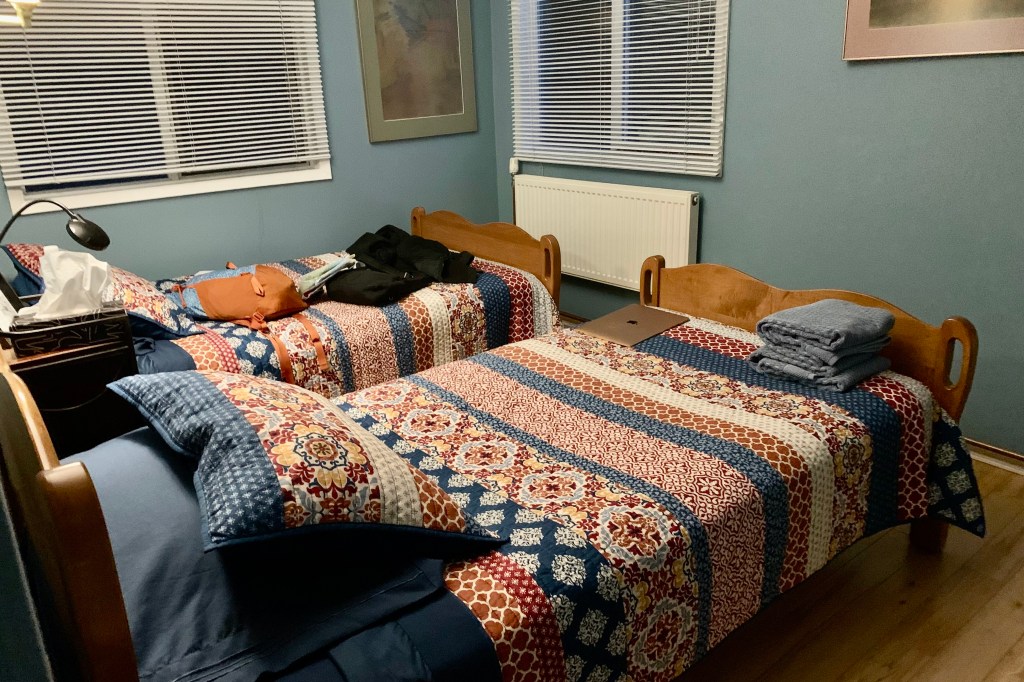
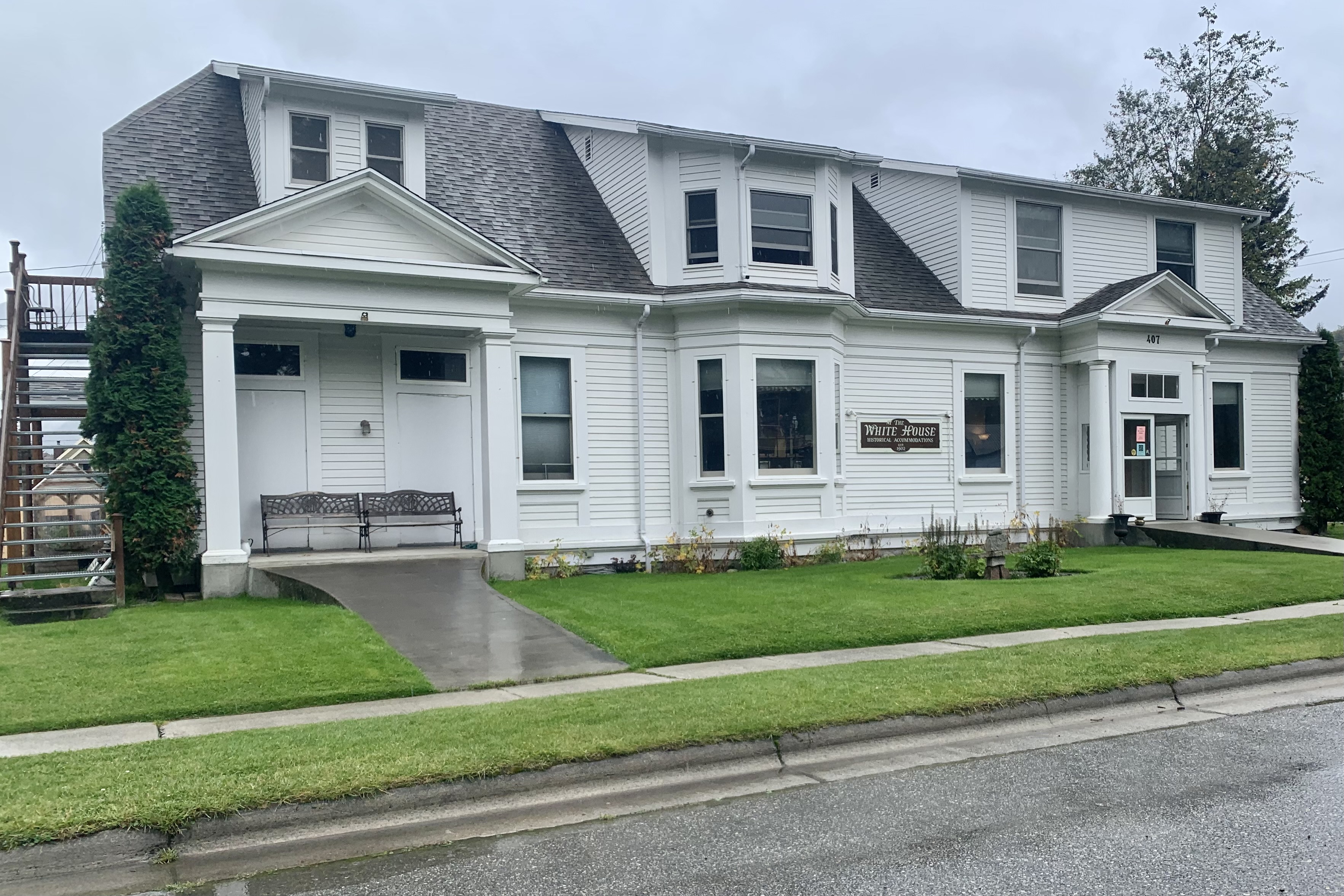
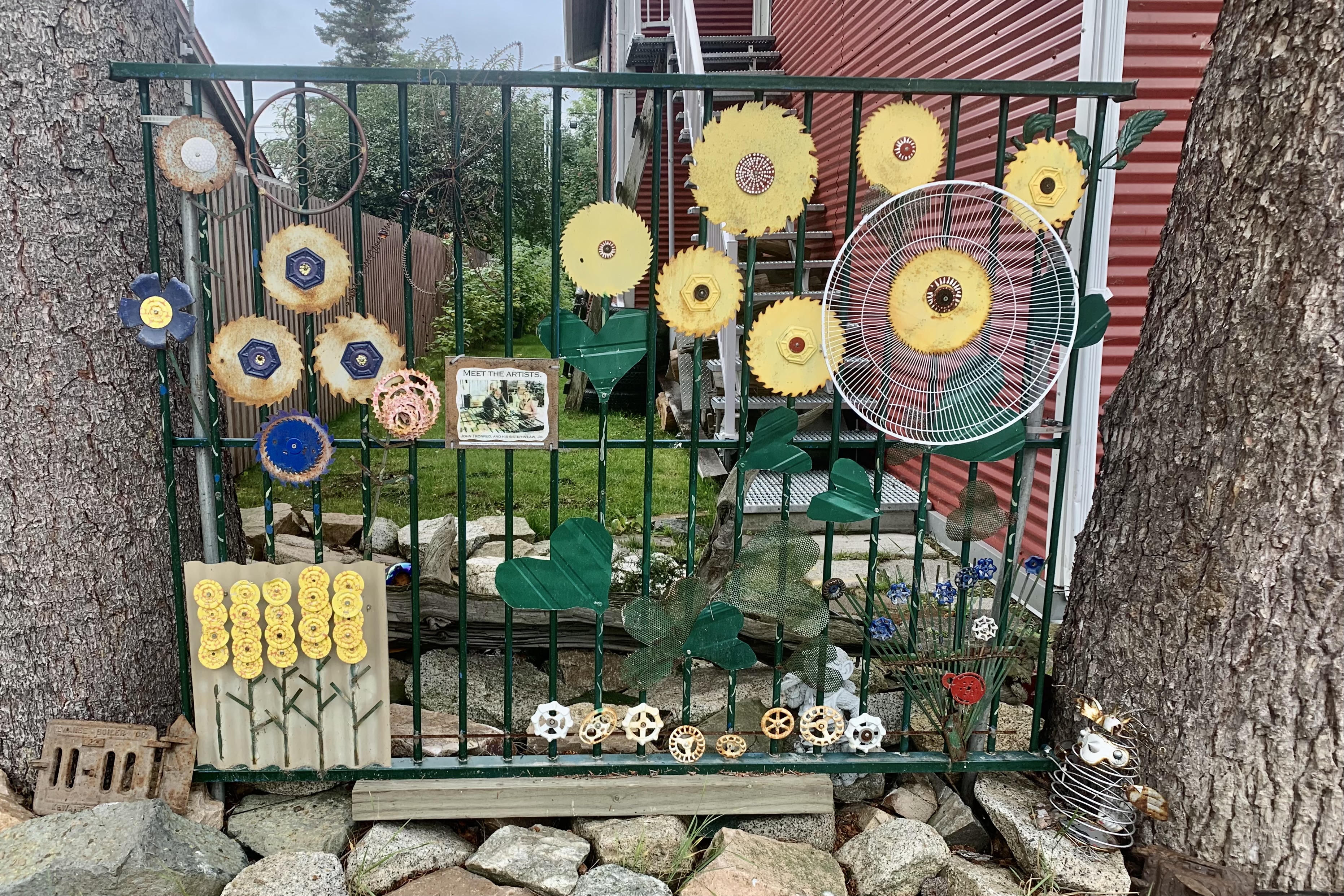
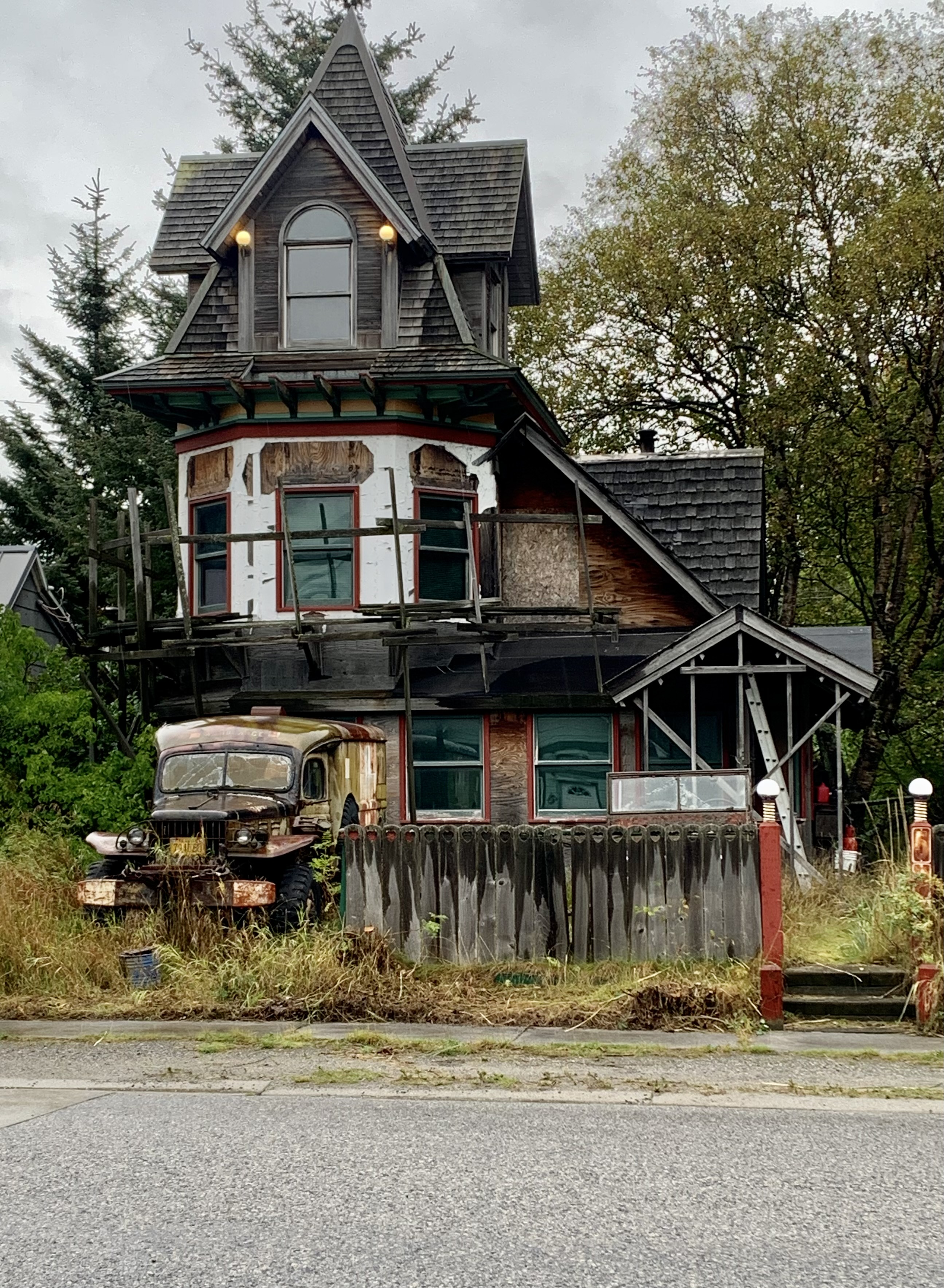
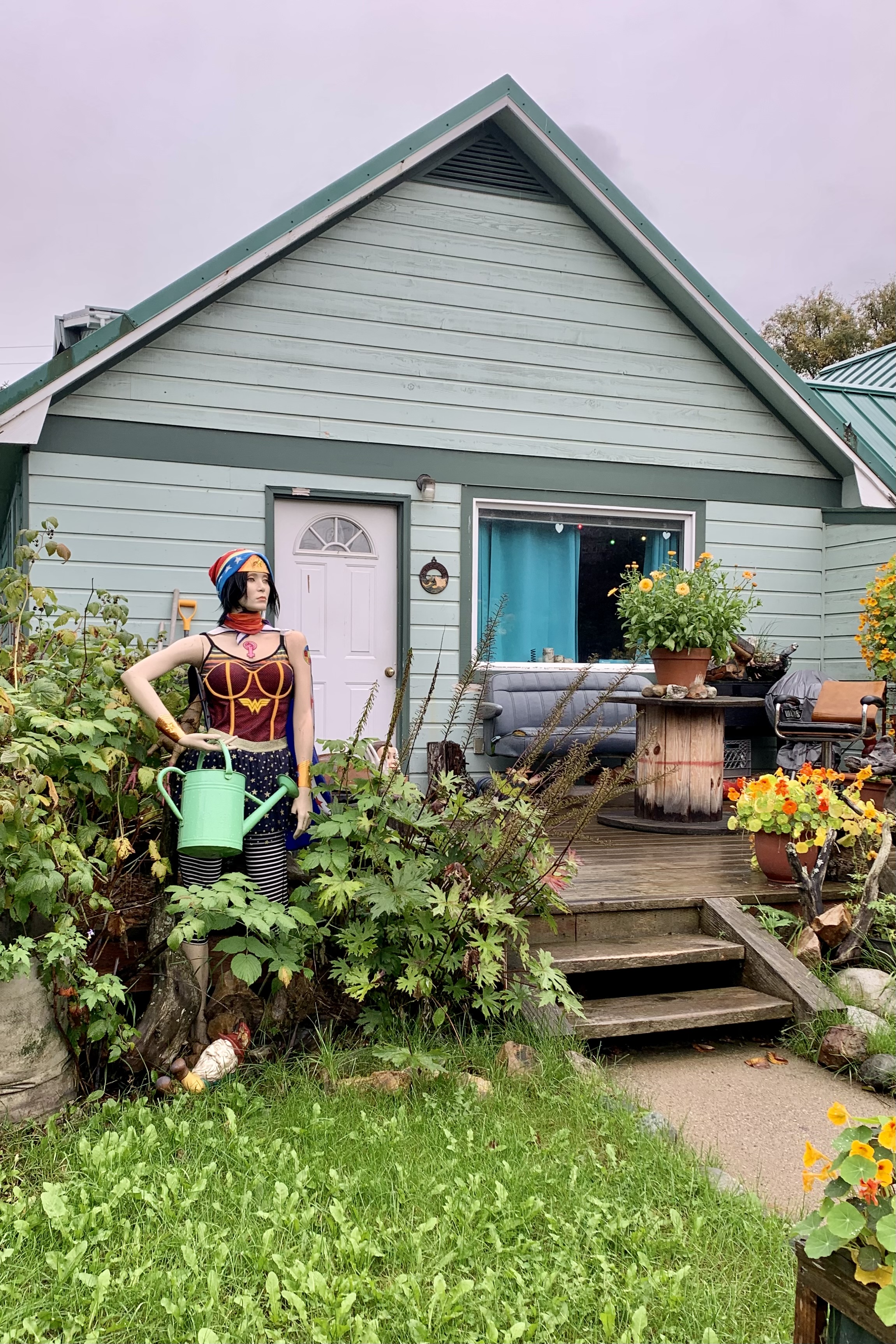
I had two days in Skagway  and had booked a room at the White House Inn, a 9 room 1902 house operating as a bed and breakfast (without the breakfast now-a-days) and on the National Historic Register. Some original woodwork and the 100+ year old staircase, along with many antiques dressed the foyer. It was cozy and comfortable with all the amenities of most hotels and especially appealing was that it was in a quiet residential neighborhood just a couple of  blocks from the bustling  and jostling Historic District. It also had some fun and creative neighbors.

I would be boarding the Columbia the next morning. My last week in Alaska had been an excellent adventure despite it not being at all like the picture perfect descriptions presented in promotional literature.

A Backcountry Shack, a False Start, and a Roaring Cataract

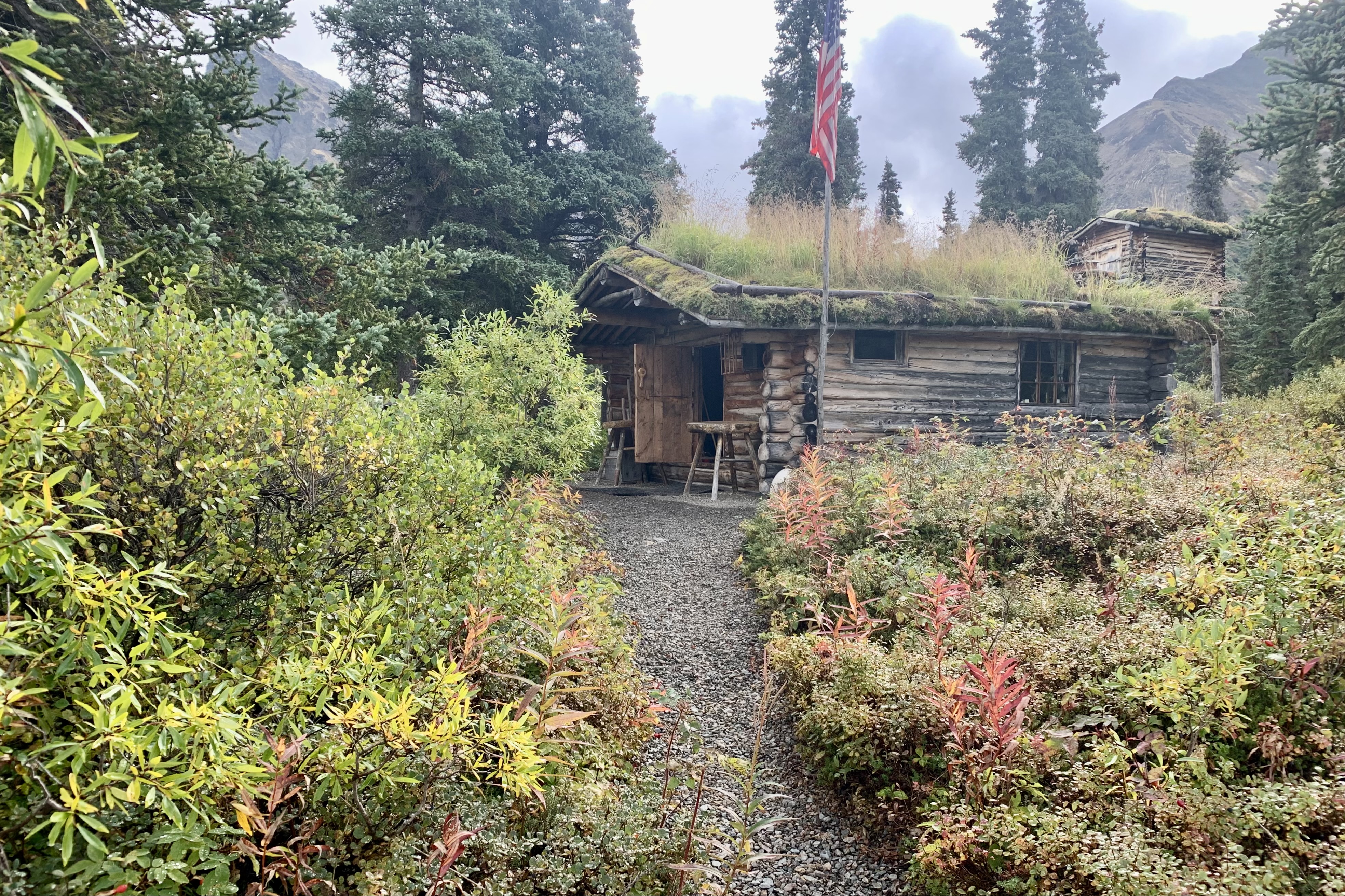
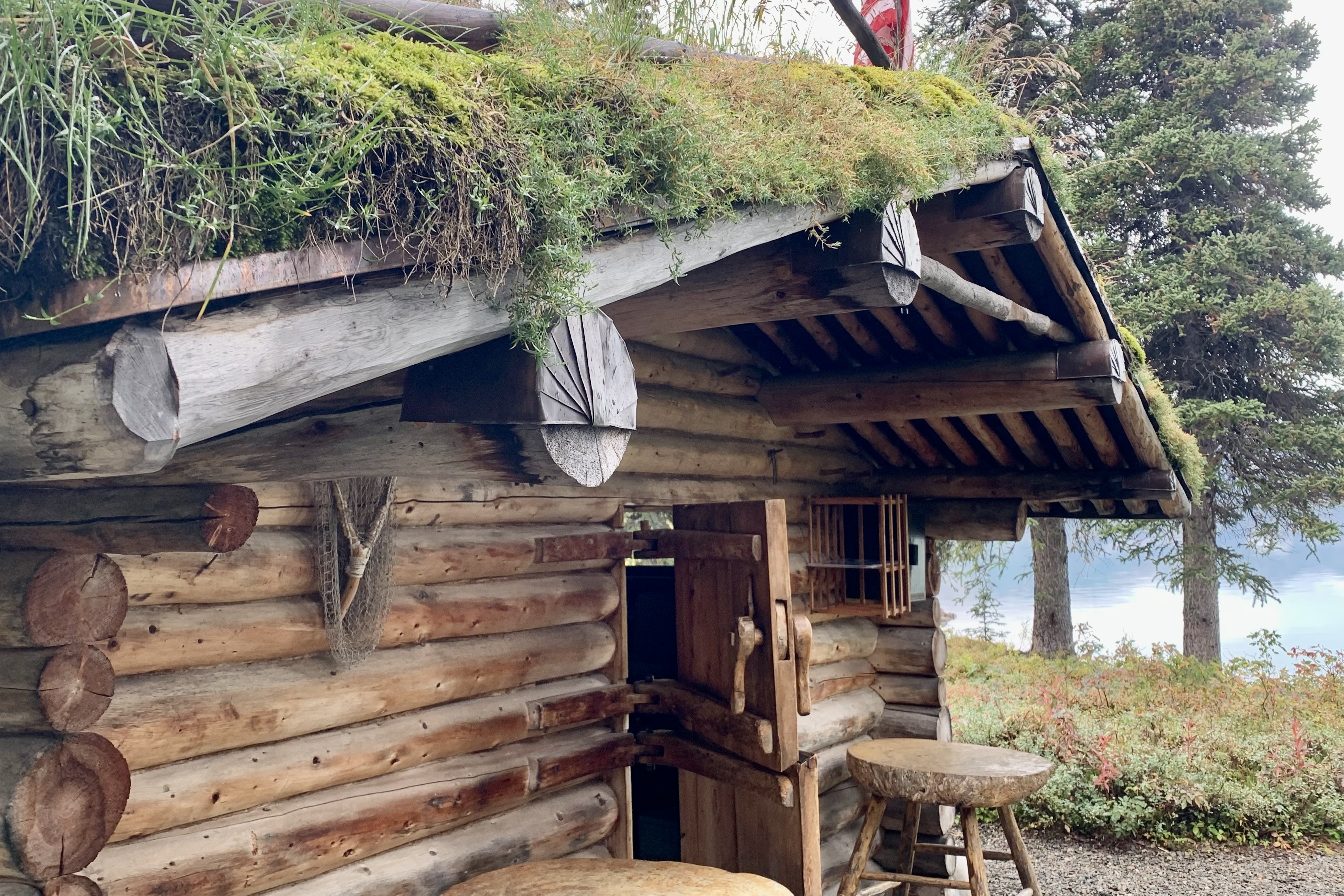
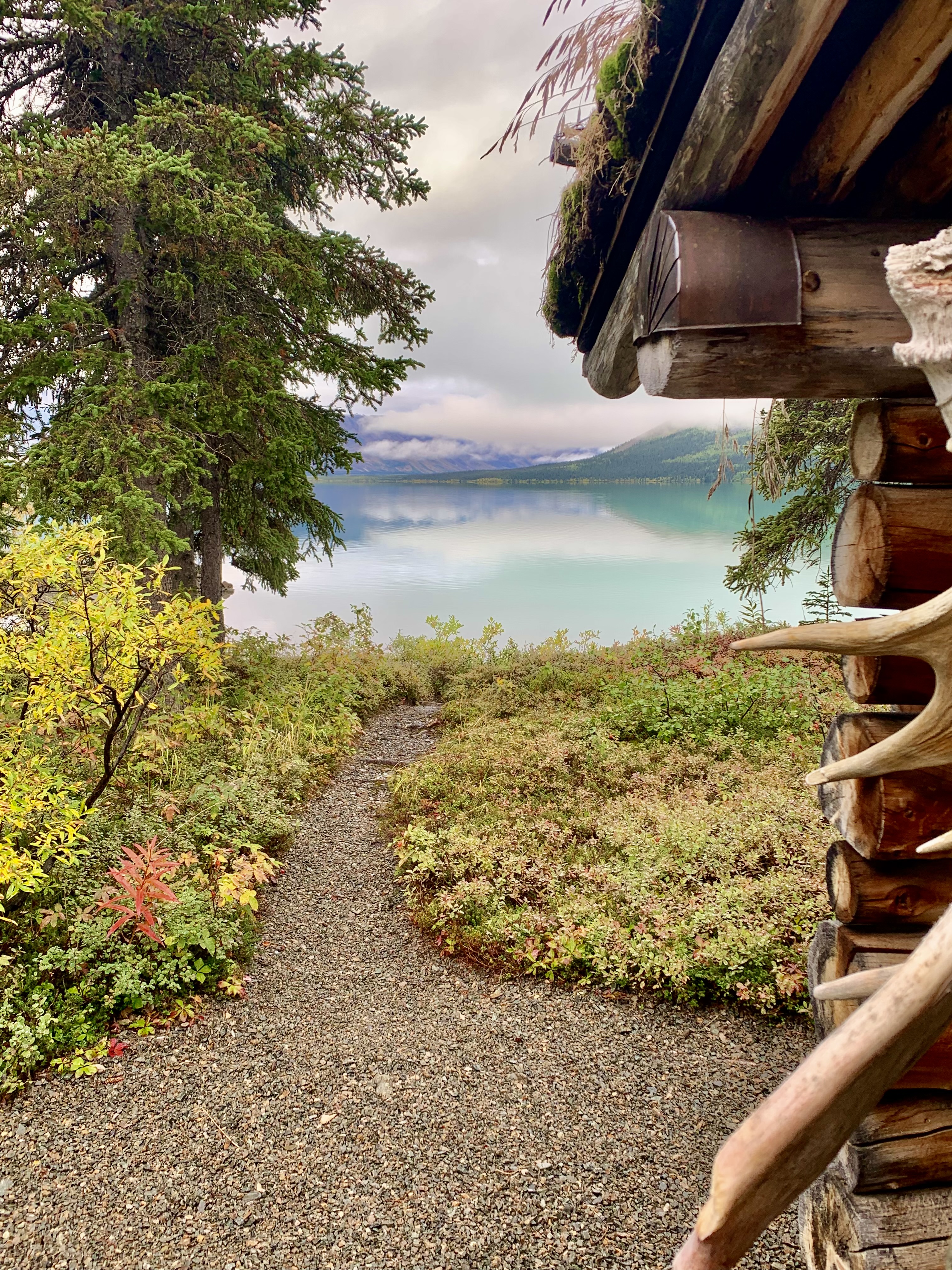
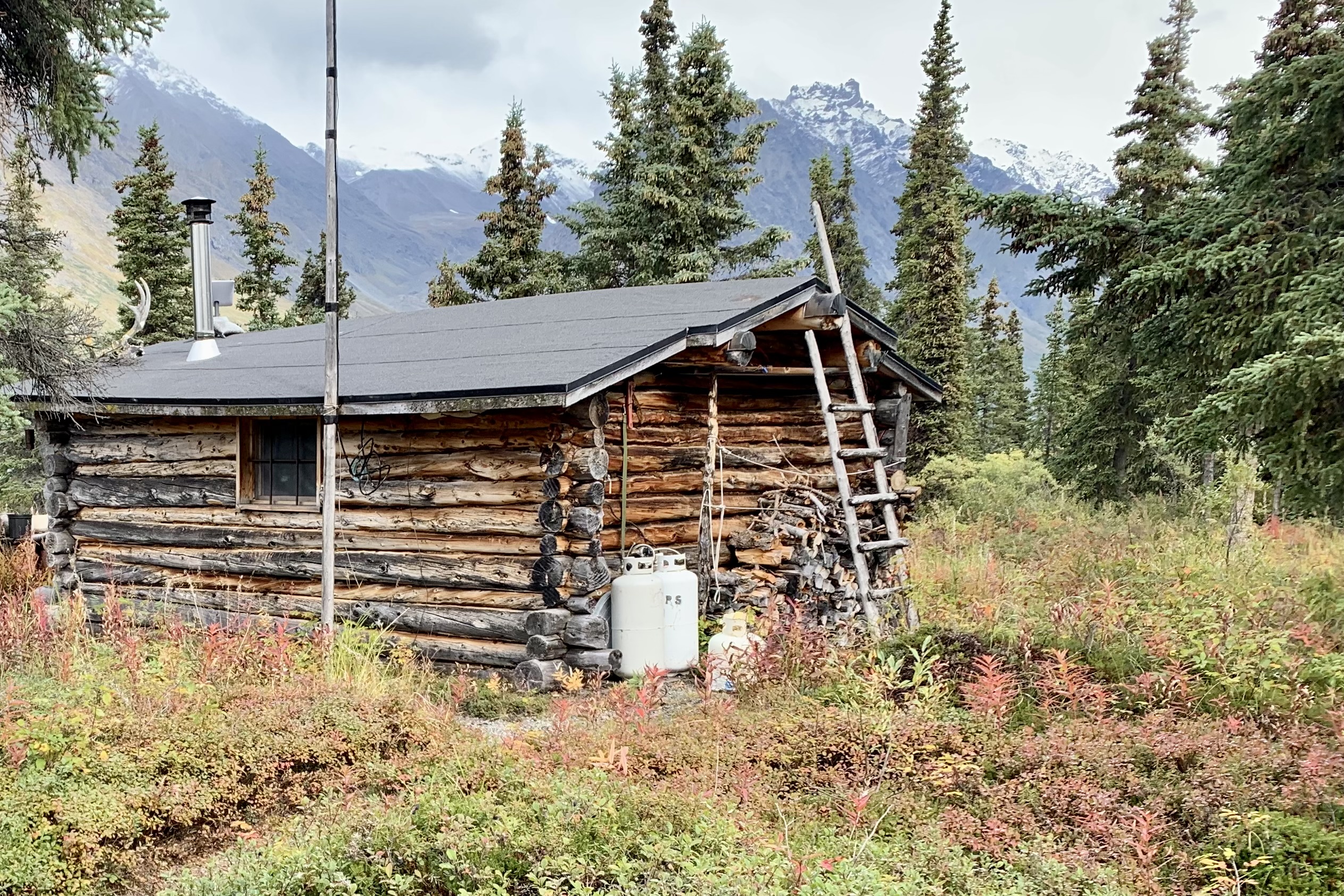
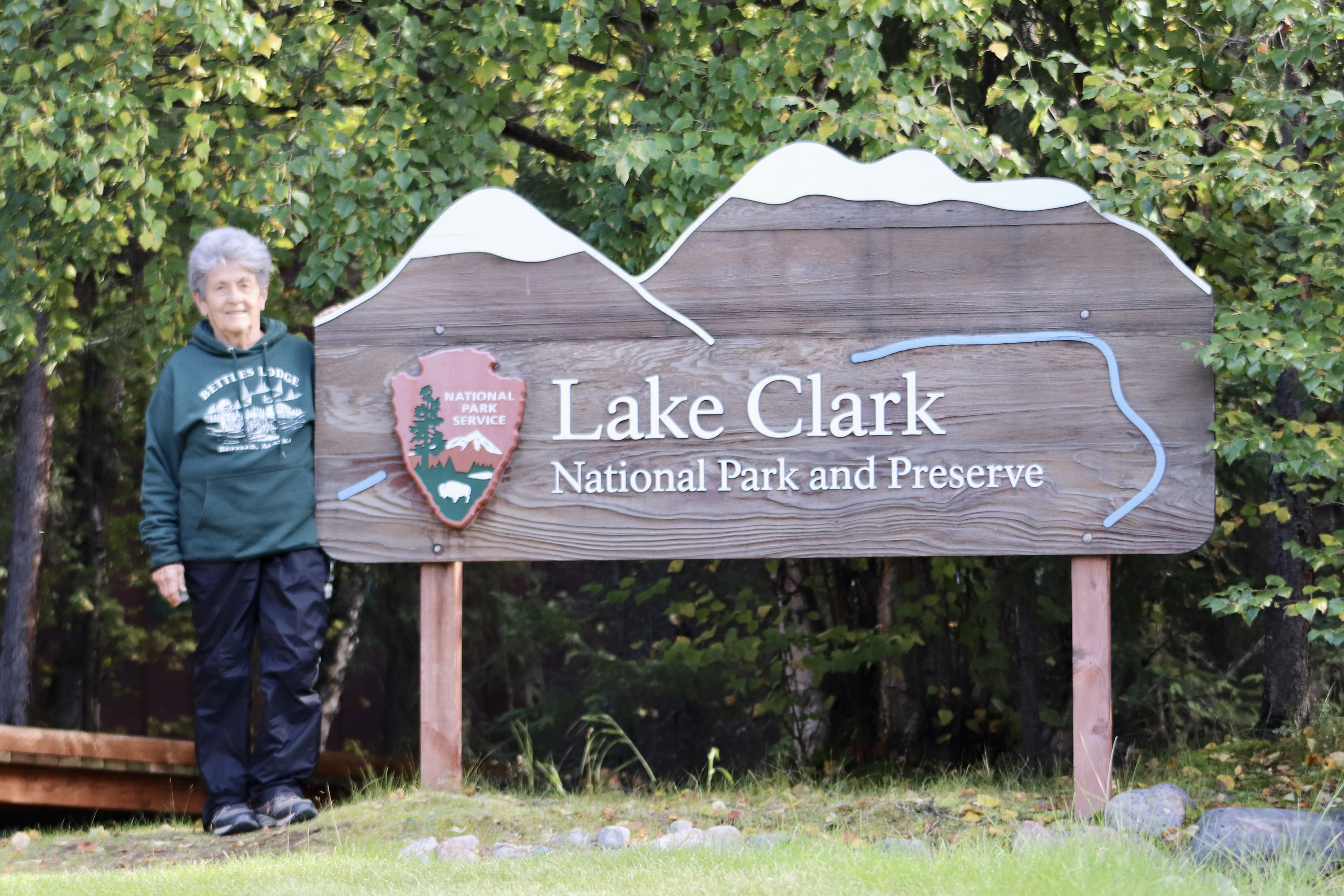
A guided day trip to Twin Lakes was on the schedule for this day. We were advised to be ready for our outing  to Twin Lakes around 10:30 am, somewhat later than our normal 9;00 am plane.  No sleeping in though because breakfast is served at 7:30. The plan was to   drop us with our  guide at Upper Twin Lakes where we would be  exploring the Hope Creek area where Richard Proenneke, aka” Dick”, the embodiment of  wilderness values, self-subsistence, and resourcefulness, lived. From the age of about 51 he lived alone for nearly thirty years (1968–1998) in the mountains of Alaska in a log cabin that he constructed by hand near the shore of Twin Lakes. He definitely is my kind of hero. Dick’s cabin is a National Historic Site and managed by the National Park Service.. We were encouraged to read  a book titled One Man’s Wilderness for some background of the areas, Hope Creek, and Teetering Rock. I had download it the night before and had read about half…at least enough to have a good idea of the challenges he faced in building his home and living off the land.

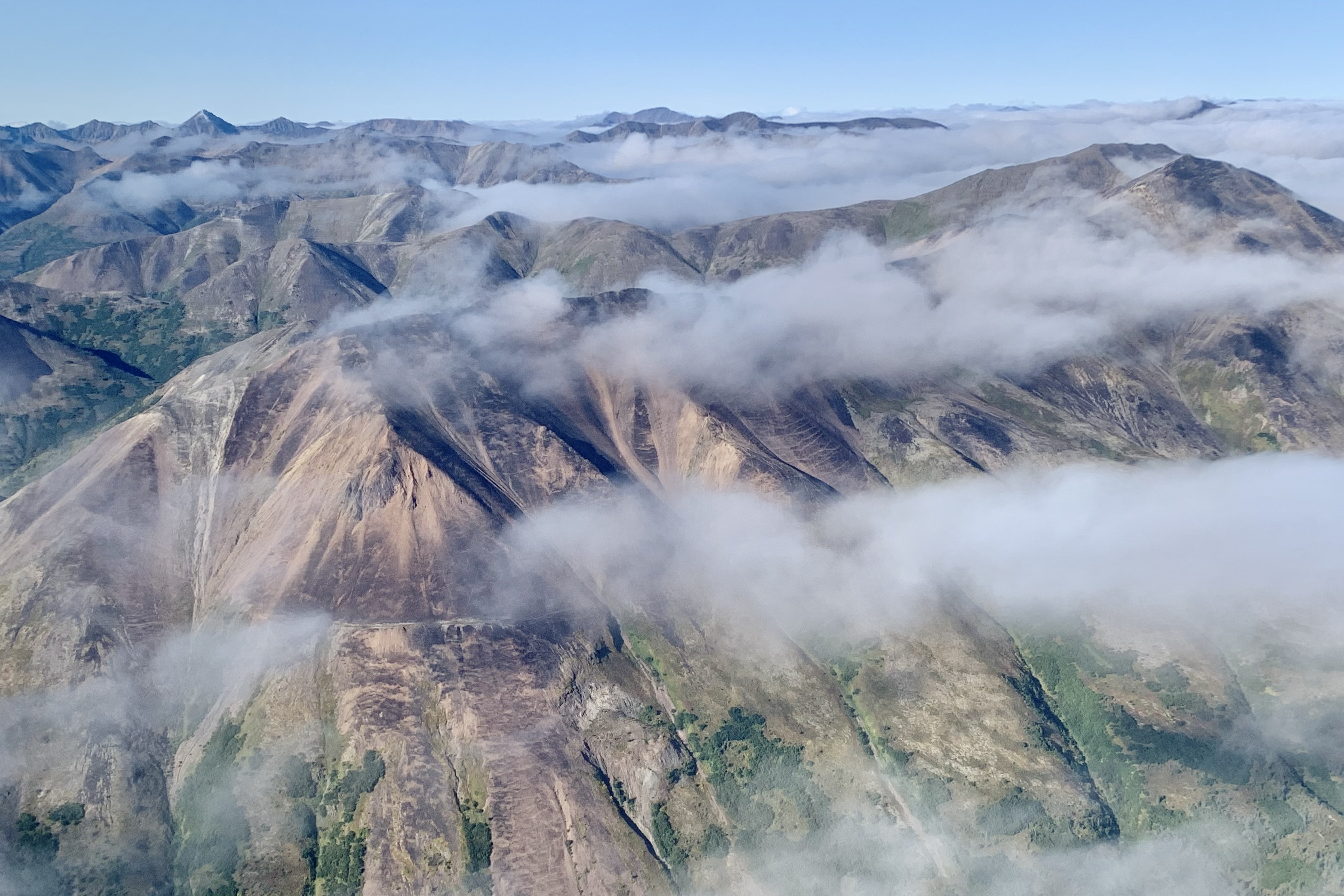
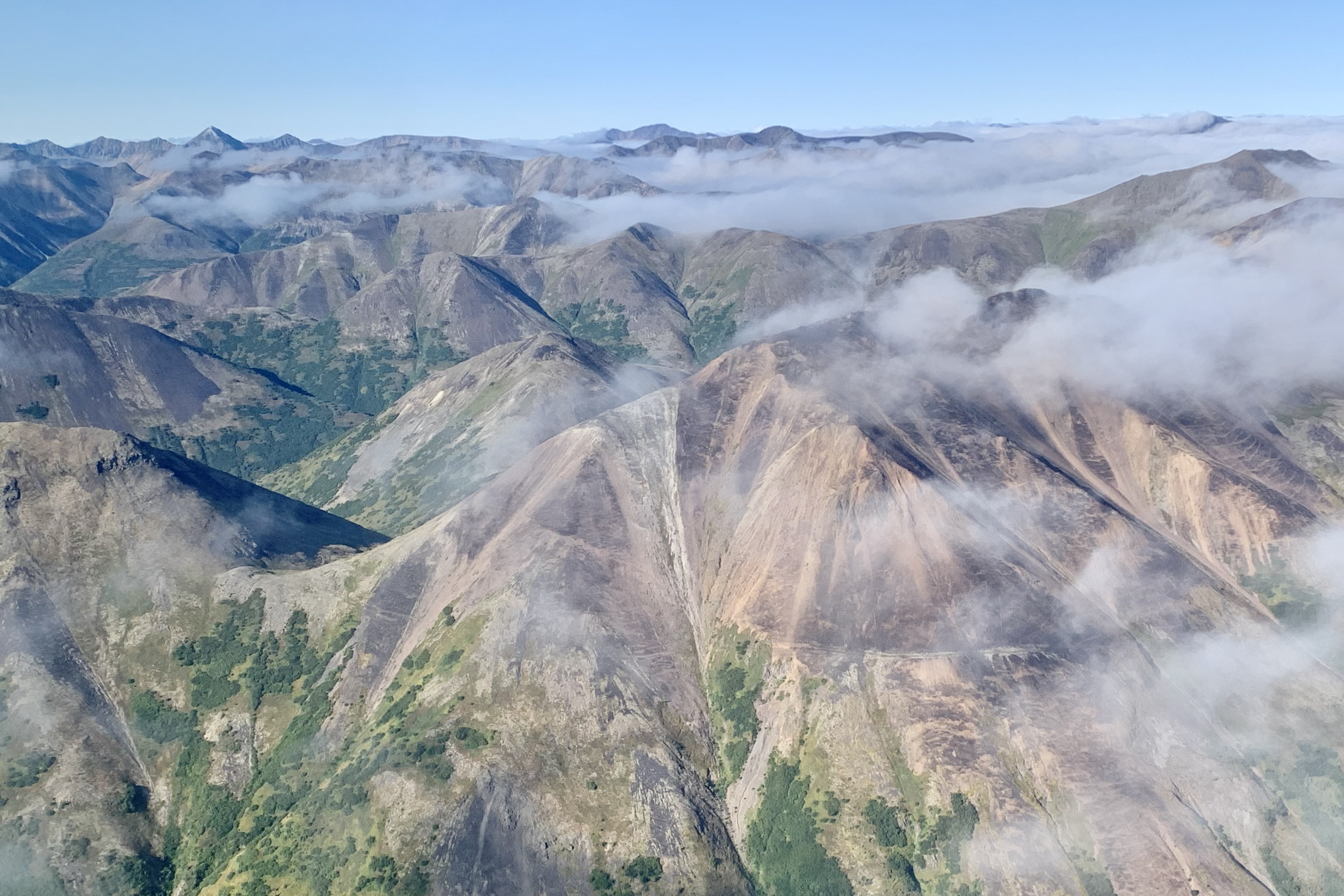
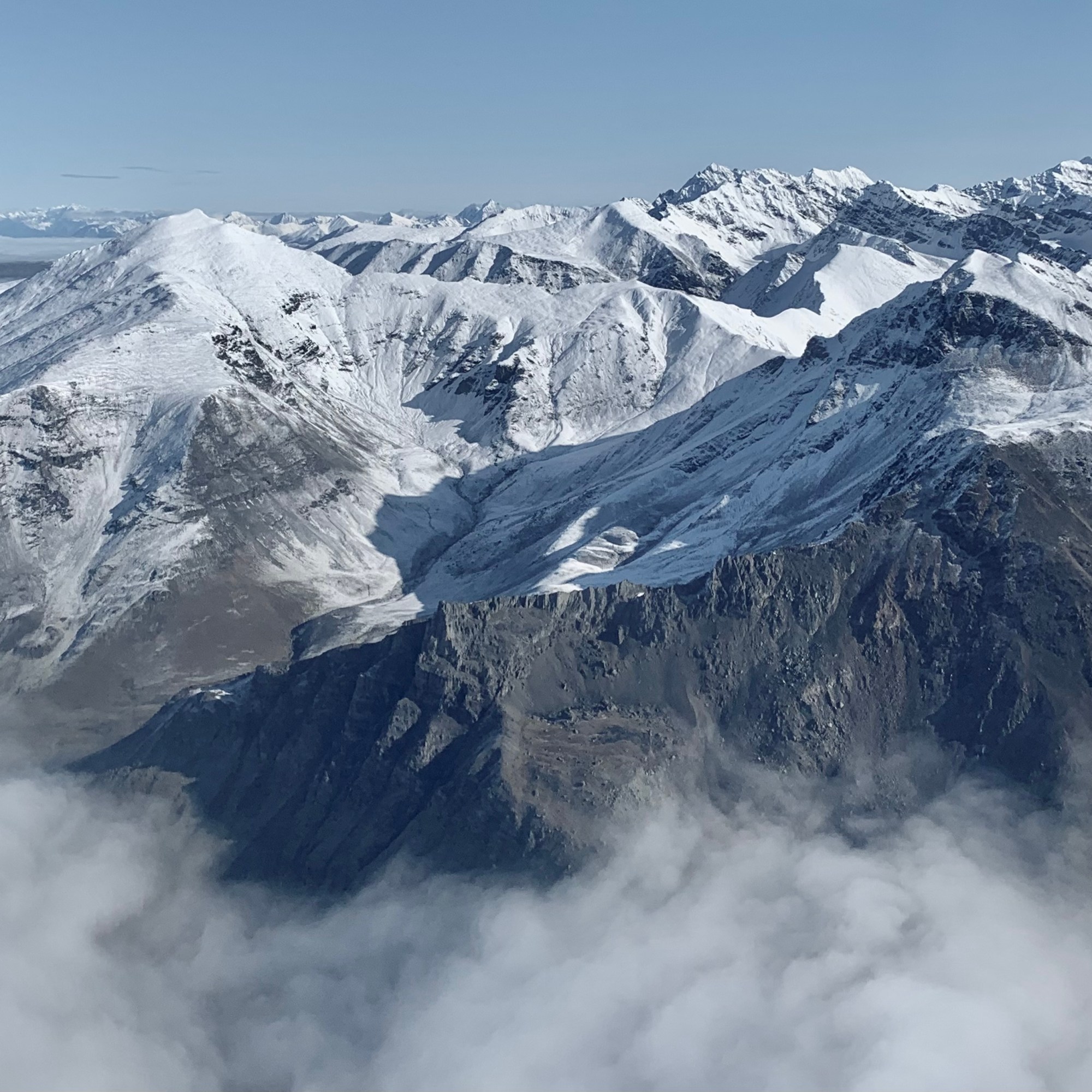
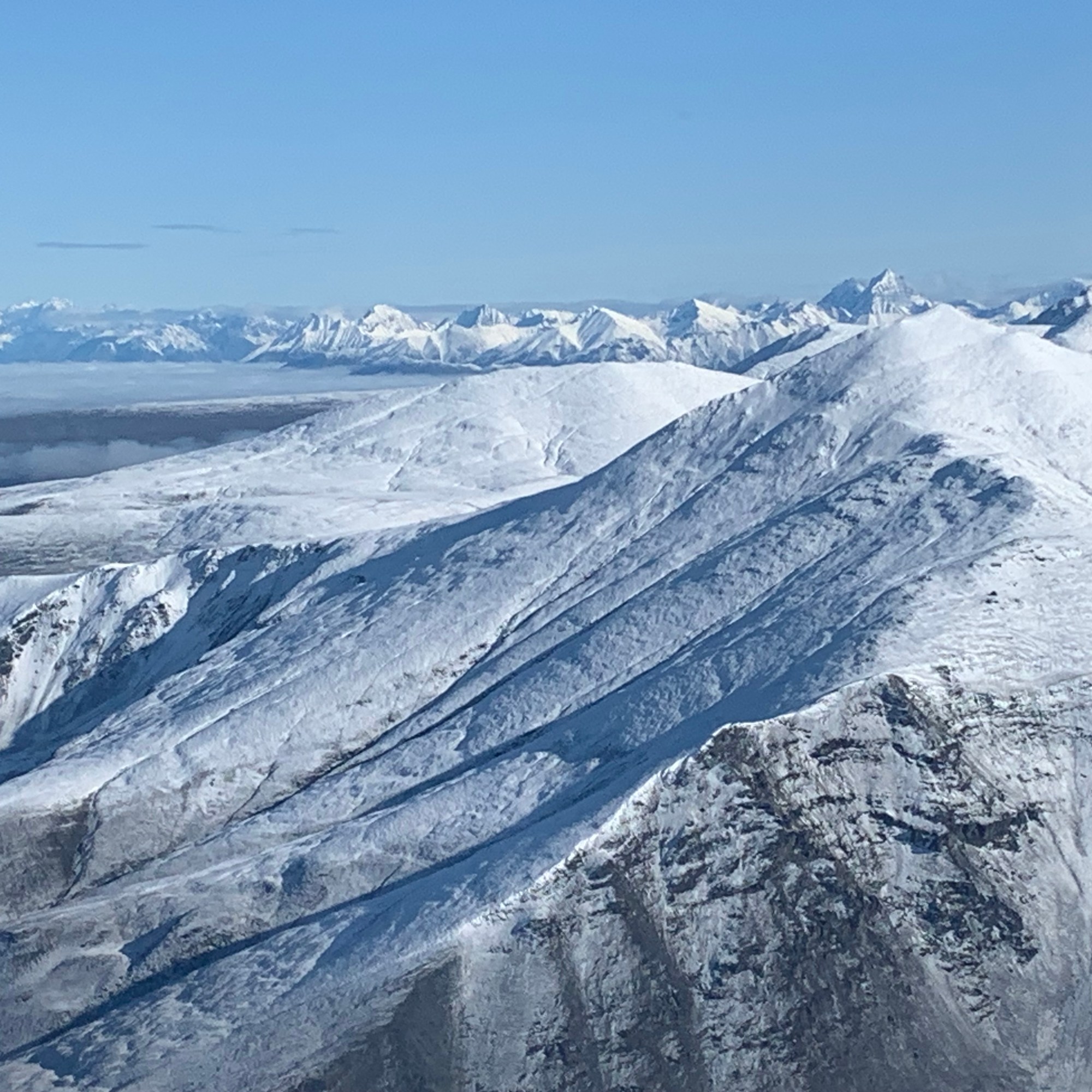
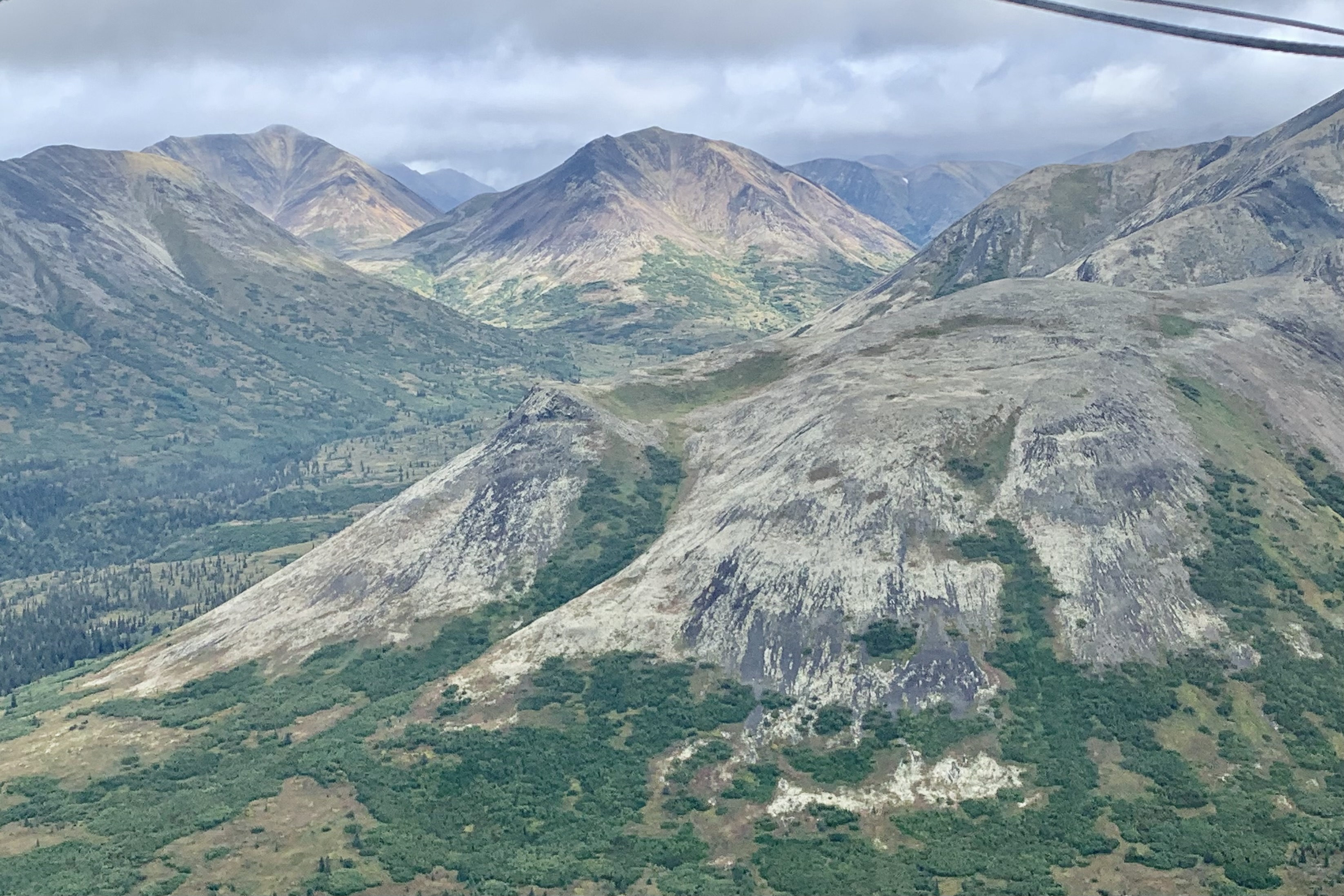
As always, our  float plane adventure took us over other stunning scenery of this vast Alaska Wilderness area. Initially the mountains were of a lower elevation and yet to be dressed out in snow.  The verdant colors never cease to amaze me but before long we were back over the jagged snow covered peaks. 

At times the cloud banks were more like ethereal cloaks and misty veils and other times a sea of  cottony pillows. Sometimes it seemed as if we were floating on thick layers  of the cumulus clouds .  Our pilot charted a course up the western side of Lake Clark over fish Trap Lake and the western area of Twin Lakes. Of course I was wildly taking pictures and I am sure if my camera didn’t date them, at times mark there location, and keep them ordered I might assume they were from a previous jaunt… but it never ceases to inspire awe.

It is always interesting to be privy to the pilot talk between planes as they share the conditions all over the area they are experiencing. It began to sound like our adventure on Twin Lakes was a possible “no go” when listening to the floatplane to floatplane chatter. The micro weather systems in the different valleys can be quite disparate and the gist of it was that Twin Lakes was fogged in and landing there was contraindicated. The pilot also had to take into consideration the forecast for later in the afternoon when we were to be picked up and made the determination to take us back to the Lodge and possibly try again after lunch. Within the hour however we were told we would try again tomorrow. Seems that most of the valleys were in layers of fog and the conditions later in the day would deteriorate further. Guess he didn’t want to drop us and not be able to safely retrieve us especially since there were no public sleeping accommodations at the cabin site. Of course I definitely thought it would be a great adventure roughing it out there like “Hero Dick.”

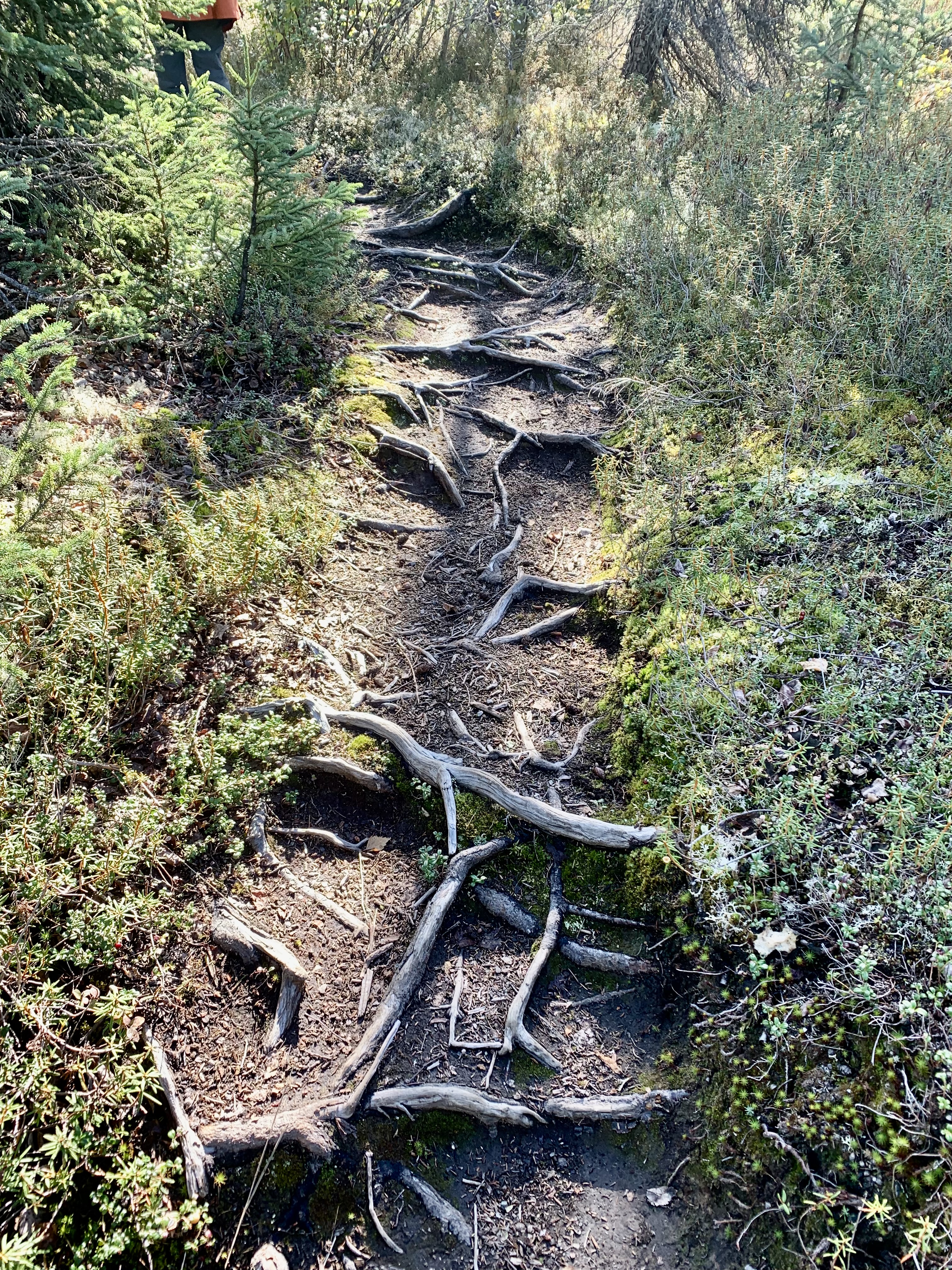
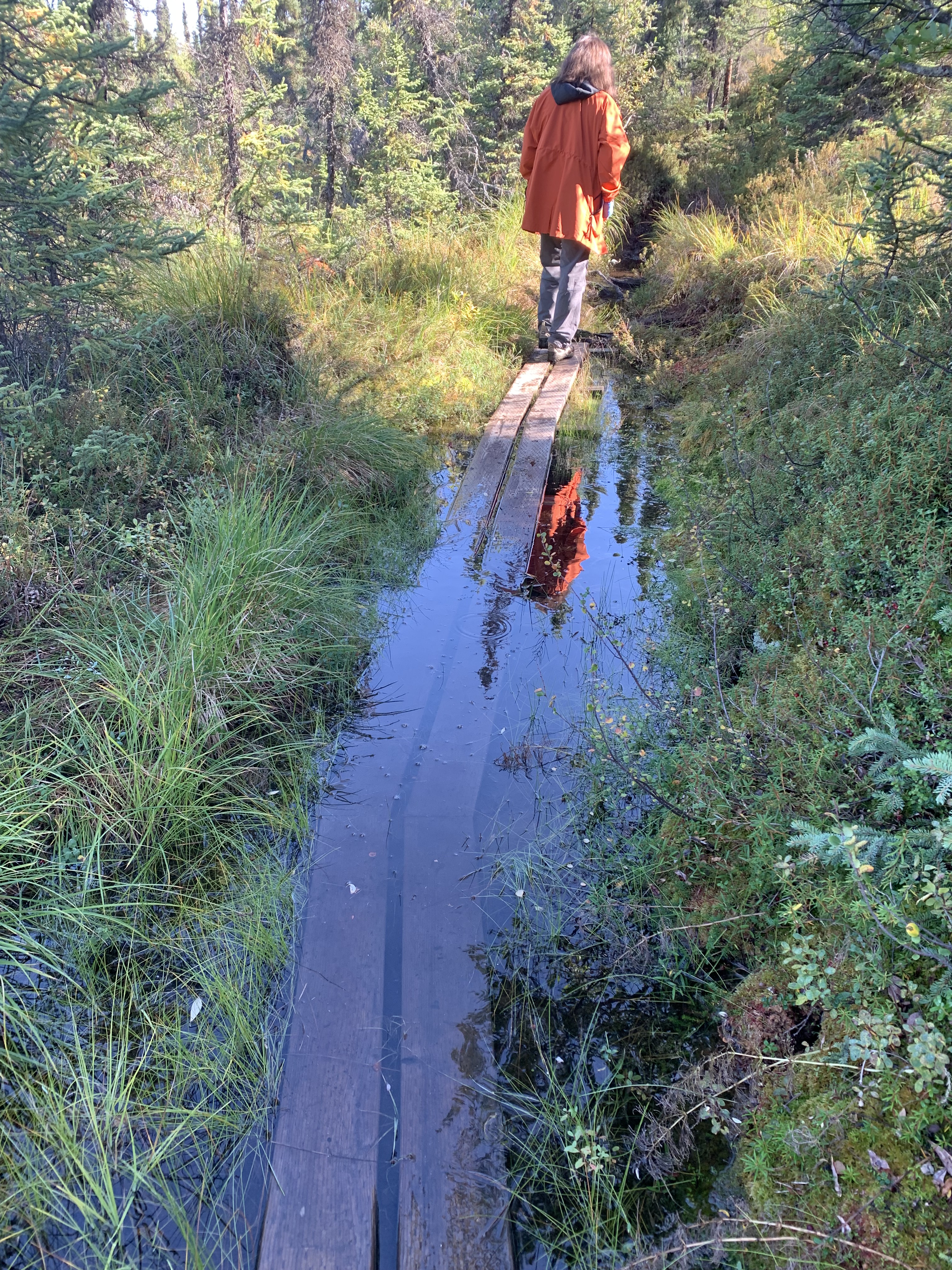
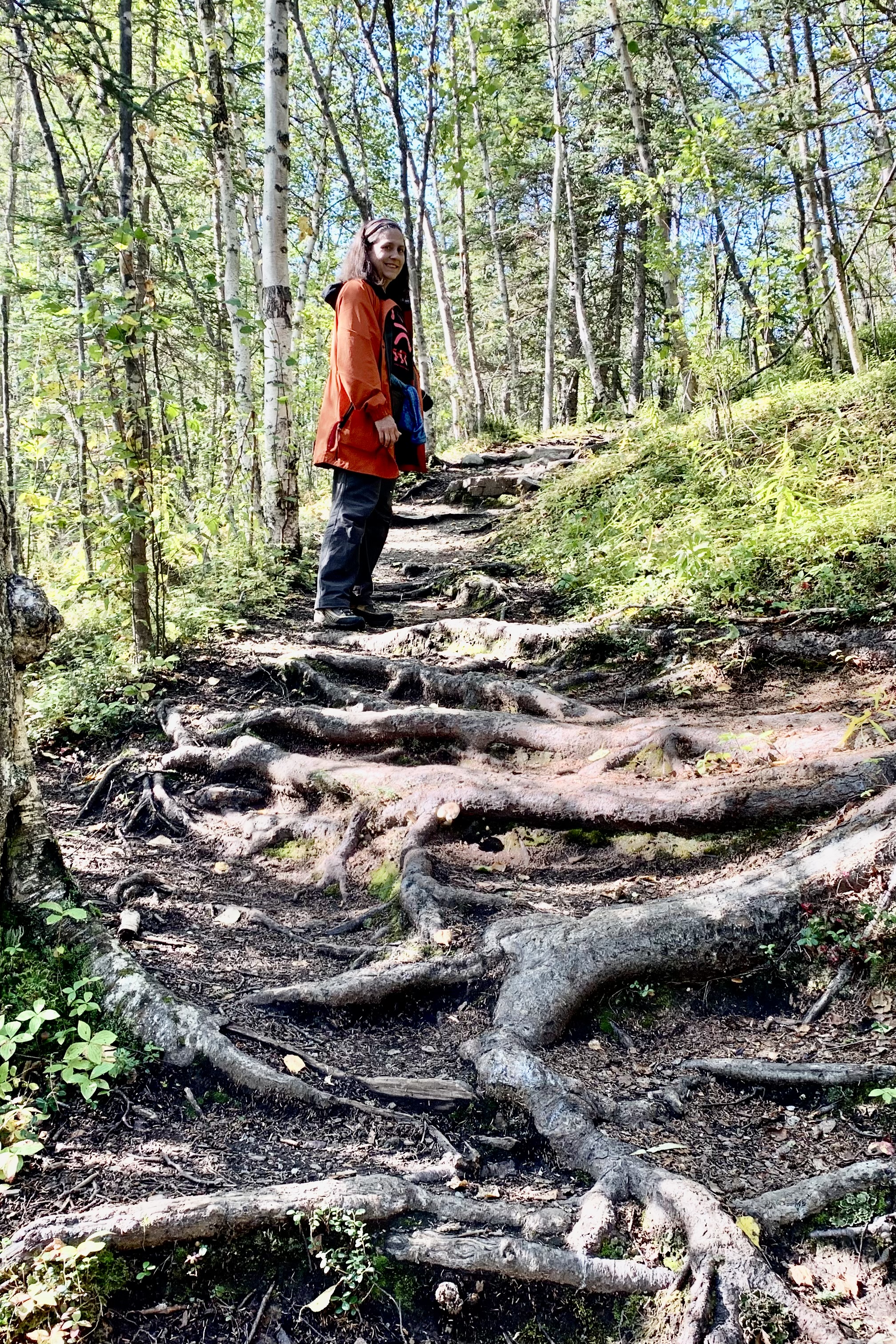
Tasia and I put into action our Plan B which was a visit to the National Park Headquarters and the loop hike to to Tanalian Falls. Naturally though I thought what an adventure it would be to hike the Tanalian Mountain Trail which is described as steep, strenuous and with wonderful views of the area. Fortunately it dawned on me that I have already had many times over the most wonderful views of the area from the floatplane and there was no need to batter my body with a challenging and possibly dangerous hike. So Tasia and I headed out the Beaver Pond Loop Trail on this beautiful sunny afternoon. As I have discovered, most forest trails I have encountered when hiking in Alaska this summer, are staircases of tripping roots, wet muddy bogs, and abounding with a rich variety of flora and fauna, and berries (good grizzly lunchables). It was a delightful to meander upward towards the falls but sadly there were no beaver or beaver dam sightings on this Beaver Loop Trail.

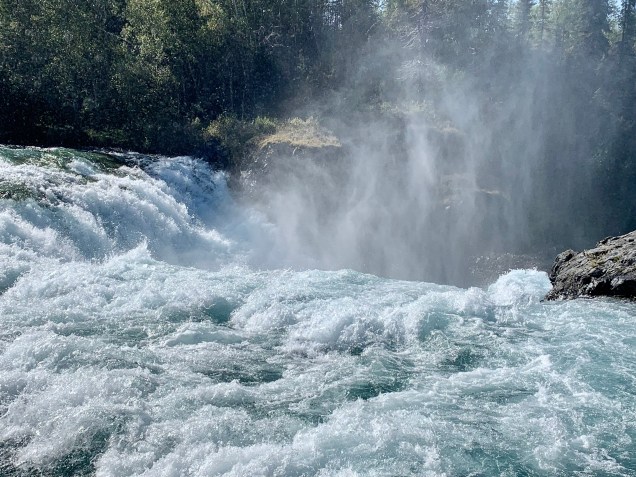
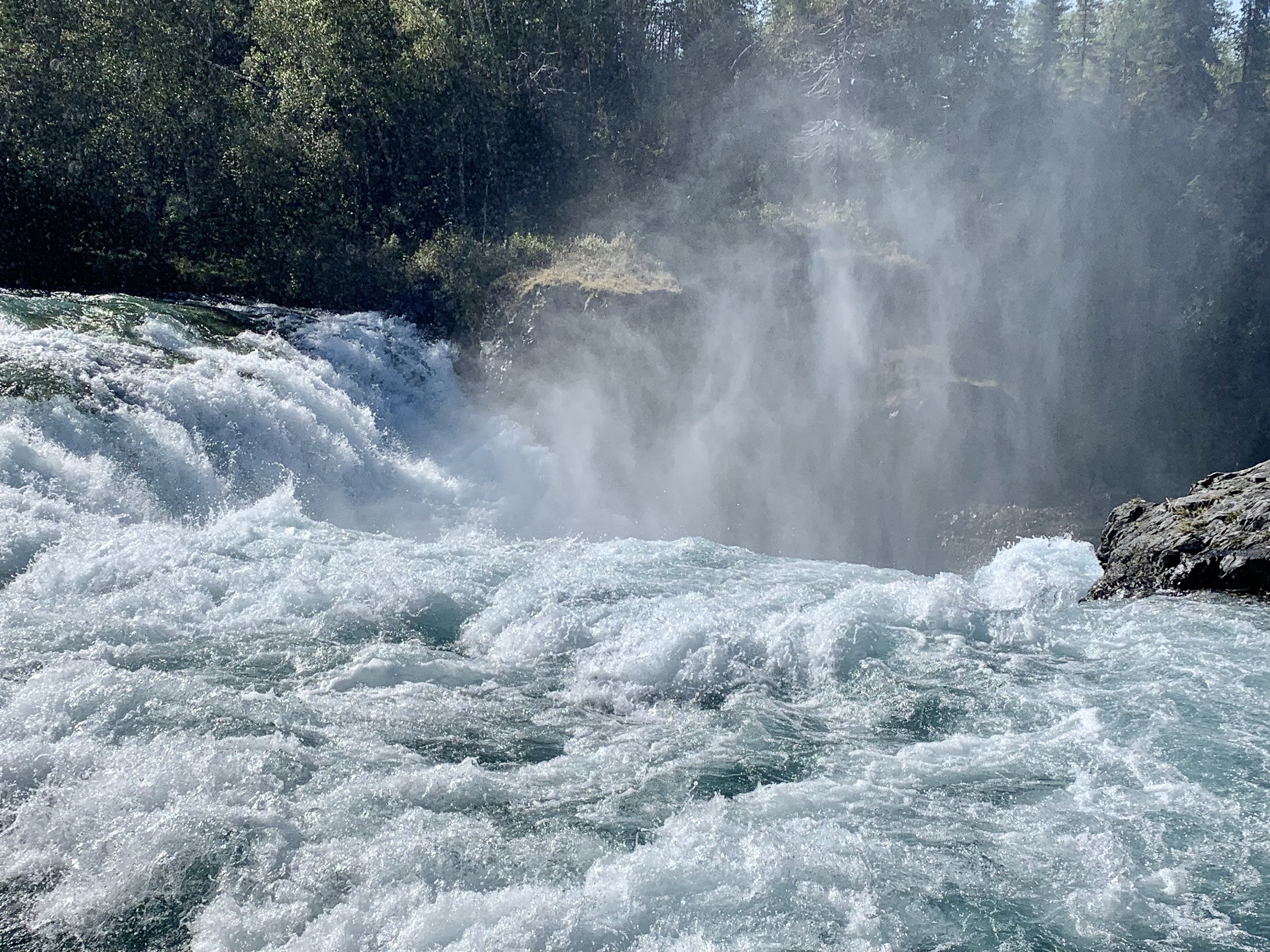
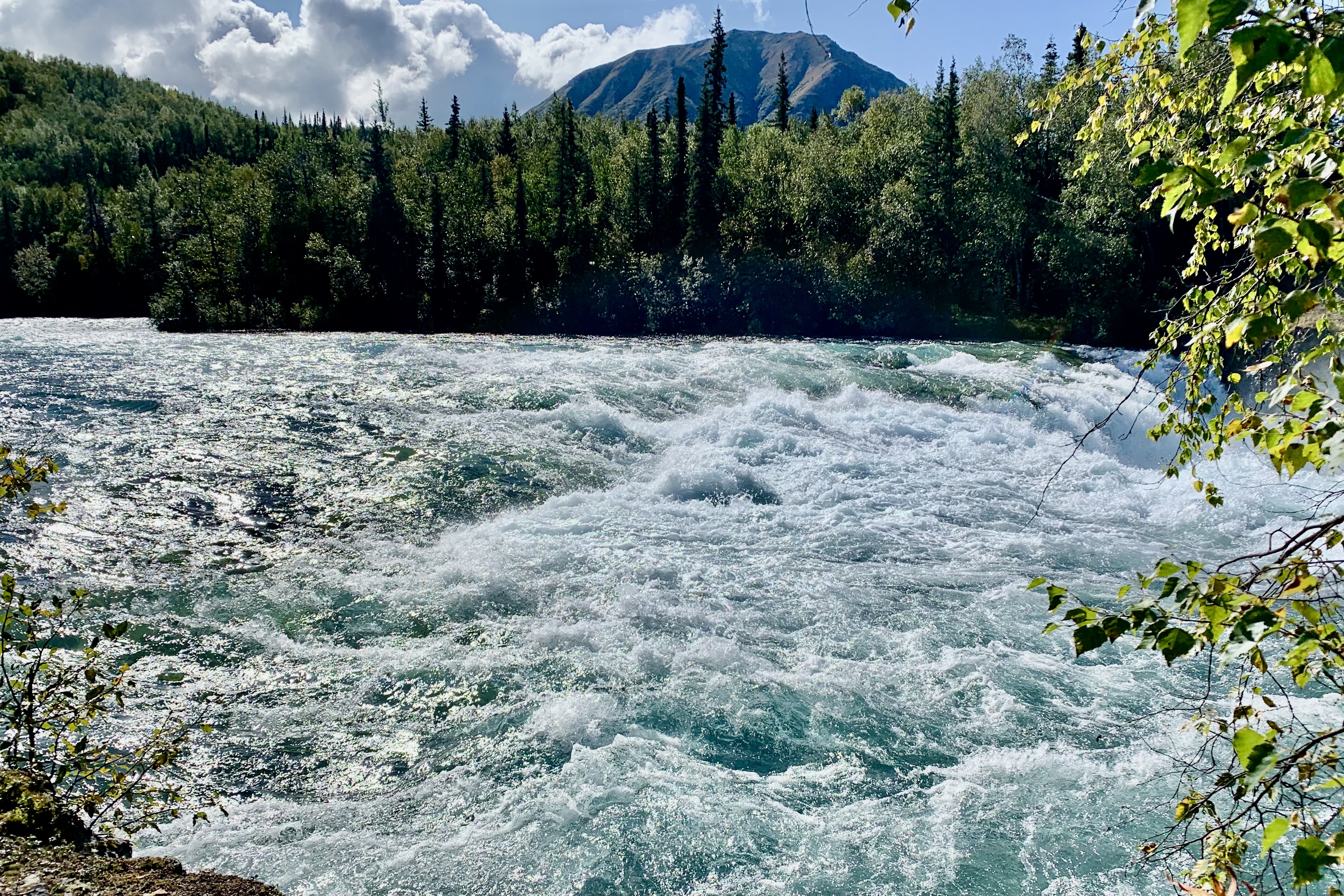
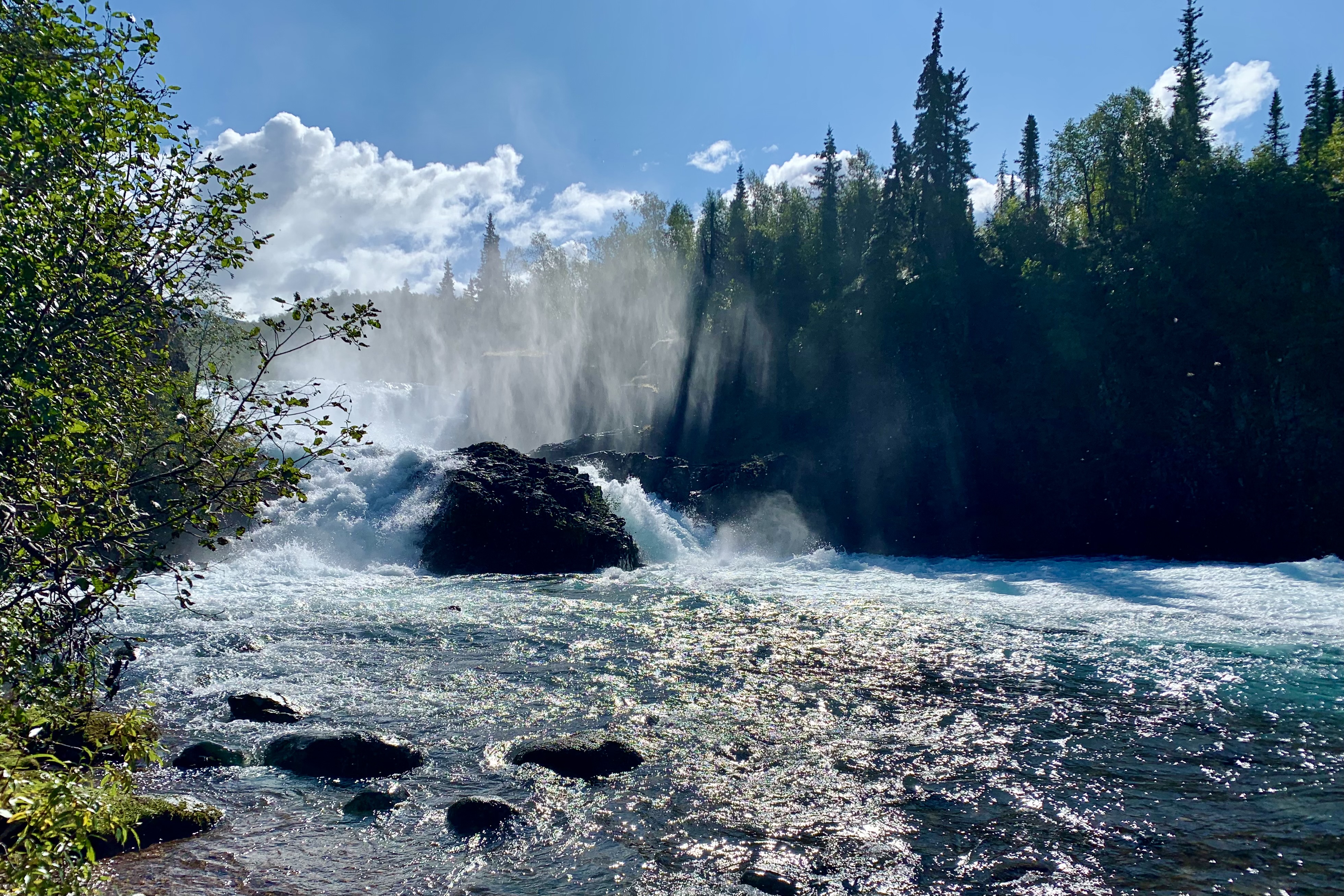
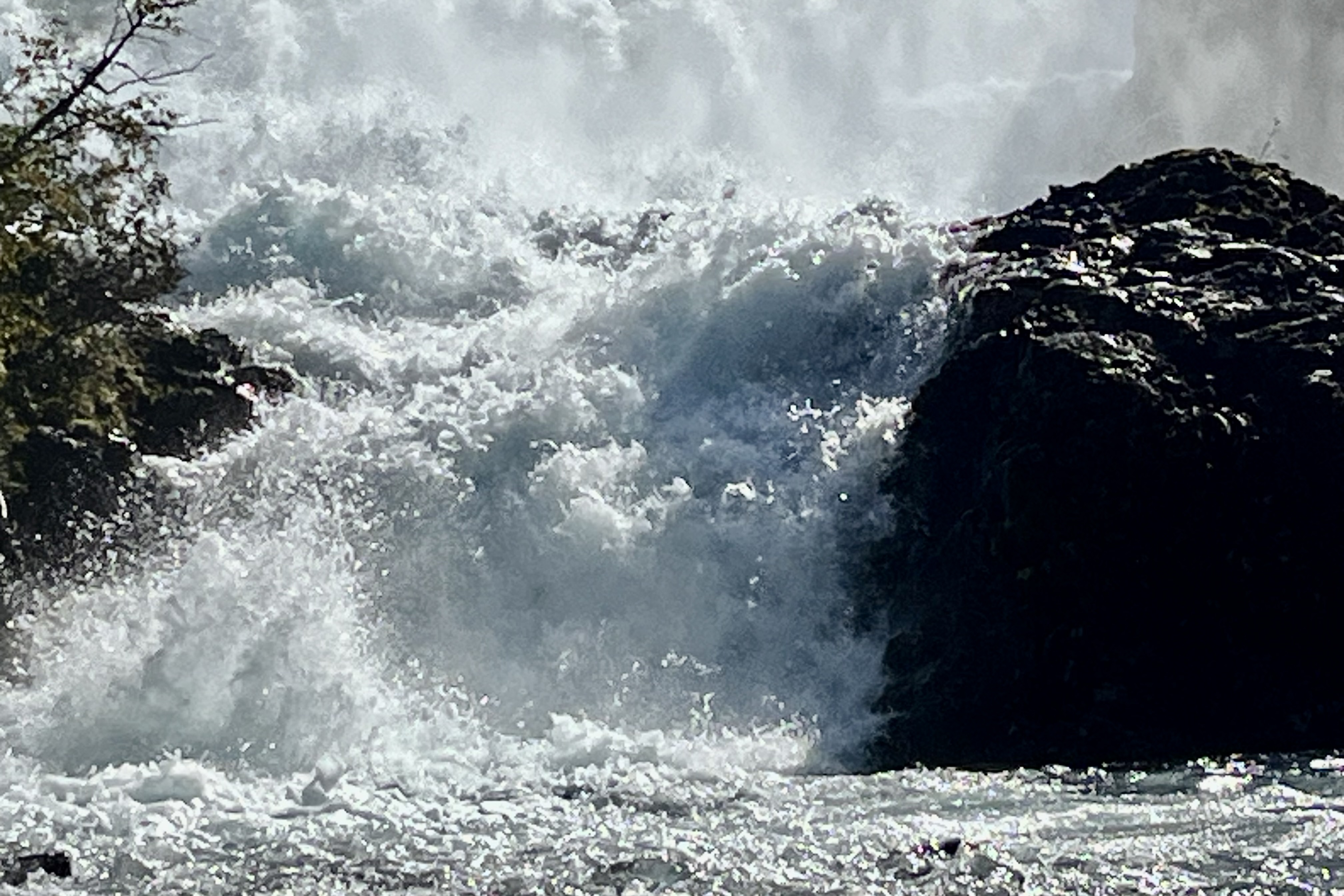
After about two miles of a mostly uphill trek we were finally able to hear the roar of the gushing water and see the mist in the air from the sheer force of the water tumbling down the escarpment. We followed the trail to the top of the falls and it was breathtaking to just stand there and experience the grandeur and power of this cascade of water.

After soaking up the wonderful energy at “top-o-the-falls” we followed the trail back and headed to the bottom of the falls to experience this unbridled power as the water roared into the Tanalian River before we headed back to the forest tail.

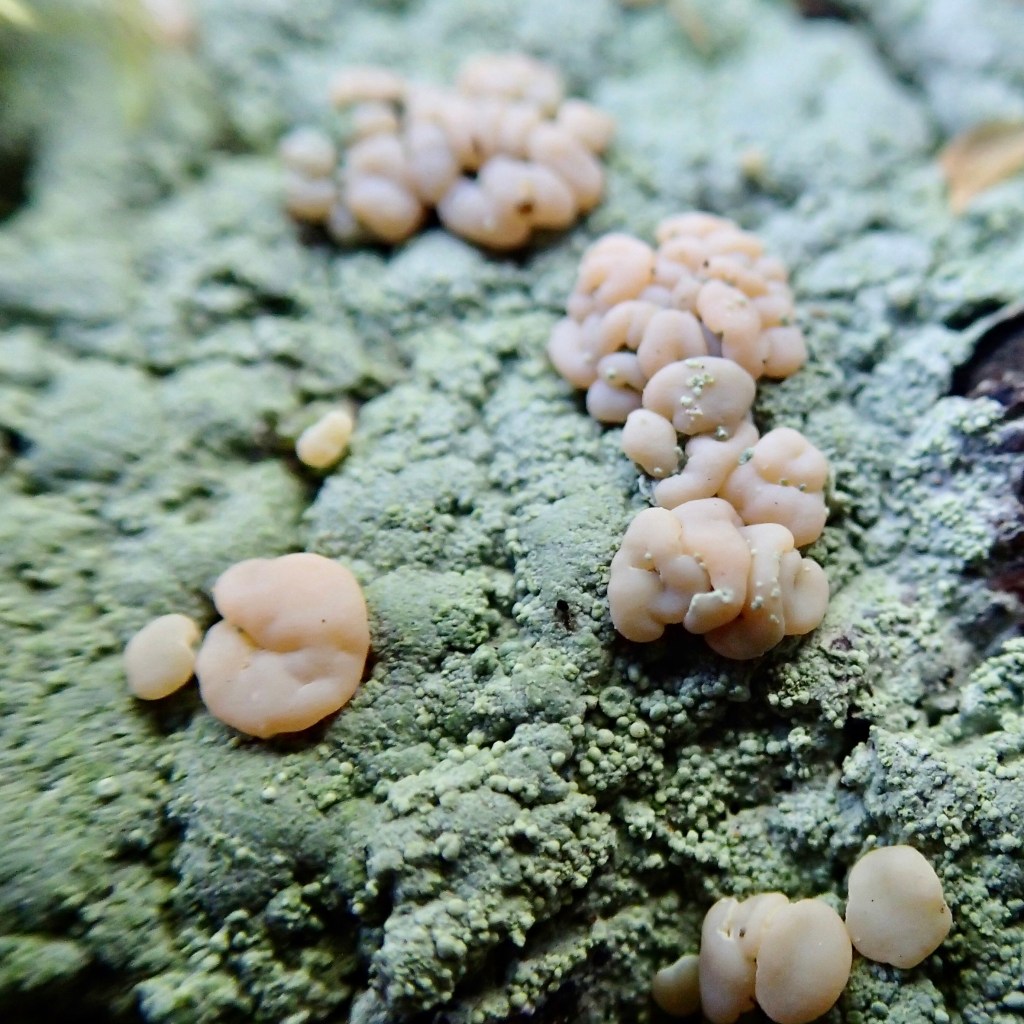
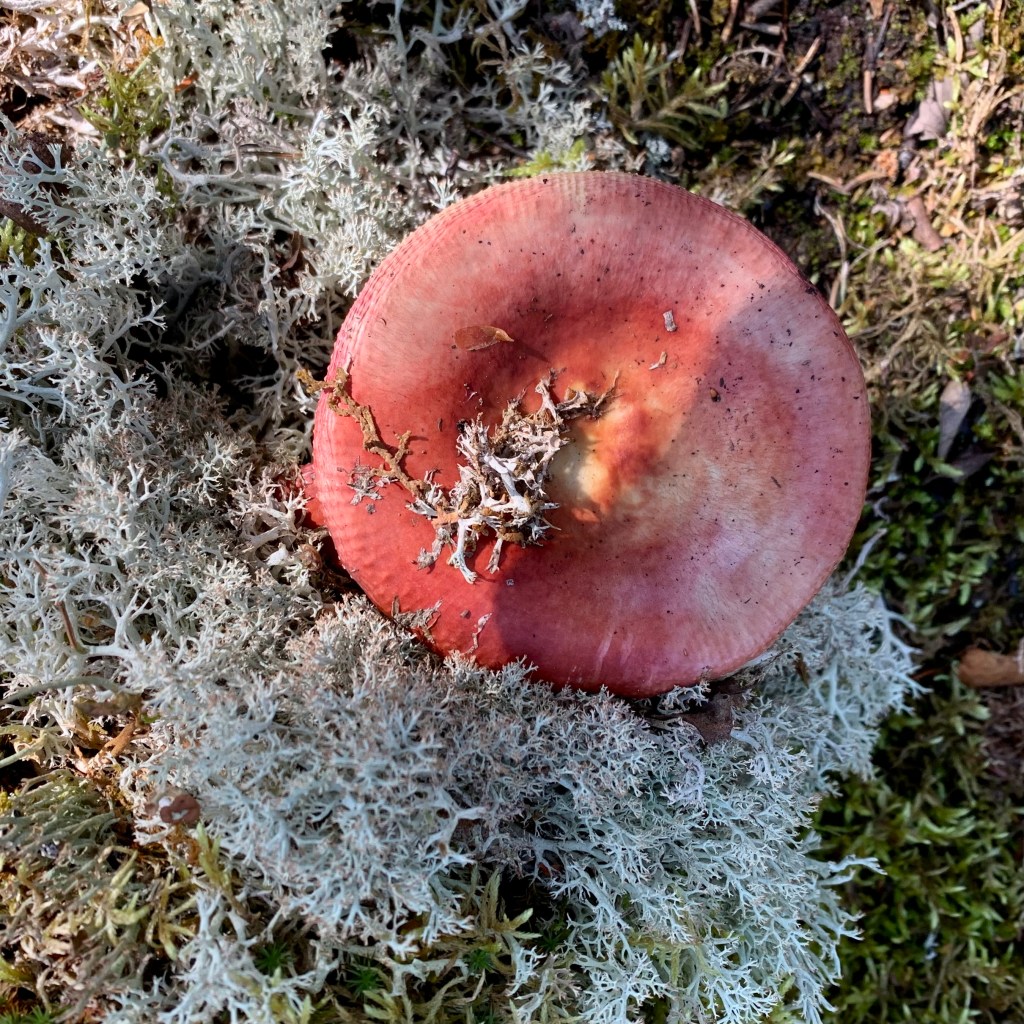
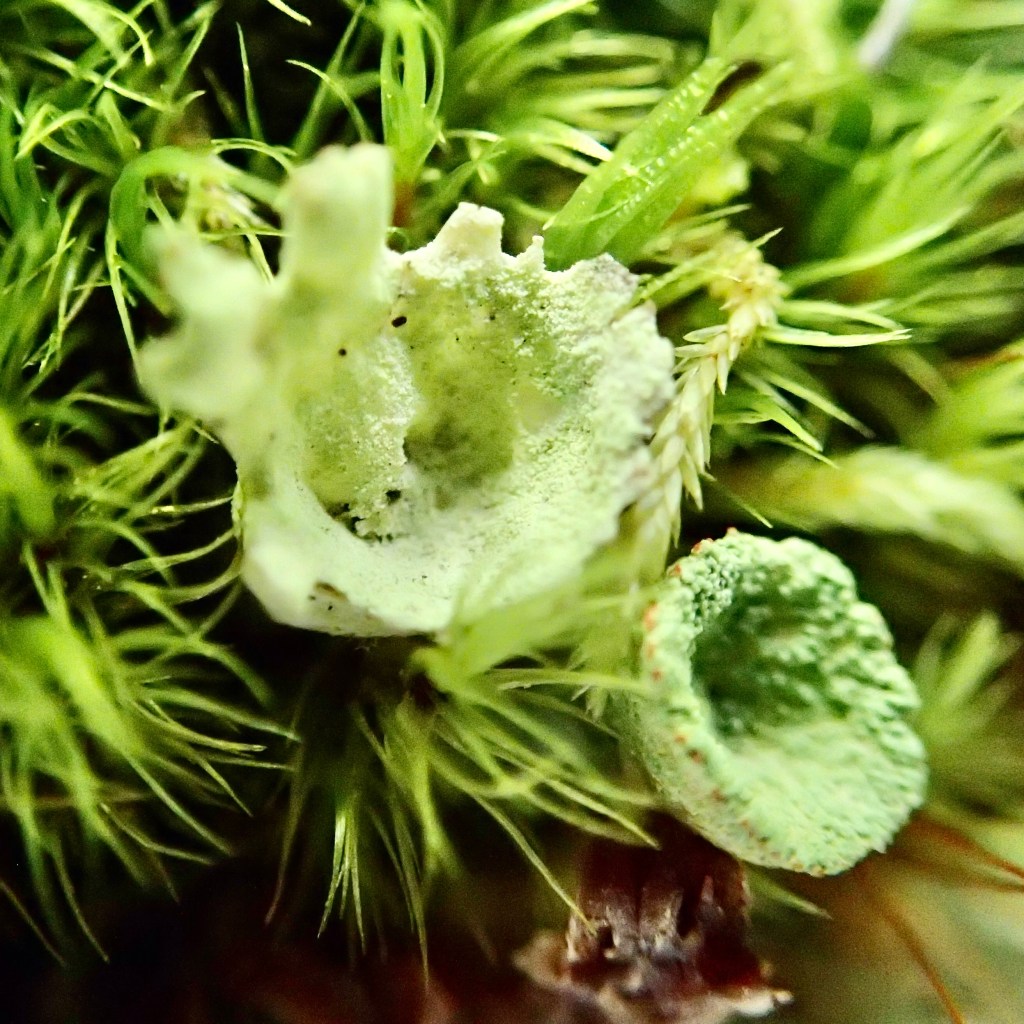
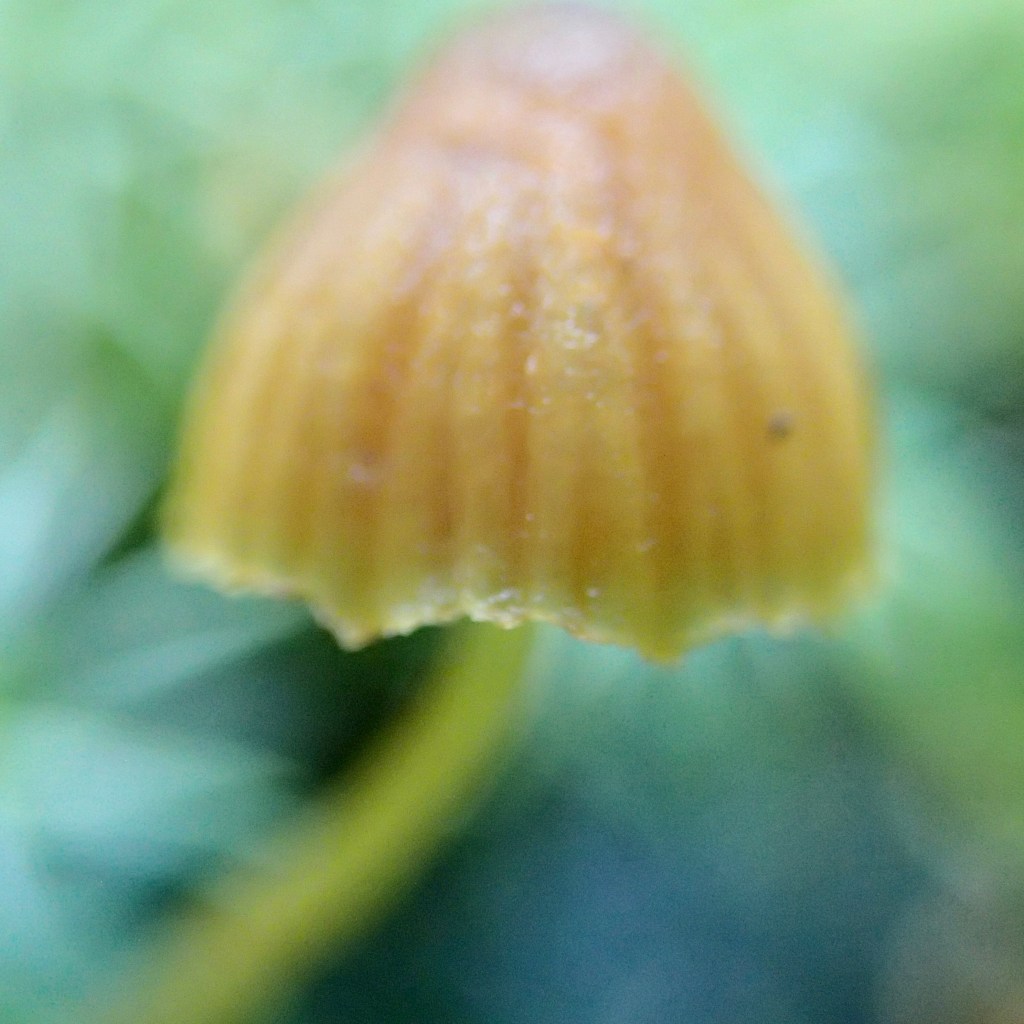
The return trail wandered through this forest thick with a diverse array of fungi which were just begging Tasia to cast her artist’s eye to memorialize them in our travel blog.

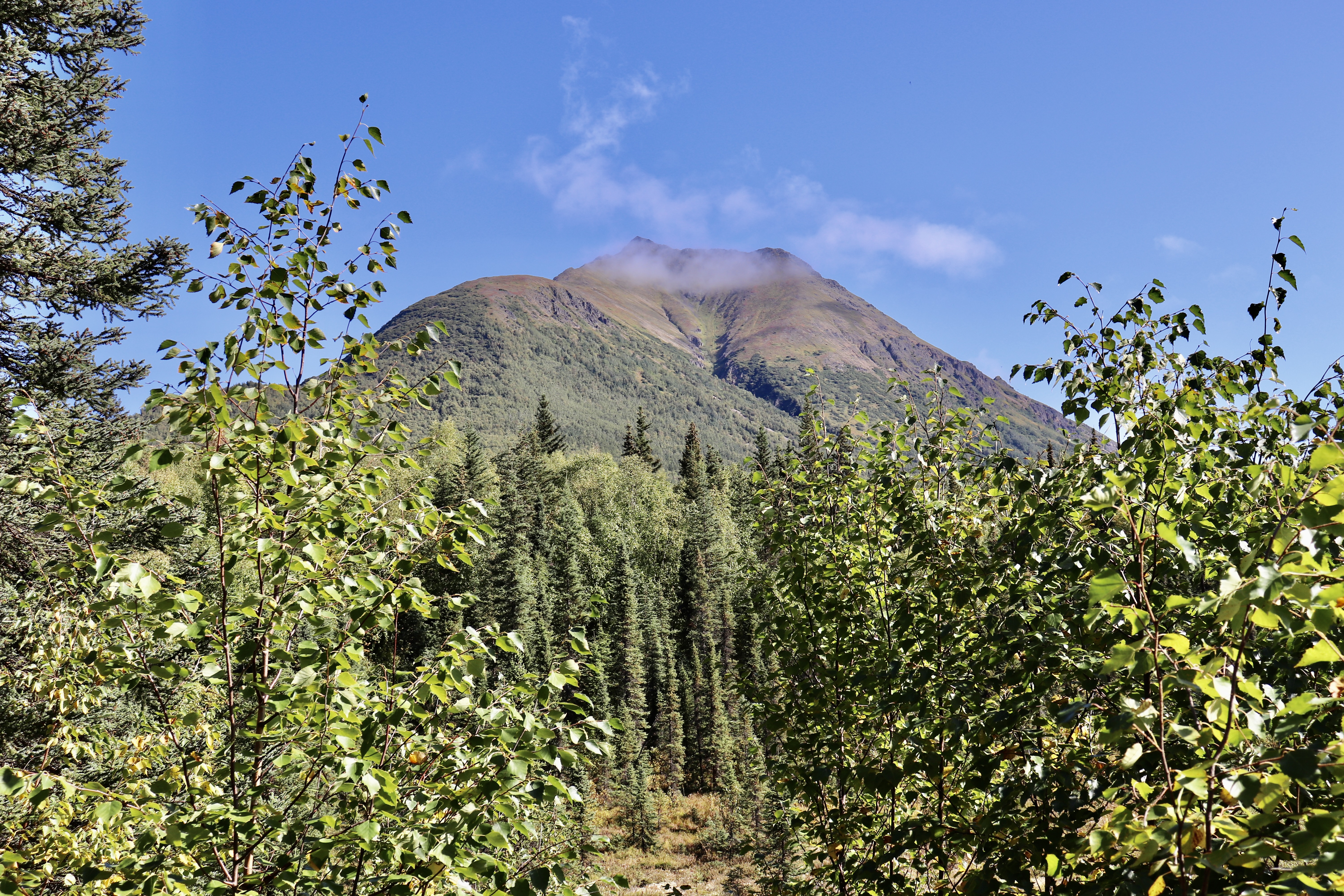
This trail, the Falls and Lake Trail, offered a more diverse landscape with views of the Tanalian River, tranquil ponds, Tanalian Mountain, and a panoramic view of our lodge in the distance.

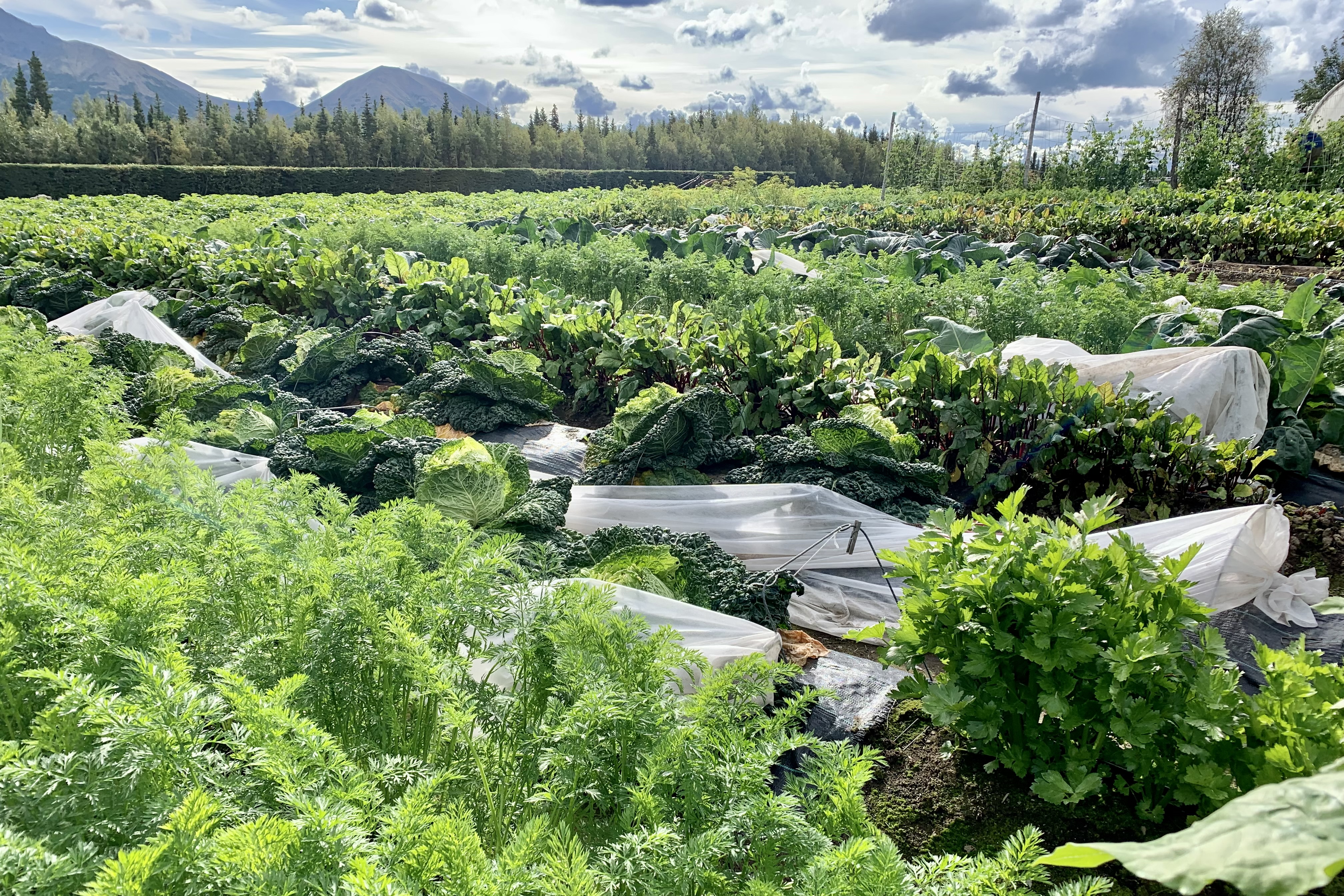
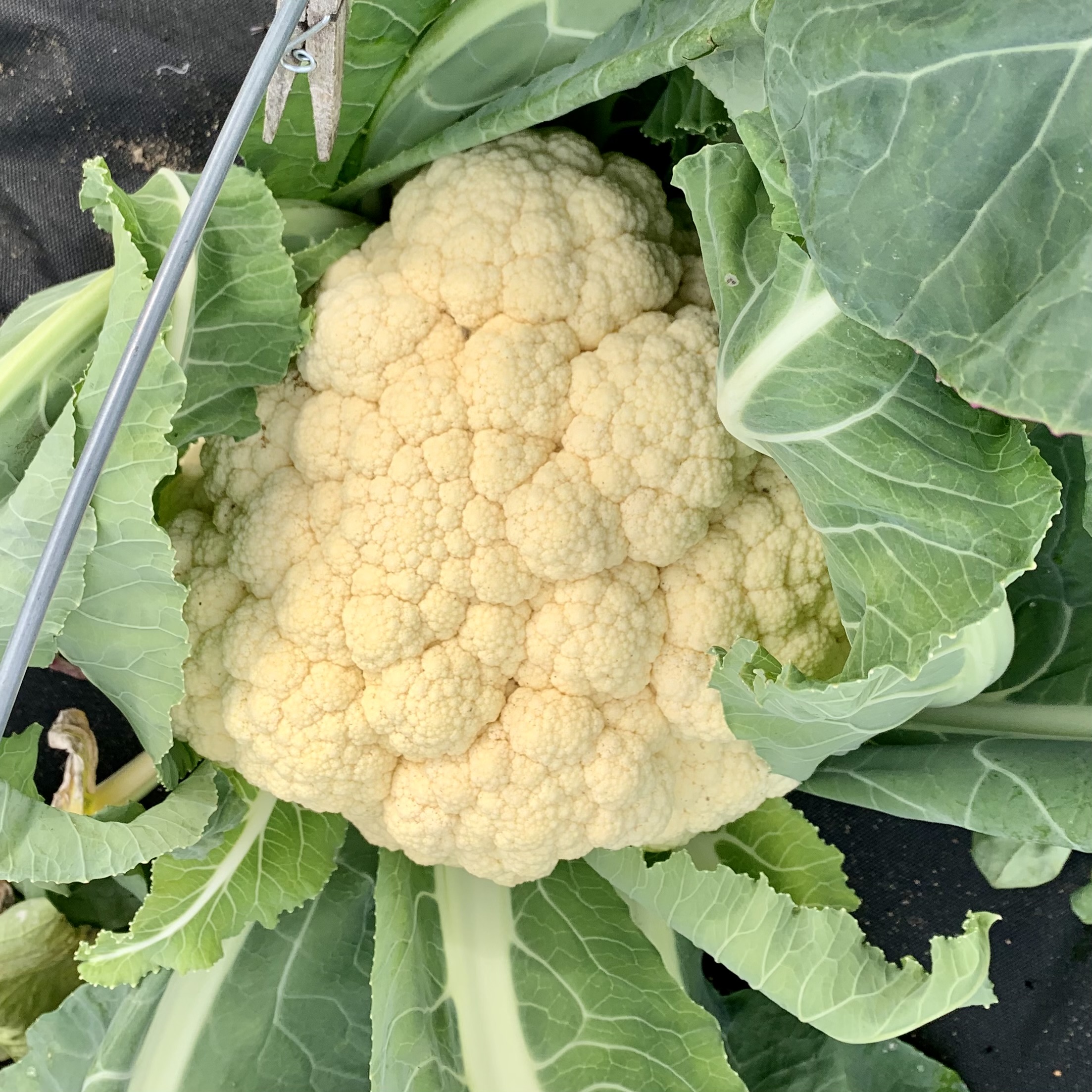
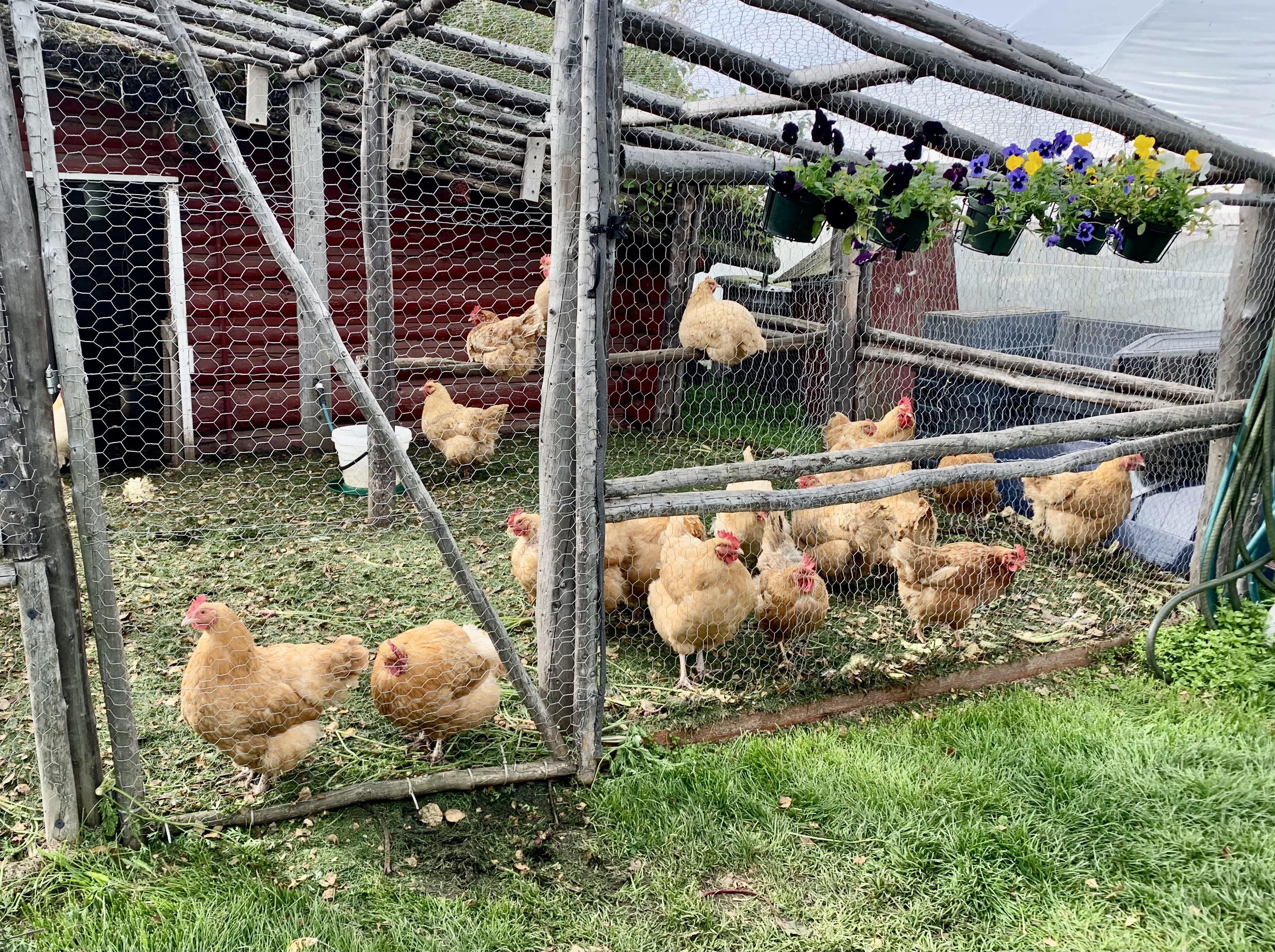
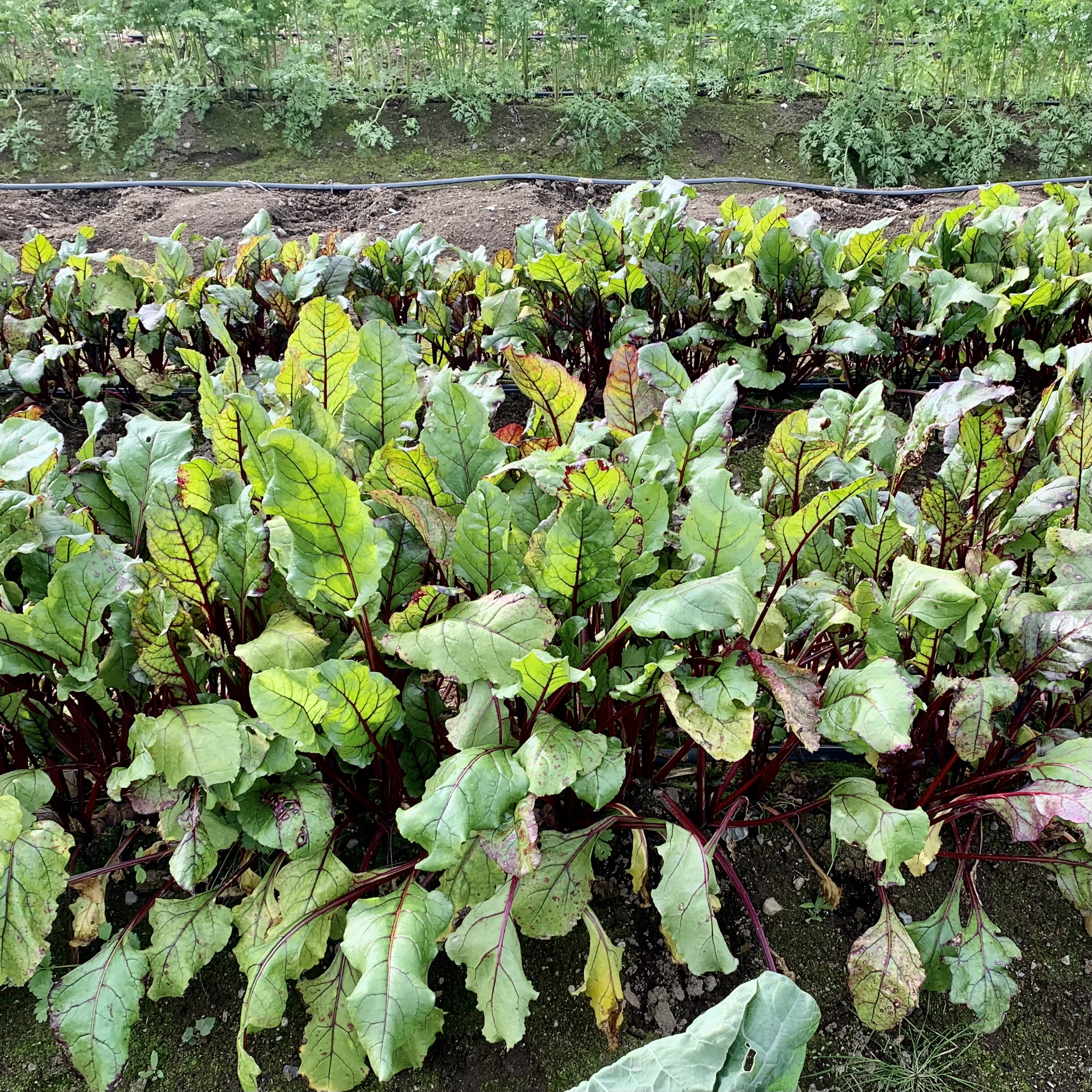
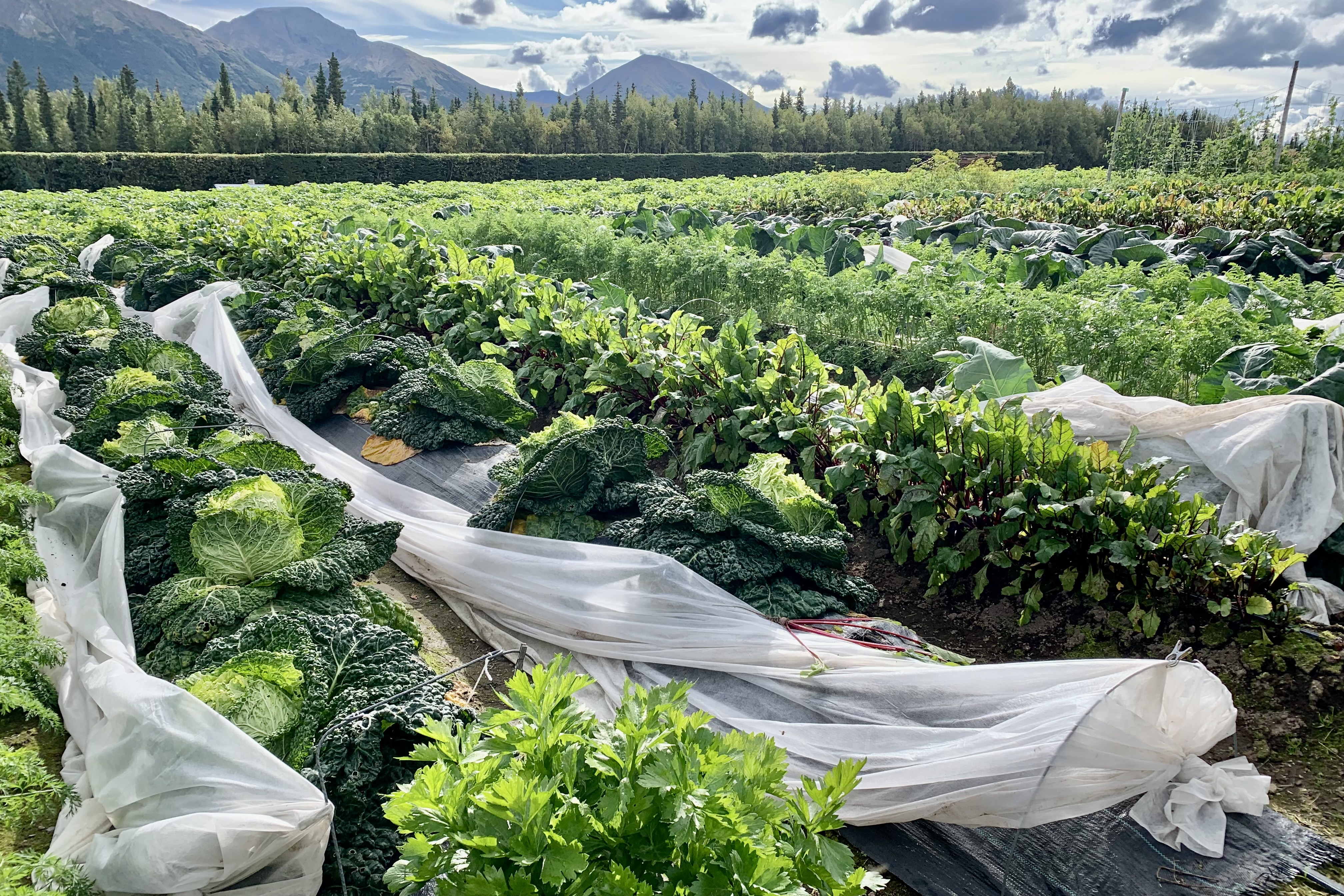
Once back at Lake Clark Farm Lodge, I decided a tour through the “farm” area was in order as I hadn’t yet taken the time to explore this “working farm” with it’s vegetable garden. From a distance it appeared quite impressive. We had been enjoying wonderful salads and fresh vegetable at every dinner from the garden . The vegetables in the garden were a la Alaska style. Alaska typically has a very short summer growing season, only 105 days, on average. Despite this short summer growing season, Alaska farmers have the advantage of the midnight sun enjoying as much as 20 hours a day of sunlight during the summer months. The vegetables love it but without blackout curtains sleeping in the midnight sun for a human can be challenging. The extra hours of sunlight allows Alaskan crops to just bask in the sun and keep growing and growing because of a longer photosynthesis window each day, resulting in bigger sweeter produce. There were hardier crops such as potatoes, cabbage, kale and cauliflower in large plots outside and the less hardy in in the green houses. Every evening I watched the gardeners covering rows and rows of some of the plants but not all. I came to find out that, what I assumed was an attempt to protect them from the colder night air or possibly insects, was to actually keep the moose from having an evening feast or big old garden party. Additionally there were fresh egg options at breakfast from the resident chickens in the hen dominated coop though there was one strutting rooster maintaining order and establishing the pecking order .

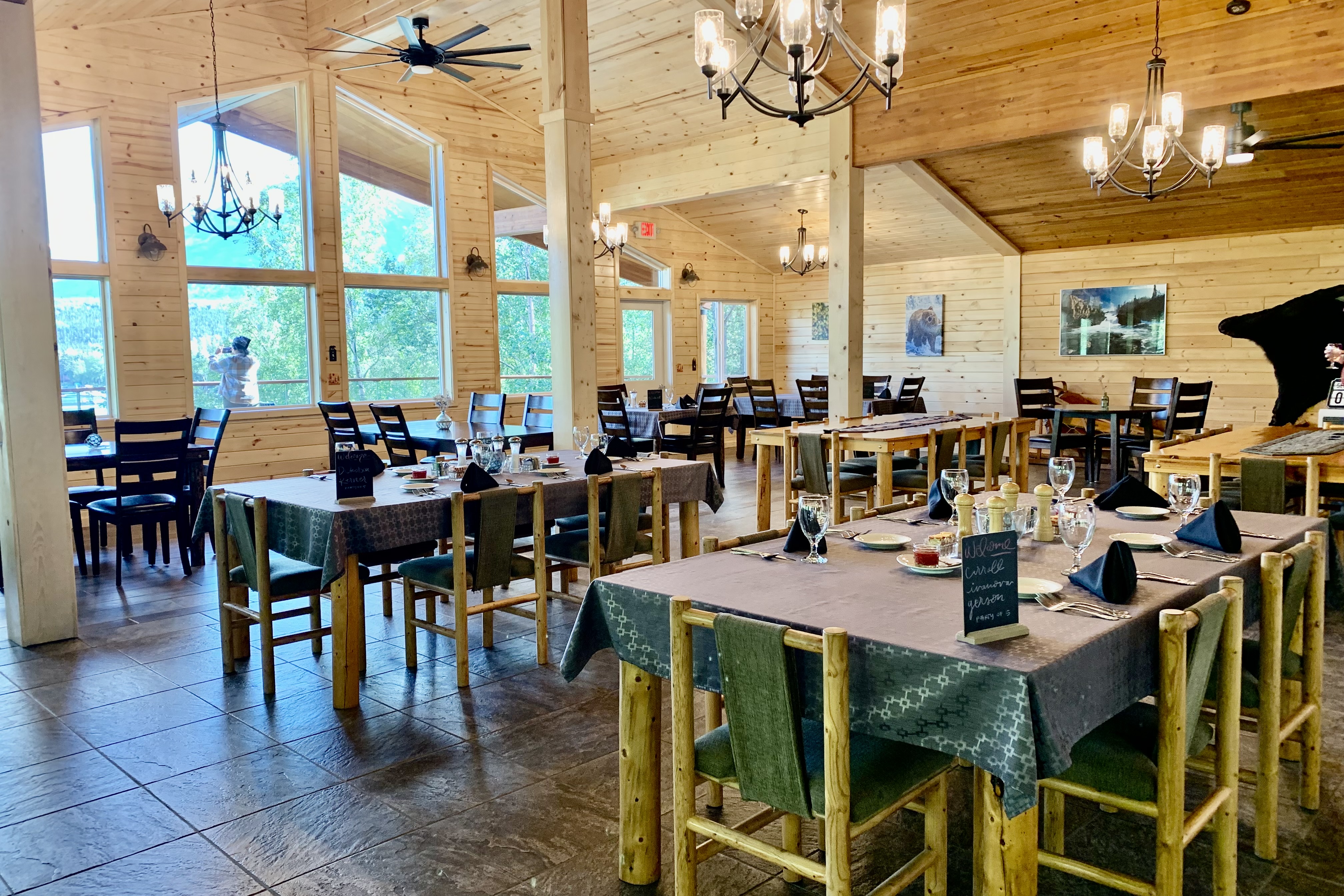
Soon it was time for our evening meal. Home cooked meals at the Farm Lodge were served in the main lodge family style at a an appointed time daily and were excellent.. The family cooks prepared exceptional breakfasts and dinners and very tasty sack lunches to go. I thought the food was truly gourmet and I marveled at how they could have a 5 star dinner in such a remote area! Portions were huge and our dinner meals included fresh baked breads, farm-to-table fresh vegetables, homemade deserts along with the overly generous entrees. We order our breakfast and lunches from a multiple option menu at dinner. When I first learned that seating would be family style at large tables of 8 and we should look for our place cards, I was a bit off-put. I really prefer not to be “told” who I have to socialize with. But I soon mellowed to the process at is did allow for interesting conversations with other guests. And there was a lot of commonality amongst this group that would opt for this type of trip.

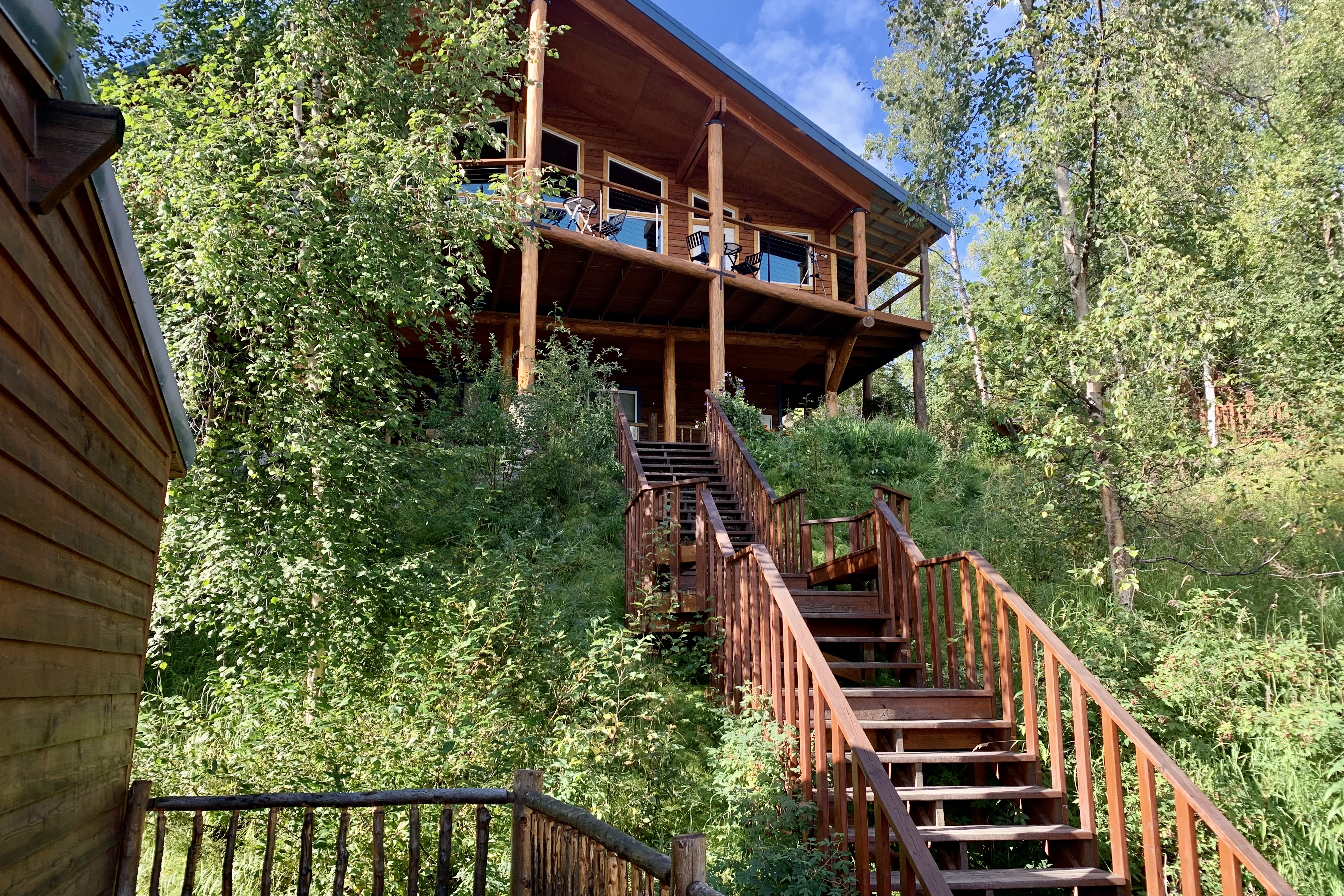
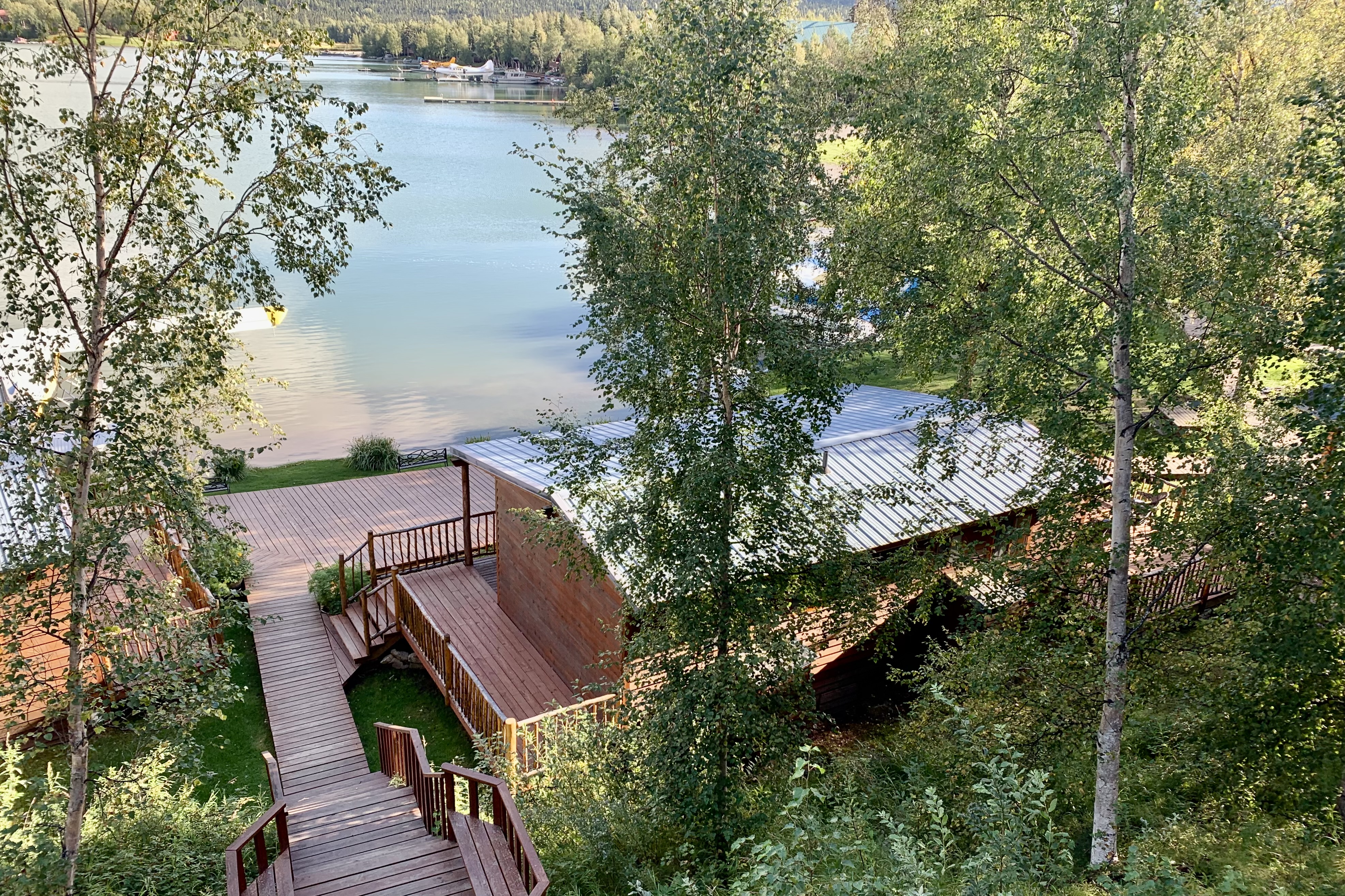
The accommodations were relatively modern for Alaska Our guest cabins was heated (definitely a necessity at this time of year), had a private bathrooms with running water. (yes this is important to note when booking a cabin in Alaska), a covered porche for relaxing, AND was on the waterfront.

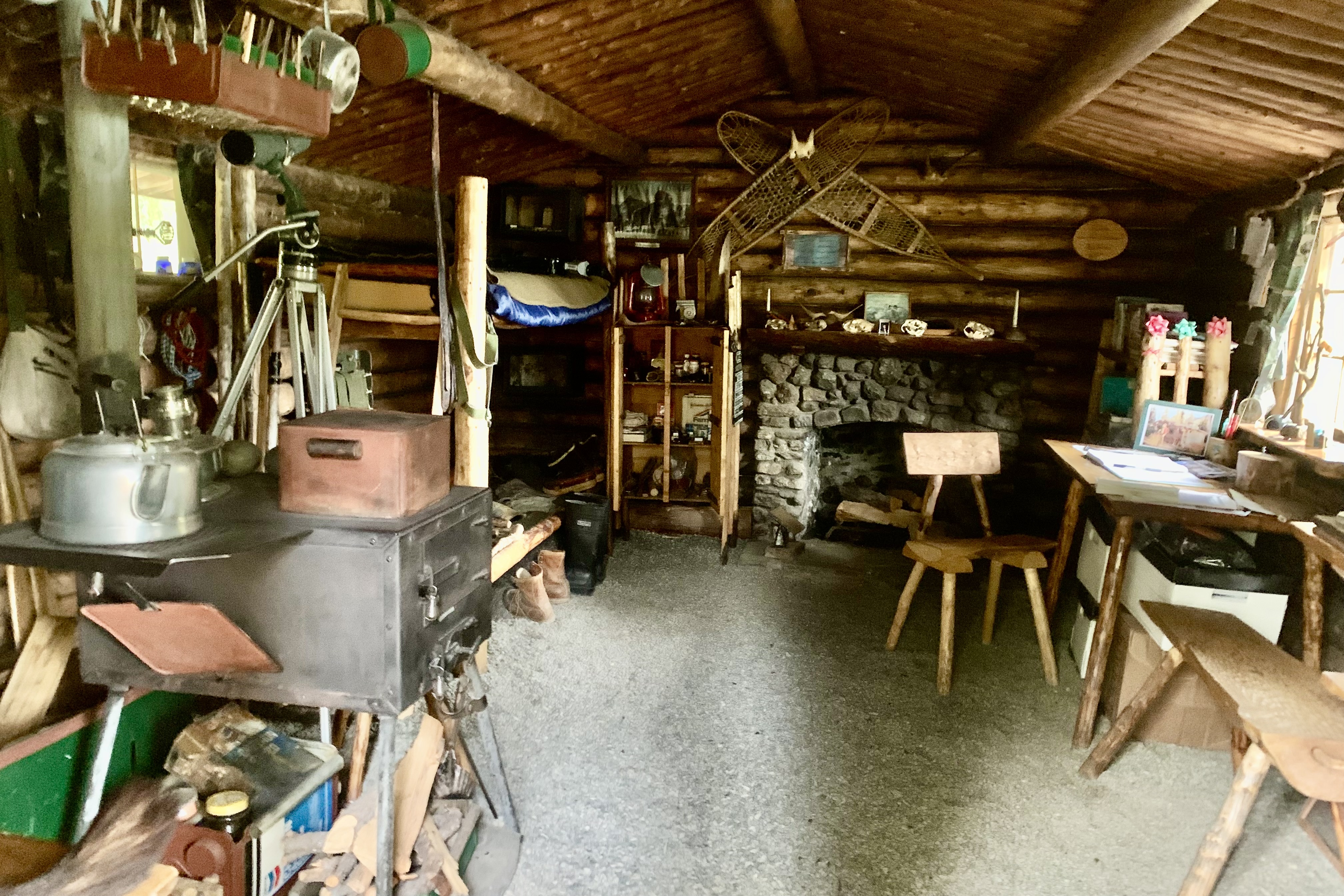
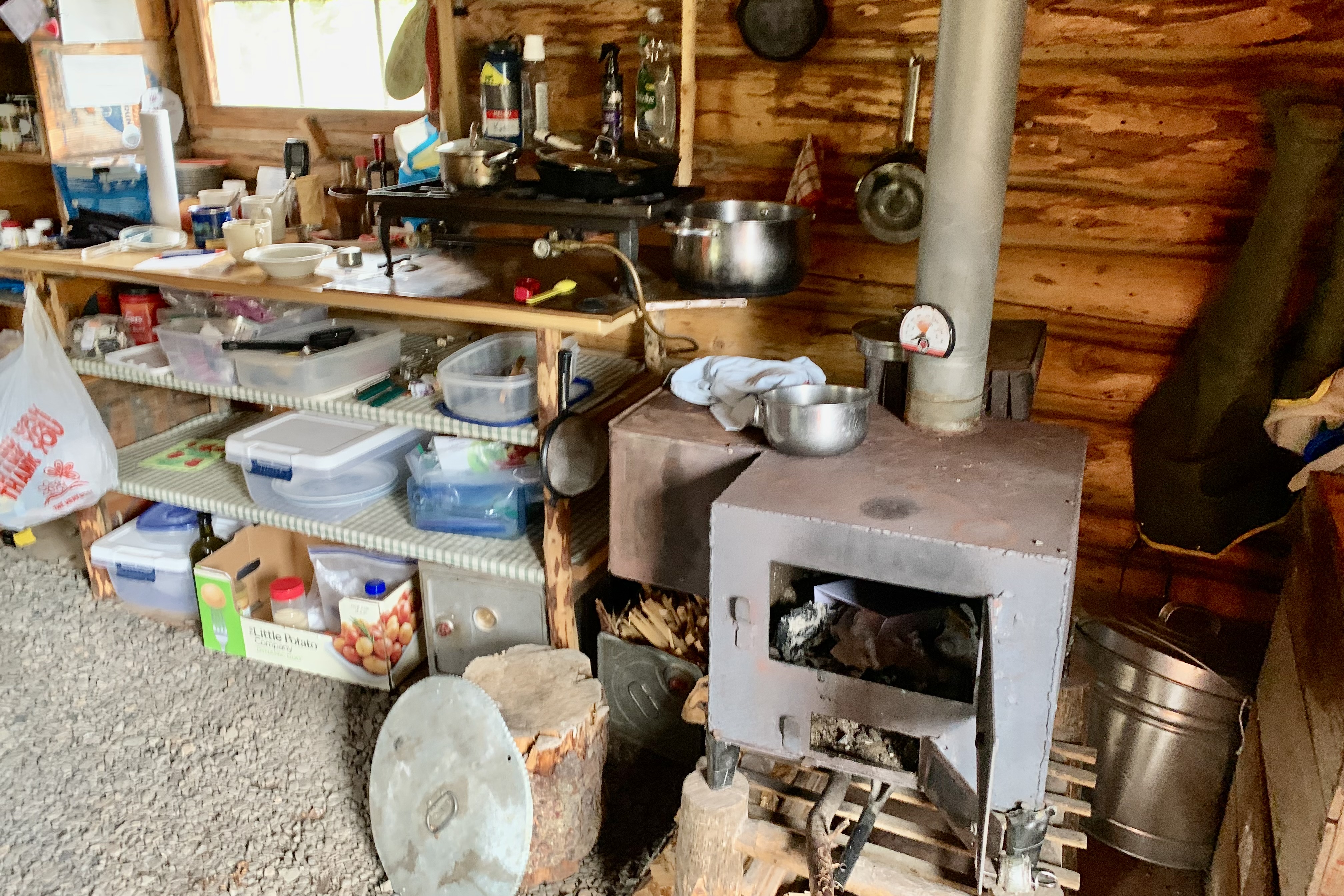
For our final full day we hopped back into our float plane to try again a landing at the Upper Twin Lakes and the opportunity to visit Richard Proenneke’s wilderness cabin. There had been a dusting of snow on the mountains we flew over that were not snowcapped the day before, reminding me that winter was fast approaching in Alaska. I was pleased to have finished reading One Man’s Wilderness the previous evening and was so grateful to have read it as it really gave me a glimpse of this arduous enterprise that he had undertaken and what was involved in building this very rustic home. The entire structure was built purely with materials on hand: gravel retrieved from the lake bed, felled and hand worked timbers, and stones dug from around the site for use in his chimney and hearth.

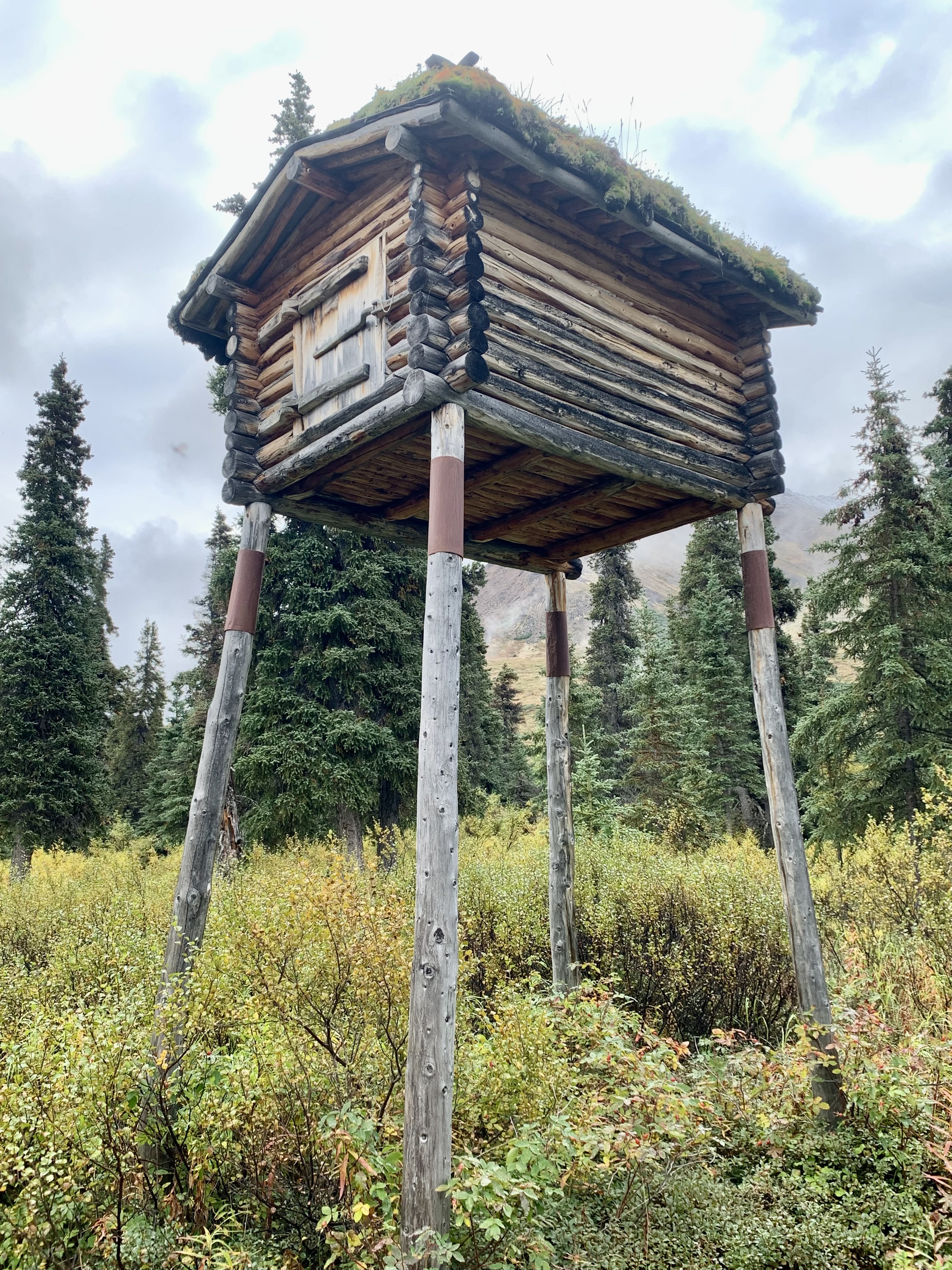
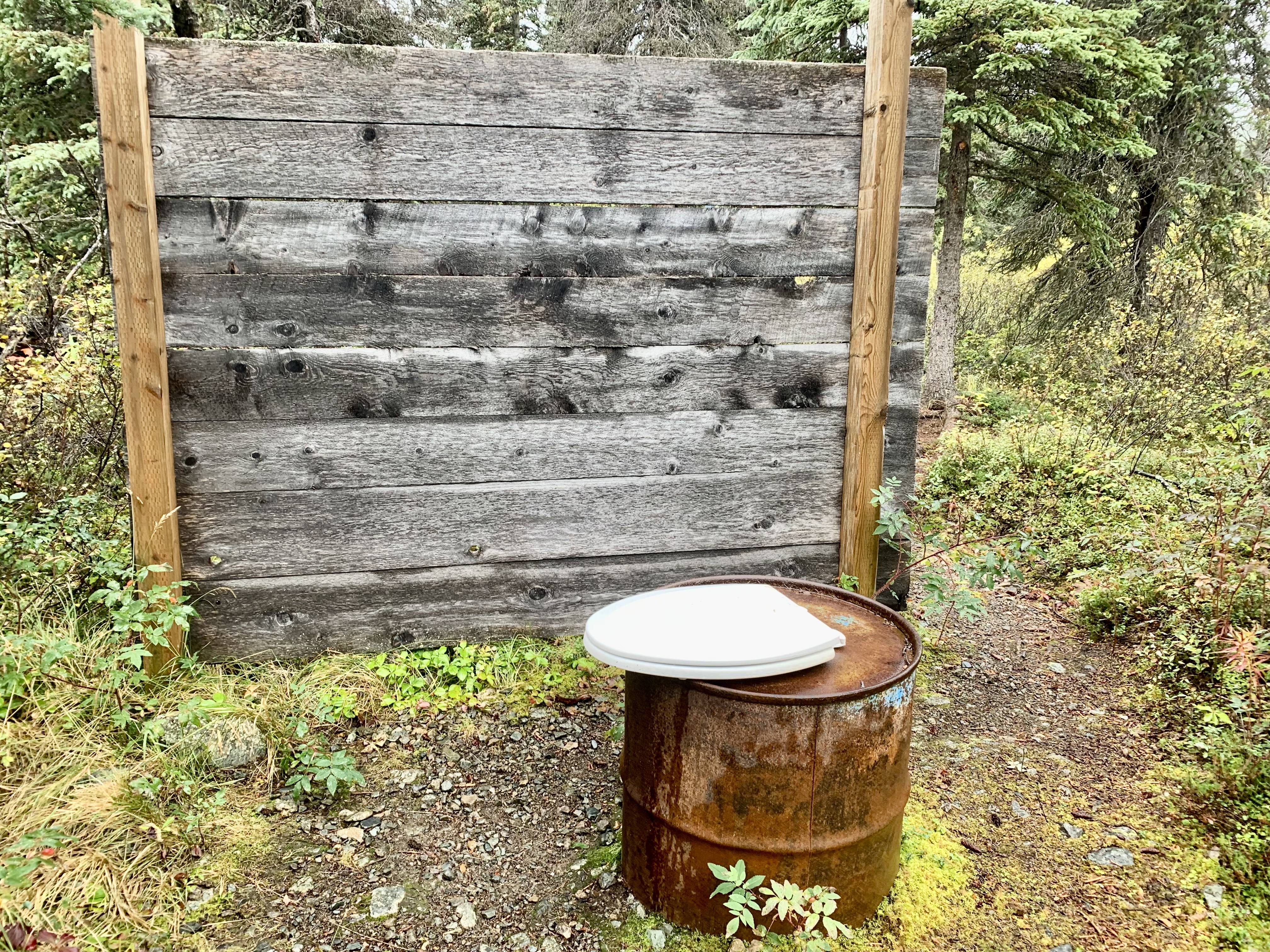
Visits are guided through the cabin and grounds by two National Park Service summer volunteers who live on the property. What I hadn’t thought about then was how tough these two women had to be to live in this remote wilderness area, out there with the bears, with few trips back to the civilization of Port Ellsworth during their stint. Now if I were ever to consider volunteering at a National Park this would be one of my first choices. I have no interest in living in a campground in a park in a monster RV with its satellite dish and every convenience of home. Here the volunteers are provided with NPS accommodations as they could not stay in Dick’s “luxurious accommodation” but in cabins nearby, one of which was the homes of his associate and friend Spike Carrithers. Any of my readers game for staying in this “woodsy forest retreat” as a volunteer next season??

The following morning after our last made-to-order sumptuous breakfast, we boarded a Piper PA-31-350 Chieftain, with wheels not floats! This plane is no spring chicken since this model was built from 1973-1984 thus probably between 40-and 50 years old. I know nothing about aging planes but I trusted they have a good long life-span and someone has taken care of their health. The flight took us back through the Lake Clark Pass with one final spectacular view of the Chigmit Mountains and the Cook Inlet. After retrieving my car I dropped Tasia at the Ted Stevens International Airport and was on my way up to Talkeetna AK for Phase II of probably my last great Alaskan adventure.

A Bonanza of Ice but Where’s the Fire

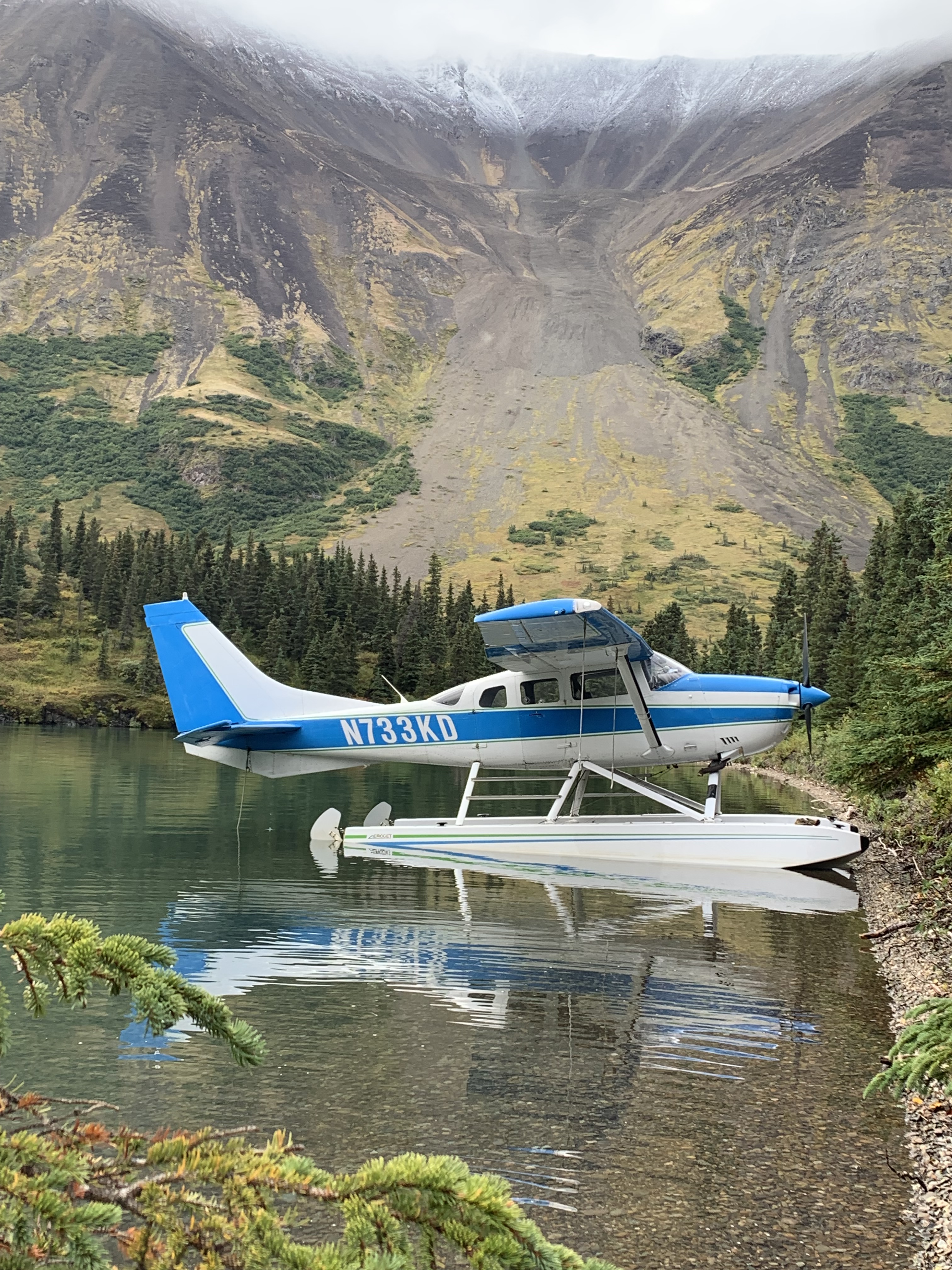
Our days adventure was branded as the Fire and Ice Tour.  The geography of Lake Clark National Park was the focus of it and we  were soon winging our way in a Cessna 206 (dubbed the sports utility vehicle of the air) over some of Lake Clark National Park and Preserve’s extremely rugged and breathtaking landscapes. The Aleutian Range of mountains is within what is known as the “Pacific Ring of Fire”  which is a horseshoe shape belt of high tectonic activity (volcanic eruptions and earthquakes) that extends 25,00  miles around many of the landmasses bordering the Pacific Ocean. Mt. Redoubt and Mt. Iliamna are active stratovolcanos within Lake Clark NP .

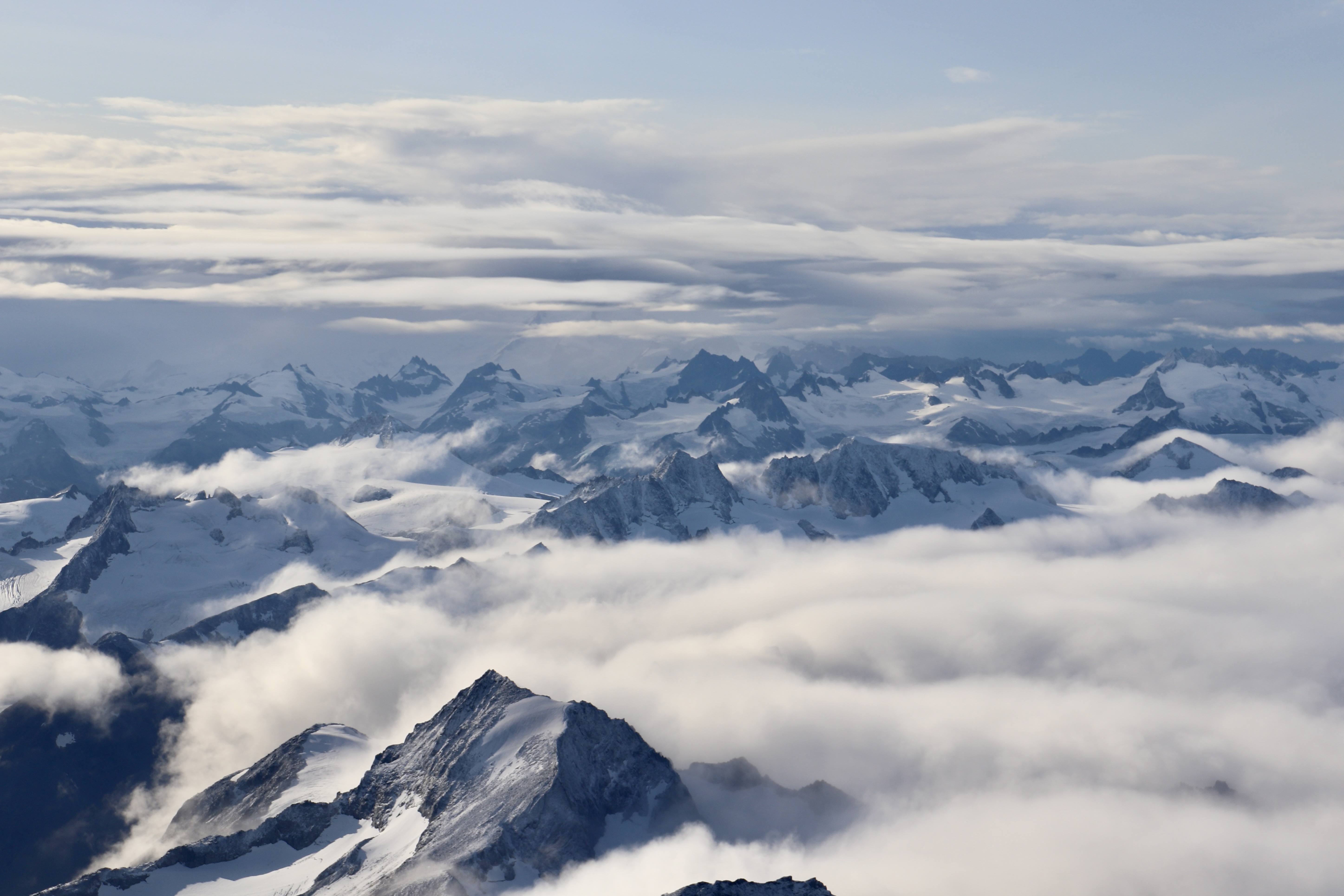
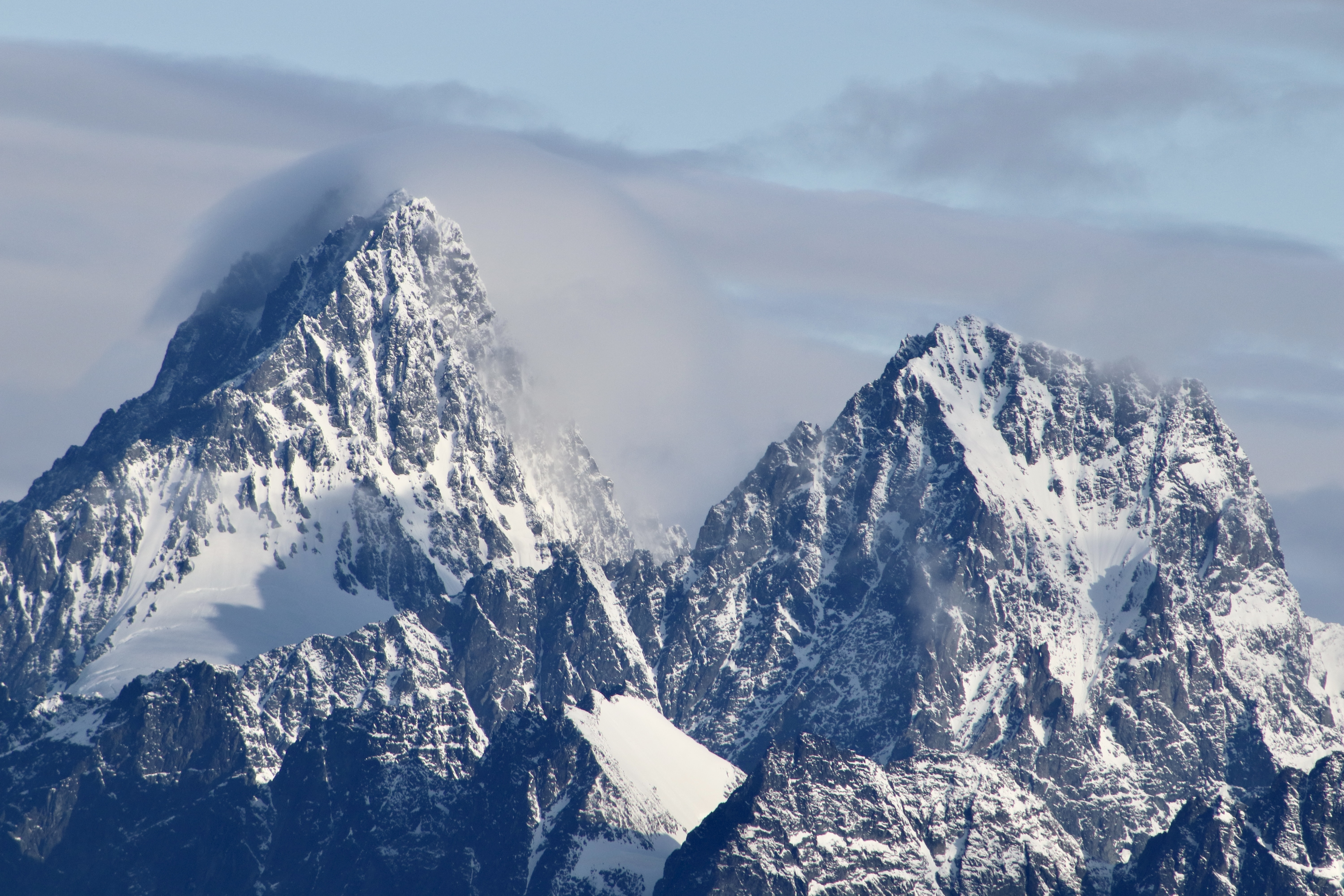
Ascending above the clouds, what a splendorous sight it was to see the jagged mountain peaks punching  through the billowing clouds. It evoked such a  wonder and amazement.  What a sharp contrast between these jagged, sharp, angular unyielding  summits and the wispy, pillowy and cumulous clouds about. 

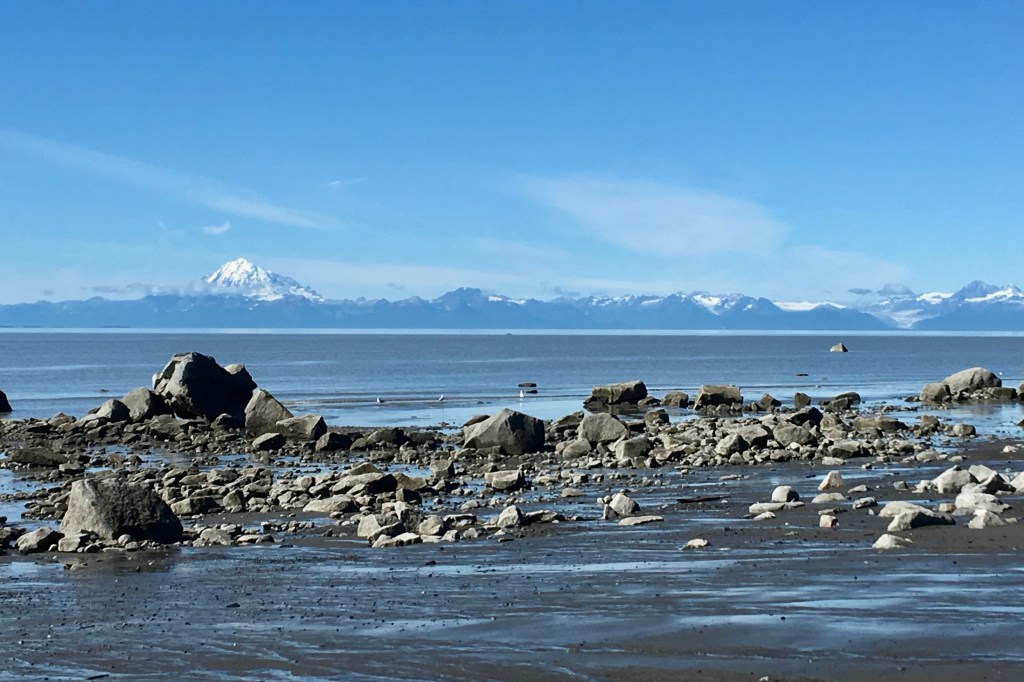
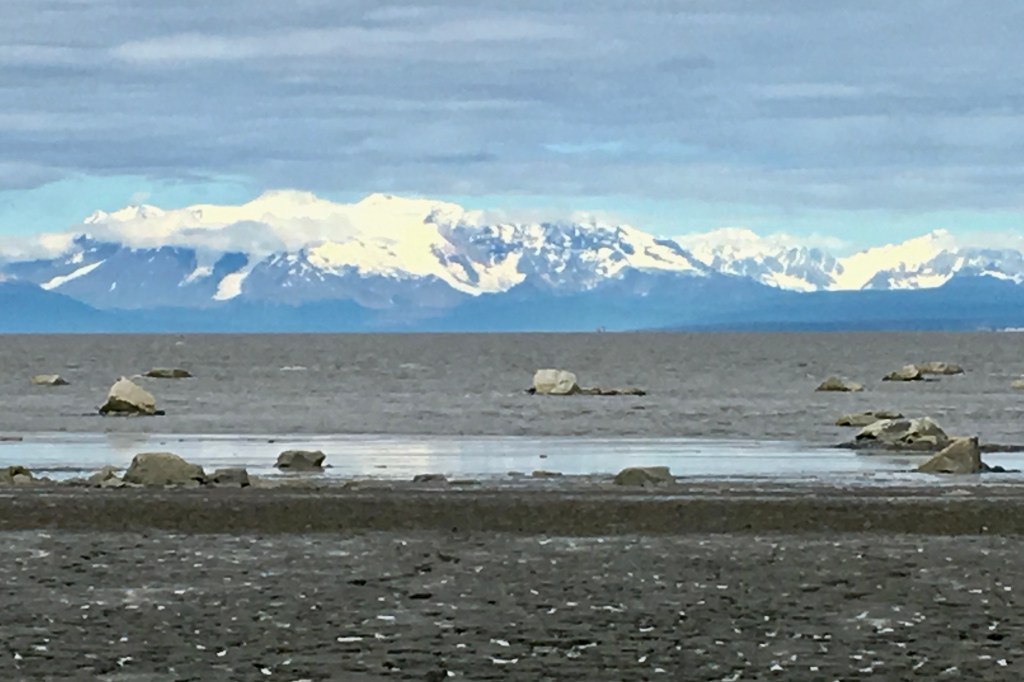
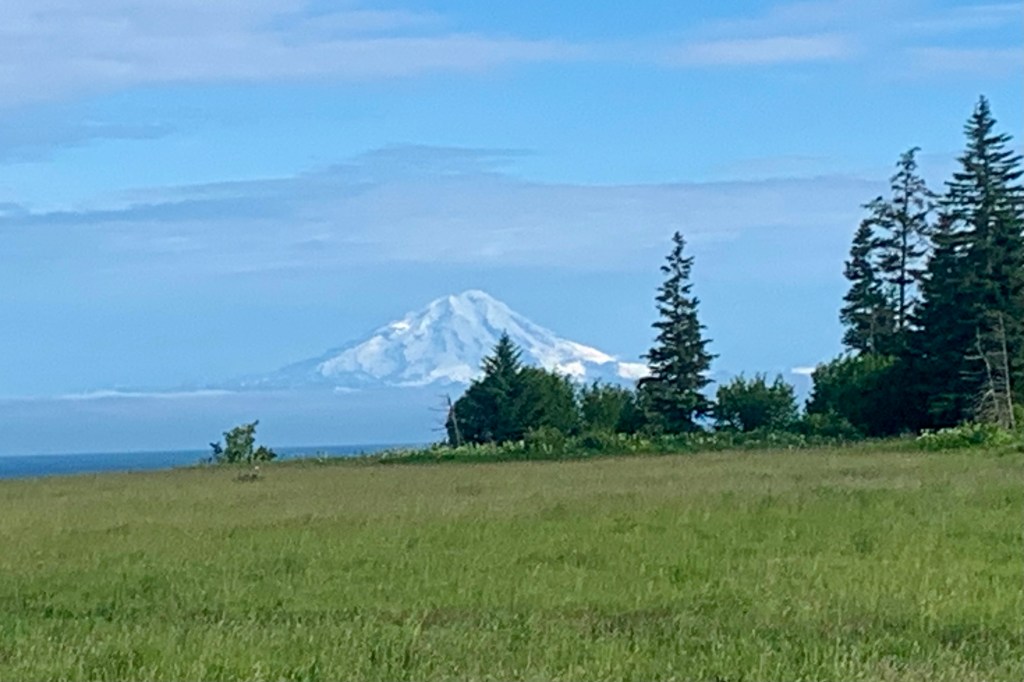
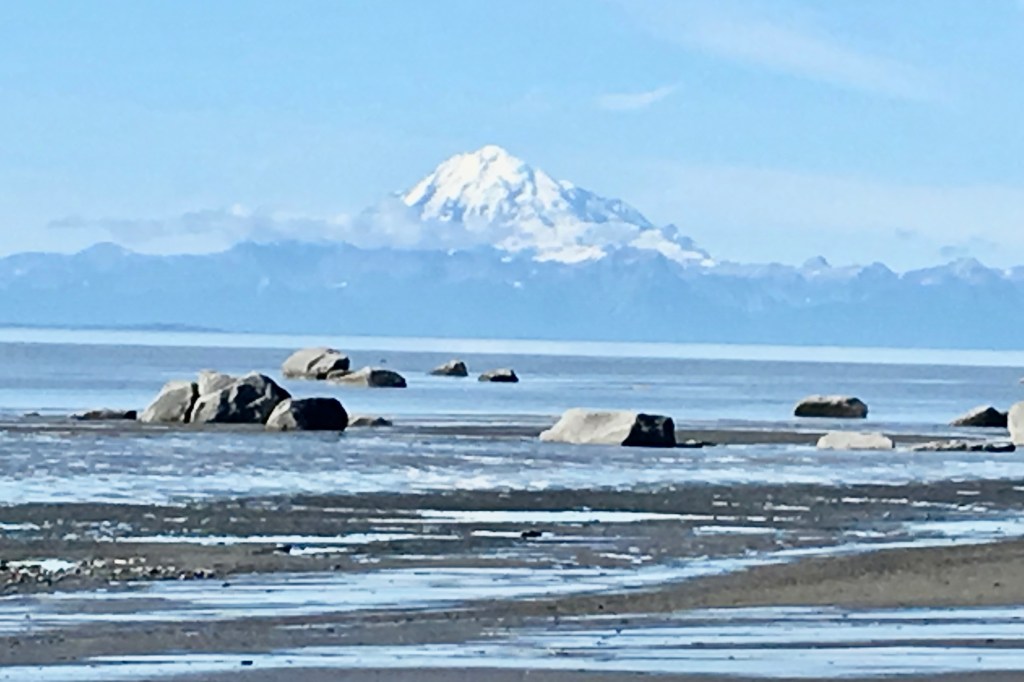
Not too long into this flight our pilot pointed out Mt. Redoubt,  an active stratovolcano which has erupted many times in recent history, the most recent in 2009 and the highest peak in the Aleutian Range at 10,197 feet . Mt. Redoubt is an ubiquitous sight as it can be seen from the Kenai peninsula where I have a home.  It boldly presents itself in the distance on a sunny clear day as it majestically stands in the distance .  At times when I  have travelled the  Sterling Highway south towards  Homer  or north towards Captain Cook State Park,  despite being 50 miles across the Cook Inlet, Mt. Redoubt’s massiveness makes it appear to be just a jot across the inlet.

Circling around Mount Redoubt was the goal, but unfortunately the clouds were accumulating on its summit and far side, enveloping the mountain, so our pilot bailed on that plan. Redoubt from this aerial standpoint speaks magnificence and grandness and it is an altogether different experience than from the ground. Our next destination was Mt. Iliamna but its affinity to the cumulous clouded us out as well.

Soon we were headed for Portage Lake and, though I did not ask the question, I wanted to ask where the Fire was on this Fire and Ice excursion. Now a reckless part of me would have loved to see some action from those volcanoes (maybe a small fire) but the sensible brain knows that wishing for a spewing of lava is pure insanity as an eruption from this type of volcano is not runny and oozy like those in Hawaii but like popcorn popping though, not so light and fluffy with the size ranging from boulders to ash.

Mt Redoubt

On this trip I was sitting in the co-pilot seat and though it became somewhat of a joke at first it was also a necessity.  I needed a booster seat so I could see over the instrument panel. They came up with a flotation cushion which was definitely a help but after the first flightseeing go round I chose to abandon that decision. It was still a reach to get a good view over the instrument panel and I wasn’t able to  really take in the landscape as I wanted . So after our Portage Lake exploration and a visit to the bushatory, I opted for the second  and only other row seat. Exploration at Portage was limited due to high water levels and minimal beach

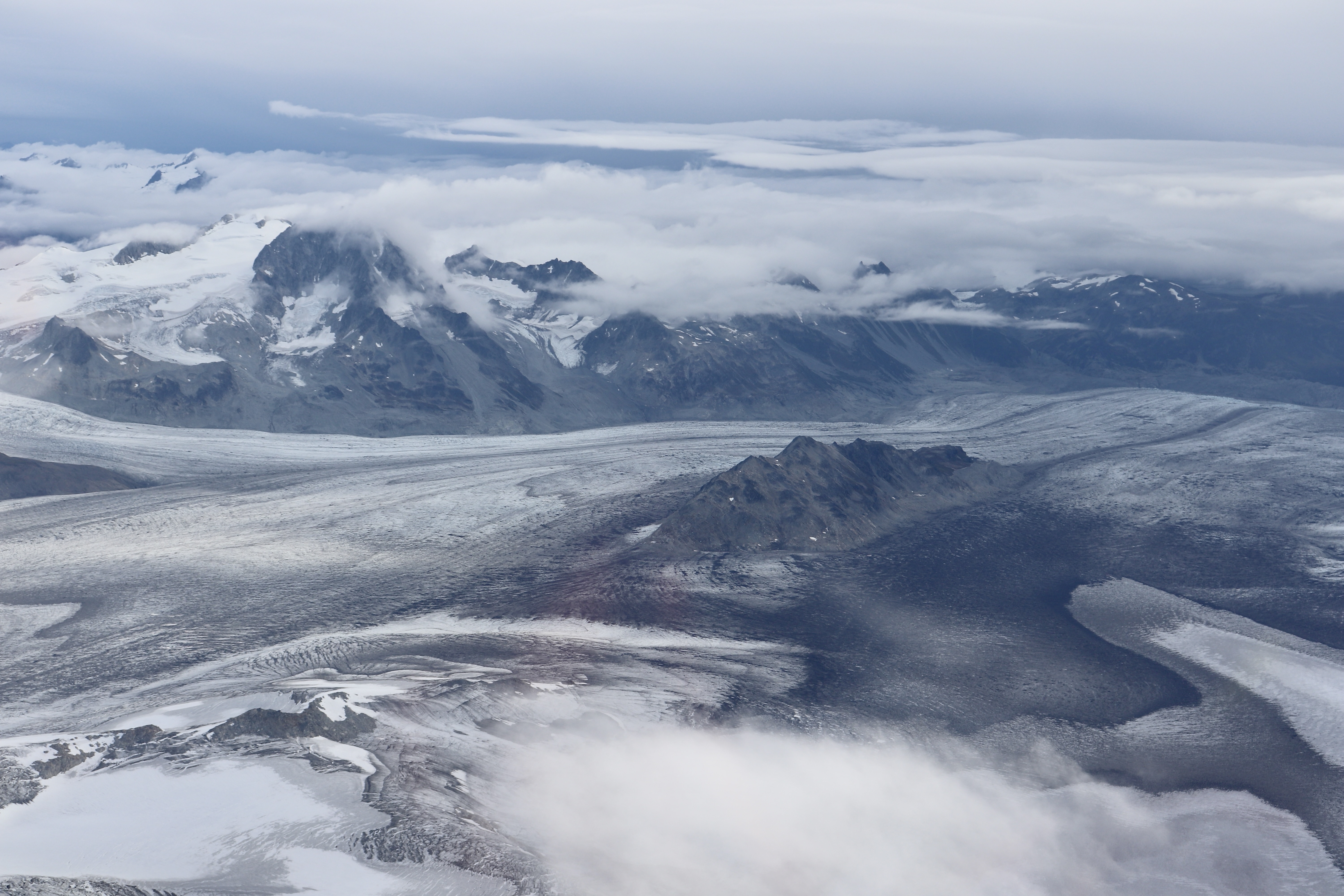
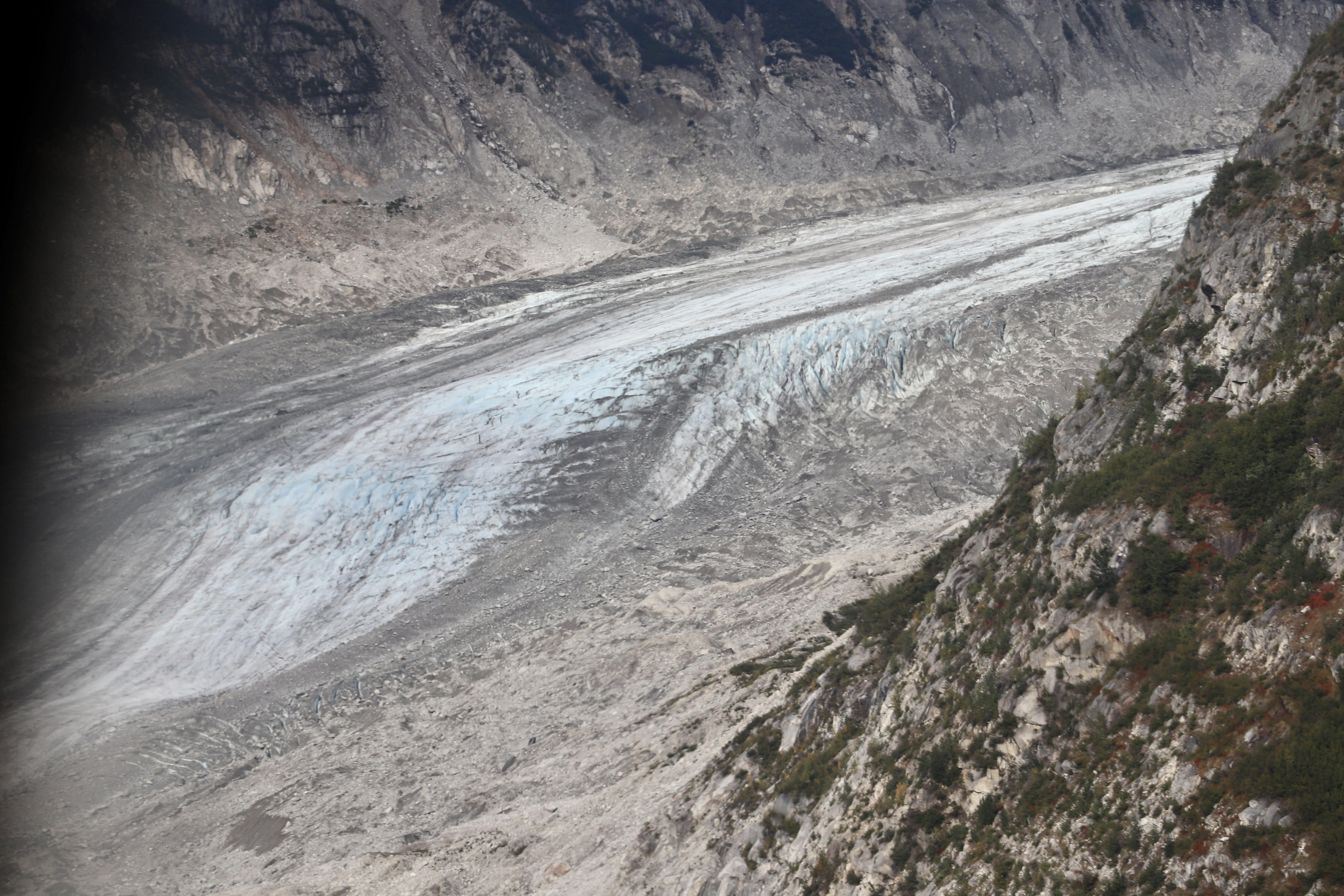
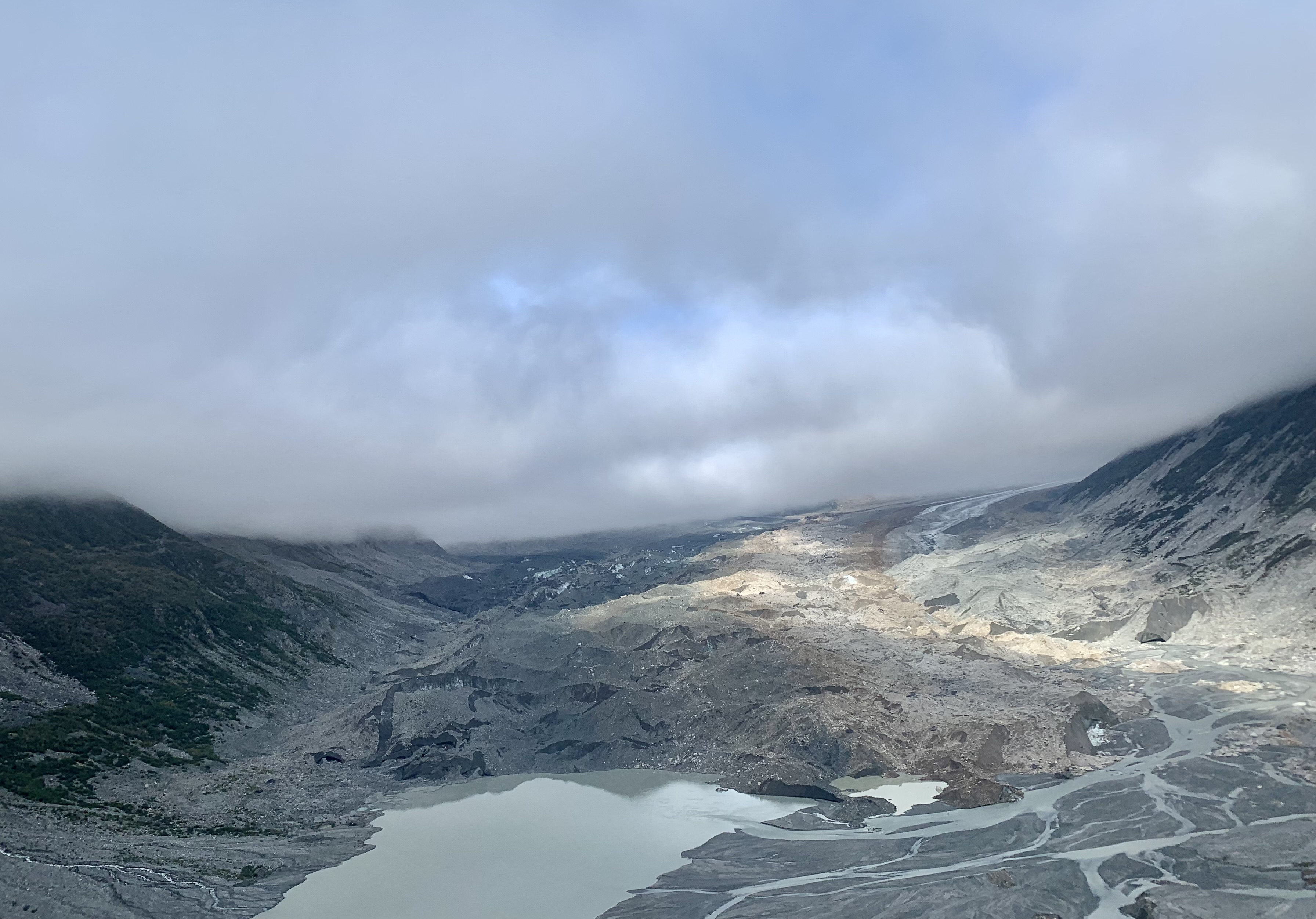
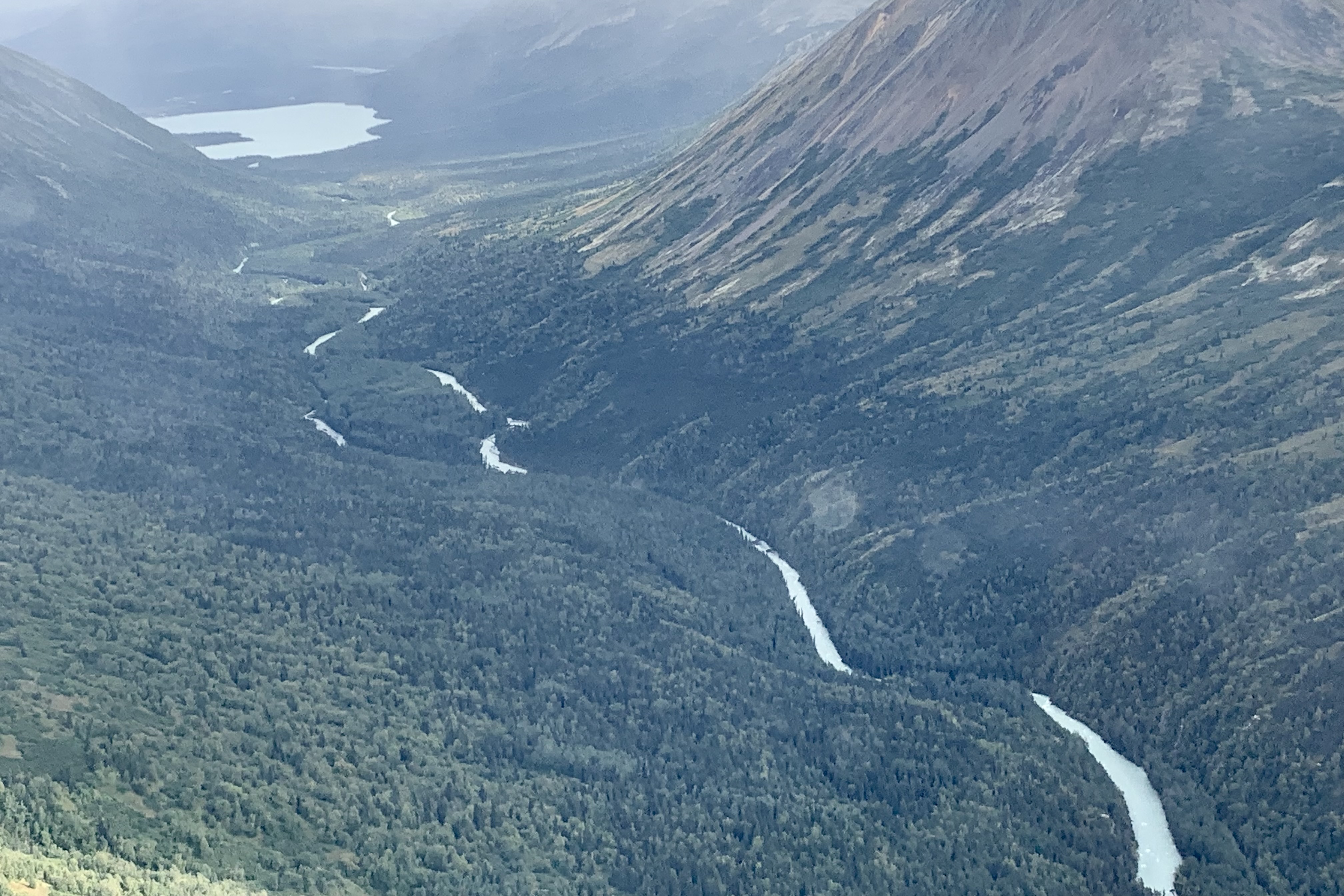
Once airborne we were headed towards the north end of the Lake Clark Pass to the glaciated area around Summit Lake and the Tlikakila River, a national wild river, and its tributaries in the Chigmit Mountains. The massive Tanaina Glacier, a valley glacier that extends many miles, feeds the Tlikakil River, a major source of water flowing into Lake Clark . There is definitely a tendency on my part to romanticize glaciers, the blue-white ice that is jagged and etched with crevasses, ice caves, and seracs. Visually “superimposed” on the rugged mountainous backdrop this is a very dramatic mass of ice that is a mosaic of colors , textures, shapes but treacherous to walk on.

Many of these  frozen rivers (valley glaciers) we saw snaking through the valleys and  many of  the ones we were viewing contain a fair amount  amount of rock and debris that it devours as it slowly scours the surrounding terrain when moving down the valley. Additionally a lot of pollutants, dirt and dust is picked up from the surrounding terrain and becomes embedded  causing the dirty streaks of various colors. I was thinking they definitely could use a dust up of fresh snow.  Appearing static from above, it is difficult to imagine that they are a grinding machine, ever so slowly marching down the valley (though actually there are some glaciers that go down galloping).

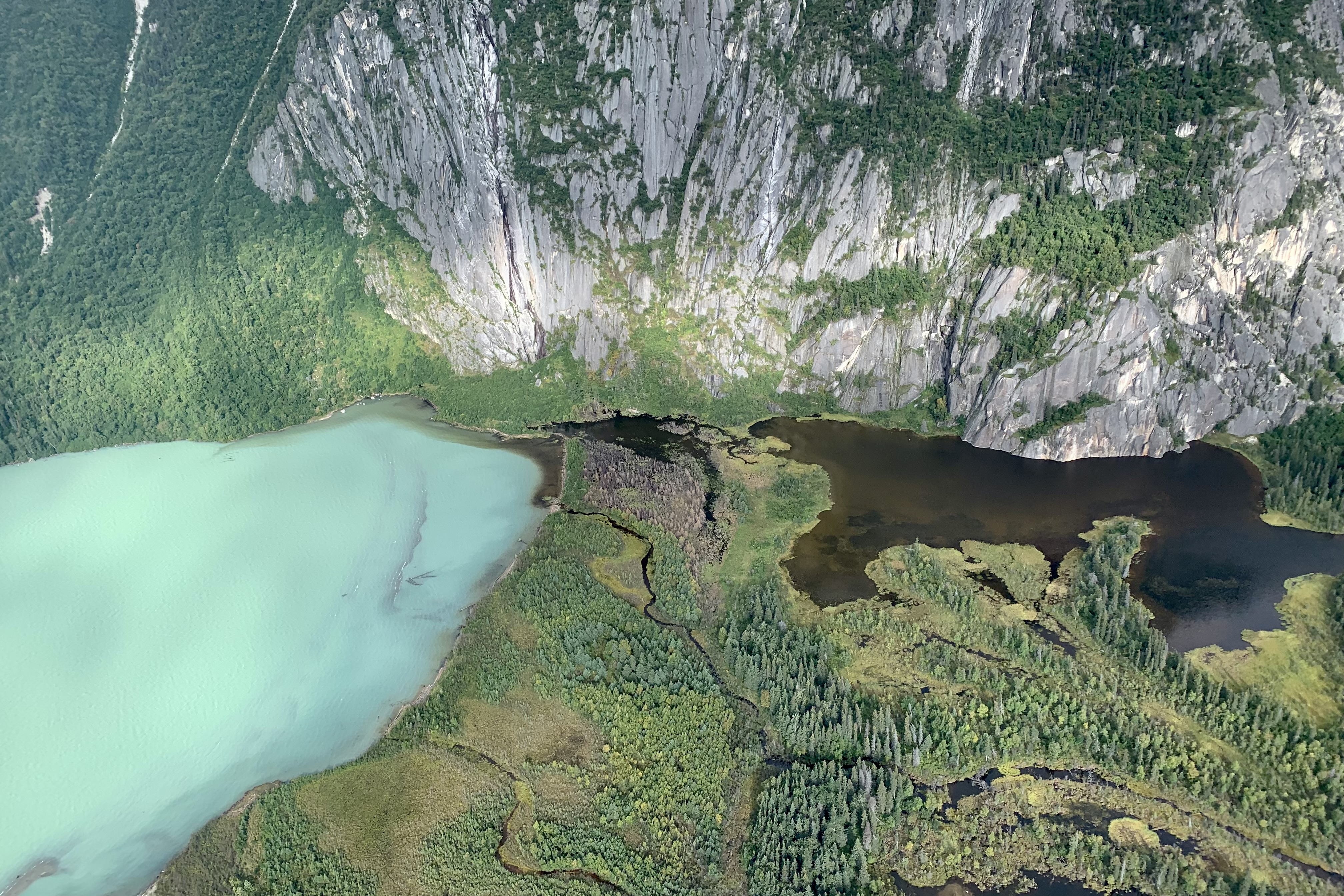
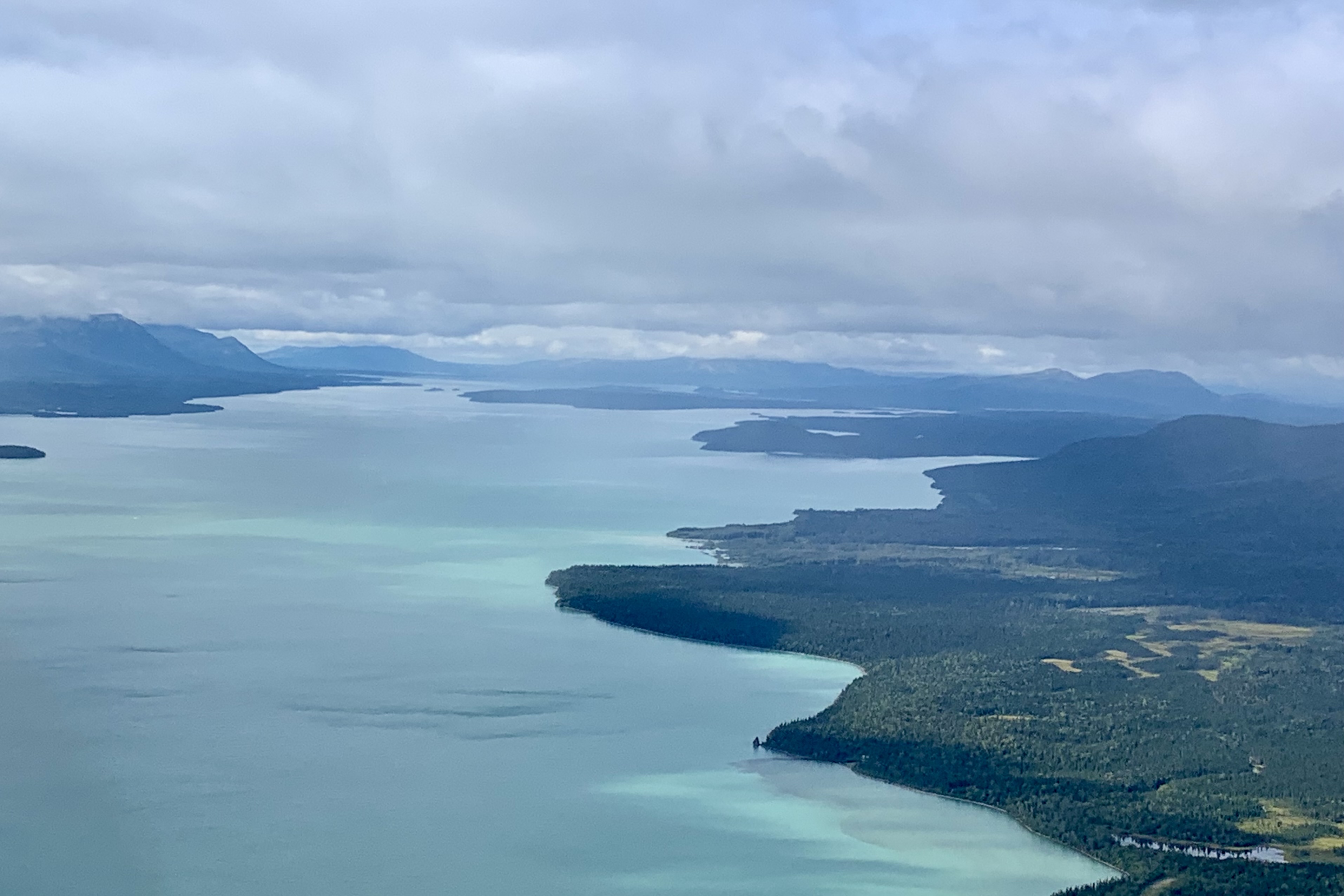
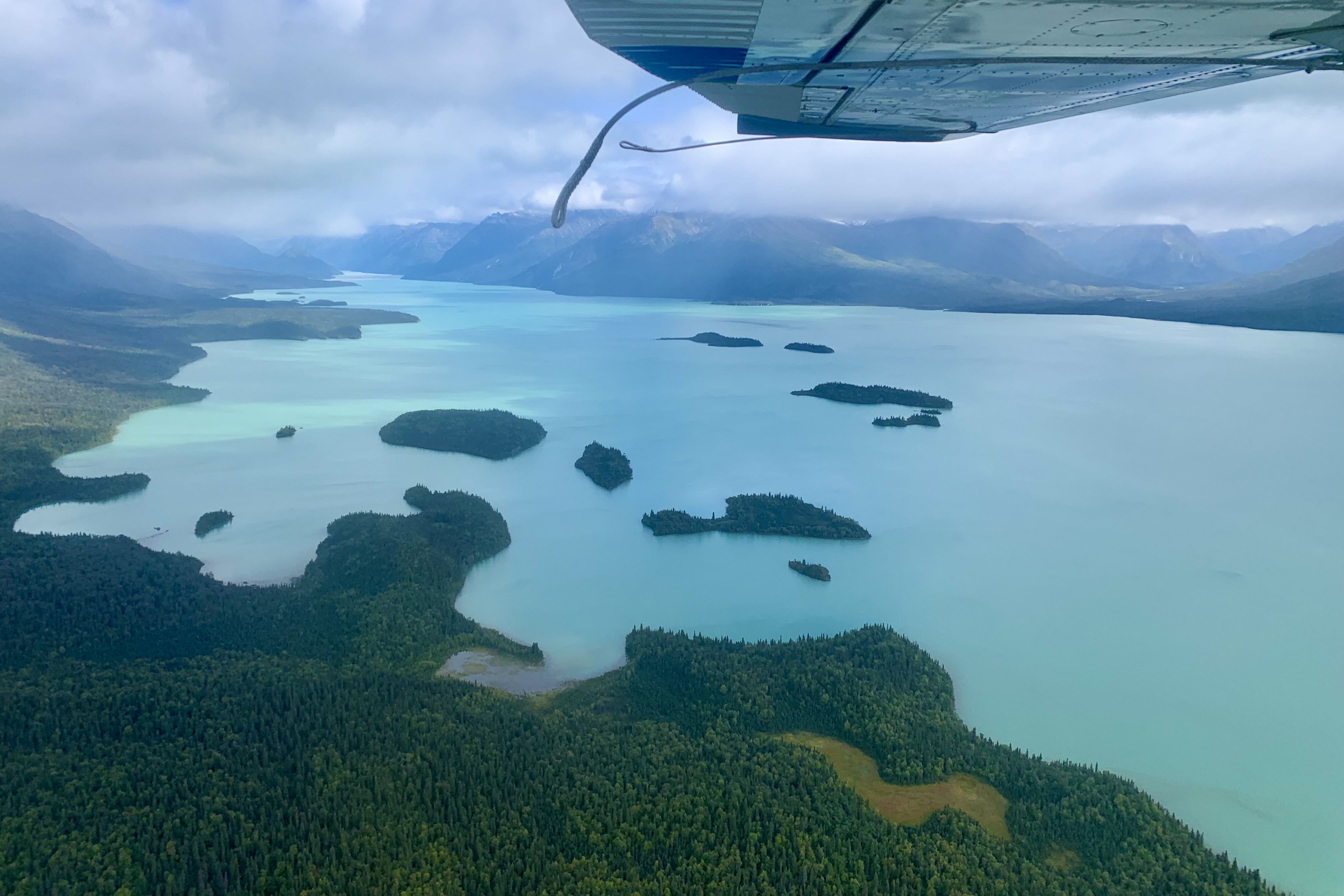
This was a day of criss-crossing the Chigmit Mountains and eventually we headed west towards Kijik Lake, re- crossing Lake Clark, which is always a treat with views of it’s aquamarine blue waters.

We were soon “water skiing” on the surface of Kijik lake and our lunch destination. Our guide must have sensed my unasked question “Where’s the fire?” on this Fire and Ice Tour.” As we were settling into our chairs to enjoy our sack lunches, he appeared with a bunch of kindling and proceeded to build a “boy scout” teepee fire” with very wet twig. Well it wasn’t exactly a roaring success but it did keep away any of the pesky flying insects that had an invested interest in visiting us. Though I probably would have jokingly whined about the lack of fire, it removed any possibility that I could successfully do so.

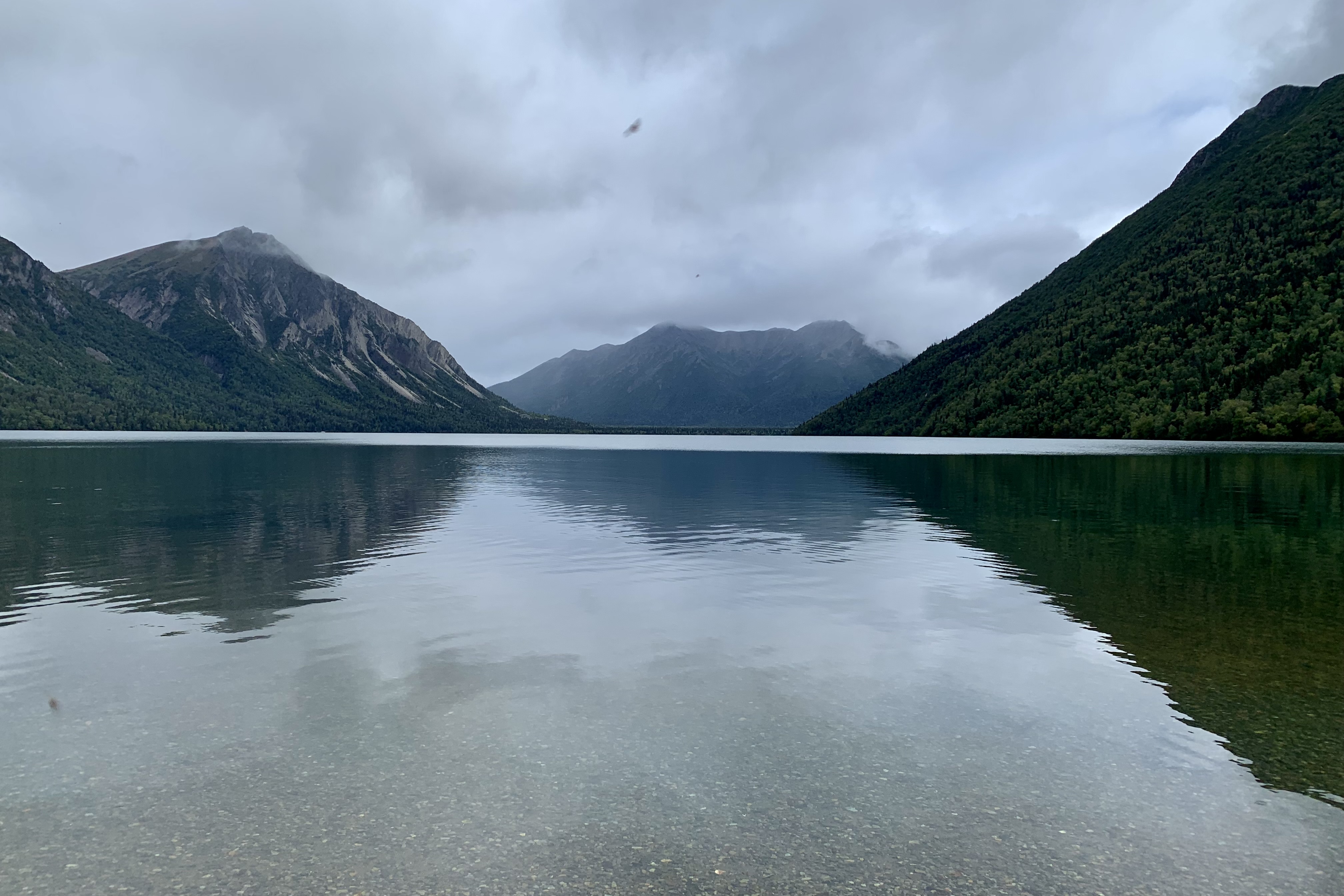
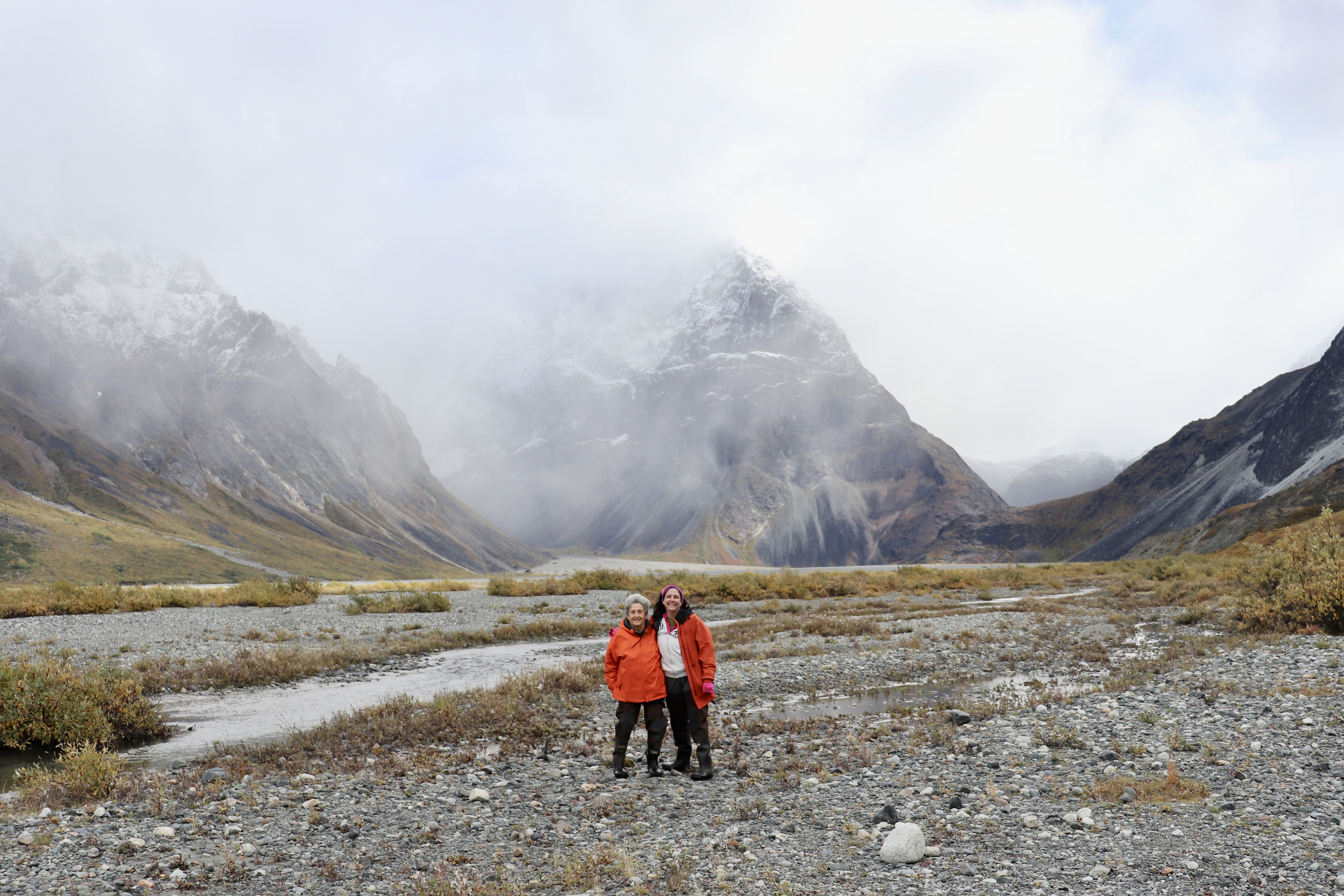
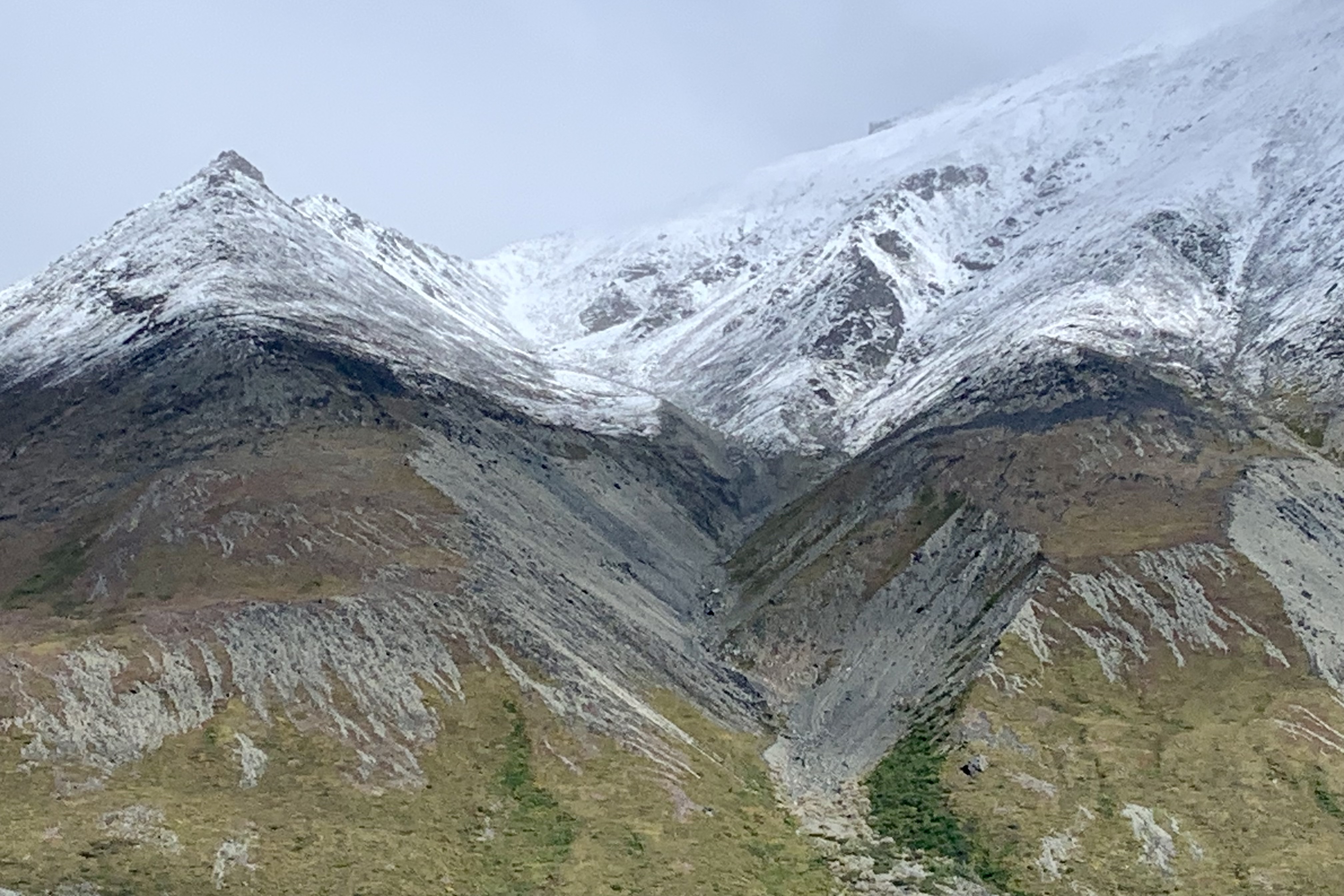
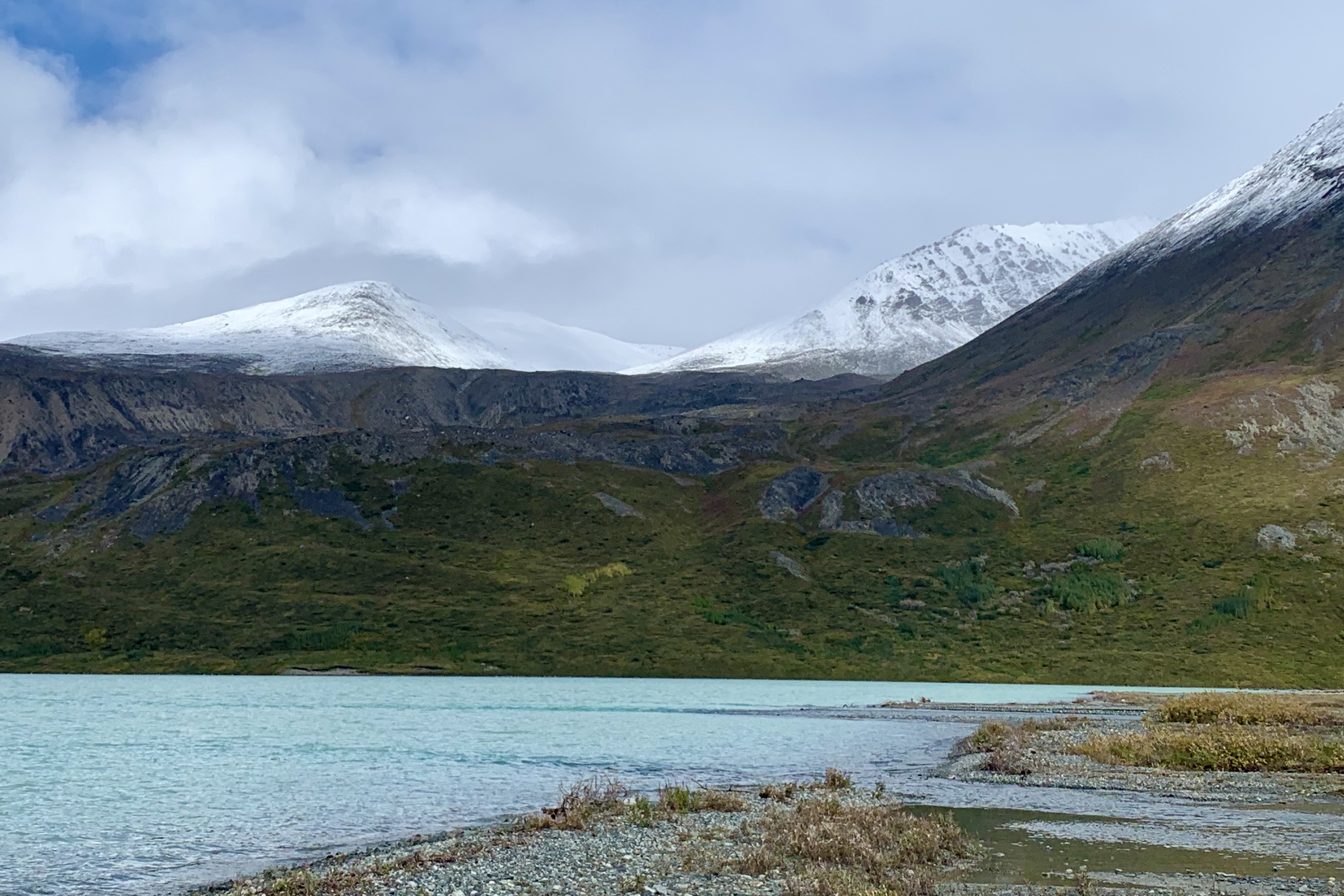
After a not so rousing fire experience, we headed north upon the Kijik River Valley over the beautiful watershed area of Twin Lakes, Turquoise Lake, and Telaquana Lake.  Our landing destination was Turquoise Lake which is guarded by 8,000 foot high snowy peaks and Telaquana Mountain to the east and primarily tundra to the west. However  on this day it was not quite the famous turquoise that is used in describing it’s allure as the brilliance depends on the absorption and scattering of sun light as it is reflected off “glacial flour” suspended in the water.  There was an absence of sun for this visitation! Since the lake is at relatively high elevation, the vegetation was sparse and it was quite chilly out. This was our first lake where we could actually do a walk about and we made our way up through the channels of glacier runoff. These meltwater streams cut many shallow channel through this stony “beach” feeding into Turquoise Lake. 

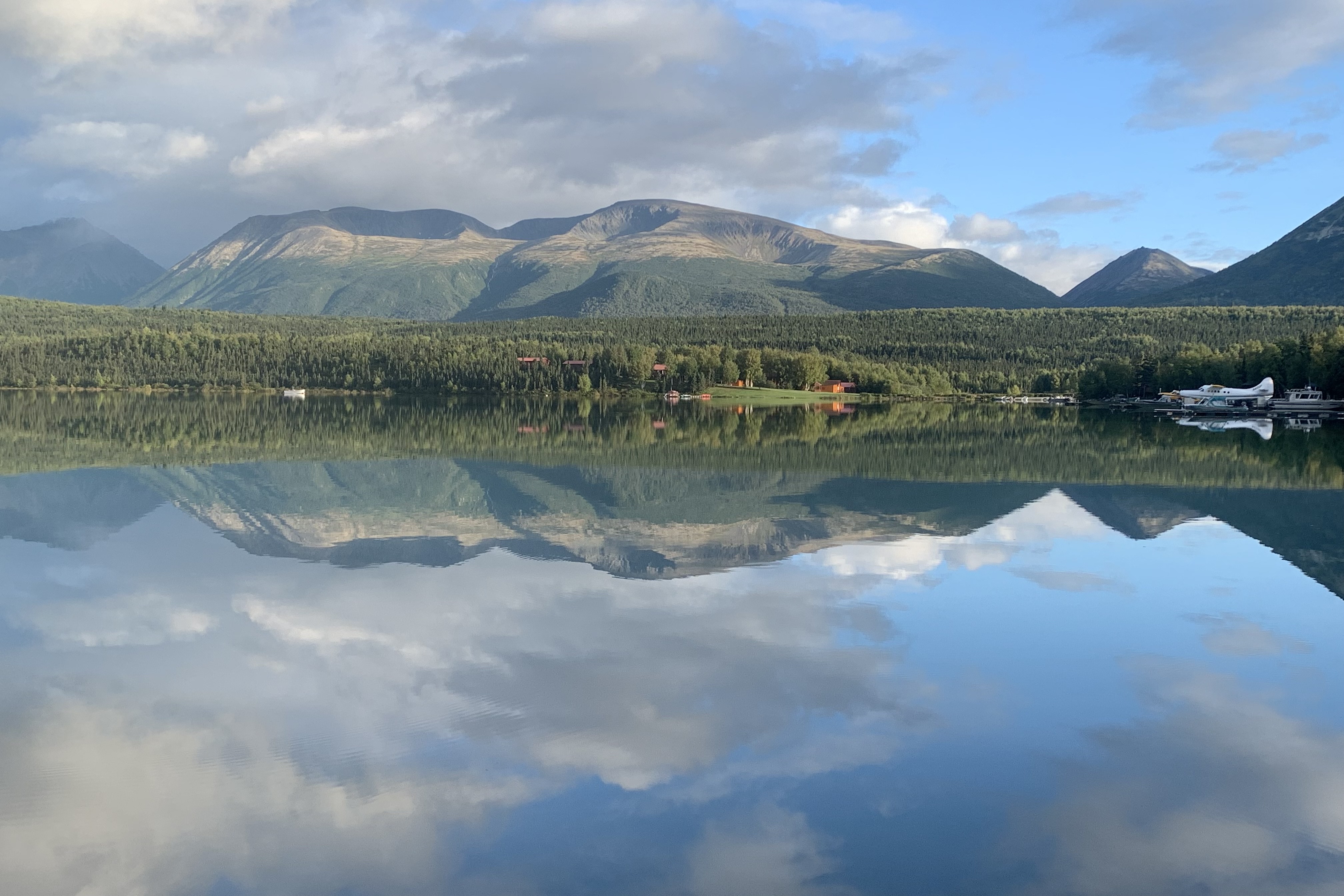
I would have loved to wander that area and head up towards the glaciers but time and weather dictated our return to the Lake Clark area. Nearing Port Alsworth we spotted a moose in a small lake below. Our pilot circled lower and as we returned back over this lake for our photograph of the moose it not so obligingly dove under the water leaving the mud trail pictured below. “Home ” for the evening at our accommodations, Lake Clark Farm Lodge, was always a peaceful and serene experience enhanced by the stunning reflections on the Lake and a rainbow over the far mountains,.