Valley of Ten Thousand Smokes
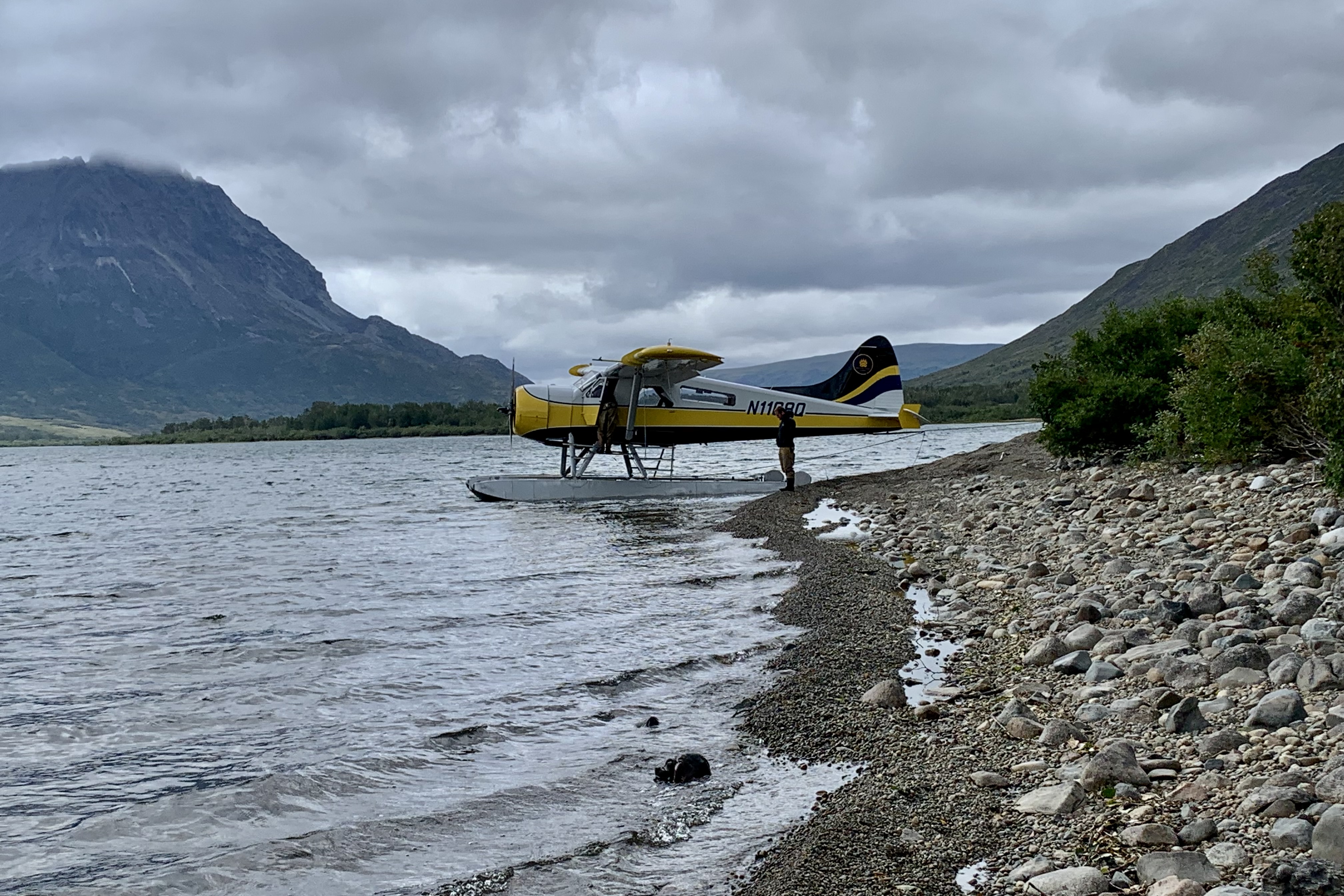
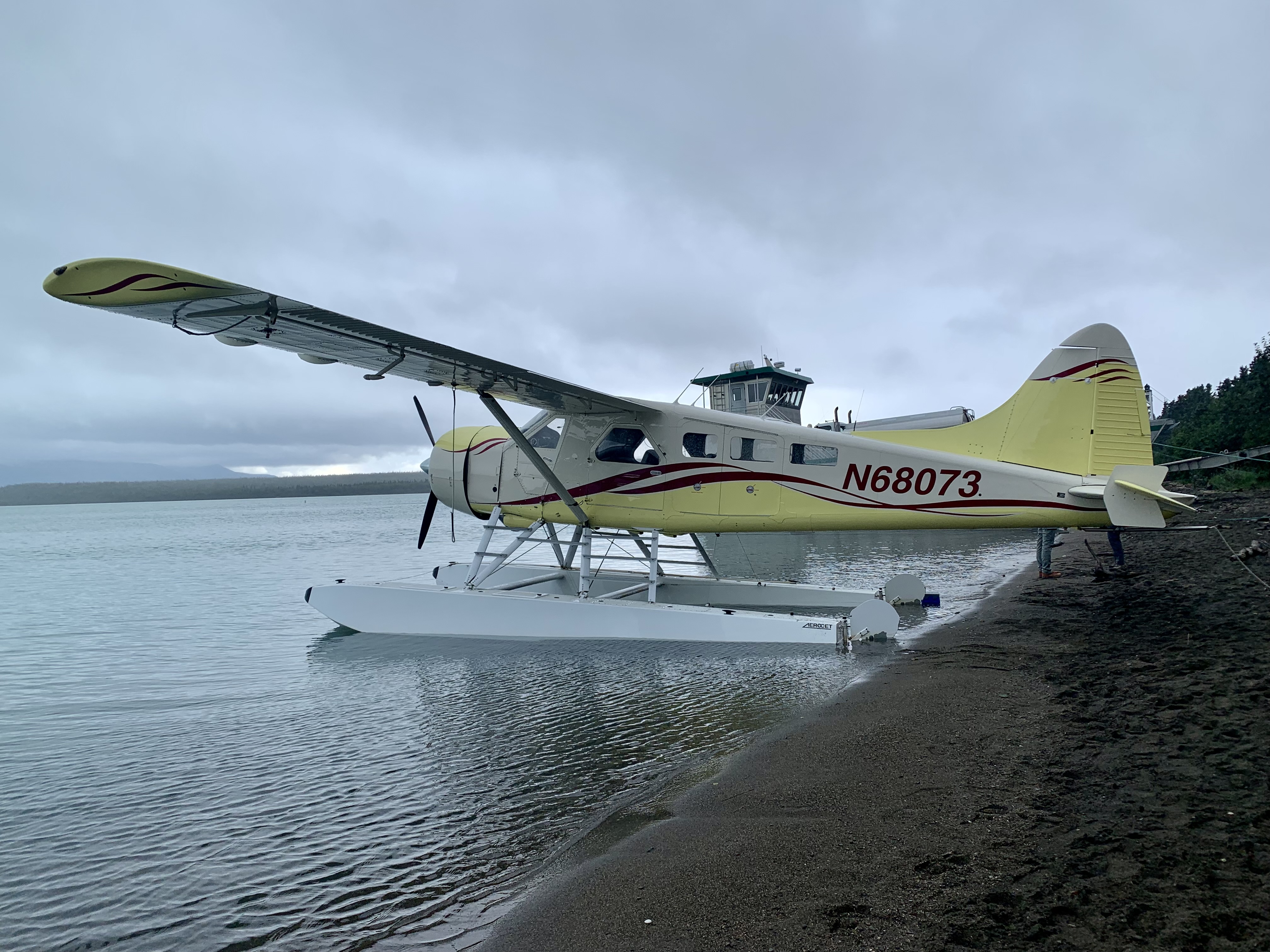
Our second day of flightseeing was filled with exhilarating explorations of forest rimmed crystal lakes, vast areas of tundra, and a volcanic-ash covered valley. On day 3 we were heading back to Katmai Park and Preserve to explore some of its remote mountain lakes. The first order of business of course is “dressing out.” The less then delightful Alaska weather that I experienced over the summer was cool and rainy and all of our pilots and guides corroborated that this was indeed the case as well at Clark and Katmai. This weather pattern was continuing to shroud Alaska with rain, fog, mist, and the area remained cloaked in clouds. The end result of this is the lake water levels are elevated and in most cases have lipped the available beach. Thus, not having any feline genes to rely on , I found getting out and off of a float plane is not particularly a graceful activity as I no longer can claim to be lithe and spry. Stepping off the floats onto unstable beaches can be quite hazardous if one cares about having dry feet. So this was the day we were to don the hip waders for our lake outings. Though they felt quite clunky, now I could just plunk my feet down into the water and prance up onto the stony shore.
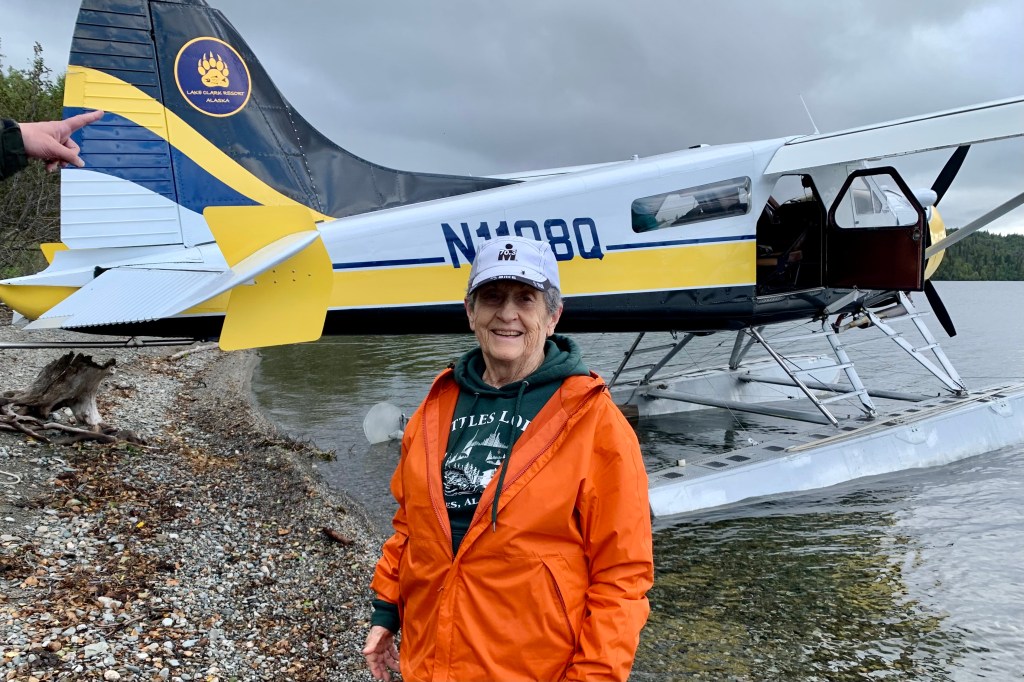

Since I hate to be cold and wet I definitely chose to over-pack including an extra raincoat, extra socks, a warm hat, and gloves, shoes and of course water. I skipped the sun screen. Bet you can figure out why! I was already wearing long underwear, hiking pants and shirt, a hoodie, and rain pants and rain jacket. I was well insulated and cocooned for whatever the weather gods might hurl, toss, heave, or sling our way and imagined I could be mistaken for a teletubby .
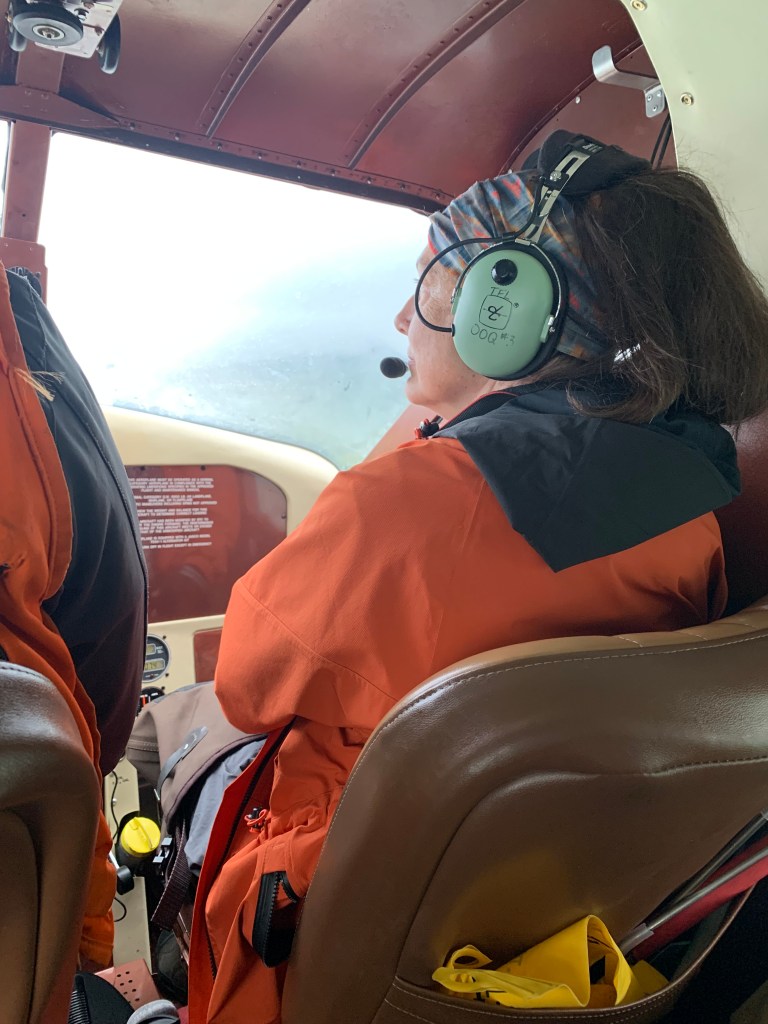

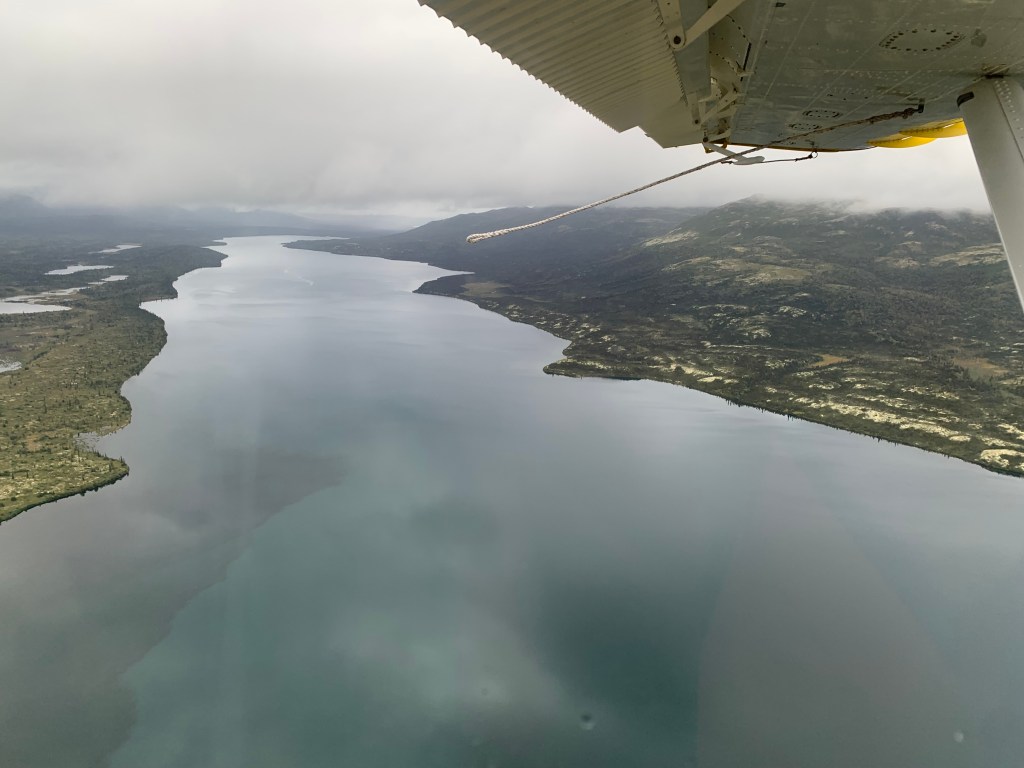
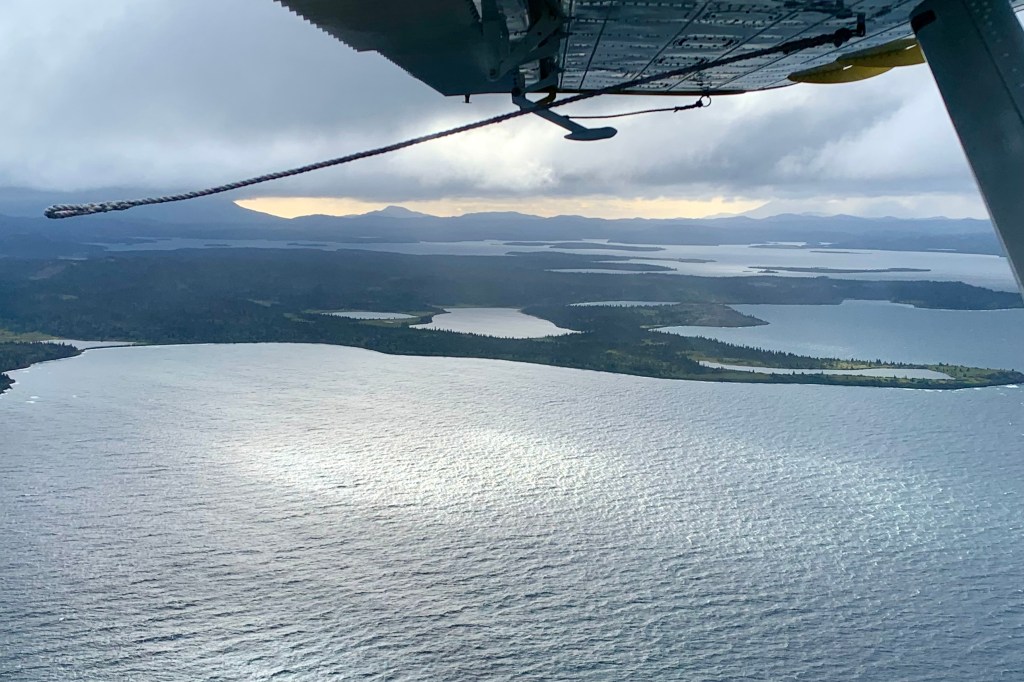
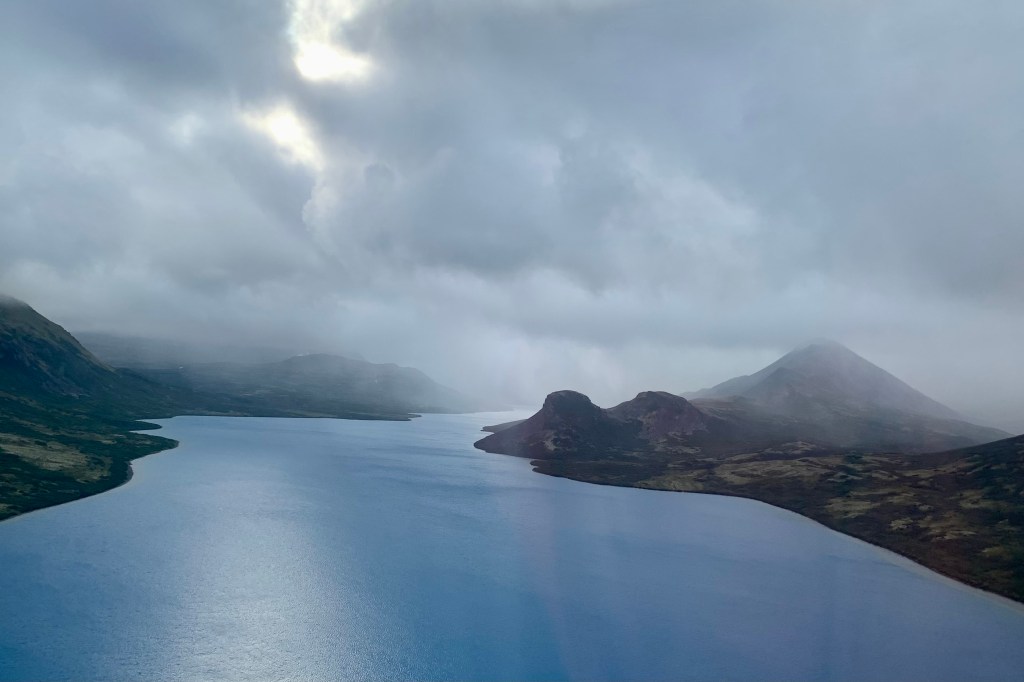
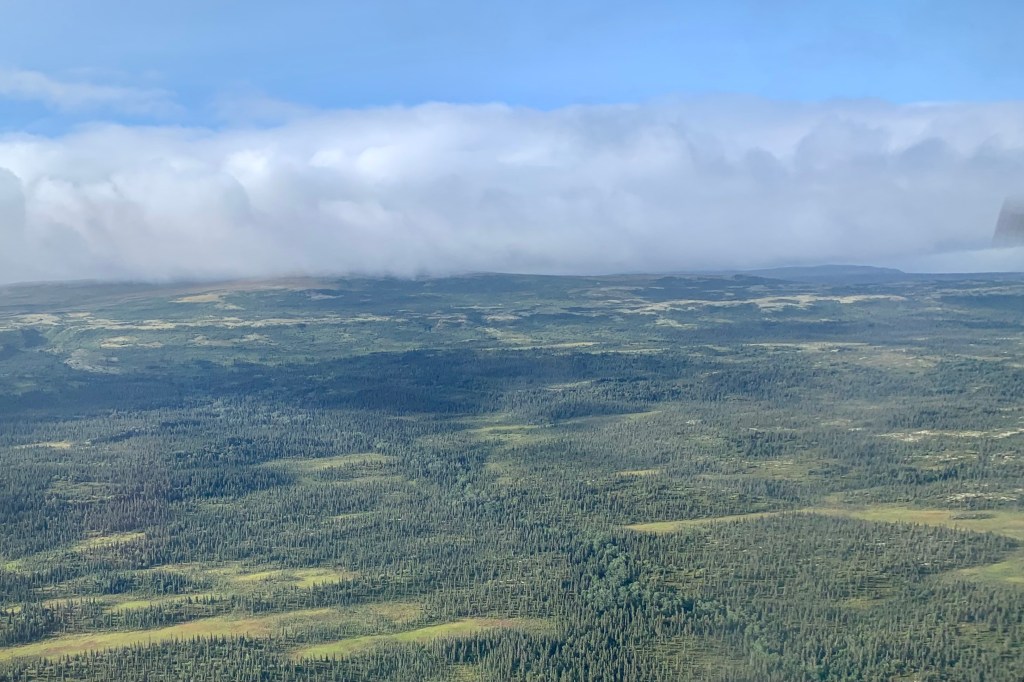
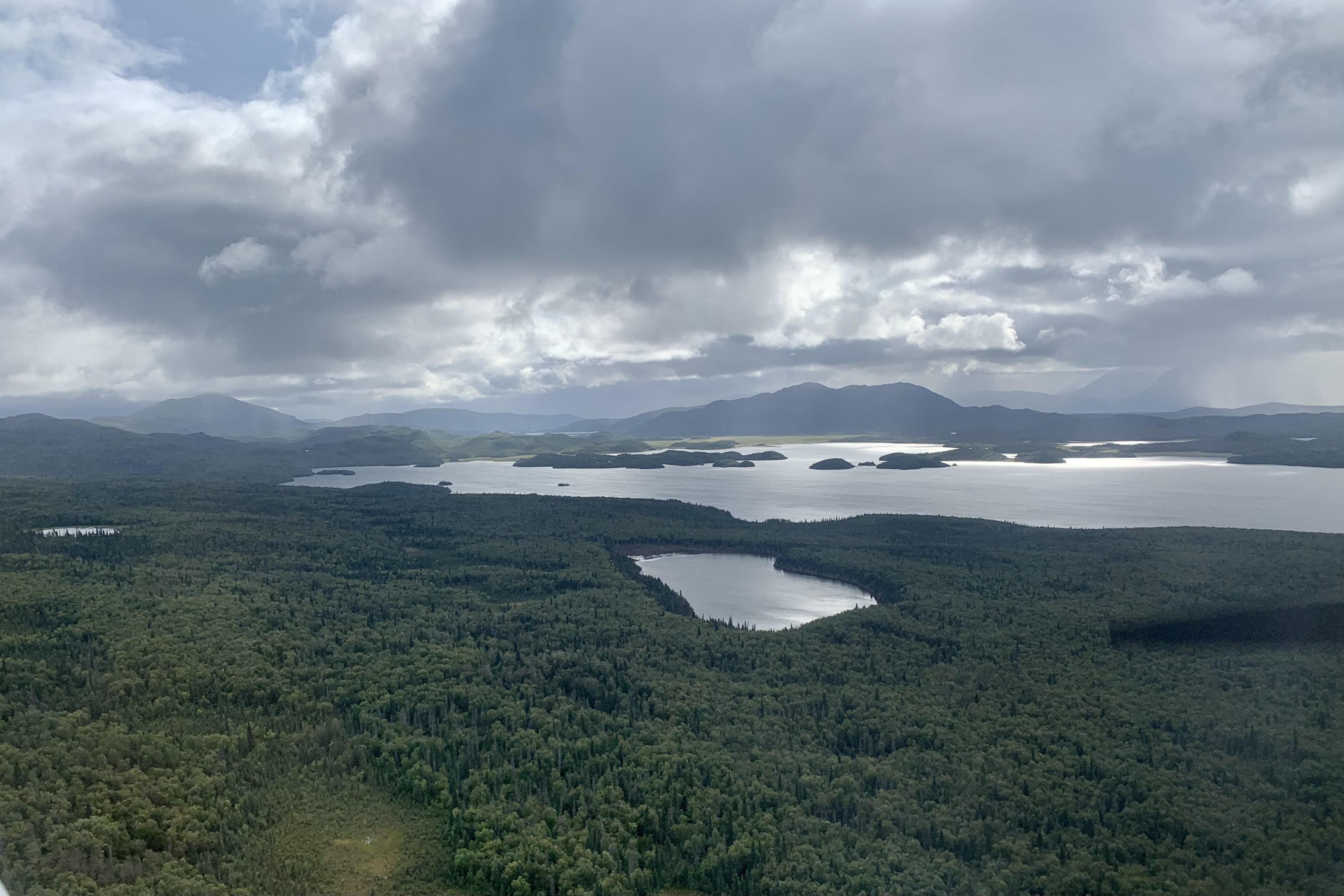
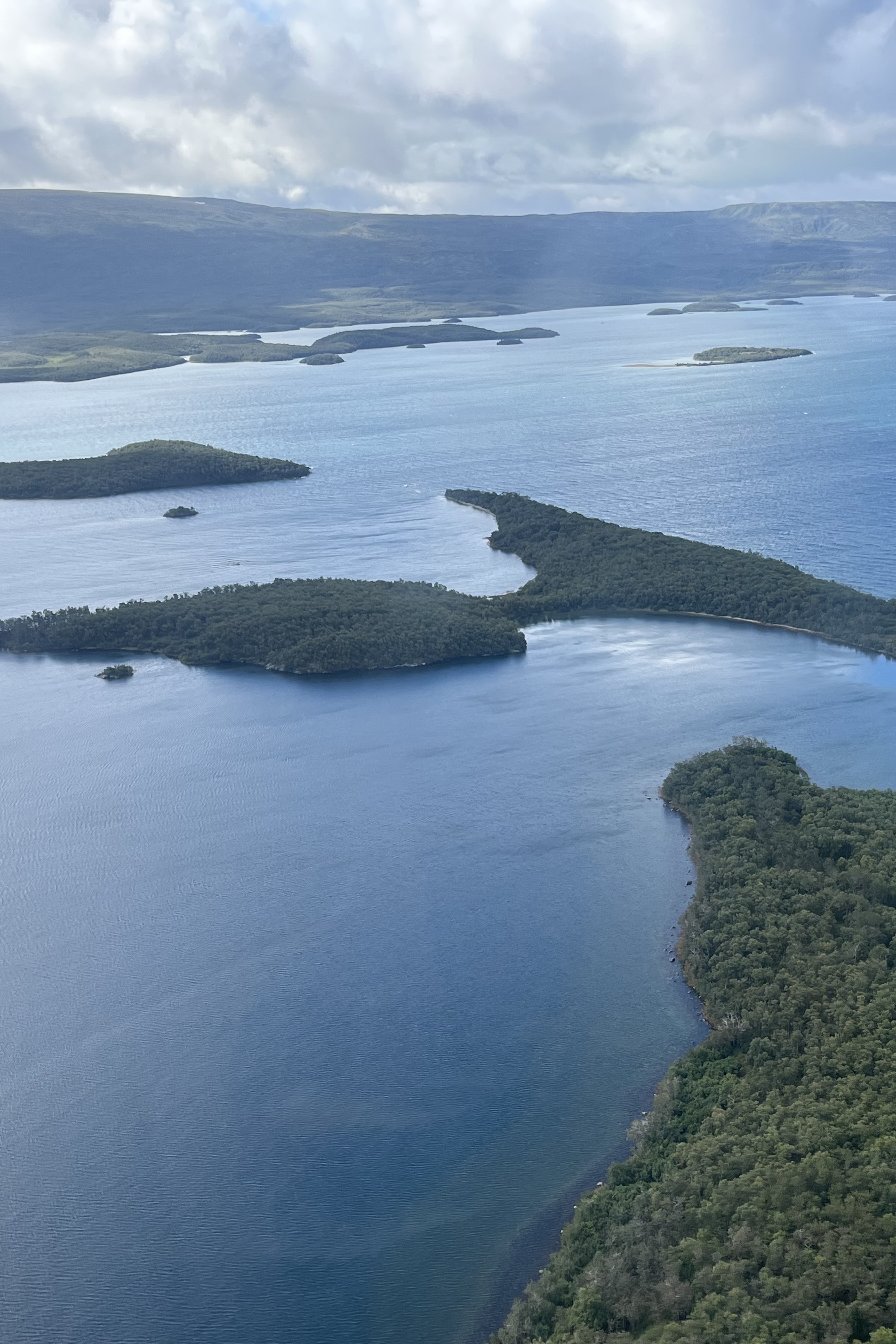
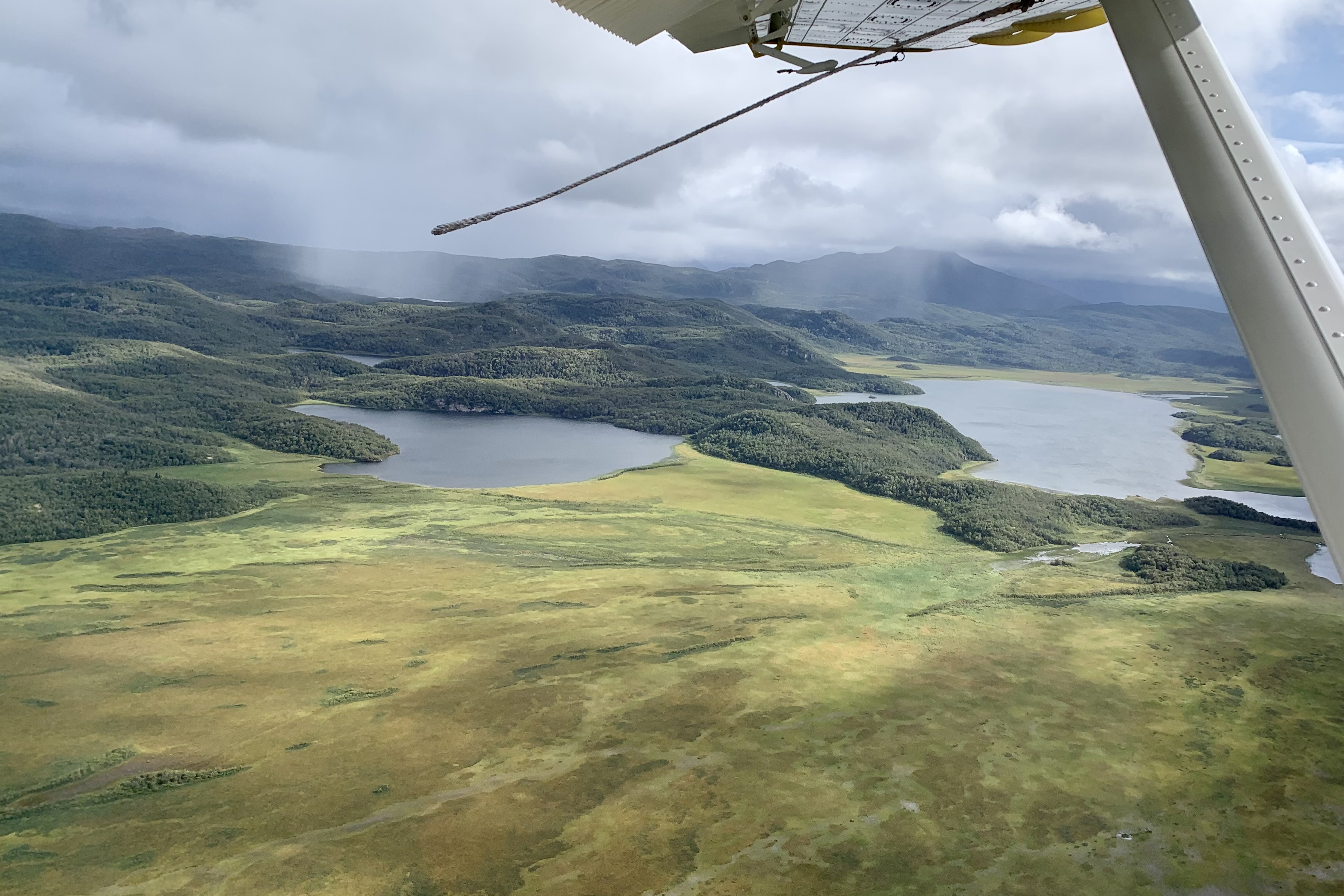
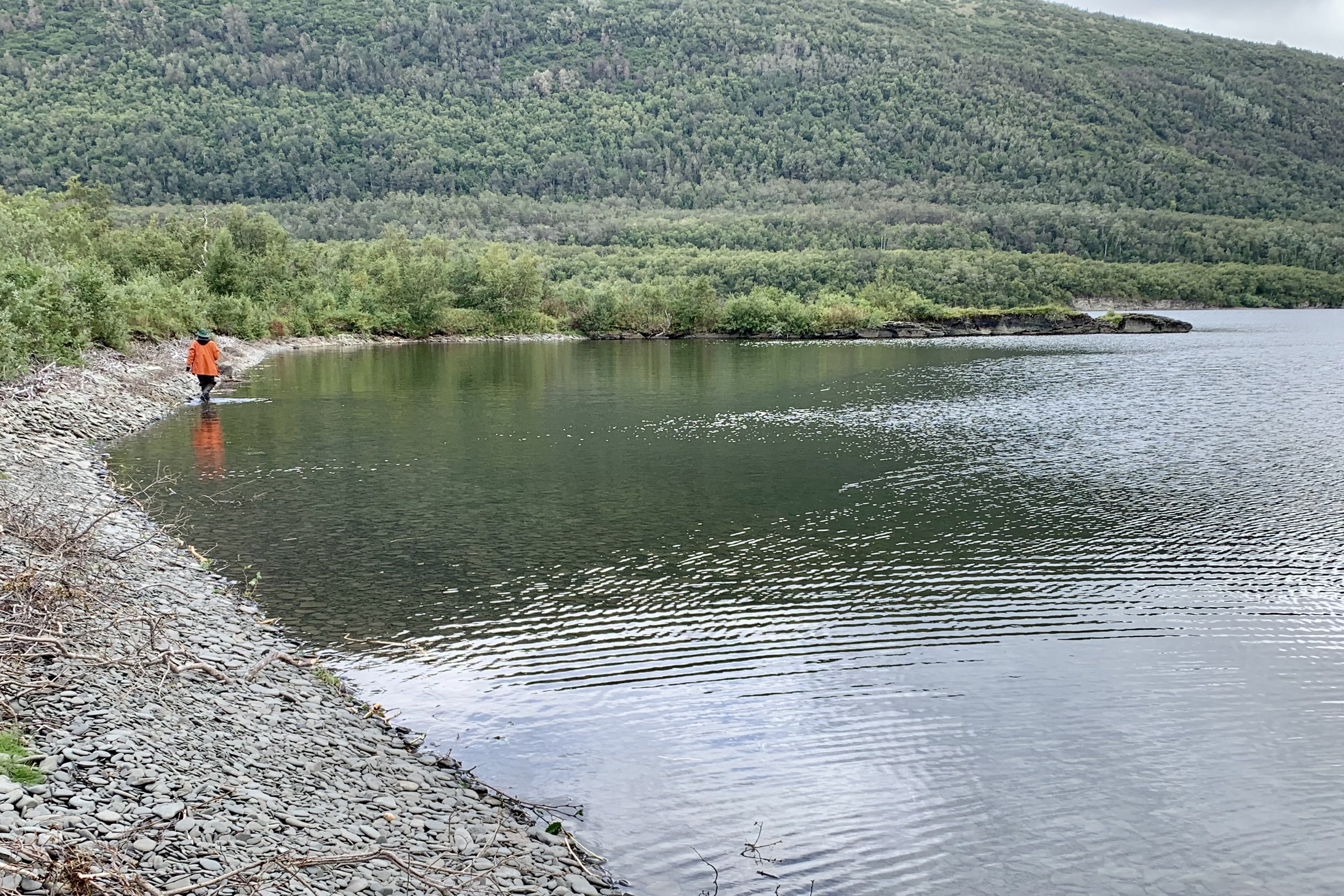
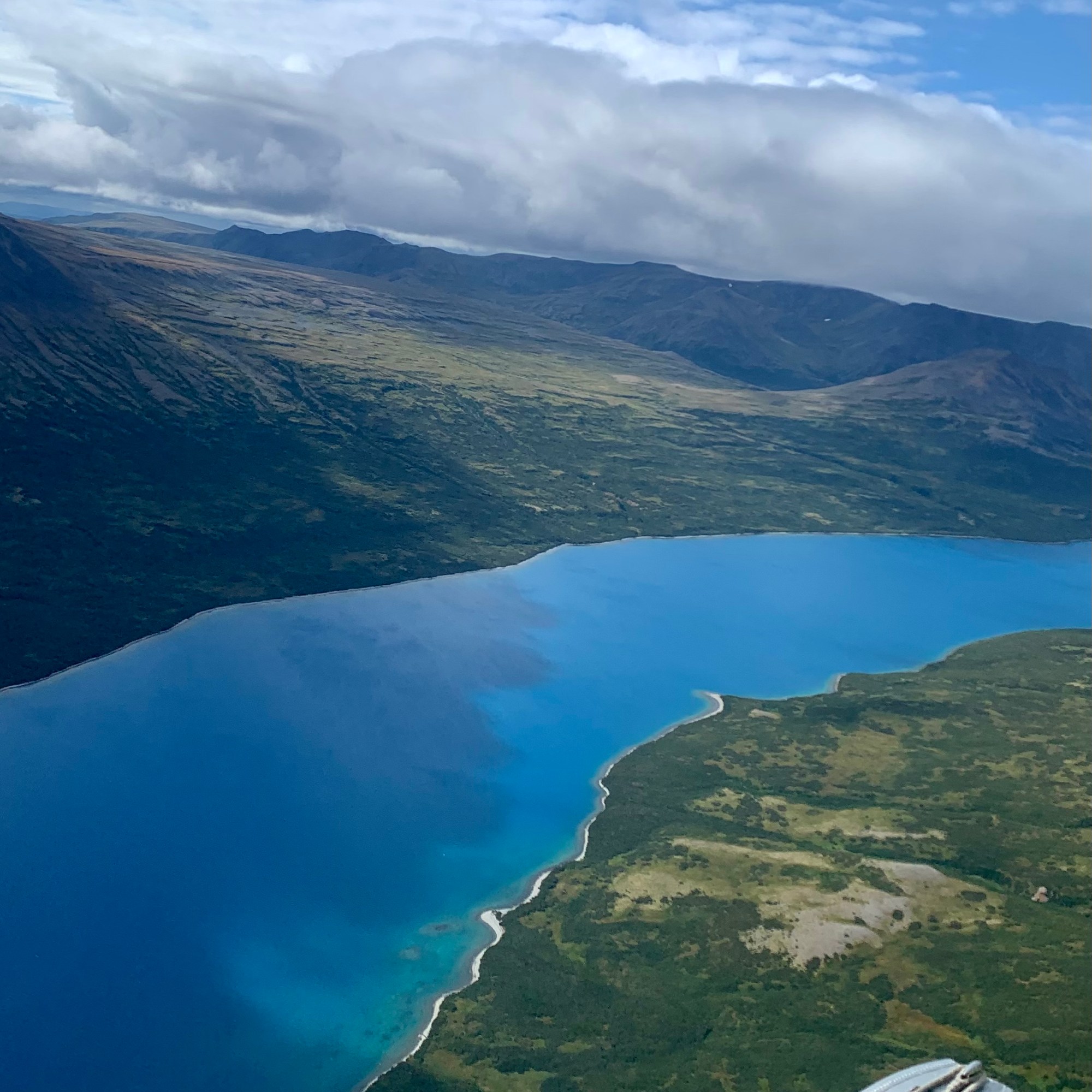
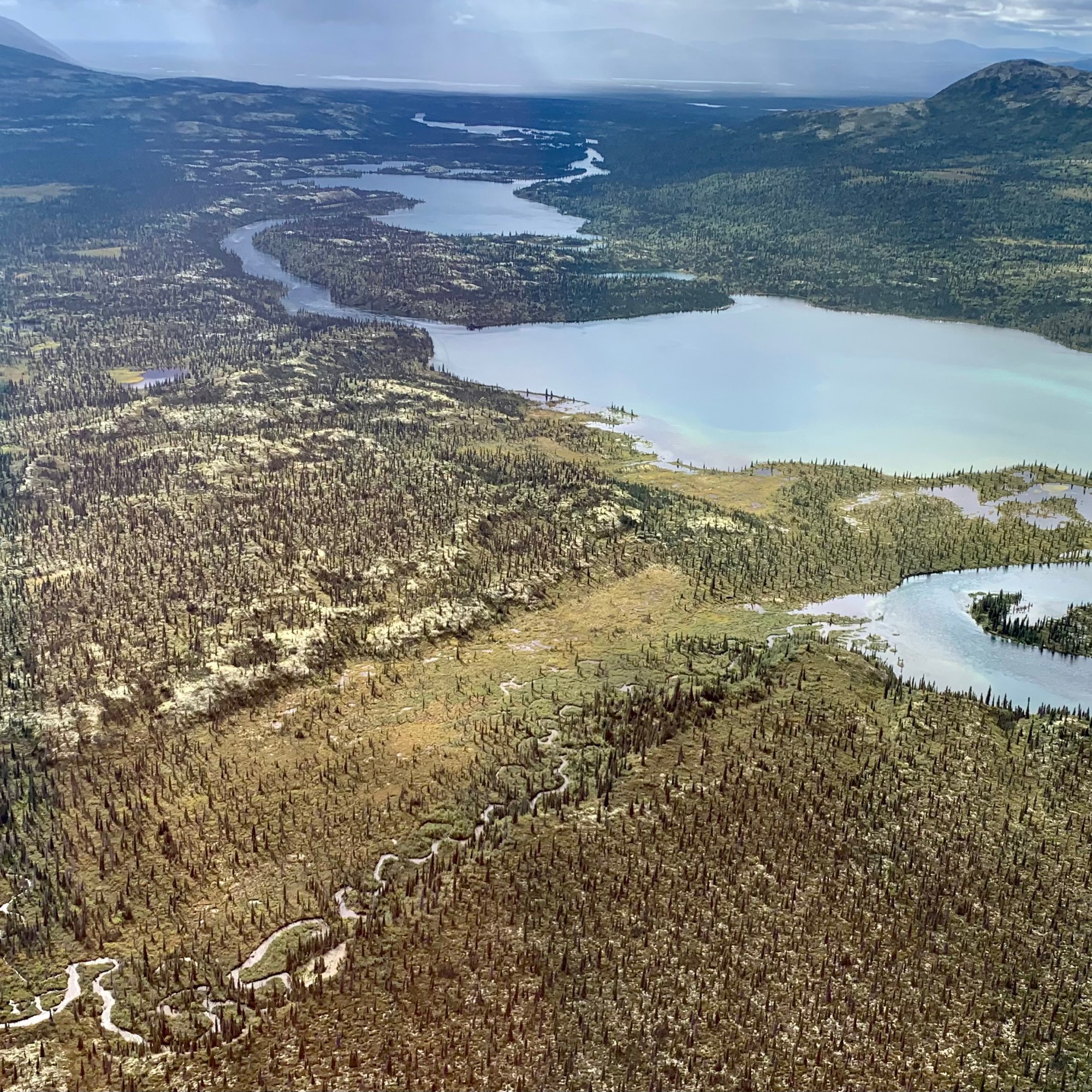
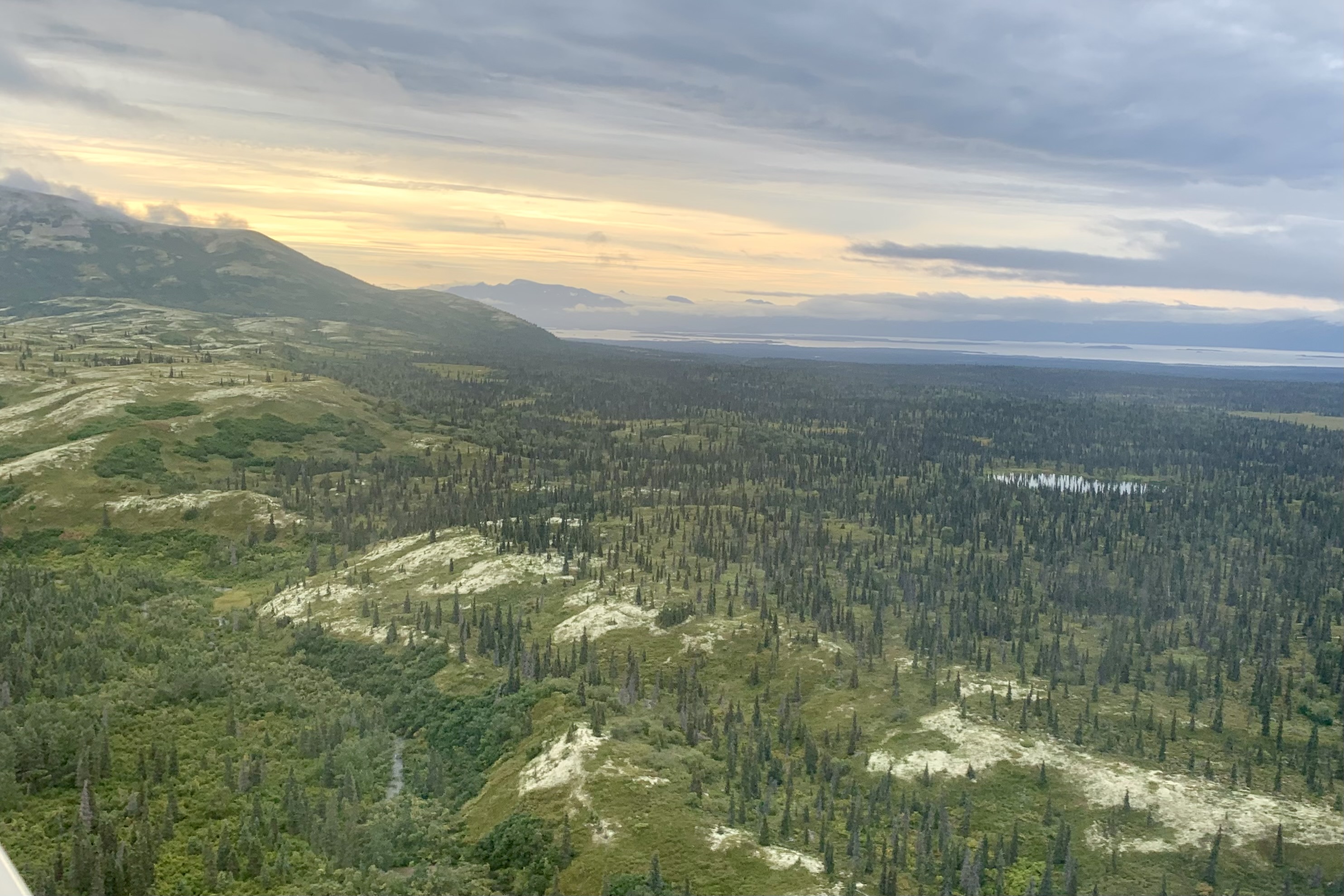
Once airborne, and with Tasia as “copilot, ” the aerial view of the landscape below was of breathtaking diverse wilderness. An extensive agglomeration of crystal clear lake accessible by float plane. We wove our way south from Lake Clark buzzing over Lower Tazimina Lake, Lake Iliamna , Moraine Creek, Battle Lake, Nonvianuk Lake, and Coville Lake to our fist landing at on Grosvenor Lake. This lake is fed by glacier meltwater as it was carved out in the Ice Age by glaciers on the run and is surrounded by spruce and birch forrest. On a sunny day it would be an azure blue but this day it had a chilling steel gray hue and I definitely was not enticed to take a swim.




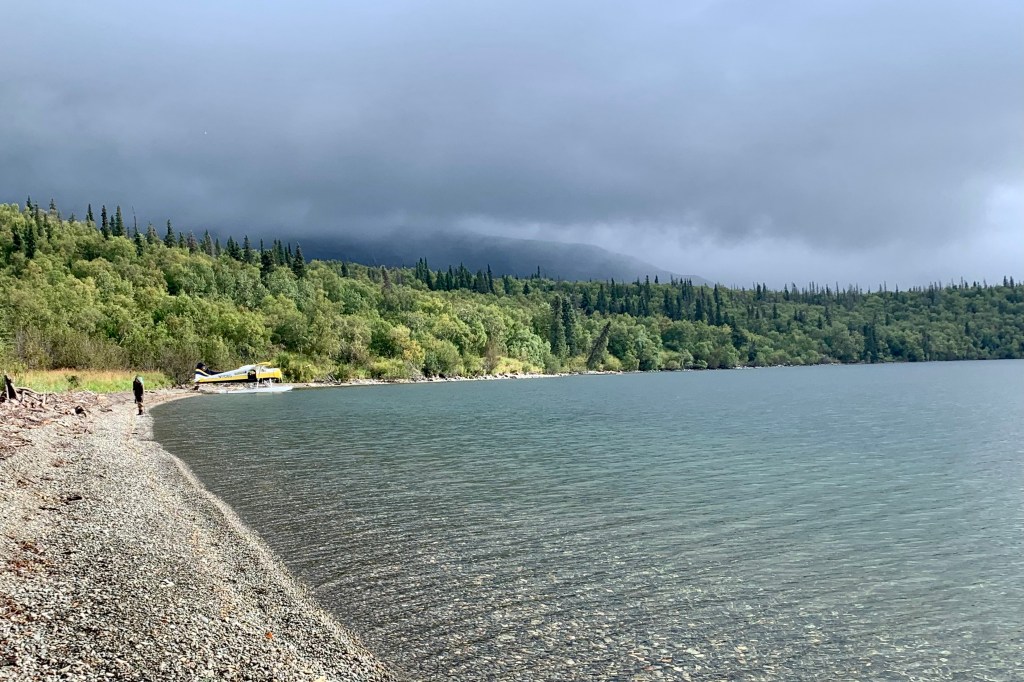
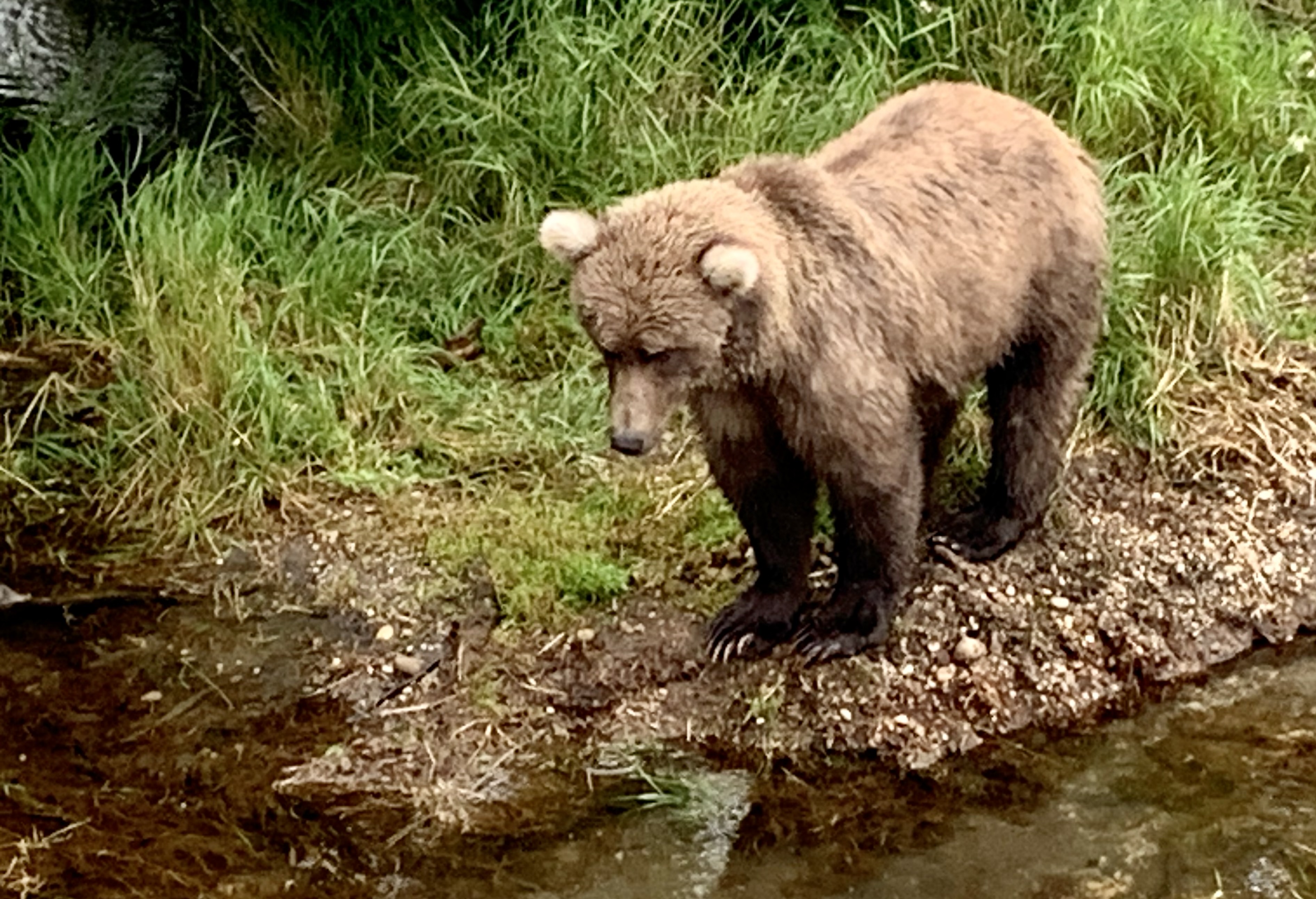
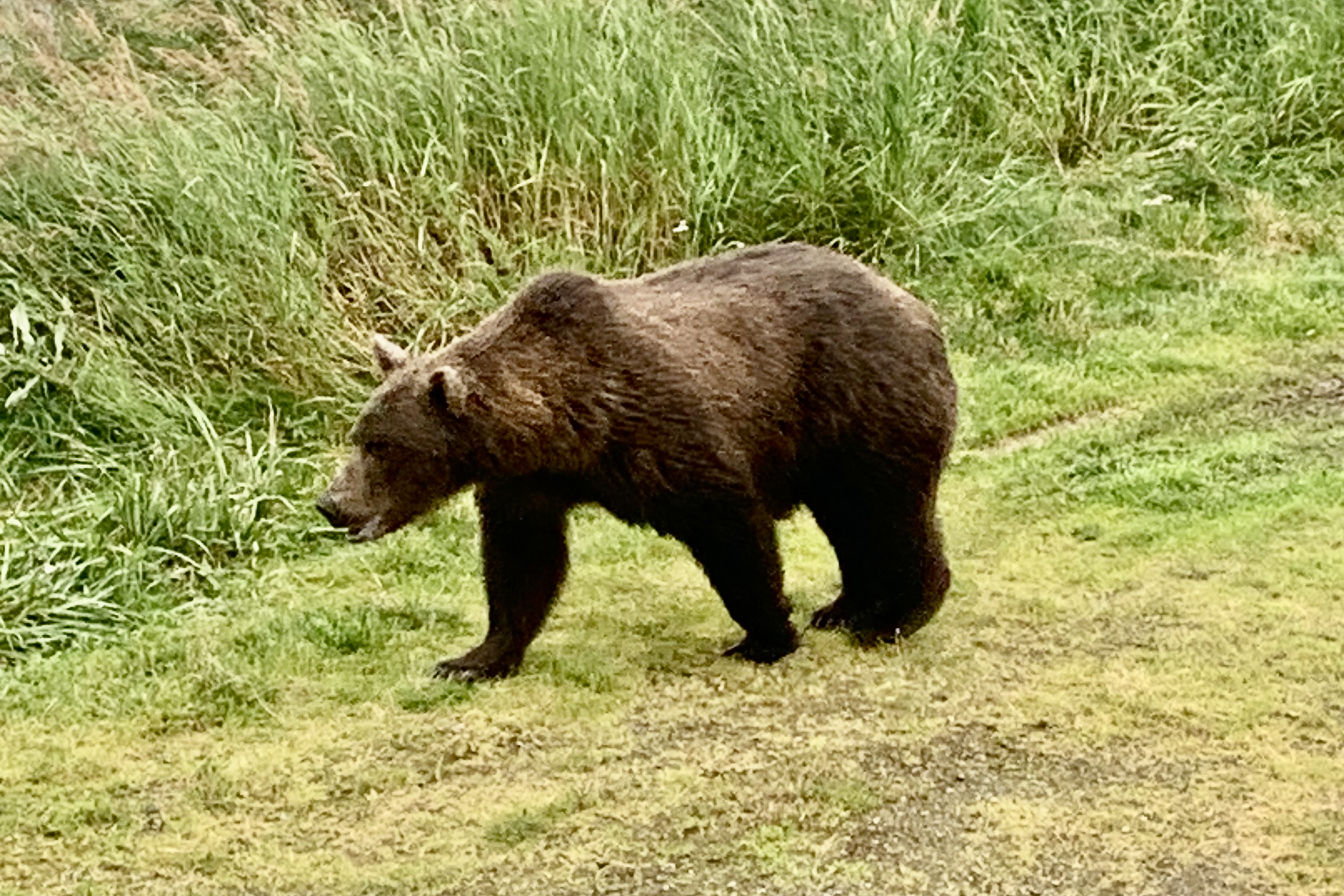
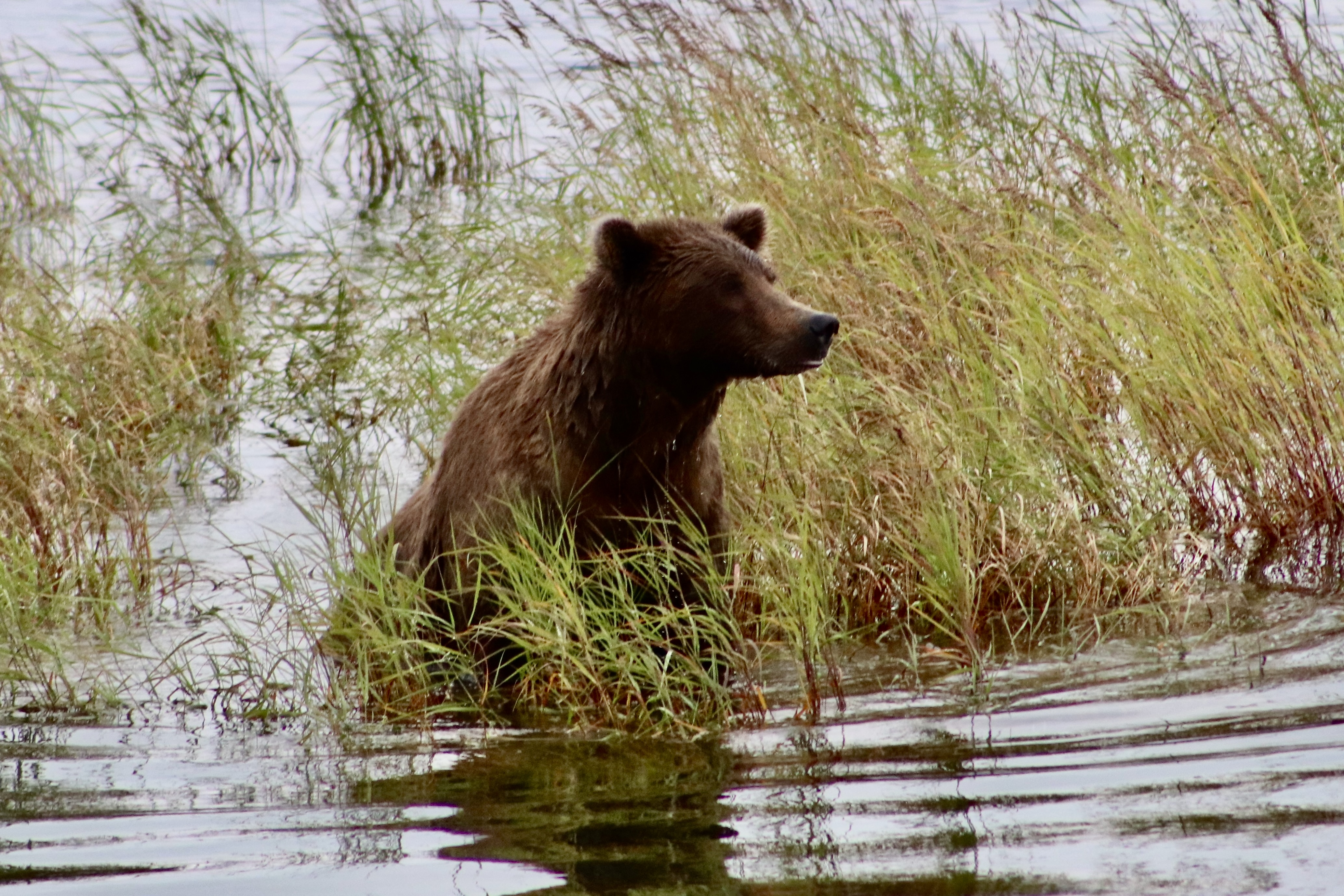
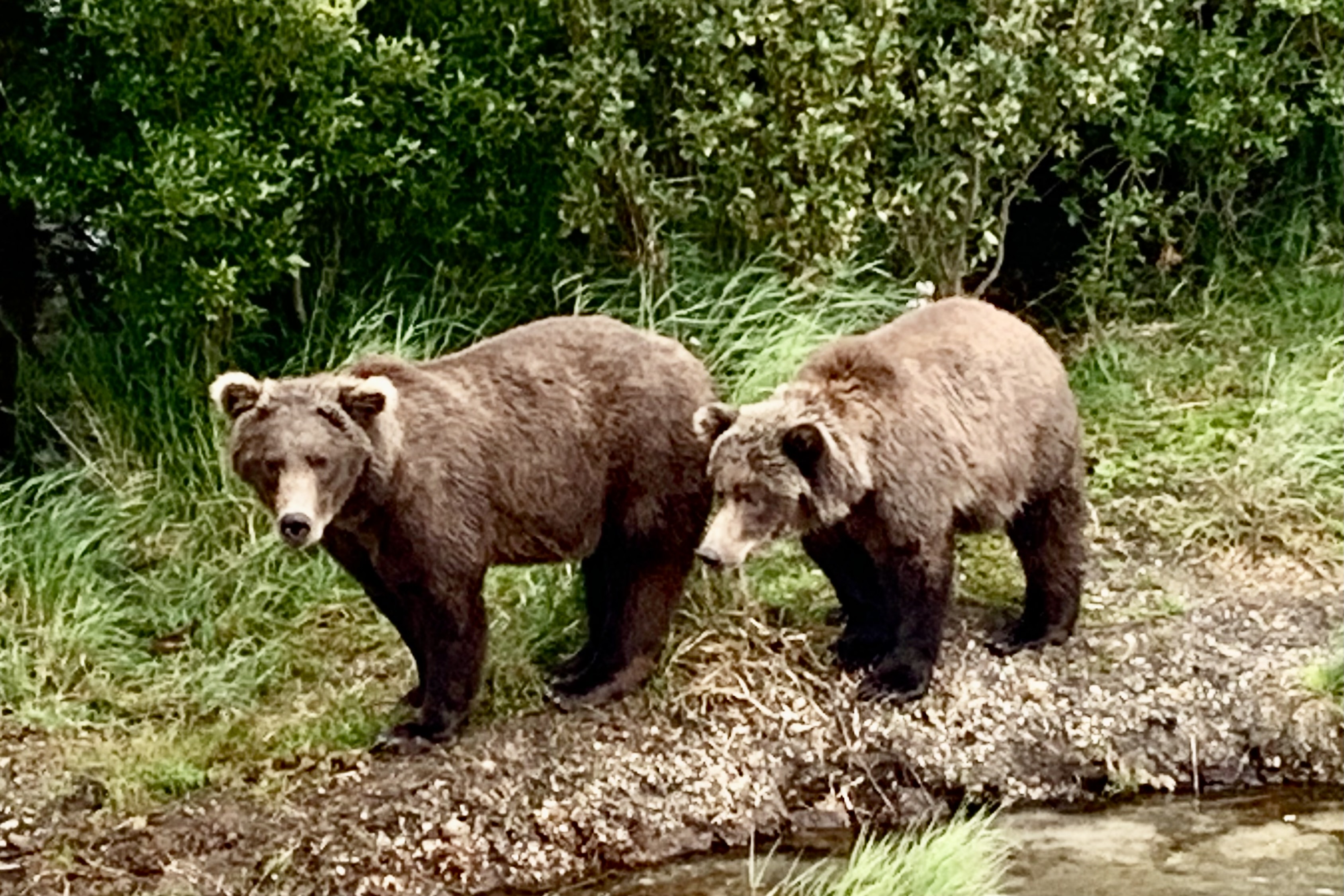
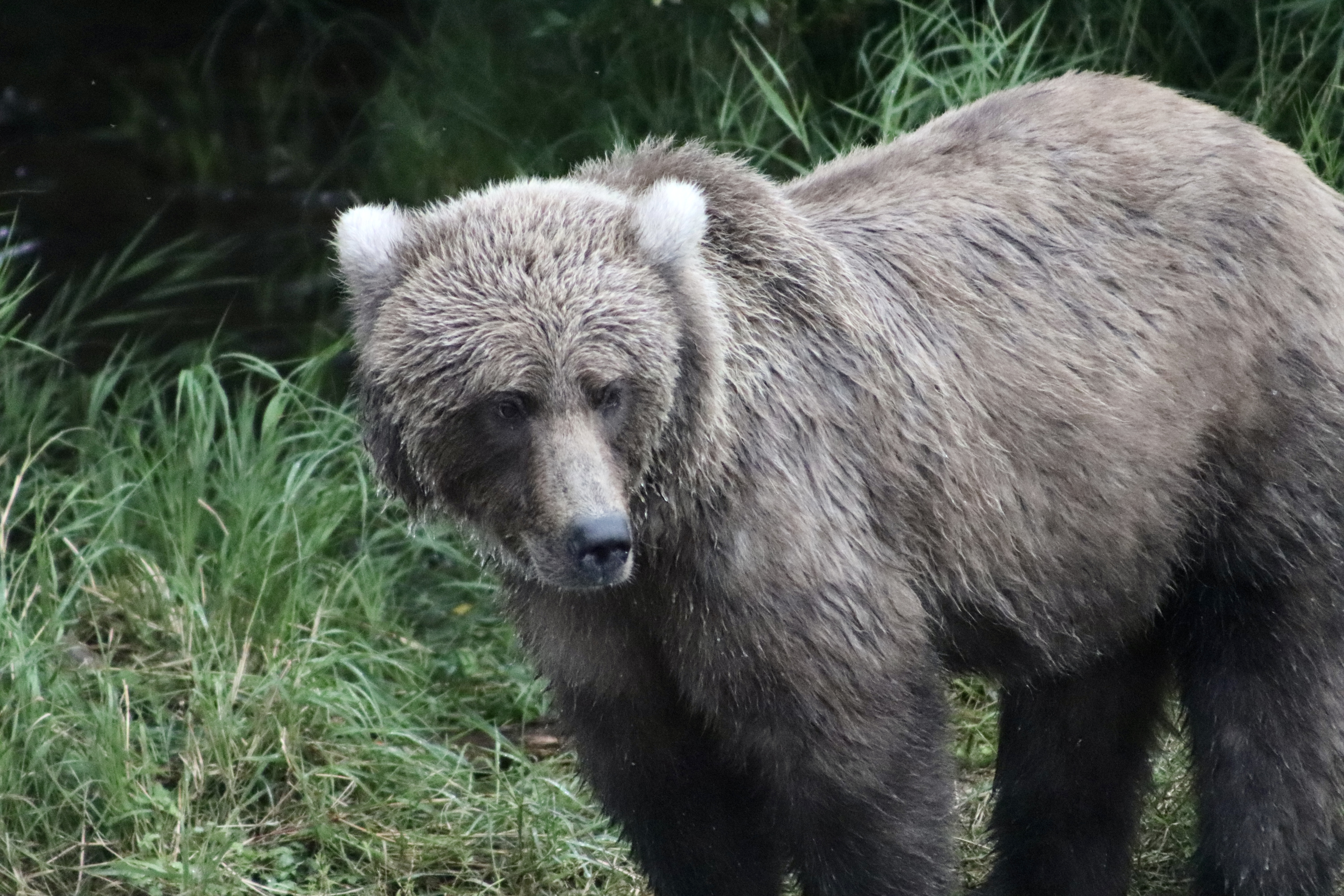
The beach of this lipping full lake consisted of a deep loose layer of mostly pebbles and small stones which when walking shifted beneath my feet. It seemed a bit precarious as I walked on the stones or waded at waters edge and gingerly negotiated this unstable terrain proximate to the icy water in the clunky waders. As I approached a fellow adventurer, he asked me if I had noticed the bear tracks. My mind then had this vivid picture of experiencing an accidental dunk only to right my dripping self and come face to face with a bear. It’s easy to forget that these lakes are also bear territory and we are the interlopers and I image definitely not welcome unless the bear is particularly hungry.
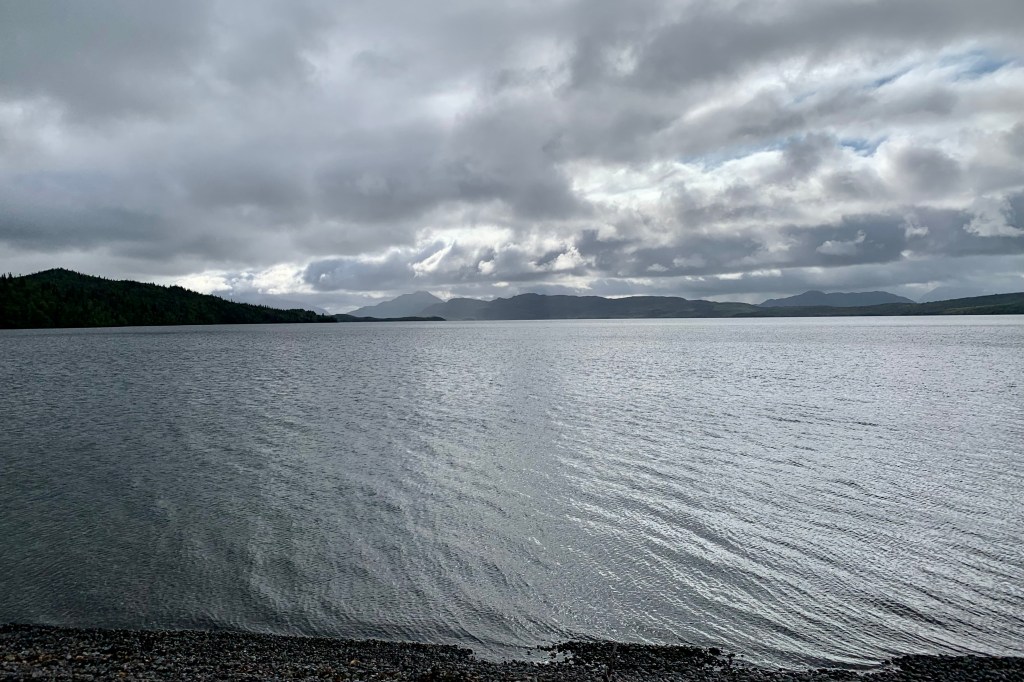
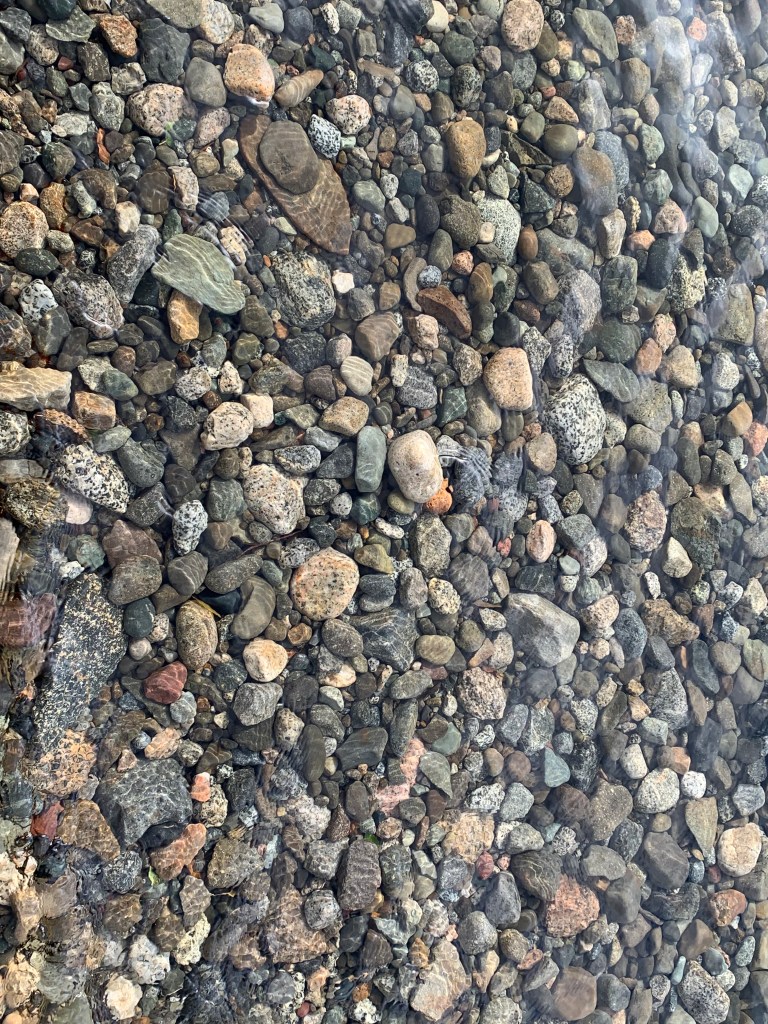

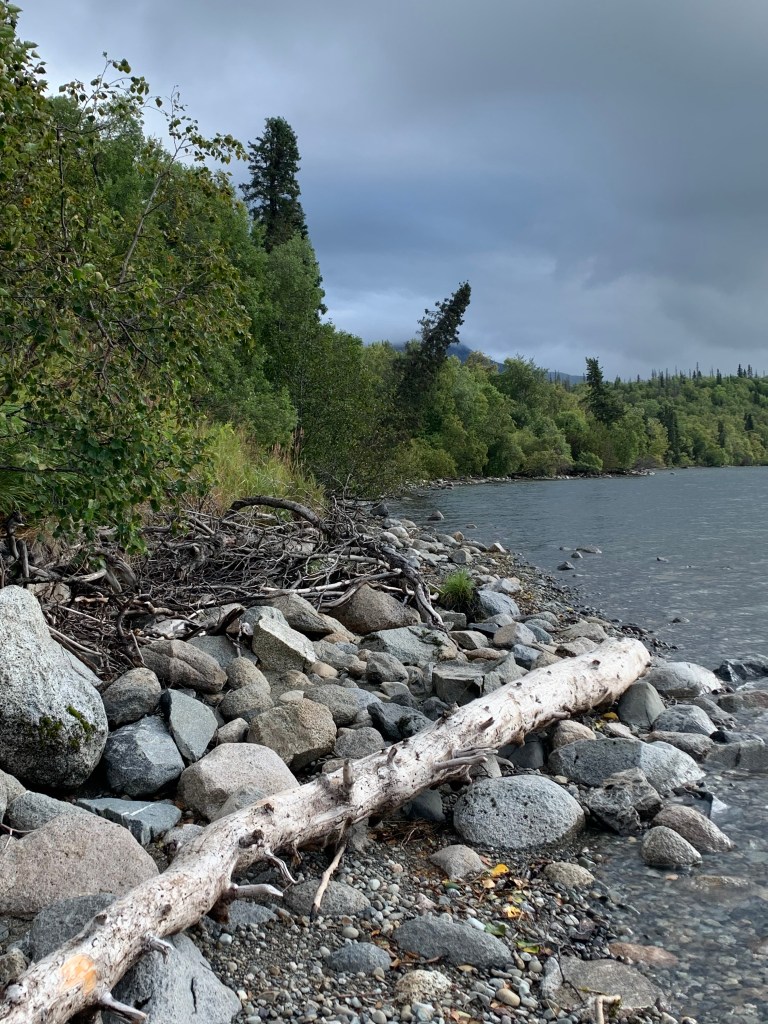
In exploring the beach, I tend to view things from a macrovision perspective of the surrounds and my daughter Tasia, avid explorer, photographer and artist has a keen eye for seeing things from a distance and envisioning their amazing beauty, which others might well regard as beach detritus. Her photographs below reveal an incredible beauty of the vibrant life, death and colors of the beach including a salmon jaw, fungi, stones, flora, cones…
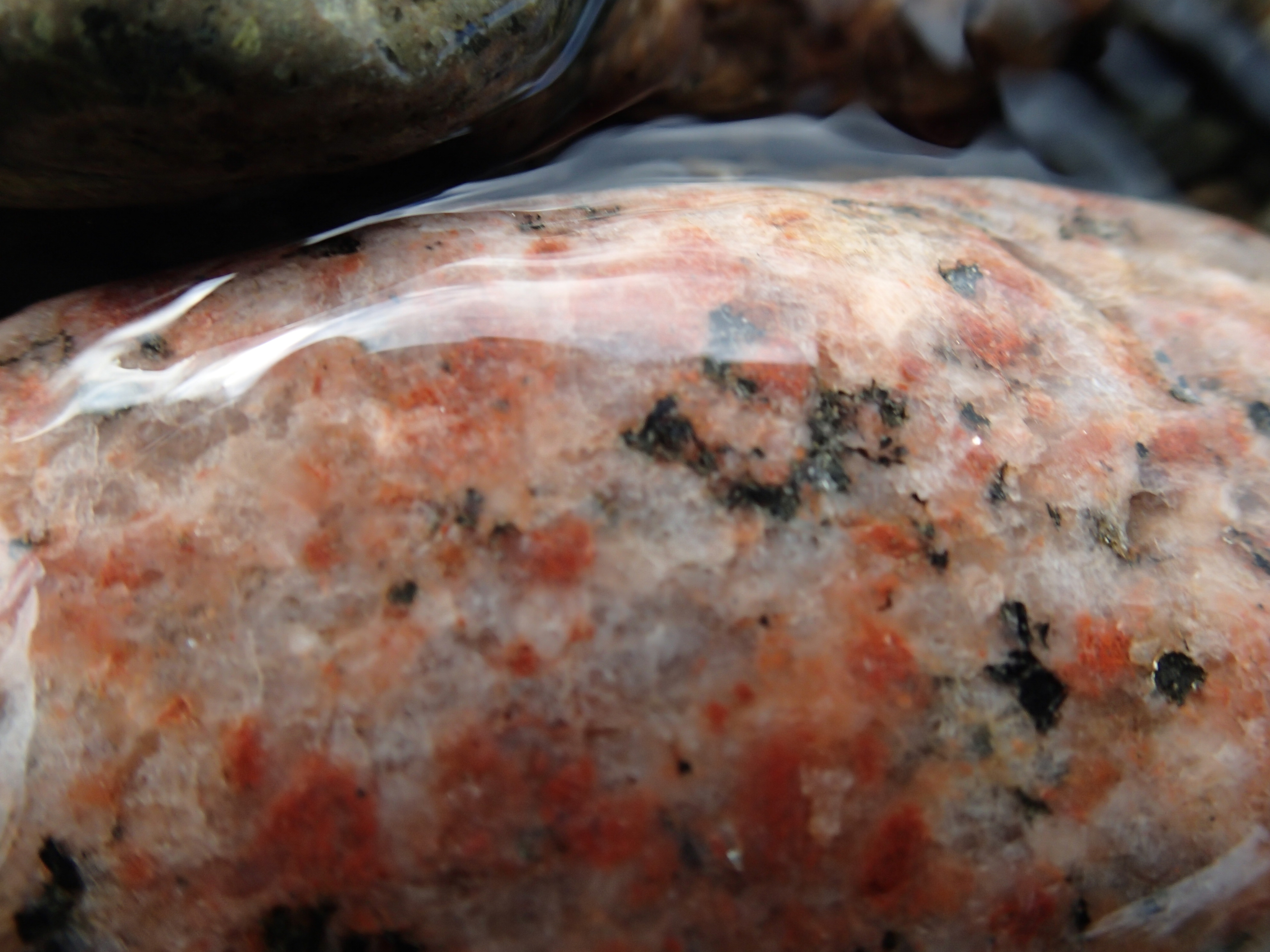
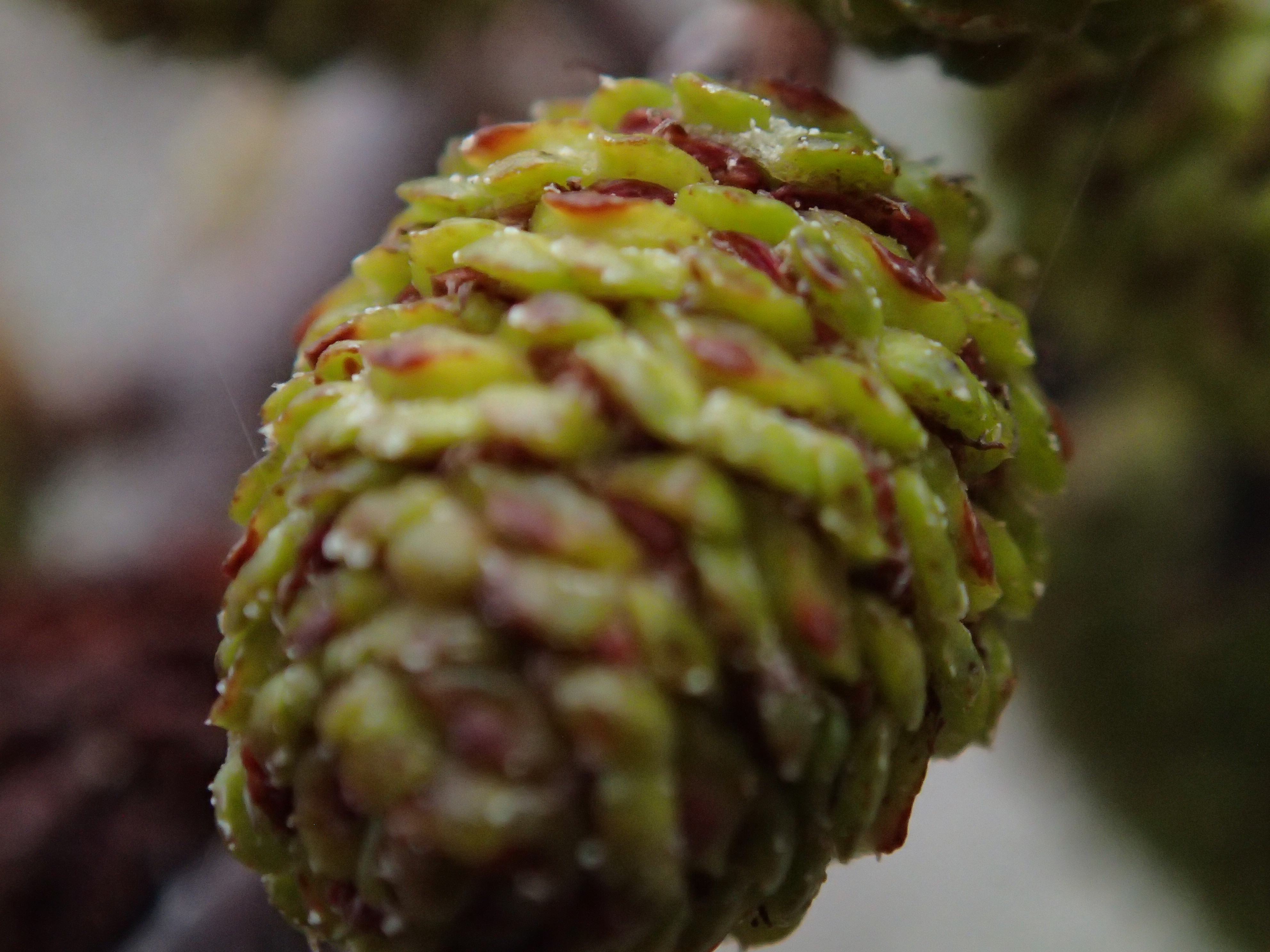
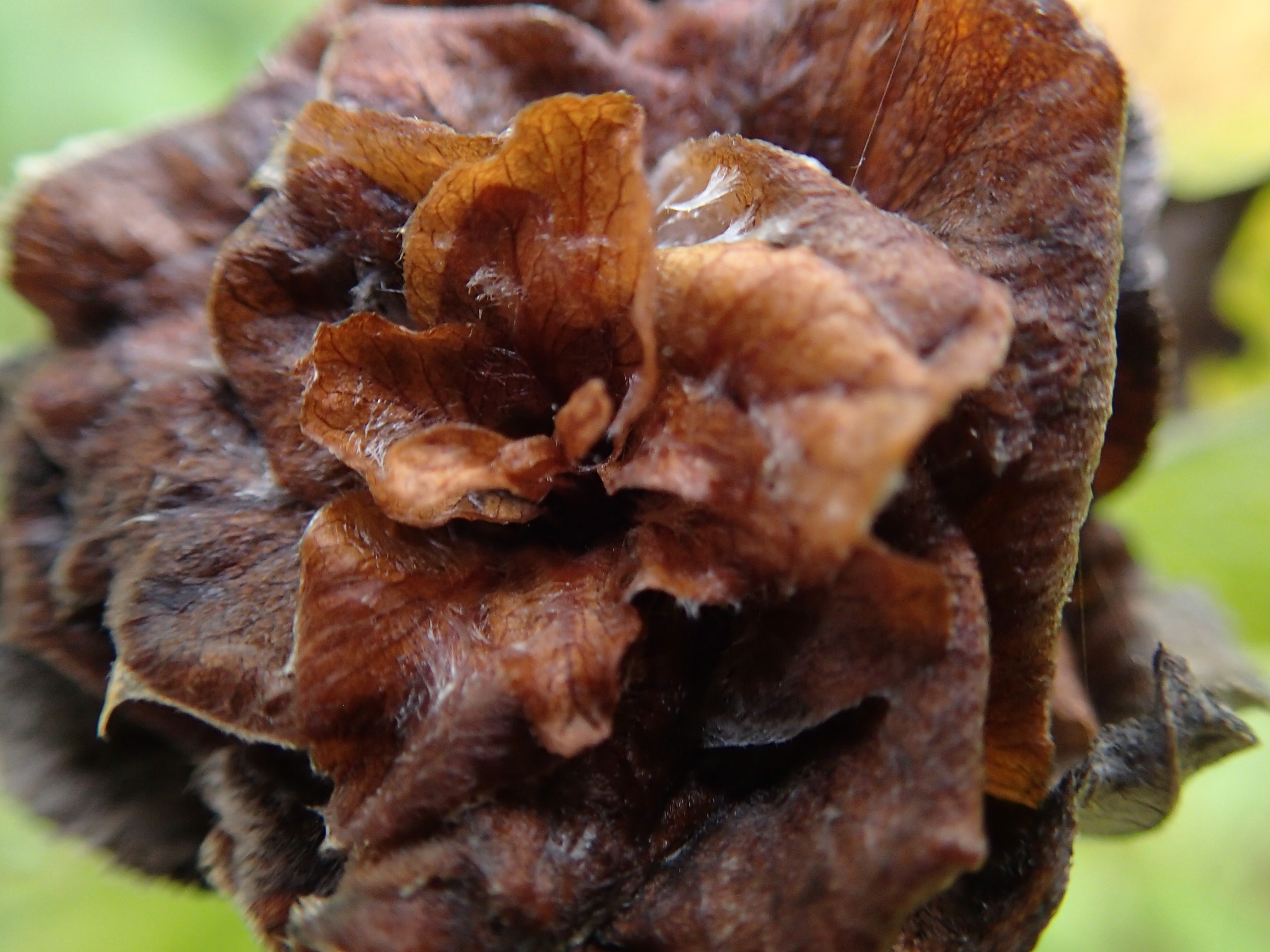

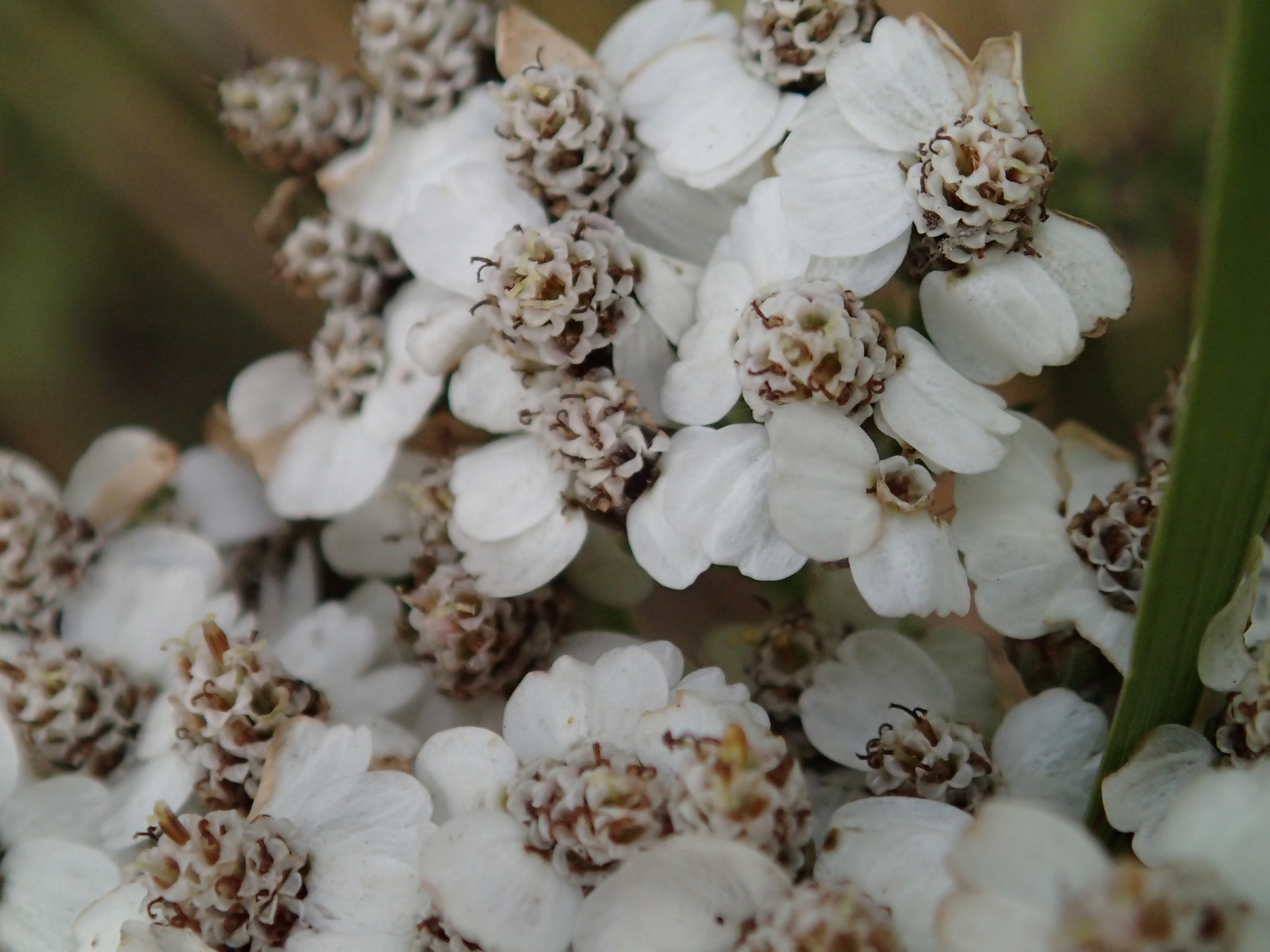

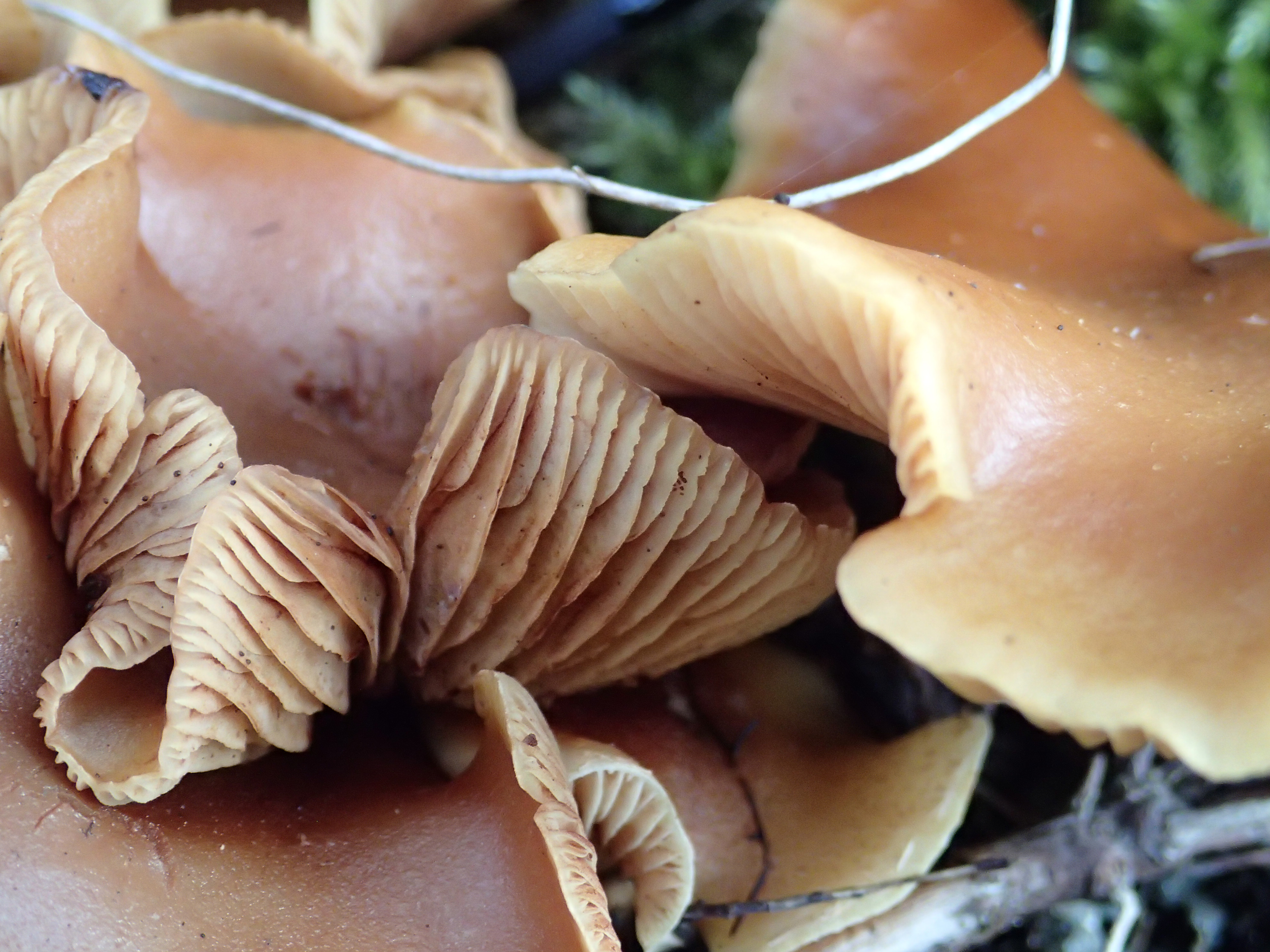
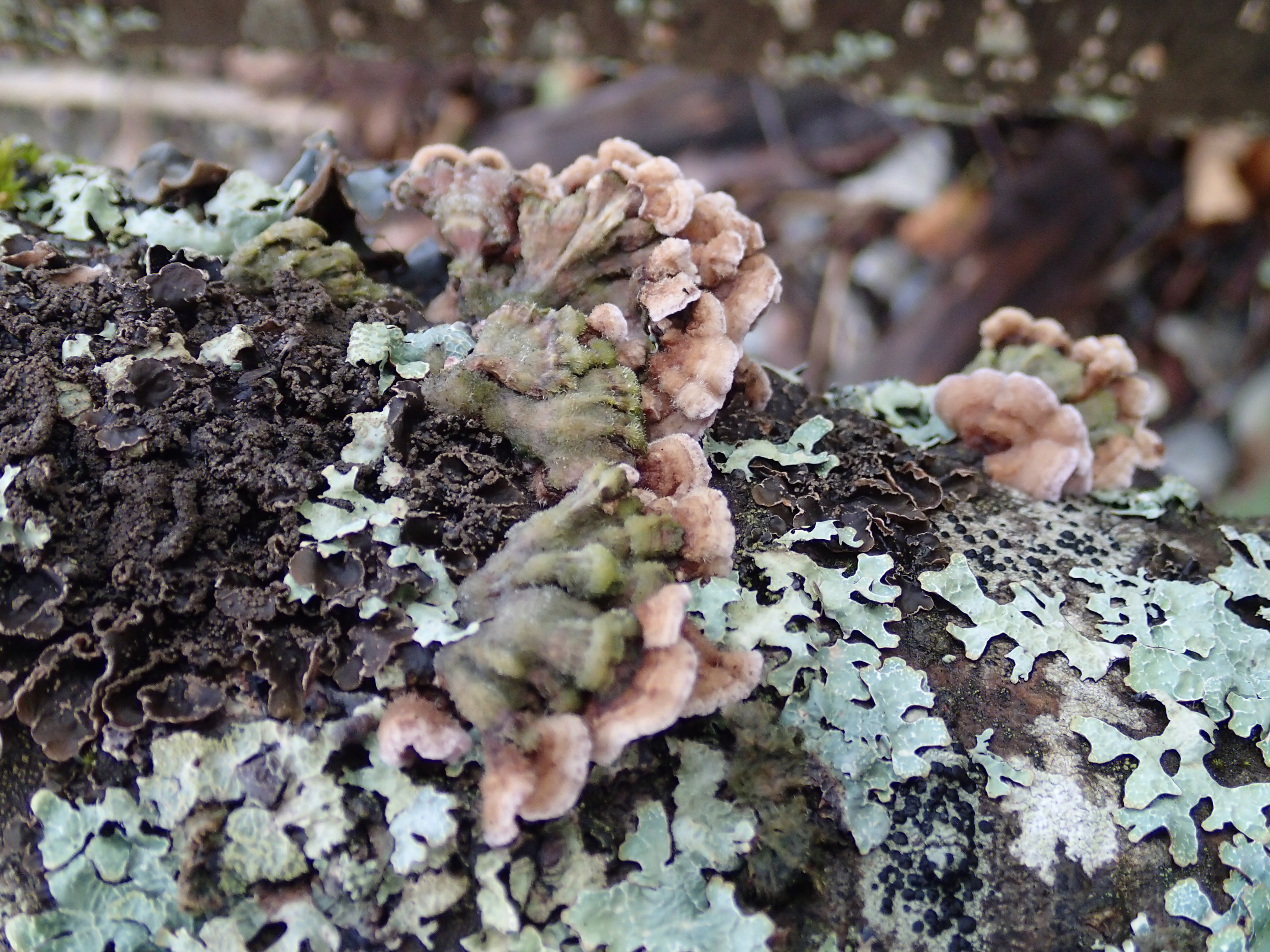
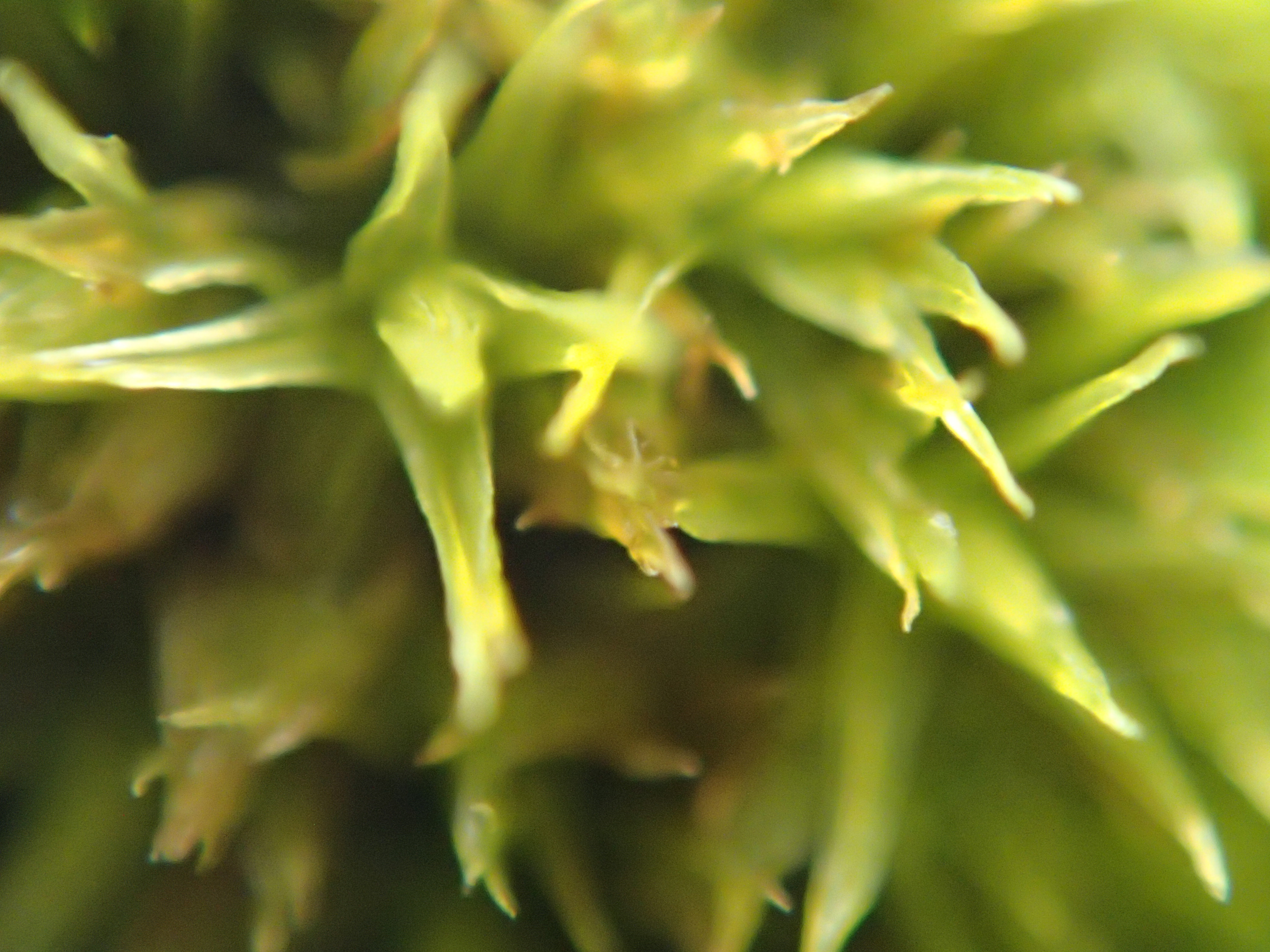
After exploring this classic stony freshwater lake beach, we were winging our way south towards and over the Bay of Islands which is a labyrinth of rocky islets, rugged cliffs, dense forests and interior lakes. This is yet another area of pristine wilderness mostly untouched by humans due to its remoteness and lack of accessibility except by boat or seaplane and of course bear territory.


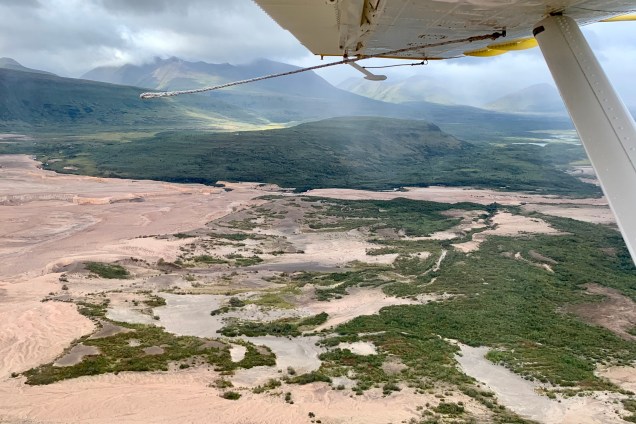
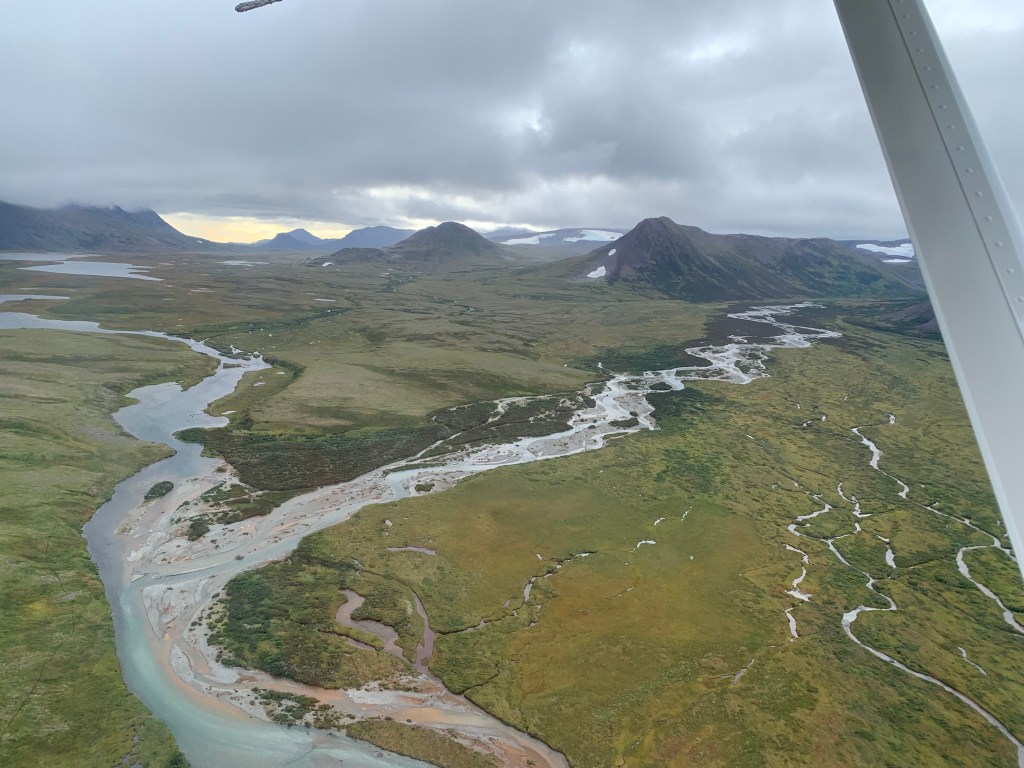
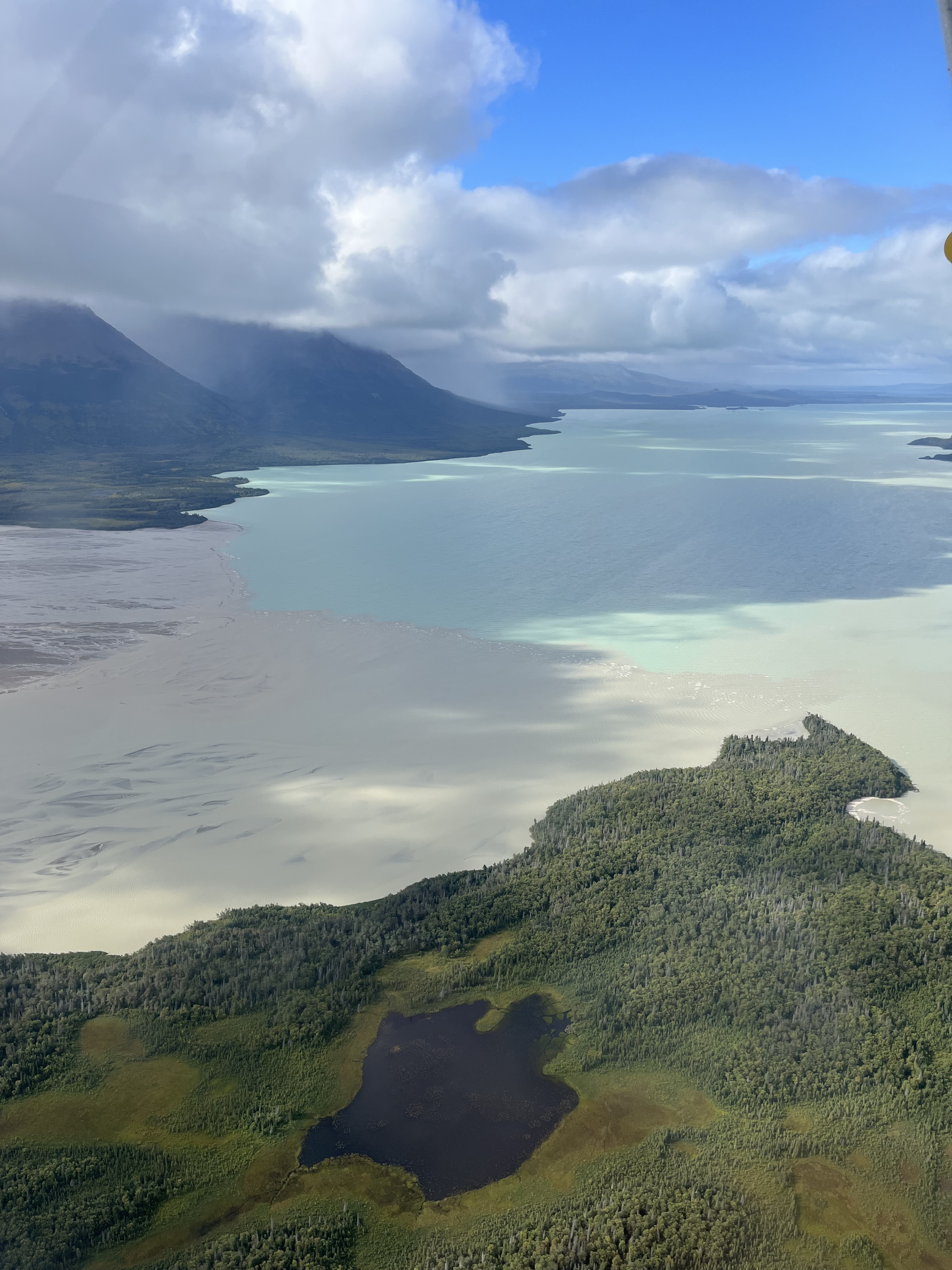
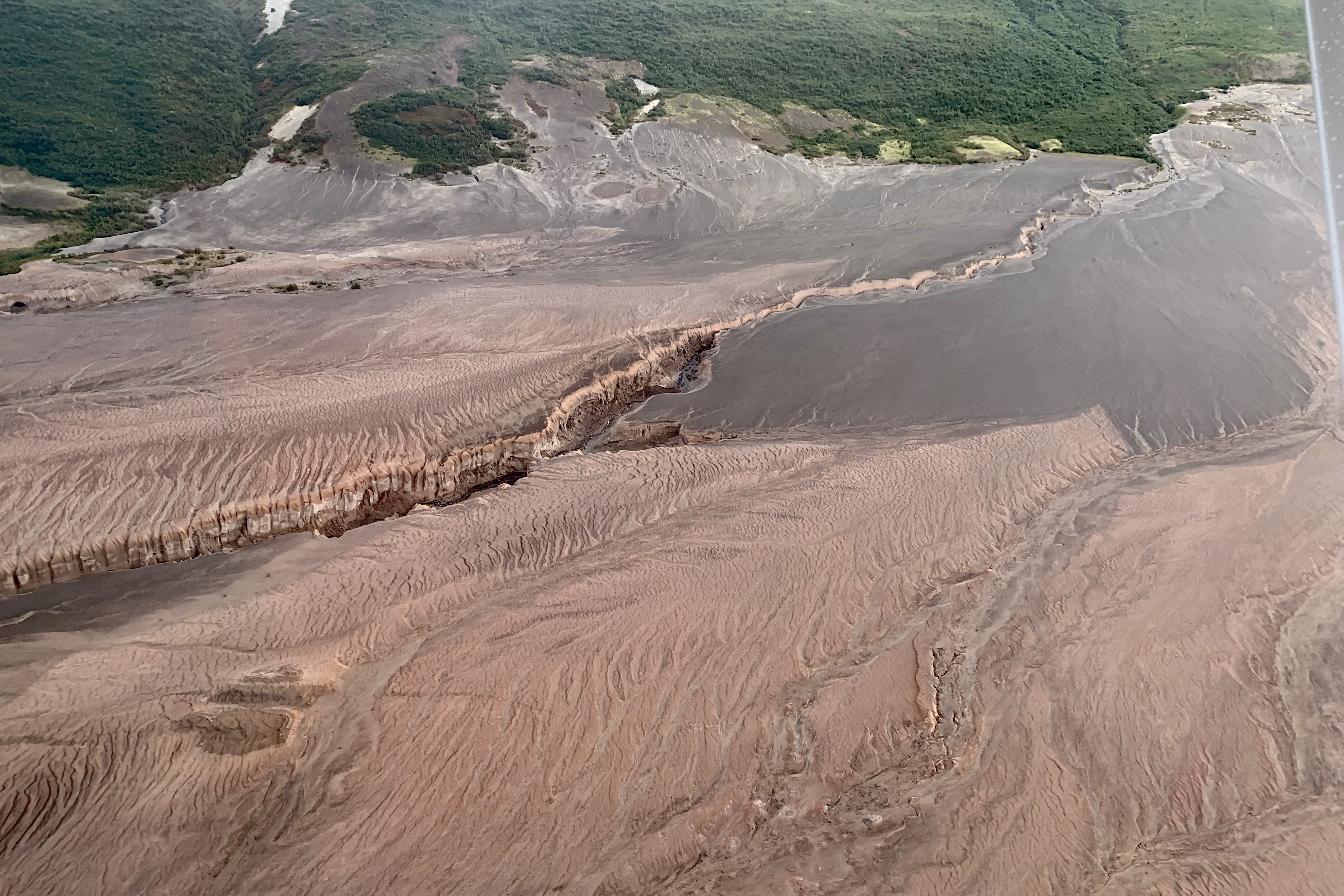
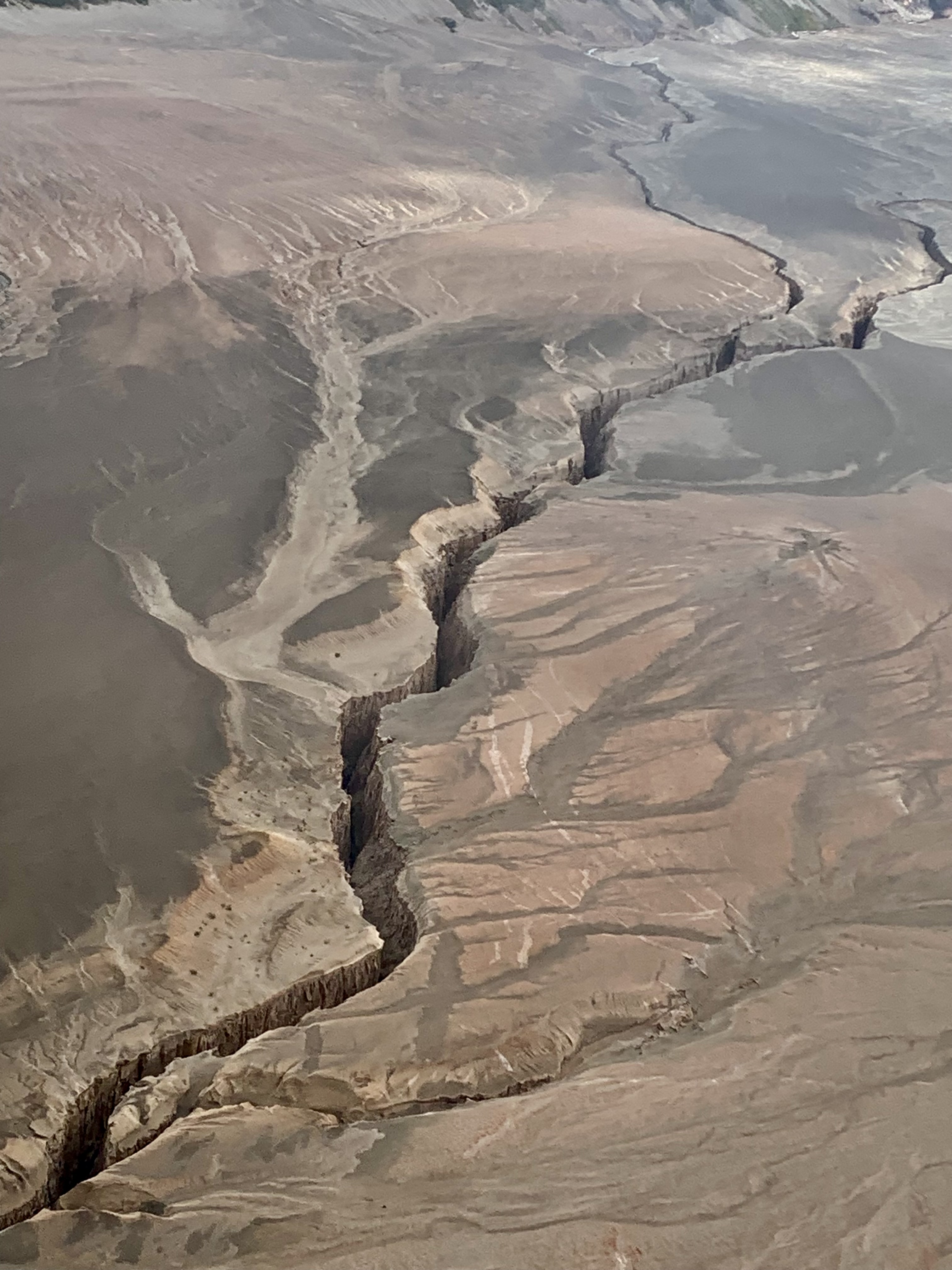
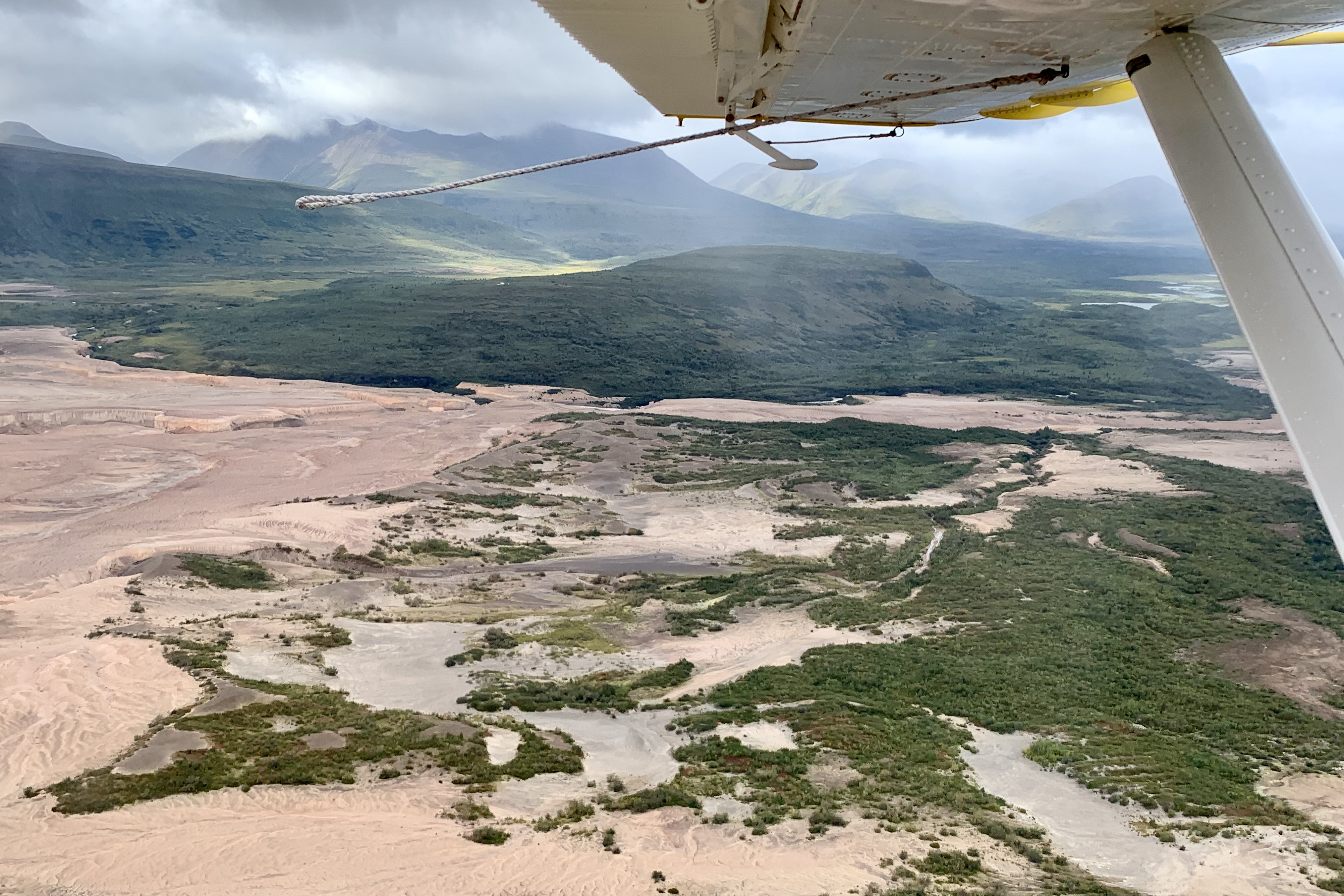
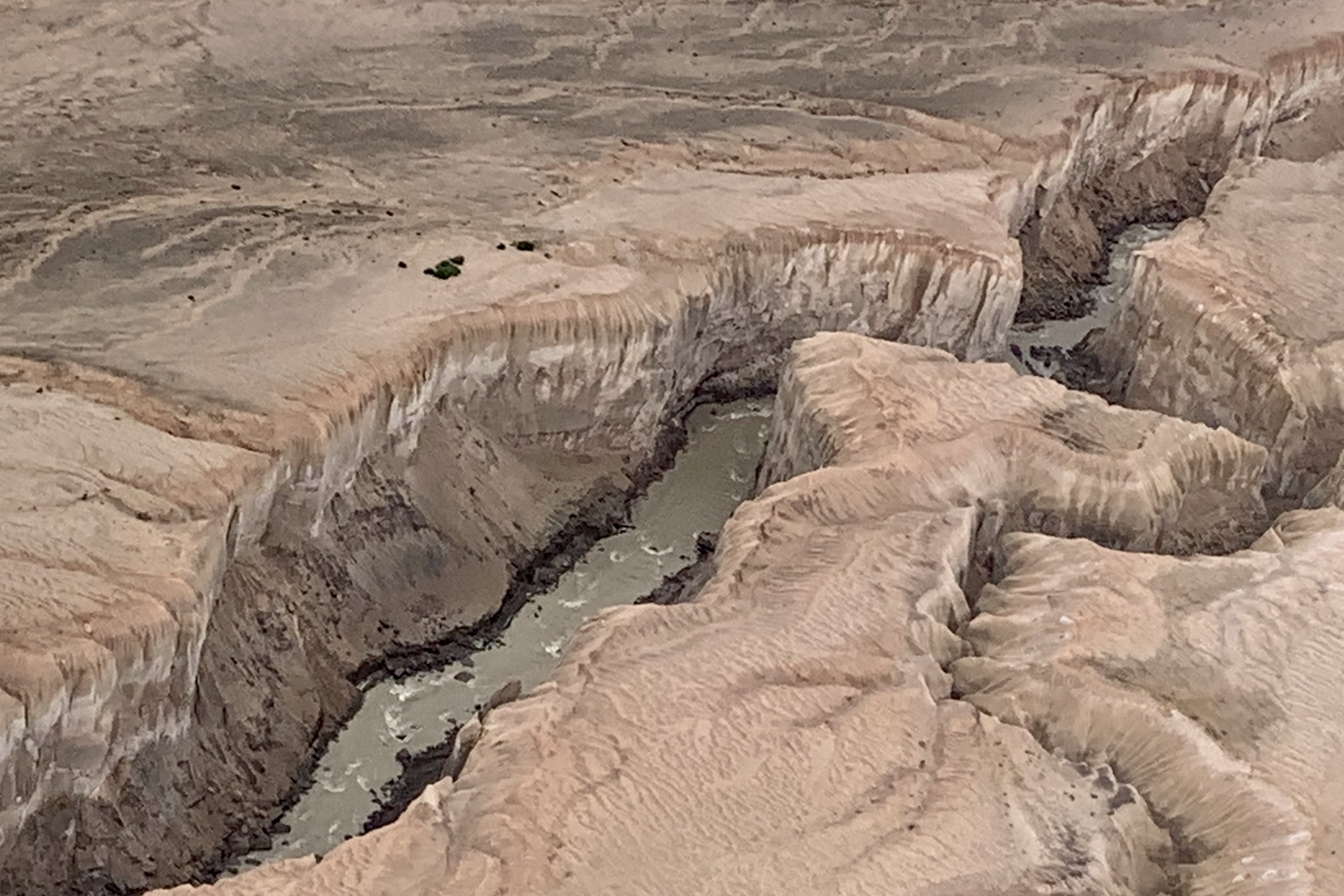
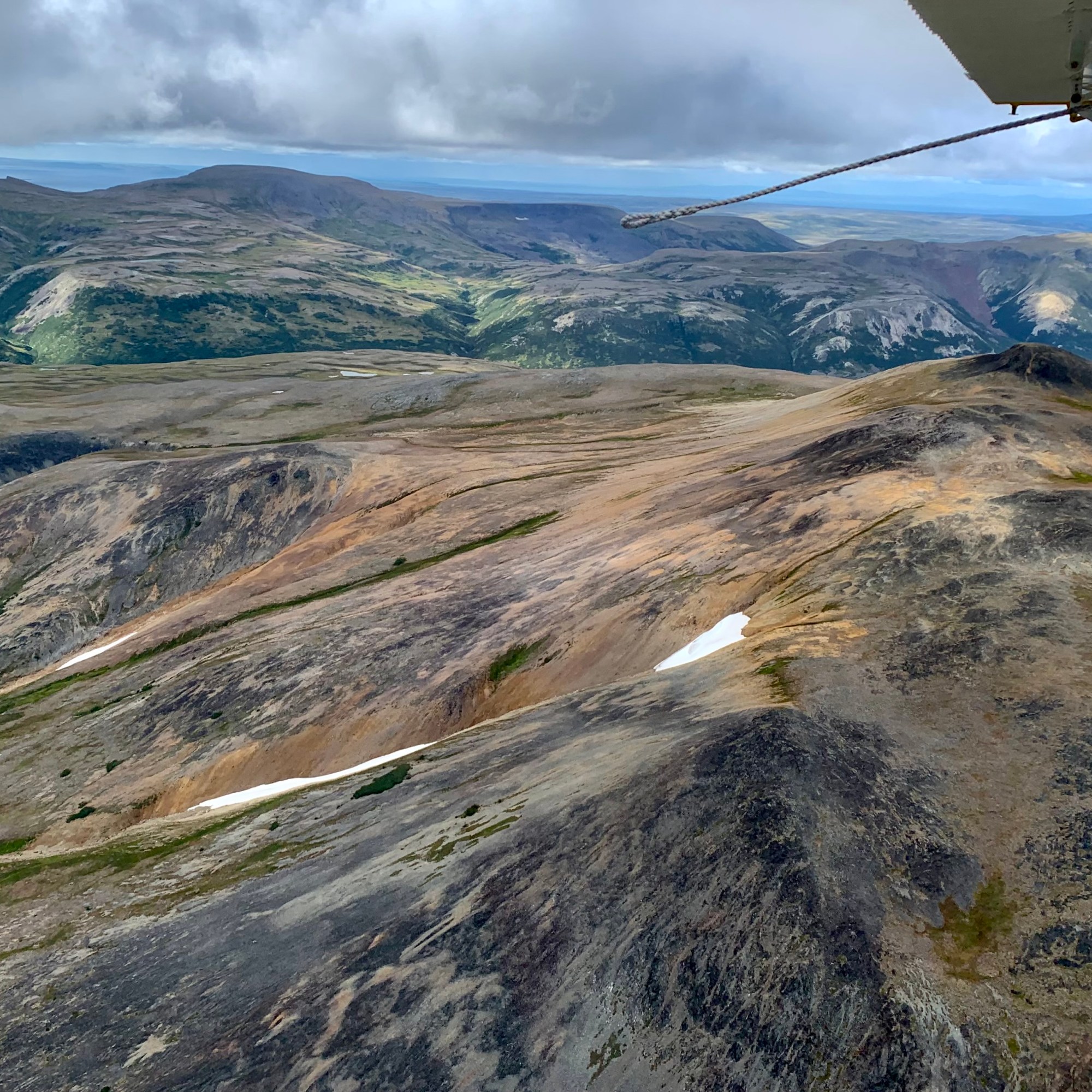
As we traveled farther south, the landscape began to change dramatically from the lush verdant greens and the blues and grays of the clear lakes to a stark and eerily beautiful other worldly landscape of volcanic ash and magma. The Valley of Ten Thousand Smokes was created by a fast moving current of hot gasses and volcanic matter in 1912. It was the largest eruption of the 20th century and 30 times the volume of magma from the Mt St. Helen eruption that many of us recall as so devastating. Its name stems from the steam and gases emitted over time by the hot volcanic ash and has nothing to do with the Alaskan native’s smoking habits. This is a vast expanse of ash-covered terrain in a palette of many hues from very light tans , varying shades of gray, brown, rust, desert sand, buff, taupe… The area is threaded with ash covered plains, steam vents, fumaroles, and hot springs and somewhat resembles a lunar landscape. The meltwater channels, springs, streams and creeks have cut deep gorges into the deep lava ash. These streams and channels in the Valley, however, carry very high loads of glacial flour, silt, sand, and pumice giving the water often a milky hue and if I were hiking down there , it would not be potable source to refill my water bottle. Delightfully we also evidenced the capacity for our earth to regenerate as plants and wildlife are returning to this very inhospitable environment. As a hiker, gazing down at this otherworldly terrain, I had a yearning to be able to perhaps experience the Valley first-hand though I imagine it would be quite a demanding experience to hike this terrain. If I find mud, protruding roots and tripping rocks challenging in the forest, I can imagine that walking on volcanic ash would be like walking on sand dunes or a loose sandy beach. As I pictured myself sinking in to this unstable surface, kicking up poofs of dust and fine particles with each footfall , I quickly told my asthmatic lungs and my hip joints that I would not when back at the lodge hire a guide to lead me on a hike.


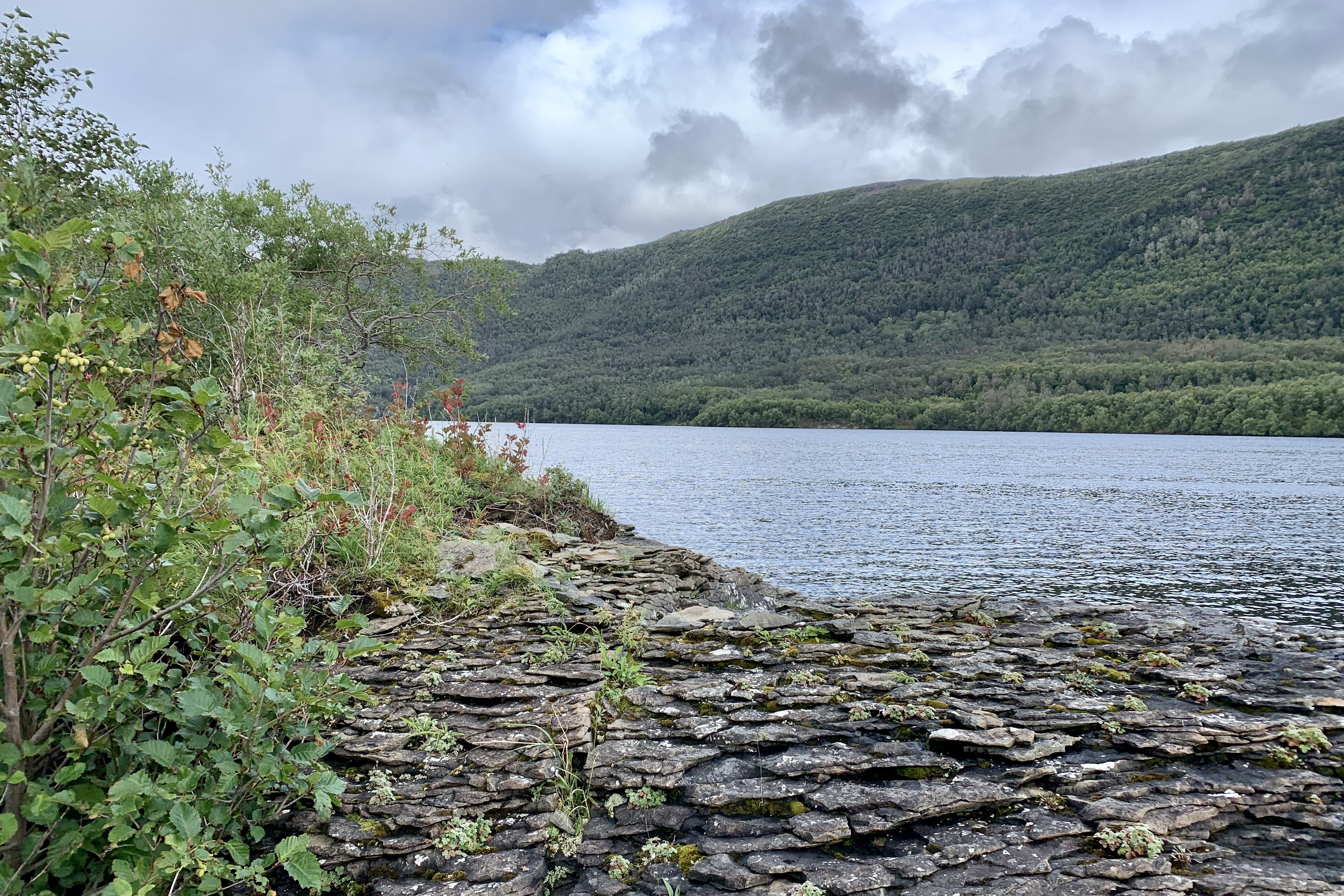
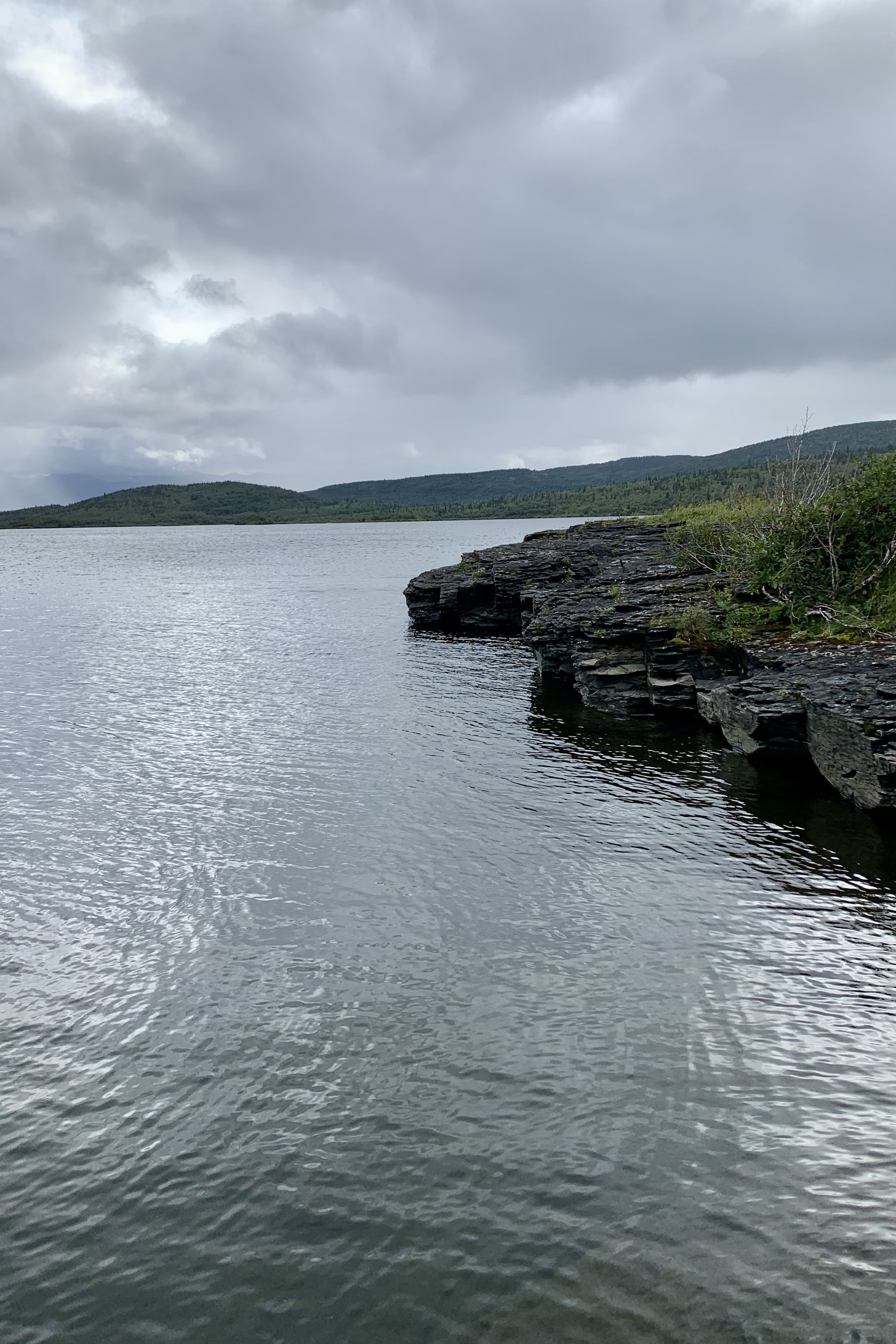
How fortunate I felt to be able to experience the phenomenal variety and beauty of this raw wilderness area and it being just a small array of the magnificence of our earth. No need for psilocybin or magic mushrooms to feel the euphoria of breathing in the awesome beauty around. We headed back north over a varied terrain including the Savoneski River area and landed on an island that was in the middle of “no name lake” (our guide did not know it’s name, my camera did not recognize it, and the park maps did think it important enough to put a name on its map, and thus clearly I do not know its name). What was unique here was the evidence of volcanic rock ledges. The rocks display a distinct layered structure, resembling stacks of ragged edged pancakes. These ledges are composed primarily after the volcano erupts and and lets loose from it’s vents or fissures many layers of lava, pumice, and ash. Volcanic rocks form when the hot oozy sticky molten lava starts charging and slithering down the slope and gets chilly as it is no longer hanging out in its very hot pressure cooker . Voila we have igneous rocks (I remember this from my geology badge in Girl Scouts).

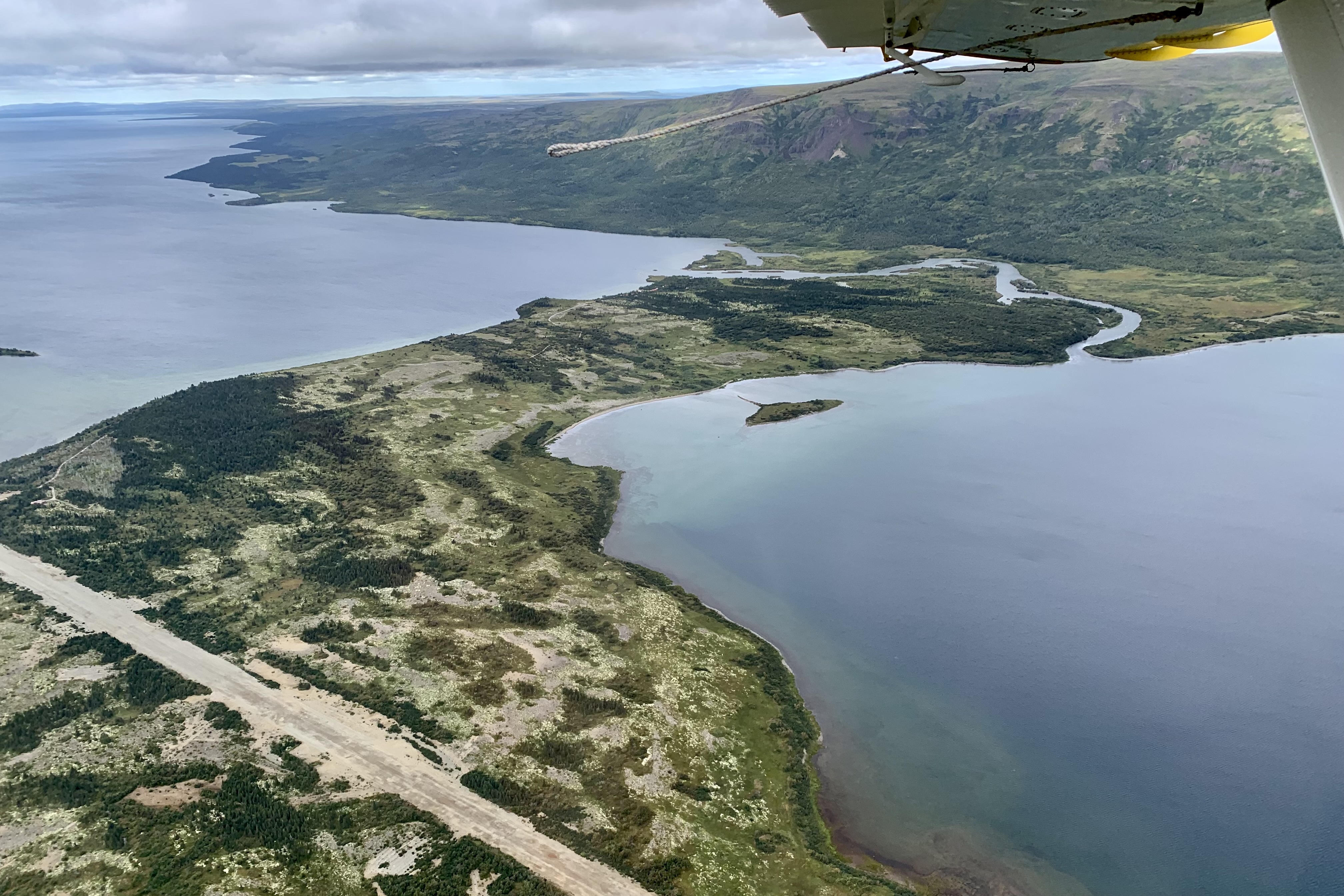
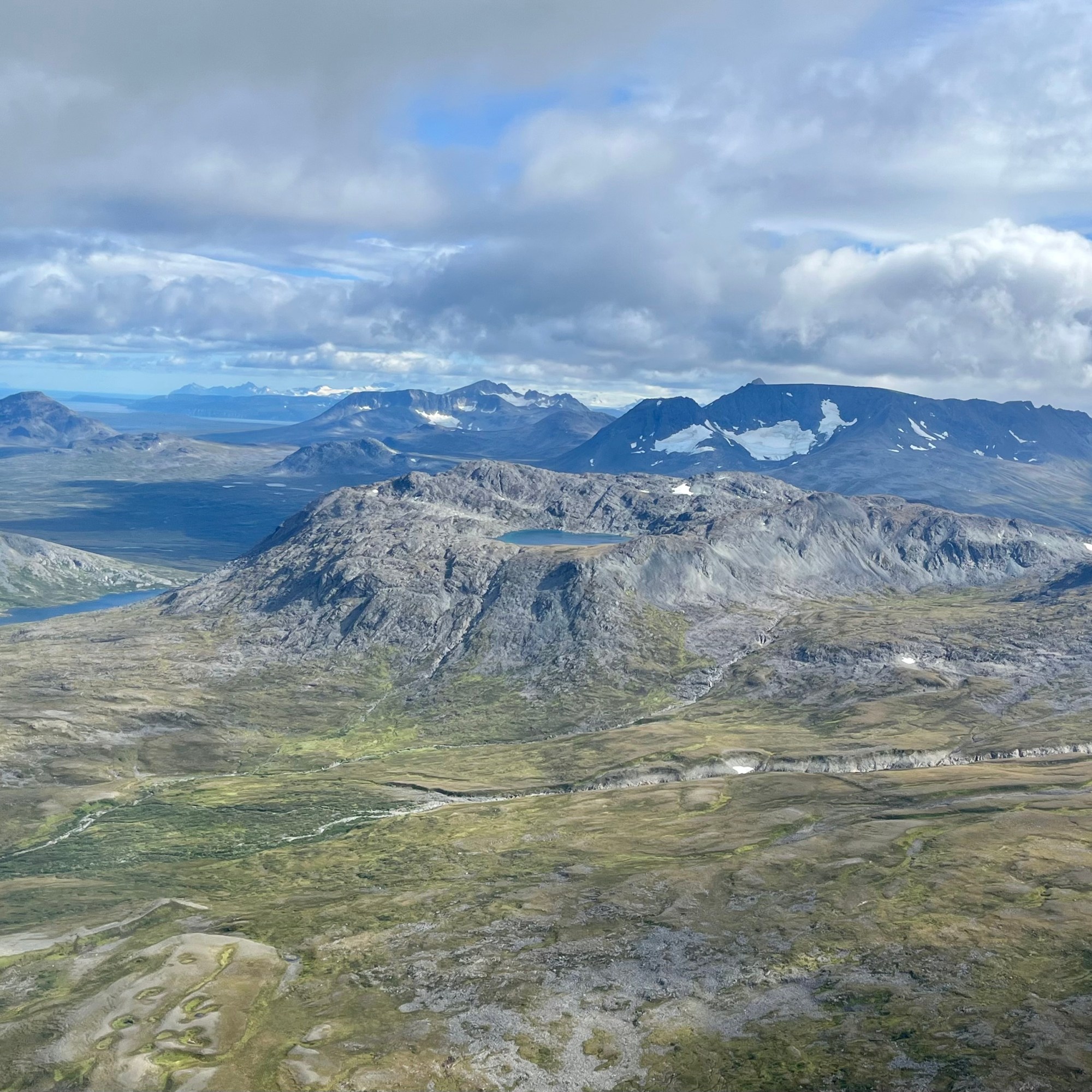
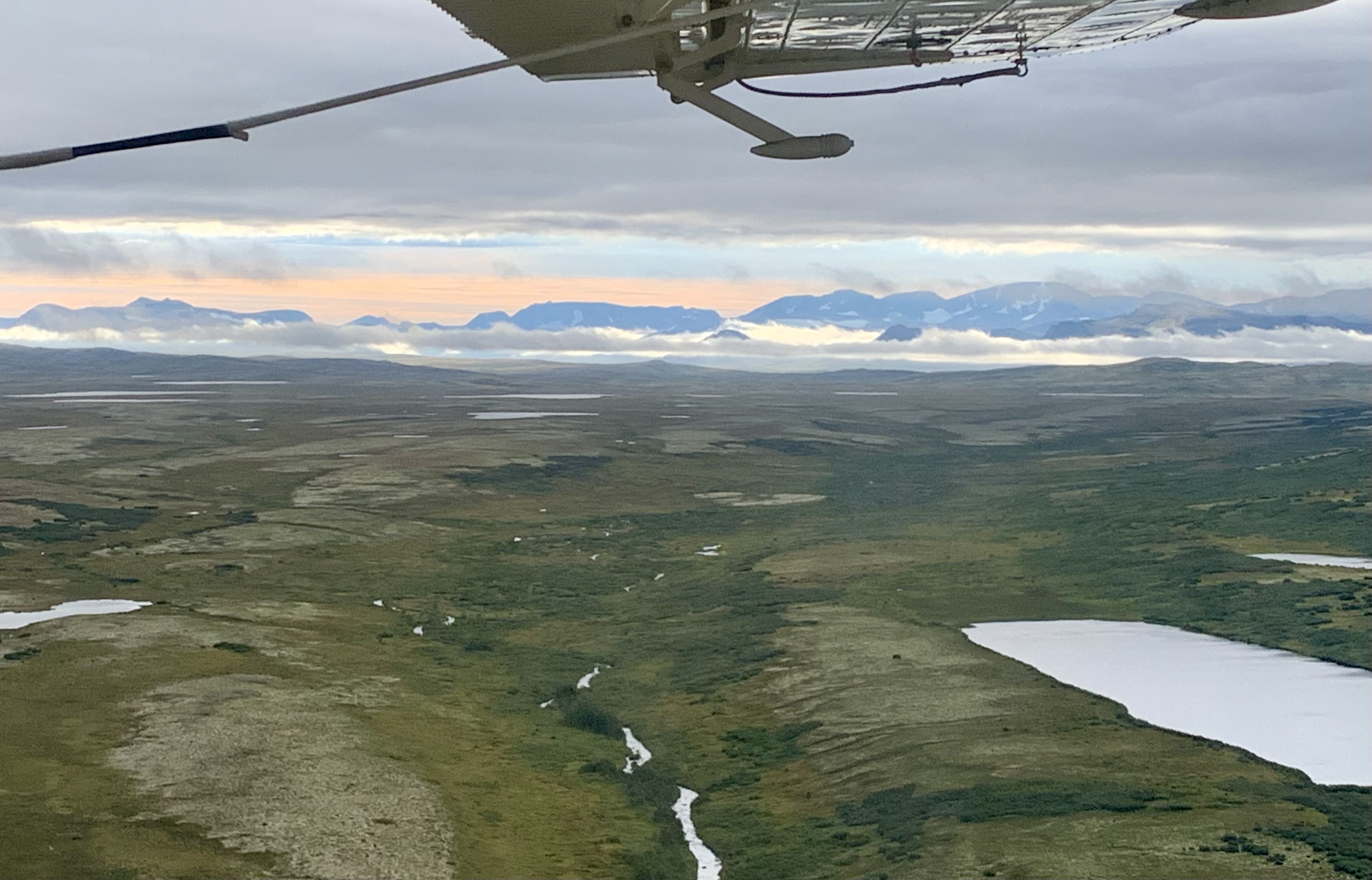
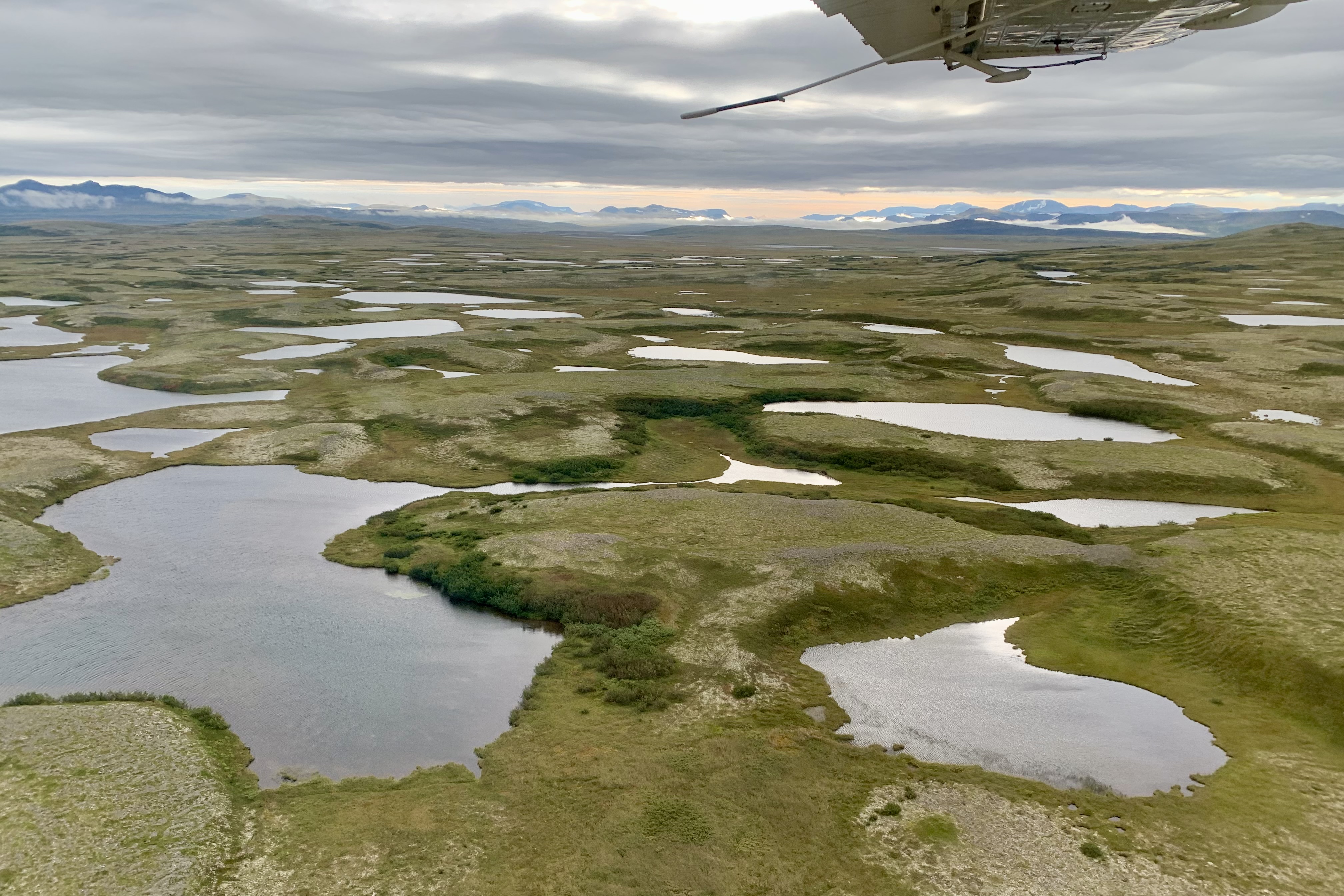
Drifting north back over Lake Grosvenor we were viewing the cold treeless tundra with its low-lying vegetation and the extensive network of lakes, large and small, that were excavated by glaciers on the run eons ago. Purportedly they are teaming with wildlife (otters, seals, bears and moose) but on this day none were seen out there fishing, swimming or sunbathing on the shores. Many of the lakes can be recreational and a fisherman’s paradise IF one can afford to get to them. This thankfully helps keep this wilderness relatively pristine. Additionally, I was beginning to notice that fall was starting to creep into the areas of the tundra, with some browning and yellowing visible.



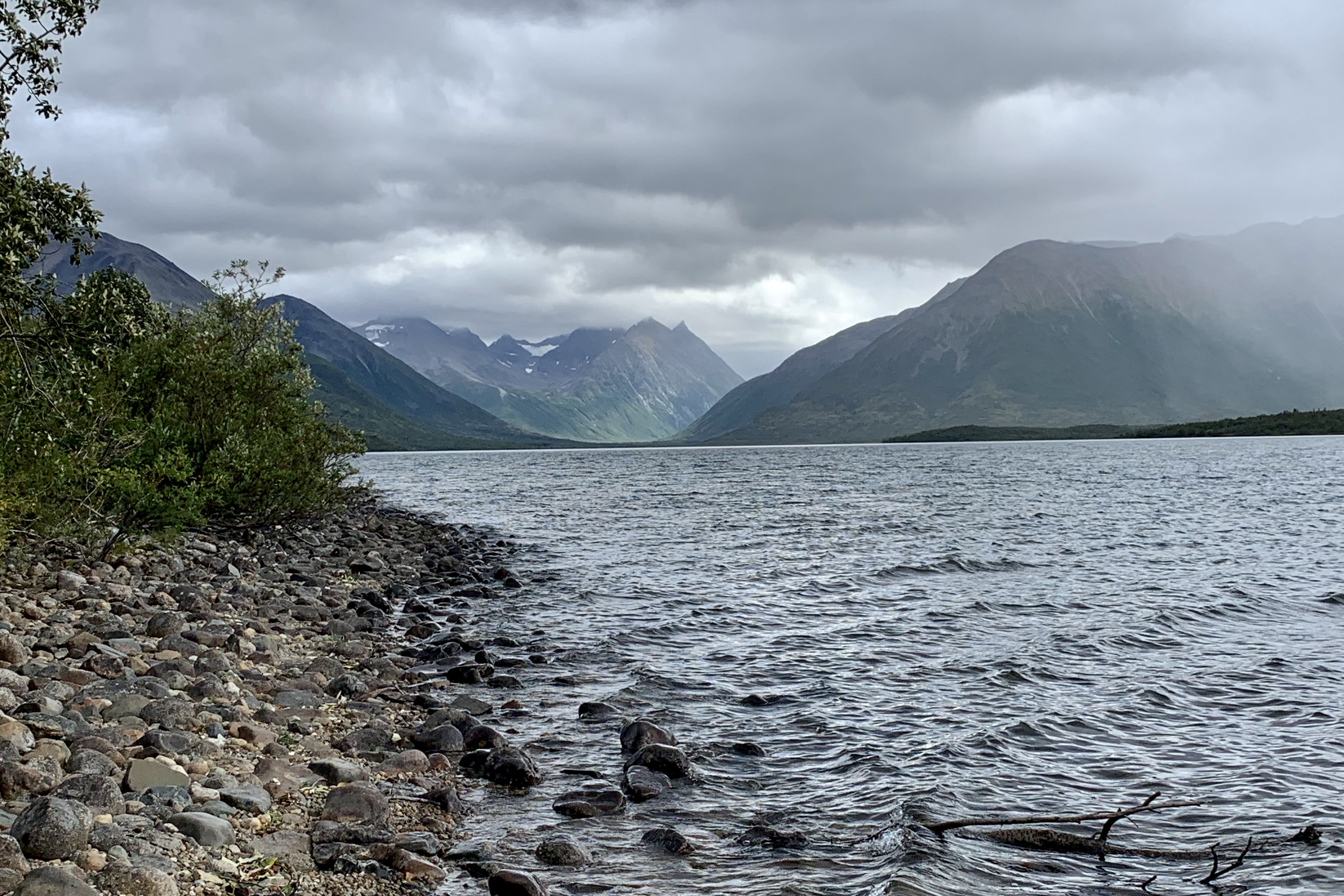
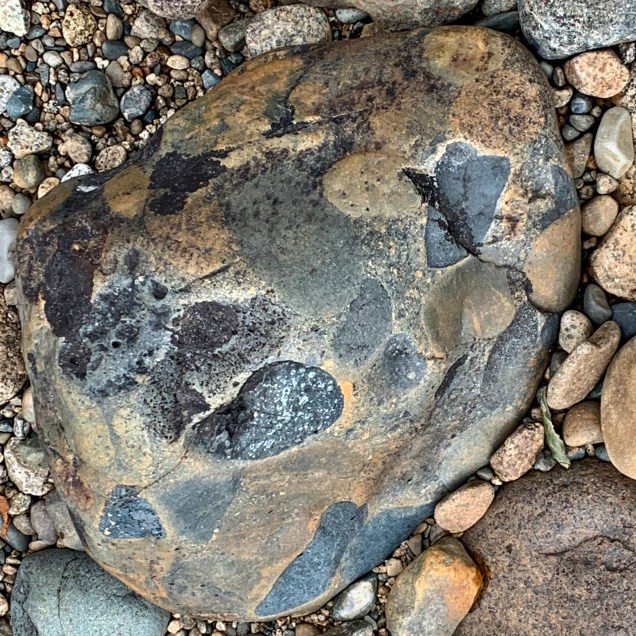
The final descent for our float plane today was a smooth touchdown on a choppy Lake Kulik. I was beginning to notice the lakes beaches we were visiting were of very similar composition until on this beach I began to notice the exquisite array of conglomerates rocks. I imagine that the glaciation in the Ice Age transported pebbles and rocks which eventually became compacted and cemented over times.




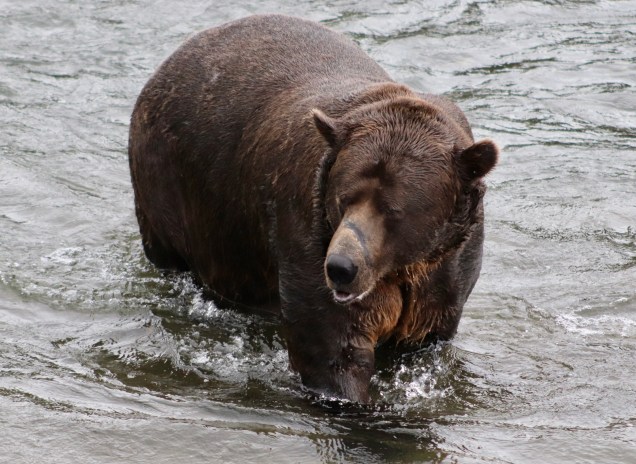
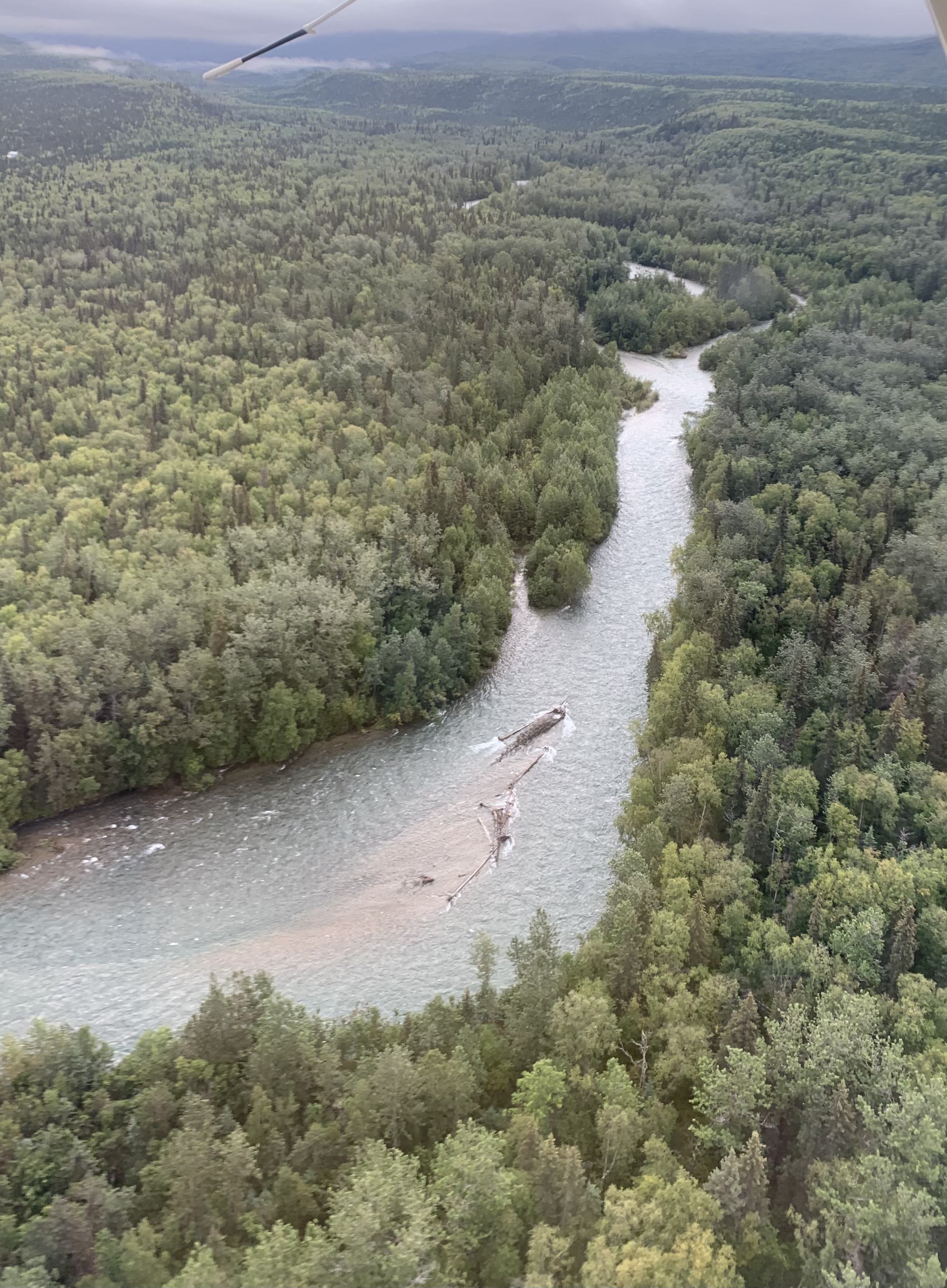
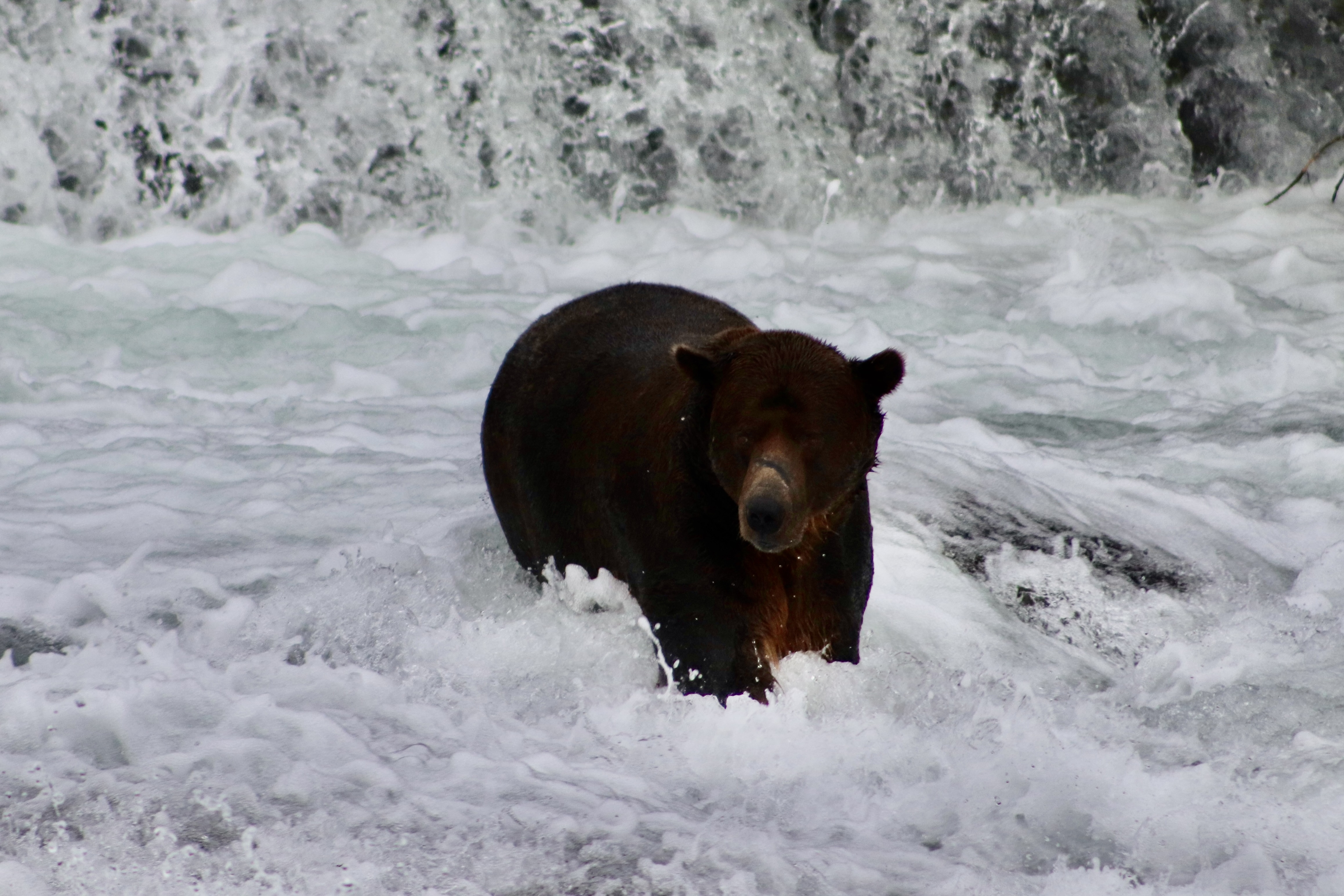
Soon it was time to get airborne. Every take off and landing gives me an adrenaline charge. I can’t say that I am fearful but there is a bit of edginess as I am sitting right behind the pilot and watching how far we have yet to get airborne before the end of the lake. Same for the landing as the pilots definitely don’t want to land too far distant from their selected landing spot. Taxiing an aircraft around like a car on the water is definitely not the preferred mode of getting from touchdown to the beach. The path heading back to Port Alsworth cruised over more stunning vistas. Though there was not on todays journey the heightened energy of being ten feet away from a grizzly bear, the excursion was thoroughly enjoyable and satisfying.













 Uniquely Theo